Djrum's first release since 2019, the Meaning’s Edge EP is an introduction to a whole new world. For the artist also known as Felix Manuel, it was created in the final stretches of six rather traumatic years work. Having carefully honed his techniques and aesthetics, and learned some hard-won emotional lessons over this time, finally he began to work in a quicker, lighter fashion – and to cleanse his palate a little by bringing in a fresh ingredient: his own flute playing. For listeners, though, it will serve as an appetiser, a way into the delights and complexities of this new phase of his creativity.
It’s a serious work in its own right, mind. The use of flutes – including Bansuri, Shakuhatchi, Western Classical, and synthesised all blending and blurring into one another – gives it a coherence and a sense of airiness that unites the five tracks over half an hour, however divergent their beats get. And as in all his music, Felix’s whole life is in here. Ethnomusicology studies, untold hours of DJing everywhere from the gnarliest squat raves to the most rarefied deep house clubs, explorations of his own neurological and emotional makeup, and the technical finesse of someone who is never not creating music or art, all roll into an experience that’s dazzling, delightful and keeps on giving.
Just the opening track ‘Codex’ alone touches on OG dubstep, Aphex Twin-like braindance, post-classical exploration, movie themes and more. The gentle tones and melodies that rise up out of it perfectly conjure Felix’s running theme of a protective bubble that provides a sense of safety and tranquillity even as the beats and acid gurgles and spurts all around it conjure up the slings and arrows of life’s difficulties.
The tone set, the EP moves through ultra-rarefied glass-like percussion in an almost ambient setting, hints of grime’s counterintuitive patterns, and even more hectic patterns influenced by Tanzania’s hyperspeed singeli style of dance music – but always with that perfect balance of chaos and control, unpredictability and protection. It rewards playing and replaying endlessly, it’s a profound and often joyous experience… and it’s only just the beginning. This is the return of a master craftsperson more focused than ever on his vision and vocation and ready to blow your mind all over again.
Mastered and cut on 140g black vinyl by legendary mastering engineer Matt Colton at Metropolis Studios, London. Pressed at optimal media, Germany.
quête:manuel beat
- 1
Michigan Band EJ & the Echoes: Rediscovering a Soul Legacy
The story of EJ & the Echoes represents a remarkable chapter in Michigan's music history and the early American soul scene. Its origins date back to the late 1950s, when Everett J. "EJ" Gronda was already active as a young musician. While studying at Central Michigan University in the early 1960s, he met the talented vocalist Manuel "Manny" Holcolm. Together with other musicians, they formed vocal groups that soon performed throughout the state and even recorded near Detroit's legendary Motown studios.
In 1963, Gronda founded EJ & the Echoes, a band that quickly gained popularity at dances, clubs, and weddings across Michigan. With Manny Holcolm as lead singer, the group developed a distinctive harmony-driven sound, blending influences ranging from the Beatles to James Brown. The band served as a house band in Traverse City, opened for national acts, and performed regularly at well-known Detroit venues.
Between 1964 and 1967, EJ & the Echoes released several singles on the Diamond Jim Records label. Although major commercial success eluded them at the time, their recordings later found international recognition. Today, their songs remain staples of the British Northern Soul scene.
After the band dissolved, the members pursued different paths. EJ Gronda became a schoolteacher but remained devoted to music throughout his life. In 2006, the musicians reunited for an emotional jam session. EJ Gronda passed away in 2022, followed by Manuel Holcolm in 2024. Their musical legacy endures-on this vinyl release, dance floors, and in the memory of a remarkable era.
Our sincere thanks go to author and blues historian Fred Reif. He wrote the accompanying text and provided all the pictures of the band printed in the gatefold cover. Without him, this project would not have been possible.
For the first EP on his new label, Planet Strangelove, Job Jobse brings new life to an overlooked balearic house gem: "Pasion," an early '90s deep cut by the Leeds artist Pianoman, inspired by Tangerine Dream's "Love On A Real Train,” aka the most breathtaking synth arp of all time. Alex Kassian, whose sprawling take on Manuel Göttschings's "E2-E4" already showed his fine touch for the kosmische vibe Tangerine Dream embodied, delivers a "Dance Mix" and a "Dream Mix," one packing a club-ready beat, the other drifting weightlessly. London duo The Trip, of the label and party Tesselate, deliver a remix as breezy as it is thumping, all wailing divas, sunkissed pads and shimmering pianos. As for Pianoman's "Analysis" remix, it's a dazzling artifact of the balearic era at its peak, touched by the ineffable essence of its time but sounding just as fresh as its modern reinterpretations.
DJ Support: DJ Sneak, Manuel Sahagun, Jason Hodges, Natural Rhythm & Suburb Beat.
Born into the underground House Music scene of Los Angeles, CA we bring you Tom Carle of Moxy Muzik and Cross Section Music fame.
We’ll keep this short and sweet because the Brooklyn Style EP speaks for itself! You have 3 tracks of down n out funky House Music business and cap it off with the dirty underground banger “This Acid”.
Better hope the floor brought their dancing shoes because the Brooklyn Style EP is straight heat!
DJ City brings along Manuel Darquart to deliver a standout 12“ titled „I Need“.
Italo, Club & Beatless Version.
Has been a standout in every P.P. Deejay set since the minute it reached our inboxes. Rumor has it that it already blew off the roof of P-Bar more than once. Bad Dads love it and it might evoke some hot, sweaty memories with one or the other. Sing along alert.
Massimiliano Pagliara pays tribute to Manuel Göttsching in his first solo EP on his very own Funnuvojere Records, ‘All the VCOs You Can Eat’.
As a devoted fan of Göttsching’s groundbreaking work, Pagliara draws inspiration from his musical hero, crafting a mesmerizing EP that encapsulates the spirit and innovation of Göttsching’s influential sound. The release comprises three different interpretations of the same track, each imbued with exceptional artistry and technical knowledge.
The ceaselessly rolling piano chords in A1 Modulator Mix and B1 Traveler Dub are clear reminders of Göttsching’s E2E4 famous hypnotic refrain. The slight tonal variations, the stretched-out acid line and the uplifting drums conspire to create a sense of transcendence and euphoria. The infectious drums have their own space in B2 The Lonely Drums. This mix has an irresistible groove that will make all dance floors bounce.
The artwork captures the essence of Pagliara’s music through a vibrant and emotive visual language, reminiscent of the pioneers of abstract expressionism. The geometrical forms and patterns mirror the intricate melodies and pulsating beats of this future classic EP.
As luck would have it, this seventh exclusive Deep Site Vinylized edition sees the pure class of Tojami Sessions (Dessous Recordings/Plastic City) with two stand out original tracks each offering remixes that contrast and compliment the full atmosphere of this release.
Falling (Original Mix) takes you on a late afternoon cruise filled with soft seductive whispers and a surprise percussion during the break. Falling (Manuel Sahagun Remix) adds more of a jazzy element, focus on inspiring words, and the laid back improvisation keep the groove flowing non-stop. Falling (Kessidis Remix) takes on a more mystical and minimal approach amidst modulating synths and the spoken words declaring what is to unfold. What Is Love (Original Mix) The extended intro and groovy bassline start this track off, bathing you in sunlight while the vocal samples splash over and refresh you creating a radiant joy. What Is Love (Deep Spelle Remix) layers some harder beats and an 808 bassline producing that contagious dancing feeling impossible to resist.
What Is Love (Funtom Remix) sends the track to high emotional levels with use of melody and dynamics making it a true anthem bound to leave its touch.
A family affair since the early days, WOLF Music have been shining a light on the scenes and sounds the duo are ingrained in. Staying true to form and rolling deep for WOLFEP065, the spotlight turns to a selection of familiar faces and new recruits for a four track VA EP that’s strictly for the groovers.
WOLF OG, man like Medlar kicks it off in signature style with 'Bandit', a heads-down, techno-tinged trip. Machine music with the soul of south London. Next, professor of the dark arts, Manuel Darquart, conjures up the aptly named 'Euphoria' a deep, ‘90s leaning house excursion, synth wizardry and all, that works just as well as a sunset cruiser, as it does an end of the night closer.
On the flip, two long time listeners, first time callers, with a double dose of debuts on the label. Jon Sable takes the B1 with 'Infinite Care', offering up that trademark strong and Sable, In Dust We Trust flavour. Deep, emotive, intricate house with a nod to the worlds of Bruk and Chicago house melded together with that NZ feel.
Closing it out, debut number two comes in the form of rising star moon who lays down a beatsy, broken earworm ‘Handmade’ featuring some dreamy bars from Tamu.
Full crew, through and through – this one hits different!
Jamaica Suk’s 17-track, quadruple-volume ‘Uncertain Landscapes’ series continues with its second part, bringing five tracks of uncompromising cutting-edge techno.
NovaMute artist Nicolas Bougaïeff kicks off with the rasping sounds of ‘Nocturne 1’, a tense juggernaut of a track. Sheet metal textures clash up against eerie FX the most throbbing of kick drums, with a twisted, distorted feel to the breakdown.
Keith Carnal’s ‘Infringement’ injects rhythmic bleep patterns into its chattering percussion, creating an almost dubby feel that’s contrasted with an urgent energy. Well-timed filtering adds to the tension.
The warped wiggle of Helrad’s ‘Groove Addicts’ comes next, with intense machine energy filtering up from the depths. A manic cacophony of detuned bleeping creates a heavy, relentless feel over the succinct beat.
Insolate’s ‘Sanchin’ rocks a pulsating bass chug that underpins washed-out textures and synth delays, with rasping metallic sounds washing over the track in the second half while the shuffling percussion keeps ticking away.
Manuel Di Martino channels some classic Detroit vibes in the chattering clap & snare patterns and rolling groove of ‘Runout’. Resonant tones blip, loop and pitch-shift in hip-shaking fashion to give the feel of a classic Jeff Mills set in action.
forTunea presents its new member Peter Czak with his first ever vinyl release! Before The Rise is a deep and mysterious piece with a stomping broken beat and almost eerie sounding synthlines. Heavily experimental and detroitesque. The remixes have something to offer for everyone. Peletronic's aproach is a darker dub that can be played in techno clubs aswell as on deep house partys. The opposite of that is KB's Rising Sun remix. He rearranged the track that much, so you would almost believe it is a new composition. My Beat closes the ep with a heavy drum machine rhythm and synth-fanfares. All in all an interesting release for this summer. Do not miss this one!
Limited to 300 copys ///// Mastering by Patrick Pulsinger
Support by Tensnake, Red Rack'em, Anderson Noise, Siggatunez, Lenny Fontana, Manuel Sahagun, Robot84, Simonlebon, Lönya, Tom Lown
The sunshine of Andalucía has come to the Bordello. The musical magpie that is Daniel Monaco arrives with just a hint of a Spanish accent and a daring record under his arm. Known for finding the intersections of boogie, disco, italo and house, Monaco is going that bit further with Manuel Rodriguez for the Flamenca EP. Melting the percussive drive of his machines with the spirit of Southern Spain, the four tracks on offer are a journey into a sound and style that is inspiringly original. Ruffled hi-hats and smooth basslines are the foundation for the title piece. The soul of the Sierra Nevada and the warmth of Granada pour forth through Rodriguez’s unparalleled performance. The claps of Chicago are reimagined as an interplay of melody and rhythm awakens; the traditions of Flamenco married with a modern groove. Talent and technique are coupled with pure passion in the intense instrumentation of “Fantasia” before the flip shifts with “Sìnteme.” The culture of Italy and Spain combine, taut string plucks peppered in handclaps before the Only Bee’s vocals descend. Ardent, the lyrics tell of our shared humanity through the dialect of Ischitella from the southern tip of Italy. The homes of our musicians are the inspiration for the finale. Blending the decadent splendour of Napoli with the old-world romance of Granada, Rodriguez’s guitar is the focus of “Granapoli.” Bitter-sweet, blissful and sorrowful, a lone beat wandering through the winding melody that twins these great cities. From Italy and Andalucía to Amsterdam, a 12” like few others.
Repress
R&S proudly presents brand new signing Felix Manuel AKA Djrum.
Djrum is a perennially acclaimed underground artist, since his first release in 2010 who's quietly built a list of fans that reads like a who's who of contemporary dance music.
As an artist, Djrum has formed a reputation for his unique fusion of a range of genres ranging from jazz, hip hop and dubstep to ambient and techno. His music swells with oceanic bass laded beats, cavernous atmospherics and deeply emotive melodies. An accomplished DJ his compositional approach feels like a natural collage of his influences which has seen him release for the likes of the Zenker Brothers Ilian Tape imprint as well as the influential 2nd Drop label, plus remixes for Ninja Tune and Domino.
Felix now steps up to the plate at R&S with one of his most visionary releases to date. Deeply meditative melodies twist and turn through stuttering rhythms and pulsing low bass, hypnotic pads and woozy atmospherics. Manuel's music somehow manages to retains the urgency and dynamic pressure of the dance floor with the intimacy and elegant detailing of the best headphone music.
A natural fit for R&S, there is a full length Djrum album in the pipeline in 2018 - looks like it's going to be an exciting year ahead.
Bring the beat to life with the ultimate techno-duo — Thomas Bangalter and Guy Manuel de Homem-Christo, reimagined as action figures straight out of Daft Punk’s 'Technologic' universe. This articulated, 3.75" scale ReAction Figure 2-pack captures the two legends in extraordinary detail. Both figures come with guitar accessories and the Guy-Manuel de Homem-Christo figure has a removable helmet. Packaged on a full-colour blister cardback is inspired by the Technologic music video and is perfect for display. Collect it. Pose it. Play it. Repeat.
Recognized worldwide for his delicate musical selection in dance floors from
around the world, Manuel Sahagun’s productions found a place in the bags of the
best recognized djs in the house music scene.
For the follow up of his critical acclaimed A Daily Noise EP on Fortunea Records, he
comes back on the Austrian imprint with the 5-tracker ‚Mermelada‘. Each side of the
record features different sides of the electronic music hemisphere. A fusion of both
modern and classic influences with cutting-edge contemporary sounds that has
elements from broken beat, warm and intimate ambient excursions and floorfriendly pumping house in it.
A perfect package that is coming to your record store, download store and
streaming service this october.
_________________
The vinyl is limited to 200 copies. There will be no repress!
2025 marks 20 years of Tectonic, the pioneering dubstep and electronic label founded in 2005 by Bristol’s underground originator, DJ Pinch.
The Tectonic Sound compilation lays down the gauntlet for the future direction of the imprint. Split across 6 x 4-track 12”s, the compilation comprises many producers making their Tectonic debut, including Re:ni, Beatrice M., Yushh, Flora Yin-Wong, and Sicaria, alongside stalwarts like Om Unit, RSD, Peverelist and Kahn & Neek. It’s an exhilarating 24-track journey through experimental, bass-heavy electronic music, with almost all tracks created by the artists specifically with Tectonic's sound in mind - at the intersection where dubstep and techno meet.
“More so than just the sound, the music is in tune with the real ethos of the early dubstep scene,” - Label boss Pinch says: “People talk about 'heads in a scene - but it's led by hearts really. I've always tried to follow my heart when it comes to music and all the music here is from people I trust that do something worth communicating with the world. I love to watch and help artists grow just as much as I'm excited to release tracks from bigger names who are still passionate about what they do and have developed the powers and control to be able to output that effectively. It feels like Tectonic has been a part of so many communities over the years now, and that there is something that binds all the releases together, something that speaks for itself in a way that goes beyond words, something that's instinctive and immediate.”
Across Tectonic’s 150-strong catalogue there are seminal releases by 2562, Scientist, and Mumdance & Logos, side by side with appearances from Flying Lotus, Shed, Adrian Sherwood, Riko Dan and Photek. The label holds some of the earliest dubstep incantations of Skream, Digital Mystikz, and Joker as well as Pinch’s own productions. The evolution of the Tectonic sound branches into audio explorations encompassing sub-heavy techno and grimey soundscapes alongside leftfield electronica and future-facing beats. The common thread that binds is Pinch’s devotion to pushing underground music ahead of its time, always built to rattle a soundsystem
YES! Originally released in 2000, Mark de Clive-Lowe's Six Degrees captures the early essence of what would later be known as broken beat, club-jazz and future soul; bridging the sounds of 70s jazz-fusion, jungle, hip-hop, house and Afro-Cuban rhythms. With fender rhodes, synths and an MPC2000 at the core of his production, de Clive-Lowe blended live musicianship with beat-driven sensibilities in a way that was ahead of its time.
Originally released in New Zealand via Kog Transmissions, the album found its way onto the global stage when Universal Jazz UK picked it up. Now, 25 years later, Be With is proud to present a special anniversary vinyl reissue, celebrating a landmark album that laid the foundation for an international career spanning continents, collaborations, and countless musical evolutions. Limited to just 400 copies for the world, these are gonna fly.
In 1998, a 23-year-old Mark de Clive-Lowe set off on a year-long journey that would shape his career and musical identity. Fuelled by an insatiable curiosity and a grant from New Zealand supporting emerging artists, he traveled across the globe — digging through record stores in San Francisco, immersing himself in the rhythms of Havana, collaborating in London’s underground studios and experiencing the jazz legacy of New York. Along the way, he crossed paths with pioneers, mentors and kindred spirits who would deeply influence his sound.
Six Degrees is the sonic diary of that transformative year — a musical world tour distilled into one groundbreaking album. It's both a snapshot of a pivotal moment in de Clive-Lowe’s life and a timeless statement of creative exploration.
The jazzy jungle vibes of "Roundtrip" opens proceedings, inspired by de Clive-Lowe's deep love of drum & bass. It kicks off with a rhythm pattern picked up in Havana, combined with Lonnie Liston Smith-style Rhodes textures and a rolling jungle breakbeat. Sublime. Up next, "La Zorra" is a moving tribute to the folkloric 6/8 rhythms he was surrounded by in Cuba. Afro-Cuban music had a huge impact on his sound and this track reflects those deep grooves brilliantly. Hip-hop has also been a major influence since de Clive-Lowe's teenage years and Manuel Bundy’s scratches bring an essential turntable element to "Melodious Funk", giving it that raw boom-bap edge.
Underground favourite "El Día Perfecto" came about by de Clive-Lowe wanting to write something as catchy as Incognito’s "Colibri", combined with his deep love for Lonnie Liston Smith. Effortless as it sounds, it pretty much wrote itself, seemingly. "Cosmic Echoes" is a nod to house music, but on the chiller side. Named after Lonnie Liston Smith’s band, with bouncy bass, a steady 4/4 groove and chopped tabla percussion, the mood this track conjures up is special. The deeply soulful "Day By Day" became the biggest track from the album, partly thanks to DJ Spinna’s remix and Café del Mar featuring it on their compilation. Cherie Mathieson’s vocals shine here. The lyric came to de Clive-Lowe while hanging out at Cause Célèbre in Auckland: “Day by day, side by side, hand in hand, no turning back.”
"Restless" is a jazz-funk jam built on a classic drum break, heavily influenced by Roy Ayers and the Mizell Brothers. Named in homage to Phil Asher’s Restless Soul moniker, his impact on de Clive-Lowe's journey can’t be overstated. Following on, "Mindscape" is a darker, rawer drum & bass track. The chopped-up drum break and moody synths channel everything he loved about the deeper, more atmospheric side of the genre. "Control" continues the jungle influence — this one’s all about the heavy grooves and deep bass, inspired by nights out listening to Jumping Jack Frost and Grooverider in packed basement clubs.
"Por La Mañana" is a musical snapshot of walking the Malecón in Havana in the morning sun. The city had such a profound impact on de Clive-Lowe and this track captures some of that energy and movement. Penultimate gem "Motherland" is a nod to his Japanese heritage. The melody draws from Japanese scales, shifting between moody introspection and uplifting harmony. Built on a chopped live drum break he recorded in Tokyo years earlier. We end with "El Día Perfecto (Reprise)", a stripped-down reprise featuring percussion, vocoder, Rhodes and synths — leaving the listener with a warm, uplifting final moment.
Speaking to Be With, de Clive Lowe explained just how much celebrating the 25-year anniversary of this album means to him: "Since then, I’ve released so much more music, but Six Degrees still resonates — it captures a really special moment in my life. A turning point, a fork in the road that ultimately changed everything. It’s amazing to reflect on where this journey has taken me, and I’m incredibly grateful for it. I still remember the night I finished "El Día Perfecto". I took a minidisc of it to my friend Cian’s DJ set at Galatos in Auckland. He plugged it in, and I watched the dancefloor move to something I’d just created hours earlier — it was a magical moment.
When Six Degrees was first released, the internet was still in its early days. There was no YouTube, no streaming, no instant global access to new sounds. The album was my way of bringing together all the music and places I had experienced over that year, blending them into something uniquely mine. It introduced me to listeners around the world and opened the doors to a career that would take me to more countries, collaborations and experiences than I ever imagined.
25 years later, I’m so grateful for everything this record set in motion. It’s a document of a moment in time, but it still feels alive — and I’m thrilled to share it again in this special anniversary edition."
Mastering for this 25 year vinyl edition was overseen by Be With regular Simon Francis and it was cut by the esteemed Cicely Balston at Abbey Road Studios to be pressed in the Netherlands by Record Industry. The original artwork has been lovingly brought back to life by de Clive-Lowe himself, with updated liner notes written specially for this landmark reissue.
- A1: Beno, Bernardo Campos - Space Gruv (Scruscru Remix)
- A2: Tree Threes - Sunshine Miss (Scruscru Remix)
- A3: Manuel Kane - Disco Visions (Scruscru Remix)
- B1: Immersif - La Tournee Des Phares (Scruscru Remix)
- B2: Punky Wash - Rebecca's Mystery Mood (Scruscru Remix)
- B3: Justnique - Elevator Music (Scruscru Remix)
A bumper package of six - count 'em - reworkings of disco grooves by Russia's Scruscru, offering a myriad of new takes on classic sounds. Beno, Bernardo Campos's 'Space Gruv' opens proceedings with a luxurious, soulful edge, while Tree Threes' 'Sunshine Miss' coasts along gracefully with more of a beefed up jazz house vibe. Manuel Kane's 'Disco Visions' throws more beautifully jazzy chord shapes and adds a devastating diva vocal for a proper peak time feel, Immersif's 'La Tournee Des Phares' employs more of a broken beat shuffle and 'Rebecca's Mystery Mood' by Punky Wash revolves around Latin beats and lilting guitar lines. Finally comes arguably the EP's jazziest moment of all, Justnique's 'Elevator Music', with some mighty impressive tinkling of the ivories. Authentic, gorgeous sounds overlaid on some sturdy 4/4 templates - pure DJ heaven.
wetdogg was born in a grotto in Detroit, Michigan with a mission to information to the masses. Through sonic awakening, wetdoggs mission is to enlighten the subconscious and shine light on the deepest crevices of the human psyche. Allowing pathways back into animalistic intuition and away from the technocracy, dig a hole, plant a seed, run in circles and free your mind.
Coming out of Detroit based label Hold Me Records started by Detroit Techno aficionado MGUN and Underground don of all dons Ryan Spencer, wetdogg releases her first Album pssssssp…
From the artist:
"When a dog runs into a river and comes out and shakes itself dry, there is no data collected, technology does not aim to control those that it cannot. Numbers are definite and infinite, a linear path to doomsday. With every move we make, we are tracked and traced and categorized in order to sell ourselves into data hell. Intimacy used to have meaning, the present moment, truth and love but so much of it has been taken captive by technology that seeks to psychologically manipulate and control. A dog runs into the water because that is what dogs do, but it seems these days we are starved from our natural instincts, instead relying on someone else's answer that we of course seek online. "
Using the primitive technology of the password journal (often marketed to little girls to keep their secrets) wetdogg uses the idea of the password journal to imagine a utopia free of the surveillance state in her upcoming album pssssssp…
Founded in 2022, Hold Me Recordings is an independent record label based in southwest Detroit, MI. It is run by Manuel Gonzales (MGUN) & Ryan Spencer, who with a deep-rooted connection to the city's musical history, showcase innovative sounds that challenge the status quo and push the boundaries of contemporary electronic music. Focused on promoting both emerging and established artists, Hold Me is releasing genre-defying tracks that blend unconventional productions with the sincerity of Detroit's legacy. From experimental techno, to downtempo and ambient, Hold Me is committed to offering music that sounds fresh, exciting, and unlike anything you've heard before.
Spandau20, an imprint named after the Western Berlin district and focused on artists from the area, delivers techno in all diverse forms - from warehouse and electronic peak time beats to breaks and IDM, balancing the old and new school sounds flawlessly. With a focus on vinyl releases, for the collectors, Spandau20 has lately also focused on its label nights, with showcases at Fabric, Bassiani and many others. The label's 10th release features 10 tracks that epitomise the musical diversity of Spandau20 and the progressive musical mindset of its roster, calling on the label favourites and Spandau natives to deliver brand new and exciting music. This special release even features one track that all artists have worked on together: 'Come Closer', a swarming, slithering beginning featured as the VA's opener. Its barely coherent female vocal echoing amidst a cacophony of demon-like effects. The chilling ambience captured at the offset transcends into the first full length track by Elli Acula, 'Floating Eyes', a cur characterised by an authoritative, pounding bass featuring calculated percussive rolls and metallic overtones to make for a face-scrunching opener to this devilish collection of works. FJAAK follow for the first of twin cameo appearances, partnering up with fellow live supremo and hardware aficionado KiNK. On 'Overbridge' the trio deliver a cavernous, rolling number driven by a deep thrumming bass in addition to a razor-edged lead synth, and pulsating technopattern. Dajusch is known for incorporating his years of classical study in with his immersive musical style - and with his VA effort the Berlin native neatly showcases this. Easing the energy slightly, 'Move' escalates from its warm, melodic intro into rumbling goliath of a beat comprising a looping, slew of gassy harmonics. The momentum of the release shifts considerably with the introduction of acutely versatile producer, DJ and sound artist Claus. The artist from Spandau leans his track 'Bloomscroll' towards sparse, dubby sonics in which he intricately ties together to form churning, burgeoning soundscape. FJAAK jolt proceedings back into the techno groove with their signature blend of arresting sub-bass and reverberating rhythms, which come thick, fast and heavy on 'Jackfruit'. The abstract wonder of Anna Z's broken-beat like stylings is fully explored on 'Icy Liq'. It's outlandish and amorphous in its execution, causing a clattering percussive chaos that's choicely pieced together by the modular-extraordinaire. Nikk stealthy moves into breaks territory with his track 'Down In The Shadows', packing a trap-like snare with an acid-flecked melody and dawn-breaking, dream-like textures. The penultimate track on the VA is 'Tufted'. J.Manuel expertly employs a chorus of robot-like sonics that course through a short-circuiting low-end to produce a pacy, inescapable journey via a whirling, merciless beat. He is joined by the legendary producer Tobi Neumann for their menacingly ambient number titled 'Fennec.' In parts a nod to UK dubstep, the duo concocts a fierce admixture of styles bolstering tribal-like components with industrialised overtones and methodically crafted drum-fills.
Get ready to sail into the vibrant rhythms of Romperayo with their new single, "La canoa del soldado," now available on Little Beat More!.
Romperayo brings a fresh take on Colombian tropical music by blending traditional coastal sounds with essential electronic elements and mixing nostalgic tropical vibes with modern beats.
The single also features a remix by Captain Planet with his fusion of global roots music adding a unique danceable twist to the original track.
Let’s paddle on Romperayo’s eclectic sounds and get your hands on the limited 7-inch vinyl that will carry you through sun-drenched landscapes and the bursting stream of millennial water flows.
Pedro Ojeda: Drums, percusion, composition, mixing.
Ivan Medellín: Accordion
Marco Fajardo: Clarinet
Nicolas Eckardt: Bass
Juan Manuel Toro: Synth
Recorded by Daniel Michel at MamboNegro Studios, Bogotá, 2023
Remix produced and mixed by Captain Planet
Master by Simone Squillario
Artwork by Michael Boulton
Île Flottante is Mr. Beatnick´s 5th album, following 2023’s Joy In Variation (including the notorious cover of Love on a Real Train) and his well-received off-beat collaboration with London-based avant-garde agitator Richard Greenan – Coasty – this is his first contribution to the International Feel trademark. Probably best known for some big deep house revivalist tunes circa 2013 on the now dormant Don’t Be Afraid record label, Beatnick now converts that aural quality and dimensionality into the Balearic system.
Île Flottante takes its name from the tastiest French pudding of Mr. Beatnick’s childhood holidays. The name, also a jeux de mots - floating island - hinting at the album’s inspirations and sense of identity, as a danceable soundtrack to a fictional island. Explored with high intensity and over a yearlong process, the sounds of the well-worn, but never failing Balearic universes were a mind expanding influence. Think of genre staples like Software, Manuel Goettsching, Mark Barrott, Len Leise, Don Carlos, Gaussian Curve, Joan Bibiloni or Yasuaki Shimuzu.
„I spent a year listening to a lot of synthesized island music, and marveling at the many twinkling wonders of the Balearic musical universe. Struck by a sense of belonging that had often eluded me on my musical journey thus far, as the weirdo at the back of the club who had orbited many scenes for 20 years, but never felt like I fitted in, I found music that made me feel like I had come home. The songs that came out of this process are presented in the order that they were written - an open book of ocean hymns, honest and spoken from the heart.“
Île Flottante tries its very hardest to avoid being any one thing in particular. At one point, it is a gentle beach walk accompanied by polyrhythmic drum plod and flourishes of Guzheng. At another, the infamous James Yancey septuplet swing is repurposed against a marimba melody that wouldn’t be out of place in one of Link’s forest adventures.
Elsewhere, there are the bellows of distant whales, touches of Italian dream house and a splash of vintage madchester, all working to create a space that feels both familiar and loaded with well worn tropes, but with its own quirky sense of personality, facets which are often attributed to Mr. Beatnick’s holistic b-boy approach. This is his understanding of a Balearic (b-boy) stance. Just with a float instead of a freeze.
After remaining unavailable for years, here's the long-awaited vinyl reissue of the debut album (originally released in 1972) by one of the epoch-making groups in the history of Peruvian rock: We All Together. Their original compositions -all sung in English- betray their passion for McCartney, taking Beatle centrism to new heights in South America. While the Uruguayan Los Shakers could remind us of the first phase of the Fab 4, We All Together is like their '70s version. Amazing compositions, with nods to prog rock and the twilight imprint of singer-songwriters living the end of the hippy dream, that show both diversity and a defined identity. A must for any '70s rock collector. DESCRIPTION Between 1967 and 1974 Saúl and Manuel Cornejo led a series of epoch-making groups on the MAG label (New Juggler Sound, Laghonia and We All Together) in the history of Peruvian rock. All these bands were directly influenced by the British invasion and used new sounds from Hammond, phase shifters, synthesizers and tapes played backwards, which stimulated rivalry with other groups. Another hallmark of the brothers was the technical quality of their records, thanks to Saul's supervision of all MAG recordings between 1972 and 1974. At the end of 1971, when Laghonia was working on the last tracks of "Etcétera", they met Manuel Antonio Guerrero's (MAG) son, Carlos, who had just got back from the USA, and gladly joined in the choruses of the last songs Laghonia was recording. They met up again soon after to rehearse some of Paul McCartney's songs. As soon as he heard them play, Guerrero Senior urged them to form a group focused on cover versions of foreign hits not yet known in Peru. Initially, the Cornejo brothers weren't enthused by a project so different from Laghonia, but ended up accepting as it gave them the opportunity to spend time in the studio. Carlos' melodic voice was another incentive, although they made it clear that the new group, We All Together (WAT), would stick to the mixing desk: "The group isn't into presentations or shows, we're about recording music and purifying it to the max," stated Saúl at that time. Their first album included four covers of Paul McCartney and Badfinger, several compositions by Carlos Guerrero -appealing Beatles-style melodies- and two songs from Saúl and Manuel's archives. 'Children', by keyboardist Carlos Salom, opens the LP: a nostalgic description of childhood, with the distinctive piano sound (achieved through mixing) that permeates the record. Although WAT sang and composed in English, they had no intention of undermining or alienating national culture. Their aim was much more innocent: they simply wanted to make it in the English-speaking world. 'It's a Sin to Go Away' was composed during Laghonía's lifetime as a band and it features guitars played backwards and a psychedelic-progressive style closely attuned to the era. After being included on several compilations, praise for the song has flowed from Europe and the United States in recent years. The album was released in July 1972 and became one of the best-selling Peruvian rock LPs.
In a flurry of madcap sampling pitched towards the heat of the night, Pedro Zopelar builds on the premise of his 2022 electro- funk love letter Charme, shifting his approach towards a particular
90s flair and a method with a specific end result. Ritmo Freak took root in studio experiments for a momentous — and rare — live set at São Paulo festival Não Existe in 2023, where Zopelar was caught up in one of those right-place, right- time moments we carry with us through life. As he explains himself: “This album is dedicated to freaky club culture. While I was playing at the festival there was a crazy tropical storm outside and the room was packed with the freakiest crowd. I’ve tried hard to immortalize that feeling on this record.” With the intended energy in mind, Zopelar focused on a particular mode of production centred around 12-bit sampling from his ample record collection. Considering his background as a trained pianist, here his musical instincts are forced to work within the limitations of short, snappy cuts from dusty 12”s. The lo-fi sound sources and the resourceful ways Zopelar works them gives the record an unmistakable old-skool flavour which he applies to forthright house, techno and electro funk rhythms, always taking care to draw out the soul of the music.
The stylistic touchstones flow past thick and fast on Ritmo Freak. From the amped up fierceness of the title track with its gaudy, cut n’ paste, vintage techno flavour to the effervescent electro funk of ‘Gabriellinha’s Boogie’ on to the surreal Balearic inversion of ‘Distraction’, this is a high-velocity, endlessly charming record bursting with the musicality Zopelar has made his name on. As the driving force behind many warehouse parties in São Paulo,
Zopelar has been immersed in club culture for a long time, and his distinctive catalogue of jazz, funk, acid and techno has graced highly respected labels like Apron, Selva Discos and Mother Tongue. Throughout, he’s displayed an affinity for the tangled roots of the groove with an open-eared, big-hearted sound. That’s what comes through on Ritmo Freak
This 7” single features two outstanding cumbias published on MAG in the 60s that have never been available on a 45 release before.
Dance floor oriented tropical music at its best!
MAG has been, since its foundation in 1953, a pivotal label in Peruvian music, allowing the development of the careers of both tropical artists and musicians of other genres such as rock, pop and jazz. At the head was Don Manuel Antonio Guerrero, its founder, and the name of the record company is nothing more than an acronym formed from its own name. (M.A.G.).
This 7” single features two outstanding cumbias published on MAG in the 60s that have never been available on a 45 release before.
Carlos Pickling was a legendary MAG artist who led the orchestra that accompanied Benny del Solar, Lita Branda and Melcochita in the tropicalized version of Spanish rumba, when the beats of Iberian rumba were still exotic in South America, and he also played countless cumbias, mambos and guarachas. The distinctive sound of his Hammond organ can be heard on this recording, ‘Cumbia Morena’, as it became his signature sound.
Los Demonios de Corocochay were one of the first Andean cumbia bands in Peru and sported an unique sound spiced up with the textures of a playful organ, as can be heard on this superb ‘Cumbia en Dominante’.
On "Intertextural", Manuel Tur delves into more cinematic ambient and trip-hop realms, reminiscent of short interludes from 1990s classic electronica albums. 12 tracks of shifting beat structures, meandering loops and interlocking dubs, oscillating between sample-based and digital textures, form an atmospherically dense tapestry already familiar from Tur's productions for the dance floor.
Originally recorded in the midst of the Covid 19 pandemic and self-released as a digital-only album, "Intertextural" is now available for the first time in a physical format, specially remastered and cut to 180g vinyl.
Warehouse Find!
With Manuel Tur's Es Cub LP just out and winning high praise from all corners of the electronic music press we present you DJ's and vinyl aficionados with the second part of the two separate 12's highlighting Manuel's brilliant third album. As RA put in their review - 'This is among the most seductive collection of house tracks so far this year.'
In 2012 Manuel spent a year living in Ibiza, the birthplace of his father and somewhere he has always felt a strong connection with despite never having lived there. This period became something of a sabbatical, a year of orientation both privately and musically and despite managing to visit not one single club in his
entire time there the esoteric and cabalistic nature of the island clearly became a big influence.
Here in Part 2 things get off to a suitably raw and bumpy ride with El Soplo where a depth and certain majestic beauty are created from the simple, stripped back, rolling beats and flowing pads. Flux takes things in a more minimal direction with echoing percussion hits and plucked synth line giving a sense of space, the driving, the single note bass reminding us of the more techno side of say Ame or Baikal. Flipping over we have Basilia which picks up the tempo and pushes a single reverberating vocal hit to the front of the mix before we are introduced to the glassy chiming arpeggiations that have become Manuel's signature sound for this LP. Finally, El Dub goes for a subaquatic vibe with a slow pace and dubby FX allowing us to get absorbed in the foggy haze Manuel creates with his thoughtfully conceived
minimalism and minute attention to detail. Expect to be hearing much more from Manuel in the coming months. He has become
in demand for his mixing skills, working regularly with Andre Hommen for Objektivity, Shit Robot for DFA and Marcus Worgull for Innervisions.
The third vinyl release of the year from Blur Records sees three distinguished producers - ColorJaxx, T.Markakis and Manuel Kane - sharing duties, each delivering a track each but with the distinctive, music-centred 'deep house fusion' flavour of the Blur label very much at their heart. ColorJaxx's 'I Know You' kicks off proceedings in upbeat mood, goaded along by a skippy garage beat, some beautiful piano work and arresting male vocals. 'Ain't Like That' by T.Markakis rolls slower and deeper, clouds of warm synth giving it a reassuring, dub feel, while Manuel Kane's 'Funk' boasts a cheery, end-of-evening sparkle with its hypnotic vocal samples and gentle sirens. Quality without pretention whichever way you turn.
'In 1972, trumpeter Baikida Carroll and some of his colleagues from the Black Artists Group (more precisely saxophonist/flutist Oliver Lake, trombonist Joseph Bowie, drummer Charles "Bobo" Shaw and trumpeter Floyd LeFlore) took the advice of their friends in the Art Ensemble Of Chicago and left their native Missouri to come and discover the bright lights of Paris for themselves. The following year they would even get the chance to record their only album which would rapidly attain mythical status and a collector’s item: “In Paris, Aries 1973”.
Therefore, it was not surprising that they crossed paths with Jef Gilson in the capital. He was always on the lookout for new artists for his recently formed Palm label and had been active on many fronts in jazz since the end of the 50s. The French bandleader / pianist / composer / sound engineer had already recorded, in the preceding months other American musicians who would go on to have great careers: Byard Lancaster, Keno Speller, Clint Jackson III, Khan Jamal... Gilson therefore offered Baikida Carroll the chance to record his first album under his own name, which would be the 13th release on the label. Carroll logically asked Oliver Lake to join him. He also recruited Manuel Villaroel, a young Franco-Chilien pianist from the group Matchi-Oul, who had already released an album on Futura in 1971 and would release another on Palm in 1976. The group was completed with the addition of Brazilian percussionist Naná Vasconcelos, who had just released a well-received album on the Saravah label. They were ready to enter the studio for the 3rd, 4th and 5th June 1974.
The first side of the album is divided into two long tracks which send free jazz back to its long-lost African roots. The opener “Orange Fish Tears” indeed rolls out a jungle of percussion of all sorts and sizes -the whole group is involved- which weave and mix together reaching a point where all bearings are lost, lending a sense of wonder to the majestic entry of the brass and woodwinds, flying suddenly out from the undergrowth. “Forest Scorpion” (sic) is a real voodoo ceremony where a venomous percussive groove backs the fiery solos from keyboards and saxophone in a furious trance. A warning; after these two tracks listeners are physically and emotionally wiped out!
The other side is more introspective. Deliberately using dissonance and repetition, “Rue Roger” -the only composition by Oliver Lake- in a long dialogue between trumpet and saxophone, could almost remind us of Terry Riley in his favourite ballpark. “Porte D'Orléans”, the fourth and final track on the album, has the group back to their old tricks in a long hallucinatory jam which owes as much to the contemporary music of György Ligeti as to the most angst-ridden Jerry Goldsmith soundtrack music (remember the heavy chords which beat through “Planet of the Apes»).
With these two sides, and in under 45m, Baikida Carroll and his musicians show just what they can do, from cerebral to charnel without ever simplifying things. This is an essential album if you are a fan of free-wheeling avant-garde music from the Art Ensemble of Chicago to Sonic Youth and including Shabaka Hutchings and Rob Mazurek. For those with good taste, in other words.'
- A1: Civil - Sombras Na Calçada (Def Dub Mix)
- A2: Rev N Ldj - Happy
- B1: La Luna - Come To Me (Ven Aqui) (Vocal Ethno Techno Mix)
- B2: Trippi T - Open Space (Outer Space Remix)
- C1: Lorena - Tu Eres Igual Que Los Demás (De Luxe Dub)
- C2: Paulette Lassitter - X - Rated (Throb Solo Mix)
- D1: Friction Feauturing Squeaky G - Reach Out ( Percussion Mix )
- D2: Las Vegas - Soleil Dance
- D3: Dj Raffa And Dj Leandtronik - Tecnology Tecno Mix
There are still some pearls of dance music from the late 80's to early 90's that have remained in obscurity and have gone unnoticed or at least there has been no special attention, so Jose Manuel has dug deep as he already did in the first chapter of the compilation " Milagros del Ritmo ".
Among the annals of releases between '89 and '93 Jose has found pearls that he wanted to encapsulate in the second chapter of " Milagros Del Ritmo II ".
Nine tracks among which we find : Come To Me (Ven Aqui) by La Luna produced by Erik Kupper, where percussion and Latin influences dominate over a house beat, then there is Teknology by Dj Raffa, a well known Brazilian Dj, followed by Lorena with Tu Eres Igual Que Los Demás (De Luxe Dub), where the beat vaguely recalls Los Niños Del Parque by Liaisons Dangereuses.
This second volume of "Milagros Del Rirmo II " cannot be missed by DJs who love and play the retro sound.
- A1: Carlos Picklin - La Charanga Del Espacio
- A2: Tito Chicoma - Cumbia A Go Go
- A3: Choche Merida - El Rock De Los Chinos
- A4: Benny Del Solar, Melochita, Ita Branda - Rumba Espanola
- A5: Lucho Macedo - Rock & Roll Mambo
- A6: Nallye Fernandez - Batijugando
- A7: Nelson Ferreyra - Twist En Guaracha
- B1: Los Kintos - Kintos Boogaloo
- B2: Patty Pastel - Computador Electronico
- B3: Luciano Luciani - A Bailar Bump
- B4: Willy Marambio - Trompeta A Go Go
- B5: Los Vikingos - Go Go En Patines
- B6: Edgar Zamudio - Dia De Pago
- B7: Lucha Macedo - El Maestro Del Rock & Roll
Exotica, ye-yé cumbia, guaracha infused twist, rock’n roll mambo, Spanish rumba, boogaloo beat, tropical garage and other unexpected bastard genres are featured in this festive compilation of bizarre hits taken from the glorious catalog of records released during the 60s and 70s on the Peruvian label Discos MAG. Some clearly unite genres, others are projects with creative names, but all are bold musical initiatives that got and will always get people onto the dance floor. “Sabroso Go Go” brings together fourteen musical mixes created in the recording studios of Manuel Antonio Guerrero (MAG), in which music directors combine rhythm with alchemy in a quest to find the philosopher's stone of the dance. Exotica, ye-yé cumbia, guaracha infused twist, rock’n roll mambo, Spanish rumba, boogaloo beat, tropical garage and other unexpected bastard genres are featured in this festive compilation. Although this compilation begins in 1957, experiments like this (some more memorable than others) were not new in Peru. The songs on this album were however much more successful hybrids. Some clearly unite genres, others are projects with creative names, but all are bold musical initiatives that got and will always get people onto the dance floor. At the end of the fifties, rock music shook the foundations of Peru, and orchestras rushed to cover hit songs and explore the possibilities of mixing them with tropical music. Lucho Macedo's orchestra took up the mantle and reinterpreted a well-known guaracha by Celia Cruz ('Rock and Roll') in mambo style, renaming it 'Rock and roll Mambo'. 'Maestro de Rock and Roll', a hit by the Cuban Conjunto Casino, received similar treatment. Another mix in this vein is the rock tune 'El Rock de los Chinos' by the Mexican Manolo Muñoz (author of 'Speedy González') recorded by the Chilean Choche Mérida for MAG in 1961. The following year, Chubby Checker’s 'The Twist' hit the scene and was immediately fused with guaracha by maestro Nelson Ferreyra. A legendary MAG musician, Carlos Pickling, composed 'La Charanga del Espacio' in 1963. The space sounds are produced by Pickling and his inseparable Hammond. He himself is the one who leads the orchestra that accompanies Benny Del Solar, Lita Branda and Pablo "Melcochita" Villanueva in the tropicalized version of Spanish Rumba, when the beats of the Iberian rumba were still exotic in South America. Around that time, the Chilean Willy Marambio was already living in Lima. In the track included on this album, the go-go style showcases his virtuosity on the trumpet. Another outstanding trumpet player, Roberto "Tito" Chicoma from Chiclayo, played as a session musician with MAG from 1959. A few years later, he became one of the most popular Colombian cumbia players, a talent he demonstrates in the song on this compilation, which blends the fun of go-go with yé-yé beats. 'Batijugando' was a hit from Mexico and was played in all the rhythms played across the Hispanic world since 1967. Inspired by the "Batman" series, it was performed at MAG by the Betico Salas orchestra, with vocals by the Panamanian lady crooner Nallye Fernández. 'Computador Electrónico' is another surprise on this album, performed by Panamanian vocalist Patty Pastel, it is the only known version in Spanish of 'Der Computer Nr. 3', originally sung in German by France Gall. Two other songs feature Edgar Zamudio. The versatility of Zamudio y Los Vikingos (originally a Chilean group) is demonstrated in the guitar-heavy song composed specifically for the late sixties skate fashion ('Go Go en Patines') and in his idiosyncratic protest song ('Día de Pago') performed in beat style. In the mid-seventies, Los Kintos, led by guitarist Francisco Acosta, developed different harmonic ideas in an instrumental track that veers from boogaloo to salsa, the fashionable rhythm of the day. Finally, in 1976, when the bumping hips dance craze swept the continent, Manuel Guerrero was quick to jump onto the bandwagon, composing a Bump song, together with his son Carlos. The Italian musician based in Lima, Luciano Luciani performed the song 'A Bailar Bump' backed by his band of local musicians Los Mulatos.
Fresh off the release of his own ‘Repertoire’ EP and label showcases in Berlin and Brooklyn, label boss Beartrax now prepares the twelfth Melodize vinyl, this time handing a debut to Manuel Ortúzar aka Aural Trace, who delivers the neon-drenched ’Midnight Thoughts’ EP.
As one half of Random Atlas, the young producer can be found exploring the boundaries of New Wave and Post Punk. Flying solo as Aural Trace however, the Chilean embarks on more synthesized Italo dreams.
The EP kicks off with ‘Soft Lips.’ A non-stop, full-speed drive through the radiant passages of outer space loaded with fast synth arpeggios, epic strings and aggressive linn beats, the track is underpinned by a mean bass line and a glossy layer of refinement that will keep those lips super supple.
“Midnight Thoughts” is characterised by lush retro pads, raw 707 drums, and longing gentle melodies that form to create a romantic midnight Italo delirium, whilst “Resolution” is a romantic ode to an unforgettable time where introspective dx feelings meet tense, detuned synth pads, agitated large gated drums, and a huge, rounded bass.
Completing the package with a wonderfully compelling rework of ’Soft Lips’ is Melodize favorite Chinaski, who ramps up the tempo whilst staying true to the blazing vibe of the original.
- A1: Roman Flügel & Frank Wiedemann - Karmadonut
- A2: Manuel Tur - Bubble Wrap
- B1: Herbert - Air
- B2: Lauer - Dimmo
- C1: Kalabrese With Lapcat – Last Drive (Long Version)
- C2: All Is Well - Sajkvfighosgo (Lost Heroes Re-Dux)
- D1: Jimi Jules Ft Jaw - Too Young For Me (Ripa’s Neptunians Marathon Mix)
- D2: Fred Everything – Dreampoet
- E1: N4E - Closure
- E2: John Daly – Slide
- F1: Cco - Molecular Cloud
- F2: Manuel Fischer – Bingus
- F3: Nicola Kazimir – Rnb
Ltd Edition! 15 Years Drumpoet!
Die Compilation besteht aus 100% exklusiven Tracks von Künstlern wie Jimi Jules, Matthew Herbert, Roman Flügel & Frank Wiedemann, Kalabrese, Lauer, Fred Everything, Manuel Tur u.v.m.
Alles begann mit einer Gruppe von DJs und Beatmakern, allesamt inspiriert von den Techno- und House-Platten aus Detroit und Chicago und verbunden durch eine tiefe Leidenschaft - sowohl für UK Bass-Musik als auch US-Hiphop und 70’s Soul-Jazz. Diese Crew aus Zürich bündelte all diese Inspirationen und Einflüße zu einem Sound, den sie als B-Boy-House und Teknowsoul bezeichneten. Bereits die ersten Releases auf Drumpoet brachten den internationalen Durchbruch und Künstler wie Soultourist, Quarion, Cavalier, Dplay & Manuel Tur oder auch John Daly weckten weltweit großes Interesse in der Szene für elektronische Musik und hinterließen einen bleibenden Eindruck. Drumpoet ist sehr stolz darauf mit dieser Compilation das 15-jährige Labelbestehen zu feiern. Hier werden die über die Jahre entstandenen Freundschaften und die Geschichte des Labels genauso reflektiert wie eine tiefe und ehrliche Liebe zur Dance Musik. Das spiegelt sich natürlich auch in den exklusiven Tunes von Ikonen wie Herbert, Roman Flügel und Frank Wiedemann, Manuel Tur, Lauer, John Daly, Kalabrese, Manuel Fischer, Nicola Kazimir, Ripperton und Jimi Jules wieder.
Format: Streng limitierte schwarze 3LP im Inside Out Cover + Drumpoet Bandana in japanischer Cello Hülle (die ist bestickert).
- A1: Logic System - Unit
- A2: Kraftwerk - Computerwelt (2009 Remastered
- B1: Whodini - Magic's Wand
- B2: Rocker's Revenger - Walking On Sunshine (Feat Donnie Calvin
- C1: Klein & Mbo - Dirty Talk (European Connection
- D1: Liaisons Dangereuses - Los Niños Del Parque
- D2: Yello - Bostich
- E1: The The - Giant
- F1: The Residents - Kaw-Liga
- G1: Clan Of Xymox - Stranger
- G2: A Split - Second - Flesh
- H1: Severed Heads - Dead Eyes Opened
- H2: The Weathermen - Poison!
- I1: New Order - Blue Monday
- J1: Anne Clark - Our Darkness
- J2: 16 Bit - Where Are You?
- K1: Phuture - We Are Phuture
- K2: Model 500 - No Ufo's (Vocal
- L1: Frankie Knuckles Feat Jamie Principle - Your Love
- L2: Quest - Mind Games (Street Mix
- M1: Jasper Van't Hof - Pili Pili
- N1: Guem Et Zaka Percussion - Le Serpent
- N2: Hugh Masekela - Don't Go Lose It Baby
- O1: Sly & Robbie - Make 'Em Move
- Q1: The Ecstasy Club - Jesus Loves The Acid
- R1: Foremost Poets - Reason To Be Dismal?
- S1: Lhasa - The Attic
- S2: A Guy Called Gerald - Voodoo Ray
- T1: M/A/R/R/S - Pump Up The Volume - Usa 12" Mix
- T2: Bobby Konders - Nervous Acid
- U1: Meat Beat Manifesto - Helter Skelter
- V1: Raze - Break 4 Love
- W1: Sueño Latino With Manuel Goettsching Performing E2-E4 - Sueño Latino (Paradise Version
- X1: Off - Electrica Salsa
- O2: Brian Eno - David Byrne - Help Me Somebody
- P1: Primal Scream - Loaded (Andy Weatherall Mix
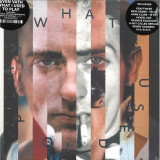
For this uniquely personal retrospective spread over twelve vinyl discs, Sven Väth takes us back to the early days of his DJ career. On What I Used To Play we meet great pioneers of electronic music, gifted percussionists, obscure wave bands, and innovative producers of a bygone 'new electronic' era. Rough beats and irresistible grooves from the identification stage of house, techno, and acid remind us not just how far electronic music has evolved over the past four decades, but how great it was to dance to EBM, techno, and house for the very first time.
If there is one protagonist of the electronic music scene who has remained curious, innovative and at the very cutting edge of music for over four decades, it's Sven Väth. His multi-layered artist albums and Sound of the Season mix compilations have been defining the genre for over two decades, and even today, he is constantly on the lookout for the next top tune to add to the highlights of his next set. At least, that's the case when he's not producing them himself as an artist or remixer. "Actually, it's always been part of my DNA to think ahead," and nothing had been further from his mind than looking back at his past, but when in spring of 2020 the international DJ circuit had to be scaled down to virtually zero, the 'restless traveler' suddenly had time. Time to stop and reflect on "how it actually was back then, at the very beginning of my career..."
"It was a great trip and with every track, beautiful memories came flooding back".
In the London apartment, he had just moved into, Sven has set up a "little music room", where he cocooned himself for several days, "to look way back for the first time and review my musical journey through the eighties, so to speak."
The interim result was six thematically oriented playlists with a grand total of 120 tracks from 'early 80s' to 'Balearic late 80s', together with excursions into afrobeat, European new wave, and EBM sounds and a few epochal techno/house tracks from the USA in between. From these 'Best of Sven Väth's favorites', the project What I Used To Play crystallized. Sven remembers how the Cocoon team reacted to his proposal: "They found the idea of making a compilation out of it MEGA from the beginning and everyone said 'Sven, go for it', but then, of course, the work really started, namely, to clear the rights and to get clean sounding masters of the up to 40-year-old tracks. There was also disappointment, of course. We couldn't clear certain titles because the rights holders in the USA had fallen out with each other or simply disappeared from the scene. In short, it wasn't easy, but now I can safely say we got the most important tracks."
Finally, after two years of research, curation, design, and administrative fine-tuning, the "little retrospective" from 1981 to 1990 is available. The exquisitely packaged, and three-kilo heavy box set is not only physically impressive, WIUTP is also the definitive record of Sven Väth's musical development. On each of the twenty-four sides of vinyl, you can trace track by track, what influenced him during which phase, and how he took off as a DJ from his parents' Queen's Pub straight into the spotlight at Dorian Gray. There and at Vogue (later OMEN), Sven became the style-defining player in the DJ booth that he still is today.
1981 - 1990: Future Sounds of Now
In the early eighties, the crowd in clubs like Vogue and Dorian Gray danced to what nowadays we call 'dance classics' - mainly disco, funk, soul, and chart pop. It was up to a new generation of DJs, including Sven Väth, the youngest protagonist in the Rhine-Main area at the time, to create their own club-ready music mix. Good new tracks and potential floor-fillers were rarities that had to be sought out and found, in order to prove oneself worthy.
Without MP3s, internet streaming, or other digital download possibilities, music didn't just gravitate to the DJ, instead, it had to be tracked down. In well-stocked record stores in Frankfurt and Wiesbaden or even in Amsterdam, London, or New York, Sven and friends sourced the material for countless magical nights. On WIUTP we can follow Sven's very personal journey through this wild, innovative era in which synth-pop, funk, hip-hop, and disco were successively replaced as 'club music' by house, techno, acid, and breakbeat. By the end of the decade, it was clear to see that these once exotic 'fringe' phenomena would soon become 'mass' phenomena.
Early 80s
Dirty Talk by the Italian-American duo Klein & M.B.O. represents the most innovative phase of the Italo-disco genre in the early eighties like no other track. Mario Boncaldo (I) and Tony Carrasco relied entirely on the original synthetic drum and percussion sounds of the Roland TR-808, coupled with the raunchy vocals of Rossana Casale and guitar accents of Davide Piatto. Of course, other tracks from this period were also influential in style, most notably Unit by Logic System, which worked as the perfect soundtrack to the laser lighting system at the legendary Dorian Gray club. With stomping beats and robotic rap interludes, Bostich by Yello also belongs on Sven's eternal playlist - after all, it caught the attention of Afrikaa Bambaataa, who invited the Swiss duo to perform at the Roxy in New York in 1983.
EBM Wave - Mid 80s
From today's point of view, the almost ten-minute-long, downtempo track Giant by Matt Johnson's band project The The, would probably not be considered an obvious club classic. However, a closer (re)listen reveals the rhythmic intricacies of the percussion overdubs by JG Thirlwell (aka Foetus) on Johnson's composition, and it becomes clear why this exceptional piece of music is one of Sven's absolute favorites. Other classics from this phase include Kaw-Liga by the mysterious The Residents, the hypnotic-synthetic Our Darkness by Anne Clark (and David Harrow), and last but not least, the somber, monotonous anthem Where Are You? by 16Bit, one of Sven Väth's projects together with Michael Münzing, Luca Anzilotti from 1986.
US House - Late 80s
You certainly can't talk about Chicago house without mentioning Frankie Knuckles. The resident DJ at the Warehouse not only gave the name to an entire genre, but also produced epochal floor fillers on the Trax label like the timeless Your Love, sung (and moaned) by Jamie Principle. Acid house protagonists Phuture also hail from Chicago, and on We Are Phuture (also released on Trax) we hear the chirping acid sounds of the legendary Roland TB-303 in full effect. Another featured classic is No UFO's by Detroit's Model 500 aka Juan Atkins, who is rightly considered the 'Godfather of Techno' even if the genre-defining track from 1985 still breathes with the spirit of hip-hop and electro from the first breakdance era.
Afrobeat
Le Serpent, by Algerian-born Abdelmadjid Guemguem, is a track that sounds completely different from everything else on WIUTP. Made in 1978, it's a monumental, rousing groove created without bass or synths, just with five congas! Even though Guem sadly passed away in 2021, his immortal, acoustic beats are understood all over the world and will continue to enrich many thousands of DJ sets for years to come. Another classic that not only Sven appreciates beyond measure is Hugh Masekela's Don't Go Lose it, Baby. In addition to being one of the most important jazz pioneers, the trumpeter and freedom fighter from Johannesburg was very experimental, integrating electronic sounds into his music in later years, in a similar vein to Miles Davis and Herbie Hancock. Dutch jazz pianist Jasper van't Hof's afrobeat project Pili Pili has also aged well. The trance-like, almost sixteen-minute-long track of the same name, manages to fill a whole side on the seventh of twelve vinyl discs in the WIUTP box.
UK-US-Euro - Late 80s
Time for a change of scene, in the truest sense of the word, and from a musical perspective, this section is like landing on another planet. First up is Andrew Weatherall's classic remix of Primal Scream's Loaded, featuring the iconic Peter Fonda sample (lifted from the 1966 biker film Wild Angels) that came to personify the mood triggered by the British Second Summer of Love in the late eighties: "We wanna be free to do what we wanna do, and we wanna get loaded...". This period also saw the emergence of M/A/R/R/S whose only single, 1987's Pump Up The Volume, became a club classic with support from DJ legend CJ Mackintosh. In this most eclectic of sections, we also encounter New York house and reggae producer Bobby Konders and his seminal Nervous Acid.
Balearic - Late 80s
Those who know him, know that Sven had already lost his heart to the 'magic island' of Ibiza as a teenager, so with that in mind, the WIUTP project couldn't end without a Balearic chapter. Inspired by Manuel Göttsching's E2-E4, the immortal, eponymously titled Sueño Latino belongs in there without question. Equally popular on the island was, and still is Break 4 Love by Raze, which thinking about it, would also fit perfectly into the house chapter. Last, but not least, there's an overdue reunion with Sven Väth himself, in his role as frontman of the successful Frankfurt trio OFF. Together with Michael Münzing and Luca Anzilotti (later of Snap!) this 'Organization For Fun' created the off-the-wall club hit Electric Salsa in 1986 which incidentally turned into an international chart smash, putting Sven in the enviable position of having to decide between pop stardom and a DJ career. Well, we all know how that decision turned out and the rest, as they say, is history. A not insignificant part of his story is What I Used To Play. Enjoy!
- A1: Inner Winner
- A2: Hardwood Classic
- A3: Decades
- A4: Rain Delay
- A5: In My Cups
- B1: Son, Even Nolan Ryan Has His Bad Days
- B2: Ferocious Porches
- B3: Shaky Warrior
- B4: Let's Talk Money
- B5: Ancient Patience
- C1: Hang Time
- C2: Tarot Cards & Arrow Shards
- C3: Cocaine Mansion
- C4: No Dance
- C5: Cheesecake
- D1: Sky High
- D2: Rockers
- D3: Slumps
- D4: On The Sparrow
- D5: Maggie Valley
Aaron Mader, known professionally as Lazerbeak, is a Minneapolis-based artist and producer. Over the past decade he has collaborated with everyone from reigning pop queen Lizzo (producing her entire debut album), Doja Cat, Dessa, bluegrass heavyweights Trampled By Turtles, indie supergroup GAYNGS, and the Grammy-winning Minnesota Orchestra, all while continuing to build and create with life-long comrades from his own Doomtree artist collective and notching production credits on everything from Lin-Manuel Miranda’s Hamilton Mixtape to the dark electro-pop of Banks’ critically acclaimed III album. Aside from being a founding member of the Doomtree collective, he is also the CEO and General Manager of Doomtree Records, handling the day-to-day operations, management, and inner workings of the crew and label. His latest solo album Lava Bangers II, the second in an on-going instrumental beat tape series, is being released in two-song monthly installments throughout all of 2022, culminating in a 20 song limited edition 2xLP physical release in January 2023.
After Jose Manuel’s highly acclaimed album Janara on Optimo Music and the curation of the V.A. compilation Milagros Del Ritmo, he returns with his new EP Alchemy, the second vinyl release on Archaic Future Sounds.
It’s a queer psychedelic trip through electronic reinterpretations of tropical ritual chimes from South East and Southern Asia with a touch of Tribal and Acid House. Chugging beats seasoned with percussive flutes are enveloped by warm synthesizer sounds, heavy basslines and exotic melodies.
The antithesis is the trippy remix produced by Front De Cadeaux, who released on Antinote, a dub influenced future classic of deconstructed club music and as a wrong-speeder you can always choose your own tempo! Influenced by 90s Afro Cosmic Music, magic mushrooms and LSD it’s perfect for all passionate DJs, clubs and dancers!
Following the Kota Motomura and Exterior debuts earlier this year, it’s another first from Hobbes Music. Maastricht Research is a brand new project from Scottish artist Jonathan Hunter producing ambient/drone style material. Jonathan was part of the quartet behind the much-loved Slabs Of The Tabernacle parties at Glasgow's now-legendary La Cheetah club back in the late 00s/early 10s. He's also one half of The Three Lives, whose debut EP, Mud & Flame and follow-up Across & Beyond were released recently by Glasgow's Full Dose label.
Written and recorded over a number of years, whilst living in Amsterdam, Glasgow and Dublin, the Maastricht Research vibe is about as horizontal as it gets and is the perfect soundtrack to long, lazy days and balmy eves in the park, by the pool, in the bath etc! There are zero beats. It's proper ambient / drone music and could well have been beamed in from another dimension, planet or century altogether, including field recordings, atmospheric fx, lush and eerie pads, with the occasional snatch of a weird vocal and generally other-worldly sounds.
The record owes a debt to the likes of Manuel Gottsching, Cluster, Susumu Yokota, Detroit Escalator Company, Astral Industries and Alessandro Cortini, among others…
Mastered by Keith 'Radioactive Man' Tenniswood, Idle Animation will now be out at the end of October on extremely limited edition 12" vinyl, with CMYK printed labels, contained in a plain white sleeve with 3mm spine (reverse board for natural finish) including full colour artwork plus titles* printed using a Risograph on 135gsm ‘Context Natural’ A3 paper and finally all packaged in a polyurethane bag. *printed on the ‘Obi flap’ - excess paper folded around the spine.
"Loving it. Beautiful stuff here - all tracks doing it for me" ROLANDO (UR)
"This is great! Will use in on Ambient Flo" AUNTIE FLO
"Really diggin the MaastrichtResearch release" INTERGALACTIC GARY
"Love this, thanks for sending" DOMENIC (Sub Club)
"This sounds fantastic!" NICK CRADDOCK (Gateway To Zen)
"Really liking the sound of the record. Dublin air tugging on his emotive side by the sounds :)" JOHN HECKLE
"Mesmerizing music, something we all need to listen to because of so much chaos and stress in the world...with this, just sit back and zone out for a bit and regain balance...." DAN CURTIN
"This is nice music, thank you for sharing it with me. A3 is the one for me, really nice vibe" ARIO (Astral Industries)
"More emotive and soulful ambience and drone from this red hot label. Maastricht Research have been reviving the Poolside revellers at Pikes morning sessions this summer" DRIBBLER (Pikes, Café del Mar, Ibiza)
What Are People For? make the perfect kind of dystopic dance music for our times. Born from a collaboration between artist Anna McCarthy and musician/producer Manuela Rzytki, the band could be the illicit lovechild of Tom Tom Club and Throbbing Gristle, displaying the ideal balance of hip shaking vibes and dark provocative content.
On their collaborative debut, McCarthy and Rzytki share songwriting duties. The album was produced by Rzytki herself. They are joined by Paulina Nolte on backing vocals and Tom Wu on drums, while Keith Tenniswood mastered the record.
The whole project stems from a publication and exhibition by McCarthy laying the foundations for the content and lyrics of the album, which is humorous, poetic and political. As a lyricist, McCarthy uses her storytelling ability to explore anxieties and desires, digging into free surreal word associations reminiscent of Su Tissues’ tongue in cheek experiments with Suburban Lawns, but also explosive and gripping like a Kae Tempest rap.
Rzytki’s precise sonic palette and talent at penning structured bangers perfectly complement McCarthy’s playful and subversive language manipulations. Rzytki's beats are rooted in old school Hiphop loop principles and an authentic love for the analog. Her use of an array of synthesizers and other "real" instruments adds to WAPF's depth, soul and sincerity.
The album opens with a joyful anthem, full of energy and melodic hooks. The audience is confronted with the quintessential titular question What Are People For? and told that they are just a mere disposable commodity. Throughout the album, lyrical themes revolve around underground aspects of society, violence, political ideologies, sexuality and mysticism. The content is deep but the album is as danceable as it is biting.
73, with its drum machine hysteria and hypnotic synth basses is a a text collage written on the 73 bus through London, consisting of situations and conversation snippets encountered along the way. Drones indulges in the narrator’s paranoia as they feel they are being watched by cigarette machines, whilst the haunting choir is half spoken, half sung, ending on the orgasmic chanting of the word “mummy”. Nursery Rhyme brings more soothing incantations. There is definitely an affinity for fairytales, albeit adult ones and especially the anarchistic ones such as The Moomins, who were a consistent influence on the band. The artwork for the record, created by McCarthy, is a beautiful children's book-style painting of the group in a forest, seemingly about to engage in a magical encounter to which we are invited.
WAPF? have absorbed and digested a variety of influences. Trip hop, Punk and Techno are rubbing shoulders on Party Time. 1977 was coined “Summer of Hate” in the UK and unsurprisingly in WAPF?’s Summer of War, ethereal singing alternates with a powerful marching Garage/Grime chorus reminiscent of street protests and UK culture.
Mz. Lazy starts like an invitation to meditation and references Gertrude Stein’s book Ida in which she develops the idea that publicity is a new religion and people are now famous for being famous. Repressed anger explodes into violence and freedom at the end of the song as our heroine eventually grabs an axe to destroy her oppressors.
Fantasize, on its part, is raw, sexual and liberating while the closing track Bring Back the Dirt is a welcome hymn into a world that is becoming more and more sanitised.
While exploring deep subject matters throughout their album, WAPF? manage to remain satirical, exciting and funny. Each and everyone of their songs have a cathartic quality.
The visual identity of the band is intrinsic to their appeal. Live, they are eccentric, wild and unapologetic, wearing see-through costumes, bright miniskirts and intricate headpieces while delivering their songs with sharp intensity. Their performances radiate queer sexiness and transcend B52's thrift store aesthetics, creating a space for collective dreaming.
WAPF? is a rare combination of contemporary punk energy, irresistible groove, absurdist dry humour and astounding depth of field. They have the mighty power to create a party with their music and soon you will find yourself lifting your arms as if controlled by an external force, to chant: WAPF? WAPF? WAPF?
– Marie Merlet (Malphino, Little Trouble Girls, London)
After the 2021 Re-Release of “Schwingungen” (MG.ART612) and together with “Seven Up” (MG.ART613) we proudly announce “JOIN INN” as Part3 of the authorised 50th Anniversary “A.R.T.” Re-Edition Series.
“JOIN INN” is the fourth album by Ash Ra Tempel. It was recorded at Studio Dierks and originally released on LP by Ohr Musik-Produktion, catalogue number OMM 556032. Each side of the LP comprises one long track.
In 1972 ASH RA TEMPEL teamed up again with Klaus Schulze during the recording of Walter Wegmüller's Tarot album, and after one of the recording sessions, ASH RA TEMPEL members: Enke, Göttsching and Rosi, together with Klaus decided to "play it again" in a late night session. This recording led to the birth of the “JOIN INN” album, as well as two legendary last concerts in February 1973 in Paris and Cologne.
Manuel Göttsching recalls Hartmut Enke on bass and Klaus Schulze on drums being a dream-team rhythm section for him to play his guitar, especially here to hear on “Freak'n' Roll”, that was ingenious and not to replace ever since.
It was the last recording ever where Klaus Schulze (who sadly passed away this Year) played the Drums and also Hartmut (the Hawk) Enke soon after quit the Bass and music forever.
Join Inn marks the end of the collaboration with Klaus Schulze.
However, together with Ash Ra Tempel, their eponymous first album, which will be released in 2023 as the final edition of our Series, it is considered a highlight of the Krautrock movement.
As for the music itself we again refer to Julian Cope´s review from his book “Krautrocksampler” (published by Head Heritage, 1st ed. 1995):
""Freak’n’roll” fades in like it never started - just was always there from the beginning of time, a dry wah-guitar freerock riff-out unlike any of the other Ash Ra Tempel LPs, and not much like any other music. Yes, there are bluesy riff but none of them have a blues context. Manuel Gottsching’s guitar is so confident that he sometimes drops down to a simple major chord groove, whilst the Hawk pushes that round woody bass into strange overlapping rumbling melody. And ... it’s the return of Klaus Schulze on drums which propels “Freak’n’roll” to its height. No-one but Klaus has the ability to
transcend rock’n’roll in such an on-the-beat non-groove-y way and still send sparks of light into the cosmos as he does it.
-> continued on page 2“Freak’n’roll” is so egoless that it even works at a quiet volume as meditational music. Themes rise from the high tempo pulse beat, then are carried along the muscles of the song into the main area where the riff actually becomes real and expressionist for just long enough before slipping back into the musical fabric of the song.
As usual with Ash Ra Tempel, the other side is an enormous drift piece called “Jenseits (The Next World)”, a beautiful Klaus Schultze meditation of haunting synthesizer chords over which Rosi Muller tells the story of the Cosmic Couriers’ meeting with Timothy Leary. Gradually, the pulsing guitar becomes increasingly intense and turbulent, but Rosi never sounds less than freaked out. Essentially, “Jenseits” is a precursor to Klaus Schulze’s later spacey minor-key grooves.
Unfortunately, this was the last Ash Ra Tempel album in its particular ‘series.
(…) After “JOIN INN”, Manuel Gottsching took over the Ash Ra Tempel mantle alone.”
This mega-rare 1969 album pays tribute to the Bronx and Brooklyn neighborhoods where young Latinos had invented the boogaloo a few years earlier. This record highlights the quality of Peruvian boogaloo and the talent of musicians such as pianist Otto de Rojas and percussionist Coco Lagos. First time reissue. In the mid-sixties, when young Latino musicians in New York fused Afro-Cuban rhythms with rock, soul and jazz, they had no idea that their boogaloo bang bang would reverberate just as strong and loud in a distant South American country. From 1955, La Sonora Macedo, took Cuban music to every corner of Peru, backed the leading musicians of the Peruvian tropical universe, such as Ñiko Estrada, Joe di Roma, the double bass player Pepe Hernández, and the trumpet players Tito Chicoma and Charlie Palomares. All diehard fans of Cuban music, always alert to any new artist arriving from the island. In the early sixties, light rock, doo-wop, ballads, Italian songs and bossa nova paraded across Lima's stages, making performances by Cuban bands, previously so frequent, a thing of the past. Moreover, the unanimous success of the Beatles from 1964 onwards, gave the impression that music from the English-speaking world would dominate the rest of the decade. But this was not the case. In large part because of Manuel Guerrero's good relations with U.S Latino labels, such as Alegre Records, which released the initial recordings by Johnny Pacheco and Charlie Palmieri, allowing listeners in Lima to follow the development of the salsa movement almost from the beginning. MAG was undoubtedly the best representative of these new sounds. In 1969, the LP "Acabo con Lima, huyo pa' Nueva York" was released on this label, a project which brought together three figures from Lima's show business world: Manuel Antonio Guerrero, owner and founder of MAG, who wasn't shy of joining in on the chorus and percussion during recordings, Pablo Villanueva "Melcochita", a multifaceted artist from a talented musical family from the popular district of La Victoria, was responsible for the vocals and percussion on the album. And the third Lima show business figure in this project was the musician, singer and comedian Alberto Montroy Laostervened, who gained fame in the sixties while still in his twenties for his imitation of Cantinflas, the Mexican actor. Alberto bore a devilish resemblance to Cantinflas, not only in his gestures but also physically. Under the name of Pepe Moreno "Karamanduka" he also went on to record songs abroad such as "El boogaloo de Cantinflitas". "Acabo con Lima, huyo pa' Nueva York" was immediately re-released in other countries, highlighting the quality of Peruvian boogaloo and talent of musicians such as pianist Otto de Rojas and percussionist Coco Lagos, who feature prominently on the album. Songs such as 'Vuela mi descarga', 'Peruvian boogaloo' and 'Peruvian guajira', pay tribute to the Bronx and Brooklyn, neighborhoods where young Latinos had invented the boogaloo a few years earlier.
One of the most legendary LPs from Uruguay remains a hidden treasure in the rest of the world. It is the first LP by singer Diane Denoir. Diane was a regular in the “Conciertos Beat” (“Beat Concerts”) of Montevideo's 1960s scene where she performed with Eduardo Mateo on guitar (leader of El Kinto, one of the most influential bands in "candombe beat", and the ones who coined the term), Roberto Galletti on drums and Antonio Lagarde on double bass. Diane was also Mateo's muse throughout the early years of his career, he wrote several songs for her, among them “Esa tirsteza,” “Y hoy te vi,” and the classic “Mejor me voy.” Eduardo Mateo would become one of the biggest names of all times in Uruguay's musical scene. Diane, instead, found herself outside the country when the military coup installed a non constitutional government in Urugay in 1973 and was wisely advised by friends not to go back home to avoid trouble with the new dictatorial regime. A brave defendant of Human Rights, she had been very active against torture, thus becoming a target for the dictatorial regime military intelligence. She exiled in Argentina and Venezuela, and she later settled in Europe and didn't perform in public or record again until recent years when she returned to her home country.
On her eponymous 1972 debut album, Diane fused all her influences in one solid sound through songs created by Uruguayan songwriters (Eduardo Mateo, Urbano Moraes –bassplayer for El Kinto,– Daniel Amaro, Giuso Bellanca), plus Argentinian lyricist Edgardo Lisi. She had released a couple of 7" between 1966 and 1970, but it is her debut album –which would be her only one until her 2008 comeback– that made her legend grow among future generations of music lovers.
It's hard to name artists in the same dimension as Diane Denoir for reference, but be sure that you will love this LP if you like the candombe beat scene of El Kinto, Tótem or the Fattorusso brothers (Hugo and Osvaldo) in their post Los Shakers works, but also the bossa nova sound and even artists of their own like Vainica Doble.
Very limited edition, only 500 copies made. Remastered sound. Comes in upgraded artwork, gimmick cover with printed inner sleeve.
Kavinsky is a zombie who came back from the dead after his Testarossa crashed in 1986.
His first song, "Testarossa Autodrive", was an instant success, and was followed by two singles. In 2007, he was chosen by Daft Punk to open their now legendary "Alive" tour.
In 2011, his track "Nightcall", produced with Guy-Manuel de Homem-Christo, became the theme song for the film "Drive", and consequently a worldwide success.
Kavinsky's first album, "Outrun", was released in 2013, followed by a collaboration with The Weeknd on the song "Odd Look".
‘Cameo’ is the third and last stepping stone which lead to Kavinsky’s long-awaited new album ‘Reborn’, out on June 3rd. Its raging funky beat and syncopated synths offer the most perfect case for American sensation Kareen Lomax to deliver a warm though exhilarating vocal performance. Robot disco guitar bumps all along and that secret recipe everyone knows was invented in Paris. Yet another humongous track by the and only dead & alive 88.1 to 107.9 FM fiend.
First time reissue of the holy grail of Colombian garage music, originally released in 1967. Includes two wonderful covers of the Californian band Count Five: 'Psychotic Reaction' and 'They're Gonna Get You', as well as the stellar original 'Cosmos 901'. DESCRIPTION In the mid-sixties, when the temperature of modern youth music was at its highest, Colombian label Codiscos placed its bet on some of the emerging figures of Colombian pop and two exciting wild bands: Los Flippers and Los Streaks. After the fleeting brilliance of the so-called "new wave", the 4-song EPs released by the label -mainly for promotional use- lay forgotten on the shelves of radio stations or stored in the musty trunks of the fans who managed to buy the few copies that were distributed by the record label. Today it's incredibly difficult to find any of these EPs released by Codiscos between 1965 and 1967 in mint condition, with the original sleeve. Los Streaks didn't just come out of nowhere, it was the brainchild of the radio DJ, manager and promoter Édgar Restrepo Caro. Towards the end of 1966, while working as the manager of Los Flippers, Caro became fascinated with the idea of creating a group made up of some of the most talented musicians on the Bogota rock circuit. On January 20, 1967, Los Streaks made their debut at the discotheque El Diábolo as a warm-up act. The following weeks were crazy: they appeared on national television, starred at matinee sessions at two major venues in Bogota, and headlined at the concert organized by the music magazine Juventud a Go 67. During this short period, they established a powerful stage presence, combining exquisite musicianship and a sharp sense of humor. Their repertoire was also bold, encompassing Giuseppe Verdi, The Beatles, Pérez Prado, The Ventures or Mitch Ryder and The Detroit Wheels. The band's solid sound was perfectly aligned to Codiscos' interests. After some enthusiastic promotion by their manager, Humberto Moreno met them, and they signed a contract to release two LPs. In mid-1967 they traveled to Medellín and recorded eleven tracks that would shape the first of these albums. One of these songs was kept back for "El disco de oro a Go-Go" (LDZ-20331), while the rest were included in "OPERAción A Go-Go" (LDZ-20343), released on August 12 of the same year. It included four songs that the label had released on an EP, which decades later has become the holy grail of Colombian garage music. The stunning "Reacción sicótica" EP includes the stellar 'Cosmos 901' composed by Manuel Jiménez, the sparkling 'Escápate mi amor' (a cover of the classic 'Get Away' by Georgie Fame that they most probably heard in the version recorded by the Spanish band Los Angeles) and two wonderful covers of the Californian garage band Count Five: 'Psychotic Reaction' and 'They're Gonna Get You': 'Reacción sicótica' and 'Soy así_ y qué?'. Four hits that shook things up memorably.
The third compilation EP to commemorate the 20th anniversary of the establishment is Coastal Haze under the umbrella of Church,
An up-and-coming duo from New Zealand, Manuel Darquart, released on Wolf Music and others. The long-awaited first vinyl version of the popular song released digitally only in 2016.
The dense sound world with a wide range, including the impressive synth bass that penetrates the song, is unique to vinyl release. Including mastering by
Mr. KUNIYUKI, this work that realized a thick groove that is different from the time of digital sound source, there is no doubt that it will shake the entire space.
The up-and-coming French beatdown house S3A, whose long-awaited first album from Dirt Crew was well received. It's no wonder that he grew up listening to Detroit house,
and his unique sense of exquisite combination of sleezy beats, muffled texture and breathing such as disco funk is an excellent work.
The space is gradually filled with layers of euphoria that folds down, and the feeling of exhilaration and sophistication is irresistible!
The Japanese twin duo SATOSHI & MAKOTO, whose two albums released from YOUNG MARCO's label attracted a lot of attention, remixed the songs of SATOSHI FEAT and KUNIYUKI.
It is a remix of the work that was recorded in the label's 20th anniversary edition "20 YEARS SOUND OF SPEED RECORDS VOL.2" and was well received, but it seems that they were strongly influenced by early techno, and there is a melancholic synth work that drifts. The finish that is drawn into. It's a wonderful remix with respect for the original and a fusion of your own colors.
KUNIYUKI is in charge of mastering
Drums, please! Fortunately, Manuel Tur has plenty of them. The well-versed producer is no stranger to Running Back and a most-welcome returnee. Following the box-office success of 121 BPM on the very first Rhythm Trainx edition in 2015 – not to be confused with 121 BPM (1) on here – Tur prepared a whole collection of beating, driving, percussive, pulsating, fast and slow DJ tools, rhythmic repetitions and acrobatic adventures. A dozen tracks (including digital exclusives) Ranging from 100 to 150 Bpm, you get it all and then some: from tribal trace elements to Windy City patterns, New York house fabrics, robotic funk and some of techno’s DNA. Saves the (last) night of any DJ and your next mixtape.
Revelers Stone Bricks, musical project from north west Italy, launch their “Anni di Piombo”, a dreamlike travel to the obscure Italian years of lead with the featuring, on vocals, by Antonio Cuciniello aka Tonico 70, one of the most representative Neapolitan hip hop artist.
In the other side with the instrumental one, there is also “Simply B” a trip hop addicted beat produced with the collaboration of Marco Di Giuseppe at the Saxophone.
Written and Composed by Manuele Roberto, Nicola Arecco, Tommaso Delfino e Marco Di Giuseppe.
Masterered at Kasablanka Mastering Studio, Paris - Recorded At Gaina Studio, West Coast, Italy
Produced by Brad Von Gusto for Girotondo Records & Girotondo Produzioni Musicali
Most fans of hardcore Hip-Hop know and love Benny The Butcher and 38 Spesh's 2018 joint album Stabbed & Shot, yet many aren't aware that before that there was Cocaine Cowboys. The duo dropped this potent joint mixtape back in 2008. They split the project into two parts and added a couple hard-to-find bonus cuts for the vinyl release. Plus, new alternate art by the one and only Manuel "Cep" Concepcion only available on this second edition re-release. Cocaine Cowboys 1 features some early production from Spesh himself, Rick Hyde, and Beat Butcha, as well as some of Benny and Spesh's rarest freestyles. This is a must-have for TCF Music Group, Griselda Records, and BSF Records collectors.
- A1: Beat For Ikutaro (Tape 52) (Tape 52)
- A2: Vega Drive (Tape 13) (Tape 13)
- A3: Heizungskeller (Tape 66) (Tape 66)
- A4: Ear Piercer (Tape 48) (Tape 48)
- A5: Murky Water (Tape 02) (Tape 02)
- A6: Floating Bottles (Tape 04) (Tape 04)
- A7: Spoken Letter (Tape 75) (Tape 75)
- A8: Wavy Rx (Tape 57) (Tape 57)
- B1: Nachtspaziergang (Tape 40) (Tape 40)
- B2: Grandma's Kitchen (Tape 29) (Tape 29)
- B3: Steam Engine (Tape 40) (Tape 40)
- B4: Bike Spokes (Tape 02) (Tape 02)
- B5: Fernsprecher (Tape 75) (Tape 75)
- B6: Submarines In Space (Tape 07) (Tape 07)
- B7: Film Drei (Tape 09) (Tape 09)
Die meisten der für dieses Album ausgewählten Tracks sind Aufnahmen, die mit einem einfachen Stereo- (2-Track) Kassettenrecorder aufgenommen wurden. Die Situation im Studio sah dann ungefähr so aus: Drumcomputer (ohne Midi) und Sequenzer waren miteinander verbunden, liefen somit rhythmisch synchron. Die darin eingestellten Tonfolgen und Rhythmen wurden dann meist manuell mit Hilfe der Tastaturen auf die jeweilige gewünschte Tonhöhe transponiert. Oft wurden während dieses Ablaufs noch weitere Instrumente dazu live gespielt. Dabei wurden mit Hilfe eines Mischpults die Summe aller Tonquellen für die Aufnahme in einer Art "Live Recording" zusammengemischt. Da man bei einem Fehler immer wieder von vorne anfangen musste, und viele der Klänge nach dem Verstellen der Regler nur mit viel Akribie wieder hergestellt werden konnten, kamen mit der Zeit viele Kassetten zusammen, oft mit endlos langen und verschiedenen Versionen des gleichen Titels. Demo Tapes 1984-86 umfasst eine Auswahl aus den Anfängen der elektronischen Musik und merkwürdigen Klangwelten von Heiko Maile
Those who pay close attention to DJ Harvey’s sets should already be familiar with NuNorthern Soul’s next single, a fully licensed reissue of a sought-after 1980 promotional seven-inch from legendary Spanish Flamenco singer Manuel Mancheño Peña, better known as El Turronero (‘The Nougat’).
Both ‘Las Penas’ and ‘Si Yo Volviera A Nacer’ have long been secret weapons in the sets of dusty-fingered Balearic DJs, with Harvey regularly dropping the tracks during his sessions at Pikes Hotel on the White Isle.
Both tracks first appeared on Pena’s 1980 album New Hondo, a set that updated the then veteran Flamenco artist’s sound for the disco era. Whereas most of his previous albums were more traditional Flamenco affairs, New Hondo combined his throaty, effervescent Flamenco singing style with the driving grooves, swooping orchestration and spacey synthesizer sounds of European disco.
To promote the album, Spanish label DB Belter pressed up a promotional “45” featuring two of the most club-friendly cuts on the album. It’s this release that is being reissued for the very first time by NuNorthern Soul.
A-side ‘Las Penas’ is undoubtedly an off-kilter, late-night disco classic. Built around a flanged, action-packed disco-funk bassline, metronomic beats. soaring and layered female backing vocals, intergalactic synth sounds and stirring strings, the track steps up a level when ‘El Turronero’ takes to the microphone to belt out an infectious, energetic vocal in his trademark Flamenco style. It’s the kind of cut that’s as haunting and intoxicating as it is funky and floor friendly.
Flipside ‘Si You Volviera A Nacer’, another of New Hendo’s most sought-after tracks, is another unique and righteous concoction. Looser, groovier and warmer in tone, it sees another sublime, Flamenco style lead vocal from Pena accompanied by even funkier bass, spiralling ’70s synthesizer sounds, sweaty drums and some seriously exotic instrumental flourishes (think sitar and kalimba). It’s every bit as alluring as the more driving A-side, and equally as playable.
Both tracks may be unusual in comparison to the artist’s other releases, but they expertly capture a moment in time, when disco dominated dancefloors all over the world and inspired even the most traditional and historic of European musical styles. Quite a number of flamenco-disco records were made in Spain during the late ’70s and early ’80s, but very few are quite as magical as these.
It's 2020, it's virus season. For our first release on Kommerz Records we asked seven techno and house producers, we admire, to contribute six songs to listen to at home, rather than on the dance floor (as those are closed down up to this day). The result are six jazzy downtempo songs by DJ Piper of techno's most hyped live act Fjaak, Glenn Astro & Hodini, Cuthead, O-Wells aka Orson Wells, Manuel Fischer and Qnete. Holla @ our first compilation "Kommerz Season 1: Anti-Virus". "Kommerz Season" will be an ongoing compilation series, which we consider as one core of the label. We will use each season to showcase a new and unexpected take on beat making and instrumental music. "Kommerz Season" pays respect to the producers behind the music.
"Kommerz Season 1: Anti-Virus" was a spontaneous idea (as we didn't expect any of this Corona madness). Since we knew many techno and house producers share our love for instrumental hip-hop and downtempo music (while being stuck at home, too) we started to ask around friends and friends of friends. The tracks contributed by this deluxe cast speak for themselves. on our label's very first release.
Being aware this record features an all male and all white line-up we acknowledge our responsibility as a record label to work towards diversity in music. Our future discography can be held proof for that. Right now we're working on "Kommerz Season 2" featuring a diverse, 100% womxn line-up. Additionally, we're donating 10% of our benefits from "Season 1" to "No Shade", a Berlin-based collective running club nights and DJ training programs for female, non-binary and trans DJs with a strong focus on racial diversity.
We are back on wax again with a very special release. It means a great pleasure for us to have one of the pivotal figures of the Madrid underground techno scene on board, Herr Unkle Fon.
Some years ago, Madrid clubscene was formed by conventional clubs in conventional locations with conventional opening and closing times and usually, conventional programming. Manuel Cano then founded Utopía Secret Society and things changed forever for the city’s underground nightlife.
Now as you may have noticed there is no club scene at all, neither conventional nor illegal, sign of the times.
Musically speaking, Manuel started as a guitarist and soon evolved into studio engineer, label owner, club promoter, record shop owner (Ater Cosmo), social agitator… and adventurous character that reflects in his productions all his knowledge of the dancefloor.
Jisatsu is a slow paced broken beat surrounded with smooth textures, soon joined by a repetitive synth line that adds the hypnotic component.
Genroku Ako follows with a cosmic approach, continuous percussive and synthetic lines run together on a fast BPM exercise obsessive, linear and mental.
On the flip side, 47 Ronin uses dreamy stabs over a relentless groove mixing liquidity with tension.
Closing the release Shuppatsu is an almost beatless exercise, just with 909 rimshots, toms and snares spiced with ethereal components
A timeless futuristic release that can wait on your record bag until things go in better directions.
Musique Pour La Danse presents Roomservice, Dutchman Orlando Voorn's forgotten yet unforgettable IDM-leaning, home-listening electronica / techno album from 1994 under his Living Room alias, originally released on the producer's cult Night Vision label.
Praised unequivocally by those lucky enough to have heard it, this criminally underrated record nonetheless deserves pride of place when talking about forward-thinking electronic music from the early 90s.
While it is widely acknowledged that Orlando Voorn's productions are one of the most fascinating prisms through which to experience a European take on the Detroit sound, Roomservice is also a strong reminder that the paradigm shift from sweaty raves to enhanced home listening, championed by Warp's Artificial Intelligence series, early Rephlex releases, along with projects such as The Black Dog, Plaid or Autechre was in fact not only limited to British artists.
As its name indicates, The Living Room is not geared for warehouses but instead interested in a more intimate and domestic setting. As such, it does not contain over the top bangers, but it's hard to find any filler in this album where all the tracks are killer, catchy and memorable. All displaying a sophisticated yet immediate focus on warm melodies and grooves no heavier than a feather, these emotional cuts provide a wonderful and intricate soundscape for introspective listeners to explore, and they will surely find echoes of ideas developped by Manuel Gottsching, Steve Reich and Pat Metheny scattered accross the album.
While some tracks are rhythmic and would fill a dancefloor in a second with their four to the floor or broken beats, the album also gives room for more ambient excursions to occur and develop brilliantly. But once again, it's more likely you'll end up dancing on your couch rather than dozing off.
2020 might be the most difficult year in recent history for dancefloors worldwide, yet that's not going to stop Musique Pour La Danse from reissuing this gem of an album for listeners, dancers, and DJs of today and tomorrow.
Words by Ed Isar.
Dick Verdult, a.k.a Dick el Demasiado is the Philip K. Dick of multi-disciplinary art, the Moby Dick of “cumbia lunática”, and the Charles Dickens of literature and experimental cinema. He first fell in love with cumbia when he heard his nursemaid singing the classic “La pollera colorá”. From this moment on, he adopted the genre and reinvented it, in a perpetual degeneration called Cumbia Lunática, twisting up the elements of traditional cumbia, the “cumbia of the mucamas”, to create an anarchotropical vertebral rhythm, one which supports every moving part.
Celulitis Illuminati is the powerful debut of the anarchotropical gentleman knight of the abstract, Dick el Demasiado, eight dangerous tracks recorded for the first time on vinyl, songs that, upon listening, will liposuck all that grotesque accumulation of adipose tissue out of buttocks and brain. They interweave an amalgam of South American folklore and the cables of electronic music, the plugged-in Ranqueles indians, as in “Asi Que Los Que Sí” (“So That Those Who Yes”) on Side A, surrealist and lugubrious beats, poetry made song and “the dead man’s drool is good for painting watercolors”, as he sings in “Búho Sin Un Ratón” (“Owl With No Mouse”).Euphony that will abduct you away to a viscous street party with “Son Cosas De Hoy” (“They’re Things For Today”) and to an eclectic and excessive dimension with “pero bien bweno” (“but very proper”).
Side B is pure dynamite: “Mecha flan” (“Pudding Fuse”), “Sábado cultural” (“Cultural Saturday”) and “En la jeta” (“In the face”) represent the perfect blend of Lucho Argain (La Sonora Dinamita) and Muslimgauze (Bryn Jones). On top of this, the album includes an as-yet unheard gem, “Llama Mi Abogado” (“Call My Lawyer”), produced by Dick himself and Manuel Schaller, the telepathic mage of the Theremin. When the Dutchman stepped off the boat and onto the block, as well as offering us the TV set, the sculpture of a deranged English woman who devours islands like they were sandwiches, the synthesizer, the sound effect, the African drum, the maraca, the indigenous whistle, he obtained for us the song and the stanza, he provided us with the language and the poetry, the truthful, the epic of the ugly. Cellulite for mortals, cumbia lunática for the enlightened ones! Alfredo Padilla (Trans. Komurki)
From the people who brought you Disques Sinthomme and Ghost Town comes a new imprint LESDK.
Bringing back that NYC Lower East Side grime, LESDK will feature edits as well as new work from Dennis Kane and his circle of proper low-lifes...
Ghost Town and Disques Sinthomme featured contributions from Brennan Green, Richard Sen, The Beat Broker, Bicep, Jose Manuel, and Cosmic Metal Mother, as well as edit monsters like Jeff 'The Drunk' Overton and Cazbee. Kane will be helming this label, curating work and providing his own productions and remixes.
LESDK
Starts off side A with 'Real' - A soulful disco romp that has a gospel force as well as a powerful vocal performance. The song grooves from its first beat, and pushes the energy as it builds. "Now it's time to be real..." Edit as manifesto - Pure heat! The edit work here comes from one of the OG's of serious digging, Senior Reyes aka Jersey Pete.
Side B brings 'Action' as its first track, complementing the A Side, this is some dirty late night Philadelphia bar nastiness, mentholated disco with a humid female vocal, "I like to party, I like to flirt..."
Side B closes out with 'Motion', a slice of cosmic funkiness that laments a love that is not happening while a thick bassline moves the proceedings along.
This song has heartbreak and the haze of an early morning on the dancefloor.
Three essential edits for the DJ to bless the party people with.
Dennis Kane is a DJ and producer based in NYC, he has run the Disques Sinthomme and Ghost Town labels and is also a partner in the recording group SIREN, (with Darshan Jesrani) on Compost records.
Kane has produced numerous tracks and done remix work for Cantoma, Liz Torres, The Phenomenal Handclap Band, and Hokis Pokis among others.
He has been a DJ in NYC since the mid 90's holding down numerous residencies and touring worldwide.
Summer is coming sooner this year, and you can tell from the heat of the two latest releases from Slow Motion: yes ladies and gents, Italian Dance Wave Compilations are back! The first of the two, “Italian Dance Wave Disco Sette”, is here to delight you: starting from a half Italo and half Asian influenced Altieri track, killing it with a dancefloor belter that will make you sweat the night away, raving sensations guaranteed. Lukebox (Fabrizio Mammarella and Umberto Saba from the duo Loudtone) will serve you a slightly more downtempo, modular, weirdo beast that will make your head bang without you even notice: banger. Back on your turntables, is also Robotalco who is providing some proto-house extravaganza and adding some charme to the dirty, chunky beats of the compilation. Last but not least, José Manuel, delivering a touch of biting deep house and electro tribal feels to close the gap, and make us scream “hell yes”.
* Second Album From La Stampa, The Six-piece Band From Berlin, Hamburg & Geneva.
* Includes A Bespoke, Full Colour, Fold-out Poster
* Artwork By The Acclaimed Artist, Shirana Shahbazi.
* Design By Manuel Krebs From Norm.
* Edition Of 500
Closely Working With Legendary Producer Tobias Levin From Hamburg, The Band Have Developed And Recorded The Ten Songs Over The Course Of Two Years. Picture Northern Creatures Sweating Out Their Melancholy In The Southern Sun. As The Wind Carries The Beats From The Beach Disco Across The Bay, Chopin, Vodka Shot In Hand, Imagines Writing Music Based On The Build Of Crystals. To The Side Of The Composer, The Rhythm Section Gets Restless. The Thrum Of Eastern European Electronics Pulsates In Their Brains. 'don't Work Yourselves To Death', One Of Them Shouts, 'it's Not Our Fate. Let's Go Dancing, Everything Must Change', Adds Another, And 'sun Screen's On The House!' This Is A Glimpse Of The World Bonjour
Günter Schickert, four decades of multi-instrumental cosmic explorations, under Berlin's sky, above genres, and compromises.
It was memorable the time when I firstly listened to his debut LP of 1974, the monumental Samtvogel. It overwhelmed me with layers of echoing guitars roaring into space, causing a powerful release of dopamine spreading through my skin, in the way an Interstellar Overdrive', or a Richard D James Album would do. It was a proof of the divine to discover Günter Schickert, it is a profound honour today to present on Marmo his seventh album to date, Labyrinth, the first to be released on vinyl format since 1983`s Kinder In Der Wildnis.
Schickert's Samtvogel, self-published first, then licensed to Brain, equaled the imaginative leap and sonic power of the early Pink Floyd, Manuel Gottsching's Inventions For Electric Guitar or A.R. & Machines's Die Grüne Reise. What followed, from his second LP Überfällig on Sky Records to his collaborations with Klaus Schulze, Jochen Arbeit and Schneider TM, even if little acclaimed, spans a large spectrum of music styles, always through a distinctive and personal aesthetic, that is deeply linked to the one he firstly crafted back in '74, when Schickert pioneered the use of echo effects applied to guitar playing.
And now Labyrinth, a record that stands for versatility, where genres do not matter, soundscapes or life situations take over, song-writing emotions pop out, handing out a spectrum of surprises to the listener. You may find yourself flying low along steep cliffs and with a blink of eye you are thrown into a Middle Eastern scenery.
The album is divided into two parts, two different production bulks and periods of Günther Schickert's life. Side A features a selection of tracks recorded in 1996, appearing on the 2012 album HaHeHiHo, released via Pittsburgh based VCO Recordings, on a limited press of 100 units, tape format only. I felt that the visionary and emotional richness of these pieces deserved the vinyl format and a chance to reach to a wider audience.
The Raga-inspired Morning' opens Labyrinth with exotic charm and bitter-sweet nostalgia. Sieben' kicks off with the same guitar scales of the previous theme, before the motorised progressions of a Korg MS-20 synth surprisingly storm in, carrying along an intersecting multitude of filters and sharp guitar effects, flowing into an epic, paradisiac ending. Ninja Schwert' remains on astral dimensions, it is a struggle of cosmic forces, where the steady ride of a pounding beat gets embraced by different guitar layers and analogue electronic filtering. The side closes up with HaHeHiHo', a slow ballad featuring Mr. Schickert on vocals, guitar, bass guitar and drum machine - an example of simple, stripped down yet gifted songwriting that is capable to reach the heart of the listener.
Side B contains material produced between 2007 and today. The intricate, bewildering Tsunami' shows the multi-instrumental and recording abilities of Günter Schickert: a field-recorded storm with mesmerising powers, a peculiar progressive approach to guitar playing. Mysterious sinister spirits and sounds are emerging and the feeling of being lost in a pleasant trance arises. In contrast, Oase' muffles the intensity and jumps into a completely different soundscape, where in liaison with the sounds of a rolling drum tom and a desert-like trumpet, the microphone carefully captures the found sound tones of everyday-life objects and actions. Like HaHeHiHo on side A, Checking' represents the vocal gem of the B side, in a raw and direct way of songwriting like if Syd Barrett was his invisible helper. Palaver' (which means unnecessarily talk' in German) assembles different vocal recordings of Schickert into a bizarre free-style conversation through a mysterious language, where he attempts to emulate illiterate children conversating. The final track, Morning (Slide)', reprises the opening theme, this time solely performed through the caressing dilated sounds of Günter's slide guitar.
Making his first appearance on the label, Argy lays down a three-part heavyweight production for Crosstown Rebels this October. The Greek producer effortlessly showcases his unique style and ability to create music that is sure to create heat on the dance floor.
Title track Worthless opens up the EP with a bouncy groove and sensual, breathy male vocal. Next, La Vida introduces a more percussive-led beat, creating an industrial soundscape. Get Ready closes the EP with its darkly hypnotic beat, lending itself to a more tribal aesthetic.
The word 'diverse' is most definitely one that can be used to describe Argy. Having been in the game for more than a decade, he's released music on Poker Flat, Cocoon, Objektivity, Desolat and Cuttin' Headz. He's worked alongside a range of key figures in the industry including Kerri Chandler and Manuel Göttsching. Argy has proved his prowess as a DJ holding down residencies at Amnesia, Space, Destino and Pacha as well as regular appearances at Berlin's Panorama Bar.
The second release on WERK is signed by J. Manuel. The young producer has been polishing his sound ever since he first started experimenting with electronic music gear as a child. His commitment to following his own instincts rather than conforming to what was being played around him resulted in a very different aesthetic to the one commonly associated with Berlin techno.
Drive Fiction EP stands proof of that. All 3 tracks push boundaries in their own style, that being perhaps the strongest link between them. The title track 'Drive Fiction' presents old-school leads over broken beats and electro inspired pads while the A2 'Falling in Sine Circulation' is arguably the most dance floor oriented track, with a pounding 4×4 kick drum and an alarming 3/4 sine wave slaying the high frequencies. Closing the EP is B-side 'Softer', a melodic track with long, undulating pads that is nonetheless driven by a powerful rave-inspired beat.
With its second release, WERK comes to confirm the Path it seeks to travel through both parties and releases: that of the sounds less rigid. Gritty, wild and presenting a wide range of rhythmic patterns, Drive Fiction EP is a defying record. Challenge accepted
Bucketround presents "Deep Encounters Vol.1" This will be a series where we can listen to the best producers in deep house music, this time we have on the vinyl to "Jesus Gonsev" (Trouble Kids/Spain) with his magnificent ""Terminal 5"" raising the essence of deep to a state of rhythmic beauty powerful chords.
On the same side is the unbreakable ""Tominori Hosoya"" (TH Pressing/Japan) with the strong and amazing ""Strider Practice"" unpredictable melodies in tune with your mind and with each beats. The B-side is impressive also with the track by "Allstarr Motomusic"(Deepart Sounds/Switzerland) ""Pulsate"" the best musical structure agreed with synthesizers drawn from a prodigious mind. Finally we have to "Manuel Costela" (Bucketround/Spain) with the latest work ""Mind Purveyor"" a composition taken from the soul of this great producer a track very focused on the dance floor and with some spectacular and harmonious changes.
"Daito" The Temple
Sub filtered kick delays deliver heart pounding bass, followed by spacious overhead sounds of nature, leaving the tubular synthesis builds up the tension. Featuring a melodic buildup, to get any dance floor calm, quickly to be filled with warm sub bass & soft percussion, ending with a clean mixable outro.
"Balas" Molecules (J. Manuel Destruction Mix)
A mechanically arranged techno slammer, with creatively delayed sci-fi elements, pounding broken beats & subtle, clean percussion, all coming together to dominate any dance-floor!
Starting with a slowly resonating acid line, medieval sounding pads add depth & progression, followed by a sharp snare & tribal tom, all ending in a galactic buildup, with the acid line adding the energy & the pads giving the track an ancient sound.
"Projekt Gestalten" The Fight, The Victory, The Death
Starting with a slowly resonating acid line, medieval sounding pads add depth & progression, followed by a sharp snare & tribal tom, all ending in a galactic buildup, with the acid line adding the energy & the pads giving the track an ancient sound.
"Cristian Marras" Project to Escape
Hypnotic but also energetic, this is peak time techno!
The first hook gets your attention as the overdrive percussion builds you up to the breakdown. As the frequencies slowly change, the buildup arises, building up the energy levels ahead of the discreet drop, filled with high frequencies to put you into a state of trance.
- 1