DJ Support: David Morales, Dimitri From Paris, Tedd Patterson, Dj Spen, Terry Hunter, Hector Romero, Dr Packer, Da Lukas, Sebb Junior, Jo Paciello, Shabi and many others.
The friendship between Sarah Jane Morris and Mario Biondi is the basis of this collaboration, born from the desire to pay homage to Roberta Flack. The idea, proposed by Sarah Jane, to reinterpret "Back Together Again" was born a few months before the death of the famous American singer. The original song, published in 1980 on the album "Roberta Flack Featuring Donny Hathaway", included the posthumous participation of Donny Hathaway, who died in 1979. Mario Biondi enthusiastically welcomed the proposal, and considering that the original song had a strong dance component, entrusted the production to Micky More & Andy Tee, one of the most important Soulful Disco House production teams on the contemporary world scene. The duo of DJs and producers from Ancona Italy have been at the top of the charts of digital dance stores for years. The package includes a fantastic DUB version of Jazz-N-Groove, Courtesy Of Brian Tappert & Marc Pomery, The legendary American Dance producers Duo. A MUST HAVE.
quête:many more
We’re proud to unveil the very first vinyl release on Worst Date Records—a milestone we’ve been eager to share with you.
This debut pressing features four original tracks by our founder, Anas M, each one connected through a narrative thread that unfolds across the record. It’s a story told in sound, crafted with intention from start to finish.
This is just the beginning, and we hope to bring you many more releases as our journey continues.
After the last release ‘Innocence’ with Nathan Cable gaining support from John Digweed on his renowned Apple Music Compiled & Mix Series, we bring forth one of the remixers for his own single release ‘Snake Altar’.
Richie Blacker Northern Ireland’s progressive house & breaks prodigy who’s seen releases on Sasha’s Last Night On Earth, Scream’s Of Unsound Mind, Franky Wah’s Shen, Armada, Anjuna Deep and so many more including his own imprint Mess Express. We were super excited to sign the original breaks mix of ‘Snake Altar’, an amazing ethereal & euphoric progressive breaks track with its haunting ethnic vocals we just knew who could step up as the originator (this time) to remix the third Break-The-Future project.
Ray Keith delivered his signature sound system Jungle / Drum & Bass sound to which we think you’ll absolutely love, just oozing in class. The way it flows from euphoric to his heavy hitting signature darkness to deep jungle roots and back is exactly what we wanted from the big man himself and absolutely buzzing to have Ray on the label for our third release.
To finalise the package Richie Blacker delivered a 4x4 mix, now the lead track and to close off the release a beatless mix & acapella giving you some serious tools to work with… THIS IS ESSENTIAL!
At the start of this summer, following a three-year hiatus for Daphni (punctuated only by his first ever collaborative Daphni track ‘Unidos’ alongside Sofia Kourtesis), he dropped ‘Sad Piano House’. The track represented something of a continuation in the Daphni catalogue, its roots growing from Cherry’s ‘Cloudy’ and its subsequent Kelbin remix, something in that song’s makeup having a profound effect when played on dancefloors by Snaith and countless others. ‘Sad Piano House’ deployed more intangibly irresistible bendy piano to equally satisfying effect and continues to achieve similarly rhapsodic dancefloor saturation.
Though a sizeable gap for Daphni releases, between Cherry and Butterfly however of course sits Honey, the latest Caribou album and one that saw the more instantaneous and dancefloor leaning traits of Daphni peaking through the cracks more than ever before. This blurring of the lines leads to an intriguing collaboration in Butterfly’s lead single ‘Waiting So Long (feat. Caribou)’. An unlikely duo - in that both artists are the same man, Dan Snaith - ‘Waiting So Long’ is not so much an identity crisis, ego trip, or the result of a chemical spill in the Snaith laboratory. It’s simply a track that Snaith felt for the first time belongs to both aliases, and might appeal to fans of both. He has never sung on a Daphni track before, and did not set out with the intention to do so this time, and yet this strange billing was born.
Daphni music has always been Snaith’s way of hitting directly to the core of the dancefloors he spends so much of his time playing to, and those dancefloors have been steadily expanding as his name grows, with the music following suit. This album however also draws from further back with a definite kinship to the very first Daphni album, the invigorating bag of ideas that was Jiaolong.
Butterfly is a showcase of the wonderful variety and surprising twists and turns that made that album such an exciting new prospect and that still to this day make Snaith such an intriguing DJ. There are more heavy hitters here, tracks that fill those dancefloors better than anyone, like ‘Clap Your Hands’ which picks up the energy of ‘Sad Piano House’ and flips it, exposing the gritty and intoxicating underbelly of Snaith’s hitmaking side, while retaining the playful urgency that runs through all of his work of late. Meanwhile ‘Hang’’s comic-strip horns are unpinned by gleeful force, unrelenting and thrillingly unshakeable. Elsewhere though comes a clutch of other tunes that might creep out somewhere more off the beaten path, a path Snaith has never stopped seeking in amongst his larger billings. ‘Lucky’ is squirmy and elusively intoxicating, ‘Invention’ skitters down meandering, inviting corridors, ‘Talk To Me’ grumbles and broods in the murk, and ‘Miles Smiles’ could roll on endlessly, so confident in its groove. There are no obvious peaks in these tracks or unifying moments, in fact many of them really have no business being on the dancefloor at all, and yet in the right setting, they could be the most fun to be had all night.
One such club is a good microcosm for the ethos of Butterfly as a whole. “Around the time I was finishing up this album I played a long set in a club called Open Ground in Wuppertal, Germany.” Snaith recalls, “It’s kind of, in one sense, the platonic ideal of the kind of club I’d want to play in. Every single decision has been taken, at great expense, with the aim of making the perfect sounding medium sized club room. But on top of it being the perfect acoustic environment it also is run by an amazing collection of people in a way that gives it a sense of community that dance music at its best provides. It is an absolute pleasure to play in that room to a crowd of people who come from all over. Playing in there you feel like you can play anything, and I played works in progress of pretty much every track on this album in my set there. Don’t get me wrong, I love playing a short set at a festival or in a more raw warehouse kind of club where you bang it out and only really functional music works but on record I guess the point of these Daphni records is to keep in mind a more expansive idea of dance music where the parameters are broad and the church is broad. I think that actually, putting really functional stuff next to weirder tracks (both on an album and in a dj set) might be the thing that’s still most interesting to me.”
This is the feeling that’s most palpable on Butterfly, and in every single time you see Snaith DJ. Right from the inception of the Daphni alias - and even before that – the thrill of trying stuff out, pushing at the boundaries has always been there and on Butterfly is present in all its twists and turns. It leaps all over the place and yet it hangs together, never feeling like a grab bag of dancefloor utilities but rather a distillation of all the strings to Snaith’s bow, exhilaratingly human and unified by one singular concept – simple and joyful exploration.
- A1: ) | Anuradha Paudwal – Gayatari Mantra
- A2: ) | Baba Zula – Arsiz Saksagan (Cheeky Magpie)
- A3: ) | Orchestra Tout Puissant Marcel Duchamp – So Many Things (To Feel Guilty About)
- A4: ) | Christopher Martin – Playing Games With My Heart
- B1: ) | Geir Sundstøl – C’est Vide En Ville
- B2: ) | Brother Ah – Transcendental March (Creation Song)
- B3: ) | Les Abranis – Therrza Rathwenza
- B4: ) | Sparkels – That Boy Of Mine
- C1: ) | Maximum Joy – Stretch (7” Mix)
- C2: ) | Chillera – Schax
- C3: ) | Elijah Minnelli – I Hope The Goats Come Back (Ze-Hood De-Sham Lichdal)
- C4: ) | Siti Muharam – Pakistan
- D1: ) | Muriel Grossmann – Traneing In
- D2: ) | Catford Gyrations – Land Of 1000 Presets **
- D3: ) | Living Daylights – Let’s Live For Today
- D4: ) | Natalie Bergman – Shine Your Light On Me
Yellow / Pink Vinyl[49,37 €]
Crate digger and music enthusiast James Endeacott compiles ‘Unlock Your Mind With Morning Glory’ for Two-Piers Records – A glorious heady mix of the weird and wonderful eclectic music from his radio show ‘Morning Glory’
“One weekday afternoon towards the end of 2017 I sat in The Lyric pub on Great Windmill Street, Soho with my dear friend Raf. I’d just finished another of my weekly Soho Radio shows and was starting to think about the next one. Raf had been on as a guest playing some of his favourite tunes of the day. We had a few drinks, told a few stories and started to plot and scheme. It was always a dream of mine to have a daily radio show. Radio had always informed and excited me from my early teens listening to John Peel under the blanket when I should’ve been either sleeping or revising right up to the present-day musical excursions of NTS, WFMU and numerous internet based stations.
We decided to speak to Adrian and Dan who ran Soho Radio to see if they’d be up for us doing a daily morning show. To our surprise they were into the idea and within 5 minutes Adrain came up with the name Morning Glory. We all liked it. We were all excited. It was all systems go. In December 2017 Raf and myself started a daily 2 hour show. We did the show together, got guests in and the musical policy was whatever we felt like that day. After several months Raf found the mornings too much. Off he went into the distance occasionally coming back with a smile, and a bag of new music. I carried on alone and then suddenly in March 2020 the world stopped, and we went into lockdown.
We set up in my house in Catford, Southeast London and carried on. The show became 3 hours a day and I started to invite friends, record labels, record shops, bands etc.. to supply me with hour long mixes that I played every day. The show took off during this time. My musical tastes expanded as I spent all day long searching for new sounds from around the globe. People started to send me more and more music. I became obsessed with the show. The audience started to take to social media and ask for certain tracks or artists to be played. I got listeners to make me mixes to play on the show and I did several phone interviews with musicians while playing some of their favourite tunes.
I was grateful that Soho Radio left me to my own devices. They never told me what to do or what to play – they trusted ma and I trusted my instincts.
The music on this compilation is not a ‘best of’ it’s just how I felt when I compiled it at the start of 2025. Apart from a couple of tracks they are all things I’ve come across since the show started in December 2017. If I did a list of tracks now I’m sure it would be completely different. Surely that’s the point. We never stick in one place. We are always moving and searching. Always trying to unlock our minds. Put it on. Take your time and let it take you somewhere” James Endeacott 2025
repressed !
Francois Kevorkian is a name that should need no introduction. With over 40 years in the game FK has occupied numerous roles in his long and storied career - drummer, DJ, A&R man, remixer and producer - his skills know no boundaries. Having DJ-ed during the nascent days of club culture in NYC alongside Walter Gibbons, Larry Levan and more, Kevorkian has been there from day one. Years spent in the seminal clubs of the day sharpened his ears and his prowess behind the mixing desk saw him become the A&R man at the legendary Prelude records in the early 80's, this in turn led to him working with everyone from The Eurythmics, Depeche Mode, Erasure, D-Train, Yazoo, The Smiths, Kraftwerk and many many more. A true NYC original and legend, Kevorkian is still active today and the respect he commands amongst his peers has never waned, his adventurous extended DJ sets, seminal mixes and remixes and his open ears and open mind have ensured that he will go down in history as a musical pioneer.
Rewind to 1995. Kevorkian's 'Wave Music' imprint has come into existence with a handful of releases. No-one could imagine that his self-produced 'FK EP' - the next release on the label - would be a stone cold classic. Easily one of the most consistent, exciting and solid EP's to come out of NYC during this golden era of dance music. Across 4 tracks we are taken on a sound journey through a world that is undoubtedly informed by FK's time as an engineer, DJ and most importantly, a music lover.
EP opener 'Hypnodelic' brings us into this world, a deep, driving cut that fuses the dubbed out vocals of Freddie Turner against FK's keyboards and immaculate drum programming, oozing cosmic electronic soul, this track was destined to be a future classic. 'Mindspeak' also boasts some tough drums and with a respectful nod to Chicago is an incredibly mixed and arranged peak-time cut that will drive your dancefloor into deep space again and again. 'Edge Of Time' welcomes us to the flipside of the EP, wild Latin percussions, tablas and old school horn stabs drive this monstrous cut, not to mention cavernous dub FX and that huge bassline that just doesn't let up. Essential. 'Moov' rounds things out on a more subdued, stripped back vibe. Reversed percussions and spaced-out synth chords lace this beautifully understated and warm track, one that builds into a crescendo of melodies and hypnotic rhythms and the perfect way to close what has been a truly special musical journey.
This essential reissue of the 'FK EP' has been fully licensed, sanctioned and remastered in conjunction with FK from the original master sources by Optimum Mastering, Bristol UK, repressed onto high quality vinyl and packaged as the 1995 release was. A truly classic record indeed, available again for 2018. Welcome back Wave Music!
Call it soulful dream pop, proto-trip hop or downtempo jazz - "Tender Rain" is the follow-up LP to the successful "This Is" album and continues to deliver Ghia's unmistakable sonic magic. On this release, the band shares a selection of previously unreleased vocal songs alongside instrumental pieces, all carried by their trademark chilled and almost meditative atmosphere. Most of the recordings date from the early 1990s, while early demo versions of "New Love" and "Teardrops in Your Eyes" may reach back as far as the late 1980s.
The album opens with the title track "Tender Rain," where smooth vocal jazz harmonies merge effortlessly with soulful pop elements. The track originally appeared only on CD in 1993 on the small Mikado label run by renowned German guitarist Ulli Bögershausen. The band recalls that the piece was first pre-recorded using MIDI equipment and a Tascam 16-track recorder before being completed in the studio with drums by legendary drummer Mickie Stickdorn (Carsten Bohn's Bandstand, Cyklus, Elephant, Lake), percussion by Corinna Ludzuweit, and the final touch-Lisa Ohm's remarkable vocals.
At the time, Mikado was also looking for instrumental material for radio and synchronization use. They selected the track "Tropfstein" for a sampler CD and requested more pieces. In response, "und recken ihre schlanken Glieder" (roughly translated as "and stretching their slender limbs") was composed especially for the project, as Frank Simon remembers. Both tracks appeared on the now rare Mikado sampler CD under the alias z. Zt., short for "zur Zeit" ("at present" or "these days").
Several further pieces in a similar vein were created during this period, including the previously unissued "Auf unserm grünen Sofa," "Reise bei Nacht," and "Was ich Dir noch sagen wollte." These tracks are beautifully crafted downtempo pieces featuring smooth, jazzy piano lines combined with touches of ambient and New Age aesthetics. "Auf unserm grünen Sofa" stands out in particular and will likely resonate with all downtempo enthusiasts. Lutz Boberg recalls that many of these recordings were captured during a single afternoon in the studio, fueled by spontaneous ideas and creative momentum.
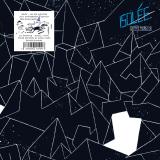
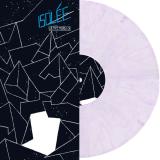
On tracks such as "Teardrops in Your Eyes," "New Love," and the haunting Dark Spirits Mix of Ghia's song "What's Your Voodoo?", singer Lisa Ohm delivers soulful pop performances with her clear and captivating voice. "Change Your Sex," the third track previously featured on the Mikado sampler, leans more toward late-1980s funk and was aimed at radio and DJs at the time. Its subject matter was relatively daring for the period, telling the story of someone contemplating a change of sex "to get rid of the troubles."
Together with "This Is" and "Curacao Blue", "Tender Rain" forms another essential chapter in the rediscovery of the band's work. More than thirty years after their creation, these recordings still sound strikingly fresh, reflecting a unique style that in many ways anticipated the rise of trip-hop in the early to mid-1990s.
Armada Music are back again with a release packed full of nostalgic flavour, Angie Brown’s grade-A reimagination of the silver-certified ‘I’m Gonna Get You’ is a trip down memory lane tailored to today’s dance floor. A cult classic among ravers young and old, this re-release gives the early-‘90s classic a new lease of life. Now with three fresh new remixes 20 odd years later, following on from the original mix is Jess Bays’ Remix she brings her unique style of production which has been integral to her rise in the world of dance music by making hits for the likes of Defected, Stress, Warner, Universal, Sony and many more. Flipping over to the B side is Robbin Traxx an alias formed by the collaboration of the heavyweight hitters who are Solardo and Joshwa, together they bring their UKG touch to provide a fresh take to the 93’ classic. Finally, rounding off the release is Austin Millz an artist who has established himself as a genre-bending icon. Having performed with artists like Quincy Jones and Beyonce, his music is a deeply textured fusion of soul and dance-floor euphoria. An essential piece of vinyl for fans of classic dance music new & old!
Tip on sleeve.
Latin Grammy-Winning Producer Pupillo Unites Global
Artists on his new album
Co-produced by Mario Caldato Jr. (Beastie Boys), featuring collaborations with Rodrigo
Amarante, Carminho, Adrian Younge, Gaslamp Killer, Cut Chemist, Hervé Salters, and more
Drummer, percussionist and producer Pupillo, one of the most influential figures in Brazilian
music and a four-time Latin Grammy winner, releases his first original album through the Los
Angeles–based label Amor in Sound. The record brings together an impressive and diverse
group of collaborators from Brazil and abroad. Amor in Sound is run by Samantha Caldato,
the project’s executive producer and creative director, and Mario Caldato Jr. (Beastie Boys),
who co-produced the album alongside Pupillo. The project was developed in a free,
experimental environment, allowing the artist to explore the many rhythmic and sonic
territories that have shaped his career — from Northeastern Brazilian traditions to jazz, hip
hop, and cinematic soundscapes. Listen here.
The album features special appearances by Brazilian artists such as Céu, Rodrigo Amarante,
Agnes Nunes, Amaro Freitas, Davi Moraes, Alberto Continentino and Pedro Martins,
alongside a strong roster of international collaborators, including Carminho, Gaslamp Killer,
Loren Oden, Adrian Younge, Cut Chemist and Hervé Salters (known for his work with
General Elektriks). The album’s 12 tracks were further enriched by contributions from
Jeremy Gustin, Roberto Schilling, and other musicians who make Amor in Sound Studios in
Los Angeles a place of creative exchange.
Beyond his work as the drummer of Nação Zumbi, Pupillo has built a prolific career as a
producer and collaborator with some of the most important names in Brazilian music,
including Gal Costa, Nando Reis, Erasmo Carlos, Céu, and Otto, helping to shape the sound
of multiple generations. This trajectory has earned him four Latin Grammy Awards.
From Pernambuco, Pupillo is also an acclaimed composer for cinema, having written
soundtracks for films such as Arido Movie and Blue Blood (directed by Lirio Ferreira), The
Assailant (directed by João Daniel Tikhomiroff), among others. This cinematic sensibility
permeates the album, which unfolds like a film, moving through richly textured soundscapes
that cross continents and musical traditions.
Wasteland is a record that is unafraid to plunge into the darkness of the modern world and embrace the weirder, edgier and more unnerving moments that come from doing so. It is an album that captures all the enormity of life from the micro to the macro, zooming in on the personal as well reflecting on broader societal issues.
“Wasteland is about the idea of a place once known or familiar that is now broken down and unrecognisable,” says Ghedi. “It’s about exploring the process of watching someone’s surroundings and environment collapse.” And within that you have a lot going on. “It also explores death, personal loss, grief, mental health and how the natural world provides solace and meaning for that loss and how these worlds blur into one another.”
Ghedi has always been an artist that in many ways perfectly encompasses folk music in its purest form but he is also someone that frequently pushes the boundaries of that label and no more so is that apparent than on this record. As like previous albums, such as 2018’s A Hymn for Ancient Land and 2021’s In the Furrows of Common Place, Ghedi uses traditional folk songs as a means to explore contemporary issues via modern and experimentally-leaning music. “With the traditional material on this album I wanted to find songs with content that resonated with me,” says Ghedi. “But also that were based roughly around the north of England.” This is a central underlying theme to the album for Ghedi. The feelings of loss, erosion, and degradation are often most pronounced in working class communities and this was something he wanted to weave in. “It was important to voice and choose material that represented or expressed issues that correlated with things going on around me.”
However, as remarkable as some of the traditional material is, some of the most arresting work on the album is Ghedi’s entirely original compositions. Lead single ‘Wasteland’ is a stunning piece of work that while rooted in an environment being corrupted and broken – “there’s violence on these hills” Ghedi sorrowfully sings, before claiming this is no longer somewhere that can be called home – it is also a stirringly beautiful composition that soars and glides as it opens up, as sweeping strings swoop and in and out of Ghedi’s twangy electric guitar.
The decision to incorporate more fuller sounds, such as electric guitar and huge drums, results in a notable shift and evolution in tone for Ghedi. “The lyrical content needed something more band-driven and loud to deliver them,” he explains. “Incorporating the electric guitar in my songwriting was also a big part of opening the sound up, using drop tunings pushed me to use my voice in a wider range, which forced me to use falsetto a lot which I haven’t previously done before. That then opened the sound up and gave me creative ideas for bigger arrangements and to sonically really push things.”
What Ghedi has done in creating his masterpiece is construct a remarkable space where deeply intimate and personal feelings coexist with reflections on environment, place and society, while also interweaving historical context via traditional songs. Wasteland is as much of a world to explore and exist in as much as it is an album, with Ghedi carving out his distinctly unique sonic language and voice to explore that singular environment.
Wasteland is a record that is unafraid to plunge into the darkness of the modern world and embrace the weirder, edgier and more unnerving moments that come from doing so. It is an album that captures all the enormity of life from the micro to the macro, zooming in on the personal as well reflecting on broader societal issues.
“Wasteland is about the idea of a place once known or familiar that is now broken down and unrecognisable,” says Ghedi. “It’s about exploring the process of watching someone’s surroundings and environment collapse.” And within that you have a lot going on. “It also explores death, personal loss, grief, mental health and how the natural world provides solace and meaning for that loss and how these worlds blur into one another.”
Ghedi has always been an artist that in many ways perfectly encompasses folk music in its purest form but he is also someone that frequently pushes the boundaries of that label and no more so is that apparent than on this record. As like previous albums, such as 2018’s A Hymn for Ancient Land and 2021’s In the Furrows of Common Place, Ghedi uses traditional folk songs as a means to explore contemporary issues via modern and experimentally-leaning music. “With the traditional material on this album I wanted to find songs with content that resonated with me,” says Ghedi. “But also that were based roughly around the north of England.” This is a central underlying theme to the album for Ghedi. The feelings of loss, erosion, and degradation are often most pronounced in working class communities and this was something he wanted to weave in. “It was important to voice and choose material that represented or expressed issues that correlated with things going on around me.”
However, as remarkable as some of the traditional material is, some of the most arresting work on the album is Ghedi’s entirely original compositions. Lead single ‘Wasteland’ is a stunning piece of work that while rooted in an environment being corrupted and broken – “there’s violence on these hills” Ghedi sorrowfully sings, before claiming this is no longer somewhere that can be called home – it is also a stirringly beautiful composition that soars and glides as it opens up, as sweeping strings swoop and in and out of Ghedi’s twangy electric guitar.
The decision to incorporate more fuller sounds, such as electric guitar and huge drums, results in a notable shift and evolution in tone for Ghedi. “The lyrical content needed something more band-driven and loud to deliver them,” he explains. “Incorporating the electric guitar in my songwriting was also a big part of opening the sound up, using drop tunings pushed me to use my voice in a wider range, which forced me to use falsetto a lot which I haven’t previously done before. That then opened the sound up and gave me creative ideas for bigger arrangements and to sonically really push things.”
What Ghedi has done in creating his masterpiece is construct a remarkable space where deeply intimate and personal feelings coexist with reflections on environment, place and society, while also interweaving historical context via traditional songs. Wasteland is as much of a world to explore and exist in as much as it is an album, with Ghedi carving out his distinctly unique sonic language and voice to explore that singular environment.
DJ Support: BEN UFO, Solomun, Marco Carola, Damian Lazarus, Jamie Jones, Joseph Capriati, Ilaria Alicante, Michael Bibi, Paco Osuna, D'Julz, Groove Armada, Dennis Cruz, Chloe Caillet, Kettama and many more
Enzo Siragusa opens 2026 with his ‘Kilimanjaro Sound’ EP, a release that expands on last year’s standalone single. Marking both Enzo and FUSE’s first drop of the year, the EP delivers the latest instalment in his longstanding Kilimanjaro concept while reaffirming the label’s position at the heart of underground club culture.
Following the digital release of ‘Kilimanjaro Sound’ back in October, the full EP frames the title track within a broader narrative of rhythm, atmosphere, and movement. A long-time fixture in Enzo’s sets throughout 2025, the title track established itself as a fan favourite through its rolling percussion, weighty low-end, and expansive spatial design, and now it takes on renewed presence on vinyl. New cut ‘Liquify’ pushes deeper into Enzo’s rhythmic sensibilities, pairing fluid groove structures with subtle tension and release. Designed for late-night floors, the track unfolds patiently, allowing swing, texture, and space to do the heavy lifting. It’s a natural continuation of the Kilimanjaro language, less about immediacy, more about immersion, showcasing his refined understanding of how momentum is built and sustained in true club environments.
Completing the EP is a remix from Giammarco Orsini, whose Garage Dub Mix of ‘Kilimanjaro Sound’ offers a fresh perspective while remaining true to the original. Born in Italy and now based in Berlin, Orsini has quietly evolved into one of the scene’s most respected selectors and producers, with releases on Cragie Knowes, Mood Waves, and Shonky’s Stoned Pilot. His interpretation strips the track back to its essentials, reintroducing it through a garage-leaning lens that prioritises groove, swing, and subtle pressure.
As the first release following FUSE’s latest DJ Mag Best of British Award, marking their second Best Club Event win, the EP reflects the values that have long defined the brand: community, longevity, and music built for real dancefloors. Pressed to wax, the release extends one of Siragusa’s most recognisable concepts and sets the tone for the year ahead - measured, confident, and rooted in the underground.
Collecting Orders For 2026 Repress
As Soul Capsule, Baby Ford and Thomas Melchior made some of minimal techno's most accomplished records. It has been many years since they stopped turning out new material - sadly - but their archive tracks are still in hot demand and undeniably relevant. While 1999's 'Lady Science' might be their most famous offering, this EP from 2001 on Aspect Music is no less vital and it will currently cost you well over L250 on second-hand markets. It is Ford's Trelik label who reissues it here in all its glory: the entirety of the a-side is taken up with 'Law Of Grace,' a delightfully deep and breezy minimal dub house roller with pensive chords draped over the frictionless drums. 'Meltdown' has a more experimental feel with brushed metal drums beneath a wordless vocal musing. The cult 'Lady Science' (Tek Mix) is also inched with the whole package being remastered by D&M to make this one utterly essential.
- 1: From The Air
- 2: Good Evening
- 3: Cloud
- 4: Let X=X
- 5: It Tango
- 6: Drum Solo
- 7: Teachers
- 8: Story To No One
- 9: Gravity’s Angel
- 10: Ramon
- 11: New Angels
- 12: Walk The Dog
- 13: Looking At The Moon
- 14: Church Of Panic
- 15: Dog Show
- 16: Junior Dad
- 17: O Superman
- 18: The Lake
- 19: Swimming
- 20: It’s Not The Bullet That Kills You
- 21: Only An Expert
- 22: What Are Days For?
- 23: How To Feel Sad Without Being Sad
Nonesuch Records releases Let X=X, by Laurie Anderson with Sexmob. This triple-LP/double-CD set was recorded live during a 2023 tour by Anderson and the jazz band Sexmob – Steven Bernstein and Briggan Krauss on brass, Kenny Wollesen on percussion, Douglas Wieselman on winds and guitar, and Tony Scherr on bass. Its cover and interior packaging feature paintings by Anderson. The album features 23 songs, including many favourites from throughout Anderson’s career, performed in new arrangements – plus one by Lou Reed and Metallica, ‘Junior Dad’. Anderson and Sexmob play more US and international dates this spring and summer (details below).
The New York Times said Anderson and Sexmob’s concert at the Brooklyn Academy of Music (BAM) ‘wasn’t a historical recreation of past recordings; Sexmob’s sound is a beefier one than on Anderson’s albums. With musicians who can double on electric guitar and bass clarinet, its members offered a rich range of textural variation throughout the evening.’
Laurie Anderson is one of America’s most renowned – and daring – creative pioneers. Her work, which encompasses music, visual art, poetry, film, and photography, has challenged and delighted audiences around the world for more than 40 years. In a recent 60 Minutes profile, Anderson Cooper said she ‘is a pioneer of the avant-garde, but... that doesn’t begin to describe what she creates... It’s experienced by audiences who come to see her perform: singing, telling stories, and playing strange violins of her own invention... she blends the beautiful and the bizarre, challenging audiences with homilies and humor. She blurs boundaries across music, theater, dance, and film.’ The Washington Post has said she ‘doesn’t just tell stories; she draws out every word with a kind of physical pleasure, tasting its flavor as she probes the everyday mysteries of life.’
Anderson released her first album with Nonesuch Records, the critically lauded Life on a String, in 2001. Her subsequent releases on the label include Live in New York (2002); Homeland (2010); the soundtrack to her acclaimed film Heart of a Dog (2015); and her Grammy-winning collaboration with Kronos Quartet, Landfall (2018). Nonesuch released a re-mastered edition of Big Science in 2007 for its 25th anniversary, followed by a vinyl LP re-issue in 2021; the album includes Anderson’s beloved, surprise hit, song, ‘O Superman’, which also is featured on Let X=X. Her recent Nonesuch release was 2024’s Amelia, about renowned female aviator Amelia Earhart’s tragic last flight.
Anderson’s virtual-reality film La Camera Insabbiata, with Hsin-Chien Huang, won the 2017 Venice Film Festival Award for Best VR Experience, and, in 2018, Skira Rizzoli published her book All the Things I Lost in the Flood: Essays on Pictures, Language and Code, the most comprehensive collection of her artwork to date. Recent exhibitions and installations of Anderson’s work include Habeas Corpus at New York’s Park Avenue Armory; her largest exhibition to date, The Weather, at Washington, DC’s Smithsonian’s Hirshhorn Museum of Modern Art; and Looking into a Mirror Sideways at Stockholm’s Moderna Museet, which was her largest European exhibition to date.
Laurie Anderson was awarded the 2024 Stephen Hawking Medal for Science Communication, along with Christopher Nolan and David Attenborough, and the International Astronomical Union named a minor planet in her honour: Asteroid 270588, Laurieanderson. That same year, she was awarded a Grammy Lifetime Achievement Award.
- A1: Intuition, Nimbus (5:34)
- A2: Alignment, Orbits (7:46)
- B1: Impatience, Magma (11:15)
- B2: Persistence, Buds (8:27)
Caterina Barbieri & Bendik Giske's At Source resounds music as wellspring, that which is essential and unknowable, and yet utterly primary. It finds two acclaimed composer-musicians building a world together in self-contained collaboration between analogue synthesis and an extended approach to the saxophone that conjures its own universe of sound. It is at once intimate and cosmic, drawing on the challenges and possibilities of their artistic exchange, tearing down technique to access all the expansive possibilities of their sonic meeting point.
At Source is a document of the world of sound to be conjured when two artists strive for something together, discovering the expansions and limitations of performance by bodies and machines. It is not an exercise in assimilation, but in productive exchange and creative confrontation. It does not draw on outside energies or influences, but grapples with what there is to find in their respective playing. "It also reflects how natural the collaboration was," says Barbieri, "a meeting at the source which was spontaneous, graceful and natural".
Barbieri and Giske first met and were enthralled by one another's performances at Kunsthaus Glarus in 2019, a meeting that spurred conversations on the power of transitions as a compositional force. Giske later contributed a rework of Fantas for Fantas Variations (Editions Mego, 2021), an ambitious undertaking to rescore Barbieri’s work for his saxophone and voice, a challenge Giske had started undertaking two years prior as an ongoing practice of transcription. “The request came as a proof of aligned ideas”, says Giske.
Their new collaborative project then started during an artistic residency in Milan’s ICA in 2021, by invitation of swiss artist and curator Jan Vorisek, as the world was emerging from lockdown. This meeting, and the preceding closure of sites for cultural exchange, made their work together 'feel like springtime' says Barbieri. Giske, who was on the brink of releasing his sophomore album, Cracks, then joined Barbieri's light-years tour, which functioned as an inaugural incarnation of her newborn label and platform through a series of multi-artist curated shows with appearances of Lyra Pramuk, Nkisi, MFO, among other artists.
Through the tour, they continued to develop material live, and this release, laid down in the studio, is true to that ever-evolving process of creation, where live feedback stays essential to the vitality of this collaborative effort. The tracks are each named with two evocative words that contain the two poles of their sound. Theirs is both abstract and cosmic, in the synth as machine undermined by Barbieri's naturalistic playing, and in Giske's continuous exploration of the symbiosis between his instrument, voice, and body. These binaries, of body and machine, posed various challenges, notably in how the stepped patterns Barbieri uses were near-impossible to translate for Giske's body to perform, and other times where mathematical resolutions were needed to sync their playing. Explains Giske: "It forced me to go to the core of what I am and what I have to offer”. Barbieri says that it "explores the liminality between the machine and the human, and the vulnerability in this process".
At Source is testament to two divergent practices finding a whole cosmos in which to convene; music is crystalised and made utterly enveloping through the focused and critical work of two musicians working at their peak. The versions here are, temptingly, "just one of many versions" of this abundant source material Giske explains. Like the best collaborations, At Source is more than the sum of its parts – bringing more to the feast than the simple combination of two musicians, promising versions upon versions of the exquisite material captured here.
2024 Repress
One of the defining releases on Large Music gets a special re-issue after a 16 year wait. Considered by many to be one of the top 3 packages in the early Large catalog, this EP set the trajectory for what would quickly become known as the "West Coast" sound of American House. The main vocal on side A also became a venerable classic at the Shelter in NYC and was played consistently by Timmy Regisford throughout his tenure there. The darker, more disco filtered tones on the flip side were also highly praised and played at the time by French DJs such as Daft Punk, Phil Weeks, Cassius and many others. Rasoul is often overlooked as one of the chief architects of modern Deep House, yet this release certainly secures his elite standing in the annals of House Music history. Essential!
- A1: Black Loops - Soul To Soul Communication
- A2: Tuccillo - Move It Again
- A3: Timmy P - Big Bad
- B1: Chez Damier & Ben Vedren - Conspiracies
- B2: Agnès - Mrnb (Safe And Effective Mixx)
- C1: Cinthie - Hudd House
- C2: Jovonn - Dance Off
- C3: Iron Curtis - Speak To Te, Baby (20Th Anniversary Mix)
- D1: Dj Sneak -Ten Times 10
- D2: Darius Syrossian - Get Static
- E1: Eddie Leader - From The H.u.d.d
- E2: Groove Armada - Play Me Raw
- F1: Oliver Dollar - Sp Beater
- F2: Tiger Stripes - Touch Me
- F3: Olive F - Bangers And Mash
- G1: St. David - The Screaming
- G2: Seven Davis Jr - Infrasound
- H1: Mark Farina & Homero Espinosa - Look Around You
- H2: Rhythm Plate - Posthumous
- H3: Dfra & Nick Weraver - Heat Beats Fast
For two decades, Hudd Traxx has stood as a pillar of underground house music – a label defined by longevity, taste, and its ability to bridge the old school with the new. To mark its twentieth anniversary, the revered UK imprint presents ‘20 Traxx From The Hudd’, a specially curated, all-new twenty-track compilation handpicked by label founder Eddie Leader.
The compilation brings together a global, star-studded lineup of artists who embody the Hudd Traxx ethos: soulful, inventive, and uncompromisingly underground. Contributions come from Groove Armada, Seven Davis Jr., Chez Damier, Cinthie, Jovonn, Oliver Dollar and others, offering a snapshot of the label’s wide-ranging influence. From the silky deep house depths of Black Loops’ opener ‘Soul to Soul Communication’, to the unmistakable analog warmth across Cinthie’s ‘Hudd House’, to the raw, stripped-back energy of Seven Davis Jr.’s ‘Infrasound’, the collection captures the many deeper shades of house Hudd Traxx has championed for twenty years.
Founded in 2005, Hudd Traxx has served as a trusted home for pioneering artists such as Nightmares On Wax and Matthew Herbert, guided by Eddie Leader’s consistent curatorial vision and unwavering commitment to craft. As a producer, his releases on Classic, Robsoul, and Balance Alliance have been supported by Laurent Garnier, Josh Wink, Disclosure, and many more. ‘20 Traxx From The Hudd’ isn’t just a celebration of the past; it’s a fervent reminder that Hudd Traxx remains as relevant and vital as ever.
The mysterious Gluten People return to the fold, handing over their next vinyl-only transmission. For this second helping of "glutenous" dancefloor heat, the duo has paired up with Giacomo XL, following the massive demand for their debut EP.
Expect more of the same raw, rhythmic energy that made their first outing a must-have for heads and selectors alike. This is essential, no-nonsense club material built specifically for the wax-only connoisseur.
Early Support from: Archie Hamilton, Liquid Earth, Enzo Siragusa, Huxley, La Fleur, Sean Johnston, Make A Dance, Baby Rollen, Ysanne, Eliza Rose, Bartolomeo, Ryan Clover, AGELESS, Alec Falconer, Call Super, Bas Ibellini, ADMNTi, Gearmaster (fka Abdul Raeva), Timo Maas, Christopher Ledger, Moodymanc, Nathan Colinet, Gabski, Greogorio Soave, and many more.
Two decades into his winding voyage through music, culture and creativity, Tom Trago has become part of the densely woven fabric of the Dutch electronic scene - a producer, DJ, label owner, collaborator, remixer, radio host and DJ's DJ who is renowned not only for his impressive productivity, but also the genuine depth and variety of his work. While it was Trago's distinctive DJ sets that once grabbed headlines - he famously held residencies at renowned Amsterdam institutions Trouw and De School, and for a decade spent much of his time jetting between some of the most renowned clubs in Europe - in recent years Tom has cut down on appearances. Today, he chooses to be far more selective about where (and when) he DJs or performs live, often working with a handful of cherished venues and festivals while ensuring that his travels are sustainable and inspiring. Instead of the grind of touring and hedonistic night-time activity, Trago has chosen to focus on music-making, alongside semi-regular forays into radio broadcasting (NTS, Radio Radio, BBC Radio and EchoBox). He now spends most of his days producing and remixing at his new SR-3 studio in Alkmaar and his seaside home-come-studio in Bergen aan Zee. As part of these lifestyle and career changes, Trago took time to look deeper, not only inside himself, but also for musical inspiration. Tom has always loved, and devoted time to, digging into a wide variety of production styles, using this inspiration to develop a trademark personal production style, but in recent years he has taken it even further. Fuelled by a desire to challenge himself, Tom consistently tries new things in the studio while channeling all he's learned during a career that has moved forwards at breakneck speed. Since making his debut in 2006, Trago has released six critically acclaimed albums (two of which, the eclectic, beat-focused, career-spanning, Patta-released archive dive, 18, and the dancefloor excursion, Trembala, appeared in 2022); extensively worked with Dutch electronic music institutions Rush Hour and Dekmantel; collaborated with countless friends and contemporaries (Charlie Soul Clap, Awanto 3, Maxi Mill, Steffi, San Proper, Seth Troxler, and BokBok included); remixed artists including New Order, Carl Craig, Cassius, Tiga and Erol Alkan, and championed a swathe of fellow Dutch producers via the Voyage Direct label he founded in 2009. In 2025 Tom returns to legendary Dutch label Magnetron Music, home to Fatima Yamaha, DMX Krew, Legowelt, Staygold and many other, to release his Magnus Opus; Ignorance.
- A1: Sunrise
- A2: Bryce
- A3: Arches
- A4: Totem
- A5: Waters And Geysirs
- A6: Indian Summer
- A7: Opening
- B1: Cpu
- B2: Soft Edge
- B3: Las Vegas
- B4: Rhythm Score
- B5: Space Shuttle
- B6: Disco Funk
Once again Trunk Records comes through with an album of sublime 1980s new age synthwave
music from an artist and library company you have never heard of.
With most Trunk LPs we write the story about how Jonny came across the music. And yes, this LP is no different...over to Jonny…
“My first encounter with Peter Patzer was when I was writing and researching the updated and fully expanded version of The Music Library Book, published by Fuel. The initial book - called The Music Library, was the first ever overview of library music and the wild, unpredictable graphic art of their sleeves. It was first published in 2005 and featured about 400 sleeves and about 120 library companies over 200+ pages. The book was based on over a decade of intense library LP collecting by myself and a handful of other geeky weirdos and made for fascinating and revealing reading and looking. It was a great education for many entering this odd, hidden musical world for the first time. The book quickly sold out.
A few years later the price of the original book had gone bananas. But the geeky weirdos like me had all carried on voraciously consuming and collecting library music so I strongly felt the first book could easily be doubled in size with new info, new sleeves and many newly discovered lost library companies. Which is exactly what I set about doing. The Music Library expanded edition came out in 2015. You have to realise here that The Music Library book was very much a first - until its unexpected arrival (and even the arrival of the much larger expanded edition) there was no published survey, accessible catalogue or anything about international library music. It was still an odd old world shrouded in some historical mystery - even the internet had not really caught up. And I was still finding unusual British one-off library LPs, more unusual Italian library diversions, hidden French funky things and then I finally found Peter Patzer. From Germany.
Hidden away in a very obscure music library corner. All on his own.Peter was unusual in that he was an artist and musician who made his own music and issued it all on his own library, called Crea Music, based out of Bremen in North Germany. Over a series of eight whitevinyl LPs produced in the 1980s Peter Patzer created synth heavy experiments for possible use in film, TV, video and anything else coming along. All his LPs had the same simple red, white and blue sleeve and a typed name and number. Across the eight LPs Peter goes to musical space, creates post-disco funk,travels to Vegas, goes all geological and more.
The eight Peter Patzer / Crea Music LPs are as follows:
01 - Puddy’s Bus 02 - Straight Line 03 - Pos-Attractions 04 - Patterns 05 - Canyons 06 - MIls Maniac 07 - Classic Themes 08 - Formation 17
This is a compilation of some of the music featured across those eight LPs, and yes, it was initially
licensed a few years ago but I held it back as I wasn’t sure people were quite ready for the plugged-inway out drifting 1980s electro sound of Peter Patzer with his synth washes, rhythms and chords. Or maybe I wasn’t ready. Anyway it’s here now... and if this sells out there could be another Peter Patzer LPbut with all his longer 7 minute compositions which there wasn’t room for here.
2026 Repress
Throughout 2025, Tresor Records will reactivate Detroit house and techno originator Blake Baxter's vast Tresor catalogue digitally in chronological order, starting with 1992’s Dream Sequence, closely followed by his 1995 album, Endless Reflection. To inaugurate and celebrate this retrospective of one the genre’s true founders, an artist whose connections to Tresor go back to the very beginning, the label announces a special 12” release, Dream Sequence X, featuring remastered tracks from the early days and highlighting the harder side of his output.
Initially inspired by post-punk and funk, Baxter started making music as early as 1985. By 1991 he had already released several seminal records on classic labels like Underground Resistance, KMS, and Incognito, as well as providing multiple tracks to the groundbreaking UK compilation Techno! The New Dance Sound of Detroit, which was many European listeners’ introduction to the genre, solidifying the term techno, and launching the international careers of many of the contributors.
1992 saw Baxter make the first trip to play Tresor, on the first UR Europe tour ever, thereby pioneering the now legendary Berlin-Detroit Connection. This visit led to a long and fruitful partnership with the club’s new-fledged label beginning with Mills', Banks' & Hood’s X-101 and Baxter’s Dream Sequence, from which the first four tracks on the new 12” come.
Whilst he would become more renowned for his signature seductive vocals and a smoother music style closer to house music, these early tracks are heavier, classic 90s techno, revealing the influence of industrial, post-punk and pop of the time. Indeed the collection is something of a time capsule: jacking 909 drums, intense, ravey synth stabs, samples from classic soul breakbeat and the Speak & Spell voice synthesizer; classic sounds and styles of the era all make appearances on the record. All tracks have been remastered by Manmade Mastering breathing a new vitality and sharpness for the modern dancefloor.
In a world where longevity is difficult and superlatives are too easily deployed, it is still difficult to overstate the long-lasting influence that Blake Baxter has had on modern music. His visionary output can be heard across modern electronic and pop to this day and with this series of remasters, there has never been a better time for the world to hear it at source.
- A1: Ros Serey Sothea - Jam 10 Kai Thiet (Wait 10 More Months)
- A2: Yol Aularong - Yuvajon Kouge Jet (Broken Hearted Man)
- A3: Pan Ron - Why Follow Me Wav
- A4: Tet Somnang & Meas Samon - Khnyom Jah Karake
- A5: Houy Meas & Dara Chom Chan - Nek Na Min Rom (Who Isn't Dancing)
- A6: Choun Malai - Jomreang Oun Chreang
- B1: Sinn Sisamouth - Navy A Go Go
- B2: Liev Tuk - Rom Sue Sue (Dance Soul Soul)
- B3: Thra Kha Band - Do You No Wrong Again
- B4: Yol Aularong & Liev Tuk - Sou Slarp Kroam Kombut Srey (Rather Die Under The Woman's Sword)
- B5: Eng Nary - I Wonder. B6- Baksey Cham Krong + Mol Kamach De Quoi Pleures - Tu
Repress!
Before the Khmer Rouge took power in 1975, unleashing a horrifying genocide, Cambodia had one of the most vibrant and exciting music scenes in Asia. With a mixture of traditional Khmer music and a myriad of western genres (from French and latin music, to rock-and-roll , rhythm-and-blues, surf, psychedelia, soul and many more) the few pre 75 Cambodian recordings that survived -most of them were destroyed- are enough to make anyone with a taste for good music shocked by the amazing quality of the sounds created during those golden years. Gathered in this amazing album are some of the most talented and unique musicians from that amazing era with an explosive collection of tracks sure to blow the mind of the listener. A celebration of some of the best music ever made.
Be As One boss Shlomi Aber returns to Chris Liebing's CLR with the 'Schema' EP, arriving 24th April 2026 alongside a remix from James Ruskin. Active since 1994, Aber has been a cornerstone of underground techno for over three decades, with his focused, hypnotic approach in both the studio and DJ booth leading to releases on some of the scene's most respected labels, including Cocoon, Ovum, Nonplus, and Figure. With the 'Schema' EP, he follows his recent 'Retrospective' EP for Ben Klock's Klockworks, as well as previous CLR outings such as the 'Limelight' EP (2025), and the 'Remote 101' EP (2023), which both kept a spot in the Beatport Techno chart for over two years after release, while winning support from the likes of Carl Cox, Alienata, Dave Clarke, and many more.
Shlomi Aber's 'Schema' EP opens with the title track and heads straight into subterranean territory, pairing weighty low-end pressure with tightly controlled tension. Rattling bass foundations are o?set by sharp hi-hats and static-laced textures that flicker through the mix, keeping the groove locked and the atmosphere charged.
On remix duties, James Ruskin, founder of the seminal Blueprint, delivers a shadowy, atmospheric rework. Eerie pads hang in the background as swampy bass anchors the rhythm, with haunted melodic elements slowly unfolding to create a deep, immersive take built for late hours and dark rooms.
Closing track 'Gasolina' sees Aber shifting into broken-beat territory, where warm, glitchy rhythms loop with hypnotic precision. Ghostly synth motifs drift in and out of focus, giving the track a cinematic, heady quality that rounds out the release with understated intensity.
Founded by influential techno lynchpin Chris Liebing in 1999 and reemerging in 2021 after a five-year hiatus, Create Learn Repeat (CLR) has hosted a range of artists like Dubfire, Flug, Bjarki, DJ Dextro, and more while also focusing on developing newer acts in the scene, such as Risa Taniguchi, The Southern, and Klint.
Following the success of his recent releases, Mendekua and Electro Bloody Music, Barro’s honcho Nöle demonstrates that he is at one of his creative peaks with this new four-track EP.
The fortunate owners of reference number thirteen will not only take home a substantial slice of vinyl but also a powerful teleportation device that will instantly send them to the dance floor. Demencial chico acelerado features four tracks of techno infused with elements of industrial and EBM, as dark as it gets.
The EP kicks off with the enigmatic “IDDDQD,” a complex industrial techno track packed with sharp synths, devastating basslines, and an incredible punch.
“Lemmy Dust” comes next showing no mercy from the moment that the powerful kick hits, captivating you with its hypnotic sound and not letting go until you’re exhausted.
Cinematic as its name suggests, “Xenomorph” is a claustrophobic industrial techno powerhouse, brimming with intense EBM nuances that are both unsettling and frenetic—perfect for dancing with your hair standing on end.
Last but not least, “Ghost Dancer,” is one of the most purely techno tracks, showcasing haunting synths mid-way through. It’s heavy material fit for the dance floor.
Without a doubt, this demencial accelerated kid knows exactly what he’s doing.
The above references have already been supported by artists such as Dave Clarke, Phase Fatale, The Hacker, Lokier, NX1, Unhuman, Alienata, Reka, and many more.
Text by : El Garaje de Frank
- 1: John Holt - You’ll Never Find Another Love Like Mine (3.48)
- 2: Cornell Campbell - Be Thankful (3.58)
- 3: Elizabeth Archer & The Equators - Feel Like Making Love (.4)
- 4: The Chosen Few - People Make The World Go Round (3.22)
- 5: Dave & Ansel Collins - Single Barrel (3.17)
- 6: The Now Generation - Shaft (3.19)
- 7: The Marvels - Some Day We’ll Be Together (3.05)
- 8: The Darker Shades Of Black - War (2.41)
- 9: Winston Curtis - Private Number (3.42)
- 10: Lee Perry & The Upsetters - Bathroom Skank (4.30)
- 11: Slim Smith - Watch This Sound (2.43)
- 12: Winston Francis - Sitting In The Park (3.29)
- 13: The Sensations - If I Don’t Watch Out (2.57)
- 14: Carl Bert & The Cimarons - Slipping Into Darkness (3.04)
- 15: The Darker Shades Of Black - Ball Of Confusion (3.10)
- 16: Jah Youth - Ain’t No Sunshine (2.35)
Sixteen killer 70s reggae funk and soul cuts from the likes of John Holt, Lee Perry, Cornel Campbell, The Cimarons, The Chosen Few and more featuring superb reggae takes on songs by artists including The Jackson 5, William DeVaughn, Diana Ross and The Supremes, War, The Temptations, Roberta Flack, The Stylistics and others!
Well-documented is the influence of American black music on Jamaican styles of the 1960s – from the birth of ska music, when The Skatalites ska-ified the jump-up southern USA rhythm and blues music of Rosco Gordon, Louis Jordan and Fats Domino, through to the creation of rocksteady when Jamaican artists like The Techniques, The Paragons, Alton Ellis and The Melodians turned to the slower rhythms and soulful harmonies of groups such as The Impressions and The Drifters for inspiration.
Less-well established is that in the 1970s Jamaicans didn’t (shock!) stop listening to American black music styles, with many 70s reggae artists as invested in soul, funk and the proto-disco sounds of Philadelphia, as was the case with rhythm and blues in the previous decade. In the 1970s, while Jamaica promoted its own roots reggae styles around the world, powerhouse USA soul labels such as Motown, Philadelphia International and Stax Records were at the same time all popular on the island.
This interaction between American and Jamaican music was not limited to Jamaica. In Britain, first-generation Caribbean-émigré children in the 1960s and early 70s grew up with an equal love of both soul and reggae, which manifested itself in the home-grown arrival of lovers rock in the mid-1970s.
Soul Jazz Records’ new ‘Reggae Island Soul’ tells this story of how soul and funk-infused reggae in the 1970s united the sounds of Jamaica, USA and the UK into a highly addictive cultural hybrid of styles.
- A1: Frankie Knuckles Ft. Jamie Principle - Your Love
- A2: Sounds Of Blackness - The Pressure (Frankie Knuckles Classic Mix)
- B1: Loose Ends - Hangin’ On A String (Frankie Knuckles Club Mix)
- B2: Frankie Knuckles - It's Hard Sometime (Fk Classic Club)
- C1: Hercules & Love Affair - Blind (Frankie Knuckles Remix)
- C2: Frankie Knuckles With Jamie Principle - Baby Wants To Ride
- D1: Chaka Khan - Ain’t Nobody (Hallucinogenic Version)
- D2: Frankie Knuckles Ft. Adeva - Too Many Fish (Classic Frankie Version)
Volume One[27,94 €]
TO COMMEMORATE THE 10th ANNIVERSARY OF HIS PASSING
DEFECTED HONOURS FRANKIE KNUCKLES WITH SPECIAL EDITION ‘HOUSE MASTERS’ VINYL
Defected celebrates the life and legacy of house music pioneer Frankie Knuckles with a limited-edition vinyl offering of his notable ‘House Masters’ release.
Marking ten years since his passing, join Defected in honouring the enduring legacy of house music pioneer. All proceeds of ‘House Masters: Frankie Knuckles’ will be donated to Frankie Knuckles Foundation as it was when the compilation was originally released back in April 2015.
“Frankie Knuckles, whom many consider to be one of the architects of house music is still highly influential to a new generation. Since his untimely passing ten years ago it has been incredible to see the continued outpouring of love and respect that he has received. His legacy is why the Frankie Knuckles Foundation exists. Through our work we honour him by supporting initiatives that he was passionate about: music education, AIDS and diabetes research, prevention and LGBTQIA+ youth homelessness. This commemorative vinyl release of ‘House Masters’ in association with Defected will allow us to do just that!”
Frederick Dunson, Founder, President & Executive Director, Frankie Knuckles Foundation
The forthcoming vinyl releases will feature a selection of his finest productions and remixes including the seminal ‘Your Love’, ‘The Whistle Song’ and remixes for Chaka Khan and Sounds Of Blackness.
Find out more about Frankie Knuckles Foundation and its commitment to educating and supporting initiatives across LGBTQIA+ communities and AIDs prevention
2026 Repress
We are happy to welcome LA re-edit crew Boogie Down Edits first up is their De La Soul's reworks, re-inventing some of their best-loved hip-hop cuts as party-starting house jams. Wisely, they've chosen to retain many of the key musical ingredients of their source material, subtly shifting the grooves to aid slick mixing and peak-time joy.
We kick off with the loose-limbed hip-house punchiness of 'Saturday’ then move into a more jackin’ bumpy groove on the classic ‘'Me Myself and I'
On the Flip we have a bass heavy Hip House style rework of ‘Buddy’ rounding off the package with a housed up groovy vocoder laden version of ‘ Say No Go’.
A great start from the BDE crew watch out for more..
Limited Vinyl pressing.
CAY unveils his personal side on Another Life, a debut album rich in melancholic euphoria
The expressive, multi-faceted 10 tracker comes on Mind Against's HABITAT label in January 2026
Cologne-born producer CAY explores beyond the dancefloor with Another Life, a debut album that trades peak-time pressure for an ambitious and artful exploration of self. Far from being rooted in one genre, the record weaves his own honest vocals with a wide range of powerful rhythms that pull from progressive, broken beat, techno and trance.
For CAY, making music has always offered refuge and a place to calm his mind, process life’s chaos and channel personal experiences into sound. His journey started in the clubs of Cologne, in illegal forest raves and with trips to Berlin to soak up big room techno. His search for more purpose, away from mental demons and the darker side of the party lifestyle, led him to production. DJing followed after a push from his brother turned Manager, and while those experiences around Europe shaped his understanding of dance floor dynamics, he was never in a rush to release his early experiments.
Instead, CAY took private time to evolve into an accomplished artist with his own musical voice. Label heads Mind Against were so impressed when they heard what he sent to their demo inbox, they both reached out to collaborate, and he has since released on their label HABITAT.
With Another Life, he is making music that is multilayered and rich in narrative, rather than defined purely by big moments. It is drawn from years of writing, with more than 60 tracks whittled down to one concise, impactful statement. "There wasn't one big concept,” says CAY “but there was direction. It's a big risk for me, but I wanted to introduce people who like club music to something deeper. I want the music to say something real.”
Because of that, Another Life introduces CAY the vocalist. For the first time, he sings on several tracks. The subjects are real, whether that's an important friend, a moment with his girlfriend or, on 'Runaway', the thought of giving up and escaping everything. The lyrics are honest but often slightly oblique, so they invite your own readings rather than spelling everything out.
Sonically, the album moves between optimistic grandeur and introspective reality. It's cinematic but personal and bridges the gap between dancefloor drive and vulnerable storytelling. There is a grand scale to many of the tracks, with arching synths reaching and heavyhearted drums anchoring a groove: you'll dance, you'll cry, maybe both at the same time.
Another Life is the sound of a producer granting himself permission to sing, turn inwards and risk audience expectations. It’s intimate without being insular, club-capable without being confined, and a compelling first chapter for an artist who has spent years building toward this moment of truth.
- A1: Frankie Knuckles - The Whistle Song (Sound Factory 12” Mix)
- A2: Alison Limerick - Where Love Lives (Classic Mix)
- B1: Frankie Knuckles Ft. Roberta Gilliam - Workout (1992 Vocal Mix)
- B2: Inner City - Whatcha Gonna Do With My Lovin (Def Mix)
- C1: Frankie Knuckles Presents Satoshi Tomiie - Tears (Classic Vocal)
- C2: Candi Staton - Hallelujah Anyway (Director's Cut Signature Praise)
- D1: Electribe 101 - Talking With Myself (Frankie Knuckles 12” Mix)
- D2: First Choice - Let No Man Put Asunder (Frankie Knuckles 12” Remix)
Volume One[27,94 €]
TO COMMEMORATE THE 10th ANNIVERSARY OF HIS PASSING
DEFECTED HONOURS FRANKIE KNUCKLES WITH SPECIAL EDITION ‘HOUSE MASTERS’ VINYL
Defected celebrates the life and legacy of house music pioneer Frankie Knuckles with a limited-edition vinyl offering of his notable ‘House Masters’ release.
Marking ten years since his passing, join Defected in honouring the enduring legacy of house music pioneer. All proceeds of ‘House Masters: Frankie Knuckles’ will be donated to Frankie Knuckles Foundation as it was when the compilation was originally released back in April 2015.
“Frankie Knuckles, whom many consider to be one of the architects of house music is still highly influential to a new generation. Since his untimely passing ten years ago it has been incredible to see the continued outpouring of love and respect that he has received. His legacy is why the Frankie Knuckles Foundation exists. Through our work we honour him by supporting initiatives that he was passionate about: music education, AIDS and diabetes research, prevention and LGBTQIA+ youth homelessness. This commemorative vinyl release of ‘House Masters’ in association with Defected will allow us to do just that!”
Frederick Dunson, Founder, President & Executive Director, Frankie Knuckles Foundation
The forthcoming vinyl releases will feature a selection of his finest productions and remixes including the seminal ‘Your Love’, ‘The Whistle Song’ and remixes for Chaka Khan and Sounds Of Blackness.
Find out more about Frankie Knuckles Foundation and its commitment to educating and supporting initiatives across LGBTQIA+ communities and AIDs prevention
- A1: Psycho Killer (Talking Heads)
- A2: Warm Leatherette (The Normal)
- A3: I Put A Spell On You (Screamin' Jay Hawkins)
- A4: Hamburger Lady (Throbbing Gristle)
- A5: In Dreams (Ray Orbison)
- A6: Sex Dwarf (Soft Cell)
- B1: Dancing On My Own (Robyn)
- B2: Spqr (This Heat)
- B3: Lick Or Sum (Glo Rilla)
- B4: Some Things Last A Long Time (Daniel Johnston)
- B5: Triple Sun (Coil)
- B6: Cherry Bomb (The Runaways)
On Xiu Xiu’s new covers album, Xiu Mutha Fuckin’ Xiu Vol. 1 , Jamie Stewart and Angela Seo pay homage to songs that have profoundly influenced them as music lovers and songwriters. This collection taken from the band’s ongoing Bandcamp subscription series, Xiu Mutha Fuckin’ Xiu, features tracks previously exclusive to Bandcamp, now available on vinyl and streaming for the first time. The album showcases Xiu Xiu's unique interpretations of iconic songs such as "Psycho Killer” (Talking Heads), “In Dreams” (Roy Orbison), “Some Things Last A Long Time” (Daniel Johnston), “I Put a Spell on You” (Screamin’ Jay Hawkins) and many more. These renditions are a heartfelt "thank you" to the original compositions, while simultaneously serving as a deep dive into the musicality and greatness of these influential works.
- A1: Design - Premonition
- A2: Vision - Lucifer’s Friend
- A3: Richard Bone - Alien Girl
- A4: John Howard - I Tune Into You
- A5: Ian North - We’re Not Lonely
- A6: Selwin Image - The Unknown
- B1: Harry Kakoulli - I’m On A Rocket
- B2: Rich Wilde - The Lady Wants To Be Alone
- B3: Billy London - Woman
- B4: Alan Burnham - Science Fiction
- B5: The Microbes - Computer
- B6: The Goo-Q - I’m A Computer
- C1: Gerry & The Holograms - Gerry & The Holograms
- C2: The Warlord - The Ultimate Warlord
- C3: Die Marinas - Fred From Jupiter
- C4: Dee Jay Bert & Eagle - I Am Your Master
- C5: Peta Lily & Michael Process - I Am A Time Bomb
- C6: Sole Sister - It’s Not What You Are But How
- D1: Alasdair Riddell - Do You Read Me?
- D2: Karel Fialka - Armband (The Mystery Song)
- D3: John Springate - My Life
- D4: Idncandescent Luminaire - Famous Names
- D5: Disco Volante - No Motion
- D6: Dream Unit - A Drop In The Ocean
2025 REPRESS ON TRANSPARENT GREEN VINYL
Compiled by Philip King “And then came the rise of synth pop : blokes with dodgy haircuts hunched over keyboard-operated machines stuffed with wires and do-it-yourself tone oscillators making sounds like a brood of geese passing gas in a wind tunnel. Whoopee! This is the way the ‘70s ended : not with a blood-curdling bang bang but with a cheap, synthesized, emasculating whimper.” NICK KENT, NME. All The Young Droids: Junkshop Synth Pop 1978-1985 is a new compilation that charts the underbelly of the epoch-defining sound of the synthesiser in 80s popular music. Compiled by Philip King (previously seen compiling All The Young Droogs, Glitterbest and Boobs - The Junkshop Glam Discotheque), the music here connects the dots between DIY synth enthusiasts grappling with new, cheap synthesisers at the tail-end of punk and wannabe, jobbing songwriters enthral to the new music pioneered by Gary Numan, Depeche Mode and Daniel Miller’s Mute Records. Featuring rare tracks of auto-didactic progressive pop music, proto-techno punk, shoot-for-the-stars-land-in-the-gutter chart flops and heralded, underground synth classics, School Daze paints a picture of beautiful failure. Complete with extensive sleeve notes written by King and never before seen imagery, all 24 tracks were remastered by RPM in-house engineer Simon Murphy, many from vinyl copies due to lost master tapes. The story told on All The Young Droids is one of the dawning opportunity presented by both the emergence to the market of cheaper analog synthesisers and the distribution networks plus indie labels that exploded with the advent of punk music in 1976. While the music that sprouted out all over the globe in the wake of these factors was decried as fake, plastic, a refutation of punk’s guitar-led revolution, it’s telling that much of the music on All The Young Droids.. was created in bedrooms, ramshackle studios and home-made set ups with often borrowed equipment. In the era of record labels jumping to capitalise on the success of The Sex Pistols, The Clash (both on major labels, of course) these artists struggled to stand out from a new gold-rush with next to no budget or PR team. With radio and labels desperate for the new Yazoo, what resulted was a testament to necessity being the mother of invention. At the time, the synthesiser was the music of the future, a shiny new machine that could paint like an orchestra with a single finger and a 4-track. In the hands of Manchester avant-pranksters Gerry & The Holograms it’s a pulsing, sardonic weapon.. the only instrument on the Messthetics classic lampooning of New Wave fashion. In Hamburg, a 16 year old Andreas Dorau used it to write and record (with his female classmates on vocals) a global smash in Fred Vom Jupiter (later licensed to Mute Records). The hard-to-find English version (Fred From Jupiter, natch) is included here. Many artists with alreadystoried careers caught the bug and recorded synthesiser-fuelled peons to space, computers, the future and, of course, love-interests. Harry Kakoulli, late of Squeeze, recorded a solo album in 1979 that included the incredible power-synth-pop smash-that-never-smashed I’m On A Rocket. Similarly, Ian North of Neo and American Power Pop stalwarts Milk ’n’ Cookies bought a Korg MS20 and used a tape machine to record We’re Not Lonely, an absolute lost-classic of minimal synth pop. We’re Not Lonely also features on the Junkshop Synth Pop sampler 7” twinned with John Howard unreleased track You Will See, released April 12th 2025. There are plenty of compilation debuts in evidence. Sole Sister were a mysterious trio who were featured on the Scaling Triangles compilation of female-fronted, queer-adjacent post-punk / underground music that also featured The Petticoats. Selwin Image were from San Francisco and featured members of the recently defunct power pop/punk group The Pushups. Their stupidly catchy The Unknown fizzes with New Wave energy - think XTC to Sparks but remains unreleased until now. Dream Unit’s A Drop In The Ocean is an early synth wave cut, positively teaming with Joy Division instrumentation, previously only released on a long-forgotten and super rare, self-released EP. Incandescent Luminaire’s Famous Names belies an archetypal struggle of a small-town trying to make it in a cruel industry but is a thrilling New Romantic-Synth Wave cross over with a OMD gloominess that’s a joy to hear. Feminist Minimal Wave track I Am A Time Bomb by performance artist Peta Lilly and Michael Chance is a revelation destined for new found cult status. It was released on 7” and lost until now. The flipside to the subterranean, never-made-it synth pop mentioned above are the ambitious, even fruity attempts at success that have a perennial elegance to their confidence. New Jersey-ite Billy London (real name Ed Barth) tried to cash in on the synth boom with Woman, released by a major label, a lurching new wave track built on the Louie Louie rhythm and a wonderfully camp Lou Reedstyle sleazy vocal before exploding in the synthesised chorus. The song bombed but with a chorus like this, you have to wonder why? Ex-Glitter Band member John Springate’s My Life is truly epic, with doomed chord progressions and massive sounding drums turning into at least 3 different songs in the course of the track. Before you wonder what’s going on the song resolves with a glorious return to the main refrain. The dry-ice-dressed dance floor is well catered for too. Design’s Premonition and Vision’s Lucifer’s Friend are stone-cold minimal synth bangers, well loved but given a new lease of life here. The Warlord’s The Ultimate Warlord was released in 1978, a homespun proto Hi NRG banger that was later re-recorded by The Immortals in Canada who had a club hit with it. One-man- band Disco Volante’s No Motion was re-issued by Synth wave label Medical in 2012 but makes its first vinyl compilation appearance here. Close your eyes and you can imagine what Lawrence of Felt would have sounded like with some cheap Korgs a little earlier in his career. Gibraltar-based trio The Microbes imagined a computer programming people to dance - how prescient - and ended up with a propulsive, robo-funk track with splendid rubbery bass playing over a tectonic drum machine. Previously picked up by Belgian label Stroom TV, Dee Jay Bert & Eagle’s heavily Euro-accented I Am Your Master demands the listener to “come to paradise!” In a frankly terrifying manner. All The Young Droids is the first compilation to peel away from the narrative that dour, Minimal Synth and Cold Wave were the only musical children of the first rush of synth pop. Philip King and School Daze Records describe a much more complicated world: along with the austere, Brutalist children of Daniel Miller (who produced Alan Burnham’s Bowie-Low-influenced Science Fiction here) was a plethora of desperate cash-ins, accidental mainstream hits, ambitious pop dramas and major label punts that went nowhere. Crucially, the compilation blurs the line between junk and treasure. What if the two things are interchangeable. What if it’s all science fiction?
Vita Noctis is a curious Belgian formation that, in a more experimental vein, recorded two cassette tapes featuring a dark and distorted sound blending industrial with minimal, darkwave, and synthpop. Active during the 1980s, they remained inactive for many years until Dark Entries Records revived their work in 2011, releasing recordings created between 1984 and 1986. This encouraged Kris and Martine, the current members of the band, to continue the legacy of Vita Noctis by creating new music.
This EP is a selection of tracks created by Vita Noctis from the 2000s onwards. It includes songs that have never been released before, such as “Betrail,” an extended version of the song “Engaged,” along with other tracks that will appear on vinyl for the first time, marking the first release of Casual Strippers Rubicon Records. Also the EP comes with an insert featuring an image of Vita Noctis printed on yellow paper.
Hope you enjoy!
- A1: Hurts And Noises
- A2: Wake Up
- A3: I Don't Wanna Be A Rich
- A4: Terrorist Bad Heart
- A5: Provocate
- A6: Lucifer Sam (Pink Floyd)
- B1: Happy!?
- B2: So Lazy
- B3: I Feel Down
- B4: Stupido
- B5: Guilty
- B6: Caroline Says (Loo Reed)
UILTY RAZORS, BONA FIDE PUNKS.
Writings on the topic that go off in all directions, mind-numbing lectures given by academics, and testimonies, most of them heavily doctored, from those who “lived through that era”: so many people today fantasize about the early days of punk in our country… This blessed moment when no one had yet thought of flaunting a ridiculous green mohawk, taking Sid Vicious as a hero, or – even worse – making the so-called alternative scene both festive and boorish. There was no such thing in 1976 or 1977, when it wasn’t easy to get hold of the first 45s by the Pistols or the Clash. Few people were aware of what was happening on the fringes of the fringes at the time. Malcolm McLaren was virtually unknown, and having short hair made you seem strange. Who knew then that rock music, which had taken a very bad turn since the early 1970s, would once again become an essential element of liberation? That, thanks to short and fast songs, it would once again rediscover that primitive, social side that was so hated by older generations? Who knew that, besides a few loners who read the music press (it was even better if they read it in English) and frequented the right record stores? Many of these formed bands, because it was impossible to do otherwise. We quickly went from listening to the Velvet Underground to trying to play the Stooges’ intros. It’s a somewhat collective story, even though there weren’t many people to start it.
The Guilty Razors were among those who took part in this initial upheaval in Paris. They were far from being the worst. They had something special and even released a single that was well above the national average. They also had enough songs to fill an album, the one you’re holding. In everyone’s opinion, they were definitely not among the punk impostors that followed in their wake. They were, at least, genuine and credible.
Guilty Razors, Parisian punk band (1975-1978). To understand something about their somewhat linear but very energetic sound, we might need to talk about the context in which it was born and, more broadly, recall the boredom (a theme that would become capital in punk songs) coupled with the desire to blow everything off, which were the basis for the formation of bands playing a rejuvenated rock music ; about the passion for a few records by the Kinks or the early Who, by the Stooges, by the Velvet mostly, which set you apart from the crowd.
And of course, we should remember this new wave, which was promoted by a few articles in the specialized press and some cutting-edge record stores, coming from New York or London, whose small but powerful influence could be felt in Paris and in a handful of isolated places in the provinces, lulled to sleep by so many appalling things, from Tangerine Dream to President Giscard d’Estaing...
In 1975-76, French music was, as almost always, in a sorry state ; it was still dominated by Johnny Hallyday and Sylvie Vartan. Local rock music was also rather bleak, apart from Bijou and Little Bob who tried to revive this small scene with poorly sound-engineered gigs played to almost no one.
In the working class suburbs at the time, it was mainly hard rock music played to 11 that helped people forget about their gruelling shifts at the factory. Here and there, on the outskirts of major cities, you still could find a few rockers with sideburns wearing black armbands since the death of Gene Vincent, but it wasn’t a proper mass movement, just a source of real danger to anyone they came across who wasn't like them. In August 1976, a festival unlike any other took place in Mont-de-Marsan – the First European Punk Festival as the poster said – with almost as many people on stage as in the audience. Yet, on that day, a quasi historical event happened, when, under the blazing afternoon sun, a band of unknowns called The Damned made an unprecedented noise in the arena, reminiscent of the chaotic Stooges in their early adolescence. They were the first genuine punk band to perform in our country: from then on, anything was possible, almost anything seemed permissible.
It makes sense that the four+1 members of Guilty Razors, who initially amplified acoustic guitars with crappy tape recorder microphones, would adopt punk music (pronounced paink in French) naturally and instinctively, since it combines liberating noise with speed of execution and – crucially – a very healthy sense of rebellion (the protesters of May 1968 proclaimed, and it was even a slogan, that they weren’t against old people, but against what had made them grow old. In the mid-1970s, it seemed normal and obvious that old people should now ALSO be targeted!!!).
At the time, the desire to fight back, and break down authority and apathy, was either red or black, often taking the form of leafleting, tumultuous general assemblies in the schoolyard, and massive or shabby demonstrations, most of the time overflowing with an exciting vitality that sometimes turned into fights with the riot police. Indeed, soon after the end of the Vietnam War and following Pinochet’s coup in Chile, all over France, Trotskyist and anarcho-libertarian fervour was firmly entrenched among parts of the educated youth population, who were equally rebellious and troublemakers whenever they had the chance. It should also be noted that when the single "Anarchy in the UK" was first heard, even though not many of us had access to it, both the title and its explosive sound immediately resonated with some of those troublemakers crying out for ANARCHY!!! Meanwhile, the left-wing majority still equated punks with reckless young neo-Nazis. Of course, the widely circulated photos in the mainstream press of Siouxsie Sioux with her swastikas didn’t necessarily help to win over the theorists of the Great Revolution. It took Joe Strummer to introduce The Clash as an anti-racist, anti-fascist and anti-ignorance band for the rejection of old-school revolutionaries to fade a little.
The Lycée Jean-Baptiste Say at Porte d’Auteuil, despite being located in the very posh and very exclusive 16th arrondissement of Paris, didn’t escape these "committed" upheavals, which doubled as the perfect outlet for the less timid members of this generation.
“Back then, politics were fun,” says Tristam Nada, who studied there and went on to become Guilty Razors’ frontman. “Jean-Baptiste was the leftist high-school in the neighbourhood. When the far right guys from the GUD came down there, the Communist League guys from elsewhere helped us fight them off.”
Anything that could challenge authority was fair game and of course, strikes for just about any reason would lead to increasingly frequent truancy (with a definitive farewell to education that would soon follow). Tristam Nada spent his 10th and 11th unfinished grades with José Perez, who had come from Spain, where his father, a janitor, had been sentenced to death by Franco. “José steered my tastes towards solid acts such as The Who. Like most teenagers, I had previously absorbed just about everything that came my way, from Yes to Led Zeppelin to Genesis. I was exploring… And then one day, he told me that he and his brother Carlos wanted to start a rock band.” The Perez brothers already played guitar. “Of course, they were Spanish!”, jokes their singer. “Then, somewhat reluctantly, José took up the bass and we were soon joined by Jano – who called himself Jano Homicid – who took up the rhythm guitar.” Several drummers would later join this core of not easily intimidated young guys who didn’t let adversity get the better of them.
The first rehearsals of the newly named Guilty Razors took place in the bedroom of a Perez aunt. There, the three rookies tried to cover a few standards, songs that often were an integral part of their lives. During a first, short gig, in front of a bewildered audience of tough old-school rockers, they launched into a clunky version of the Velvet Underground's “Heroin”. Challenge or recklessness? A bit of both, probably… And then, step by step, their limited repertoire expanded as they decided to write their own songs, sung in a not always very accurate or academic English, but who cared about proper grammar or the right vocabulary, since what truly mattered was to make the words sound as good as possible while playing very, very fast music? And spitting out those words in a language that left no doubt as to what it conveyed mattered as well.
Trying their hand a the kind of rock music disliked by most of the neighbourhood, making noise, being fiercely provocative: they still belonged to a tiny clique who, at this very moment, had chosen to impose this difference. And there were very few places in France or elsewhere, where one could witness the first stirrings of something that wasn’t a trend yet, let alone a movement.
In the provinces, in late 1976 or early 1977, there couldn’t be more than thirty record stores that were a bit more discerning than average, where you could hear this new kind of short-haired rock music called “punk”. The old clientele, who previously had no problem coming in to buy the latest McCartney or Aerosmith LP, now felt a little less comfortable there…
In Paris, these enlightened places were quite rare and often located nex to what would become the Forum des Halles, a big shopping mall. Between three aging sex workers, a couple of second-hand clothes shops, sellers of hippie paraphernalia and small fashion designers, the good word was loudly spread in two pioneering places – propagators of what was still only a new underground movement. Historically, the first one was the Open Market, a kind of poorly, but tastefully stocked cave. Speakers blasted out the sound of sixties garage bands from the Nuggets compilation (a crucial reference for José Perez) or the badly dressed English kids of Eddie and the Hot Rods. This black-painted den was opened a few years earlier by Marc Zermati, a character who wasn’t always in a sunny disposition, but always quite radical in his (good) choices and his opinions. He founded the independent label Skydog and was one of the promoters of the Mont-de-Marsan punk festivals. Not far from there was Harry Cover, another store more in tune with the new New York scene, which was amply covered in the house fanzine, Rock News (even though it was in it that the photos of the Sex Pistols were first published in France).
It was a favorite hang-out of the Perez brothers and Tristam Nada, as the latter explained. “It’s at Harry Cover’s that we first heard the Pistols and Clash’s 45s, and after that, we decided to start writing our first songs. If they could do it, so could we!”
The sonic shocks that were “Anarchy in the UK”, “White Riot” or the Buzzcocks’s EP, “Spiral Scratch” – which Guilty Razors' sound is reminiscent of – were soon to be amplified by an unparalleled visual shock. In April 1977, right after the release of their first LP, The Clash performed at the Palais des Glaces in Paris, during a punk night organised by Marc Zermati. For many who were there, it was the gig of a lifetime…
Of course, Guilty Razors and Tristam were in the audience: “That concert was fabulous… We Parisian punks were almost all dressed in black and white, with white shirts, skinny leather ties, bikers jackets or light jackets, etc. The Clash, on the other hand, wore colourful clothes. Well, the next day, at the Gibus, you’d spot everyone who had been at this concert, but they weren’t wearing anything black, they were all wearing colours.”
It makes sense to mention the Gibus club, as Guilty Razors often played there (sometimes in front of a hostile audience). It was also the only place in Paris that regularly scheduled new Parisian or Anglo-Saxon acts, such as Generation X, Siouxsie and the Banshees, the Slits, and Johnny Thunders who would become a kind of messed-up mascot for the venue. A little later, in 1978, the Rose Bonbon – formerly the Nashville – also attracted nightly owls in search of electric thrills… In 1977, the iconic but not necessarily excellent Asphalt Jungle often played at the Gibus, sometimes sharing the bill with Metal Urbain, the only band whose aura would later transcend the French borders (“I saw them as the French Sex Pistols,” said Geoff Travis, head of their British label Rough Trade). Already established in this small scene, Metal Urbain helped the young and restless Guilty Razors who had just arrived. Guitarist for Metal Urbain Hermann Schwartz remembers it: “They were younger than us, we were a bit like their mentors even if it’s too strong a word… At least they were credible. We thought they were good, and they had good songs which reminded of the Buzzcocks that I liked a lot. But at some point, they started hanging out with the Hells Angels. That’s when we stopped following them.”
The break-up was mutual, since, Guilty Razors, for their part, were shocked when they saw a fringe element of the audience at Metal Urbain concerts who repeatedly shouted “Sieg Heil” and gave Nazi salutes. These provocations, even still minor (the bulk of the skinhead crowd would later make their presence felt during concerts), weren’t really to the liking of the Perez brothers, whose anti-fascist convictions were firmly rooted. Some things are non-negotiable.
A few months earlier (in July 1978), Guilty Razors had nevertheless opened very successfully for Metal Urbain at the Bus Palladium, a more traditonally old-school rock night-club. But, as was sometimes the case back then, the night turned into a mass brawl when suburban rockers came to “beat up punks”.
Back then, Parisian nights weren’t always sweet and serene.
So, after opening as best as they could for The Jam (their sound having been ruined by the PA system), our local heroes were – once again – met outside by a horde of greasers out to get them. “Thankfully,” says Tristam, “we were with our roadies, motorless bikers who acted as a protective barrier. We were chased in the neighbouring streets and the whole thing ended in front of a bar, with the owner coming out with a rifle…”
Although Tristam and the Perez brothers narrowly escaped various, potentially bloody, incidents, they weren’t completely innocent of wrongdoing either. They still find amusing their mugging of two strangers in the street for example (“We were broke and we simply wanted to buy tickets for the Heartbreakers concert that night,” says Tristam). It so happened that their victims were two key figures in the rock business at the time: radio presenter Alain Manneval and music publisher Philippe Constantin. They filed a complaint and sought monetary compensation, but somehow the band’s manager, the skilful but very controversial Alexis, managed to get the complaint withdrawn and Guilty Razors ended up signing with Constantin with a substantial advance.
They also signed with Polydor and the label released in 1978 their only three-track 45, featuring “I Don't Wanna be A Rich”, “Hurts and Noises” and “Provocate” (songs that exuded perpetual rebellion and an unquenchable desire for “class” confrontation). It was a very good record, but due to a lack of promotion (radio stations didn’t play French artists singing in English), it didn’t sell very well. Only 800 copies were allegedly sold and the rest of the stock was pulped… Initially, the three tracks were to be included on a LP that never came to be, since they were dropped by Polydor (“Let’s say we sometimes caused a ruckus in their offices!” laughs Tristam.) In order to perfect the long-awaited LP, the band recorded demos of other tracks. There was a cover of Pink Floyd's “Lucifer Sam” from the Syd Barrett era – proof of an enduring love for the sixties’ greats –, “Wake Up” a hangover tale and “Bad Heart” about the Baader-Meinhof gang, whose actions had a profound impact on the era and on a generation seeking extreme dissent... On the album you’re now discovering, you can also hear five previously unreleased tracks recorded a bit later during an extended and freezing stay in Madrid, in a makeshift studio with the invaluable help of a drummer also acting as sound engineer. He was both an enthusiastic old hippie and a proper whizz at sound engineering. Here too, certain influences from the fifties and sixties (Link Wray, the Troggs) are more than obvious in the band’s music.
Shortly after a final stormy and rather barbaric (on the audience’s side) “Punk night” at the Olympia in June 1978, Tristam left the band ; his bandmates continued without him for a short while.
But like most pioneering punk bands of the era, Guilty Razors eventually split up for good after three years (besides once in Spain, they’d only played in Paris). The reason for ceasing business activities were more or less the same for everyone: there were no venues outside one’s small circuit to play this kind of rock music, which was still frightening, unknown, or of little interest to most people. The chances of recording an LP were virtually null, since major labels were only signing unoriginal but reassuring sub-Téléphone clones, and the smaller ones were only interested in progressive rock or French chanson for youth clubs. And what about self-production? No one in our small safety-pinned world had thought about it yet. There wasn’t enough money to embark on that sort of venture anyway.
So yes, the early days of punk in France were truly No Future!
Celebrating 30 years of the legendary label, we pick legendary bombs and unreleased gems from Black Vinyl Records rich catalogue. From its inception back in 1996 Black Vinyl Records has always been a label for the serious DJs. Tony Humphries, Paul Trouble Anderson, Ricky Morrison, Justin Berkman, David Morales, Bobby & Steve and most serious Underground DJ’s supported the original vinyl release of Kerri Chandler’s early masterpiece ‘My Old Friend Alan’, dedicated to label founder Alan Russell, and it gained many more supporters following its recent digital re-Master. The David Harness remix of Tedd Patterson’s ‘Roots’ appears on vinyl for the first time here and was featured in no less than 25 Traxsource DJ charts after it’s digital release in 2022, including luminaries such as DJ Pope, Quentin Harris, Kevin Yost, Charles Dockins, and many more. The vocal mix of ‘Fever Tension’ by Fresh & Low has always been a sought after gem, only ever appearing on a ‘Re:Cuts’ release in early noughties, and ‘Rising Into Joy’ by Arnold Jarvis was championed by Danny Rampling, Paul Trouble Anderson, Andy Ward, Deli G and all the 'heads' and is the definition of a Soulful House Classic.
2026 Repress
DJ Support: Seth Troxler, Marco Carola, Sasha & Digweed, Camelphat, Dennis Cruz and many more
The chances are you've already heard this track being played all over the place this summer; It's been causing some damage on the dancefloor all over, and is now it's finally available on wax for a limited time
'COFLO' gets a remix assist from OSUNLADE on the powerful “STRESS RELIEF”... a percussive bass heavy dancers delight.
OSUNLADE’S YORUBA SOUL MIX features strong underground house vibes.
DJ support from KARIZMA, ATJAZZ, DJ SPINNA, KAI ALCE & many more! - OCHA RECORDS.
A heavyweight library record delivered straight from the Gods; truly, we are all blessed: Dubmaster Dennis Bovell presents cLOUD mUsIc. A miraculous set of loose limbed, slinky funk-forward dub on the A-Side with totally blunted, spaced out trippiness on the grooving versions gracing the flipside.
A pioneer of dub and progenitor of lovers rock, genius producer-arranger Dennis 'Blackbeard' Bovell's prolific and eclectic career encompasses a huge range of music: from dub poetry to lovers rock, afro-beat to post-punk, disco to pop and beyond.
His production work encompasses such diverse figures as Ryuichi Sakamoto, The Slits, Fela Kuti, Linton Kwesi Johnson, The Pop Group, Janet Kay, Saada Bonaire, Orange Juice, Golden Teacher, I Roy, Maximum Joy, Steel Pulse and more.
cLOUD mUsIc features 8 new, deep, never-heard heaters, initially created for upstart UK library label FOLD. Dennis had written some music under the influence of Cloud-watching and presented it to FOLD with a view to them presenting it as Library Music to be utilised by anyone interested in having music for incidentals, films, TV and advertising etc.
cLOUD mUsIc represents Dennis expressing himself freely and inviting others to join and express themselves. As Dennis explains: "Library music is what makes the difference between creating for specific reasons and creating for your own individual enjoyment. cLOUD mUsIc was created whenever I felt the urge to create music that I wanted to, with no pressure. It was recorded at various times and in various studios around the world with various musicians’ assistance. Much sonic indulgence with many different recording devices."
Who doesn't like the sound of that?
2026 Repress
DJ Support: Ben Watt, Miguel Migs and many more
A Missy Thing is a simple MPC work out of a famous female rapper, with a bouncy bassline and deep chords. A Badoo Thing is a deep slice of early 2000s west coast deep house, featuring the best neo soul singers of all time. Both produced by the same producer uknowho. And if you don’t, we can’t help you!
For years & years & years, I have been trying to get some solo music from Champa B on Future Retro London! This release has gone through so many different forms & iterations to try and accommodate getting him onto a release in some form & it's now finally here as a collaborative release with me.
I'm a huge huge fan of Champa B's tunes, especially his 93 darkside hardcore style that he previously done on releases for Modified Magic, Parallax Recordings & Green Bay Wax. I wanted so desperately to have him do some more music in that vein, but he was busy making other styles of music under his Grief alias as well as being busy with his day job to not really have the time for it.
But eventually, he was able to make some time for getting back into this style & we were able to do 2 collaborations and a solo tune each to get this done. Big thanks to him for his involvement in this release, hopefully not the last you'll see of his darker side!
"Drop That Beat," the cult classic by Ixxel that became a staple in clubs and at festivals in the late '90s, is making its return. The iconic track receives a contemporary interpretation by Mosimann, plus a high-energy club remix from NightFunk. Together marking a rebirth that sounds both timeless and hyper-modern.
Mosimann, the French-Swiss DJ-producer, singer and showman, is a leading figure in the French electronic scene, known for his bold, modern and versatile sound. A six-time DJ Mag Top 100 DJ artist, he stands out with explosive live performances in which he not only mixes, but also sings, plays drums, and commands keyboards, a technical virtuosity that makes him a unique live phenomenon, comparable to showmasters like James Hype. His rework of "Drop That Beat" injects the track with that same hybrid energy and performance-driven power.
Mosimann: "This track is very important to me. Fred Rister was much more than an influence: he was the first to truly get me into music production when I was 20 years old. Before he left us, he handed me the stems of Drop That Beat and told me: 'If one day you feel like it, work on a version.' It took me years of reflection, doubts, and memories before I found the strength to do it. Today, with the blessing of the two original composers, I'm finally releasing this version. It's both a tribute to Fred, a nod to Jacky Core and the Captain where I played so many times, and a way to carry on the legacy of that '90s Belgian techno which, to me, still feels very present today."
Belgian house star NightFunk complements this perfectly with a tight, club-ready remix that pushes the track straight onto today's peak-time dancefloors.
With this dual reboot, the essence of "Drop That Beat" remains intact, while both artists inject the track with their own signature touch. The result is an energetic release that resonates with nostalgic fans and a new generation of ravers alike.
This special edition will be released on vinyl via Serious Beats Classics, once again spotlighting the track's timeless character. A must-have for collectors and DJs eager to weave a piece of dance history into their sets.