Those well-acquainted with Los Angeles-based DJ and producer Wheez-ie can attest to his masterful dexterity both behind the decks and in the studio. For the uninitiated, his forthcoming release serves as another testament to the timely-yet-timeless quality his productions have since become championed for. Finding common ground through an emphasis on genre hybridization, Wheez-ie's latest offering, Horizons, benevolently marks the next entry in the rapidly growing catalog of John Frusciante and Aura T-09's Evar Records.
Set for release on October 1st, this 4-track collection has already received advance support from the likes of Nina Kraviz, Sherelle (with the track "Shut the Door" being featured as part of her official BBC Radio 1 Essential Mix), VTSS, Cera Khin and fellow Evar signee Kilbourne, exemplifying how Wheez-ie's tunes are not only certifiably rave-ready but can find a happy home in DJ sets of all styles.
Drawing influence from techno, industrial metal, darkcore jungle and big beat, Horizons culminates in a fierce exploration of sounds that efficaciously capture the essence of early 90s-era rave through a modern lens that is both perceptive and prophetic. While working from a referential or nostalgic place can be cheugy if not executed properly, the Texas-born producer is at his best when pulling from his encyclopedic knowledge of electronic dance music to provide that 2AM banger the dance floor didn't quite know it needed until the cathartic moment it explodes out of the speakers.
As exemplified by the depth of his discography, including recent additions courtesy of London's THEM imprint (2020's Negative Zone EP) and Perth, Scotland's Craigie Knowes (2020's ONLY HUMAN / WEAPONIZED), Wheez-ie has been fiercely applying pressure and challenging genre tropes from the very onset of his career, and doing so with immense care and understanding of nuanced cultural codes. Prioritizing feeling above genre, Wheez-ie's Horizons brilliantly showcases his multifaceted nature, with each track offering a different side of his dynamic arsenal as a producer and DJ.
quête:mar tex
- 1: Half A Hundred Years
- 2: It's The Same Old South
- 3: I Do What I Must
- 4: There You Go Again (Feat. Lyle Lovett)
- 5: My Little Baby
- 6: Paycheck To Paycheck
- 7: Word To The Wise (Feat. Bill Kirchen)
- 8: That's How I Remember It
- 9: The Photo
- 10: I Love You Most Of All (When You're Not Here)
- 11: The Wheel Boogie
- 12: Take Me Back To Tulsa (Feat. George Strait And Willie Nelson)
- 13: The Letter That Johnny Walker Read (Feat. Lee Ann Womack)
- 14: Bump Bounce Boogie (Feat. Chris O'connell, Katie Shore, And Elizabeth Mcqueen)
- 15: Miles And Miles Of Texas
- 16: (Get Your Kicks On) Route 66 (Feat. Leroy Preston, Johnny Nicholas, And Ray Benson)
- 17: Marie (Feat. Willie Nelson)
- 18: Spanish Two Step (Feat. Johnny Gimble And Jesse Ashlock)
- 19: The Road Will Hold Me Tonight (Feat. Emmylou Harris And Willie Nelson)
Asleep At The Wheel is celebrating their 50th Anniversary with the release of Half A Hundred Years. The nineteen tracks feature original band members, current band members and guest artists. The special guest artists are Lyle Lovett, George Strait, Lee Ann Womack, Willie Nelson, and Emmylou Harris.
Tracks 1 - 11 are new songs featuring the original band members. Tracks 12 -16 are old songs featuring the current band members and Asleep At The Wheel alumni. Tracks 17 - 19 are songs from the vaults that have never been released and track 14 features the current and the two previous female band members.
one hand on the steering wheel the other sewing a garden is the name of the second album by Canadian songwriter Alexandra Levy, publicly known by the moniker Ada Lea. On one hand, it’s a collection of walking-paced, cathartic pop/folk songs, on the other it’s a
book of heart-twisting, rear-view stories of city life. Ada Lea has followed up the creative, indie-rock songcraft of her debut what we say in private with surprising arrangements and new perspectives. The album is set in Montreal and each song exists as a dot on a personal history map of the city where Levy grew up. Due on September 24th from Saddle Creek and Next Door Records in Canada, the physical record will be released alongside a map of song locations and a songbook with chords and lyrics, inspired by Levy’s love of real book standards.
Levy penned and demoed this batch of songs in an artist residency in Banff, Alberta. After sorting and editing she made her way to Los Angeles to record with producer/engineer Marshall Vore (Phoebe Bridgers) who had previously worked on 2020’s woman, here E.P. After a long walk to the studio each morning, Levy spent her session days diving into the arrangements, playfully letting everything fall in place with complete trust for her collaborators. She notes “Marshall’s expertise and experience with drumming and songwriting was the perfect blend for what the songs needed. He was able to support me in a harmonic, lyrical, and rhythmic sense.” Other contributors that left a notable fingerprint on the soundscape include drummer Tasy Hudson, guitarist Harrison Whitford (of Phoebe Bridgers band), and mixing engineer Burke Reid (Courtney Barnett). Many songs came together with a blend of studio tracks and elements from the pre-recorded demos.
The resulting sounds range from classic, soft-rock beauty to intimate finger-picked folk passages and night-drive art-pop. And the textures are frequently surprising due to the collage of lo-fi and hi-fi sounds that tastefully decorate the album without ever clouding the heart-center of the song. Tracks like “damn” and “oranges” feel timeless with their AM gold groove and 70’s studio sheen, while songs like “my love 4 u is real '', “salt spring” and “can’t stop me from dying” sound completely modern in their use of electronics, sound effects, and pitched vocals. In their subtle, sonic variety, all of the album’s songs flow together with ease into one big, romantic dream for Levy’s silken vocals to float above.
Inspired by personal experience, daydreams, and Elena Ferrante’s Neapolitan novels, the lyrics of one hand... center storytelling on a bigger scale. The experience and emotions of a year are communicated through Levy’s vignettes of city life. Her prose is centered in its setting of the St Denis area of Montreal as it draws up memories from local haunts like Fameux, La Rockette, and Quai des Brumes in rearview reverie. Levy creates a balance through the album’s year by splitting her songs evenly into four seasons. Opening track “damn”, as a song of winter, kicks off the narrative with the events of a cursed New Year’s Eve party. Immediately this timeline becomes jumbled into a Proustian haziness. The listener is then led through the heat-stricken, brain fog of Summer song, “can’t stop me from dying” and then into the autumnal romanticism of “oranges” before returning back to New Year’s on “partner,” which Levy describes as “a woozy late-night taxi blues reflection on moments when timing can be so right, yet so wrong…”. These collected stories as a whole chart the unavoidable growth that comes with experience. “All is forgiven in time. All is forgotten in time. And when the music stopped, I heard an answer” (from “my love 4 u is real”).
Whether to consider these songs fiction or memoir remains unknown. On one hand, Levy says “Why would I try to write a story that’s not my own? What good would that do?” but on the other hand, she is quick to note the ways that language fails to describe reality, and how difficult this makes it to tell an actually true story. The poetic misuse of the word “sewing” in the album’s title serves as a nod to the limitations words provide. What does it mean to sew the garden? And how can we appreciate its carefully knit blooms when the rearview mirror is so full of car exhaust?
one hand on the steering wheel the other sewing a garden is the name of the second album by Canadian songwriter Alexandra Levy, publicly known by the moniker Ada Lea. On one hand, it’s a collection of walking-paced, cathartic pop/folk songs, on the other it’s a
book of heart-twisting, rear-view stories of city life. Ada Lea has followed up the creative, indie-rock songcraft of her debut what we say in private with surprising arrangements and new perspectives. The album is set in Montreal and each song exists as a dot on a personal history map of the city where Levy grew up. Due on September 24th from Saddle Creek and Next Door Records in Canada, the physical record will be released alongside a map of song locations and a songbook with chords and lyrics, inspired by Levy’s love of real book standards.
Levy penned and demoed this batch of songs in an artist residency in Banff, Alberta. After sorting and editing she made her way to Los Angeles to record with producer/engineer Marshall Vore (Phoebe Bridgers) who had previously worked on 2020’s woman, here E.P. After a long walk to the studio each morning, Levy spent her session days diving into the arrangements, playfully letting everything fall in place with complete trust for her collaborators. She notes “Marshall’s expertise and experience with drumming and songwriting was the perfect blend for what the songs needed. He was able to support me in a harmonic, lyrical, and rhythmic sense.” Other contributors that left a notable fingerprint on the soundscape include drummer Tasy Hudson, guitarist Harrison Whitford (of Phoebe Bridgers band), and mixing engineer Burke Reid (Courtney Barnett). Many songs came together with a blend of studio tracks and elements from the pre-recorded demos.
The resulting sounds range from classic, soft-rock beauty to intimate finger-picked folk passages and night-drive art-pop. And the textures are frequently surprising due to the collage of lo-fi and hi-fi sounds that tastefully decorate the album without ever clouding the heart-center of the song. Tracks like “damn” and “oranges” feel timeless with their AM gold groove and 70’s studio sheen, while songs like “my love 4 u is real '', “salt spring” and “can’t stop me from dying” sound completely modern in their use of electronics, sound effects, and pitched vocals. In their subtle, sonic variety, all of the album’s songs flow together with ease into one big, romantic dream for Levy’s silken vocals to float above.
Inspired by personal experience, daydreams, and Elena Ferrante’s Neapolitan novels, the lyrics of one hand... center storytelling on a bigger scale. The experience and emotions of a year are communicated through Levy’s vignettes of city life. Her prose is centered in its setting of the St Denis area of Montreal as it draws up memories from local haunts like Fameux, La Rockette, and Quai des Brumes in rearview reverie. Levy creates a balance through the album’s year by splitting her songs evenly into four seasons. Opening track “damn”, as a song of winter, kicks off the narrative with the events of a cursed New Year’s Eve party. Immediately this timeline becomes jumbled into a Proustian haziness. The listener is then led through the heat-stricken, brain fog of Summer song, “can’t stop me from dying” and then into the autumnal romanticism of “oranges” before returning back to New Year’s on “partner,” which Levy describes as “a woozy late-night taxi blues reflection on moments when timing can be so right, yet so wrong…”. These collected stories as a whole chart the unavoidable growth that comes with experience. “All is forgiven in time. All is forgotten in time. And when the music stopped, I heard an answer” (from “my love 4 u is real”).
Whether to consider these songs fiction or memoir remains unknown. On one hand, Levy says “Why would I try to write a story that’s not my own? What good would that do?” but on the other hand, she is quick to note the ways that language fails to describe reality, and how difficult this makes it to tell an actually true story. The poetic misuse of the word “sewing” in the album’s title serves as a nod to the limitations words provide. What does it mean to sew the garden? And how can we appreciate its carefully knit blooms when the rearview mirror is so full of car exhaust?
Early support by: Laurent Garnier, AME, Marco Bailey, Jennifer Cardini, Terrence Fixmer, Kyle Geiger, Marcel Dettmann, Apparat, Richie Hawtin, Vril, Charlotte De Witte, Sasha, Benjamin Demage any many more..
Fresh off of a remix for Grimes’ “My Name is Dark”, producer Julien Bracht has been powering through CV19 studio seclusion on full-power, with a distinct vision for brighter days ahead. Bracht’s new album, “Now Forever One,” an emblem of dark analog synthwave, is set to drop June 11. Bracht’s first solo album under his own namesake is cut with surgical precision for the shoegazing astral sound travellers who long to break out of their pandemic quarantines, and reconvene for techno-induced ascension. The album’s first single, “Melancholia,” and it’s accompanying video, is already breaking hearts and charts. An exquisite sonic hybrid of communal revelry and profound introspection, “Now Forever One,” focuses Bracht’s multilayered craftsmanship on resolving this era’s angst with sensory exploration and optimism.
As a lifelong drummer, Bracht’s insatiable musical energy lead him to bang out his first 3 EPs within one year of first being signed in 2011-12. In 2015 he founded the band Lea Porcelain with Markus Nikolaus in London. Their hypnotic post-rock debut release in 2017, “Hymns to the Night,” gained instant acclaim from UK tastemakers Lauren Laverne, Steve Lamacq and Zane Lowe, to name a few. The lads broke back onto the international stage with dates on several major festivals around Europe, including the Leeds/Reading Festival, Great Escape Brighton and Latitude. Rich output combined with the inclusion of live drums in his solo live sets quickly gained Bracht recognition and slots on the global tour circuit.
“Now Forever One” forges Julien Bracht’s transition from techno djing, while continuing the explorations of texture and timbre over functional song structures from Lea Porcelain, to a more open-ended search for the aural sublime — the substrate on which music, life and light glide to create momentary nodes of meaning in an increasingly meaningless sociopolitical atmosphere. These are crucial themes to Bracht’s process and approach. “The intention in my music is to strengthen people’s awareness and minds… I want us all to gather in spirit and stick together.”
The album exemplifies Bracht’s hunt for elemental juxtaposition with the warm Prophet 6’s sawtooth howls and bright pads against chillingly indifferent pulsing basslines and percussion. Clocking in at just under 65 minutes, “Now Forever One’s” tracks are sequenced to take the listener through the full emotional arch of a 15-hour rave, with an emphasis on those moments of collective epiphany where heaving techno floors become the perfect microcosm for an idealistic and interconnected future. Interspersed with improvisational one-takes, the album submerges the listener in polyrhythmic meditations, of which “Streets” and “Nocturne” are standout examples, and soars on the vaulted synth melodies of future dance floor favourites “Melancholia” and “Dreams of Euphoria.” Sascha Ring of Apparat & Moderat puts it perfectly: “I played “Melancholia” the night I got it at Mutek Festival in Mexico City, and instantly knew it’ll shine on a big floor at the right time. It’s just the right balance of majestic melodic deepness.” The sounds are both triumphant and exploratory.
Greater than the sum of its parts, Bracht’s latest release hints at the artist’s emerging potential for nailing our moment’s zeitgeist; learning to live smaller while constantly seeking higher heights. Inhabiting the fertile ground between solitary rumination and dance-floor convenance, the launch of “Now Forever One’s” lunar expedition into the techno oblivion of pandemic lockdown is oddly fitting.
- A1: Ghetto Priest - Hercules (North Street West 'Late Night Tales' Dub) *Exclusive Remix
- A2: Prince Fatty &Shniece Mcmenamin - Black Rabbit
- A3: Wrongtom Meets The Rockers - Dub In The Supermarket *Exclusive Remix
- A4: Gaudi Meets The Rebel Dread Ft. Emily Capell - E = Mc2 *Exclusive Track
- A5: Rude Boy - Superstylin' *Exclusive Remix
- B1: Capitol 1212 Ft. Earl 16 - Love Will Tear Us Apart (Full Vocal Dub) *Exclusive Remix
- B2: Quantic Presenta Flowering Inferno - All I Do Is Think About You (Far East Dub) *Exclusive Remix
- B3: Zoe Devlin Love Ft. Tim Hutton - Caroline No
- B4: John Holt - You'll Never Find Another Love Like Mine (Mad Professor 2021 Dub) *Exclusive Remix
- B5: Cornell Campbell - Ital City Dub *Exclusive Remix
- B6: Matumbi - (I Can't Get Enough Of) That Reggae Stuff (Dennis Bovell Remix) *Exclusive Remix
- C1: Gentleman's Dub Club Ft. Kiko Bun - Use Me (Ben Mckone Dub)
- C2: Black Box Recorder - Uptown Top Ranking
- C3: Obf - Sixteen Tons Of Dub
- C4: Yasushi Ide - Ain't No Sunshine (Space Dub Mix) *Exclusive Remix
- D1: The Tamlins - Baltimore
- D2: 15 16 17 - Emotion (Dennis Bovell Remix) *Exclusive Remix
- D3: Ash Walker - There's Nothing Like This *Exclusive Track
- D4: The Senior Allstars - Slipping Into Darkness
- D5: Easy Star All-Stars - Within You Without You
- D6: Khruangbin - Dern Kala (Khruangbin Dub Mix) *Exclusive Remix
Born in Brixton, a child of the Windrush Generation, Letts’ slippery and unorthodox career is somewhat hard to define, without taking a few detours around London, New York and Jamaica. He began his working life managing the dauntingly hip Acme Attractions on Chelsea’s Kings Road, where he made a mark with his attitude, dress and, especially, the pounding dub reggae that vibrated the shop’s walls. His first gig as a DJ at the short-lived Roxy in Neal Street, became mythical for turning a generation of punks on to reggae. They in turn hipped him to their DIY ethos resulting in his reinvention as a filmmaker. This led to a shed-load of music videos (Linton Kwesi Johnson, The Clash, Bob Marley) not
to mention documentaries on the likes of Gil Scott-Heron, George Clinton and Sun Ra.
In the ’80s, he was part of Mick Jones’ new venture, Big Audio Dynamite and his innovative use of samples were a core part of their sound. Listeners of his weekly 6 Music radio show are taken on a musical safari that moves seamlessly between time, space and genre. It’s not called Culture Clash Radio for nothing. So this latest bulletin from Letts HQ is merely one angle of a multifaceted personality, his take on the JA tradition of the cover version.
The history of Caribbean music owes a debt to R&B as many of the early island releases were cover versions of US 45s. Ska’s breakthrough commercially, Millie Small’s ‘My Boy Lollipop’, was originally recorded by Barbie Gaye in ’50s New York. Cover versions became quite a thing in Jamaica and Don, following in that tradition, has dug deep with a selection of interesting dubbed out covers including thirteen exclusives.
“A disciple of sound system, raised on reggae n’ bass culture my go to sound was dub. Besides being spacious and sonically adventurous at the same time, its most appealing aspect was the space it left to put yourself ‘in the mix’ underpinned by Jamaica’s gift to the world - bass. But that’s only half the story as the duality of my existence meant I was also checking what the Caucasian crew were up to not to mention the explosion of black music coming in from the States. That’s why this version excursion crosses time space and genre, from The Beach Boys to The Beatles, Nina Simone to Marvin Gaye, The Bee Gees to Kool & The Gang, The Clash to Joy Division and beyond. You’d think it impossible to draw a line between ‘em but not in my world. Fortunately, the ‘cover version’ has played an integral part in the evolution of Jamaican music and dub covers were just a natural extension.”
There’s a diverse mix of classic and new, with legendary figures like John Holt, The Tamlins and Cornell Campbell, mixed in with British veterans Mad Professor and the irrepressible Dennis Bovell, while (relatively) young striplings Kiko Bun, Emily Capell and Prince Fatty deliver the goods, with laidback Texan groovers Khruangbin also offering an exclusive bass heavy-delight.
The song choices are diverse, from French dubsters’ OBF’s renditions of ‘Sixteen Tons’, the miners’ paean popularised by Tennessee Ernie Ford in the 1950s, to Ash Walker’s refix of Omar’s ‘There’s Nothing Like This’ and ‘All I Do Is Think About You’, immortalised by the ill-fated Tammi Terrell and preserved here by Quantic (the latter two both exclusives). Being a Rebel Dread compilation, there’s a cover (by Wrongtom Meets The Rockers) of The Clash’s ‘Lost In The Supermarket’ while Don’s exclusive, naturally, is a rendition of Big Audio Dynamite’s debut hit, ‘E = MC2’.
“Truth be told I’ve wanted to work with the Late Night Tales crew from the get go. We’re talking nearly two decades such was the allure of their musical aesthetic typified by curators like Nightmares on Wax, The Flaming Lips, MGMT, Trentemoller, Khruangbin and countless others. Now being as old as rock n’ roll (born in ‘56) and having nearly 20 years of Culture Clash Radio under my belt I figured I was tooled up to musically juggle with the best of ‘em. But I wanted to carve out a space that was distinctly my own - something that reflected my musical journey and the culture clash that’s made me the man I am today.”
Belgium's Milo Spykers pays homage to his homeland with "Belgian Bass" EP, featuring four old school rave cuts set for release on his resident label,Lenske Records.
Part of the Lenske family since its inception, DJ/Producer Milo Spykers returns to Lenske Records for his fourth EP on the Belgian label. Packed with four explosive tracks, the EP marks another stand-out release for Spykers following his "Accelerator" EP last summer.
Kicking off with authority is the thunderous opening track "Stainless Steel", armed with a marching kickdrum and whompy bass. The track breaks down midwa yto give way to a weighted synth melody and flared hi hats that conjoin with a triad of melodic themes, creating an intoxicating blend of rhythm and sound. Next up and packed with explosive pairings is "Blood Hound". Taunting synths and a punching kick create a propulsive rhythm. More chaotic than its predecessor, an array of drums are used to raise the intensity. Sinister synth notes blend seamlessly with the dramatic percussion that feels custom built for dark, thumping techno basements.
On the flip is title track "Belgian Bass", a high voltage stomper with a powerful kick, jackin' rhythm and metallic textures. Siren like synths sound out amongst powerful snares and cymbals. Creating an almost cinematic feeling, the track is brilliantly hectic, broken up by a solitary clap before the chaos resumes. Lastly is "Cjax", a raucous roller that feels like a perfect peak time energy spike, ending the record on a triumphant high note. Gurgling vocal samples stir beneath a driving kick drum and syncopated hi hats,while stabbing chords cut across the soundscape, intertwined with elongated droning synth notes that echo in the distance.
Following highly praised releases by Hermeto Pascoal & Grupo, Leonardo Marques, Xenia Franca, Moons, and Gus Levy, 180g and the legendary Disk Union continue to explore the best of today's Brazilian music scene with this wonderful album by Bruna Mendez. A chill, mellow and futuristic musical masterpiece with funky and electronic flavours, Corpo Possível leads the way to the new era of Brazilian R&B.
Bruna Mendez is a female singer/songwriter from the inland city of Goiânia, Brazil. Originally a lyricist, she began her musical career in 2008 to express herself as a musician, joining several bands in Rio as well as in her hometown Goiânia. After releasing her debut EP "Pra Ela" in 2014, Bruna released her debut solo album "O Mesmo Mar Que Nega a Terra Cede à Sua Calma" in 2016, which received critical acclaim in Brazil.
After this first album, Bruna also finds interest in electronic sounds and textures, and starts incorporating these elements into her music. Her second album here, "Corpo Possivel", is the result of such an encounter between electronic beats, addictive melodies and a band and musicians playing a tight and propulsive sound. All of this makes Corpo Possivel an album standing out in today's Brazilian music scene, where many extraordinary talents are produced. 180g and Disk Union are proud to release Corpo Possivel for the first time outside of Brazil. This is an essential LP by an artist promised to a bright future on the Brazilian and international scenes.
This album comes on 180g vinyl format.
Over the last few years, NuNorthern Soul has established a number of traditions, most notably annual releases that provide a snapshot of the label’s output while also considering their suitability for certain seasons. Perhaps the most popular is founder Phil Cooper’s Summer Selections series, which each year showcases warm and sunny gems mined from a range of forthcoming releases.
The 2021 edition of the sampler, the third in total, may well be the best yet. Six tracks deep and as subtly varied as you’d expect, the entertaining set features tracks from a mixture of exciting newcomers, experienced producers and long-time members of the NuNorthern Soul family.
To kick things off, Cooper introduces us to Marshall Watson, an American producer who later in the year will release two five-track EPs on the label. ‘A Door To The Sky’, which will feature on the Sunsets On Larkin Part 1 EP, is sumptuously sun-kissed, with delay-laden electric guitar textures and sparkling electronics reclining over a tactile electronic groove.
LOVA’s ‘Echoes of Memories’, the track that follows, recalls the atmospheric, synthesizer-sporting new age Balearica popularised by Quiet Force in the late 1980s. The Italian producer was signed after bringing a USB stick of productions to one of Phil Cooper’s gigs in Ibiza; his Gypsophilia EP will be one to check when it drops later in the year.
Gusk’s ‘Sketch #4 - Anafi Nights’ is seductive and exotic. It’s a crackling and atmospheric musical painting that daubs starry stabs and yearning melodies atop a bubbly, lo-fi drum machine beat. It provides a perfect snapshot of the Greek musician’s Mediterranean Sketches EP, which gathers together home recordings made between 1997 and 2003.
Arguably even more immersive and enveloping is ‘Aqua Blancas Sunrise’ by Tambores En Benirras, the musical project of Cumbrian selector DJ Gripper. A slow-burning delight full of intricate musical flourishes –think drifting female vocalizations, Indian-influenced percussion, twinkling pianos and haunting clarinet motifs the track is one of the many highlights on the Barrow in Furness based producer’s forthcoming debut album for NuNorthern Soul.
To round things off, Cooper has chosen to offer-up cuts from two very experienced artists. George Solar (real name Georg Boskamp) is an Ibiza-based German producer who has been collaborating and releasing music since the late 1980s. ‘Infrared’, his contribution to Summer Selections 3, is a languid and glassy-eyed slab of slow-motion Balearic dub. His Los Ra-yos Del Sol EP will be one to look out for later in the year and is his debut solo release.
The sampler’s final missive fittingly comes from long-time friend of the family B.J Smith, a regular contributor to NuNorthern Soul releases who has reunited with Huw Costin – a vocalist he previously worked with on Smith & Mudd releases for Claremont 56 for a double A side single due later in 2021. ‘Sun When You Come’ is as warming and hazy as you’d expect and features Costin’s emotive, reverb-laden vocals and mazy electric piano solos rising above a suitably horizontal groove. It provides a stunning, sunset-ready conclusion to another superb set of Summer Selections.
The Paradigm-Shifting Fourth Studio Opus From The Norwegian Pioneers.
Presented On 2cd Deluxe Digipack Format & Including A Retrospective Look
At The Album Courtesy Of Writer Jeff Wagner.
‘Themes from William Blake’s The Marriage of Heaven and Hell’ is the fourth
studio album by Norwegian experimentalists Ulver.
Having been known for their more folklore-tinged black metal compositions on
early studio releases, in late 1997, mainman Kristoffer Rygg invited keyboardist, sound conceptualist, and composer Tore Ylwizaker into the collective, and
together they devised a plan for The Blake Album; an altogether far more adventurous endeavour than prior releases.
What resulted was a seamless integration of electronic & industrial music, with
elements of progressive metal & avantgarde rock, all fused with ambient passages, & following Blake’s plates as track indexes. A work of deep and personal
art, the album, while initially surprising to fans due to its complete shift in genre, has become a classic today, and a prime example of the boundary-pushing
evolution beyond the confines of genre expectations through the latter part of
the 90’s. Upon release, ‘The Marriage of Heaven & Hell’ received widespread
acclaim from critics within the rock, metal & alternative music press, being
awarded Album of the Month in several high-profile magazines such as Terrorizer, Metal Hammer, and Rock Hard.
The album notably includes guest vocal appearances from Darkthrone’s Fenriz,
as well as Ihsahn & Samoth; most known for their work in Emperor.
This newly remastered edition of ‘The Marriage of Heaven & Hell’ is presented
on 2CD deluxe digipack format, including full lyrics/text, plus a new article from
writer and journalist Jeff Wagner on the background, nature & triumph of such
an ambitious release.
Children of Silk, originally released in 2015 is the second EP by Sevdaliza, who cited textures such as skin, glass, and silk as the main inspiration behind the EP. “Marilyn Monroe” served as the lead single from the EP and gained critical acclaim. ”Men of Glass” features Atlantic rapper Rome Fortune.
In just a few years time Sevdaliza established herself as an iconic, highly creative, versatile and independent artist who has landed on many celebrity moodboards. Her stunning visual for HUMAN of her debut album ISON has collected over 25 million YouTube views to date and masterpiece Shahmaran about mental slavery, won 2 UK Music Video Awards. Sevdaliza toured 35 countries in the last 5 years and amassed thousands of fans globally (Spotify
200.000, Youtube, 300.000, IG 230.000). In 2020 Sevdaliza returned with her
follow up album Shabrang.
Children Of Silk is now available on vinyl for the first time. This is a limited
edition of 2000 individually numbered copies on gold coloured vinyl.
First ever vinyl release of ‘Silent Movies’, the 2010 solo album from guitar
great Marc Ribo that finds him taking another surprising step in a career
filled with unexpected turns.
One might expect a program of solo guitar music from Ribot to be filled with
bracing atonality or studies in texture. Instead, Silent Movies is filled with performances of gorgeous contemplation that linger on the mind long after they
are over.
The album reflects Ribot’s fascination with movies and contains pieces intended to function as music for films: some are adaptations of music he has actually
written for films, others for classic silent movies that he scored for his personal
amusement, still others for films of his own imagination.
His goal is to explore, as he says, “the strange area between language and spatiality that exists partly in between music and visual image, and partly as a
common property of both.”
- A1: L.a. Memphis Tyler Texas
- A2: Hello L.a., Bye|Bye Birmingham
- A3: Georgia Morning Dew
- A4: Lucas Was A Redneck
- A5: Light Blue
- A6: I'm Gonna Make Her Love Me
- A7: Hawg Frog
- A8: Fire And Brimstone
- B1: Street People
- B2: Funky Business
- B3: Stud Spider
- B4: Piledriver
- B5: Ohoopee River Bottomland
- B6: H E Made A Woman Out Of Me
- B7: Bayou Country
- B8: I Walk On Gilded Splinters
Was zur Hölle ist Country Funk? Eine berechtigte Frage. Die Antwort ist kompliziert, was zum Teil daran liegt, das Country Funk ein trotziges Genre ist, das sich allen Bemühungen einer Klassifizierung erfolgreich entzieht. Der Stil umfasst die positive Attitüde des Gospel und vereint sie mit der sexuellen Forschheit des Blues; die Harmonie des Ländlichen (=Country) trifft auf die harten Seite des Urbanen. Country Funk ist abwechselnd spielerisch und melancholisch, zwischen langsamen Jams und zündenden Arschwacklern. Er ist zugleich im Studio poliert und an der Theke gegrölt. Und während diese Kombinationen unmöglich erscheinen, macht bei näherem Hinhören alles Sinn. Light In The Attic präsentert ,Country Funk 1969-1975", einem Schmelztiegel mit der Musik von Dale Hawkins, John Randolph Marr, Cherokee, Johnny Adams, Mac Davis, Bob Darin, Jim Ford, Gray Fox, Link Wray, Bobby Charles, Tony Joe White, Dennis The Fox, Larry Jon Wilson, Bobbie Gentry, Gritz und Johnny Jenkins. Dazu gesellen sich extensive Linernotes von Jessica Hundley (MOJO, The New York Times, Vogue), Originalartwork der ursprünglichen Alben und neue Illustrationen von Jess Rotter. Dieses Paket ist nicht nur Balsam für die Ohren, sondern auch ein Fest für die Augen. Stellt Euch ein Wunderland vor, in dem die METERS aus der Josie-Ära die Backing Band eines jungen ELVIS sind, der von KRIS KRISTOFFERSON geschriebene Melodien über das bäuerliche Leben in Amerika singt. Hier beginnt das Territorium des Country Funk. Alle Tracks sind neu gemastert. Mit 24-seitigem Booklet und raren Tracks von Bob Darin, Gray Fox, Dennis The Fox, Cherokee, Gritz und vielen anderen.
Within Melbourne’s burgeoning cinematic-soul scene, which includes
breakout acts Surprise Chef and Karate Boogaloo, mysteriously sit
The Pro-Teens.
Helmed by prolific drummer and percussionist Hudson Whitlock, who also
plays in both aforementioned bands, this breakaway studio project involves an
interchangeable collective of incognito, Melbourne-based, esteemed instrumentalists playing under outlandish pseudonyms such as “’Dead Honest’ Dean
Amazing” and “Libby Clique-Baite”.
Symbolically led by keyboardist “Snooch Dodd”, new album ‘I Flip My Life Every
Time I Fly’ is the latest musical concoction from Whitlock’s eccentric brain,
marrying the soul/funk roots of sample culture with the principles of boombap hip hop.
Incorporating the colourful comic book stylings of MF DOOM and Kool Keith,
or the dark and exotic flavours of Gravediggaz and The Wu-Tang Clan, The ProTeens also take cues from their composing heroes Galt MacDermot, Richard
Evans and Marc Moulin.
The Pro-Teens bop, zip, whip and fling on this phantasmagorical journey - an
unorthodox patchwork of cinematic soul, hip hop-guided funk breaks, vivid instrumental textures and film score-esque moods.
The Pro-Teens work on the same analogue recording model adopted by the
tight-knit College Of Knowledge label, self-recorded and produced with the ragtag crew of musicians putting tracks down live to tape in crammed attic studios
and sharehouse recording spaces.
The first limited pressing of ‘I Flip My Life Every Time I Fly’ was released on the
‘College Of Knowledge’ imprint in late 2020. It was one of the highlights of the
year at Mr Bongo HQ who loved the concept and felt this tripped out masterpiece from Melbourne needed to be heard well beyond those lucky enough to
have bagged those limited first copies.
Re-mastering by: Kevin Gray
This is a reissue of a now out-of-print album from live trio date by the legendary LA-based pianist, composer and multi-bandleader, Horace Tapscott. Pianist Horace Tapscott is always at his best when he is leading a trio. Born in 1934 in Houston, Texas, Horace came from a musical family centered around his mother, Mary Malone Tapscott, who worked professionally as a singer and pianist. When Horace was nine, the family moved to Los Angeles. As a teenager in the late 1940's, Horace was surrounded by the music of Central Avenue: Art Tatum, Charlie Parker, Coleman Hawkins, Dexter Gordon, were among the many cats on the set. Around this time, Horace also began to take music lessons from teachers Dr. Samuel R. Browne and Lloyd Reese, whose other students included Eric Dolphy and Frank Morgan. Horace's musical studies included trombone in addition to piano.
In 1952, Horace graduated from Jefferson High, got married to Cecilia Payne and went into the Air Force. Horace played in an Air Force Band while he was stationed in Wyoming for his term of duty. After mustering out, he returned to Los Angeles where he worked around on various gigs until he joined the Lionel Hampton Big Band as a trombonist.
In 1959, Horace finally went with the Hampton Big Band to New York, where his friend Eric Dolphy introduced him to John Coltrane. A tough winter, a lack of gigs, and too many nights on the floor of a friend's art gallery finally sent Horace packing for sunny Southern California, where a life with wife and family awaited his return.
The sixties saw Horace emerge as a die-hard leader of the Avant Garde. Horace began to gain public notice playing with his own group, that included alto saxophonist Arthur Blythe, bassist David Bryant, and drummer Everett Brown II. Horace also appeared on records for the first time.
Horace was always outspoken about racism, politics, stereotypes, and social ethics. His forward-minded vocal presence on and off the microphone is as much a part of his art as his piano playing. As a result, he was labeled a "dissident," categorized as an "employment risk," and black-listed from the music industry establishment in the early 1970's. None of this slowed Horace down. He began gigging sporadically at Parks and Recreation events and for churches around Watts. This "dark period," with his only regular gig at his friend Doug Weston's Troubadour on Los Angeles' "Restaurant Row", was also a time of intense creativity.
Around 1977, Horace reorganized the Pan-Afrikan Peoples Arkestra with the help of several old friends and many new faces. The Arkestra performances involve singing, dancing, and poetry in addition to the music. Soon after the new group's debut, Horace came to the attention of producer Tom Albach who contracted Horace to record a number of albums for Nimbus Records. Albach also helped introduce Horace to an international audience by arranging several European tours.
The 80's saw Horace emerge as one of jazz's premiere solo pianists. He recorded several solo piano albums for Nimbus.
Guitarists Marisa Anderson and William Tyler distil deeply
rooted and varied traditions into distinctive voices all their own.
Anderson and Tyler are each unyielding in their desire to extend
through those traditions and the confines of ‘guitar music’ to
craft music at once intimate and expansive, conversational and
transcendent.
The duo’s debut collaborative album tethers together their
singular voices into unified narratives that glisten, drive and
sway. On ‘Lost Futures’, Anderson and Tyler’s guitars dance
through lush arrangements and pastoral duets serpentine and
reverent.
‘Lost Futures’ takes its name from writer Mark Fisher’s cultural
theory of the loss of potential futures, the hopes and ideals
which once felt inevitable but have since been interrupted.
Anderson and Tyler’s use of textural drones, rhythmic repetition
and harmonic shifts embody the building tensions of uncertainty
created by profound loss: loss of life, experience,
companionship, compassion. Across ‘Lost Futures’, Anderson
and Tyler mold their instruments into breathtaking panoramas of
blight and bliss. Each movement contains a dense biome of
transportive sound.
The duo’s music together reckons with mounting pressures as
well as the joy of newfound friendship and gratitude for being
able to play together. In tandem, Marisa Anderson and William
Tyler have composed a work of remarkable breadth, brimming
with resplendent odes of solace.
Marisa Anderson and William Tyler are both prolific solo artists.
Tyler has also toured with groups including Lambchop and
Silver Jews and Marisa has contributed to recordings by Beth
Ditto, Sharon Van Etten and Circuit Des Yeux among others.
‘Lost Futures’ features guests Gisela Rodriguez Fernandez on
violin and Patricia Vázquez Gómez playing quijada.
Package features artwork by Sam Smith. LPs include artworked
inner-sleeve featuring photography by Marisa Anderson.
- A1: Let’s Face The Music And Dance
- A2: Is The Better Part Over
- A3: You’ll Never Know
- A4: Vous Et Moi
- A5: Walking My Baby Back Home
- A6: Matchbox
- A7: Twilight Time
- B1: I Can’t Give You Anything But Love
- B2: I’ll Keep On Loving You
- B3: I Wish I Didn’t Love You So
- B4: South Of The Border
- B5: Nuages
- B6: Maria (The Dawn Is Breaking)
- B7: Shame On You
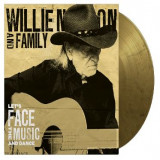
Let’s Face the Music and Dance is the 61st studio album by American country legend Willie Nelson and his band The Family. Produced by Buddy Cannon, this album features a collection of standards that Nelson and his sister Bobbie Nelson played throughout their careers. He recorded the album at his Pedernales studio in Austin, Texas.
Critics gave the album favourable reviews, citing how incredible it is that even at then nearly 80 years old, Nelson’s voice and guitar playing still sound fresh and timeless. The album charted in both the Billboard Top Country Albums as well as the regular Billboard 200 chart.
’Angelo lost his shit over it. Aaliyah’s 3rd favourite track of all time is on it. David Bowie rocked up with it to a TV interview, declaring it “the most exciting sound of contemporary soul music”.
In 1996, Lewis Taylor released his self-titled masterpiece. A true modern classic, it’s an album that was years ahead of its time. Forget 25 years ago, it could easily have been made in 2021. An effortless blend of neo-soul, sophisticated pop, smart grooves and laid-back white funk, it enjoyed rapturous reviews from critics and music legends alike. But the album never managed to make an impact and given what was likely a token vinyl release at the time, the original records have long since been near-impossible to find. Lewis Taylor’s Lewis Taylor remains a holy relic for some and criminally unknown to most.
Lewis Taylor’s impeccable influences created a dazzling sonic palette: the LP as a whole suggests the visionary brilliance of Prince; the vocal stylings evoke the yearning power of Marvin Gaye; the effortless guitar playing shares the virtuosity of Jimi Hendrix; the haunting tones conjure Tricky; the innovative production and engineering invite comparisons to studio mavericks like Todd Rundgren and Brian Eno; the multi-layered, complex harmonies flash on Pet Sounds-era Brian Wilson; the dark, drama is reminiscent of both Scott Walker and Stevie Wonder; the complex arrangements create textures and moods with the feel of Shuggie Otis on Inspiration Information; the bold experimentation is akin to progressive artists like Faust and Tangerine Dream; the atmosphere is in conversation with Jeff Buckley’s Grace… and we could go on. That might all sound like marketing hyperbole, but not as far as Be With is concerned. It is a genuine wonder how an album this good could’ve passed so many people by.
But despite all the reference points, the similarities are really only skin-deep because the album sounds truly original. It occupies its own distinct, strange universe that feels dark and brooding one moment, bright and joyous the next. Ultimately, Taylor sounds like Taylor.
Although you wouldn’t know it from the credits, the album wasn’t the work of Lewis alone. Sabina Smyth gets an executive producer credit on the original sleeve, but in fact she worked with Lewis on the production and arrangements, did a lot of the backing vocals and she co-wrote Track, Song, Lucky and Damn with Lewis.
Lewis clarified all this in a Soul Jones interview with Dan Dodds in 2016. He explains how not giving Sabina the credit she was due at the time was an unfortunate consequence of where his head was at and he’s now trying to set the record straight.
Together they created an exquisite and sensually-charged record, with a freshness to the writing that makes the songs catchy, melodic-yet-deep and sometimes even funky. The music is predominantly guitar-led and a mixture of organs and synths, live drum loops and electronic percussion make for a sort of modern soul backing orchestra.
On the surface the album is gorgeously laidback, but beneath the lush, sometimes slick, production there’s a murkiness in the seriously gritty funk/hip-hop instrumentation. Lewis Taylor can be a claustrophobic listen. Even its one-word, often seemingly throw-away track titles add to the sense of unease. In its most positive moments, there’s still a sense that things aren’t quite right. The magic comes from this compelling tension.
The languid, strutting “Lucky” is a sensational opening statement. Sinuous electric guitar winds around the shaking percussion with a killer bass line rattling your bones, and Lewis’s voice is sublime. Its six-and-a-half unhurried minutes manage to distill the work of Marvin, Al Green and Bobby Womack because yes, it’s *that* good. Up next is the tough, dusty drum and jazzy, unsettling psych-guitar workout of “Bittersweet”. Aaliyah described it the “perfect song”, which says it all. By turns loping and soaring, tightly coiled and blasting free, 25 years on its discordant, swaggering majesty still sounds like future R&B.
The swinging, blue-eyed funk of “Whoever” oozes sophisticated sunshine soul for hazy days before “Track” sweeps in. The music tries to lift us up, beyond the reach of the vocals trying to drag us back down as Taylor sings “my mood is black as the darkest cloud”. The spare, dubby electro-soul of “Song” closes out the first half of the album with barely contained dread as it creeps towards the lush, synth-heavy coda.
The smouldering “Betterlove” eases us into the second half, coming on like a languorous response to the call of “Brown Sugar”, before sliding into the shuffling, softly-rocking “How”. Somehow the remarkable “Right” manages to both warm things up and smooth things out even more. Taut yet luxurious, it’s definitely not wrong.
“Damn” was to have been the album’s title track and you might also be able to hear its influence on D’Angelo’s Voodoo, maybe most obviously in the chaotic closing moments of “Untitled (How Does It Feel)”. Building to a screeching wall of noise that suddenly cuts dead, “Damn” sounds like the natural end to the album, with the celestial a cappella “Spirit” serving as a heavenly reprise.
When it came to the sleeve, art director Cally Callomon heard Taylor’s music as “sideways off-camera glances at a plethora of influences he had” and wanted to interpret that visually: “I went off into night-time London to see if I could find his song titles in off-beam low-fidelity photographs. I even found a shop called Lewis Taylor”. With a slide for each of the album’s ten tracks, nine of them are on the inner sleeve and the slide for “Damn” makes the front cover. It should’ve been the album’s title, but concerns over distribution in the US scuppered this.
One of UK soul’s most fascinating artists, Andrew Lewis Taylor is an enigmatic figure and a hugely under-appreciated talent. A prodigious multi-instrumentalist who got his start touring with heavy blues/psych outfit the Edgar Broughton Band, he released two albums of psychedelic-rock as Sheriff Jack before Island signed him on the strength of a demo alone. But Taylor was destined to be one of those artists unable (or unwilling) to be pigeonholed and despite the best efforts of Island’s publicity department the music never sold in the quantities it needed to or deserved to. Island eventually let him go in the early 2000s and in June 2006, Lewis Taylor retired from music.
Typical for the mid-90s, this CD-length album was squeezed onto a single LP for its original vinyl release. Simon Francis’s fresh vinyl mastering now spreads out the ten tracks over a double LP so nothing is compromised. And as usual, the records have been cut by Pete Norman and pressed at Record Industry. The original artwork has been restored at Be With HQ and subtly re-worked to work as a double.
This sprawling psychedelic soul opus really is a forgotten should-be-classic. We know that there are those of you who know, and as for the rest of you, we’re a bit jealous that you’re getting to hear Lewis Taylor for the first time.
Nadja is a duo of multi-instrumentalist Aidan Baker and bassist Leah Buckareff—active since 2005—and making music which can be described as ambient doom, dreamsludge, or metalgaze. Nadja’s signature sound combines the atmospheric textures of shoegaze and ambient/electronic music with the heaviness, density, and volume of metal, noise, and industrial.
For their new album, Luminous Rot, the duo retain their overblown/ambient sound, and explore shorter and more tightly structured songs reflecting their interests not only in metal, but post-punk, cold-wave, shoegaze, and industrial.
Thematically, Luminous Rot explores ideas of 'first contact' and the difficulties of recognising alien intelligence. This was in part inspired by reading such writers as Stanislaw Lem and Cixin Lui -- in particular, theories on astro-physics, multi-dimensionality, and spatial geometry in "The Three Body Problem" -- as well as Margaret Wertheim's "A Field Guide To Hyperbolic Space," about mathematician Daina Taimina's work with crochet to illustrate hyperbolic space and geometry.
The album was recorded between their home studio, Broken Spine Studios, or Nadja’s live rehearsal studio, both in the district of Lichtenberg, Berlin. Luminous Rot marks the first album mixed by someone else, who in this case was David Pajo. The band comment, “as big fans of Slint, we thought he might fore-front the more angular, post-punk elements of our music - the mix is quite different from our previous albums. But, as usual, we had James Plotkin (Khanate, OLD, etc) master the album as we trust his ears and aesthetic, as he's mastered numerous records of ours.”
Paper Birch is a collaborative experimental noise rock duo formed by Fergus Lawrie (Urusei Yatsura) and Dee Sada (NEUMES / An Experiment On A Bird In The Air Pump) in May 2020. United by mutual feelings of despair, fragility and hope, they passed ideas and sounds between London and Glasgow whilst the UK was in lockdown. The resulting 9-track debut LP morninghairwater is set to be released on vinyl, CD and digital. A melting pot of genres, morninghairwater twists and turns through moments of 60’s inspired
indie-pop, fuzzed out angular shoegaze and glitchy electronic soundscapes with astonishing ease. This album draws not only on the influence of both Lawrie and Sada’s individual back catalogues but which at times echoes with everything from Heavenly to Joy Division. The album also marks the beginnings of a collaborative relationship with renowned visual artist, Thomas James who has created thrilling films for Ghostpoet, Paloma Faith and most recently, The English National Ballet. Whilst morninghairwater may be a product of the universally challenging time in which it was recorded, the duo has already started work on their second album and Paper Birch looks set to be an enduring fixture of the UK experimental scene. Press and radio coverage for Paper Birch “an intoxicating squall of noise pop” - God Is In The TV “Sada’s signature softly cooed atmospheric translucent vocals prove a congruous fit with Lawrie’s
deeper, more grunge-y despondency; sounding at times like Psycho Candy-era Jesus And Mary Chain in harmonious matrimony with Mazzy Star, or, the Pop Group hooks up with MBV” - Monolith Cocktail “mixing in disparate elements from classic 60s pop to glitchy electronica to transportative effect” – Joyzine “with a strong baseline and a sea of roaring guitar, a bit like The Pastels vs My Bloody Valentine (nothing wrong with that!)” - Is This Music “The texture is suggestive, the atmosphere hypnotic and the climate oppressive” - Sun Burns Out “A true jewel of modern and underground psychedelic pop” - Acute Pop