Jónbjörn's 'Gárur' reects the ebb and ow of life, and is a sonic exploration of the nether regions of atmospheric electronic music. Jónbjörn, an Icelandic producer and purveyor of organic textures and soundscapes has just released his debut full-length LP titled ‘Gárur’. Translated to ‘Ripples’ in English, the album is a colourful display of intricately woven electronic grooves and hypnotic atmospheres. The 10-track LP unfolds like a 1-hour mixtape, each song seamlessly blending from one to the next. ‘Þeytt smjör’ sets the scene with a sequence of generative ambience – lush pads and synthesizers atop a backdrop of found sound textures. The album pushes forward into many beat-centric tracks across various genres – everything from Downtempo, Deep House, Electronica, and Electro can be found throughout. While each track borrows inuences from across the dance music spectrum, the album is held together by Jónbjörn’s melodic and harmonic tendencies that encourage you to lose yourself in. Jónbjörn's process is heavily sample-based, often jamming carelessly to unearth new sonic possibilities. He records tracks live, triggering loops and effects spontaneously, and separates the creative process from mixing to maintain a sense of naivety. This approach allows him to capture the purity of initial demos, without falling into the temptation to overly polish the ¬nal product and lose that initial magic. Over the past three years, Jónbjörn has released a string of singles and his last full release on the Helsinki label ‘OO Recordings’, which featuredsix tracks on cassette. He has also been putting out music on his own label, Lagaffe Tales. In March 2020, he released his ¬rst full vinyl EP on his own label series, BROT, at a time when the global pandemic had closed almost all clubs worldwide. Additionally, he has released music on reputable labels such as D.KO Records, Neo Violence, Gestalt Records, Móatún 7, Bitterfeld Musik, Yellow Island Records, and FALK.
Buscar:mar tex
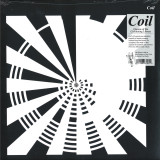
Queens Of The Circulating Library stands alongside Time Machines and Nurse With Wound's Soliloquy For Lilith as a post-industrial pinnacle of sensory-warping long-form drone.
Crafted by the distilled duo of Thighpaulsandra and John Balance, the 49-minute piece unfurls in swirling, cyclical waves, tidal as much as textural, channeling the spirit of levitational minimalism pioneered by La Monte Young. Touted as the first part in "a continually mutating series of circulating musickal compositions" upon its initial release in 2000, the album remains a compelling case study in Coil's exceptional capacity for mutation and extremes. The theatrical introductory monologue delivered by Thighpaulsandra's mother - a career opera singer, in her 80's at the time of recording - sets the stage for a grandiose ascension. Written by Balance, the text is declamatory but dreamlike, refracted through megaphone echo: "Return the book of knowledge / Return the marble index / File under "Paradox" / The forest is a college, each tree a university." As her voice fades, the lulling synthetic infinity deepens, congealing into transient crests of volume and haze, like slow-motion surf misting in moonlight. Thighpaulsandra describes their aesthetic intention as a "bliss out," static but shape-shifting, an amniotic drift towards an eternal vanishing point. A supreme sonic embodiment of the slogan on the sleeve of Time Machines, two years prior: "Persistence is all."
Dalmata Daniels third LP comes from Rapha, marking his return to the label after contributing to its split and compilation series. Known for bold acid treatments and dark, futuristic tones, Rapha takes his craft to new heights on Midnight Dancer, which also features remixes by CT Kidobo and PRZ. The album opens with I Win U Win, pulling listeners into an adventure of pulsing basslines and cosmic, minimal electro. CT Kidobos remix then twists it into a darker, seductive French-inspired club sound. The third track, ...And Them, continues the journey of the opener with mechanical beats and textured soundscapes, while Alien Dance highlights Raphas signature sharp, distinct style leaving a strong mark on the deep electro club scene.
On the flip side, Midnight Dancer plunges into a hypnotic realm of haunting echoes and distorted rhythms, with heavy basslines reverberating through the darkest corners of the mind. PRZs remix of the title track retains the original groove but adds a cleaner, equally impulsive electro edge perfect for the club. The albums final tracks, Lost Start and Galactico, round off the journey with shimmering electro patterns and eerie, alien soundscapes, leaving an unforgettable impression.
In Midnight Dancer, Rapha showcases his ability to blend industrial grit with cosmic melodies, delivering hard-hitting electro suited for both club play and immersive listening at home or on a night ride. Be warned DDLP03 is limited to 150 copies, housed in a Studio Jetski designed jacket with a digital download card and shrink wrap.
Since its founding back in 2014, Blume has carved a unique place in cultural landscape, issuing free-standing works, spanning the historical and contemporary, that represent singular gestures of creativity within the field of experimental sound. Joining their broad efforts in building networks of context and understanding that already includes the works by Werner Durand, Sarah Hennies, Bruce Nauman, John Butcher, Jocy de Oliveira, Mary Jane Leach, Valentina Magaletti, Alvin Curran, Julius Eastman, Alvin Lucier, and others, Blume return with the first ever vinyl release to attend to James Tenney’s legendary “Postal Pieces”, Marking the first ever appearance of five of the suite’s works - “Maximusic, for Max Neuhaus” (1965), “Having Never Written a Note for Percussion, for John Bergamo” (1971), “FFor Percussion Perhaps, or... Night, for Harold Budd” (1971), “Cellogram, for Joel Krosnick” (1971), and “Beast, for Buell Neidlinger” (1971) - on vinyl, drawing upon recordings made in 2003, by the Amsterdam based ensemble, The Barton Workshop, under the direction of James Fulkerson. Among the most important and highly regarded efforts in Tenney’s canon of compositions, as well as within the history of 20th Century music, these five pieces represent a crucial bridge between Fluxus-oriented conceptualism, minimalism, and the microtonal complexities that would emerge in their wakes. Issued in a highly limited vinyl edition of 300 copies, it includes exact replicas of the original postcard graphic scores, and features newly commissioned liner notes by Bradford Bailey, Blume’s brand new edition takes great steps to centring Tenney at the eye the storm during some of experimental music’s most important years.
A student of composition under Carl Ruggles, John Cage, Harry Partch, and Edgard Varèse - remaining close to all of them, and later performing in both Cage and Partch’s ensembles - as well as acoustics, information theory, and tape music composition under Lejaren Hiller, James Tenney carved a wide path within the contexts of experimental and avant-garde music during the second half of the 20th Century. Not only was he a tangible bridge between the generations of composer’s who laid much of the groundwork and the later movements of Fluxus, Minimalism, and the broader practices of experimental music, but Tenney is credited as having contributed one of the earliest applications of gestalt theory and cognitive science to music in 1961, before helping to pioneer the field of computer music at Bell Labs, during the following years.
Over the course of his career, Tenney produced music of such complexity and sophistication - paying little mind to the seductions of taste or dominant tropes of its own moment - that his work and legacy have largely remained under-recognised by the broader publics that have attended to most of his peers. Perhaps more pertinently, the body of work he produced can be perceived as too varied and complex to fit neatly within standard creative histories or critical frameworks, comprising harmonically complex works for acoustic instrumentation, musique concrète, the groundbreaking 1961 “plunderphonic” composition, “Collage No.1 (Blue Suede) (for tape)” - sampling and manipulating a recording of Elvis Presley - as well as algorithmic and computer synthesized music. Even here, within this single decade, a clear image of Tenney’s endeavours remains elusive. In addition to penning important theoretical texts, he collaborated and / or played with Max Neuhaus, La Monte Young, Steve Reich, Philip Glass, Michael Snow, Terry Riley, and numerous others; was an active member of Fluxus; starred in and composed music for Stan Brackage’s films; regularly worked with the Judson Dance Theater; co-founded and played in the ensemble, Tone Roads, with Malcolm Goldstein and Philip Corner; was a vocal advocate of the works of Conlon Nancarrow and Charles Ives, playing a significant part in the revival of both of their legacies; and regularly collaborated as a composer, musician, and actor with his then-partner, the artist Carolee Schneemann, notably co-starring in her film, “Fuses” (1965) and her legendary 1964 performance, “Meat Joy”, as well as creating sound collages for her films “Viet Flakes” (1965) and “Snows” (1970). Curiously, for a relatively absent figure in the historical and critical narratives, Tenney seems to have been the thread that bound multiple generations and disciplines of avant-garde practice in New York during this period.
Tenney was deeply invested in the quality and perception of sound. By 1970, this led him back to composing exclusively for acoustic instrumentation (though sometimes processed with tape delay) - in most cases utilising non-well tempered tuning systems to explore harmonic perception - a practice that he would remain steadfast to for the remainder of his life. This development roughly corresponded with his relocation to California, at the outset of the 1970s, following an invitation to teach at the newly founded music department at California Institute of the Arts (CalArts) in Valencia. Finding himself in regular contact with the harpist Susan Allen and the artist Allison Knowles, as well as at a great distance from many of his friends, in 1971 he completed (with the assistance of Knowles and Marie McRoy) “The Postal Pieces”, a project he had begun in 1965.
A suite of eleven compositions, “The Postal Pieces”, stands among Tenney’s well known and celebrated compositions, and illuminates the dualities embraced by the composer, notably his use of sound to develop consciousness in and of others, and his willingness to draw on elements and observations of everyday life; citing his strong dislike of writing letters as being the primary inspiration for their inception. In lieu, he conceived to send his friends - John Bergamo, Allison Knowles, Pauline Oliveros, La Monte Young, Harold Budd, Philip Corner, Joel Krosnick, Buell Neidlinger, Susan Allen, Max Neuhaus, and Malcolm Goldstein - short scores on the back of postcards. The suite is composed around three themes: Tenney’s concept of swell form (utilizing repetition and progressing through a structurally symmetrical arch), intonation, and the desire to produce “meditative perceptual states”.
A hugely important addition to Blume’s ever expanding efforts in context building and networks of creative practice, James Tenney’s “Post Pieces” is issued in a highly limited vinyl edition of 300 copies, which includes a exact replicas of the original postcard graphic scores, and features newly commissioned liner notes by Bradford Bailey.
Space Drum Meditation unveils Four Tusks, their debut album and seventh re- lease on the label. This 12-track journey blends tribal rhythms, atmospheric textures, and electronic elements, interweaving darkness and light. The album unfolds like a ritual, revealing a murky, immersive soundscape shaped by primal beats, ethereal ambience, rumbling thunder, and the whisper of rain, reminiscent of a primeval marshland and drawing one into its depths. Featuring a wide array of instruments – including deep percussion, traditional flutes, throat singing, and field recordings – Four Tusks crafts a mysterious tapestry that feels both ancient and futuristic, resonating with nature's elements.
Nous'klaer Audio proudly presents Nicola Cruz's latest full-length album, Kinesia. On his third studio album, the Ecuadorian producer masterfully blends rich studio sessions with deep analog synthesis. Kinesia invites the listener to channel an inner voice - to pick up thoughts, words, and messages as if ancient information traveling through time has been received. This album functions as a form of 'antenna,' translating these ideas into compositions and movement. The album begins with a 5/4 rhythm structure, summoning the voice of machina into a textural atmosphere, led by Perma, Nicola's vision of an infinite breaks vortex, and sustains the tension with the meditative Telepathine, a substance fictionally associated with telepathy. Regardless of the tempo, each track is intricately laced with chants, subtle percussion, textures, and spacious details that draw you back for more. With Kinesia, Nicola Cruz continues to evolve his signature sound and takes you along for the ride. While the album is crafted for a deep, introspective journey, the kinetic influence remains ever-present on dance floors.
Music From Memory is thrilled to introduce Dead Sound, the collaborative project of Marco Sterk (aka Young Marco) and Berlin-based pop-auteur John Moods. Both artists are no strangers to the label; Sterk forms one third of the trio Gaussian Curve, while Moods released the 2022 album ‘Hidden Gem’ with The Zenmenn.
Their collaboration was both planned and spontaneous; Sterk initially reached out in 2022 expressing his desire to work with Moods. The pair finally got together in 2024 to produce ‘Into The Void’, an album that burst into life over the course of a few creatively charged days in each other’s company.
Moods’ dream-like, emotionally charged music wears its heart on its sleeve; its very human vulnerability makes it a perfect match for Sterk’s strong sense of melody and textural sonic visions.
‘Into The Void’ carries these psychedelic traits in its DNA, but they exist layered deep amongst the shadows. Painting on a wide canvas that effortlessly skips between genres, the pair weave anything that inspires them into a truly unique tapestry; a bold attempt to touch at the beyond.
Exploring the space between perception (level of the mind) and the nature of the universe (actual level of reality) seems traditionally like an impossible task. But there’s gotta be a time and a space for the profound and this album invites the listener to go deep, letting go of concepts such as love and opening oneself up to one’s own authentic journey. This transformative force of healing is a central theme of ‘Into The Void’, a path that is lined with light and darkness in equal measure. But, as Moods says, “do not skip the darkness, let that door open and swallow you. And maybe you’ll find, it's not as dark as you perceived at first."
Sleeve art by Michael Willis.
Bringing stark dread bass vibes like no one before or since, Mars89 makes a welcome return to Sneaker Social Club with another four-track script flipper.
Since he first surged onto the radar with some incisive moves on Bokeh Versions back in 2017, Masayoshi Anotani has deployed a raw, non-conformist kind of bass music that's minimal in spirit but packing incredible weight where it counts. It draws parallels with weightless grime, but swap the woozy square wave synths out for fierce industrial textures and dystopian bleeps, and maybe you're halfway there.
Following on from 2022's Night Call and a collab LP with Seekersinternational on his own Nocturnal Technology, Mars89 is back with an EP which takes on new sonic dimensions without losing the persistent moodiness that makes his shadowy sonics so compelling.
'No Control' feels the most in line with the earlier Mars89 work, creating a back and forth between an upfront grime-y synth lick and blown out bass notes. The space around the notes is as vital as everything being played, creating a tension that doesn't let up no matter how much the brittle percussion rattles.
'Sonar Breaks' feels distinct as it drags a sticky drum loop through the dirt until it comes out positively caked. That leaves plenty of room for the bleeps up top to cut through the mix with devastating clarity, and Mars89 needs nothing else to make a taut piece of soundsystem Semtex.
'Hydra' continues to draw influence from jungle while taking a sideways approach to breakbeat edits, finding a curious groove in angular drum science before a stark arpeggio locks the track down. It's another hint at the different tools being reached for on this EP, brought into the Mars89 methodology and bent to his particular will.
'Still Dreaming' closes the EP out with an evocative sample from a sci-fi blockbuster and a spiralling sound bed of synth lines and break shards. While the track lands softer than its predecessors, the dense mix whips up a claustrophobic allure comfortably aligned with the overall intensity of the record — an intensity which is wholly unique to Mars89 and his maverick manoeuvres in the field of contemporary bass music.
A sense of destiny hangs over Sentir Que No Sabes, Mabe Fratti’s fourth solo-credited album released in a five year span. Her work has always possessed a finely tuned sense of drama capable of expressing a range of emotional states, and across this new album, she conveys the struggle to process various relationships or situations–and the actions that come next. Sentir Que No Sabes is urgent and clear, poppy, generous and approachable, while showcasing a considerable emotional hinterland. It is also, as Fratti is quick to mention, “groovy.”
Written and recorded with her partner, multi-instrumentalist, and co-composer Héctor Tosta (I.La Católica, Titanic), Sentir Que No Sabes is the result of an intense, detail-oriented process. Fueled by a new confidence gained in their collaborative project, Titanic, and its critically acclaimed 2023 LP, Vidrio, the two hunkered down in the familiarity of their studio (aka Tinho Studios) to bash out the initial sonic coordinates of her new record. “We talked and talked, and discussed ways of playing and recording, until things became inevitable,” Fratti explains. “We recorded a bunch of demos at our home studio and that meant we had a lot of time to re-edit and experiment. We really dug in. We were super focused on detail.” Tosta also took up the controls as producer and arranger-in-chief for all additional instruments. The album was later completed at Willem Twee Studios in Den Bosch in the Netherlands, and Pedro y el Lobo Studios and Soy Sauce Studios, in Mexico City.
For the final studio recordings, the pair were joined by drummer Gibran Andrade and trumpetist Jacob Wick to fill out and expand on Tosta’s percussion and brass arrangements. This small group of friends were able to work quickly and openly, and without fear: a testament to the exhaustive groundwork put in at Tinho Studios. This can be heard in three short, intermediary tracks that also manage to be the most aggressive on the record: “Kitana” (a scratch-laden instrumental that acts as a strange prelude for the last track, “Angel nuevo”) and a pair of two-minute instrumental interludes, “Elastica” I and II. None are throwaway mood pieces; rather they act as emotional cue cards, and hint at the way Fratti and Tosta created the overall atmosphere of Sentir Que No Sabes.
A strong sense of rhythm irrigates the sound from the jump, as heard on the glorious opening track, “Kravitz.” Here, the brilliant plucked cello line acts as a bassline and props up the steady thump of the kick drum. The cello’s growl serves as a conduit for a set of slightly paranoid lyrics that tell us “Quizás haya oídos en el techo” (“maybe there are ears in the ceiling”), while the song also introduces another staple of the record: the clever brass stabs, whistles, parps, and other interjections that paint a canvas of traffic in a city. It’s a postmodern, widescreen sound that for some might recall The Blue Nile’s Hats.
Sentir Que No Sabes is a record full to the brim with a modern pop sensibility, invoked by the sort of magpie spirit that ensnares anything it can find, repositioning sounds for the here and now. The keys and melody on the melancholy “Pantalla azul” (“Blue screen error”) transport us back to the glossy mid-1980s. “Oídos” (“Ears”) is a beautiful slice of contemporary, hybrid pop, in which Fratti’s vocal lines delicately spin themselves around the lean structures erected by the brass and drums, and the descending “plink” of a set of piano chords. Then we have a gloriously strong ending with the swell of “Angel nuevo” (“New angel”), another cinematic track full of gentle, instrument-rich swells and eddies that manages to be almost endless in its range–and yet intensely personal, as Fratti’s voice is close, almost whispering in your ear. A much needed lullaby for our fractious times.
The lyrics, for their part, have a stop-start quality to them, and hint at the small, incremental emotional taxes we pay through just living our lives. They circle around the music like birds waiting to swoop. There is something of the spiritual in all of Fratti’s work that expresses itself in a form of yearning: she looks to new horizons while personal dramas find themselves internalized, contextualized, and then dealt with through metaphor. Here, she was keen to mention Tosta’s constant encouragement in her finding a path to best sing or phrase her words to impart their maximum effect. “Hector was super inquisitive about my lyrics and asked me questions about what I meant, which sometimes is something you don't wonder so much about in isolation,” Fratti explains. “Besides, he is a great poet, and you can see that in what he did on the Titanic record. This made me go deeper into my lyric writing and definitely transformed it into something that I feel super happy about now.”
Take “Enfrente” (“In Front”), a track that initially comes across as a languid, glossy number, with plucked cello strings standing in for a bass line and brittle synth parts. Soon we catch on to a brilliant minor chord switch, which mirrors the fear and doubt expressed in the lyrics as someone “trembles up to the podium” in a “search for meaning.” There’s also the startling introduction of a vocoder in “Quieras o no” (“Whether you want it or not”); it comes precisely at the point Fratti sings “Quieras o no es un desastre” (“Whether you want it or not, it's a disaster”). Moments like these leave room for interpretation and, over time, create a strong bond between the listener and the record.
In fact, across Sentir Que No Sabes, each phrase–whether instrumental or vocal–becomes at some level emblematic of acts and moods that impart deep emotional significance. We see this best on “Intento fallido” (“Failed attempt”), which could be the score to feeling trapped in self-doubt, only to suddenly be sprung free by the song’s gloriously upbeat ending. On “Márgen del índice” (“Index margin”), the quicksilver switch between initial disharmony and a beautiful melody is breathtaking, all augmented by evocative arrangements, textured production, and the slightly playful, gnomic lyrics. The track’s emotional ecosystem allows another brilliant ending, which uses the simple repeated phrase, “Cómo lo va a ver?” (“How are you going to see it?”).
So what to make of Sentir Que No Sabes? High gloss Pastoralism? The sound of a city-bound, post-post modern soulscape? No matter the emotions evoked, it's the work of an artist coming into their own, and creating a benchmark record.
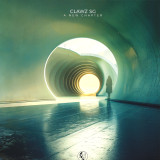
“A New Chapter” by Clawz SG marks a profound evolution in the artist’s sonic journey, offering a blend of melodic techno that straddles the boundaries between deep house and ethereal techno. Known for his ability to craft immersive soundscapes, Clawz SG delves deep into the human experience with this album, exploring themes of hope, transformation, and introspection. Released on Steyoyoke, the album invites listeners to embark on an emotional voyage through richly textured melodies and poignant rhythms that resonate with the soul.
The album comprises eight meticulously crafted tracks, each weaving a tapestry of deep, melodic undertones that evoke both serenity and introspection. The opening track, “Updraft”, sets the tone with its uplifting yet contemplative energy, while “Echoes Of Hope”, the album’s lead single, stands out with its delicate balance of melancholy and optimism. Collaborating with violinist Félix Vanghem, Clawz SG delivers “Whispers Of The Past”, a track that seamlessly blends electronic and classical elements, creating a hauntingly beautiful soundscape. Throughout the album, Clawz SG showcases his signature ability to intertwine dreamlike melodies with driving techno beats, most notably in tracks like “A Glimpse Of Forever” and “Serendipity”.
“A New Chapter” is a carefully curated sonic journey that reflects Clawz SG’s growth as an artist and his deep connection to the emotive power of music. With each track, the listener is drawn deeper into a world of introspection and emotion, making this album a must-listen for fans of melodic techno and those seeking a deeply immersive musical experience.
Split #3 is the latest installment in the Split Series released by Overthink Records, showcasing a dynamic blend of techno and EBM from talented producers. This record features two sides, each offering distinct yet complementary styles.
Corsica producer Charlou takes over the A side with two techno tracks, delivering a unique sound that seamlessly blends retro and modern elements.
On the B side, Italian producer Waveratio 618 makes a strong debut with two solid techno/EBM tracks. Waveratio 618's music is marked by its gritty textures, driving beats, and dark / atmospheric tones. The tracks merge the raw intensity of EBM with the precision and complexity of techno, creating a sound that is both intense and hypnotic.
- D6: Matalo! (Hey Gente)
- A1: Matalo! (Theme Song)
- C1: Matalo! (Theme Song)
- D1: Matalo! (Theme Song)
- A2: Matalo! (Main Titles - Stereo)
- A3: Matalo! (Mirage)
- B1: Matalo! (Old Town)
- B2: Matalo! (Chase)
- B3: Matalo! (Long Shadows)
- B4: Matalo! (Chase Pt 2)
- C2: Matalo! (Chase Pt 3)
- C3: Matalo! (Old Town Pt 2)
- C4: Matalo! (Cantina)
- C5: Matalo! (Ballata Dei Vestiti)
- C6: Matalo! (Under The Sun)
- D2: Matalo! (Solitude)
- D3: Matalo! (Main Titles - Iia Colonna)
- D4: Matalo! (Fischio)
- D5: Matalo! (Ghosts)
Calling all fans of cult soundtracks and genre-bending scores! Four Flies is thrilled to present a limited edition gatefold beauty containing the premiere vinyl release of the complete score to Matalo!, one of the most captivatingly unique Spaghetti soundtracks ever.
Matalo! is a 1970 'western crépusculaire' by Milanese director Cesare Canevari, known for his visually striking genre films, starring Swedish enfant terrible Lou Castel and Italian theatre actor Corrado Pani. Canevari adopts an experimental, atmospheric approach, relying heavily on out-of-focus effects and framing his shots unconventionally. This gives a dark and atmospheric turn to thewestern genre, with the typical dusty plains transformed into a windswept ghost town, while action sequences replace dialogues almost entirely, leaving actors with very little to say – and, therefore, putting the music center stage.
Composer Mario Migliardi – who was also a conductor, pianist, and Hammond organist – throws out the rulebook for Italian Westerns. Prepare for a wild ride of psych-rock textures, swirling electronic filters, haunting reverbs, and concrete sounds – a sonic tapestry that seamlessly blends influences ranging from Jimi Hendrix to Luciano Berio.
Migliardi masterfully combines traditional folk instruments like acoustic guitars and percussion withnon-canonical electronic processing, creating an electro-acoustic alchemy thatfeels both fresh and timeless today, probably way more than it did in the1970s. In particular, the Leslie filter, a hallmarkin the Hammond organs popular at the time, is applied to the entire soundtrack, resulting in a very distinctive and dynamic phaser effect.
The soundtrack's highlight is probably the rock song featuring vocals from Giano Ton, aka Giacomo Tosti, the only track to have found its way on vinyl prior to this LP (it wasthe B-side ofa forty-five released by RCA Italy at the time). Its 9-minute extended version, previously unavailable on vinyl, is a fantastichard-blues-rock jam à la Hendrix.
This limited-edition double vinyl LP comes in a stunning gatefold jacket with artwork by Eric Adrien Lee, who drew inspiration from the film's original posters and promo materials.
Definitely a must-have for collectors of unique soundtracks and adventurous music!
a Matalo! (Theme Song) feat. Giano Ton
h Matalo! (Theme Song) Instrumental
n Matalo! (Theme Song) [Single Version]
[s] Matalo! (Hey Gente) [feat. Corrado Pani]
[a] Matalo! (Theme Song) [feat. Giano Ton]
[h] Matalo! (Theme Song) [Instrumental]
[n] Matalo! (Theme Song) [Single Version]
[feat. Corrado Pani]
- A1: Black Cat
- A2: Luck & Strange
- A3: The Piper's Call
- A4: A Single Spark
- A5: Vita Brevis
- A6: Between Two Points (With Romany Gilmour)
- B1: Dark & Velvet Nights
- B2: Sings
- B3: Scattered
- C1: Yes, I Have Ghosts (With Romany Gilmour)
- C2: Luck & Strange
- D1: A Single Spark (Demo)
- D2: A Single Spark (Orchestral)
- D3: Scattered
Fünf Monate arbeitete David Gilmour in Brighton und London an »Luck And Strange«, dem ersten neuen Longplayer, den er seit neun Jahren veröffentlicht. Die LP wurde von David und Charlie Andrew produziert, den man für seine Zusammenarbeit mit ALT-J und Marika Hackman kennt. Der Großteil der Lyrics stammt von Gilmours Co-Autorin Polly Samson, mit der er schon seit 30 Jahren zusammenarbeitet. Auf dem Album sind acht neue Tracks zu hören, dazu kommt eine Coverversion von Between Two Points (Originalinterpreten: The Montgolfier Brothers), auf der Romany Gilmour Harfe spielt und singt. Auf anderen Songs der LP war Gilmours Tochter für die Backing-Vocals zuständig. Zu den Musikern, die an der Entstehung von »Luck And Strange« beteiligt waren, gehören: Guy Pratt & Tom Herbert am Bass, Adam Betts, Steve Gadd und Steve DiStanislao am Schlagzeug sowie Rob Gentry & Roger Eno an den Keyboards. Für die Streicher- und Chor-Arrangements war Will Gardner verantwortlich. Auf dem Titeltrack, der 2007 während eines Jams in David Gilmours Scheune entstand, ist der verstorbene Pink Floyd Keyboarder Richard Wright zu hören. Das Cover-Foto von Anton Corbijn wurde durch den Text von »Scattered«, dem letzten Song des Albums, inspiriert.
Layton Giordani continues his rich vein of outstanding form with ‘Freaks at Night’.
‘Freaks at Night’ continues his adventures in sound. Unmistakably a peak-time record, the track still manages to traverse a rich ethereal energy, highlighted by an otherworldly synth line and striking vocal that sets it apart from so many. Teased in sets by Giordani and Beyer going back to last summer, this one’s hugely anticipated.
Four years on from Layton Giordani’s critically acclaimed ‘New Generation’ album, Space 92 – one of techno’s most impressive new artists – steps up for a fitting remix. A masterclass of techno futurism, the 2020 album was a defining release of that year and was an impressive marker of Giordani’s ever-evolving talents in the studio. The title track was a memorable highlight, mixing ambient textures with head scrambling synth effects make it an enduring dancefloor classic. One of techno’s future stars Space 92 has added his touch to ‘New Generation’. With very special results. The Frenchman has super-charged the original, adding in plenty of laser-kissed energy as a barrage of powerful chords and silky pads take the cut into steamrolling territory.
Ediciones Villasonora’s sophomore release is “Laguna” by Phran. The Venezuelan lands on the southeastern Spanish label with a mini-album crafted in a marked personal approach, evident through six tracks combining dubbed atmospheres, broken percussive patterns, and warm analog textures—a sonic expedition bridging his intimate roots with an advanced sense of dance.
In recent years, Dzc. has emerged as a highly sought-after DJ, leaving her mark in Austria with performances at numerous venues. As a key member of the Acid Lambada crew, she has been featured in well-established curated festivals and events, both locally and internationally. Her productions mirror her passion for synth-driven dance music, characterized by dreamy pads and playful melodies.
No stranger to Fortunea Records, having already been featured in two editions of the Fortunea Cookies VA-Series, she is set to present her first 4-track EP in February.
The 'Conversations with Birds' EP is a meticulously balanced collection of tracks designed for each phase of a club night. Drawing inspiration from elements of 90s House and progressive sounds, 'Visual Mind' and 'In Sight' are dreamlike journeys with lively synth melodies, joyful basslines, and captivating pads and textures. The latter has also been reworked by Fortunea regular Peletronic, infusing crisp minimalistic rhythms into his 'Blurred Vision' Mix.
The standout piece of the EP is the title track on the B-side, a beautiful composition that elicits uplifting moments and feelings of euphoria.
It features emotive chords, airy strings, and soothing sustained tones that enhance the powerful groove.
The record promises to immerse listeners in an engaging journey that captures Dzc.'s distinctive vision.
’Conversations with Birds' will be digitally released on February 22, followed shortly by a limited vinyl edition.
The first contact is a common science fiction theme about the first meeting between humans and extraterrestrial life. The theme allows authors to explore a variety of philosophical concepts by adapting the anthropological topic of the first contact with extraterrestrial cultures. But then what are the Topics of a possible “Second Contact”? What would have happened to civilization if the extraterrestrial life force returns. Are they ready to greet it?
In this case, the second contact comes in the form of SEELEN. Label head and part-time intergalactic traveller Janein’s second full EP on the Imprint. And he hasn’t returned to take prisoners.
The Title track takes you for a wild ride from the second one. A warbling, acidic texture marks the foundation of what is an absolutely destructive and fiery cut. One of Janein’s heaviest percussion tracks to date takes the mood to an absolute frenzy while the acid-textures and metallic Chords can almost singe your eyebrows off if you get too close to the speaker.
In comparison, Gaja tones it down somewhat with mellower synths and an absolutely funky Bassline. But do not underestimate this track in comparison to Kobald M. This track will ensnare you into its hypnotic chokehold. It is the kind of cut you can play in any situation and not a single person will leave the dancefloor.
Meeting the Alien for a Parlay, translating its transmissions on this record are musical linguists Somewhen and Peryl.
While Somewhen has leaned into Kobald M’s destructive potential, adding a chaotic, out-for-madness kind of energy, that is sure to bring insanity to any warehouse, Peryl, known for his cathartic breakbeat excursions, has absolutely deconstructed Gaja making it into a track that sounds like the moment an unknown flying object enters the atmosphere of the earth.
Since its founding back in 2014, Blume has carved a unique place in cultural landscape, issuing free-standing works, spanning the historical and contemporary, that represent singular gestures of creativity within the field of experimental sound. Joining their broad efforts in building networks of context and understanding that already includes the works by Werner Durand, Sarah Hennies, Bruce Nauman, John Butcher, Jocy de Oliveira, Mary Jane Leach, Valentina Magaletti, Alvin Curran, Julius Eastman, Alvin Lucier, and shortly after returning with the first ever vinyl release to attend to James Tenney’s legendary “Postal Pieces”, the label is now offering a brand new, ambitious work by the American composer Ben Vida, entitled “Vocal Trio”, conceived, performed, and recorded in Bremen, Germany, during the Spring of 2022. A truly stunning work of compositional conceptualism, combining the ideas of systems based synthesis with real-time vocal collaboration - issued in a highly limited vinyl edition of 200 copies mastered by Stephan Mathieu, featuring specially commissioned liner notes by Bradford Bailey and a leporello insert offering the piece visual score - it’s a landmark in contemporary experimental practice and arguably the most forward-thinking and exciting piece by one of the most exciting American artists working today.
Ben Vida first emerged during the mid 1990s within a loose constellation of experimental musicians, centred around a performance series of improvised workshops at the Myopic Bookstore in Chicago, alongside Jim O'Rourke, Kevin Drumm, Chad Taylor, and the other future members of Town and Country - Jim Dorling, Joshua Abrams, and Liz Payne - the band within which he would gain widespread recognition over the following years. Like many other members of that scene, Vida remains a restless product of a fleeting context - Chicago during the 1990s and early 2000s - continuously undermining concrete notions of idiom and signifier within a practice that witnessed him rendering bristling abstractions within Pillow, glacial melodies with Town and Country, the art-rock mayhem of Bird Show Band, and the angular, driving indie rock of Joan of Arc, before becoming immersed in a practice of systems based synthesis, beginning in the 2010s, that guided much of his first decade of output as a solo performer and composer.
As early as 2013, he began to incorporate acoustic sound sources - specifically the human voice - into his work. It was this shift, evolving and refining itself over the last decade, that underscores radically the leap in his practice represented by “Vocal Trio”, a work that encounters Vida composing for the human voice with the ideas that allow for synthesis - transferring the underlying concepts and structures of both subtractive and additive synthesis to the acoustic realm - without using a synthesiser.
During the Spring of 2022 Vida was in Bremen, Germany, collaborating on a dance piece with the choreographer Fay Driscoll, when the production fell into delays. Finding himself with time on his hands, a space at his disposal, and the company of two dancers - Amy Gernux and Lotte Rudhart - who were also singers, the idea for the piece - to utilising the larynx as audio paths (multi-harmonic or harmonically pure) while conceptualising each person’s mouth as a filter to sculpt the timbre and resonance of a given tone - began to take shape in his mind. Considering how typographical scores might be developed into a non-linguistic social framework, Vida drafted a single page of text - what became the score for “Vocal Trio” - accompanied by a set of harmonic suggestion and loose parameters, seeking a core meaning from each word's phonic make-up by each of the three singers (Vida, Gernux and Rudhart) singing as slowly as possible.
At the core of the pulsing vocal drones - intoxicating, harmonically rich long-tones - that make up the duration abstraction of “Vocal Trio”, is Vida’s regard for music as a social space. It is an experiment that seeks liberation through the act of collective music making, by challenging the terms through which the act of composing is perceived and then relinquishing control. The piece’s rehearsals were simply the three performers hanging out, allowing their knowing each other and natural dynamics to contribute to its form as the score, before recording during a single afternoon at the end of a number of days sharing company and space.
Creatively visionary and groundbreaking on numerous terms, as well as being intoxicatingly beautiful and remarkably listenable, Ben Vida’s “Vocal Trio” represents a striking step forward for one of the most ambitious and outstanding sonic artists working in the United States today. Issued by Blume in a highly limited vinyl edition of 200 copies mastered by Stephan Mathieu, featuring specially commissioned liner notes by Bradford Bailey and a leporello insert offering the piece visual score, this is hands down one of the most important contemporary records we’re likely to encounter in 2024.
- A1: Everything Forgotten Flows
- A2: Silicate Tusks
- A3: Learn To Fly (Feat Sabola)
- A4: Segue
- B1: Ruins
- B2: Like It Shouldn’t
- B3: Thick Air
- B4: Eternal (Feat Ex-Terrestrial)
- C1: Wake (Feat James K)
- C2: Grimoire
- C3: Basalt Tones (Feat Jesse Osborne-Lanthier)
- C4: Moonstone (Feat Ben Bondy)
- D1: Frayed
- D2: To See Our Secret Die (Feat Sabola)
Acclaimed Canadian electronic producer Francis Latreille, known as Priori, unveils his new singles "Learn To Fly" and “Segue” today, marking the first releases from his upcoming third album, This But More. "Learn To Fly" offers a taste of the album's lush, dubby techno soundscapes, while "Segue" showcases the album's ambient side. Arriving May 24th via NAFF, This But More marks a sonic departure for the artist, exploring a richly textured landscape of electroacoustic compositions inspired by literature, cinema, and the transformative power of nature.
Priori delved into This But More from September 2023 to March 2024, drawing upon archival recordings and fresh ideas. "This album is about healing," Priori explains. "Not necessarily 'music that heals', but about the process in its ups and downs, its beauty and uncertainty." Themes of protection, healing, sleep, and decay naturally emerged during the creative journey.
To craft this immersive world, Priori collaborated extensively. Writer and musician Devon Hansen penned a series of "Suggested Stories" to accompany the album, adding depth to its lore. Musically, Priori teamed up with James K, Ben Bondy, Sabola, Adam Feingold, and Jesse Osborne-Lanthier, infusing the album with diverse instrumentation, including violin, guitar, software instruments, and field recordings.
This collaborative spirit extends to the album's striking visuals. Jesse Orsborne Lanthier designed the main and single artworks, while Ulysse De Lezenne crafted a unique jewel, both pieces seamlessly connected to the album's narrative.
The intricate world-building sets This But More apart. "It's the biggest collaborative project I have tackled so far," Priori notes. This spirit of exploration extends to the second single, “Wake”, featuring Priori's first vocal collaboration with close friend Jamie Krasner (James K).
Priori's artistic process is grounded in self-awareness and intuition, asking vital questions about how each element serves the greater purpose of the music. Swimming sessions between studio work provided clarity and focus throughout the album's creation. These meditative moments reflect in the music, inviting listeners into a contemplative, dreamlike state.
Beyond music, Priori draws inspiration from the literary worlds of Gene Wolfe, Ursula K LeGuin, China Mieville, Brian Caitlin, the evocative games of Hidetaka Miyazaki and Yoko Taro, as well as the ever-evolving beauty of myths and nature.
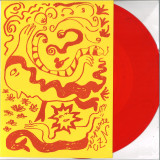
A split between Discos Extendes and the label Lovers & Lollypops, puts side by side two of the most relevant and prolific artists in music made in Portuguese territory: Bruno Silva and his project “Serpente” and João Pais Filipe, Leon Marks and Valentina Magaletti with “CZN”. Two projects that developed in parallel, but with a mutual interest in the strength of the rhythm and the textures and timbral richness of percussion sounds. The similarities are undeniable. A mutual admiration, also.
Comes in a Tranparent Red Vinyl in PVC Sleeve. Includes A4 risograph print by Cláudia Lancaster.
Side A written and produced by Bruno Silva with collaboration of Kelly Jayne Jones on "Perda Outra" and Maxwell Sterling on "Em Vida Traz”. Side B written and produced by João Pais Filipe, Leon Marks and Valentina Magaletti. Master by Carlos Nascimento at Qualia Audio Lab Artwork by Cláudia Lancaster Design by Conhecido João.