The long-overdue recognition of a songwriting genius The lyrics of Dan Treacy"s band Television Personalities transport listeners to a parallel universe consisting of unique mixtures of euphoric Sixties references and harsh social realism: brightly coloured, psychedelic worlds in which Syd Barrett, Salvador Dalí, Andy Warhol and the young Woody Allen meet, or a dreariness of marital crises, unpaid bills, loneliness and depression. Nuances: rather rare, and when they do occur, so subtle that they take the listener"s breath away. Admired by Kurt Cobain and Pavement, praised by Alan McGee, covered by the Tindersticks and musically immortalised by MGMT ("Song for Dan Treacy"); the Television Personalities are one of, if not the reference band of indie pop, which - the world has never been fair - was denied major chart success. "If I Could Write Poetry" now brings together for the first time the lyrics of 100 of Dan Treacy"s most important songs. But this book is much more than a collection of lyrics; it also contains very personal impressions, anecdotes and tributes from around 50 musicians, friends and fans. Contributors from the German-speaking world include artists such as Carsten Friedrich (Superpunk, Die Liga der gewöhnlichen Gentlemen), Bachmann Prize winner Tex Rubinowitz, and musicians Phillip Boa and Klaus Cornfield (Throw that Beat in the Garbagecan). The book is published and edited by Gregor Kessler, who emphasises that he found it difficult to maintain his professional neutrality towards Dan Treacy, as he has been an avid listener of Television Personalities records for four decades now. An English-language publication
Поиск:mar tex
Все
- It Gets So Hot
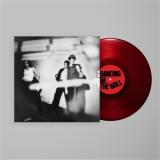
- Dancing On The Wall
- Eastside Girls
- Wannabeher
- On Call
- So What
- Party's Over
- Big Stick
- Mary Jane
- Girl's Girl
- Unless
- Why Do I Get A Good Feeling
- Buzzkiller
CLEAR RED VINYL[23,49 €]
Die Reise von MUNA war schon immer davon geprägt, Raum für die komplexen, chaotischen und ekstatischen Realitäten des Lebens zu schaffen, und mit ihrem vierten Album "Dancing On The Wall" sind sie so prägnant, düster und mitreißend wie nie zuvor. Ausgehend von den funkelnden, mit Konfetti übersäten Höhen ihres selbstbetitelten Albums aus dem Jahr 2022 kanalisieren sie nun die ängstliche, unsichere Energie des Lebens in einem Los Angeles, das von politischen Spannungen, Umweltzerstörung und dem stillen Druck der Prekarität der Millennials geprägt ist. Das Ergebnis ist ein Album, das sich sowohl intim als auch spektakulär anfühlt, eine Popwelt, die mit Biss, Witz und emotionaler Resonanz aufgebaut ist, ein Soundtrack für Herzen, die gleichzeitig in Flammen stehen und das Chaos um sie herum beobachten. Auf dem gesamten Album erkundet MUNA Sehnsucht, Intimität und Verbundenheit vor dem Hintergrund einer Welt im Wandel. Es gibt eine stille Auseinandersetzung damit, wie man weiterleben, lieben und sich gegenseitig erreichen kann, während man Zeuge politischer Brutalität und systemischer Gewalt wird, und wie Freude ohne Verleugnung überleben kann. Tracks wie "Wannabeher" fangen den schwindelerregenden Nervenkitzel ein, sich vollständig in die Fantasie eines anderen zu begeben, während "Why Do I Get A Good Feeling" noch lange nach dem Ende des Beats nachhallt, eine Meditation über flüchtige Freude und ausgesetzte Möglichkeiten. Das Album schließt mit "Buzzkiller", einer schonungslosen Auseinandersetzung mit Sehnsüchten und ihren Folgen, dem Schmerz, etwas erreicht zu haben, nur um festzustellen, dass neue Fragen, Zweifel und Sehnsüchte zurückbleiben. "Dancing On The Wall" wurde von Naomi McPherson produziert, wobei ihre charakteristische Liebe zum Detail mühelos mit der ausgefeilten Pop-Technik ihrer Bandkollegin Josette Maskin hinter den Kulissen verschmilzt, um lebendige, atmende Welten für die prägnanten Texte und die unverwechselbare Stimme der Leadsängerin Katie Gavin zu schaffen. "Dancing On The Wall" verbindet euphorische Klanglandschaften mit prägnanten, menschlichen Geschichten. Das Album spiegelt einen intensiven, selbstgesteuerten kreativen Prozess wider, der von Instinkt, Vertrauen und vollständiger künstlerischer Kontrolle geprägt ist. Es wirkt lebendig, eindringlich und filmisch und spiegelt eine Generation wider, die sich durch Unsicherheit navigiert und sich dennoch nicht von ihrer Freude abbringen lässt. Mit diesem Album beweisen MUNA erneut, dass Pop gewagt, intim und sozialbewusst zugleich sein kann: ein Album, das nicht nur den Moment einfängt, sondern ihn zu einer Welt destilliert, in der man leben möchte.
Mercurial Swede Axel Boman debuts on Aus Music with four spellbinding deep house beauties
Swedish artists pbeatgirl and Joakim Åhlund & Jockum Nordström feature on one track each
Axel Boman has brought playful charm to the underground for nearly two decades. His colourful, emotive sound marries melodic whimsy with warm, cuddly grooves and is underpinned by invention and experimentation in sound design, rhythm and mood. The Studio Barnhus co-founder is an artist who can make you laugh and cry at the same time, as continually shown across more than 20 EPs and four full-length albums on a tasteful array of labels. He strides into 2026 with a first EP for Aus that embodies everything that makes him easy to love and hard to pin down.
First up is 'Night Blooming' feat pbeatgirl - a provocative figure in Sweden's post-pop underground. The sensual late-night lullaby has soft drums and even softer spoken words whispered in your ear. Add in the dreamy synths, and you have perfect house hypnosis. 'Someone Stop Me' slows the tempo but ups the texture with raw, tumbling drum loops, incidental guitar licks and sustained pads that help you zone out and gaze into the distance on a summer's afternoon.
'Svalor Radiosignal (Axel's Dub)' features Joakim Åhlund, who is currently on tour of Australia with his band Les Big Byrd, and is also a guitarist and lead singer in the Caesars band he founded, as well as being a prolific producer. World-renowned multi-disciplinary artist Jockum Nordström works across painting, sculpture and collage and also features. There's a signature Boman innocence and charming naivety to the melodies here. They leave wispy, painterly trails above the smooth, dubby groove and fill you with warmth and comfort. Closer 'Spooky' journeys later into the night with a more rickety, edgy mood, but beautiful, shape-shifting synths are like a tender hand guiding you into darkness.
This is Axel Boman at his most intimate and expressive, a quietly powerful EP for heads-down moments and after-hours warmth.
- 1: Time Waster
- 2: Wired
- 3: Deadweight
- 4: Broken By Design
- 5: Pick Up The Pieces
- 6: Embrace
- 7: Sever
- 8: The Way I Feel
- 9: Satisfy
- 10: Head Alight
- 11: Longshot
- 12: Summer's End
"Wired" ist ein harter Neustart für Basement. Es markiert das erste Album der britischen Band seit acht Jahren, eine Wiedervereinigung mit ihrem ursprünglichen Label Run For Cover Records und eine Rückkehr zu jener ungebändigten Leidenschaft und kreativen Intuition, die schon immer ihr bestes Material ausgezeichnet hat. Seit ihrer Gründung im Jahr 2009 besteht Basement aus denselben fünf Freunden - Sänger Andrew Fisher, den Gitarristen Alex Henery und Ronan Crix, Bassist Duncan Stewart und Schlagzeuger James Fisher - und derselben alchemischen Verbundenheit. Das Einzige, was sich in den letzten Jahren verändert hat, ist ihr erneuertes Gefühl von Zielstrebigkeit. Und das macht ihr neues Album deutlich hörbar. "Wired" ist das dynamischste, mutigste und inspirierteste Werk, das Basement je geschaffen haben, und bewahrt zugleich die zeitlosen Grundlagen ihres einzigartigen Sounds: grollende Gitarren, mitreißende Refrains und eindringliche emotionale Sprache. Basement sind zurück und laufen auf allen Zylindern, aber sie haben kein Interesse daran, alte Erfolge zu wiederholen. Die gesamte Band war entschlossen, dass "Wired" ihr bisher klarstes künstlerisches Statement werden musste. Der Titelsong ist das drängendste Stück ihrer Karriere - ein sicherer Live-Favorit, getragen von stechenden Gitarren, einem wuchtigen Schlagzeug und einem himmelhohen Hook, bei dem Fishers Stimme in Bestform ist. "Broken By Design" zeigt den gegenteiligen Charakter: düster, zart, bassgeführt, aber dennoch typisch Basement in seiner sofortigen Eingängigkeit und stimmungsvollen Atmosphäre. Nichts auf Wired klingt stagnierend, kein Teil wirkt unausgereift. Die Band ließ sich von einer Vielzahl abenteuerlustiger Vorbilder inspirieren (R.E.M., Interpol, Smashing Pumpkins, um nur einige zu nennen), ohne jemals wie eine dieser Bands zu klingen - und auch nicht wie eine Kopie ihrer selbst. Der Albumtitel fasst all das in einem einzigen Wort zusammen. Die texturalen Konnotationen von "Wired" - metallisch, scharf, zackig - spiegeln die stählernen Klangwelten des Albums wider. Auf konzeptioneller Ebene spricht der Titel für die unerschütterliche Zähigkeit der Band: eine analoge Band, die in einer immer digitaleren Welt erfolgreich bleibt, ohne sich auf nostalgische Bequemlichkeit zu verlassen. Fünf Freunde, die mehrere Trennungen und Neuanfänge überstanden haben und dabei als Menschen und musikalische Einheit gewachsen sind. Basement müssen ihr Schicksal akzeptieren: Sie sind einfach dafür gemacht.
- 1: Intro
- 2: All The People
- 3: No No Yeah Yeah
- 4: I Wanna Go Home
- 5: Turn Up The Radio
- 6: Dance Dance Dance
- 7: Chant (Namo Amituofo)
- 8: Mama
- 9: Lovely Day
- 10: Land Of Fun
- 11: Forever Lover
- 12: Chinese American Bear Anthem
Die chinesisch-amerikanische Band Bear kehrt 2026 mit ihrem dritten Album ,Dim Sum & Then Some" zurück, das im Mai 2026 beim britischen Kultlabel Moshi Moshi erscheint. ,Dim Sum & Then Some entstand am Tag nach der Fertigstellung unseres Albums Wah!!! aus dem Jahr 2024. Wir hatten viel Freude und waren noch immer sehr inspiriert. Das Album beschäftigt sich mit Themen, die uns am Herzen liegen - Essen, kleine Freuden, unbeschwerter Spaß, China, Liebe, Hymnen und Märchen. Es ist eine Collage unseres Lebens, destilliert zu Positivität und Unbeschwertheit." Sie werden oft so beschrieben, als hätten The Flaming Lips, Dusty Springfield und The Beach Boys ein Kind mit Care Bear gezeugt. Das Album ist voller Humor, Groove, Skurrilität und Niedlichkeit, mit melodisch reichhaltiger Instrumentierung, einem Hauch von Psychedelia, einer Prise Funk und vielen Texten darüber, sich den Bauch mit Essen zu füllen.
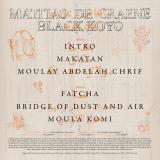
With Black Koyo, Mattias De Craene enters a sound world at once intimate and vast. Born from journeys in Morocco and Brussels, the project traces the rhythms, chants, and spirits of the Gnawa tradition, revealing a quiet resonance that echoes De Craene's own search for depth and presence. Guibri, qraqueb, call-and-response chants, saxophone, loops, and electronics come together in a trance-induced dialogue - ritualistic, elemental, and dreamlike - creating a space where listening becomes immersion, tradition meets imagination, and music unfolds as a shared act of reflection and wonder.
About Mattias De Craene
Mattias De Craene's artistic path is marked by rare coherence. As a central voice in Nordmann and MDC III, he developed a physical, rock-inflected jazz language driven by propulsion, volume, and trance-like collective energy. Over time, a period of personal rupture - burnout, tinnitus, depression - shifted his focus inward. The saxophone became a breathing, textural presence, and in his solo work, he weaves saxophone, electronics, loops, and minimal forms into a cinematic, hushed world where repetition, resonance, and silence slow perception. Rooted in ambient and introspection, his music prizes attention over impact, precision over excess - a quiet intensity recognized with a nomination as Musician for the Music Industry Awards (MIA's).
About Black Koyo
Black Koyo is a Brussels-based ensemble and one of the most compelling voices of the Gnawa tradition outside Morocco. Led by maalem Hicham Bilali, the group brings guibri, qrraqueb, and call-and-response chants to life with trance-like intensity and ritual precision. Their music is both rooted and contemporary, weaving earthbound rhythms and vocal invocations into ecstatic, immersive soundscapes, creating a space where ancestral resonance meets present-day imagination.
About Jan Bang
Jan Bang is a pioneering Norwegian producer and musician, celebrated for his mastery of live sampling and his ability to merge electronics with improvisation, rhythm, and texture in real time. He mixed the album and occasionally joins live performances, bringing his signature approach to sound as co-founder of the influential Punkt Festivaland collaborator with artists such as Jon Hassell, David Sylvian, Arve Henriksen, and ECM Records' roster. As a performer and sound architect, Bang creates immersive, trance-like sonic textures where silence and sound carry equal weight. Within Mattias De Craene ftBlack Koyo, his live sampling becomes an organic instrument, weaving saxophone, electronics, and Gnawa rhythms into hypnotic, physically charged soundscapes.
Line-up & credits
Mattias De Craene - sax, electronics | Hicham Bilali - guibri, vocals, qraqueb |Ismael Akhraz - vocals, qraqueb | Marwan Abantor - vocals, qraqueb
All tracks are original gnawa traditionals played by Black Koyo and arranged by Mattias De Craene.
Album produced & recorded by Mattias De Craene in Essaouira, Morocco and hometown Ghent, Belgium 2025.
Text by Hicham Bilali.
Mixed by Jan Bang at Punkt Studio
Mastered by Lieven Van Pee
Artwork by Marina Sviridova
Design by Benoit Van Geel
Manufactured and distributed by N.E.W.S.
Executive production by W.E.R.F. records
Supported by Flemish Government, Jazzlab, nona, HA Concerts, Aubergine artist Management,
KAAP, La Bestia (Wout Van Putten) & mdcmu.sic vzw.
2026 (c) W.E.R.F. records
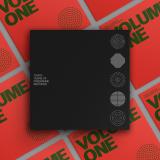
Aquasonic Vol.1 marks a new chapter for Afalinas, presenting a carefully selected vinyl compilation featuring Ukrainian producer iO (Mulen), Berlin based Tro, Afalinas founder Olekhar, and Chilean artist Existencia Pasajera. Each track reflects a distinct geographical and emotional perspective, united by a shared focus on depth, groove and immersive sound design. From refined deep and juicy tech house and subtle techno structures to psychedelic textures and spacious rhythms, Aquasonic Vol.1 unfolds as a cohesive listening experience shaped by four individual voices.
The Golden Gate Quartett VA5 marks the fifth vinyl Various Artists release on Golden Gate Club Records, continuing the label’s tradition of carefully curated club music with character and depth.
This new chapter brings together a sharp selection of artists - SaPu, Tripmastaz, Cesare vs Disorder, and the trio Alex New, Gruman & Zlene - each contributing one track and guiding listeners through hypnotic rhythms, subtle textures, and a distinct raw energy.
While each contribution carries a clear individual signature, the tracks share a cohesive spirit, balancing low-end weight, atmosphere, groove, and punch, all while maintaining a refined sense of swing.
Golden Gate Quartett VA5 stands as both a statement and a celebration, showcasing diversity within a unified sound and reaffirming Golden Gate Club’s commitment to quality, timeless club music crafted with dedication for the dancefloor.
Italian producer Gledd has been quietly carving out a reputation for groove-led house music that balances raw dancefloor energy with rich musicality.
Drawing on influences that span gospel, afrobeat, and classic deep house, his productions channel both heritage and forward-thinking club culture. My House Is Your Church marks his debut release on Delusions Of Grandeur - a fitting home for his expansive, souldrenched sound - and signals a bold new chapter in his evolution as an artist. The EP opens with On His Way, a percussion-heavy deep roller built for maximum dancefloor impact. Anchored by fat, heavyweight production and a massive low-end presence, the track surges forward with relentless energy. An incredible gospel vocal cuts through the mix, elevating the groove into something transcendent - equal parts spiritual and physical.
On It’s Not That Easy, Gledd leans further into his gospel house influences. Highimpact and rhythmically rich, the track weaves together organ fills and subtle tropical flourishes, creating a vibrant, sun-soaked energy while keeping the pressure firmly on the floor.
It’s a track that feels both uplifting and commanding. Flipping to the B-side, Habibi Gospel pushes into more “outernational” territory. A wild, expressive lead vocal takes center stage, riding atop a heavy, driving groove. Organ stabs punctuate the rhythm, locking dancers into a hypnotic flow that bridges cultures and styles with effortless confidence. Closing the EP, Can You Hear My Noise? brings things to a richly textured finale. Slightly more organic in feel, it blends echoing synth stabs, percussive melodic lines, and chopped vocals into a melting pot of sound. The result is a seamless fusion of gospel, afrobeat, and classic house - deep, emotive, and undeniably danceable. With My House Is Your Church, Gledd delivers a statement of intent: music as ritual, the dancefloor as sanctuary.
Black Truffle is pleased to present Radis, the first recording by the Oslo-based trio of Andrea Giordano (voice and organetto), Kalle Moberg (accordion) and Jo David Meyer Lysne (guitar and snare drum). Now based in Norway, Giordano is a native of Cuneo, in the Piedmont region in the north-west of Italy and her exploration of the Piedmontese language provides the starting point and conceptual anchor of the trio improvisations heard on Radis, which make use of the words of 20th century Piedmontese poets Nino Costa, Bianca Dorato and Oreste Gallina. As the musicians explain, the project is an attempt to preserve the beauty and singularity of a language at risk of extinction.
Fittingly, the first sound we hear on the opening piece ‘Fiorìa’ is Giordano’s unaccompanied voice. She sings a poem from Oreste Gallina as a kind of floating cadenza, the accompanying silence sensitizing the listener to the pellucid quality of Giordano’s voice and the unique sound of the Piedmontese language. The voice dies away and into the silence swells a single tone, sounded by Moberg’s accordion and—special guest on this opening piece—the alto saxophone of Mario Gabola. Extended techniques and preparations create unexpected timbres from the acoustic instruments: Gabola’s saxophone is augmented with tin cans and springs and Moberg’s unorthodox techniques allow the accordion to generate wheezing, buzzing textures and patterns of microtonal beating. Giordano’s voice returns, picking up the thread of the languorous opening melody, coexisting for a while with the shifting drone before the piece takes an unexpected yet organic left-turn into a delicate saxophone solo of sorts.
Recorded in several locations across Italy and Norway over the course of three years, Radis documents an ensemble who have developed both a distinctive sound-world and a remarkably sensitive group dynamic. Moving from folkish duets between accordion and Giordano’s organetto (the small accordion used in Italian folk music) to episodes of metallic guitar scraping from Meyer Lysne, the music is both quietly contemplative and gently chaotic. Ensemble roles shift with disarming ease. If on ‘Profij dëspers’ Meyer Lysne’s prepared guitar adds a haywire noise element to a lyrical episode of organetto and accordion, the next piece, ‘D’antorn a lor’, is grounded in chiming guitar chords of stunning beauty; once Giordano’s joins, the result calls up the most spacious moments of Maria Monti’s Il Bestiario. Throughout the seven pieces, the trio explore countless possibilities of group interaction and the margin between conventional euphony and pure abstraction: at times the voice floats against silence or seems almost disconnected from the gentle clatter of the instruments (sometimes reminiscent of Nikiforas Rotas’ haunting settings of Cavafy), while at other points the instruments touch on conventional harmonic accompaniment. What is perhaps most striking of all is the way that voice and instruments relate to each other, the extended technique reframing the voice as a kind of abstract sound object, while the melodic beauty of Giordano’s voice lends a contemplative, almost melancholic air to the wheezing and scraping of accordion and guitar.
Captured in gorgeously intimate recordings, Jim O’Rourke’s careful and beautifully spacious mix highlights the wealth of textural detail in each element. Accompanied by notes, session photos and the text of the Piedmontese poems, Radis is a work of stunning beauty that demonstrates the vitality of exploratory music in Norway today.
Italian producer Gledd has been quietly carving out a reputation for groove-led house music that balances raw dancefloor energy with rich musicality. Drawing on influences that span gospel, afrobeat, and classic deep house, his productions channel both heritage and forward-thinking club culture. My House Is Your Church marks his debut release on Delusions Of Grandeur - a fitting home for his expansive, souldrenched sound - and signals a bold new chapter in his evolution as an artist.
The EP opens with On His Way, a percussion-heavy deep roller built for maximum dancefloor impact. Anchored by fat, heavyweight production and a massive low-end presence, the track surges forward with relentless energy. An incredible gospel vocal cuts through the mix, elevating the groove into something transcendent - equal parts spiritual and physical. On It’s Not That Easy, Gledd leans further into his gospel house influences. Highimpact and rhythmically rich, the track weaves together organ fills and subtle tropical flourishes, creating a vibrant, sun-soaked energy while keeping the pressure firmly on the floor.
It’s a track that feels both uplifting and commanding. Flipping to the B-side, Habibi Gospel pushes into more “outernational” territory. A wild, expressive lead vocal takes center stage, riding atop a heavy, driving groove. Organ stabs punctuate the rhythm, locking dancers into a hypnotic flow that bridges cultures and styles with effortless confidence. Closing the EP, Can You Hear My Noise? brings things to a richly textured finale. Slightly more organic in feel, it blends echoing synth stabs, percussive melodic lines, and chopped vocals into a melting pot of sound. The result is a seamless fusion of gospel, afrobeat, and classic house - deep, emotive, and undeniably danceable. With My House Is Your Church, Gledd delivers a statement of intent: music as ritual, the dancefloor as sanctuary.
Blue Hour distills over a decade of artistry into his debut album Selva, unearthing eight tracks inspired by ancient wisdom and forgotten worlds.
Blue Hour is the moniker of Luke Standing, a multifaceted artist, producer, and label owner navigating between past and present electronic dance music. Over more than a decade, Standing has built a career balancing transformative craft with a sharp curatorial approach, earning him respect across the global scene. After years of sonic experimentation, he now releases his debut LP Selva. “I never set out to make an LP – it just wrote itself,” he says. “I followed my intuition, and the music found its own path.”
Born and raised in the UK, Standing grew up in parallel with club culture, moving between Brighton, Bristol and Berlin while running club nights and establishing himself under former aliases Furesshu and Esoteric.
He launched his Blue Hour project in late 2013, shortly after relocating to Berlin. Initially a platform for his own music, Blue Hour quickly became a collaborative hub, blurring the lines between personal output and curation. Over time, Standing has cultivated an international ecosystem of like-minded artists while continuously expanding his own sonic horizons.
Selva marks his first full-length studio album, weaving a lifetime of influences into a cohesive narrative inspired by ancient wisdom and forgotten worlds. The eight-track double LP transforms his inner dialogue into a subconscious story pulling inspiration from a labyrinthine network of influence and experience. “I followed the music obsessively, reflecting and refining until the story revealed itself,” Standing explains.
“To me, the LP evokes Amazonian or Mayan jungles, themes of exploration, the mysteries of the natural world, wisdom passed down through generations. I didn't set out to write about these things consciously,
they just emerged on their own.” he adds.The album was shaped through intensive work in his studio and periods spent in subtropical locations.
Listening closely, Selva unfolds like a modern ceremony: the opening tracks channel his early UK dance influences, shifting into blends of traditional and contemporary techno, then expanding into melodic soundscapes before concluding with transcendental textures and atmospheres. The result is an introspective journey where functionality and emotive storytelling coexist, revealing a depth in Blue Hour we haven’t heard before.
Whether performing, curating, or producing, Standing operates with a deep commitment to sound, culture, and collaboration. More than an artist, he is an architectural thinker of what electronic music could become. “Every release is my own metamorphosis,” he says. “This LP reflects my current form, and I’m curious to see what the next chapter brings.” Few artists can unify a lifetime of genre-spanning influences into a sound as sharp and focused. On Selva, Blue Hour does exactly that, opening a new era of deeper
immersion from his Berlin-based label.
Anywhere, Anyway captures a selection of club tools that Makèz and their close circle have tested, refined and played across dance floors worldwide. Each track carries that familiar equilibrium the duo keeps guard over, a steady pull between raw club energy and moments meant for intimate listening.
Much like their recent album on No Art, the EP took shape while traveling, moving from session to session with artists from different musical worlds. Those encounters left their marks, subtle shifts in rhythm, harmony and texture, shaping the edges of the EP. The Amsterdam duo keeps seeking creative impulses from unexpected angles, letting ideas find them wherever they are. Anywhere, anyway.
DJ Support: Kerri Chandler, Louie Vega, Dam Swindle, Jovonn, Brian Tappert, Grant Nelson, Mark Farina, DJ Mes, Cinthie, Floorplan, Kevin Yost, Fouk, Julius Papp, T. Markakis and more..
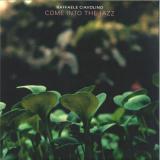
Raffaele Ciavolino is an Italian DJ, producer, and professional engineer who has carved out a significant niche in the global house music scene. His work is characterized by a sophisticated blend of Jazzy, Funky, and Deep House, often incorporating the high-energy "Jackin" house style that has earned him consistent recognition on major genre labels. “Come In To The Jazz”, the title of his new Album, gives you an idea of what to expect - jazzy melodies and sophisticated house beats. He does so with a modern viewpoint but also plenty of reverence for the glory days of jazzy house. Trumpets and guitars feature here and embellish the drums with quality, meaningful layers of melody and mood. As he merges the past and present, this richly textured work shines with improvisation and timeless deep house warmth.
2026 Repress
Glaskin is the alias of two brothers, Jonathan and Ferdinand, based in Munich. The pair have emerged as key figures in the citys electronic music scene as longtime residents of the renowned Blitz Club, standing out a homegrown talents amongst its vibrant electronic landscape. Bringing a unique, forward-thinking techno style, as evidenced by their contributions to Mutual Rytms Federation Of Rytm II and III compilations in previous years, they now mark a new chapter and open 2025 in style with their debut 12 on the label, Inertia Of Motion. Each cut on the EP has been handcrafted with analogue gear, reflecting their distinctive artistic and sonic vision. The release is a direct outcome of the creative process behind their live set, which has become an integral part of the duos identity and shows a natural evolution of their singular sound.
Hush Up kicks things off with deep, rubbery and rolling techno rhythms. The drums are stripped back and laced with pulsing synth patterns and spoken word snippets that add a freaky edge. Double Tap ups the anti with classic, pumping deep techno with smart filters adding movement to the track as urgent leads hurry onwards. Inertia bring a more anxious atmosphere with tightly coiled drums and perc and eerie bell sounds ring out over the fat, twisted bassline. The brilliant Tank brings mind-melting loopy techno with dubby chords and textured leads warming their way between the beats to great effect, while Motion is suspenseful techno that locks you into a high speed groove peppered with thumping hits and kicks. Last of all, digital bonus Blushed Blue explores a moody, minimal, late night techno sound that is warm, stylish and hypnotic to close the show
- A1: Lack Of Love
- A2: Bb
- A3: Andata
- B1: Solitude
- B2: For Jóhann
- C1: Aubade 2020
- C2: Ichimei - Small Happiness
- C3: Mizuno No Naka No Bagatelle
- D1: Bibo No Aozora
- D2: Aqua
- E1: Tong Poo
- E2: The Wuthering Heights
- F1: 20220302 - Sarabande
- F2: The Sheltering Sky
- F3: 20180219 (W/Prepared Piano)
- G1: The Last Emperor
- G2: Trioon
- H1: Happy End
- H2: Merry Christmas Mr Lawrence
- H3: Opus
Erleben Sie mit "Opus" die faszinierende Welt des Komponisten und Pianisten Ryuichi Sakamoto. Das Album wurde noch von ihm selbst - er starb im März 2023 - zusammengestellt. Diese Anthologie umfasst Jahrzehnte seiner wegweisenden Arbeit und vereint ikonische Filmscores, Klassiker des Yellow Magic Orchestra sowie zutiefst persönliche Kompositionen, die Sakamotos unverwechselbare musikalische Stimme widerspiegeln. Zum Programm gehören u. a. Musik zu Merry Christmas Mr. Lawrence, Andata und Aqua, ergänzt durch bislang unveröffentlichte Werke wie for J\u00F3hann (eine Hommage an den isländischen Komponisten J\u00F3hann J\u00F3hannsson), BB (dem Filmregisseur Bernardo Bertolucci gewidmet) und 20180219 (mit präpariertem Klavier). "Opus" ist mehr als eine Retrospektive - es ist eine bleibende Hommage an einen der einflussreichsten Komponisten unserer Zeit.
Das Album erscheint in einer 2CD-Version und einem 4LP Boxset:
Präsentiert in einem luxuriösen Digipak, gefertigt aus hochwertigem schwarzem Karton mit schwarzer Folienprägung und silberfarbenem Text, enthält die CD-Edition ausdrucksstarke Schwarz-Weiß-Fotografien, die Sakamoto während der Aufführung von "Opus" zeigen. Ein aufwendiges Booklet gewährt, neben Liner Notes und Credits, tiefere Einblicke in die Musik sowie in die letzten Reflexionen des Künstlers.
Gepresst für 45 RPM auf vier 180g Vinylplatten für außergewöhnliche Klangtreue, ist jede LP in einer eigenen Hülle mit passenden schwarzen Papierinnenhüllen untergebracht. Das Set wird in einem handgefertigten, strukturierten Schuber mit eleganten schwarzen Foliendetails präsentiert und enthält zudem ein Sammler Booklet mit Werknotizen und Credits.
A label compilation can be the first sign of a new cycle. After years shaped by individual trajectories, it brings the focus back to what made scenes powerful in the first place: shared language, mutual influence and a sense of collective movement.
For a label built on deep rhythm, organic textures and emotional drive, this carries an even stronger meaning. These musical spaces hold connection, memory and exchange at their core.
In this light, a compilation becomes more than a format: it becomes a statement of identity, a meeting point where different voices contribute to one evolving vision.
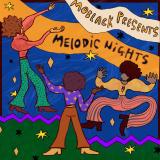
“MoBlack presents: MELODIC NIGHTS” marks the start of this new MoBlack path guided by careful curation and artistic exchange, blending percussive depth with a more melodic approach.
The result is a four-track selection navigating different shades of introspection and release, held together by a strong and recognizable sonic character.
Klement Bonelli – “It’s My Life” sets the tone with a bold, emotionally charged cut that balances melodic lift with a club-focused pulse. it’s jud, MR.FULLTIM€ – “Jackfruit” adds a distinctive twist to the journey, playful in texture yet precise in its impulse, widening the palette with character and movement. Jay’ (CH) – “Our Fire” leans into atmosphere and intensity, building momentum through evocative harmonies and a steady emotional current. Max Zotti, Blaxx – “Release Your Pain” closes the collection with a cathartic, rhythm-led energy, delivering what feels both intimate and dancefloor-ready. More than a one-off release, “MELODIC NIGHTS” introduces a collection designed to highlight converging sensibilities, where each track stands on its own while contributing to a wider narrative.
Artwork by Rachael D’Alessandro. Executive producer Mimmo Falcone. Distribution by Muting The Noise.