Wisdom Teeth co-founder K-Lone is dropping two EPs on Aus Music: the first instalment nods to UKG and house flavours, landing mid-May, while the second offers a deeper, broken techno vibe, arriving in late June. 'Give It Up' opens Part 1 with a bubbly rhythm and bassline that percolates through the woody, organic percussion. Lush pads and neon lines swirl skyward to silky and seductive effect as various other samples and daubs of colour bring the groove to life. The heady 'Wait 4 U' is a textbook K-Lone house cut with low swinging bass, sultry sax stabs and molten R&B samples that get the juices going next to warm, diffused synth lines.
On the flip, 'What I Want' ups the pace but keeps it deep and smooth with rubbery kicks and gooey bass overlaid with soft-edged chord stabs that will pump the floor. Lastly, 'Own Way' closes down with a tumbling bassline that takes you deeper as muted vocal sounds and glowing chords hook you into an infectious groove suited to the most intimate dancefloors.
UK trailblazer K-Lone heads up the label Wisdom Teeth with fellow producer Facta and has released everything from club-primed garage to innovative home listening records. Whether cooking up kinetic beats and bouncy bass or soundtracking a lazy summer's afternoon with synthesised bird calls and lush marimbas, the London-bred artist is a proven studio wizard. Critical acclaim has come for both his ‘Swells’ and ‘Cape Cira’ albums, and now his ‘Catching Wild’ EPs for Aus Music offer yet another portal into the colourful world of his idiosyncratic, signature sound.
Cerca:mar tex
ZOMBEAST erheben sich von den Toten und präsentieren "Heart Of Darkness", ihr bisher härtestes, düsterstes und wildestes Album!
Beeinflusst von Danzig, AFI, Mercyful Fate und 80er Jahre Punk, Death Rock und Thrash Metal, haben ZOMBEAST eine perfekte Crossover-Mischung aus Dark Punk und Thrash erschaffen. Die von Mario Montechello geschriebenen Texte handeln von den echten Schrecken des Lebens, vom Okkulten und von Lykanthropie.
Mit Alex Young (Leadgitarre) und Kyle Smith (Schlagzeug) betritt die Band auch in technischer Hinsicht Neuland, das sie bisher noch nie betreten hat.
Donnernde Drums und sich duellierende Gitarren treffen auf diesem lang erwarteten neuen Album auf Gesang mit Kultcharakter - lasst euch das nicht entgehen!
ØXN pron. ox-en exist at the uncharted intersection of its constituent parts, melding Lankum’s experimental doom folk (Radie Peat), the motorik euphoria of Percolator (John ‘Spud’ Murphy’ & Eleanor Myler) & Katie Kim’s glorious Lynchian meta-verse. They create a peerless new sound which exists somewhere between the traditional, the future and the eternal. Try to imagine the missing link between Enya, Ennio Morricone, Richard Dawson and Neu! And then add a pinch of something you never thought of and you’ll start to have a sense of this gloriously unique sonic universe which ØXN inhabit
What began as a side project duo between Radie Peat & Katie Kim in 2018, blossomed into a full-on multi-textured tapestry, with the addition of Myler & Murphy during lockdown. This resulted in one of the streaming highlights of the Covid era with an unforgettable live performance from a Martello tower in Dublin in conjunction with visual artist & Lankum collaborator, Vicky Langan. Now they are set to release their highly anticipated debut album CYRM.
CYRM pron. sy-rum was recorded by Murphy (Lankum/Black Midi/Junior Brother) at the Hellfire Studios in just 5 dizzying days in 2022 and set for April 2024 release on the relaunched & rejuvenated Claddagh Records
Solo Throat is the first solo LP from vocalist, composer and movement artist Elaine Mitchener. Drawing on the work of African-American and African-Caribbean poets Edward Kamau Brathwaite, Aimé Césaire, Una Marson and N. H. Pritchard, these twelve new vocal compositions disrupt semantic sense, play with the margins of lyrical translation, and give rise to new voicings. Elaine Mitchener is a veteran of vocal expression in the global Black Avant Garde, traversing free improvisation, cross-disciplinary music theatre and contemporary composition with clarity and joy. Most recently, Mitchener has been improvising and composing with the written word as source material - challenging classical ensembles with her piece (“the/e so/ou/nd be/t/ween”), and commissioning composers Matana Roberts, Jason Yarde and George Lewis to respond to the work of Sylvia Wynter (“On Being Human as Praxis”, Donaueschinger Musiktage, 2020). Her performance of Umbra poet N.H Pritchard’s text FR/OG at OTO in 2021 was a revelation - a solo vocal recasting of the powerful visual-material form that Pritchard uses to disrupt semantic ‘sense’. Building on this performance, Solo Throat takes the work of Pritchard alongside poets Edward Kamau Brathwaite, Aimé Césaire and Una Marson as its source material. Its compositions are a loose translation - a carrying from text to voice which holds multiplicity and celebrates the transformative power of literary possibility. Surrendered to the spacing and repetition of consonants and vowels, Michener’s exceptional phonetic freedom gives rise to a sensuous experience which intensifies the roles of rhythm, timbre and breath in expressing meaning. Solo Throat comes together as much through difference as similarity. Mitchener’s own solo improvisations sit alongside the work of Brathwaite, Césaire, Marson and Pritchard, forming a constellation of unlikely alignments which make no aesthetic conclusion. Instead, Solo Throat is a site of encounter, an irreducibly plural de-composition of words into a heterogeneous assemblage of sounds and impulses, emphasising what Anthony Reed calls, “the play on and the surplus of margins of lyrical translation to resituate other pathways of expression”. Just as the poets cited use white space to complicate our act of reading, so Mitchener utilises silence and multiphonics to complicate the act of voicing and the way we listen. Genre: Experimental / Vocal / Poetry
Ollie Spalding and Jack Watts were friends first, and songwriting partners second, and this quality sets them apart. They're marked by that peculiar alchemy when two voices become one, a special sense of human connection wrought through harmony and emboldened with experience.
New album 'Redsetter' is their coming- of- age moment - gilded indie- folk with an optimistic sense of maturity, it dares to look towards the light. "We had literally no idea what was gonna happen!" Ollie gasps when looking back on the pair's self-titled debut album. Sculpted over the pandemic and released on Real Kind Records - the boutique Communion imprint chaired by Lucy Rose - the record displayed their core values. "The emotion has to be right," says Oliver.
"When we record songs, we want to stay true to the emotion - as though those songs had just been written seconds before they were recorded." The success of their debut brought fresh experiences - writing with Flyte, collaborating with everyone from Matthew & The Atlas and Victoria Canal to Talos and Olafur Arnalds - but also new challenges.
New LP 'Redsetter' takes them from their base in Brighton to a remote part of Texas (and back again); it's a record that's driven by a special kind of determination, dealing with intimate bonds, familial connections, and a quiet sense of renewal. Looking for perfect moments within our imperfect lives, Memorial have displayed extraordinary sense of character to drive themselves forwards. "We've let go of trying to make everything sound perfect," says Jack. "Being vulnerable in that way means that the end product is truer to you than it ever could be. There's a realness to it." Memorial have taken true ownership of their lives, pushing through enormous challenges to unlock new aspects of their artistry, and actualise their dreams.
- A1: Redn Kaun Ma Boid 2:42
- A2: Andreas (Andrea) 5:29
- A3: Die Mizzitant 2:27
- A4: Mei Hund Is A Epileptika 3:02
- A5: In Deinen Dunkelbraunen Augn 3:47
- A6: Ballade Von Der Hoatn Wochn 6:48
- B1: Da Hausmasta 2:53
- B2: Ali Ewadi Zakria 2:55
- B3: Flußlandschaft Mit Zwa Buchstabn 2:40
- B4: Die Spur Von Dein Nokatn Fuaß 3:08
- B5: A Nocht Laung Auf Da Autobahn 3:30
- B6: Es Gibt Kan Gott 5:37
- B7: Geh No Net Furt 3:30
Kein Liedermacher des Landes war so zärtlich und zornig, so wacker und weitsichtig, so politisch agil und aktiv, so streng und zugleich sanft - wie Sigi Maron. Sagen wir, eine bunte Schar von Maron-Fans. Er war über Jahrzehnte der österreichische Protestsänger schlechthin. Im Mai 2024 wäre Maron, 2016 verstorben, achtzig Jahre alt geworden. Hier wird er wieder lebendig. Der Song "Red'n kaun ma boid" eröffnet diese Schallplatte, die - mit einer Auswahl der bekanntesten und beliebtesten Songs von Sigi Maron - ein Denkmal setzen will. Ein programmatischer Auftakt. "Red'n kaun ma boid" heißt auch ein Buch, das gemeinsam mit diesem Tonträger erscheint. Zusammen eröffnen die druck- und pressfrischen Memorabilia ein weites Feld von Erinnerungen, Ein- und Wertschätzungen, Schlaglichtern und Songbeispielen, die das Unterfangen, ein dauerhaftes Bild des Künstlers zu zeichnen, mit- und weitertragen. Denn eines ist klar: es braucht die Lieder, es braucht die Worte, es braucht die Stimme von Sigi Maron, um ihn noch einmal (und vielleicht auf Dauer) mitten in den Raum zu stellen. Und genau da gehört er hin, zumal in schwierigen Zeiten wie diesen. Nie waren Marons Songs brisanter als heute. Die Unbill diverser Lebens-Handicaps, Zeitgeisterstunden und Alltagswidrigkeiten wurde bei ihm Zeit seines Lebens mit dem Rock'n'Rollstuhl entsorgt. 1944 in Wien geboren, wuchs Sigi Maron mit sechs Geschwistern in Gneixendorf bei Krems auf. In den siebziger Jahren reifte er im Umfeld der "Arena"-Bewegung zum sozialkritischen Liedermacher heran. Sein erstes Album ("Schön is des Lebn", 1976) produzierte André Heller. In Zusammenarbeit mit den Schmetterlingen, später mit dem Kevin Coyne-Produzenten Bob Ward und mit Konstantin Wecker schuf er zeitlos gültige Meisterwerke wie "Laut & leise", "He Taxi", "5 vor 12" oder "Unterm Regenbogen". Die Single "Geh' no net fort" rangierte 1985 zehn Wochen lang in den Charts. Maron galt dabei immer als eine der schärfsten Speerspitzen der explizit politischen Kunst. 1998 und 2003 kandidierte er für die Kommunistische Partei für den niederösterreichischen Landtag. Vom beißenden Spott, der zärtlichen Zynik und volksverbundenen Derbheit seiner Formulierungswut blieben aber auch die eigenen Genossen meist nicht verschont. Manche erinnern sich: einst, Anfang der achtziger Jahre, protestierte Maron gegen den weitgehenden Ö3-Boykott der kritischen Liedermacher - die "Musicbox" war eine Ausnahme - vor dem Wiener Funkhaus. Und wurde dafür von der Polizei in die Psychiatrie eingeliefert. Dass er dereinst auch geliebt, gehört, geehrt würde, war damals nicht absehbar. Es ist eventuell eine späte Wiedergutmachung. Diese Schallplatte, die die die objektiv und subjektiv größten "Hits" einer langen Laufbahn versammelt (eine Handvoll Lieder, die drei bewegte Jahrzehnte umspannen), sollte jedenfalls einen Ehrenplatz finden im Pop-Archiv des Landes. Für viele wird die Revue der alten Songs ein Wiederhören bedeuten. Für andere ein lustvolles Neu-Entdecken. Dass es sich keineswegs um harmlosen, schunkelseligen "Austropop" handelt, auch wenn der Komponist und Texter nie dessen oberflächlichen Strickmustern entsagt hat, wird nach dem ersten Durchhören klar. Die Ehrenmitgliedschaft im Verein für deutliche Aussprache war und ist ihm sicher. Es gibt keinen zweiten wie Sigi, behalten wir ihn nachhaltig im Herzen.
Ein Albumtitel, der gleich in doppelter Hinsicht perfekt passt: ‚Silver Romance‘ heißt die neue Scheibe der süddeutschen Melodic-Powermetaller Freedom Call. Der Name symbolisiert nicht nur das 25-jährige Bestehen der Band – von Sänger/Gitarrist und Bandgründer Chris Bay augenzwinkernd als „unsere Silberhochzeit“ bezeichnet –, sondern trifft auch inhaltlich zu: „Dem Edelmetall Silber werden Eigenschaften wie Klarheit, Freiheit und Leichtigkeit zugeschrieben“, erklärt Bay und fügt hinzu: „Außerdem soll Silber das Selbstbewusstsein und die Fantasie stärken können. Allesamt
Attribute, die auch zu Freedom Call passen und die wir sowohl musikalisch als auch textlich in unseren neuen Songs haben einfließen lassen.“
Veröffentlicht wird ‚Silver Romance‘ als CD, Doppel-LP, Box-Set und digitaler Download am 10. Mai 2024 über Steamhammer/SPV, bereits wenige Tage später starten Bay und Co. ihre 2024er Konzertaktivitäten. Um den Fans die Wartezeit bis dahin zu versüßen, werden vorab gleich vier Singles ausgekoppelt: Am 21. Februar startet die Reihe mit dem Titeltrack ‚Silver Romance‘ inklusive eines Making-Of-Videos, am 20. März und 10. April folgen ‚In Quest Of Love‘ bzw. ‚High Above’ jeweils mit Lyric-Clips. Zwei Tage vor dem Album-Release, genauer gesagt am 8. Mai 2024, rundet dann der Song ‚Supernova‘ mit einem sehenswerten Video das Single-Quartett ab
One of the shining beacons of the UK post-metal scene, Bossk have steadily built up an unrepentantly loyal following since 2005. Before they reach the big 20, the band are taking this opportunity to take pause and reflect on their past and all the hard graft that has led them to become one of the most lauded bands in the genre. .4, the latest in a series of numbered releases that presents material outside the remit of Bossk’s full-length album output, is a celebration of those 20 years and provides an enticing aperitif for their 3rd album proper, to be released sometime in 2025. As is tradition with these numbered releases, .4 is not a Bossk album in the conventional sense, instead forging a more experimental path by presenting re-worked versions of some old favourites, as well as a smattering of re-recorded songs that only the most obsessed Bossk fan will be familiar with. One deciding factor that emboldened Bossk to celebrate their past is the amicable departure of vocalist Sam Marsh due to his permanent relocation to the United States. The band wanted to give Sam an epic recorded send-off and the colossal 13-minute Events Occur in Real Time provides a fitting farewell for the vocalist, who’s guttural razor-wire screams have provided tectonic shifting textures to the band since their inception in 2005. Acting as the centrepiece of .4, this is the first studio take of the song ever recorded, conceived as it was in 2008, just months before the band went on temporary hiatus.
- A1: Goldne Abendsonne, Wie Bist Du So Schön
- A2: Aprilnacht
- A3: Urin Deiner Blüten 1
- A4: Mutter Maria Zwischen Den Himmeln
- A5: Requiem Für Eine Ringelnatter
- A6: Urin Deiner Blüten 2
- B1: Apfelbaum, Kuh Und Backofen
- B2: Nie Kann Ohne Wonne, Deinen Glanz Ich Sehn
- B3: Requiem Für Ein Schwalbennest
- B4: Morgensonne
- B5: Afra Altar Maidbronx
Originally released on tape by SicSic in 2014, Aprilnacht commemorates a decade of music from Brannten Schnüre and marked the spring in a tetralogy of albums about the four seasons when it came out. Back then the Würzburg-based project consisted solely of Christian Schoppik, who later welcomed Katie Rich to take over the vocals. He used to perform as Agnes Beil, but dropped the name when, while making this album realized his music was becoming "much gentler and more fragile". Aprilnacht already captured the particular musical ideas that Schoppik would thoroughly keep exploring, delving deeper and deeper into the use and manipulation of samplers from sources so diverging as to wander between the five continents to post-war German family television and cult cinema. Heir of the ritualistic intensity of Coil, of the intricate sampler assemblies of Ghédalia Tazartès', and of the dusty, dismal old ballads from around the world, Brannten Schnüre manages to make these paths cross in a territory that is as inherent as it is uncanny; sieged by the past and intimate as a hearth. An organic approach to folk, ambient, and sound collage, where ethereal yet thoroughly textured pieces coalesce in enthralling, delicate, and innermost musical rituals.
The album cover paintings reveal the temper: dreary old towns where shadows come to dim the slow passage of crepuscular colors, a soft area of reanimation where wind and light come close and foresee the night of spring. Aprilnacht was inspired by the stories of German philosopher and writer Friedrich Alfred Schmid Noerr, whose work exhaustively examines the conflict between paganism and Christianity, safeguarding myth in a way that Schoppik describes as boldly modern, humorous and unpredictable in its variations of the Germanic folklore motifs. "I wanted to do the same with the music," he states, and the music here could as well be suitable for a night when household deities welcome wandering will-o'-the-wisps, water nymphs, and gyrovagues to discuss Perchta's leadership of The Wild Hunt, but this album is not a folk tale, it's not an elegy to worlds already gone, hidden in years; it's an intersection of routes that open mysteriously before our ears like a congregation of vapors. Aprilnacht is a gathering of voices; "There are too many children, and none of them keeps quiet," reads the last verse of «Requiem für eine Ringelnatter.»
Sensuality drips over the music to celebrate both the voluptuousness and tragic quality of nature; "It's raining on me, urine from your flowers," Schoppik sings in «Urin deiner Blüten» and later on, faced with a snake's erotic features, as if he wanted to be embraced by it: "Your quick, sharp tongue and your warm venom; that's what the pond is missing." Orality is where this profusion of contents thrives. When the voices get closer and condense, the words reveal the saliva employed to pronounce them; we feel the mouth and the tongue, but when breath envelops them in sorrow and softens their edges, they sound distant, diffused in the atmosphere, letting go of the body that held them. These two vocal facets oscillate permanently and interact naturally with the fertile assembly of samplers and instruments that develop throughout the album, which condense and disperse impersonating each other, interweaving to search for a specific syntax. Tangled whisperings of enigmatic phrases, timid voices that stick out to check the scene but hide away quickly, shivering trance chants and monastic ambiances, distant screams and clamors in between chaos and warfare swirl until bursting into subtle songs where even Mother Mary comes forth softly. Soothed by foggy atmospheres and crackling punctuations, these voices shape a vulnerable crowd, an occasion of fragility. Along this swarm of songs thrown into thin air, accordions sound like heavy-breathing lungs; clarinets sigh like curtains shaking; violin solos wander around like bees; Gjallarhorns cries distend like fleeing cattle; glockenspiels evoke remote music boxes and inherited toys; backward emanations emerge like slender waves retreating. On the banks of stretching loops and ember textures is where the songs slowly nest, collecting the words to find their tone.
A poem by Jorge Teillier says, "To talk with the dead you have to choose words that they recognize as easily as their hands recognized the fur of their dogs in the dark. To talk with the dead you have to know how to wait: they are fearful like the first steps of a child. But if we are patient one day they will answer us with a flame that suddenly revives in the fireplace." This may be Brannten Schnüre's main purpose: To find the voice to speak to those of whom we were a vision. Not in mourning, but acknowledging the obscure and volatile nature of spring's regenerative force, searching for the treasure of balance, as evidenced in the lyrics of «Requiem für ein Schwalbennest,» "Its nest was destroyed so many times before it was finished, and despite that, the shallow builds as if it is infatuated." The same idea is here in the words of Schmid Noerr, who made poetry an act of resistance to the horror of Nazism; "Since having seen the ability of a brilliant spirit to die, with a calm mouth that everyone saw, health is true again and we affirm it, even if rivers of blood flow." And as we call for the dusk's kindness, waiting to return home and eat with our kin by the stove, our ears become used to the games of the night. We feel like we're rowing on wetlands, while the "moon musick" keeps us vigilant against the slightest movement of water or sweet moan because eeriness here is imperative for survival. Do not succumb to the insipid howl of death, for nothing may last but mutability. You see, the rock has moved a little during the night; the rest is just wind fleeing from the void.
Clock DVA is one of the pivotal groups of industrial music. Founded more than forty years ago, the instrumental outfit has seen a contemporary partnership of electronic experimentation forged between Adi Newton and Maurizio Martinucci since 2010. It is their source material that proves fertile ground for two remixes, remixes by two heavyweights of electronic music. Atom™ delivers his re-imagining of “De-Konstructor.” A lone string is met by snapping snares as an alluring, yet cold, melody unfolds. Newton’s raspy throaty words rise, a stark prescient poetry countered by angular acid-twisted keys before samples buckle and loop. The second stalwart of electronics drafted in is Scanner for his reframing of “Rayonist Refraction #1.” A ghostly female voice haunts a backdrop of electrical fizz and voluminous cracks of shuddering thunder. Guitar strings tremble in this eerie landscape with a smattering of spoken text bringing solace to this hostile environment. Music for an all to immediate reality.
In the third release of Organic Signs, we embark on a direct journey to the musical heart of Refractor: the annual gathering held in a forest on the outskirts of Madrid to celebrate dancing under the sun and stars for 24 uninterrupted hours.
With four tracks that encapsulate the sound of different mental states you may experience firsthand on this expedition, we begin with label manager Jan Swam's track. He introduces us to ancestral sounds featuring a flute played by himself, gradually accompanied by a penetrating bassline and synth, along with various elements spread across the stereo field. All of this leads to an unexpected finale. Next, we delve into the track by French artist based in Seoul, Pyramid Of Knowledge aka K.O.P. 32, who has crafted a perfect progression of sounds to immerse us in a trance towards the depths of the subconscious. The intensity builds up gradually until reaching its peak in the final moments.
On the other side, we welcome back our beloved Digitalis, responsible for the label's first release. This time, he presents a lost gem from '97 never before released, transporting us directly to the UK rave scene. Get ready to feel the unleashed pulse of the English artist who left an indelible mark on psychedelic music. Finally, we venture into the last chapter where Tadan pilots an interdimensional ship towards the hidden face of a moon that orbits a planet beyond the solar system. Close your eyes to appreciate the depth of the atmospheres and textures, intertwined with a constant rhythmic line that will guide us to the final moments of the record.
Sonic Behavior by Driftmachine & Ammer is an album exploring the origins of sound, noise, and various music genres. Alongside lyrical declarations of love for noise ("Song To Noise"), the album delves into sonic reflections on how beauty and emotion emerge from mundane vibrations in the air ("The Siren Is A Simple Device"). For the first time, the analog sound researchers of Driftmachine (Andreas Gerth, Florian Zimmer) incorporate spoken language and noise into their sound research. They have collaborated with word and sound artist Andreas Ammer, renowned for his radio plays with Acid Pauli, aka Console ("Spaceman 85"), or FM Einheit ("Radio Inferno," "Symphony of Sirens").
In "The Siren Is A Simple Device," the words are spoken by 81-year-old musician and poet legend Ted Milton (Blurt, Loopspool). Despite its simplicity and obvious ability to produce high volumes, the siren has led a marginal existence as a musical instrument. Yet, it is capable of evoking the most intense emotional states in the listener in the shortest possible time, like almost no other sound-producing mechanism. "Sonic Behavior" capitalizes on this fact. The familiar hypnotic sounds of Driftmachine are accompanied by a siren organ inspired by the revolutionary Russian futurist Arsenij Avranov and built by Andreas Ammer, while the lyrics talk about the simple physical reasons behind the sound chaos that has just been unleashed: A siren ... chops the air into sound.
The core of the album is "Song To Noise," an electro-acoustic mini-symphony about the beauties of noise and all its producers, which is based on a poem by the British poet Deryn Rees-Jones and spoken by the poet herself and Alexander Hacke (Einstürzende Neubauten, Hackedepicciotto). Driftmachine & Ammer develop a soundtrack that is as powerful as it is loud and danceable (which is why the LP also includes a textless version of the composition).
"Sonic Sculpture" is the zenith of the work: a text/music track spoken by Ted Milton, which creates the possibility of a sound sculpture that encompasses the universe: What if one could imagine the infernal sound that encompasses all conceivable harmonies at the same time? A piano does when you throw it down an earthly staircase (the epitome of music is a piano falling down the stairs) through silent space to the next theoretically life-filled, Earth-like planet, Proxima Centauri B. The radio makes it possible. Driftmachine & Ammer tried it. The result will be heard there in 4.24 light-years. On planet Earth, the time has come on May 2, 2024. On this day, Sonic Behavior will be released, a conceptual album by Driftmachine & Ammer exploring sound, its creation, and its power.
It's hard to believe it's been four years since the debut release of The Goalie's Anxiety at the Penalty's kick excellent debut "Ways of Hearing." But growth takes time and rather than rush a follow-up album to market to capitalize on their newfound success, the group opted to take their time and focus their efforts at their own pace. It paid off.On their much anticipated sophomore album, ambition is key. The name of the album itself "The Iliad and the Odyssey and the Goalie's Anxiety at the Penalty Kick" spans a glorious 71 characters and is bound to swallow the screen of whatever device that attempts to display the text. The essence of the album is built upon delicate, pleading vocals that sit atop stirring dynamic movements that seem to move between small and vulnerable to full-on symphonies that are bursting with emotion. "The Iliad and the Odyssey and the Goalie's Anxiety at the Penalty Kick" will be released by veteran indie label Count Your Lucky Stars on April 25th, 2024 (an homage to their first released single of the album) during the dead time when the cold end of winter is transitioning to a hopeful and promising spring- an apt metaphor that seems to encompass the heart of the album.
Steph Richards has already made quite a name for herself in the worlds of avant garde music and creative jazz - She has recorded for Relative Pitch and Northern Spy, worked with Laurie Anderson, Anthony Braxton and Ravi Coltrane and studied with Wadada Leo Smith - As co-producer of the FONT Music Festival, Richards worked for years alongside fellow trumpeter Dave Douglas. Her records have been praised for displaying her evident virtuosity and inventiveness, the New York Times calling Richards "boldly inventive." NPR's Nate Chinen says Richards is "ingenious" and Downbeat insisted that she is "the latest figure of note" in jazz while All About Jazz cuts to the chase, saying simply, that Richards "kicks ass." It's an impressive history and litany of praise for a young trumpeter, but with her latest full-length for Northern Spy, Power Vibe, Richards pushes even further, marrying avant garde and cinematic moods with a kind of infectious and patently pleasing tunefulness that is certain to expand her dedicated audience even further. The addition of "sensory electronics" -- subtle but compelling textures and tactile rhythms which are physically triggered by drum-mounted sensors -- compels fascination here, interweaving a kind of aural hyper-lucidity throughout the record. Though boldly original, this music strides surefootedly alongside the work of contemporaries like Nicole Mitchell and Rob Mazurek and the late jaimie branch
Getting into an album by Cyril Cyril is being invited to a party where you thought you didn't know anyone, only to realize that this chap's gal is your bro's cuz, and leave with everyone's cell. Their music seems familiar because it's not deaf to its neighbors, in the broadest sense : Geneva, their lair, Europe, their playground as a duo, and the world, their grocery store. There's plenty in those two heads, but just the two of them on stage. For their third Born Bad album, they have invited two lads from Orchestre Tout Puissant Marcel Duchamp, Ines Mouzoune, multi-instrumentalist from Amami, and Violeta Garcia's cello on Le Futur ca marche pas. On the ruins of Switzerland, people dance hard but consciously, and won't complain about them having a go at the homeland - notably in " Sweetzerland Bunker Love ", where they claim it's time to "free the money from the banks". There's something rotten in the state, wherever it may be, and they prefer to put its fall to music. And they're not shy about it, either: this album features heavy guitar/drums text-driven ballads (beautiful "Mensonge" opens the album with a certain gravitas), polyrhythmic noisy drum splatter with crafty vocal knitting ("Plus rien a? faire"), deconstructed and harmonically ambitious compositions ("Les Phoenix de l'amour"), and latino frogs croaks, because yes, why not. Since their previous efforts "Certaine Ruines" and "Yallah Mickey Mouse", it turns out that the future isn't working out so badly for the two Cyrils. (Not so) Quietly sitting on crates of records, they patiently build their sound. Never tired of sick networks and never-ending struggles, Cyril Cyril is a rousing mess, shouting out the common spleen while still managing to have a good laugh.
- A1: Magic Momentum
- A2: Rockets To Mars
- A3: The News These Days
- A4: Life (Skit)
- A5: Love Vibration
- B1: Original Flow
- B2: Hold On
- B3: Surviver (Skit)
- B4: Tatamaka Pt.1
- B5: Tatamaka Pt.2
- C1: Time (Skit)
- C2: Time
- C3: Jinja (Skit)
- C4: Kochirakoso
- C5: Our Tactus
- C6: Nah Personal
- D1: No Chains
- D2: Push Comes To Shove
- D3: We No Let Y'all In
- D4: Mexico (Skit)
- D5: Future For Our Children
We Release JAZZ is very happy to announce an exciting new body of work by Joseph Deenmamode aka Mo Kolours. The singular musical spirit’s new 21-track album Original Flow is available as a double LP housed in a heavy 350gsm sleeve with original artwork by Mo Kolours himself and the classic WRJ obi strip, as well as in digipack CD and digital formats.
A catalog of critically acclaimed records, including his self-titled debut (2014), ‘Texture Like Like Sun’ (2015), 2018 album ‘Inner Symbols’ and three companion EPs, established Deenmamode as a prodigious musician and vocalist. Pitchfork extolled his “hypnotic, tribal-infused dance grooves”, DJ Mag appreciated the “colourful celebration of soundsystem culture”, and Resident Advisor advocated that “no one sounds quite like Mo Kolours”. Musical analogies were drawn by The Guardian as “The best album Curtis Mayfield never made with A Tribe Called Quest and Lee Perry” and Mojo as “like Marvin Gaye produced by J Dilla”.
Five years ago, Deenmamode moved to the Japanese countryside. Far away from familiarity, he contemplated his place and further questioned his identity. “I had none of my ‘own’ people around. I had time to really find what makes me tick musically. Japan has helped me go back to those subconscious leanings, really go deep, and reflect the aspects that make up my story”.
The tracks on ‘Original Flow’ have been constructed from sessions, improvisations and soundbites captured around the world during this time; collecting contributions from musicians including Deenamode’s brothers Reginald Omas Mamode and Jeen Bassa plus Andrew Ashong, Charles Bullen, Dwaye Kilvington, Eddie Hick, Stefan Asanovic, Myele Manzanza, Ross Hughes, and Tom Dreissler. Deenamode says “I’m proud of this album’s creative process. Coming from a tradition of scouring through hours of records, I wanted to create my own samples, to find that perfect loop that no other producer could put their hands on. I decided to invite a group of friends and acquaintances, who also happen to be incredible musicians, to a studio in Crystal Palace to improvise based on some loose ideas I had. We spent all day, and recorded everything”.
‘Original Flow’ is an album of UK street-soul nouveau, future indigenous jazz fusion, Rasta Segga, Nyahbinghi jazz, Malagasy Hebrew hip hop. While retaining a spirit of exploration and improvisation, it sees Deenmamode grow and flex beyond beat tape brevity, expanding composition and stretching his musical muscle to play live with other musicians. Themes of empowerment, overcoming adversity, and mental liberation coexist with notes from ancient history, futurism, and science, as well as musings on family and togetherness.
‘Magik Momentum’ springs from a discussion that features at the start of the song, an inspiring mentor answering a question from Deenmamode about improvisation and what role it plays in life when planning and manifesting the future. ‘Rockets to Mars’ questions the lack of care for the billions of people with nothing, while governments plan to explore space. “This sparked a comparison in my mind to a Sonny Okuson song that I would reference when performing. Okuson’s song talked of the lack of resources in many communities in the world, while governments go to the moon”.
He says the music behind ‘The News These Days’ is “possibly my favourite on the album”. Looped like he would a late sixty jazz-fusion sample, there was nothing added and the track was complete within a matter of minutes. “It was the first and best moment from the entire Crystal Palace session”, he adds. The album’s contrasting title track with minimal instrumentation played solo by Deenamode. While frustratingly searching for gems in past recordings, he thought in a burst of ego, “I don’t need no-one else to make a dope beat!” picked up his ravanne, (the traditional frame drum of his fathers home-land of Mauritius), pressed record, and started to play. He says, “In my thoughts were the rhythms of the Nubians in Upper-Egypt and Sudan, the swing of the huge drums played by Mauritanian women, of-course the Sega beat of Mauritius, and the ever inspiring beat of James Yancey”.
Driven by UK broken beat, Cuban congas, Nigerian and Mauritian inflections, ‘Love Vibration’ follows the concept that all emotions carry a vibratory frequency and pays homage to the frequency of creation and the power of love. The two part ‘Tatamaka’ tells of the history of Deenmamode’s ancestors, the maroons of Mauritius. “We are people who managed to run from our oppressors and find refuge in a corner of the island called ‘Le Morne’ where they could not reach us. One bloody day they came in numbers to re-capture, to revenge. Many of us chose to jump to our deaths, rather than be taken back into subjugation. The poem by Creole Richard Sedley Assonne says; “there were hundreds of them, but my people, the maroons chose the kiss of death over the chains of slavery”. Tatamaka was the name of a famed maroon leader who was murdered for claiming his, and our people’s freedom. The song is the imagined journey of escape and freedom by an ancestor of the maroons of Le Morne”.
Born in the west midlands and raised on the traditional sega music of his father’s Indian Ocean homeland of Mauritius alongside records by the likes of Jimi Hendrix, Santana and Michael Jackson; his influences expanded with late 90s jungle and drum and bass nights in Bristol, experiments at art college in Camberwell, and the rich culture of Peckham, “at the time we called it the Afro Quarters of London” says Deenmamode, adding hip hop, dub, soul and soundsystem styles to his individual sound.
He explains, “I love drum music, from hand-drums to 808s. I love music from the ancient past, heritage music, indigenous music, traditional music passed down from the beginning of time. Music from the body, hand claps, grunts and foot stomps. Music with audible depth, busy, bustling, highly charged. Music from the soul, the music from beyond. I love music from the islands and the mountains. The music of the streets, hustle music, alleyway beats. Club music”.
He describes the creative process as thinking in images. “The visual world and the world of sound seem to intermingle in my thought process. When I play the drum with my eyes closed, a world of imagery dances and moves with beat. Improvised drumming feels like I am listening to what I want to hear, rather than trying to play what I want to hear. Following the rhythm and finding new pathways to walk within the patterns is what I experience. In this way I often feel I am just a listener, instead of the player”.
Original Flow is pressed on biovinyl, a sustainable alternative to traditional vinyl. Biovinyl replaces petroleum in S-PVC by recycling used cooking oil or industrial waste gases, resulting in 100% CO2 savings in bio-based S-PVC production. Furthermore, it is 100% recyclable and reusable, embracing the circular economy ideology.
Arð stammen aus Northumbrien. Die Erfinder des Monastic Doom Metal errichten mit ihrem sehnsüchtig erwarteten zweiten Album "Untouched by Fire" einen weiteren beeindruckenden Meilenstein auf dem Weg ihres rasanten Aufstiegs. Sowohl musikalisch als auch textlich erklimmt Bandkopf Mark Deeks neue Höhen. Arð setzen ihre Mission fort, die Kultur, das Erbe und die Identität der alten nordenglischen Region Northumbria zu erforschen. Das Debütalbum "Take Up My Bones" folgte den Legenden und dem Jahrhundert der Wanderung der Reliquien des Heiligen Cuthbert von Lindisfarne (634-687). Die Geschichte des neuen Albums, wirft ein Schlaglicht auf eine ganz andere Art von Heiligen. Arð erzählen vom Kriegerkönig Oswald (604-642), der Northumbria mit Feuer und Schwert schmiedete, indem er die Reiche von Bernicia und Deira vereinigte. Seine Zeitgenossen bis ins Frankenreich hinein, sahen Oswald als den mächtigsten angelsächsischen König auf der Insel an. Arð zeichnen mit "Untouched by Fire" seinen Aufstieg zur Macht nach. Die Reise beginnt mit seiner Jugend im Exil. Seine Mutter war aufgrund einer Familienfehde nach Norden in das irische Machtzentrum Dal Riada an der schottischen Westküste geflohen. Oswalds Weg führt weiter über siegreiche Schlachten, in denen Oswald jene Territorien zurückgewann, die bereits sein Vater Æthelfrith beansprucht hatte. Am Ende steht die Gründung des Königreichs Northumbrien. Musikalisch bleiben Arð ihrem ursprünglichen Doom-Kurs treu. Die charakteristischen, Stil prägenden "Mönchschöre" sind weiterhin stark präsent, wie man es von einem Musiker erwarten kann, der neben seiner Tätigkeit als Bestseller-Autor, Klavierlehrer und Keyboarder bei der führenden britischen Black-Metal-Band WINTERFYLLETH auch als Chor-Arrangeur und -Dirigent arbeitet. Doch Deeks bereichert seinen Doom Metal auch durch neue Elemente, wie zum Beispiel über das gesamte Album verstreute, wohlplatzierte Prog-Momente. Die Kompositionen auf "Untouched by Fire" spiegeln die auch auf der Bühne gewachsene Erfahrung und das gewonnene Selbstvertrauen des Bandkopfs in Form eines konzentrierten Songwriting und einer größeren Dynamik wider. Diese Entwicklung wird durch die kraftvolle und organische Produktion von Markus Stock (EMPYRIUM, THE VISION BLEAK) deutlich gemacht - da Arð das Album in der Klangschmiede Studio E aufgenommen haben. Als Deeks Arð im Jahr 2019 gründete, wagte der Komponist nicht einmal in seinen kühnsten Träumen darauf zu hoffen, was alles in den kommenden Jahren passieren würde. Seine Demos brachten ihm bald einen Plattenvertrag ein und die erste Auflage des Debütalbums "Take Up My Bones" (2022) war schon ausverkauft, bevor das Album in die Läden kam. Es folgten mehrere Auflagen und auch alle limitierten Editionen waren schnell vergriffen. Die ersten Auftritte der Band, z.B. beim Prophecy Fest in Balve, verbreiteten den Ruf von Arð als hervorragender Live-Act durch Mundpropaganda wie ein Lauffeuer. Die Band wurde nicht nur in der weltweiten Metal- und Musikpresse gefeiert, sondern landete sogar im deutschen Staatsfernsehen, wurde von der renommierten britischen Zeitung The Guardian interviewt und in der BBC sowie anderen britischen Medien mit ihrem speziellen "Organic Doom" Konzert erwähnt - für die Deeks Stücke von "Take Up My Bones" neu arrangiert hatte, um sie mit Band und einer echten Orgel in Huddersfield zu spielen. Dieses Konzert findet sich in voller Länge als CD und DVD in der limitierten Artbook Edition. Mit dem zweiten Album "Untouched by Fire" legen sich Arð die eigene Messlatte gleich um mehrere Stufen höher auf. Perfekt arrangierte Monastic Doom Songs mit hoher Dynamik und unverfälschtem Songwriting finden in einer opulenten Produktion ihre Entsprechung. Es ist Zeit, die Augen zu schließen und sich von Arð aus Northumbrien in eine Zeit entführen zu lassen, in der germanische Kriegerkönige mit Schwert und Feuer und einem neuen Gott als Sieghelfer an ihrer Seite neue Reiche erschufen. Ein blutiges Fest für die Raben, ein Goldschatz für die Ohren!
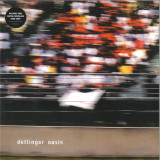
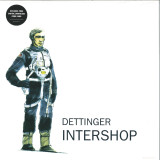
Dettinger’s Intershop and Oasis have long been held, by many fans of ambient and electronic music, to be some of the finest albums in their field. Produced by the mysterious Olaf Dettinger, about whom not much is publicly known, they were some of the earliest full-lengths released by the then-nascent Kompakt, and in many ways, they both articulated and defined the sound that would come to be known as Pop Ambient, while also existing, somehow, to the leftfield of any clearly recognisable genre.
Beautiful, sui generis works, it is a rare pleasure to see them being reissued on vinyl for a new generation of listeners to embrace. Originally released on CD only in 1999, Intershop was Kompakt’s first artist full-length. The music here simmers and broods, with opulent banks of tone marking out territory for rhythms that seem to be built from the clacking detritus of technology – hisses, thunks, knocks. Bass is deployed carefully, each drop a dubbed-out depth charge; drones spin and spiral, warping and weaving between the beats.
Oasis, released in 2000, refined the palette that Dettinger had explored on its predecessor. A blurred crusade of ambient texturology, its unassuming patterns, and subtle, incremental dynamics, admit to real beauty, and a kind of abstract sensuality that you don’t often experience with music that is, perhaps, similarly tooled, but not as poetic. Through seemingly simple gestures – whether lushly expansive repetitions, hyper-acute tremolo tones, or ear-tickling rhythms – it builds complex emotional resonance. It’s no surprise to discover Oasis is held in high esteem by artists like Panda Bear of Animal Collective, who once said of Dettinger, “For us, he was the dude.”
There is, of course, other music to know Dettinger by, too – his three excellent EPs for Kompakt, Blond (1998), Puma and Totentanz (1999), the latter of which, Michael Mayer once argued, “invented dubstep.” There is also a small, yet graceful run of compilation contributions, many of which can be found on Kompakt’s Total and Pop Ambient series. All this music has plenty to recommend it, sharing a clarity of purpose, and a rare, human warmth and depth. But Intershop and Oasis are the releases that distil Dettinger’s singular vision, and allow him, should he wish, to claim his place as a modern master of ambient and electronic music.
Dettingers Intershop und Oasis werden von vielen Fans von Ambient und elektronischer Musik seit langem als einige der besten Alben in diesem Bereich angesehen. Produziert von dem mysteriösen Olaf Dettinger, über den nicht viel bekannt ist, gehörten sie zu den ersten Alben, die von der damals aufstrebenden Plattenfirma Kompakt veröffentlicht wurden. In vielerlei Hinsicht formulierten und definierten sie den Sound, der später als Pop-Ambient bekannt werden sollte, während sie gleichzeitig irgendwie links von jedem klar erkennbaren Genre existierten.
Es ist eine seltene Freude zu sehen, dass diese wunderschönen Werke auf Vinyl wiederveröffentlicht werden, um sie einer neuen Generation von Hörern zugänglich zu machen. Ursprünglich wurde Intershop 1999 nur auf CD veröffentlicht und war Kompakts erstes komplettes Künstleralbum. Die Musik hier brodelt und brütet, mit opulenten Klangbänken, die das Territorium für Rhythmen abstecken, die aus dem klappernden Gerümpel der Technik gebaut zu sein scheinen – Zischen, Klopfen, Schaben. Der Bass wird sorgfältig eingesetzt, jeder Drop ist eine synchronisierte Tiefenladung; Drones drehen und winden sich spiralförmig und verflechten sich zwischen den Beats.
Oasis, das im Jahr 2000 erschien, verfeinerte die Palette, die Dettinger auf seinem Vorgänger erkundet hatte. Ein verschwommener Kreuzzug der Ambient-Texturologie, dessen unaufdringliche Muster und subtile, schrittweise Dynamik echte Schönheit und eine Art abstrakter Sinnlichkeit zulassen, die man nicht oft bei Musik erlebt, die vielleicht ähnlich ausgestattet, aber nicht so poetisch ist. Durch scheinbar einfache Gesten – seien es üppig ausladende Wiederholungen, hyperakute Tremolotöne oder ohrenbetäubende Rhythmen – baut sie eine komplexe emotionale Resonanz auf. Es ist keine Überraschung, dass Oasis von Künstlern wie Panda Bear von Animal Collective hoch geschätzt wird, der einmal über Dettinger sagte: “Für uns war er DER Typ”.
Es gibt natürlich auch noch andere Musik, die Dettinger bekannt macht – seine drei ausgezeichneten EPs für Kompakt, Blond (1998), Puma und Totentanz (1999), von denen letztere, wie Michael Mayer einmal kühn behauptete, “den Dubstep erfand”. Es gibt auch eine kleine, aber feine Reihe von Compilation-Beiträgen, von denen viele auf Kompakts Total- und Pop-Ambient-Serien zu finden sind. All diese Musik ist sehr empfehlenswert und zeichnet sich durch eine klare Zielsetzung und eine seltene, menschliche Wärme und Tiefe aus. Aber Intershop und Oasis sind die Veröffentlichungen, die Dettingers einzigartige Vision destillieren und es ihm ermöglichen, seinen Platz als moderner Meister der Ambient- und elektronischen Musik zu behaupten, sollte er dies wünschen.
Dettinger’s Intershop and Oasis have long been held, by many fans of ambient and electronic music, to be some of the finest albums in their field. Produced by the mysterious Olaf Dettinger, about whom not much is publicly known, they were some of the earliest full-lengths released by the then-nascent Kompakt, and in many ways, they both articulated and defined the sound that would come to be known as Pop Ambient, while also existing, somehow, to the leftfield of any clearly recognisable genre.
Beautiful, sui generis works, it is a rare pleasure to see them being reissued on vinyl for a new generation of listeners to embrace. Originally released on CD only in 1999, Intershop was Kompakt’s first artist full-length. The music here simmers and broods, with opulent banks of tone marking out territory for rhythms that seem to be built from the clacking detritus of technology – hisses, thunks, knocks. Bass is deployed carefully, each drop a dubbed-out depth charge; drones spin and spiral, warping and weaving between the beats.
Oasis, released in 2000, refined the palette that Dettinger had explored on its predecessor. A blurred crusade of ambient texturology, its unassuming patterns, and subtle, incremental dynamics, admit to real beauty, and a kind of abstract sensuality that you don’t often experience with music that is, perhaps, similarly tooled, but not as poetic. Through seemingly simple gestures – whether lushly expansive repetitions, hyper-acute tremolo tones, or ear-tickling rhythms – it builds complex emotional resonance. It’s no surprise to discover Oasis is held in high esteem by artists like Panda Bear of Animal Collective, who once said of Dettinger, “For us, he was the dude.”
There is, of course, other music to know Dettinger by, too – his three excellent EPs for Kompakt, Blond (1998), Puma and Totentanz (1999), the latter of which, Michael Mayer once argued, “invented dubstep.” There is also a small, yet graceful run of compilation contributions, many of which can be found on Kompakt’s Total and Pop Ambient series. All this music has plenty to recommend it, sharing a clarity of purpose, and a rare, human warmth and depth. But Intershop and Oasis are the releases that distil Dettinger’s singular vision, and allow him, should he wish, to claim his place as a modern master of ambient and electronic music.
Dettingers Intershop und Oasis werden von vielen Fans von Ambient und elektronischer Musik seit langem als einige der besten Alben in diesem Bereich angesehen. Produziert von dem mysteriösen Olaf Dettinger, über den nicht viel bekannt ist, gehörten sie zu den ersten Alben, die von der damals aufstrebenden Plattenfirma Kompakt veröffentlicht wurden. In vielerlei Hinsicht formulierten und definierten sie den Sound, der später als Pop-Ambient bekannt werden sollte, während sie gleichzeitig irgendwie links von jedem klar erkennbaren Genre existierten.
Es ist eine seltene Freude zu sehen, dass diese wunderschönen Werke auf Vinyl wiederveröffentlicht werden, um sie einer neuen Generation von Hörern zugänglich zu machen. Ursprünglich wurde Intershop 1999 nur auf CD veröffentlicht und war Kompakts erstes komplettes Künstleralbum. Die Musik hier brodelt und brütet, mit opulenten Klangbänken, die das Territorium für Rhythmen abstecken, die aus dem klappernden Gerümpel der Technik gebaut zu sein scheinen – Zischen, Klopfen, Schaben. Der Bass wird sorgfältig eingesetzt, jeder Drop ist eine synchronisierte Tiefenladung; Drones drehen und winden sich spiralförmig und verflechten sich zwischen den Beats.
Oasis, das im Jahr 2000 erschien, verfeinerte die Palette, die Dettinger auf seinem Vorgänger erkundet hatte. Ein verschwommener Kreuzzug der Ambient-Texturologie, dessen unaufdringliche Muster und subtile, schrittweise Dynamik echte Schönheit und eine Art abstrakter Sinnlichkeit zulassen, die man nicht oft bei Musik erlebt, die vielleicht ähnlich ausgestattet, aber nicht so poetisch ist. Durch scheinbar einfache Gesten – seien es üppig ausladende Wiederholungen, hyperakute Tremolotöne oder ohrenbetäubende Rhythmen – baut sie eine komplexe emotionale Resonanz auf. Es ist keine Überraschung, dass Oasis von Künstlern wie Panda Bear von Animal Collective hoch geschätzt wird, der einmal über Dettinger sagte: “Für uns war er DER Typ”.
Es gibt natürlich auch noch andere Musik, die Dettinger bekannt macht – seine drei ausgezeichneten EPs für Kompakt, Blond (1998), Puma und Totentanz (1999), von denen letztere, wie Michael Mayer einmal kühn behauptete, “den Dubstep erfand”. Es gibt auch eine kleine, aber feine Reihe von Compilation-Beiträgen, von denen viele auf Kompakts Total- und Pop-Ambient-Serien zu finden sind. All diese Musik ist sehr empfehlenswert und zeichnet sich durch eine klare Zielsetzung und eine seltene, menschliche Wärme und Tiefe aus. Aber Intershop und Oasis sind die Veröffentlichungen, die Dettingers einzigartige Vision destillieren und es ihm ermöglichen, seinen Platz als moderner Meister der Ambient- und elektronischen Musik zu behaupten, sollte er dies wünschen.