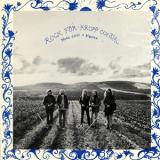
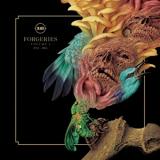
In 1975, under the oppressive air of military dictatorship in Brazil, brothers Lelo and Zé Eduardo Nazario invited bassist Zeca Assumpção to join their musical experiments in a basement under Sao Paulo’s Teodoro Sampaio Street. As teenagers, the trio had already been playing together in Hermeto Pascoal’s Grupo, alongside guitarist Toninho Horta and saxophonist Nivaldo Ornelas, and it was while working together under Hermeto’s direction that the Paulista rhythm section (as they were then known) began to realise their own potential.
With many nightclubs and venues closed in the mid-70s and government censors dictating the output of radio, TV and art galleries, many Brazilian artists fled during the years of dictatorship. But underground, Grupo Um were fusing avant garde ideals with contemporary jazz and Afro Brazilian rhythm; making phenomenally free and expressive music - in stark contrast to the sterile, conservative conditions being imposed above ground.
Just like Hermeto Pascoal’s Viajando Com O Som from the following year, Starting Point was recorded over two days at Vice-Versa Studios, by revered engineer Renato Viola. The studio was one of the best in Sao Paulo and musicians communicated with engineers through cameras and a monitor, allowing the group complete immersion in the process. They also made use of the studio’s hemispherical tiled room, which served as an acoustic reverberation chamber.
The album begins with Zé Eduardo Nazario’s thunderous drum solo on “Porão da Teodoro”, before clearing the clouds with the lone Berimbau which opens “Onze Por Oito”. Built around a hypnotic electric bass line, heady Fender Rhodes improvisations, and more rip-roaring drums, it’s a rapturous, electrifying freak-jam in 11/8.
Like some invertebrate deep-sea curiosity, the free-form “Organica” is made up of Lelo Nazario’s playfully eerie prepared piano, with Zé Eduardo’s percussion flurries darting around Assumpçao’s double bass. The equally non-conformist, percussion-only piece “Jardim Candida” features many of Zé Eduardo’s home-made instruments, including a long saw blade played with vibraphone sticks and violin bow. While working with Hermeto, Zé Eduardo famously built his own all-in-one percussion set-up known as the “Barraca de Percussão” (Percussion Tent) - the first of its kind in Brazil, which he would also use on Hermeto Pascoal’s Viajando Com O Som and throughout his career.
“Suite Orquidea Negra'' (Black Orchid Suite) was written by Lelo Nazario as the score for an imaginary movie - the story of a rare, black orchid which produced a substance meant to cure all diseases, but which had mysteriously disappeared from the laboratory… “As a screenplay it’s not very good” reflects Lelo in jest, “but the music ended up being very interesting, the way its parts are chained to one another carries a little of the mystery I imagined for the movie.”
The album closes with the triumphant “Cortejo dos Reis Negros” (Procession of Black Kings) - a groovy variation on the Maracatu rhythm, with a two-note bassline underpinning piano improvisations, exultant wordless vocals, cuicas, slide-whistles and a very special guest appearance from Zé’s dog Bolinha.
Starting Point was to mark the inception of one of Brazil’s most daring instrumental groups. Their debut now sits in the lofty echelon of otherworldly 70s Brazilian music, alongside the likes of Marcos Resende & Index’s self-titled debut, Cesar Mariano & Cia’s Sao Paulo Brasil, Azymuth’s debut and indeed Hermeto Pascoal’s Viajando Com O Som. But just like all of those titles, which were either shelved or largely ignored at the time, Grupo Um - so radically ahead of their time - struggled to find a label to release their debut album. So Lelo kept the tapes safe in his archives, which is where they sat for almost half a century. Finally, almost fifty years later, this mesmerising piece of history is here, and it was only the beginning...
Grupo Um’s Starting Point will be released by Far Out Recordings, on vinyl LP, with an insert featuring unseen photos and liner notes by the Nazario brothers, as well as a CD on 17th February 2023.
quête:mara
Welcome to Dazion’s Grooveboxxx – a maxi-sized love letter to The Hague’s 80s and 90s club scene crafted with minimal tools and loaded with vibe. It’s no coincidence it arrives on Dekmantel, a label with its own roots in the same Dutch city’s electronic music culture.
Dazion is The Hague’s Cris Kuhlen, previously spotted releasing on Second Circle, Safe Trip and Animals Dancing. He cut his teeth clubbing and working at long-since closed clubs like Eau, described in Kuhlen’s own words as, “clubs with blocks to dance on, lazers, decorations, crazy extravert sic parties.”
In capturing the spirit of Eau and the other formative parties of his youth, Kuhlen limited himself to just one machine to make his longest work to date – the Roland MC-303 Groovebox. While these entry level units from the mid-90s had stripped down functionality in the wider spectrum of studio gear, they contained all the iconic Roland sounds in a Rompler style, giving the user access to everything necessary to make raw, immediate club tracks without requiring an entire studio’s worth of hardware.
The brash gear of choice set the tone for a record of rough, ready and playful jams which end up more sophisticated than you’d expect from such limited means. ‘La DS’ jacks with a freaky, bleep techno intensity, while ‘Kimberly & Nance Backstage Rehearsal’ rides an angular groove tooled to inspire the weirdest dance moves of the night. Every track is named in reference to a particular nightspot, a hazy memory or moment from Kuhlen’s formative raving years.
This is the sound of Dazion having the time of his life. You might well hear a nod to the odd rock totem being given a re-version in irreverent new beat style or some gnarly US acid breaks vibes riding underneath helium rap licks. But for all the cheekiness, the tracks stand up both as nods to halcyon days and relevant workouts for the sweatiest parties in the here and now. As MC Paul T says in dramatic style heralding the intro of Grooveboxxx, “This movement will live on forever.”
Chilean-born Francisco Allendes returns to Crosstown Rebels for the first time in six years this May. Serving up the three-track What You Do, the title number has already received global airplay via Damian Lazarus himself. Now, the full release will be made available next month and includes a remix by US-legend Harry Romero.
A contemporary dose of four-on-the-floor house, What You Do leaves few prisoners in its wake, as rampant drum patterns converge on a heady combination of kicks, synths and irresistible vocals right the way through. There’s an infectious energy to the track, paving the way for Harry Romero’s similarly up-tempo remix. It’s feel-good, club-ready dance music at its best, packed full of low-slung groove that opens neatly into the closing sequence: Maratone, a stripped-back, techy cut that bears all the hallmarks of a true Ibiza anthem.
Hailing from Chile and now based in Ibiza, Francisco Allendes is a leading light in today’s scene. Be it Loco Dice’s Desolat, Steve Lawler’s VIVA or Damian Lazarus’ Crosstown Rebels, his productions have graced some of the industry’s most well-respected labels. Such quality hasn’t gone unnoticed - he picked up the ‘Best Ibiza’ DJ Award in September 2019 and has gone on to complete several South American tours. A much loved affiliate of ANTS, Francisco has a long standing residency at both Ushuaïa in Ibiza and their affiliated tours, in addition to hosting the weekly radio show.
Seminal American house talent Harry Romero is a well-established figure on the worldwide music circuit. A prominent global DJ and producer since the ‘90s, early productions on Cutting Records and Cutting Traxx helped set the tone for Harry’s career trajectory, opening the doors to a coveted BBC Radio 1 ‘Essential Mix’ in recent years.
"Another Italo Disco Pearl, Vega Synthauri! One the most spontaneous and genuine tracks of the first half of 80s. The song, written by composer Daniele Pace (co-author Corrado Conti), is a futuristic and galactic dance floor piece with a heavy rhythmic focus where the main melodic line has a classical music feel to it. A lovely combination! This track by Donna Laser is one of the most significant electronic tracks of the entire Italo-Disco scene even beyond the mid-80s, was arranged by the talented Mark Owen (aka Marco Colucci). His synthesizer skills are a true art! This release was mixed at the renowned Trafalgar Recording Studios of Rome by Gaetano Ria, one of the most accredited technicians of the country in that period. "Grace Kelly's Song" on the flip is a very beautiful quiet nostalgic piece, that could fit perfectly into an Italian dramatic film of the late 70s or early 80s, a cute and delicate track to unwind after the monster killer on side A! Masterpiece created by the young visionary DJ Marco Marati. Stunning release!"
The Minneapolis-raised DJ/Producer’s second album following 2014’s ‘Monoliths’ lands on Radio Slave’s Rekids imprint in November.
Although based in Berlin for several years, Dustin Zahn has continued to exert influence over the fertile but steadfastly underground Minneapolis techno scene as part of the Intellephunk collective whilst cultivating a worldwide rep via releases for Blueprint, Token and his own Enemy Records. The ‘Gain of Function’ LP sees Zahn channelling the groove-fuelled techno of the late ’90s and early ’00s and shaping eight powerful but funky contemporary techno tracks that display the decades of experience under his belt.
Forged from a series of live jams with two drum machines and two synths, the album is a refined collection of raw, purist techno brilliance. Across the A-side ‘Tell Me About Paradise’ brings shimmering staccato chops under bright and airy percussion before ‘Tangie Groove’ picks up the pace with floating pads, vocal slices, and a rumbling bassline. On ‘Lucid Dreams’, scattered percussion plays with hypnotic synth licks, while ‘Smoking in Silence’ sees off-kilter leads dancing between emotive vocals and evolving drum loops.
Opening the second disc is the deep and shuffling ‘Crimson Cheeks’, with trance-inducing samples nestled between sharp drum hits and rolling synthesis, and ‘Days Like These’ takes a darker turn as twinkling arps and droning pads carry the track. ‘Shark Rodeo’ featuring Jeremy Black mangles samples into a dense rolling affair, before closing number ‘Next Level Looseness’ drops the 4/4 pattern for a raucous club track, combining oddball sound sources and unruly production techniques for a trippy finish to the album.
Since the late ’90s, Zahn’s hypnotic and driving techno has consistently caught the ears of top DJs and labels worldwide, with anyone catching his marathon sets at the likes of Berghain exposed to expansive sets. In addition to his techno-heavy catalogue and DJing prowess, Zahn has lent production and engineering skills to bands and singers, recently working with Poliça and on Carm’s Pitchfork approved eponymous album. Beyond this, his vital work with Intellephunk includes the nearly two decades long running Communion after-hours events, cementing his invaluable contributions to the scene.
Group Rhoda, the solo project of Mara Barenbaum, returns to Dark Entries with ‘Passing Shades’. An integral member of the Oakland electronic music scene, Barenbaum has been writing, performing, and plunging into oneiric depths as Group Rhoda since 2009. This is the project’s fourth LP, and the third time Barenbaum has collaborated with Dark Entries; previously on the Max & Mara LP ‘Less Ness’ in 2013 and the Group Rhoda LP ‘Wilderless’ in 2017.
Passing Shades is an investigation of the metaphysics of loss and the transitory nature of the material world. But it is not a grim collection; over 8 songs, Group Rhoda diverges through synthesizer-laden symphonics, four-to-the-floor inflections, and cosmic musings. Barenbaum’s striking voice and singular songcraft guide us through this labyrinth. Arpeggiated waltz “Flow” channels wisdom sought through martial arts; “Earthly Ark” sets a Margaret Atwood poem from the God Gardener’s Hymn Book to somber electronics. The vocoded canticle “Nevermore” is dedicated to the memory of a beloved cat. ‘Passing Shades’ is both mystifying and revelatory. Folk forms are echoed only to detour into the alien. Each song functions as both a fragment of a larger puzzle and a koan unto itself.
‘Passing Shades’ was mastered by George Horn at Fantasy Studios. The sleeve was designed by Eloise Leigh, and features a hazy, clouded sky. The back cover uses a photograph by Harry Crofton. A postcard featuring a poem by Barenbaum is included, as well as a digital download.
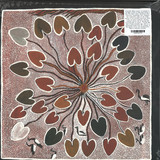
Efficient Space is honoured to share the little-heard recordings of three Yolngu songmen from Northeast Arnhem Land - Bobby Bunnungurr, Jimmy Djamunba and Peter Milaynga (d. 2007) - working in collaboration with Victorian musician Peter Mumme. Yolngu are the indigenous peoples of Arnhem Land in Northern Territory, Australia; their clans are the Marangu and Malabirr, the languages Djinang and Gannalbingu. Their songs are of instruction, story and ceremony.
A connection first initiated by Yolngu actor David Gulpilil, Waak Waak Djungi's mid-90s recordings were preceded by years of respectful sharing of culture. Mumme explains that 'the aim was to produce something that is new, not in the sense of a breakthrough, but what emerges from the combining of existing ideas'. What developed was sonically unique - sprawling vocal/electronic soundscapes and field recordings that reimagine the traditional songs of black crows and white cockatoos, sharing, creation spirits and of leaving and returning home to country. Spacious and patiently durational, the songs resound in a big land with a big story to tell.
On the 1997 Waak Waak Djungi album Crow Fire Music, these interpretations were assembled with traditional recordings and additional material from Sebastian Jörgensen and Sally Grice. Falling short of generating public interest, it became well known in the Yolngu homeland. Nearly two decades later, a CD copy filed away in the 3RRR FM library would prompt a three year investigation to meet the people behind the music.
Waak Waak ga Min Min (Black Crow, White Cockatoo) combines the previously unreleased Gandi Bawong with five contemporary versions from the original album, with a new cover painting by Bobby Bunnungurr. Tracing 1997 back to many millennia ago, this is a captivating window into the richness of Aboriginal culture and collaboration.
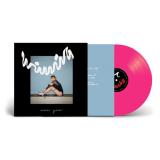
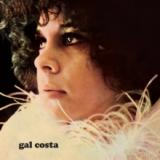
Essential 1969 album from Gal Costa, one of the defining voices of the Tropicalia movement. It showcases a bold fusion of psychedelia, Brazilian pop, rock, and samba, featuring standout tracks like Caetano Veloso's 'Baby' and Caetano and Gilberto Gil's 'Divino Maravilhoso,' as well as songs written by other iconic artists such as Jorge Ben and Erasmo Carlos.
A timeless classic that still sounds fresh and relevant. 180g vinyl reissue.
- 01: Teacher
- 02: Transform Feat. Ayah Marar
- 03: One Heart
- 04: Better Watch Them
- 05: 33 Vertebrae
- 06: The Divine Feminine
- 07: Energy! Energy! Energy! Feat. General Levy
- 08: Floodlights
- 09: Who's The Saviour
- 10: Freedom? Feat. Coops
- 11: Do You Wanna See Feat. Da Flyy Hooligan
- 12: Dangerous Feat. Renelle 893, Jman, Harry Shotta, Ramson Badbonez, Sparkz, Farma G, Verbz, Dabbla, Truemendous, Coops, Leaf Dog
- 13: Tears In The Eyes Of Gaia
- 14: Chilling
- 15: Ups & Downs
- 16: Visionaries Feat. Frisco
- 17: Mighty Feat. Kamakaze
- 18: It Ain't Easy But I'm Surfing
- 19: I Be On My Way
LIMITED TO 350 COPIES! 2 x 12" Gold Vinyl w/ Gold Foil Embossed Cover, shrink wrapped.
‘Elevation’ is album eleven from High Focus Records founder and 1/4 of The Four Owls Fliptrix.
The latest instalment in a formidable run sees the lyricist further his vision of the world in the hope of elevating the collective mind and spirit of both artist and listener across 19-tracks.
Having worked with Forest DLG in some capacity across all of his records over the past fifteen years, from mixing and mastering, but also collaborating on multiple tracks as rapper / producer, it is surprising that it took so long for the pair to come together on a full-length collaborative project.
‘Elevation’ is that record.
Fliptrix reached out to Forest with a view to creating something completely different from his previous boom bap heavy outing ‘Dragonfly’, he is always looking to advance his craft and take things higher, and after Forest responded with a pack of 70+ instrumentals the direction of travel became crystal clear. The result is an album designed to lift the listener into a higher state of consciousness and trigger conversations about the state of the world, in the hope of enacting positive change during tumultuous times.
Fliptrix’s vision and Forest DLG’s style feel perfectly aligned. The album is truly collaborative; Forest going away and creating the artwork inspired by Fliptrix’s otherworldly experiences with the Shipibo tribe in the rainforests of Peru; from the single covers, to the album cover and merchandise as Fliptrix focussed on writing.
Having worked with all the greats in the UK hip hop scene, Fliptrix actively sought out new energies on ‘Elevation’, especially when it comes to the album features. Jungle forefather General Levy on lead single ‘ENERGY! ENERGY! ENERGY!’ Grime legend Frisco on ‘Visionaries’, Ayah Marar on ‘Transform’, Da Flyy Hooligan, Kamakaze, Coops, and a 19-strong HF posse cut in the shape of ‘Dangerous’ make this album a must-listen for anyone looking to elevate.
- 01: Teacher
- 02: Transform Feat. Ayah Marar
- 03: One Heart
- 04: Better Watch Them
- 05: 33 Vertebrae
- 06: The Divine Feminine
- 07: Energy! Energy! Energy! Feat. General Levy
- 08: Floodlights
- 09: Who's The Saviour
- 10: Freedom? Feat. Coops
- 11: Do You Wanna See Feat. Da Flyy Hooligan
- 12: Dangerous Feat. Renelle 893, Jman, Harry Shotta, Ramson Badbonez, Sparkz, Farma G, Verbz, Dabbla, Truemendous, Coops, Leaf Dog
- 13: Tears In The Eyes Of Gaia
- 14: Chilling
- 15: Ups & Downs
- 16: Visionaries Feat. Frisco
- 17: Mighty Feat. Kamakaze
- 18: It Ain't Easy But I'm Surfing
- 19: I Be On My Way
LIMITED TO 150 COPIES! 2 x 12" Black Vinyl w/ Gold Foil Embossed Cover, shrink wrapped.
‘Elevation’ is album eleven from High Focus Records founder and 1/4 of The Four Owls Fliptrix.
The latest instalment in a formidable run sees the lyricist further his vision of the world in the hope of elevating the collective mind and spirit of both artist and listener across 19-tracks.
Having worked with Forest DLG in some capacity across all of his records over the past fifteen years, from mixing and mastering, but also collaborating on multiple tracks as rapper / producer, it is surprising that it took so long for the pair to come together on a full-length collaborative project.
‘Elevation’ is that record.
Fliptrix reached out to Forest with a view to creating something completely different from his previous boom bap heavy outing ‘Dragonfly’, he is always looking to advance his craft and take things higher, and after Forest responded with a pack of 70+ instrumentals the direction of travel became crystal clear. The result is an album designed to lift the listener into a higher state of consciousness and trigger conversations about the state of the world, in the hope of enacting positive change during tumultuous times.
Fliptrix’s vision and Forest DLG’s style feel perfectly aligned. The album is truly collaborative; Forest going away and creating the artwork inspired by Fliptrix’s otherworldly experiences with the Shipibo tribe in the rainforests of Peru; from the single covers, to the album cover and merchandise as Fliptrix focussed on writing.
Having worked with all the greats in the UK hip hop scene, Fliptrix actively sought out new energies on ‘Elevation’, especially when it comes to the album features. Jungle forefather General Levy on lead single ‘ENERGY! ENERGY! ENERGY!’ Grime legend Frisco on ‘Visionaries’, Ayah Marar on ‘Transform’, Da Flyy Hooligan, Kamakaze, Coops, and a 19-strong HF posse cut in the shape of ‘Dangerous’ make this album a must-listen for anyone looking to elevate.
- 01: Teacher
- 02: Transform Feat. Ayah Marar
- 03: One Heart
- 04: Better Watch Them
- 05: 33 Vertebrae
- 06: The Divine Feminine
- 07: Energy! Energy! Energy! Feat. General Levy
- 08: Floodlights
- 09: Who's The Saviour
- 10: Freedom? Feat. Coops
- 11: Do You Wanna See Feat. Da Flyy Hooligan
- 12: Dangerous Feat. Renelle 893, Jman, Harry Shotta, Ramson Badbonez, Sparkz, Farma G, Verbz, Dabbla, Truemendous, Coops, Leaf Dog
- 13: Tears In The Eyes Of Gaia
- 14: Chilling
- 15: Ups & Downs
- 16: Visionaries Feat. Frisco
- 17: Mighty Feat. Kamakaze
- 18: It Ain't Easy But I'm Surfing
- 19: I Be On My Way
LIMITED TO 50 COPIES! Hand Numbered, Edition of 50.
‘Elevation’ is album eleven from High Focus Records founder and 1/4 of The Four Owls Fliptrix.
The latest instalment in a formidable run sees the lyricist further his vision of the world in the hope of elevating the collective mind and spirit of both artist and listener across 19-tracks.
Having worked with Forest DLG in some capacity across all of his records over the past fifteen years, from mixing and mastering, but also collaborating on multiple tracks as rapper / producer, it is surprising that it took so long for the pair to come together on a full-length collaborative project.
‘Elevation’ is that record.
Fliptrix reached out to Forest with a view to creating something completely different from his previous boom bap heavy outing ‘Dragonfly’, he is always looking to advance his craft and take things higher, and after Forest responded with a pack of 70+ instrumentals the direction of travel became crystal clear. The result is an album designed to lift the listener into a higher state of consciousness and trigger conversations about the state of the world, in the hope of enacting positive change during tumultuous times.
Fliptrix’s vision and Forest DLG’s style feel perfectly aligned. The album is truly collaborative; Forest going away and creating the artwork inspired by Fliptrix’s otherworldly experiences with the Shipibo tribe in the rainforests of Peru; from the single covers, to the album cover and merchandise as Fliptrix focussed on writing.
Having worked with all the greats in the UK hip hop scene, Fliptrix actively sought out new energies on ‘Elevation’, especially when it comes to the album features. Jungle forefather General Levy on lead single ‘ENERGY! ENERGY! ENERGY!’ Grime legend Frisco on ‘Visionaries’, Ayah Marar on ‘Transform’, Da Flyy Hooligan, Kamakaze, Coops, and a 19-strong HF posse cut in the shape of ‘Dangerous’ make this album a must-listen for anyone looking to elevate.
I Made It All Up For You is the new record by Hugo Race Fatalists, their 6th studio album, set for release March 20, 2026 thru Gusstaff Records / Helixed on LP/CD and digital.
"In his 40-year career, Hugo Race has lived a thousand lives and played the role of songwriter, producer, musician, performer, head of a record label (Helixed). His music went from folk to lounge, from "trance industrial blues" to psychedelia, from world music to electronics. Starting from post-punk Melbourne in the 1980s, he took fascinating paths that led him from Africa to Turkey, from Berlin to Romagna…"
Hugo Race returns after highly successful collaborative albums with Michelangelo Russo (100 Years), The Church frontman Steve Kilbey (Speed of the Stars) and Gianni Maraccolo (The Vigil, winner of the prestigious Premio Ciampi) with I Made It All Up For You, an epic album with his Italian band Fatalists - existential songwriting framed by the band's signature fusion of roots music, electronica, Italian soundtracks and desert rock.
"I wanted to create something melodic and beautiful in defiance of our current reality. The songs started as bare acoustic sketches written in a remote mountain cabin in Italy where I had two weeks off during a solo tour. The weather turned into a raging blizzard, the days a struggle to keep the wood fire lit and the smoke out of the house. I wrote about twelve songs, threw them all away, started again with an unplugged electric guitar in front of that
damp fire, searching for the album's theme. When the smoke cleared, I was at the crossroads of a long term relationship unraveling under a blazing antipodean sun.
Fatalists recorded the basic tracks at the floating studio on the Puccini lake an hour out of Florence - Giovanni Ferrario (Scisma, PJ Harvey) on guitars and synth, Francesco Giampaoli (Brutture Moderne) on bass and Diego Sapignoli (Sacri Cuori) on percussion.
Violinist Massimiliano Gallo met me in Sicily for a short tour to learn the new songs, adding layers of his Calabrian magic to the mix. Jennifer Charles (singer of New York band Elysian Fields) and I had been talking for a long time about making new music and this was the occasion when we made it happen. Jennifer's distinctive voice graces this
album on the songs I Collide and Broken Love, the lyrics of which were written by author and designer Alannah Hill. My longtime road brother Michelangelo Russo also dusts the tracks with his otherworldly electric harmonica on Against The World, Born To Fly and Open Field. A lot of joy and pain and reflection went into the making of this album and I hope that comes across; this is about the darkness yes, but also the light. Everything changes and every ending is a new beginning but it's how we experience transformation that really matters. I hope you love this album. I made it all up for you."
Hugo Race, Naples, 2025
By popular demand, Far Out are delighted to present Estatica- remastered edition of the classic 2010 album from the original Rio beach boy Marcos Valle
Evoking his Carioca sound - where expansive orchestral sweep meets beautiful melody and complex harmony - Valle mixes perfect romantic bossa-pop with cinematic brass and strings. This recording explores a six decade career that has swung between pop, bossa nova, delicate psychedelia, jazz, and funk. Responsible for bossa classic 'Summer Samba (So Nice)' Valle has collaborated with Leon Ware, Sarah Vaughan, & Chicago, seen his track 'Ele E Ela' sampled by Jay Z for Blueprint 3, and his songs recorded by the likes of Frank Sinatra and Bebel Gilberto.
I Made It All Up For You is the new record by Hugo Race Fatalists, their 6th studio album, set for release March 20, 2026 thru Gusstaff Records / Helixed on LP/CD and digital.
"In his 40-year career, Hugo Race has lived a thousand lives and played the role of songwriter, producer, musician, performer, head of a record label (Helixed). His music went from folk to lounge, from "trance industrial blues" to psychedelia, from world music to electronics. Starting from post-punk Melbourne in the 1980s, he took fascinating paths that led him from Africa to Turkey, from Berlin to Romagna…"
Hugo Race returns after highly successful collaborative albums with Michelangelo Russo (100 Years), The Church frontman Steve Kilbey (Speed of the Stars) and Gianni Maraccolo (The Vigil, winner of the prestigious Premio Ciampi) with I Made It All Up For You, an epic album with his Italian band Fatalists - existential songwriting framed by the band's signature fusion of roots music, electronica, Italian soundtracks and desert rock.
"I wanted to create something melodic and beautiful in defiance of our current reality. The songs started as bare acoustic sketches written in a remote mountain cabin in Italy where I had two weeks off during a solo tour. The weather turned into a raging blizzard, the days a struggle to keep the wood fire lit and the smoke out of the house. I wrote about twelve songs, threw them all away, started again with an unplugged electric guitar in front of that
damp fire, searching for the album's theme. When the smoke cleared, I was at the crossroads of a long term relationship unraveling under a blazing antipodean sun.
Fatalists recorded the basic tracks at the floating studio on the Puccini lake an hour out of Florence - Giovanni Ferrario (Scisma, PJ Harvey) on guitars and synth, Francesco Giampaoli (Brutture Moderne) on bass and Diego Sapignoli (Sacri Cuori) on percussion.
Violinist Massimiliano Gallo met me in Sicily for a short tour to learn the new songs, adding layers of his Calabrian magic to the mix. Jennifer Charles (singer of New York band Elysian Fields) and I had been talking for a long time about making new music and this was the occasion when we made it happen. Jennifer's distinctive voice graces this
album on the songs I Collide and Broken Love, the lyrics of which were written by author and designer Alannah Hill. My longtime road brother Michelangelo Russo also dusts the tracks with his otherworldly electric harmonica on Against The World, Born To Fly and Open Field. A lot of joy and pain and reflection went into the making of this album and I hope that comes across; this is about the darkness yes, but also the light. Everything changes and every ending is a new beginning but it's how we experience transformation that really matters. I hope you love this album. I made it all up for you."
Hugo Race, Naples, 2025
Hiesigen Jazzfans dürfte Larance Marable vor allem als Schlagzeuger des legendären Quartet West von
Charlie Haden aus den 80er und 90er Jahren in Erinnerung sein. Als er 1956 als Lawrence Marable sein
einziges Album als Bandleader aufnahm, galt er als einer der gefragtesten Schlagzeuger der West-CoastJazz-Szene in L.A. Den Titel “Tenorman” gab er dem Album, weil er darauf den damals noch relativ
unbekannten, jungen texanischen Tenorsaxofonisten James Clay vorstellte. Neben vier bekannten Standards ist das Quartett hier mit drei Kompositionen seines Pianisten Sonny Clark zu hören, dem kurze Zeit
später bei Blue Note der große Durchbruch gelingen sollte.
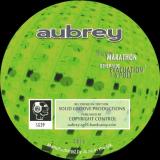
- Marathon
- As The Earth Turns
- Peacemaking
- Safety
- Rare
- Port Authority
- The Sound
- Sabotage
- June
- Night & Day
- May This Rain
- Channels
- Miami
Maria BC ist mit ihrem dritten Studioalbum und zweiten Release bei Sacred Bones zurück: "Marathon". Entstanden aus einem Gefühl der Dringlichkeit, masochistischer Entschlossenheit und Ausdauer, zeigt Marathon, was es heißt, weiterzumachen, egal ob man sich wehrt oder einfach nur überlebt - man ist auf lange Sicht dabei. Auf diesem Album beschäftigt sich Maria BC mit Themen wie Widerstand, Umweltzerstörung, persönliche Umbrüche und Zerstörung, die alle mit musikalischer Kraft und Energie verflochten sind. Während sich ,Spike Field" aus dem Jahr 2023 wie ein langer Atemzug anfühlte, ist ,Marathon" eine dynamische Erkundung von Ausdauer, Vorwärtsstreben, Widerstand, Beobachtung und Überleben. ,Für dieses Album habe ich mich entschieden, weniger Zeit mit der Produktion und Aufnahme zu verbringen und mehr Zeit mit dem Songwriting", erklärt Maria BC. ,Das Ergebnis ist meiner Meinung nach thematisch konsistenter, textlich prägnanter und präziser - ich wollte etwas Dynamischeres und Abwechslungsreicheres schaffen." Auf einer Mikroebene analysiert "Marathon" unsere Existenz - wie sie von persönlichen Ambitionen, Entschlossenheit und unserem Wunsch, das Beste aus unserem Leben zu machen, angetrieben wird. Auf einer Makroebene analysiert Maria BC die zerstörerischen, ausbeuterischen Energiesysteme, die unsere Welt antreiben: ,Maschinen, die um jeden Preis weiterlaufen, bis sie sich selbst zerstören", wie sie es beschreibt. Das Album, das an der Westküste geschrieben und aufgenommen wurde, ist sowohl weitreichend als auch unmittelbar und reicht klanglich von luftigen Akustiksongs bis hin zu glitchigen, verzerrten Tracks, die Chaos und Desillusionierung vermitteln, während gleichzeitig eine lyrische Linie beibehalten wird. In seinen dreizehn Songs scheut "Marathon" keine schwierigen Themen wie Grausamkeit und Mitschuld, Verlust und Zerstörung. Aber es hält hoffnungsvoll an Verbindung, Intimität und Einmischung fest. ,Manchmal, wenn ich Songs schreibe, stelle ich mir vor, dass die Stimme, die singt, eine Art Geist ist", sagt sie. ,Jemand von oben oder unten, der uns warnend zuruft: ,So könnt ihr nicht weitermachen.`" Letztendlich erzählt "Marathon" eine Geschichte von Beharrlichkeit, nicht nur von einem Leben, sondern von vielen, die sich über Raum und Zeit auf einer zerbrechlichen Erde entfalten.
- A1: Take The Leap (Asot Year Mix 2025 Intro)
- A2: Let It Be For Love
- A3: Love
- A4: Illuminate
- A5: Love Me Endless
- A6: Start A Fire
- A7: Deep Shadow
- A8: Everything I Wanted
- A9: Turning
- A10: I'm A Freak
- A11: Dust
- A12: Find You
- A13: What's The Matter?
- A14: Heavy
- A15: Missing Part Of Me
- A16: Sound Of You
- A17: Follow The Light
- A18: Let You Down
- A19: Take Off
- A20: Keep The Faith
- A21: I'm On Fire
- A22: Shattered
- A23: We Are Free
- A24: Taking Back Control
- A27: Desolate Lands
- A28: End Of Time
- A29: Angels (Vip Mix)
- A30: Utopia (Korolova Remix)
- A31: Dream A Little Dream (Vip Club Mix)
- A32: Left Of Us
- A33: Kidz (Camelphat Remix)
- A34: The Lines
- A35: Ta Que Na
- A36: Ignite
- A37: My Life
- A38: Elysian
- A39: Deepest Blue
- A40: Super Powers (Giuseppe Ottaviani Remix)
- A41: Mix The Master
- A42: The Light On The Other Side (Asot Year Mix 2025 Outro)
- A25: Let Your Mind Be Free
- A26: All Night
We stumble, we doubt, we fall - but within those moments lies the spark of transformation. It isn't just change. It's courage. It's fire. And that same bravery is at the core of the twenty- second instalment of Armin van Buuren's annual year mix series. Opening with a powerful narration that sets the stage for transformation, this 113- track journey takes you through the sounds that breathe courage, reinvention, and unshakable energy. From uplifting anthems and emotive vocal tracks to driving, boundary-pushing tech-trance, the mix features productions from Armin van Buuren, Adam Beyer, KI/ KI, Ferry Corsten, Joris Voorn, Hardwell, Svenson & Gielen, Hannah Laing, Factor B, Mauro Picotto, and others. Collaborations with artists such as Bon Jovi, Martin Garrix, Sam Gray, and Malou highlight the spirit of connection and reinvention, while tracks such as "Set Me Free (Rising Star Remix)", "Put Your Bassline", "Holding The Light", "Marama (Moon & Stars)", and "Missing Part Of Me" demonstrate the power to transform moments into memories. Whether through soaring melodies or relentless grooves, this mix invites you to take the leap, embrace the unknown, and let the music guide your own transformation. All together, in A State of Trance.
- Promise Me
- Take Heart
- Something Blue
- Setback
- Stars In The Car
- Aster
- Faux Sweetness
- Dark Glass
- Instant Comfort
Lucid Express sind fünf junge Träumer aus Hongkong, die mitreißenden, bittersüßen Rock machen, der zum Träumen einlädt. Ihr zweites Album "Instant Comfort", das Nachfolger ihres selbstbetitelten Debütalbums aus dem Jahr 2021 ist, enthält ihre bisher komplexesten Arrangements. Lucid Express holten den Shoegaze-Autor Kurt Feldman (The Pains of Being Pure at Heart, The Depreciation Guild) für das Mixing und Mastering an Bord - das Ergebnis ist ein noch klarerer und mitreißenderer Sound der Band. Über Discord zusammengekommen, entstand ,Instant Comfort" in marathongleichen nächtlichen transpazifischen Sessions zwischen der Band in Hongkong und Feldman in New York City - ein gemeinsames Streben nach Perfektion, das sich von Mitternacht bis zum Sonnenaufgang abspielte. Durchdrungen von gleichermaßen schleichender Melancholie und hoffnungsvoller Romantik, werden in diesen neuen Songs verwirrende Gefühle zugelassen. Luftige Melodien werden von einer schweren Gitarrenwand untermalt: siehe ,Promise Me" und ,Something Blue". Lucid Express waren schon mit Punchlove und Blushing in den USA auf Tour und hat auf renommierten Festivals in Asien und Amerika gespielt, darunter Clockenflap, LEVITATION und Slide Away.
In his own time, in his own tone and in his own company.
‘Win and lose without losing oneself’’ This line from French rapper Oxmo Puccino greatly accompanied David Walters while composing his fourth studio album. Over the eleven tracks on ‘Ti Love’, David took his time to find the right tone and in turn, tell his truth.
‘Ti Love’, is a French-Creole abbreviation for “petite love”, meaning ‘little love’, evoking that sweet fondness found in those small gestures and little acts of kindness.
Think of things like young kids' brotherly love or a stranger lending you a helping hand, while expecting nothing in return. It’s these motions that allow this album to feel full of real life, carried by beating drums that also pull at our heart strings.
Basing himself in a small village in Martinique, where David had not long since scattered the ashes of his late mother, the multi-instrumentalist decided to remain there and let the writing of Ti Love pour out from deep inside him. Taking influence from around the island, the energy from his makeshift studio set up in Fort de France, allowing a resilient yet grieving man to recount, let go and come to terms with his recent loss.
So embracing these new circumstances, on the rugged coastal Caribbean island of Martinique, David took up an artist’s residency in the island’s capital Fort de France, located near the town’s port is the ‘Manoir des Artistes’, a bustling recording studio space. A place where the walls shake as the latest sounds being created are blasted by locals and visitors alike. Most studio doors are wide open; as music here is a huge part of everyday life, feedback from encouraging neighbouring musicians is on hand and welcomed. A contrast to the isolation often assumed with working in more traditional music studios.
It was here in this stimulating environment that David recorded Ti Love’s initial demos.
With his first collaborator onboard, Neeweed, a 25-year-old producer and gospel expert who David met at the Martinique Jazz Festival.
Of the album’s initial versions of the record David recollects: ‘It took me three years to write it, then I rewrote it, reworked it. In the end I'm really glad I stepped back and listened to myself.’ I found a great ally in GUTS, who ended up being the artistic director of the record”
David surrounded himself with the right people who helped him express himself in the best possible way. He called on other friends and musical comrades; album opener and title track, ‘Ti Love’ features the incomparable Fatoumata Diawara (World Circuit Records / Africa Express) and further along additional production came in from; Izem, Art Of Tones, and GUTS himself, who all added just the right amount of ‘little love’ to this
project. Further helping hands came from Californian producer and DJ Captain Planet, who David was introduced to a few years ago. Closer to home, here in Europe, the German producer Bluestaeb appears on two tracks: the very catchy disco funk ‘Mr Maraboo’ and ‘Kite Koule’, the latter being the first single lifted from the album, where David invited Nigerian guitarist Keziah Jones.
Elsewhere on the album, fellow Heavenly Sweetness recording artist Blundetto contributed two tracks; the reggae ‘Voodoo Love’, which is David's tribute to Studio One, and the very sweet and resilient ‘Bon Voyage’, which closes the album... "It's gold, it doesn't need anything changing.” remarked David - ‘Bon Voyage’ is a goodbye to his mother, whose voice called him from the bottom of the sea one night while he was surfing during the full Moon.
Released almost 20 years after his debut album ‘AWA’ released on French imprint Ya Basta, home to Gotan Project and many others, David boasts a long list of radio supporters including; Gilles Peterson, Cerys Matthews and Don Letts at the BBC, while further field Cosmo Radio in Germany, and KCRW in Los Angeles.
On this new record, David has shown sincerity and vulnerability, while still honouring the infectious groove that he is known for the world over. Despite the upsets, a little love can indeed go a long way.
CREDITS:
Produced by Bluestaeb / Blundetto / Captain Planet / Izem / Art of Tones
A&R : Guts
Mixed by Mr Gib @ Onetwopassit
Except "Bon Voyage” and "Voodoo Love" mixed by Jerome “Blackjoy” Carron
Mastered by Benjamin Joubert @ Biduloscope
Art by Elliott Walters
Group Rhoda returns to Dark Entries with Phase 5, a new LP of synthesizer-driven art-pop. An integral member of the West Coast electronic music scene, Mara Barenbaum has been writing, performing, and plunging into oneiric depths as Group Rhoda since 2009. Barenbaum’s songcraft is at once stylistically diffuse and laser-focused, a synesthetic approach that allows her to effortlessly glide between genres and soundworlds while centering her singular poetics. On Phase 5, her fifth LP as Group Rhoda, we find Barenbaum waxing nondualistic. Lines between fairytale and fact, between nature and art, between subject and object all dissolve under contemplation.
The songs on Phase 5 are perpetually in-between states, deftly shifting form at the blink of an eye. With sleight of hand, “Field Tone” transmutes from brooding John Carpenter-esque electro into vocoder-driven space disco. “Dragon Pine” darts from cosmic dub to cybernetic dancehall and back again. The uptempo darkwave-leaning number “Aeolian Crossing” dissolves into the void, like sand falling through one’s fingers, like a retreating wave. The cover artwork for Phase 5 is by Shawn Reed, and features purple lilies and light refracted through water. All songs on this album were mastered by Ruud Lekx. The digital version of Phase 5 will be released via Katabatik, a label and sound system that Barenbaum has had close ties to for the past decade.
- Aguas Serenas (With Jennifer
- Souza And Paulo Santos Uakti)
- Creature Ethereal (With Paulo Santos Uakti)
- Olhos Luz (With U-Zhaan)
- Tranquilo (With U-Zhaan)
- Vila
- Maracatú (With Paulo Santos Uakti)
- Velho Templo (With U-Zhaan)
- Cavejaz
- Novo Dia
- Trilobita (With Paulo Santos Uakti)
- Salvador (With Tiki Pasillas)
- Berimba-Guitar
- Tranquilo (With Paulo Santos Uakti)
Grupo um celebrate 50 years with release of lost dictatorship-era album nineteen seventy seven!
First time release - vinyl comes with printed innersleeves
Brazilian avant-jazz vanguardists Grupo Um celebrate their 50th anniversary, sharing a second previously lost 1970s album from the vaults. Nineteen Seventy Seven (titled after the year it was recorded) is another rip-roaring instrumental fusion treasure from the band which spawned from within Hermeto Pascoal’s famed mid-1970s São Paulo collective.
Like their debut album Starting Point, Grupo Um’s Nineteen Seventy Seven was recorded when Brazil's military dictatorship was at its most repressive. “There were no open doors to those who dreamt to be protagonists in creative instrumental music”, remembers drummer Zé Eduardo Nazario, “even popular composers and singers had to submit their songs to censors and many records were banned and confiscated from the stores.”
Just like Hermeto Pascoal's Viajando Com O Som (1977) and Grupo Um's previous album Starting Point (1975), both of which remained unreleased until the 21st century, Zé Eduardo asserts that the 1977 album was flatly 'without any chance to be released at that time."
Recorded at Rogério Duprat’s Vice-Versa Studios in São Paulo, the group were under both time and space restraints, “we chose the small Studio B,” Lelo Nazario recalls, “which had a Tascam (TE AC) 12x8 console and a 4-channel AMPEX AG 440 machine. Therefore, we had to record without overdubs, everything straight to tape.”
Expanding from a trio to a quintet, original Grupo Um members Lelo Nazario (keys), Zé Eduardo Nazario (drums), and Zeca Assumpção (bass) were joined by saxophonist Roberto Sion and percussionist Carlinhos Gonçalves. Carlinhos, Zé and Zeca had already played together in the group Mandala, while brothers Lelo and Zé had just finished a stint backing Hermeto Pascoal during his years in São Paulo.
Lelo was deeply immersed in modular synthesizer experimentation during this period, working extensively with the ARP2600 and EMS Synthi AKS. These electroacoustic explorations formed the sonic foundation for "Mobile/Stabile," one of his first compositions to merge modular synthesis with Brazilian music, a fusion that would ripple throughout the Brazilian jazz scene. The piece premiered at the first São Paulo International Jazz Festival in 1978, performed by Grupo Um with guest trumpeter Márcio Montarroyos. In a shocking moment, festival organizers interrupted the show mid-performance, sparking fierce backlash from both audience members and journalists who denounced the incident as artistic censorship during Brazil's era of political and cultural repression. The version on Nineteen Seventy Seven is the first recording of the composition.
Nineteen Seventy Seven combines Afro-Brazilian rhythm, modular synthesis and a plethora of whistles, percussion and effects pedals. Album opener “Absurdo Mudo” - so titled for the absurd difficulty it poses to the musicians performing it - starts out in a cloud of mysterious dissonance, before the haze breaks for a glorious keyboard and saxophone interplay atop an uptempo samba groove. “Cortejo dos Reis Negros (Version 2)” (Procession of the Black Kings), based on the maracatu rhythm, inverts the traditional jazz song structure by beginning with improvisations, which are followed by the theme and a final coda. “The studio also had two Parasound electronic reverb units,” Lelo notes, “and the timbre is very audible on the soprano sax and percussion.”
Grupo Um’s daring music represents a manifesto of resistance during the dictatorship years, but it’s one which remains just as relevant today. As Lelo puts it: “For me, the aesthetic issue has always been about combining contemporary avant-garde languages with Brazilian music, independent of categories and commercial interests. The result of this fusion takes music to a new level.”
Recording credits (1977)
Recorded at Vice-Versa B Studio, São Paulo, November 9, 1977
Produced by Lelo Nazario and Zé Eduardo Nazario
Engineered by Ricardo “Franja” Carvalheira
Lelo Nazario – Wurlitzer electric piano, acoustic piano, signal generator, percussion
Zé Eduardo Nazario – drums, percussion
Zeca Assumpção – electric bass
Carlinhos Gonçalves – percussion
Roberto Sion – soprano sax, clarinet
Release credits (2025)
Produced by UTOPIA Studio, São Paulo
Project Coordination in Brazil by Irati Antonio (Utopia Studio)
Tape Restoration and Digital Mastering by Lelo Nazario at Utopia Studio, July 2025
Liner Notes by Lelo Nazario and Zé Eduardo Nazario
Photography by Jorge Las Heras, Lelo Nazario, and artists' personal archives
Photo Restoration by Lelo Nazario
Artwork and Design by Alessandro Renaldin
- Hasiera 00:50
- 2: Iratzarri 0:37
- Sarrakio 02:10
- Dantza Bihurritua 03:50
- Desagertu 03:18
- Meditazioa I 02:09
- Besarkatu Ninduzun (Cdr Y Basandere Ahotsak) 03:50
- Meditazioa Ii 02:53
- Ametza Iii 02:06
- Oroipen 04:04
- Fallen Gaza 03:09
- Atseginzale Dantza 02:14
- Sua Eta Heriotza 00:59
- Agur Maria (Cdr Y Basandere Ahotsak) 03:55
- Bukaerako Dantza 04:03
- Amaiera 00:36
Una interpretación de Soinuarenbidea II debería partir de esta premisa: todo es posible, nada es aleatorio, y en sí mismo es un imposible de aleatoriedades. El escenario planteado explora la idea de realidad aumentada desde una percepción sonora, ambiental y colectiva. La obra transita hacia adelante y hacia atrás recreando experiencias extintas de porvenir incierto, tratando de facilitar un fin pacificador. Cada pieza sonora se crea, se despliega, se repliega y se destruye, en una torsión permanente de toda la realidad que hace posible cada fragmento musical, cada identidad acústica, cada espacio sonoro. Lo onírico, la ficción, y el viaje están continuamente presentes, y es en el transitar de cada fragmento donde se produce el diálogo de la exposición musical. Los elementos de esta ficción se recrean continuamente, en un continuum donde se entrelazan y se van contorsionando a medida que crecen o decrecen con cada fragmento de síntesis concreta. Los temas explícitamente musicales son el magma que conduce a dar voluptuosidad al disco, siendo la piel un contexto o límite que en sí mismo fluctúa indefinidamente en texturas y configuraciones posibles. Y la urdimbre del silencio es la síntesis que está continuamente presente y que trata de cohesionar los fragmentos en continua colisión expresiva. Las grabaciones de campo proporcionan el material sonoro concreto, y como un fractal sonoro cada una de ellas ofrece diferentes grados de interpretación que a su vez conduce a nuevos fragmentos y nuevas creaciones. Así que se puede pensar que esta es una síntesis de una posible realidad, pero interpretable en infinidad de maneras. Un movimiento y una estaticidad implícitas que generan estructuras y dinámicas acústicas. Lo que se escucha no es real, pero en sí mismo forma parte de la realidad, creando un escenario expectante. Lo cinematográfico, plástico y teatral, danzante y dinámico cobra importancia en este juego, porque se trata de contar una historia, una experiencia recreada desde los puntos de vista del arte visual. Es a su vez hilo conductor y entretenimiento, discurso político y puro divertimento. Es desde este espacio de convivencia artística que tiene sentido la totalidad y justifica el formato sonoro planteado. La contradicción de la obra es patente en el formato, y es a su vez el planteamiento de una accidentalidad en el devenir vital. Contenedor de Ruido recoge todas estas contradicciones y las manifiesta en la obra Soinuarenbidea II. Es una historia sonora, es un cuento acústico. Es un fragmento de vitalidad en imágenes audibles. Es una invitación a la reflexión, a la crítica, al disfrute, a la meditación, a la celebración. Y sobre todo es esperanzadora apreciación de la realidad como algo maleable que confeccionamos colectivamente, que requiere de una paciente observación y la participación colectiva global, en un mundo finito pleno de diversidades y del que ignoramos prácticamente todo, al que deberíamos volver con respeto y devoción.
Soinuarenbidea II-ren interpretazio batek premisa honetatik abiatu beharko luke: dena da posible, ezer ez da ausazkoa, eta, berez, ausazkotasun ezinezko bat da. Planteatutako agertokiak errealitate areagotuaren ideia aztertzen du, soinu-, ingurumen- eta talde-pertzepzio batetik abiatuta. Lanak aurrera eta atzera egiten du, etorkizun zalantzagarriko esperientzia desagertuak birsortuz eta helburu baketsua lortzen saiatuz. Soinu-pieza bakoitza sortu, hedatu, tolestu eta suntsitu egiten da, musika-zati bakoitza, identitate akustiko bakoitza eta soinu-espazio bakoitza ahalbidetzen dituen errealitate osoaren etengabeko bihurdura batean. Onirikoa, fikzioa eta bidaia etengabe daude presente, eta pasarte bakoitzaren joan-etorrian gertatzen da musika-erakusketaren elkarrizketa. Fikzio honen elementuak etengabe birsortzen dira, continuum batean, non sintesi zati zehatz bakoitzarekin hazi edo txikitu ahala elkar lotzen eta bihurritzen diren. Esplizituki musikalak diren gaiak diskoari atsegintasuna ematera eramaten duen magma dira, azala testuingurua edo muga izanik, testura eta konfigurazio posibleetan mugarik gabe aldatzen dena. Eta isiltasunaren irazkia etengabe presente dagoen sintesia da, zatiak etengabeko adierazpen-talkan kohesionatzen saiatzen dena. Landa-grabazioek soinu-material zehatza ematen dute, eta soinu-fraktal batek bezala, horietako bakoitzak interpretazio-maila desberdinak eskaintzen ditu, eta horrek, aldi berean, zati eta sorkuntza berrietara eramaten du. Beraz, pentsa daiteke errealitate posible baten sintesia dela, baina hamaika modutan interpreta daitekeena. Egitura eta dinamika akustikoak sortzen dituzten mugimendu eta estatikotasun inplizitu bat. Entzuten dena ez da erreala, baina, berez, errealitatearen parte da, eta agertoki espektakularra sortzen du. Zinematografikoak, plastikoak eta antzerkikoak, dantzariak eta dinamikoak garrantzia hartzen dute joko honetan, ikusizko artearen ikuspegitik birsortutako istorio bat, esperientzia bat, kontatzea baita helburua. Aldi berean, hari gidaria eta entretenimendua da, diskurtso politikoa eta dibertimendu hutsa. Elkarbizitzarako espazio artistiko honetatik osotasunak zentzua du eta planteatutako soinu-formatua justifikatzen du. Obraren kontraesana nabarmena da formatuan, eta, aldi berean, bizi-bilakaeran istripu-tasa bat planteatzea da. Zarata-edukiontziak kontraesan horiek guztiak jasotzen ditu eta Soinuarenbidea II obran adierazten ditu. Soinu istorio bat da, ipuin akustiko bat. Bizitasun zati bat da, irudi entzungarrietan. Hausnarketarako, kritikarako, gozamenerako, meditaziorako eta ospakizunerako gonbidapena da. Eta, batez ere, itxaropentsua da errealitatea modu kolektiboan egiten dugun gauza xaflakor gisa hautematea, behaketa pazientea eta partaidetza kolektibo globala eskatzen dituena, dibertsitatez betetako mundu mugatu batean, ia guztia kontuan hartzen ez duguna, eta errespetuz eta debozioz itzuli beharko genukeena.
An interpretation of Soinuarenbidea II should start from this premise: everything is possible, nothing is random, and in itself is an impossible randomness. The proposed scenario explores the idea of augmented reality from a sonic, environmental, and collective perception. The work moves back and forth, recreating extinct experiences of an uncertain future, seeking to facilitate a peaceful end. Each sound piece is created, unfolds, retreats, and is destroyed, in a permanent twisting of all reality that makes each musical fragment, each acoustic identity, each sonic space possible. The dreamlike, the fictional, and the journey are continually present, and it is in the transit of each fragment that the dialogue of the musical exposition takes place. The elements of this fiction are continually recreated, in a continuum where they intertwine and contort as they grow or diminish with each fragment of concrete synthesis. The explicitly musical themes are the magma that leads to the work's voluptuousness, the skin being a context or boundary that in itself fluctuates indefinitely in possible textures and configurations. And the warp of silence is the synthesis that is continually present and seeks to unite the fragments in a continuous expressive collision. The field recordings provide the concrete sound material, and like a sonic fractal, each one offers different degrees of interpretation that in turn lead to new fragments and new creations. So one can think of this as a synthesis of a possible reality, but interpretable in an infinite number of ways. An implicit movement and staticity that generate acoustic structures and dynamics. What is heard is not real, but in itself is part of reality, creating an expectant scenario. The cinematic, plastic and theatrical, dance and dynamic aspects take on importance in this game, because it is about telling a story, an experience recreated from the perspective of visual art. It is at once a common thread and entertainment, political discourse and pure entertainment. It is from this space of artistic coexistence that the whole makes sense and justifies the proposed sound format. The contradiction of the work is evident in its format, and it is, in turn, the presentation of an accidentality in the course of life. Noise Container gathers all these contradictions and manifests them in the work Soinuarenbidea II. It is a sound story, an acoustic tale. It is a fragment of vitality in audible images. It is an invitation to reflection, to critique, to enjoyment, to meditation, to celebration. And above all, it is a hopeful appreciation of reality as something malleable that we collectively craft, requiring patient observation and global collective participation, in a finite world full of diversity and of which we know practically nothing, to which we should return with respect and devotion.
Paisajes sonoros, diseño sonoro, drones y música grabada, realizada y arreglada para Contenedor de Ruido por David Aranaz. Coro: Basandere Ahotsak. Producido y mezclado por David Aranaz. Mástering: Estanis Elorza. Fotografía: David Aranaz. Texto: David Aranaz. Traducción: Saioa Aranaz Oreja. Trabajo y Diseño artístico: Cristina Martinez. Edición: Contenedor de Ruido Producciones y Sarbide Music. Distribución: Contenedor de Ruido.
Contenedor de Ruido agradece el apoyo en la realización de Soinuarenbidea II al coro Basandere Ahotsak y en especial a Eva Orbara Goicoa.
Soinuarenbidea II está dedicado al pueblo palestino.
Paisajes y objetos Sonoros, samplers y otras músicas transformadas para Soinuarenbidea II
Burlada: Paseos sonoros matinales por Merindad de Sangüesa, Calle Mayor, Capuchinas, Parque Uranga y varias iglesias y plazas. Pasajes del cotidiano: basura de papel, cristal y plástico.
Pamplona: Cementerio de San José. CEIP Sanduzelai /// Quinto Real: Fábrica de Armas, Puerto de Urkiaga y alrededores. Suite del silencio, bosques en movimiento /// Fábrica de armas de Orbaiceta: regatas, biosques, paseo sonoro hasta regata /// Belate: Puerto de Belate y alrededores. Vacas en pradera junto a las turberas /// Bardenas Reales: Suite de guitarra y Suite del silencio, estepa desértica /// Austria: Tranvías de Graz y Viena. Muchedumbre del metro de Viena.
Voces cinematográficas de: Matanza en Texas, Robocop, Espíritu Sagrado, Solo los Amantes Sobreviven, Voces de Gaza, Yojimbo, Terciopelo Azul, Los 7 Magníficos.
La pista A2 está dedicada a la memoria de David Lynch.
La pista B4 está dedicada a Eva Orbara Goicoa.
Pista A4: Contiene interpretaciones de piano de Three Piano Pieces Op.11 de Arnold Schoenberg.
Pista A5: Es una interpretación expandida con síntesis FM del Concerto Op. 24 - Etwas lebhaft - de Anton Webern.
Pista A7: Contiene la canción Besarkatu ninduzun (Letra de Josune López y música de Josu Elberdin) en interpretación de Basandere Ahotsak en la iglesia de Burutain bajo la tormenta.
Pista B2: Contiene la canción Recuerdos de la Alhambra (Fernando Tárrega) en interpretación torsionada de David Aranaz Sarasa.
Pista B14: Contiene la canción Agur María (Letra y Música de Estíbaliz Robles “Estitxu” y arreglo exclusivo de Alfonso Ortiz para Basandere Ahotsak) en interpretación de Basandere Ahotsak.
Equipamiento para Soinuarenbidea II.
Micros de condensador SE7, configuración XY y ORTF; Micros de cinta ORTIZ LUTHIER configuración XY y Blumlein; Grabadoras MARANTZ y ZOOM; Sintetizadores y samplers Elektron MONOMACHINE SPS-1, MACHINEDRUM SFX6 y MODEL:SAMPLES. Dave Smith MOPHO. Torso Electronics S-4. Sintetizador Modular 333 DIY; Guitarra clásica ALHAMBRA 6P; Esculturas Sonoras tipo Baschet, cristal y metales; Mesa Soundcraft FX16ii; Interface de Audio RME Babyface Pro FS; DAW Logic Pro; Procesamiento de modelado analógico con Acústica Audio, Waves, Softube, Brainworx, Sonible, Analog Obsesion, Tokio Dawn. Metering de Logic y RME DigiCheck . Amplificación Hafler PRO2400. Monitorización BW DM602 S3. Mezcla digital; Mastering híbrido.
- 1: Hollow Dominion
- 2: Marathon
- 3: Forsaken Tarn
Sacramento (CA) Heavyweight Crushers Return! Oromet presents atmospheric funeral doom with a melodic emphasis without surrendering the all-encompassing heaviness that is the genre's hallmark. Where some seek to immiserate and drown the listener, Oromet explores the complete nature of sorrow as the band weaves the choke of despair and the lightness of serenity. The Sinking Isle focuses on the inevitability of collapse and the cycles of ruin and rebirth. Adrift on cataclysmic seas, melody remains the compass—a hopeful light guiding the listener through themes of loss, nostalgia, and pessimism. For fans of Mournful Congregation, Bell Witch & Esoteric. Dan Aguilar: Guitar, Vocals Patrick Hills: Drums, Bass, Synth, Backing Vocals Recorded, Mixed, and Mastered by Patrick Hills at Earthtone Studios Cover Artwork: Ted Nasmith Design, Layout, Illustration: Dan Aguilar Additional Backing Vocals: Chris Lemos
- A1: Não Identificado (Caetano Veloso)
- A2: Sebastiana (Rosil Cavalcanti)
- A3: Lost In The Paradise (Caetano Veloso)
- A4: Namorinho De Portão (Tom Zé)
- A5: Saudosismo (Caetano Veloso)
- A6: Se Você Pensa (Roberto Carlos-Erasmo Carlos)
- B1: Vou Recomeçar (Roberto Carlos-Erasmo Carlos)
- B2: Divino, Maravilhoso (Caetano Veloso-Gilberto Gil)
- B3: Que Pena (Êle Já Não Gosta De Mim) (Jorge Ben)
- B4: Baby (Caetano Veloso)
- B5: A Coisa Mais Linda Que Existe (Gilberto Gil-Torquato Neto)
- B6: Deus É O Amor (Jorge Ben)
Gal Costa’s 1969 self-titled album stands as one of the
boldest statements of the Tropicália movement. Blending
psychedelic rock, experimental arrangements, and Brazilian
popular music with fearless originality, the album showcases
Costa’s powerful, expressive voice at its most adventurous.
Featuring contributions from major Tropicália figures such as
Caetano Veloso and Gilberto Gil, its mix of sweetness and
sonic daring helped redefine contemporary Brazilian music,
cementing Gal Costa as a groundbreaking and influential artist.
Zeitkratzer director Reinhold Friedl and his ensemble present new compositions, grounded on Domenico Scarlatti's piano sonata F-minor K.466. Commissioned by the dance company Rubato and dedicated to Mario Bertoncini (1932-2019).
Little is known about Domenico Scarlatti (1685-1757). His music is, so to speak, left to its own devices: free, cheeky, playful, sonorous, surprising. Harmonically strolling again and again into unforeseen regions, the ear leads, not the theory; and also the fingers get their right: playful and haptic it goes. Scarlatti explained, "since nature has given me ten fingers and my instrument provides employment for all, I see no reason why I should not use all ten of them."
Freedom, friction and listening pleasure instead of convention: "He knew quite well that he had disregarded all the rules of composition in his piano pieces, but asked whether his deviation from the rules offended the ear? He believes there is almost no other rule than that of not offending the only sense whose object is music - the ear."
Reinhold Friedl applied this principle and composed the music for a choreography by dance company Rubato. Dance music drawn from Scarlatti, who was so inspired by dance music. The material of the piano sonata F-minor K.466 is twisted anew in all its richness, shifted back and forth, declined, frozen, noisified, sound structures extracted, floating. Those who know the sonata, will more than smell it’s shadows. Dedicated to Mario Bertoncini (Gruppo di Improvvisazione Nuova Consonanza) who was particularly fond of K.466, on which all the music presented here is grounded.
"Wild flowers", Barbara Zubers had once called Scarlatti's music. Let them bloom.
- Dame Un Cachito Pa' Huelé
- Dundunbanza
- Como Se Goza En El Barrio
- Esas No
- La Gente Del Bronx
- Mambo En La Cueva
- Que Negra P'acelerá
- Blanca Paloma
- Mami Me Gustó
- El Dolorcito De Mi China
- Hay Fuego En El 23
- Besame Aquí
- La Fonda De Bienvenido
- No Quiero
- Juégame Limpio
- Pimienta
- Cambia El Paso
- Que Me Manda La Niña
- Pobre Chinito
- Baila Simón
- El Reloj De Pastora
- Sabor De Pachanga
- Hachero Pa' Un Palo
- Errante Y Bohemio
- El Divorcio
- Papa Upa
- Lo Que Le Pasó A Luisita
- No He Visto A Caridad
- Suéltala
- Adiós Carmelina
- Emilio Dolores
The Godfather Of Salsa - HAVANNA & NYC RECORDINGS 1946-1962! Grosso! again presents this compilation from "El Ciego Maravilloso", the authentic godfather of salsa. His early Havana & NYC recordings. The tracks have been remastered and restored and some are available on vinyl after many years. Format and selection designed for DJs, collectors and latin lovers. Ignacio de Loyola Rodríguez Scull aka Arsenio Rodríguez (30 August, 1911, Güira de Macurijes, Matanzas, Cuba - 30 December, 1970, Los Angeles, CA, USA) was a Cuban musician, bandleader and prolific composer who developed the son montuno and other Afro-Cuban-based rhythms. Today he is seen as one of the most important figures in Latin music, with his influence reaching beyond the Spanish speaking world to also include African popular music of the 20th Century, though when he died he was not widely known by the public for his contributions and influence. He is also recognized (along with Israel 'Cachao' López and Dámaso Pérez Prado) as one of the creators of mambo, what Rodríguez himself often referred to as "ritmo diablo". Some of his best-known, and most-often covered recordings from the 1950s and early 1960s are included here, among them "Dame un cachito pa' huele'," "Dundunbanza," "El reloj de pastora," "Cambia El Paso," and "Hay Fuego En El 23."
Zwar nicht sieben auf einen Streich, aber immerhin sieben Alben in einem Jahr, das war die beeindruckende
Bilanz, die Hank Mobley, damals der führende Tenorsaxofonist des Hard-Bop, am Ende des Jahres 1957
vorweisen konnte. Und mehr noch als die Quantität überraschte die ungebrochen hohe Qualität seiner Alben. “Hank” war das letzte Album dieses Aufnahme-Marathons. Wie immer hatte das Gründungsmitglied
der Jazz Messengers es mit einigen der besten Hard-Bop-Musiker jener Zeit eingespielt, unter denen sich
drei weitere Jazz Messengers befanden
The album long sought after by Mountain Goats fans is finally back in print and features new liner notes by John Darnielle. Released on the precipice of the Mountain Goats' breakout albums All Hail West Texas and Tallahassee, The Coroner's Gambit is an introspective epic that stands as one of Darnielle's best outings in any era.Darnielle on The Coroner's Gambit:There are few records in the Mountain Goats catalog that are closer to my heart than The Coroner's Gambit. It bears a sonic thumbprint shared by none of its brethren (Panasonic RX-FT500, Marantz PMD-222, and sessions in Omaha probably recorded to a Tascam Porta-One) and while two of those sources appear on several later releases, none of the other records really sound like it. Although it contains exactly no autobiographical songs, it feels personal to me_intimate, diaristic. I have vivid memories of the songs I wrote and recorded in Colo, and foggy memories of the Greyhound trip to and from Omaha. I was taking Greyhounds across Midwestern state lines to record songs with friends when I made The Coroner's Gambit, is what I'm saying. You can maybe hear the exhaust of the Greyhound in the songs if you listen close.
- Ben Zanatto
- Stop
- Devil's Dance
- Dead And Gone
- Stranded
- Killing Zone
- 100: Years
- Things To Come
- Blast 'Em
- Endrina
- White Knuckle Ride
- Sick Sick World
- Tattoo
- That's Entertainment
- Clockwork Orange
- The Brothels
- Just A Feeling
- Brixton
- Emperor's Lap Dog
- I Wanna Riot
- Kill The Lights
- Blacklisted
- X-Mas Eve (She Got Up And Left Me)
- Fuck You
Rancid is without question one of the most successful and influential punk bands ever, not to mention being among the most prolific. Their nonstop songwriting and marathon studio sessions often result in far too many songs to fit onto their albums. True Rancid fans know that in addition to their classic long players, many of their finest tracks have been released as single B-sides, bonus tracks, on compilations, or in some cases have remained in the band's vault. That is why B sides and C sides is no mere throwaway record, but an essential part of this classic band's catalog. The songs collected here represent a cross section of everything that has made this band so beloved worldwide, including their creative genre hopping from blazing punk rock to danceable ska, to reggae, rockabilly, and more, all executed with some of the most impressive playing in the history of underground music. The songs range from fan-favorites like "I Wanna Riot" to obscure hidden gems from rare or hard-to-find compilations, and a handful of studio recordings that were completely unreleased before this album, several coming from the fertile recording sessions for the band's sprawling 1998 masterpiece Life Won't Wait. Originally released on CD in 2007, most of the tracks range from the band's early days through their sixth album, Indestructible, although the 2012 track "Fuck You," from the Pirates Press Records compilation Oi! This is Streetpunk! Volume 2 was added to place a definitive final word on the collection when it was pressed on vinyl. With the album being out of print and hard to find in its own right for the past ten years, Pirates Press Records is thrilled to partner with our friends in Rancid to remedy that situation and make this essential piece of punk rock history available to their many fans across the globe - this time as an incredible double 12" with super deluxe coloured vinyl and matching sleeve art!
"The complete Helluva Boss: Season 1 (Original Soundtrack) from hit animated series Helluva Boss created by Vivienne “VivziePop” Medrano. Includes a brand new original song “BUZZZN,” full version of “My World Is Burning Down Around Me”, “Rock Version” of “I.M.P Jingle,” and a Garry Blipp cover of “Oh Millie.”
Featuring original music by Sam Haft and vocals from cast members including Brandon Rogers (Blitzo), Bryce Pinkham (Stolas), Richard Horvitz (Moxxie), Vivian Nixon Williams (Millie), Erica Lindbeck (Loona), Norman Reedus (Striker), Cristina Vee (Verosika Mayday), Mara Wilson (Mrs. Mayberry), Barrett Wilbert Weed (Octavia), Alex Brightman (Fizzarolli), James Monroe Iglehart (Asmodeus), Rochelle Diamante (Beelzebub), and more!"
- A1: Rlgn & Sasha Kustov - Pillars
- A2: Iskrit - Moskva
- A3: Turbosh - French Trax 7000
- A4: Magnum Opus - Li (Prod By Nacaratt)
- B1: Лучший Друг - God Of Sexual Desire
- B2: Dj Yesyes - Run
- B3: Boris Redwall - Project 2000
- C1: Lipelis - Double Mcgem Deluxe
- C2: Maksimovna - Dobryi Trek
- C3: Kito Jempere - Karagod
- D1: Dominique Mara - Pepupape
- D2: Qarti - Pure
- D3: Mo?Se? - Alaska
Part 2[18,95 €]
As a label, we are specialists in musical diversity. With our newest installment of the annual System 108 compilation we present you two parts of hand picked creative output by our friends, residents and dearest guests. Curated by the artist Ira Bespalova, the concept of both parts is simple and deep: the good, the calm, the kind is part 1 and all anti-heroes, filthy electro-armored jams is part 2. All together - another twist of the planet, another beat of our big heart, that became shelter and home home for a whole new tribe. It pumps, it creates, unites and warms up, kicks it real hard, no matter how tough it is. Part 1 is densely populated by our new kids on the block! Isktrit, TURBOSH, BORIS REDWALL, DJ Yesyes, Dominique Mara have been releasing singles, EP's and album during 2023 and became an integral part of the collective. Here you will also find good old friends Maksimovna, Lipelis, Kito Jempere. Very special Siberian inspired trippy workout by RLGN and Sasha Kustov, Luchshiy Drug. And a super special guest appearance starring Magnus Opus and mo?se?. The running order is curated as a narrative, as an album that takes you on a journey. But separately, it all works as singles, DJ tracks and tools. Welcome to Nine Years Of Love!

Broken District presents Theoric Proximity, the debut album from French producer and label co-founder Jus Jam. Known for his blend of dreamy atmospheres and groove-driven productions, Jus Jam delivers a 12-track journey exploring the subtle balance between introspection and the dancefloor.
The record flows between ambient textures, deep and leftfield house, broken beat, hip-hop, and jazz influences, creating a cohesive yet versatile soundscape. From late-night moods to club-ready moments, Theoric Proximity reflects the artist’s unique approach: instinctive, emotional, and personal.
A milestone release for both the artist and the Bordeaux-based label, Theoric Proximity positions Broken District among today’s forward-thinking electronic imprints.
- Rattlesnake (Live At The Gorge '24) 12:25
- O.n.e. (Live At The Gorge '24) 3:35
- Sleep Drifter (Live At The Gorge '24) 4:36
- Open Water (Live At The Gorge '24) 7:02
- Magma (Live At The Gorge '24) 11:14
- The Reticent Raconteur (Live At The Gorge '24) 0:37
- The Lord Of Lightning (Live At The Gorge '24) 5:35
- The Balrog (Live At The Gorge '24) 6:52
- Hog Calling Contest (Live At The Gorge '24) 3:12
- Road Train (Live At The Gorge '24) 4:08
- Flight B741 (Live At The Gorge '24) 3:42
- Ice V (Live At The Gorge '24) 10:24
- Dirt (Live At The Gorge '24) 3:43
- Mirage City (Live At The Gorge '24) 3:41
- Let Me Mend The Past (Live At The Gorge '24) 5:36
- Mirage City (Live At The Gorge '24) 4:21
- Le Risque (Live At The Gorge '24) 6:32
- Magenta Mountain (Live At The Gorge '24) 8:27
- Gondii (Live At The Gorge '24) 7:38
- The Silver Cord (Live At The Gorge '24) 14:38
- Extinction (Live At The Gorge '24) 9:18
- Inner Cell (Live At The Gorge '24) 3:47
- Loyalty (Live At The Gorge '24) 4:22
- Horology (Live At The Gorge '24) 4:31
- Gaia (Live At The Gorge '24) 8:19
- The Great Chain Of Being (Live At The Gorge '24) 2:46
- Motor Spirit (Live At The Gorge '24) 10:58
- Venusian 1 (Live At The Gorge '24) 7:37
- Vegemite (Live At The Gorge '24) 3:06
King Gizzard & The Lizard Wizard 'Live at The Gorge Amphitheatre, Quincy, WA' was recorded when the Aussie psych-rock polymaths rained down on Washington on September 14th 2024, for a three-hour marathon set.
This is a 4xLP featuring the original poster art by Jason Galea and photos from the show by Maclay Heriot, and it is exclusively mixed and mastered by James Plotkin from the stems provided by the band. The master and pressing plates have been licensed from Fuzz Club. Housed in a deluxe quad fold jacket and comes on 140g coloured vinyl.
"It may surprise some that, after two decades of silent films, when Alam Ara broke the silence in 1931, it and every South Asian talkie that followed was what we in the West think of as a "musical." Music had been integral to the culture's staged drama going back to the Gupta Dynasty — sometime between the 4 th and 6 th Century CE. Since its inception, South Asian cinema drew heavily from Marathi, Parsi, and Bengali musical theatre and silent film screenings were often accompanied by live music to mimic a live staged experience.
When sound films arrived, actors with serious singing skills became the next wave of stars. Songs were performed live while shooting, with musicians hidden off-camera, to the side or sometimes even in trees. Playback singing — the practice of dubbing a real singer's voice over a lip-syncing actor — didn't become standard until the 1940s.
Thus, the biggest stars of the 1930s were also the greatest singers, with some, like Govindrao Tembe and Pankaj Mullick, excelling as both composers and vocalists. None, however, were more beloved than K.L. Saigal, whose emotional, untrained crooning captivated audiences across the subcontinent. Saigal's voice inspired a young Lata Mangeshkar, who vowed to become India's greatest filmi singer to win his heart. Sadly, Saigal grew increasingly addicted to alcohol, unable to perform without it, and passed away at age 42, seven months before the Partition. Lata never married.
This collection features some of the earliest songs from South Asian cinema, sourced from CDs and LPs found in Jackson Heights, Queens, Coney Island Avenue in Brooklyn, Lexington Avenue in Manhattan, and Oak Tree Road in Iselin, New Jersey — areas home to vibrant immigrant communities. South Asian immigration to New York and New Jersey surged after the 1965 Immigration and Nationality Act, which lifted non-European quotas. By the 1990s and 2000s, the region's Indian, Pakistani, and Bangladeshi media outlets flourished, especially in Jackson Heights, where such stores outnumbered the total number of regular record shops throughout the five boroughs.
The nascent period of sound film featured a limited palette of musical styles, predominantly Marathi Bhagveet, like the Ghazal, but with greater flexibility of subject matter and rhythm, and Rabindra Sangeet, the approximately 2,000 songs and poems composed by Bengali Nobel laureate Rabindranath Tagore. But there was some evolution as well, with the success of South Asian cinema's first woman composer, the classically trained Saraswati Devi, and the introduction of Western instruments including the piano and Hawaiian guitar.
While much of the music was dark and brooding, perhaps exemplified best by Devika Rani's interpretation of Saraswati Devi's "Udi Hawa Mein" from 1936's Achhut Kannya (Untouchable Maiden), there were moments of brightness, such as R.C. Boral's "Lachhmi Murat Daras Dikhaye" sung by Kanan Devi in Street Singer, an otherwise thoroughly depressing film from 1938 that cemented Devi's and co-star K.L. Saigal's superstardom.
This selection was chosen to emphasise a range of expressivity, instrumentation and style achieved even within the decade's relatively limited scope, setting the listener up for the relative explosion of possibility in the 1940s, to be covered in the next installment of this series."