"a_000 is a project born from the spontaneous encounter between two Italian djs and producers: Alan Backdrop and Enrico Rlt. Their productions are the outcome of studio jam sessions, recorded live so as to capture the alchemy of the moment. The sound reflects their fascination with 90s electronic music, nature, and travelling: "Road to Nauta" was inspired by a journey in Perù"
Search:maras
- 1
From The Vaults Vol.1" on 8bit Records brings together four standout tracks that highlight the label's deep and groovy house sound.
With two solo cuts by the label head Gorge and collaborations featuring André Hommen and DÉ SAINT.
This release also marks the long-awaited return of 8bit Records to vinyl.
- A1: Born On The Bayou, Written-By – John Fogerty
- A2: Green River, Written-By – John Fogerty
- A3: Tombstone Shadow, Written-By – John Fogerty
- A4: Travelin' Band, Written-By – John Fogerty
- A5: Fortunate Son,Written-By – John Fogerty
- A6: Commotion, Written-By – John Fogerty
- A7: Midnight Special, Arranged By – John Fogerty, Written-By – Traditional
- B1: Bad Moon Rising, Written-By – John Fogerty
- B2: Proud Mary, Written-By – John Fogerty
- B3: The Night Time Is The Right Time, Written-By – Lew Herman
- B4: Good Golly Miss Molly, Written-By – John Marascalco, Robert Blackwell
- B5: Keep On Chooglin', Written-By – John Fogerty
- A1: Saft 02:55
Vinylpostcard
Buenoventura is the alter ego of the Viennese musician Bernhard Hammer (Elektro Guzzi, Monochord, Maraskino), with whom he implements his musical ideas as a solo artist.
The fictional character Buenoventura is an ex-sailor* born in the Bahamas, punk, raver and music lover who performs in a colorful one-man show. As Buenoventura, Bernhard Hammer can switch between genres with ease and intuitively let his ideas run free.
Bernhard Hammer has found a companion in Buenoventura with whom he can break through stylistic conventions and redefine genre boundaries for himself.
Saft is a foretaste of Buenoventura´s debut album Gelb. He chose the electric guitar as the central means of expression and used it to combine abstract sound patterns, hypnotic guitar melodies, with repetitive (poly)rhythms. The music is organic, minimalist and ritualistic.
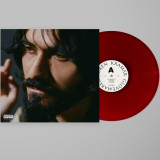
If the Chateau Marmont could sing. This would be it. Loren Kramar's voice vibrates with the shameless hum of a room after a celebrity exits Ecstatic aspiration. Doubt. Proximity. Desire. The album "Glovemaker" is about the skins we craft to be seen by the world, and Loren reminds us that we are all in drag. All exposed. No matter what gloves we slip on. "I'm a slut for all my dreams", Loren Kramar sings with Patti Smith brashness, "I'm a whore for them, I've got more of them". Loren's lyrics move like tinsel, shimmering bravely, then just as quickly, curling, fragile under the spotlight. Loren has always been obsessed with fame. Not with famous people, but with the electricity that perverts attention - the crushing desire to be truly seen. And all of Loren, and this obsession, is in this album. He grew up in the Valley, forced to hide his Barbies from his father, so the closet was a gorgeous Spanish ranch house on a gilded cul-de-sac crawling with celebrities. Naturally this gay boy wanted to be a child star so his mother secretly shuttled him to tap and jazz and figure skating lessons. "I've got hands and feet to put in the concrete", Loren croons, in "Hollywood Blvd", a song which clangs with brawny bravado. But "Gay Angels" reminds us that Loren's infatuation with stardom is inextricably linked with his queerness and his own desire to live outside of fear. To be famous is to be out. To be known. To be himself. "Glovemaker has become a kind of code for art making itself. A glove as a covering or mask that follows the contours of the life beneath it. As a song and a symbol, this is an album about studying and tracing a life - and then sharing what's there," Loren says. And his desire to share truth feels urgent. To listen to Loren is to understand there is no choice; the songs must tear through the air right now. This very second. "I see myself tearing and splitting and becoming a trampoline", he belts in "No Man," breaking our hearts right alongside his. Part poet, part theatrical diva, Loren loops together the tragedy of breathing on this planet, because like Eartha Kitt or Cat Stevens, Loren is at his core - an incredible story teller. This whole album is a shrine, a mantle atop a blazing fire of life, spread with the memorabilia of Loren; all of the pain and lust dazzling on unabashed view. This is a songwriter's album. Loren's lyrics are all his, and you feel it with every bright, Maraschino-cherry-like word that falls from his lips. "Like a lover, You scream and I shatter, I hit like a hammer" Loren sings. And we get to feel what Loren feels We live in his brain, riding his genre bending emotions, on a wave of modern pop. And the songs lift, they are anthems of belief, "Hollywood Blvd", "I'm a Slut", "Euphemism", "Gay Angels", are all odes to triumphing over the corroding powers of fear and doubt. And on this ride, Loren's voice is the guard rail, ever eager to stretch and transform, belting, talk-singing, multiplying, keeping us safe. "Glovemaker" slaps and soars. The album is an ecstatic overture to love and loneliness, to dreams and promises, to everything Los Angeles dangles. Buckle up. Loren knows how to craft space, how to move us through darkened bars, strobing arenas, beige carpeted bungalows and yellow lit highways. "How do you like LA?" Loren asks. I hope you love it.
Red Vinyl
If the Chateau Marmont could sing. This would be it. Loren Kramar's voice vibrates with the shameless hum of a room after a celebrity exits Ecstatic aspiration. Doubt. Proximity. Desire. The album "Glovemaker" is about the skins we craft to be seen by the world, and Loren reminds us that we are all in drag. All exposed. No matter what gloves we slip on. "I'm a slut for all my dreams", Loren Kramar sings with Patti Smith brashness, "I'm a whore for them, I've got more of them". Loren's lyrics move like tinsel, shimmering bravely, then just as quickly, curling, fragile under the spotlight. Loren has always been obsessed with fame. Not with famous people, but with the electricity that perverts attention - the crushing desire to be truly seen. And all of Loren, and this obsession, is in this album. He grew up in the Valley, forced to hide his Barbies from his father, so the closet was a gorgeous Spanish ranch house on a gilded cul-de-sac crawling with celebrities. Naturally this gay boy wanted to be a child star so his mother secretly shuttled him to tap and jazz and figure skating lessons. "I've got hands and feet to put in the concrete", Loren croons, in "Hollywood Blvd", a song which clangs with brawny bravado. But "Gay Angels" reminds us that Loren's infatuation with stardom is inextricably linked with his queerness and his own desire to live outside of fear. To be famous is to be out. To be known. To be himself. "Glovemaker has become a kind of code for art making itself. A glove as a covering or mask that follows the contours of the life beneath it. As a song and a symbol, this is an album about studying and tracing a life - and then sharing what's there," Loren says. And his desire to share truth feels urgent. To listen to Loren is to understand there is no choice; the songs must tear through the air right now. This very second. "I see myself tearing and splitting and becoming a trampoline", he belts in "No Man," breaking our hearts right alongside his. Part poet, part theatrical diva, Loren loops together the tragedy of breathing on this planet, because like Eartha Kitt or Cat Stevens, Loren is at his core - an incredible story teller. This whole album is a shrine, a mantle atop a blazing fire of life, spread with the memorabilia of Loren; all of the pain and lust dazzling on unabashed view. This is a songwriter's album. Loren's lyrics are all his, and you feel it with every bright, Maraschino-cherry-like word that falls from his lips. "Like a lover, You scream and I shatter, I hit like a hammer" Loren sings. And we get to feel what Loren feels We live in his brain, riding his genre bending emotions, on a wave of modern pop. And the songs lift, they are anthems of belief, "Hollywood Blvd", "I'm a Slut", "Euphemism", "Gay Angels", are all odes to triumphing over the corroding powers of fear and doubt. And on this ride, Loren's voice is the guard rail, ever eager to stretch and transform, belting, talk-singing, multiplying, keeping us safe. "Glovemaker" slaps and soars. The album is an ecstatic overture to love and loneliness, to dreams and promises, to everything Los Angeles dangles. Buckle up. Loren knows how to craft space, how to move us through darkened bars, strobing arenas, beige carpeted bungalows and yellow lit highways. "How do you like LA?" Loren asks. I hope you love it.
'Marasma Vussa is the Brainchild of Antonio Feola a long standing figure on the London music scene, Antonio has been running the Fish Factory Studio in Willesden, North London for over two decades now. Throughout the years, he has had a major role in helping many of the current lead players of the London scene have a place to record and define their sound.
Antonio's project Masmara has existed for over 30 years and here has found its place on record. Recorded on tape over time with some of the most sought after players in London and edited during the lockdown period, Vussa is an album of mind-bending deep, cosmic mediative jazz experiments. Boasting catchy melodies and heavy, heavy jazz breaks!'
- A1: Mais - Meeting Riddim
- A2: Halynsky - Dangerous Feat Mama C
- A3: Pinchado - Pinchado Mix Los Mirlos-Don Agucho
- A4: Jean Paul Dub - Le Secret De L'atlandub - Ft Vanesa
- A5: Vladimir Tokarev - Eksperimentalski Dubstepski Remix
- B1: Autonomaton - The Clock Dub
- B2: Abu Ama - Arabxo
- B3: Nieve Volcanica - Tarkadub (Original Mix)
- B4: Taiki Ozawa - Taiki Ozawa
- B5: Nieve Volcanica - Tungurahua
- B6: Pinchado - Danza Chaquense
Superb LP from Helecho Dub featuring Monkey Tool and Marasm. A collection of deviant dub from south Argentina, France, Japan, Belgium, Germany …. Superb international collab with a common aim : Deviant Dub ! Noise or acoustic, roots or electro... nothing is clear here... In this kind of dub grey aera loads of creativity, ideas and futuristic sounds... Not an easy record for sure ! Probably better like that init ?
Alga Marghen proudly presents "Water Angels", an LP with previously unreleased tracks by Katalin Ladik, following the monumental "Phonopoetics" from 2019. "Water Angel", the title track, is a side-long work from 1989. It began its life containing a plice of "O Fortuna" from Carl Orff's "Carmina Burana" and was first staged in an artificial fog on a lake at the 1989 Spoleto Festival in Italy. The texts include fragments of her own lyrics mixed with parts from James Joyce and Lewis Carroll in a kind of sonic-textual collage of processed sounds superimposed to environmental field recordings. one can also hear the composer Erno Király, her first husband, playing his self-built instrument called "Zitherphone", a 58-stringed huge engine of sounds assembling five zithers in a single body, with pick-ups placed on some of the strings. The first part of "Water Angel" was used as a starting point for "Three Orphans", another composition juxtaposing electronically modified voice with recordings of folk songs, this time Hungarian. It's a kind of "adaptation of a Hungarian folk ballad", utilizing recordings done in Transylvania in 1940, registered with a wax cylinder phonograph and gathered by Radio Novi Sad. Thanks to the collaboration with Boris Kovac, the sound engineer for this project, the quality of Katalin Ladik's screams, whispers, chants, laughter, giggles is now significantly improved, and in some ways the subtle nuances of her virtuoso interpretation find here their most powerful rendition. Also presented on this record are three and never before issued works created by Katalin Ladik in collaboration with the composer Svetlana Marasch at the electronic studio of Radio Belgrade in 2019, "Electric Bird", "White Bird" and "Ice Bird". combining extended vocal techniques, processing and modular synthesis, these tracks confirm the artist's radical temperaments that helped to define her work during the 60s and 70s, while pushing it further into new territories thus revealing an artist with almost no peer in the experimental landscape today.
"In Vivo" is the result of the photographic work of Klavdij Sluban at the Fleury-Mérogis Young Offender Institution (France) from 1995 to 2016 Beds in addition to his work from Izalco prison, located in El Salvador, from 2008 visiting rooms connected to the music of Gareth Davis.
Gareth Davis is an artist, composer and musician living in Amsterdam. He plays clarinet(s), the result of a somewhat impulsive purchase whilst window shopping in Covent Garden, London, around ten years before the turn of the century. The serendipitous location of a rather wonderful (and equally important, rather cheap) second hand record shop less than 10m from the bus stop required for seven years of schooling, combined with delivering newspapers on a daily basis, lead to a somewhat eclectic, dusty and generally unclassified taste in music.
The result. Activity covering sonic art and contemporary classical music through rock, improvisation and noise with collaborations that have included the premiering of new written pieces by composers such as Bernhard Lang, Peter Ablinger, Toshio Hosokawa and Jonathan Harvey, soloist with orchestras including the SWR Symphonieorchester, Warsaw Philharmonic and Orquesta de la Comunidad de Madrid, performances with groups and performers ranging from the Neue Vocalsolisten and Arditti Quartet through to improvisers Elliott Sharp and Frances Marie Uitti, electronic artists Robin Rimbaud and Merzbow and multimedia work with artists including Christian Marclay and Peter Greenaway.
"In Vivo" is his second solo release after to have recorded a bunch of collaborative albums with artists such as Scanner, Machinefabriek, Steven R. Smith, Kleefstra Brothers, Frances-Marie Uitti, Merzbow, Adain Baker, Duane Pitre and more...
Klavdij Sluban, winner of the European Publishers Award for Photography 2009, of the Leica Prize (2004) and of the Niépce Prize (2000), main French prize in photography, is a French photographer of Slovenian origin born in Paris in 1963.
He develops a rigorous and coherent body of work, nourished by literature, never inspired by immediate and sensational current affairs, making him one of the most interesting photographers of his generation. The Balkans, the Black Sea, the Baltic Sea, the Caribbean, Central America, Russia, China and the Antarctic (first artistic mission in the Kerguelen islands) can be read as many successive steps of an in-depth study of a patient proximity to the encountered real.
His images have been shown in such leading institutions as the Metropolitan Museum of Photography of Tokyo, the Maison Européenne de la Photographie in Paris, the Rencontres d’Arles, the Museum of Photography in Helsinki, the Fine Arts Museum in Canton, the Musée Beaubourg, the Museum of Texas Tech University. His many books include East to East (published simultaneously by Actes Sud, Dewi Lewis, Petliti, Braus, Apeiron & Lunwerg with a text by Erri de Luca), Entre Parenthèses, (Photo Poche, Actes Sud), Transverses, (Maison Européenne de la Photographie) and Balkans -Transit, with a text by François Maspero (Seuil). Since 1995, Sluban has been photographing teenagers in jails. In each prison he organizes workshops with the young offenders to share his passion. First originated in France, in the prison of Fleury-Mérogis with support of Henri Cartier-Bresson during 7 years, as well as Marc Riboud and William Klein punctually. This commitment was pursued in the disciplinary camps of Eastern Europe –Serbia, Slovenia, Ukraine, Georgia, Moldavia, Latvia – and in the disciplinary centres of Moscow and St Petersburg as well as in Ireland. From 2007 to 2012, Sluban has been working in Central America with imprisoned youngsters belonging to maras (gangs) in Guatemala and Salvador. In 2015, he started photographing imprisoned teenagers in Brazil. In 2013, the musée Niépce showed a retrospective of K.Sluban’s work, After Darkness, 1995-2012. In 2015/16, he was awarded the Villa Kujoyama Residence in Kyoto, Japan. K.Sluban is member of national and international jurys, such as prix Niépce, prix de la Jeune Photographie de Niort, prix Leica, All About Photo…
"In Vivo" is the result of the photographic work of Klavdij Sluban at the Fleury-Mérogis Young Offender Institution (France) from 1995 to 2016 Beds in addition to his work from Izalco prison, located in El Salvador, from 2008 [visiting rooms] connected to the music of Gareth Davis.
Gareth Davis is an artist, composer and musician living in Amsterdam. He plays clarinet(s), the result of a somewhat impulsive purchase whilst window shopping in Covent Garden, London, around ten years before the turn of the century. The serendipitous location of a rather wonderful (and equally important, rather cheap) second hand record shop less than 10m from the bus stop required for seven years of schooling, combined with delivering newspapers on a daily basis, lead to a somewhat eclectic, dusty and generally unclassified taste in music.
The result. Activity covering sonic art and contemporary classical music through rock, improvisation and noise with collaborations that have included the premiering of new written pieces by composers such as Bernhard Lang, Peter Ablinger, Toshio Hosokawa and Jonathan Harvey, soloist with orchestras including the SWR Symphonieorchester, Warsaw Philharmonic and Orquesta de la Comunidad de Madrid, performances with groups and performers ranging from the Neue Vocalsolisten and Arditti Quartet through to improvisers Elliott Sharp and Frances Marie Uitti, electronic artists Robin Rimbaud and Merzbow and multimedia work with artists including Christian Marclay and Peter Greenaway.
"In Vivo" is his second solo release after to have recorded a bunch of collaborative albums with artists such as Scanner, Machinefabriek, Steven R. Smith, Kleefstra Brothers, Frances-Marie Uitti, Merzbow, Adain Baker, Duane Pitre and more...
Klavdij Sluban, winner of the European Publishers Award for Photography 2009, of the Leica Prize (2004) and of the Niépce Prize (2000), main French prize in photography, is a French photographer of Slovenian origin born in Paris in 1963.
He develops a rigorous and coherent body of work, nourished by literature, never inspired by immediate and sensational current affairs, making him one of the most interesting photographers of his generation. The Balkans, the Black Sea, the Baltic Sea, the Caribbean, Central America, Russia, China and the Antarctic (first artistic mission in the Kerguelen islands) can be read as many successive steps of an in-depth study of a patient proximity to the encountered real.
His images have been shown in such leading institutions as the Metropolitan Museum of Photography of Tokyo, the Maison Européenne de la Photographie in Paris, the Rencontres d’Arles, the Museum of Photography in Helsinki, the Fine Arts Museum in Canton, the Musée Beaubourg, the Museum of Texas Tech University. His many books include East to East (published simultaneously by Actes Sud, Dewi Lewis, Petliti, Braus, Apeiron & Lunwerg with a text by Erri de Luca), Entre Parenthèses, (Photo Poche, Actes Sud), Transverses, (Maison Européenne de la Photographie) and Balkans -Transit, with a text by François Maspero (Seuil). Since 1995, Sluban has been photographing teenagers in jails. In each prison he organizes workshops with the young offenders to share his passion. First originated in France, in the prison of Fleury-Mérogis with support of Henri Cartier-Bresson during 7 years, as well as Marc Riboud and William Klein punctually. This commitment was pursued in the disciplinary camps of Eastern Europe –Serbia, Slovenia, Ukraine, Georgia, Moldavia, Latvia – and in the disciplinary centres of Moscow and St Petersburg as well as in Ireland. From 2007 to 2012, Sluban has been working in Central America with imprisoned youngsters belonging to maras (gangs) in Guatemala and Salvador. In 2015, he started photographing imprisoned teenagers in Brazil. In 2013, the musée Niépce showed a retrospective of K.Sluban’s work, After Darkness, 1995-2012. In 2015/16, he was awarded the Villa Kujoyama Residence in Kyoto, Japan. K.Sluban is member of national and international jurys, such as prix Niépce, prix de la Jeune Photographie de Niort, prix Leica, All About Photo…
- A1: Forme
- A2: Espace
- B1: Breche
- B2: Particules
Street sounds remixes and ambient noises dronified... music for the soul.
- 1