Magyar Posse’s third album Random Avenger out on vinyl for the first time ever in July via Svart Records Looking back, it was the golden age of Magyar Posse. The album Kings of Time had received a tremendous response from both critics and music lovers. The band was touring intensely in Finland and abroad. By now, the band was a well-oiled machine, ready to capture the successor to their celebrated second album. The band decided to follow a different path compared to the creation of Kings of Time: they would record their third album alongside the well-known, slightly eccentric engineer and producer Jani Viitanen. The recognizable Magyar Posse style was present in the pieces of Random Avenger, but something was slightly different. The new music was more rhythm-based, more riff-based and in places more joyous than the dynamic minor key avalanche of Kings of Time. Consciously or unconsciously, the band members saw that they had travelled the Slavic melancholy road as far as possible with the previous album. The success of Kings of Time felt like a positive push, not an extra pressure on their shoulders. It was only natural to strike again while the iron was hot. Many of the pieces had been already developed by the time Kings of Time was released, which eased the production of Random Avenger. After the meticulous but relatively swift mixing and mastering process, the band members were satisfied with the result. The only component that made some of them blush was the cover art – graphic designer Tom Backström had glaringly used photos of empty stages in forgotten community centres and the like. The beauty or the ugliness is once again in the eye of the beholder. Right after its release, Random Avenger got a very positive response, but not as overwhelming as Kings of Time – which was to be expected, as the previous Magyar Posse album had probably been the most universally praised Finnish album of the whole decade. Mikko Elo, musician / journalist, Pori, Finland, March 1st 2026
A new solo album from Seu Jorge reveals his 'other side' on this new solo album featuring Beck and Maria Rita. Produced by Mario Caldato Jr. (Beastie Boys), the album moves between jazz and bossa nova and is the result of a 16-year musical journey.
Seu Jorge is ready to present to the world the most ambitious project of his international career. After 16 years in the making, “The Other Side” finally arrives on streaming platforms in May. A departure from the soul and samba that defined his solo career, the new album is a sophisticated orchestral celebration of Brazilian music, moving between jazz and bossa nova.
The seed for this meeting between the Brazilian soul and orchestral sophistication was planted by a longtime friend and admirer: the legendary producer Mario Caldato Jr., known for his work with the Beastie Boys and Jack Johnson. The partnership, however, goes back further. “It’s not often that you find a voice and talent as vibrant and powerful as Seu Jorge’s. That’s what I felt in 1999, when I met him in Los Angeles,” recalls Caldato. “Since then, our friendship and admiration have only grown, allowing us to create music together with total freedom.”
The spark for “The Other Side” came from a moment of pure sensitivity. “This album was born when I recorded Jorge playing a simple version of ‘Girl You Move Me,’ by the band Cane and Able, on a nylon-string guitar. The performance was very sensitive and dynamic, which moved me deeply,” says the producer.
It was then that Caldato had the idea to invite multi-instrumentalist and arranger Miguel Atwood-Ferguson to orchestrate that demo. The partnership, which began in 2009, blossomed organically. “I shared some ideas with Miguel, and he understood perfectly, creating a beautiful arrangement that elevated the song to a much more luxurious and sophisticated dimension. That experience planted the seed for this orchestral adventure. "
With his characteristically deep, velvety voice, Seu Jorge guides the listener through a repertoire that revives gems of MPB. The artist cites as references the catalog of the German label ECM Records and the arrangements of Claus Ogerman, a conductor who worked with Tom Jobim and João Gilberto.
Recorded in stages between 2009 and 2018, the album is a true work of musical
craftsmanship, created with calm and friendship. The live rhythmic foundations were
provided by Seu Jorge’s band. “Jorge has a lot of confidence in and pride for his musicians, allowing them to express themselves freely. Each one brings a special flavor to every song; this was their album too, ” notes Caldato Jr.
“It was a week of pure joy for me and for all of us, recording and capturing that magical spirit and vibe,” adds the producer, who saw the work come together with arrangements by Miguel Atwood-Ferguson. “When it came time for mixing, everything felt very natural. The album revealed itself and came together magnificently. For me, it’s a timeless album.”
The album features covers of songs such as “Crença” by Milton Nascimento (from his 1969 debut album); “Caboclo” by Arthur Verocai, in a version with psychedelic guitars; and, of course, “Girl You Move Me” by the Canadian band Cane & Able, which inspired the project. Among the tracks featuring guest artists, “Vento de Maio” by Márcio Borges (a hit with Lô Borges and Elis Regina) features an intense duet with Maria Rita. Another major collaboration is with American singer Beck, a self-proclaimed fan of Brazilian music and Grammy winner. Together, they perform “River Man” by the revered British singer Nick Drake.
out of Stock
Last delivered 84 days ago available to reorder, subject to availability
Ever since the late 1950s bossa-nova revolution, Brazil’s influence on French music has been undeniable. Pierre Barouh, Georges Moustaki and a vast array of lesser known artists, all made the Musica Popular Brasileira (MPB) an axis of promotion at the service of a cool and metaphysical, modern and mixed Brazilian lifestyle. Some were seduced by the poetic languors of the bossa, some were looking for fun, and others just loved the American hybridization of jazz-bossa, jazz-samba.
What is bossa nova? One of its creators, Joao Gilberto said: "Its style, cadence, everything is samba. At the very start, we didn't call it bossa nova, we sang a little samba made up of a single note - Samba de uma nota so .... The discussion around the origins of bossa nova is therefore useless”. It is nevertheless useful to remember that these magnificent Brazilian songs, which the guitarist describes as samba, were shifted and balanced around improbable chords. "I like things that lean, the in-betweens that limp with grace," said Pierre Barrouh, quoting Jean Cocteau.
With emotion, arrangements for violin and supple guitar licks, bossa nova rapidly changed. A transformation that can be heard in the Tchic, tchic, French Bossa Nova 1963-1974 compilation, the result of a cultural reappropriation, which traveled through the United States and supplemented itself in France.
A musical revolution that has remained significant, bossa nova was born in Rio. From 1956 to 1961, Brazil lived through its golden years. In five years, the country had invented its modernist style. Elected president in 1956, Juscelino Kubitschek de Oliveira, an elegant man with a broad forehead, brandished a promising slogan: "Fifty years of progress in five years". He quickly got to work. Not worried about increasing debt, he launched the project for a new federal capital, Brasilia, designed by the communist architect Oscar Niemeyer. Volkswagen opened state-of-the-art factories and created the “fusquinha”, the Beetle. In Rio, the Vespa made its first appearance. The Arpoador Surf Club crew run into the “girl” from Ipanema, Helô Pinheiro - the tanned garota ("chick"), between a flower and mermaid, who at 17 walked by the Veloso bar, where the fiery author and composer, Tom Jobim and Vinicius de Moraes, were getting drunk on whiskey. From then on, bossa symbolized cool.
In 1958, Joao Gilberto recorded Chega de Saudade, which the directors of Philips denied, calling it "music for fagots". The marketing director, who believed in it, secretly pressed 3000 78-inch vinyls and distributed them at schools around Rio, creating a tidal wave.
American jazzmen then took over. In particular, trumpeter Dizzy Gillespie and guitarist Charlie Byrd. In November 1962, the Brazilian Ministry of Foreign Affairs funded a "Bossa-Nova" concert at Carnegie Hall in New York, inviting the genre’s pioneers. Unprepared, the show soon turned to disaster. But the troupe was invited to the White House by Jackie Kennedy. The first lady loved "the new beat" and in particular Maria Ninguem, a song by Carlos Lyra, later covered by Brigitte Bardot.
In Brazil, the 1964 military coup quickly ended this euphoria. The destructive atmosphere that ensued pushed many Brazilian musicians to leave, if not to exile. Thus, Tom Jobim, Sergio Mendes and Joao Gilberto arrived to the United States. In New York, Joao Gilberto met saxophonist Stan Getz. At the time, he was married to the Bahianese Astrud Weinert Gilberto, who had a German father. She had never sung before, but she knew how to speak English. Getz therefore asked her to replace her husband on The Girl From Ipanema. The Getz/Gilberto record with Tom Jobim on piano, was released in March 1964. Phil Ramone, the "pope of pop" was in charge of sound.
Bossa nova arrived in Paris through the classic “guitar-voice” channel (Pierre Barouh, Baden Powell, Moustaki…) But France loved jazz and Paris had already welcomed its American contributors. All these good people were to pass through Saint-Germain-des-Prés. The cabaret l'Escale became the Mecca of Latin American sound where one could find Pierre Barrouh and his friends, such as the Camara Trio, samba-jazz aces, whose only record was published by the Saravah label. With a band strangely called Les Masques (a band that included Nicole Croisille and Pierre Vassiliu, among others), the Camara Trio recorded an interesting Brazilian Sound, including the track Il faut tenir which is present on this tasty compilation of rarities.
Other enlightened musicians can also be found on the compilation, such as Jean-Pierre Sabar (songwriter for Hardy, Auffray, Leforestier ...) and the French pop rock organist Balthazar. In 1975, Sabar recorded Aurinkoinen Musiikkimatka on a Finnish label, which featured the crazy Vai, Vai, included on this record. We are now following the footsteps of Brazilian electronic musicians such as Sergio Mendes, Eumir Deodato or Marcos Valle who created funk and disco sounds on their keyboards and synthesizers. A style that influenced Véronique Sanson when she wrote Jusqu’à la Tombée de la nuit in 1969 for Isabelle de Funès, the niece of Louis and a great friend of Michel Berger - Sanson did end up singing this track on her 1992 Sans Regret record.
The pinnacle of exoticism and travel, Sylvia Fels’ Corto Maltese includes bongos, sea mist and ocean sounds. The title was taken from Jacky Chalard’s concept album written in 1974, Je suis vivant, mais j’ai peur (I am alive, but I am scared), based on Gilbert Deflez’s science fiction novel.
However, bossa nova extended the scope of popularity. "In the 1970s, I was a fan of Sergio Mendes, Getz / Gilberto. I fell in love with this music that I knew because I had been an orchestral singer, " explained Isabelle Aubret, who in 1971 delivered a composite record of covers by the very funky Jorge Ben, Orfeu Negro, Tom Jobim, Vinicius de Morais and Jean Ferrat. "I recorded this album for Meys Records in Paris, far from Brazil, with wonderful musicians, François Raubert, Roland Vincent, Alain Goraguer...". The latter wrote the arrangements for Casa Forte, a very percussive title borrowed from Edu Lobo, one of the initiators of the bossa who spent time in California. "Jazz and bossa came together and produced very rhythmic music. I love singing, it allows me to dream, to have fun, to feel a high on stage, and these songs brought me joy, made me swing, my singing felt like a dance.”
The world tours of French singers and their desire for the tropics, often brought them to Rio with its hills, forests, caipirinhas and tanned bodies. There are surprises though, like this Iemenja (Iemenja is the goddess of the sea in the Afro-Brazilian candomblé religion). Not unlike the composer and musician Jean-Pierre Lang, based in Sao Paulo, Claire Chevalier taught Brazil to Brazil. In 1970, the singer and painter published a 45-inch vinyl, Mon mari et mes amants (My husband and my lovers), under the improbable pseudonym of Clarinha (little Claire). She was then living in Rio, with her husband, Joël Leibovitz, who founded a band called Azimuth, and who owned a record label specialized in "sambas enredos" songs for samba school parades.
For its B side, she asked Pierre Perret to come up with lyrics for a song composed by Carlos Imperial: "Oh goddess of the sea, o goddess Iemenja, I bring a white rose to adorn your long hair ..." . "Perret came to see us, and we had fun, remembers Joël Leibovitz. We wrote Lemenja for fun, we recorded it at the Havaí studio, behind the Central do Brasil the central station. Erlon Chaves, the arranger who worked with Elis Regina, joined us" adding his share of Afro-Brazilian percussions and funky brass to the mix.
There is a common misunderstanding in Franco-Brazilian history: that bossa, admittedly hedonistic, is perceived as funny, even though the poets who wrote the texts are often philosophizing on the human condition. Its French interpreters pull it towards a carnival inspired universe, far removed from its fundamental essence. Thus, Jean Constantin covered the famous Samba da minha terra, an ode to the art of samba written by the classic Bahian composer Dorival Caymmi, renaming it with the enticing title of Pas tant de tchi tchi pompon: "On your pier there is no tchi tchi / when you arch your back, you know everything is alright ”(lyrics by Gérard Calvi). This expedited bossa aims for the absurd, but retains a certain elegance.
Indeed, Jean Constantin was not an idiot, the rather large man had a huge mustache and liked fantasy, (Les pantoufles à papa, Le pacha, inspired by cha-cha-cha-cha, salsa and jazz) but he was also the lyricist of Mon manège à moi interpreted by Edith Piaf, the composer of Mon Truc en plume by Zizi Jeanmaire and the soundtrack of François Truffaut’s 400 Blows. Le Poulpe, published in 1970, from which this bossa is extract, was arranged by Jean-Claude Vannier, an accomplice of Serge Gainsbourg’s Melody Nelson. In short: "There is enough of samba / By looking at the parasol / Because my poor cabeza / Is going to die in the sun".
Even the American actress Marpessa Down, who was at the heart of the bossa nova revolution with her role as Euridyce in Marcel Camus’ film Orfeu Negro, winner of the 1959 Cannes Palme d'or, fed the clichée with Je voudrais parler au petit cuica - "Tell me how you manage to always make people want to dance / It's true, I must admit that I cannot resist your magic" - in consequence, once can hear the cuica, a little drum inherited from the Bantu.
But bossa nova had many angles. Societal, of course, pushing actresses who were symbols of women's liberation like Brigitte Bardot, Jeanne Moreau, or Sophia Loren to engage in the exercise of accelerated bossa. In February of 1963, Sophia Loren made a record in French in Rome, Je ne t'aime plus, featuring the song De jour en jour, a bossa written by two Italians, Armando Trovajoli and Tino Fornai, which was released a little later by Barclay. Bossa accompanied the 1960s, a decade of moral liberation. Ann Sorel, who interpreted La Poupée des favellas, caused a sensation with L’amour à plusieurs, a provocative song written by Frédéric Bottom and Jean-Claude Vannier. As for the actress Andrea Parisy, she displayed her bourgeois cheekiness in Marcel Carné's Les Tricheurs before interpreting Les mains qui font du bien. And Magalie Noël, the friend of Boris Vian, who sung Johnny fais-moi mal, was hired to sing Une énorme Samba, composed by Alain Goraguer (arranger to Gainsbourg, Bobby Lapointe and Jean Ferrat) with lyrics by Frédéric Botton.
But in the end, of what wood is bossa nova made of? The answer is given by Christianne Legrand, daughter of Raymond the conductor, and sister to Michel the composer: "With me, with jà" - jà means "immediately" in Portuguese. In 1972, the singer, an expert in vocal jazz and a member of the Double Six, published Le Brésil de Christianne Legrand. Two songs included on the Tchic Tchic compilation that demonstrate how bossa, jazz, funk, rock, etc. work like a swiss army knife: the music is used to denounce broken systems, or miracles, HLM et ciné roman, Cent mille poissons dans ton filet, two songs from the O Cafona soundtrack, a successful telenovela broadcast, at the time in black and white, on TV Globo. The first was adapted in French by the fighter and friend of the Legrand tribe, Agnès Varda. The second is content with a play on words, jostling them into a summer fun.
Véronique Mortaigne
out of Stock
Last delivered 3 months ago available to reorder, subject to availability
New Ep by Ozelot Co-Founder Prioleau, with a remix by Seouls rising star Mogwaa.
Direct, driving, clear and no compromises.
All killers, no fillers.
Built for late mornings and big stages alike.
A homage to easier times, the zürich scene in the mid 2010s – with a futuristic twist!
Early support by Dubfire, Marco Carola, Doc Scott, Slam, i. jordan, Raresh, Joseph Capriati, Oliver Hafenbauer, Massimiliano Pagliara, Thomas Hoffmann and many more.
All tracks written & produced by Prioleau, in Zürich,
Remix written & produced by Mogwaa in Seoul.
Mixing, engineering and mastering by Matthias Millhoff at Embeat Studios Berlin
Artwork by Silvan Possa
out of Stock
Last delivered 41 days ago available to reorder, subject to availability
Nobody knew. Not the crowd packed into Circolo Kessel that Sunday evening, not even the six musicians on stage. When Giardini di Mirò played on March 19, 2023, it was supposed to be just another homecoming show in Cavriago, the kind of night where you play for the people who’ve known you longest. Some were missing from the audience, though: “Our closest friends stayed home to watch the football match tonight,” Jukka quipped from the stage. “But that’s fine, we’ll deal with them tomorrow.” In hindsight, even Juventus fans who celebrated their 1–0 victory over Inter made the wrong choice.
Seventy minutes in, all the instruments converged into a one-chord riff, driven by the drums and punctuated by screaming guitars. A repetitive rhythm that paired brutal volume with hypnotic precision. Even those at the back of the room felt it: that trance-like state where sound becomes physical. Then the wall of sound collapsed. Guitar feedback lingered in the air for a few seconds before fading into nothing.
This was the last sound Giardini di Mirò made. They haven’t played since, and there are no plans to do so again. But in that moment, nobody knew.
The closing song that night was also the opener of their debut full-length, recorded more than two decades earlier. Its title, A New Start, carries an unintended irony the band would likely appreciate. It is also oddly fitting that their final show took place in the same building where they began. Circolo Kessel, previously known as Calamita, served as the band’s rehearsal space for many years. Yet since their rise to becoming one of Europe’s defining post-rock acts, they had never performed a concert there.
In a fortunate coincidence, Markus Mathis – a longtime fan who had recorded several of their shows before – also captured this final concert using two room microphones and a feed from the mixing desk.
Quasi Casa is the complete, unfiltered document of that night: an “official bootleg” spanning over 70 minutes of purely instrumental music, drawing on material from across their entire career, from the earliest releases to Del Tutto Illusorio. It captures, with striking clarity, the intensity that defined the band’s live performances.
Rather than simply uploading the recording and calling it a day, the band chose to assemble a physical release as a parting gift to their fans. The double LP includes a 16-page booklet with extensive liner notes and visual material.
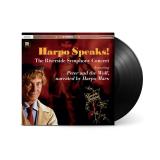
On March 20, 1964, legendary American comedian and harpist Harpo Marx joined the Riverside Symphony on stage at a benefit for the Southern California organization. By then, the comic had been in semi-retirement, and after a series of heart attacks in 1961, he was told to stop working altogether. But to a lifelong performer, nothing compared to the feeling of being on stage. Benefit shows, he slyly argued, were not technically work, since he wasn’t getting paid. For the next few years, Marx’s wife and doctors grudgingly went along with the pitch. Harpo Speaks! The Riverside Symphony Concert, out June 5 from Ramseur Records, captures a considerably remarkable, one-of-a-kind performance: The silent Marx Brother, the one whose trademark persona led many audiences to believe he was actually mute, spoke. As Harpo Marx’s first, and last—recorded just six months before his death—live album, Harpo Speaks! places listeners in the room, immersed in the swell of the Riverside Orchestra as Marx performs alongside the symphony and leads them in a narration of Peter and the Wolf. In another unusual move for Marx, he allowed the recording of the show for posterity, though the tapes seemingly disappeared after his death. Harpo Speaks! is the result of heroic archival work. Recently discovered by longtime Marx Brother archivist John Tefteller, he and Marx biographer and expert Robert Bader set out to restore the long lost recording. “The fact that we have a recording is a miracle,” says Bader. “It was not the most professionally recorded thing.
It was very haphazard. The work that was done to rehabilitate it is stunning. It’s as if you’ve found something covered with layers of mold and dirt, got it all cleaned off, and now are able to see something brand new underneath it.” Across the recording’s near-43 minute runtime, Marx, alongside the Riverside Symphony, takes the cheering audience through the delightfully lighthearted “Toy Symphony” and carries them into the softly romantic “Moon Medley,” (a medley of “Fly Me to the Moon” and “How High the Moon,” arranged by his son Bill, alongside his own composition, “Moon Tune”) and a rare instrumental performance of his composition “Guardian Angels.” And then the concert’s true highlight: the near 22-minute long riveting narration of Peter and the Wolf. For the first time, Harpo reveals his voice: deep, yet soft-spoken, refined, yet still retaining the slightest hint of his New York City origin. And, in speaking, he entertained, getting laughs not just for his physical gags, but for the storytelling itself: the dramatic inflections in moments of suspense, the arch mischievousness, and tongue-in-cheek references to Goldwater, Rockefeller, and Nixon.
DYING VICTIMS PRODUCTIONS is proud to present the striking debut EP of Spain’s FABLE, Long Hath the Night Dwelt, on CD and 12” vinyl formats. FABLE started as a solo-project by Jose Soler (Phantom Spell, Chantrice) influenced by ‘70s and ‘80s hard rock and heavy metal – a list as varied and idiosyncratic as Thin Lizzy, Whitesnake, Pagan Altar, Ashbury, and Hällas – along with hints of old US metal. Duly girded, the band bring forth their public debut, Long Hath the Night Dwelt. An actually-narrated prelude sets the stage for a cautionary tale about class struggle and revolution, FABLE indeed using fables and stories as a medium to tell an expansive story of the woodsfolk dominated under the iron claw of “The Owl.” Despite that, the band’s debut EP is exceptionally compact at five tracks in 22 minutes, moving with a simmering patience that’s heavy on mood and dynamic in its restraint. Never overdriven nor busy, warm and intimate but with a psychic distance that seems impossibly ancient, FABLE very much evoke the perhaps-centuries-old folklore that seems so central to their rustic rock; the wise-sage vocals almost seem an afterthought when the narrative flow of the music starts winding and wending like smoke from a tavern fireplace, so illustrative is its hushed power. However, each element here is equally important, and all work together to form a totality that’s unfussy but hewn with class and care. And this is just the start of this FABLE: discover for yourself how Long Hath the Night Dwelt!
“Tako” means “octopus”, “kite”, and even “bunion” in Japanese. Bald men or men with shaven heads, as well as red-faced, staggering drunks, are also referred to as “tako”. It’s a word that appears in a lot of slang and sayings. Taco is also the name of an 80s music and performance collective whose performances were like nothing before or since. The Japanese band Taco, formed at the beginning of the 80s, is a loose group/collective of varying members that belongs to the post-punk alternative music movement. The network of members were all friends and acquaintances of Harumi Yamazaki, ex-member of Gaseneta and Taco’s central member.
Taco can be described as a band of guerrillas who, over the years, continued to connect, collect, interrupt, and scatter while sending out into the world music and sounds that can best be described as transient. Taco also performed without Harumi, and so it is as though the band is an anonymous group of mercenaries. Taco’s first album was released in 1983 and had a huge impact on Japan’s underground music scene as an anomalous and collaborative album involving various participating artists (the stars of Japan’s underground music scene!) and Harumi, who provided the lyrics. Although each track represents a reverberating conglomeration of sounds created by this transient local network, common to all the tracks are Harumi’s expressive lyrics. This has the effect of transforming all the tracks into a single powerful force which, in turn, spawns an “incident” which spreads like a giant ripple. However, because of another incident in which the records were recalled due to the scandal caused by some of the lyrics, only a limited number of people actually own a copy of the album. Taco’s second album (a 12” EP), released in 1984, features a live recording of a performance that was held at the end of 1982. Taco is a band of indeterminate members which only ever played one-off performances, but this is an album that reveals a unit whose performance was unusually musically coherent. This is an album which effectively conveys the power of Taco’s astounding and legendary live performances, as well as Harumi’s inflammatory, sensational, and masochistic presence on stage. Her mutterings and screams, which practically ignore the detached beat, confront the audience like an overwhelming groundswell.
The following is a description of Taco by one of its members following one of its live performances: “Taco’s like a project where the indeterminate participants fan each other’s heightened emotions of wanting to wreak personal revenge and retribution. It’s an ecosystem of tangible and intangible mouldy slime which accumulates in order for emotions to be acted out, both indoors in the studio, or outdoors on stage. That’s why the avenger can often end up being the victim.”
The soundtrack features music from the show 360, choreographed by Mehdi Kerkouche.
In 360, French choreographer Mehdi Kerkouche breaks away from traditional choreographic codes to harness the immersive energy of a live concert, heightened by Lucie Antunes’ electronic score and set within Emmanuelle Favre’s grand scenography. Standing all around a circular stage, the audience becomes an integral part of the experience. Through a series of vibrant tableaux, eight dancers deliver a striking portrait of contemporary youth, in search of a voice and representation.
Conceived as a collective driving force, the original soundtrack composed by Lucie Antunes plays a central role in the 360 experience. At the crossroads of electronic music, live energy and percussive writing, the score envelops the space, interacts with the dancers’ bodies and propels movement into a continuous dynamic. More than an accompaniment, it acts as a unifying force, creating a vibrant tension between pulses, textures and silences, and transforming listening into a sensory and celebratory experience.
360 will be performed on March 9, 10 and 11 at the Élysée Montmartre in Paris.
out of Stock
Last delivered 5 months ago available to reorder, subject to availability
Belgian minimalist, Dutch-language new wave/synth pop, since 1981! The historic album ‘Jonge Helden’ (1981) brought them instant eternal fame, the single ‘Lekker Westers’ (1983) a Belpop classic & the line-up changed wildly with icons such as Luc Van Acker (Revolting Cocks), Dani Klein (Vaya Con Dios), Willy Willy (The Scabs) or Andrew Chi Claes (Stuff) ...
However, MARCEL VANTHILT (lyrics & music) continues to rock the anarcho-Dadaist-electro-super-tronica scene to this day. Side note: Vanthilt often strayed into TV land (BRT, VPRO, MTV-EUROPE, BBC) and is now a DJ at Radio WILLY with the alternative ‘De M-Show’.
AA! is once again performing frequently in the best clubs (Depot, Casino, Macca) and on major stages (Pukkelpop, Villa Pace, Paulus Oostende). This will also be the case in 2026! This is due to the fresh and spicy new album ‘AA!PKPP’ in collaboration with PARKAPARAPLU.
PARKAPARAPLU: New dark wave duo from Antwerp. With ...
> EMMA ROTSAERT, singer and actress. She plays the lead role in the Ensor-nominated TV drama series ‘How To Kill Your Sister’ (2025). And comes from the same absurd planet as Vanthilt.
> GEERT VANBEVER, veteran of Wizards Of Ooze, Rudy Trouvé Septet, Dead Man Ray, Tuff Guac, among others... worked with Hugh Cornwell (The Stranglers) and Budgie (The Banshees), among others. Together, Emma & Geert also have a Sisters Of Mercy tribute band: Body Electric.
Writings on the topic that go off in all directions, mind-numbing lectures given by academics, and testimonies, most of them heavily doctored, from those who “lived through that era”: so many people today fantasize about the early days of punk in our country… This blessed moment when no one had yet thought of flaunting a ridiculous green mohawk, taking Sid Vicious as a hero, or – even worse – making the so-called alternative scene both festive and boorish. There was no such thing in 1976 or 1977, when it wasn’t easy to get hold of the first 45s by the Pistols or the Clash. Few people were aware of what was happening on the fringes of the fringes at the time. Malcolm McLaren was virtually unknown, and having short hair made you seem strange. Who knew then that rock music, which had taken a very bad turn since the early 1970s, would once again become an essential element of liberation? That, thanks to short and fast songs, it would once again rediscover that primitive, social side that was so hated by older generations? Who knew that, besides a few loners who read the music press (it was even better if they read it in English) and frequented the right record stores? Many of these formed bands, because it was impossible to do otherwise. We quickly went from listening to the Velvet Underground to trying to play the Stooges’ intros. It’s a somewhat collective story, even though there weren’t many people to start it.
The Guilty Razors were among those who took part in this initial upheaval in Paris. They were far from being the worst. They had something special and even released a single that was well above the national average. They also had enough songs to fill an album, the one you’re holding. In everyone’s opinion, they were definitely not among the punk impostors that followed in their wake. They were, at least, genuine and credible.
Guilty Razors, Parisian punk band (1975-1978). To understand something about their somewhat linear but very energetic sound, we might need to talk about the context in which it was born and, more broadly, recall the boredom (a theme that would become capital in punk songs) coupled with the desire to blow everything off, which were the basis for the formation of bands playing a rejuvenated rock music ; about the passion for a few records by the Kinks or the early Who, by the Stooges, by the Velvet mostly, which set you apart from the crowd.
And of course, we should remember this new wave, which was promoted by a few articles in the specialized press and some cutting-edge record stores, coming from New York or London, whose small but powerful influence could be felt in Paris and in a handful of isolated places in the provinces, lulled to sleep by so many appalling things, from Tangerine Dream to President Giscard d’Estaing...
In 1975-76, French music was, as almost always, in a sorry state ; it was still dominated by Johnny Hallyday and Sylvie Vartan. Local rock music was also rather bleak, apart from Bijou and Little Bob who tried to revive this small scene with poorly sound-engineered gigs played to almost no one.
In the working class suburbs at the time, it was mainly hard rock music played to 11 that helped people forget about their gruelling shifts at the factory. Here and there, on the outskirts of major cities, you still could find a few rockers with sideburns wearing black armbands since the death of Gene Vincent, but it wasn’t a proper mass movement, just a source of real danger to anyone they came across who wasn't like them. In August 1976, a festival unlike any other took place in Mont-de-Marsan – the First European Punk Festival as the poster said – with almost as many people on stage as in the audience. Yet, on that day, a quasi historical event happened, when, under the blazing afternoon sun, a band of unknowns called The Damned made an unprecedented noise in the arena, reminiscent of the chaotic Stooges in their early adolescence. They were the first genuine punk band to perform in our country: from then on, anything was possible, almost anything seemed permissible.
It makes sense that the four+1 members of Guilty Razors, who initially amplified acoustic guitars with crappy tape recorder microphones, would adopt punk music (pronounced paink in French) naturally and instinctively, since it combines liberating noise with speed of execution and – crucially – a very healthy sense of rebellion (the protesters of May 1968 proclaimed, and it was even a slogan, that they weren’t against old people, but against what had made them grow old. In the mid-1970s, it seemed normal and obvious that old people should now ALSO be targeted!!!).
At the time, the desire to fight back, and break down authority and apathy, was either red or black, often taking the form of leafleting, tumultuous general assemblies in the schoolyard, and massive or shabby demonstrations, most of the time overflowing with an exciting vitality that sometimes turned into fights with the riot police. Indeed, soon after the end of the Vietnam War and following Pinochet’s coup in Chile, all over France, Trotskyist and anarcho-libertarian fervour was firmly entrenched among parts of the educated youth population, who were equally rebellious and troublemakers whenever they had the chance. It should also be noted that when the single "Anarchy in the UK" was first heard, even though not many of us had access to it, both the title and its explosive sound immediately resonated with some of those troublemakers crying out for ANARCHY!!! Meanwhile, the left-wing majority still equated punks with reckless young neo-Nazis. Of course, the widely circulated photos in the mainstream press of Siouxsie Sioux with her swastikas didn’t necessarily help to win over the theorists of the Great Revolution. It took Joe Strummer to introduce The Clash as an anti-racist, anti-fascist and anti-ignorance band for the rejection of old-school revolutionaries to fade a little.
The Lycée Jean-Baptiste Say at Porte d’Auteuil, despite being located in the very posh and very exclusive 16th arrondissement of Paris, didn’t escape these "committed" upheavals, which doubled as the perfect outlet for the less timid members of this generation.
“Back then, politics were fun,” says Tristam Nada, who studied there and went on to become Guilty Razors’ frontman. “Jean-Baptiste was the leftist high-school in the neighbourhood. When the far right guys from the GUD came down there, the Communist League guys from elsewhere helped us fight them off.”
Anything that could challenge authority was fair game and of course, strikes for just about any reason would lead to increasingly frequent truancy (with a definitive farewell to education that would soon follow). Tristam Nada spent his 10th and 11th unfinished grades with José Perez, who had come from Spain, where his father, a janitor, had been sentenced to death by Franco. “José steered my tastes towards solid acts such as The Who. Like most teenagers, I had previously absorbed just about everything that came my way, from Yes to Led Zeppelin to Genesis. I was exploring… And then one day, he told me that he and his brother Carlos wanted to start a rock band.” The Perez brothers already played guitar. “Of course, they were Spanish!”, jokes their singer. “Then, somewhat reluctantly, José took up the bass and we were soon joined by Jano – who called himself Jano Homicid – who took up the rhythm guitar.” Several drummers would later join this core of not easily intimidated young guys who didn’t let adversity get the better of them.
The first rehearsals of the newly named Guilty Razors took place in the bedroom of a Perez aunt. There, the three rookies tried to cover a few standards, songs that often were an integral part of their lives. During a first, short gig, in front of a bewildered audience of tough old-school rockers, they launched into a clunky version of the Velvet Underground's “Heroin”. Challenge or recklessness? A bit of both, probably… And then, step by step, their limited repertoire expanded as they decided to write their own songs, sung in a not always very accurate or academic English, but who cared about proper grammar or the right vocabulary, since what truly mattered was to make the words sound as good as possible while playing very, very fast music? And spitting out those words in a language that left no doubt as to what it conveyed mattered as well.
Trying their hand a the kind of rock music disliked by most of the neighbourhood, making noise, being fiercely provocative: they still belonged to a tiny clique who, at this very moment, had chosen to impose this difference. And there were very few places in France or elsewhere, where one could witness the first stirrings of something that wasn’t a trend yet, let alone a movement.
In the provinces, in late 1976 or early 1977, there couldn’t be more than thirty record stores that were a bit more discerning than average, where you could hear this new kind of short-haired rock music called “punk”. The old clientele, who previously had no problem coming in to buy the latest McCartney or Aerosmith LP, now felt a little less comfortable there…
In Paris, these enlightened places were quite rare and often located nex to what would become the Forum des Halles, a big shopping mall. Between three aging sex workers, a couple of second-hand clothes shops, sellers of hippie paraphernalia and small fashion designers, the good word was loudly spread in two pioneering places – propagators of what was still only a new underground movement. Historically, the first one was the Open Market, a kind of poorly, but tastefully stocked cave. Speakers blasted out the sound of sixties garage bands from the Nuggets compilation (a crucial reference for José Perez) or the badly dressed English kids of Eddie and the Hot Rods. This black-painted den was opened a few years earlier by Marc Zermati, a character who wasn’t always in a sunny disposition, but always quite radical in his (good) choices and his opinions. He founded the independent label Skydog and was one of the promoters of the Mont-de-Marsan punk festivals. Not far from there was Harry Cover, another store more in tune with the new New York scene, which was amply covered in the house fanzine, Rock News (even though it was in it that the photos of the Sex Pistols were first published in France).
It was a favorite hang-out of the Perez brothers and Tristam Nada, as the latter explained. “It’s at Harry Cover’s that we first heard the Pistols and Clash’s 45s, and after that, we decided to start writing our first songs. If they could do it, so could we!”
The sonic shocks that were “Anarchy in the UK”, “White Riot” or the Buzzcocks’s EP, “Spiral Scratch” – which Guilty Razors' sound is reminiscent of – were soon to be amplified by an unparalleled visual shock. In April 1977, right after the release of their first LP, The Clash performed at the Palais des Glaces in Paris, during a punk night organised by Marc Zermati. For many who were there, it was the gig of a lifetime…
Of course, Guilty Razors and Tristam were in the audience: “That concert was fabulous… We Parisian punks were almost all dressed in black and white, with white shirts, skinny leather ties, bikers jackets or light jackets, etc. The Clash, on the other hand, wore colourful clothes. Well, the next day, at the Gibus, you’d spot everyone who had been at this concert, but they weren’t wearing anything black, they were all wearing colours.”
It makes sense to mention the Gibus club, as Guilty Razors often played there (sometimes in front of a hostile audience). It was also the only place in Paris that regularly scheduled new Parisian or Anglo-Saxon acts, such as Generation X, Siouxsie and the Banshees, the Slits, and Johnny Thunders who would become a kind of messed-up mascot for the venue. A little later, in 1978, the Rose Bonbon – formerly the Nashville – also attracted nightly owls in search of electric thrills… In 1977, the iconic but not necessarily excellent Asphalt Jungle often played at the Gibus, sometimes sharing the bill with Metal Urbain, the only band whose aura would later transcend the French borders (“I saw them as the French Sex Pistols,” said Geoff Travis, head of their British label Rough Trade). Already established in this small scene, Metal Urbain helped the young and restless Guilty Razors who had just arrived. Guitarist for Metal Urbain Hermann Schwartz remembers it: “They were younger than us, we were a bit like their mentors even if it’s too strong a word… At least they were credible. We thought they were good, and they had good songs which reminded of the Buzzcocks that I liked a lot. But at some point, they started hanging out with the Hells Angels. That’s when we stopped following them.”
The break-up was mutual, since, Guilty Razors, for their part, were shocked when they saw a fringe element of the audience at Metal Urbain concerts who repeatedly shouted “Sieg Heil” and gave Nazi salutes. These provocations, even still minor (the bulk of the skinhead crowd would later make their presence felt during concerts), weren’t really to the liking of the Perez brothers, whose anti-fascist convictions were firmly rooted. Some things are non-negotiable.
A few months earlier (in July 1978), Guilty Razors had nevertheless opened very successfully for Metal Urbain at the Bus Palladium, a more traditonally old-school rock night-club. But, as was sometimes the case back then, the night turned into a mass brawl when suburban rockers came to “beat up punks”.
Back then, Parisian nights weren’t always sweet and serene.
So, after opening as best as they could for The Jam (their sound having been ruined by the PA system), our local heroes were – once again – met outside by a horde of greasers out to get them. “Thankfully,” says Tristam, “we were with our roadies, motorless bikers who acted as a protective barrier. We were chased in the neighbouring streets and the whole thing ended in front of a bar, with the owner coming out with a rifle…”
Although Tristam and the Perez brothers narrowly escaped various, potentially bloody, incidents, they weren’t completely innocent of wrongdoing either. They still find amusing their mugging of two strangers in the street for example (“We were broke and we simply wanted to buy tickets for the Heartbreakers concert that night,” says Tristam). It so happened that their victims were two key figures in the rock business at the time: radio presenter Alain Manneval and music publisher Philippe Constantin. They filed a complaint and sought monetary compensation, but somehow the band’s manager, the skilful but very controversial Alexis, managed to get the complaint withdrawn and Guilty Razors ended up signing with Constantin with a substantial advance.
They also signed with Polydor and the label released in 1978 their only three-track 45, featuring “I Don't Wanna be A Rich”, “Hurts and Noises” and “Provocate” (songs that exuded perpetual rebellion and an unquenchable desire for “class” confrontation). It was a very good record, but due to a lack of promotion (radio stations didn’t play French artists singing in English), it didn’t sell very well. Only 800 copies were allegedly sold and the rest of the stock was pulped… Initially, the three tracks were to be included on a LP that never came to be, since they were dropped by Polydor (“Let’s say we sometimes caused a ruckus in their offices!” laughs Tristam.) In order to perfect the long-awaited LP, the band recorded demos of other tracks. There was a cover of Pink Floyd's “Lucifer Sam” from the Syd Barrett era – proof of an enduring love for the sixties’ greats –, “Wake Up” a hangover tale and “Bad Heart” about the Baader-Meinhof gang, whose actions had a profound impact on the era and on a generation seeking extreme dissent... On the album you’re now discovering, you can also hear five previously unreleased tracks recorded a bit later during an extended and freezing stay in Madrid, in a makeshift studio with the invaluable help of a drummer also acting as sound engineer. He was both an enthusiastic old hippie and a proper whizz at sound engineering. Here too, certain influences from the fifties and sixties (Link Wray, the Troggs) are more than obvious in the band’s music.
Shortly after a final stormy and rather barbaric (on the audience’s side) “Punk night” at the Olympia in June 1978, Tristam left the band ; his bandmates continued without him for a short while.
But like most pioneering punk bands of the era, Guilty Razors eventually split up for good after three years (besides once in Spain, they’d only played in Paris). The reason for ceasing business activities were more or less the same for everyone: there were no venues outside one’s small circuit to play this kind of rock music, which was still frightening, unknown, or of little interest to most people. The chances of recording an LP were virtually null, since major labels were only signing unoriginal but reassuring sub-Téléphone clones, and the smaller ones were only interested in progressive rock or French chanson for youth clubs. And what about self-production? No one in our small safety-pinned world had thought about it yet. There wasn’t enough money to embark on that sort of venture anyway.
So yes, the early days of punk in France were truly No Future!
out of Stock
Last delivered 6 months ago available to reorder, subject to availability
On Psalm Funk, Bnnyhunna deepens the artistic language he first articulated on his celebrated debut Echoes of a Prayer. Rather than retracing familiar ground, the Amsterdam-based composer and producer expands his palette, allowing rhythm and space to carry as much narrative weight as harmony and lyricism.
While Echoes of a Prayer felt personal and devoted, Psalm Funk opens things up. Gospel harmonies stay central to his music, but now they are energized by smooth funk rhythms and heightened by the flexibility of jazz improvisation. Bnnyhunna moves between styles effortlessly, in a way that nothing seems borrowed, but everything feels lived in.
At the center of the record is an understanding of space. Silence acts not as an absence but as a structure. Breath, restraint, and patience shape the music just as much as basslines and backbeats. This awareness of dynamics allows the album to grow without losing its focus. It signifies a subtle but important change in Bnnyhunna as an artist, moving from inward reflection to forward momentum, from prayer as personal dialogue to prayer as a physical expression. The clarity, discipline, and emotional depth that marked his debut remain, now directed into something more rhythmically confident and spiritually uplifting.
Fusing gospel, funk, jazz, and African rhythmic traditions, Psalm Funk serves as both a meditation and an outpouring. It invites deep thought while demanding a physical response.
The album includes collaborations with American saxophonist Braxton Cook, trumpeter Sheila Maurice-Grey of Kokoroko, 3DDY, and Reggie Dartey, among others. The singles "Sorry Not Sorry" and "Waiting For You" have already hinted at the project's range, while the latest single, "The Heart Part 2," further expands on the album's dynamic and emotional scope.
To celebrate the release, Bnnyhunna will tour the Netherlands in April, with performances in Amsterdam, Rotterdam, and Nijmegen before heading to the UK for a show at The Great Escape.
Released in October 2024, Bnnyhunna's debut album Echoes of a Prayer was created as a dialogue with God, a personal call expressed through sound. The record resonated both with fans and media, gaining support from platforms like 3voor12, Rolling Stone Africa, and Afromixx. It reached the airwaves of BBC Radio 1 in the UK, KEXP in the US, J-Wave in Japan, and 3FM in the Netherlands, and landed in playlists such as BUTTER, Morning Rhythm, and Vanguard.
In 2025, Echoes of a Prayer earned the Edison Pop award for Soul/R&B/Funk and received Grammy consideration for Best Alternative Jazz Album. On stage, Bnnyhunna established his presence with performances at festivals such as Lowlands, Couleur Cafe, Brick Lane Jazz Festival, Dour, and Super Sonic Jazz, as well as his first tour in Japan.
Upcoming live shows:
10/04/26 - BIRD, Rotterdam (NL)
11/04/26 - Doornroosje, Nijmegen (NL)
12/04/26 - Tolhuistuin, Amsterdam (NL)
13/05/26 - The Great Escape, Brighton (UK)
Stacey Kent is an American jazz singer in the mould of the greats, with a legion of fans, a host of honors and awards including a Grammy nomination, album sales in excess of 2 million and more than one billion streams, and Platinum, Double-Gold and Gold-selling albums that have reached a series of chart-topping positions.
Stacey, a comparative literature graduate with a passion for music, travelled to Europe to further her studies after receiving her degree from Sarah Lawrence College in NY. Through a series of twists of fate, she found herself in London where she enrolled in a graduate music program at the Guildhall School of Music and Drama, where she met her future husband and musical partner, Jim Tomlinson.
Kent's musical journey began with childhood piano lessons. A keen ear and true voice lead her to search out opportunities to express her love of music. However, nothing suggested the shift from the academic path to the one that propelled her to international recognition as one of the foremost jazz singers of her generation. With a catalogue of 13 studio albums, including the Platinum selling, Grammy-nominated Breakfast On The Morning Tram (Blue Note/EMI 2007) and an impressive list of collaborations, Stacey has graced the stages of nearly 60 countries over the course of her career.
Her worldwide fan base is testimony to her ability to express the emotional heart of her songs with delicately nuanced interpretations that transcend borders and defy categorization. Her unique multi-lingual repertoire includes standards, chanson, Bossa Nova, and originals written by Jim Tomlinson, her saxophonist/producer/composer/arranger husband in collaboration with the Nobel Prize-winning author, Kazuo Ishiguro with whom they have worked since 2006. She has also recorded with Brazilian legends, Marcos Valle, Roberto Menescal and Danilo Caymmi, and the celebrated French string quartet, the Quatuor Ébène.
Stacey's last studio album, Summer Me, Winter Me, was released in November 2023 on Naïve Records. A collection of fans' requests from her as yet unrecorded concert repertoire, Summer Me, Winter Me entered the French jazz charts at number 1 and has quickly established itself as a new highlight in her discography. She now returns with A Time For Love.
With two albums released—and a third arriving—in less than two years, Agitator are as ferocious in their release pace as they are on stage. All the more surprising, then, that the forthcoming album "Året av sex" is the darkest and slowest work they have made to date. Influenced as much by chanting witch doctors as by Christian Kjellvander and Leonard Cohen, and drawing from electronic and avant-garde music, the band reshapes its sound into something more brooding and expansive.
Partly recorded in a barn on the island of Öland, the album’s soundscape sees the drum kit augmented—and at times replaced—by scrap metal found in a nearby bay. Through this process, Agitator expand the idea of both what a creative process can be and what a rock band might look like in 2026. The result is bold, unsettling, and compelling: an album that digs deeper than many are willing to in Sweden today.
The lyrics on "Året av sex" are darker, more dangerous, and more precise than ever before. Given greater space within the broader sonic landscape, they become central to understanding this new incarnation of Agitator.
Agitator’s new album is released on March 27 via Adrian Recordings, preceded by three singles. The band’s first two albums have previously been praised by outlets including Dagens Nyheter, P3, Gaffa, Café, and PSL, leading to sold-out tours. A full Swedish tour is scheduled in connection with the album release.
Fuzzy Bears offers a forward-thinking and immersive listening experience that pushes the boundaries of jazz and electronics — equal parts experimental laboratory and live concert. On stage, the adventure takes its most daring form. Instead of relying on the original vintage synths, the trio reinterprets the studio’s electronic textures with a streamlined setup designed for live performances.
The songs of this exciting experiment are collected on a self-titled album, to be released on March 20th 2026 via Marcel Records. First single 'The Happy Are Being Born' is out on January 8th.
credits
Fulco Ottervanger: Synths, Piano - Harmonic and Melodic info
Lieven Van Pée: Synths, Bass - Low-end info, Mastering
Simon Segers: Synths, Percussion - Rhythmical info
Peter Desmedt: Serge Patching & Sound processing, Recording & Mixing
Special Thanks: Rikkert Brok & Hans Kulk
Recorded at Willem Twee Studios, ‘s Hertogenbosch
Mixed at Studio Ledeberg, Gent
On his new album, the Ivorian balafon virtuoso Aly Keïta explores new horizons for his instrument in improvised music. Together with his Berlin-based trio, he conquers the peaks of balafon possibilities one by one, wandering between groovy African rhythms, spectacular polyphony and elements of jazz, and combining them into a fusion that is both futuristic and deeply in roots. In Balafon Evolution, Keïta establishes a new level of balafon artistry, creating universal, contemporary soundscapes that transcend cultural boundaries. The Aly Keïta Trio embodies the pulsating spirit of the Berlin jazz scene. Coming from different cultural backgrounds, the three musicians found a common language on stage as they explored the metropole, one of the most active, buzzing jazz hubs of Europe. Aly Keïta and the Dutch drummer Marcel van Cleef, began playing together in 2008, forming the core of the trio"s future "groove machine". As a part of the "Aly Keïta and Magic Balafon" formation, they shared a prize of the Global music contest "Creole" in 2009. Recognised as one of the most intriguing and innovative bass players among the new generation, the Italian bass player Roberto Badoglio, joined trio in 2014, becoming a true "fusion reactor" of the band.
Michel Houellebecq is, of course, well-known for his novels, translated into more than 40 languages, and his Goncourt Prize (The Map and the Territory, 2010), but perhaps less so for his debut album, released exactly a quarter of a century ago on Tricatel label. One can sense the influence of Serge Gainsbourg's L'Homme à la Tête de Chou, a disillusioned Procol Harum and a world-weary Burt Bacharach hovering over Houellebecq's poems in Présence Humaine, a now cult classic album orchestrated by Bertrand Burgalat and the musicians of Eiffel. Twelve thousand copies sold and a few concerts later, the writer decided (or so we thought) to bid farewell to the stage, only to generate more media attention though his literary success. Frédéric Lo is, of course, known as an exceptional lyricist, composer, arranger, and producer, author of a sublime fourth solo album (L'Outrebleu, released last March) and a master of collaborative work, notably with Bill Pritchard, Peter Doherty and Daniel Darc. Initially, Michel Houellebecq and Frédéric Lo met for the tribute album that the latter was planning for the tenth anniversary of Daniel Darc's death, but their recording of "Psalm XXIII" was, to their great disappointment, rejected by the label and therefore did not appear on the final version of Cœur Sacré (2023). Fortunately, every cloud has a silver lining, and the two men decided to take their collaboration a step further. Lo decided to set the writer's words to music, in his studio in Pantin. Raw, stripped-down music draped in electronica, adorned with piano and antediluvian drum machines, often minimalist, sometimes repetitive, provides the perfect backdrop for twelve tracks that question and reflect on humanity's past and future (if indeed there is one). Reflections on the human condition, 21st-century style, a work of speculative fiction conceived by two eternally modern "young lads," Souvenez-Vous de l'Homme (Remember Man) is an album that might occasionally evoke The Stranglers' La Folie, and, given the title, that's probably no coincidence. But above all, it's a hypnotic and melancholic album, uncompromising and captivating. Most importantly, it's an album like no other.
LIMITED EDITION (500 COPIES) 20TH ANNIVERSARY REMASTER, AVAILABLE ON VINYL (2LP) FOR THE FIRST TIME IN ALMOST TWO DECADES. HOUSED IN GORGEOUS GLOSSY GATEFOLD SLEEVE AND PRESSED ON RED & ORANGE VINYL TO COMPLIMENT THE ARTWORK
City Calls Revolution is our second full-length album, created as we absorbed the new wave revival and math rock movements that emerged in the early to mid-2000s, while simultaneously reconstructing elements of classic progressive rock, hard rock, and experimental music in our own way.
The album strongly reflects the attitude we cultivated as a live band—deeply influenced by the American and Japanese bands we shared stages with at the time—and embodies the punk spirit that shaped us.
Recorded and mixed in March 2005 at Headgear Studio in Brooklyn, New York, by Paul Mahajan (known for his work with Yeah Yeah Yeahs, TV on the Radio, and others), the album was originally released in May of the same year on both LP and CD by Beta-lactam Ring Records, then based in Portland, Oregon. Long out of print, it now returns two decades later as a newly remastered edition to be released by Riot Season Records in the UK.
In 2026, GREEN MILK FROM THE PLANET ORANGE celebrates its 25th anniversary—and also marks 10 years since Damo joined as our current bassist. It is a joy and an honor to have this album, filled with songs we still play live today, reissued in such a milestone year.
Starting January 2026, we will bring this LP on tour across 27 shows in 11 European countries, including the UK. We look forward to seeing all of you at the venues.
/// 2026 Winter European Tour ///
Malena Zavala is an Argentinian-born, London-based artist, producer, and filmmaker, known for crafting ethereal, genre-blending music that navigates the space between her Latin heritage and her British upbringing. With the forthcoming album If This Life Could Start Again set for release on 30 January 2026 on Paraná Records, Zavala presents her most intimate, cohesive, and accomplished work to date, marking a significant evolution in her artistic journey.
With her new album, Malena creates an atmospheric dream pop world, weaving singer-songwriter intimacy with synth pop, Argentine folk, indiepop, rock and experimental music, threaded together by her blissful vocals and dreamy guitar work. Gorgeously warm and vivid, If This Life Could Start Again charts the journey from pain to acceptance, mapping out the non-linear nature of healing through a sonic landscape. Each song embodies a distinct emotion within that journey, from grief and chaos to feeling lost, seeking refuge, finding confidence, and finally acceptance and letting go. Drawing on her Argentinian roots, Malena uses the Andes mountains as both a visual and thematic anchor – the difficult climb towards higher ground becomes a metaphor for healing, whilst being lost at rock bottom reflects the darkest moments of the journey.
Completely composed and performed by Malena herself, the album was recorded in Girona’s L’Empordà countryside in Spain with producer Luke Smith. As a professional producer and audio engineer, this was Malena’s first time relinquishing production control – an intimate creative shift that allowed their shared vision to shape the album’s rich, enveloping sound.
However, Zavala’s career to date has been a testament to self-sufficient artistry. Her critically acclaimed debut, Aliso (2018), was written, recorded, and produced alone in her parents’ garage, which honed her dreamy bedroom pop sound. The album, praised by The Guardian for its “gently warped and beguilingly melancholy guitar pop,” ****, immediately catapulted her from DIY beginnings to prestigious stages, supporting acts like Lord Huron at London’s Roundhouse and Men I Trust at Village Underground and subsequently continuing on their UK/EU tours. Later with standout performances at Latitude, Green Man, and All Points East. Her consistent radio support from key influencers including BBC Radio 6 Music, BBC Radio 1's Huw Stephens, and Steve Lamacq has solidified her presence on the airwaves.
Her second album, La Yarará (2020), saw Zavala delve deeper into her roots, exploring Latin traditions like Cumbia and Bolero. This exploration of identity continues powerfully on the new album, but with a newfound lyrical depth and sonic confidence. The new album, If This Life Could Start Again, is a raw and transformative eight-track journey that maps the emotional landscape of healing. Written after a period of personal upheaval, the album traverses themes of grief, hereditary trauma, and self-discovery. The record’s narrative is structured like a mountain ascent. A challenging climb through varied emotional terrain, posing the central question: “Will you join the journey?” Sonically, this journey mirrors the non-linear path to acceptance, evolving from acoustic folk and synth-pop to funk-infused rhythms and rock anthems.
As a formidable live performer, Zavala has built a robust touring profile across the UK and Europe. She will embark on an extensive tour in February and March 2026 to support the album, with dates spanning major cities from London and Glasgow to Berlin, Paris, and Barcelona.
With If This Life Could Start Again, Malena Zavala fully realizes her artistic vision as a self-taught producer to an autonomous artist commanding her career through Paraná Records whilst reflecting the vast landscapes of her heritage and affirming her place as a compelling and evolving voice in contemporary music.
out of Stock
Last delivered 7 months ago available to reorder, subject to availability