Return To Disorder welcomes Evighet Records label head Marco Bruno for some brilliantly controlled sonic chaos on this new electro exploration. His Sharp Focus EP brings together ambient, breaks and techno to snappy electro rhythms of the sort that he has already showcased in style on labels such as Blueprint Records and Machine. This one opens with the sleek, future-facing and speedy sounds of 'Storyteller' before 'Values Over Ego' gets more textured and raw with knick-snapping hits and prying synth lines making for real turbulence. 'Twist Of Fate' is a jungle workout that ducks and dives on warped bass and 'Karmic Pattern' is a slow but textural and intense closer with rueful chords.
Suche:marco bruno
- 1
Grey Marbled Vinyl
The charm of exploration leads to cinematic echoes that fuse rattling break drums and synergetic nuances, creating a sphere of ancestral musical paths in which a poly-form stylistics gives a recognisable imprint to 'Foreshadow', Marco Bruno's new album that embarks on a new sonic exploration and delves into the meanders of research with an abysmal attention to detail, a significant project in the evolution of the artist and his Evighet Records label.
For this release, two veterans such as James Ruskin and Mark Broom, with their alias The Fear Ratio, set in time their experience, masterfully reinterpreting that pivotal feeling of free expression that reigns at the heart of the project.
green marbled vinyl
Earwiggle is proud to welcome Italy's Marco Bruno onto the label, for a 5-track genre hopping bonanza. Starting with the bellowing sirens of aptly named "Riot", the techno assault continues through the P.A.S. flavoured synth twitches on "Jacking" and the deep, driving modulations of "Echoes". Plaintive keys envelop the eerie electro of "Seduction" while thundering jungle cut "Daydream" combines a Reese bass with majestic melodic flourishes to end the EP on a soaring high
- 1: Lucky To Be Me (Leonard Bernstein)
- 2: God Only Knows (Brian Wilson)
- 3: The Shadow Of Your Smile (Johnny Mandel)
- 4: La Javanaise (Serge Gainsbourg)
- 5: As (Stevie Wonder)
- 6: A Time For Love (Johnny Mandel)
- 7: Trains And Boats And Planes (Burt Bacharach)
- 8: What Goodbye Is For (Jim Tomlinson)
- 9: Carinhoso (Alfredo Da Rocha Vianna Filho /Pixinguinha)
- 10: E La Chiamono Estate (Bruno Martino)
Stacey Kent is an American jazz singer in the mould of the greats, with a legion of fans, a host of honors and awards including a Grammy nomination, album sales in excess of 2 million and more than one billion streams, and Platinum, Double-Gold and Gold-selling albums that have reached a series of chart-topping positions.
Stacey, a comparative literature graduate with a passion for music, travelled to Europe to further her studies after receiving her degree from Sarah Lawrence College in NY. Through a series of twists of fate, she found herself in London where she enrolled in a graduate music program at the Guildhall School of Music and Drama, where she met her future husband and musical partner, Jim Tomlinson.
Kent's musical journey began with childhood piano lessons. A keen ear and true voice lead her to search out opportunities to express her love of music. However, nothing suggested the shift from the academic path to the one that propelled her to international recognition as one of the foremost jazz singers of her generation. With a catalogue of 13 studio albums, including the Platinum selling, Grammy-nominated Breakfast On The Morning Tram (Blue Note/EMI 2007) and an impressive list of collaborations, Stacey has graced the stages of nearly 60 countries over the course of her career.
Her worldwide fan base is testimony to her ability to express the emotional heart of her songs with delicately nuanced interpretations that transcend borders and defy categorization. Her unique multi-lingual repertoire includes standards, chanson, Bossa Nova, and originals written by Jim Tomlinson, her saxophonist/producer/composer/arranger husband in collaboration with the Nobel Prize-winning author, Kazuo Ishiguro with whom they have worked since 2006. She has also recorded with Brazilian legends, Marcos Valle, Roberto Menescal and Danilo Caymmi, and the celebrated French string quartet, the Quatuor Ébène.
Stacey's last studio album, Summer Me, Winter Me, was released in November 2023 on Naïve Records. A collection of fans' requests from her as yet unrecorded concert repertoire, Summer Me, Winter Me entered the French jazz charts at number 1 and has quickly established itself as a new highlight in her discography. She now returns with A Time For Love.
Fides Records pushes further into its 10-year anniversary journey with X3, the third chapter of the series. Staying true to the label’s decade-long commitment to forward-minded underground techno, this new instalment sharpens the focus with five cuts that move between peak-time impact, melancholic tension, and dubwise pressure—each one a different angle on the Fides aesthetic.
Side A opens with Dustin Zahn’s “Madness”, a no-nonsense peak-time weapon built on stomping momentum, immersive pressure, and relentless drive—proof of why the US veteran remains a constant reference point. Marco Bruno follows with “Aura”, where melancholic leads and detuned synths shape an introspective yet heavy-hitting groove, capturing the Italian producer’s emotional weight and versatility. Closing the side, JANEIN (co-founder of Seelen Records) delivers “Polaris”, a spatial, bleepy roller that leans into darkness while keeping the propulsion locked forward.
Flipping to Side B, Yant’s “Fractured” shifts the palette: playful yet precise, kinetic in motion, with textures that keep mutating as the rhythm snaps into place. DHÆÜR “Sealand” captures the mood of a young Italian artist carving a new lane in minimal, elegant, unapologetic techno—energized and raw, yet defined by clean design, confident restraint, and a sharp personal signature. The record concludes with Hadone’s “No Longer Observed”, a dub-tinged stomper rich in detail and low-end depth; club-weight with an emotional undercurrent, balancing elegance and power in a way that feels unmistakably Fides.
- A1: Robert Pico - Le Chien Fidèle
- A2: Annie Girardot - La Femme Faux Cils
- A3: Spauv Georges - Je Suis L'état
- A4: Zoé - Zoé
- A5: Jacques Da Sylva - Fou
- A6: Valentin - Je Suis Un Vagabond
- A7: Jacques Malia - Histoire De Gitan
- A8: Bernard Jamet - Raison Legale
- B1: Jean-Pierre Lebort - Barbara Au Chapeau Rose
- B2: Les Concentrés - Fils De Dégénérés
- B3: Les Missiles - Publicité
- B4: Hegessipe - Le Credi D'hegessipe
- B5: Marechalement Votre - Ethero Disco
- B6: Mamlouk - Decollez Les
- B7: Mozaique - L'amour Nu
- B8: Jean-Marc Garrigues - Je Dis Non
- B9: Penuel - Astronef 328
The journey through French-speaking pop archives continues with this fifth volume, packed with fuzz, gimmicks, and dissent. Far from the charts, the selected tracks display a great creative freedom, often backed by corrosive humor. Welcome to the surprising, kaleidoscopic, and colorful world of the late sixties and early seventies, Wizzz!
Born in Montauban, Robert Pico stumbled into music by chance when he met René Vaneste, then artistic director at Pathé-Marconi. René brought him to Paris to record his first 45 RPM EP in 1964. A year later, Pierre Perret introduced him to Vogue, where he recorded his second album with Claude Nougaro’s orchestra. Sylvie Vartan then introduced him to RCA, where he recorded four singles, including the astonishing "Chien Fidèle," a track backed by a hair-rising fuzz guitar. Alongside his solo career, he also composed for other artists like Alain Delon (the song was recorded but remains unreleased), Magali Noël, Bourvil, and Georges Guétary. In the Paris of the sixties, he mingled with Mireille Darc, Elsa Martinelli, Marie Laforêt, France Gall, Françoise Hardy, Petula Clark, Régine, Dani, Serge Gainsbourg, Joe Dassin, Franck Fernandel, Charles Level, and Roland Vincent. Despite his efforts and winning a Grand Prix Sacem for his final record, Robert Pico didn’t achieve the expected success in show business and decided to leave Paris and return to the Southwest, where he devoted himself to writing. He is the author of 23 books (including Delon et Compagnie, Jean-Marc Savary Editions 2025, a memoir about his youth and his many encounters). Today, he is relieved to never have become a celebrity and devotes himself to his work with passion.
In 1969, the Franco-Italian movie Erotissimo was released, directed by Gérard Pirès (who later directed Taxi in 1998, written and produced by Luc Besson). This pop comedy features Annie Girardot, Jean Yanne, Francis Blanche, Serge Gainsbourg, Nicole Croisille, Jacques Martin, and Patrick Topaloff. The soundtrack was written by Michel Polnareff and William Sheller, with lyrics by Jean-Lou Dabadie. "La Femme Faux-cils," performed by Annie Girardot. It recounts the feelings of a rich CEO's wife who seeks to develop her sex appeal under the influence of advertisement and magazines. Groovy, sparkling and light, this track, with ITS lush arrangements humorously critiques consumer society and feminine beauty standards.
“Je suis l’Etat” (1967) is the flagship track of the first EP by singer-songwriter Spauv Georges, aka Georges Larriaga, better known as Jim Larriaga (1941-2022). Born into a family of bakers, the young man was initially planning to become a hairdresser when he discovered English-speaking music through Elvis Presley and the Beatles. After this revelation, he decided he would become a songwriter and gave himself five years to succeed. He recorded his first two EP’s independently for RCA under the pseudonym Spauv Georges; meaning “that poor George”, a nickname given to him by the mother of her friend Jean-Pierre Prévotat (future drummer of the Players, Triangle, or Johnny Hallyday). Portraying a depressed and eccentric young man, Spauv Georges created corrosive and amusing songs that didn’t reach a wide audience, despite a TV appearance with Jean-Christophe Averty.
Supported by his loyal friend and fellow songwriter Jean-Max Rivière, Georges Larriaga met the future singer Carlos in the early '70s, then Sylvie Vartan’s assistant. He wrote songs for Carlos, including the popular "La vie est belle," "Y’a des indiens partout," and "La cantine", which went onto become a huge hit in 1972. He also composed for Claude François (“Anne-Marie”, 1971), Charlotte Julian (“Fleur de province”, 1972), helped launch child singer Roméo (who sold 4 million records), and later wrote the hit "Pas besoin d’éducation sexuelle" (1975) for the young Julie Bataille. In 1971, Jim recorded an album for Disc'Az: “L’univers étrange et fou de Jim Larriaga”, which featured pop gems like “La maison de mon père”.
The story of the song "Zoé" began when Pierre Dorsay, artistic director at Vogue Records, asked Swiss singer and musician Pierre Alain to write a song for a new female singer. The inspiration came when he realized that Zoé (the artist's name) was also the name of France's first atomic battery, created in 1948, which consisted of uranium oxide immersed in heavy water! The lyrics reflect a bubbling energy that must be handled with caution, while the instrumentation echoes this atomic theme, notably with the use of a theremin.
Zoé’s career lasted only as long as a single 45 RPM, but it seems Christine Fontane was the vocalist behind this pseudonym, who is known for several EPs, a good "popcorn" album in 1964, and a handful of children’s singles in the '70s. Regardless, the photograph on the cover is of a different girl entirely.
Later, Pierre Alain continued his career, writing songs for himself, Marie Laforêt, Danièle Licari, Alice Dona, Arlette Zola (3rd place in Eurovision 1982), and achieving multiple gold and platinum records in Canada. Also an inventor with several patents, president of the Romande Academy, and head of the French Alliance in Geneva, he now composes atonal music, books, and poetry. Moreover, he is also the host of "Les Mardis de Pierre Alain" at "Le P'tit Music'Hohl" in Geneva.
Filled with oriental choruses and fuzz guitar, "Fou" is from Jacques Da Sylva's only EP released by Vogue in 1967. Despite the quality of this recording, all traces of this singer disappear after this first effort.
Valentin is a baroque pop singer born in Belgium. He is the songwriter and composer of most of the tracks on his three singles released in the late 60s in Canada. A legend says that he reincarnated himself as Jacky Valentin during the 1970s for a rock'n'roll revival career in Belgium, but his older brother sadly debunked this story. Valentin's first two singles were arranged by Claude Rogen, a Parisian session pianist who had come to Canada to promote the song “Mister A Gogo”, a cover of David Bowie’s “Laughing Gnome”, adapted by singer Delphine, his wife at the time. Far from his usual network, Claude Rogen arranged music for Polydor, including the arrangements for “Je suis un vagabond” in 1969, a jerk tune with string arrangements and a furious optimism.
Jacques Malia wrote, composed, and recorded his only 45 EP for Festival in 1966. “Histoire de gitan” is an incredible beat track with bohemian scat that tells the story of a gypsy musician who came to Paris to make it in the Music-Hall, to no avail. The hero of the song and its author probably shared a similar fate, as Jacques Malia faded into anonymity after this remarkable attempt.
Bernard Jamet recorded two EPs for Barclay in the late sixties and co-wrote several songs with Christine Pilzer, Pascal Danel, and prolific songwriters Michel Delancray and Mya Simile. The track “Raison Légale” (1968), his masterpiece, immerses the listener in a courtroom right when a murderer is being judged, with jerk rhythm and free arrangements. A unique, paranoid, judicial, and psychedelic oddity.
Jean-Pierre Lebrot-Millers started his career in show business in 1967 as a singer and songwriter for the Philips label. After three singles, he wrote several songs of a new kind with his friend Pierre Halioche, in the midst of the sexual liberation movement and the democratization of drugs. With provocative lyrics, “Les filles du hasard” and “Barbara au Chapeau Rose” were released on a Philips singles in 1968. The character of Barbara was inspired by a queen of Parisian nightlife during the psychedelic years: model Charlotte Martin, who dated Eric Clapton from 1965 to 1968, then Jimmy Page from 1970 to 1983. Jean-Claude Petit’s arrangements, with a table-filled intro, soul brass, and Hendrixian guitar, emphasize the flamboyance of a hedonistic and sexy character, whose dog is named Junkie because “Junkie est un nom exquis”! The track was recorded live in three takes with a full orchestra.
Upon its release, the record was censored by Europe 1 and RTL due to its references to drug use. Jean-Pierre Lebrot was then banned from the airwaves and later dismissed by his record label. He changed his artist name to Jean-Pierre Millers, while his companion Pierre Halioche became D. Dolby for a new dreamy composition, “Chilla”, which Jean-Pierre produced himself with arrangements by Jean Musy. Once again, the song was immediately censored everywhere. After this setback, he decided to stop singing and started taking on odd jobs to support his Swedish wife and their son until the day he met Jean-Pierre Martin, then production manager at Decca, who had worked with Manu Dibango. Martin offered Jean-Pierre Lebrot-Millers, then employed at Rank Xerox, the position of artistic director at Decca. He accepted and became, a year later, promotion director (radio, press, TV). He worked on Julio Iglesias’s first album for Decca, which became a massive hit and allowed him to meet Claude Carrère. The latter asked him to write new songs and find their performers, much like a “talent scout.” It’s through him that Jean-Pierre discovered Julie Pietri and Corinne Hermès. He composed “Ma Pompadour” for Ringo, Sheila’s husband, and took the microphone again for the syncope hit “Rendez-Vous” in 1982.
That same year, Jean-Pierre Lebrot-Millers tried to release a track for which he had heavily gone into debt: “Si la vie est un cadeau”. Having recorded it in London, he presented it to numerous professionals, all of whom refused to get involved. The same thing happened with Antenne 2 and the Sacem when he proposed the song as France’s entry for Eurovision. He then met Haïm Saban, who was producing cartoon soundtracks and had just launched the Goldorak theme song. Saban, having listened to the song, declared it had the potential to become a hit. He sent Jean-Pierre and Corinne Hermès to meet the CEO of the Luxembourg radio and television network. The latter received them, asked to hear a verse and chorus a cappella in his office, and immediately hired them to represent Luxembourg at Eurovision 1983. They reworked the arrangements and recorded a new version with Haïm Saban as co-producer. The song ended up winning Eurovision 1983, a great comeback for our hero. He continued producing and hung out with the band Nacash in Belgium when a couple came to introduce their daughter for an impromptu audition in a hotel room. The girl sang “Les démons de minuit” while dancing to a radio cassette. Impressed, he had her take singing lessons for a year and composed a song for her (for which he had the melody and title, but no lyrics). This required him to go on the hunt for a lyricist, who ended up being Guy Carlier. They recorded the song, which was initially a ballad, at Bernard Estardy’s CBE studio, and gave the singer a new name: Melody. They showed the song around their industry network without success. Later, Estardy called Jean-Pierre to suggest changing the rhythm and making it pop-rock. Orlando, Dalida’s brother, liked the result and decided to co-produce the track. “Y’a pas que les grands qui rêvent » became a classic hit. The song has since been covered by Juliette Armanet (as a ballad, like the original) and Valentina.
Born into an aristocratic Breton family, Hervé Mettais-Cartier worked as a DJ at Queen Kiss, a nightclub in Poitiers, where he formed the band Les Concentrés with Michel (an actor) and Christian (a radio technician). Together, they created a repertoire of whimsical songs (“Ma bique est morte”, “J’suis un salaud”, “Fils de dégénéré”...) that they performed on stage dressed in white (in homage to “concentrated milk”). They performed at Bliboquet and Olympia in 1968 for the 10th edition of the “Relais de la chanson Française” organized by L’Humanité-Dimanche and Nous les Garçons et les Filles, sponsored by Pepsi Cola. Winners in the author-composer category, alongside Danish singer Dorte, their visibility allowed them to record a 45, and appear on television in Jean-Christophe Averty’s show. The A-side of the disc features Bruno le ravageur, a casatchok dedicated to Bruno Caquatrix, the director of Olympia, nicknamed in the song “Coq Atroce” or “croque-actrices”. The B-side is dedicated to “Fils de dégénéré”, a quirky tribute to Hervé's aristocratic roots, mixing absurdity with sophisticated vocal harmonies.
After Les Concentrés, Hervé Mettais-Cartier formed the duo La Paire et sa Bêtise with his friend Olivier Robert. They performed in Parisian cabarets and toured with Pierre Vassiliu. In the late 1970s, Hervé began a solo career. He recorded two albums for the Motors label in 1978 and 1979, which did not achieve their anticipated success due to lack of promotion. In 1980, he met Bernadette, with whom he started a family and created a “Chansons à voir” (songs to see) show that he performed until his death at the end of 2024.
Publicité comes from the final EP by the Missiles (Ducretet Thomson, 1966), a disc that also includes “La (nouvelle) guerre de cent ans”, featured on Volume 4 of our Wizzz! series. Please refer to the booklet for the story of the band.
“He’s 1.82 meters tall, 28 years old, weighs 135 kg, is black and Belgian”: this is the description of singer Hegesippe on the back of his sole single (Decca, 1967). He appears on the album cover wearing a Greek toga, like a hippie gag – we are at the end of the year 1967. In “Le crédo d’Hegesippe”, this former bodyguard of Antoine and the Charlots plays the delightful card of the thick brute converted to Flower-Power and non-violence, with arrangements by Jean-Daniel Mercier, aka Paul Mille.
“Ethéro-disco” was released on a promotional record for clients of the Maréchal company (Liège, Belgium) for the New Year 1979. Over a funky rhythm, celebrity impersonations (Brigitte Bardot, Jacques Dutronc, Fernandel…) deliver an enigmatic text about pharmaceutical products like ether, bismuth, and aspartate. The track was composed by Dan Sarravah (responsible for Joanna's “Hold-up inusité” featured on Wizzz! Volume 3) and Tony Talado, who was also a singer (one 45 in 1967), songwriter (with over a dozen credits between 1964 and 1985 in various styles from surf music to disco), author (Devenez Végétarien, Dricot Editions, 1985), ad designer, and psychologist.
Décollez-les is on the A-side of Mamlouk's only single, a pseudonym for Marsel Hurten, who is known for his work on several EPs in the late sixties, as well as composing music for Hervé Vilard’s “Capri, c’est fini”, Claude Channes' “La Haine”, Annie Philippe’s “On m’a toujours dit”, and Nancy Holloway’s “Panne de Cœur”.
This strange song, with Afrobeat horns and absurd dialogues between a chef and his kitchen staff, is the result of a collaboration between Marsel Hurten and one of his neighbors, a photographer from Pavillon-sous-Bois (93), where the musician settled after returning from the Algerian War. A music video was shot to promote the record.
Marsel Hurten was born in Tourcoing (59) into a musical family. At a young age, he joined the brass band founded by his grandfather, playing the piston before studying trumpet at the conservatory, as well as teaching himself how to play the guitar. As an orchestra musician, he toured in France, Belgium, Germany, and England. He released a series of solo 45’s between 1965 and 1968 for the DMF and Az labels before stopping recording to focus on working for other artists (Gilles Olivier, Noëlle Cordier…).
“L’amour nu” (Vogue, 1971) is the work of the short-lived Belgian band Mozaïque. The track, written by singer Jacques Albin, closely resembles another of his compositions, “Carré Blanc”, which he recorded in 1969 for Disc’AZ.
Represented by the Lumi Son micro-label based in Marignane (Côte d'Azur), Jean-Marc Garrigues released two 45 RPMs in the late sixties, defending the French jerk sound. The song “Je dis Non” is a short, joyful ode to youth, pop music, and rebellion.
Songwriter and performer Jacques Penuel released three singles. The first one, “Astronef 328” (Fontana, 1969), features a dizzying series of chords punctuated by sound effects, a sci-fi story, and arrangements by Jean-Claude Vannier.
We would like to sincerely thank Pierre Alain, Moon Blaha, Marsel Hurten, Bastien Larriaga, Jean-Pierre Lebrot-Millers, Bernadette Mettais-Cartier, Robert Pico, Olivier Robert, Claude Rogen, Micky Segura.
- Grady
- Redgroove
- Lloyd | The Barman
- Gold | Room
- Tony
- Face | Is Only Nose
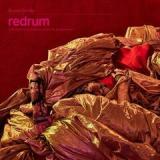
- Redrum
- Hallorann
- Gradys | Twins
- Room | 237
Red vinyl[23,52 €]
"redrum" (with lowercase r) is the original music written for the homonymous dance show by gruppo nanou (with lowercase g and n) Composed in 2023 and put on stage in 2024, it won the Ubu Prize (Italian theatre awards) as best dance show of the year. The music is almost entirely electronic, with spare guitars, bass and vocal parts. Bruno Dorella plays, produces and mixes everything. As the previous album "Paradiso" (also a soundtrack for gruppo nanou), there is a constant dialogue between the musician and the choreographers Rhuena Bracci and Marco Valerio Amico, and with the dancers' bodies, for a longtime collaboration that will hopefully evolve more and more
Hot Creations welcomes Viot and Vitor Vinter as they make their label debut with ‘FMF’, featuring a remix from Bruno Furlan.
Brazilian-born pairing Viot and Vitor Vinter have both emerged as rising names to watch in the scene, capturing the attention of industry heavyweights like Joseph Capriati, Michael Bibi, Marco Carola and many more. Previously collaborating on SOSA’s imprint COCO, they now bring their latest offering ‘FMF’ to Jamie Jones and Lee Foss’ esteemed label Hot Creations, marking another milestone in their careers - accompanied by fellow Brazillian talent Bruno Furlan who returns to the label on remix duties.
With both artists favouring a freaky atmosphere, ‘FMF’ unveils deep, sultry vocals nestled over the top of an alluring acid bassline that drives the track forward. Bruno Furlan’s twist to the track injects a surge of high-octane energy with tumbling percussion and shadowy stabs, guaranteed to whip the crowd into a frenzy.
After releasing their debut project “Voyage” in 2022, Tapioca, the Brussels-Kigali-based, Brazil-inspired duo return with LP “Samba em Kigali.” Building on their sound and influence, “Samba em Kigali” is a definitive step up and clear sonic growth for the twosome, whose debut, RA wrote, is "if Anderson Paak. & Marco Valle made a Brazilian pop-funk record.” Arriving via Berlin’s Jakarta Records May 19th.
Tapioca (32k Monthly Listeners on Spotify), the Belgian duo made of rapper / lyricist Alessandro “Le Tagarel” Vlerick and producer & composer Simon “SiKa” Carlier, tapped into a unique and infectious groove with their debut LP “Voyage,” released in 2022 via Jakarta Records’ “Dubplates” series. Positive reviews came flooding in, including coverage from, among others, BBC Radio 6, KCRW, Resident Advisor, JAZZIZ as well as performances and features on Worldwide FM and Bandcamp Daily. Their debut also landed on global editorial playlists such as Spotify’s “Global Groove,” (600k) “Tulum Vibes” (110k) and Deezer’s “Chilling Pool” (31k). “Voyage,” as the name indicates, was an ode to freedom, escape and the discovery of alternative cultural horizons that brought together various spoken-word testimonies from Portuguese friends around the world. Tapioca’s upcoming LP, “Samba em Kigali,” picks up the thread where “Voyage” left off, acting as an ode to traveling and, more broadly, of the inherent beauty of the African continent. Le Tagarel has worked as a teacher in Kigali, Ruanda, for the past years and his time there is reflected in the album’s buttery lyricism, putting forth the proposition that Africa and Brazil are in fact not so far apart - Africa is, and will always be, present in Brazilian culture. Featuring the Dillaesque sound infused with inspiration from rap, jazz, MPB and funk of the 70/80’s to the stunningly fleshed out lyricism - the LP sways like a ship on the smoothest of seas, a pure ray of aural sunshine to welcome the warm weather. Artwork was stunningly put together by Simone Cihlar (Anderson Paak. Tom Misch, Ivan Ave) and visualizers done by the stalwart crew at Die Ottos (Flofilz, K Le Maestro, Suff Daddy, S.Fidelity, Gianni Brezzo). Jakarta is ecstatic to share such a high-water mark of an album, out everywhere physically / digitally May 19th.
Kicking off “Samba em Kigali” is the impeccably smooth 1st single, “Lagoas de Ruanda” out March 22nd along with LP pre-order announcement. Instantly catchy, the crisp guitar, funky bass and buoyant underlying percussion are the perfect vitamin of joy that gives rise to Le Tagarel’s vocals. The track is a perfect sonic voyage that encapsulates the continued growth of Tapioca’s sound and gives a sonic peek into the LP. Infectious and groovy, the song skirts a line along samba, R&B and jazz with an almost hip-hop bounce.
2nd single, “Sabor Swahili,” out April 12th, is a nostalgic groovy splash that melds soft keys, bass and a percussive edge that slides you into an aural pocket. The song moves in a joyous melancholy that is almost impossible to move to, the under-water synth stabs keep your shoulders loose while the rhythm keeps you bouncing along. Even if you don’t know Portuguese, you’ll be singing along by the tracks end. The joyous 3rd single “Terra Preta” is out April 26th and will lift you up high to keep you in a serene mood anytime, anywhere. Focus track is the headnodding grooves of “Cara de Arabe.” Building from “Voyage,” Tapioca provides a fresh, rare vibe, adding a slight dose of disco to the R&B-driven progressions. “Samba em Kigali” is a unique album that is soaked and marinated in a sonic and visual aesthetic that brings with it feelings of joy, movement, and a global home, and sonic moods ranging from Bruno Berle and Marcos Valle inspired arrangements to bouncing progressions with a swingin’ percussive edge. Besides online promotion from the label and artist profiles, the album will further be promoted by external agencies within the US and UK.
Clear Vinyl
An album such as this obviously owes a lot to the atmosphere in which it was recorded, which we can imagine was magical. We know it took place in Fromentel, Normandy, in a farm converted into a studio by the producer Jacques Denjean, known for his work with Dionne Warwick or Françoise Hardy as well as having been a member of the Double Six. It was also at Fromentel, that Denjean would record two fantastic albums with Albert Marcoeur. When Emmanuelle Parrenin followed in his footsteps a year later she was in good company: the sound engineer at the studio was her partner and therefore uniquely capable (we imagine) of creating an adequate soundscape for her delicate universe. What is more, five years previously, Bruno Menny, the sound engineer partner, recorded his first and only album, but what an album: in electroacoustic terms we can hear things which make him appear as the spiritual son of his mentor Iannis Xenakis!
What makes Maison Rose unique is exactly this fusion between the two conceptions of Emmanuelle Parrenin and Bruno Menny, creating a perfect marriage of tradition and experimentation. The tradition comes from the songs collected by Emmanuelle Parrenin in rural areas, in a similar vein to the work carried out by Alan Lomax and Shirley Collins. The experimentation is in the sound captured by Bruno Menny, who both arranged and recorded the album. This is not to forget those who came with their guitar (Denis Gasser), or their lyrics (no less a figure than Jean-Claude Vannier). On the one hand we have the humble and non-demonstrative singing, with melodies which remind us of songs we would sing to calm a child's nightmares, and on the other hand a pronounced rhythmic intensity at certain points, such as on "Topaze" where the drums in particular evoke the Motorik of krautrock legends Faust.
A real haven of peace, Maison Rose is enchanting with its aura of mystery and spirituality, with soft, gentle songs which seem both ancestral and futurist. Originally published by Ballon Noir in 1977, this album follows on from other folk marvels such as Le Galant Noyé from the pre-Mélusine period. On the subject of Maison Rose, if we had to risk a few comparisons we would mention Vashti Bunyan, Linda Perhacs, Joanna Newsom, Collie Ryan, Shirley Collins, Trees Community, Sourdeline and Véronique Chalot as those which spring spontaneously to mind. But this is too reductive for the timeless singularity of Emmanuelle Parrenin: because Maison Rose was recorded in 1977, in the midst of the punk revolution.
- A1: Konzert Für Sig-Pressluftwerkzeuge (1971, Mix February 2018) 3:36
- A2: Rollin' (1973, Master February 2018) 2:42
- A3: Waves Of Montreux (1977, Master February 2018) (Pm Music) 9:17
- A4: Baustellenmusik (1979) 10:29
- A5: Swisspack (1979) (Pm Music) 2:28
- B1: Rhythm'n Bees (1980) 3:02
- B2: Birds Of Cochin (1998) 4:00
- B3: Coalburner's Delight (1998) 4:32
- B4: Printit (1998) 5:04
- B5: Paradise Garden (1998) 4:35
- B6: Stony Broke Night (1998) 5:52
11 never-heard tracks from Synthzerland pioneer Bruno Spoerri, released for the first time on vinyl, with liner notes by the artist. WRWTFWW Records is very delighted to announce the release of Rare & Unreleased 1971-1998, a collection of never-heard and hard-to-find works by Swiss music pioneer and synth super wizard Bruno Spoerri. The album is sourced from original masters and available on a vinyl LP cut at Emil Berliner Studios (formerly the in-house recording department of Deutsche Grammophon), housed in a 350g sleeve with a superb artwork by Nicolas Eigenheer, and packed with track-by-track liner notes by Mr. Spoerri. Rare & Unreleased 1971-1998 gives a fascinating glimpse into Bruno Spoerri's incredibly inventive repertoire, collecting tracks from projects as diverse as commissioned music for trade fairs, the Swiss railroads, or the union of Swiss cheese makers(!), soundtracks for TV shows about ecology, live synth improvisations at Montreux Jazz Festival, and sound installations for art exhibitions. Always the adventurer, Spoerri records a pneumatic drill for the irresistible electronic bossa of 'Konzert für SIG-Pressluftwerkzeuge", mixes train sounds and the EMS Synthi-100 for the joyful lo-fi funk of 'Rollin'", lets overheating synthesizers take a life of their own to create the sci-fi ambient of 'Waves of Montreux", and works with bees, pigs and various birds for the environmental music bliss of 'Rhythm'n bees' and 'Birds of Cochin". Synthzerland rejoice, it's time for another captivating journey of sound exploration on Planet Spoerri! Bruno Spoerri celebrated his 83th birthday in August this year. He is still experimenting, recording, customizing audio gear, improvising on stage and in the studio, collaborating (Julian Sartorius, Franz Treichler of Young Gods, Marco Repetto of Grauzone, Roger Girod...), inventing new sounds and finding new creative outlets.
Great return of the classic and pioneer band of the French Funk scene! After a long absence, Malka Family reformed, burned some scenes and composed a new album without changing anything to its magic formula. Recomposed with almost all original
musicians, they come back today with a new album, Le Retour du Kif. At the heart of a still popular and multicultural Marais area in Paris, young musicians gather to jam. This is where Malka Family is formed. Their first self-produced album, Malka On
The Beach, was released in 1991, and gigs were immediately chaining up all over France and Europe, famous for their eccentric costumed performance and after-parties. In 1992,
Warner France signs them for a second album Tous des Oufs, a real P-Funk space opera with guests such as Sidney, Dee Nasty, Marco Prince (FFF), or Juan Rozoff... They will then traveled France, Switzerland, Italy, Holland, Denmark, Namibia, Japan ...
And in 1994, the band becomes independent again and records an EP for Big Cheese Records, titled Fricassee de Funk. After a final tour for the third album, Fotoukonkass (BMG) recorded with Renaud Létang , the band finally broke up. At a time when Daft Punk is using funk artists to support their performance, when Bruno Mars & Mark Ronson's "Uptown Funk" continues to make the crowds dance, it's time for the original funkateers families to come back and teach a lesson to new generations. After the
band reformed and started touring again since 2015, they quickly decided to record a new album and to leave on the roads again...
- 1