Поиск:marco di marco trio

Стили
Все
  • 1
Various - Tchic Tchic: French Bossa Nova 1963-1974  Colored Edition LP 2x12"
  • A1: Les Masques - Il Faut Tenir (1969)
  • A2: Isabelle Aubret - Casa Forte (1971)
  • A3: Christianne Legrand - Hlm Et Ciné Roman (1972)
  • A4: Jean Constantin - Pas Tant D'chichi Ponpon (1972)
  • A5: Billy Nencioli & Baden Powell - Si Rien Ne Va (1969)
  • B1-: Marpessa Dawn - Le Petit Cuica (1963)
  • B2: Jean-Pierre Sabar - Vai Vai (1974)
  • B3: Sophia Loren - De Jour En Jour (1963)
  • B4: Isabelle - Jusqu’à La Tombée Du Jour (1969)
  • B5: Sylvia Fels - Corto Maltesse (1974)
  • C1: Frank Gérard - Comme Une Samba (1972)
  • C2: Ann Sorel - La Poupée Des Favellas (1971)
  • C3: Charles Level - Un Enfant Café Au Lait (1971)
  • C4: Andrea Parisy - Les Mains Qui Font Du Bien (1970)
  • C5: Audrey Arno - Quand Jean-Paul Rentrera (1969)
  • C6: Aldo Frank - T’as Vu Ce Printemps (1970)
  • D1: Christianne Legrand - Cent Mille Poissons Dans Ton Filet (1972)
  • D2: Clarinha - Lemenja (1970)
  • D3: Hit Parade Des Enfants - Aquarela (1976)
  • D4: Jean-Pierre Lang - Tendresse (1965)
  • D5: Magalie Noël - Une Énorme Samba (1970)
  • D6: Françoise Legrand - La Lune

Ever since the late 1950s bossa-nova revolution, Brazil’s influence on French music has been undeniable. Pierre Barouh, Georges Moustaki and a vast array of lesser known artists, all made the Musica Popular Brasileira (MPB) an axis of promotion at the service of a cool and metaphysical, modern and mixed Brazilian lifestyle. Some were seduced by the poetic languors of the bossa, some were looking for fun, and others just loved the American hybridization of jazz-bossa, jazz-samba.


What is bossa nova? One of its creators, Joao Gilberto said: "Its style, cadence, everything is samba. At the very start, we didn't call it bossa nova, we sang a little samba made up of a single note - Samba de uma nota so .... The discussion around the origins of bossa nova is therefore useless”. It is nevertheless useful to remember that these magnificent Brazilian songs, which the guitarist describes as samba, were shifted and balanced around improbable chords. "I like things that lean, the in-betweens that limp with grace," said Pierre Barrouh, quoting Jean Cocteau.


With emotion, arrangements for violin and supple guitar licks, bossa nova rapidly changed. A transformation that can be heard in the Tchic, tchic, French Bossa Nova 1963-1974 compilation, the result of a cultural reappropriation, which traveled through the United States and supplemented itself in France.

A musical revolution that has remained significant, bossa nova was born in Rio. From 1956 to 1961, Brazil lived through its golden years. In five years, the country had invented its modernist style. Elected president in 1956, Juscelino Kubitschek de Oliveira, an elegant man with a broad forehead, brandished a promising slogan: "Fifty years of progress in five years". He quickly got to work. Not worried about increasing debt, he launched the project for a new federal capital, Brasilia, designed by the communist architect Oscar Niemeyer. Volkswagen opened state-of-the-art factories and created the “fusquinha”, the Beetle. In Rio, the Vespa made its first appearance. The Arpoador Surf Club crew run into the “girl” from Ipanema, Helô Pinheiro - the tanned garota ("chick"), between a flower and mermaid, who at 17 walked by the Veloso bar, where the fiery author and composer, Tom Jobim and Vinicius de Moraes, were getting drunk on whiskey. From then on, bossa symbolized cool.

In 1958, Joao Gilberto recorded Chega de Saudade, which the directors of Philips denied, calling it "music for fagots". The marketing director, who believed in it, secretly pressed 3000 78-inch vinyls and distributed them at schools around Rio, creating a tidal wave.

American jazzmen then took over. In particular, trumpeter Dizzy Gillespie and guitarist Charlie Byrd. In November 1962, the Brazilian Ministry of Foreign Affairs funded a "Bossa-Nova" concert at Carnegie Hall in New York, inviting the genre’s pioneers. Unprepared, the show soon turned to disaster. But the troupe was invited to the White House by Jackie Kennedy. The first lady loved "the new beat" and in particular Maria Ninguem, a song by Carlos Lyra, later covered by Brigitte Bardot.

In Brazil, the 1964 military coup quickly ended this euphoria. The destructive atmosphere that ensued pushed many Brazilian musicians to leave, if not to exile. Thus, Tom Jobim, Sergio Mendes and Joao Gilberto arrived to the United States. In New York, Joao Gilberto met saxophonist Stan Getz. At the time, he was married to the Bahianese Astrud Weinert Gilberto, who had a German father. She had never sung before, but she knew how to speak English. Getz therefore asked her to replace her husband on The Girl From Ipanema. The Getz/Gilberto record with Tom Jobim on piano, was released in March 1964. Phil Ramone, the "pope of pop" was in charge of sound.

Bossa nova arrived in Paris through the classic “guitar-voice” channel (Pierre Barouh, Baden Powell, Moustaki…) But France loved jazz and Paris had already welcomed its American contributors. All these good people were to pass through Saint-Germain-des-Prés. The cabaret l'Escale became the Mecca of Latin American sound where one could find Pierre Barrouh and his friends, such as the Camara Trio, samba-jazz aces, whose only record was published by the Saravah label. With a band strangely called Les Masques (a band that included Nicole Croisille and Pierre Vassiliu, among others), the Camara Trio recorded an interesting Brazilian Sound, including the track Il faut tenir which is present on this tasty compilation of rarities.

Other enlightened musicians can also be found on the compilation, such as Jean-Pierre Sabar (songwriter for Hardy, Auffray, Leforestier ...) and the French pop rock organist Balthazar. In 1975, Sabar recorded Aurinkoinen Musiikkimatka on a Finnish label, which featured the crazy Vai, Vai, included on this record. We are now following the footsteps of Brazilian electronic musicians such as Sergio Mendes, Eumir Deodato or Marcos Valle who created funk and disco sounds on their keyboards and synthesizers. A style that influenced Véronique Sanson when she wrote Jusqu’à la Tombée de la nuit in 1969 for Isabelle de Funès, the niece of Louis and a great friend of Michel Berger - Sanson did end up singing this track on her 1992 Sans Regret record.


The pinnacle of exoticism and travel, Sylvia Fels’ Corto Maltese includes bongos, sea mist and ocean sounds. The title was taken from Jacky Chalard’s concept album written in 1974, Je suis vivant, mais j’ai peur (I am alive, but I am scared), based on Gilbert Deflez’s science fiction novel.


However, bossa nova extended the scope of popularity. "In the 1970s, I was a fan of Sergio Mendes, Getz / Gilberto. I fell in love with this music that I knew because I had been an orchestral singer, " explained Isabelle Aubret, who in 1971 delivered a composite record of covers by the very funky Jorge Ben, Orfeu Negro, Tom Jobim, Vinicius de Morais and Jean Ferrat. "I recorded this album for Meys Records in Paris, far from Brazil, with wonderful musicians, François Raubert, Roland Vincent, Alain Goraguer...". The latter wrote the arrangements for Casa Forte, a very percussive title borrowed from Edu Lobo, one of the initiators of the bossa who spent time in California. "Jazz and bossa came together and produced very rhythmic music. I love singing, it allows me to dream, to have fun, to feel a high on stage, and these songs brought me joy, made me swing, my singing felt like a dance.”


The world tours of French singers and their desire for the tropics, often brought them to Rio with its hills, forests, caipirinhas and tanned bodies. There are surprises though, like this Iemenja (Iemenja is the goddess of the sea in the Afro-Brazilian candomblé religion). Not unlike the composer and musician Jean-Pierre Lang, based in Sao Paulo, Claire Chevalier taught Brazil to Brazil. In 1970, the singer and painter published a 45-inch vinyl, Mon mari et mes amants (My husband and my lovers), under the improbable pseudonym of Clarinha (little Claire). She was then living in Rio, with her husband, Joël Leibovitz, who founded a band called Azimuth, and who owned a record label specialized in "sambas enredos" songs for samba school parades.


For its B side, she asked Pierre Perret to come up with lyrics for a song composed by Carlos Imperial: "Oh goddess of the sea, o goddess Iemenja, I bring a white rose to adorn your long hair ..." . "Perret came to see us, and we had fun, remembers Joël Leibovitz. We wrote Lemenja for fun, we recorded it at the Havaí studio, behind the Central do Brasil the central station. Erlon Chaves, the arranger who worked with Elis Regina, joined us" adding his share of Afro-Brazilian percussions and funky brass to the mix.

There is a common misunderstanding in Franco-Brazilian history: that bossa, admittedly hedonistic, is perceived as funny, even though the poets who wrote the texts are often philosophizing on the human condition. Its French interpreters pull it towards a carnival inspired universe, far removed from its fundamental essence. Thus, Jean Constantin covered the famous Samba da minha terra, an ode to the art of samba written by the classic Bahian composer Dorival Caymmi, renaming it with the enticing title of Pas tant de tchi tchi pompon: "On your pier there is no tchi tchi / when you arch your back, you know everything is alright ”(lyrics by Gérard Calvi). This expedited bossa aims for the absurd, but retains a certain elegance.

Indeed, Jean Constantin was not an idiot, the rather large man had a huge mustache and liked fantasy, (Les pantoufles à papa, Le pacha, inspired by cha-cha-cha-cha, salsa and jazz) but he was also the lyricist of Mon manège à moi interpreted by Edith Piaf, the composer of Mon Truc en plume by Zizi Jeanmaire and the soundtrack of François Truffaut’s 400 Blows. Le Poulpe, published in 1970, from which this bossa is extract, was arranged by Jean-Claude Vannier, an accomplice of Serge Gainsbourg’s Melody Nelson. In short: "There is enough of samba / By looking at the parasol / Because my poor cabeza / Is going to die in the sun".

Even the American actress Marpessa Down, who was at the heart of the bossa nova revolution with her role as Euridyce in Marcel Camus’ film Orfeu Negro, winner of the 1959 Cannes Palme d'or, fed the clichée with Je voudrais parler au petit cuica - "Tell me how you manage to always make people want to dance / It's true, I must admit that I cannot resist your magic" - in consequence, once can hear the cuica, a little drum inherited from the Bantu.


But bossa nova had many angles. Societal, of course, pushing actresses who were symbols of women's liberation like Brigitte Bardot, Jeanne Moreau, or Sophia Loren to engage in the exercise of accelerated bossa. In February of 1963, Sophia Loren made a record in French in Rome, Je ne t'aime plus, featuring the song De jour en jour, a bossa written by two Italians, Armando Trovajoli and Tino Fornai, which was released a little later by Barclay. Bossa accompanied the 1960s, a decade of moral liberation. Ann Sorel, who interpreted La Poupée des favellas, caused a sensation with L’amour à plusieurs, a provocative song written by Frédéric Bottom and Jean-Claude Vannier. As for the actress Andrea Parisy, she displayed her bourgeois cheekiness in Marcel Carné's Les Tricheurs before interpreting Les mains qui font du bien. And Magalie Noël, the friend of Boris Vian, who sung Johnny fais-moi mal, was hired to sing Une énorme Samba, composed by Alain Goraguer (arranger to Gainsbourg, Bobby Lapointe and Jean Ferrat) with lyrics by Frédéric Botton.

But in the end, of what wood is bossa nova made of? The answer is given by Christianne Legrand, daughter of Raymond the conductor, and sister to Michel the composer: "With me, with jà" - jà means "immediately" in Portuguese. In 1972, the singer, an expert in vocal jazz and a member of the Double Six, published Le Brésil de Christianne Legrand. Two songs included on the Tchic Tchic compilation that demonstrate how bossa, jazz, funk, rock, etc. work like a swiss army knife: the music is used to denounce broken systems, or miracles, HLM et ciné roman, Cent mille poissons dans ton filet, two songs from the O Cafona soundtrack, a successful telenovela broadcast, at the time in black and white, on TV Globo. The first was adapted in French by the fighter and friend of the Legrand tribe, Agnès Varda. The second is content with a play on words, jostling them into a summer fun.


Véronique Mortaigne

Сделать предзаказ17.04.2026

он должен быть опубликован на 17.04.2026

27,31
Passarani - Analog Fingerprints Vol. 0 (2x12")

Analog Fingerprints Vol. 0 is a compilation bringing together the early 2000s works of Marco Passarani under his Analog Fingerprints alias, collecting key tracks originally released on Rome’s Plasmek and Pigna labels.

For Numbers, the story starts long before the label itself. In their formative years, digging in Glasgow’s Rubadub, Passarani’s records felt like dispatches from a future city. Releases on his own Nature Records and on labels such as Generator and Interr-Ference Communications were mind blowing: rooted in Detroit techno, Chicago house and electro, yet pushing somewhere new. Much like fellow travellers Autechre, who would remix him in 2001, Passarani’s music balanced machine funk with restless experimentation.

Information was scarce, and you would hear these records first on the dancefloor or at listening stations in shops like Rubadub. Print fanzines like Ear and early web outposts such as Forcefield offered only fragments. But there was a palpable axis forming between Detroit techno and a new European wave of record labels including Skam, Rephlex, Clone, Viewlexx and Nature itself. It was the sound that defined Saturday nights at Rubadub’s ‘69’ parties in Paisley, just outside of Glasgow.

Passarani’s records, in particular, were instrumental in bringing together the future Numbers co-founders. Richard had already booked him pre-Numbers; meanwhile Calum (Spencer) and Jack (Jackmaster), then 16/17 year olds working alternate Saturdays in Rubadub, were so enamoured with the Roman sound that they travelled to Rome for the Bitz Festival in 2003 to seek out Passarani and Lory D at their source.

The first Analog Fingerprints release landed as a 12” on Plasmek in 2001, following the fractured, IDM-leaning 6 Katun material. For Passarani, the project marked a recalibration. A DJ first and foremost, he had moved into production via early computer setups, from a Commodore Amiga through primitive PC audio, Cubase and Logic, later experimenting with Ableton. The IDM scene had offered a playground for trial and error, but there was always a tension between abstraction and the dancefloor. Analog Fingerprints became the bridge: still intelligent, but with more dance than distance. After years of broken beats and complex arrangements, he wanted directness without surrendering identity.

Working closely with Francesco de Bellis and Mario Pierro in the Pigneto district, the trio formed Pigna as a vehicle for reclaiming a more accessible dance sound, deliberately steering away from the minimal wave beginning to dominate Europe. Sessions were fast, instinctive, often stretching late into the night with friends dropping by. It was a studio as social space, production as collective energy.

“In that constant search for balance, Analog Fingerprints was my way of expressing something closer to the classic dance floor. The track 'Tribute' - a tribute to my favourite early Detroit techno track of all time, 'First Bass' by Separate Minds - came after I realised I had almost lost my connection with the dance floor. The simplest step was to take inspiration from early Chicago and Detroit and twist it in our Roman ‘Pigna’ way. My goal was to create more accessible dancefloor tracks by mixing my unconscious Italo roots with my teenage love for that early US sound, ensuring the result was as far as possible from the minimal sound that was starting to dominate everywhere.” - Marco Passarani

Technically, the Analog Fingerprints tracks span a transitional era: Roland TR-909, SH-101 and Alpha Juno hardware met early software experiments. A Novation Drumstation rack stood in for the unattainable TR-808, syncing with TB-303 and TR-606. Yet the true secret weapon was Jeskola Buzz, a tracker-style modular environment that allowed step-by-step parameter control and strange melodic constructions, later exported into the audio sequencer. Even the lead on ‘Tribute’ came from an early PPG Wave-style plugin. It was hybrid thinking at a moment when digital tools still felt unstable but full of possibility for technologists like Passarani.

Behind the music sat Finalfrontier, a loose Roman collective orbiting Nature and Plasmek. Distribution and production were intertwined; importing obscure records into Italy built connections with like-minded outsiders across Europe and the US. Expensive phone bills and fax machines forged an “electronix network” that linked Rome to Clone, Viewlexx, Skam, Rephlex, Rubadub and Detroit’s Underground Resistance. There was a shared sense of survival and resistance, of operating against commercial systems.

Passarani recalls “The first time I found a sheet of paper inside an Underground Resistance 12” with info about upcoming releases... and a huge picture of Spock on the back. Imagine that: you love the music, you love Star Trek, and there’s someone on the other side of the ocean sharing those same values and sounds. It was the perfect match. We even gave our original company the suffix ‘Finalfrontier’: that says it all.”

Feedback in that era arrived physically: distributor faxes, conversations with visiting DJs, the experience of playing abroad and meeting kids who had connected with the records. Glasgow became a key node in a scattered outlier network. Passarani personally brought the first two Nature releases to Fat Cat in London, playing them in-store. Shortly after, a fax arrived from Rubadub in Glasgow requesting copies.

“I still remember that phone buzz and the fax paper slowly sliding out, with someone I didn’t know saying they wanted 75 copies of Nature 001. Or like the time we got a fax from the Rephlex crew just saying, “Hello Nature Records, Keep up the good work.” That was how we knew the message was getting through. It was a fantastic feeling; just one piece of thermal fax paper as an analog notification - the mood for the entire week would change.” - Passarani

The connection to Glasgow has since stretched across generations. As Passarani reflects, links often fracture as scenes renew themselves, but in Glasgow something different happened. New and old mixed seamlessly. There was a visible trust in what came before, and a willingness to carry it forward rather than discard it. Observed from Rome, it was deeply encouraging.

Analog Fingerprints Vol. 0 captures that moment of exchange: Rome to Glasgow, Detroit to Europe, experiment to dancefloor. It documents an artist recalibrating his sound and a network of scenes discovering one another in real time, connected by vinyl, faxes and shared intent.

В наличии на складе

Есть у нас в наличии и готов к отправке

24,16
Various - NICOLA CONTE PRESENTS VIAGGIO

Blue note / Schema / Far Out recordings artist shares a new compilation of golden age italian library music.

Following his acclaimed five-part Viagem compilation series celebrating Brazil's forgotten bossa nova and samba jazz, Far Out, Blue Note and Schema recording artist and international DJ Nicola Conte turns his curatorial attention homeward with Viaggio, an extraordinary exploration of Italy's library music renaissance 1970-79.

The 12-track compilation spotlights the remarkable creative explosion that occurred during the seventies: when some of the greatest yet most historically overlooked composers, including Amedeo Tommasi, Alessandro Alessandroni and Max Rocci, were composing and recording huge amounts of original music for film and television libraries.

Unlike commercial releases designed for mass consumption, library music was created specifically to accompany images on screen. This meant creative freedom for composers who imagined scenarios, feelings and worlds to soundtrack. Pressed in limited quantities, these recordings were distributed only to internal circles of music supervisors, journalists, and television professionals – making them virtually invisible to the general public for decades.

"This is a journey through a largely forgotten world," explains Conte. "While major jazz recording opportunities were scarce, an incredible network of small labels owned by publishing companies – often created by the composers themselves – began to flourish. This created an open space where musicians could express more experimental and free thinking sounds."

At the heart of Viaggio stands Amedeo Tommasi, the sophisticated jazz pianist who emerged in 1960 backing international stars like Chet Baker, Bobby Jaspar, and Jacques Pelzer. Tommasi was among Italy's earliest artists to introduce Black US modal jazz influences, and when traditional recording opportunities dwindled, he pivoted to soundtrack and library music, helping define a distinctly Italian sound that bridged experimental jazz with the emerging possibilities afforded by developments in synthesizer and recording technologies.

The compilation features rare gems from small label outputs, namely the Cenacolo and Rotary label catalogs. Tommasi's contemporaries include the great Alessandro Alessandroni and his vocalist wife Giulia De Mutiis (Kema), Stefano Torrosi (under the alias Farlocco - meaning fake/phony), and Belgian composer Joël Vandroogenbroeck. The recordings capture the technological evolution of the era as beguiling synthesis often combines with global influences spanning Brazilian rhythms, jazz-funk explorations, and Middle Eastern scales.

"You can hear both the haunting melodies and sun-kissed atmospheres so typical of Italian culture from that era," Conte observes. "Some of these albums could have been proper artist releases, while others were specifically designed for accompanying images on screen, yet all were crafted with exploratory creativity that still resonates powerfully today."

В наличии на складе

Есть у нас в наличии и готов к отправке

23,11
Secret Echoes - Particles

Mexican supergroup Secret Echoes unveil their second Crosstown release, Particles
Riding the momentum from their Crosstown Rebels debut back in September, the trio returns on 14th March 2025, backed by a driving remix from Greek DJ/producer Angelos.

Consisting of Estefani Brolo, Diego Cevallos, and Marco Balcazar, three standout talents from Mexico’s rich electronic landscape, Secret Echoes continue to carve their unique sonic identity on Crosstown Rebels with their new single, ‘Particles’. A hypnotic, deep-grooving record, ‘Particles’ channels a fusion of melody and atmosphere, weaving together Brolo’s ethereal vocals with wonky synth lines and rolling percussion. The track seamlessly transitions between immersive listening and peak-time play and showcases the trio’s masterful ability to craft compelling, forward-thinking productions.

On the B-side, Greek DJ and producer Angelos steps up on remix duties. A Grammy winner for his collaboration with Black Coffee, his discography includes standout releases on Saved Records, Higher Ground, and Connected, as well as Crosstown Rebels’ sister label, Rebellion. Bringing a wealth of experience and a refined touch, his rework adds depth and drive to the original, layering pulsating rhythms and warm, emotive melodies to create a tunnelling remix primed for dancefloors worldwide. Following the success of their debut single, ‘Bring My Beat Back’ ‘Particles’ offers another glimpse into their forthcoming LP, reaffirming the trio’s position as a unique force within Mexico’s electronic scene and beyond.

В наличии на складе

Есть у нас в наличии и готов к отправке

13,24
DEAD SOUND - INTO THE VOID LP 2x12"

Music From Memory is thrilled to introduce Dead Sound, the collaborative project of Marco Sterk (aka Young Marco) and Berlin-based pop-auteur John Moods. Both artists are no strangers to the label; Sterk forms one third of the trio Gaussian Curve, while Moods released the 2022 album ‘Hidden Gem’ with The Zenmenn.

Their collaboration was both planned and spontaneous; Sterk initially reached out in 2022 expressing his desire to work with Moods. The pair finally got together in 2024 to produce ‘Into The Void’, an album that burst into life over the course of a few creatively charged days in each other’s company.

Moods’ dream-like, emotionally charged music wears its heart on its sleeve; its very human vulnerability makes it a perfect match for Sterk’s strong sense of melody and textural sonic visions.

‘Into The Void’ carries these psychedelic traits in its DNA, but they exist layered deep amongst the shadows. Painting on a wide canvas that effortlessly skips between genres, the pair weave anything that inspires them into a truly unique tapestry; a bold attempt to touch at the beyond.

Exploring the space between perception (level of the mind) and the nature of the universe (actual level of reality) seems traditionally like an impossible task. But there’s gotta be a time and a space for the profound and this album invites the listener to go deep, letting go of concepts such as love and opening oneself up to one’s own authentic journey. This transformative force of healing is a central theme of ‘Into The Void’, a path that is lined with light and darkness in equal measure. But, as Moods says, “do not skip the darkness, let that door open and swallow you. And maybe you’ll find, it's not as dark as you perceived at first."

Sleeve art by Michael Willis.

В наличии на складе

Есть у нас в наличии и готов к отправке

22,90
GAUSSIAN CURVE - WINTER SUN / FEVER DREAM

The return of Gaussian Curve - Gigi Masin, Jonny Nash and Marco Sterk’s much-loved trio are back for the first time since their 2016 sophomore album 'The Distance', presenting two new tracks entitled 'Winter Sun' and 'Fever Dream'.

Both tracks originate from recording sessions that took place in Amsterdam in 2016 for 'The Distance'. Despite not finding a place on the final album and being left as unfinished sketches for six years, the tracks represent an important part of the Gaussian Curve story which the band felt compelled to complete. Coinciding with the decision to perform a handful of live shows in 2022, they finally revisited the sketches, mixing and arranging them with the goal of giving them the full release that they deserve.

The trio’s trademark sound hits from first moments of 'Winter Sun'; a lush slow builder with all the classic GC ingredients; Nash’s airy and spacious guitar lines interplay with Masin’s warm rhodes, underpinned by Sterk’s subtle use of electronics and the minimal rhythm of a CR-78 drum machine.

On 'Fever Dream', the trio subtly expand their palette; a gently building 303 bass line and 808 rhythm form the foundations of the piece, with Masin’s vocals adding to a slow-burning intensity. Arguably a fuller sound hinting at new areas of exploration for the trio, but unmistakably Gaussian Curve.

В наличии на складе

Есть у нас в наличии и готов к отправке

18,91
Gabriels - Angels & Queens

Gabriels

Angels & Queens

12inch1031868
Parlophone
06.10.2023

Grammy nominated DJ and production mastermind Paul Woolford steps up to deliver a timeless house reworking of Gabriels 'Angels & Queens'.

The title track from the trio's debut album (part 1) that took 2022 by storm. Endeared by the masses and critically acclaimed Gabriels set out a refreshing new take on soul that the world was subconsciously crying out for - an antidote to over produced pop - providing a deeper, more meaningful and heartfelt cause at its centre.

Tantalising from the outset, Woolford steps up to the plate with a hard-hitting remix that drives in straight to your centre. Punchy TR-909 drums combine with thundering bass tones and his archetypal, rising piano hooks. A combination that brings Jacob Lusk's inimitable vocals to new heights.

After a feverish reception to Paul's Instagram tease of the track, we've been itching to release this remix into the wild. It's a big one, don't miss it!

'Three supremely talented artists simply excelling at what they do' - Paul Woolford

Gerd Janson - 'Gabriels!!! - Total madness at Panorama Bar. Like it was made for the room'

DJ Feedback:

Prins Thomas – I’m melting….Amazing

Groove Armada – Love this!

Gorgon City - yessss

Fred P - Dope!!!!

Marco Faraone - Super remix!!!

Sasha – Quality

Bakermat – tasty

Mano Le Tough – Ace

Hector Romero - Gabriels have quickly become my fav new artist. Paul!! You nailed it. Great collaboration.

Horse Meat Disco – Pretty big remix!

Gerd Janson – MEGA

В наличии на складе

Есть у нас в наличии и готов к отправке

14,92
Grupo Um - Starting Point LP

In 1975, under the oppressive air of military dictatorship in Brazil, brothers Lelo and Zé Eduardo Nazario invited bassist Zeca Assumpção to join their musical experiments in a basement under Sao Paulo’s Teodoro Sampaio Street. As teenagers, the trio had already been playing together in Hermeto Pascoal’s Grupo, alongside guitarist Toninho Horta and saxophonist Nivaldo Ornelas, and it was while working together under Hermeto’s direction that the Paulista rhythm section (as they were then known) began to realise their own potential.

With many nightclubs and venues closed in the mid-70s and government censors dictating the output of radio, TV and art galleries, many Brazilian artists fled during the years of dictatorship. But underground, Grupo Um were fusing avant garde ideals with contemporary jazz and Afro Brazilian rhythm; making phenomenally free and expressive music - in stark contrast to the sterile, conservative conditions being imposed above ground.

Just like Hermeto Pascoal’s Viajando Com O Som from the following year, Starting Point was recorded over two days at Vice-Versa Studios, by revered engineer Renato Viola. The studio was one of the best in Sao Paulo and musicians communicated with engineers through cameras and a monitor, allowing the group complete immersion in the process. They also made use of the studio’s hemispherical tiled room, which served as an acoustic reverberation chamber.

The album begins with Zé Eduardo Nazario’s thunderous drum solo on “Porão da Teodoro”, before clearing the clouds with the lone Berimbau which opens “Onze Por Oito”. Built around a hypnotic electric bass line, heady Fender Rhodes improvisations, and more rip-roaring drums, it’s a rapturous, electrifying freak-jam in 11/8.

Like some invertebrate deep-sea curiosity, the free-form “Organica” is made up of Lelo Nazario’s playfully eerie prepared piano, with Zé Eduardo’s percussion flurries darting around Assumpçao’s double bass. The equally non-conformist, percussion-only piece “Jardim Candida” features many of Zé Eduardo’s home-made instruments, including a long saw blade played with vibraphone sticks and violin bow. While working with Hermeto, Zé Eduardo famously built his own all-in-one percussion set-up known as the “Barraca de Percussão” (Percussion Tent) - the first of its kind in Brazil, which he would also use on Hermeto Pascoal’s Viajando Com O Som and throughout his career.

“Suite Orquidea Negra'' (Black Orchid Suite) was written by Lelo Nazario as the score for an imaginary movie - the story of a rare, black orchid which produced a substance meant to cure all diseases, but which had mysteriously disappeared from the laboratory… “As a screenplay it’s not very good” reflects Lelo in jest, “but the music ended up being very interesting, the way its parts are chained to one another carries a little of the mystery I imagined for the movie.”

The album closes with the triumphant “Cortejo dos Reis Negros” (Procession of Black Kings) - a groovy variation on the Maracatu rhythm, with a two-note bassline underpinning piano improvisations, exultant wordless vocals, cuicas, slide-whistles and a very special guest appearance from Zé’s dog Bolinha.

Starting Point was to mark the inception of one of Brazil’s most daring instrumental groups. Their debut now sits in the lofty echelon of otherworldly 70s Brazilian music, alongside the likes of Marcos Resende & Index’s self-titled debut, Cesar Mariano & Cia’s Sao Paulo Brasil, Azymuth’s debut and indeed Hermeto Pascoal’s Viajando Com O Som. But just like all of those titles, which were either shelved or largely ignored at the time, Grupo Um - so radically ahead of their time - struggled to find a label to release their debut album. So Lelo kept the tapes safe in his archives, which is where they sat for almost half a century. Finally, almost fifty years later, this mesmerising piece of history is here, and it was only the beginning...

Grupo Um’s Starting Point will be released by Far Out Recordings, on vinyl LP, with an insert featuring unseen photos and liner notes by the Nazario brothers, as well as a CD on 17th February 2023.

В наличии на складе

Есть у нас в наличии и готов к отправке

19,96
Tetine - Music For Breathing LP

We've been writing new material as a trio since the first lockdown in the spring of 2020. 
An organic and electro-acoustic impulse that translates both mine and Eliete's need of self-archiving, 
re-inventing and auto-cannibalising Tetine's past, present and

future in order to explore other aural 
landscapes and modes of composing intuitively, while at the same time, re-experiencing moments of our 
trajectory as a hybrid organism. 


Music For Breathing was born as a respiratory, meditative, and improvisatory piece of DIY 
tropical-mutant-punk "chamber music" written for cello, voice, piano, organ and electronics. 
The work responds to the suspended acts of breathing and vertigos experienced in contemporary polluted
 environments in political, social and philosophical transitions, whilst investigating the 
secret ontologies of inanimate objects and architectures, as well 
as the echoes and ethics of modes of operating things. 


Recorded during the intense period of heatwaves that hit London between July and August 2022, in 
a small studio set up in our flat's kitchen - so that we could capture the acoustic instrumentation 
(in particular, for the recording of cellos) without much

noise interference from the street - 
this vinyl version of the album comprises of 5 distinct yet complementary reflective movements. 


Musically and lyrically, it explores the atmospherics and syntaxes of time and space, voice, rhythm, 
as well as themes such as hearing loss, menopause, pollution and respiration. It builds an expanded suite of unexpected 
electro-acoustic textures through repetition, minimalistic motives, simple melodies, chromatic 
developments, free counterpoint and atonalism. Conceived as an ode to the poetics of slowness, 
the sounds you hear give continuity to the music we composed for the performance-film 
The Ether - Prelude No.1 over the first lockdown in 2020 as it simultaneously explores the warmth, 
melodiousness and power of the cello in conjunction with electronics. 
Music For Breathing evokes this transitory moment: a place and time where language runs out, 
communication and information lose their functions, sound and meaning do not correspond. Facts do not correspond to contexts. Spaced Out in Paradise. The last degree of the structure, the 
loss of memory. The lost voice.


The album also features our 12-year-old daughter Yoko Afi on cello and vocals. It reflects 
a period of free sound experimentation influenced both by romantic composers of the late
 19th / early 20th centuries and contemporary electronic music. The pieces you hear were composed, arranged, and recorded 
with the joy and melancholy of "those who do not know". In other words, "with the arrogance 
of a second childhood" as Derek Jarman once put it. 'Agile and candid as a child'(1).

1) Manifesto da Poesia Pau-Brasil, Oswald de Andrade, Correio da Manhã, 18 de Março de 1924.

В наличии на складе

Есть у нас в наличии и готов к отправке

18,28
Kaleidobolt - Karakuchi

Kaleidobolt

Karakuchi

12inchSVART372LPB1
Svart Records
06.03.2026
  • 1: Tinkerbell
  • 2: Lights On, Nobody Home
  • 3: Coping
  • 4: Astro Boy/Ochanomizu
  • 5: Duuude
  • 6: Friends Of Fire
  • 7: A Chance Of A Lifetime
  • 8: Turn Of Luck
также имеющийся в продаже

Black Vinyl[23,49 €]


KALEIDOBOLT’s fifth album is pungent to the ears – KARAKUCHI out in March Karakuchi is one record you can judge by its cover. The first time Kaleidobolt’s faces have adorned an LP, they have been fused into a torpedoing biomechanical vehicle. Echoing The Birthday Party’s Junkyard or Motörhead’s Orgasmatron (…on acid?!), the illustration epitomises perfectly Kaleidobolt’s agenda of “hyperkinetic rock”. Their feverish, psych-prog sound is full of motion. It jerks around at different speeds, threatening to spin out of control and crash into flames at any given moment. What’s more, it isn’t taken too seriously. This is heavy and intricate music, yes. But as bassist and co-singer Marco Menestrina puts it, the Kaleidobolt attitude is “an ugly smirk more than an angry face with a fist.” On their fifth album since forming in 2014, the Helsinki-based outfit lean into their strengths as a formidable power trio. With their previous two records, 2019’s Bitter and 2022’s This One Simple Trick, they had thrown everything at their disposal into the recording with no expense spared on overdubs, effects and kitchen sinks. Produced again by Niko Lehdontie (Oranssi Pazuzu), Karakuchi comes from tightly rehearsed, live-in-the-studio takes. Kaleidobolt realise that greater sparsity can be a strength, and they’ve allowed their instruments extra space to breathe. It makes for their earthiest, purest and perhaps most authentic record to date. Karakuchi’s exuberant style emerges from the individual members’ contrasting listening habits. These span classic prog, Japanese city pop, noise rock, post-hardcore and historical podcasts. One record they can all agree is a masterpiece, the centre of the Venn diagram where all three members meet, is King Crimson’s Red. As for their new album’s title, that’s as suitable as the cover art. “Karakuchi” is the slogan of the Japanese beer brand Asahi Super Dry. Translated literally, this means “pungent to the mouth”. As drinkers of that product, Kaleidobolt acknowledge its parallels to their songs. “It’s very intense, right at the front, like at the first bite,” explains Menestrina. “And then it leaves your mouth feeling refreshed. The flavour doesn’t linger in your mouth, basically. It has a quick, hard finish. With a bit of a stretch, we thought that that could also be said of our music.” Karakuchi is Kaleidobolt at their hardest, fastest, tightest and super-driest. Pungent to the ears. -JR Moores, November 2025

Сделать предзаказ06.03.2026

он должен быть опубликован на 06.03.2026

24,33
Kaleidobolt - Karakuchi

Kaleidobolt

Karakuchi

12inchSVART372LP
Svart Records
06.03.2026
  • 1: Tinkerbell
  • 2: Lights On, Nobody Home
  • 3: Coping
  • 4: Astro Boy/Ochanomizu
  • 5: Duuude
  • 6: Friends Of Fire
  • 7: A Chance Of A Lifetime
  • 8: Turn Of Luck
также имеющийся в продаже

Turquoise/Black Smoke Vinyl[24,33 €]


KALEIDOBOLT’s fifth album is pungent to the ears – KARAKUCHI out in March Karakuchi is one record you can judge by its cover. The first time Kaleidobolt’s faces have adorned an LP, they have been fused into a torpedoing biomechanical vehicle. Echoing The Birthday Party’s Junkyard or Motörhead’s Orgasmatron (…on acid?!), the illustration epitomises perfectly Kaleidobolt’s agenda of “hyperkinetic rock”. Their feverish, psych-prog sound is full of motion. It jerks around at different speeds, threatening to spin out of control and crash into flames at any given moment. What’s more, it isn’t taken too seriously. This is heavy and intricate music, yes. But as bassist and co-singer Marco Menestrina puts it, the Kaleidobolt attitude is “an ugly smirk more than an angry face with a fist.” On their fifth album since forming in 2014, the Helsinki-based outfit lean into their strengths as a formidable power trio. With their previous two records, 2019’s Bitter and 2022’s This One Simple Trick, they had thrown everything at their disposal into the recording with no expense spared on overdubs, effects and kitchen sinks. Produced again by Niko Lehdontie (Oranssi Pazuzu), Karakuchi comes from tightly rehearsed, live-in-the-studio takes. Kaleidobolt realise that greater sparsity can be a strength, and they’ve allowed their instruments extra space to breathe. It makes for their earthiest, purest and perhaps most authentic record to date. Karakuchi’s exuberant style emerges from the individual members’ contrasting listening habits. These span classic prog, Japanese city pop, noise rock, post-hardcore and historical podcasts. One record they can all agree is a masterpiece, the centre of the Venn diagram where all three members meet, is King Crimson’s Red. As for their new album’s title, that’s as suitable as the cover art. “Karakuchi” is the slogan of the Japanese beer brand Asahi Super Dry. Translated literally, this means “pungent to the mouth”. As drinkers of that product, Kaleidobolt acknowledge its parallels to their songs. “It’s very intense, right at the front, like at the first bite,” explains Menestrina. “And then it leaves your mouth feeling refreshed. The flavour doesn’t linger in your mouth, basically. It has a quick, hard finish. With a bit of a stretch, we thought that that could also be said of our music.” Karakuchi is Kaleidobolt at their hardest, fastest, tightest and super-driest. Pungent to the ears. -JR Moores, November 2025

Сделать предзаказ06.03.2026

он должен быть опубликован на 06.03.2026

23,49
Various - 12 INCH LOVERS 11 LP 2x12"

Since 2020, 12 Inch Lovers have been releasing new samplers every year, eagerly anticipated by collectors. These samplers have now become a staple and are easily added to vinyl collections across Europe. They offer timeless classics and rare tracks that are often hard to find elsewhere.

With Samplers 11 & 12, they surprise again with a mix of modern classics and tracks that have never been released on vinyl or are difficult to find. By adding unique and exclusive tracks, the 12 Inch Lovers samplers remain innovative and high-quality. They are a must-have for DJs, collectors, and fans of contemporary classics!

SAMPLER 11

A1) Paul Kalkbrenner - No Goodbye (2019)

Berlin techno producer Paul Kalkbrenner became world-famous with his 2008 hit Sky & Sand. Since then, he has released one record after another and performed all over the world in the biggest venues and at the most renowned festivals. No Goodbye is one of his more recent hits, released in the summer of 2019.

The track was created using an a cappella he received on a demo tape while on tour. He was immediately inspired by the vocal and built his own sound and production around it. Interestingly, Kalkbrenner rarely uses vocals, but for No Goodbye he collaborated with Australian singer Chiara Hunter, giving the track a unique and instantly recognisable character. The result is a stylish, dance-floor-friendly track with a rolling house groove that quickly became a modern classic on dance floors worldwide.

A2) Water World - Give Me Love (2000)

This trance classic by Water World appeared in 2000 on the French label Adequat Records and is the perfect tune for a sunny summer evening. Warm melodies and pulsing beats instantly create that beach feeling, as if you were dancing with your feet in the sand. The record recalls Beachball by Nalin & Kane, sharing the same dreamy, sun-drenched vibe.

Behind Water World were producers Laurent David and Frédéric De Backer-names well known to many trance fans. In the nineties De Backer was active with projects such as Global Trance Mission (Dream Mission) and Y-Traxx, the trio that released the 1997 classic Mystery Land.

Give Me Love clearly bears their combined signature: euphoric, warm and melodic, with a timeless build that perfectly balances emotion and energy. The track was released on vinyl as part of Trance E.P. Vol. 01 and remains a fixture in retro-trance sets to this day.

B1) Panoramic - Colors (1996)

Colors by Panoramic is a Belgian trance classic released in 1996 on the legendary label XTC Records, a sub-label of Bonzai Records. Panoramic was a collaboration between Belgian techno icon Marco Bailey and Mauro Mirisola. The duo, also known under playful aliases such as The Coke Man & Sniff, released an EP featuring two powerful trance tracks.

We chose Colors, a tune with pure Belgian trance DNA: driving rhythm, dreamy synths and a catchy female vocal. The combination of Bailey's production expertise and Mirisola's creative touch resulted in a timeless track that still appears in many classic playlists.

B2) Natasha Bedingfield - Pocketful Of Sunshine (StoneBridge Club Remix) (2008)

British singer-songwriter Natasha Bedingfield released the album Pocketful of Sunshine in 2008, featuring the title track as a single. The original pop version became a major hit in North America, reaching the Top 5 in the US. Swedish DJ and producer StoneBridge (Sten Hallström) reworked the song into a groovy house version, released in the summer of 2008.

StoneBridge gave the upbeat pop tune a club-ready beat and an infectious piano riff that made it shine on dance floors worldwide. It was not his first time transforming pop into house gold-he had already achieved global fame with his remix of Robin S - Show Me Love (1992), one of the greatest house anthems of all time. He also remixed Sia - The Girl You Lost to Cocaine in 2008, another club favourite.

The StoneBridge Club Remix of Pocketful of Sunshine appeared on a special remix EP in July 2008 and was played endlessly in clubs-by us too, in the venues where we performed. The result is a timeless, sun-soaked house classic thatmakes sitting still impossible.

C1) Y-Traxx - Mystery Land (Fred Baker vs Mr Sam's Magical Mystery Dub Mix) (original release 1995)

Y-Traxx was a nineties trance project by DJs Laurent David and Fred Baker. This trance classic first appeared in 1995 as a B-side but gained real attention when it featured on a Paul Oakenfold mix album. Thanks to that success it received an official re-release in 1998 on the respected French label FFRR (Full Frequency Range Recordings).

In 2003 an excellent remix by Mr. Sam & Fred Baker followed on the Nebula label. That version is highly sought after on vinyl by trance collectors, and we are proud to feature it on our new sampler.

C2) Weiss - Feel My Needs (2018)

Feel My Needs by British producer Weiss (alias Richard Dinsdale) is the tune with that unmistakable old-school piano and catchy vocal that instantly pulls you onto the dance floor. Released in May 2018on the UK label Toolroom Records, the track is pure feel-good house with a modern touch. From the very first piano riff, hands go up in the air.

Toolroom even called it a "future anthem" for the summer of 2018, and indeed Feel My Needs became a huge floor-filler. The record charted high on global dance lists and gained massive popularity at festivals and clubs that year. With its warm piano chords, tight beat and soulful vocal, this is a modern house classic that will stay in the collective club memory for a long time.

D1) The Killers - Mr. Brightside (Jacques Lu Cont's Thin White Duke Mix) (2005)

American band The Killers formed in 2001 and scored a massive hit a few years later with Mr Brightside. Taken from their debut album Hot Fuss (2004), it became their biggest and best-known track-a true rock-pop anthem.

In 2005 the song was given an electronic twist when renowned producer and remixer Jacques Lu Cont (the alias of Stuart Price) created an eight-minute dance version titled Mr Brightside (Jacques Lu Cont's Thin White Duke Mix). This remix replaced the raw rock energy with a more progressive and electronic vibe, driven by a steady beat and long build-up.

The track found a second life in club culture and quickly became a dance-floor favourite. For vinyl collectors it was an instant must-have, and to this day it stands as the perfect party closer. The Killers themselves loved it so much that they often used the remix live as an outro, followed by the original version. A remix that perfectly bridged rock and club culture-and has since become a genuine classic.

D2) Sia - Drink To Get Drunk (Different Gear Remix) (2001)

The legendary ice-cube sleeve says it all: Drink to Get Drunk was a huge club hit in the early 2000s. Released in 2001 on the UK label INCredible, a sub-label of Sony Music, it was a collaboration between British DJ duo DifferentGear (Gino Scaletti & Quinn Whalley) and singer Sia.

The producers took Sia's original song Drink to Get Drunk from her album Healing Is Difficult and gave it a complete transformation, keeping her distinctive vocal and placing it over a hypnotic progressive-house groove.

The combination of Sia's unmistakable voice and the deep, driving production hit hard: the track became hugely popular in Belgian clubs and turned into an anthem of its time. In Belgium it even reached number one in the dance chart in early 2001, and it also performed strongly in the UK and the Netherlands.

To this day it remains a nostalgic crowd-pleaser that perfectly captures the atmosphere of the early 2000s.

нет на складе

Закажите сейчас, и мы закажем товар для вас у нашего поставщика.

26,26

Последний логин: 43 дн. назад
RAGINI TRIO - 3

RAGINI TRIO

3

12inchWERF278LP
DE W.E.R.F.
20.02.2026

Three musicians, three worlds: raga, jazz, and their own imagination. East, West, and the fusion in between. Rhythm, melody, and harmony. Past, present, and future.With 3, Ragini Trio experiences a rebirth - after years of deep exploration into long-form ragas, South Indian Carnatic traditions, konnakkol, and Western jazz.Thirteen years after their debut, this album stands as an homage to both worlds. By refusing to play things "as they should be played," Ragini Trio finds the in-between space - that magnetic tension where jazz and Indian classical music meet and transform each other.


Inspired by the traditional Indian trio of tabla, flute, and tanpura, Ragini offers its mirrored jazz response: drums, saxophone, and double bass. The result unites jazz, which seeks freedom within structure, with raga, which seeks structure within freedom. Far from purism or imitation, Ragini Trio crafts a living dialogue between rhythm, melody, and tone colour.


And it's a statement. Bursting with energy, depth, and self-irony, 3 is a vibrant antidote to the algorithmic recycle-music of today and tomorrow - born from the chemistry of three exceptional artists: saxophonist Nathan Daems, drummer Lander Gyselinck, and double bassist Marco Bardoscia.

Сделать предзаказ20.02.2026

он должен быть опубликован на 20.02.2026

23,49
Tania Maria - Apresentamos

Recorded live in one session at age 18, this album helped launch Tania Maria's career as an acclaimed Brazilian jazz artist, celebrated for her virtuoso combination of piano and vocals. Produced by Romeo Nunes (Meirelles e Os Copa 5, Rio 65 Trio, Elis Regina, Elza Soares), the album features the pioneering Edison Machado, who transformed samba and was instrumental in the development of Bossa Nova through his groundbreaking "samba no prato" (samba on the cymbals) technique. His work helped shape the sounds of Jobim, Getz, and Milton Nascimento. On guitar is the legendary Neco, who played on over 500 albums. Initially self-taught, he later studied under maestros Guerra Peixe and Moacir Santos. He collaborated with icons like Elis Regina and Chico Buarque, and was a member of Os Ipanemas, Os Catedráticos, and Os Gatos. His solo work includes Velvet Bossa Nova (1966), which became an acid jazz favorite. The album features compositions by Caetano Veloso and Marcos Valle,alongside early samba classics.

Blending Brazilian rhythms with elements of samba, bossanova, and jazz fusion,it captures the early development of Tania Maria's signature style. Born in São Luís, Brazil in 1948,Tania Maria began playing piano at age seven. She learned samba, jazz, and chorinho through her father's weekend jam sessions. Leading her own band by age13, she performed across the region while collecting records from influential artists. Though she earned a law degree and started a family,her passion for musicu ltimately won out—she left law to pursue music full-time.

Сделать предзаказ11.07.2025

он должен быть опубликован на 11.07.2025

28,53
EVINHA - CARTÃO POSTAL

Evinha

CARTÃO POSTAL

12inchVAMPI308
Vampisoul
05.05.2025

Reissued here for the first time, "Cartão Postal" is one of the best and most sought-after Brazilian funk-soul albums from the early ’70s. It includes some outstanding uptempo gems like Marcos and Paulo Sergio Valle’s ‘Que bandeira’, and the stellar ‘Esperar Prá Ver’, co-written by Evinha’s brother Renato Corrêa who also happened to be a member of the Golden Boys. This is a classic Brazilian soul-funk title, right up there with all the greatest albums of the genre. Remastered from the original tapes and pressed on 180g vinyl. This release is part of a new reissue series that will include many other outstanding Brazilian classics. "Cartão Postal" was originally released on Odeon Brazil in 1971, a few years after Evinha started her solo career. From 1961 to 1968 she was a member of Trio Esperança, alongside her brothers Mário and Regina. In 1969 Evinha won first prize at the Festival Internacional da Cançao Popular and her discography for Odeon took off. "Cartão Postal", her third solo album, comprises some outstanding gems. Songs like ‘Que bandeira’, by Marcos Valle, Paulo Sérgio Valle and Mariozinho Rocha, that moves between funk/soul and bossa/MPB grooves; the stellar ‘Esperar Prá Ver’, co-written by Evinha’s brother Renato Corrêa who also happened to be a member of the Golden Boys, is a mid-tempo funk soul number that features stunning arrangements and an epic bassline that is hard to be forgotten… ‘Só Quero’ emanates samba soul sounds while songs like ‘Por Mera Coincidência’ or ‘Rico Sem Dinheiro’ resemble what Trio Esperança was doing at the time: vocal-driven groovy jams spiced with celestial strings arrangements and heavy-duty drums and basslines, which is not surprising since they both worked with the same producers and arrangers, as they were all Odeon artists. Ridiculously rare and expensive now, and at the top of many collectors’ wants lists for decades, it’s finally reissued here after years unavailable.

нет на складе

Закажите сейчас, и мы закажем товар для вас у нашего поставщика.

34,41

Последний логин: 70 дн. назад
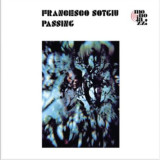
FRANCESCO SOTGIU - Passing 2x12"

Francesco Sotgiu

Passing 2x12"

2x12inchMJC129005LP
Mono Jazz
21.03.2025
  • A1: Caravan (Tizol, Ellington) 5:50
  • A2: Wishes (F. Sotgiu) 3:05
  • A3: Ballad For Aisha (Tyner) 5:11
  • A4: Stranatole (F. Sotgiu) 2:50
  • B1: Black Bats And Poles (Walrath) 4:14
  • B2: 7Th Street (F. Sotgiu) 4:48
  • B3: Wise One (Coltrane) 3:24
  • A1: Afro Blue (Santamaria) 3:37
  • A2: Duke Ellington’s Sound Of Love (Miingus) 4:48
  • A3: Take Five (Desmond) 5:00
  • A4: Lotus Blossom (Strayhorn) 1:06
  • B1: Passing (F. Sotgiu, L. Bonafede) 7:09
  • B2: Calm (F. Sotgiu) 4:35
  • B3: My Foolish Heart (Washington, Young) 6:37

Francesco Sotgiu has forged a unique and very swinging project of songs. With a quintet consisting of Luigi Bonafede on piano, Emanuele Cisi and Riccardo Luppi on woodwinds, Salvatore Maiore on bass, Francesco on drums, and with special guest Paolo Fresu on trumpet to cap off this heartfelt collection. There is also a nice diversity of groups within this larger collection. A nice trio piece called “Calm” featuring Paolo Birro sitting in with Marco Micheli and Francesco. And one called “Lotus Blossom” where Francesco shows his considerable skills and soul on violin. But the bulk of the material is straight-ahead jazz and is totally swinging and soulful, proving that jazz has no borders and is a worldwide language to which Francesco has added to that tradition with this project and all the great voices he has included here. Bravo maestro.

This is the comment of Gil Goldstein, American accordion player who won 5 Grammys and collaborated with giants such as Gil Evans, Wayne Shorter, and Michel Petrucciani.

This record was recorded in the middle of the pandemic times, and most of the work for preparing this record took place via the telephone: the selection of the songs on paper, the exchange of ideas on arrangements, staff and instruments, a sort of “phone rehearsal” of the structure of the songs, with the choice of a solo; everything else, everything that will happen in the recording sessions, is the result of a controlled improvisation, a jam session masterfully captured in the studio through the use of well-positioned ribbon microphones.

This is why “Passing,” literally “passing” or “crossing”: because the musicians have gone through listening to these songs as teenagers, and find themselves today, as a mature meeting of old friends who create an informal game made of nostalgic fun, great personality, confrontation, and deep spirituality. In the classic “Caravan” by Ellington and Tizol or “Afro Blue” by Mongo Santamaria, Coltrane toning, the Latin accent of the rhythm section supports the interpretation of the theme and the interplay in the solos between the soprano and tenor saxophones by Cisi & Luppi, and the piano by Bonafede.

A certain elegance in the execution distinguishes pieces such as Duke Ellington’s “Sound of Love,” yet another tribute by Mingus to the Duke, with a calibrated solo on the double bass of Maiore and the flute by Luppi, the immortal “Take Five” by Paul Desmond, with the highlighted soprano by Cisi, “Wishes,” “7th Street,” and the eponymous “Passing,” all pieces composed by Sotgiu, characterized by the precise medium/fast drive of the drums and a certain “cinematic” taste of the main themes.

In songs such as “Black Bats and Poles,” composed by trumpeter Jack Walrath for the Mingus Orchestra, and in “Stranatole,” an original piece in which Sotgiu writes a theme of Monk’s influence and enjoys overturning the traditional “Anatole Jazz” structure, the quintet opts for an effective hard bop language, with exciting moments of dazzling virtuosity in Bonafede’s solo. While in Coltrane’s “Wise One” and McCoy Tyner’s “Ballad for Aisha,” we enter a modal, mystical, and ceremonial jazz, of a cosmic depth, which seems to hover in the sweet volume of the great hall of the recording studio. These are truly magnificent interpretations.

A special separate mention for two classics such as “My Foolish Heart” by Victor Young, performed in trio by Sotgiu, Maiore, and the unmistakable trumpet by Paolo Fresu, and the (unfortunately very short) “Lotus Blossom” by Billy Strayhorn and Duke Ellington, which in the piano-violin duo of Birro and Sotgiu, in a minute gives a suspended momentary magic, sums up the roots of African-American jazz music, and also referencing an old-fashioned Italian musical sensitivity, typical of Nino Rota’s music for Federico Fellini’s films.

Сделать предзаказ21.03.2025

он должен быть опубликован на 21.03.2025

26,47
Luponero - Luponero (LP)

Luponero aus Finnland ist ein alternatives Hardrock-Kraftpaket, angeführt von Marco Luponero, dem Gründer von Terrorwheel und späterem Altaria-Bassisten. Die explosive Energie und die mitreissenden Melodien des Trios haben ihnen eine treue Anhängerschaft eingebracht und ihre rohen, ehrlichen Texte spiegeln das Chaos und die Schönheit des modernen Lebens wider. Auf ihrem selbstbetitelten Debütalbum erforschen Luponero einen positiven Nihilismus, inspiriert von einer breiten Palette an Einflüssen, von Grunge, Punkrock und Classic Rock bis zu 80er-Synthwave, Ambient-Pop und Post-Punk.

Сделать предзаказ21.03.2025

он должен быть опубликован на 21.03.2025

25,42
MARIO RUSCA - 4th Dimension LP 2x12"

‘4th DIMENSION’ is the last and probably greatest album ever recorded by Italian piano Maestro Mario Rusca. This monumental music produc"on features tracks in Nonet, Quintet and Trio. Along with the faithful rhythm sec"on composed by Riccardo Fioravan" on bass and Maxx Furian on drums, on this slamming cinema"c jazz album Mario Rusca teamed up with two extraordinary wind players: legendary Flavio Boltro (of Michel Petrucciani Quintet fame) on trumpet and Gabriele Comeglio on sax alto.

As far as the choruses are concerned, Nicole4a Tiberini, Mar"na Rossi and Alice Macchi, from Maestro Rusca’s ensemble music courses at the Civica di Jazz School, provide inspired and swinging backing vocals. The cherry on the cake, the element that gives to ‘4th DIMENSION’ a pulsa"ng and swinging’ drive, is the par"cipa"on on the album of Marco Fadda, one of Italy’s leading percussion players.

This heterogeneous ensemble has shaped, during 5 days of intense studio recordings, an absolute masterpiece full of swinging rhythms along with a few magical in"mate moments. In his 65 years career, Italian piano legend Mario Rusca has shared the stage and recording studios with luminaries such as Chet Baker, Cur"s Fuller, Gerry Mulligan, Lou Donaldson, Art Farmer, Lee Konitz, Dusko Gojkovic, Enrico Rava, Tullio De Piscopo, Kenny Clarke, Stan Getz, Toots Thielemans, Gianni Basso, Pepper Adams, Steve Lacy and Tony Sco4 (with whom he formed an indissoluble partnership).

Being accompanied in this album by extraordinary musicians, Rusca chooses to flow in a repertoire that, like in his most recent records for Mono Jazz, bridges between original pieces and revisited standards from the American Jazz Songbook, approached with unprecedented sensi"vity and depth.

The journey of ‘4th DIMENSION’ is an extraordinary cinema"c musical voyage across various styles ranging from Bop, Hard Bop, Cool, Funk and La"n Jazz. ‘4th DIMENSION’ is a perfect follow up to the interna"onally acclaimed Easy Tempo legacy! In these 13 tracks, “il Maestro” embraces and enhances a ‘cinema"c’ component in his music - an a4ribute he has long cul"vated through original soundtracks and library albums recorded for diverse cult Italian labels.

This, as we were saying, is achieved through the addi"on of percussionist Marco Fadda, who introduces a series of rhythmic nuances across several tracks, and of the extraordinary female vocal trio reminiscent of I Cantori Moderni of Alessandro Alessandroni & Edda Dell'Orso, used in the tradi"on of Italian composers of ‘60s and ‘70s film music.

This natural progression reflects Italy's history, where jazz musicians have long been involved in soundtracks and film scoring since the late ‘50s. Italian jazz has integrated this approach into its composi"on and arranging styles, as demonstrated in the first 10 volumes of the Easy Tempo series. A spirit and tradi"on that Rusca's ‘4th DIMENSION’ record con"nues. Listening to some of the tracks on the record evokes the legendary works created for cinema by Piero Umiliani, Piero Piccioni, Lelio Lu4azzi, Armando Trovajoli, Gianni Ferrio and others.

Сделать предзаказ21.02.2025

он должен быть опубликован на 21.02.2025

26,47
ADRIAN YOUNGE, ALI SHAHEED MUHAMMAD & AZYMUTH - AZYMUTH LP 2x12"

Azymuth JID004 is the fourth installation in the Jazz Is Dead catalog. This album features newly recorded songs by Adrian Younge and Ali Shaheed Muhammad and Azymuth, the beloved Brazilian samba funk trio. Azymuth JID004 showcases the trio's distinctive sound as the bedrock for some of the greatest Brazilian albums of the 1970s (Hyldon, Marcos Valle, etc.) All songs produced by Adrian Younge & Ali Shaheed Muhammad. Recorded and mixed by Adrian Younge at Linear Labs, the preeminent analog studio of Los Angeles, CA.

нет на складе

Закажите сейчас, и мы закажем товар для вас у нашего поставщика.

32,14

Последний логин: 11 мес. назад
XLNT - HIGH TIDE LP

Xlnt

HIGH TIDE LP

12inchDFA2409LP
DFA Records
21.01.2025

Christened ‘High Tide’ after the sudden rising of the LA River basin during a particularly epic and rare rainfall, this cosmic slop funk jam was born from the minds of Devin Flynn (Pixeltan) and Eddie Ruscha (Secret Circuit), two individuals with a deep connection to Los Angeles’ tap water sources. While traipsing through the aisles of an Atwater Village bodega, the two mustered up a plan to create a rhythmic piece so delectable as to turn peoples’ heads inside out and pummel the senses with a wobbly Jah Wobble bass sound and a toy drum machine ‘no toy’ style back beat. They figured if they laced it up with enough electronic scuzz, the masses would be sure to want to sip from its nectar.

When DFA got wind it was all systems go and, from then on, all relevant parties knew that they should sit on the track for at least five years before it was released, otherwise the world at large would not be ready for it. The remixes are by Eddie himself - as Secret Circuit - and Dr. Dunks, aka Eric Duncan, a fellow Angeleno (at least at heart). Eric and Devin rolled through the streets as small children, shredding curbs and tagging local ice cream trucks, so it was inevitable they would reconnect and jam on ‘High Tide’.

Devin Flynn is an animator, musician and teacher who has worked on projects like Gary Panter’s web series Pink Donkey & The Fly and MTV2’s Wonder Showzen. He has previously released on DFA with Pixeltan, a trio - Flynn, Hisham Bharoocha of Black Dice and singer Mika Yoneta - that recorded with The DFA at the label’s inception, creating two seminal singles.

Eddie Ruscha is another DFA veteran, having remixed artists including Wolfram and Museum of Love. He has been making music for decades, as Secret Circuit and with myriad other aliases and collaborators, in addition to recording under his own name. He has released on labels like Beats in Space and Emotional Response, among others.

For fans of Young Marco, Suzanne Kraft, Prins Thomas, Khotin, Gaussian Curve.

нет на складе

Закажите сейчас, и мы закажем товар для вас у нашего поставщика.

14,66

Последний логин: 9 мес. назад
Secret Echoes - Bring My Beat Back

Mexican supergroup Secret Echoes releases debut single ‘Bring My Beat Back’ on Crosstown Rebels. The project combining a trio of revered talents from the Mexican electronic landscape sees Estefani Brolo, Diego Cevallos, and Marco Anaya unite to reveal a first glimpse into their forthcoming debut album, with the single remixed by Zombies In Miami focus on the song's hypnotic vocals and raw emotive energy.

Secret Echoes is a dynamic collaboration of three acclaimed artists from Mexico’s electronic music scene: Estefani Brolo (of BROLORZIO & I.M YONI), Diego Cevallos (AKA Métrika), and Marco Balcazar (AKA Balcazar of Balcazar & Sordo). With each member bringing a distinct musical background to the group, creating a unique fusion of sound set to resonate with electronic music enthusiasts worldwide, Secret Echoes creates music that blends house foundations with melodic innovation.

The origins of the project trace back to the height of the pandemic, when Cevallos and Balcazar began collaborating on an album they had always envisioned. Renting a unique studio in Jiutepec, Mexico, equipped with analogue tape machines and high-end studio gear, and inviting their talented friends to contribute, Brolo soon joined the project - adding her melodic and lyrical expertise. The result was the recording of 11 tracks that were put on hold until the time was right. After revisiting the tracks and performing them live, ‘Bring My Beat Back’ caught the attention of Crosstown Rebels founder Damian Lazarus during 2024’s Day Zero performance. Inspired by its energy and potential, Lazarus signed the entire album, and this first single provides a first glimpse of what is to come from the enigmatic trio on an imprint known for continually pushing boundaries within house music.

‘Bring My Beat Back’ showcases the group’s distinctive blend of house music foundations, guided by Brolo’s captivating vocals above shimmering synths and refined percussion grooves to deliver a silky-smooth production balancing classic nuances with contemporary touches for the dance floor. Creatures Of The Night founders and Permanent Vacation regulars Zombies In Miami provide an extra layer to the package, with the renowned duo’s remix drawing for neon-lit synths and hazy tones for a deep dive into the late-night hours.

нет на складе

Закажите сейчас, и мы закажем товар для вас у нашего поставщика.

13,66

Последний логин: 8 мес. назад
THE ARISTOCRATS - DUCK LP 2x12"

Das lauteste Rock/Fusion-Instrumental-Power-Trio der Welt beschert uns ihr erstes Konzeptalbum: In DUCK flieht der Protagonist, eine Ente, vor einem Pinguinpolizisten nach New York, wo Aufreger und Gefahren auf ihn warten. Die Aristocrats - Guthrie Govan/Gitarre, Bryan Beller/Bass, Marco Minnemann/Schlagzeug - haben ein kaleidoskopisches musikalisches Universum erschaffen, in dem sie sowohl typische Genre-Pastiches als auch einfallsreiche neue Arrangements erforschen - einige davon überraschend gefühlvoll und sensibel -, um die Geschichte zu ihrem rasanten Ende zu führen. Und während ihre offensichtliche Virtuosität und die ihr innewohnende Absurdität wie immer vorhanden sind, wird sie nun in der bisher ambitioniertesten kompositorischen und klanglichen Produktion der Band eingesetzt. Die abwechslungsreiche Musik begleitet den Protagonisten von der Ente in einem Großstadt-Tanzclub ("Aristoclub") über den gewaltsamen Rauswurf aus einer Spelunke ("Hey, Where's MY Drink Package") bis hin zum düsteren Thema für seinen Pinguin-Verfolger ("Sgt. Rockhopper") und endet schließlich mit dem actiongeladenen Balkan-Fusion-Finale "This Is Not Scrotum", bei dem der Geiger Rusanda Panfili (Hans Zimmer Live) als seltener Aristocrats-Album-Spezialgast auftritt. Duck ist das erste neue Studioalbum der Aristocrats seit fünf Jahren und wurde und mit einem Original-Artwork von Lance Myers (Space Jam) versehen. Und es ist klar, dass die ARISTOCRATS ihre kollektive Kunstfertigkeit auf ein völlig neues, wenn auch absurdes, Niveau gebracht haben. Als Standard CD, CD Deluxe Package in Box mit USB-Stick mit Stunden an Bonus-Material, Schlüsselanhänger und mehr sowie Dopple-Vinyl-LP erhältlich!

Сделать предзаказ08.03.2024

он должен быть опубликован на 08.03.2024

39,29
MARGOT ERKNER - MARGOT ERKNER LP

Unter dem Pseudonym MARGOT ERKNER versammeln sich der als T.Raumschmiere bekannte Marco Haas, sowie Gitarrist und Sänger Timo Tolkmitt und Bassist Gunnar Refardt. T.Raumschmiere erlangte Weltruhm als Ravepunker mit großen Hits wie "Monster Truck Driver", Timo Tolkmitt kennt man von Bands wie DxBxSx, Blutige Knie oder Payola. Das junge Trio (geboren 2021 im Feuermelder, Berlin-Friedrichshain) knüpft an diese Erfolge nahtlos und zeitlos an. Was heißt zeitlos? Wohl eher Zeitgeist! Denn der vergnügt sich eindeutig wieder da, wo es richtig Bock macht: Als Band, Trio, Bass, Gitarre, Schlagzeug, laut und ohne Klick. MARGOT ERKNER raven mit Sandsturmbluespunkrock und trocknen verdrehten Augen mit grundsächlicher Ironie. Das macht Spaß. Die 10 Songs auf ihrem selbstbetitelten Debüt sind laut und wild, haben eine Menge zu sagen und reißen euch unerbittlich aus euren viel zu bequem eingesessenen Ohrensesseln - stellt euch vor die Scherben wären eine Punkband gewesen und ihr kommt nah ans Feeling, das MARGOT ERKNER auf ihrem gloriosen Debüt heraufbeschwören. Unterstützung haben sie dabei in Form von Gastauftritten von Barbara Morgenstern, Caspar Brötzmann, Paul Frick, Hainbach und Jan Brauer. MARGOT ERKNER sind auf der Reise, im Gepäck: wütende Lust und lustige Wut! Oder mit Billy Ocean: When the going gets tough, the tough gets going.

Сделать предзаказ23.02.2024

он должен быть опубликован на 23.02.2024

18,70
Hochzeitskapelle + Japanese Friends - The Orchestra In The Sky (TOKYO) LP

There’s a big clue to the pacific wisdom of The Orchestra in the Sky in the artist name – Hochzeitskapelle + Japanese Friends. For this is, indeed, music based in, and resonating with, friendship, camaraderie, collaboration, and creative exchange. Across two albums – one documenting recordings from Tokyo, the other an expansive double album of sessions from Kobe – Hochzeitskapelle gather around them some of the finest voices in Japanese independent and underground pop music, like Tenniscoats, Eddie Marcon, Yuko Ikema, and Kama Aina, and explore an open field of music, full of creative encounters.

You may already know Hochzeitskapelle as the German instrumental quintet formed by members of The Notwist, Alien Ensemble, and friends from the jazz scene. Across three albums, one a collaboration with Kama Aina (2018’s Wayfaring Suite), they’ve developed a way of playing together that’s intimate and playful, rich and human; it’s a music that’s deliberately rough around the edges, and that nestles cosily into the everyday. Their relationship with Japanese indie has developed over the years, doubtless encouraged by Saya´s „Minna Miteru“, compilations series of Japanese indie pop for Morr Music. A peripatetic gang, Hochzeitskapelle also recently backed Japanese singer-songwriter Makoto Kawamoto on her new album, Hikari.

In many ways, The Orchestra in the Sky feels like the culmination of a set of ongoing cross-cultural exchanges: the Minna Miteru compilations; tours of Japan by Hochzeitskapelle and The Notwist; and indeed, Markus Acher’s Spirit Fest group with Saya and Ueno of Tenniscoats. The latter are present throughout much of The Orchestra in the Sky, and Saya’s voice is particularly winning on songs like “Tsuki no oto”, where the two outfits are joined by brass ensemble Zayaendo. There are several lovely turns from singer-songwriter Yuko Ikema, and Eddie Marcon appear twice; their songs are still beautiful, spectral acid folk, but with Hochzeitskapelle filling the details with lush, sad brass and strings.

But it’s also the potentially lesser-known names that shine through The Orchestra in the Sky, like the frail folk of Gratin Carnival; the delightful, gentle pop songs by sekifu and Zayaendo member, Kanako Numata; a trio of beautiful, stumble-drunk melodies played in swaying consort with popo. That group, along with the presence of Zayaendo, Fuigo, and Mitamurakandadan?, make strong connections with the Japanese underground’s love of brass bands, partly informed by the tradition of chindon’ya, marching bands that walk the streets of Japanese cities. They also all appeared on the recent Alien Parade Japan compilation of such groups, assembled by Acher and Saya.

All things converge, then, on The Orchestra in the Sky, a smart, spirited collection of heavenly pop songs, intimate folk melodies, lungfuls of joyous brass, deep weeping strings, and swooning sighs. The last words go to Acher himself: “Many things we did in the last years come together here and it feels like something special was captured.” We hope you like what you hear.

нет на складе

Закажите сейчас, и мы закажем товар для вас у нашего поставщика.

22,65

Последний логин: 2 г. назад
Hochzeitskapelle + Japanese Friends - The Orchestra In The Sky (Kobe) 2x12"
 
16

There’s a big clue to the pacific wisdom of The Orchestra in the Sky in the artist name – Hochzeitskapelle + Japanese Friends. For this is, indeed, music based in, and resonating with, friendship, camaraderie, collaboration, and creative exchange. Across two albums – one documenting recordings from Tokyo, the other an expansive double album of sessions from Kobe – Hochzeitskapelle gather around them some of the finest voices in Japanese independent and underground pop music, like Tenniscoats, Eddie Marcon, Yuko Ikema, and Kama Aina, and explore an open field of music, full of creative encounters.

You may already know Hochzeitskapelle as the German instrumental quintet formed by members of The Notwist, Alien Ensemble, and friends from the jazz scene. Across three albums, one a collaboration with Kama Aina (2018’s Wayfaring Suite), they’ve developed a way of playing together that’s intimate and playful, rich and human; it’s a music that’s deliberately rough around the edges, and that nestles cosily into the everyday. Their relationship with Japanese indie has developed over the years, doubtless encouraged by Saya´s „Minna Miteru“, compilations series of Japanese indie pop for Morr Music. A peripatetic gang, Hochzeitskapelle also recently backed Japanese singer-songwriter Makoto Kawamoto on her new album, Hikari.

In many ways, The Orchestra in the Sky feels like the culmination of a set of ongoing cross-cultural exchanges: the Minna Miteru compilations; tours of Japan by Hochzeitskapelle and The Notwist; and indeed, Markus Acher’s Spirit Fest group with Saya and Ueno of Tenniscoats. The latter are present throughout much of The Orchestra in the Sky, and Saya’s voice is particularly winning on songs like “Tsuki no oto”, where the two outfits are joined by brass ensemble Zayaendo. There are several lovely turns from singer-songwriter Yuko Ikema, and Eddie Marcon appear twice; their songs are still beautiful, spectral acid folk, but with Hochzeitskapelle filling the details with lush, sad brass and strings.

But it’s also the potentially lesser-known names that shine through The Orchestra in the Sky, like the frail folk of Gratin Carnival; the delightful, gentle pop songs by sekifu and Zayaendo member, Kanako Numata; a trio of beautiful, stumble-drunk melodies played in swaying consort with popo. That group, along with the presence of Zayaendo, Fuigo, and Mitamurakandadan?, make strong connections with the Japanese underground’s love of brass bands, partly informed by the tradition of chindon’ya, marching bands that walk the streets of Japanese cities. They also all appeared on the recent Alien Parade Japan compilation of such groups, assembled by Acher and Saya.

All things converge, then, on The Orchestra in the Sky, a smart, spirited collection of heavenly pop songs, intimate folk melodies, lungfuls of joyous brass, deep weeping strings, and swooning sighs. The last words go to Acher himself: “Many things we did in the last years come together here and it feels like something special was captured.” We hope you like what you hear.

нет на складе

Закажите сейчас, и мы закажем товар для вас у нашего поставщика.

31,89

Последний логин: 2 г. назад
Brazilia Maravilha - Vol. 1
 
26

Brazilia Maravilha... A real wonder of selected Brazilian tunes.
You will feel the mood and breeze like you were over there!

28 songs including some great classics as "Lamento" by Nelson Riddle, "Mas Que Nada" by Elza Soares, "Groovy Samba" by Cannonball Adderley and "So Nice (Samba De Verao) by Sérgio Mendes as well as more unique ones.

Kindly remastered tracks from master tapes to keep the dusty roots of the original sound. Double vinyl in a balanced mix of vocals, instrumentals, bossa nova and some jazzy beats tunes.

нет на складе

Закажите сейчас, и мы закажем товар для вас у нашего поставщика.

30,04

Последний логин: 2 г. назад
VARIOUS - BRAZILIAN RARE GROOVE 2x12"
Сделать предзаказ03.03.2023

он должен быть опубликован на 03.03.2023

26,26
Wackelkontakt - Heal The Split

Wackelkontakt are the trio that currently spearheads the Jerusalem scene, playing music that's precise yet eclectic, cruel and abrasive even when vulnerable. An unholy mixture of trap, industrial, experimental and power electronics. Wackelkontakt have already made a global mark with the sensory overload of their live multimedia performances and the scintillating presence of frontwoman Tomer Damsky AKA MC Slice, backed by Eyal Lally Bitton (electronics, visuals, scenography) and Marco Milevski Tomasin (drums and electronics). Wackelkontakt's wildly eclectic approach, bound by an impossibly consistent sound, is a direct result of the band living a minute away from The Old City's Damascus Gate and recording in the ultra-orthodox neighbourhood of Me'a She'arim; Jerusalem is present in the music, not in the shape of touristic exotica but in a sense of conflict, paranoia and isolation. The lyrics are equally contradictory, schizophrenic and chaotic. Emotional manipulation clashes with a desire to shake and be shaken, to allow oneself to become sucked as far as possible from self-loathing. When self-reflection arises it is bitter, ridiculous, pathetic, interweaving with philosophical texts lifted directly from the likes of Deleuze & Guatarri, Foucault, Artaud, WJT Mitchell and others.

Сделать предзаказ26.07.2021

он должен быть опубликован на 26.07.2021

18,36
OSLO TAPES - OR

Oslo Tapes

OR

12inchPELV169
Pelagic Records
04.06.2021

For fans of AMON DÜÜL, CAN, FAUST, NEUBAUTEN, BRIAN ENO, CLUSTER, CULT OF LUNA, NINE INCH NAILS, MASSIVE ATTACK OR - Norwegian for "dizzy, confusing" - is the third album from Italian avant-rock trio OSLO TAPES, and the album keeps what the word promises: a dizzying ride through a feverish dreamscape of imaginary Norwegian highlands painted in cubistic shapes. Hypnotic basslines, repetitive drum patterns, new wave synths and psychedelic guitar textures covering the full width of the stereo room, all seamlessly woven into a gloomy Kraut - tapestry which sounds refreshingly_ modern, while paying tribute to the aged genre. Marco Campitelli, born and raised in Lanciano on the Southern Adriatic coast of Italy, founded OSLO TAPES in the early 2010s after a trip to the Norwegian Capital left him deeply impressed. Under the influence of this infatuation, he composed and produced OSLO TAPES' first record "OT (un cuore in pasto a pesci con teste di cane)" within a week in 2013. Supervised and supported by friend Amaury Cambuzat (faUSt / Ulan Bator), Campitelli's first attempt to capture the mystical vibe of Norway was released on DeAmbula Records (Ulan Bator, The Marigold, 7C). In 2015 he was joined by Mauro Spada and Federico Sergente (Zippo) and together they recorded OSLO TAPES' sophomore album "Tango Kalashnikov", also released on DeAmbula Records. "OR" is a much more collaborative effort for OSLO TAPES than the first two records. Next to Campitelli, the album was co-produced by Amaury Cambuzat (Ulan Bator) and James Aparicio (house engineer for Mute Records and mixing and mastering engineer for Depeche Mode, Mogwai, Nick Cave). During production, Campitelli became friends with Emil Nikolaisen of Serena Maneesh w h o guided him "through the Norwegian imagination". As a result, the record's title is also courtesy of Nikolaisen. During this journey spanning over eight songs, OSLO TAPES, completed by Mauro Spada (bass) and Davide Di Virgilio (drums and percussions) construct a dense and ever so dark atmosphere that is captivating, brooding and imaginative. After a spiraling takeoff with "Space is the place", we find ourselves floating weightlessly above the nocturnal Norwegian highlands through "Zenith" and "Kosmik Feels", an airy circulation of jazzy drums, pulsating bass lines and shimmering guitar clouds. We saddle up, gallop across the sky on "Bodo Dakar" and drift back into the night on "Cosmonaut". The trifecta of "Norwegian Dream", "Exotic Dreams" and "Obession Is The Mother of All" conclude this agitated fever dream journey. There is a sense of solitude in OSLO TAPES' compositions which makes it easy to imagine them as interstellar jam sessions between cosmonauts, each in their own isolated space capsule. Every spin of "OR" brings new discoveries: sometimes it is a noise that we did not notice before, sometimes a slight change in the drum groove, sometimes just a piece of the lyrics, meandering through our mental space. "OR" is a vertiginious journey to be remembered - and repeated. "The focus of Oslo Tapes is to harmonize the noise" says Marco Campitelli.

Сделать предзаказ04.06.2021

он должен быть опубликован на 04.06.2021

18,03
LUZ AZUL - LUZ AZUL

Luz Azul

LUZ AZUL

12inchCORTIZONA009
CORTIZONA
18.03.2020

Luz Azul is a group started by LA-based vocal and performance artist Anna Homler (aka Breadwoman) together with musicians Marcos Fernandes and Robert Montoya in 2007. On this record they compose their own mesmerising cosmic universe where the hypnotic speaking in tongue voice of Anna Homler blends mesmerising together with the sound of her found toys intensified by the shamanistic percussion of Marcos and the pulsating electronics of Montoya.

As fellow percussionists and sound artists, Marcos Fernandes and Robert Montoya's collaborations began in 1983 and ran the gamut from ambient to noise, rock to electronica to improvisation. Both were founding members of Trummerflora, a collective of creative musicians based in San Diego from 1999 to 2009.

All three artists were active in the improvised music scene in Southern California and met at Spring Reverb 2006, an annual festival of experimental music curated by the Trummerflra Collective. At the time, Fernandes was experimenting with processed percussion as well as phonography and samples while Montoyawas exploring improvisational possibilities on the computer.

Fernandes and Homler expressed their mutual interest in collaborating but it was not until the fall of 2007 that they performed a series of concerts together. Pleased with the results, they performed together again in the spring of 2008 with the addition of Montoya. There was chemistry and the trio promptly decided to enter the studio to capture their collective magic. The session yielded the music found on Luz Azul.

Anna Homler - voice, pocket theremin, sample sticks, whistles, assorted dry and squeaky objects, greeting cards, wood devil, tiny metals and motors and potato slicer
Marcos Fernandes - percussion & electronics
Robert Montoya - electronics

нет на складе

Закажите сейчас, и мы закажем товар для вас у нашего поставщика.

18,45

Последний логин: 6 г. назад
Marconi Union - Dead Air

Marconi Union

Dead Air

12inchTAOLP062
Just Music
03.12.2019

Dead Air is Marconi Union's tenth studio album of a career that began in 2002.

Starting with the following year's Under Wires And Searchlights, they've created an explorative body of instrumental work that's shifted between electronica, dub, minimalism, avant-jazz and ambient music. Along the way they've collaborated with the likes of Jah Wobble, remixed Max Richter and Vök and provided soundtracks for art installations and other visual media. They've also had their own music remixed by Biosphere and Japan's Steve Jansen, among others.

The new album offers ample evidence of a band in its prime. Marconi Union still sound vital and original, enthused by the possibilities that music has to offer. "We've never wanted to repeat ourselves," states Talbot. "We've made ten albums and have been going for 17 years, but it still feels fresh. That's been so important for us all the way through. We're looking to do new things all the time" co-founder Richard Talbot says.

Indeed, the exquisite Dead Air bears only a passing resemblance to its 2016 forerunner, Ghost Stations. The trio have dispensed with beats, brass and guest musicians this time around, opting instead for a more intimate and textural approach, a constantly evolving soundworld of tones and sensory impressions.

Dead Air also bears little resemblance to the trio's initial vision for it. "The album we set out to make had far more of a rhythmic element," explains Talbot, " but fairly late in the process, we decided to completely change direction." This is entirely in keeping with Marconi Union's guiding methodology. Ideas remain fluid throughout the writing process, until Talbot and bandmates Jamie Crossley and Duncan Meadows ultimately settle on what feels right to them.

As such, Dead Air is a sublime testament to their collective instinct.

нет на складе

Закажите сейчас, и мы закажем товар для вас у нашего поставщика.

25,17

Последний логин: 6 г. назад
Keiji Haino, Jim O'Rourke, Oren Ambarchi - In the past only geniuses were capable of staging the perfect crime (also known as a revolution) Tod

For its 50th release, Black Truffle presents the 9th album from one of the label’s core ensembles, the power trio of Keiji Haino, Jim O’Rourke and Oren Ambarchi. Drawn from a November 2015 performance at Tokyo’s now-defunct SuperDeluxe, the record’s opening piece drops us immediately into the maelstrom, abruptly cutting into an extended episode of Ambarchi’s pummelling drums, O’Rourke’s fuzzed-out 6 string bass and Haino’s roaring guitar and electronics. Eventually settling into a hypnotic bass and drum groove over which Haino unleashes some almost Ray Russell-eque skittering atonal screech, these opening 13 minutes act as a potent reminder of the trio’s power. Alongside showcasing the steady development of a unique language for the guitar-bass-drums power trio, the group’s succession of releases over the last decade has demonstrated a constant experimentation with new instruments, which continues here with O’Rourke use of Hammond organ (played at the same time as his roaming, sometimes knotty basslines). On the album’s second piece, the organ plays a key role, furnishing a harmonically rich shimmer over O’Rourke’s angular 6 string bass chords, Haino’s distant, chirping electronics and Ambarchi’s crisp cymbal work; arriving somewhere halfway between Albert Marcoeur and Terje Rypdal, this piece is undoubtedly a highlight in the trio’s catalogue so far. Sides two and three are given over to slow-burning, multi-part epics that range from spacious reflection to furious tumult. Where the trio’s previous 2LP set (This Dazzling, Genuine “Difference” Now Where Shall It Go?, 2017) was primarily instrumental in focus, here we find Haino’s voice taking the spotlight on the expansive third side, intoning, wailing and exhorting in Japanese and English over a backdrop that moves from hushed bass and organ atmospherics to rolling toms and cymbal crashes before arriving at an ecstatic finale of searing guitar, tumbling drums and reverb-saturated bass. The fourth side returns to the hypnotic grooves of the opening piece, fixing on an relentless riff and riding it into oblivion under Haino’s roaming psychedelic soloing and jagged chordal slashes.

нет на складе

Закажите сейчас, и мы закажем товар для вас у нашего поставщика.

20,55

Последний логин: 6 г. назад
  • 1
Продуктов на странице:
N/ABPM
Vinyl