
In Stock
On Stock and ready to ship
Last In: 10 days ago
12,56 €
On Stock and ready to ship

Order now and we will order the item for you at our supplier.

Repress
Dividing the Catch EP is already the 107th 12'' in the main PRRUK series and also a VA release of outstanding quality.
With names like Berlin techno stalwart Sleeparchive, Planet Rhythm usual YYYY, Marco Effe and Kaiser, ''Dividing The Catch EP'' is a versatile and club oriented slab of high end techno for connaisseurs and dj's alike.
Order now and we will order the item for you at our supplier.

Inmotion Music LTD brings back two dynamic artists Marco Effe and James Mile. Both Marco and James have been firmly cementing themselves in the Techno and House music scene for several years while gaining well wide support from DJ's across the globe..
The Mehringdamm EP consists of 3 original tracks and a remix by Spain's Eduardo De Callle.The first track, Mehringdamm is a classic rhythmic-driven belter that packs a hefty punch. The jacking 909 drums and lush synth keep the tension through out.The B-Side is slightly more experimental but has expertly captured the Eduardo De Calle.vibe. James Miles ends the EP with a jacking 909 work out named Stomp.
Order now and we will order the item for you at our supplier.

Next up on Etruria beat, is the Dutch duo Hush & Sleep who have been steadily making name for themselves in the past year. They deliver a stunning two tracks EP with Farrago and Marco Effe on remix duty. The EP starts off on a joyous note with the track Mirth. As this is an old English word for gladness, the main melody takes you on a carefree ride supported by a stomping kick and dreamy pads in the back. Farrago takes a more stripped down approach with his version. He builds on the dreamy pad, making it serve as a warm blanket over his signature tight percussion. Contradicting Mirth, the second original slowly starts to drag you into a feeling of hysteria, hence the name. Taking their signature kick as the foundation, Hush & Sleep use a haunting melody that lingers on in the back and sets an eerie mood. Marco Effe's remix is a deep stunning techno groover. Taking the main melody but twisting it into his own wonderful creation and sending you off on a journey into time and space.
Order now and we will order the item for you at our supplier.

To close out the year, Life In Patterns presents Spektrum II, the second installment in the compilation series curated by Ferdinger. This 16-track VA, scheduled to release in early December 2024, comes as a double vinyl with four digital bonus tracks and download codes.
Spektrum II ventures into the depths of dynamic techno, combining driving beats with intricate, groove-rich patterns. The compilation seamlessly shifts from deep, dubby tones to bright, euphoric moments, embodying the labels signature sound. Its a bold exploration of diverse sonic textures, blending harmonic and dissonant elements for an immersive listening experience.
On Stock and ready to ship

Im Jahr 2026 feiert Big Crown Records sein zehnjähriges Jubiläum. In zehn Jahren kann viel passieren, und das ist auch geschehen. Aus sehr bescheidenen Anfängen hat sich Big Crown zu einem der angesehensten Independent-Labels der Welt entwickelt - mit einem unglaublich talentierten internationalen Künstlerstamm und einem unvergleichlichen Katalog zeitloser Musik. Leon Michels und Danny Akalepse gründeten Big Crown im Jahr 2016 mit einem einfachen Leitgedanken: gute Musik zu veröffentlichen, an die sie glauben - unabhängig vom Genre. BCR10 - Ten Years of Big Crown ist eine Mischung aus Retrospektive und Aktualität: bewährte Perlen aus dem Backkatalog, gemischt mit grundsoliden Stücken aus den neuesten Alben. Eine Doppel-LP mit ausgewählten Titeln von Bacao Rhythm & Steel Band, Lady Wray, Brainstory, Derya Yildirim & Grup ímcek, El Michels Affair, Thee Lakesiders, Dave Guy, Les Imprimés, Homer, Thee Marloes, Lee Fields & The Expressions, Bobby Oroza, Marco Benevento, The Shacks, Paul & The Tall Trees, Thee Heart Tones, Surprise Chef, 79.5, Liam Bailey und Holy Hive. Einen tieferen Einblick in die Geschichte von Big Crown vermittelt auf perfekte Weise der Begleittext des einzigartigen Journalisten und DJs Jeff Mao.
expected to be published on 30.10.2026

Derek Kamm is the American producer behind the Kidislive project and brings more than two decades of experience.
The Long Island-raised DJ and producer has previously received support from the likes of Richie Hawtin, Marco Carola and Carl Craig, while releasing on Visionquest, but now hones his craft, combining influences from micro house, minimal and experimental. Fresh off a third outing on 8 Head Records, he is back on his own new label to explore more compelling grooves.
Opener 'Down To The Penny' has a lively carnival feel, with an excitable mix of shimmering synths and subtle guitar riffs bursting through the mix. Sweeping filters ramp up the scale as more delicate melodies hang in the air, helping to hypnotise the dance floor. There is plenty of sunshine in the rich, multilayered instrumental 'Never Stop Reaching', which builds through rousing chords and florid flute lines. Vocals arrive with an empowering message that will bring real rapture. The fantastic 'Dipper Fox' is a rugged rhythm with chunky bass and a muscular feel that's softened by wispy, swirling synths and soaring choral vocals. Last but not least, 'Shorty Circuitry' is a study in emotional soundscaping - a warm, effervescing brew with strings and breathy vocals, long-tailed chords and a sense of joy all swarming around a subtle bass guitar that moves things onward and upwards.
On Stock and ready to ship

On Stock and ready to ship

2025 Reissue.
Münchenbuchsee, a suburb of Bern, Switzerland. Stephan Eicher is the youngest of three children. His father, a radio and TV repairman, is also a jazz violinist and a sound tinkerer in his spare time. In the family home's converted fallout shelter turned studio, Mr. Eicher experiments with homemade sequencers, tortures handcrafted drum machines, and abuses reel-to-reel tape recorders—all under the fascinated gaze of young Stephan.
The boy quickly develops a musical curiosity, exploring sound through various experiments and wanderings. Alongside his younger brother Martin, Stephan crafts audio plays on a homemade multi-track recorder (essentially several cassette decks hooked together!), which they write, record, add sound effects to, and perform for family and friends. Just a couple of nice kids, really...
Then comes 1972, and Lou Reed's Transformer album changes everything for the Eicher kids. For 13-year-old Stephan, it's a revelation—especially "Vicious", the opening track, which he plays on repeat for months. He convinces his father to buy him an electric guitar. Not stopping there, his father also builds him a tube amp using an old radio.
Then comes adolescence. A rough one. Stephan leaves home at 16 and moves to Zurich. With obvious artistic talent, he persuades his art teacher to help him get into F+F, a radical, alternative art school—despite his young age. Accepted, he starts learning video techniques, determined to become a filmmaker.
At F+F, Stephan organizes Dada-style happenings and concerts with a group of friends known as the Noise Boys. Among them: one of his teachers on bass, Veit Stauffer on drums (who would later found ReR/Recommended Records), his girlfriend Sacha on vocals, and Stephan on guitar. In one of their early performances, they release a remote-controlled mouse covered in dull razor blades into the audience to create panic and chaos. Keeping with this aggressive, confrontational spirit, they once played a concert while wearing headphones blasting Tristan and Isolde, trying to perform their own songs simultaneously—to maximize the cacophony. The goal was always the same: clear the room.
Their “songs,” if you can call them that, followed suit. Take "Hungeriges Afrika", for instance—performed entirely with power drills and some drum feedback.
To make ends meet, Stephan returns to Bern on weekends to work as a waiter at the Spex Club, the city’s main punk venue. On September 16, 1980, during a show by proto-electro group Starter, the police raid the club and arrest everyone. Stephan, who manages to avoid arrest, seizes the opportunity to “borrow” Starter’s gear left behind. He suddenly finds himself in possession of a Roland Promars synth, a Korg MS20, and a gorgeous CR78 drum machine, which he runs through a Big Muff distortion pedal to get that perfect gritty sound.
He then sets out to reinterpret some Noise Boys tracks, reworking them during impromptu sessions recorded on a dictaphone (yes, a dictaphone—now the lo-fi sound makes more sense, doesn’t it?). He ironically titles the resulting cassette "Stephan Eicher spielt Noise Boys" ("Stephan Eicher plays Noise Boys"). This gem features seven tracks, which are the ones reissued here.
Back in Zurich, he visits his friends Andrew Moore and Robert Vogel, who have a DIY cassette duplication setup. They make 25 copies of Stephan Eicher spielt Noise Boys for Stephan and his friends. Robert encourages him to visit Urs Steiger of Off Course Records and play him the tape.
Without much hope, Stephan shows up at Urs’s office. But Urs is instantly hooked and suggests releasing a 7” single. Due to space constraints, they reluctantly drop two of the seven tracks ("Hungeriges Afrika" and "One Second"). As for the musical score featured on the cover—it was randomly chosen and remains a mystery to this day. Calling all music theory nerds!
The 7-inch is pressed in 750 copies and released in the first week of December 1980—a date Stephan remembers well, as it’s the same week John Lennon was killed. Smartly, Urs sends a promo copy to François Murner, Switzerland’s answer to John Peel, who hosts a show on alternative station Sounds. Murner falls in love with the record and starts giving it airtime. To Stephan’s surprise, sales follow—and people actually seem interested in his music.
Even this modest underground success scares Stephan a bit. He stops making music for a year and moves to Bologna, where he works as a programmer at Radio Città, a feminist radio station.
Meanwhile, Stephan’s younger brother Martin, who’s also involved in the punk scene, joins the band Glueams as a singer and guitarist. Glueams, named after the fanzine run by two of its members (drummer Marco Repetto and bassist GT), eventually rebrands as Grauzone. Stephan is invited to their shows to project hacked Super 8 visuals live on stage.
Urs Steiger, now working on a compilation titled Swiss Wave – The Album, asks Grauzone to contribute alongside bands like Liliput, Jack and the Rippers, The Sick, and Ladyshave (Fall 1980).
For the album, Martin tasks Stephan with producing their recording sessions. Under Stephan's artistic direction, two tracks emerge: "Raum" and "Eisbär". During "Eisbär", Martin plays a minimalist bass line borrowed from post-punk band The Feelies (just an open string). Drummer Marco Repetto struggles to keep time. Later that evening, unhappy with the takes, Stephan builds a four-bar drum loop from a ¼-inch tape and uses it instead of the flawed original. He then adds bleepy synths and wind sounds to complete the track’s icy vibe before handing it over to Urs.
The Swiss Wave – The Album compilation is released quietly at first, but things snowball thanks to "Eisbär", which eventually becomes a smash hit—selling over 600,000 singles.
Meanwhile, Stephan plays in a rockabilly band called SMUV (named after Switzerland’s social security agency) and begins producing artists, including the debut album of Starter (1981), which includes a more pop-oriented version of "Minijupe".
By early 1982, Stephan starts spending time with the post-punk girl band Liliput (formerly Kleenex). They’re older than him, and he happily drives them around in his Renault Major, acting as their roadie.
By 1983, Grauzone—signed to the major label EMI, which turned out to be a misstep—is falling apart. Stephan begins to pivot toward a more mainstream pop sound with his debut solo album Les Chansons Bleues.
But that... is already another story.
On Stock and ready to ship

Marcos Valle is one of the few artists you cannot miss if you have the slightest interest in Brazilian music. Whether your taste is focused on bossa jazz, samba, psych folk or soul, Valle has surely recorded a great album for you. His much sought-after and stunning self-titled album from 1970 includes ‘Ele E Ela’, as sampled on Jay-Z’s ‘Thank You’, as well as some of his most popular songs like ‘Freio Aerodinamico’ and ‘Os Grilos’, swinging between sophistication and groove… Remastered from the original tapes and pressed on 180g vinyl. This release is part of our new reissue series that comprises many other outstanding Brazilian classics by the likes of Evinha, Cassiano, Gerson King Combo, Hyldon... Marcos Valle is one of the few artists you cannot miss if you have the slightest interest in Brazilian music. Whether your taste is focused on bossa jazz, samba, psych folk or soul, Valle has surely recorded a great album for you. By the late 60s he had already put out enough quality records to secure a place within the top Brazilian songwriters of all time, but his career luckily did not stop there and he continued releasing amazing music over the following decades until this day. By the dawn of the 1970s, the multi-talented Valle was entering a new era, ready to test the government censors (Brazil was under strict military rule since a coup d’état in 1964) and express a socially aware stance and a playful hodge-podge of musical styles including samba, bossa nova, baião (a rhythmic beat from the rural northeast of Brazil), black American music, and rock. “Marcos Valle” was originally released in 1970 and features a dynamic musical backing from some of Brazil’s most gifted players. Hip-hop fans may even recognize the opening horn blasts of ‘Ele E Ela,’ sampled to great effect on Jay-Z’s “Thank You.” It includes some of his most popular songs like ‘Freio Aerodinamico’ and ‘Os Grilos’, swinging between sophistication and groove…
On Stock and ready to ship

David Byrne & Fatboy Slim’s acclaimed 2010 album Here Lies Love receives its first-ever vinyl release to coincide with a new production opening on Broadway this summer. Here Lies Love is a double-disc song cycle – improbably poignant, decidedly surreal, surprisingly thought provoking – about the rise and fall of the Philippines' notorious Imelda Marcos. It was conceived by David Byrne; composed by Byrne and DJ/recording artist Fatboy Slim, AKA Norman Cook; and performed by a dream cast drawn from the worlds of indie rock, alt country, R&B and pop. Byrne's taste in collaborators is as imaginative as it is impeccable, including Cyndi Lauper (who recounts, to lighthearted disco beats, Imelda's courtship with Ferdinand Marcos), Steve Earle (as the power-hungry Ferdinand), Dap-Kings vocalist Sharon Jones (recalling Imelda's introduction into New York society) and Natalie Merchant (as spurned Imelda confidante Estrella, anticipating the onset of martial law). Along with vocals turns from such stars as Tori Amos and the B-52's Kate Pierson, Byrne works with rising indie rockers St. Vincent and My Brightest Diamond; New York chanteuses Nellie McKay and Martha Wainwright; and dance-music divas Róisín Murphy and Santigold. Byrne himself appears as the voice of imperialistic America on ‘American Troglodyte’, a send-up that wouldn't have seemed out of places in Talking Heads' True Stories.
Byrne originally envisioned this as a musical theatre piece, to be mounted in disco and nightclub settings, reflecting the globe-trotting Marcos' taste for such velvet-roped spots as Studio 54 and Regine's. In 2006, he performed work-in-progress versions to enthusiastic audiences at New York City's Carnegie Hall and the Adelaide Festival in Australia. While plans for a US theatrical production continued to evolve, he delivered this unique recording. The award-winning theatrical production eventually premiered at The Public Theater in New York in 2013, travelled to London’s National Theater for a sold-out run (2014–15), and was remounted at the Seattle Repertory Theater (2017).
Here Lies Love has an effervescent disco feel, redolent of Fatboy Slim's own dance-floor anthems, with warm undercurrents of the Latin rhythms that have percolated through Byrne's recent solo work. The sunny arrangements act in counterpoint to the reality of the Marcos' increasingly repressive regime, reflecting the imagined inner life of the glamour-obsessed Imelda. Explains Byrne, "For me, the darker side of the excesses are, for the most part, a matter of record. A lot of the audience is going to come with that knowledge already. What's more of a challenge is to get inside the head of the person who was behind all of that, and understand what made them tick." Byrne offers no judgment and avoids the obvious – there is no mention of Imelda's infamous shoe collection.
Many of Byrne's lyrics are, astonishingly enough, constructed from actual Imelda quotes, including the project's title, the words that Imelda, now returned to the Philippines from US-assisted exile in Hawaii, would like to have inscribed on her gravestone. In addition to his new liner note, Byrne illustrates the story with archival photos. In a detailed preface, he reveals what drew him to this subject and the bumpy route he took to launch the project and, ultimately, record this album. The booklet is indeed a page-turner, just as Here Lies Love is a wonderfully old-school album that rewards start-to-finish listening. Once again, Byrne – beloved as musician, thinker and bicyclist-about-town – reveals the breadth and singularity of his vision.
The new production of Here Lies Love will premiere at the Broadway Theatre in New York City. Performances begin June 17, ahead of an official opening night on July 20. Tony Award winner Alex Timbers (direction) and Olivier Award nominee Annie-B Parson (choreography) reunite with Byrne (concept, music, and lyrics) and Fatboy Slim (music) to bring Here Lies Love to Broadway, continuing a ten-plus year collaboration on the project. Tom Gandey and J Pardo contribute additional music. Here Lies Love is produced on Broadway by Hal Luftig, Patrick Catullo, Diana DiMenna for Plate Spinner Productions, Clint Ramos, and Jose Antonio Vargas. The staging at the Broadway Theatre will transform the venue’s traditional proscenium floor space into a dance club environment, where audiences will stand and move with the actors. A wide variety of standing and seating options will be available throughout the theatre’s reconstructed space. The producers of Here Lies Love said, “As a team of binational American producers – Filipinos among us – we are thrilled to bring Here Lies Love to Broadway! We welcome everyone to experience this singularly exuberant piece of theatre. The history of the Philippines is inseparable from the history of the United States, and as both evolve, we cannot think of a more appropriate time to stage this show. See you on the dance floor!”
David Byrne’s recent works include the launch of Reasons to be Cheerful, an online magazine focused on solutions-oriented stories about problems being solved all over the world (2019); Joan of Arc: Into the Fire, a theatrical exploration of the historical heroine that premiered at the Public Theater in New York (2017); The Institute Presents: NEUROSOCIETY, a series of interactive environments created in conjunction with PACE Arts + Technology that question human perception and bias (2016); Contemporary Color, an event inspired by the American folk tradition of color guard and performed at Brooklyn’s Barclays Center and Toronto’s Air Canada Centre (2015); Here Lies Love; Love This Giant, a studio album and worldwide tour created with St. Vincent (2012); and How Music Works, a book about the history, experience, and social aspects of music (2012).
Byrne curated Southbank Centre’s annual Meltdown festival in London in 2015. A co-founder of the group Talking Heads (1976–88), he has released eight studio albums as a solo artist and worked on multiple other projects, including collaborations with Brian Eno, Twyla Tharp, Robert Wilson, and Jonathan Demme, among others. He also founded the highly respected record label Luaka Bop. Recognition of Byrne’s various works include Obies, Drama Desk, Lortel, and Evening Standard awards for Here Lies Love; an Oscar, Grammy, and Golden Globe for the soundtrack to Bernardo Bertolucci’s The Last Emperor; and induction into the Rock and Roll Hall of Fame with Talking Heads. Byrne’s work as a visual artist has been published and exhibited since his college days, including photography, filmmaking, and writing. He lives in New York City. In addition to 2019’s cast album for American Utopia on Broadway, Nonesuch has released eight other David Byrne records since 2003, including 2018’s American Utopia studio album and two versions of his musical Here Lies Love.
q C6. Please Don't feat. Santi White Santigold
On Stock and ready to ship

A label synonymous with a distinct flavour of house sweeping Italy in the ‘90s, the prolific Palmares Records discography is a gold mine of goodness from sun-kissed, italo house cuts to rave-channelling raucousness. Axe Corner’s 'Tortuga' four tracker is one such example of that latter direction and with originals trading hands for up to £150 it's high time a remastered, reissue landed.
A classic of the era, balancing breakbeat-laced, rave and hardcore sensibilities with a deft Italian flair. Four tracks produced by a quartet of some of the most masterful minds of the Italo house sound Alex Neri, Marco Baroni, Adriano Dodici and Pietro Pieretti.
‘OUT-SLD’ opens, a warehouse wall shaker, with twisted top lines and a hardcore infused underbelly. ‘IN-SLD’ turns it into a fever pitch, acid-laden warper – atmospheric organs and all.
On the flip ‘BAD-SLD’ has more of the Riviera feel to it, classic keys drenching this in warmer rays, as ‘SLD-EFFECTS’ takes the closing spot - a stripped back, driving groover.
On Stock and ready to ship

For the 11th installment of our ongoing Breaking New Soil series, we have an all-star compilation for you! First up is Patrick Siech, a core member of the BNS family from the beginning: „Basscamp“ has it all - it´s one of those late-night jams that locks the dancers into its irresistible groove after seconds and won´t ever let them go - we think it´s a timeless piece of classic, yet modern Techno. Next up is Petar Dundov, who really needs no introduction: „Feed“ is unmistakeably a classic Dundov production, yet it is more dark and hypnotizing than you would expect from the melody wizard. Oliver Deutschmann, who just remixed one of our recent releases, handed in "Physics", a relentless piece of raw Techno showcasing his signature production style! Next up, we have our friend Marco Effe returning to Break New Soil with a massive Warehouse Techno anthem! Then, P-Ben from France, one of our favorite artists of the moment, who continuously delivers one killer track after the other: We are more than happy to have his debut for BNS: „Wookit“! Enjoy „Breaking New Soil Vol. 11“!
Order now. Collecting orders for repress.
Following the success of Naturalisten’s release “Forms”, E2-E8 is back with the latest offering from Milan-based artist Joseph Tagliabue. “Espansione” presents a meticulously crafted sonic exploration that transcends conventional genre boundaries. It is a double LP consisting of four distinct parts: an ambient concept presented in Part 1 & 2, and four techno tracks in Part 3 & 4. This structure makes for a multifaceted listening experience, seamlessly blending organic textures with synthetic manipulations.
Part 1 & 2 delve into immersive, post-natural ambient soundscapes. Tagliabue constructs a vaporous, dreamlike environment through the interplay of modular synthesis, analog effects, and meticulously designed soundscapes. The journey into the forest is not a merely thematic narrative, but rather a visceral sonic realisation. These expansive compositions, devoid of clear demarcations, invite the listener to a lysergic, meditative retreat, where ritualistic and mystical elements converge. The blurring of lines between machine and nature is a central motif, achieved through ethereal layers seamlessly integrated with ambient textures.
The album as a whole is a sophisticated sound collage, highlighting Tagliabue’s mastery of sonic manipulation. The dense sonic flow, characterised by echoes of distant temples and molten synthetic modulations, creates a compelling auditory and potentially visual experience. The interplay between organic and synthetic, combined with the album’s thematic depth, makes Espansione a noteworthy evolution in Joseph’s artistic expression. A work designed to be both deeply listened to, and physically experienced.
Early support comes from Vladimir Ivkovic, Marco Shuttle, Konduku, among others.
This item has not yet been released. You can pre-order the product now.
Spectral Bounce’s latest offering comes direct from Norway, courtesy of Anders Hajem — co-founder of Boring Crew Records. To date, the Oslo producer’s previous releases have been vessels for the exploration of myriad dance musics, seeing the artist fluently turn his hand to soulful house, dub techno and 2-step.
SPEC07 — the Myr EP — is a much more focused affair, finding Hajem in techno mode across 4 potent cuts typified by undulating drums and swelling echoes. Despite its emphasis on percussion, atmosphere has not been sacrificed for rhythm: vivid FX and meticulous attention to detail bring these tracks to life beyond the context of the dancefloor. This is music that can be stepped into and explored, productions that reward repeat listens.
Opening at full throttle, “Myr” is a jackin’ percussive workout, harnessing punchy drums for maximum effect. Its pulsating low-end runs in tandem with trembling synths that perpetually reflect and refract in the stereo field. Atop its rolling drums, hardgroove-inflected “Sprett” utilizes timestretched vocals, cavernous reverb and ecstatically quivering tones, elevating this 2000s-era framework to new heights. “Existence” brings things to a deeper and more hypnotic place: delays are turned up, siren calls reverberate and timbres ebb and flow. Hajem goes more chasmic still on “Concussion”, hitting the brakes for a much slower cadence and allowing space for a truly expansive listening experience. Heady and mystical, entrancing and otherworldly — listen close enough; beneath the dizzyingly shifting pulses and rattling drums you’ll hear incantations, while bass tones pulse in the depths.
SPEC07 — immerse yourself!
Credits:
Art by Susanne Janssen
Mastering & Cut by Marco Pellegrino @Analogcut
Words by Cameron Leaf
Order now and we will order the item for you at our supplier.

Black Vinyl[23,49 €]
KALEIDOBOLT’s fifth album is pungent to the ears – KARAKUCHI out in March Karakuchi is one record you can judge by its cover. The first time Kaleidobolt’s faces have adorned an LP, they have been fused into a torpedoing biomechanical vehicle. Echoing The Birthday Party’s Junkyard or Motörhead’s Orgasmatron (…on acid?!), the illustration epitomises perfectly Kaleidobolt’s agenda of “hyperkinetic rock”. Their feverish, psych-prog sound is full of motion. It jerks around at different speeds, threatening to spin out of control and crash into flames at any given moment. What’s more, it isn’t taken too seriously. This is heavy and intricate music, yes. But as bassist and co-singer Marco Menestrina puts it, the Kaleidobolt attitude is “an ugly smirk more than an angry face with a fist.” On their fifth album since forming in 2014, the Helsinki-based outfit lean into their strengths as a formidable power trio. With their previous two records, 2019’s Bitter and 2022’s This One Simple Trick, they had thrown everything at their disposal into the recording with no expense spared on overdubs, effects and kitchen sinks. Produced again by Niko Lehdontie (Oranssi Pazuzu), Karakuchi comes from tightly rehearsed, live-in-the-studio takes. Kaleidobolt realise that greater sparsity can be a strength, and they’ve allowed their instruments extra space to breathe. It makes for their earthiest, purest and perhaps most authentic record to date. Karakuchi’s exuberant style emerges from the individual members’ contrasting listening habits. These span classic prog, Japanese city pop, noise rock, post-hardcore and historical podcasts. One record they can all agree is a masterpiece, the centre of the Venn diagram where all three members meet, is King Crimson’s Red. As for their new album’s title, that’s as suitable as the cover art. “Karakuchi” is the slogan of the Japanese beer brand Asahi Super Dry. Translated literally, this means “pungent to the mouth”. As drinkers of that product, Kaleidobolt acknowledge its parallels to their songs. “It’s very intense, right at the front, like at the first bite,” explains Menestrina. “And then it leaves your mouth feeling refreshed. The flavour doesn’t linger in your mouth, basically. It has a quick, hard finish. With a bit of a stretch, we thought that that could also be said of our music.” Karakuchi is Kaleidobolt at their hardest, fastest, tightest and super-driest. Pungent to the ears. -JR Moores, November 2025
expected to be published on 06.03.2026

Turquoise/Black Smoke Vinyl[24,33 €]
KALEIDOBOLT’s fifth album is pungent to the ears – KARAKUCHI out in March Karakuchi is one record you can judge by its cover. The first time Kaleidobolt’s faces have adorned an LP, they have been fused into a torpedoing biomechanical vehicle. Echoing The Birthday Party’s Junkyard or Motörhead’s Orgasmatron (…on acid?!), the illustration epitomises perfectly Kaleidobolt’s agenda of “hyperkinetic rock”. Their feverish, psych-prog sound is full of motion. It jerks around at different speeds, threatening to spin out of control and crash into flames at any given moment. What’s more, it isn’t taken too seriously. This is heavy and intricate music, yes. But as bassist and co-singer Marco Menestrina puts it, the Kaleidobolt attitude is “an ugly smirk more than an angry face with a fist.” On their fifth album since forming in 2014, the Helsinki-based outfit lean into their strengths as a formidable power trio. With their previous two records, 2019’s Bitter and 2022’s This One Simple Trick, they had thrown everything at their disposal into the recording with no expense spared on overdubs, effects and kitchen sinks. Produced again by Niko Lehdontie (Oranssi Pazuzu), Karakuchi comes from tightly rehearsed, live-in-the-studio takes. Kaleidobolt realise that greater sparsity can be a strength, and they’ve allowed their instruments extra space to breathe. It makes for their earthiest, purest and perhaps most authentic record to date. Karakuchi’s exuberant style emerges from the individual members’ contrasting listening habits. These span classic prog, Japanese city pop, noise rock, post-hardcore and historical podcasts. One record they can all agree is a masterpiece, the centre of the Venn diagram where all three members meet, is King Crimson’s Red. As for their new album’s title, that’s as suitable as the cover art. “Karakuchi” is the slogan of the Japanese beer brand Asahi Super Dry. Translated literally, this means “pungent to the mouth”. As drinkers of that product, Kaleidobolt acknowledge its parallels to their songs. “It’s very intense, right at the front, like at the first bite,” explains Menestrina. “And then it leaves your mouth feeling refreshed. The flavour doesn’t linger in your mouth, basically. It has a quick, hard finish. With a bit of a stretch, we thought that that could also be said of our music.” Karakuchi is Kaleidobolt at their hardest, fastest, tightest and super-driest. Pungent to the ears. -JR Moores, November 2025
expected to be published on 06.03.2026

The journey through French-speaking pop archives continues with this fifth volume, packed with fuzz, gimmicks, and dissent. Far from the charts, the selected tracks display a great creative freedom, often backed by corrosive humor. Welcome to the surprising, kaleidoscopic, and colorful world of the late sixties and early seventies, Wizzz!
Born in Montauban, Robert Pico stumbled into music by chance when he met René Vaneste, then artistic director at Pathé-Marconi. René brought him to Paris to record his first 45 RPM EP in 1964. A year later, Pierre Perret introduced him to Vogue, where he recorded his second album with Claude Nougaro’s orchestra. Sylvie Vartan then introduced him to RCA, where he recorded four singles, including the astonishing "Chien Fidèle," a track backed by a hair-rising fuzz guitar. Alongside his solo career, he also composed for other artists like Alain Delon (the song was recorded but remains unreleased), Magali Noël, Bourvil, and Georges Guétary. In the Paris of the sixties, he mingled with Mireille Darc, Elsa Martinelli, Marie Laforêt, France Gall, Françoise Hardy, Petula Clark, Régine, Dani, Serge Gainsbourg, Joe Dassin, Franck Fernandel, Charles Level, and Roland Vincent. Despite his efforts and winning a Grand Prix Sacem for his final record, Robert Pico didn’t achieve the expected success in show business and decided to leave Paris and return to the Southwest, where he devoted himself to writing. He is the author of 23 books (including Delon et Compagnie, Jean-Marc Savary Editions 2025, a memoir about his youth and his many encounters). Today, he is relieved to never have become a celebrity and devotes himself to his work with passion.
In 1969, the Franco-Italian movie Erotissimo was released, directed by Gérard Pirès (who later directed Taxi in 1998, written and produced by Luc Besson). This pop comedy features Annie Girardot, Jean Yanne, Francis Blanche, Serge Gainsbourg, Nicole Croisille, Jacques Martin, and Patrick Topaloff. The soundtrack was written by Michel Polnareff and William Sheller, with lyrics by Jean-Lou Dabadie. "La Femme Faux-cils," performed by Annie Girardot. It recounts the feelings of a rich CEO's wife who seeks to develop her sex appeal under the influence of advertisement and magazines. Groovy, sparkling and light, this track, with ITS lush arrangements humorously critiques consumer society and feminine beauty standards.
“Je suis l’Etat” (1967) is the flagship track of the first EP by singer-songwriter Spauv Georges, aka Georges Larriaga, better known as Jim Larriaga (1941-2022). Born into a family of bakers, the young man was initially planning to become a hairdresser when he discovered English-speaking music through Elvis Presley and the Beatles. After this revelation, he decided he would become a songwriter and gave himself five years to succeed. He recorded his first two EP’s independently for RCA under the pseudonym Spauv Georges; meaning “that poor George”, a nickname given to him by the mother of her friend Jean-Pierre Prévotat (future drummer of the Players, Triangle, or Johnny Hallyday). Portraying a depressed and eccentric young man, Spauv Georges created corrosive and amusing songs that didn’t reach a wide audience, despite a TV appearance with Jean-Christophe Averty.
Supported by his loyal friend and fellow songwriter Jean-Max Rivière, Georges Larriaga met the future singer Carlos in the early '70s, then Sylvie Vartan’s assistant. He wrote songs for Carlos, including the popular "La vie est belle," "Y’a des indiens partout," and "La cantine", which went onto become a huge hit in 1972. He also composed for Claude François (“Anne-Marie”, 1971), Charlotte Julian (“Fleur de province”, 1972), helped launch child singer Roméo (who sold 4 million records), and later wrote the hit "Pas besoin d’éducation sexuelle" (1975) for the young Julie Bataille. In 1971, Jim recorded an album for Disc'Az: “L’univers étrange et fou de Jim Larriaga”, which featured pop gems like “La maison de mon père”.
The story of the song "Zoé" began when Pierre Dorsay, artistic director at Vogue Records, asked Swiss singer and musician Pierre Alain to write a song for a new female singer. The inspiration came when he realized that Zoé (the artist's name) was also the name of France's first atomic battery, created in 1948, which consisted of uranium oxide immersed in heavy water! The lyrics reflect a bubbling energy that must be handled with caution, while the instrumentation echoes this atomic theme, notably with the use of a theremin.
Zoé’s career lasted only as long as a single 45 RPM, but it seems Christine Fontane was the vocalist behind this pseudonym, who is known for several EPs, a good "popcorn" album in 1964, and a handful of children’s singles in the '70s. Regardless, the photograph on the cover is of a different girl entirely.
Later, Pierre Alain continued his career, writing songs for himself, Marie Laforêt, Danièle Licari, Alice Dona, Arlette Zola (3rd place in Eurovision 1982), and achieving multiple gold and platinum records in Canada. Also an inventor with several patents, president of the Romande Academy, and head of the French Alliance in Geneva, he now composes atonal music, books, and poetry. Moreover, he is also the host of "Les Mardis de Pierre Alain" at "Le P'tit Music'Hohl" in Geneva.
Filled with oriental choruses and fuzz guitar, "Fou" is from Jacques Da Sylva's only EP released by Vogue in 1967. Despite the quality of this recording, all traces of this singer disappear after this first effort.
Valentin is a baroque pop singer born in Belgium. He is the songwriter and composer of most of the tracks on his three singles released in the late 60s in Canada. A legend says that he reincarnated himself as Jacky Valentin during the 1970s for a rock'n'roll revival career in Belgium, but his older brother sadly debunked this story. Valentin's first two singles were arranged by Claude Rogen, a Parisian session pianist who had come to Canada to promote the song “Mister A Gogo”, a cover of David Bowie’s “Laughing Gnome”, adapted by singer Delphine, his wife at the time. Far from his usual network, Claude Rogen arranged music for Polydor, including the arrangements for “Je suis un vagabond” in 1969, a jerk tune with string arrangements and a furious optimism.
Jacques Malia wrote, composed, and recorded his only 45 EP for Festival in 1966. “Histoire de gitan” is an incredible beat track with bohemian scat that tells the story of a gypsy musician who came to Paris to make it in the Music-Hall, to no avail. The hero of the song and its author probably shared a similar fate, as Jacques Malia faded into anonymity after this remarkable attempt.
Bernard Jamet recorded two EPs for Barclay in the late sixties and co-wrote several songs with Christine Pilzer, Pascal Danel, and prolific songwriters Michel Delancray and Mya Simile. The track “Raison Légale” (1968), his masterpiece, immerses the listener in a courtroom right when a murderer is being judged, with jerk rhythm and free arrangements. A unique, paranoid, judicial, and psychedelic oddity.
Jean-Pierre Lebrot-Millers started his career in show business in 1967 as a singer and songwriter for the Philips label. After three singles, he wrote several songs of a new kind with his friend Pierre Halioche, in the midst of the sexual liberation movement and the democratization of drugs. With provocative lyrics, “Les filles du hasard” and “Barbara au Chapeau Rose” were released on a Philips singles in 1968. The character of Barbara was inspired by a queen of Parisian nightlife during the psychedelic years: model Charlotte Martin, who dated Eric Clapton from 1965 to 1968, then Jimmy Page from 1970 to 1983. Jean-Claude Petit’s arrangements, with a table-filled intro, soul brass, and Hendrixian guitar, emphasize the flamboyance of a hedonistic and sexy character, whose dog is named Junkie because “Junkie est un nom exquis”! The track was recorded live in three takes with a full orchestra.
Upon its release, the record was censored by Europe 1 and RTL due to its references to drug use. Jean-Pierre Lebrot was then banned from the airwaves and later dismissed by his record label. He changed his artist name to Jean-Pierre Millers, while his companion Pierre Halioche became D. Dolby for a new dreamy composition, “Chilla”, which Jean-Pierre produced himself with arrangements by Jean Musy. Once again, the song was immediately censored everywhere. After this setback, he decided to stop singing and started taking on odd jobs to support his Swedish wife and their son until the day he met Jean-Pierre Martin, then production manager at Decca, who had worked with Manu Dibango. Martin offered Jean-Pierre Lebrot-Millers, then employed at Rank Xerox, the position of artistic director at Decca. He accepted and became, a year later, promotion director (radio, press, TV). He worked on Julio Iglesias’s first album for Decca, which became a massive hit and allowed him to meet Claude Carrère. The latter asked him to write new songs and find their performers, much like a “talent scout.” It’s through him that Jean-Pierre discovered Julie Pietri and Corinne Hermès. He composed “Ma Pompadour” for Ringo, Sheila’s husband, and took the microphone again for the syncope hit “Rendez-Vous” in 1982.
That same year, Jean-Pierre Lebrot-Millers tried to release a track for which he had heavily gone into debt: “Si la vie est un cadeau”. Having recorded it in London, he presented it to numerous professionals, all of whom refused to get involved. The same thing happened with Antenne 2 and the Sacem when he proposed the song as France’s entry for Eurovision. He then met Haïm Saban, who was producing cartoon soundtracks and had just launched the Goldorak theme song. Saban, having listened to the song, declared it had the potential to become a hit. He sent Jean-Pierre and Corinne Hermès to meet the CEO of the Luxembourg radio and television network. The latter received them, asked to hear a verse and chorus a cappella in his office, and immediately hired them to represent Luxembourg at Eurovision 1983. They reworked the arrangements and recorded a new version with Haïm Saban as co-producer. The song ended up winning Eurovision 1983, a great comeback for our hero. He continued producing and hung out with the band Nacash in Belgium when a couple came to introduce their daughter for an impromptu audition in a hotel room. The girl sang “Les démons de minuit” while dancing to a radio cassette. Impressed, he had her take singing lessons for a year and composed a song for her (for which he had the melody and title, but no lyrics). This required him to go on the hunt for a lyricist, who ended up being Guy Carlier. They recorded the song, which was initially a ballad, at Bernard Estardy’s CBE studio, and gave the singer a new name: Melody. They showed the song around their industry network without success. Later, Estardy called Jean-Pierre to suggest changing the rhythm and making it pop-rock. Orlando, Dalida’s brother, liked the result and decided to co-produce the track. “Y’a pas que les grands qui rêvent » became a classic hit. The song has since been covered by Juliette Armanet (as a ballad, like the original) and Valentina.
Born into an aristocratic Breton family, Hervé Mettais-Cartier worked as a DJ at Queen Kiss, a nightclub in Poitiers, where he formed the band Les Concentrés with Michel (an actor) and Christian (a radio technician). Together, they created a repertoire of whimsical songs (“Ma bique est morte”, “J’suis un salaud”, “Fils de dégénéré”...) that they performed on stage dressed in white (in homage to “concentrated milk”). They performed at Bliboquet and Olympia in 1968 for the 10th edition of the “Relais de la chanson Française” organized by L’Humanité-Dimanche and Nous les Garçons et les Filles, sponsored by Pepsi Cola. Winners in the author-composer category, alongside Danish singer Dorte, their visibility allowed them to record a 45, and appear on television in Jean-Christophe Averty’s show. The A-side of the disc features Bruno le ravageur, a casatchok dedicated to Bruno Caquatrix, the director of Olympia, nicknamed in the song “Coq Atroce” or “croque-actrices”. The B-side is dedicated to “Fils de dégénéré”, a quirky tribute to Hervé's aristocratic roots, mixing absurdity with sophisticated vocal harmonies.
After Les Concentrés, Hervé Mettais-Cartier formed the duo La Paire et sa Bêtise with his friend Olivier Robert. They performed in Parisian cabarets and toured with Pierre Vassiliu. In the late 1970s, Hervé began a solo career. He recorded two albums for the Motors label in 1978 and 1979, which did not achieve their anticipated success due to lack of promotion. In 1980, he met Bernadette, with whom he started a family and created a “Chansons à voir” (songs to see) show that he performed until his death at the end of 2024.
Publicité comes from the final EP by the Missiles (Ducretet Thomson, 1966), a disc that also includes “La (nouvelle) guerre de cent ans”, featured on Volume 4 of our Wizzz! series. Please refer to the booklet for the story of the band.
“He’s 1.82 meters tall, 28 years old, weighs 135 kg, is black and Belgian”: this is the description of singer Hegesippe on the back of his sole single (Decca, 1967). He appears on the album cover wearing a Greek toga, like a hippie gag – we are at the end of the year 1967. In “Le crédo d’Hegesippe”, this former bodyguard of Antoine and the Charlots plays the delightful card of the thick brute converted to Flower-Power and non-violence, with arrangements by Jean-Daniel Mercier, aka Paul Mille.
“Ethéro-disco” was released on a promotional record for clients of the Maréchal company (Liège, Belgium) for the New Year 1979. Over a funky rhythm, celebrity impersonations (Brigitte Bardot, Jacques Dutronc, Fernandel…) deliver an enigmatic text about pharmaceutical products like ether, bismuth, and aspartate. The track was composed by Dan Sarravah (responsible for Joanna's “Hold-up inusité” featured on Wizzz! Volume 3) and Tony Talado, who was also a singer (one 45 in 1967), songwriter (with over a dozen credits between 1964 and 1985 in various styles from surf music to disco), author (Devenez Végétarien, Dricot Editions, 1985), ad designer, and psychologist.
Décollez-les is on the A-side of Mamlouk's only single, a pseudonym for Marsel Hurten, who is known for his work on several EPs in the late sixties, as well as composing music for Hervé Vilard’s “Capri, c’est fini”, Claude Channes' “La Haine”, Annie Philippe’s “On m’a toujours dit”, and Nancy Holloway’s “Panne de Cœur”.
This strange song, with Afrobeat horns and absurd dialogues between a chef and his kitchen staff, is the result of a collaboration between Marsel Hurten and one of his neighbors, a photographer from Pavillon-sous-Bois (93), where the musician settled after returning from the Algerian War. A music video was shot to promote the record.
Marsel Hurten was born in Tourcoing (59) into a musical family. At a young age, he joined the brass band founded by his grandfather, playing the piston before studying trumpet at the conservatory, as well as teaching himself how to play the guitar. As an orchestra musician, he toured in France, Belgium, Germany, and England. He released a series of solo 45’s between 1965 and 1968 for the DMF and Az labels before stopping recording to focus on working for other artists (Gilles Olivier, Noëlle Cordier…).
“L’amour nu” (Vogue, 1971) is the work of the short-lived Belgian band Mozaïque. The track, written by singer Jacques Albin, closely resembles another of his compositions, “Carré Blanc”, which he recorded in 1969 for Disc’AZ.
Represented by the Lumi Son micro-label based in Marignane (Côte d'Azur), Jean-Marc Garrigues released two 45 RPMs in the late sixties, defending the French jerk sound. The song “Je dis Non” is a short, joyful ode to youth, pop music, and rebellion.
Songwriter and performer Jacques Penuel released three singles. The first one, “Astronef 328” (Fontana, 1969), features a dizzying series of chords punctuated by sound effects, a sci-fi story, and arrangements by Jean-Claude Vannier.
We would like to sincerely thank Pierre Alain, Moon Blaha, Marsel Hurten, Bastien Larriaga, Jean-Pierre Lebrot-Millers, Bernadette Mettais-Cartier, Robert Pico, Olivier Robert, Claude Rogen, Micky Segura.
Order now and we will order the item for you at our supplier.

Delve into the quirky and psych-tinged world of Brazilian pianist, composer and multi-instrumentalist Mauricio Fleury.
With more than a hint to Brazilian jazz greats like Azymuth, Deodato and CTI Records in their prime, Revoada is a groove based jazz-framed record, primed with other transitory musical vignettes which touches on Turkish psych and soul-jazz born out of the 70's film soundtrack genre.
Revoada is a 6 track album and storyboard of Mauricio's migration and travels through Brazil's geographical oddities , its rural and urban enclaves. Recorded in Brazil, it's the result of numerous treks through funky flea markets, soaking up old vinyls and vintage cultural artefacts combined with a new life led in Berlin since 2022.
Mauricio, as well as a founding member of Bixiga 70 (google Brazilian Afrobeat pioneers), a band he fronted for over 12 years, is also an in-demand collaborator and musician who as a pianist, guitarist and even percussionist has shared stages and studios with the likes of Brazilian greats including Gal Costa, Emicida, Lucas Santtana, João Donato and Liniker.
In 2007 he had a life-changing experience meeting Tony Allen, at the Red Bull Music Academy. After hanging out, chatting music and life, Tony insisted to Mauricio to participate with Tony in a jam with blacktronica and soulful house music pioneers Ron Trent, Theo Parrish and Steve Spacek. Mauricio sums it up, "From that moment on, I was never afraid to collaborate musically with anyone, no matter who's playing. It also brought me to researching the connection between Brazilian music and Afrobeat which is something that still means the world to me".
Another unforgettable session Mauricio undertook happened alongside João Donato and Marcos Valle, playing Donato's classic album Quem É Quem, live, a record seen as a blueprint for second generation bossa nova. Mauricio has worked with Gal Costa on two albums, Estratosférica Ao Vivo and her last studio album A Pele do Futuro. Fabio Sá and Vitor Cabral (bassist and drummer on Revoada) were playing with Gal at her last concerts, including in Berlin in 2022 before she passed.
In contemporary music, Mauricio was part of Toy Selectah and Mexican Institute of Sound's Compass project. He's worked with Colombia's Los Pirañas and has even recorded a mysterious and unreleased album with Quantic.
Revoada shows signature traces of Thelonious Monk, Ramsey Lewis' swinging soul sound, Deodato's drama, and styles from further afield, spreading into Turkish psych and Ethiopian jazz, when the time is right. Each track, led always by Mauricio playing multiple instruments with a choice selection of guests and core members on bass and drums, highlights Fleury's meticulous approach to finding the right timbre, utilising his arsenal of organs and effects pedals to set the mood, taking the listener to a specific place or memory that has shaped him.
A vinyl DJ for over 25 years and someone who is immersed in digger and collector's culture, Mauricio places a lot of emphasis on the importance of the complimentary relationship between two artforms (DJ and composer/producer) in the sense of having a broad repertoire of musical knowledge, references and perhaps predictably, being a Brazilian, understanding the connection between rhythms. This is an impressive debut album that struts itself right into the runout groove.
Order now and we will order the item for you at our supplier.

Backspin - the imprint launched by Regal as a love letter to early 2000s Hardgroove - welcomes techno titan Marco Bailey with the 'Drivetonik' EP: a powerful blend of past and present that pays homage to Hardgroove's golden era while keeping the focus firmly on today's dancefloors.
The EP opens with the title track 'Drivetonik', a brand-new production that sets the tone: raw, rolling and built to move bodies. A straight-up Hardgroove banger, it's Bailey at his most focused. All momentum, no compromise. What follows is a rare treat for longtime heads: three classic tracks, originally released on the legendary Primate Recordings, now freshly remasteredfor 2025. 'Hustler' brings the bounce with its infectious and instantly effective sound. 'Karma' leans into tribal rhythms and percussive layering, while 'Konverter' cuts through with synth stabs and vocal chops, offering a punchy, streamlined ride through early-2000s funk. To close things out, Swedish Hardgroove legend Hertz steps in to rework 'Konverter', injecting his signature style into a remix that's as crisp as it is driving, a perfect fusion of old-school grit and modern precision.
With each release, Backspin Records continues its mission to rediscover, revive, and redefine the foundations of 2000s groove-driven techno. With the 'Drivetonik' EP, Marco Bailey shows us why his legacy remains firmly embedded in the genre's foundation.
Order now and we will order the item for you at our supplier.

Gary Beck returns to Mutual Rytm as he unveils a selection of impactful cuts across his debut 12'' on the label, 'Upside Criminal'.
Bek Audio boss and Glasgow techno mainstay Gary Beck has long been a key figure in the scene with a unique sound that has shaped a vast discography. One of the genre's best, with appearances across iconic institutions and collaborations with legendary talents, he is a definitive talent. Returning to SHDW's Mutual Rytm imprint, his new EP lands following his recent appearance on the label's 'Federation Of Rytm III' VA, with the tracks on the package proving as go-to favourites for the label boss over recent months.
''Mutual Rytm has been nothing short of inspirational to me over the last years. I've been playing almost
everything from the label, as the tracks really suited what I was selecting in my DJ sets. The high-quality output really got my juices going to create something for the label, and I was delighted when Marco liked what I sent. This EP signals exactly where I am musically. I'm an absolute sucker for tracks with relentless groovy energy and little breaks, so it felt like a perfect fit. Tracks from the EP have been an absolute joy to play in my sets recently,
and I'm so excited to deliver this EP on my current favourite label, Mutual Rytm.'' - Gary Beck.
The powerful 'Upside Criminal' kicks off with hammering drums and pounding hits that create an inescapable wall of sound that will dominate dance floors of any size. There is more loopy energy to 'Sambana' with its ever more jagged synth stabs and fizzing drum textures while 'Pepper Track' is a futuristic techno workout with rattling snares and mutant synth details peeling off the straight-up groove. 'Rejected' is built around trapped vocal fragments that swirl about the mix to a disorientating effect as the high-speed drums and sheet metal synths race onwards, 'while
Ghost' closes out with a subtle sense of uplifting celebration from the synths that rise up through rusty, rickety techno grooves. Digital Bonus 'Variation 6.1' offers another searing and funky techno stomp, once again providing an extra gem for digital purchasers.
Order now and we will order the item for you at our supplier.
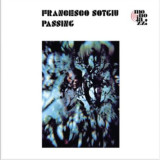
Francesco Sotgiu has forged a unique and very swinging project of songs. With a quintet consisting of Luigi Bonafede on piano, Emanuele Cisi and Riccardo Luppi on woodwinds, Salvatore Maiore on bass, Francesco on drums, and with special guest Paolo Fresu on trumpet to cap off this heartfelt collection. There is also a nice diversity of groups within this larger collection. A nice trio piece called “Calm” featuring Paolo Birro sitting in with Marco Micheli and Francesco. And one called “Lotus Blossom” where Francesco shows his considerable skills and soul on violin. But the bulk of the material is straight-ahead jazz and is totally swinging and soulful, proving that jazz has no borders and is a worldwide language to which Francesco has added to that tradition with this project and all the great voices he has included here. Bravo maestro.
This is the comment of Gil Goldstein, American accordion player who won 5 Grammys and collaborated with giants such as Gil Evans, Wayne Shorter, and Michel Petrucciani.
This record was recorded in the middle of the pandemic times, and most of the work for preparing this record took place via the telephone: the selection of the songs on paper, the exchange of ideas on arrangements, staff and instruments, a sort of “phone rehearsal” of the structure of the songs, with the choice of a solo; everything else, everything that will happen in the recording sessions, is the result of a controlled improvisation, a jam session masterfully captured in the studio through the use of well-positioned ribbon microphones.
This is why “Passing,” literally “passing” or “crossing”: because the musicians have gone through listening to these songs as teenagers, and find themselves today, as a mature meeting of old friends who create an informal game made of nostalgic fun, great personality, confrontation, and deep spirituality. In the classic “Caravan” by Ellington and Tizol or “Afro Blue” by Mongo Santamaria, Coltrane toning, the Latin accent of the rhythm section supports the interpretation of the theme and the interplay in the solos between the soprano and tenor saxophones by Cisi & Luppi, and the piano by Bonafede.
A certain elegance in the execution distinguishes pieces such as Duke Ellington’s “Sound of Love,” yet another tribute by Mingus to the Duke, with a calibrated solo on the double bass of Maiore and the flute by Luppi, the immortal “Take Five” by Paul Desmond, with the highlighted soprano by Cisi, “Wishes,” “7th Street,” and the eponymous “Passing,” all pieces composed by Sotgiu, characterized by the precise medium/fast drive of the drums and a certain “cinematic” taste of the main themes.
In songs such as “Black Bats and Poles,” composed by trumpeter Jack Walrath for the Mingus Orchestra, and in “Stranatole,” an original piece in which Sotgiu writes a theme of Monk’s influence and enjoys overturning the traditional “Anatole Jazz” structure, the quintet opts for an effective hard bop language, with exciting moments of dazzling virtuosity in Bonafede’s solo. While in Coltrane’s “Wise One” and McCoy Tyner’s “Ballad for Aisha,” we enter a modal, mystical, and ceremonial jazz, of a cosmic depth, which seems to hover in the sweet volume of the great hall of the recording studio. These are truly magnificent interpretations.
A special separate mention for two classics such as “My Foolish Heart” by Victor Young, performed in trio by Sotgiu, Maiore, and the unmistakable trumpet by Paolo Fresu, and the (unfortunately very short) “Lotus Blossom” by Billy Strayhorn and Duke Ellington, which in the piano-violin duo of Birro and Sotgiu, in a minute gives a suspended momentary magic, sums up the roots of African-American jazz music, and also referencing an old-fashioned Italian musical sensitivity, typical of Nino Rota’s music for Federico Fellini’s films.
expected to be published on 21.03.2025

There's iconic. Then there's *iconic*.
A MASSIVE speaker-smashing release, decades overdue. It's been bootlegged - shamefully so, many times over the years - but finally we present the first ever officially licensed reissue of this truly special Afro-disco-not-disco LP from 1979. A favourite of Harvey, Antal, Young Marco and, er, every great DJ to ever play deep records ever, basically. It's not hard to see - or, indeed, *feel* why.
Gem after gem of relentless, irresistibly funky gold, it's an incredibly revelatory album with endlessly complex drum patterns and basslines to dive into, throughout. Truly, this is uniquely FIRE music, unlike anything else you've ever heard, based on Gwo ka music from the gorgeous islands of Guadeloupe and Martinique. A thrilling synthesis of primal, hypnotic drums - the most tribal of percussive elements high in the mix throughout - with the loping synth pyrotechnics of, amongst a whole host of other greats, Wally Badarou and bass power of disco funk don Sauveur Mallia (Arpadys, Spatial & Co.)
Originally released on the seminal French label Barclay, you'd be hard pressed to even find an original copy in nice condition anywhere, let alone for a reasonable price, so it's high time an officially licensed, remastered reissue came around. It's just the latest in a long line of Be With reissues where the music sounds like the - drop-dead dazzling - cover. This here is a true drum attack. BUY ON SIGHT!
Tumblack was a short-lived project, produced and arranged by electronic wizard Yves Hayat and it can certainly be regarded as one of the first examples of Zouk, mixing powerful disco-funk arrangements with Gwo ka, traditional music from Guadeloupe. Gwo ka is an Antillean Creole term for "big drum". You can say that again! It refers to both a family of hand drums and the music played with them, which is a major part of Guadeloupean folk music.Whilst the first side is credited to the exceptional Tumblack band, the flip is given over to "Tumblack & Friends". These weren't just any old friends. Oh no, they were the absolute cream of the French scene (think Arpadys, Voyage, Le Club, Giant, CCPP, Synthesis, Swing Family) such as Sauveur Mallia, Wally Badarou, Marc Chantereau on percussion, Slim Pezin on guitar and Jean-Paul Batailley and Pierre Alain-Dahan handling drum duties.
The urgent, frantic "Fracas" gets things moving straight away with a cavalcade of drums and percussive funk before giving way to the stratospheric "Invocation", one of the album's many, many highlights. It's effectively one long heavenly drum break, a really hard, raw, tribal drum workout without a whole lot else going on - and all the better for it! One to make you sweat, no question. Up next, "Jubilé" is announced with a bellowing accapella voice, chanting the titular name before the heaviest of kicks smashes out your system and lulls you into an absolute state of bliss for nearly 6 minutes. Whoooooosh! Rounding out the sensational A-Side, "Vaudou" is a scratchy, funky patterned drum workout which - yep, yet again - absolutely slays your neck muscles, making them snap and contract in extraordinary fashion. TURN IT UP!
Ushering in the B-Side, the brief, fidgety, African chant-funk of "Parlement" segues seamlessly, beautifully into "Waka", an overwhelmingly rich gem of percussive funk. You do not want this to end, once it hits its stride. For maximum heavenly drum pleasure, you'd need to go a long way than the moment "Waka" feels like it's fading out before it kick-drum-blend into the mighty "Caraïba (Intro)". It's just staggeringly good. It's a minute-long layered drum prelude to the gigantic track which follows. Indeed, "Caraïba" is arguably the best loved and most well-known cut off the LP. And with good reason...featuring that Mallia bass, warm Rhodes and clavs, synth magic, memorably alto sax lines and, of course, tribal chanting.
Another mighty super-ahead-of-its-time classic, the bouncing bass heavy synth funk of "Chunga Funk" deploys Mallia and Wally Badarou (on Mini Moog) exceptionally well. I mean, come on, that bassline is just ridiculous. Try not to move to this one. This extraordinary record closes out with the more traditional Gwo ka sounds of "Bateau La Passé", the tribal chorus making the hairs on the back of your neck stand up.
Tumblack really is a gorgeous late-70s disco-not-disco essential. It's an absolute MONSTER that will completely blow you away; and, yes, it's as compelling and trance-inducing as the cover. The audio for Tumblack has been carefully remastered by Be With regular Simon Francis, ensuring it sounds better than ever. Cicely Balston's expert skills have made sure nothing is lost in the cut whilst the records have been pressed to the highest possible standard at Record Industry in Holland. The cover of Tumblack is so iconic and we sought special permission from original artist Hélène Majera to recreate this at Be With HQ. It absolutely zings off the print and serves as the perfect finishing touch to this long overdue re-issue.
Order now and we will order the item for you at our supplier.

Order now and we will order the item for you at our supplier.

DJ Support: Marco Faraone, Victor Ruiz, Marco Carola, Cristian Varela, Joseph Capriati, Mauro Picotto, Ilario Alicante, Wehbba, Konrad, Anna Tur, Joris Voorn, Anna Reusch, ANELA
Indira Paganotto and her ARTCORE imprint stand out from the crowd with an exponential sense of uniqueness, front-running pioneers of the new Psy-influenced techno boom. Indira’s upcoming release ‘Gypsy Queen’ is another perfect example of how she has garnered so much love and support for her unique vibe and ethos to date.
Title track ‘Gipsy Queen’ begins in eccentric fashion. A gentle strumming of flamenco guitar lines, a distorted chorus of castanets and an enchanting vocal open the track to remain a key feature throughout waves of razor-sharp synths and hurtling drums sequences. The dips in pace are beautifully accompanied by the stirring vocals but before long the flamenco influences are overrun by the trance-tinged techno Indira is famous for. The out of body like energy summoned by the strings and haunting effects of ‘Vendetta’ offer a different audio experience to that offered by the EP’s title track. With a visceral intensity that becomes more acute following each drop there are several curious effects and tones at play to make for a somewhat dramatic techno heavy melody.
Opening the flip side is ‘Heaven Is For Warriors’ , this comes in hot with thumping drum grooves and crisp percussive drive, supplemented by ominously celestial undertones and rave-inspired musicality throughout-a sinister tirade of punchy electronic grit, marching to a racy tempo built for peak-time sets. The release closes on ‘Requiem’, further playing on the darkened divine theme throughout the EP. Beyond its atmospheric intro, you’re greeted with a marauding flurry of watertight Techno goodness layered with synths, sirens, pads and much more.
There’s no denying Indira’s oneness when considering groundbreaking techno talents; This EP serves as a solid reminder of her commitment to trailblazing a path into the genre’s new and exciting age.
Order now and we will order the item for you at our supplier.

Escape Music are pleased to announce the release date for long awaited Turkish Delight studio album titled “Volume 1" with 500 limited edition double Vinyl “Side A+B Snowy White colour and side C+D Skull Gold colour” all will be numbered 1-500! ‘Turkish Delights Volume One’ celebrates the absolute joy that Escape Music co-owner Khalil Turk has for the kind of music he loves so much and has spent the last thirty and then some years championing. Indeed, his enthusiasm for a new band or a new song today is no different from when I first met him in the mid ‘80’s. I lost count of the number of phone calls he made to me when I was working for ‘Kerrang!’ magazine, where he would excitedly tell me ‘Dave, you just have to listen to this! It’s brilliant! You’ll love it!’ before playing me something over the phone – new and often obscure - he had picked up on his international record buying trips. Nine and a half times out of ten he’d be right!! Khalil’s quality control has been such that the record label he co-founded with fellow melodic rock enthusiast Barrie Kirtley in 1995 remains reliably and solidly in place all these years later. Escape continues to deliver monthly doses of quality hard rock, melodic rock and AOR to a very devoted following. Khalil had first entered the music business in the early ‘90’s, effectively as a talent scout for the German owned Long Island label. However, after the company folded, Turk felt that, rather than look at opportunities with other labels, he had the enthusiasm and now had rather more knowledge of the inner workings of the music business to put something together himself alongside the equally enthusiastic and astute Kirtley. We’ve seen hundreds of solid album releases from a huge variety of acts (including AXE, Steve Walsh (Kansas), John Elefante (Kansas), Lonerider, Shadowman, Alliance, Pinnacle Point, Mass, Heartland, Grand Illusion, Overland, Last Autumn’s Dream, Punky Meadows, ColdSpell, Chris Ousey, Ozone and Touch, to name just a few) as well as reissues (from Aviator, Sugarcreek, Jon Butcher Axis, Franke And The Knockouts, FM, Tantrum and Surrender, Zon, Hanover Fist etc) ever since. So here we are, over twenty-five years since that first Escape Music album appeared hot off the presses (Heartland’s ‘III’ album in November 1995, if you’re asking) and this collection of songs, personally chosen by Khalil, reiterates that pure joy he still possesses for the music he is utterly immersed by. With material from the pens of Steve Overland (FM), Chris Ousey (Heartland), Steve Morris (Export/Ian Gillan/Heartland), Mick Devine (Seven), Steve Newman (Newman/Compass) and Tommy Denander (Radioactive) there’s also a list of musicians culled from Khalil’s contact book that, quite frankly, is VERY impressive. Just a few names appearing on ‘Turkish Delights’ to throw at you include Ronnie Platt (Kansas), Billy Greer (Streets/Kansas), Billy Sheehan (Talas/David Lee Roth/Mr Big), Gary Pihl (Sammy Hagar/Boston/Alliance), Gene Black (Device), Jeff Pilson (Dokken), Jeff Scott Soto, Chris Childs (Thunder), Mike Slamer (City Boy/ Streets/Seventh Keys/ Steelhouse Lane) Joel Hoekstra (Whitesnake/Joel Hoekstra’s 13), Mark Mangold (American Tears/Touch/ Drive, She Said), Mark Stanway (Magnum), Mat Sinner (Sinner), Marco Mendoza (Thin Lizzy/Whitesnake/Journey), Ricky Phillips (The Babys/Bad English/Styx), Robin Beck, Robin Mc Auley (Grand Prix/MSG), James Christian (House Of Lords) Steve Overland (FM), Jerome Mazza (Pinnacle Point/solo), Terry Brock (Strangeways) and Vince DiCola (‘Transformers’/Thread/Storming Heaven). This is a cast of thousands. Well, it at least appears that way! It’s a very interesting package and, as Khalil would surely say, you’ll love it! - Dave Reynolds / August 2022. Produced by Khalil Turk for Turkish Delight Productions / Mixed and Mastered by Stephen DeAcutis at Sound Spa Studio, New Jersey, USA / *Mixed by Andy Zukerman / *Mastered by Fredrik Folkare / **Mixed and Mastered by Brian J Anthony (Vinyl Only) - Artwork Design by Hugh Syme (Rush/Bad English/Elton John) - Turkish Delights: The Musicians are: Ronnie Platt: Lead vocals (Kansas) / Billy Greer: Lead vocals (Kansas/Seventh Keys/Streets) / Jeff Scott Soto: Lead and backing vocals (Talisman/Yngwie Malmsteen/Trans-Siberian Orchestra) / Robin McAuley: Lead and backing vocals (Michael Schenker Group/Grand Prix/solo artist) / Chris Ousey: Lead vocals and Backing vocals (Heartland/Ousey-Mann/Virginia Wolf/Ozone)/ Jerome Mazza: vocals (Pinnacle Point/Steve Walsh) / James Christian: Lead and backing vocals (House Of Lords)Terry Brock: Lead vocals (Strangeways/Kansas) / Lee Small: Lead and backing vocals (Phenomena/Lionheart/Shy) / Mick Devine: Lead and Backing vocals (Devine Intervention/7/solo artist) / Ronnie Romero: Lead and backing vocals (Rainbow/Michael Schenker Group) / Tony Harnell: Lead vocals and backing vocals (TNT/Westworld/Starbreaker/Morning Wood) / Steve Overland: Lead and backing vocals (Lonerider/FM/Shadowman/solo artist) / Robin Beck: Backing vocals (solo artist) / Matt Sinner: Bass (Primal Fear/Sinner) / Joel Hoekstra: Guitars (Whitesnake/Trans-Siberian Orchestra/13) / Mike Slamer: Guitars (City Boy/Streets/Seventh Key/Steelhouse Lane) / Jeff Pilson: Bass (Foreigner/Dokken) / Gary Pihl: Guitars (Sammy Hagar/Boston) / Steve Morris: Guitars and Keyboards (Heartland/Lonerider/Ian Gillan Band/Shadowman) / Gene Black: Lead Guitars (Tina Turner/Rod Stewart/Device) / Billy Sheehan: Bass (Mr Big/The Flood/Talas) / Tracy Ferrie: Bass (Stryper/Boston) / Ricky Phillips: Bass (Baby’s/Styx/Bad English) / Rocky Newton: Bass (Michael Schenker Group/Lionheart) / Josh Devine: Drums (One Direction/Levara/Devine Intervention) / Takeaki Itoh: Bass (Pinnacle Point) / Jim Kirkpatrick: Slide guitar (FM/The Flood/Bernie Marsden Band) / Chris Childs: Bass (Thunder/Lonerider) / Steve Mann: Keyboards (Michael Schenker Group/Lionheart/Ousey/Mann) / Vince DiCola: Keyboards (Rocky4/Staying Alive/Transformers/Storming Heaven/Thread) / Mark Mangold: Keyboards (Touch/American Tears/Drive She Said) / Alessandro Del Vecchio: Keyboards (Revolution Saints/Edge Of Forever/Hardline) / Stevie D: Lead guitar / Marco Mendoza: Bass (Whitesnake/Thin Lizzy/Journey) / Jimmy Nicholas: B3 (Faith Hill/Kenny Loggins/Van Zant/Jim Peterik/Juice Newton) / Tommy Denander: Guitars and keyboards (Radioactive/Steve Walsh/Robert Hart)) / Brain J Anthony: Bass (Steve Walsh/Lonerider/Robert Heart/Robbie LeBlanc) / Brian Tichy: Drums (Whitesnake/Dead Daisies/ Foreigner) / Mark Stanway: Keyboards (Magnum/Grand Slam) / Robin Beck: Backing vocals (solo artist) / Nikolo Kotzev: Lead guitars (Brazen Abbot/Robin Gibb) / Fredrik Folkare: Guitars (Unleashed/Heartwind) / Mikael Rosengren: Keyboards (Heartwind) / Steve Newman: Guitars/keys/backing vocals (Newman/Compass) / Eric Ragno: Keyboards (Baby’s/Joe LynnTurner) / Fredrik Bergh: Keyboards (Talk Of Town/BloodBound) - CD Track listing: Intro; Live Again; Crazy Days; Bad Enough; Never Will Forget; Harder They Fall; Get Out Of Here; Believe; Hangman Blues; State Of Mind; Belly Of The Beast*; Holy Water; Sweet Serenity; Take It Away; Bad To Good. Vinyl Track listing: Intro; Live Again; Crazy Days; Bad Enough; Never Will Forget; Harder They Fall; Get Out Of Here; Believe; Hangman Blues; State Of Mind; Belly Of The Beast*; Holy Water; Sweet Serenity; Take It Away; Bad To Good; The Year 2000; Frozen Rose
Order now and we will order the item for you at our supplier.

"The organ dates back to 1790 and was made by Venanzo Fedeli, who came from a prestigious family of organ builders. This particular organ is tuned in the ancient way at 430 Hz. Tuning relies on pure thirds that aim to create dissonances within the instrument itself.
Since the organ is an instrument modeled according to the principles of nature, the intonation of the pipes was performed according to an incompletely equal system that reflects the natural intonation based on mathematical ratios.
This produces a purer sound for the thirds but slightly harsher and more difficult to listen to. The hardness of the intervals of the organ is a metaphor for the hostile climate that prevails in the Potenza valley during winter and autumn.
The sound of the organ with the register of the flute returns a particularly sweet and penetrating sound but, at the same time, a very complex timbre with intricate harmonic texture, given the numerous fluctuations and beats. The warm tones of the organ reflect the good and welcoming sould of the people who inhabit these lands. The absence of dynamics inside the instrument allows the listener to focus and understand the harmonic texture and timbral differences between the various notes more clearly.
Trombone and trumpet played by Matteo Paggi on track 2 and 3 were recorded during a hot summer day at Elefante Bianco Studio in Rome by Matteo Scarchilli. Sax, effects and noises in track 6 played by Giulio De Asmundis and Pietro Rianna were recorded in Fauna53 studio.
Many thanks goes to Marco and Giuseppe for making this happen. Thanks Federico, Sami, Marisa, Romeo and everyone involved in this project. You know who you are."
Mastered by Alessandro Caldarola.
Photos and color grading by Filippo Corsi.
Graphic project and design by Flavio Mancini.
Vinyl pressed by AFG Record Manufacturing.
expected to be published on 01.02.2024

Candlemass was formed by bassist & songwriter Leif Edling in Stockholm, Sweden in 1984 & is well known for its epic doom metal, having a great influence over a generation of the genre's subsequent greats such as Paradise Lost & My Dying Bride - Candlemass themselves taking a large influence from Black Sabbath.
'Ancient Dreams' was Candlemass' third album, released in 1988 & it featured a natural progression of slow- mid tempo epic arrangements from their previous release, 'Nightfall' - perhaps even more distinction between slow & faster parts - with the unique tones & unmistakable voice of Messiah Marcolin still dominating proceedings on this pure doom metal classic.
With a perfect balance between melody & sheer heaviness, it is still debatable as to whether this is the ultimate Candlemass & therefore greatest doom metal album of all time, with some giving this particular title preference over the seminal 'Nightfall' album. 'Ancient Dreams' was produced by Leif Edling & Candlemass & was recorded at Stockholm Recording studios in 1988.
Marking 35 years since release, this edition of 'Ancient Dreams' is presented on limited green marble-effect vinyl, featuring the original cover art
expected to be published on 08.12.2023

After another long hiatus, BEAM is excited to present the vinyl debut from rising star and nebulous neurocranker, al dente. Over 4 tracks, ‘Running and Falling Over’ captures the stylistic fluidity we have come to know and love from Naarm/Melbourne. Ever present traces of Dozzy refract through millennium-bug tech-house, summoning atmospheres of deep yet ever playful psychedelia. Opening the A-side on ‘Ripple Effect’, pulsating drones and echoes of organic percussion slither through the undergrowth. ‘Soft Steps’ explores fractal resonance amid expansive, evolving textures. Flipping to the B-side, ‘Unfold’ melds paranoiac psy with a wiggly tek swagger. Slow-burner ‘Blue Trial’ closes out the EP – a proggy roller for the eternal sunrise.
Mixed by Declan Vadasz
Mastered by Marco Pellegrino @ AnalogCut
Artwork by Rudi Schmidt
Type by Studio Joel
Order now and we will order the item for you at our supplier.

Marco Faraone returns to DCLTD with a pair of high-impact cuts, reinforcing his range as one of techno's most versatile producers. 'Dangerous' rolls like a percussive steam train, building tension with a barrage of low-slung drums and a head-spinning synth line that darts in and out of play. 'Pressure' doesn't take a back step, as industrial rhythms uncoil with thrilling effect.
Order now and we will order the item for you at our supplier.

In Japanese, the word “Guru-Guru” refers to the state of spinning, whirling.?
This state is captured in the work of Japanese artist Hoshina Anniversary, who makes his third appearance on MUSAR with his EP Guru Guru and marks the return of the label after an extended break.
Hoshina’s self-titled brand of ‘Watechno’ has appeared on well-loved dance music labels like ESP Institute, Volvox’s Jack Dept and Young Marco’s Safe Trip, alongside MUSAR where he also appeared as Shifting Gears back in 2022; an electronic-jazz-centered moniker.
His Guru Guru EP captures the latest snapshot of Hoshina’s sound and sees him draw from Japanese language as a through-line.
The title track is the clearest representation of his ‘Watechno’, where he uses Japanese instrumentation on top of a menacing EBM-style march. The track's slowly whirling momentum is the “Guru-Guru”.
On tracks like “Banri”, which means far away in Japanese, we see new shades to Hoshina’s work as he mixes a Japanese Wadaiko drum groove with acidic elements and piano melodies to make a track of contradictions which pairs roughness with elegance. Whereas on “Usagi”, Japanese for rabbit, Hoshina fires up the BPM.
Piano melodies remain here but their effect is more drifting and emotive than on “Banri”.
“Kaga” is named after a place in the southernmost part of Ishikawa Prefecture, between Kanazawa City and Fukui City.
On this track, Hoshina’s love for jazz comes through and even mirrors the work we heard from him under Shifting Gears.
Order now and we will order the item for you at our supplier.

Eine Frau verschwindet nach einem Erdbeben plötzlich spurlos. Was ist mit ihr geschehen? Die drei ??? begeben sich auf eine gefährliche Suche. Die junge Schneiderin Maya erscheint nicht zur Arbeit am Camelot Theatre. Justus, Peter und Bob haben den Verdacht, dass das Rätsel, das die Theaterleitung veranstaltet, etwas damit zu tun hat. Denn ein hohes Preisgeld ist zu gewinnen. Ist des Rätsels Lösung auch die Spur zu Maya? Die drei Detektive ermitteln, während erneut die Erde bebt ... Sprecher:innen und MitwirkendeErzähler Axel Milberg Justus Jonas, Erster Detektiv Oliver RohrbeckPeter Shaw, Zweiter Detektiv Jens WawrczeckBob Andrews, Recherchen und Archiv Andreas FröhlichTante Mathilda Karin LienewegOnkel Titus Erik SchäfflerTrenton Marco SteegerBuzzy Merete Brettschneider Harold Leonhard MahlichGeorge Robin Brosch Roberta Pamela Punti Evander Prettyman Nicolas BöllLiam Stefan BrönnekeLincoln Hans Peter Korff Maya Manuela EifrigHaylie Barbara SchipperProduktionshinweise:Buch und Effekte: André MinningerRegie und Produktion: Heikedine KörtingRedaktion: Maike MüllerTitelmusik: Simon Bertling & Christian Hagitte (STIL)Musik: Jan-Friedrich Conrad, Jens-Peter Morgenstern, Betty George und Constantin StahlbergCover-Illustration: Silvia ChristophDesign: Atelier SchoedsackBasierend auf dem gleichnamigen Buch von Marco Sonnleitner, erschienen im Kosmos Verlag, Stuttgart. Based on characters created by Robert Arthur.Mit freundlicher Genehmigung der Universität Michigan.
expected to be published on 28.07.2023

Es weihnachtet sehr in Rocky Beach: Auf der Suche nach den passenden Geschenken geraten die drei ??? in einen neuen Fall in 24 Kapiteln.Beim Einkaufsbummel im Kaufhaus Garcy's werden Justus, Peter und Bob Zeugen eines Überfalls. Kein geringerer als der Weihnachtsmann des Garcy´s wird angegriffen. Jemand hat es auf den Sack voller Geschenke abgesehen ... und dieser jemand ist ausgerechnet als Weihnachtself verkleidet. Die drei ??? heften sich an die Fersen des Diebes und finden heraus, auf welches Weihnachtsgeschenk es der Elf abgesehen hat ...Sprecher:innen & MitwirkendeErzähler Axel MilbergJustus Jonas, Erster Detektiv Oliver RohrbeckPeter Shaw, Zweiter Detektiv Jens WawrczeckBob Andrews, Recherchen und Archiv Andreas FröhlichTante Mathilda Karin LienewegOnkel Titus Erik SchäfflerSanta Claus Claus WilckeFotograf Stephan SchadSandy Angela StresemannMutter Pamela PuntiMr. Puckle Christian RudolfMrs. Hatchett Petra KleinertMatty Yoshua Rudolf 1.Security Patrick Berg2.Security Philipp Stumpp3.Security Max König4.Security Tony Curting Pater Achim Schülke Engel Theresa Underberg1.Polizist Patrick Baehr2.Polizist Alexander Mettin3.Polizist Douglas WelbatAngestellte Katrin DeckerLarry Jan LangerLuke Bigelow Harald EffenbergMolly Regine LamsterEmmett Reinhold KammererDurchsage Andrea LüdkeKrankenschwester Scarlett LubowskiMann Helge HalvéBandenchef Lars SchmidtkeBuch und Effekte: André MinningerRedaktion: Maike MüllerRegie und Produktion: Heikedine KörtingTitelmusik: Simon Bertling & Christian Hagitte (STIL)Musik: Constantin Stahlberg, Jens-Peter Morgenstern und Thomas KörtingCover-Illustration: Andreas RuchDesign: Atelier SchoedsackBasierend auf dem gleichnamigen Buch von Marco Sonnleitner, erschienen im Kosmos Verlag, Stuttgart. © 2021Mit freundlicher Genehmigung der Universität Michigan. Based on characters created by Robert Arthur.Die drei ??? © 2022 Franckh-Kosmos Verlags-GmbH & Co. KG(P) & © 2022 EUROPA a division of Sony Music Entertainment GmbH
Order now and we will order the item for you at our supplier.
Donato Dozzy, Marco Shuttle and Ultrastation are among the names on these great remix package on the trustworthy SoHaSo label. After two well received EP's -Laren and ZL2- Bas Dobbelaer and Vand asked a few like-minded spirits to reset the dials of some of their best work. With their melancholic, melodic and highly detailed techno-infused productions, the two Dutch producers carved a name for themselves over the last four years. Italian producer Donato Dozzy takes Transit (a track from 2019) into a lush, green forrest. Where dew water is still dripping from the trees while string-like melodies slowly swirl around them. Beautiful stuff. Gal Tsadok-Hai takes a similar path, though his take on Gateway to Gaia is a bit gloomier. Dusk is setting in and so is melancholia. Same goes for Marco Shuttles version of Reflect, a track from 2021. The London-based Italian producer left out kickdrums and basslines, settling instead for a feverish percussion-infused meditation. Once on the flipside, the club vibe truly kicks in. With a minimalist, bassline heavy remix by Shoal of Story of Blade and an equally effective techno remake from Ultrastation, who turns Runner into a hypnotic peak time monster.
Order now and we will order the item for you at our supplier.

Led by the exuberant melodies of cross-tapping guitarist Marcos Mena,
the duo named standards make ebullient instrumental math-rock whose
effervescent riffs teem with enthusiasm for life and music
On the band's debut full- length, Fruit Island, standards deftly retool math- rock's
sinister and challenging tendencies into a style that is at once danceable yet still
compositionally profound.
In spite of the band's technical and precise stylings, the strictly instrumental
compositions are always catchy and singable, inviting listeners to join the band's
dancing fruit mascots whose colorful personalities reflect the music's upbeat
nature. Fruit Island's second single, "May," perfectly captures the duo's fruity
alternate universe, conjuring images of anthropomorphic melons and berries
bobbing along to pleasantly angular riffs and chop-heavy drums.
expected to be published on 20.01.2023

REPRESS!
Returning for 2019 with our first 12-inch release, Made in Green Records concludes Rooteo & Mahura’s opening salvo, with reinterpretations from the artists themselves and the label head putting their marks on already-outstanding material. Leading off the release, we find the original ‘Caxixi’ from their debut LP, Mettā, with its tablas and vocals rubbing against billowing clouds of bass and dubwise effects; Made in Green boss Vasco Ispirian turns in the first rework, a thickly layered, relaxed tempo dub techno trip. Barely- recognizable remnants of the original’s percussion and vocal lines occasionally surface out of the subaquatic haze before surging kick drums push them back beneath the surface. Appearing here under his recently-birthed 4NYØN3 project, Rooteo, best known as Marcos In Dub, closes the release with a pounding techno remake that utterly transforms his own & Mahura’s work. Squashing the original’s ambient sonics into unstable delay traps that reappear prominently in the breakdowns, he grafts this into stringent techno, adroitly wrought and with details to spare, the scrambled fragments of sound emerging between heavy drums and contributing to the dark and downcast mood that pervades the piece.
Order now and we will order the item for you at our supplier.

Cocoon Recordings presents: Cocoon Compilation T
Limited Vinyl Box Set including 6x blue vinyl & download code
Another year, another expertly curated compilation touches down courtesy of Cocoon Recordings. Somehow, the world keeps turning and with it the Cocoon universe keeps expanding, causing subtle yet persuasive shifts in the sonic soundscape that continue to
capture and captivate the imagination. In time-honored tradition the old guard and the new combine with devastating effect, to define the current state of play…
Veteran Techno producer Stephen Brown makes it clear the compilation series is back with a bang, opening things up in epic fashion with the lucid dreamscape ‘Level Steps’ - a true work of art. Another heavy-weight hitter steps straight up in the form of Claude von Stroke, who adds his own unique swagger to proceedings with those trademark shuffling beats and freaky, hypnotic bleeps scuffling for dominance on ‘Moody Fuse’. Denis Horvat then slows things down on ‘Monomono’, with post-raveNew Release Information
abstractions and disobedient synth-patches causing mayhem before the track finally unfolds in all its terrifying beauty.
Motoring on, the collection wastes no time reaching that familiar tipping point as we enter the techno phase of the journey. A very special appearance from Daniel Avery makes it all the more worthwhile amid a dense forest of chiming melodies and blistering electrical surges on ‘Your Future Looks Different In The Light’, before Jeroen Search’s aptly titled ‘Subversive Elements’ lead us deeper and
deeper, into the matrix.
Marco Bailey then kicks off a triptych of trance with some massive filtered piano action on ‘Kanai’ that’s destined to trigger a serotonin smile with everyone it touches. Revisiting the huge,
ever-growing pulsating brain of planet Orb, Damiano van Erckert continues the loved-up vibe on the gorgeously titled ‘500 People 500 Hearts 1 Love’, expertly complimenting the classic ambience with
some slick 909 snare and cymbal interplay. The melodic pull of ‘Vision99’ then signifies that the party is peaking at just the right moment as YOKTO concocts a glistening, psychedelic groove. The
emotional resonance climbs ever higher with brittle melodies endlessly circling a lush, throbbing bass drone to create the sense of something stirring out of reach.
Just when you think the acid sound is done and dusted, up pops a track like Jonathan Kaspar’s ‘CCC’ that somehow manages to offer an entirely new perspective. Riding in on a wave of expectant
arpeggios, the squelching bass and noise filter go toe to toe before Kaspar gets busy with a freaky tempo excursion that’ll be destroying dance floors all year long. ‘The Art of Electronics’ is, as the title
suggests, another superlative example of pure analogue fire, served up by UK legend, Andrew Meecham aka The Emperor Machine. The funk starts to flow as the bass drops, the machines cut loose and a swarm of cascading bleeps ride the trans-europa express to oblivion.
Electro overlord Carl Finlow, has come to define the UK take on the genre over the last couple of decades. Here, he makes his long overdue label debut, taking us into the closing straight with a
nervous sliver of dystopian futurism, complete with molten basslines and a fuzzy logic that underpins the tight, laser-guided groove on ‘Surface Control’. DeFeKT then draws this great adventure to a close
with the deliciously dark robo-disco overtones of ‘Terraform’ creating a dusky landscape that skillfully seduces the listener before the tension finally breaks in a wash of ecstatic chords.
All in all, it’s a supremely ambitious collection of tracks, generously featuring some of the most inspirational and durable artists of their respective generations. In fact, is this perhaps the best Cocoon
Compilation to date
Order now and we will order the item for you at our supplier.

Originally written by João Bosco and Aldir Blanc and released on Bosco's 1976 album Galos De Briga, "O Ronco da Cuica" is a samba/MPB masterpiece. In the song, the cuíca roars: roars in anger, roars from hunger and is told to stop, but it cannot - "it's a man thing" explains Bosco in the lyrics. Personifying the instrument in this way, "O Ronco da Cuica" points to something quite profound about the nature of human suffering and our primitive need for expression. On this brilliant reimagining, renowned bassist Dudu Lima teamed up with Joao Bosco himself, as well as Azymuth drummer Ivan 'Mamão' Conti, pianist Dudu Viana and percussionist Marcos Suzano. Ironically, this version contains no cuíca, instead it takes a more stripped back instrumentation, exploring the deep jazz potential of this roaring samba classic, to stunning effect. On the B-side is a beautiful duet between Dudu Lima and João Bosco: acoustic guitar and vocals, and fretless bass - together they take on "Imcompatibilidade De Gênios", also from Bosco's 1976 Galos De Briga album.
expected to be published on 23.04.2022

Analog Africa delves deep into the scene of the Mexican's sonideros (sound-system operators) to present the "Rebajada" movement they've created using locally made pitch controls, speakers and sound effects.
"In 2010, I had asked Eamon Ore-Giron - aka DJ Lengua - if he would be interested in compiling a Latin project for Analog Africa, and if so, if he had a theme in mind. He replied, “Have you ever heard of rebajada?“ The question mark above my head, together with the wall of China, must have been the only other object visible from out of space because Eamon, probably noticing I got paralysed, continued, “Rebajada in Spanish means “to reduce, to lower”. It’s basically Mexican sonideros (soundsystem operators) slowing down the beat of a Cumbia to create a much more tangible music to dance to. I’ll send you a mix I made last year and let me know what you think.“ And so he did.
That mix was called Rebajada Mota Mix and I began listening to it on a loop. Although I was not immediately hooked it was intriguing from the get-go, and so I kept listening until magic began unfolding. Slowed down music allows you enough time to hear right through it, revealing itself in ways I had rarely experienced before. Everything became more transparent and I was noticing sounds normally only perceptible by bats. A near psychedelic experience. That mysterious mix included a few Ecuadorian songs by Junior y su Equipo - aka Polibio Mayorga (a cult figure in the sonidero scene), a couple of Mexican tunes, one Colombian, and various Peruvian songs, undoubtedly the driving force behind this project.
The sonidero who brought Peruvian and Ecuadorian music to Mexico was the legendary Pablo Perea from Sonido Arco-Iris, and although his fingerprints are all over the compilation Saturno 2000, this selection of songs in rebajada is exclusive to DJ Lengua. With the exception of a few classics from Polibio Mayorga and La Sampuesana – the queen of all rebajadas – most of these songs were probably never performed as such before, let alone released.
So how did rebajada come to be? In a nutshell; Rebajada started with two families of brothers – the Pereas and the Ortegas – who travelled all over Latin America and returned to Mexico with heavy loads of records which they would sell to the various sonideros always on the lookout for new tunes. Colombian beats especially seemed to fit almost perfectly with the Mexican dance steps – but they were just a bit too fast. As a result some sonideros began experimenting with equipment, and Marco Antonio Cedillo of Sonido Imperial created a revolutionary pitching system that could slow records down to an extent other players could only dream about. And so rebajada was born . . . or so we thought.
At the same time in north of the country, in Monterrey, sonidero Gabriel Dueñez almost got electrocuted by a short circuit that nearly set his record player on fire. As a result the platter started spinning in slow motion for the rest of the party, turning Cumbia into a different affair altogether. The youngsters went crazy for it and started harassing the sonidero with requests to record cassettes for them. Reluctant at first, Dueñez finally began recording a series of pirated cassettes called “Rebajada” which included mainly Colombian cumbia and porro in slow-mo exclusively. Those tapes took the city by storm and turned rebajada into a celebrated and defiant movement of the youth.
Of course it would not be a Mexican urban legend if it didn’t include dramaturgical elements, and so for nearly 30 years, until this day and probably for ever, both cities have been arguing and claiming ownership the creation of rebajada for themselves. But sonidera Joyce Musicolor, who never has time for such trivial arguments, got straight to the point: “Rebajada, and the equipment to perform it, is from here Mexico City but it was Monterrey that popularised it.“
Order now and we will order the item for you at our supplier.
