
Сделать предзаказ12.09.2025
он должен быть опубликован на 12.09.2025
30,21 €
он должен быть опубликован на 12.09.2025
![Intrusion - The Seduction of Silence - PART 2 [Remastered] (2x12")](https://www.deejay.de/images/l/4/1/1165441.jpg)
A timeless classic - coming up on nearly 20 years since the original 12's were released and the very first time this LP has collectively been available on wax. (over 15 years since last in circulation) This edition was remastered to analog perfection from the legendary Stefan Betke (POLE) sonically sculpting the original work into a true masterpiece - this album has never sounded so alive! This is truly a multidimensional sound experience; it's like taking a swim in an analogue ocean and being immersed into the deepest end of the Marianas Trench. This edition features two cuts, "A Night To Remember" (as featured on Richie Hawtin's ENTER: Ibiza 4XCD mix) & "Under The Ocean" from the original 2009 edition of the album. The remaining tracks were selected from CD2 including "Tswana Dub" (Phase90 Restructure) as featured on Deadbeat's classic mix "Radio Rothko" on NYC's theAgriculture. Also included is a "live" (recorded from the house booth) performance at "dub echoes" in NYC (a screening for the feature film).
a A1. A Night To Remember Remastered 11:07
b A2: Ocean View Remastered 5:30
c B1. Kingston’s Burning Dub live in nyc 8:08
d B2: De Lion’s Den Remastered 4:20
e C1: Never Forget Remastered 9:06
g D1: Love In Lofi Remastered 13:00
Remastered 4:44
a A1. A Night To Remember Remastered 11:07
b A2: Ocean View Remastered 5:30
c B1. Kingston’s Burning Dub live in nyc 8:08
d B2: De Lion’s Den Remastered 4:20
e C1: Never Forget Remastered 9:06
g D1: Love In Lofi Remastered 13:00
[Remastered] 4:44
он должен быть опубликован на 30.09.2026

Vieri Mura wuchs unter der intensiven Sonne Sardiniens auf. Seit vielen Jahren reist er in den Norden der Insel, um die berühmte Sängerin Maria Teresa Pirrigheddu (geb. 1942) zu besuchen. Was als musikalisches Interesse begann, entwickelte sich zu einer tiefen familiären Bindung. ,Rundinas" (,Schwalben" auf Sardisch), von Vieri mit tragbaren Geräten aufgenommen, dokumentiert diese Beziehung sowie die Klänge der Insel und den Rhythmus von Maria Teresas Alltag. Maria Teresa singt mündlich überlieferte ,Cantos a chiterra" zu Vieris minimalistischen Kompositionen für Gitarre (Seite A, in ihrem Garten) und Orgel (Seite B, in der Kirche, nur wenige Schritte von ihrem Zuhause entfernt). Schwalben ziehen durch die Aufnahmen, Symbole für den Wechsel der Jahreszeiten und die vergängliche Jugend. Maria Teresa, mittlerweile 84 Jahre alt, deren Stimme zugleich agil und vom Alter gezeichnet ist, verleiht diesen alten Gesängen neue Bedeutungsebenen. Eines der tief bewegendsten und mitreißendsten Musikstücke, die wir je gehört haben - aufgenommen in der Gegenwart und doch Hunderte von Jahren zurückreichend, ein musikalischer Dialog zwischen zwei Künstlern verschiedener Generationen und dem Land, das sie geprägt hat. Eine Quelle der Hoffnung und Schönheit in einer verarmten Welt.
он должен быть опубликован на 02.10.2026

XKatedral ist stolz darauf, ein neues Album in voller Länge von Label-Mitbegründerin Maria W. Horn zu präsentieren. ,Melting Pillars of Snow" ist eine Sammlung neuer Kompositionen der renommierten schwedischen Komponistin, geschrieben für Kontrabassblockflöte, Sho, Percussion, E-Gitarre, Gesang und Elektronik, gespielt von Horn zusammen mit einem Kammerensemble bestehend aus Anna Petrini, Mattias Hallsten, Magdalena Meitzner und Mats Erlandsson. Das Album enthält außerdem eine Erzählung von Horn sowie einen Gastauftritt von Michael Gira auf der ersten Single ,Scythe of Saturn". Für ,Melting Pillars of Snow" ließ sich Maria von W. G. Sebalds Roman ,Die Ringe des Saturn" inspirieren, einer poetischen Reflexion, die einem namenlosen Erzähler folgt, der an der Küste von Suffolk in England umherwandert. Während sich die Landschaft allmählich verändert, thematisiert der Text auf vielfältige Weise den Lauf der Zeit und die Distanz zwischen Vergangenheit, Gegenwart und Zukunft und spiegelt dabei sowohl weitreichende zeitliche Maßstäbe wie die Zyklen der Jahreszeiten und die tiefe historische Zeit als auch mikroskopisch kleine Momente und Fragmente wider. Mit den Kompositionen auf dieser Veröffentlichung beschwört Maria ein ähnliches Gefühl der Stille herauf - eine Umgebung, in der die Bewegung der Zeit selbst beleuchtet und beobachtet werden kann. Das Instrumentarium auf diesem Album ist Horns bislang ambitioniertestes: Sie ergänzt ihre gewohnte Palette aus maßgeschneiderter algorithmischer Synthese und elektronischer Bearbeitung um eine komplexe Auswahl an Perkussionsinstrumenten, Blasinstrumente, die an beiden Enden des musikalischen Spektrums spielen, sowie E-Gitarre, um so einen spiralförmigen, spektralen Klangteppich durch den gesamten Frequenzbereich zu weben. Die Perkussionistin Magdalena Meizner spielt spezielle Techniken auf dem Obertondreieck, dem Dubachi, den Pauken und dem Tam-Tam sowie auf gestimmten Weingläsern und gestrichenen Crotales. Die von Anna Petrini gespielte tieftönige Kontrabassblockflöte und das von Mattias Hallsten gespielte hochfrequente Sho fügen kontrastierende Akkordarrangements hinzu, die in strengen metrischen Strukturen eingebettet sind. Das Ensemble wird durch Mats Erlandsson vervollständigt, der auf E- und Akustikgitarren spielt und dabei von sanften Arpeggio-Figuren zu düsteren Drones und Feedback-Heulern wechselt.
он должен быть опубликован на 02.10.2026

BLACK VINYL[23,74 €]
XKatedral ist stolz darauf, ein neues Album in voller Länge von Label-Mitbegründerin Maria W. Horn zu präsentieren. ,Melting Pillars of Snow" ist eine Sammlung neuer Kompositionen der renommierten schwedischen Komponistin, geschrieben für Kontrabassblockflöte, Sho, Percussion, E-Gitarre, Gesang und Elektronik, gespielt von Horn zusammen mit einem Kammerensemble bestehend aus Anna Petrini, Mattias Hallsten, Magdalena Meitzner und Mats Erlandsson. Das Album enthält außerdem eine Erzählung von Horn sowie einen Gastauftritt von Michael Gira auf der ersten Single ,Scythe of Saturn". Für ,Melting Pillars of Snow" ließ sich Maria von W. G. Sebalds Roman ,Die Ringe des Saturn" inspirieren, einer poetischen Reflexion, die einem namenlosen Erzähler folgt, der an der Küste von Suffolk in England umherwandert. Während sich die Landschaft allmählich verändert, thematisiert der Text auf vielfältige Weise den Lauf der Zeit und die Distanz zwischen Vergangenheit, Gegenwart und Zukunft und spiegelt dabei sowohl weitreichende zeitliche Maßstäbe wie die Zyklen der Jahreszeiten und die tiefe historische Zeit als auch mikroskopisch kleine Momente und Fragmente wider. Mit den Kompositionen auf dieser Veröffentlichung beschwört Maria ein ähnliches Gefühl der Stille herauf - eine Umgebung, in der die Bewegung der Zeit selbst beleuchtet und beobachtet werden kann. Das Instrumentarium auf diesem Album ist Horns bislang ambitioniertestes: Sie ergänzt ihre gewohnte Palette aus maßgeschneiderter algorithmischer Synthese und elektronischer Bearbeitung um eine komplexe Auswahl an Perkussionsinstrumenten, Blasinstrumente, die an beiden Enden des musikalischen Spektrums spielen, sowie E-Gitarre, um so einen spiralförmigen, spektralen Klangteppich durch den gesamten Frequenzbereich zu weben. Die Perkussionistin Magdalena Meizner spielt spezielle Techniken auf dem Obertondreieck, dem Dubachi, den Pauken und dem Tam-Tam sowie auf gestimmten Weingläsern und gestrichenen Crotales. Die von Anna Petrini gespielte tieftönige Kontrabassblockflöte und das von Mattias Hallsten gespielte hochfrequente Sho fügen kontrastierende Akkordarrangements hinzu, die in strengen metrischen Strukturen eingebettet sind. Das Ensemble wird durch Mats Erlandsson vervollständigt, der auf E- und Akustikgitarren spielt und dabei von sanften Arpeggio-Figuren zu düsteren Drones und Feedback-Heulern wechselt.
он должен быть опубликован на 02.10.2026
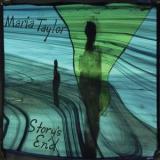
Maria Taylor is a singer-songwriter and founding member of Azure Ray, known for her hushed vocals, cinematic arrangements, and emotionally intimate songwriting. Her new album Story"s End unfolds like a reflective narrative, shaped by years of writing and profound personal change, where sweeping strings and quiet melodies trace loss, resilience, and transformation.
он должен быть опубликован на 02.10.2026
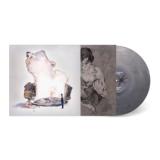
Hailing from Athens, Georgia, Now It’s Overhead is the acclaimed indie rock band fronted by Andy LeMaster. Emerging in the early 2000s alongside the era-defining Saddle Creek scene, LeMaster collaborated with artists including Conor Oberst (Bright Eyes), Michael Stipe (R.E.M.), Orenda Fink (Azure Ray), and Maria Taylor (Azure Ray).
During this period, Now It’s Overhead released three acclaimed full-length albums: Now It’s Overhead (2001), Fall Back Open (2004), and Dark Light Daybreak (2006). Available on vinyl for the first time, these long-awaited editions are essential for listeners and collectors exploring the indie rock landscape of the early 2000s. All three albums have been newly remastered by Andy LeMaster—musician, songwriter, engineer, producer, and visual artist.
The Associated Press described Now It’s Overhead as “a unique brand of organic and synthetic dark pop—made possible by LeMaster’s studio prowess—that remains distinctive even when Conor Oberst and Michael Stipe briefly stop by.”
Accompanying these reissues, Now It’s Overhead is also releasing new music for the first time in nearly twenty years. The five-song EP, in the beginning, arrives digitally on September 18, 2026.
он должен быть опубликован на 02.10.2026

Indroducing our new vinyl collaboration, a fusion of talents by Eafhm and our Co-Founder Nils Edte. Exploring the theme of "Glossolalia" or speaking in unknown tongues, they treat music as its own language. Featuring stunning remixes by MTRL & Laima Adelaide, the vinyl is not just an auditory experience but a visual one too. The cover artwork, a joint effort by Nils Edte and painter Mariano Fernandez, adorns the limited edition of 200 records. Each cover is a unique piece of the painting, making this release a truly exclusive collector's item. Immerse yourself in this blend of art and music, where sound and visuals unite in a captivating collaboration.
он должен быть опубликован на 02.10.2026
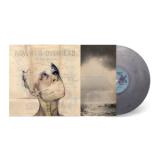
Hailing from Athens, Georgia, Now It’s Overhead is the acclaimed indie rock band fronted by Andy LeMaster. Emerging in the early 2000s alongside the era-defining Saddle Creek scene, LeMaster collaborated with artists including Conor Oberst (Bright Eyes), Michael Stipe (R.E.M.), Orenda Fink (Azure Ray), and Maria Taylor (Azure Ray).
During this period, Now It’s Overhead released three acclaimed full-length albums: Now It’s Overhead (2001), Fall Back Open (2004), and Dark Light Daybreak (2006). Available on vinyl for the first time, these long-awaited editions are essential for listeners and collectors exploring the indie rock landscape of the early 2000s. All three albums have been newly remastered by Andy LeMaster—musician, songwriter, engineer, producer, and visual artist.
The Associated Press described Now It’s Overhead as “a unique brand of organic and synthetic dark pop—made possible by LeMaster’s studio prowess—that remains distinctive even when Conor Oberst and Michael Stipe briefly stop by.”
Accompanying these reissues, Now It’s Overhead is also releasing new music for the first time in nearly twenty years. The five-song EP, in the beginning, arrives digitally on September 18, 2026.
он должен быть опубликован на 02.10.2026

Brighton-based DJ and producer Sophie Lloyd, renowned for her soulful, uplifting house and disco sound, revisits four gems from the London Records catalogue. The collection brings fresh interpretations of East 17’s UK Top 3 hit, It’s Alright, Carmel’s soulful and genre-blending More, More, More, Maria Rowe’s house / R&B crossover anthem Sexual - famously remixed by Graeme Park - and Carlton’s Bristol deep house classic Do You Dream, originally produced by Smith & Mighty.
Есть у нас в наличии и готов к отправке

South, Black Vinyl[27,69 €]
“Simply put, it’s unlikely we’ll encounter a mix that leaves a cultural footprint and defines the sound of a generation quite like Northern Exposure again. Both mixes are absolutely 100% astoundingly brilliant”
DJ Mag
“Their best-loved mix CD is a trippy traipse through the verdant world of progressive house, a genre with one foot in the rave and the other somewhere in the great beyond” Rolling Stone - The 30 Greatest EDM
Albums Of All Time
Originally released on 27th September 1996, ‘Northern Exposure’ is widely regarded as one of the greatest mix compilations ever made. Thirty years on, it sounds as vital as ever - a testament to the fearless vision that went into its creation.
At a time when DJ culture was still writing its own rules, Sasha and John Digweed pushed against the grain. Drawing on sounds discovered during early trips to America - from Rabbit in the Moon to Future Sound of London - they built something that prioritised atmosphere over dancefloor convention. DJ Mag panned it on release. History changed their tune.
Northern Exposure Redux marks the 30th anniversary with a definitive reissue of both original mixes. The CD version also includes a newly created ambient mix. Shaped by the spirit of Bill Laswell and Mad Professor, it explores the deeper, more hypnotic DNA that always ran beneath the surface. Northern Exposure Redux North includes classic tracks by Keiichi Suzuki, The Future Sound Of London, and Banco de Gaia. Northern Exposure Redux South includes classic tracks by Dope On Plastic, Pete Lazonby, and a newly recreated version of ‘Dark And Long (Dark Train)’ by none other than Darren Emerson himself. Both vinyl versions also include a download code for both the North And South mixes, as well as the individual tracks.
Canonical then. Essential now.
он должен быть опубликован на 09.10.2026

On her first Harmony Index album, multi-instrumentalist and producer Nico Leibman spotlights the feelings that are most difficult to express, bringing out the friction between her dreamy hooks and harsher sonics. Written almost like a DJ set, the album shifts intentionally between piano-led trip-hop, lounge, dream pop, 2-step and breakbeat house, not languishing in nostalgia but defining a language that's rooted in desire, surrender and forward motion.
Until now, Leibman has been best known as a touring musician, working alongside artists like Jessica Pratt and Ana Roxanne, while slowly putting together new solo material in-between frequent tours. The album was written in bursts over the course of five long years and provided Leibman with a much-needed outlet - a chance for her to lock into her personal musical preoccupations, like Janet Jackson's 'The Velvet Rope', Everything but the Girl's 'Walking Wounded' and Prefab Sprout's 'Jordan: The Comeback'.
It's this era of pop - when nascent technology collided at force with skillful, soulful songwriting - that provides the album's backbone, fleshed out by Leibman's potent meditations on a spectrum of experiences in Los Angeles. And as the record was evolving, Leibman let long night drives crack her creative world open. Embracing the city's notoriously cinematic romantic side, she used the car as a "little chamber of limerence," in her own words, enabling her fantasies and acting as a test system for each song. "If it wasn't hitting in the car," she says. "It wasn't going to be on the record, period."
This sense of motion is evident almost immediately on 'Recognize', when Leibman's breathy words are carried into the night by choppy, uptempo breaks and resonant pads. So even when she simply coos over chugging guitars and bass on the first half of 'Enough', the drop into a low-slung breakbeat is implied. "Another digression, a break in this tension," she sings. "Was I foolish to believe that this was never your intention?" Leibman's tales of disillusionment are imbued with power, buoyed by her pitch-perfect production, with additional help from co-producer Cesar Maria.
On 'Don't Pretend', she sings softly and soulfully over decelerated Timbaland-inspired beats and a dubwise bassline, aided by additional production from Purelink. And 'If' marks the point where she lets go, infusing her euphoria with melancholy as her voice soars alongside the album's most infectious piano riff. Fittingly, the album concludes with 'Trust', a song about surrendering to the possibilities of love that works as a potent metaphor for the album's evolution. Over the course of five years, Leibman learned to let people in, finally trusting the process. "It's also a fantasy of what it would feel like to finally be in love again," she laughs, accepting that it's still just a fantasy. But it's this hope in unfulfilled longing that gives the album its unique character, defining a bold, unguarded voice in LA's experimental pop landscape.
он должен быть опубликован на 09.10.2026

Driven by a lush and irresistible energy, Beyond Brazilian Stories takes you on a musical journey between Brazilian traditions and jazz improvisation.
Introduced to the richness of Brazilian music by Philippe Baden Powell, pianist Mathieu Bélis and double bassist Stéphane Dardour founded BSP PRODUCTIONS and formed the quintet Beyond Brazilian Stories, joined by saxophonist David Florsch, drummer Louis Bao Lao, and Äulne, vocalist and flutist.
Together, they revisit masterpieces by giants such as Milton Nascimento, Airto Moreira, Hermeto Pascoal, Dorival Caymmi, Edu Lobo and Moacir Santos, blending popular melodies with soaring instrumental passages.
The group also brings its own compositions, inspired by the vibrant energy of Brazilian music, creating a sound that is both authentic and innovative.
Their new album O ritmo do sonho has been awarded the “Revelation” distinction by Jazz Magazine!
Album contributors:
Mariana Zwarg - flutist, daughter of Itiberê Zwarg, Hermeto Pascoal’s bassist.
Edmundo Carneiro - Brazilian percussion legend (Tania Maria, De La Soul, Saint Germain, etc.).
Jessica Simon - trombonist, member of the Orchestre National de Jazz.
“An explosive fusion where samba, bossa and jazz become the playground for joyful and virtuosic freedom....” Jazz Rhônes Alpes
“...the brilliant Hermeto Pascoal,
whose spirit is present throughout O ritmo do sonho...” Revelation Jazzmag
он должен быть опубликован на 09.10.2026
Robert Nasveld (*1955 Utrecht) studied piano at the Utrecht Conservatory with Polo de Haas, Sas Bunge and Herman Uhlhorn, composition with Joep Straesser, and electronic music with Ton Bruynèl. After completing his piano studies, Robert Nasveld specialised in 20th-century repertoire, with a particular focus on Dutch, Russian and American music. He achieved international fame as a pianist for his interpretations of the works of the American composer George Crumb, which led to invitations to perform at various events, including the Warsaw Autumn Festival (1990). His connection with George Crumb also enabled him to produce a seven-hour live broadcast of Crumb's music for VPRO radio in 1986 and a television program with the composer. Nasveld recorded the complete works for one piano by George Crumb, which was released by the Attacca label in 1991. He has given concerts in Europe, Russia, and the United States.
Nasveld was also a member of the Orgella Quartet, founded in 1976 (with Margaret Krill, Polo de Haas, and Niek de Vente), Piano Kwadraat, and the Netherlands Pianists Quartet (with Marian Bolt, Corien van den Berg, and Niek de Vente). These ensembles specialised in performing music for two eight-handed pianos. He also collaborated with several vocalists, including Claron McFadden, Marjanne Kweksilber, and Liesbeth List (tour 1983/'84). Due to multiple sclerosis, he retired from performing in 1998.
From 1988 to 2021 Robert Nasveld worked for Dutch national radio (NOS/NPS/NTR) as a program producer for NPO Klassiek. Until 2004, he was editor of Supplement, which received the Silver Reiss Microphone in 1996, the highest award for a radio program, for its adventurous and innovative programming. Robert Nasveld also programmed concept evenings at Muziekcentrum Vredenburg, featuring contemporary music performed by soloists, ensembles, and the broadcasting orchestras for NOS/NPS. From 2019 until his retirement in 2021, he presented a series of podcasts for NTR/NPO Radio 4 about electronic music pioneers. The three compositions on this LP are the only tape pieces recorded by Nasveld. They were created at Ton Bruynèl’s studio at the Utrecht Conservatory and the Institute for Sonology in Utrecht.
он должен быть опубликован на 09.10.2026
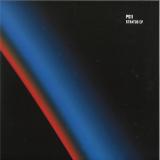
Matthew Antico is the American techno head behind the PS11 alias and he has a fine array of outboard gear in his studio, as anyone who has seen his socials can attest. Here they are all hooked up and work in overdrive from the off as supple rhythms meet dance floor clout in deep underground caverns. 'Stratos' has that anxious, pent-up energy that never resolves, while 'Mile High' hits harder and more insistently but with molten dub chords. 'Mid Point' is a serene and spacious sound with a broken beat and widescreen outlook and 'Mariana Trench' sinks you into the darkness you would associate with the world's deepest ocean. 'Timble Snake' cranks up the suspense with tight loops and inky bass.
Есть у нас в наличии и готов к отправке

Available again for the first time since 1970, Lobo’s melancholy masterpiece epitomizes the experimental evolution of MPB. With new liner notes by Edu Lobo.
Released in 1970, Cantiga de Longe is a defining record in the career of Brazilian singer, composer, and guitarist Edu Lobo and a significant contribution to Música Popular Brasileira (MPB). Created during Brazil’s military dictatorship, the album reflects the subtle, poetic strategies that artists use to convey meaning while subject to censorship. Rather than overt protest, Lobo expresses longing and introspection through refined musical language and evocative lyrics.
Musically, the album captures the sophistication of MPB at the turn of the decade. A foundation of acoustic guitar blends with jazz-influenced harmonies and elegant arrangements. The sound is both intimate and expansive: delicate vocal lines unfold over complex progressions, supported by understated rhythms, rooted in Brazilian traditions. Lobo’s controlled yet expressive vocal delivery keeps the lyrical nuance at the forefront.
A key element of the album’s texture is the involvement of Hermeto Pascoal. His imaginative instrumental contributions add subtle harmonic color and atmospheric depth, enriching the refined arrangements and enhancing the sense of openness.
Thematically, the album explores memory, distance, solitude, and time—personal reflections that resonate with the broader climate of uncertainty that dominated Brazil in 1970. This remains one of Lobo’s most mature recordings, exemplifying the emotional depth and artistic subtlety of Brazilian popular music in a creatively fertile era.
Есть у нас в наличии и готов к отправке
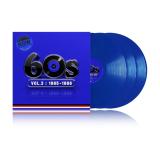
Step back to the mid-1960s with NOW Yearbook Presents – The 60s – Volume 3: 1965–1966, featuring 54 essential tracks across a 3LP set, pressed on beautiful blue vinyl.
LP1 opens with some of the decade’s most iconic vocal performances; Dusty Springfield leads with ‘You Don’t Have To Say You Love Me’, a UK No.1 hit that also reached the US Top 5, followed by The Righteous Brothers’ classic ‘You’ve Lost That Lovin’ Feelin’’, a chart-topper in both the UK and US. The Walker Brothers’ ‘The Sun Ain’t Gonna Shine Anymore’ was a UK Top 3 hit, while The Beach Boys follow with ‘God Only Knows’, widely regarded as one of their finest moments. Huge chart hits from The Moody Blues, Manfred Mann, Small Faces, The Kinks and The Animals with ‘We’ve Gotta Get Out Of This Place’ completes the first side…and flip the LP over for The Mamas & The Papas with ‘California Dreamin’, a major hit on both sides of the Atlantic and The Byrds and capturing the rise of folk-rock with ‘Mr. Tambourine Man’, another US No.1. Cher announced one of the most successful and enduring careers in music with ‘I Got You Babe’ – a #1 duet with Sonny, and is followed by the pop brilliance of Sandie Shaw with ‘Long Live Love’. Following The Mindbenders and The Fortunes, LP1 closes with a pair of soul standards: ‘My Girl’ from The Temptations was a US No.1(and eventually a UK #2 in 1992), and Percy Sledge’s ‘When a Man Loves a Woman’, another US chart-topper and a UK Top 5 hit in 1987 when it featured in a TV ad campaign.
LP2 opens with the explosive sound of 60s soul and crossover pop. Ike & Tina Turner kick us off with the timeless ‘River Deep – Mountain High’, a UK Top 3 hit. Frankie Valli & The Four Seasons had a huge hit with ‘Let’s Hang On’ and Motown is strongly represented with The Four Tops, whose ‘Reach Out I’ll Be There’ hit the US No.1 spot, alongside The Supremes, who scored another US chart-topper with ‘You Can’t Hurry Love’, plus Martha Reeves & The Vandellas, Stevie Wonder and a future Northern Soul Classic from Gloria Jones. Following James Brown, the side closes with the enduring soul classic ‘What Becomes Of The Broken Hearted’ from Jimmy Ruffin… while over on the other side Horst Jankowski’s instrumental smash ‘A Walk In The Black Forest’ leads in to pop classics from Tom Jones with ‘It’s Not Unusual’, a UK No.1, alongside Georgie Fame & The Blue Flames’ UK chart-topper ‘Yeh Yeh’ and Chris Montez with ‘The More I See You’. Sophisticated easy listening pop from Andy Williams and Frank Sinatra’s iconic ‘Strangers In The Night’ come ahead of Elvis Presley’s ‘Crying In The Chapel’, with LP2’s closer’s coming from Roy Orbison and Roger Miller, with the essential ‘King Of The Road’.
The Righteous Brothers’ undeniable ‘Unchained Melody’, a hit on release and a #1 in 1990 following it’s feature in the film ‘Ghost’ opens LP3 ahead of a wealth of huge pop hits from The Walker Brothers, Cilla Black and Cher – and rock oriented chart-toppers from The Troggs with ‘Wild Thing’ and The Spencer Davis Group with ‘Keep On Running’. The Everly Brothers’ ‘The Price Of Love’ leads into era-defining hits from Barry McGuire and Bob Dylan’s hugely influential ‘The Times They Are A-Changin’ reflecting the growing social awareness and changing approach to songwriting…and over to the final side opened by The Supremes with ‘Stop! In The Name Of Love’ ahead of The Toys with ‘A Lover’s Concerto’ and The Shangri-Las’ legendary ‘Leader Of The Pack’. Classic singles from Marianne Faithfull, Petula Clark and Sandie Shaw feature before the collection closes with a trio of timeless tracks: The trans-Atlantic top 5 ‘Sloop John B’ from the Beach Boys is alongside The Mamas & The Papas’ ‘Monday, Monday’ (a US No.1 and UK Top 5), whilst the aptly titled ‘Homeward Bound’ from Simon & Garfunkel – their first UK hit - signs off this superb collection.
NOW Yearbook Presents – The 60s – Volume 3: 1965–1966 – a snapshot of a rapidly evolving pop era where pure pop, soul, rock, beat, easy listening and songwriting sophistication converged.
Есть у нас в наличии и готов к отправке

Marcos Valle is one of those artists you simply can't overlook if you have even a passing interest in Brazilian music. Whether your taste leans toward bossa jazz, samba, psychedelic folk, or modern soul, Valle has surely recorded a great album for you. By the late 1960s he had already released enough outstanding records to secure a place among the greatest Brazilian artists of all time, but fortunately his career didn't stop there. He has continued recording fabulous albums over the following decades, right up to the present day. Widely regarded as one of the finest recordings in Marcos Valle's catalog, Vento Sul (1972) represents a pivotal moment in his artistic evolution, revealing a composer unafraid to reinvent himself and push the boundaries of Brazilian popular music. From the hypnotic title track to highlights such as "Democústico," "Revolução Orgânica," "Paisagem de Mariana," and "Pista O2," the album remains a breathtaking achievement whose influence continues to resonate more than five decades later. This reissue shines a well-deserved spotlight on a landmark recording -- an essential chapter in Brazilian music and an indispensable addition to any collection of psychedelic, progressive, jazz, or MPB classics. Pressed on 180g vinyl.
он должен быть опубликован на 16.10.2026
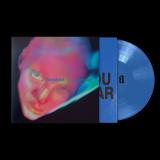
Fontaines D.C. announce their fifth studio album, Dopamine Chamber, released on 16th October via XL Recordings. Produced by James Ford, it is the follow-up to 2024’s UK platinum-certified Romance – and the sound of a band moving decisively away from the guitar language of their early records into something colder, stranger and more synthetic. It arrives today alongside lead single “Marianne” and its accompanying video, directed by Dave Meyers.
Dopamine Chamber arrives like a constellation behind undulating sighs of smog: potent balladry, anthemic melodies glinting through the murk. In a world tipping towards collapse, it asks how pleasure mutates amid peril—and what our pursuit of it reveals about us. Across the album, Fontaines D.C. – Grian Chatten, Carlos O’Connell, Conor Curley, Conor Deegan and Tom Coll – move between gratification and dread until the two meld together, reflecting the overwhelm of artificial intelligence, environmental collapse and political violence all riding the same algorithms as memes, jokes and celebrity culture. “The album itself is a dopamine chamber,” says Chatten. “You step inside and we test these different mind- or mood-altering pieces of music on you.”
Where Romance held its tension in balance, this record tips it. “I think Romance was maybe 60 per cent human and 40 per cent corrupted by automation, and a loss of feeling,” says Chatten, who spent time among the faded grandeur of Venice, Vienna and Sicily in search of lyrical inspiration. “This one feels more like 60 per cent corrupted — the mask is wearing the face a little more.” He resisted any pull towards easy optimism: “I felt it would be more powerful to leave the hope out and reflect the ugliness honestly. This one needed to feel more like a catastrophic warning.”
“Our albums have always questioned a sense of place,” says bassist Conor Deegan. “First Dublin, then being away from Dublin, and then trying to find the romance elsewhere. On this record, the question became: where do you escape to?” Into the self, perhaps – or hedonism, fantasy, cosmetic perfection, eternal youth or the endless refresh of a screen.
Fontaines D.C. have spent five albums refusing to repeat themselves – from Dogrel (2019) through A Hero’s Death (2020), the No. 1 Skinty Fia (2022) and the anarchic, kaleidoscopic Romance (2024). Dopamine Chamber is their most radical turn yet: cold synthesiser tones, marching drums, samples and triggers, several songs with no guitars at all, and the swooning strings of 1960s Italian pop pulled into something synthetic. For guitarist Conor Curley, the aim was to break from the band’s own reference points: “I was trying to find stuff that pointed into the future.” It was made with James Ford between London, the English countryside and Palermo, where Chatten recorded vocals in a makeshift booth built from mattresses and cushions.
“There’s a poignant sense of us being on the brink of some other kind of form of humanity, or non-humanity,” says Chatten. For their fifth album, Fontaines D.C. have built the chamber. What happens to the listener inside it will be the experiment.
он должен быть опубликован на 16.10.2026
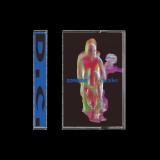
Fontaines D.C. announce their fifth studio album, Dopamine Chamber, released on 16th October via XL Recordings. Produced by James Ford, it is the follow-up to 2024’s UK platinum-certified Romance – and the sound of a band moving decisively away from the guitar language of their early records into something colder, stranger and more synthetic. It arrives today alongside lead single “Marianne” and its accompanying video, directed by Dave Meyers.
Dopamine Chamber arrives like a constellation behind undulating sighs of smog: potent balladry, anthemic melodies glinting through the murk. In a world tipping towards collapse, it asks how pleasure mutates amid peril—and what our pursuit of it reveals about us. Across the album, Fontaines D.C. – Grian Chatten, Carlos O’Connell, Conor Curley, Conor Deegan and Tom Coll – move between gratification and dread until the two meld together, reflecting the overwhelm of artificial intelligence, environmental collapse and political violence all riding the same algorithms as memes, jokes and celebrity culture. “The album itself is a dopamine chamber,” says Chatten. “You step inside and we test these different mind- or mood-altering pieces of music on you.”
Where Romance held its tension in balance, this record tips it. “I think Romance was maybe 60 per cent human and 40 per cent corrupted by automation, and a loss of feeling,” says Chatten, who spent time among the faded grandeur of Venice, Vienna and Sicily in search of lyrical inspiration. “This one feels more like 60 per cent corrupted — the mask is wearing the face a little more.” He resisted any pull towards easy optimism: “I felt it would be more powerful to leave the hope out and reflect the ugliness honestly. This one needed to feel more like a catastrophic warning.”
“Our albums have always questioned a sense of place,” says bassist Conor Deegan. “First Dublin, then being away from Dublin, and then trying to find the romance elsewhere. On this record, the question became: where do you escape to?” Into the self, perhaps – or hedonism, fantasy, cosmetic perfection, eternal youth or the endless refresh of a screen.
Fontaines D.C. have spent five albums refusing to repeat themselves – from Dogrel (2019) through A Hero’s Death (2020), the No. 1 Skinty Fia (2022) and the anarchic, kaleidoscopic Romance (2024). Dopamine Chamber is their most radical turn yet: cold synthesiser tones, marching drums, samples and triggers, several songs with no guitars at all, and the swooning strings of 1960s Italian pop pulled into something synthetic. For guitarist Conor Curley, the aim was to break from the band’s own reference points: “I was trying to find stuff that pointed into the future.” It was made with James Ford between London, the English countryside and Palermo, where Chatten recorded vocals in a makeshift booth built from mattresses and cushions.
“There’s a poignant sense of us being on the brink of some other kind of form of humanity, or non-humanity,” says Chatten. For their fifth album, Fontaines D.C. have built the chamber. What happens to the listener inside it will be the experiment.
он должен быть опубликован на 16.10.2026
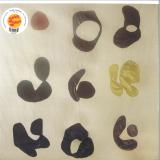
Helene Rikhard had remained a hidden gem in the Norwegian electronic music underground for years, before she fully emerged on the international scene with these two critically acclaimed albums. Her sound is an ingenious mix of psychedelic disco, 80’s wave music, techno, krautrock, ambient and it truly operates in a world of its own. Drawing inspiration from the cosmic disco of Daniele Baldelli, the jazzy depths of Detroit techno and the esoteric dreamscapes of Laraaji, it’s astral music for astral people! Psychedelic to the core, but also warm, adventurous and highly original.
Her debut album Unpredictable Express is a dark, brooding masterpiece combining elements of cosmic disco, electro and techno Everlasting High serves as a beautiful, atmospheric counterpoint to its moody and mysterious predecessor, Feeling like a blissed out, hazy summer day, echoing childhood memories from Helenes youth, in the beautiful southern part of Norway. Everlasting High also sees Helene’s vocals coming more to the front. Mad Girl and Lions Eye are both beautiful, dubbed out synth pop with traces of 80’s synth, shoegaze, and reveals a fine-tuned pop sensibility, with a vocal style that’s sits somewhere between Kate Bush, Enya and Fever Ray.
Both as a producer and DJ, Helene’s style is easily recognized for her bold, genre-blending approach to electronic music. Mixing elements of ambient, techno, and experimental sounds, creating immersive, intricate and psychedelic tracks. Her DJ sets work the same way, blending Italo, High Energy and synth nuggets, effortlessly with strange, modern club sounds.
Есть у нас в наличии и готов к отправке
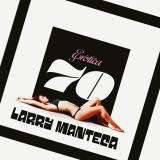
Plush shag carpeting, jazz flutes, analogue synths, funk grooves, exotica, and sultry, Italian-style vocalising: Erotica 70 is the new album from Larry Manteca, known for their inventive, tongue-in-cheek reimaginings of classic Italian soundtrack aesthetics.
This time around, the Milanese collective sets its sights on the distinct sonic landscape of 1970s commedia sexy—a film genre that, for better or worse, defined an era and fed richly into the cinematic education of Larry Manteca’s members.
Through this lens, Erotica 70 also becomes a way of celebrating Piero Umiliani in his centenary year—a composer whose name is closely linked to the erotic comedies of the time.
The nod to Umiliani is baked right into the details, starting with the choice of vintage gear like the Eminent synth and the Wurlitzer electric piano. These instruments deliver that particular blend of jazz, groove, electronics, and sensual charm that made the golden age of Italian film music so unique.
Standout track “Lando” is a joyful, playful homage to actor Lando Buzzanca, who starred in numerous films scored by Umiliani, including the iconic 1973 comedy La schiava io ce l’ho e tu no (My Darling Slave).
Larry Manteca is spearheaded by multi-instrumentalists Alessandro Paiola and Riccardo Danieli, flanked by the cinematic flute of Carlo Pelsa, the swinging drums of Andrea Quattrini, and the magnetic vocals of Valentina Castelli and Alessandra Maria Manzoni.
Recorded across various studios in Northern Italy, Erotica 70 is the imaginary soundtrack to an Italy that no longer exists, recreating its atmosphere while rendering it in full, vivid colour. It’s a record whose music seems to come straight out of a provincial cinema, a smoky late-night club, or a long-lost 70s film. But while it looks back to a bygone era, it does so only to bring it straight into the present, making the past sound surprisingly fresh and contemporary.
он должен быть опубликован на 16.10.2026

Daydream: 30th Anniversary Edition is a 2-CD set featuring the original multi-platinum-certified album Daydream, which includes the smash hits “Fantasy,” “Always Be My Baby” and “One Sweet Day." Disc 2 collects remixes and rare B-sides, including a brand-new remix, “Underneath The Stars (Eric Kupper Klassic Club Mix) (Radio Edit).” The second disc also features a writing session demo for “I Am Free.”
он должен быть опубликован на 16.10.2026
Paraiso has been doing vital work in Portugal - documenting the underground dance scene's history and pioneers in various mediums while also showcasing equally brilliant artists from newer generations. And they've been doing it for a decade now: we all know that a label dedicated to its local scene through and through is something rare and should be celebrated. This compilation 'X - 10 Years of Underground House Music from a Paradise Called Portugal' is a manifestation of that cross-generational spirit, with ten never-before-heard pieces of music by initiators and legends like The Advent alongside more recent veterans like Roundhouse Kick and Vil or younger talent like Phoebe or Van Der. Things start off with Salbany's 'Trax 10', oozing a techno elegance and irrefutable groove that wonderfully portrays the spirit of the Lisbon sound: raw yet ethereal, disarming in its simplicity while containing rave, romance and rhythmic complexities. Label founders Maria Amor & Shcuro firmly carry on the torch with 'Intracellular', gelled by dubby washes, syncopated drums, infectious rhythmic sense and layered with a melodic vocal motif. Vil's 'Cave' brings in stone-cold tight percussion offset by rich, evocative pads and technoid know-how for days. The Advent steps in with an ode to acid-minimalism, raw and slow-burning, with curious and twisted moments peppered with the skill of an expert. Van Der storms in with a piece of hybrid qualities, impeccably blending a swing onto industrial territories for a hypnotic-yet-banging hands in the air dancefloor moment. Scam Dust (the duo of Tiago and Shcuro, from adjacent generations) picks up on the industrial flavours, adds furious jacking rhythmics and live sonic experimentation that takes us to peak-quality effect and noise manipulation. 'Subvert' follows and goes deeper, as if into the depths of the ocean, with aquatic arpeggios and sparse drums that morph into an 303-driven state of mysterious oceanfloor mania - Roundhouse Kick sending us messages from the South. Violet and her 'Dream Machine' emerge with its mutant noisy motif, delay-drenched percussion and steady beat interrupted by keys, drum variations - and a u-turn to its paranoid loopy beginnings. Phoebe enters the chat and brings sonic sun rays in 'Galaxia 2000', a wide-eyed moment lead by colourful, open synthesisers with gates and filters taking us on a beautiful ride on tense, swingy drum patterns. The tenth track comes from Lisbon's rkeat and is full of closing act ear-candy with its beautifully chiseled, groovy as hell percussion, organic sonics and metallic instruments that seem to announce that the next decade is about to be just as good, if not better than this lovely 2016-2026 stint of boundary and scene-pushing.
он должен быть опубликован на 19.10.2026
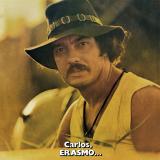
Erasmo Carlos’ Carlos, Erasmo is a landmark of early-’70s Brazilian rock, where Tropicalia, fuzzed-out psych, soul, funk and Brazilian pop meet in brilliantly adventurous form. Produced by Manoel Barenbein with arrangements by Rogério Duprat, it also features Os Mutantes players Sérgio Dias, Dinho Leme and Liminha, plus guitarist Lanny Gordin.
Opening with De Noite na Cama, written for Erasmo by Caetano Veloso, the album moves with real freedom between sensual pop, hard-edged psych and off-kilter grooves. Erasmo’s partnership with Roberto Carlos sits alongside songs by Jorge Ben and Marcos Valle, making this a genuine meeting point for some of Brazil’s most inventive voices.
Tracks like Maria Joana, Agora Ninguém Chora Mais, 26 Anos de Vida Normal, Ciça Cecília, Mundo Deserto, Sodoma e Gomorra and Masculino Feminino show just how wide Erasmo’s vision was: raw, playful, soulful and beautifully unruly.
он должен быть опубликован на 23.10.2026

Strut proudly presents the first release in almost a decade from the legendary Senegalese group Orchestra Baobab with Made In Senegal. Few groups embody the spirit of African music like Orchestra Baobab. Formed over 50 years ago as the resident band of the Baobab Club in Dakar, their timeless fusion of Afro-Cuban rhythms, Wolof griot traditions, mbalax, Congolese rumba and jazz continues to resonate across generations and continents. Now, the celebrated big band marks a new chapter in their illustrious history with Made in Senegal, their first new studio album since Tribute To Ndiouga Dieng in 2017 for World Circuit. Released on respected imprint Strut Records in conjunction with Madoky Music, the new album celebrates home, heritage, love and resilience and was recorded entirely in Dakar. On Made In Senegal new songs sit effortlessly beside re-imagined classics. Lead single "Togne Bakhoul", composed by late Baobab vocalist Rudy Gomis is a poignant ode to his wife and "Tioro Bye Samba" reprises a classic Thione Seck song while "Casamance" celebrates the culturally rich Southern Senegalese region, homeland of several Baobab members. "Baobab 50 Ans" marks the 50-year anniversary of this indomitable group. Made In Senegal is another modern Baobab classic combining a fresh approach with roots fixed firmly in Senegal"s rich traditions. It is the perfect time for a new generation to discover the elegant, hypnotic sound of one of Africa"s greatest ever big bands.
он должен быть опубликован на 23.10.2026

The Malian virtuoso, indisputably one of the most creative talents of his country, deserved his solo career decades ago. In May 2026, we released his debut solo album SOBRA DANCE featuring his wife Mariam Kouyate on vocals. The groovy and variated electric album, went straight to the top lists of World Music Charts Europe and Transglobal World Music Chart as well as selected for TOP OF THE WORLD by SONGLINES. Gaoussou's solo debut got several 5 star reviews.DJANGO BLUES is a tribute to Gaoussou's father and childhood teacher, who's nickname is Django. On this album the talented guitarist and composer goes deeper into the roots of Malian Dessert Blues, with the variations from the Arabic soundscapes from the north.In Senegal, Gaoussou is nick named "The new Ali Farka Toure". But even though Ali Farka was one of Gaoussou's greatest inspirations, Gaoussou has developed an unmistakable style of his own. He breathes music and goes to his studio every day to work. He uses his composing to reflect, and as a ventilator when things are hard -they often are in his country of contrasts- and as a love declaration to life itself. He is a true Mandingue, a Griot, peaceful and kind, as the philosophy preaches.Accompanying such legends like Toumani Diabate and Kasse Mady Diabate, Gaoussou Kouyate, with his beloved village 'Sobra' as his middle name, has long proven his level. Yet his name has been relatively undiscovered. The trio performed a memorable concert at Dakar Music Expo, led by their producers, Dudu Saar and Lucy Duran. What started being noticed internationally through this exceptional trio was Gaoussou's composing skills.The electric SOBRA DANCE album was released first, to contrast and give space to the acoustic GUITARI BARO album. Now comes the time for DJANGO BLUES. This great album features Gaoussou's band as well as an exceptional Moroccan Ribab- Amazigh violin master and singer, Aziz Ozouss.
он должен быть опубликован на 23.10.2026
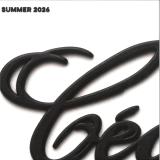
Cécille Summer 2026 Compilation
Summer and Cécille have always gone hand in hand.
For 2026, we’re back with another carefully selected collection of records that perfectly capture where house music feels today. Eleven tracks from artists we’ve admired for years, longtime friends of the label, exciting
newcomers, and fresh faces joining the Cécille family for the very first time.
Piem opens the journey with his long-awaited Cécille debut. A respected name in the scene for many years, his unmistakable groove has been on our radar for a long time, and we’re proud to finally welcome him to the label with Give Me The Rhythm.
Leon returns to where it all began. Since his very first Cécille release back in 2009, he’s been an important part of the label’s story. Let Bass Kick is classic Leon—timeless, understated and effortlessly effective.
UK duo Late Replies continue their incredible rise with Moment 4 U. Their fresh take on house music has been impossible to ignore, and we’re thrilled to have them on this year’s compilation.
Dutch mainstay Jesse Maas delivers Voices In My Head, another classy slice of groove from one of the most consistent names in the Netherlands’ house scene.
Buenos Aires’ Manu Desrets impressed us so much that one track simply wasn’t enough. His two contributions, Get GG and Voy No Kako, showcase two different shades of his sound and perfectly reflect why he’s become
one of the most exciting producers coming out of Argentina.
Andrew Azara has become a true part of the Cécille family over the years. This time he teams up with Traumer, who makes his label debut with a beautifully understated deep house record. Need You is one of those tracks
that quietly sticks with you.
We’re also excited to welcome Jay de Lys to the family. Together with Simon Kidzoo and Monölitio, the trio delivers Into The Light—a warm, feel-good house record that instantly became one of our favourites. Three
artists from Argentina, the Netherlands and Barcelona coming together exactly the way house music should.
After turning heads on last year’s Costa compilation, Brazil’s Classmatic returns alongside fellow Florianópolis producer Marian. Brazilian Madness is exactly what you’d expect: infectious groove, irresistible swing and that
unmistakable Brazilian sense of rhythm.
One of the hottest young names coming out of the Netherlands right now, Stefan Meser delivers Don’t Hesitate—one of those records that gets stuck in your head after the very first listen.
Closing the compilation is someone who’s been part of the Cécille story since the very beginning. Christian Burkhardt has been a longtime friend of the label and one of Frankfurt’s finest. Specialo lived in our vault for almost two years while we waited for the right moment to release it. This felt like the perfect place for it, and the perfect way to close another Cécille summer.
Eleven tunes. Eleven different stories. One soundtrack for Summer 2026. Welcome to the next chapter of Cécille.
Есть у нас в наличии и готов к отправке

Kapote presents: ITALOMANIA Vol. 4.
Toy Tonics Italomania Vol. 4 is a compilation dedicated to new ITALIAN DISCO. Not ITALO DISCO.
10 new tracks made by young producers from Italy, exclusively made for Toy Tonics. All songs with Italian vocals.
Made with a lot of love by
Cleeeo, Giorgio Lopez, Magnolia, Juan Soto & Sam Ruffillo, KOKO, Luca Averna, Ricardo Baez, Euro Nettuno, The Cube Guys and Paccone.
The Italomania compilation was initiated by Mathias ‚Kapote‘ Modica. Creative mind behind Toy Tonics and half italian producer himself.
The series is a manifesto to show the status of Italian disco of today.
Kapote invited the most relevant producers to show different new styles of modern Italian disco and house music.
With a wide range of influence: Live disco, indie dance, italo pop, and italo house.
Italian disco is not Italo disco. The last few years saw a big revival of the trashy pop music of the 1980s called Italo disco, mostly with English lyrics.
But this compilation is about something else. It is about this new Italian disco. Toy Tonics wants to show a new way to combine Italianity with dance culture.
The Italomania Vol. 4 Artists
Cleeeo - Come Tocchitu: A sexy and sophisticated disco house track by 22 year old newcomer DJ and producer Cleeeo. Driven by a warm, uplifting groove and strong dancefloor energy. The record is dedicated to Brazil. The vocals move between Italian and Portuguese. This creates a natural bridge between two cultures.
Giorgio Lopez - Italiani Brava Gente: Giorgio Lopez is an important player from the much talked about new music scene from Napoli.
For "Italiani Brava Gente," he teams up with Los Angeles artist Sueño. The track is a tongue-in-cheek take on the stereotypical Italian male. It pays homage to late Italodisco legend Pino D’Angiò. The story unfolds from the perspective of a foreign tourist navigating the contradictions of self-proclaimed Casanovas.
The Cube Guys - Saper Ringraziare: The legendary italo house duo shows their Italian vibes and musical taste with “Saper Ringraziare”. The track captures the warmth of summer and the infinity of urban nights. A combination of early Italo disco elements mixed with their typical groovy beats.
Magnolia - Vesuvio: Magnolia’s “Vesuvio” is a cover version of a song from the 1960s by artist E’ Zezi. While the original is more in a folk vibes, the new version is an irresistible piano house track with groovy, sun-soaked vibes. It is made for the dance floor. This track blends Mediterranean roots with the euphoric energy of modern house. Some might know the vocals already from another cover version by Nu Genea from the previous album.
Juan Soto & Sam Ruffillo - Italomexicano: What happens when a Toy Tonics artist hangs out in Mexico city and teams up with the local scene? The result is here. A blend a Toy Tonics sound and tons of vintage synthesizers and some additional production by Mexican producer talent Juan Soto.
You get "Italomexicano". A fuse of the mystique of Mexican mariachi with the magnetic pulse of Italo disco.
KOKO feat. Elena Moroder - I Can't Understand: This melancholic piano house track is a serious floorfiller! Goosebumps! Italian DJ and producer KOKO teams up with Elena Moroder on "I Can’t Understand". Elena delivers a captivating vocal performance. The track explores the misunderstandings of a relationship where emotions were never fully expressed. It blends an iconic piano melody with warm, uplifting grooves.
Luca Averna - Le Luci Della Pista: Luca Averna is a DJ, producer, and resident at the iconic Pikes Hotel in Ibiza. "Le Luci Della Pista" is an energetic track designed for peak-time Ibiza moments while keeping a strong groove and a playful spirit.
Ricardo Baez - È Venerdì: Ricardo Baez is an Italian-Venezuelan DJ and producer. He is known for his distinctive blend of house, dark electro, italo disco, and leftfield electronics. Well respected in Italy's contemporary electronic scene he has been releasing on labels such as Running Bag, Permanent Vacation, Bordello a Parigi, Correspondant, Mule music, Live at Robert Johnson.
Euro Nettuno - La Notte Chiama: These guys are hot! Part of the Polyamore Crew, one of the rising italian new disco collectives their sound mixes Italo house from the 1990ies, electro and Pop in a very cool new way.
Paccone - J'Adore Napoli: Vincenzo Paccone is a DJ, producer but also very renowned graphic designer. He is co-founder of NSS. A fashion agency that is by now one of the leading italian fashion crews. He has been also working as a designer for Circoloco Ibiza for many years and organizes some of the hottest parties in Napoli currently. He makes his official debut as a producer with “J’Adore Napoli”. It is a vibrant tribute to the house music culture born in Naples. The track draws inspiration from the late 1990s and early 2000s. And is part of a NSS campaign about the ’new coolness of the city of Napoli“.
он должен быть опубликован на 30.10.2026

It’s that time of year again! Are your copies of “Now! That’s What I Ca l Christmas” and “A Motown Christmas” finaly feeling worn out? Strut has the ideal antidote this year, as we dive into the world of festive records made by African artists spanning the late 1960s to the 1980s with our new Krismasi: Christmas Sounds From Africa compilation.
Taking in music from across the continent from Nigeria and Ghana to South Africa and Zimbabwe, Krismasi draws from a wide range of sounds from fun novelty records and spur-of-the-moment jams to spiritual and gospel favourites. Featured artists include Ghanian great Kwadwo Donkoh with a meditative highlife praise song from his much-loved Christmas Africana album. Elsewhere, pop star turned pastor, Jerry Boifraind, has some fun with a song celebrating seeing friends at Christmas and Nigerian pop favourite Martha Ulaeto features with the lilting lead track from her own Christmas Africana release. We pick out some choice Central and East African sounds with Kakai Kilonzo’s bri liant Kilimambogo Brothers Band and Congolese legend Baba Gaston’s Orchestra Baba National capturing the joy of the festive season. We stop off in Zim for a rare Dorothy Masuka acoustic piece and one of the country’s great musicians post-independence, Paul “Dr. Love” Matavire with ‘Christmas Yaswedera’ (‘Christmas Is Near’). Township jazz star Reggie Msomi appears with a joyous township instrumental and, fina ly, we couldn’t release a Christmas co lection without some carols. Here we include here a great version of ‘Mary’s Boy Child’ by UK-based Nigerian highlife musician Flash Dominci and a hi-octane funky medley of favourite festive hymns by Ghana’s Oscar Suley.
The compilation is the first in-depth co lection of rare African Christmas recordings, uncovering a rich and often overlooked chapter of the continent's musical history. Krismasi is available on Red & White Inkplosion Vinyl LP and CD. Vinyl restoration is by Colin Young at See Why Audio, mastering is by Frank Merritt at The Carvery, and the album features striking new artwork by Liam Large.
он должен быть опубликован на 30.10.2026
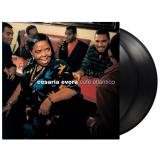
A native of the island nation of Cape Verde, Cesaria Evora was known as the country's foremost practitioner of the morna, a combination of West African percussion with Portuguese fados, Brazilian modinhas, and British sea shanties. After a short singing career in the 1970’s, she returned in the late ‘80s with a string of critically acclaimed and increasingly popular albums.
Her 1999 album Café Atlantico (a reference to her home where she frequently entertained guests) is a much-acclaimed masterpiece, finding Evora venturing into more Latin American musical landscapes, as opposed to Portuguese, which dominated her previous albums. Evora draws from traditional Cuban and Brazilian music to mesmerizing effect. The music is heart-breaking and nostalgic, warm and tragic all at once.
Café Atlantico is available on black vinyl and includes an insert with lyrics.
он должен быть опубликован на 30.10.2026

A torrent of brilliance released from the fingertips. The art of the piano trio by a giant of arrangement.
In 1968, Norio Maeda, the genius arranger once described as being able to “write different scores with his right and left hands at the same time,” welcomed his close musical allies Takeshi Inomata and Tatsuro Takimoto and took on the piano head-on in his first piano trio work as a pianist. This album brings together the refined melodies of the new mainstream style that led the jazz scene at the time, experimental elements using prepared piano, and even a strikingly inventive recording approach in which as many as seven microphones were placed inside the piano. With the outstanding structural power of a composer and arranger and the sharp instincts of a performer woven together at a high level, this is an important work that deserves to be engraved in the history of Japanese jazz.
он должен быть опубликован на 06.11.2026
LP with insert
In the artist’s own words:
"Thank Goodness brings together an overdubbed ‘chamber band’ of bass guitar, viola, piano, harpsichord, voice and drums. Made on my own in London and Ireland between 2023-26 as a slow channelling inward of a lot of social energy.”
Seán Being is a committed figure at the sharp edges of Irish music, including being the key instigator of the band Princ€ss, touring bass player with Maria Somerville, and a long-time affiliate of Dublin label wherethetimegoes. Their various collaborations include contributions to live and recorded projects with the likes of Spellcaster, Nashpaints, Florian TM Zeizig, Jennifer Moore, Olan Monk, Dylan Kerr, Asa Nisi Masa, Life is Beautiful, Polido, Adriana João and Usof.
Not always in the business of ‘popular music’, Seán also has Gregorian Chant and car horn performances in their repertoire.
Aspects of all of this activity have made their way, directly or otherwise, into this first full-length album.
он должен быть опубликован на 06.11.2026

The music on ‘Remanens’ is the result of a commission by Art Cinema OFF off and B.A.A.D.M to score the short silent film ‘Positano’ made by french actor and filmmaker Pierre Clémenti in 1969. The film itself is an ever-shifting series of glimpses, without much context, of a family vacation to the island Positano. The short cuts are similar to a dream or obscured, residual memories where chronology has fallen apart.
The score was reworked into album format on ‘Remanens’, the title being the Swedish word for remanence. The word has several meanings, most commonly residual magnetism left behind in a material. It is consequently used when referring to residue on magnetic tape, as well as data remanence, which is the residual digital data that remains even after attempts have been made to erase a hard drive. The music was reworked with remnant traces of memory in mind, of the film, but also of how glimpses of memories from another life, when the future was undecided, can make a person feel – and how it can unveil one’s own traces of what the future felt like.
Linus Hillborg (b. 1989) is a Swedish composer, musician and multidisciplinary artist based in Stockholm. His diverse creative practice spans experimental music across both electronic and acoustic realms, as well as compositions for film, theatre, and interactive installations. In 2021 he released his acclaimed solo-debut 'Magelungsverket' through Moloton, derived from the installation 'Orphan Works' which he built with an obsolete computer game engine. In 2023 he released 'Four Works' through Kali Malone and Maria W Horn’s label XKatedral, which featured a series of instrumental works by himself and Theodor Kentros.
он должен быть опубликован на 06.11.2026

Bristol trio Jabu return with their first release for two years. Following on from their widely acclaimed third LP ‘A Soft and Gatherable Star’, this stand-alone double A-side Disco Mix 12” features four exclusive new tracks, while signposting fresh material currently being written, recorded and mixed for their forthcoming LP, due 2027.
If 2023 LP ‘Boiling Wells’ documented Jabu learning to be a live band, leaning into writing collectively in-the-moment, ‘A Soft and Gatherable Star’ took that record’s ad-hoc/mixtape blueprint, and fleshed out their transformation from an outfit rooted in hiphop and dubstep, to a guitar-based band with a unique take on dream-pop. It saw them described by The Face as “an experiential trio blending the raw edge of industrial dub with dreamy layers of ambient pop and shoegaze", and by The Wire as “like Mazzy Star remixed by The Mad Professor“.
Jabu have continued to grow in the space between releases, touring regularly for the first time, playing festivals such as Rewire and Le Guess Who?, and supporting the likes of Maria Somerville and AR Kane. Their extended live line-up now regularly incorporates those that contributed to ‘A Soft and Gatherable Star’, with new material often further developed as it gets passed back and forth between collaborators. Cellist Josh Horsley (Powders / Nightingale Floor) and multi-instrumentalist Will Yates (aka Memotone) both feature here, under the guiding hand of Birthmark’s mixing.
Titled after the rural, estuarine landscape bordering their Bristol hometown, ‘Severn Flood Plain’ sees the band pivot towards a more jagged and up-tempo, post-punk sound. It runs on a nagging drum machine pulse that feels closer to Joy Division than Sly Stone; while the echo-laced vocals and tremolo guitar phrasing hark back to the ‘50s slapback sound of Lee Hazlewood or Duane Eddy. Written and sung by Jasmine Butt, the lyrics describe a visit to a friend near the mouth of the Severn, and hint towards a darkness that can also be felt across that tidal landscape.
Dropping the pace to a languorous, sensual sprawl, ‘Where You Run To’ is plaintive and yearning, an opiated, ethereal flipside to ‘Severn Flood Plain’s more urgent, anxiety-laced opener. Alex Rendall’s vocals glide over a stripped, metronomic backdrop, eventually entwining with Memotone’s ghostly, processed clarinet.
If the band’s musical reference points appear to have shifted, their process remains indebted to dub and still very much rooted in the multicultural cross-pollination peculiar to their home city of Bristol. Both tracks are extended, with dub versions courtesy of Birthmark. The band sat in on those sessions, completing the circle that began with J’s on-stage mixing of their live sets. The strands provided by Will and Josh provide introspective counterpoint to the sound system leanings.
Jabu’s influences are threaded together as naturally here as on their long-running NTS radio show, ‘Music For Lovers’, which now occasionally guests on the Early Bird show slot. They are due to play World of Echo’s ‘Expected Music 2.0’ at London’s Walthamstow Trades Hall on 21st November with Loopsel, Insides, Giulio Erasmus, Thomas Bush, and Raime amongst others.
он должен быть опубликован на 06.11.2026
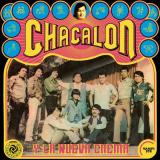
This 1981 album marks the debut of the most revered and iconic figure in Peruvian chicha: Chacalón. His music combines fuzz- and wah-wah-drenched distorted electric guitars with tropical percussion and even elements of huayno. This passion for electric guitars also fueled his admiration for the British band Cream -- and, of course, Eric Clapton -- which ultimately inspired the name of his band: La Nueva Crema.
His songs speak to the working classes who migrated from rural areas to the major cities in search of better employment opportunities and portray the hardships they faced. The lyrics tell stories of heartbreak, drunken nights amid everyday struggles, and marginalization -- common experiences in the poorer communities of Peru. Chacalón became a cult figure among the most disadvantaged sectors of Peruvian society, a devotion that remains strong years after his death. The album is essential listening for anyone interested in psychedelic cumbia and the roots of Peruvian chicha. This reissue preserves the album's original artwork as it appeared on Discos Horóscopo and includes liner notes by genre expert Víctor Zela (La cumbia de mis viejos).
он должен быть опубликован на 06.11.2026
A timeless classic - coming up on nearly 20 years since the original 12's were released and the very first time this LP has collectively been available on wax. (over 15 years since last in circulation)
This edition was remastered to analog perfection from the Grammy award winning ears @Stardelta Mastering. paying close attention to every finite detail - this album has never sounded so alive!
A multidimensional sound experience; it's like taking a swim in an analogue ocean and being immersed into the deepest end of the Mariana's Trench. Sonic Submersion of the Highest Order!
Credits:
Written & Produced by Steven Hitchell.
Vocal & Rhodes Performance by Paul St. Hilaire (Tikiman), courtesy of false tuned. Published by Basic Channel Publishing. (BCP)
Additional Mastering, Mixing and Engineering by Mark Richardson @ PrairieCat/Metropolis Mastering, Chicago, USA. (2007-2009)
Remastering and Lacquer cutting by Stardelta, UK. (2024)
он должен быть опубликован на 09.11.2026
он должен быть опубликован на 10.11.2026

,Splendor & Misery (Anniversary X)" ist die Jubiläumsausgabe zum zehnjährigen Bestehen des für den Hugo Award nominierten Science-Fiction-Opus des experimentellen Rap-Trios Clipping. Diese Deluxe-Ausgabe enthält ein überarbeitetes Cover, das Originalalbum sowie acht bisher unveröffentlichte Songs und alternative Takes. ,Splendor & Misery" ist ein afrofuturistisches, dystopisches Konzeptalbum, das die Geschichte des einzigen Überlebenden eines Sklavenaufstands auf einem interstellaren Frachtschiff sowie des Bordcomputers erzählt, der sich in ihn verliebt. In der Annahme, allein und im Weltraum verloren zu sein, entdeckt die Figur Musik im bebenden Rumpf des Schiffes und in den zwitschernden Instrumententafeln. Die Musik von Clipping zeichnet eine imaginäre Klanglandkarte der Decks, Gänge und Quartiere des Schiffes, während Daveed Diggs' Texte auf den Rhythmen reiten, die von dessen Triebwerken und Maschinen erzeugt werden. ,Splendor & Misery" ist eine der beliebtesten Veröffentlichungen von Clipping. Es schaffte es in zahlreiche Jahresrückblicke und wurde von der ,New York Times", Bandcamp Daily, CLASH, The Line Of Best Fit, The Needle Drop, Uproxx, The Observer und Stereogum gelobt. Im Jahr 2019 stufte Pitchfork ,Splendor & Misery" als eines der 33 besten Industrial-Alben aller Zeiten ein. Clipping feierte das Album im August 2026 mit dem ,Splendor & Misery Fest" im Knockdown Center in New York City, mit den Vorgruppen SPELLLING, Shabazz Palaces, ELUCID, Fatboi Sharif, evicshen und Maria Chavez.
он должен быть опубликован на 13.11.2026

Mit englischem Charme, ausnehmendem Talent und kreativer Offenheit begeistert die junge britische Musikerin Anna Lapwood nicht nur die Kritiker*Innen, sondern ein Millionen-Publikum bei Social Media. Auf ihrem Sony Classical Debüt-Album "Luna" gibt sie einen Einblick in ihren umfassenden musikalischen Kosmos. Die fünfzehn Titel des Albums beleuchten ihre Vielseitigkeit und verbinden traditionelles Repertoire von Johann Sebastian Bach, Claude Debussy und Philip Glass mit zeitgenössischen Kompositionen von Max Richter, Ludovico Einaudi und Hans Zimmer. Auf "Luna" ist Anna Lapwood in erster Linie als Organistin zu erleben, aber auch andere Facetten ihres musikalischen Lebens kommen zur Geltung, wenn sie den Pembroke College Chapel Choir bei zwei Titeln dirigiert. Anna Lapwood spielt Orgel, Geige und Harfe und ist als Dirigentin und Orchester-Leiterin aktiv. 1995 in der Grafschaft Oxfordshire geboren, erhielt sie als erste Frau in der Geschichte des Magdalen College Oxford ein Orgelstipendium. 2016 wurde sie die jüngste musikalische Direktorin in Cambridge und leitet seitdem die Chöre und Ensembles des Pembroke College. Nach Feierabend und bei Einbruch der Dunkelheit erhält sie als Associate Artist der Royal Albert Hall besonderen Zugang zu dem majestätischen Instrument in der Royal Albert Hall. Dies hat zu einigen spektakulären Kollaborationen geführt. Die berühmteste davon mit dem Elektronik-Musiker Bonobo. Auf TikTok erreicht sie mit solchen gleichermaßen lockeren wie spektakulären musikalischen Ausflügen mehr als 550.000 Follower.
Есть у нас в наличии и готов к отправке
