Search:mariam

Styles
All
EMAHOY TSEGE MARIAM GEBRU - CHURCH OF KIDANE MEHRET

Spirituelle Musik mit tiefer Resonanz, übertragen durch Klavier, Orgel und Harmonium von der geliebten Komponistin und äthiopischen orthodoxen Nonne Emahoy Tsege Mariam Gebru. "Church of Kidane Mehret" versammelt das gesamte musikalische Werk von Emahoys gleichnamigem Privatpress-Album von 1972 sowie zwei zusätzliche unveröffentlichte Klavieraufnahmen mit Emahoys ,Äthiopischer Kirchenmusik". Die Aufnahmen entstanden in Kirchen in ganz Jerusalem. Zum ersten Mal hören wir Emahoy auf dem Harmonium und der massiven, dröhnenden Pfeifenorgel, neben einigen ihrer bewegendsten Klavierstücke. Bei ,Ave Maria" hallt ihr läutendes Klavier gegen alte Steinmauern. Ihre vertrauten melodischen Linien erhalten eine neue Resonanz, wenn sie in ,Spring Ode - Meskerem" durch das Harmonium gespielt werden. Zwei überragende Orgelstücke bilden die B-Seite, die Emahoys klassische europäische Ausbildung mit ihrem lebenslangen Studium der äthiopischer religiöser Musik kombinieren. Nirgendwo ist Emahoys einzigartige Kombination von Einflüssen deutlicher als bei ,Essay on Mahlet", einem meditativen Dauerbrenner, in dem Emahoy die freien Verse der orthodoxen Liturgie Note für Note auf dem Klavier interpretiert. Dieses aufschlussreiche Stück stammt, neben der dramatischen Klavierkomposition ,The Storm", von einem anderen selbstveröffentlichten Album, "Der Sang Des Meeres" von 1963. Eines der einzigen bekannten Exemplare wurde vor dem Müll gerettet und von einer Mitschwester aus Emahoys Kloster am Rande von Emahoys Beerdigung im März 2023 an Mississippi Records weitergegeben. Die Vinylausgaben kommen im Oldschool Tip-On-Jacket mit metallischer Silberfolienprägung und einem 12-seitigen Booklet mit ausführlichen Linernotes des Gelehrten und Pianisten Thomas Feng.

In Stock

On Stock and ready to ship

26,01
AMADOU & MARIAM - L’amour à la folie
  • A1: Bienvenue À La Maison
  • A2: Sonfo (Feat. Fally Ipupa)
  • A3-: Nakan
  • A4: Mogolu
  • A5: L'amour À La Folie
  • A6: La Vie Est Belle
  • B1: Généralisé
  • B2: Kɛlɛ Kɔ
  • B3: Saabujugu
  • B4: Furu
  • B5: On Veut La Paix
  • B6-: Tanu

“L’amour à folie” is Amadou & Mariam ‘s final album. It was created entirely while Amadou was still with us, making this release especially meaningful and deeply emotional. Amadou is gone, but the music and voices still resonate, an echo suspended beyond time and space. It is Mariam’s wish, after the mourning period, to return to the stage with the new album that the couple composed and recorded together over the past seven years.

pre-order now24.10.2025

expected to be published on 24.10.2025

26,01
EMAHOY TSEGE MARIAM GEBRU - CHURCH OF KIDANE MEHRET (TAPE)

Spirituelle Musik mit tiefer Resonanz, übertragen durch Klavier, Orgel und Harmonium von der geliebten Komponistin und äthiopischen orthodoxen Nonne Emahoy Tsege Mariam Gebru. "Church of Kidane Mehret" versammelt das gesamte musikalische Werk von Emahoys gleichnamigem Privatpress-Album von 1972 sowie zwei zusätzliche unveröffentlichte Klavieraufnahmen mit Emahoys ,Äthiopischer Kirchenmusik". Die Aufnahmen entstanden in Kirchen in ganz Jerusalem. Zum ersten Mal hören wir Emahoy auf dem Harmonium und der massiven, dröhnenden Pfeifenorgel, neben einigen ihrer bewegendsten Klavierstücke. Bei ,Ave Maria" hallt ihr läutendes Klavier gegen alte Steinmauern. Ihre vertrauten melodischen Linien erhalten eine neue Resonanz, wenn sie in ,Spring Ode - Meskerem" durch das Harmonium gespielt werden. Zwei überragende Orgelstücke bilden die B-Seite, die Emahoys klassische europäische Ausbildung mit ihrem lebenslangen Studium der äthiopischer religiöser Musik kombinieren. Nirgendwo ist Emahoys einzigartige Kombination von Einflüssen deutlicher als bei ,Essay on Mahlet", einem meditativen Dauerbrenner, in dem Emahoy die freien Verse der orthodoxen Liturgie Note für Note auf dem Klavier interpretiert. Dieses aufschlussreiche Stück stammt, neben der dramatischen Klavierkomposition ,The Storm", von einem anderen selbstveröffentlichten Album, "Der Sang Des Meeres" von 1963. Eines der einzigen bekannten Exemplare wurde vor dem Müll gerettet und von einer Mitschwester aus Emahoys Kloster am Rande von Emahoys Beerdigung im März 2023 an Mississippi Records weitergegeben.

out of Stock

Order now and we will order the item for you at our supplier.

14,08

Last In: 10 months ago
EMAHOY TSEGE MARIAM GEBRU - CHURCH OF KIDANE MEHRET

Spirituelle Musik mit tiefer Resonanz, übertragen durch Klavier, Orgel und Harmonium von der geliebten Komponistin und äthiopischen orthodoxen Nonne Emahoy Tsege Mariam Gebru. "Church of Kidane Mehret" versammelt das gesamte musikalische Werk von Emahoys gleichnamigem Privatpress-Album von 1972 sowie zwei zusätzliche unveröffentlichte Klavieraufnahmen mit Emahoys ,Äthiopischer Kirchenmusik". Die Aufnahmen entstanden in Kirchen in ganz Jerusalem. Zum ersten Mal hören wir Emahoy auf dem Harmonium und der massiven, dröhnenden Pfeifenorgel, neben einigen ihrer bewegendsten Klavierstücke. Bei ,Ave Maria" hallt ihr läutendes Klavier gegen alte Steinmauern. Ihre vertrauten melodischen Linien erhalten eine neue Resonanz, wenn sie in ,Spring Ode - Meskerem" durch das Harmonium gespielt werden. Zwei überragende Orgelstücke bilden die B-Seite, die Emahoys klassische europäische Ausbildung mit ihrem lebenslangen Studium der äthiopischer religiöser Musik kombinieren. Nirgendwo ist Emahoys einzigartige Kombination von Einflüssen deutlicher als bei ,Essay on Mahlet", einem meditativen Dauerbrenner, in dem Emahoy die freien Verse der orthodoxen Liturgie Note für Note auf dem Klavier interpretiert. Dieses aufschlussreiche Stück stammt, neben der dramatischen Klavierkomposition ,The Storm", von einem anderen selbstveröffentlichten Album, "Der Sang Des Meeres" von 1963. Eines der einzigen bekannten Exemplare wurde vor dem Müll gerettet und von einer Mitschwester aus Emahoys Kloster am Rande von Emahoys Beerdigung im März 2023 an Mississippi Records weitergegeben. Die Vinylausgaben kommen im Oldschool Tip-On-Jacket mit metallischer Silberfolienprägung und einem 12-seitigen Booklet mit ausführlichen Linernotes des Gelehrten und Pianisten Thomas Feng.

out of Stock

Order now and we will order the item for you at our supplier.

23,49

Last In: 10 months ago
EMAHOY TSEGE MARIAM GEBRU - PLAYED BY MAYA DUNIETZ & STRING ENSEMBLE (LIVE IN PARIS

Latency presents the first-ever arrangements of iconic Ethiopian composer Emahoy Tsege Mariam Gebru"s music for piano and strings, honoring her desire to broaden the interpretation of her work beyond the piano. Led by pianist, composer, and Emahoy"s close friend Maya Dunietz, a nine-piece string ensemble performed her compositions during two tribute concerts at the Bourse de Commerce in Paris, in April 2024. This album celebrates the centenary of Emahoy"s birth and commemorates the first anniversary of her passing.

out of Stock

Order now and we will order the item for you at our supplier.

24,33

Last In: 10 months ago
MARIAM THE BELIEVER - BREATHING TECHNIQUES

Das neue Soloalbum der einen Hälfte des Duos WILDBIRDS & PEACEDRUMS, MARIAM THE BELIEVER, vermittelt uns richtig zu Atmen (und genau Zuzuhören)! Es gibt einen Hauch von Jazz, einen Hauch von Soul, die Empfänglichkeit und den Zauber spiritueller Musik und den großen Reichtum der Improvisation. Der Sound auf "Breathing Techniques" ist dicht und doch atmosphärisch, eine musikalische Landschaft, die sich im Laufe der Musik durch subtile Progressionen, Wiederholungen und manchmal scheinbar sporadische Arrangements entfaltet. Ein Setting, das an ein modernisiertes klassisches Kammerorchester erinnert, mit Mariams Gesang an der Spitze. Das Album lässt Einflüsse von Frauen in der Musik der Vergangenheit und der Gegenwart anklingen. Es gibt einen Hauch von ALICE COLTRANEs zurückhaltenden spirituellen Aufnahmen, den rhythmischen Improvisationen VON MEREDITH MONK, der Leichtigkeit von STINA NORDENSTAM und den erforschenden stimmlichen Qualitäten von SHEILA CHANDRA und GAL COSTA. Das neue Album folgt auf die beiden von der Kritik hochgelobten Vorgängeralben von MARIAM THE BELIEVER: "Love Everything" von 2017 und das Debütalbum "Blood Donation" von 2013.

pre-order now25.10.2024

expected to be published on 25.10.2024

23,95
Emahoy Tsegue - Mariam LP

REPRESS

The second LP compendium of Emahoy Tsege Mariam Gebru's early solo piano works, recorded throughout the 1960s - finally available again. Emahoy Tsege Mariam Gebru is a true original - her compositions and unique playing style live somewhere between Erik Satie, Debussy, liturgical music of the Coptic Ethiopian Church, and Ethiopian traditional music. It is some of the most moving piano music you will ever hear! These original compositions, performed by Emahoy Tsege Mariam Gebru herself on solo piano, were originally self-released in Germany in small editions as fundraisers for orphanages, support organizations for widows of war victims, and other philanthropic causes. We are humbled and proud to present this album in collaboration with the EMAHOY TSEGE MARIAM MUSIC PUBLISHER and Foundation, and to assist in continuing her life-long mission of using music as a vessel to care for those who have been abandoned by society, or harmed by strife. Black vinyl LP comes in black inner-sleeves and heavy cardstock jacket with color printing and gold-foil stamping, and song notes by the composer herself. Restored and remastered by Timothy Stollenwerk.

pre-order now20.09.2024

expected to be published on 20.09.2024

25,17
EMAHOY TSEGE MARIAM GEBRU - SOUVENIRS LP

Gold Vinyl. The first vocal album by beloved Ethiopian nun, composer, and pianist Emahoy Tsege Mariam Gebru - profound and deeply moving home cassette recordings made amidst political upheaval and turmoil. These songs, recorded between 1977-1985, are different from anything previously released by the artist. Rich with the sound of birds outside the window, the creak of the piano bench, the thump of Emahoy's finger on the record button, they create a sense of place, of being near the artist while she records. Emahoy dreamt of releasing this music to a larger audience before her passing in March of 2023. We are proud to release this music, in collaboration with her family, now, in what would have been her 100th year. LP comes with a 16-page booklet full-color booklet. Gold cover first edition, pressed in both black and gold vinyl editions.

pre-order now20.09.2024

expected to be published on 20.09.2024

23,95
EMAHOY TSEGE MARIAM GEBRU - EMAHOY TSEGE MARIAM GEBRU

Purple Vinyl. Celestial piano composition and performance by a classically-trained Ethiopian nun. Erik Satie, Debussy, liturgical music of the Coptic Church, the Ethiopian five-note scale, and a touch of the divine. It is some of the most moving piano music you will ever hear!

pre-order now13.09.2024

expected to be published on 13.09.2024

22,27
EMAHOY TSEGE MARIAM GEBRU - SPIELT EIGENE KOMPOSITIONEN

A most unusual & stunning album. Tsege Mariam Gebru is an Ethiopian nun who has dedicated her life to helping others. She has been composing & playing music on the piano since the 1960's. Her music is a unique mix of Western classical music in the vein of Erik Satie, Ethiopian music & Religious Christian meditation music. On this reissue of her first LP, originally released in Germany in a very small pressing, we find Tsege Mariam Gebru playing her own compositions solo on piano. She plays with restrained grace & purity. The record invites repeated listening well and is filled with spiritual warmth.

out of Stock

Order now and we will order the item for you at our supplier.

22,06

Last In: 19 months ago
EMAHOY TSEGE MARIAM GEBRU - SOUVENIRS LP

Das erste Album mit Gesang der geliebten äthiopischen Nonne, Komponistin und Pianistin Emahoy Tsege Mariam Gebru enthält tiefgründige und bewegende Kassettenaufnahmen, die inmitten politischer Umwälzungen und Unruhen entstanden sind. Es sind Lieder über Weisheit, Verlust, Trauer und Exil, die direkt in eine Boombox gesungen und von Emahoys unverwechselbarem Klavier begleitet werden. Obwohl sie die Lieder noch im Haus ihrer Familie in Addis Abeba schrieb und aufnahm, singt Emahoy über den Schmerz, weit weg von zu Hause zu sein, über die Revolution von 1974 und den Roten Terror in Äthiopien und über eine Vorahnung ihres zukünftigen Exils in Jerusalem. Im 21. Jahrhundert ist Emahoy weltweit für ihren ganz eigenen melodischen und rhythmischen Stil bekannt geworden. Häufig als "jazzy" oder "honky tonk" fehlinterpretiert, entspringt Emahoys Musik in Wirklichkeit einer tiefen Auseinandersetzung mit der westlichen klassischen Tradition, gemischt mit ihrem Hintergrund in traditioneller und orthodoxer äthiopischer Musik. Diese Lieder, die zwischen 1977 und 1985 aufgenommen wurden, unterscheiden sich von allem, was die Künstlerin bisher veröffentlicht hat. Die Geräusche der Vögel vor dem Fenster, das Knarren der Klavierbank und das Klopfen von Emahoys Finger auf der Aufnahmetaste vermitteln das Gefühl, bei der Künstlerin zu sein, während sie aufnimmt. Emahoys Texte, die sie auf Amharisch singt, sind poetisch und schwer von der Last des Exils. "Als ich hinausschaute / hinter die Wolken / konnte ich den Himmel meines Landes nicht sehen / bin ich wirklich so weit gegangen?", fragt sie in "Is It Sunny or Cloudy in the Land You Live?" Ihr Gesang ist zart und innig und zeichnet die melodischen Konturen ihres Klaviers nach.

out of Stock

Order now and we will order the item for you at our supplier.

23,49

Last In: 20 months ago
Emahoy Tsegue - Mariam LP

REPRESS

The second LP compendium of Emahoy Tsege Mariam Gebru's early solo piano works, recorded throughout the 1960s - finally available again. Emahoy Tsege Mariam Gebru is a true original - her compositions and unique playing style live somewhere between Erik Satie, Debussy, liturgical music of the Coptic Ethiopian Church, and Ethiopian traditional music. It is some of the most moving piano music you will ever hear! These original compositions, performed by Emahoy Tsege Mariam Gebru herself on solo piano, were originally self-released in Germany in small editions as fundraisers for orphanages, support organizations for widows of war victims, and other philanthropic causes. We are humbled and proud to present this album in collaboration with the EMAHOY TSEGE MARIAM MUSIC PUBLISHER and Foundation, and to assist in continuing her life-long mission of using music as a vessel to care for those who have been abandoned by society, or harmed by strife. Black vinyl LP comes in black inner-sleeves and heavy cardstock jacket with color printing and gold-foil stamping, and song notes by the composer herself. Restored and remastered by Timothy Stollenwerk.

pre-order now04.11.2022

expected to be published on 04.11.2022

21,22
Amadou & Mariam - La Confusion

Amadou&Mariam

La Confusion

12inchBEC5543141
Because Music
24.01.2018

Hailing from Mali, Amadou Bagayoko and Mariam Doumbia first met as children at Mali's Institute for the Young Blind—both lost their vision at an early age. It was here that they started performing in the institute's Eclipse Orchestra, eventually marrying and began recording together in the '80s.

Over the span of three decades Amadou (guitar and vocals) and Mariam (vocals) developed an international following having recorded eight full-length albums and toured around the world. Their album Welcome To Mali (2008) was nominated for the Best Contemporary World Music Album' at the 52nd Grammy Awards. Tour highlights for the duo include supporting U2 on their U2 360 Tour, performing at the 2010 World Cup for FIFA's Kick-Off Celebration and performing alongside major acts across multiple genres such including Blur, Coldplay and Pink Floyd's David Gilmour.

The album also includes the hit single Bofou Safou,' which Stereogum calls the funk, the whole funk, and nothing but the funk.' The band discussed La Confusion and performed new music on a recent stop at KCRW's Morning Becomes Eclectic' during their recent sold out North American seventeen city headline tour — watch HERE. The band played major markets including New York, Los Angeles, San Francisco, Chicago, Washington D.C., Philadelphia, Montreal.

Amadou & Mariam recently released the Bofou Safou EP via Because Music. The EP includes the first two La Confusion singles, Bofou Safou' and Filaou Bessame,' alongside remixes of the EP's title track by Fatima Yamaha, Africaine 808, Henrik Schwarz and more. The term bofou safou' is a Bambara (the Malian national language) nickname given to nonchalant young men who would rather dance than work. Of the new EP, the group notes, We really like the remixes that were made for the EP. You get to hear our music in a different form, which is great. All five remixes manage to catch the essence of our song while really pushing those enticing afro pop and electronic vibes further.'

out of Stock

Order now and we will order the item for you at our supplier.

20,97

Last In: 5 years ago
Amadou & Mariam - Dimanche  Bamako

Amadou&Mariam

Dimanche Bamako

2x12inchBEC5156193 2X12"
Because Music
10.05.2016
  • A1: M'bifé
  • A2: M'bifé Balafon
  • A3: Coulibaly
  • A4: La Réalité
  • B1: Sénégal Fast Food
  • B2: Artistiya
  • B3: La Fête Au Village
  • B4: Camions Sauvages
  • C1: Beaux Dimanches
  • C2: La Paix
  • C3: Djanfa
  • C4: Taxi Bamako
  • D1: Politic Amagni
  • D2: Gnidjougouya
  • D3: M'bifé Blues

Double Orange 2LP including CD. For the first time on vinyl.

out of Stock

Order now and we will order the item for you at our supplier.

20,46

Last In: 8 years ago
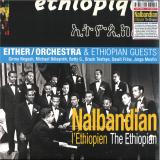
NALBANDIAN THE ETHIOPIAN & EITHER/ORCHESTRA - NALBANDIAN THE ETHIOPIAN (ETHIOPIQUES)

The Éthiopiques series returns! Essential archive recordings from an extremely fruitful period in Ethiopian music.

Before “Swinging Addis” took over the world, there was Moussié Nerses Nalbandian — the Armenian-born composer who shaped modern Ethiopian music. Mentor, arranger, and pioneer, he laid the foundations of Ethio-jazz.

This Éthiopiques volume revives his forgotten legacy, recorded live by Either/ Orchestra First issue ever with new exclusive photos and in depth liner 8-page insert.

“Ethiopian jazzmen are the best musicians that we have seen so far in Africa.
They really are promising handlers of jazz instruments.”

Wilbur De Paris
(1959, after a concert in Addis Ababa)

አዲስ፡ዘመን። *Addis zèmèn* **A new era.**
The time is the mid-1950s and early 1960s, just before "Swinging Addis" bloomed – or rather boomed – onto the scene. Brass instruments are still dominant, but the advent of the electric guitar, and the very first electronic organs, are just around the corner. Rock’n'Roll, R’n’B, Soul and the Twist have not yet barged their way in. Addis Ababa is steeped in the big band atmosphere of the post-war era, with Glenn Miller's *In the* *Mood* as its world-wide theme song, neck and neck with the Latin craze that was in vogue at the same period. Life has become enjoyable once again, with the return of peace after the terrible Italian Fascist invasion of Ethiopia (1935-1941). The redeployment of modern music is part and parcel of the postwar reconstruction. *Addis zèmèn* – a new era – is the watchword of the postwar period, just as it was all across war-torn Europe.
The generation who were the young parents of baby boomers** were the first to enjoy this musical renaissance, before the baby boomers themselves took over and forever super-charged the soundtrack of the final days of imperial reign. Music is Ethiopia's most popular art form, and very often serves as the best barometer for the upsurge of energy that is critical for reconstruction. Whether it be jazz in Saint-Germain-des-Prés or the *zazous* who revolutionised both jazz and French *chanson* after the *Libération*, be it Madrid's post-Franco Movida, or Dada, the Surrealists and *les années folles* that followed World War I, the periods just after mourning and hardship always give rise to brighter and more tuneful tomorrows. Addis Ababa, as the country's capital, and the epicentre of change, was no exception to this vital rule.

**Two generations of Nalbandian musicians**
Nersès Nalbandian belonged to a family of Armenian exiles, who had moved to Ethiopia in the mid-1920s. The uncle Kevork arrived along with the fabled "*Arba Lidjotch*", the** "*40 Kids*", young Armenian orphans and musicians that the Ras Tafari had recruited when he visited Jerusalem in 1924, intending to turn their brass band into the official imperial band. If Kevork Nalbandian was the one who first opened the way of modernism, pushing innovation so far as to invent musical theatre, it was his nephew Nersès who would go on to become, from the 1940s and until his death in 1977, a pivotal figure of modern Ethiopian music and of the heights it. Going all the way back to the 1950s. Nothing less. And it is Nersès who is largely to thank for the brassy colours that so greatly contributed to the international renown of Ethiopian groove. While the younger generations today venture timidly into the genealogy of their country's modern music, often losing their way amidst a distinctly xenophobic historiographical complacency, many survivors of the imperial period are still around to bear witness and pay tribute to the essential role that "Moussié Nersès" played in the rise of Abyssinia's musical modernity.
Given the year of his birth (15 March 1915), no one knows for sure if Nersès Nalbandian was born in Aintab, today Gaziantep (Turkiye/former Ottoman Empire) or on the other side of the border in Alep, Syria... What is certain is that his family, like the entire Armenian community, was amongst the victims of the genocide perpetrated by the Turks. Alep, the place of safety – today in ruins.
Before Nersès then, there was uncle Kevork (1887-1963). For a quarter of a century, he was a whirlwind of activity in music teaching and theatrical innovation. *Guèbrè Mariam le Gondaré* (የጎንደሬ ገብረ ማርያም አጥቶ ማግኘት, 1926 EC=1934) is his most famous creation. This play included "ten Ethiopian songs" — a totally innovative approach. According to his autobiographical notes, preserved by the Nalbandian family, Kevork indicates that he composed some 50 such pieces over the course of his career. This shows just how much he understood, very early on, the critical importance of song as Ethiopia's crowning artistic form. Indeed, for Ethiopian listeners, the most important thing is the lyrics, with all their multifarious mischief, far more than a strong melody, sophisticated arrangements or even an exceptional voice. (This is also why Ethiopians by and large, and beginning with the artists and producers themselves, believed for a long time — and wrongly — that their music could not possibly be exported, and could never win over audiences abroad, who did not speak the country's languages).

Last but not least, one of Kevork's major contributions remains composing Ethiopia's first national anthem – with lyrics by Yoftahé Negussié.
Nersès Nalbandian moved to Ethiopia at the end of the 1930s, at the behest of his ground-breaking uncle. Proficient in many instruments (pretty much everything but the drums), conductor, choir director, composer, arranger, adapter, creator, piano tuner, purveyor of rented pianos,... he was above all an energetic and influential teacher. From 1946 onwards, thanks to Kevork's connexion, Nersès was appointed musical director of the Addis Ababa Municipality Band. In just a few years, Nersès transformed it into the first truly modern ensemble, thanks to the quality of his teaching, his choice of repertoire, and the sophistication of his arrangements. It was this group that would go on to become the orchestra of the Haile Selassie Theatre shortly after its inauguration in 1955, which was a major celebration of the Emperor's jubilee, marking the 25th anniversary of his on-again-off-again reign.

At some point or other in his long career, Nersès Nalbandian had a hand in the creation of just about every institutional band (Municipality Band, Police Orchestra, Imperial Bodyguard Band, Army Band, Yared Music School…), but it was with the Haile Selassie Theatre – today the National Theatre – that his abilities were most on display, up until his death in 1977. To this must be added the development of choral singing in Ethiopia, hitherto unknown, and a sort of secret garden dedicated to the memory of Armenian sacred music, and brought together in two thick, unpublished volumes. Shortly before his death (November 13, 1977), he was appointed to lead the impressive Ethiopian delegation at Festac in Lagos, Nigeria (January-February 1977).

His status as a stateless foreigner regularly excluded him from the most senior positions, in spite of the respect he commanded (and commands to this day) from the musicians of his era. Naturally gifted and largely self-taught, Nerses was tirelessly curious about new musical developments, drawing inspiration from the very first imported records, and especially from listening intensely to the musical programmes broadcast over short-wave radio – BBC *First*. A prolific composer and arranger, he was constantly mindful of formalising and integrating Ethiopian parameters (specific “musical modes”, pentatonic scale, and the dominance of ternary rhythms) into his “modernisation” of the musical culture, rather than trying to over-westernise it. It even seems very probable that *Moussié* Nerses made a decisive contribution to the development of tighter music-teaching methods, in order to revitalise musical education during this period of prodigious cultural ferment. Flying in the face of all the historiographical and musicological evidence, it is taken as sacrosanct dogma that the four musical modes or chords officially recognised today, the *qǝñǝt* or *qiñit* (ቅኝት), are every bit as millennial as Ethiopia itself. It would appear however that some streamlining of these chords actually took place in around 1960. It was only from this time onward that music teaching was structured around these four fundamental musical modes and chords: *Ambassel*, *Bati*, *Tezeta* and *Antchi Hoyé*. A historical and musical “details” that is, apparently, difficult to swallow, especially if that should honour a *foreigner*. Modern Ethiopian music has Nersès to thank for many of its standards and, to this day, it is not unusual for the National Radio to broadcast thunderous oldies that bear unmistakable traces of his outrageously groovy touch.

In Stock

On Stock and ready to ship

22,06
Anders Hajem & Koloah - FNS007

FNS007 — a collaborative EP by Oslo-based producer and founder of Boring Crew Records Anders Hajem and Berlin-based Ukrainian Koloah, founder of Salon Imaginalis delivering a cinematic, dubbed-out club record charged with Electro arp’s breaks and basslines.

A meeting point between Anders’s bold rhythmic palette and Koloah’s intense precussions.

Mastering : Incision Mastering
Artwork : Wrongmeow & Mariam Kantaria

In Stock

On Stock and ready to ship

13,40
Go Nuclear Featuring Detroit’s Filthiest - Booty Trance EP

The sixth release on Fear No System: our first vinyl release by New Zealand-based musician, synth warper, and drum creator Go Nuclear, delivering an EP filled with nasty booty beats, featuring renowned producer and beat creator Detroit's Filthiest (AKA DJ Nasty).


The four-track EP includes remixes from Raw Takes, the creator of the NO SERVICE label, straight from LA; acid master Wheez-ie; and DJ/Producer Aura T-09, co-owner of Evar Records.


Artwork: Bazukka & Mariam Kantaria
Mastering: Incision Mastering

In Stock

On Stock and ready to ship

11,72
Idrissa Soumaoro - Diré

Idrissa Soumaoro

Diré

12inchMRB-ML01-019
Mieruba Record Label
03.06.2024

‘Diré’, Idrissa Soumaoro new album, comes as a surprise to Malian and international audiences. Composer, singer, guitarist and master of the kamalen n’goni Idrissa Soumaoro presents here a beautiful collection of songs on his third album, Diré, named in honor of the town where he met his wife and where his first daughter, who is no longer with us, was born.
In 1971, after his studies at the INA in Bamako, Idrissa was transferred to Diré to teach music at the lPEG (Pedagogical Institute of General Education). He was 22 years old when he arrived in Diré. Idrissa has always been nostalgic for this beautiful place in the 333 Saints of Timbuktu region. As Idrissa sings in ‘Diré taga’ (Going to Diré), the track that opens the album, the city evokes deep emotions for the artist, as if it were a long-lost friend or lover. Celebrating the memory of the city of Diré leads the artist to retrace stories and lived situations that marked and animated him in years gone by: ‘I really miss the people, the colleagues, the friends and that period. Despite the time that has flown by, I would ardently wish to see Diré again’. Today, at the difficult time Mali is experiencing, remembering the city of Diré in the 1970s also means for the artist not giving up hope for peace: ‘The memory of Diré, a beautiful town in northern Mali, strengthens my hope for peace, union and real independence for the happiness of my people’; as he sings in ‘Sababou’, ‘Without hope, there is no life. Together we will succeed’.
The ten highly original compositions of the album are strongly based upon traditional music of Mali, but Idrissa’s life experiences, travels, education, collaborations and personal musical career have led him to compose and perform music with other influences. As Idrissa quotes: ‘My inspiration generally comes from the donso n'goni, a Bambara instrument played by and for hunters throughout Mali. This is a pentatonic instrument, similar to the blues exported to the USA by black African slaves. I've also spent so much time playing a variety of music that my music also reflects rumba, salsa (as well as Bamanan blues and a few derivatives: jazz, country, soul, rhythm and blues) etc. I have looked for and hope to have found my own form of expression from these influences’.
Throughout the album, his strong, clear voice sings in French, Bambara and English. It rides seamlessly upon a complex rhythmic sea of distinctly West African stringed instrumentation and percussion with accents of flute and balafon. There are keyboards in a few songs, but these, happily, do not dominate the music as we hear so often in today’s music. This album presents the music of a mature artist who has ‘been there, done that’ and returned to celebrate his country, his roots and his dreams in a flawlessly produced collection of songs of love, reassurance, fatherly advice and hope.
The album already has a long history: it was initiated in 2012 by Marc-Antoine ‘Marko’ Moreau, former producer and manager of Amadou and Mariam. Moreau had plans to produce the album and invited Idrissa Soumaoro to start recording in Manjul's studio in Bamako. When Moreau suddenly passed away, work on the album was still missing. The pandemic still added time for the production to continue. With the help of Climax Orchestra, arrangements and orchestrations were finalized in France. At the artist's behest, 'Diré' will finally be presented to the public by Mieruba, the independent label based in Ségou, the home of the blues in Mali. 'Let's stand together so that Mali can flourish': from conception to production and distribution, this is the message that 'Diré' carries.

In Stock

On Stock and ready to ship

21,81
Items per Page:
N/ABPM
Vinyl