On April 4, 2025, Elektra/Rhino Records will reissue Tracy Chapman’s eponymous debut album on vinyl in celebration of its 35th anniversary. Originally released by Elektra Records in April 1988, Tracy Chapman has long been unavailable on vinyl. This anniversary reissue has been prepared for release by Chapman and the album’s original producer, David Kershenbaum, pressed on 180-gram vinyl and sourced from an analogue master. The album package will also include an insert of translated lyrics, which accompanied the original international release. Featuring the classic singles ‘Fast Car’, ‘Talkin’ Bout A Revolution’, and ‘Baby Can I Hold You’, the album earned three Grammy Awards and went on to become one of the most successful debuts of all time, peaking at #1 in multiple countries and selling more than 20 million copies worldwide. To this day, it still makes regular appearances on charts around the world, and is one of the most successful albums by a female artist in chart history.
Chapman comments, “I was just out of college when the album came out and for a young singer songwriter it was a dream come true – making a record, recording my own songs, releasing my first album. 1988, that year marked the beginning of what has been a humbling and thrilling experience, seeing fans around the world embrace these 11 songs. I really wanted to mark the 35th anniversary of the album, and so I am grateful to have this opportunity to reissue the record on vinyl.”
Over the course of four decades and eight studio albums, Tracy Chapman has created a body of work that has been as consistently compelling as it is honest and uncompromising, eloquently telling stories with perennial appeal that are at once personal and universal. Impervious to trends, she has commendably stayed her musical course, earning the approbation of fans, critics and peers. Beginning with 1988’s multi-platinum Tracy Chapman, her musical journey has continued with Crossroads (1989), Matters Of The Heart (1992), 1995’s multi-platinum New Beginning (which featured the Grammy-winning single ‘Give Me One Reason’), Telling Stories (2000), Let It Rain (2002), Where You Live (2005), Our Bright Future (2008), and two best-selling compilations, Collection (2001) and Greatest Hits (2015). Along the way, in addition to her four Grammys, Chapman has earned an American Music Award, two Brits, and a Billboard Music Award.
quête:mark h
- The Good Fight
- Northern Eyes
- Wormwood
- Ozymandias
- Rogue Wave
- Harpers Ferry
- Stay With The Boat
- God's Favorite Victim
- Six Bells
Die vierköpfige Band aus Columbus, Ohio in den Vereinigten Staaten ist seit langem für ihre kraftvolle Mischung aus treibenden Rhythmen, melodischem Gesang und eindringlichen Klanglandschaften bekannt. Mit "Get Well Soon" fügen sie dieser Liste noch packendes Songwriting hinzu. LO-PAN definieren ihren amerikanischen Hard Rock weiter und tiefer aus: Dieser mischt brutzelnden Hardrock mit Metal und einer satten Prise Grunge. LO-PAN haben sich in der pulsierenden Underground-Szene von Columbus, Ohio aufgrund ihrer geteilten Liebe zu Vintage Rock, Stoner Metal und modernem Heavy Metal zusammengefunden. Die vier Musiker eint außerdem die Leidenschaft zur Grenzüberschreitung. Es war kein Zufall, dass sie sich nach dem magischen Erzschurken aus dem Kultfilm "Big Trouble in Little China" benannten, denn die Band wollte filmisches Drama mit überlebensgroßer Energie verbinden. Von Anfang an zeichneten sich LO-PAN auch durch eine intensive Live-Präsenz und einen Sound aus, der klassischen Rock mit dem erdrückenden Gewicht von Stoner- und Doom-Einflüssen kombiniert. LO-PANs Debütalbum "Sasquanaut" aus dem Jahr 2009 brachte den sofortigen Durchbruch. Das zweite Album "Salvador" (2011) verfeinerte das Klangerlebnis und demonstrierte musikalische Reife. Im Jahr 2019 veröffentlichten LO-PAN "Subtle", das eine Weiterentwicklung ihres Sounds markierte. Die Band wagte das Risiko, mit einer introspektiven und atmosphärischen Herangehensweise neue emotionale Tiefen zu erkundete, was sich bei Kritikern und Fans gleichermaßen auszahlte. "Get Well Soon" läutet einen weiteren großen Sprung nach vorne für LO-PAN ein. Heavy, cool, eingängig und mit einer ausgeprägten emotionalen Kraft, die aus Erfahrung und Reife erwachsen ist, trägt "Get Well Soon" die Amerikaner sicherlich an neue Orte rund um den Globus.
- Oh Yeah Maybe Baby (The Heebie Jeebies)
- A Woman Of The World
- The Descent Of Luna Rose
- Art Of Love
- Lite A Flame (The Animal Rights Song)
- Louise's Church
- Broken Rainbow
- Walk The Dog & Light The Light (Song Of The Road)
- To A Child
- I'm So Proud/Dedicated To The One I Love
Laura Nyro's album “Walk the Dog & Light the Light” was released on August 17, 1993, marking her return to studio recordings after a nine-year hiatus since “Mother’s Spiritual” in 1984. This album is notable as it was the last collection of original material she released during her lifetime. The album features a mix of original compositions and covers, showcasing Nyro's distinctive blend of pop, soul, and jazz influences. Notably, the track "Broken Rainbow" was previously featured in the Academy Award-winning documentary of the same name, which addressed the relocation of the Navajo people. Musicians contributing to the album include Bernard Purdie on drums, Freddie Washington on bass guitar, and guitarists Elliott Randall, Michael Landau, and Ira Siegel. The album was co-produced by Nyro and Gary Katz, known for his work with Steely Dan. The sound is smooth and soulful, with Nyro's rich and smokier vocals singing her lyrics concerning topics such as feminism, animal rights and Native American rights.
Remastered Edition des Albums "Immutable"
Neues Cover-Artwork
Erhältlich als:
140g 2LP Opaque Tan Colored
"BODIES marks a bold evolution in our ever-developing sound. HEROINE was defined by its meticulously crafted and tightly woven concept, but the weight of this careful construction sometimes overshadowed the energy of the music itself, leaving some listeners feeling disconnected. With BODIES, we have embraced a more immediate, unfiltered approach that feels like a lightning bolt, looking to capture the energy of “Thornhill right now.” The album thrives on spontaneity and freedom, foregoing rigid concepts in favor of pure, in-your-face authenticity. It’s less about delivering a carefully constructed narrative and more about creating a visceral, open-ended experience. BODIES serves as a sonic moodboard—a collection of feelings and vibes—intentionally left open to interpretation. It has an upbeat and almost celebratory, party energy at times, but also retains all the emotion and intensity Thornhill are known for, making it our heaviest and most explosive work to date. With BODIES, we invite listeners to connect on their own terms. It’s raw, personal, and unapologetically immediate—a record that thrives in the moment, capturing our band at our most authentic and free."
- 1: What Am I, Gatsby?
- 2: She Never Leant Upon A Bar
- 3: Soundtrack
- 4: Take Me Out To A Bar
- 5: Driver's High
- 6: Not Cool Like Ny/Not Cool Like La
- 7: Fade Like Rain
- 8: Big Business
- 9: The Show Mustn't Go On
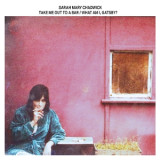
Take Me Out To a Bar / What Am I, Gatsby? marks a deliberate pivot. The album’s open, introductory chords evoke seem fit to score a scene in a Michael Haneke movie in which some stern German woman stomps down a whitewashed hallway. By the time that Chadwick’s crackly soprano joins in, it figures almost as a kind of intrusion upon what had been, up until that point, a pure mood. “You don’t have to listen to all the lyrics,” she attests. Chadwick's calling card since her earliest releases — a jagged, one-take immediacy — has been dialed back, leaving room to inconspicuously crowbar as much poeticism into the songs as she possibly could.
j.o.y.s. is both the moniker of and the debut self-titled LP by the Los Angeles based artist Ramon Narvaez. j.o.y.s. is an acronym for “jump out of your skin”. While the phrase can conjure moments of shock and surprise, Narvaez, however uses the phrase as a foot lamp illuminating a path towards momentary transcendence through creating beautifully conjured ambient music that recalls work by Daniel Lanois, suss, Dean Hurley and Tim Hecker. While the pedal steel is prominent, j.o.y.s., as a project, is more in conversation with shoegaze and noise than what has recently been deemed ambient country. Heavy brutalist slabs of noise, swirling feedback create the sound bed of these songs. Collaborator Justin Gaynor’s pedal steel on this album operates as important connective tissue as both the road and the traveler between the light and shadow zones. Drones are wrapped in distortion, processed just below the threshold where we’d throw the word “harsh” around. Rather, there is a delicate dance between Gaynor’s top-rope pedal steel lines - always sweet and always just a bit mournful - with Narvaez’s ringing bass notes and noise chatter. j.o.y.s. revels in intransigence. Nothing can last. As Matt Colquhoun puts in the introduction to Mark Fisher’s heartbreaking Ghosts of My Life - our identity and relationship to the past are “portals in perpetual collapse”. Depression, friendship, longing are all briefly satiated while in the peak experience of creating something as a response to them. But even that is impermanent. These sounds - improvised, exploratory, ecstatic - are eventually edited, whittled down and pressed to wax - not tombs but portals to the past.
- 1: I Used To Be Fun
- 2: Treat Me Better
- 3: Backseat Driver
- 4: I Love You
- 5: Your House My House
- 6: Salt (Feat. The Grogans)
- 7: I Don't Want It
- 8: Cayenne Pepper
- 9: Ahhhh!
- 10: Lights Out
- 11: Toe Bone
- 12: Never Saw It Coming
- 13: Kissy Kissy
Teen Jesus and the Jean Teasers are a powerhouse, celebrated for their raw emotion and incisive social observations. Their talent has earned them nominations for Best Independent Punk Album or EP at the AIR Awards, Emerging Songwriter of the Year and Song of the Year at the APRA Awards, along with nods from the J Awards and Rolling Stone Awards. Recognised as Spotify's RADAR Artist, their rising global influence is undeniable.
Following their award winning 2022 EP, Pretty Good For A Girl Band, their debut album I Love You charted at number 6 on the ARIA Albums Chart, marking a significant milestone. The accompanying tour saw them sell out iconic venues like 170 Russell in Melbourne, the Metro Theatre in Sydney, and The Triffid in Brisbane. They capped off the year supporting the Foo Fighters at AAMI Park in Melbourne and launched into 2024 by supporting The Vaccines across the EU/UK. They will support Pearl Jam on select dates in the United States mid-2025.
I Love You showcases the bands growth, with each member contributing to songwriting. It stands as a definitive statement of their sound—joy, rage, and euphoria, delivered with precision and heart. Teen Jesus and the Jean Teasers continue to make waves, solidifying their place in the music industry.
Happy Birthday, Ratboy combines the old and new — containing 10 brand new recordings of their earliest material + a newly-written bonus track, this record celebrates a decade of Ratboys: a 10-year songwriting partnership, an evolving live show, a D.I.Y. project, a web of friendships, and every thing in between. Almost as soon as Julia Steiner and Dave Sagan met during their college orientation, they started playing music together. What came out of their dorm rooms was the 5-song RATBOY EP, uploaded to Bandcamp on April 1, 2011 to share with friends and family. Now, to mark a decade since (to the day), Ratboys have hit the studio to re-inhabit these songs and bring them back to life. New recordings of the 5 original RATBOY EP songs make up the A-side of Happy Birthday, Ratboy, with 5 new versions of rare college-era tracks and the newly-written standout, “Go Outside” on the B-side. Featuring mainstays from their live show over the years, including “The Stanza” & “Space Blows,” pressed to vinyl for the first time and given the full band treatment, Happy Birthday, Ratboy introduces new Ratboys fans to the band’s beginnings while also raising a toast to those who’ve been there from the start.
Innervisions' sub-label, Exit Strategy, is back with a Various Artists collection—Ausgang01. This marks the beginning of a series that revisits standout moments from our catalog, complementing them with unreleased jams. For this first edition, we’re bringing previously digital-only tracks to vinyl, along with two special highlights that have recently come through our doors.
- A1: Into The Starfield (Main Theme)
- A2: Planetrise
- A3: First Flight
- A4: New Atlantis
- A5: The Sol System
- A6: Go Steady, Go Safe
- B1: Peaks And Valleys
- B2: Triumvirate
- B3: Field Of Vision
- B4: Starlight Far From Home
- B5: Exploration I - Home Planets
- C1: The Mountain Builders
- C2: The Red Land
- C3: Ancient Forces
- C4: Constellations
- C5: Navigator Corps
- D1: The Last Explorers
- D2: Within The Walls
- D3: Long Shadows
- D4: A Home Among The Stars
- D5: Exploration Ii - The Hills And The Mountains
- E1: Death And Crimson
- E2: The Rock
- E3: The New Old Frontier
- E4: The Safety Of The Citizens
- E5: Freestar
- E6: Moonbase
- F1: The World Machine
- F2: Deep Time
- F3: Akila City
- F4: Field Agent
- F5: Hardness Scales
- F6: Exploration Iii - Explorers Club
- G1: Stars And Sacrifice
- G2: Heliosphere
- G3: Core Sample
- G3: Chamber
- G3: Tenacity Of Life
- H1: Cydonia
- H2: Wrecked Tech
- H3: In Silent Orbit
- H4: Tectonics
- H5: Snowball
- H6: Exploration Iv - Vulcanism
- I1: Weapons To Bear
- I2: Supra Et Ultra
- I3: Abandoned
- I4: Decay Heat
- I5: Roughneck High-Tech
- I6: Exploration V - Evergreen
- J1: Sublevels
- J2: The Eye
- J3: Under A Distant Sun
- J4: Echo Marker
- J5: Exploration Vi - Strange Sands
- K1: Understory
- K2: Badlanders
- K3: Canopy
- K4: Neon
- K5: Exploration Vii - The Ice Lands
- L1: Aurora
- L2: Deep Freeze
- L3: You Make Your Cut, You Get Your Cut
- L4: Exploration Viii - The Far Reaches
- L5: Nobody's Home
- L6: A Home In The Galaxy
Bethesda Game Studios und Laced Records haben sich zusammengetan, um die Musik von 'Starfield' auf Deluxe-Vinyl zu bringen.
In allen Titeln der Bethesda Game Studios ist die Musik ein wesentlicher Bestandteil der Reise des Spielers und ein ständiger Begleiter während seines Abenteuers. Die langjährige Zusammenarbeit zwischen dem Komponisten Inon Zur und dem Studio begann bereits 2008 mit der Veröffentlichung von Fallout 3. Die Musik zu 'Starfield' sollte sowohl die Weite des Weltraums als auch die Neugier der Menschen auf das Unbekannte zum Ausdruck bringen. So verwob Zur traditionelle und nicht-traditionelle orchestrale und elektronische Klänge zu einem Klangteppich aus Organischem und Synthetischem.
Während der Entwicklung hat das Team ein eklektisches Spektrum an Referenzpunkten durchlaufen: Es begann bei den Sci-Fi-Grundsäulen von John Williams und Jerry Goldsmith, durchquerte einen klassischen Nebel von Debussy, Ravel und Prokofiev, flog an Vangelis' überragendem Synthesizerwerk vorbei und warf einen Blick auf die experimentellen Arbeiten der Einstürzenden Neubauten und von John Cage.
In den Orchesterstücken von Starfield, die vom Budapester Filmorchester eingespielt wurden, beschwören verschiedene Instrumentalgruppen oft imaginäre Aspekte des Weltraums herauf. Schnelle, sich wiederholende Sequenzen in den Holzbläsern stellen Partikel dar. Streicher, die wellenförmige Akkorde spielen, imitieren lange Wellen interstellarer Energie. Die Blechbläser werden zum Leuchtfeuer der Melodie, das über die Galaxie hinaus strahlt. In ähnlicher Weise erhalten die eher elektronischen Cues ein Gefühl von Erhabenheit durch schwere Synthesizerflächen, die kryptische, sich wiederholende Muster und ungewöhnliche perkussive Schläge untermauern.
Aeralie Brighton (DEATHLOOP, Ori-Serie) ist auf dem Soundtrack als Sängerin zu hören.
- You (The Feral Human Thunderstorm)
- One Of The Dreamers
- I Was There
- From The Ashes Of Our Age
- Father
- Calliope
- Your Beloved Hollywood
- Believe In Something
Die Berliner Post-Punk-Band The Underground Youth um den Musiker und Autor Craig Dyer meldet sich mit ihrem zwölften Studioalbum „Décollage“
zurück. Das von Dyer selbst geschriebene, aufgenommene und produzierte Album ist eine Übung in künstlerischer Dekonstruktion, sowohl im Namen
als auch in der Form, und markiert eine entscheidende musikalische Wende. „Décollage ist die Kunst, ein Bild zu erschaffen, indem man Teile eines
bereits existierenden Werks herausreißt, abreißt oder entfernt. Meine Idee war es, diese Technik auf die Musik anzuwenden“, erklärt er. „Ich baute
Wände aus statisch überzogenen Hip-Hop-Drum-Samples, Schichten von Streicherarrangements im Stil von Lee Hazlewood und von Serge Gainsbourg
inspirierten Mellotron-Melodien auf, dann begann ich, diese schönen, chaotischen Wände aus Lärm abzureißen und legte einen neuen Sound für The
Underground Youth frei.“
Von Momenten geisterhaften Minimalismus bis hin zu ausladenden Crescendos aus Lärm und Melodie haben die Songs hier eine schattenhafte,
traumhafte Qualität. Neben Dyer besteht The Underground Youth aus der Schlagzeugerin und bildenden Künstlerin Olya Dyer, dem Gitarristen
Leonard Kaage (der auch bei der Postproduktion des Albums mitwirkte) und der Bassistin Samira Zahidi. Ursprünglich als Soloprojekt von Dyer im Jahr
2008 gegründet, hat die Band inzwischen 11 - mittlerweile 12 - Studioalben und 4 EPs veröffentlicht und dabei einen einzigartigen Sound entwickelt,
der im Laufe der Jahre von cineastischer Lo-Fi-Psychedelia über rauen, melancholischen Post-Punk bis hin zu Gothic-Folk-Noir reichte.
In the midst of recording his 12th album 'Why The Worry', wavering in his resolve to finish what he'd started, Seth Walker came to the realization: "This does not define me; this is not who I am forever; this is just a moment" . "Distance colors compositions over the years and each album is left as merely a reflection of its own period in time." The new album finds Walker reunited with old friends and familiar names. Once again Jano Rix steps behind the boards, co-producing the album with Seth and engineer Brook Sutton. In the producer's fifth outing he's become an invaluable sounding board, the kind that knows what's missing and, just as importantly, what needs to be taken away. Oliver Wood (The Wood Brothers) lends a pen to the title track and Seth's classically trained father Scott adds strings to "I'm Getting Ready," a song penned by Walker's contemporary Michael Kiwanuka. Mostly, though, the record was shepherded into shape by Walker's trio, rounded out by longtime confidants Rhees Williams (Guitar, Piano) and Mark Raudabaugh (Drums). The three let the studio guide them, entering without agenda, set straight by the title's mantra to stop worrying where they'd end up.
An'archives are proud to announce the release of the debut album by Tête de Chou, the trio of Mark Anderson, Kurumi Kido, and Arlo Wynks. Some may know Anderson for his membership of Greymouth, Mysteries Of Love, and Suishou No Fune; Kido and Wynks have more personal musical histories, which informs the intimacy and gently exploratory nature of the eight pieces contained here.
The term Miao is a very ancient Chinese misleading pseudo-ethnic categorisation, what we call the Hmong in western languages, a term recognised by colonial French Indochina. Miao became a generic term which does not reveal the diversity of 38 subgroups or 9 million people, mostly in Southern China Guizhou Province.
China having moved towards the market economy, a large number of minority regions have marketed a commodity available only to them: their ethnicity itself. Ethnic tourism has developed in a big way in China since the 1990s for Chinese and foreign tourists, and is often promoted as the way to create income in those areas for development. I usually stay away from ethnotouristic shows and try to get music which is not a commodity! I was based in Dali, Yunnan, China between 2006 and 2013.
*180g virgin leaded vinyl in a deluxe textured heavy gatefold cover, with paste-on artwork and special anti-static innersleeve.* Note: The pressing is absolute on point!!!!
Vincent Gallo and Harper Simon with a beautifully recorded suite of songs and instrumentals.
" More than two decades since he blew minds with a suite of brilliant releases on Warp, Vincent Gallo returns to the world of music at long last in Butterfly, his duo with Harper Simon, with the project’s full-length debut, “The Music of Butterfly”. A gesture of gentle, DIY / bedroom left-field pop, falling within the rough territory for which Gallo became renowned during the late '90s and early 2000s, while interweaving fascinating flirtations with minimalism and experimentalism, it’s a truly captivating piece of work that’s hard to get off the turntable after the first needle drop.
In the arts, the lines between genius and madness, as well as fact and fiction, often blur. Such, it seems, has always been the life of the artist, filmmaker, actor, musician, and composer Vincent Gallo. A cult figure and a member of various creative undergrounds for the better part of half a century, Gallo has courted controversy, ruffled feathers, and made some of the most singular statements to flirt at the outer edges of popular culture that can be called to mind. Arguably most well known for his work in film, during the late '90s and early 2000s - notably with his soundtrack for “Buffalo 66” and a suite of releases on Warp - Gallo became something of a sensation in the world of independent music for a visionary, incredibly unique and sensitive approach to sonority. For a time, the world was abuzz, waiting on bated breath for more, and yet time passed. Bar a few fragments, appearing here and there, almost nothing has been heard from Gallo, within the world of music, for more than 20 years. That is, until now, with the release of “The Music of Butterfly”, the debut full-length of Butterfly, his duo with Harper Simon: beautifully produced and issued by Family Friend Records - Gallo’s own label, founded in 1981 - in a deluxe edition that simply left us speechless: 180g vinyl in textured heavy gatefold cover with paste-on artwork and thick anti-static innersleeve. More or less picking up from where we last encountered him, spinning captivating melodies and gentle song-craft within the quieter temperaments of DIY, left-field pop, once again, and at long last, Vincent Gallo, encountered in an incredibly successful collaboration with Harper Simon as Butterfly, reminds us that he’s as much a force within the realm of music as he is within film. Not to be missed. This one isn’t going to sit around for long.
Vincent Gallo’s biography reads like the stuff of blaring beauty: a figure of moderate fame in his own right, who has remained at the centre of cultural ferment as the decades have rolled by. Born in 1961, in Buffalo, New York, as the story goes he ran away to New York City at the age of 16 and fell into the brewing counterculture of the Downtown scene, William Burroughs and John Giorno, in addition to the cream of his own peers, and began making paintings, music, and experimenting with film. In addition to being a member of the now legendary band Gray, with the artist, Jean-Michel Basquiat, and the filmmaker, Michael Holman, Gallo appeared in the cult 1981 film “Downtown 81”, before slowly beginning a career as an actor and catching the eye of Claire Denis, who brought his talents into the broader cultural gaze. Catapulted into the public by his own subsequent career as a filmmaker with “Buffalo '66” (1998) and “The Brown Bunny” (2003), both of which were marked by controversy and praise, Gallo further captivated the public with a partially brilliant, if not relatively brief, flurry of activity in the realms of music.
While Gallo had already been making music for roughly two decades at the time of his release of the “Brown Bunny” soundtrack, and the four release issued by Warp in rapid succession between 2001 and 2002 - “When”, “Honey Bunny”, “So Sad”, and “Recordings of Music for Film” - the almost fanatical fandom reached a fever pitch at the moment, allowing him, for some, to be regarded as much, if not more, as a musical artist than an actor and filmmaker. Anyway you cut it, in a few short years, he proved himself to be a polymath of rare talent. Somewhere along the way, while both were working as members of Yoko Ono's Plastic One Band, Gallo met the New York based, highly regarded singer-songwriter, guitarist, and producer, Harper Simon, who also happens to be the son of Paul Simon. The pair fell into an incredibly fruitful duo collaboration, which came to be called Butterfly, and “The Music of Butterfly” being their debut full-length release.
Written, performed, and recorded by Vincent Gallo and Harper Simon in New York City between the winter of 2018 and the spring of 2019, the ten tracks comprising “The Music of Butterfly” are cumulatively a gesture of gentle, DIY / bedroom left-field pop, falling within the rough territory for which Gallo became renowned during the late '90s and early 2000s, making one feel like barely a moment had passed since we’d encountered his graceful hand at song-craft. Stripped back and raw, while retaining a sense of warmth and intimacy, across the length of “The Music of Butterfly” the duo of Gallo and Simon weave something completely captivating at the juncture of minimalism, experimentalism, and pop: meandering moments of texture and tone, slowly forming toward flirtations of melody that flower into song and back again. Somehow playful and light, while also remarkably emotive and personal, it’s almost as though each of these tracks crystallised out the air, unlabored and exactly as they should be without a note or beat more.
An engrossing immersion into both Gallo and Simon’s remarkably accomplished minds, having followed the path toward one another after radically different experiences and careers, “The Music of Butterfly” is one of those records that’ll be hard to get off the turntable after that first needle drop, and rarely leave the listening pile for some time to come. Issued by Family Friend Records in a beautiful deluxe edition that is unmatched even among the most stunning recent productions we can call to mind - 180g vinyl in textured heavy gatefold cover with paste-on artwork and thick anti-static innersleeve - it’s lovely to have Gallo back in the musical mix after so many years. "
- A1: Do U Fm
- A2: Novelist Sad Face
- A3: Green Box
- A4: Dusty
- A5: The Linda Song
- A6: Dm Bf
- B1: I Tried
- B2: Melodies Like Mark
- B3: Wildcat
- B4: How U Remind Me
- B5: Pocky
- B6: Bon Tempiii
- B7: Pt Basement
- B8: Alberqurque Ii
- B9: Mary's
Yellow Coloured Vinyl[29,37 €]
Kneading dough is tricky – you should know how it’s supposed to feel. If you try too hard you could make it worse. It’s a beautiful practice – creation with a gentle touch, to work at something so it can be left alone. “If it’s too drawn out it’s awful. It’s easy to give too much.” Dance in the mirror. Contemplate your veiny hands. Who do they remind you of?
You begin by mixing flour and water. “What happens when your people die? Why’d they move the rock to the other side of Ulster Park?” Eliza Niemi asks two seemingly unrelated questions in a rising melody with guitar accompaniment, like fingers playing spider up to the nape of your neck. Gentle pressure. Strands of gluten form to bind the mix. A new question lingers in the binding. When she admits “but I don’t know how to tell if I’m feeling it or not,” that question surfaces through the text. It is reiterated throughout the album. When I’m working with dough I think the same thing to myself.
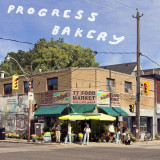
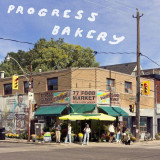
On Progress Bakery, her second album as a solo artist, Eliza knows to leave some questions alone – to let juxtaposition and tension be the proof. It doesn’t have to be hard. The feelings and revelations they provoke rise in the heat. The smell is sweet. Crispy on the outside and soft all the way through. She playfully slip-slides through words and sounds and images, delighting in surprise, skimming ideas like stones cast across clear water, touching down briefly with uncommon grace.
The question provoked between those opening lines resurfaces in the strands between songs – “Do U FM” is fully formed and beautifully layered, while “Novelist Sad Face” is a short, acapella rendering of gentle curiosity. What is holding these ideas together? Some songs demand more, seem to carry a whole load – eventually the skipping stone will halt to sink and resume its idle duty – while others drift in and out of focus, the way thoughts and dreams become interwoven before the mind is sunk into true sleep.
Music and words don’t always have to interact. Where she decides to keep them apart gives a new contour to where and how she puts them together. The kind of thing you’re supposed to take for granted with songs and their singers comes alive in Eliza’s hands – the little miracle of mixing, kneading, stretching, and stopping.
So often on Progress Bakery, Eliza teases out truth and meaning by asking questions. “Do I wanna be crying?” “Do you want me good or do you want me bad?” “Do I need an eye test?” “I’m writing songs in my head while you’re going over stuff with me — is that cruel??” In “Pocky” Eliza ends with a question that feels to me like the actual biography, succinct and revealing:
I don’t wanna be made to see
I just wanna ask “what’s that?”
Grace that ought to be rare, but in its care and precision is offered humbly, with great generosity, and without announcing itself. Eliza’s simple, miraculous music is given further form and shape by a group of collaborators – invaluable guest musicians Jeremy Ray, Evan Cartwright, Steven McPhail, Kenny Boothby, Ed Squires, Carolina Chauffe, Dorothea Paas, Louie Short, and Avalon Tassonyi. Together with Louie Short, who recorded, mixed, and produced the album along with Jeremy Ray and Lukas Cheung, Eliza has cultivated a richness in sound and texture that prods and provokes the ticklish ear. Barely audible guitar tinkering, a brief lo-fi field recording of trumpets, the harmonic clicking of a looped synthesizer, a flourish of reeds, a child’s conversation, each uncanny sound perfectly placed, rippling out under a soft breeze.
Lay in bed alone at night and ask aloud to the stillness,
“What were you doing at the Albuquerque Airport?
What were you doing there??”
And hear your question answered by a dream of swelling, undulating cellos. Try to grasp at the melody and structure. It’s not an answer (if there could be one), but it moves deeper, closer to the weird layer of fleeting moments and disconnected images, barely perceptible at its core. Wait for the dream reel to click into place.
Eliza took me for a ride in Nicole (her beloved Dodge Grand Caravan) and told me she’d been thinking of the album as an embodiment of transition – and I think every transition, known or unknown, carries the weight of new meaning, skittering off the surface tension of life as you know it, creating ripples, sometimes bouncing off and sometimes breaking through. There is a trick you can use to tell if a dough is glutinous enough. You’re supposed to stretch it out as thin as you can without breaking it and hold it up to the light. If you can see through, even if it renders the world murky and uncertain, you should leave it alone. I love this trick. It’s one that Eliza seems to know intuitively: work gently and ask questions and don’t always expect answers, and when you can, take a glimpse at something new, and then leave.
Kneading dough is tricky – you should know how it’s supposed to feel. If you try too hard you could make it worse. It’s a beautiful practice – creation with a gentle touch, to work at something so it can be left alone. “If it’s too drawn out it’s awful. It’s easy to give too much.” Dance in the mirror. Contemplate your veiny hands. Who do they remind you of?
You begin by mixing flour and water. “What happens when your people die? Why’d they move the rock to the other side of Ulster Park?” Eliza Niemi asks two seemingly unrelated questions in a rising melody with guitar accompaniment, like fingers playing spider up to the nape of your neck. Gentle pressure. Strands of gluten form to bind the mix. A new question lingers in the binding. When she admits “but I don’t know how to tell if I’m feeling it or not,” that question surfaces through the text. It is reiterated throughout the album. When I’m working with dough I think the same thing to myself.
On Progress Bakery, her second album as a solo artist, Eliza knows to leave some questions alone – to let juxtaposition and tension be the proof. It doesn’t have to be hard. The feelings and revelations they provoke rise in the heat. The smell is sweet. Crispy on the outside and soft all the way through. She playfully slip-slides through words and sounds and images, delighting in surprise, skimming ideas like stones cast across clear water, touching down briefly with uncommon grace.
The question provoked between those opening lines resurfaces in the strands between songs – “Do U FM” is fully formed and beautifully layered, while “Novelist Sad Face” is a short, acapella rendering of gentle curiosity. What is holding these ideas together? Some songs demand more, seem to carry a whole load – eventually the skipping stone will halt to sink and resume its idle duty – while others drift in and out of focus, the way thoughts and dreams become interwoven before the mind is sunk into true sleep.
Music and words don’t always have to interact. Where she decides to keep them apart gives a new contour to where and how she puts them together. The kind of thing you’re supposed to take for granted with songs and their singers comes alive in Eliza’s hands – the little miracle of mixing, kneading, stretching, and stopping.
So often on Progress Bakery, Eliza teases out truth and meaning by asking questions. “Do I wanna be crying?” “Do you want me good or do you want me bad?” “Do I need an eye test?” “I’m writing songs in my head while you’re going over stuff with me — is that cruel??” In “Pocky” Eliza ends with a question that feels to me like the actual biography, succinct and revealing:
I don’t wanna be made to see
I just wanna ask “what’s that?”
Grace that ought to be rare, but in its care and precision is offered humbly, with great generosity, and without announcing itself. Eliza’s simple, miraculous music is given further form and shape by a group of collaborators – invaluable guest musicians Jeremy Ray, Evan Cartwright, Steven McPhail, Kenny Boothby, Ed Squires, Carolina Chauffe, Dorothea Paas, Louie Short, and Avalon Tassonyi. Together with Louie Short, who recorded, mixed, and produced the album along with Jeremy Ray and Lukas Cheung, Eliza has cultivated a richness in sound and texture that prods and provokes the ticklish ear. Barely audible guitar tinkering, a brief lo-fi field recording of trumpets, the harmonic clicking of a looped synthesizer, a flourish of reeds, a child’s conversation, each uncanny sound perfectly placed, rippling out under a soft breeze.
Lay in bed alone at night and ask aloud to the stillness,
“What were you doing at the Albuquerque Airport?
What were you doing there??”
And hear your question answered by a dream of swelling, undulating cellos. Try to grasp at the melody and structure. It’s not an answer (if there could be one), but it moves deeper, closer to the weird layer of fleeting moments and disconnected images, barely perceptible at its core. Wait for the dream reel to click into place.
Eliza took me for a ride in Nicole (her beloved Dodge Grand Caravan) and told me she’d been thinking of the album as an embodiment of transition – and I think every transition, known or unknown, carries the weight of new meaning, skittering off the surface tension of life as you know it, creating ripples, sometimes bouncing off and sometimes breaking through. There is a trick you can use to tell if a dough is glutinous enough. You’re supposed to stretch it out as thin as you can without breaking it and hold it up to the light. If you can see through, even if it renders the world murky and uncertain, you should leave it alone. I love this trick. It’s one that Eliza seems to know intuitively: work gently and ask questions and don’t always expect answers, and when you can, take a glimpse at something new, and then leave.
During the pandemic, The Ophelias transformed uncertainty into Spring Grove, their fourth album and most dynamic offering yet. Named after a Cincinnati cemetery, the album blends nostalgia with fresh perspective, reflecting on themes of relationships, identity, and power dynamics. Singer-songwriter Spencer Peppet draws from her OCD diagnosis during the pandemic and the clarity that comes with growing older, resulting in lyrics that explore the cracks and complexities of human connection.
Produced by Julien Baker, who adds lush textures and harmonies, Spring Grove marks a turning point in the band’s evolution. Recorded at Young Avenue Sound in Memphis, the album centers on the core quartet—Peppet, violinist Andrea Gutmann Fuentes, bassist Jo Shaffer, and drummer Mic Adams—with arrangements that balance cinematic intensity and delicacy. Gutmann Fuentes’s violin provides striking countermelodies, while Shaffer’s bass lines, inspired by doom metal, explore melodic depth. Adams’s drumming reflects his first project after transitioning, offering nuanced rhythms that blend power and tenderness.
With one queer and two trans members, the band has moved beyond the reductive label of an “all-girl” group, delving deeply into themes of womanhood and identity. Tracks like “Salome” and “Parade” examine power dynamics and friendship, while nature imagery in songs like “Cumulonimbus” and “Vulture Tree” mirrors lived experience. Across 13 tracks, the album’s cinematic and introspective journey scavenges the past for meaning, ultimately embracing transformation. On the closing track, “Shapes,” Peppet reaches serene acceptance, singing, “I see what’s coming after... a reflection in the water. I am rippling forever.”
Spring Grove captures the band’s evolution, offering a transcendent meditation on self-awareness, identity, and growth, leaving listeners with a sense of profound discovery.
- 1: Swarm
- 2: Synthetic Pathogenesis
- 3: Mechanisms Of Omniscience
- 4: Catalyst Of Metamorphosis
- 5: Vigilant Ignorance
- 6: Irreversible
- 7: Hopeless Masses
- 8: Assimilation
- 9: Cymatic Hallucinations
- 10: Consuming Infinity
Sunburst Yellow/Red Vinyl[28,15 €]
Mechanisms of Omniscience - a brutal and unrelenting journey through technical death metal, returns to the market as a special vinyl reissue, brought to you by our newly established record label. Originally released by Abnormality in 2016, this album has left a lasting mark on the genre with its punishing riffs, precise technicality, and intense lyrical content. Abnormality explores profound and provocative themes in every track, addressing existentialism, corruption, and the darker side of human nature. This is an album that defies genre expectations, marrying complex arrangements with raw aggression. Abnormality, a force hailing from Massachusetts, has carved a niche within extreme metal for its signature blend of technical prowess and relentless heaviness. Led by the fierce vocals of Mallika Sundaramurthy, the band is complemented by the exceptional talents of guitarist Jeremy Henry, bassist Josh Staples, and drummer Jay Blaisdell. Together, they create a sound that is as precise as it is punishing, offering fans a visceral experience in each performance. This reissue celebrates the lasting impact of Mechanisms of Omniscience while paying homage to Abnormality’s powerful contribution to metal.