Repress!
Das Pariser Produzenten-Duo Scratch Massive liefert den Soundtrack zu Zoe Cassavetes zweitem Film "Day Out Of Days", einer Tragikomödie aus dem Leben mit Drama, Sex, Humor und Horror. Dabei vereint der Soundtrack düstere Electronica mit Pop-Sensibilität und einer hungrigen Nostalgie für die 1980'er Jahre. Mit dabei ist ex-GusGus-Sänger Daniel Agust aus Island, der dem Electro-Pop-Hit "Paris" mit seiner markanten Stimme infiziöse Magie verleiht.
Suche:mark h
Synthesizer king J.B. Banfi, a.k.a. Giuseppe 'Baffo' Banfi, hit the record market with the great italian prog rock outfit Biglietto per l'Inferno who released a legendary LP in 1974 on Trident and have been reivindicated in several occasions since with the release of lost recordings from the era as well as unearthing an unreleased 1974 live album. The band existed between 1972 and 1975, and had both Pilly Cossa on Hammond doing the virtuoso work and Baffo's keyboard explorations adding sound texture and atmosphere. Their second LP was recorded and mixes were to be produced by Klaus Schulze, but it remained unissued due to the Trident label flop. The band split shortly after this, but Baffo continued his experiments with electronic keyboards.
In 1978 Baffo released his first solo LP 'Galaxy My Dear', credited to J.B.Banfi and echoing huge influences from his friend and master Klaus Schulze, who would also produce his two next releases. A total DIY domestic home recording, with all the limitations implied but also with all its warmness within, 'Galaxy My Dear' is entirely played by Banfi and shows an accurate taste in his use of the synths, plus of course a strong kraut / cosmiche appeal that links the album's sound to that of the early Tangerine Dream or Ash Ra Tempel, but also brings a hint of Jean-Michel Jarre or even a certain reminiscence of the early electronic experiments by Franco Battiato and is a good contender to be filed along other Wah Wah reissues like those of Roberto Cacciapaglia or Franco Leprino.
Comes in original artwork with notes written by Baffo Banfi himself in a limited edition of 500 copies only.
Repress!
In the mid-1970s, a force of nature swept across the continental United States, cutting across all strata of race and class, rooting in our minds, our homes, our culture. It wasn’t The Exorcist, Goodbye Yellow Brick Road, or even bell-bottoms, but instead a book called The Secret Life of Plants. The work of occultist/former OSS agent Peter Tompkins and former CIA agent/dowsing enthusiast Christopher Bird, the books shot up the bestseller charts and spread like kudzu across the landscape, becoming a phenomenon. Seemingly overnight, the indoor plant business was in full bloom and photosynthetic eukaryotes of every genus were hanging off walls, lording over bookshelves, and basking on sunny window ledges. The science behind Secret Life was specious: plants can hear our prayers, they’re lie detectors, they’re telepathic, able to predict natural disasters and receive signals from distant galaxies. But that didn’t stop millions from buying and nurturing their new plants.
Perhaps the craziest claim of the book was that plants also dug music. And whether you purchased a snake plant, asparagus fern, peace lily, or what have you from Mother Earth on Melrose Avenue in Los Angeles (or bought a Simmons mattress from Sears), you also took home Plantasia, an album recorded especially for them. Subtitled “warm earth music for plants…and the people that love them,” it was full of bucolic, charming, stoner-friendly, decidedly unscientific tunes enacted on the new-fangled device called the Moog. Plants date back from the dawn of time, but apparently they loved the Moog, never mind that the synthesizer had been on the market for just a few years. Most of all, the plants loved the ditties made by composer Mort Garson.
Few characters in early electronic music can be both fearless pioneers and cheesy trend-chasers, but Garson embraced both extremes, and has been unheralded as a result. When one writer rhetorically asked: “How was Garson’s music so ubiquitous while the man remained so under the radar?” the answer was simple. Well before Brian Eno did it, Garson was making discreet music, both the man and his music as inconspicuous as a Chlorophytumcomosum. Julliard-educated and active as a session player in the post-war era, Garson wrote lounge hits, scored plush arrangements for Doris Day, and garlanded weeping countrypolitan strings around Glen Campbell’s “By the Time I Get to Phoenix.” He could render the Beatles and Simon & Garfunkel alike into easy listening and also dreamed up his own ditties. “An idear” as Garson himself would drawl it out. “I live with it, I walk it, I sing it.”
But as his daughter Day Darmet recalls: “When my dad found the synthesizer, he realized he didn’t want to do pop music anymore.” Garson encountered Robert Moog and his new device at the Audio Engineering Society’s West Coast convention in 1967 and immediately began tinkering with the device. With the Moog, those idears could be transformed. “He constantly had a song he was humming,” Darmet says. “At the table he was constantly tapping.” Which is to say that Mort pulled his melodies out of thin air, just like any household plant would.
The Plantae kingdom grew to its height by 1976, from DC Comics’ mossy superhero Swamp Thing to Stevie Wonder’s own herbal meditation, Journey Through the Secret Life of Plants. Nefarious manifestations of human-plant interaction also abounded, be it the grotesque pods in Invasion of the Body Snatchers or the pothead paranoia of the US Government spraying Mexican marijuana fields with the herbicide paraquat (which led to the rise in homegrown pot by the 1980s). And then there’s the warm, leafy embrace of Plantasia itself.
“My mom had a lot of plants,” Darmet says. “She didn’t believe in organized religion, she believed the earth was the best thing in the whole world. Whatever created us was incredible.” And she also knew when her husband had a good song, shouting from another room when she heard him humming a good idear. Novel as it might seem, Plantasia is simply full of good tunes.
Garson may have given the album away to new plant and bed owners, but a decade later a new generation could hear his music in another surreptitious way. Millions of kids bought The Legend of Zelda for their Nintendo Entertainment System back in 1986 and one distinct 8-bit tune bears more than a passing resemblance to album highlight “Concerto for Philodendron and Pothos.” Garson was never properly credited for it, but he nevertheless subliminally slipped into a new generations’ head, helping kids and plants alike grow.
Hearing Plantasia in the 21st century, it seems less an ode to our photosynthesizing friends by Garson and more an homage to his wife, the one with the green thumb that made everything flower around him. “My dad would be totally pleased to know that people are really interested in this music that had no popularity at the time,” Darmet says of Plantasia’snew renaissance. “He would be fascinated by the fact that people are finally understanding and appreciating this part of his musical career that he got no admiration for back then.” Garson seems to be everywhere again, even if he’s not really noticed, just like a houseplant.
LTD Repress!
1982 Album from Japan's visionary saxophonist Yasuaki Shimizu, the man behind Mariah "Utakata Ho Hibi".
Through it's 8 suite like tracks, Kakashi transports the listener into Yasuaki's colourful sound-world, a fusion of outre jazz, new wave, ambient, and dub practices. Another high water mark in the 80's Japanese underground which has gathered cult status in recent years, and considered to be a highlight of Yasuaki's solo career.
- Rare and Unreleased New Orleans Funk 1968
Tuff City’s Funky Delicacies imprint has issued the 7th volume in its New Orleans Funk series. This edition has a side of vocal tracks and a side of instrumental ones. These tracks have been hard to find and many were CD only bonus tracks on earlier editions of the series now out of print.
Noted guitarist Little Buck Sinegal opens the record with “Little Boy Blue.” This was first issued in 1969 on the Seven B label. Little Buck (as he was credited on the original record) passed in 2019 after a lengthy career dating back to the late 50’s as a session man for Slim Harpo & Lazy Lester. He also was a touring member of various Zydeco legends like Clifton Chenier, Rockin’ Dopsie and Buckwheat Zydeco. Drummer Chuck Conway leads the next track with the Amars, “Get On Up.” Cover feature Deacon John Moore still lives today. “You Don’t Know (How To Turn Me On)” was a 1970 B-side on the Bell label. Brotherhood issued “Suckey Suckey Feeling” as a 2-sided single in 1974. At some point the track was renamed “Sooky Feeling” and we have Part 2 here. Singer and Pianist Tommy Ridgley’s track “Fly In My Pie” was originally issued on our sister imprint Soul-Tay-Shus on The Best of International City compilation as well as a 7” on that imprint in 1968. Lonnie Jones recorded several singles for Jenmark in the early ‘70’s including the B-side “You Got To Do Better” originally released in 1972. Sam Henry of Sam and the Soul Machine closes out the side with “Loving You.” This track was originally a CD-only bonus track on our Po’k Bones and Rice compilation of that group we issued on Funky Delicacies in 2002.
Kicking off the instrumental second side is a recently located master by Anthony Butler and the Invaders covering the Otis Redding classic “Hard To Handle.” A bit of organ Funk here. Larry Jones jams out the “Funky Jaws.” The exact year is unknown, but the J.B.’s label that issued the original record put their releases out primarily from 1974-1976. Tyrone Chestnut’s B-side of 1969’s “The Bump” is called “Bumping.” Hook and Sling piano legend Eddie Bo has two appearances. The first is the second part of the “Getting To The Middle” single that came out on Bo-Sound in 1970. Louisiana Purchase have “Accept What You Expect” before they moved from New Orleans to Detroit. The Scram Band that backed vocalist Mary Jane Hooper on her “Don’t Change Nothin’” single are here in an instrumental version of that song. The album closes with a 5-minute combined version of Eddie Bo’s “If It’s Good To You (It’s Good For You)” single, issued in 1969 on Scram.
Overall, this album contains 14 previously hard-to-find tracks that would take hundreds if not thousands of dollars to track down the original singles on the used market. These tracks have been recently remastered, including tracks that were issued as CD bonus tracks on earlier volumes.
First released over 30 years ago, this release was further instrumental in establishing a new genre of electronica within dance music. Mental Cube was the creation of Brian Dougans and Gary Cobain, “So This Is Love” the follow up to their 1990 debut “Chile Of The Bass Generation”. This is before their creation of The Future Sound Of London. They were ahead of their time and extremely progressive, and here three decades later they are making an impression. “So This Is Love” has been described as unique with ‘the most seductive 30 seconds of any house track ever. Timeless, emotional, sexy and deep. A masterclass in UK house, one of the best electronic tracks ever made’. “Q” has been described as sounding inspired by the 90s techno sound out of Germany and Belgium, a French issue of it on 12” selling in the current market for between £200 and £350.
In the 1950s and 60s, the blues was the dominant form of Black vernacular music throughout Texas and the surrounding areas In segregated neighborhoods, community members gathered in saloons, dancehalls, and each other's homes to hear their neighbors sing their stories of sorrow, heartbreak, jubilation, and triumph. Robert "Mack" McCormick, an academically untrained but fanatical devotee of the blues, stepped into this world and became one of its most devout advocates and documentarians. By photographing Black and Latino Texans and their neighborhoods, as well as recording and interviewing musicians, many of whom never stepped foot into a proper recording studio, McCormick endeared and eventually embedded himself into these communities. By the time he died in 2015, McCormick had amassed a collection of 590 reels of sound recordings and 165 boxes of manuscripts, original interviews and research notes, thousands of photographs and negatives, playbills, and posters. Because McCormick never published or released most of these materials, his collection became a thing of legend and intense speculation among scholars, blues aficionados, and musicians alike. 'Playing for the Man at the Door..' is the first compilation of music drawn from this fabled collection, which indelibly documents a pivotal moment in African American history. It features never- before- heard performances not only from musicians who became icons in their own right, including Lightnin' Hopkins and Mance Lipscomb, but also, crucially, performers whose names may be unfamiliar to even the most devoted blues fans and scholars. Newly mastered recordings and accompanying photographs bring to life many of these forgotten figures: offering insight into their lives and illuminating in new, enlightening ways their joys and anguish, deep social connections, distinctive voices, and cultural networks. The collection spans gospel, ragtime, country blues dirges, the unclassifiable music of George "Bongo Joe" Coleman, and more, showing that no community, no matter how tight knit, is monolithic. Accompanying the music is a 128- page book, which contains breathtaking photographs by McCormick and his associates, as well as contextual essays by producers Jeff Place and John Troutman on McCormick's life, and by musicians Mark Puryear and Dom Flemons on some of the marginalized communities throughout "Greater Texas" to which McCormick devoted his life's work.
Bread & Souls is an ensemble of musicians, singers, DJs, producers and, most of all, long term friends: a globally-spread family re-gathered by Franco Fusari – entrepreneur, music lover and dreamer.
“Find the Beauty” on 7″ is the project preview (which precedes the release of the whole project late 2023), featuring Detroit-based Paul Randolph on vocals, the amazing Tommaso Cappellato on drums, Marcus Machado on guitar and Taku Hirano on percussion, all directed by eclectic project leader and producer Mark de Clive-Lowe, a pianist and true electronic-jazz pioneer.
The complete Bread & Souls project will be released as 4×12” EPs, with original music produced by Mark de Clive-Lowe and featuring Tommaso Cappellato, Bembé Segué, Vanessa Freeman, Paul Randolph, Rich Medina, and many more; remixes from: Mr. Scruff with Kaidi Tatham, Domu, Volcov, LTJ Xperience, Alex Attias and G&D.
Sometimes, space is the perfect catalyst for intense creativity. Following the release of their fourth LP, 2019's Your Church On My Bonfire, PAWS - the Scottish DIY indie rock songwriting partnership of Phillip Jon Taylor and Joshua Swinney, toured briefly, and as the world began to shut down, they slipped out of sight. Phillip retreated north to the Highlands where he focused on his painting, solo work and the rewarding demands of fatherhood. Josh headed south to London, pursuing his other passion as a chef at the highly acclaimed Plimsoll. It would have been easy for both to settle into their new lives, but PAWS never died…and neither did the tie connecting the two friends. Having missed playing together for too long, a plan was set and in October 2022 Josh travelled to Phillip's home studio in his crofters cottage where work began on the band's fifth self-titled LP. Relying on a set of phone demos and chemistry honed after years on the road the songs came together surprisingly fast. Having recorded previously with both Blink 182’s Mark Hoppus and Frightened Rabbit’s Andy Monaghan, the band once again seized control of production duties as they had on their sophomore release Youth Culture Forever. Utilizing all they had learned and adding their own DIY ethos into the mix, the music was done in a week. Josh headed home and Phillip set to work on lyrics. The resulting record finds the band as grounded and assured as they ever have been. Marrying the deafening assault of youthful abandon with the whispered reasoning that comes with getting older; swaying from anger and exasperation to wide eyed optimism. PAWS is a succinct, razor wire encased documentary chronicling the pains of modern living. Delving into the dark underbelly of 90s alternative rock, painting with evocative instrumentals and reveling in celebratory indie punk, the band also embrace sordid pop and ambient electronics. And while it pays homage to where they have come from, it also signals a clean slate for the pair. Two friends united over distance. After some time apart, all they needed was a spark.
Year of The Knife have announced their new album, No Love Lost, due out October 27th from Pure Noise Records. The album finds Year of The Knife at their most sonically honed with nine lean and vicious songs that clock in at a blistering 20 minutes. Recorded by Kurt Ballou (Nails, The Armed, Code Orange), No Love Lost sounds truly massive, a crushing amalgam of hardcore and death metal influences that demands your attention and stays with you long after its concise runtime. To mark the album's announcement, Year of The Knife have shared two new singles, the 86 second "Wish" and 48 second "Last Laugh," highlighting both the economy of songwriting and the level aggression found on No Love Lost. Both tracks also include guest vocals from some of heavy music's greatest, with the former featuring Devin Swank of Sanguisugabogg and the latter featuring Dylan Walker of Full of Hell. In late June, Year of The Knife were involved in a car accident while on tour. All four members endured serious injuries, especially vocalist Madison Watkins, who suffered many broken bones and a traumatic brain injury. No Love Lost sounds even more urgent and defiant in light of the band's recent circumstances, and profits from the album's sales will be going directly to the members' ongoing recovery efforts.
Breaking Teeth (3rd Single / Will have a music video & Reddit AMA) Breaking Teeth is the 3rd of 4 singles from their new album The Fear Of Letting Go. Tyler Tate (vox) describes this track as the heaviest song on the record and sounds simply - "pissed off". "When I wrote the lyrics I was so fed up with the world & my life in general. Set back after set back, problems around every corner. Living should be simpler but the society we live in prevents that. We should all be pissed about it.” Band will do Reddit AMA & MV Visualizer We're All Left Suffereing (2nd Single / With Album announce) 'We're All Left Suffering' is the second of four singles from Michigan based metalcore band Hollow Front's upcoming album 'The Fear Of Letting Go'. The release follows their 2022 album ‘The Price Of Dreaming’ (#9 Current Hard Music Albums, #35 Current Digital Albums, #42 Independent, # 48 Current Rock Albums) which received praise from New Noise “a blistering and bruising experience, evoking myriad emotions and conveying a heady and moving blend of euphoria and despair.” and RockNLoad “Hollow Front has dropped nothing short of a phenomenal album with The Price of Dreaming. While the release doesn’t do anything new, it takes an already established formula and polishes it into a perfect shine. If you’re a fan of any of the modern Metalcore titans, you’ll love this release, hopefully as much as I do. Utterly brilliant.” 'We're All Left Suffering' is the first song the band has released since the announce of Dakota Alvarez's departure (former guitarist/singer) and marks the next chapter in the bands journey. The song will be accompanied by a music video and lined up with the announce of their forthcoming record "The Fear Of Letting Go" (Out October 27th). Lead vocalist states “This track is an anthem for the broken spirited. We live in a world riddled with heartache and constant struggle. Whether mentally, physically, or financially; we area collective of human beings doing our best to survive. I think with everything that’s happened in the world over these last three years, things might seem hopeless. It feels like the whole world has gone mad, and we’re all just here suffering along for the ride. It can be incredibly discouraging being a human in today’s social and economic climate. So I think this song is for those people who are sick of dealing with the bullshit life is throwing at them, and just want to truly breathe for once.”
Svart Records proudly presents Pekka Pohjola's "Heavy Jazz - Live in Helsinki" for the first time on vinyl! Legendary Finnish composer and bassist Pekka Pohjola, known from his work in Wigwam, Made In Sweden, touring with Mike Oldfield and having a successful solo career, caught live at Tavastia Club, Helsinki, Finland on April 18th 1995. Joining Pohjola (bass) on stage are Seppo Kantonen (keyboards), Markku Kanerva (guitars) and Anssi Nykänen (drums). During his long career that took him from riding the Finnish prog rock wave to the heavy jazz rock heights of the 1990s, Pekka Pohjola tried his hand in many things. Heavy Jazz has previously only been released on CD in 1995 and 2011 by Pohjola Records and will now finally be available on wax as well. Heavy Jazz is presented on a 2LP edition of classic black vinyl. Limited to 500 copies.
Jerry Leger ist ein Künstler, der von Uncut Magazine und Rolling Stone Germany gefeiert
wird und auch Lob von Kollegen wie Ron Sexsmith und Doug Paisley erhalten hat.
Auf seinem neuen Album 'Donlands' hat Leger einen anderen Ansatz gewählt und sich mit
dem legendären kanadischen Produzenten/ Toningenieur Mark Howard (Lucinda
Williams, Bob Dylan, Tom Waits, Neil Young) zusammengetan, dessen markanter
atmosphärischer Sound Leger's Herangehensweise völlig verändert hat. Das Album,
benannt nach der Straße im Osten von Toronto, in der es aufgenommen wurde, im
ehemaligen Donlands Theatre, präsentiert Jerry Leger, wie man ihn noch nie zuvor gehört
hat.
"Längst nicht mehr viele Leute machen Aufnahmen wie Mark Howard", sagt Leger.
"Nachdem ich ihm erzählt hatte, wie viel mir Tom Waits' 'Real Gone' bedeutet, bin ich
direkt in die Erfahrung eingetaucht. Wie bei all meinen Alben haben wir 'Donlands'
größtenteils live im Studio mit meiner Band The Situation Dan Mock, Kyle Sullivan, Alan
Zemaitis aufgenommen, im Kreis - ohne Kopfhörer, einfach nur Zuhören und Existieren,
Atmen als Ganzes. Für mich ist es ein Album, das in seiner eigenen Welt lebt."
'Donlands' schließt passend mit "Slow Night In Nowhere Town", in dem der Film endet und
wir aus dem Theater in einen gleichmäßigen Regen hinaustreten, unsicher, ob wir nach
Hause gehen oder einfach weitergehen sollen. Mit 'Donlands' hat er ein Album geschaffen,
das als einer der Höhepunkte in einem ohnehin schon beeindruckenden Werk steht.
Digitalwerbung auf Facebook, Instagram und YouTube.
Repress.
EYE is back. Metamujer marks the third installment on the Knekelhuis label and we’re extremely happy to release this document of another chapter in Laurène Exposito’s life. Recorded on various locations ranging from the Swiss mountains to the chalky coasts of Brittany, Metamujer is an 8-track ode to salty love and closeness to nature, a tribute to a modest lifestyle à la Henry David Thoreau. Far from being praise for self-sufficiency, this new LP is deeply influenced by Laurène’s environment. We can hear Korg MS-10 created synthetic waves (Sanatorium) and birds (Luscinia), but one can also catch her singing in Italian, one of 3 languages spoken in Switzerland. Still minimalist and yet more aesthetically diverse, her new sounds are on the edge of EBM and synth pop, between classic minimal wave tunes and rustic ballads on acid.
‘Techniques 4 Life’ is a metaphysical adventure of sub-genres. Brainy and bouncy like Denzel’s sense of humor. It’s not necessarily about making something different per se, or having something to say. It’s more about filling your day-to-day, finding reasons to stay. Exploring techniques for life.
First four tracks to come out from an era that’s marked by a paradigm shift in world-building.
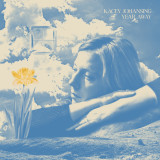
In March of 2020, after learning that a dear friend’s life was coming to an end, Johansing sat down and in one sitting wrote the song “Daffodils”. An elegiac tribute to someone facing death with grace and curiosity, the lyrics confront Johansing’s own mortality by observing the brief lifespan of a Hlower. Only a week later when the world came to an abrupt standstill, she soon found herself processing this recent loss while trying to make sense of a new global reality. Across the ensuing months, Johansing found herself increasingly untethered by a world of isolation and political upheaval.
Having been a frequent touring member of bands like Hand Habits and Fruit Bats, and often being called into the studio to lend her harmonies and multi-instrumental talents to records, Johansing’s phone no longer rang. Living in Los Angeles she feared her musical community was vanishing, as friends and collaborators continually announced they were leaving the city. It was in returning to her piano nightly that she found the greatest solace, feverishly writing the songs that would be collected on her next album. Resulting from this new sense of time and focus was a deepening of her songwriting. As Johansing recalls, “I felt like a metamorphosis happened during that time. There was a lot of personal growth and healing.”
Throughout Year Away Johansing traverses uncharted emotional landscapes brought upon by the changes occurring all around her. The forced self-reflection of the moment is aptly captured by “Old Friend”, featuring an aching melody and swooning production that recalls the best of Harry Nilsson. The epic piano and saxophone-driven “Smile with My Eyes” addresses the loss of community as friends became distant and political divides between family grew. On “Smile” Johansing pushes her vocals further than ever, expanding her range and using her peerless voice as the singular instrument it is. Facing the loss of a family home due to environmental destruction, “Shifting Sands” is marked by soaring Hlutes, Hield recordings and glassy synthesizers that nod to Japanese New Age.
“Daffodils”, the stunning album centerpiece, is built from a pastiche of looping samples, swirling Mellotron and dazzling vibraphone. “Keep your heart open wide, you never know your time / Keep your heart wild, true Hlower child”, Johansing sings as she says goodbye to an elder, while the band reaches a grief-stricken crescendo of woodwinds and chiming bells. On the title track, Johansing takes listeners on an eerily meditative journey of collective experiences. “I wanted to keep the progression simple and repetitive so that musically we could add new elements little by little, while the emotional tone of the lyrics becomes increasingly more strained and expressive”. The song grows to a fever pitch as Johansing sings higher than she thought possible; the tension of the repeating chords Hinally resolving into a hopeful coda as multiple soloists weave around each other.
Amidst heavier themes, Johansing still leaves room for her love of irresistible pop melodies and lush production. The driving “Last Drop” and mid-tempo “Valley Green” are two of her catchiest songs to date. On the former Johansing sings the anthemic chorus, “As if it were the last drop, and nothing ever lasts forever / As if it were the last stop, too far out to come back ever”, longing for a love that she’ll never take for granted, while also admitting that she doesn’t always know how good she has it. “Valley Green” features shimmering layers of 12- string guitars, stacked horns and an impeccable solo by co-producer and multi- instrumentalist Tim Ramsey (Vetiver, Fruit Bats), hinting at a love for bands like NRBQ.
Having been eager to capture the initial spark of songwriting, Johansing booked time at Highland Park’s 64 Sound Studio the week that it reopened. Over the course of three days, she and her band gathered basic tracks for 10 songs, before returning home to Hinish the record with Ramsey. Setting forth to make an album that paid homage to the music that kept them company during the months spent alone together, the duo pulled inspiration from a wide net including Burt Bacharach, John Carroll Kirby & Haruomi Hosono. Ramsey’s newfound love of early digital synthesizers dovetailed effortlessly with Johansing’s fondness for classic 70’s horn and string arrangements, creating a sound that is distinctly modern yet warm and familiar.
Once again Johansing called upon some of the Hinest players of Northeast Los Angeles’ vibrant music community to lend a hand with the record. The 70s R&B-folk of “Watch It Like a Show” features an electric guitar solo from Hand Habits’ Meg Duffy, while album closer “Endless Sound” boasts backing vocals from electronic musician Kaitlyn Aurelia Smith and swooping Indian-inspired violins from Amir Yaghmai (HAIM, The Voidz). The record shines brightly thanks to an ace mix from veteran producer Rob Schnapf (Beck, Elliott Smith, Cat Power), woodwinds from Logan Hone (John Carroll Kirby, Eddie Chacon), and a featured rhythm section of drummer Josh Adams (Jenny Lewis, Bedouine) and bassist Todd Dahlhoff (Feist, Devendra Banhart). Recorded across multiple studios including LA’s famed Sunset Sound, the album remains steadfastly buoyed by the adept engineering of Tyler Karmen (MGMT, Alvvays).
Though born of turbulent times, Year Away is ultimately interested in moving forward. The album ends with “Endless Sound,” where Johansing laments seismic global changes, (“The water is hotter, the mighty thaw / The current’s reversing, the last are lost”) but vows to keep going (“No storm can take me down / Endless light, endless sound”). It’s Year Away’s resilience that shines through despite the darkness. It’s a sound all her own and Johansing’s most cohesive set of songs yet.
Wir stellen vor: "American Gothic" von Wayfarer.Begib Dich mit Wayfarer auf eine transzendentale Reise, wenn sie ihr neuestes Werk "American Gothic" vorstellen. Die atmosphärische Black-Metal-Band aus Colorado taucht tief in den reichen Teppich der Americana-Themen ein. Dieses Album markiert einen bedeutenden Meilenstein auf ihrem musikalischen Erkundungszug.Dieses außergewöhnliche Album überschreitet die traditionellen musikalischen Grenzen und fasst die Essenz der verschiedenen Landschaften Amerikas zusammen. Wayfarers musikalisches Können malt eine lebendige und eindrucksvolle Klanglandschaft. Sie vereinen atmosphärischen Black Metal mit Elementen des Post-Rock und Folk und verbinden mühelos fesselnde Melodien mit wilder Intensität. Erhältlich als Ltd. 180g worn-steel silver LP mit Newspaper-look Booklet, sowie als CD Digipak.
- A1: Azuma's Theme (Gnossienne No. 1 - Erik Satie)
- A2: Sono Otoko Kyobo Ni Tsuki (Violent Cop) (End Title)
- A3: Kiyohiro's Theme
- A4: Kiyohiro's Theme Ii
- B1: Sono Otoko Kyobo Ni Tsuki (Violent Cop) (Main Title)
- B2: Fear (Gnossienne No. 1 - Erik Satie)
- B3: Intorno All'idol Mio (Antonio Cesti)
- B4: Sono Otoko Kyobo Ni Tsuki (Violent Cop) (Main Title - Saxophone Version)
WRWTFWW Records is thrilled to announce the official reissue of Daisaku Kume's original soundtrack for the highly acclaimed 1989 Japanese crime/drama movie Violent Cop. Available for the first time outside of Japan, the album comes in a limited edition of 500 copies worldwide with a 45 rpm cut providing full audio pleasure and an iconic record sleeve featuring the movie director and star: the one and only "Beat" Takeshi Kitano!
Violent Cop marks Kitano's directorial debut - a gritty neo-noir in which he stars as a rogue detective fighting a sadistic crime syndicate, only to discover widespread internal corruption in the police force. Poetic, minimalistic, with a superb balance between small soothing moments of beauty and vertiginous sudden violence, the film spearheaded a superb international career for the multi-talented filmmaker, actor, and comedian, which includes works such as Sonatine, Hana-Bi, and Battle Royale. The release of the soundtrack on vinyl presents an excellent opportunity for fans to explore the musical underpinnings of one of Kitano's earliest creations.
Daisaku Kume, known for his work as the keyboardist for late 70s fusion bands T-Square and Prism, showcases versatile musical prowess on the soundtrack, taking listeners on a sonic journey through a blend of genres including magnificent Erik Satie re-interpretations, melancholic smooth jazz sometimes reminiscent of Taxi Driver, ambient-classical, and modern Western atmospherics. It's the perfect setting for Kitano's stoic but tormented lonesome urban cowboy character. Raw power mixed with timeless elegance.
Violent Cop (Original Soundtrack) by Daisaku Kume follows the recent release of the soundtrack from another groundbreaking Japanese movie, Shin'ya Tsukamoto's Tokyo Fist (1995), with music by industrial visionaries Chu Ishikawa & Der Eisenrost, also currently available on WRWTFWW Records.
- 01: Sell Out
- 02: Eric Cantona Stomp
- 03: Matula, Hau Mich Raus
- 04: Das Ist Heute Nicht Dein Tag
- 05: Ich Bin Ein Snob
- 06: Die Axt Im Walde
- 07: Eine Autobahn Im Regen
- 08: Nein Nein Nein
- 09: Ich Kann Nicht Nein Sagen
- 10: Guybo
- 11: Es Kann Nicht Ganz Schlecht Sein
- 12: Gespenster
- 13: Heraus Zum Ersten Mal
- 14: Der Mann Auf Der Bank
- 15: Du Hast Es Nicht Weit Gebracht
Das fing mit Superpunk Mitte der 90er vollkommen ambitionslos an. Plan war es, eine Band zu gründen, um auf Partys Kracher aus den Sixties zu spielen. Leider scheiterte die Band bereits an relativ simplen Garage-Rock-Klassikern wie "I need you" von den Kinks. Und wer hätte gedacht, dass "Friday on my mind" derart viele Akkorde hat? Das kann sich doch nun wirklich kein Mensch merken. Da erschien es erheblich einfacher, sich eigene Songs auszudenken, konnten andere schließlich auch. Aber erst mal musste ein Name her. Zur Auswahl standen "Fifi", "Schnellbus", "Hamburg Spinners", "Superminister Riesenhuber" und "Superpunk". Mit einfacher Mehrheit und wie immer ohne viel nachzudenken, entschied man sich für letzteres Mit den ersten eigenen Songs wurden dann richtige Konzerte gespielt, die zum Teil gut ankamen. Bei einem dieser Auftritte war auch Thies. Dem gefiel, dass die Band, jetzt aus dem Stegreif memoriert, "wie eine total zerkratzte Ray-Charles-Platte auf falscher Geschwindigkeit" klang. So gut gefiel das dem Thies, dass er fortan als Keyboarder dabei war. Und das ist auch wirklich eine treffende Beschreibung für den frühen Superpunk-Sound. So, jetzt aber: Es wurden fleißig eigene Songs gemacht und als genügend da waren, dachte sich die Band: "Die könnten wir eigentlich mal aufnehmen." Auf der Straße, irgendwo zwischen "Eis-Gerd" und "Pudel" trafen sie Bernd Begemann, der sagte: "Ich habe einen 4-Spur-Kassettenrekorder, ich nehme euch auf!". "Toll, danke, Bernd!" Und so brachte Bernd seinen Kassettenrekorder, mehrere Kassetten (die teuren, Chrome II), Mikrophone und eine seltsame Apparatur (ein Stimmgerät) mit in den Übungsraum im Bunker bei der Apostelkirche und nahm mit einer Engelsgeduld das Album auf. Auf der Straße, irgendwo zwischen "Heinz Karmer"s" und "Komet" traf die Band dann Bernd Kroschewski, der sagte: "Ich habe ein Label, ich bring euer Album raus!" "Toll, danke, Bernd", hieß es erneut. Und so erschien ziemlich genau vor 25 Jahren "A bisserl was geht immer" auf Fidel Bastro. Da waren, muss man zugeben, etliche Hits drauf: "Matula, hau mich raus", "Ich kann nicht nein sagen", "Das ist heute nicht Dein Tag", "Die Axt im Walde". Aus der ambitionslosen, verhinderten Partyband wurde dann doch noch eine (beinahe) richtige Band, mit Platte und Label und dem ganzen Schnick Schnack. Sogar auf Tour sind Superpunk mit dem Album gegangen, das war was, zwischen Hölle (null Zahlende in Kassel) und Himmel (ausverkaufter Pudel, Rekordgage von 300 Mark + gekühlte Freigetränke). Falls ihr noch nie "A bisserl was geht immer" gehört habt, stellt euch eine Mischung aus 39 Clocks, Cockney Rejects und dem Ramsey Lewis Trio vor. Zugegeben, leichte Kost ist das nicht, aber einer, wenn nicht der einzige Meilenstein des Hamburger DIY/ Outsider/Beats
Founded and curated by DJ and producer Samantha Togni, Boudica is a platform that aims to give visibility to women, trans* and non-binary artists. Since the platform was first launched in 2019, Boudica has evolved into a series of club events in London at venues like The Pickle Factory, Fold and E1, a radio show, a music conference and a record label.
Boudica's mission is to promote greater gender equality within the music industry. By showcasing diverse role models from marginalised communities across the music industry, they aim to engage and inspire young and upcoming artists to pursue music careers irrespective of their background and experience within the field.
In 2020, they launched the inaugural Boudica Music Conference at Freemasons' Hall. The full day included educational panels, workshops and live music designed to encourage more artists from marginalised genders to pursue careers in the music industry. In 2022, Boudica not only held London's edition of the conference at the same venue, but they also expanded to Europe. In partnership with Pioneer DJ, they held their first edition of the conference abroad in Bologna at the Museum of Modern Art. Boudica Music Conference is touring in Europe in 2023, featuring talks, workshops alongside Pioneer DJ and club nights.
Last year, they launched the Boudica label, to support and celebrate female, trans+ and non-binary producers. Supported by Arts Council England, the label features artists such as Feminyst, Nur Jaber, Wanton Witch, OCD, Infinity Dreams, Peachlyfe, Yazzus and founder Samantha Togni. Their previous releases have garnered support from major music publications such as RA and Mixmag, resulting in a third VA release.
The third vinyl, 'Dark As It Gets', is a reflection of Boudica's continual musical evolution. The release marks a first for the platform, as they issued a callout for trans+ producers across the world to send in a track to be included on the vinyl. 'Dark As It Gets' by MIIIA was selected, and the title not only encapsulates the EP's energy but also Boudica's drive to support upcoming artists in the electronic music space.
The third vinyl commences with Rotterdam-based duo Animistic Beliefs' 'Vu Sua La Gi?'. The atmospheric track begins with menacing synths that are soon after enmeshed with vogue, gqom and percussive vocal chops that build towards a rewarding, melodic breakbeat cadence at its close.
New York-based Jasmine Infiniti's 'Top Shop' is the second track on the release. Skittish breaks and warped vocals skip across brooding, muted chords that eventually dissipate to reveal a hypnotic synth melody.
The vinyl's B-side begins with Metaraph's 'Emotional Intelligence'. The track marries pummelling kick drums, heady chords and transcendent melodies, all of which serve to guide the listener from triplet hard bass to trance bliss.
Finally, the title track, 'Dark As It Gets', produced by competition winner MIIIA, delivers a powerful sonic ending to the vinyl. In her own words, the track's relentless momentum and intricate incorporation of sampling leads listeners on a 'hypnotic, sassy and intense' techno journey from beginning to end. The uncompromising track's fierce groove emblematizes Boudica's third vinyl commitment to forward-thinking, idiosyncratic production.
The third vinyl concludes the initial Boudica trilogy, depicting members of the Boudica community as contemporary royalty, drawing inspiration from the queen herself.