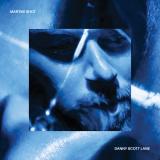
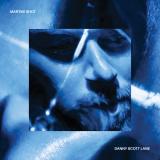
Martini Shot is the new album from Danny Scott Lane-a catchy, nostalgic and slightly manic collection that feels a little like one drink too many. Moving between lounge, soul, indie pop and exotica, the record plays more like a mixtape than a single idea, with a distinctly '90s streak running through it.
Lane sings on seven of the album's ten songs, a departure from his largely instrumental past work, and plays drums and percussion for the first time alongside his usual synths, keyboards, guitar and bass. Longtime collaborator David Lackner contributes flute, joined by new collaborators Logan Hone on flute and Katie Jacoby on violin.
Martini Shot marks Lane's second release with Records We Release, following the well-received House of Alice. The result is loose, romantic, restless and a little unpredictable.
Martini Shot is the new album from Danny Scott Lane-a catchy, nostalgic and slightly manic collection that feels a little like one drink too many. Moving between lounge, soul, indie pop and exotica, the record plays more like a mixtape than a single idea, with a distinctly '90s streak running through it.
Lane sings on seven of the album's ten songs, a departure from his largely instrumental past work, and plays drums and percussion for the first time alongside his usual synths, keyboards, guitar and bass. Longtime collaborator David Lackner contributes flute, joined by new collaborators Logan Hone on flute and Katie Jacoby on violin.
Martini Shot marks Lane's second release with Records We Release, following the well-received House of Alice. The result is loose, romantic, restless and a little unpredictable.
From Turin to the World: Neon Reflections Marks 5 Years of Early Reflex with a Genre-Defiant Club Compilation Featuring Pépe, Emily Jeanne, Sonia Calico, Sobolik, & More.
As Early Reflex turns five, the label marks this milestone with a landmark 30th release: a global-minded, rhythm-forward compilation that captures the spirit and evolution of the imprint since its inception. This 12-track release features a cross-section of cutting-edge producers shaping the contours of contemporary club music.
From Seoul to Valencia, New York to Milan, Taipei to London—this collection brings together a constellation of artists whose sonic identities reflect the genre-defying ethos of Early Reflex. Propulsive yet detailed, physical yet intricate, the compilation traverses bass-heavy terrains, syncopated percussive structures, and otherworldly textures, acting as both a retrospective and a projection of what’s next.
Whether you're locked into headphones or immersed in a full club system, these tracks carry the uncompromising, future-facing energy that defines Early Reflex.
Alec Pace said about Neon Reflections:
“It’s incredible to think that six years have passed since our very first Early Reflex event here in Turin—featuring Sonia Calico and Hence Therefore alongside myself—and now we’re celebrating five years of the label with our 30th release. Watching the project evolve from local nights into a platform connecting artists across the globe has been nothing short of surreal. This compilation brings together an outstanding lineup—featuring established names like Pépe, Emily Jeanne, Sonia Calico and Arecibo, longtime collaborators such as Sobolik, Capiuz, Martini, and Ikävä Pii, as well as exciting up-and-coming and new-born talents from across the club spectrum such as Aeery, Biased and Natsumi Hirota. It feels like the perfect way to mark this journey: a milestone release that reflects our identity and community, pressed into a special limited-edition vinyl piece. I couldn’t be more proud.”
180 G. BLACK VINYL WITH LINER NOTES IN CREOLE, FRENCH, ENGLISH
Originally released in 1979, "Spiritual Sound" lives up to its name, a soaring, triumphant album, six tracks of spirit magic from Guadeloupe.
Telluric, intense, terribly alive, the gwoka drums of Guadeloupe carry the identity of a painful and fervent island. Marked forever by the crime of slavery, Guadeloupe's créolité cherishes the ka drums and their natural environment: the low-pitched boula drum with male goatskin, the high-pitched soloist makè drum with female goatskin, the chacha, ti bwa, triangle, calabash and other percussion instruments that surround them, and the voices - the fiery, proud, timbred, urgent voices of the gwoka.
This album is also a legend for its voices: in his then dazzling youth, singer Lukuber Séjor was one of the first gwoka artists to largely feminize the chorus of répondè, who converse with his text delivered in a straight and powerful voice.
And everything here sets new standards. In 1979, Mizik Filamonik - Spiritual Sound proclaimed a spiritual patriotism of ferocious intensity. The album by Lukuber Séjor - whose spelling alone is a battle - sets out to give Guadeloupe the intangible weapons of self-respect and self-knowledge, through a singular practice of traditional music.
The genesis of gwoka music is less straightforward than one might imagine... The drums performed the servile task of accompanying the work of slaves in the fields and during the “corvées” imposed by the administration, before being freely practiced by the common people after the abolition of 1848. At the heart of the conviviality of the Guadeloupeans furthest from the cities - geographically and socially - the gwoka drums come out for carnival, funeral wakes and neighborhood celebrations, but also during strikes, fits of anger and armed vigils of the riots and revolts that have punctuated the island's history. For generations, governors of the colony and then the prefects of the overseas department of Guadeloupe have been viewing the gwoka as a potential for turbulence and a threat to public order.
But as the Beatlesmania, “chanson engagée” and rock revolutions unfolded in Europe, young people turned to the drums of mizik a vié nèg (“bad negro music”, in Creole), which Guadeloupeans had learned to despise by following the “assimilation” process advocated by the school system and most of the political class. At the end of the sixties, in a Guadeloupe mourning the deadly repression of the May 1967 social movement, they played traditional music, refusing to wrap it up in tourist prettiness and madras folk costumes. Instinctively, they played a rough and contemporary gwoka, led by the incendiary Guy Konkèt. This was the era of decisive 45 rpm records such as Robert Loyson's Kann a la richès, which brought to light the fieriest words of union rallies.
At his home in Sainte-Anne, Lukuber Séjor played with flautist Olivier Vamur and his brother Claude Vamur, who cobbled together a drum kit from tin crockery and became, a few years later, the most influential drummer in Kassav'.
These were the years of the Bumidom program, when young Guadeloupeans were encouraged to emigrate to mainland France. At the age of twenty, Lukuber Séjor embarked on the liner Irpinia, disembarking at Le Havre and taking the train to the Gare Saint-Lazare - the route taken by thousands of young West Indians who went on to study or looked for work, all the while trying to maintain a link with their homeland. In this case, it's at the Antony university residence, where Lukuber played the drum and participated in a thousand gwoka updates and aggiornamentos, while exile reinforced the need for a spiritual link with the native land.
In 1978, Guy Konkèt played at the Salle Wagram, a historic event for West Indian music. After serving as répondè - i.e. backing vocalist - on one of his home-recorded albums, Lukuber joined his live band. Little by little, he became one of the key artists on a circuit parallel to French show business. At a student party in Caen, he met a young woman from Martinique who, at the time, was more motivated by her ambitions as a visual artist than by her vocation as a musician. Her name was Jocelyne Béroard and, a few years before she plunged into the Kassav' adventure and became the greatest West Indian singer of her generation, she designed the cover of Lukuber Séjor's LP.
This ambition was obvious and imposed its will. A more or less regular band was formed, with Roger Raspail, Rudy Mompière and Éric Danquin on ka drums, Claude Vamur on ti bwa, Olivier Vamur and Françoise Lancréot on flutes and Annick Noël on keyboards. Lukuber Séjor is set on wanting to extend the gwoka palette to other instruments, as the jazz-rock revolution opens a thousand new doors. Annick Noël will play a wide range of timbres and textures on electric piano and synthesizer. Another novelty: the répondè are two men and two women, Roger Raspail, Olivier Vamur, Françoise Lancréot and Maryann Mathéus ...
Mizik Filamonik - Spiritual Sound is a self-production in which the singer and leader sank all his savings, allowing him no more than a single day in the studio. The first side is more of a musical manifesto, with the first two tracks, Éritage and Penn é plézi, being instrumentals. The third, Son, forcefully celebrates the need for Guadeloupeans to connect with the gwoka. In fact, Jocelyne Béroard's cover shows a tambouyé in the shadow of a cloudy sky, against which a radiant sun is rising and whose light will soon flood the entire landscape. The silhouette and face of this man strongly evoke the immense Vélo, master of the ka, rejected at the time on the fringes of society.
The second side of the LP is surprising. Formally, three tracks are explicitly linked like the three parts of a triptych. Primyé voyaj evokes the appalling tribulation of Africans deported as slaves to Guadeloupe; dézyèm voyaj speaks of the Bumidom program and the economic, political and social forces driving young Guadeloupeans towards the mirage of prosperity in France; twazyèm voyaj closes the cycle with the emigrants' return from Europe after years away from their island...
This gwoka, obsessed with the need to save Guadeloupe spiritually, appeals far beyond the politicized audience. Mizik Filamonik - Spiritual Sound instantly became a classic, although Lukuber Séjor never really made a career for himself as a musician.
After all, the album was released in 1980, with no promotional resources in France or Guadeloupe - and therefore no concerts. The thirty-two-year-old author, composer and performer made his own third trip back to Guadeloupe. He set up a small woodworking business, which he lost in Hurricane Hugo in 1989. His other activity, teaching in a medical-educational institute, became the core of his professional life. He continued to be an active campaigner - a campaigner for the Creole language, a campaigner for the reawakening of identity, a campaigner for special education, a campaigner for a thousand causes that he ignited with his generous and perceptive enthusiasm, such as the defense of breadfruit fries...
The echoes of his 1979 album have not died down. Of course, the use of Penn é plézi as the theme tune for Radio Guadeloupe's funeral notices from 1980 to 1992 kept him in the collective memory, but he continues to sing and compose sporadically, as with his all-female
vocal group Vwapoulouéka... Still convinced that music is a means of liberating the spirit, he continues the journey of a young man eager to deploy the power of Creole music and language.
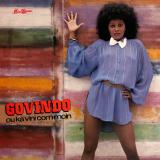
Disco Segreta proudly presents the reissue of one of the most elusive and sought-after gems of underground italo disco, Govindo’s “Ou Ka Vini Com Moin”.
Originally released in 1983 on the obscure “Gala” label and quickly withdrawn from the market, this hypnotic, space-tinged cosmic italo disco bomb remained virtually unknown outside a small circle of hard core italo disco collectors — until now.
Wriitten by Mario Baldoni aka Miro and recorded during a journey across the French Antilles, the track was laid down in Fort-de-France, Martinique, capturing a unique cultural and musical intersection. Its title comes from a typical Martinican Creole expression—”U Ka Vini Co Muè”—meaning “C’mon, come with me.”
The track’s lush arrangement, crafted by Gregorio “Greg” Puccio, is a quintessential snapshot of analog italo disco at its finest: Roland Juno 60, JX-3P, Korg PolySix / Poly800, and LinnDrum LM-1 create a dreamlike, deeply atmospheric soundscape.
For the first time, this edition presents the original 12” full-length versions (vocal/instrumental), alongside the shorter 7” vocal version, remastered directly from the actual analog master tapes, plus two new remixes: the Marcello Giordani Hypnomix – a future electro synth classic from one of Italy’s finest producers and the Miro’s Fort de France Sunset – a balearic downbeat contemporary reinterpretation by the original artist 42 years after.
нет на складе
Последняя поставка 53 дня назад доступно для дозаказа без гарантии
Die hochgeschätzten Euro-Metal-Pioniere Oz wurden ursprünglich 1977 in der kleinen finnischen Stadt Nakilla gegründet. Die Band bestand aus Mark Ruffneck (bürgerlicher Name Pekka Mark) am Schlagzeug, Sänger Ape De Martini (Eero Hämäläinen), Bassist Tauno Vajavaara sowie Kario Elo an der Gitarre.
Fünf Jahre nach ihrer Gründung legten Oz ihr Debütalbum vor. Mit Krachern wie “Saturday Night”, “Capricorn Man” oder dem schlüpfrigen “Second-Hand Lady” avancierten Oz schnell zur HM-Band Nummer eins in Skandinavien.
In der Folge zog man nach Stockholm um, wo 1983 der gefeierte Zweitling »Fire In The Brain« entstand. Die Platte enthielt höchst energetische Heavy-Metal-Hymnen wie “Fortune”, “Megalomaniac” oder “Gambler”. Der kanadische Journalist Martin Popoff verteilte in seinem »Collector’s Guide To Heavy Metal« 9 von 10 Punkten und schrieb: »Fire In The Brain« ist eine düstere, fast depressiv wirkende Platte, die den Hörer wie ein Güterzug trifft. Es ist ein sehr europäisch klingendes Werk – vom apokalyptisch anmutenden ‘Searchlights’ über das zähflüssige ‘Black Candles’ bis hin zum gewaltigen Titelsong werden absolut keine Gefangenen genommen.“
High Roller Records, silver vinyl, ltd 450, 425gsm heavy cardboard cover with 5mm spine, lyric sheet, 12 page booklet, poster
In Guadeloupe, many people think that jazz and ka music are like a ring and a finger. To some extent, the same could be said about so called Latin music and the music played in the French West Indies.
Both aesthetics were born in the Caribbean and bear so many connections that they can easily be considered cousins. In constant dialogue, there are lots of examples of their fruitful alliance and have been for a while. The English country dance that used to be practiced in European lounges came to be called kadrille in Martinique and contradanza in Cuba. They both featured additional percussion instruments inherited from the transatlantic deportation. Drawing from shared feelings about the same traumatized identity – later to be creolized – it would be hard not to assume that they were meant to inspire each other. The golden age of the orchestras that graced the Pigalle nights during the interwar period further proves the point. As soon as the 1930s, Havana-born Don Barreto naturally mixed danzón and biguine music in a combo based at Melody's Bar. In the following decade, Félix Valvert, a conductor who was born and raised in Basse-Terre in Guadelupe, also worked wonders in Montparnasse with La Coupole, which was an orchestra made up of eclectic musicians. Afro- Caribbean performers of various origins were often hired on rhythm and brass sections in jazz bands, which used to enliven the typical French balls of the capital. In the 1930s and onwards, Rico’s Creole Band was one of them.
Martinican violinist-clarinettist Ernest Léardée, who would become the king of biguine music as well as the main figure of French Uncle Ben's TV commercials (a dark stigma of post-colonial stereotypes), had musicians from the whole Caribbean sphere play at his Bal Blomet – and they all enchanted "ces Zazous-là" (according the words of Léardée's biguine-calypso piece). In les Antilles (French for French West Indies), music history started to speed up in the 1950s, when trade expanded and radio stations grew bigger. The Guadelupean and Martiniquais youth tuned in their old galena radio sets to South American and Caribbean music. As for the women traders, les pacotilleuses, they bought and sold goods across different islands (the "passing of items through various hands" was thought to be most pleasurable) and brought back countless sounds in their luggage. Such was the case of Madame Balthazar, who once returned from Puerto Rico with the first 45rpm and 33rpm to ever enter Martinique.
Out of this adventure was created the famous Martinican label La Maison des Merengues, a music business she opened and undertook with her husband and which proved to be a major landmark. At the end of the 1950s, in Puerto Rico, Marius Cultier competed in the Piano International Contest playing a version of Monk's Round 'Midnight. He won the first prize and this distinction foreshadowed everything that was to come. Cultier, the heretic Monk of jazz, was quickly praised for writing superb melodies, always tinged with a twist that conferred a unique sound to his music. It didn't take long for the gifted self-taught musician to get to play with Los Cubanos, making a name for himself thanks to his impressive maestria on merengues.
The rest is history. Besides, in the late 1950s, Frantz Charles-Denis, born into the upper middle class in Saint-Pierre and better known by his first name Francisco, went back home after working at La Cabane Cubaine – a club located rue Fontaine where he had caught the Latin fever. Francisco's music was therefore heavily marked by his Cuban cousins' influence, which gave the combos he led a specific style and also led to renewal. Things were swinging hard in La Savane, located in the main square in Fort-de-France. He set up the Shango club close by and tested out the biguine lélé there, a new music formula spiced up with Latin rhythms. Soon afterwards, fate had him fly to Puerto Rico and Venezuela.
As for percussionist Henri Guédon (percussions were only a part of his many talents), he was born in Fort-de-France in May 22nd 1944, the day marking the celebration of the abolition of slavery. As an old man, he could remember that in " his father's Teppaz, a lot of hectic 6/8 music was constantly playing...". In the opening lines of his Lettre à Dizzy, a small illustrated collection of writings published by Del Arco, he highlighted the huge impact that cubop had on him as a teenage boy, around 1960. He eventually turned out to be the lider maximo in La Contesta, a big band steeped in Latin jazz. He was also the one who originated the word zouk to describe music which brought the sound of the New York barrio to Paris. It was the culmination of a journey that started in Sainte-Marie: "a mythical place for bélé, the equivalent of Cuban guaguancó". In the early 1960s, the tertiary economy developed to the detriment of agriculture. Yet rural life was where roots music emerged in Martinique and in Guadeloupe.
Record companies played a major part in the process of Latin versions sweeping across the islands – before reaching everywhere else. Producer Célini, boss of the great Aux Ondes label, and Marcel Mavounzy, both the head of Émeraude records - a firm which was founded in 1953 - as well as the brother of famous saxophonist Robert Mavounzy, were big names to bear in mind. Although there were many of them - all of whom are featured on this record - Henri Debs was definitely the major figure in the recording adventure. He proved to be so influential that he even got compared to Berry Gordy. In the mid 1950s, when he acquired his first Teppaz, he worked on his first compositions: a bolero and a chachacha. Then, he became the one man who made people discover Caribbean music, from calypso to merengue. He was among the first ones to rush out to San Juan, Puerto Rico, to buy records and distribute them through a store run by one of his brothers in Fort-de-France. He had members of the Fania All Star come and perform there, which he was madly proud about. He was also the first one to pay attention to Haitian music, such as compas direct and various other rhythms which would soon flood the market. As a result, many of the combos hitting his legendary studio would end up boosted by widespread "Afro-Latin" rhythms. However, he never denied his identity: gwo ka drums were given a major role, although they were instruments which had long been banned from the "official" music spheres. The present selection bears witness to such a creative swarming. Here are fourteen tracks of untimely yet unprecedented cross-fertilization: all types of music rooted in the Creole archipelago have found their way, whatsoever, to the tracklisting. Whether originating from the city or being more rural, they all go back to what Edouard Glissant, in an interview about the place of West Indian music in the Afro-American scope, called "the trace of singing, the one which got erased by slavery." "It is so in jazz, but also in reggae, calypso, biguine, salsa... This trace also manifests through the drums, whether Guadelupean, Dominican, Jamaican or Cuban... None of them being quite the same. They all point to the idea of a trace, seeking it out and connecting to each other through it. This is the hallmark of the African diaspora: its ability to create something new, in relation to itself, out of a trace. It may be the memory of a rhythm, the crafting of a drum, a means of expression which doesn't resort to an old language but to the modalities of it." The opening track features one of the emblematic orchestras of this aesthetic identity, criscrossing many music types from the archipelago. The 1974 Ray Barretto guajira – Ray Barretto was a major New York drummer influenced by Charlie Parker and Chano Pozzo – is magnificently performed by Malavoi, a legendary Fayolais group (i.e from Fort-de-France). Additionally, the compilation ends on a piece by Los Martiniqueños de Francisco. It symbolically closes the circle as it is a genuine potomitan of Martinique culture which also functions as a tireless campaigner for Afro-Caribbean music. Practicing the danmyé rounds (a kind of capoeiria) to the rhythm of the bèlè drum, it delivers a terrific Caterete, a kind of champeta of Afro- Colombian obedience which was originally composed by Colombian Fabián Ramón Veloz Fernández for the group Wgenda Kenya. The icing on the cake is Brazilian Marku Ribas, who found refuge in Martinique in the early 1970s, bringing his singing to the last trance-inducing track. These two "versions" convey the whole tone of a selection composed of rarities and classics of the tropicalized genre, swarming with tonic accents and convoluted rhythms. It is the sort of cocktail that the West Indians never failed to spice up with their own ingredients. For instance, the Los Caraïbes cover of Dónde, a famous Cuban theme composed by producer Ernesto Duarte Brito, has a typical violin and features renowned Martinique singer Joby Valente and his piquant voice.
The track used to be – or so we think – their only existing 45rpm. The meaningful Amor en chachachá by L'Ensemble Tropicana, a band which included Haitian musicians among whom was composer and leader Michel Desgrotte, also recalls how Latin music was pervasive in the tropics in the mid-1960s. They were the ones keeping people dancing at Le Cocoteraie in Guadelupe and La Bananeraie in Martinique. Around the same time, another "foreign" band, Congolese Freddy Mars N'Kounkou's Ryco Jazz, achieved some success on both islands by covering Latin jazz classics – such as their adaptation of Wachi Wara, a "soul sauce" by Dizzy Gillespie and Chano Pozo whose interweaving of strings and percussions can have anyone hit the dancefloor. How can you resist Dap Pinian indeed, a powerful guaguancó by Eugene Balthazar, performed by the Tropicana Orchestra and published by the Martinique-founded La Maison des Merengues? It also acts as a symbol of the maelstrom at work. Going by the name Paco et L'orchestre Cachunga, Roger Jaffory used to play guaguancó too: his Fania-inspired Oye mi consejo is one example of his style. Baila!!!!! Dancing was also one of the Kings' focus points. Oriza is a Puerto Rican bomba and a "classic" originally composed by Nuevayorquino trumpeter Ernie Agosto, which reserves major space for brasses, giving it a special sheen.
Emerging from the New York barrios crucible was also La Perfecta, a Martinique group originating from Trinidad, whose name directly references the totemic Eddie Palmieri figure as well as his own band, also called La Perfecta. Here they borrow Toumbadora from Colombian producer and composer Efraín Lancheros and interpret it by emphasizing percussions, which set fire to the track even more than the wind instruments. The same goes for Martinique's Super Jaguars, who use Tatalibaba – a composition by Cuban guitarist Florencio "Picolo" Santana which was made famous by Celia Cruz & La Sonora Matencera – as a pretext for sending their cadences into a frenzy. In a more typically salsa vein, the Super Combo, a famous Guadelupean orchestra from Pointe-Noire that was formed around the Desplan family and had Roger Plonquitte and Elie Bianay on board, adapt Serana, a theme by Roberto Angleró Pepín, a Puerto Rican composer, singer and musician also known for his song Soy Boricua. Here again, their vision comes close to surpassing the original. In the 1970s, L'Ensemble Abricot provided a handful of tracks of different syles, hence reaching the pinnacle of the art of achieving variety and giving pleasure. They played boleros, biguines, compas direct, guaguancó and even a good old boogaloo - the type they wanted to keep close to their hearts for ever, "pour toujours", as they sang along together in one of their songs. Léon Bertide's Martinican ensemble excelled at the boogaloo which had been composed by Puerto Rican saxophonist Hector Santos for the legendary El Gran Combo.
Three years later, in 1972, Henri Guédon, with the help of Paul Rosine on the vibraphone, tackled the Bilongo made famous by Eddie Palmieri. Such a classic!!!!! And so were the Aiglons, the band from Guadelupe: choosing to execute Pensando en tí, a composition by Dominican Aniceto Batista, on a cooler tempo than the original, they noticeably used a wonderfully (un)tuned keyboard in place of the accordion. On the high-value collectible single – the first one released by Les Aiglons under the Duli Disc label – there is a sticker classifying the track under the generic name "Afro". Now that is what we call a symbol. Jacques Denis
нет на складе
Последняя поставка 7 месяцев назад доступно для дозаказа без гарантии
This release marks the return of Martini Special to the Blakamix International label. Being known for releases including the 'Cry Over You' LP, and tracks that appear on the Ragga Culture & Heartically compilations and singles, including 'Ghetto Life', 'Baby Mother, Baby Father' & 'Vigilante'; he has teamed up with Mixman's son and upcoming producer Mali Blakamix to bring forth this crucial 7” single.
On Side A Martini sings 'Crisis', a concise song outlining the issues of living in these modern times. Side B has Mali stepping up to the mixing board, unleashing a unique, authentic dub mix; showcasing his mixing capabilities.
Those that have enjoyed both Martini's and Mali's previous releases are sure to enjoy this collaboration. Look out for more from these two in the future.
нет на складе
Последняя поставка 20 месяцев назад доступно для дозаказа без гарантии
20th Anniversary reissue. • Available on CD, and for the first time ever, on LP. • Includes new liner notes from Sam. • Contains “Reflecting Light” and “If I Could Write”—both featured on the fan- and streaming-favorite Gilmore Girls. Since the late 1980s Sam Phillips has been a poetic voice in the alternative/pop realm. She recorded a series of acclaimed albums for Virgin Records, including the Grammy-nominated Martinis And Bikinis (expanded and reissued by Omnivore Recordings in 2012), all produced by her then-husband T Bone Burnett. At the turn of the century, Sam was invited by Amy Sherman-Palladino, who was a fan of Sam’s music, to score her new television series, Gilmore Girls, on a new network, The WB. Sam’s unconventional score featuring vocal and acoustic guitar was likened to an onscreen character itself and dubbed “the La La’s” by the growing legion of Gilmore Girls fans. Around that time Sam signed a new deal with Nonesuch Records and continued to build her stellar catalog. In 2004, Phillips released A Boot And A Shoe, featuring guest artists including Burnett, Marc Ribot (Tom Waits, Elvis Costello), Mike Elizondo (Fiona Apple, Eminem), legendary drummer Jim Keltner, and the Section Quartet. The album contained 13 tracks including “Reflecting Light” and “If I Could Write”—both featured prominently in the Gilmore Girls original series and, most memorably, the Netflix revival Gilmore Girls: A Year In The Life. 2024 marks the 20th anniversary of A Boot And A Shoe and to commemorate the anniversary, it is being issued for the very first time on vinyl, and reissued on CD, both with new liner notes by Sam. On the occasion of its 20th anniversary, now is the time to reintroduce this incredible record, and on the format fans of Sam and Gilmore Girls have been waiting for.
Another great artist from the 80s back to vinyl: Roberto Buti has been involved in many important projects in the past, sometimes as a composer, sometimes as an arranger and many times by giving his voice for the project: “Xenon – Symphony”, “Next – You’re An Illusion”, “Reeds – In Your Eyes”, “Dr. Martini – You Are The One”, “Bob Robert – Storm In A Teacup”, just to name a few.
After almost 40 years, Mr. Buti is back in the 80s Italo Disco scene with a beautiful new track “You’re The Only One”. The vinyl release has an original production by Buti on the A side and as an alternative, the Flashback Remix (by Electro Potato) on the B side. Limited edition of 175 copies on the market.
нет на складе
Последняя поставка 21 месяц назад доступно для дозаказа без гарантии
Heute kündigt die mitreißende Pfeiferin Molly Lewis ihr Debütalbum „On The Lips“ an, das am 16. Februar über Jagjaguwar erscheint. Im vergangenen Jahr hat Molly an der Seite von Mark Ronson und Andrew Wyatt eine der emotionalsten Szenen des Hollywood-Hits „Barbie“ vertont, Modehäusern wie Chanel, Gucci und Hermes ihr einzigartiges Talent geliehen und Weyes Blood auf Tour unterstützt. Auf ihrem kommenden Debütalbum lädt sie ein ins Café Molly, eine Lounge-Bar, wie es sie nicht mehr gibt. Das Licht ist gedämpft, die Martinis sind eiskalt, die Bänke sind aus Samt, und die Bühne ist bereit für das elektrisierende Talent der Pfeiferin Molly Lewis. Nach dem exotischen Stil der „The Forgotten Edge“ EP und der an Tropicalia angelehnten „Mirage“ EP wollte sie den Sound des Café Molly für ihr Debütalbum „On The Lips“ einfangen, eine verträumte Hommage an klassische Stimmungsmusik, die neblige Visionen von Hollywood-Jazzclubs, italienischen Kinosoundtracks und anhaltenden Umarmungen zwischen Liebenden heraufbeschwört. Ziehen Sie sich also einen Stuhl heran, bestellen Sie Ihren Lieblingsdrink und machen Sie sich bereit, sich zu verlieben. „On The Lips“ wurde mit dem Produzenten Thomas Brenneck (Menahan Street Band, Charles Bradley, Amy Winehouse) in den Diamond West Studios in Pasadena aufgenommen. Während der Sessions wurde Molly auf den 10 Tracks des Albums von einer Reihe gefeierter Musiker unterstützt, darunter Nick Hakim, der für den Latin Grammy nominierte brasilianische Gitarrist Rogê, Leland Whitty und Chester Hansen von Badbadnotgood, die Chicano-Soul-Gruppe Thee Sacred Souls auf dem melancholischen "Crushed Velvet", der experimentelle Jazz-Pianist Marco Benevento und Leon Michels von El Michels Affair. Das Album enthält zwei Coverversionen: Dave Berrys Pop-Standard "The Crying Game" aus den 1960er Jahren und Jeanettes "Porque Te Vas" von 1974. Gleichzeitig mit der heutigen Ankündigung wird die Single "Lounge Lizard" mit Musikvideo veröffentlicht, inspiriert von Julie Londons Erscheinung im Film The Girl Can't Help It von 1956.
Heute kündigt die mitreißende Pfeiferin Molly Lewis ihr Debütalbum „On The Lips“ an, das am 16. Februar über Jagjaguwar erscheint. Im vergangenen Jahr hat Molly an der Seite von Mark Ronson und Andrew Wyatt eine der emotionalsten Szenen des Hollywood-Hits „Barbie“ vertont, Modehäusern wie Chanel, Gucci und Hermes ihr einzigartiges Talent geliehen und Weyes Blood auf Tour unterstützt. Auf ihrem kommenden Debütalbum lädt sie ein ins Café Molly, eine Lounge-Bar, wie es sie nicht mehr gibt. Das Licht ist gedämpft, die Martinis sind eiskalt, die Bänke sind aus Samt, und die Bühne ist bereit für das elektrisierende Talent der Pfeiferin Molly Lewis. Nach dem exotischen Stil der „The Forgotten Edge“ EP und der an Tropicalia angelehnten „Mirage“ EP wollte sie den Sound des Café Molly für ihr Debütalbum „On The Lips“ einfangen, eine verträumte Hommage an klassische Stimmungsmusik, die neblige Visionen von Hollywood-Jazzclubs, italienischen Kinosoundtracks und anhaltenden Umarmungen zwischen Liebenden heraufbeschwört. Ziehen Sie sich also einen Stuhl heran, bestellen Sie Ihren Lieblingsdrink und machen Sie sich bereit, sich zu verlieben. „On The Lips“ wurde mit dem Produzenten Thomas Brenneck (Menahan Street Band, Charles Bradley, Amy Winehouse) in den Diamond West Studios in Pasadena aufgenommen. Während der Sessions wurde Molly auf den 10 Tracks des Albums von einer Reihe gefeierter Musiker unterstützt, darunter Nick Hakim, der für den Latin Grammy nominierte brasilianische Gitarrist Rogê, Leland Whitty und Chester Hansen von Badbadnotgood, die Chicano-Soul-Gruppe Thee Sacred Souls auf dem melancholischen "Crushed Velvet", der experimentelle Jazz-Pianist Marco Benevento und Leon Michels von El Michels Affair. Das Album enthält zwei Coverversionen: Dave Berrys Pop-Standard "The Crying Game" aus den 1960er Jahren und Jeanettes "Porque Te Vas" von 1974. Gleichzeitig mit der heutigen Ankündigung wird die Single "Lounge Lizard" mit Musikvideo veröffentlicht, inspiriert von Julie Londons Erscheinung im Film The Girl Can't Help It von 1956.
A wild and funky collection of Afro grooves that was ahead of its time in 1977 and has become a collector’s item in recent years, especially due to the growing international interest in Colombian picó sound system culture. Fruko and his studio bands Wganda Kenya and Kammpala Grupo treat us to a diverse set of African and Caribbean styles, laced with crazy synths, psychedelic guitar and infectious pan-African polyrhythms. By the time Discos Fuentes released the album “Wganda Kenya Kammpala Grupo” in 1977, Wganda Kenya’s discography was expanding with many 45 singles and appearances in various artists collections. The group’s 1975 debut record “África 5.000” was a full length LP in the U.S. and a various artists compilation in Colombia, which was followed by the self-titled long player the following year. However, Kammpala Grupo, which shared the album’s title and was credited to three songs on the record, had never appeared before, yet was basically the same studio group as Wganda Kenya. Most likely the creation of this short-lived studio band was just a ploy by the label to make it seem like there were more groups playing the type of exotic afro tracks favored by the picotero DJs of Colombia’s Caribbean coast (especially in Barranquilla and Cartagena). 1974 Discos Fuentes’ management had sent musician, band leader and producer Julio Ernesto “Fruko” Estrada to the coast on an A&R mission to discover what people were dancing to in the verbenas (communal open air neighborhood parties) run by the owners of picó sound systems (decorated mobile DJ rigs). Always game for an adventure, Fruko was tasked with bringing some popular examples of these esoteric, hard-to-find African, French and Dutch Antillean records back to Medellín to serve as inspiration (or to outright copy) so that the label could enter into the growing regional market and spread its popularity to the interior of Colombia and other Latin American countries via its own studio creation, Wganda Kenya. Fuentes was always returning to exploit the rich African-rooted culture of the coast as it had with the cumbia and other regional genres before, so in a way it was not surprising that they were attuned to this particular niche phenomenon from a marginalized sector of the population. The most popular genres with the champeta dancers in the 70’s and 80’s were styles like Congolese rumba, highlife, afrobeat, juju, mbaqanga and soukous as well as the music of Haiti, Guadeloupe, Martinique, Curaçao and Dominica, all of which were fiercely guarded by the DJs who had managed to acquire them often through extreme means of travel, barter and intense digging. The record kicks off with the joyful ‘El Gallo Africano’ which features exquisite interplay between Sepúlveda’s highlife style guitar and an authentic-sounding African style saxophone, perhaps played by Carlos Piña. In reality it was ‘Go Call Police Chief’ by prolific Nigerian highlife guitarist Chief Oliver Sunday Akanite, aka Oliver De Coque. Next up is Kammpala Grupo’s ‘La Yuca Rayá’ (‘Grated Yuca’), written by Isaac Villanueva in a style he termed son haitiano which sounds much more like Zimbabwe Shona mbira music. Wganda Kenya’s ‘Caimito’ (star apple, a type of tropical fruit), on the other hand, is actually a cover of a relatively well-known Haitian merengue song. Kammpala Grupo then takes us from the French Antilles to the multi-cultural discotheques of Paris, where a cover version of Black Soul’s Afro-boogie anthem ‘Black Soul Music’ is retooled and renamed ‘King Kong’, perhaps in a nod to the 1976 remake of the monster flick of the same name. Side two introduces us to the infectious merengue rebita of Angola via ‘La riphyta’ with “Paparí”, aka Mariano Sepúlveda, doing the vocals and faithfully replicating the Angolan guitar style. ‘La Trompeta Loca’ (‘The Crazy Trumpet’), probably the nuttiest track on the album, is an ingenious cover of ‘Ye Gbawa Oo Baba (Tribute To Nigeria)’ by Joe Mensah of Ghana. As with all their covers of African tunes, this rendition tightens up the original with some pop sheen, more consistent drumming and higher production values, remaking it into a powerful slow-burning dance floor filler. This is followed by one of the most powerfully original songs to come out of the entire Wganda Kenya project, Mike Char’s reggae anthem ‘El Nativo’ with Joe Arroyo on vocals. The record ends on a more authentically Caribbean sounding note with the instrumental ‘El testamento’, a cheerful islands banger with bright brass, syncopated calypso beats and chunky cuatro guitar (or ukulele). The original was in the mento genre and titled ‘Sweet meat’, written and recorded by Jamaican trumpeter Bobby Ellis. First time reissue. 180g vinyl.