BLACK DIAMOND HEAVIES is a punk-ass blues duo from the South
featuring John Wesley Myers a.k.a JAMES LEG (vocals/ keys), and VAN CAMPBELL (drums/ vocals). 'All To Hell -
Their Baddest and Greasiest' includes 3 tracks released on vinyl for the first time and 2 previously unreleased live tracks featuring founding member Mark 'Porkchop' Holder (guitar/ vocals). All the material on this release has been remastered. 'Their attack of drums and keyboards is a mean, f*cked up, gospel punky hybrid and rocks with ragged, soulful passion.' ' ROCK SOUND. Pressed on Clear Orange Color Vinyl.
Buscar:mark van we
- A1: Ricardo Bomba - Você Vai Se Lembrar
- A2: Vânia Bastos - Tabu (The Sweetest Taboo)
- A3: Rosana Mendes & Grupo Veneno - Reague
- A4: Grupo Controle Digital - A Festa É Nossa
- B1: Villa Box - Break De Rua (Versão Longa)
- B2: Batista Junior - Cheira
- B3: Dado Brazzawilly - Saramandaia
- B4: Anacy Arcanjo - Toque Tambor
- C1: Fogo Baiano - O Fogo Do Sol
- C2: Dodô Da Bahia & As Virgens De Porto Seguro - Africamerica
- C3: Via Negromonte - Love Is All
- C4: Electric Boogies - Electric Boogies
- D1: Os Abelhudos - Contos De Escola (Edit)
- D2: Nanda Rossi - Livre Pra Voar (Edit)
- D3: André Melo - Onda De Amor
- D4: Região Abissal - Feminina Mulher (Instrumental)
Some Crate-digging Compilations Are Often The Result Of Someone Hand-picking Their Choice Favourites From Another Country's Musical History, Perhaps Unaware Or Uninvolved With Its Cultural Lineage In The Process. On Soundway's Latest Release - A Treasure Trove Of Synth Jams, Pop, Samba Boogie, Balearic And Electro From 1980 & '90s Brazil - The Tracks Are Picked By Millos Kaiser, One Half Of The Brazilian Duo Selvagem, Who Are At The Helm Of Throwing Some Of The Country's Best Dance Parties. It's A Rare Compilation That Offers Brazilian Music Actually Picked By A Brazilian.
Whilst Names Such As Ricardo Bomba, Villa Box, Fogo Baiano, Electric Boogies And Batista Junior May Not Be Household Names, They Tell An Untold, Yet Rich And Important Part Of Musical History In Brazil. The Release Also Covers A Decade That Has Been Intentionally Forgotten And Brushed Aside By Many In The Country.
Onda De Amor Is A Release That Is Loaded With Smooth Grooves, Bubbling Bass, Glistening Synthesisers, Funk Strutting Guitar Lines And Sheen Of Production That Undeniably Marks It Of Its Time. For Kaiser This Compilation Is About Reintroducing Music During A Period Of Reappraisal, Catching A New Wave And Hoping Contemporary Listeners Will Ride It With Him. the Idea Is To Do Justice To These Songs. Songs That Combine All The Right Ingredients That Should Have Put Them On
Radio Playlists When I Was Growing Up Or At Least In The Cases Of More Adventurous Djs'.
Millos Kaiser Is A Dj, Digger, Vinyl Junkie/dealer Born In Rio De
Janeiro And Living In São Paulo For The Past 8 Years. He Launched The Dance Party/club Night Selvagem With Partner Trepanado In 2010, Bringing Thousands Of Dancers One Sunday A Month To A Public Square In The Heart Of São Paulo.
Dutch symphonic metal band Delain released their third studio album We Are the Others in 2012 to positive reviews from music critics. The album title was inspired by the murder of 20-year-old Sophie Lancaster, whose murder was likely a hate crime due to her being part of the goth subculture. The album spawned two single releases: “Get The Devil Out of Me” and the title track, for which the band shot a music video that included many well-known people from the metal scene, including George Oosthoek, Sharon den Adel, Robert Westerholt and Rob van der Loo. The album features guest contributions by the likes of Burton C. Bell (Fear Factory) and Marko Hietala (Nightwish) and was produced by Jacob Hellner (aka Tripod), who is best known for producing most of Rammstein’s albums.
- A1: Jessy Lanza - Guess What
- A2: Jessy Lanza - Seven 55 (Feat Loraine James)
- A3: Jessy Lanza - Wet X3 (Feat Taraval)
- A4: Oyubi - 140Yaku
- B1: Jim C Nedd - Maleka
- B2: Jessy Lanza - Heaving (Feat Taraval)
- B3: Dee Jay Nehpets - Na Na Na
- B4: Dj Swisha - If The Shoe Fits
- C1: Cn - Anubis
- C2: Lolina - A Path Of Weeds & Flowers
- C3: Mafia Boyz - Teaspoon La Qoh
- C4: The Raining Heart - Raining Heart
- D1: Michael J Blood - Lip Biter
- D2: Markus Mann - I'm Losing
- D3: Mr Ho - Bail-E
- D4: Golden Donna - Foaming
Jessy Lanza has always made music that perfectly suits the mood - whether it's the heads-down trance of the dancefloor or that hazy, post-club bliss. It's no surprise for an artist that takes electronic music's most intoxicating sensibilities and effortlessly reimagines them as experimental pop and R&B. The Canadian singer, producer and DJ from Hamilton, Ontario, has trodden an inspiring path which led to 2013's boldly minimalist debut Pull My Hair Back, released on revered UK label Hyperdub. Gorgeously complex follow-ups Oh No - shortlisted for Canada's prestigious Polaris Prize - and 2020's All the Time crowned her as a singular talent in the left-of-pop sphere. It's with this genre-bending approach that Jessy Lanza presents her entry for the DJ-Kicks series - a sprawling, club-indebted odyssey that draws you in closer and closer with each listen. Recorded this summer, the mix is an incisive snapshot of her emotional landscape during the past 18 months. In 2020, with nothing but a van, a few personal belongings and her musical gear, Lanza and her partner relocated from New York City to the Bay Area to ride out the pandemic. A change of scenery, buoyed by the slower pace of their new home, gave her a fresh perspective during a worldwide screeching halt. Jessy Lanza's DJ-Kicks mix also arrives as a divine stroke of timing. As the world slowly starts to re-open, it's a portal into the ecstatic energy of the dancefloor; an emblem of genuine healing - both personal and communal - that transports listeners to a state of pure euphoria.
- A1: Willie Ninja - I’m Hot (Louie Vega & Josh Milan Remix)
- A2: Willie Ninja - I’m Hot (Expansions Nyc Dub)
- B1: Willie Ninja - Hot (Louie Vega’s Why Because I’m Hot Original Mix)
- C1: Ralph Falcon - Break You (Radio Slave Remix)
- D1: Ralph Falcon - Break You (Original Mix)
- E1: The Messenger - End This Hate (Tensnake Remix)
- E2: The Messenger - End This Hate (Todd Edwards Original Mix)
- F1: Beltram Presents Phuture Trax - Future Groove (Agent Orange Dj Rework)
- F2: Beltram Presents Phuture Trax - Future Groove (Maxed Out Original Mix)
- G1: Kim English - Unspeakable Joy (Dr Packer Remix)
- G2: Kim English - Unspeakable Joy (Maurice Joshua Original Mix)
- H1: Byron Stingily - You Make Me Feel Mighty Real (Kevin Mckay Remix)
- H2: Look Out - Let Your Body Go (Franky Rizardo Remix)
part 2[37,77 €]
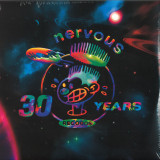
Nervous Records, the iconic label synonymous with the rise of house from the streets of New York City, will mark 30 years in the music industry by releasing the celebratory compilation LP ‘Nervous Records: 30 Years’ on October 1st (Part 1) and October 15th (Part 2).
Featuring original mixes of the label’s biggest tracks, plus remixes by some of its most celebrated acts, ‘Nervous Records: 30 Years’ is both a celebration of the past and of the future. Featuring a who’s who of electronic dance music, the long player sees names including Louie Vega, David Morales Darius Syrossian, Tensnake, Monki, Franky Rizardo, Danny Howard and more take on iconic Nervous cuts: ‘You Make Me Feel Mighty Real’, ‘Treat Me Right’, ‘Future Groove’, ‘Feel Like Singing’, ‘Get Up Everybody’, ‘Break You’, ‘Hot’, ‘End This Hate’, ‘Unspeakable Joy’, ‘Can Ya Tell Me’, ‘Jerk It’, ‘The Anthem’, ‘It Makes A Difference’, ‘Learn 2 Luv’ and ‘Don’t You Ever Give Up’.
The album marks one of the most enduring, extraordinary legacies to grace America’s illustrious music history, not just in electronica but far beyond. Founded in 1991 by Michael and his father Sam Weiss, and recognizable immediately by its distinctive character logo, the label grew rapidly, in no small part due to Michael Weiss’ practically unmatched passion for discovering new music.
“Louie Vega and Kenny Dope woke me at 4am on Tuesday night, Wednesday morning from their studio telling me they had something really different that I needed to hear,” Michael recollects. “I asked if they could play it over the phone. They said if I wanted to hear it I had to come to the studio. So of course I got myself up, got dressed and went there. That “really different track” ended up being ‘The Nervous Track’, a tune that became our signature release and was also highly instrumental in the emergency of London’s ‘Broken Beat’ movement.”
The label’s willingness to take chances on fresh sounds and innovative concepts rising up from the melting pot sidewalks of NYC ensured a body of work that has become a living musical history of the city. House cuts ‘Unspeakable Joy’ and ‘Nitelife’ (Kim English), ‘Get Up (Everybody)’ (Byron Stingily) and ‘Feel Like Singing’ (Sandy B) bump up against hip-hop anthems like ‘Who Got Da Props’ (Black Moon) and “Bucktown” (Smif-n-Wessun) and reggae cut ‘Take It Easy’ (Mad Lion); soulful flows from Mood II Swing (Kim English ‘Learn 2 Luv’, Loni Clark “Rushing”), Armand Van Helden (‘The Anthem’) and Nuyorican Soul (‘Mind Fluid’) sit alongside seminal techno singles like Winx’ ‘Don’t Laugh’. The young artists and producers who joined the Nervous Records’ family have gone on to become some of the most hallowed and celebrated dance acts of all time: Louie Vega, Kenny Dope, David Morales, Tony Humphries, Roger Sanchez, Armand Van Helden, Kerri Chandler, Kim English, Byron Stingily, Josh Wink, to name just a handful.
“We did a release with Josh Wink under his Winx alias entitled ‘Nervous Build-Up’,” Michael said. “It did well and it was obvious how talented Josh was. Subsequent to that release I was pretty persistent in asking him to continue to play me his new demos. During one phone conversation he said, “Mike I’m gonna play you something over the phone but don’t laugh when you hear it.” That demo ended up being ‘Don’t Laugh’, which became one of our biggest international hits and still to this day is one of America’s earliest and most impactful techno hits.”
As much a celebration of the label’s future as it is of their past, Nervous Records: 30 Years is but a marker in the imprints’ history, a clear sign of where they’ve been and also where they’re going. With 30 years behind them, the label’s determination to unearth new raw diamonds in the rough is as unwavering as ever.
“I’ve always been one to look at what others are doing (the industry at large) and think, “ok, are they doing this specific thing for a reason, or doing it because everyone else is doing the same thing” and make my decision based on that,” says Nervous Records’ General Manager Andrew Salsano. “In an age where data metrics and analytics reign supreme, I remain steadfast that they should be complementary to your decision and not the sole indicator to make one. So many songs today are written with 15 second hooks in mind for social media, and while there’s nothing wrong with that business model you will always be chasing the wave instead of carving out your own path and identity.
“My primary focus for the sound of the label has and will continue to revolve around signing good songs and music that has the ability to react at the street level first. The best results come from artists that are firstly given a bit of local love that grows into a global impact. Fresh ideas that express child-like curiosity and artists showing vulnerability in their music are also something I look for, artists and producers that are not making music with certain markets in mind, but rather their own style and signature that is unique but able to straddle the fine line of underground and overground.”
Still as raw, as underground and as finely tuned to the dance floor as they ever have been, perhaps the secret to the success - and the longevity - of Nervous Records has something to do with that hard, dogged, no-holds-barred NYC edge that runs through the veins of the label. With the next generation of producers rising from the clubs of New York, one thing is certain; Nervous Records will be there to find them, nurture them and bring them to the world at large, over the next decade and beyond.
A year after his debut on Atomnation, Milio unveils his exceptional first album Nachtzon. Due for release on October 8th, the 12-track album showcases the Dutchman's flair for escapist melodic sounds.
Email van den Dungen started this solo alias in 2020 after previous success as part of the Tunnelvisions duo. But he has ways been a skilled pianist from a musical family, which explains why his well-crafted, emotive melodies always make such an indelible mark. He has a love of beautiful voicings, coloring, melody and harmonies. Personal relationships and close friendships also instill his music with a sense of fun and honest connection and he is someone who spends hours honing his craft, practicing theory and growing ever more conformable with his array of both vintage and modern synths, pianos, guitars and drums. All of this translates to this debut album, which is an expansive affair stuffed with gorgeous grooves and real musicality.
Nachtzon is a widescreen record that proudly wears its heart on its sleeve.
The sixth release on Phoq U Phonogrammen, the sordid and rash U-TRAX sublabel, may be from its least known artist, but it is our personal favorite Phoq U release. The style can perhaps best be described as acid funk. Though the drums and bass lines generally are rather tight, all tracks have these quirky synth lines that give them a rather funky, dark 'cyborg feel'.
Lynx is Reyer Caderius van Veen - and he didn't chose that name himself. Reyer is from Groningen, the mayor city in the most northern region of The Netherlands. It's a vibrant student town, with lots of music going on.
In the 90s, Reyer participated in a techno-foundation, together with Thee J. Johanz (Ballyhoo Records) and Johan Sagel, who released a 12" as Jo-I on U-TRAX in 1995. Together with Johan, Reyer also formed a band called L.A.P. 01 (Live Acid Performance), which released a 12", a 10" and a remix on Jan Liefhebber's Highland Beats and a track on Ballyhoo Records (BALL 100).
Harsh starts off with some terribly hard and high tones, that sound like a nuclear plant is going to melt down. The ferocious bassdrum and grunting acid bass line add to the uncomfortable mood.
What makes us really happy is Sex On Jupiter. It's a rushed track that completely opens up around the 1:20 mark with a desolate, yet funky sawtooth 303 bassline.
On the flipside, Changes brings a nice pumping rhythm combined with a rolling bassline with all sorts of disturbing sounds on top.
The EP closes off with another highlight of darkness: Dark Mission. The track has a lovely flow, but really starts to space you out as soon as a hoarse sounding pulsating synth spreads it wings across the deliciously bubbling 303.
To be short: this is an uncomfortable record, and we love it!
Original release date: August 1996.
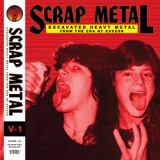
By now you’re probably familiar with our wildly popular Brown Acid series of rare, lost and unreleased proto-metal and stoner rock singles from the 60s-70s. In the endless pursuit of those glorious gems, we often uncover equally brilliant rarities from the late-70s to late-80s Golden Age of Heavy Metal that also just must be heard, but they don’t fit the series’ aesthetic. Scrap Metal, Volume 1 collects some of the greatest unknown and lost Heavy Metal tracks, long buried beneath the avalanche of the era’s classic output.
We all know the old adage that history is told by the winners. But sometimes the losers tell the best stories. And while none of these bands found fame and fortune, this artifact and the volumes to come are testament to the enduring power of heavy music. You can hear the blood, sweat and beers that went into each of these singles. The recordings may be low budget, but the inspiration and talent is immutable. Not only are the amps turned up to 11, the boyish sexual innuendo is cranked to 69. You can hear the convergence of influences — NWOBHM, thrash, glam metal, doom, etc — colliding at once as the era birthed a wellspring of subgenres.
Many of these singles are self-released and were thus limited to a small run of copies. Those that remain are hoarded by collectors and sold for exorbitant amounts. We’ve collected the best of the best for you here. As with Brown Acid, all of these tracks are licensed legitimately and the artists all get paid. Because it’s the right thing to do.
LINER NOTES:
Rapid Tears launch this series with the perfect christening. The Toronto, ON quintet’s 1981 single “Headbang” is such the pinnacle of heavy metal madness that it almost sounds like a spoof. There’s also enough of the rapid-fire sputum that inspired Metallica to bang the head that doesn’t, as such, engage in said practice, to be found on the band’s sole full length Honestly. But “Headbang” is a straightforward glammy anthem for the ages.
Air Raid’s “69 In A 55” may be lyrically so sophomoric that it’s actually pretty clever, but this 1983 Bay Area power metal single is loaded with sleek Judas Priest riffs and interwoven melodies that are downright sublime. The band’s sole release, the 2-song Rock Force 7” features a curious band photo in which 3 band members — dolled up in Crüe makeup and leather — are sexually menacing the lead singer/guitarist tied to a bed. Another low budget highlight is when singer/guitarist Tommy “Thrasher” Merry imitates a delay effect on his vocals as he sings, “tonight!...tonight...night.”
Hades’ “Girls Will Be Girls” has a real demo cassette feel to its vastly uneven mix, but the energy to the performance makes this an undeniable keeper. The long running Paramus, NJ quintet’s 1982 2- song debut 7” titled Deliver Us From Evil features this blistering thrasher dominated by shimmering leads and confident vocals that show why the band went on to near-fame on Metal Blade Records.
Resless don’t need no T to prove that they’ve got “The Power” with this 1984 driving mid-tempo rocker in the vein of Mötley Crüe and Ratt. The River Vale, NJ quartet’s tight crunch wails all over Bon Jovi posers but it’s the band’s unique and subtle deployment of background vocals that gives this rager its staying power.
Pittsburgh, the Steel City, is home to Don Cappa, a band that pays tribute to the burgh, the metal, and the awesomeness of both with “Steel City Metal.” Their lone single, issued in 1987 with only 300 copies released, sounds like the work of some serious steel driving men, with a drummer who might’ve forgotten to wear a hard hat one too many times on the construction site.
The Beast has more of a punk feel to their aggressive “Enemy Ace” track from the 4-song Power Metal EP from 1983 — something like Dr. Know meets D.O.A. But their look, artwork and lyrics all prove that Heavy Metal is where their hearts lie. And this hook filled monster delivers repeated lines like, “I command them all in my lofty realm,” with commendable conviction.
Dead Silence from Denver, Colorado, debuting in 1984 is not to be confused with Dead Silence from Denver, Colorado, who also debuted in 1984. The former a workman’s hard rock bar band, the latter a political peace punk band and neither knowing of the other’s existence throughout their tenure. The pre-internet days were a marvel, indeed.This Dead Silence spits out a slick, Nugent tinged rocker called “Can’t Stop” about life on the road.
The Danger Zone is, by all accounts, not the place to be. And, Hazardous Waste of Boston, MA saw fit to add their two cents on the matter with this 1986 single that combines Van Halen’s flashy musicianship with NWOBHM aggression that sounds so awesome it teeters on itself entering the “Danger Zone.”
Czar’s heavy, doomy “Iron Curtain” single from 1982 hearkens to the sleazy sounds of Saint Vitus and Pentagram with its cranked up DOD Distortion pedal in a Peavey combo amp guitar tone and meaty, barking vocals. The upstate NY quintet only issued this 2-song single, but its driving rhythm, nosedive whammy-bar guitar solos and comparatively mature Cold War subject matter show they had real potential.
Not much is known about Real Steel’s majestic “Viking Queen” from 1987, other than it rocks hard and the 7” 45 sells for upwards of a grand on the collectors market. The Flint, Michigan band recorded at the home studio of local radio personality Bill Lamb, who primarily released Christian Gospel recordings. So, perhaps the band was struck down by a bolt of lightning shortly after this rare single’s release. Whatever the case may be, it’s a must have for fans of classic metal mayhem.
- A1: Noriko Miyamoto - Arrows & Eyes
- A2: Mishio Ogawa - Hikari No Ito Kin No Ito
- A3: Yoshio Ojima - Days Man
- B1: Mkwaju Ensemble - Tira-Rin
- B2: Rna Organism - Weimar 22
- B3: Naoki Asai - Yakan Hikou
- B4: Takami Hasegawa - Koneko To Watashi
- C1: Mammy - Mizu No Naka No Himitsu
- C2: Dip In The Pool - Hasu No Enishi
- C3: Wha Ha Ha - Akatere
- D1: D Day - Sweet Sultan
- D2: Perfect Mother - Dark Disco-Da Da Da Da Run
- D3: Neo Museum - Area
- D4: Sonoko - Wedding With God (A Nijinski) (A Nijinski)
LTD. COLORED VINYL
Somewhere Between: Mutant Pop, Electronic Minimalism & Shadow Sounds of Japan 1980–1988 hovers vibe–wise between two distinct poles within Light In The Attic’s acclaimed Japan Archival Series—Kankyō Ongaku: Japanese Ambient, Environmental & New Age Music 1980–1990 and Pacific Breeze: Japanese City Pop, AOR & Boogie 1976–1986. All three albums showcase recordings produced during Japan’s soaring bubble economy of the 1980s, an era in which aesthetic visions and consumerism merged. Music echoed the nation’s prosperity and with financial abundance came the luxury to dream.
Sonically, Somewhere Between mines the midpoint between Kankyō Ongaku’s sparkling atmospherics and Pacific Breeze’s metropolitan boogie. The compilation encompasses ambient pop, underground electronics, liminal minimalism and shadow sounds—all descriptors emphasizing the hazy nature of the nebula. Out–of–focus rhythms wear ethereal accoutrements, ballads are shrouded in static, and angular drums snake skyward on transcendent tones. From the Avant–minimalism of Mkwaju Ensemble and Yoshio Ojima, to the leftfield techno-pop of Mishio Ogawa and Noriko Miyamoto (featuring members of YMO), and highlights from the groundbreaking Osaka underground label Vanity Records, these are blurry constellations defying collective categorization.
These tracks also exist in a space of transition when the major label grip on the Japanese recording market began to give way to the escalation of independents. Thanks to the idyllic economic climate and innovations in domestically–manufactured music gear, creators on the edges were empowered to focus on satisfying their artistic visions in the open headspace of home studios. While labels like Warner Music and Nippon Columbia explored new sounds through traditional channels, it was possible for Vanity, Balcony and other indie labels, not to mention self–released artists like Ojima and Naoki Asai, to publish their work via affordable media such as cassettes, 7" vinyl, and flexi–discs.
Expertly curated by Yosuke Kitazawa and Mark “Frosty” McNeill (dublab), Somewhere Between is a collection of music, much of it released for the first time outside Japan, that is bound more by energetic vibration than shared history, genre or scene. They are the sounds of transition and searching—a celebration of the freedom found in floating.
Note: The track “Days Man” by Yoshio Ojima is only available on the LP and Cassette versions.
- A1: Columbia Symphony Orchestra & Bernstein - Rhapsody In Blue (Excerpt)
- A2: Rr Orchestra - Sarabande
- A3: John Barry - Midnight Cowboy
- A4: Pascal Roge - Gnossiennes #3
- A5: Michael Andrews - Mad World (Feat Gary Jules)
- A6: Arthur Fielder & Boston Pops Orchestra - March Of The Siamese Children
- A7: Nick Ingman & Orchestra London Sinfonietta - Adagio For Strings
- B1: John Williams - Cavatina
- B2: Philip Glass - Powaqqatsi
- B3: Michael Kamen - The Office
- B4: Bernard Hermann - Outer Space
- B5: Ray Noble & His Orchestra - Midnight, The Stars & You
- B6: Thomas Newman - Horse
- B7: Wendy Carlos & Mark Ayres - Ode To Joy
- C1: Deodato - Also Sprach Zarathustra
- C2: Thomas Newman & Hollywood Studio Symphony - Brooks Was Here
- C3: Mike Oldfield - Tubular Bells (Excerpt)
- C4: Hotei - Battle Without Honor Or Humanity
- C5: John Carpenter & Mark Ayres - Halloween (Main Theme)
- C6: Bernard Hermann - Main Title
- D1: Giorgio Moroder - Chase
- D2: Isaac Hayes - Theme From Shaft
- D3: Lalo Schifrin - Bullitt (Main Title)
- D4: Vangelis - Tears In Rain
- D5: Louis Armstrong - We Have All The Time In The World
"60 Years of cult and classic soundtracks presented on 2 x 180g
Featuring Bernard Hermann, John Barry, Thomas Newman, Giorgio Moroder, Isaac Hayes, Lalo Schifrin, Mike Oldfield, Vangelis...
Hungry for some modern melodic death metal with ridiculously catchy pop influences? Well, your dinner has just been served. This steaming nine-course setting is called "Origin" and it is honoringly brought into the table by the renowned Finnish heavy metal band Omnium Gatherum. Omnium Gatherum – OG for close friends – has been offering remarkable pieces of melodic death metal for already twenty-five shining years. While storming through these ferocious decades, Omnium Gatherum has convinced worldwide legions of heavy metal lovers by releasing unstoppable musical onslaughts and touring relentlessly all over the world. "Any sort of popularity hasn't come overnight for OG, and rising to that "next level" has sometimes taken a considerably long time, but one thing has been set in stone: progress has been inevitable. In other words: a lot of great things have happened along the way but the journey hasn't been the easiest one", says longtime singer Jukka Pelkonen. ... And recent times are no exception. Contrary to what you might think, we are not talking about a global scourge that gripped the entire world about a year and a half ago. "Although most of the things around "Origin" have been really good – we have never had so much time to compose and sharpen the material for instance –, there have been some serious roadblocks as well. This, of course, has not come as a big surprise as OG was not born under the happiest stars", laughs guitarist extraordinaire and the band founder Markus Vanhala. "Above all, our dear fans should know that since the previous studio effort "The Burning Cold" (2018), half of the band's line-up has changed. I would say quite surprisingly as we haven't really had any major problems, at least to my knowledge." "This internal turmoil lifted dark clouds into the band's vast sky and everything was falling apart... well, for a few hours at least. After that, as many times before, we decided to turn these difficulties into something better!" Before the arrival of "Origin", Omnium Gatherum's colourful discography features eight studio albums, but the newcomer does not pale in comparison. The truth is, in fact, quite the opposite... By the stylish, majestic and melodic splendor of "Origin", it really feels like the band's original style called AORDM – adult oriented death metal – has reached its peak. Well, so far... "Over the years, OG's material has been deliberately moving further away from the anxiety of the windy Northern shores and traditional melodeath's gloomy despair. These days our music is a powerful mixture of older deadly roots and newer AOR-vibes that you get while listening to Survivor and driving a Corvette along the sunny shores of Miami of us, we will not forget the original enthusiasm for playing heavy metal... And therefore we will never give up!"
- A1: Columbia Symphony Orchestra & Bernstein - Rhapsody In Blue (Excerpt)
- A2: Rr Orchestra - Sarabande
- A3: John Barry - Midnight Cowboy
- A4: Pascal Roge - Gnossiennes #3
- A5: Michael Andrews - Mad World (Feat Gary Jules)
- A6: Arthur Fielder & Boston Pops Orchestra - March Of The Siamese Children
- A7: Nick Ingman & Orchestra London Sinfonietta - Adagio For Strings
- B1: John Williams - Cavatina
- B2: Philip Glass - Powaqqatsi
- B3: Michael Kamen - The Office
- B4: Bernard Hermann - Outer Space
- B5: Ray Noble & His Orchestra - Midnight, The Stars & You
- B6: Thomas Newman - Horse
- B7: Wendy Carlos & Mark Ayres - Ode To Joy
- C1: Deodato - Also Sprach Zarathustra
- C2: Thomas Newman & Hollywood Studio Symphony - Brooks Was Here
- C3: Mike Oldfield - Tubular Bells (Excerpt)
- C4: Hotei - Battle Without Honor Or Humanity
- C5: John Carpenter & Mark Ayres - Halloween (Main Theme)
- C6: Bernard Hermann - Main Title
- D1: Giorgio Moroder - Chase
- D2: Isaac Hayes - Theme From Shaft
- D3: Lalo Schifrin - Bullitt (Main Title)
- D4: Vangelis - Tears In Rain
- D5: Louis Armstrong - We Have All The Time In The World
60 Years of cult and classic soundtracks presented on 2 x 180g
Featuring Bernard Hermann, John Barry, Thomas Newman, Giorgio Moroder, Isaac Hayes, Lalo Schifrin, Mike Oldfield, Vangelis...
- A1: Just Like A Pill (Live)
- A2: Who Knew (Live)
- A3: Funhouse / Just A Girl (Live)
- A4: River (Live)
- B1: Just Give Me A Reason (Live)
- B2: Time After Time (Live)
- B3: Walk Me Home (Live)
- B4: I Am Here (Live)
- C1: F**Kin' Perfect (Live)
- C2: Mtv Video Vanguard Award Speech
- C3: Cash Cash Remix Intro / What About Us (Live)
- C4: Cover Me In Sunshine
- D1: All I Know So Far
- D2: Bohemian Rhapsody (Live)
- D3: We Are The Champions (Live)
- D4: So What (Live)
RCA Records - the 16 track album is the audio accompaniment to her recent documentary 'All I Know So Far', released on Amazon Prime. The movie is directed by 'The Greatest Showman's' Michael Gracey and follows P!nk on her 2019 Beautiful Trauma Tour, culminating in her Wembley Stadium shows. "All I Know So Far: Setlist" was released 21st May on CD. The album features live renditions of her classic hits such as So What, What About Us and Who Knew, plus live covers from the tour of Queen, No Doubt, Cyndi Lauper and Bishop Briggs. 'All I Know So Far: Setlist' is the first live album from P!nk to get a global release, and only the second of her career following 2009 Australian only release Funhouse Tour: Live in Australia. Two studio tracks will also feature on the record, recent single Cover Me In Sunshine with her daughter Willow Sage Hart, and All I Know So Far. This is the standard black vinyl 2LP format. Marketing activity across all media outlets.
Diving into the archives of Alter Ego - the experimental ensemble of Manuel Zurria, Paolo Ravaglia, Aldo Campagnari, Francesco Dillon, Oscar Pizzo, Fulvia Ricevuto, and Eugenio Vatta - Die Schachtel is thrilled to present Pranam - A(Round) Giacinto Scelsi, a never before released body of recordings interpreting the works of the legendary Italian composer Giacinto Scelsi, made with Matmos (Martin Schmidt and Drew Daniel) in 2005. Resting at the outer reaches of avant-garde chamber and electronic music - moving at a glacial pace of tightly wound energy - Pranam’s two sides radically rethink the terms electroacoustic music in ways that still feel radically ahead of their time, more than 15 years after they were first laid to tape.
A modular chamber ensemble with a pointedly anti-academic approach to music, over the course of its activities - running roughly between 1990 and 2010 - Alter Ego developed a devoted following among some of the most forward thinking voices in experimental music, all the while collaborating widely with artists spanning a vast range of practices and disciplines, including Robin Rimbaud, Philip Jeck, Pan Sonic, Matmos, Gavin Bryars, Andrew Hooker, William Basinski, David Moss, Alvin Curran, Terry Riley, and near countless number of others.
Alter Ego’s diverse activities can be understood as interventions with the disposition toward formality within contemporary chamber music, often pairing themselves with artists working well beyond their own context as a means to develop highly original interpretations of a specific composer’s work. In 2005, this process led them to invite Matmos, the American duo of Drew Daniel, Martin Schmidt - acclaimed for a body of visionary albums at the vanguard of electronic process and sampling - to collaborate on a series of interpretations of works by the legendary Italian composer Giacinto Scelsi.
Realized in collaboration with The Fondazione Isabella Scelsi, which holds Giacinto Scelsi’s archives, and performed at the Festival Roma Europa and the Festival Aeterforum during May of 2005, the album’s four works - Estratti dal Quartetto per archi n.3 (1963), Ko-Lho (1966), Riti: I Funerali di Carlo Magno A.D. 814 (1976), Aitsi (1974) - shift the boundaries of 20th Century chamber music toward markedly new and contemporary terms, incorporating everything from the sounds of the Revox tape machine that Scelsi used to record his own improvisations and processed electronics, to the plastic trumpets used by fans during football matches.
From intertwining, shifting lone-tones that render startling resonances and dissonances, to passages guided by a vast pallet of electronics and flurries of acoustic sounds, joined as a single ensemble, across the two sides of Pranam, Alter Ego and Matmos infuse these four works by Scelsi with humor and playfulness, while retaining all the urgency and rigour with which they were initially composed.
Delicate and meditative, while tightly wound and brooding, Pranam brings the works of Giacinto Scelsi to life in ways that almost no group ever has. Riveting and immersive from start to finish, Die Schachtel is thrilled to present these never before heard recordings from the archives of Alter Ego. Pranam is available on black vinyl, in a limited edition of 350 copies.
The forthcoming latest edition of the popular compilation series featuring long-lost vintage 60s-70s proto-metal and stoner rock singles, Brown Acid: The Thirteenth Trip will be available on Halloween 2021. Check out the first single "Run Run", released in 1970 by Montreal hard rockers Max is available to hear & share via Metal Injection HERE. (And, direct YouTube and Bandcamp)
The Brown Acid series is curated by L.A. label RidingEasy Records and retailer/label Permanent Records. Read interviews with the series curators via Paste Magazine HERE and LA Weekly HERE.
About The Thirteenth Trip:
Max, from Montreal, QC — originally known as Dawn, before Tony Orlando & Dawn forced a name change — kick things off with “Run Run” from their lone 1970 single. It’s a hard-hitting rocker with scale climbing crunching guitars and powerful Bonham-esque drumming. Sadly, the band didn’t last long due to poor management and various other factors, so this is the only surviving document according to guitarist Gerry Markman. And what a document it is, paired with the A-side “The Flying Dutchman.”
You might remember Ralph Williams and the Wright Brothers from their track “Never Again” on Brown Acid: The Tenth Trip. Here they make their return to the series with the A-side of their 1972 Hour Glass Records 45, which sounds like Blue Cheer mangling Roy Orbison’s “Pretty Woman” (that’s right, several years before Van Halen actually did so.) Alas, Ralph and these Wright Brothers soon disappeared from terrestrial airspace.
“Feelin’ Dead” is extremely heavy blues from this also extremely rare 1974 single by Detroit, MI’s Master Danse, which was only released as a promo 45. Think Led Zeppelin’s “Since I’ve Been Loving You” and you’re on the right track. A little dose of Hendrix acid blues and a heartfelt groove, and you’ll wonder why this single never even made it to official release. The unavoidable tell in the lyric, “help me get this damn thing out of my arm” hints at the post-Vietnam heroin epidemic as a potential clue why we never heard more from Master Danse.
Folks, Gary Del Vecchio is “Buzzin’” hard on this one, and from what sounds like an in-studio party of yelps and chatter at the start of the song, it seems that the whole band was in on the festivities. The funky blues riff, reminiscent of Led Zeppelin’s “Heartbreaker” and rollicking rhythmic changes certainly keep the buzz a rollin’.The recording is technically credited as Gary Del Vecchio with Max, though not the same band as the one that kicks off this Trip.
John Kitko’s 1973 heavy psychedelic rager “Indecision” is the only recording known to exist by the mysterious artist. The Twin Record Productions release features a different artist, Tom Poff on the B-side, which is truly a shame, considering the smoldering ashes Kitko leaves of the turntable by song’s end. It starts out more like a late 60s Acid Rock jam before leaping into a blazing double-time gallop, whipped into a frenzy by wailing, neck-pickup guitar squeals and Kitko’s barely audible howls.
Tampa, FL’s Bacchus made their Brown Acid debut way back on the very first Trip with “Carry My Load.” This 1972 B-side, “Hope” is a huge sounding swinging rocker replete with roadhouse piano bolstering the chunky riffs and confident vocals. After relocating to Southern California a few years later, the band morphed into Fortress, an 80s melodic metal act whose Hands In The Till album of Pomp Rock on Atlantic Records still draws chatter today.
Orchid’s “Go Big Red” is perhaps the most garage-y sounding offering here, with loose rhythms and straightforward stop-and-start riffing. Nonetheless, the stomping energy and fried-amp guitar tone make this one a charming skull thwack. The band’s 1973 single on American records, backed with a cover of Johnny Russell and Voni Morrison’s “Act Naturally” (popularized by Buck Owens and the Buckaroos) is their only release, so the world never did see this Orchid fully blossom.
By the title alone of Dry Ice’s “Don’t Munkey with the Funky Skunky” you know you’re in for a good time. The 1974 barnstormer seems aimed to the novelty tunes crowd, with its kooky lyrics and silly-voiced spoken catchphrase break, “peeyew, you’ll be sorry if you do.” But, the Ohio band’s maniacal drumming, crunching guitars and, of course, drug euphemistic lyrics make it a shoo-in for the Brown Acid series of erudite rock’n’roll.
Good Humore’s swaggering 1976 rocker “Detroit” is a slick and smooth paen to the Motor City. It most likely doesn’t predate “Detroit Rock City” by Kiss, also released in 1976, and it has more rock’n’roll swing, but it could fit comfortably alongside the era’s arena anthems. Not much else is known about the one-off release on P.V. Records, but songwriter Mike Moats is noted to also have been a recording engineer in later years and this well produced track sounds like a labor of love.
The forthcoming latest edition of the popular compilation series featuring long-lost vintage 60s-70s proto-metal and stoner rock singles, Brown Acid: The Thirteenth Trip will be available on Halloween 2021. Check out the first single "Run Run", released in 1970 by Montreal hard rockers Max is available to hear & share via Metal Injection HERE. (And, direct YouTube and Bandcamp)
The Brown Acid series is curated by L.A. label RidingEasy Records and retailer/label Permanent Records. Read interviews with the series curators via Paste Magazine HERE and LA Weekly HERE.
About The Thirteenth Trip:
Max, from Montreal, QC — originally known as Dawn, before Tony Orlando & Dawn forced a name change — kick things off with “Run Run” from their lone 1970 single. It’s a hard-hitting rocker with scale climbing crunching guitars and powerful Bonham-esque drumming. Sadly, the band didn’t last long due to poor management and various other factors, so this is the only surviving document according to guitarist Gerry Markman. And what a document it is, paired with the A-side “The Flying Dutchman.”
You might remember Ralph Williams and the Wright Brothers from their track “Never Again” on Brown Acid: The Tenth Trip. Here they make their return to the series with the A-side of their 1972 Hour Glass Records 45, which sounds like Blue Cheer mangling Roy Orbison’s “Pretty Woman” (that’s right, several years before Van Halen actually did so.) Alas, Ralph and these Wright Brothers soon disappeared from terrestrial airspace.
“Feelin’ Dead” is extremely heavy blues from this also extremely rare 1974 single by Detroit, MI’s Master Danse, which was only released as a promo 45. Think Led Zeppelin’s “Since I’ve Been Loving You” and you’re on the right track. A little dose of Hendrix acid blues and a heartfelt groove, and you’ll wonder why this single never even made it to official release. The unavoidable tell in the lyric, “help me get this damn thing out of my arm” hints at the post-Vietnam heroin epidemic as a potential clue why we never heard more from Master Danse.
Folks, Gary Del Vecchio is “Buzzin’” hard on this one, and from what sounds like an in-studio party of yelps and chatter at the start of the song, it seems that the whole band was in on the festivities. The funky blues riff, reminiscent of Led Zeppelin’s “Heartbreaker” and rollicking rhythmic changes certainly keep the buzz a rollin’.The recording is technically credited as Gary Del Vecchio with Max, though not the same band as the one that kicks off this Trip.
John Kitko’s 1973 heavy psychedelic rager “Indecision” is the only recording known to exist by the mysterious artist. The Twin Record Productions release features a different artist, Tom Poff on the B-side, which is truly a shame, considering the smoldering ashes Kitko leaves of the turntable by song’s end. It starts out more like a late 60s Acid Rock jam before leaping into a blazing double-time gallop, whipped into a frenzy by wailing, neck-pickup guitar squeals and Kitko’s barely audible howls.
Tampa, FL’s Bacchus made their Brown Acid debut way back on the very first Trip with “Carry My Load.” This 1972 B-side, “Hope” is a huge sounding swinging rocker replete with roadhouse piano bolstering the chunky riffs and confident vocals. After relocating to Southern California a few years later, the band morphed into Fortress, an 80s melodic metal act whose Hands In The Till album of Pomp Rock on Atlantic Records still draws chatter today.
Orchid’s “Go Big Red” is perhaps the most garage-y sounding offering here, with loose rhythms and straightforward stop-and-start riffing. Nonetheless, the stomping energy and fried-amp guitar tone make this one a charming skull thwack. The band’s 1973 single on American records, backed with a cover of Johnny Russell and Voni Morrison’s “Act Naturally” (popularized by Buck Owens and the Buckaroos) is their only release, so the world never did see this Orchid fully blossom.
By the title alone of Dry Ice’s “Don’t Munkey with the Funky Skunky” you know you’re in for a good time. The 1974 barnstormer seems aimed to the novelty tunes crowd, with its kooky lyrics and silly-voiced spoken catchphrase break, “peeyew, you’ll be sorry if you do.” But, the Ohio band’s maniacal drumming, crunching guitars and, of course, drug euphemistic lyrics make it a shoo-in for the Brown Acid series of erudite rock’n’roll.
Good Humore’s swaggering 1976 rocker “Detroit” is a slick and smooth paen to the Motor City. It most likely doesn’t predate “Detroit Rock City” by Kiss, also released in 1976, and it has more rock’n’roll swing, but it could fit comfortably alongside the era’s arena anthems. Not much else is known about the one-off release on P.V. Records, but songwriter Mike Moats is noted to also have been a recording engineer in later years and this well produced track sounds like a labor of love.
Siedah Garrett's seminal 1985 classic 'Do You Want It Right Now' receives 3 new incredible remixes from Dr Packer, BluePrint and Jolyon Petch.
Dr Packer delivers a truly funk-worthy re-work injecting a barrage of the smoothest soul-laced sonics for an early 90s house meets nu disco cut.
Jolyon Petch ramps up the funk with infectious guitar licks and groove-laden bass for his 'Elektrik Disko Mix’.
Burgeoning British producer and Stress Records artist BluePrint drops a rolling progressive house / melodic techno hedonistic dancefloor cut, re-working the classic with absolute finesse with sleek piano work floating euphorically around the iconic lyrics.
Most famous for her song writing credits on Michael Jackson's 'Man in The Mirror', as well as a duet on Jackson's 'I Just Can't Stop Loving You' and 'Don't Look Any Further' with Dennis Edwards, it's no surprise that Siedah Garrett's long career has cemented her as one the most iconic names from the 80's. 'Do You Want It Right Now' which featured in the 1985 movie 'Fast Forward' has been sampled over the years by the likes of Armand Van Helden and covered by Degrees of Motion and this iconic anthem is still considered as one of the game changers during the pivot into the 'Freestyle' movement during the 80's.
DJ Support across the mixes from Danny Howard, Mark Knight, Breakbot, Rudimental, Claptone, Jamie Jones, Sam Divine, Oliver Heldens, Riva Starr, Alaia & Gallo, Judge Jules, Mousse T, Joachim Garraud, Kevin McKay, Russell / Freemasons, Paco Osuna, Oliver Dollar.
- 1: Spencer Krug - Red Dress
- 2: The Besnard Lakes - Good Morning, Captain
- 3: They Hate Change - The Seeming And The Meaning
- 4: Angel Olsen - Cold Blooded Old Times
- 5: Bruce Hornsby - Feel The Pain
- 6: Jamila Woods - Fast Car
- 7: Nap Eyes - Car
- 8: S. Carey - Weight Of Water
- 9: Pink Mountaintops - The Concept
- 10: Cut Worms - One For The Catholic Girls
- 11: Okay Kaya - Nightswimming
Midway through his long, earnest and often very, very
funny essay on the role playing game ‘Dungeons &
Dragons’ in the September 2006 issue of The Believer,
writer Paul La Farge proposes that ‘Dungeons & Dragons’
is not a game at all but rather a ritual. La Farge notes the
marked difference between game and ritual. Whereas a
game seeks to demonstrate how unequal or distinct
players / teams are from one another, rituals seek to do
the very opposite.
And so, across the 25-year history of Jagjaguwar - an
independent record label curiously named using a
‘Dungeons & Dragons’ name generator - we find this idea
of ritual as a conjoining practice. We see it early on when
Jagjaguwar join forces with a midwestern label called
Secretly Canadian for a powerful fusion. We see it in
familial relationships and collaboration among Jagjaguwar
artists and the ways those artists’ most treasured
collaborators make their ways to the Jagjaguwar game
board.
‘Join The Ritual’, a piece of Jagjaguwar’s 25th Anniversary
celebrations, looks to pay homage to the labels and artists
that, whether they know it or not, invited Jagjaguwar to the
table, to this wild, dark magic ritual of music. We’re talking
about independent titans like Drag City, Too Pure, K
Records and Touch & Go. We’re talking about heroes like
R.E.M., Slint, Stereolab and Tracy Chapman. These songs
captured the imaginations of founders Darius Van Arman
and Chris Swanson - and ultimately, opened up worlds to
them.
Spirits Having Fun records are ones made from and for shows and spaces—arrangements rooted in a deeply collaborative process, that come to life through intuitive and locked-in live improvisation. Following their 2019 debut Auto-Portrait, Two finds the New York and Chicago based four-piece continuing to challenge ideas of what a rock band can be, pulling apart their musical experiences and reimagining them as kinetic compositions, equally studied but palpably organic.
Two is constructed around gut feelings and strong grooves, elastic rhythms and playful pacing. Its twelve songs expand, contract, and make sharp turns between melodies under singer-guitarist Katie McShane’s meditative lyrics. “Broken Cloud,” which was also released last year on a compilation in support of Chicago Community Jail Support, offers a glimpse into her reflections on the natural world: "A city grew out of the ground / to a mountain it's only a blur."
True to its name, the internal logic of the band is also just a lot of fun, built on trust and deep-rooted musical relationships. Before there was Spirits Having Fun, McShane, bassist Jesse Heasly, guitarist-vocalist Andrew Clinkman, and drummer Phil Sudderberg had performed together in various arrangements over the years. McShane, Heasly and Clinkman met in a specific corner of the Boston underground in 2013, a time when a scene had coalesced around students from local music conservatories frequently collaborating with punk bands and noise artists, exchanging ideas and warping musical worldviews. Heasly and Clinkman played together in Cowboy Band, making mutant, free jazz-inspired takes on old country tunes. When Clinkman moved to Chicago, Heasly and McShane played in experimental groups like EKP and Listening Woman; in Chicago, Clinkman met Sudderberg playing in projects like jazz scene fixture Ken Vandermark’s high-powered band Marker.
Spirits first came together as an attempt at a long-distance collaboration among friends in 2016, driven by the simple feeling of missing each other; they’d meet up for marathon weekends here and there to practice, playing small loops through dive bars and art spaces around the Midwest—just enough for McShane and Heasly to afford plane tickets back home. Being split between Chicago and New York forced the project into a deliberate pace. “We tried to take it slow and let it be what it was,” said McShane. That sense of patience unexpectedly prepared them for March of 2020, when their planned tours and the release of Two were indefinitely delayed.
Two was mostly recorded in the summer of 2019 with the help of omnipresent Chicago engineer Dave Vettraino and DPCD’s Alec Watson, whose contributions on organ, synths, and piano are laced throughout the record. The album reflects a synthesis of solitary and communal songwriting processes—each song drawing on fragments written by individuals, which McShane threaded together and shaped through her distinct compositional lens, making the songs whole before returning to them to the band to mature collectively. When composing, McShane writes first on the keyboard before adapting parts for guitars played by herself and Clinkman. Their dueling approaches to guitar are complementary: McShane, being a newer guitarist, brings a freshness to the project (“I'm just discovering the whole time,” she says) while Clinkman has been playing since childhood.
“There's a lot more collaboration on this record,” says Clinkman, “in terms of all of us letting stuff bloom a little bit more.” The record’s first single, “Hold The Phone” is a good example of this process—it started with a playful intro riff from Clinkman, a melody and bridge added by McShane, a wobbly outro groove added by Heasly, which Sudderberg brought to life. Another single, the dynamic “See a Sky,” written primarily by Heasly, underscores the rhythm section chemistry at play across the record, the song ebbing and flowing around Heasly and Sudderberg’s eclectic percussive palettes.
“Entropy Transfer Partners” is the only song on the record with lyrics by Clinkman, and the album’s most politically direct—a call for solidarity in the face of systemic failures, an acknowledgment of the shared material devastation caused by our country’s ongoing healthcare and housing crises: “These are not things we're experiencing individually. We struggle through them collectively. And we could actually declare, all of us, that it doesn't have to be this way, and fight and organize to ameliorate some of those conditions.” (“We won't work to create the shit you monetize, to run our lives,” they sing.)
From front to back, Two is an absorbing listen simply for its impressive range. But as the members explain themselves, the complexity of the record is about more than its intricate riffs, or how often they count out an odd time signature, but how they reject the notion of boxing the songs in, letting the melodies take on lives of their own. “Making music that feels alive is important to us,” says Clinkman. “Music feels most powerful to me when it deepens our sensation of feeling alive and connected to other humans. It’s so easy to feel worn down and isolated; that your life’s value is fixed to your productivity at your job, or the things that you have or don’t have. Making music that feels joyful and fun seems like one effective antidote to that feeling.”
New York City 4-piece deliver a modern blues rock masterclass on their feisty debut album.
“A timeless classic rock sound that revels in lean riffs and raw emotion.” – Afropunk
In an age where artistic merit is awarded to those who shout the loudest, Dakota Jones pride themselves on an unwavering ability to leave a lasting impression. Spearheaded by Tristan Carter-Jones fierce and unashamedly uncensored songwriting, the band’s fast-growing reputation as formidable live act has stamped Dakota Jones with the hell-hath-no-fury power of Chaka Khan, the wild spontaneity of Janis Joplin, and the honey-dripping sensuality of Marvin Gaye. Their debut album’s message of proud black heritage and triumphant queerness manifests itself in Carter-Jones’ ability to challenge norms of adulthood and femininity as she takes a deep dive into some of life’s most visceral emotions.
Tristan Carter-Jones: “I’m a black, queer woman expressing myself through love and music. Some folks still find that to be a transgressive act in and of itself. I work to fight that idea. I write a lot about my
Continued over…
sexuality and the ways in which I express it. Songs about sex and love bounce back and forth between songs about heartache, hangovers and self-medication, and the pleasure and pain of truly finding yourself. I don’t think we get to hear these things from a woman’s mouth as often as we should.”
Serving as an instant tone setter, the album opens with the line "Stretch marks from growing pains" with Carter-Jones lamenting the woes of adjusting to adulthood on lead single ‘Did It To Myself’ - her husky and commanding vocal instantly asserting its place in the spotlight. The atmosphere soon turns steamy on the flirtatious title track ‘Blacklight,’ whilst fantasising over a modern-day Bonnie & Clyde love affair the funk-laden ‘We Playin Bad Games’ packs a punch with its tale of free spirits entwined in a haze of late-night revelry.
Elsewhere, stories of caustic heartache twist the knife into wounded blues guitar riffs on ‘Like That’ and ‘Black Magic (That Power)’, in which Carter-Jones’s stoical voice never once faulters as she mourns the memories of a previous flame. Personal prayer ‘Lord Please’ recites empowered words of reassurance, and solidarity in the face of injustice erupts into a rallying cry for change on the classic sounding ‘Noise’ – written as a reaction to the 2016 US election. “I woke up after the election feeling pure panic and fear in my body,” remembers Tristan. “I wanted people in a place of privilege to stand up for what I was feeling, stand up for injustice, stand up for all of the things we need to change as a country. I wanted their rage, and I wanted their noise.”
Finally, the band’s tender tropes of togetherness eventually boil into gritty, guitar-slung balladry on hidden bonus track, ‘California,’ where, knees buckling under the weight of past trials and tribulations, Carter-Jones sets out on one final journey of self-discovery, hastily pulling out from reality and leaving only a dust cloud in her wake.
Production comes courtesy of the Grammy-winning John Wooler, ex Virgin Records A+R and founder of the Blues label Pointblank who has worked with everyone from John Lee Hooker and John Hammond to Isaac Hayes and Van Morrison. The album also features a wealth of hugely talented and accomplished musicians, including backing vocalist Kudisan Kai, former backing vocalist for the likes of Elton John, Chaka Khan, Anita Baker, Natalie Cole, Beck, Sting, Mary J. Blige and Jill Scott. Also present; Grammy winning keyboardist Jon Gilutin, who has spent years working with some of the industry’s most respected and iconic artists including Linda Ronstadt, James Taylor, Lady Gaga, Willie Nelson, Aretha Franklin, Diana Ross, Jackson Browne, Celine Dion, Bonnie Rait and Carole King. You’ll also hear the talents of acclaimed guitarist Michael Toles. Most well-known for being a part of the Stax Records group The Bar Kays, and for his contributions on famous records by Issac Hayes, Al Green, BB King, Johnny Taylor, Rufus Thomas, Albert King to name just a few.
Dakota Jones are a rising funk, soul and blues rock band from Brooklyn, New York City. Comprising of Tristan Carter-Jones (vocals), Scott Kramp (bass) Steve Ross (drums), and acclaimed musician Randy Jacobs (guitar) - former member of Was(Not Was) who has recorded for Seal, Bonnie Raitt, Tears for Fears, Elton John and many others. Though Carter-Jones and Ross first met in 1999 whilst at primary school, the band formed years later following a series of home jam sessions in 2016. The band’s collective alias originates from Carter-Jones’s middle name, ‘Dakota’. Dakota Jones have since released a string of acclaimed singles and EPs as well as received international attention for their track, ‘Have Mercy’ after it featured on Netflix’s 2019 film, Always Be My Maybe starring Ali Wong and Randall Park – and now after years of hard work and determination, the band are finally set to reveal their long awaited debut album. “We’d been regularly releasing EPs, waiting for our chance to come, and wondering what that would look like,” says Carter-Jones. “We didn’t realise until we started making this record that we needed to stop waiting for some break to come along, and just do it ourselves, independently.”
“Black Light really dives into a place of funk soul and everything that comes with it. There’s joy and dancing, sleek guitar licks and funky bass slaps. There’s pain and longing, and there’s the feeling of relief when you come out of that place and find your joy and purpose again. Black Light is my story.”