Nina Simone rightly belongs in the Pantheon of exceptional voices, as an immense artist whose fervour and mastery of the piano made every performance a uniquely original work of jazz, soul and classical music combined.
A whirlwind of triumphs and frustrations characterized her life, perhaps explained by a mixture of exceptional gifts, a seriously classical piano education, and three critical episodes that came without warning: the Curtis Institute's refusal to accept her as a pupil; the departure of her husband and manager; and the suffering of black people in Sixties' America. These circumstances forged her into one of the most gifted vocalists of her generation, as well as one of its most controversial personalities, fascinating milli
Suche:mas don
Anita Clark’s new Motte album, »Cold + Liquid«, builds glacial atmospheres, frozen moods and isolated impressions. Portraying New Zealand through socio-geological sound, breathing in Christchurch cultures and locales, the album embodies an artistic simulation of the Kiwi environment. Motte borrows from an array of sound sources to create an immense entity, with each piece situated precisely along the path. »Cold + Liquid« offers this rich sensory experience, transporting the listener into a world of Clark’s imagination.
As a master violinist, Clark is a favorite of the NZ music scene. She’s been employed by Nadia Reid, Marlon Williams, Lawrence Arabia and Maryrose Crook of The Renderers for her skills. Currently, she plays with The Phoenix Foundation, Luke Buda and Don McGlashan and The Others. Her skillful reach across genres fuels her popularity both with the rock under and overground, and she has also built a rich CV of film soundtracks and contemporary dance compositions.
With such a powerful musical force behind it, Cold + Liquid germinated as a result of a prolonged silence. Clark was suffering from vocal cord paralysis, leaving her with a culminating sense of frustration which could only be released through songwriting . The album’s early life was purely instrumental. But as she prepared for the studio and was searching old voice memos hoping to find vocal tracks, her voice returned. A fervent week followed, where she reimagined the entire album, now with singing. She aimed to make something colossal, and set about finding the right textures to add. A friend who works at Oamaru Freezing Works gave her field recordings of the temperature control room, a vast cold space of isolated machinery, where ice grows and dissolves in ever-evolving sculptures. Getting her hands on shortwave/longwave radios, she incorporated frequency sweeps. Another friend provided her with the mechanical drones underneath the deck of a cement cargo ship, as it lay docked in Lyttelton Harbor. Still more sources came from Sign of the Bellbird, an historic environmental site in South Christchurch, where Clark and Thomas Lambert recorded bellbirds, rolling boulders, snapping sticks, thrown dirt and the papery sound of the native harakeke plant.
While violin dominates the first Motte album, Clark sought to expand instrumentation. She was gifted a handmade Pūrerehua puoro, a traditional Māori instrument that sounds similar to the whirling and hovering of a moth (which is “motte” in German). A reacquaintance to the guitar occurred after developing an alter ego project entitled 'Sex Den,' with sleazy noir-esque guitar riffs in response to a failed rumour from a local drug-addled dive bar. Guitar and synth allowed for a broader songwriting palette along with a sometimes Dadaist approach to lyric writing. These new tools accent the extreme ambiences of »Cold + Liquid«, while additional work was provided by Ben Woods on synth and bowed guitar.
It’s time to testify, brothers & sisters and it’s about time. It’s so about time to put this gem out on vinyl. Properly! It was released twice on small editions before, but – no offense – they both sounded terrible. Now the tapes been re-mastered by Jürgen Hendlmeier and put right on wax, brand new artwork included. In our eyes this is one of the best and most powerful and pure garage rock albums ever. You have to hear it to know what I’m talkin about. GET DOWN – OR GET OUT! …and listen to a fine collection of soulful, rocking collection of raw songs that make you move(, unless you’re dead). With this album the Sideburns became the Finnish leaders of the new wave of Scandinavian Rock’n’Roll (along with the Hellacopters from Sweden, Gleucifer & Turbonegro [both from Norway]). The Hellacopters covered „Ungrounded Confusion“ from this album! This collection of songs is well inspired by bands such as the Sonics or the Wailers. And in the 90s and early 2000s more than ever before, bands everywhere are claiming the MC5 as their primary influence. Most bands, however, don't really get the sound right, or somehow lose the spirit of the music in a '70s rock haze. What makes the Flaming Sideburns feel authentic is that they understand the grooves that make this type of music work, and there's a ton of real enthusiasm behind it all. Songs like "Testify" are obviously inspired by Tyner and Co. but have a fresh energy that makes this old sound worth listening to. The mid-fi production also keeps the music sounding exciting and hot, without getting too heavy. They reach back a little in time to the mid-'60s with covers of the Wailers' "Out Of Our Tree" and the Electras' "Action Woman." Also super rocking is the wild "Jaguar Girls" and the spasm inspiring "Rock N Roll Boogaloo." If you like Detroit-style rock'n'roll with an unpretentious '60s edge to it, the Flaming Sideburns are for you. Track listing: La Bruta; Crashing Down; Close To Disaster; Rock n’ Roll Boogaloo; Testify; Out Of Our Tree; The Witch; Jaguar Girls; Ungrounded Confusion; You Weren’t Using Your Head; Women; Sailin’ Thru Cloud Nine; Sugar Ain’t That Sweet; Action Woman
Vente (The Danish word for "wait") was released in 2021 and was the sixth album and the latest result, of a long-running collaboration between drummer Emil de Waal, clarinetist Elith "Nulle" Nykjær, multi-musician Gustaf Ljunggren and hammond organist Dan Hemmer. Emil de Waal has played drums with an impressive line-up of names in Danish rock, pop and jazz, ranging from Bagdad Dagblad, over Old News and Maluba Orchestra, to his current band Kalaha, an ensemble known for mixing electronic music with elements of jazz and African music. Elith "Nulle" Nykjær, who is 84 years old, is a living legend in Danish jazz and has had an impressive career as an actor, writer, musician and composer at DR (The Danish Broadcasting Corporation). Since the late '80s, he has toured in both Europe and in the US with his ensemble, Nulle & Verdensorkestret ("Nulle & The World Orchestra") and the repertoire of this very popular group has affected the repertoire on Vente. Gustaf Ljunggren was born in Stockholm, Sweden and lives in Copenhagen, Denmark, where he studied to become a saxophone player at The Rhythmic Music Conservatory. He became a household name in Denmark when he was the bandleader on the Danish talkshow 'Det Nye Talkshow' in the period 2009- 2011. He has performed and recorded with a wide variety of artists, such as Robyn, Teitur and Caroline Henderson. Ljunggren is often referred to as a "multi-instrumentalist" and he masters both wind instruments, strings and keys. Dan Hemmer is known as one half of the duo, Lindberg Hemmer Foundation, with the late, great Danish cult figure, entertainer and bass player, Morten Lindberg aka Master Fatman. Besides that, Hemmer has played with virtually everyone within all genres of music, and over the last decade or so, he and Danish saxophonist Michael Blicher, have been playing with none less than American funk master - drummer Steve Gadd. The four musicians on Vente all come from their individual musical backgrounds, bringing with them elements of their personal history. And when they get together to play, they don't intend for the music to come out in any particular way - it just has to feel right for all of them. This free-spirited approach to playing music, combined with the album's delicate mixture of originals, written by various members of the ensemble, and carefully selected jazz-standards, played with the group's groovy personal touch, gives the music on Vente a nostalgic, yet timeless, quality.
Uit de Hoogte goes raw on new release “Λέων” with 15 analog jams made between July 23 and August 22, summer 2022. All tracks are written, recorded and mixed off the cuff, straight to 1/2 inch reel-to-reel tape which gives the tracks a deep and warm vibe. Some additional editing and mastering duties were done in the box. The Belgian producer doesn’t hesitate to explore new grounds with tracks ranging from house to garage and acid till techno. These 100 minutes of bangers are printed on a limited number of 50 cassettes. Download option included*.
What is there to say about this album that hasn’t been said before? Multiple words could be used to describe this album: Timeless. Essential. Masterpiece. Definitive. Sickening. Yes, even sickening falls into this category, because believe it or not, back in 1996 when Cryptopsy released “None So Vile,” it was unlike anything else at the time. From the first drum hits and guitar riffs of “Crown Of Horns,” it would have been obvious, and still is to this day, that Cryptopsy improved on themselves since “Blasphemy Made Flesh.” But then you combine some of the most technical and speedy Death Metal to date with the sickening screams, snarls, growls, and grunts of vocalist Lord Worm, and I’m sure that 1996 was the year Death Metal changed forever. “None So Vile” is a testament to the Death Metal formula, and the odd thing is is that not many have tried to emulate it. I don’t know why. Maybe it might be because of how difficult it would be to emulate an album of this calibur. Cryptopsy is a massive influence upon Death Metal. Many factors contribute to the influence Cryptopsy struck upon Death Metal. One of them is absurdly seen from Flo Mounier’s maniacal drumming. As far as I’m concerned, two words can sum up this man: Speed Demon. But just because he’s speedy doesn’t mean he loses any shed of technicality. But Flo is not alone in making Cryptopsy. With the duo of Jon Levasseur and Eric Langlois on guitar and bass respectively, Cryptopsy was noted for their technical music playing. Just look at songs like “Slit Your Guts,” “Graves Of The Fathers,” and “Phobophile” to see how this duo completely tore apart everything that may have been considered a standard for Death Metal at that time. These two remade the standard by bringing shredding guitar and audible, crushing, and technical bass playing into the mix. The playing by these two is a testament to technical playing. But what truly makes Cryptopsy, and many would agree, is Lord Worm. This man is down right beastly. No true word in the English vernacular could describe what this man brings to Cryptopsy and what he did for Death Metal on “None So Vile.” At this point in time, I don’t think anyone could have anticipated vocals like this. He is downright in-fucking-human. His screams are vicious, his gutteral growls are putrid, and the longevity at which he can perform and hold these vocals is insane. But not only did Lord Worm bring a sickening unnatural vocal style, he brings
Under The Sun is the follow-up to the astonishing Roots and contains yet more absolutely essential Nucleus material. Originally released on Vertigo in 1974, Under The Sun was never re-pressed and of course those original copies are now very tricky to score. Like all the Nucleus records, it’s aged ridiculously well and this Be With re-issue, re-mastered from the original analogue tapes, shows off just why this deserves to be back in press.
Genius trumpeter and visionary composer Ian Carr was one of the most respected British musicians of his era. He was a true pioneer and saw the potential in fusing the worlds of jazz with rock, just as Miles Davis and The Tony Williams Lifetime did in the US. In late 1969, following the demise of the Rendell-Carr quintet, and tiring of British jazz, Carr assembled the legendary Nucleus. Regarding music as a continuous process, Nucleus refused to “recognise rigid boundaries” and worked on delivering what they saw as a “total musical experience”. We can get behind that.
Under bandleader Carr, Nucleus existed as a fluid line-up of inventive, skilled musicians. This constant evolution and revolution was all part of the continuous musical exploration and discovery that took jazz to new levels. And the music has stayed relevant. To steal a line from a recent review of our re-issue of Roots, when it comes to anything Nucleus “it’s basically already hip-hop”.
Under The Sun opens with the crisp, medium tempo “In Procession”. It’s a typically inventive Carr track with layers of dramatic, riff-led themes and repeating brass blasts. Bryan Spring’s “The Addison Trip” is a moody funk piece, with Kieran White guesting on wordless vocals. Roger Sutton contributes some fine bass guitar on this track, particularly the great solo at around the two minute mark. The excellently-named cool, jazzy ballad “Pastoral Graffiti” paints bucolic pictures with its mellow sonics, plaintive horns and Bob Bertles’ flute.
Sutton’s superb, bass-driven “New Life” brings a different dynamic. Horns, guitar and electric piano swirl over the head-nod bass motif and a killer Ken Shaw guitar solo. A false fade out halfway through brings in a new bass riff that’s picked up by the whole ensemble as Carr wah-wah noodles over the top. It’s full-on. The gorgeous, laidback “A Taste of Sarsaparilla” is exactly that - closing out the first side with a cute blast of what is to come over on the killer flip.
The whole of Under The Sun’s second side is a suite of three “Themes” written by Ian Carr. The uptempo first theme “Sarsaparilla” is comfortably one of Nucleus’ best. What would’ve been a cluttered mess in the hands of most is instead an effortless lesson in clarity and zing. Between Geoff Castle’s electric piano solo, the relentless funky drumming and more wild wah-wah trumpet from Carr, Nucleus show you how it’s done.
The languid groove of second theme “Feast Alfresco” is much more typical of “classic” Nucleus and sounds like something that might’ve been on Roots. A Bertles baritone solo and a guitar solo from Shaw weave around the core, serpentine brass theme.
The darker “Rites of Man”, the third and final theme, is a slow build to a solid bass and electric piano riff, shored up by some tricky brass. Carr takes the theme even further and there’s still plenty of room for soloing from all corners of the Nucleus. As usual, the dynamic Sutton/Spring, bass/drums duo is holding down the rhythm for the rest to jam around.
This Be With edition of Under The Sun has been re-mastered from the original Vertigo master tapes, Simon Francis’ mastering working together with Pete Norman’s cut to weave their usual magic with these wonderful recordings. The bleak, rain-dappled cover matches the melancholic vibe of the record and has been restored as the finishing touch to this long overdue re-issue.
"What took you so long?" might be a valid question concerning the ten year gap between Zanshin's new album "In Any Case By Any Chance" and his first album "Rain Are In Clouds".
Of course it is a question that the Viennese musician has asked himself quite startled in his usual self-critical manner, just to realize at a closer look that it has not been a lack of creativity or laziness at least. He used the Zanshin moniker on four EP releases and several remixes, plus a game soundtrack. Not to forget all his output as one half of producer duo Ogris Debris (the album "Constant Spring" from 2016 and roughly two dozen singles and remixes) and the many, partly award-winning audiovisual installations and performances with Leonhard Lass as DEPART (depart.at). Furthermore he has also built two sound installations in 2021, "I Gong" at Elevate Festival and "Cymatic Sands" at Ars Electronica. In addition, Zanshin performs with the Max-Brand-Synthesizer from time to time as part of the compositions by Elisabeth Schimana, and together with label mate Dorian Concept he has also composed and performed the piece "Half Chance/Music for Moogtonium" for this unique instrument, built by Bob Moog himself.
Not spared by certain global developments of recent years, but rather invigorated by exploring his own resilience, Zanshin had a talk with Affine Records Operator Jamal in the beginning of 2021, speaking of future ideas and releases. And what was initially a single release spawned into a whole album in seemingly no time. An old skit ("Polar Polychrome") on the Roland MC-505 groove-box that had never really been forgotten, but was rather waiting patiently somewhere in the back of his mind, suddenly proved to be the initial spark for the album.
The term "Zanshin", roughly translated as un-focussed attention, is in fact more than just a pseudonym but rather a directive in the artists life. Zanshin really likes to go in several directions at once, kind of according to Wittgenstein's claim that "The world is everything that is the case.", to find out where his love for music might lead him this time. He also somehow went back to his roots with this album. Not necessarily in the sense of certain musical influences or genres, because then the album would be even more eclectic than it already is. More like a focus on the core values in the fabrication process of the music itself, the freedom to rather follow the structures and sounds than to shape them in a completely predetermined way. Somebody once called it, "to weave what the music demands."
In this regard, Zanshin often feels more like a sculptor and tries not toadhereto strongly to the rules of specific sub-genres of electronic music. Searching for sounds and designing them is one of the energies that fuels his interest the most, thus at the beginning of a lot of tracks there are small skits and ideas that have the freedom to grow in whatever direction.
Hence this album has no elaborate story to tell, there is no extensive "narrative" or big time "storytelling" at work. "In Any Case By Any Chance" is not a novel but rather a collection of short stories (which are certainly dense and have complex plots nonetheless). The result is a long-player where playful electronica, skillful songwriting, extrovert dance music and symphonic film music enter into a symbiotic relationship. Returning to another Wittgenstein quote, "Whereof one cannot speak, thereof one must be silent", the emotional impact of music is the main focus and the results can be quite solemn at times, but around the corner always lurks the next bone-breaking rhythm pattern and gnarly sound design.
The infamous saying, "writing about music is like dancing about architecture", is another brick in the wall of sound in Zanshin's approach to music. He rarely roots himself in traditions or uses them too overtly, he really likes to agglomerate sounds, to challenge the listeners. It seems like he tries to avoid classification on purpose, because he knows that everyone has their own perception anyway. The only thing that this music demands implicitly is a willingness to listen attentively.
Very dense, at times really heavy and massive, then again airy and playful. "Music for clubs that don't exist.", might be another fitting caption to describe this album, which lasts for a little more than an hour.
The opener "Heatseeker" rushes to a sudden head start with its steel pan extravaganza, tropical vibes meet a bass line drenched in electro funk, and electrified synth stabs support the declaration of love in the lyrics. Kind of Jamie XX meets Electro meets Diva House. The monster that is "Bronteroc Brawl" is up next, a serious test for the speakers and a wild ride with metallic, growling sounds. The aggressive sound design reminds of suspense ridden shark chases, vicious dogs and cunning dinosaurs, in any case a track for people who love a proper bass stomper.
A new approach for the "indie discotheque" brings the emotional roller-coaster "In Gloom" with snappy drums and hypnotic synth motives á la Alessandro Cortini, creating an epic atmosphere together with the multi-layered vocals. A psycho-acoustic treat is position 4, the crisp instrumental "Polar Polychrome", you could even go as far as calling this a Zanshin signature track. Like mentioned before, the roots of this track go back to 2002 and you can hear the unmistakable influence of beat wizards like Photek, a piercing bass line is supported by poly-rhythmic drums, while dense pads try to escape the claustrophobic lockdown mood of winter 2020/21.
Another round of intense pathos waits for the listeners in the ensuing track "In Search Of". Moderat say "Hello", a melancholy piano melody is rushed to a climax by a wild bass arpeggio and forceful drums, the desire for a perfect sunrise at the next after-hour to the max. Initially just an appendix to the preceding track, "Time After Thought" swiftly developed from a mere improvisation to an ambient epic with a croaking alien piano, as if Keith Jarrett were on his way to Alpha Centauri.
Up next is the first single "Because Why", a breakbeat driven, synth-heavy track with winged vocals and a popular film quote. The title refers to the movie "Alphaville" by Jean-Luc Godard, a dystopian science fiction film noir, in which an omniscient computer system named Alpha 60 is ruling society and humans can only say "because" but never "why". As if the gears of a galactic mechanism were spinning into motion sounds "Identity Slices". A raspy chord structure finds its counterbalance in a kind of stumbling, wonky beat, and Zanshin would never deny the huge influence that Autechre's sounds and structures always have had on his music. Micro- and macrocosm meet on the same level and this friction is also a metaphor for questions of identity and self-awareness, without using voices or lyrics.
Off we go into the IDM bubble bath of "Enzyme Enigma", the bass drum is stomping and a fizzy acid-line is twisting in all directions behind rolling dub-techno chords. "Corrosion Creak" is a kind of acoustic degradation process, the rave dogs are finally let loose and everything happens at once, funky synths shred, string sounds wail and then there is this bass that sounds like smashing a rusty metal plate in the junk yard with a vengeance.
Towards the end everything slows down a bit, the beat in "Whatever Words" is Warp school cerebral hop at its best and therefore loads of glittery, creaky sounds swarm out until the synapses are overloaded, cumulating in a mighty bass ending. Last but never least, "Rebus Redux" guides us into the limitless night sky, with long indulgent pads dotted by an aimlessly wandering piano, while a compact net of tamed resonances and meandering sub frequencies unfolds in the background, enticing navel-gazing imagination.
- A1: Primal Scream - Higher Than The Sun (Higher Than The Orb) (Higher Than The Orb)
- A2: Critical Rhythm - It Could Not Happen (Feat Jango Thriller & Vandal - Essential Trance Hall Mix)
- A3: Sheer Taft - Cascades (Hypnotone Mix)
- A4: History - Afrika (Feat Q-Tee - Love & Laughter Remix)
- B1: The Grid - Floatation
- B2: Saint Etienne - Speedwell
- B3: One Dove - Fallen (Album Version)
- C1: Transglobal Underground - Temple Head (Pacific Mix - Airwaves)
- C2: Massonix - Just A Little Bit More (Electro Instrumental Mix)
- C3: Elsi Curry - U Make Me Feel (Running Water Aka Workhouse Mix)
- C4: Family Sensation - I Don't Even Know If I Should Call You Baby (Marshall Jefferson Symphony Mix)
- D1: Bbg - Snappiness
- D2: The Aloof - Never Get Out The Boat (The Flying Mix)
- D3: Moodswings - Spiritual High (The Moodfood Megamix)
Mit ihrem Berlin-Umzug Mitte der 1970er Jahre wollten David Bowie und Iggy Pop nicht nur für einige Jahre den Lebensmittelpunkt ins Zentrum Europas verlegen, sondern auch musikalisches Neuland erkunden. Auf ihren Trips nach Paris oder Warschau ließen sie sich von neuer, europäischer Musik inspirieren die so ganz konträr zu der grassierenden Disco-Welle in den USA war. 16 dieser Tracks sind nun von St. Etienne's Bob Stanley und Jason Wood (u.a. 'English Weather') zu einer Compilation zusammengestellt worden, die einen Einblick in die europäische Elektronik- und Krautrock-Szene gibt, von der sich vor allem Bowie inspirieren ließ. Passend benannt nach einem von Bowie's Liebelings-Bars in Berlin, kommt 'Cafe' Exil' mit Tracks von Amon Düül II, Faust, Michael Rother, Brian Eno, Soft Machine, Cluster oder auch der Jan Hammer Group! Die Doppel-Vinyl kommt mit dem Edgar Froese-Bonustrack 'Epsilon In Malaysian Pale'! Natürlich mit umfangreichen, sehr informativen Liner Notes zu allen Tracks!
Alle Tracks des Albums entstanden in einer Zeit, die sowohl für die Band als auf für die Welt als Ganzes sehr düster war: Es war 2020 während der Pandemie, als der Großteil des Albums geschrieben wurde.
Die Band hat zusammen sehr hart daran gearbeitet, Musik zu schreiben, welche die Band am besten repräsentiert.
Dieses Album ist viel härter als TRAUMAs letztes Album "As The World Dies" und es gibt viel zu entdecken: Schnelle, schwere Gitarrenriffs, stampfende Drums, donnernde Bässe und als Krönung mörderische Vocals.
"Awakening" ist ein wahrer Heavy-Metal-Hochgenuss für ALLE!
TRAUMA sind sehr stolz auf ihr neues Werk, also reckt die Pommesgabel in die Luft, spielt das Album laut und lasst euch von "Awakening" begeistern!
Alle Tracks des Albums entstanden in einer Zeit, die sowohl für die Band als auf für die Welt als Ganzes sehr düster war: Es war 2020 während der Pandemie, als der Großteil des Albums geschrieben wurde.
Die Band hat zusammen sehr hart daran gearbeitet, Musik zu schreiben, welche die Band am besten repräsentiert.
Dieses Album ist viel härter als TRAUMAs letztes Album "As The World Dies" und es gibt viel zu entdecken: Schnelle, schwere Gitarrenriffs, stampfende Drums, donnernde Bässe und als Krönung mörderische Vocals.
"Awakening" ist ein wahrer Heavy-Metal-Hochgenuss für ALLE!
TRAUMA sind sehr stolz auf ihr neues Werk, also reckt die Pommesgabel in die Luft, spielt das Album laut und lasst euch von "Awakening" begeistern!
LA-based garage rock band The Paranoyds announce their sophomore LP, Talk, Talk, Talk, available for pre-order now, and due out September 9 via Third Man Records. The Paranoyds are Southern California DIY rock royalty. Fueled by the fiery energy of their live shows paired with raw lyricism and subtle societal commentary, The Paranoyds are unafraid and unapologetically in perpetual pursuit of a good time. The four-piece is made up of Laila Hashemi (keyboardist-vocals), Lexi Funston (guitars/vocals), Staz Lindes (bass/vocals) and David Ruiz (drums, vocals) who together masterfully blend light-hearted playfulness with sharp sincerity over fuzzy guitar, dreamy vocals and punchy, punky rock-n-roll. Talk, Talk, Talk, the sophomore album from The Paranoyds gives the band space to expand, evolve and above all, have fun. Over 11 tracks, the band experiments with sounds that span an eclectic array of genres–from jazz, to lo-fi punk-rock, to groovy R&B–that melt together showcasing the innovative range of The Paranoyds.
Charley Crockett will release his latest album The Man From Waco on September 9th via Son of Davy/Thirty Tigers. Crockett wrote or co-wrote all 14 songs on the album, and in many ways The Man From Waco is the purest distillation of his artistry to date. What started as a demo session with producer Bruce Robison at Robison’s studio The Bunker outside Austin, TX turned into the first album Crockett has ever made with his band The Blue Drifters backing him from start to finish. Mostly first takes with only a handful of overdubs, The Man From Waco finds Crockett refining his singular “Gulf & Western” sound which continues to captivate an ever-growing legion of fans. “I just wanted an honest partnership: do it at your place, live to tape, everybody in the room,” Crockett says of the recording experience, and Robison was happy to accommodate. “The magic is in the performances on that tape. That’s what Bruce wanted to do, that’s what I wanted to do. When we were done, I said ‘these are masters, not demos.’” Crockett won “Emerging Act of the Year” at the 2021 Americana Honors & Awards and made his Austin City Limits TV debut a month later. He received billboards in Times Square from Spotify and CMT, performed at several top tier festivals including Austin City Limits and Merlefest, and was featured in an exhibit at the Country Music Hall of Fame and Museum. 'Music City USA' released in Sept 2021, stayed at #1 on the Americana radio charts for six straight weeks and the album debuted on 14 different Billboard charts. Globally, Crockett’s music has been streamed over 190 million times, with 93 million streams coming in the past year. 'Lil' G.L. Presents Jukebox Charley', released in April 2022, was celebrated by press outlets such as Holler, Billboard, The Tennessean, Saving Country Music, Rolling Stone and more. Charley's success has caught the attention of CBS' Anthony Mason, who produced a CBS Mornings segment that was televised April '22.
Tape
Over the course of two nights, a few weeks before the pandemic arrived in Portugal, André Gonçalves (ADDAC System) and Casper Clausen (Efterklang) recorded music from another realm, dreamy and scary at the same time, sounds complete but it seems to be falling apart at any moment. It is like an alien language or a way to process sound that sounds foreign because it is different from everything else, formally, and aesthetically. This is “Aether”, 37 minutes of constant take-off. A departure from what both musicians have done in the past.
That’s the beauty of these collaborations. You don’t know exactly the point of departure and where it leads. “Aether” masters that feeling throughout seven parts. The synthesized sounds hang in the air like clouds slowly moving, transforming into something else. Sometimes they touch each other and form something else. Or they just hang in there, waiting, just waiting. And then Casper Clausen’s voice shows up and offers a “Twin Peaks” feeling to everything, transforming that sound mass into ethereal melodies that become too overwhelming.
We think about all those Popol Vuh soundtracks from the Werner Herzog films, the fog that never goes away. The constant ecstasy of creating something magical or achieving the impossible. Or even Vangelis and his ability to elevate simple sounds into something beautiful and glorious. Both share this element of the unexpected, you’ll never know what you’ll listen to or feel during the process of active listening. It is a bizarre but comforting experience, a synthetic dream you want to be part of. Music to be touched and felt.
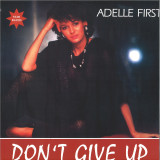
Please see below for the next Kalita 12" - Adelle First - Don't Give Up.
A South African Boogie, dancefloor heater reissued on vinyl for the
first time since the original release in 1986.
Kalita are excited to announce the first ever official reissue of Adelle First’s highly sought-after 1986 12” South African boogie single 'Don’t Give Up'!
Originally privately released on infamous South African label Music Team’s imprint Solid Records, the single features both the shorter vocal version and devastating 9-minute long extended ‘Dub Mix’, a true testament to the genius of producer Tom Mkhize. Having recently rocketed in demand,
fuelled by equal measures of quality and scarcity, and with original copies now selling for over £200 on the second-hand market, Kalita now offer this masterpiece to the world once more, sourced from the original analogue master tapes.
It’s nearing a decade since William Doyle released his Mercury Music Prize nominated debut album, Total Strife Forever, as East India Youth in 2014. A year later, he had toured the world and was releasing his second album, Culture of Volume, but it would be another four years before Doyle returned with his third full album, and the first official release under his own name. The dizzyingly ambitious Your Wilderness Revisited arrived in 2019 and was followed last year by the artpop masterpiece, Great Spans of Muddy Time. In the years between leaving the old project behind and re-emerging under his own name, Doyle self-released a string of ambient-leaning albums, The Dream Derealised, Lightnesses Vol I & II and Near Future Residence, which are now to receive a first vinyl pressing via Tough Love. The Dream Derealised is a collection of nine abstract, lo-fi pieces that were recorded during the summer of 2016, when focusing on creating them helped guide Doyle through a “difficult period of anxiety, panic and a regular dissociative feeling called derealisation.” At the time, doing something creative in a quick and immediate fashion felt vital to Doyle, carrying him to a new place: “I’m releasing them now as a cathartic measure, and as a message for others who may be going through difficult times themselves. What I told myself at the time, what I can tell you now: You are not in danger. You are not going insane. You are not alone.”
Sympathetic Magic is an ecstatic, delirious, and deeply touching piece of music; a towering new work in Kim Myhr’s increasingly substantial output as an artist and composer. Sympathetic Magic is the follow-up to Kim Myhr’s 2017 album You | me, which was widely praised and received an honorary mention at the 2018 Nordic Music Prize. While the immersive warmth of You | me is still present, Sympathetic Magic is more expansive than its predecessor. A band of eight musicians playing a wide variety of instruments including electric 12-string guitars, drum machines, vocals, synthesizers, organs and lots of drums and percussion, has created a work of a grander scale. The shimmering, oceanic waves of You | me has been traded for cosmic currents in Sympathetic Magic. Put simply, Sympathetic Magic is a collection of song-like structures that has expanded into symphonic proportions. “With You | me, I wanted to create an ocean of sound, where the listener is surrounded by a myriad of elements that has equal importance in the music. I wanted to challenge this a bit, to push certain elements forward. The result is a more song-like kind of music than what I’ve done before.” – Kim Myhr Just before starting working on Sympathetic Magic, Kim bought an old 70s Yamaha organ (the YC45d), after falling in love with the sound of it on different recordings. At first, he thought the organ would be a subtle element on the new record, but it ended up becoming a focal point: “It’s a brilliant in-your-face sound that brought an ecstatic quality to the music. Playing around with this instrument, along with an 80s Roland Juno synth and a new drum machine took the music in new directions.” – Kim Myhr. Thematically, Sympathetic Magic circles around a longing for collectivity and togetherness. While the world was locked down in 2021, thanks to a commission from Oslo Jazz Festival, Kim had the opportunity to delve deeply into this project, working with the members of the band, one at a time: “The music created a situation of unexpected positivity. It felt like a social project even if I spent most of the time on it alone. And all this positive, joyful energy felt quite magical, arriving like out of thin air in this otherwise grim situation. It all felt like a hallucination, which fed back into the music. Sympathetic Magic is like a dream within a dream.” – Kim Myhr The title of the record is a term coined by James Frazer in The Golden Bough. He writes: “things which have once been in contact with each other continue to act on each other at a distance after the physical contact has been severed”. “In a closed down world where all our connections with the outside suddenly are remote or absent, the line between the real and imaginary is blurred. I felt that the term perfectly summed up the thoughts, processes and sentiments that went into the making of this record”, says Myhr. “Kim Myhr is a master of slow-morphing rhythms and sun-dappled textures that seem to glow from the inside”. The Guardian 1/And I Thought These Are My People 2/Gifting Senselessly In Endless Lavishness 3/Move The Rolling Sky 4/Iridescent 5/Up To The Sun Shall Go Your Heartache 6/I Wonder If I Shall Fall Right Through The Earth 7/Heart Streams
Eric Dolphy's final studio album is hailed as one of the finest examples of mid-'60s post bop. Its reputation is purely one of backwards significance. Dolphy, having recorded the album in February 1964, was in Europe less than six weeks later and his all-too-brief life ended less than two months after that. Though likely he never held a copy in his hands or heard any critical opinion of it, it marked his last flurry of original compositions and is considered his apex. It is fascinating to consider whether he would had moved past or away from the album in 1965, had he lived.
Though Dolphy should not be considered an avant-garde musician by the term's most common definitions, most interpretations of Out To Lunch have been done by players working squarely in that area. So it is with this album, the most ambitious in its recreation of the five-tune disc (with one original added to the final "Straight Up and Down, extending the piece to almost thirty minutes). All five compositions from the original quintet LP are revisited in the same order, the record sleeve even duplicates the old album jacket, down to the typeface and black-and-blue color scheme, although a photo taken by Daidō Moriyama inside Tokyo's massive (and massively busy) Shinjuku railway station replaces the Dolphy's album's enigmatic "Will Be Back" sign, whose clock hands indicated no conventional time of expected return.
Otomo Yoshihide first came to international prominence in the 1990s as the leader of the experimental rock group Ground Zero, and has since worked in a variety of contexts, ranging from free improvisation to noise, jazz, avant-garde and contemporary classical. The always surprising and sometimes confounding turntablist, sound artist, onkyo improviser and now avant jazzer heading up a 15-piece aggregation of Japanese and European experimentalists. Who better to grapple with Dolphy's legacy -- so idiosyncratic in its day and yet so influential to creative improvisers who followed -- than a musician with his own singular take on how sounds can be organized in the jazz realm over 40 years later and half a world away? In other words don't expect the conventional from Otomo any more than you would from Dolphy himself. That's not to say that recognizable themes ("Hat and Beard," "Out to Lunch," "Straight Up and Down") don't appear, or that individual players -- including Alfred Harth on bass clarinet bursting into the mix and leaping across the instrument's tonal range in a way that recalls the master himself -- don't carry forward echoes from the past in the spirit of a sincere and heartfelt homage.
However, a good deal of the time all bets are off; in addition to the usual brass, reeds, bass, and drums (and of course a bit of vibraphone, here played by Takara Kumiko in far less prominent role than that of Bobby Hutcherson) are such sonic paraphernalia as sine waves, contact mike, no-input mixing board, and, of course, "computer." (Otomo himself plays skronky electric guitar.) From composition to composition and even during episodes within compositions, the band takes radically different approaches. There are blasts of free jazz energy not too far removed from the Peter Brötzmann Tentet, an impression reinforced by the presence of spluttering wildman Mats Gustafsson on baritone sax. Not surprisingly and often in contrast with the Dolphy original, the music is dense and filled to overflowing with sounds -- sometimes due to fundamental reworkings in structure rather than just the larger size of the ensemble. The middle section of "Something Sweet, Something Tender" somewhat belies the original's title with elongated howls and cries from the horns over slo-mo bass, drums, and electronic noise poised somewhere between dirge and drone, and the sudden explosion of punk-ish rock energy in the following "Gazzelloni" is a startling contrast.
At times, the feeling is that of listening to the original Out To Lunch while a séance is going on to contact Dolphy's ghost, with supernatural sounds swirling around the stereo. The effect is disconcerting, as is the post-apocalyptic cloud hanging over the arrangements, but it makes the effort more than an unnecessary tribute album. Instead, Dolphy is transported into the 21st Century and allowed to romp through modern developments in music. An inspiring concept and an album that will stretch the boundaries of anyone who comes into contact with it.
Born October 1966. Break Dancer in 1984, under the moniker Mad Max, started a crew named the Back Street Warriors, Busking all over the UK at places such as Covent Garden/Leicester Square Performing on stage & in clubs. They once jammed with the Rock Steady Crew in Camden Palace in front of an audience.
Then in 1987 he became a DJ, playing all genres of music, he first played on
RJR Radio, playing Electro, Hip Hop, Soul, R&B & Reggae. Moving forward he started playing Acid House & Four to the Floor Music styles, by the early 90s he played on Weekend Rush and then went onto Defection, Touchdown, Don & Passion FM, playing Acid & Hardcore Jungle.
In the early days MixMaster Max was one of the Innovators of Jungle music by mixing Hardcore, Reggae & Hip Hop together, helping others to produce, fuse & gain ideas in the music industry. He was by Far the most Original, Innovative, DJ anybody had ever heard.
In 1991 he played alongside John Saunderson at the Camden Palace on a Friday night, he also played at the famous Hacienda club in Manchester.
He was the First DJ to create the Topsy Turvey, which is one turntable on top of the other, he came runner up in the DMC world championships in the early 90s.
He played at some of the Biggest Raves back in the day, Pirate club 93, Fantazia 92, Dungeons 91/92, Turnmills 92, to mention a few. He also played on Avenues FM & People's Choice, which were legal Radio Stations, not forgetting Kool fm & Centreforce.
He performed on stage with the We Papa Girl Rappers in 1990 at the Notting Hill Carnival. This Legendary Cult figure is a Master of the Nunchuckers & TurnTables!
His innovative Mixes were ‘legendary’ he was a pioneer precursor to the Art form known as Jungle Music, not to mention his Scratching abilities, which was ‘extraordinary’!
For those that listened to pirate radio back in the day, he was the legendary cult
figure that inspired us all, giving us the freshest musical styles that had never been heard before!
Note price increase and cat number change from last time around. In the late 1960s, the American trumpet player and free jazz pioneer Don Cherry (1936-1995) and the Swedish visual artist and designer Moki Cherry (1943-2009) began a collaboration that imagined an alternative space for creative music, most succinctly expressed in Moki's aphorism "the stage is home and home is a stage." By 1972, they had given name to a concept that united Don's music, Moki's art, and their family life in rural Tagårp, Sweden into one holistic entity: Organic Music Theatre. Captured here is the historic first Organic Music Theatre performance from the 1972 Festival de jazz de Chateauvallon in the South of France, mastered from tapes recorded during its original live broadcast on public TV. A life-affirming, multicultural patchwork of borrowed tunes suffused with the hallowed aura of Don's extensive global travels, the performance documents the moment he publicly jettisoned his identity as a jazz musician, and represents the start of his communal "mystical" period, later crystallized in recordings such as Organic Music Society, Relativity Suite, Brown Rice, and the soundtrack for Alejandro Jodorowsky's The Holy Mountain. The musicians in Don Cherry's New Researches, hailing from Brazil, Sweden, France, and the US, converged on Chateauvallon from all over Europe. The five-person band Don and Moki Cherry, Christer Bothén, Gérard "Doudou" Gouirand, and Naná Vasconcelos performed in an outdoor amphitheater and were joined onstage by a dozen adults and children, including Swedish friends who tagged along for the trip and Det Lilla Circus (The Little Circus), a Danish puppet troupe based in Christiania, Copenhagen. The platform was lined with Moki's carpets and her handmade, brightly colored tapestries, depicting Indian scales and bearing the words Organic Music Theatre, dressed the stage. As the musicians played, members of Det Lilla, led by Annie Hedvard, danced, sang, and mounted an improvised puppet show on poles high up in the air. The music in the Chateauvallon concert aspired to a universal language that would bring people together through song. In a fairly unprecedented move, Don abandoned his signature pocket trumpet for the piano and harmonium, thereby liberating his voice as an instrument for shamanic guidance. The show opens with him beckoning the audience to clap their hands and sing the Indian theta "Dha Dhin Na, Dha Tin Na," and the set cycles through uplifting and sacred tunes of Malian, South African, Brazilian, and Native American provenance including pieces that would later appear on Don's albums Organic Music Society and Home Boy (Sister Out) all punctuated by outbursts of possessed glossolalia from the puppeteers. "Relativity Suite, Part 1" notably spotlights Bothén on donso ngoni, a Malian hunter's guitar, prior to Vasconcelos taking an extended solo on berimbau. A vortex of wah-like microtonal rattling, Vasconcelos's masterful demonstration of this single-stringed Brazilian instrument is a harbinger of his work to come as a member, with Don, of the acclaimed group Codona. The sounds of children playing on the ensemble's achingly tender rendition of Jim Pepper's oft-covered beacon of spiritual optimism, "Witchi Tai To," lends the proceedings an especially intimate, domestic glow. Given the context of the star-studded international jazz festival, the concert's laid back, communal vibe feels like an attempt by the Cherrys to show Don's jazz audience that he was moving on. At the same time, however, Don was extending a warmhearted invitation for them to come along for the ride. With liner notes by Magnus Nygren. Track list: 1. Intro: Dha Dhin Na, Dha Tin Na 2. Butterfly Friend 3. Elixir 4. Amazwe 5. Interlude with Puppets 6. Ganesh 7. Elixir Reprise / Witchi Tai To 8. Resa 9. Relativity Suite, Part 1 10. Berimbau Solo 11. Interlude / North Brazilian Ceremonial Hymn 12. Elixir Reprise / Ganesh 13. Ntsikana's Bell / Traditional Melody