Following January’s acclaimed vinyl debut from Exterior and summer’s much-loved Kota Motomura EP, Edinburgh’s Hobbes Music label ends 2019 with its first album release, also a debut, from GAMING, a fresh new braindance electronica project straight outta Glasgow.
GAMING is a new solo outing that brings together a lifelong love of music and technology and creating left field, rhythmic electronica. It’s the sound of IDM, nineties techno and mensch maschine computer music that is as spontaneous as it is programmed. It's a bit of a grower and may take time to get under your skin....
“Scenes From A Deserted City is a collection of tracks that started as a set of riffs, loops, rhythms and grooves and unfurled around a sense of growing unease about the future of the urban environment around me.
It’s an album that started out as sound…and ended up as a way of telling stories about the age of anxiety we live in, how our world is changing, and how we find a way through that.
This is DIY electronica from Glasgow – it was made on a growing collection of digital and analogue synths and FX units, including a bunch of modular racks, each with its own idiosyncrasies and character that belies the assumption of the binary.
The studio where it was recorded – an abandoned, and often very cold, school building reclaimed by the community some twenty years ago – offered up stories of resilience, even when all seems lost. (I’m not sure what the mice contributed but they definitely climbed in and out of some synths).
This album is ultimately about my changing relationship with Glasgow, a city I’ve lived in for more than 25 years. It’s about how I feel now about the increasing sense of urban decay and how the city can be a very isolating place. It’s about how I reflect on my younger creative self trying to find a direction but mainly feeling a sense of dislocation and not fitting in. And it’s about the questions I have about how that relationship is changing, how it will be forced to move forward.
The result is a soundtrack for walking home on your own, in that headphone bubble when it’s just you focusing on that music that makes sense to you alone. It’s for early in the morning, after the night before, or going to work with the memories of that slipping and sliding inside your head. It’s about how it feels to be both elated and lonely, to be lost in the familiar, despairingly hopeful.”
quête:masc
Carla dal Forno announces her second full-length album, Look Up Sharp , on her own Kallista records.
Dal Forno beckons a bold new era in her peerless output pushing her dub-damaged DIY dispatches to the limits of flawless dream-pop. In a transformative move towards crystal clear vocals and sharpened production, Look Up Sharp is an evolutionary leap from the thick fog and pastoral stillness of her Blackest Ever Black missives, You Know What It’s Like (2016) and The Garden EP (2017). Three years since her plain-speaking debut album, the Melbourne-via-Berlin artist finds herself absorbed in London’s sprawling mess. The small-town dreams and inertia that preoccupied dal Forno’s first album have dissolved into the chaotic city, its shifting identities, far-flung surroundings and blank faces. Look Up Sharp is the story of this life in flux, longing for intimacy, falling short and embracing the unfamiliar. Dal Forno connects with kindred spirits and finds refuge in darkened alleys, secret gardens and wherever else she dares to look.
In her own territory between plaintive pop, folk and post-punk dal Forno conjures the ghosts of AC Marias, Virginia Astley and Broadcast through her brushwork of art-damaged fx and spectral atmospheres. The first half of the record is filled with dubbed-out humid bass lines, which tether stoned hazes of psychedelic synth work as on ‘Took A Long Time’ and ‘No Trace.’ These are contrasted with songs like ‘I’m Conscious and ‘So Much better’ that channel the lilting power of YMG and are clear sequels-in-waiting to dead-eyed classics like ‘Fast Moving Cars.’
The B-side begins with the feverish bass and meandering melody of ‘Don’t Follow Me,’ which takes The Cure’s ‘A Forest’ as its conceptual springboard. It’s the clearest lyrical example since ‘The Garden’ of dal Forno’s unmatched ability to unpick the masculine void of post-punk and new wave nostalgia to reflect contemporary nuance. Look Up Sharp reaches its satisfying conclusion with ‘Push On’ - dal Forno’s most explicit foray into an undiscovered trip hop universe between Massive Attack and Tracey Thorn. The album’s last gasp finds personal validation in fragility: ‘I push on / I’m the Place I’m Going,’ a self discovery lifted by reverberant broken beats and glass-blown vocals.
Adding further depth to Look Up Sharp are the instrumentals, which flow seamlessly between the vocal-led pieces. ‘Hype Sleep’ and ‘Heart of Hearts’ drink from the same stream as The Flying Lizard’s dubbed-out madness and the vivid purple sunsets of Eno’s Another Green World. While ‘Creep Out of Bed’ and ‘Leaving for Japan’ funnel the fourth-world psychedelia of Cyclobe’s industrial-folk into the vortex of Nico’s The Marble Index.
Conceived as a whole, Look Up Sharp is a singular prism in which light, sound and concept bend at all angles. A deeply personal but infinitely relatable album its many surfaces are complex but authentic, enduring but imperfect, hard-edged but delicate. A diamond. Look up sharp or you’ll miss it.
Die besten musikalischen Außenseiter sitzen nie lange still. Sie mutieren stetig, verwandeln sich in neue Formen und weigern sich, in Schubladen gesteckt zu werden. Floating Points hat so viele Gestalten, dass es ohnehin nicht einfach ist, ihn irgendwie einzuordnen. Da ist zum einen der Komponist, dessen Debütalbum „Elaenia“ im Jahr 2015 begeisterte Kritiken erhielt, darunter als Pitchforks „Best New Music“ und Resident Advisor's „Album of the Year“ - und ihn von den Tanzflächen auf die Festivalbühnen weltweit brachte. Dann ist da wiederum der Kurator, dessen Plattenlabels gefühlvolle neue Klänge in den Club gebracht haben, und der auf seinem geschätzten Imprint Melodies International alte Klänge wieder zum Vorschein gebracht hat. Ferner ist da der Traditionalist, der Disco-Typ, der Maschinenmusik macht, der Digger, der stets auf der Suche nach unentdeckten Edelsteinen zwecks Wiederveröffentlichung ist. Und dann ist da noch der DJ, dessen offener und zugleich mutiger Umgang mit dem Genre ihn einst ein 20-minütiges Instrumental des Spiritual-Jazz-Saxophonisten Pharoah Sanders im Berghain spielen ließ.
Nach der Veröffentlichung seiner Zusammenstellung von funkelnder, analoger Ambient- und Atmosphärenmusik für die geschätzte „Late Night Tales“-Reihe, stellt Floating Points' erstes Album seit vier Jahren, „Crush“, alles, was man über ihn zu wissen meint, wieder auf den Kopf. Nicht minder als ein knallender Donnerschlag elektronischen Experimentalismus’, dessen Titel auf den langsam überkochenden Schnellkochtopf anspielt, den die aktuelle politische Gemengelage in der Welt suggeriert, in der wir uns derzeit befinden. So hat Shepherd einige seiner bisher härtesten und treibendsten Tracks produziert, mit Blick auf die britische Bass-Szene (aus der er in den späten 2000er Jahren selbst hervorgegangen ist), wie beispielsweise die zuvor veröffentlichte markante Lead-Single „LesAlpx“ (Pitchforks „Best New Track“). Auf „Crush“ sind allerdings auch einige seiner ausdrucksstärksten Songs zu finden: seine charakteristische Melancholie ist in den erhabeneren, sanfteren Momenten des Albums oder im Buchla-Synthesizer zu finden, dessen unheimliche Modulation das Album prägt.
Sein neues Album fühlt sich augenblicklich an - und lebendig. Es ist der Klang der vielen Seiten von Floating Points, die schließlich miteinander verschmelzen. Es bezieht sich auf die „explosiven“ Momente während seiner Sets, die normalerweise auftreten, wenn er unerwartete Genres zusammenwirft, aus dem ganz einfachen Grund, weil er sich darüber freut, diese Platte „jetzt wirklich laut hören zu können“ und dann die Nadel aufsetzt. Es ist „genau wie das, was passiert, wenn man zu Hause mit seinen Freunden Musik spielt und diese sich überall im Raum ausbreitet.“, erklärt er.
The first vinyl on Strange Therapy by Matriarchy Roots. A highly engaging and confrontational project influenced by anti-patriarchy ideas and industrial music. Pressed on black vinyl, full cover artwork printed on rough sleeve. Every order includes 2 Strange Therapy stickers.
Includes digital pre-order of Changing Habits. The moment the album is released you’ll get unlimited streaming via the free Bandcamp app, plus a high-quality download in MP3, FLAC and more.
The Brazilian singer-songwriter and guitarist Joyce Silveira Moreno was born and raised in the middle of Copacabana, a short beach stroll from the epicentre of the bossa nova universe.
Her father was a Dane that had settled in Brazil, but she was raised by her mother and step-father in a typical Portuguese-Brazilian household. Since her older brother was friendly with
leading lights of the bossa nova movement such as Roberto Menescal and Eumir Deodato, she was steeped in the form at an early age and witnessed its key evolution first-hand. At the
age of 16 in 1964, she was taken to the studio by Menescal to contribute to the coveted debut album by the mythical group Sambacana, assembled to record the work of composer Pacífico
Mascarenhas when the meagre budget would not allow the vocalists he preferred. Knowing that a full-time career in music was certainly not guaranteed, she began studying journalism
in 1967, shortly before her controversial song “Me Disseram” reached the finals of Rio’s second International Song Competition. The following year, her self-titled debut album was
released by Philips, produced by Armando Pittigliani, with orchestration by Dorival Caymmi and arrangements by Gaya; along with her own compositions, the album also featured songs
by her rising-star friends, including Caetano Veloso and Marcos Valle.
Ten releases in, and STILL far better than the rest
In a more raucous mood, it seems Bitter End have pre-empted the summer of debauchery ahead of us by unleashing their Sweetest exorcism yet...
ITCHICRICKITCH is the tweaking weirdo in the corner, the unsettling presence that invariably unites the room in the simplistic joy of judgement free release.
'PRINCESS' appeared on the flipside of a frankly far more regal diva originally on GALL005, here she's the smudged mascara version, much stroppier and not due home 'til way after sunrise.
As always, limited and LOUD
- A1: Ghosts Are Whispering Maschines I
- A2: Ghosts Are Whispering Maschines Ii
- A3: Untitled Pressure
- A4: 0001
- A5: Random Strings Of Numbers
- A6: Ltkr2 (Short)
- A7: Manipulated In Code (Wavelab)
- A8: Ehfd2 (F.s.w.m.) (Short)
- A9: 0002
- A10: Engine Test
- A11: Klrtt4B (Ffl)
- A12: Ntwurffbk (Fk)
- A13: Untitled (Processing)
- A14: Zklhj8_(Ff)
- A15:
With His Concept Ep grey Specters Of Dead Communication' Breaklab Aims To Explore The Atmospheres Of Computing Systems.
Focussing On The Processes Underneath The Surface Of Our Electrified And Digitalized Mechanical Age.
- A1: Arranha Céu (Skyscrapers) (Eumir Deodato)
- A2: Flap (Marcos Valle & P.s. Valle)
- A3: Rodando Por Aí (Rudy\'S) (Eumir Deodato)
- A4: O Jogo (Soccer Game) (Pacifico Mascarenhas)
- A5: Atire A 1A Pedra (Ataulfo Alves & Mario Lago)
- B1: Puma Branco (The White Puma) (Marcos Valle & P.s. Valle)
- B2: Passarinho Diferente (The Byrd) (Eumir Deodato)
- B3: Extremo Norte (The Gap) (Eumir Deodato)
- B4: Tô Fazendo Nada (Down The Hill) (Eumir Deodato)
- B5: Menina (Boy Meets Girl) (Eumir Deodato)
- B6: Carlota E Carolina (Carly & Carole) (Eumir Deodato)
One of Brazil's most prolific artists, Eumir Deodato has participated in the creation of over 450 albums, racked up 16 platinum records, won a Grammy (and received two more nominations), and sold over 250 million records in the USA alone. Over the course of his career, he has written for, arranged music by and played with artists including Frank Sinatra, Tom Jobim, Kool & The Gang, Earth, Wind & Fire, Marcos Valle, Aretha Franklin and Bjork, among others.
At the height of Deodato's productivity in the early 70s, Os Catedraticos 73 was recorded between Rio de Janeiro and New York, featuring a Brazilian rhythm section comprising Azymuth drummer Ivan 'Mamão' Conti, percussion master Orlandivo, and Sergio Barroso on bass, while the horn section features some of the big apple's top players from the CTI in-house brass.
A firm favourite with rare-groove enthusiasts and fans of Latin jazz alike, Deodato melds the musical sensibility of post-bossa nova Brazilian jazz with North American soul & funk, and the explosive Latin influences of '70s New York. Os Catedraticos 73 certainly swings harder than some of Deodato's earlier releases and opening track 'Arranha Ceu' (Skyscrapers) is a euphoric dance floor classic, which has been lighting up clubs for years.
With the blessing of Deodato himself, this official Far Out reissue has been remastered and pressed to 180g vinyl, with replica original artwork from the OG Equipe release.
Keys are Benedikt Frey and Chris Cox, the front and rear covers of a lucid
narrative of an incomprehensible nature. Substance induced Hara-kiri, a human
consciousness leaving it's temporary and insignificant vessel, a motorcycle ride
through the sands of a desolate Martian desert or a twisted eternity dissolved
inside Pandora's Box. These are just a few of the scenes effortlessly evoked by
the epic yet somehow erotic omnibus of slow-motion electronica that is Voltage.
In a time dominated by robotic beat and melody, this 8 part expedition away from
the dancefloor may surprise, disorientate and hypnotise. Allow Keys to seal you
in their infinite vacuum of flirtatious melancholia.
- A1: Intro
- A2: Something's Gotta Give (Feat. B. Slade)
- A3: Whatcha Gon' Do
- A4: It Just Beez That Way
- A5: Southpaw Serenade (Feat. Doyle Bramhall Ii)
- B1: How Do I Get You
- B2: Reaching For A Change
- B3: Somebody Lied
- B4: With A Little Help From My Friends (Feat. Beth Hart)
- B5: Resolution
On 8th February 2019, Eric Gales returns with his brand new album 'The Bookends' on Provogue/Mascot Label Group and it features collaborations with B. Slade and Provogue artists Doyle Bramhall II and Beth Hart. The challenge for making 'The Bookends' was for Gales to challenge himself. 'As a guitar player it's been established that I can play a little bit, just a little bit,' he smiles. But for this album he not only wanted to push himself as a musician, but also as a vocalist, to build up his vocal discography. Gales' story is an incredible one, he was a child prodigy and released his debut album The Eric Gales Band in 1991 as a 16 year old on Elektra Records. It was the first of 10 albums on a major label through a blistering career. He has released 15 studio albums in total ahead of 'The Bookends' and a host of other collaborations. He has battled drink and drug issues and spent time in jail in 2009 for possession of drugs and a weapon. Gales proudly tells his story every night before every show, now over two years sober he is creating some of the most breath-taking music he has ever made. If his previous album 'Middle of the Road' was the rebirth of Eric Gales, then 'The Bookends' is him knocking away his boundaries and taking flight on a voyage of self-discovery asking himself what do you think you can do and pushing that into the stratosphere.
From Their Unassuming Origins As A Group Of
School Friends Drawn Together By A Shared Passion
For Music To The Global Touring Force (supporting
The Cure And Editors At Arenas And Stadiums) They
Have Quietly Become, The Twilight Sad's Ascent Has
Been Forged The Old Way, With Grit, Graft And Four
Exceptional Studio Albums.
Now Signed To Mogwai's Rock Action Records, The
Band's Fifth Album Does Not Disappoint And Will
Certainly Please Fans Of Their Previous Works. It Will
Also Appeal To Fans Of The Cure, Frightened Rabbit,
The National, Interpol And Editors.
User Experience welcomes young German and living meme, Nils Viktor Voss, or Corroid as the world will know him from now on. Corroid sent me a track a while back for mastering... an absolute face melter. I asked him via the medium of dance if he had any more tracks. Now I cannot get rid of him, he sends stuff all the time, if it's not music it's memes. The only way I am able to deactivate the meme machine is to try and divert his attention elsewhere. So, find him on facebook, meme him until he is unable to function. Thank you.
Joining Corroid on this record are two fucking amazing artists who I admire a great deal; Myler and Jasmine Azarian who both execute their remixes with precise brutality. As for the track names I considered translating for the ignorant English (myself included) then I heard Corroid's flatmate say: "YOU CANNOT TRANSLATE THEM, THIS IS TRUE ART". Well that's bollocks but tbh I don't have time for translations.
Lost Futures is a new label that explores experimental and often radical approaches to dance music from the past. In a musical landscape that increasingly claims to seek and reward new forms and ideas, Lost Futures delves into the recent past to revisit forward-thinking, optimistic projects that, owing to the social, musical or outright political climate, perhaps struggled to find an audience. Allowing only time to re-contextualise these leftfield, sometimes misunderstood and ultimately human bodies of work, Lost Futures taps into the inherent idealism of rave.
LF001 trips back until the early nineties to revisit the alternative scene emerging from the Dutch city of Utrecht. Here, three young men - DJ Zero One (Sander Friedeman), TJ Tape TV (Arno Peeters) and DJ White Delight (Richard van der Giessen) - joined forces to form 'The Awax Foundation'. Inspired by the transcendent and revolutionary electronic music arriving on their shores imported from Chicago and Detroit, combining their knowledge, gear and ever-expanding vinyl collection allowed additional freedom in paying sincere tribute to these intoxicating sounds, while also developing their tastes in a more personal, eclectic direction.
The musical flavours of Awax initially leaned toward acid house and the roots of techno. However, with three different mindsets in the mix, their tastes were rarely fixed. One thing each shared in common was a devotion to collecting rare sounds, specifically more adventurous and international samples than those emanating from the increasingly-hard, masculine dance music emerging from the Netherlands during the period. Inspired by the cross-over global sound of bands like Suns of Arqa, or 'World Music', as it was perhaps patronisingly termed at the time, the trio became interested in the idea of making techno with 'ethnic instruments'.
Of course, this being 1992, none of The Awax Foundation had access to such instruments, instead, they had a vast, collective library of samples from all over the world. There were no collaborations and no clear plan. Instead, they set to work using a Yamaha TX16W sampler, the legendary Atari 1040ST computer, a cheap mixing desk and a couple of low-end synths and FX machines. When Richard mentioned the project to his friend, Akin Fernandez, the London DJ and owner of cult label Irdial Discs, Fernandez was intrigued enough to invite the trio to record a one-hour show for his 'Monster Music Radio' series on London's then-burgeoning Kiss FM.
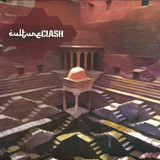
Forced to come up with a name, 'CultureClash' seemed like the obvious choice, even if the members of Awax were only creatively sparring among themselves. Along with the term 'ethno-techno', slightly dubious to a hopefully more conscious Western audience in 2017, these were the only guiding principles to the quietly ambitious project that soon combined cutting-edge machine rhythms with samples sourced from everywhere from Bolivia to Togo, and inspired by everything from Ravi Shankar's epic soundtrack to the Oscar-winning movie Ghandi, to the technical limits of their own setup requiring a dazzling degree of cut-and-paste work. Some tracks even emerged out of academic studies within the ethnomusicology department at The University of Amsterdam.
The show aired on October 2nd, 1992, recorded in one blistering take and without any rehearsals, traversing a huge variety of tempos and styles. If the performance wasn't seamless, it was undeniably thrilling, fresh and ambitious. As such, several labels, including Fernandez's aforementioned Irdial Discs expressed an interesting in commercially releasing CultureClash, while another imprint proposed a series of twelve-inches and an album. But the sheer complexity of the project meant that it never saw the light of day, while the trio embarked on different journeys ahead, both creative and personal.
Twenty five years later, and the original CultureClash lineup and founding members of The Awax Foundation provide the sound of the first release from Lost Futures. An otherworldly, ambitious and optimistic compilation, accompanied by extensive sleeve notes from the trio, CultureClash is a timeless ode to experimentation in dance music's ever-overlapping culture.
- A1: Genesis
- A2: Gedankenflashflowsnacks
- A3: Microphonecheck Einszwei
- A4: Wasserfarben Decken Nicht
- A5: Raus Aus Babylon
- B1: Kingstyles
- B2: Glam Jam (Part 1)
- B3: Lyrics Like Sirup
- B4: Der Eine
- C1: Sounds Fürs Auditorium
- C2: Das Bildnis
- C3: Combinations From The Masters
- D1: Zu Fünft Unterwegs
- D2: Chill Mit Meinen Homes
- D3: Der Letzte Dreck
- D4: Lyrics Like Sirup Feat Get Open (Sbg Version)
Der Hip Hop Klassiker Von 1998 Ist Zurück.
2018 Zum 20. Jubiläum Erscheint Das Album Komplett Überarbeitet, Neu Abgemischt Und Remastert Auf Dem Hauseigenen Label 58beats In Neuem Gewand.
Anstatt Nur Das Alte Master Für Ein Einfaches Reissue Zu Verwenden, Haben Sich Die Jungs Von Main Concept Dazu Entschlossen Zum 20ten Jubiläum Des Langspielers Die Files Der Platte Neu Aufzumachen Und Das Album In Ein Zeitgemäßes Licht Zu Setzten.
Glam Aka Glammerlicious, Produzent Von Main Concept, Hat Allen Beats Einen Neuen Anstrich Verliehen, Alle Alten Maschinen Mit Den Original Files Beladen Und Das Album Komplett Überarbeitet Und Neu Abgemischt.
Die Tracks Wurden Editiert, Komplettiert, Erweitert, Teilweise Leicht Verändert, Oder Auch Gekürzt, Ohne Dabei Den Charakter Der Platte Zu Verändern.
Ein Reissue, Dass Diesem Klassiker Angemessen Ist.
Der Sender Puls (bayrischer Rundfunk) Hat Das Album Zum 20 Jährigen Jubiläum Mit In Die Br Ruhmeshalle Aufgenommen.
Flo Kreier (puls) Schreibt Über Main Concept - genesis Exodus :
- Freshe Skillz, Groovige Beats Und Die Heilige Realness: Main Concepts Zweites Album Ist Ende Der Neunziger In Diesen Punkten Nicht Zu Überbieten. Vielleicht Beginnen Deshalb Viele Andere Rap-crews, Gezielt Die Charts Zu Stürmen. -
- Mitte Der Neunziger Ist Hiphop In Deutschland Eine Puristische Angelegenheit. Bekannte Crews Tuckern In Mini-bussen Durchs Land Und Spielen In Kleinen Clubs. Niemand Trägt Goldketten Oder Ohrringe. Stattdessen Sind Baggypants Und Baseballcaps Angesagt. Und Die Meisten Raps Drehen Sich Um Ein Thema: Die Realness. Damit Ist Gemeint, Hiphop Ernst Zu Nehmen Und Nicht Nur Kohle Zu Scheffeln. Außerdem Geht's Darum, Diesen Echten Hiphop Zu Zelebrieren. In Dieser Zeit Bringen Die Münchner Main Concept Ihr Zweites Album "genesis, Exodus, Main Concept" Raus, Das Vielleicht Realste Deutsche Hiphop-album Überhaupt.
- rapper David Pe Ist Der Unterhaltsamste Mc, Den Der Deutsche Hiphop Bis Dahin Gehört Hat. Er Ist Wortgewandt, Witzig Und Schafft Es Auf Charmante Art, Auch Wissenschaft Und Philosophie In Seine Texte Zu Verbasteln. Dabei Klingt Er Aber Nicht Oberlehrermäßig. Eher Als Würde In Seinem End-zwanziger-körper Der Geist Eines 70-jährigen Stecken. Wie Ein Till Eulenspiegel Des Rap Schafft Er Es, Mystik Und Komik Zu Verbinden. Der Gipfel: Er Zelebriert Immer Wieder Eine Mystische Zahl, Die 58. Mit Viel Fantasie Spinnt Er Absurde Geschichten Um Diese Geheimzahl - Die Am Ende Nur Die Nummer Seiner Buslinie Ist.
- groovige Beats Statt Poppige Hooks
Glammerlicious, Der Musikalische Chef Der Truppe, Schafft Einen Seltenen Spagat: Einerseits Grooven Main Concepts Tracks Wie Hölle - Zu Jedem Beat Beginnt Man Sofort Mit Dem Kopf Zu Nicken. Dazu Kommen Fette Samples, Die Eine Perfekte Stimmung Aufbauen, Aber Nie Poppig Werden: Abwechslungsreich, Verspielt Und Irgendwie Augenzwinkernd.
"genesis, Exodus, Main Concept" Spielt Nicht Umsonst Auf Die Bibel An. Vielleicht, Weil Sich Die Jungs Vom Münchner Goetheplatz Damit Über Die Hiphop-dogmatiker Amüsieren, Die Sich Selbst Zu Ernst Nehmen. Vielleicht Aber Auch, Weil Die Platte, Wie Eine Offenbarung, Alles Auf Den Punkt Bringt, Was Der Deutsche Hiphop Dieser Zeit So Heilig Ist: Die Realness. -
Loya is a new project by French producer Sébastien Lejeune, which allows him to research his
own cultural heritage, as a native of La Réunion.
For the past five years, Loya has been exploring the musical environment of the sister islands of the
Mascarenes (Indian Ocean), breaking down the boundaries between electronic music and
traditional music in a globalized world. Growing up in the great melting pot of La Reunion, Loya was
exposed to a number of cultures and rhythms that fueled his curiosity.
Settling in metropolitan France in the mid-90s, Loya's first encounter with electronic music
happened upon discovering acts such as Autechre, Plaid and Boards of Canada. Soon, Loya was
drawing from Intelligent Dance Music and bleep techno to build complex rhythm arrangements and
ethereal melodies. Throughout this research, Loya gradually managed to tame the erratic nature of
his machines to summon states of trance that reminded him of the music he grew up listening to as
native of the Mascarene.
From this route through the meanders of contemporary electronic music, Loya developed a
trademark sound based on triple time beats, pointillist sound design and a taste for experimentation.
Such distinctive features can already be heard on his first self-produced album Eruption, released
in 2014 and the EP Indian Ocean, released in 2016 on Mawimbi Records, although Corail is his
most accomplished work and a testament of his clear talent.
Exploring the blue depths of the Indian Ocean with the fluency of a native, the ten compositions of
Corail unfold like an archipelago. Showcasing the talents of traditional musicians such as Mauritius
ravanne icon Menwar and Madagascan accordion master Régis Gizavo, Corail finds a fine balance
between the soft, velvety ripples of modular synthesizers and the rawness of frantic percussion
motifs and local field recordings.
Ever since Onom Agemo & The Disco Jumpers broke the dreaded curse of the difficult second album by releasing "Liquid Love", a cocktail so spicy and delectable that it could warm the cockles of the grumpiest man alive's heart, even in the most Arctic conditions, everybody wondered how the Onom crew could top that one. But now you have an opportunity to whip out your "Magic Polaroid" as proof that this wasn't an impossible Project. Never before has the band so successfully captured their full-on live sound as they do here, thanks to three days of recording frenzy at Daniel Nentwig and Sebastian Maschat's Butterama studio, a haven of analog hardware hidden in a remote part of Berlin's Neukölln district. The exploding kaleidoscope of styles that make up this album, perfectly reflected by the stunning cover artwork from Nick Henderson and photography by Christoph Rothmeier, means that they can no longer be confined to their early description as an "Afro-Funk Quintet" or merely described as a lively tribute to the artists which have influenced them: their sound is 100 per cent pure uncut Onom Agemo, even though every track feels like a new beginning. The presence of a charismatic in-house vocalist who brought her own lyrics along has also boosted their confidence considerably and provided a further knock-out punch to their onstage performances.
And no one will be disappointed as soon as the first bars of "The Trumpets Of Denmark" stomp on stage like a boisterous fanfare, with Johannes Schleiermacher's impressive wall of sound production making the musicians sound like a much bigger band than what their line-up suggests (with Maria Schneider from Andromeda Mega Express Orchestra adding some extra percussive clout) and just the right amount of dizzying cross-rhythms to steer it away from potential bombast. When Onom Agemo's powerhouse vocalist Natalie Greffel starts chanting what at first sounds like a string of Onomatopoeia, it soon becomes clear that she's laying down her manifesto for a nostalgic Space-Age yet to come, with a few key words serving as Mantra (Focus, patience, tears and creation): an invitation to drive off the Information Superhighway and its endless litany of polite noises, to redirect our gaze inside ourselves and learn to understand and sometimes question how others perceive us.
- A1: Ancient Love
- A2: Alone Time
- A3: Toxic Masculinity
- A4: Cocaine Sunday
- A5: Cure For Cancer
- B1: Xenophobic
- B2: No Love In The City
- B3: No Fun
- B4: Be A Better Friend
- B5: Stay Calm
- C1: Window Eyes Feat Fazerdaze
- C2: White Girl
- C3: Suntory Times
- C4: Sleeping On The Couch
- C5: Babygirl
- D1: Young Old Man
- D2: My Child/Old Soul
- D3: Ptsd
- D4: Sensitive G
- D5: Nice Girl From A Nice Part Of Town
Limited Lime Green Vinyl[29,62 €]
Eyedress Ist Das Pseudonym Des Philippinischen Künstlers Idris Vicuña, Ehemals Leadgitarrist Der Psychedelic-indie-noise-pop-band Bee Eyes Aus Manila.
Idris Veröffentlichte Seine Erste Solo-platte Mit Dem Titel "hearing Colors" Im Jahr 2013. Von Musik-blogs Gefeiert, Führte Dies Zu Seinem Ersten Plattenvertrag Beim Xl Recordings Verlag Abeano. Später Im Gleichen Jahr Veröffentlichte Eyedress Seine Ep "supernatural", Die Von Medien Wie The Guardian Und Nme Viel Lob Erhielt. 2016 Veröffentlichte Er Sein Zweites Album "shapeshifter" Auf Seinem Eigenen Label Babe Slayer.
Nun Ist Er Unter Vertrag Bei Dem Britischen Label Lex Records Und Veröffentlichte 2017 Sein Drittes Album "manila Ice", Ein Album Über Liebe Und Überleben Auf Den Philippinen.
Sein Neustes Album - sensitive G Wird Von Einer Ausführlichen Us Tour Begleitet Und Erscheint Im November.
'Breathe The Machine' is the first installment of Dojostudio and presents a musical world rich in harmonics, low frequency and melodic impact, yet with enough space in between to allow that perfect breathing room essential for powerful dance cuts. 'Breathe The Machine' portrays a world that initially feels robotic, yet instills an organic fluidity known only to come from humanoid beings, breathing life into a system littered with code and coldness. Billy Dalessandro presents 3 original cuts, plus a rendition of the title track by Mike Shannon.
Both for 'Breathe The Machine' and 'Tractor Beam' the Waldorf Microwave XT 2 and the Jomox 888 were the primary sound sources. For 'Breathe The Machine' the 888 was processed through a Jomox T-Resonator, which added harmonic distortion, and also spread the stereo spectrum out a bit offering the drums a more washed-out feel. The XT was layered track by track by performing patterns live into an editor until the desired ideas were properly recorded. Mike Shannon was brought on board to offer a contrasting expression of 'Breathe The Machine' and when asked how the process went he stated:
"I took the source sounds, edited them and processed them to work with a groove I had written for this remix. I mainly used the pad, lead synth and synth effects from the original. The rest of the gold I engineered."
On 'Tractor Beam', subtle use shows that ample space in between ideas make things seem larger than life. By allowing a more minimal approach in the production process the sounds can easily co-exist, allowing for that 'big room' sound without overwhelming the overall experience.
The digital exclusive 'Deliverance' was created using NI's Maschine for the drums, and FM8 and Reaktor were the sources of the synths. Drum patterns were created in Maschine and then recorded in realtime back into the DAW as it played, with real-time tweaking of the hi-hat to create the desired impact, especially at the break. The synth and pad patterns were recorded as MIDI into the editor, and then automation of the synths' VCF rounded out the expression needed to complete the emotional process.
All in all, DOJ001 is mostly an all-hardware showdown, with 'Deliverance' being the only 'virtual' attempt. Life is in nature, not in machines, yet the culmination of the two worlds can be beautiful, if only properly tamed and understood. Lest we beware! Stay tuned... and thanks for listening!
Maschinenbau Was A Label Run By Djscud From Ambush And Nomex From Adverse Which Released Only Two 7's In 1997/98. The First, Eurostar/piling Machine, Was Limited To Just 300 Copies. It Combined Psychogeographical Exploration And Field Recordings With Amiga-produced Non-conformist Breakcore And Noise-abuse, While The Second One, Total Destruction, Became A Classic Of Breakcore / Noise Crossover With Several Appearances On Compilations Such As Collision Drive On Pias (compiled By Kevin Martin, Aka The Bug), But Nevertheless Fell Into Relative Obscurity - Like Most Of The Great Early Breakcore - During The Following Decade. Listening Back One Can Only Be Astounded By The Raw Energy And Urgency Of These Tracks.
Twenty Years After The Original 7's, Praxis Is Proudly Releasing A 12' With All Four Original Tracks In October 2018 With The Catalogue Number Praxis 56.
Long time scene stalwart Darren Price is stepping out on brand new label, Kilsha Music, with a fantastic EP of monster house tracks arriving on both vinyl and digital.
Opener 'Charm Offensive' is a fantastic ten-minute trip into loose limbed techno. Drums, bass and percussion all wrap and weave around each other and melt your mind in the process. A rasping lead synth eventually becomes the focal point as background chords bring real soul.
The brilliantly bristling 'Everybody Jack (UW Live Maschine Mix)' is a full fat track with busy textured synths, sci-fi effects and old school jack vocals that will really work the dance floor into a lather. It's dynamic and ever evolving, with plenty of tense peaks and troughs throughout to keep the 'floor on its toes.
The final vinyl track is 'This is House Music', a deeper cut with warm, warbling bass and a muted acid line spraying about the mix. It slowly builds the pressure in heady fashion and is one to really hypnotise.
This is a fresh EP from one of the techno scene's most enduring and essential talents.