140 g schwere LP mit Klappcover und Beilage auf violettem Vinyl.
Die Pop-Punk-Band Knuckle Puck ist mit einer neu abgemischten und remasterten Version ihres bahnbrechenden Debütalbums „Copacetic“ zurück. Zum 10-jährigen Jubiläum wurde das beliebte Album vom
ursprünglichen Team um Seth Henderson (Produktion/Mixing) und Kris Crummett (Mastering) überarbeitet und in limitierter Auflage auf Vinyl veröffentlicht.
Поиск:master c
Все
After roughly 15 years out of the game, Marc Kushin makes a highly anticipated return with his Ely Muff project - a label favourite since its inception - debuting proper on Love Love with 4 tracker 'Human Nature'. Kushin's proto-tekno take on the early breakcore sound was a stand-out of a particularly noisy strain of hardcore which emerged in the UK in the late 90s and early 00s, releasing on the likes of Headfuk, One Inch Punch, Deathchant, as well as Kushin's own labels Kinky Stump and Dead Pig, run alongside longtime collaborator Tantrum.
Unpretentious, unserious and completely unapologetic, 'Human Nature' features four tracks of brutal hardcore spiral tekno, distorted and mangled but retaining groove and swagger. The EP features two re-released classics from Kushin's back catalogue: the pumped-up pirate radio pastiche of 'Hold Tite The P, No Need For London' and the feedback-laden blunt lobotomy of 'Automatic Predator', two decades on from their original releases in 2005 on Capsule Core and One Inch Punch. Complementing them are tracks 'Human Nature' and 'Cycle Dirty', previously unreleased spasmoid gems from the same era, unearthed and seeing the light of day for the first time.
All four tracks have been lovingly (re)mastered by Love Love's own Ben Pest for a maximal sonic experience, shining a light on this criminally overlooked corner of UK rave heritage.
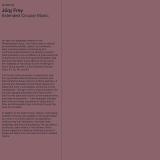
Since its founding back in 2014, Blume has carved a unique place in cultural landscape, issuing free-standing works, spanning the historical and contemporary, that represent singular gestures of creativity within the field of experimental sound. Joining their broad efforts in building networks of context and understanding that already includes the works by Werner Durand, Sarah Hennies, Bruce Nauman, John Butcher, Jocy de Oliveira, Mary Jane Leach, Valentina Magaletti, Alvin Curran, Julius Eastman, Alvin Lucier, and following the first ever vinyl release to attend to James Tenney's legendary Postal Pieces, the label now presents the first LP published by the visionary Swiss composer Jürg Frey. Drawing from the transformative power of breath and resonance, this release represents one of the most profound explorations of musical metamorphosis to emerge from the contemporary experimental landscape.
The completed work represents a "conjunction of these two artists" that has "activated a transformative form of experimentalism." These renderings "dance with an airy lightness, humour, and play, imbuing them with a beauty and emotiveness that can be rare within experimental music." They exist as "breaths, carrying the curiosities of life, belonging to no time and all time, to no one and everyone: a human music to be inhaled and pondered, for which the outcome remains unknown." In this liminal space between composition and interpretation, between breath and resonance, Zurria and Frey have created something that transcends the boundaries of experimental music itself, offering what might be called a metaphysical cartography of sound in its most essential form. As Bradford Bailey observes in his penetrating liner notes, "music is rarely a fixed entity," existing instead in a state of perpetual flux, "taking on the influences of its interpreters and performers." This fundamental truth finds its most eloquent expression in the transformative collaboration between Italian flutist Manuel Zurria and Frey, longtime member of the Wandelweiser Group. Where conventional recordings might preserve a definitive version, this release activates what Bailey calls "states of unknowing and continued experimentation," allowing Frey's compositions to evolve into entirely new dimensional territories. The original string quartet and piano works dissolve into breath-carried architectures of sound, where "the original remains in a constant dialogue with its transformation." This is not mere arrangement but ontological metamorphosis - an alchemical process through which crystalline harmonies are reborn as atmospheric phenomena.
The metaphysical dimensions of this transformation become clear through detailed analysis of the musical result. Where Frey's original compositions operate through what he calls "basic confidence in the clear and restricted material," Zurria's interpretation activates entirely new perceptual territories. Space holds almost atomic sense of weight against the airy punctuations of timbres, textures, and tones, creating "suspensions of time within which questions and identities posed by instrumentation fade." The Extended Circular Music pieces - each comprising "a small number of bars to be repeated an undetermined number of times" - become organizations of sound that defy being definitive or fixed. Originally scored for different combinations of violin, viola, cello, and piano, these works now exist as pure phenomena of breath and resonance, where "hanging, breath-length utterances dance and intertwine amongst complex harmonic clusters and conjunctions."
The philosophical implications of this transformation illuminate a lineage of composers who have moved "away from abstraction and responding to the need to create" something beyond mere technique. Drawing parallels to Morton Feldman's understanding of non-functional harmony, Zurria's approach represents "a transformative form of experimentalism" that activates what Frey calls the "thaumaturgic power" of music - its capacity to heal and transform consciousness itself. The result is "a radical reimagining of ambience: sprawling sonorities and resonances adrift in space, carrying the liberated traces of the work's former incarnations and their truths." In Zurria's interpretation, Frey's String Quartet n.3 becomes something approaching "an organ played in slow motion, its seals leaking," while the Extended Circular Music pieces transform into "glacial chords from a diverse palette of voicings, harmonies, timbres, and tones."
Performed by Manuel Zurria. Recorded and mixed by Zurria at BigCardo, Catania between 2022-2024, with mastering by Bruno Germano at Vacuumstudio, Bologna, this Blume release represents a profound exploration of musical transformation.
3XL boss and scene hyper-connector Special Guest DJ (aka uon, shy, Caveman LSD) lands on their own label with a debut album of hazed ambient noise and aquatic club anarchitextures, with a patented, heady style bent into new shapes.
For nigh on a decade, Berlin-based American producer, label boss, promoter and DJ Shy has operated at the centre of a scene that's still not fully defined. Their mythical DJ sets, where you're likely to hear precision-tweaked dubstep, dreampop, decelerated rap and dubwise ambient blended into vapour; gives some sense of the vibes at play, and a comb thru their spiderweb of a catalog - as Caveman LSD or uon, as part of Ghostride the Drift, Hoodie, crimeboys, virtualdemonlaxative and Cypher, or as the figurehead of 3XL, Experiences Ltd, xpq? and bblisss labels - further blurs that gist.
They've been caught in the crossfire of Big Ambient, sure, but there's always been something scrappier, sexier and more present going on under the hood. Shy and his network of associates - Huerco, Ulla, Perila, Ben Bondy, Naemi/Exael, Ponteac Streator and Arad Acid, among others - have asserted the interrelatedness of their discrete approaches. So-called "ambient" music doesn't exist in a vacuum, it un-focuses elements that undergird so many more corporeal sounds, and for Shy, their music reflects the druggy, DIY, genre-agnostic ethos of a trans-Atlantic neo-punk underground that exists in some liminal zone between the club, the bedsit and the basement.
Concerned with themes of “anger, sensuality, and dreaming”, the 40 minute roil of ‘Our Fantasy Complex’ frames Special Guest DJ at their most unapologetically oblique and illusive, expanding and contracting between whorls of shoegazing dynamics and extended portions of quasi-speed D&B x dub tech smeared on the mind’s-eye, with a vivid sense of bruised lushness that’s perfused all shy’s work thus far.
Joined by kindred collaborators Ben Bondy, Arad Acid and mu tate, and suspended in agitated bliss by Rashad Becker’s lucid mastering, the results feel out some of 2025’s most considered and distinctive within an amorphous zone that’s become a world unto itself. Ambient music’s fluffier signifiers are swapped out for a sort of sublime tension that, like the sound’s original ‘90s explosion, can be heard to reflect states of altered consciousness - both individual and collective.
Shy's layered, undulating productions are more like the chewed remnants of a thousand mixtapes cooked into a stream-of-consciousness hex. Save for the glistening, zoomed-out parting piece ‘Dream’, it all mostly avoids pretty melodies in favour of a spatio-textural sensuality that wraps us up, sometimes uncomfortably intimately, in shy’s thoughts. That oneiric closer is one of three gritty palate cleansers that swirl around its peaks, where elements of Reese-bass are suspended, writhing below looming atmospheric pressure in ‘How Long Can I Burn?’, emerging charred and flecked with rattled percussion on ‘Yoro (pt I & II)’, as though K-holing thru a blazing summer’s day.
In step with Perila’s notably darker turn of events on her ‘Omnis Festinatio Ex parts Diaboli Est’, album, or the unexpected ferocity of recent Space Afrika live shows, it’s not hard to hear a darkside gravitational pull on this one, where ambient music is no longer just a balm for troubled souls, but also suggestive of humanity’s most frightful odours.
Mainstays of the D.C. DIY scene, Pretty Bitter live up to their name. Masters of all kinds of dissonance, they juxtapose stories of haunting and heartbreak with dazzling pop-rock arrangements. Pretty Bitter makes music that gets the emo kids dancing. They’re unafraid to infuse their blistering breakdowns with hits of disco and synthpop—and that’s exactly what they’ve done on Pleaser, their sophomore album, co-produced by Evan Weiss (Into It. Over It., Pet Symmetry) and Simon Small (Strawberry Boy) and out July 25th, 2025 via cult favorite indie label Tiny Engines. Following a string of ethereal singles, their 2022 debut Hinges formally introduced Pretty Bitter and their dreampunk to a rapidly growing audience. Fearlessly led by Mel Bleker and sharing studio and touring members with D.C. punk all-stars Ekko Astral, Pretty Bitter has been embraced by DIY fans far and wide. On Pleaser, Pretty Bitter have amped up the drama of their lush arrangements—a match made in heaven for the emotional ferocity of Bleker’s lyricism. “If everything is out there, nothing’s embarrassing,” they sigh on “I Hope You Do,” expertly toeing the line between the personal and the universal over bright, bubbling synths. On the arresting closer “Outer Heaven,” Bleker sings “Time isn’t a lover in the way it likes to play / I’m getting older, every due I pay / Time isn’t a bandage in the way you always say / I won’t be abandoned by myself again this way.” Their observational, heart-on-sleeve songwriting is as effortless as their flittering between the jangly, dreamy inclinations of rock, pop, and folk. Pleaser is a triumph, an instantly lovable record that reveals just how bright Pretty Bitter’s future is.
Alanis Morissette Delivers the Equivalent of a Spiritual Awakening on Supposed Former Infatuation Junkie:
Introspective Themes and Compassionate Emotions on Eastern-Tinged Album Have Grown More Relevant
1998 Smash Plays with Enhanced Detail, Rich Textures, and Sharp Focus on Mobile Fidelity’s 180g 33RPM 2LP Set:
First-Ever Audiophile Edition Strictly Limited to 3,000 Numbered Copies
1/2" / 30 IPS analogue master to DSD 256 to analogue console to lathe
Alanis Morissette refuses to adhere to convention on Supposed Former Infatuation Junkie. While most artists follow-up their breakthrough with an album that closely parallels the approaches that helped make them famous, the maverick singer-songwriter stayed true to herself and drew inspiration from travel to India before she began the recording sessions. As much as the preceding Jagged Little Pill put her on the global radar, Supposed Former Infatuation Junkie confirmed her role as a vital generational voice — and proved her blockbuster success was no fluke. Having set a mark for most sales of an LP in its debut week by a female artist, the 1998 smash remains a pop-rock staple.
Sourced from the original master tapes, strictly limited to 3,000 numbered copies, housed in a Stoughton jacket, and pressed at Fidelity Record Pressing, Mobile Fidelity’s 180g 33RPM 2LP set of Supposed Former Infatuation Junkie presents the triple-platinum LP in audiophile sound for the first time. Benefitting from defined grooves that befit the album’s nearly 72-minute length, this pressing plays with enhanced detail, refined clarity, sharper focus, and broader dynamics than prior versions.
Those traits are key given Morissette’s use of more textured and atmospheric soundscapes, not to mention her evolution into a more nuanced and controlled singer. Similarly, the scale and reach of David Campbell’s string arrangements come across as orchestrations should. Ditto the synth-based architecture shaped by producer and principal Morissette collaborator Glen Ballard. All in all, Mobile Fidelity’s collectible edition simply delivers more information via transparent means.
Notable for its balance, sophistication, and richness, Supposed Former Infatuation Junkie at heart finds Morissette pausing, taking a breath, and learning how to navigate life in a healthy manner after enduring one of the most exhausting and rocket-to-fame stretches any musician ever experienced. It’s the sonic equivalent of a spiritual awakening, a call to betterment, a brave assessment of the self and humanity as a whole. As such, the tunes on her second international (and fourth Canadian) release teem with gratitude, compassion, love, empathy — emotions that lend themselves to the largely mellow, contoured scope and Eastern-tinged melodies of the songs themselves.
“How ‘bout how good it feels to finally forgive you,” Morissette sings on the lead single “Thank U.” “How ‘bout grieving it all one at a time.” Those sentiments, and the vocalist’s embrace of concepts such as divinity and acceptance, not only provide a foundation on which Supposed Former Infatuation Junkie rests. They also reflect the personal maturation she gained from her embrace of Buddhist culture in India and a mindset bent toward notions of reconciliation, peace, and sensuality that were nearly absent in popular music in the late ‘90s.
Those themes continue on “That I Would Be Good,” a confident reflection that takes stock of one’s mental, physical, and emotional state in the face of both changing and unpleasant circumstances — and concludes with Morissette performing a flute solo, further exposing the raw intimacy of the introspective tune. She channels relatable simplicity and joy on “So Pure,” with her invocations of “dance” and “freestyle” speaking to the freedom of expression that courses throughout Supposed Former Infatuation Junkie. And perhaps no song finds Morissette showcasing her refreshed attitude toward life and opening up more than the relationship-themed “Unsent,” whose unconventional structures and lack of a chorus only add to its directness.
Akin to many albums that were ahead of their time, and despite the critical and commercial accolades afforded it upon release, Supposed Former Infatuation Junkie attracted new appreciation and perspective as it got older. Issued during an era where its ideas of serenity, absolution, tranquility, and contentment seemed largely alien, the record — akin to the ways its predecessor foreshadowed a movement — now functions as a visionary beacon that foretells of way to maintain sanity, dignity, and goodness amid a contemporary landscape filled with constant distractions, polarizing views, and incessant calls to purchase, promote, and produce without questioning the what-for purpose.
Supposed Former Infatuation Junkie dares to ask the questions and, at its best, supplies meaningful answers and alternatives that lead to longed-for enlightenment, healing, and laughter. For these reasons alone, it’s a record that never goes out of style.
- 1: Coyote
- 2: Amelia
- 3: Furry Sings The Blues
- 4: A Strange Boy
- 5: Hejira
- 6: Song For Sharon
- 7: Black Crow
- 8: Blue Motel Room
- 9: Refuge Of The Roads
Mobile Fidelity's UltraDisc One-Step 180g 45RPM 2LP Set Plays with Authoritative Tonality, Airiness, and Clarity:
Pressed on MoFi SuperVinyl and Strictly Limited to
3,000 Numbered Copies
1/4” / 15 IPS Dolby A analogue master to DSD 256 to analogue console to lathe
Joni Mitchell is the only artist who could’ve made Hejira. The legendary singer-songwriter said as much when discussing the album decades after its release. Yet that fact seemed obvious from the moment the gold-certified effort streeted in fall 1976. An adventurous travelogue, probing narrative, and offbeat homage to freedom, Hejira remains an inimitable entry in the catalog of recorded music — a spare, gorgeous, meditative series of sonic vignettes comprised of floating harmonic pop, cool jazz, soft rock, and sensitive vocal elements that beckon feelings of motion, discovery, and self-examination.
Sourced from the original analog master tapes, pressed at Fidelity Record Pressing on MoFi SuperVinyl, and strictly limited to 3,000 numbered copies, Mobile Fidelity's UltraDisc One-Step 180g 45RPM 2LP set presents the record ranked the 133rd Greatest of All Time by Rolling Stone with definitive detail, richness, accuracy, and directness. Marking the first time the revered LP has received audiophile treatment, it's one of six iconic 1970s Mitchell records Mobile Fidelity is reissuing on vinyl and SACD.
Playing with a virtually nonexistent noise floor, dead-quiet surfaces, and superior groove definition, this collectible reissue reproduces in enveloping fashion the tones, textures, and craftsmanship that help Hejira function as the equivalent of a liberating trip down an open road with nothing but blue sky, natural landscape, and fresh air in the immediate vicinity. Passages bloom, carry, decay as they do amid an acoustically optimized environment. Soundstages extend far, wide, and deep, with black backgrounds and pinpoint images adding to the realism.
The reference-grade immediacy, airiness, and presence put in transparent perspective Mitchell’s dense strings of words, stream-of-conscious-like phrasing, and unhurried albeit forward momentum. Likewise, the instrumental contributions of her A-list support musicians — a cast that includes L.A. Express members John Guerin, Max Bennett and Tom Scott, plus Neil Young, Victor Feldman, and Abe Most — emerges with breathtaking clarity and dimensionality.
While Mitchell, whose intimate vocals and abstract guitar parts center everything, Mobile Fidelity's restoration of Hejira further reveals the visionary breadth of guitarist Larry Carlton and bassist Jaco Pastorius. Though heard on only four tracks, Pastorius' fretless bass epitomizes the fluid, subtle, flexible, roomy, and shape-shifting characteristics of songs that often appear to transpire out of nowhere akin to the formation of a puffy cumulus cloud overhead. In sync with Mitchell’s voice, Pastorius’ fusion hovers and floats, suspended in a fog you want to deeply inhale. The "grace notes" Mitchell desired on Hejira can now be heard in full. Ditto the luxurious tapestries of alinear lines, fills, and supplements unreeled on Carlton’s six-string.
Visually, the packaging of this UD1S set complements its identity as the copy to own. Housed in a deluxe slipcase, the LPs come in foil-stamped jackets with faithful-to-the-original graphics. This version is for listeners who desire to become immersed in everything about Hejira, including the unforgettable album cover — a pastiche of 14 different photos Mitchell used a Camera Lucida to assemble into one image that’s anchored by a portrait of her in a stoic pose — and the interior shots of Mitchell skating on a frozen Wisconsin lake wearing a pair of black skates, black shirt, and fur cape.
The notion of skating, feeling an awakening wind whipping against your face, and losing yourself to the surroundings are extremely apt for Hejira, which Mitchell wrote after a sequence of trips and relationships prompted her to reflect on the complicated conflicts between independence and marriage, success and satisfaction, duty and desire — and, more specifically, “the cost of being a woman.” The Canadian native delved into such themes before. But never as she does on Hejira, whose liberating, running-away aura doubles as another of Mitchell’s rejections of tradition as well as a suggestion of a better alternative.
At once observational and personal, expansive and insular, cheerful and poignant, Hejira spans a sea of human conditions, emotions, and circumstances. It addresses drifting, isolation, pleasure, place, time, and surroundings with strikingly poetic discourse matched with music that, save for the crooned ballad “Blue Motel Room,” forgoes conventional structures and choruses.
The jazz-based arrangements, marked by scaled-down percussion and all manner of bent, rounded, and unsettled notes, hint that Mitchell has no exact destination in mind. Excursions such as the moody “Furry Sings the Blues,” funky “Coyote” and edgy “Black Crow” throw open previously locked doors to possibility and journey. They signal it’s time for a welcome departure from norms and the past, one that leads to a heightened sense of clarity and perspective. Or, as Mitchell said upon choosing the album title, it’s time for “leaving the dream, no blame.”
- 1: Mayfair - St Sound Techniques Session – March 968
- 2: Time Has Told Me - 1St Sound Techniques Session – March 1968
- 3: Man In A Shed- 1St Sound Techniques Session – March 1968
- 4: Fruit Tree - 1St Sound Techniques Session – March 1968
- 5: Saturday Sun - 1St Sound Techniques Session – March 1968
- 6: Strange Face - 1St Sound Techniques Session – March 198
- 7: Strange Face – Rough Mix With Guide Vocal – September 1968
- 8: Day Is Done – Take 5 – April 196
- 9: Day Is Done – Take 2 – November 168
- 10: Day Is Done – Take 7 – April 1969
- 11: Man In A Shed – Take 1 – May 1968
- 12: My Love Left With The Rain – Cambridge, Lent Term 1968
- 1: Blossom – Cambridge, Lent Term 968
- 2: Instrumental – Cambridge, Lent Term 1968
- 3: Made To Love Magic – Cambridge, Lent Term 1968
- 4: Mickey’s Tune – Cambridge, Lent Term 1968
- 5: The Thoughts Of Mary Jane – Cambridge, Lent Term 1968
- 6: Day Is Done – Cambridge, Lent Term 198
- 7: Time Has Told Me – Cambridge, Lent Term 1968
- 8: Three Hours – Take 2 – November 196
- 9: Time Has Told Me – Take 4 – November 168
- 10: Strange Face – Take 1 – November 1968
- 11: Saturday Sun – Take 1 – November 1968
- 12: Fruit Tree – Take 4 – November 1968
- 3: Mayfair – Take 5 – January 1969
- 4: River Man – Take 1 – January 1969
- 5: Way To Blue – Cambridge – Winter 1968
- 6: The Thoughts Of Mary Jane – Take 2 – April 199
- 7: Saturday Sun – Take 1 Into Take 2 – April 1969
- 8: River Man – Take 2 – April 1969
- 1: Time Has Told Me
- 2: River Man
- 3: Three Hours
- 4: Way To Blue
- 5: Day Is Done
- 6: Cello Song
- 7: The Thoughts Of Mary Jane
- 8: Man In A Shed
- 9: Fruit Tree
- 10: Saturday Sun
- 1: Time Of No Reply – Take 3 Into Take 4 – December 968
- 2: Cello Song – Take 4 – January 1969
The Making Of Five Leaves Left tells the story of how Nick Drake’s debut album ‘Five Leaves Left’ came to be released in 1969. This Nick Drake Estate authorised 4LP edition comprises over 30 previously unheard outtakes from the sessions, compiled across three discs. The final disc to complete the package is the original Joe Boyd produced album. The whole set has been mastered by John Wood. Accompanied by a 60 page book printed on special textured paper stock, written by Neil Storey in collaboration with Richard Morton-Jack, complete with full track recording details, charts and recording history. This Nick Drake Estate authorised 4CD edition comprises over 30 previously unheard outtakes from the sessions, compiled across three discs. The final disc to complete the package is the original Joe Boyd produced album. The whole set has been mastered by John Wood.
Accompanied by a 60 page book printed on special textured paper stock, written by Neil Storey in collaboration with Richard Morton-Jack, complete with full track recording details, charts and recording history.
2024 repress!
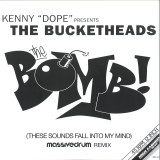
Masters at Work member Kenny “Dope” Gonzalez is the genius behind The Bucketheads – The Bomb! (These Sounds Fall Into My Mind). An established History of House hall of famer’, The Bomb’ is a 90’s house, party soundtrack essential that mixies electro, hip-hop and 4/4 house it features samples from Chicago’s ‘Street Player’ & Green Velvet’s ‘The Preacher Man’ fused into a disco-funk and house groove with edgy, funky, rough and ready beats and subtle latino flavour. It easy to see why its ranked in the 100 Greatest Dance Singles of All Time! Portuguese house producer Massivedrum is on remix duties. He has remixed dance royalty from Bob Sinclar, Axwell, Mory Kantè, Alexandra Stan, DJ Chus, Kentphonik, Yolanda B Cool among many others. He lends his house sensibilities and ear for the floor to enhance ‘The Bomb’ to new levels for an unforgettable experience. Besides the Massivedrum remix and it’s dub, also the full 14’51” minutes original version is available on this double A sided release! The Massivedrum remix is taken from the album “High Fashion Dance Music 5 – Mixed by Ben Liebrand”, which is available on LP/CD/MC and DCC.
- Personality Crisis
- Looking For A Kiss
- Vietnamese Baby
- Lonely Planet Boy
- Frankenstein (Orig.)
- Trash
- Bad Girl
- Subway Train
- Pills
- Private World
- Jet Boy
The extroverted blend of attitude, energy, and ostentatiousness that spills from the New York Dolls’ self-titled debut can be seen in full view on the album cover. Depicting the quintet in its hallmark flash-and-trash apparel and in drag appearance, the 1973 album scared away a considerable amount of potential listeners while capturing the attention of a sizable audience that recognized the band for what it was: zeitgeist pioneers who helped develop the punk and glam rock movements.
Named by Rolling Stone the 301st Greatest Album of All Time and by Mojo the 49th greatest album of all time, New York Dolls receives long-overdue audiophile treatment on Mobile Fidelity’s numbered-edition 180g 45RPM 2LP set. Sourced from the original master tapes, pressed at Fidelity Record Pressing in California, and housed in a Stoughton gatefold jacket, this collectible version marks the first time the group’s career-making statement is available to be experienced in audiophile quality.
Far from harboring the crude elements that became associated with the punk scene, New York Dolls benefits from keen production overseen by none other than Todd Rundgren. Though more accustomed to working far higher-caliber musicians, Rundgren — taken by the New York Dolls’ charisma and cool, if not their instrumental approach — fully understood the ensemble’s aesthetic. He captured what went down at New York City’s Record Plant with an astute blend of live-on-the-floor feel, raw authenticity, and professional acumen.
On Mobile Fidelity’s definitive-sounding reissue, you can hear those facets as well as key details, dynamics, and textures with previously unimaginable insight. Rundgren preserved generous degrees of grit, grime, and grease while bestowing the raucous music with elevated levels of separation, solidity, and impact every landmark recording deserves. His vision extends to introducing choice accents — barroom piano notes, Moog synthesizer passages, Buddy Bowser’s honking saxophones — that add to the songs’ appeal without interfering with the primary architecture.
Afforded extra groove space on this pressing, the tenor, presentation, and attack of both vocalist David Johansen and now-iconic guitarists Johnny Thunders and Sylvain Sylvain come across with stunning vibrancy and vitality. The New York Dolls often seem headed off the rails and into the red, but somehow, the strut, swagger, and sloppiness — and the associated sleaze and scruff, scrape and snarl, frenzy and feverishness those characteristics entail — remain together as a whole that shakes its collective fist at the frustrations, isolation, disarray, and disillusionment of youth chaos and urban decay.
Kicking off its debut with “Personality Crisis,” cited by Rolling Stone as one of the 500 Greatest Songs of All Time, the band makes obvious its grasp of alienation, deviance, displacement, and suburban disaffection — as well as its capacity to play hanging-by-a-thread boogie, noisy rock ‘n’ roll, and Brill Building-inspired pop. The lipstick-kissed New York Dolls possesses traits many of its harsher predecessors would overlook: joyfulness and melody, topped with a knack for knowing how and where to take a song inside of three-and-a-half minutes.
Dive and dash with the belligerent “Looking for a Kiss”; stomp your feet and clap your hands to the big choruses of “Jet Boy”; surrender to the demands and provocations of the coded “Vietnamese Baby”; decide whether “Bad Girl” yearns to explode or implode. It’s one of several tunes here that allude to the world coming to end. Of course, that doesn’t mean there isn’t time for a fling before everything burns. “There’s no place I gotta go,” yowls Johansen. And he means it.
Adorned with tonal crunch, glitter, and gristle, New York Dolls takes pride in its brashness and brattiness. The rambunctious effort, which earned the band the distinction of being voted both “Best New Group of the Year” and “Worst New Group of the Year” in the pages of Creem, displays knowing reverence for the blues without calling attention to the style. The folk-laden “Lonely Planet Boy” is nothing if not a collision of heart-on-the-sleeve emotions and the desire in the face of challenges to maintain a tough-skinned exterior. An interpretation of Bo Diddley’s “Pills,” complete with shivering harmonica and clattering rhythms, announces there’s no cure for what infects this band. It’s that contagious. And how.
His deliveries gushing with campy fun, playful irreverence, and sheer decadence, Johansen doubles as the equivalent of an open fire hydrant that spouts at will. He’s at once tender and vicious, serious and tongue-in-cheek. On arguably his finest hour on the album, Johansen’s phrasing, passion, and lyrical ambiguity alone turn “Trash” into an insistent glam-rock gem whose echoing harmonies and girl-group references stamp it a pop classic.
Too much, too soon? Only for those averse to some of the finest rock ‘n’ roll ever put on tape.
- 1: Press Play
- 2: Pop’s Love Suicide
- 3: Tumble In The Rough
- 4: Big Bang Baby
- 5: Lady Picture Show
- 6: And So I Know
- 7: Trippin’ On A Hole In A Paper Heart
- 8: Art School Girl
- 9: Adhesive
- 10: Ride The Cliché
- 11: Daisy
- 12: Seven Caged Tigers
Experience the Double-Platinum 1996 Album in Audiophile Sound for the First Time
Mobile Fidelity’s Numbered-Edition 180g 45RPM 2LP Set Is Sourced from the Original Analogue Tapes
1/2” / 30 IPS analogue master to DSD 256 to analogue console to lathe
If great art, as many believe, is inherently polarizing, then the Stone Temple Pilots’ Tiny Music… Songs from the Vatican Gift Shop easily ranks as the California-based band’s finest album. Simultaneously celebrated and castigated upon release in spring 1996, the group’s third full-length finds vocalist Scott Weiland and company expanding their “grunge” palette with a smart blend of glam rock, psychedelia, jangle pop, and other related styles. Having benefited from long-view reassessments that shed the biases and meanness of initial criticisms, the double-platinum effort is now largely and rightly seen as a creative masterwork. All the more reason why it deserves reference-grade production.
Overseen by producer Brendan O’Brien, Stone Temple Pilots used bedrooms, hallways, bathrooms, and the lawn to capture a broad blend of textures, spaciousness, and ambience that helped underline the group’s obvious (and somewhat unexpected) leap from normal “alternative” status to an artist whose aspirations went beyond that of many of its contemporaries. You can hear the multitude of details and tonalities with previously unattained clarity, presence, and scope on this fantastic reissue, which also delivers the impact and punch every rock record deserves. Another tremendous asset: The depth, grain, and pitch of Weiland’s voice.
For all the contagious choruses and glossy melodies that help make Tiny Music… Songs from the Vatican Gift Shop sparkle, the vocal performances of the late singer arguably rank as the best that the much-missed Weiland committed to tape. None other than the Smashing Pumpkins’ Billy Corgan — who, like many peers and critics, felt a pressing need to reevaluate the record as both time marched on and the self-importance attached to the “alternative” scene faded — praised Weiland’s efforts by noting: “Like Bowie can and does, it was Scott's phrasing that pushed his music into a unique, and hard to pin down, aesthetic sonicsphere.”
Smooth and diverse, those traits are everywhere on Tiny Music… Songs from the Vatican Gift Shop. From the clever combination of emotional closeness and distance he brings to the catchy albeit ultimately melancholic “Lady Picture Show”; to the lounge-fly balladeering that causes “And So I Know” to lightly swing akin to a bleary-eyed house band’s final number at a 4 A.M. bar; to the effortless cool and laissez-faire casualness he articulates on the grinding “Pop’s Love Suicide”; to the dimensional raspiness, defiant energy, and let-loose wail that sail through the crunchy “Big Bang Baby.”
The latter tune, the record’s first single and per Weiland a conscious attempt by the band to deconstruct its prior approaches, clearly borrows from the Rolling Stones’ “Jumpin’ Jack Flash.” Because of it, the song drew all kinds of barbs from naysayers. Their disdain extended to most material on Tiny Music… Songs from the Vatican Gift Shop, which indirectly references other prized acts such as the Beatles, Cheap Trick, T. Rex, and Lush. Those cynics failed to grasp that Stone Temple Pilots were paying homage and having a blast, with even Weiland, then battling serious substance-abuse and legal issues, getting in on the action.
Stone Temple Pilots’ skeptics also turned a deaf ear to the records’ stellar pop craftsmanship, sticky hooks, and sly commentary on music-industry machinations and fame. Not to mention the band’s intent, made clear from the outset. In an interview conducted in 1994, guitarist Robert DeLeo stated: “The last thing I wanted to do with this band was make everybody believe we invented something.”
Seen through that lens and the hindsight afforded history, and appreciated independent of the self-righteous authenticity standards of the day, Tiny Music… Songs from the Vatican Gift Shop sounds borderline fearless while authoritatively checking all the right boxes for fun, flavor, and finesse. Part winking send-up, part tribute to the glitter rock age, and part middle finger towards the hip crowd that didn’t know what they were missing, this mid-90s classic repeatedly invites you to drop the needle and press play.
- A1: Jamming
- A2: Waiting In Vain
- B1: Turn Your Lights Down Low
- B2: Three Little Birds
- B3: *One Love / People Get Ready
- C1: Natural Mystic
- C2: So Much Things To Say
- C3: Guiltiness
- D1: The Heathen
- D2: Exodus
Analogue Productions' UHQR, the pinnacle of high-quality vinyl! 45 RPM Ultra High Quality Record release limited to 5,000 copies Mastered from the original tapes by Ryan K. Smith at Sterling Sound Pressed at Quality Record Pressings using Clarity Vinyl® Purest possible pressing and most visually stunning presentation and packaging!
By the time Bob Marley died, he was one of the world's first global superstars, famous and lauded from Europe through Africa and the Americas. Some even saw him as not just a reggae singer but as a folk hero, a sort of freedom fighter, and to this day his enduring image feels greater than the music he made, writes Pitchfork. In the 21st century, Bob Marley is a global cultural icon and the first Jamaican inducted into the Rock & Roll Hall of Fame. 1977's Exodus — recorded in London exile after a failed attempt on his life — turned out to be Marley's biggest-selling studio album.
Time magazine named it the greatest LP of the 20th century. Other Marley discs had bigger hits and still others had better album tracks, but the balance Marley strikes between politics, religion, and romance on Exodus — compare and contrast the urgent title track and the laid-back "Jamming" — shows a pop star at the peak of his powers.
Now, Analogue Productions presents perfection — Exodus in UHQR 45 RPM format on Clarity Vinyl. This Ultra High Quality Record release will be limited to 4,500 copies, with gold foil individually numbered jackets. After the success of 1974's Natty Dread and 1976's Rastaman Vibration, Bob Marley was not only the most successful reggae musician in the world, he was one of the most powerful men in Jamaica. Powerful enough, in fact, that he was shot by gunmen who broke into his home in December 1976, days before he was to play a massive free concert intended to ease tensions days before a contentious election for Jamaican Prime Minister.
In the wake of the assassination attempt, Marley and his band left Jamaica and settled in London for two years, where he recorded Exodus. Exodus represented a subtle but significant shift for Marley; while he continued to speak out against political corruption and for freedom and equality for Third World people, his skill as a songwriter was as strong as ever, and Exodus boasted more than a few classics, "including the title song, 'Three Little Birds,' 'Waiting in Vain,' and 'Turn Your Lights Down Low,' tunes that defined Marley's gift for sounding laid-back and incisive at once," writes AllMusic. This UHQR is remastered at 45 RPM by Sterling Sound's Ryan K. Smith from the original analog master tapes. Each UHQR will be pressed on 180-gram vinyl at Acoustic Sounds' industry-leading pressing plant Quality Record Pressings (QRP) using hand-selected Clarity Vinyl® with attention paid to every single detail. These records will feature the same flat profile that helped to make the original UHQR so desirable. From the lead-in groove to the run-out groove, there is no pitch to the profile, allowing the customer's stylus to play truly perpendicular to the grooves from edge to center. Clarity Vinyl allows for the purest possible pressing and the most visually stunning presentation. Every UHQR will be hand inspected upon pressing completion, and only the truly flawless will be allowed to go to market. Each UHQR will be packaged in a custom clamshell box and will include a booklet detailing the entire process of making a UHQR along with a hand-signed certificate of inspection. This will be a truly deluxe, collectible product.
- A1: Positive Vibration
- A2: Roots, Rock, Reggae
- B1: Johnny Was
- B2: Cry To Me
- B3: Want More
- C1: Crazy Baldhead
- C2: Who The Cap Fit
- D1: Night Shift
- D2: War
- D3: Rat Race
Bob Marley & The Wailers' Rastaman Vibration Analogue Productions' UHQR, the pinnacle of high-quality vinyl! 45 RPM 2LP Ultra High Quality Record release limited to 4,500 copies Mastered from the original tapes by Ryan K. Smith at Sterling Sound Pressed on 180-gram at Quality Record Pressings using Clarity Vinyl® Includes "12 x 12" 8-page booklet featuring new liner notes by musician and Marley biographer Leroy Jodie Pierson (APO Records Direct-To-Disc AAPO 005), plus exclusive photos by Kim-Gottlieb Walker Purest possible pressing and most visually stunning presentation and packaging!
When Rastaman Vibration was first released in America in 1976 it did what some in the music industry considered nearly impossible at the time. It took Bob Marley into the Top Ten alongside disco records and corporate rock, points out Rolling Stone, which rates the album 4 stars. Despite the good cheer of the title track and the upbeat "Roots, Rock, Reggae," Rastaman Vibration contains some of Marley's most intense images of oppression, paranoia and despair. Tracks such as "Who the Cap Fit," "Crazy Baldhead" and "War" are offered by the Wailers with dire urgency as Marley's brutal visions are echoed by his own church choir, the I-Threes.
More than four decades later, neither Marley's music nor his message has lost its sting. Now, Analogue Productions presents perfection — Rastaman Vibration cut at 45 RPM in UHQR format on 180-gram 2LP Clarity Vinyl. This Ultra High Quality Record release will be limited to 4,500 copies, with gold foil individually numbered jackets. For Bob Marley, 1975 was a triumphant year. The singer's Natty Dread album featured one of his strongest batches of original material (the first compiled after the departure of Peter Tosh and Bunny Wailer) and delivered Top 40 hit "No Woman No Cry." The follow-up Live set, a document of Marley's appearance at London's Lyceum, found the singer conquering England as well. Upon completing the tour, Marley and his band returned to Jamaica, laying down the tracks for Rastaman Vibration (1976) at legendary studios run by Harry Johnson and Joe Gibbs.
At the mixing board for the sessions were Sylvan Morris and Errol Thompson, Jamaican engineers of the highest caliber. Of the material on Rastaman Vibration, "War," for one, remains one of the most stunning statements of the singer's career. Though it is essentially a straight reading of one of Haile Selassie's speeches, Marley phrases the text exquisitely to fit a musical setting, a quiet intensity lying just below the surface. Equally strong are the likes of "Rat Race,""'Crazy Baldhead," and "Want More."
These songs are tempered by buoyant, lighthearted material like "Cry to Me," "Night Shift," and "Positive Vibration." Not quite as strong as some of the love songs Marley would score hits with on subsequent albums, "Cry to Me" seems like an obvious choice for a single and remains underrated. This UHQR is remastered at 45 RPM by Sterling Sound's Ryan K. Smith from the original analog master tapes. Each UHQR will be pressed at Acoustic Sounds' industry-leading pressing plant Quality Record Pressings (QRP) using hand-selected Clarity Vinyl® with attention paid to every single detail. These records will feature the same flat profile that helped to make the original UHQR so desirable. From the lead-in groove to the run-out groove, there is no pitch to the profile, allowing the customer's stylus to play truly perpendicular to the grooves from edge to center.
Clarity Vinyl allows for the purest possible pressing and the most visually stunning presentation. Every UHQR will be hand inspected upon pressing completion, and only the truly flawless will be allowed to go to market. Each UHQR will be packaged in a custom clamshell box and will include a booklet detailing the entire process of making a UHQR along with a hand-signed certificate of inspection. This will be a truly deluxe, collectible product. In addition to the UHQR booklet the package will contain a 8-page 12" x 12" booklet containing new liner notes by musican and Marley biographer Leroy Jodie Pierson as well as exclusive photos by Kim-Gottlieb Walker. Pierson is a past performer for Blues Masters at the Crossroads, the two-night historic blues festival at Blue Heaven Studios in Salina, Kansas. He's also recorded a Direct-To-Disc blues album for APO Records. (AAPO 005) Rastaman Vibration — now a landmark production on 180-gram 45 RPM Analogue Productions UHQR Clarity Vinyl!
Black Vinyl[22,90 €]
CLEAR YELLOW W/ B'N'W SPLATTER Vinyl[22,27 €]
SMOKEY BLOODRED COL. VINYL[23,11 €]
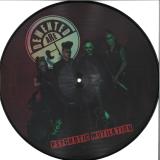
Wegen der großen Nachfrage: die DAG-Tradition der Picture Discs wird auch mit dem neuen Album fortgeführt! 39 Jahre nach ihrem Debutalbum und 13 Jahre nach "Welcome Back To Insanity Hall" veröffentlicht eine der legendärsten original Psychobilly-Acts um den charismatischen, außergewöhnlichen (manche würden sagen "frenzy") Bandleader Mark "Sparky" Philips ein Dutzend neue Songs, oder sind's nicht doch 13? PSYCHOTIC MUTILATION! Schon von jeher scheren sich DAG einen Dreck um den klassischen Psychobilly-Purismus: Ihr Sound ist immer noch eine einzigartige Mischung (Hellbilly) und kombiniert Elemente von Rockabilly, Punk, höllischem Rock'n'Roll mit mal Country-esken Einflüssen oder dunkelsten Blues, alles immer geprägt von Sparkys rauem, giftigem Gesang. Und als ganz besonderer Gast tritt Emanuela Hutter von The Hillbilly Moon Explosion wieder im Duett mit Sparky bei ,Cast A Lonesome Shadow" an. Eine wilde und schräge musikalische Reise durch menschliche Abgründe, Wahnsinn und dunkle Sehnsüchte. "Psychotic Mutilation" mit genau den Songs, die diese kranke Welt verdient. Simply a masterpiece!! Die Pressung der LP-Erstauflage dürfte ein jedes Sammlerherz höherschlagen lassen, denn neben 180g Vinyl, klassisch schwarz oder Multicolour, gibt es noch ein Plakat und am Ende der endlos B-Seiten-Rille ein verstecktes Special zu finden, oder genauer gesagt: ganz in der Mitte der B-Seite....lasst euch überraschen. Hellbilly ist zurück! Dies hier ist die limitierte Picture Disc-Vinylversion, in ausgestanztem Sleeve und ohne Poster.
Improvised protest songs from free music group Ruhiges Gewerbe.
Music: Ruhiges Gewerbe
Mix: Steueroase
Master: The Bastard
Design: Employee
- A1: Way Back Then
- A2: Farewell
- A3: Don't Die In Vain
- A4: War
- A5: Sacrifice
- A6: Round The Circle I
- A7: Round I
- A8: The Rope Is Tied
- B1: Player Vs Pink Guards
- B2: No Way Back
- B3: We're Together
- B4: Way Forward
- B5: Pink Soldiers Redux
- B6: Ox I
- B7: Vote I
- C1: Jung-Bae Ya!
- C2: Gong-Gi With Bullets
- C3: The Team Hj
- C4: Birth
- C5: You're Nothing But A Puppet
- C6: Auf Wiedersehen
- C7: Let Me Be A Part Of The Game
- C8: Sad
- D1: Round The Circle V
- D2: Jun-Hee
- D3: Unfolded
- D4: Round Vi
Orange And Yellow Vinyl[46,85 €]
Jung Jaeil's haunting and innovative score for Netflix's global sensation Squid Game finally arrives on vinyl this summer! For three seasons, Jung's (of Parasite and Mickey 17 fame) iconic music has been essential in creating the intense atmosphere and emotional impact of the series. For this vinyl release, Jung Jaeil has exclusively compiled the best moments from three seasons of Squid Game. On this double LP, you'll hear Jung's mastery of blending classical, electronic and minimalist elements to create a soundscape that reflects the psychological tension and moral complexity of the show. From eerie piano motifs to unsettling ambient textures, the soundtrack heightens the suspense and emotional gravity of the survival drama. Tracks such as “Way Back Then” and “Pink Soldiers Redux” have become iconic for their chilling simplicity and dramatic impact. Squid Game's soundtrack not only complements the show's gripping visuals, but also stands as a masterclass in modern TV scoring. Jung Jaeil's work has received widespread acclaim, cementing his reputation as one of the most visionary contemporary composers. Squid Game is a limited edition of 3000 individually numbered copies on green (LP1) & pink (LP2) coloured vinyl. The records are housed in a limited edition POP-UP sleeve and include a 4-page booklet with liner notes by Jung Jaeil.
- A1: Way Back Then
- A2: Farewell
- A3: Don't Die In Vain
- A4: War
- A5: Sacrifice
- A6: Round The Circle I
- A7: Round I
- A8: The Rope Is Tied
- B1: Player Vs Pink Guards
- B2: No Way Back
- B3: We're Together
- B4: Way Forward
- B5: Pink Soldiers Redux
- B6: Ox I
- B7: Vote I
- C1: Jung-Bae Ya!
- C2: Gong-Gi With Bullets
- C3: The Team Hj
- C4: Birth
- C5: You're Nothing But A Puppet
- C6: Auf Wiedersehen
- C7: Let Me Be A Part Of The Game
- C8: Sad
- D1: Round The Circle V
- D4: Round Vi
- D2: Jun-Hee
- D3: Unfolded
Black And Pink Vinyl[46,85 €]
Jung Jaeil's haunting and innovative score for Netflix's global sensation Squid Game finally arrives on vinyl this summer! For three seasons, Jung's (of Parasite and Mickey 17 fame) iconic music has been essential in creating the intense atmosphere and emotional impact of the series. For this vinyl release, Jung Jaeil has exclusively compiled the best moments from three seasons of Squid Game. On this double LP, you'll hear Jung's mastery of blending classical, electronic and minimalist elements to create a soundscape that reflects the psychological tension and moral complexity of the show. From eerie piano motifs to unsettling ambient textures, the soundtrack heightens the suspense and emotional gravity of the survival drama. Tracks such as “Way Back Then” and “Pink Soldiers Redux” have become iconic for their chilling simplicity and dramatic impact. Squid Game's soundtrack not only complements the show's gripping visuals, but also stands as a masterclass in modern TV scoring. Jung Jaeil's work has received widespread acclaim, cementing his reputation as one of the most visionary contemporary composers. Squid Game is a limited edition of 3000 individually numbered copies on green (LP1) & pink (LP2) coloured vinyl. The records are housed in a limited edition POP-UP sleeve and include a 4-page booklet with liner notes by Jung Jaeil.
- A1: 1000 Light Years Dub (Feat. High Times Players, Lloyd Obeah Denton)
- A2: In The Shadow Dub (Feat. Vin Gordon, Glen Dacosta, Sheldon "Atiiba" Bernard)
- A3: Whitewater Dub (Feat. Ibo Cooper, Lew Chang)
- A4: Memories Of Old Dub (Feat. Ernest Ranglin, Tyrone Downie)
- A5: Rose Hall’s Birds Dub (Feat. Vin Gordon, Glen Dacosta)
- B1: Squirrel Inna Barrel Dub (Feat. Ernest Ranglin, Vin Gordon, Karl Bryan)
- B2: Under The Cotton Tree Dub (Feat. Glen Dacosta, Ibo Cooper, Cat Coore)
- B3: 45 Charles Street Dub (Feat. Roots Radics, Dwight Pickney, Dean Fraser)
- B4: Everlasting Love Dub (Feat. Sly & Robbie, Dean Fraser, Peace Diouf)
Bringing together over 50 of Jamaica's greatest session musicians, whose work spans from the birth of reggae in the late 1960s until today, Roots Architects is the largest gathering of Jamaican musical talent on one all-instrumental album. Never before have so many veterans, who helped create the immortal rhythms that made reggae internationally successful, been assembled to play on new material without vocals. This project aims to celebrate and pay tribute to the unsung heroes of reggae music: the rhythm builders or Roots Architects. Following the outstanding success of the first chapter of the project, From Then 'Til Now (2024), Fruits Records is pleased to reveal the dub album From Dub 'Til Now. A veritable immersion in the mythical sound of Kingston studios in the late 1970s. Dub master Roberto Sánchez sublimates the work of the Roots Architects with wildly inventive sound experiments. Reminiscent of the finest years of King Tubby, Lee "Scratch" Perry and Scientist.
The project is the brainchild of Swiss keyboardist and producer Mathias Liengme. In 2013, he travelled to Kingston, Jamaica, to produce The Inspirators project, an all-star album gathering Leroy ”Horse-mouth” Wallace, Lloyd Parks, Earl ”Chinna” Smith and Sangie Davis, the four of them acting both as musicians and vocalists. This first experience in Kingston studio life paved the way to what would become the Roots Architects project. In February and March 2017 Mathias Liengme travelled for the fifth time to Kingston to record as many of reggae’s greatest living veteran musicians as he could. With the help of a few of these Architects like Robbie Lyn, Fil Callender or Dalton Browne, he managed to gather over 50 session musicians aged 60 to 85 on nine instrumental songs.
Roots Architects are legends back together in Kingston studios doing what they do best: creating in-strumental music all together!
- 1: The New Resident
- 2: All Virtue
- 3: Blow The Horns On 'Em
- 4: Blinfold Test #10 (He Don't Play)
- 5: The Thang-Thang
- 6: The Plan Pt. 1
- 7: Tension
- 8: Heat
- 9: Smoke Break
- 10: Gamble On Ya Boy
- 11: The Plan (Reprise)
- 12: The Ox (805)
- 1: Take That Money
- 2: Life
- 3: Parklight
- 4: Drinks Up!
- 5: Yo Yo Affair Pt. 1 & 2
- 6: The Way That I Live
- 7: Ratrace
- 8: I Want It Back
- 9: Go!
- 10: Disco Dance
- 11: What It Do
- 12: Stop
Madlib’s WLIB AM: King of the Wigflip Returns on Double Vinyl via BBE Music BBE Music is thrilled to announce the long-awaited rerelease of WLIB AM: King of the Wigflip, the final installment in the legendary Beat Generation series from none other than Madlib. Originally released in 2008, this masterful collage of dusty loops, raw beats, and left-field soundscapes remains a high-water mark in the Stones Throw producer’s sprawling discography.
Now, for the first time in years, fans can experience the album in all its analog glory with this deluxe double vinyl edition, carefully remastered to preserve Madlib’s signature warmth and grit. A tribute to pirate radio culture and late-night airwaves, WLIB AM weaves together a rich tapestry of hip-hop, jazz, and soul, featuring an all-star cas t of collaborators, including Talib Kweli, Guilty Simpson, MED, and Oh No. Each track showcases Madlib’s uncanny ability to blur the lines between genres, effortlessly flipping obscure samples into hypnotic, off-kilter rhythms. From the hypnotic bounce of “Blow the Horns on ‘Em” to the smoked-out groove of “The Plan Pt. 1,” this is Madlib at his most playful, unpredictable, and inspired.
This special double vinyl edition, released exclusively via BBE Music, brings one of the Beat Generation series’ most celebrated albums back into circulation for crate-diggers and collectors alike. With original artwork and a high-quality pressing, this rerelease is a must-have for Madlib aficionados and vinyl lovers who appreciate raw, unfiltered beat craftsmanship. Don’t miss your chance to own a piece of hip-hop history—WLIB AM: King of the Wigflip is back and sounding better than ever.