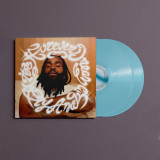
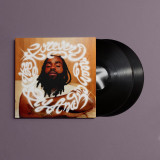
»Nuts of Ay«, the thirteenth album by the Berlin-based electronic pop duo Tarwater (Ronald Lippok and Bernd Jestram), is their first in a decade, since 2014’s »Adrift«. Beautifully poised and smartly dressed, it's an album that draws Tarwater’s various pasts into a high-definition present, while bringing the duo, yet again, into productive dialogue with all kinds of fellow travellers.
Tarwater’s music has always been marked by a hypnotic pop-ness, but that’s particularly evident on »Nuts of Ay«, where a song like »Hideous Kiss« weaves together jangling guitar, pastoral flute, and flittering electronics into a gem-like construction. While the lyrics of »Hideous Kiss« are written by the duo, »Nuts of Ay« also continues a longstanding Tarwater tradition of recasting the words of others in their own mould. This time, their remit is broad: poetry from Derek Jarman (»All Nuns«) and Millner Place (»Trapdoor Spider«); lyrics from Jean Kenbrovin (»I’m Forever Blowing Bubbles«), the late Shane MacGowan (»USA«) and, again, John Lennon (»Everybody Had a Hard Year«).
This cast of found and borrowed lyricists also finds collaborative echo in the guest musicians dotted throughout »Nuts of Ay«. Schneider TM turns up on the lovely, Felt-like »Spirit of Flux«, where guitars channel the tangled reveries of Vini Reilly and Maurice Deebank into lush pop. Carsten Nicolai joins, as Alva Noto, dappling »On Waves and Years« with intimate glitching textures; he also provides the album cover art. Elsewhere, Masha Qrella appears on »Down Comes the Goose«, and actor Lars Rudolph pitches in for »USA«.
It may have been ten years since the album's predecessor, but Lippok and Jestram have kept active with other projects. They’ve collaborated with Masha Qrella, Immersion, and Iggy Pop; worked on radio plays with Kai Grehn, some based on the writing of Nick Cave (»The Sick Bag Song«, featuring Tilda Swinton, Paula Beer and Alexander Fehling) and William S. Burroughs (»The Cat Inside«); and made music for several radio-tatorts (radio plays based on »Tatort«, a long-running German police TV series) by playwright Tom Peuckert.
Both voracious and committed in their creative energies, Jestram and Lippok report back from these experiments with »Nuts of Ay«, one of their most compelling, deeply lustrous, dreamlike albums yet. They say there was no concept for the album, which is surprising, perhaps, given its holistic mood, explaining it »grew together like a coral reef in the studio over a period of several years«. There’s something to be said for letting an album gather and mutate naturally, without an overarching framework in place, and »Nuts of Ay« certainly feels like an unforced collection of material that nonetheless inhabits a similar space, one where guitars twist like driftwood next to amorphous, aqueous electronics, Lippok’s droll yet completely convincing vocal delivery riding songs that pulse and plume with curious, unpredictable rhythms.
But you can also hear elements – submerged but still present – of other music that’s inspired the duo: they’ve drawn some connections for us with psychedelic folk, Bowie in Berlin, Burial, and the film music of Popol Vuh and Krzysztof Komeda. This music shares a strong sense of place – whether in the world, or the mind – and the twelve songs on »Nuts of Ay« have such similar presence; a shared mood, a shared world, a shared sense of the possibilities of what electronic pop music could, and should, be. A bold and brave pop experiment.
Artwork by Carsten Nicolai
Mastering by Bo Kondren, Calyx Berlin
»Trapdoor Spider«, »On Waves and Years« & »Breaking Day«: lyrics by Milner Place
»All Nuns«: lyrics by Derek Jarman
»USA«: lyrics by Shane MacGowan
»Down Comes the Goose«: lyrics from a traditional song
»Forever Blowing Bubbles«: lyrics by Jaan Kenbrovin
»Everybody Had a Hard Year«: lyrics by John Lennon
Buscar:master mind
Phonica AM proudly introduces the latest release from upcoming Irish-born producer and DJ, Rhythms Of Prescott. For fans of Pepe Bradock and Derrick Carter, this record is a must-have.
The A-side kicks off with 'Beat Heat', a driving filter house monster underpinned by dubbed-out percussion, playful vocal interjections, and infectious disco stabs. Following up is 'RGRT', which delves into a deeper vibe with slick jazz samples and a pulsating filtered bass line. The B-side brings 'The Instigator', a tension-filled mind melter perfect for early morning trippiness, featuring Rhythms Of Prescott's masterful sample manipulation and unique wonkiness.
This release showcases Rhythms Of Prescott's raw approach and jackin' sample manipulation to rock any dancefloor.
Pianist, Composer, Multi-Instrumentalist Eva Novoa Releases First Album from Her Newly Forged Trio with Sax Legend Daniel Carter and Beloved Drummer Francisco Mela
"It’s not a rumor. Brooklyn’s Eva Novoa has formed a new trio! Novoa / Carter / Mela Trio, Vol. 1 marks their first sparkling album together (which is also Eva’s third with 577 Records). The group performed live for the first time in Cambridge (Boston) in 2022 and at the NY Forward Festival in August 2024.
In an invigorating creative explosion recorded at New York City’s Sear Sound in 2021, the multi-talented instrumentalist unites with sax legend Daniel Carter and beloved drummer Francisco Mela. Prepare to be reawakened when you experience Novoa tickling the ivories, dominating the Fender Rhodes, and wowing with the electric harpsichord and Chinese gongs. Even her whistling will linger in your mind!
As captured in the electrifying tracks “Aire” and “Fuego", Novoa / Carter / Mela Trio, Vol. 1 is inspired by the four elements (earth, wind, fire, and water). “Hasta Mañana Vida Mia” weaves together Cuban tradition with soulful lyrics (sung by Francisco) and high-energy, rhythmic conversations with horns and drums. The musicians’ free interplay approach defines this eclectic trio and their sonic universe.
Born in Barcelona, Spain, Eva Novoa is a pianist and composer who’s been mastering her talents since childhood. Calling NYC home since 2012, she has rocked countless local venues with her thrilling performances and has played with many adored artists all over the globe.
Her new album drops on November 22, 2024, and will be available on vinyl, CD, and digital download. Don’t miss the stunning cover art by Novoa’s friend and collaborator, acclaimed street photographer Richard Sandler, and stay tuned for Volumes 2, 3, and 4!"
Piano, Fender Rhodes, Cinese gongs, percussion & whistling by Eva Novoa.
Tenor, alto & soprano saxophones, trumpet, flute, clarinets by Daniel Carter.
Frums & vocals by Francisco Mela.
Recorded April 18, 2021.
Recorded, mixed and mastered by Jeremy Loucas at Sear Sound, New York City.
Photography by Richard Sandler.
Graphic design by Sergio Vezzali.
Graphic support by Mark Smith.
The only album to soundtrack both late-'70s Minneapolis lounges and a Travis Scott x Dior fashion show. Recorded in a host of living rooms with only a Fender Rhodes piano, a Donca Matic Mini Pops drum machine, and Senrick's wide-eyed, 20-year-old voice, the 1977 LP disappeared into the wild and joined the Wendigo in Minnesota lore. A provocative mix of marina soul, easy listening, and loner folk, Dreamin' is a sanguine sliver of the American private mind garden. Harsh winters coupled with a relative lack of interest amongst siblings allowed Chuck Senrick years of unfettered access to the family piano in their Farmington, Minnesota, home. Learning both by ear and by instruction, Senrick began gigging professionally at age 15, joining John Zimmer and the CR4 for a weekly rundown of Allman Brothers, Blind Faith, and Cream covers at the Sea Girt Inn in Lake Orchard. Tapping into James Taylor's pop-chart achievements in songwriting and enunciation, Senrick composed the bulk of the songs featured on Dreamin' before graduating from Farmington High School. At 20, Senrick migrated 30 miles north to the Twin Cities to pursue music full-time. Using borrowed equipment and borrowed living rooms, a string of informal recording sessions generated the quarter-inch tape for Dreamin'. "I didn't know how to do it," Senrick says about producing an album. "I just knew it could be done." Constructed with vocals, Fender Rhodes, and an assortment of rhythm presets on his Donca Matic Mini Pops drum machine, a mere 200 copies of the private-press masterpiece were stamped and sleeved and sold hand-to-hand at performances. Chuck's wife Lesli illustrated the album cover_a pen-to-paper portrait of her husband against the backdrop of the Minneapolis Skyline, she and their newborn son situated on a nearby knoll. Any plans for a re-press were quashed when producer Bruce W. Hansen lost the reels during a messy divorce. "I was a kid with big ideas and not much hope to do anything but play," Senrick said of the Dreamin' era. "It still amazes me that people are interested in it."
The brainchild of drummer/producer Chiminyo, NRG is more than just an album, label or event. It’s a concept. Born out of a conversation about the UK Jazz scene (is it really jazz?) Chiminyo concluded that this musical expression is less about ‘jazz’ and more about energy (NRG).
So with this in mind, he set about to explore, celebrate and harness this NRG in its purest form. No labels, no promoters, no industry, no control. Just Chiminyo and members of his musical community exchanging (strictly improvised) NRG with audiences and capturing the spontaneous beauty to be shared with the world.
This third edition, NRG 3, features an all-star line-up. Modular synth wizard and Ariwo band leader Pouya Ehsaei, electro synth-pop artist and incredible keyboard/synth player Maria Chiara Argiró, and Hak Baker's trumpet player Sam Warner. And you can really feel the vibrant NRG of the capital pulsating throughout. Raucous dance-floor stompers such as 'Enter the Dragon' and 'Fred not Again' are beautifully contrasted with the dreamy, cinematic 'Avalon'. And the addition of instrumental and vocal guests on the night really adds a special touch. 'Stories Untold' opens with flautist Lluis Domènech Plana's lyrical exploration on bamboo flute before developing into an up-tempo house inspired dance tune, whilst Nadeem Din Gabisi's 'Fire' presents a unique perspective on a trap groove that you simply couldn't imagine outside of the context of NRG 3, and towards the end of the track the audio cuts to camera audio due to an issue with the desk recording, a magical moment that puts you in right there in the room and reminds you that this was a live gig!
It is incredible to think this record is improvised, because each tune comes across as a carefully sculpted master-piece, a clear testament to the incredible musicians on the line-up.
The eighth and latest slate of refined retro-futuristic synth-pop by Liz Wendelbo and Sean McBride aka Xeno & Oaklander is named after and inspired by "the study of what not to do, a negative image of a positive, the other side, the other:" Via Negativa (in the doorway light). Recorded in the fall of 2023 at their modernist Connecticut home fashioned into a two-story synthesizer laboratory and mixing studio, the album is uniquely visionary in spirit yet precision in execution, a contrast central to the duo's enduring chemistry. Embryonic piano sketches were translated to nuanced modular systems, which McBride weighted with "harmonic padding," tuned percussion, and a spectral transfer device capable of "rendering spasms of rhythmic overtonal filigree." Despite the technological complexity of their craft, emotively the songs require no deciphering - these are technicolor widescreen anthems of the cybernetic age. The eponymous opening track sets the pace, soaring sleekly over glittering synths and call-and-response vocals about arias, shattered light, and faces in stereo. From there the record expands and contracts, cycling through a gallery of moods and masks, animated by the band's fascination with drama, "the idea of personae," and theatrical characters. Track by track, a murky, tragic backstory reveals itself: forlorn figures navigating a treacherous mercury mine, alternately poisoned by fumes or buried in collapsing caverns. The tension between Teutonic, utopian synthetic pop and lyrical narratives of ghosts in silos, ruined mills, and the traumas of mineral excavation creates a compelling friction, alternately futurist and obsolete, elevated and subterranean. Wendelbo describes the music's polarities perfectly: "The heavy machinic din of extraction in contrast with the enchantment of the mined precious gems and metals." From bilingual odes to bloodstones ("O Vermillion") to cosmic chrome dance floor classics ("Lost & There" "The present tense can never feel real / So many pasts conspire in the burning sun") to strutting EBM sensualities ("Actor's Foil"), Xeno & Oaklander re-prove themselves masters of the axis of technology and poetry, snaking cables and synesthesia, mining melodies and myths across 15 years of focused artistry. Theirs is a muse still gilded and gleaming, burnished red and silver, attuned to "the unobservable, the unfamiliar, that which you don't see directly."
Exquisitely compiled by Discrepant head honcho Gonçalo F. Cardoso from three tapes released earlier this year by the tireless mind-body of Spencer Clark through his own Pacific City Sound Visions, 'This Year In Coconuts Vol. 2' is another revelation into the deeply personal soundworld of this true voyager of both ancient, present and forthcoming times. Coming from a truly singular artist, capable of conveying multiple visions into a labyrinthine-esque mythology all of his own, these seven tracks feel as much part of their original setting as connected pieces from this never ending and puzzling netherworld.
Dedicated to the Temple of Isis in Pompei and opening sides A and B, the two tracks from 'Tempio d'Iside' set up a scenario not far from a dream version of the Temple itself, made from crystal clear synth-lines and levitating ambiences, like drifting into ancient memories from days to come. Making up about half of the compilation, the four tracks from 'Kowloon Spider Temple' drip into a feverish mosaic of Clark's by now trademarked cascading rhythms, unhinged alien-vocal samples, phantasmic textures and sparkling synth harmonies projecting a catchy hypnotic oblivion filled with intrigue. The sole title track from 'From the Caves and Jungles of Apulia' tangentially reports back to some lower-fi recordings of the past, with its murkier sound inducing the feeling of willing confinement within such caves and jungles. A brilliant Year in Coconuts, indeed.
Mastered by Rasha
On this new LP Harry Bertoia shows why he may have been the first industrial musician. Bertoia often referred to his sound sculptures as a "collaboration with industry" and on this LP Bertoia is intentionally creating heavy, rhythmic music he described as "mechanized," "mechanical" and "factory like."
Recorded in 1971, percussion and repetition emulate the pounding rhythms of machinery on this unique pair of conceptual Bertoia compositions. Bertoia utilizes innovative performance techniques to create new sounds unheard in his ouevre. Even in the busy factory of Bertoia's mind, distant stillness rises up as Bertoia exhibits the massive amount of control he possesses over his many looming sculptures.
"Mechanization" is just one of the many sonic directions Bertoia took while composing and recording between the late 1950's and his death in 1978. He documented all of his ideas and directions in notes accompanying the hundreds of tapes discovered in his barn.
Bertoia's recordings are as much a celebration of sustained tones, intervallic relationships, healing vibrations, deep listening and shimmering harmonics as Indian Classical music, singing bowls, The Well Tuned Piano or Benjamin Franklin's glass armonica. Through these rich harmonics and pulsing pure tone, Bertoia was able to more clearly articulate his inner spirit than he could with sculpture alone – a point he made himself many times in interviews.
Harry Bertoia first came into artistic prominence in the late 1930s and his sculptural, ergonomic chairs, produced by Knoll Furniture beginning in 1952, were soon modernist furniture classics. Inspired by the resonant sounds emanating from metals as he worked them and encouraged by his brother Oreste, whose passion was music, Harry restored a fieldstone "Pennsylvania Dutch" barn as the home for this experiment in sounding sculptures which he had begun in the 1950s. Bertoia was an obsessive composer and relentless experimenter, often working late into the night and accumulating hundreds of tapes of his best performances; Oreste, too, would explore and record the sculptures' sounds during his annual visits to his brother's home in rural Pennsylvania.
Learning by experimentation was common for Bertoia and he mastered the art of tape recording, turning the Sonambient barn into a sound studio with four overhead microphones hanging from the rafters in a square formation. He would experiment with overdubbing by performing along to previous recordings, sometimes backwards, constantly improving his methods while also honing his performance skills. Bertoia was a careful editor of his own work and only chosen recordings remained, each with a date and carefully considered observations written on a note included with each tape. Through these pieces of paper a greater logic can be uncovered, a careful approach to composition, ideas, feelings and forms. The story of Sonambient barn collection will slowly be told through the release of recordings from the archive as well as installations and performances built from Bertoia's own recordings, lectures and a book.
The eighth and latest slate of refined retro-futuristic synth-pop by Liz Wendelbo and Sean McBride aka Xeno & Oaklander is named after and inspired by "the study of what not to do, a negative image of a positive, the other side, the other:" 'Via Negativa (in the doorway light)'. Recorded in the fall of 2023 at their modernist Connecticut home fashioned into a two-story synthesizer laboratory and mixing studio, the album is uniquely visionary in spirit yet precision in execution, a contrast central to the duo’s enduring chemistry. Embryonic piano sketches were translated to nuanced modular systems, which McBride weighted with "harmonic padding," tuned percussion, and a spectral transfer device capable of "rendering spasms of rhythmic overtonal filigree." Despite the technological complexity of their craft, emotively the songs require no deciphering – these are technicolor widescreen anthems of the cybernetic age.
The eponymous opening track sets the pace, soaring sleekly over glittering synths and call-and-response vocals about arias, shattered light, and faces in stereo. From there the record expands and contracts, cycling through a gallery of moods and masks, animated by the band’s fascination with drama, "the idea of personae," and theatrical characters. Track by track, a murky, tragic backstory reveals itself: forlorn figures navigating a treacherous mercury mine, alternately poisoned by fumes or buried in collapsing caverns. The tension between Teutonic, utopian synthetic pop and lyrical narratives of ghosts in silos, ruined mills, and the traumas of mineral excavation creates a compelling friction, alternately futurist and obsolete, elevated and subterranean. Wendelbo describes the music’s polarities perfectly: "The heavy machinic din of extraction in contrast with the enchantment of the mined precious gems and metals."
From bilingual odes to bloodstones ("O Vermillion") to cosmic chrome dance floor classics ("Lost & There" "The present tense can never feel real / So many pasts conspire in the burning sun") to strutting EBM sensualities ("Actor's Foil"), Xeno & Oaklander re-prove themselves masters of the axis of technology and poetry, snaking cables and synesthesia, mining melodies and myths across 15 years of focused artistry. Theirs is a muse still gilded and gleaming, burnished red and silver, attuned to "the unobservable, the unfamiliar, that which you don’t see directly."
The eighth and latest slate of refined retro-futuristic synth-pop by Liz Wendelbo and Sean McBride aka Xeno & Oaklander is named after and inspired by "the study of what not to do, a negative image of a positive, the other side, the other:" 'Via Negativa (in the doorway light)'. Recorded in the fall of 2023 at their modernist Connecticut home fashioned into a two-story synthesizer laboratory and mixing studio, the album is uniquely visionary in spirit yet precision in execution, a contrast central to the duo’s enduring chemistry. Embryonic piano sketches were translated to nuanced modular systems, which McBride weighted with "harmonic padding," tuned percussion, and a spectral transfer device capable of "rendering spasms of rhythmic overtonal filigree." Despite the technological complexity of their craft, emotively the songs require no deciphering – these are technicolor widescreen anthems of the cybernetic age.
The eponymous opening track sets the pace, soaring sleekly over glittering synths and call-and-response vocals about arias, shattered light, and faces in stereo. From there the record expands and contracts, cycling through a gallery of moods and masks, animated by the band’s fascination with drama, "the idea of personae," and theatrical characters. Track by track, a murky, tragic backstory reveals itself: forlorn figures navigating a treacherous mercury mine, alternately poisoned by fumes or buried in collapsing caverns. The tension between Teutonic, utopian synthetic pop and lyrical narratives of ghosts in silos, ruined mills, and the traumas of mineral excavation creates a compelling friction, alternately futurist and obsolete, elevated and subterranean. Wendelbo describes the music’s polarities perfectly: "The heavy machinic din of extraction in contrast with the enchantment of the mined precious gems and metals."
From bilingual odes to bloodstones ("O Vermillion") to cosmic chrome dance floor classics ("Lost & There" "The present tense can never feel real / So many pasts conspire in the burning sun") to strutting EBM sensualities ("Actor's Foil"), Xeno & Oaklander re-prove themselves masters of the axis of technology and poetry, snaking cables and synesthesia, mining melodies and myths across 15 years of focused artistry. Theirs is a muse still gilded and gleaming, burnished red and silver, attuned to "the unobservable, the unfamiliar, that which you don’t see directly."
- A1: Let ‘Em Know (Produced By Domino)
- A2: Live And Let Live (Produced By Domino)
- A3: That’s When Ya Lost (Produced By Del Tha Funkee Homosapien)
- B1: A Name I Call Myself (Produced By Del Tha Funkee Homosapien)
- B2: Disseshowedo (Produced By Domino And Jay Biz)
- B3: What A Way To Go Out (Produced By Domino)
- B4: Never No More (Produced By A-Plus)
- C1: 93 ‘Til Infinity (Produced By A-Plus)
- C2: Limitations Feat. Casual (Produced By Jay Biz)
- C3: Anything Can Happen (Produced By A-Plus)
- D1: Make Your Mind Up (Produced By Del Tha Funkee Homosapien)
- D2: Batting Practice (Produced By Casual)
- D3: Tell Me Who Profits (Produced By Domino)
- D4: Outro (Produced By Domino)
Repress! There are very few albums across any genre that stand the test of time better than 93 ‘Til Infinity, the classic debut record from the Hieroglyphics crew’s very own Souls of Mischief. In an era where Gangsta Rap and G-Funk dominated the West Coast Rap scene, Souls broke ground on a completely unique and thoroughly west coast sound. While the Dr. Dre’s and the Snoop Doggs were garnering much of the mainstream attention, Souls were quietly forging a charismatic, critically acclaimed, and cohesively shaped record that when categorized, sounded much closer to A Tribe Called Quest than N.W.A. The sound of their debut is characteristic of the distinct style explored by the collective, including a rhyme scheme based on internal rhyme and beats centered around a live bass and obscure jazz and funk samples.
93 ‘Til Infinity was propelled into success by its title track and lead single, which reached #32 on the Billboard Hot 100. It also featured singles “That’s When Ya Lost” and “Never No More” which also reached the Hot Rap Singles. In 1998, the album was selected as one of The Source’s 100 Best Rap Albums of All Time. Considered by many to be a text book “slept-on” classic Rap record, 93 ‘Til Infinity has only grown better with age. The album simply defines the Hiero golden age with a sound that would later be fine tuned with strong releases from MCs Del The Funkee Homosapien, Casual and Pep Love.
It takes some serious bravado to name your album 93 ‘Til Infinity, but certainly the goal of creating a Hip Hop “classic” must have been on the collective minds of group members A-Plus, Tajai, Opio, and Phesto when recording this landmark moment in Hip Hop history. It’s true, even seventeen years after the album’s initial release many people are still discovering it, and with this re-mastered reissue on double vinyl, fans all over the world will once again discover the brilliance that 93 ‘Til Infinity delivers and will continue to deliver beyond infinity.
The Outer Edge is excited to announce the release of an intense and previously undiscovered funk rap / boogie single, featuring two tracks recorded in 1986.
While researching for his book on 80s funk music in Germany, DJ Scientist explored bands from Bavaria that collaborated with GIs. One of these bands is Grand Slam, a group that remains active to this day. The band’s leader, Toby Mayerl, lived near a US Army base in Amberg, where he fell in love with funk after hearing Roger Troutman and Zapp. He soon became part of two groups: Total Control and Grand Slam.
Originally led by guitarist Harry Zawrel, Grand Slam had a “European” funk sound similar to Talking Heads or Level 42. However, in 1985, Mayerl took over the band and merged it with Total Control, a mixed group that included African-American soldiers. From that point on, they shifted towards a heavier funk and soul sound, continuing to work with musicians from the GI community. By late 1986, they had enough material to record their debut album, Make My Day. Although published by the independent label Kerston, the album was only available on cassette, primarily sold at their concerts in early 1987.
DJ Scientist managed to track down an original copy of this ultra-rare tape in the MUZ archive in Nuremberg. "What I heard blew my mind," he said. "The cassette featured seven raw, well-produced funk and soul jams with fantastic arrangements and vocals." As an old-school funk and disco rap collector, he was immediately captivated by the track "Goin' Out," which features GI rapper Calvin E. Flagg. This song evokes the energy of early recorded rap singles from labels like Enjoy or Sugar Hill Records.
On Side B, the second track from the unheard debut album, ‘Don’t Let You Down,’ offers another glimpse of what we've been missing. This uptempo boogie-funk track features lead vocals by Aletha Mcbryde, Calvin E. Flagg, and Oliver Allwardt, along with thrilling synths and a lively brass section - perfect for turning up the volume.
Both tracks have been remastered from the original master tapes, which Toby Mayerl fortunately still had in his archive. The artwork for the release is inspired by original band posters, with the Grand Slam logo taking cues from Bootsy's Rubber Band’s Body Slam! cover from 1982. This limited vinyl pressing is capped at just 350 copies.
Ltd White Vinyl, DL card. 1992's 'Untitled' brought the band's third album that re-cemented the duo once again as the progenitors of the "lo-fi" genre. This breakthrough set transitioned "The Trux" into a never ending all-inclusive rotating cast of musicians. Continuing Fire Records' series of classic remastered albums from Royal Trux, 'Untitled' is released on white vinyl and features updated monochrome and silver artwork. As unpredictable as ever, Neil Hagerty and Jennifer Herrema shook off the next level layering and noise of 'Twin Infinitives' to embrace the history of rock 'n' roll in all its deformed grandeur. Utilizing their ever present mind set of macro-inclusivity, they allowed the subconscious "radio stations" of their lives to infiltrate, lead, and dictate. Culling from their collective minds and memories twisted tunes that touched them. After the blood rush of their much-hailed avant-garde masterpiece 'Twin Infinitives' (1988), this eight-song opus added to the lo-fi genre that originated on 'Twin Infinitives'. On 'Untitled' Hagerty uses his 5-string blues roots and hails rock's twisted potential, while Herrema slurs and snarls in ecstasy. They sound like they're locked in a fourth-floor boudoir at the Chelsea Hotel; bottles clink, an album clicks on its run-out groove, the band plays on. In the mix are the characters and casualties of the 90s, a roll call of swaggering misfits. These aren't superficial sketches, the Trux cut much deeper than that_ "'Junkie Nurse' isn't just about addiction; it's about the twisted hope that even the most broken people can somehow mend others, even when they're falling apart themselves." Jennifer Herrema, Royal Trux. With 'Untitled' Royal Trux justifiably increased their coterie of convicted followers, becoming the cult heroes for a transgressive generation, and the Rosetta Stone for male/female duos (ie:The White Stripes, The Kills etc... ) over the years inspiring everyone from The Silver Jews (David Berman) & Sonic Youth through to melodic blue-eyed soulsters like Hot Chip - "I urge and encourage you to enter the harmolodic multiverse of their music." Alexis Taylor, Hot Chip. "Royal Trux were nothing if not fearless." Pitchfork.
Matter-of-factly, Lycox exclaims "Yaaahh" right at the beginning. That's an affirmation but in times of distress it can also mean resignation, something like "Yeah, whatever". Lycox says he was only freestyling though. Then the bassline appears. Elastic, expressive, full-bodied. And it's not even present the whole time. He was "trying to develop a new formula for the Kuduro beat."
Songs for the club? Most certainly. Different sensibilities, one same focused mind. Lycox evolves within tradition, he has mastered the groove, the ambience, the right tones. Simply called "Energia", the last track circles above wistfully, menacing but maybe just promising some sort of action. With a few drops one could almost switch over to a parallel universe of old school Trance, a reference that feels as alien here as maybe this track feels to someone for whom the standard Afro House sound represents modern African music.
These songs pile up in a threshold balanced between styles, sensations, maybe in the middle of life itself. Such a concentration of energy is bound to need release and that comes figuratively through details in the music reaching out to receptive ears. "To Bem Loko" explicitly tries to "literally drive everyone crazy on the dancefloor." Once again Lycox provides vocals, as in "Edson no Uige", about a friend who embarked on a trip to the Angolan province of Uige and came back speaking only the local dialect known as lingala. A nod to tradition, very emotional, without compromising complex arrangements. Consequently, we the listeners are kept believing there is still enough space for a bright future. To ears accustomed to Lycox productions the title "Contemporaneo" (opening of side B) reads like a redundancy, then.
Maybe this music can never be quite as massive as other Afro styles. Without sounding pretentious, it avoids simplistic patterns, it demands a bit more mental processing while it certainly aims to loosen the limbs. Universal in vocation, underground at the core, Lycox definitely calls it Batida but for some it is still Ghetto Music. Like DJ Veiga said when describing a previous release for Príncipe, Ghetto is home, though. Lycox adds it is a foundation of personality. "Few in our community will recognize your work when you come from the same environment, but once you establish your reputation outside of the neighbourhood and even outside of the country, people will look at you differently, as if you were a star."
Camelot, the legendary seat of King Arthur's court in Early Middle Ages Britain, was probably not a real place. A corruption of the name of a real Romano-Briton city, the word "Camelot" accumulated symbolic, mythic resonances over centuries, until achieving its present usage as a near-synonym of "utopia." In the mid-20th century alone, Camelot inspired an explosion of representations and appropriations, among them the violent, affectless Arthurian court of Robert Bresson's 1974 film Lancelot du Lac and the absurdist iteration of Monty Python's 1975 Holy Grail, both of which feature armored knights erupting into fountains of blood; the mystical Welsh world of novelist John Cowper Powys's profoundly weird 1951 novel Porius, with its Roman cults, wizards and witches, and wanton giants; and the nationalist nostalgia of President John F. Kennedy's White House. Unsurprisingly there are fewer Camelots in more recent memory. Camelot, Canadian songwriter Jennifer Castle's extraordinary, moving 2024 chronicle of the artist in early middle age, charts a realer, more rooted, and more metaphorical place than the fabled Camelot of the Early Middle Ages (or its myriad depictions), but it too is a space more psychic than physical. In Castle's Camelot, the fantastic interpenetrates the mundane, and the Grail, if there is one, distills everyday experience into art and art into faith, subliming terrestrial concerns into sublime celestial prayers to Mother Nature, and to the unfolding process of perfecting imperfection in one's own nature. Co-produced by Jennifer and longtime collaborator Jeff McMurrich, her seventh record is at once her most monumental and unguarded to date, demonstrating a mastery of rendering her verse and melodies alike with crisply poignant economy. For all their pointedly plainspoken lyrical detail and exhilarating full-band musical flourishes, these songs sound inevitable, eternal as morning devotions. "Back in Camelot," she sings on the lilting, vulnerable title track, "I really learned a lot / circles in the crops and / sky-high geometry." The album opens with a candid admission of sleeping "in the unfinished basement," an embarrassing joke that comes true. But the dreamer is redeemed by dreaming, setting sail in her airborne bed above "sirens and desert deities." If she questions her own agency_whether she is "wishing stones were standing" or just "pissing in the wind"_it does not diminish the ineffable existential jolt of such signs and wonders. This abiding tension between belief and doubt, magic and pragmatism, self and other, sacred and profane, and even, arguably, paganism and monotheism, suffuses these ten songs, which limn an interior landscape shot through with sunstriped shadows of "multi-felt dimensions" both mystical and quotidian. The epic scale and transport of "Camelot," with its swooning strings, gives way dramatically to "Some Friends," an acoustic-guitar-and-vocals meditation in miniature on Janus-faced friends and the lunar and solar temperatures of their promises_"bright and beaming verses" versus hot curses_which recalls her minimalist last album, 2020's achingly intimate Monarch Season. (In a symmetrical sequencing gesture, the penultimate track, the incantatory "Earthsong," bookends the central six with a similarly spare solo performance and coiled chord progression, this time an ambiguous appeal to _ a wounded lover? a wounded saint? our wounded planet?) Those whom "Trust" accuses of treacherous oaths spit through "gilded and golden tooth"_cynics, critics, hypocrites, gurus, scientists, doctors, lovers, government, the so-called entertainment industry_sow uncertainty that can infect the artist, as in "Louis": "What's that dance / and can it be done? What's that song / and can it be sung?" Answering affirmatively are "Lucky #8," an irrepressible ode to dancing as a bulwark against the "tidal pools of pain" and the "theory of collapse," and "Full Moon in Leo," which finds the narrator dancing around the house with a broom, wearing nothing but her underwear and "big hair." But the central question remains: who can we trust, and at what cost faith, in art or angels or otherwise? Castle's confidence in her collaborators is the cornerstone of Camelot. Carl Didur (piano and keys), Evan Cartwright (drums and percussion), and steadfast sideman Mike Smith (bass) comprise a rhythm section of exquisite delicacy and depth. This fundamental trio anchors the airiness of regular backing vocalists Victoria Cheong and Isla Craig and frames the guitars of Castle, McMurrich, and Paul Mortimer (and on "Lucky #8," special guest Cass McCombs). Reprising his decennial role on Castle's beloved 2014 Pink City, Owen Pallett arranged the strings for Estonia's FAMES Skopje Studio Orchestra. On the ravishing country-soul ballad "Blowing Kisses"_Pallett's crowning achievement here, which can be heard in its entirety in the penultimate episode of the third season of FX's The Bear_Jennifer contemplates time and presence, love and prayer_and how songwriting and poetry both manifest and limit all four dimensions: "No words to fumble with / I'm not a beggar to language any longer." Such rare moments of speechlessness_"I'm so fucking honoured," she bluntly proclaims_suggest a state "only a god could come up with." (If Camelot affirms Castle as one of the great song-poets of her generation, she is not immune to the despairing linguistic beggary that plagues all writers.) Camelot evinces a thoroughgoing faith not only in the natural world_including human bodies, which can, miraculously, dance and swim and bleed and embrace and birth_but also in our interpretations of and interventions in it: the "charts and diagrams" of "Lucky #8," a daydreamt billboard on Fairfax Ave. in LA in "Full Moon in Leo," the bloody invocations of the organ-stained "Mary Miracle," and all manner of water worship, rivers in particular. (Notably, Jennifer has worked as a farmer and a doula.) The album ends with "Fractal Canyon"'s repeated, exalted insistence that she's "not alone here." But where is here? The word "utopia" itself constitutes a pun, indicating in its ambiguous first syllable both the Greek "eutopia," or "good-place"_the facet most remembered today_and "outopia," or "no-place," a negative, impossible geography of the mind. Utopia, like its metonym Camelot, is imaginary. Or as fellow Canadian songwriter Neil Young once sang, "Everyone knows this is nowhere." "Can you see how I'd be tempted," Castle asks out of nowhere, held in the mystery, "to pretend I'm not alone and let the memory bend?"
. For Fans Of: The Weather Station, Weyes Blood, Adrianne Lenker, Phoebe Bridgers, Joan Shelley, Lana Del Rey, Cass McCombs, Angel Olsen & Neil Young. Camelot, the legendary seat of King Arthur’s court in Early Middle Ages Britain, was probably not a real place. A corruption of the name of a real Romano-Briton city, the word “Camelot” accumulated symbolic, mythic resonances over centuries, until achieving its present usage as a near-synonym of “utopia.” In the mid-20th century alone, Camelot inspired an explosion of representations and appropriations, among them the violent, affectless Arthurian court of Robert Bresson’s 1974 film Lancelot du Lac and the absurdist iteration of Monty Python’s 1975 Holy Grail, both of which feature armoured knights erupting into fountains of blood; the mystical Welsh world of novelist John Cowper Powys’s profoundly weird 1951 novel Porius, with its Roman cults, wizards and witches, and wanton giants; and the nationalist nostalgia of President John F. Kennedy’s White House. Unsurprisingly there are fewer Camelots in more recent memory. Camelot, Canadian songwriter Jennifer Castle’s extraordinary, moving 2024 chronicle of the artist in early middle age, charts a realer, more rooted, and more metaphorical place than the fabled Camelot of the Early Middle Ages (or its myriad depictions), but it too is a space more psychic than physical. In Castle’s Camelot, the fantastic interpenetrates the mundane, and the Grail, if there is one, distills everyday experience into art and art into faith, subliming terrestrial concerns into sublime celestial prayers to Mother Nature, and to the unfolding process of perfecting imperfection in one’s own nature. Co-produced by Jennifer and longtime collaborator Jeff McMurrich, her seventh record is at once her most monumental and unguarded to date, demonstrating a mastery of rendering her verse and melodies alike with crisply poignant economy. For all their pointedly plainspoken lyrical detail and exhilarating full-band musical flourishes, these songs sound inevitable, eternal as morning devotions. “Back in Camelot,” she sings on the lilting, vulnerable title track, “I really learned a lot / circles in the crops and / sky-high geometry.” The album opens with a candid admission of sleeping “in the unfinished basement,” an embarrassing joke that comes true. But the dreamer is redeemed by dreaming, setting sail in her airborne bed above “sirens and desert deities.” If she questions her own agency whether she is “wishing stones were standing” or just “pissing in the wind” it does not diminish the ineffable existential jolt of such signs and wonders. This abiding tension between belief and doubt, magic and pragmatism, self and other, sacred and profane, and even, arguably, paganism and monotheism, suffuses these ten songs, which limn an interior landscape shot through with sunstriped shadows of “multi-felt dimensions” both mystical and quotidian. The epic scale and transport of “Camelot,” with its swooning strings, gives way dramatically to “Some Friends,” an acoustic-guitar-and-vocals meditation in miniature on Janus-faced friends and the lunar and solar temperatures of their promises—“bright and beaming verses” versus hot curses which recalls her minimalist last album, 2020’s achingly intimate Monarch Season. (In a symmetrical sequencing gesture, the penultimate track, the incantatory “Earthsong,” bookends the central six with a similarly spare solo performance and coiled chord progression, this time an ambiguous appeal to … a wounded lover? a wounded saint? our wounded planet?). Those whom “Trust” accuses of treacherous oaths spit through “gilded and golden tooth” cynics, critics, hypocrites, gurus, scientists, doctors, lovers, government, the so-called entertainment industry sow uncertainty that can infect the artist, as in “Louis”: “What’s that dance / and can it be done? What’s that song / and can it be sung?” Answering affirmatively are “Lucky #8,” an irrepressible ode to dancing as a bulwark against the “tidal pools of pain” and the “theory of collapse,” and “Full Moon in Leo,” which finds the narrator dancing around the house with a broom, wearing nothing but her underwear and “big hair.” But the central question remains: who can we trust, and at what cost faith, in art or angels or otherwise? Castle’s confidence in her collaborators is the cornerstone of Camelot. Carl Didur (piano and keys), Evan Cartwright (drums and percussion), and steadfast sideman Mike Smith (bass) comprise a rhythm section of exquisite delicacy and depth. This fundamental trio anchors the airiness of regular backing vocalists Victoria Cheong and Isla Craig and frames the guitars of Castle, McMurrich, and Paul Mortimer (and on “Lucky #8,” special guest Cass McCombs). Reprising his decennial role on Castle’s beloved 2014 Pink City, Owen Pallett arranged the strings for Estonia’s FAMES Skopje Studio Orchestra. On the ravishing country-soul ballad “Blowing Kisses” Pallett’s crowning achievement here, which can be heard in its entirety in the penultimate episode of the third season of FX’s The Bear Jennifer contemplates time and presence, love and prayer and how songwriting and poetry both manifest and limit all four dimensions: “No words to fumble with / I’m not a beggar to language any longer.” Such rare moments of speechlessness “I’m so fucking honoured,” she bluntly proclaims suggest a state “only a god could come up with.” (If Camelot affirms Castle as one of the great song-poets of her generation, she is not immune to the despairing linguistic beggary that plagues all writers.) Camelot evinces a thoroughgoing faith not only in the natural world including human bodies, which can, miraculously, dance and swim and bleed and embrace and birth but also in our interpretations of and interventions in it: the “charts and diagrams” of “Lucky #8,” a daydreamt billboard on Fairfax Ave. in LA in “Full Moon in Leo,” the bloody invocations of the organ-stained “Mary Miracle,” and all manner of water worship, rivers in particular. (Notably, Jennifer has worked as a farmer and a doula.) The album ends with “Fractal Canyon”s repeated, exalted insistence that she’s “not alone here.” But where is here? The word “utopia” itself constitutes a pun, indicating in its ambiguous first syllable both the Greek “eutopia,” or “good-place” the facet most remembered today and “outopia,” or “no-place,” a negative, impossible geography of the mind. Utopia, like its metonym Camelot, is imaginary
THE DYNAMICS • DRAG’N'FLY
by VINCENT HELLO.
Jamaica, 1960s. Ska artists, rock steady and reggae take back some soul songs of the United States, thus giving their versions that will in turn become future classics. The hits of the moment are also seasoned with Jamaican sauce, no matter where it comes from Original, pop, country, jazz... The rhythms of the island permanently transform the tracks of origin. In 2024, with their third album called Dragn'fly and decorated with a beautiful dragonfly (a "dragonfly" so in the language of King Tubby) the Dynamics honour Jamaican tradition and dynamite 10 versions of hits from yesterday and today. The Dragonfly spread his wings reggae, soul, funk to land in all headsets at the heart of good stereos and on spicy dancefloors. Because this dragonfly is a true superfly that speaks to the heart... and legs.
After two albums whose success led them to walk the globe of Glastonbury in Tokyo, honoured by the large elders (the first part of Lee Perry here, a regular dj support of Don Letts over there) the Dynamics are alive so their 'soul reggae vocal sound system” in front of audiences specializing in Jamaican or to those who are who were lucky enough to meet them by chance in Chemical Brothers... or Lady Gaga.
The Dynamics have forgotten the weight of ancestors to make their own recipe. They proclaim it, they are Sound System! The voices of Mounam, Steve Levi and Mr Day are in the front row, so making lovers, preachers, crooners and crooners to Turns of Duty, while Fab Master Flab all in one of the roots and futuristic echos. But if the mind is a sound system, the dynamics sounds also as a group through instruments live performances that plunge the tracks into a fervor unique. And then there are the hits, so, from all times and of all styles.
The low rider becomes toaster and leaves the road a American carried by these vocal harmonies Sky to take the exit Kingston. On the roadside, the joker delivers his lovers soft rock after a small detour to Muscle Shoal, The time to borrow a guitar from Duane Allman. In the south again, Mounam “Mrs Dynamics” meets the spirit of «Mr Dynamite» and tells him his radical, soul version. “ man’s world...” inna digital style! The spiritual anthem “you got to have freedom” by Master Pharoah Sanders becomes a universal skank, pop and dub who sends resounding high its universal message Dance! The dynamics are mutating the classic of ESG into a small, minimal pop bomb that is not without resemblance to the Neptunes of Mr Pharell Williams. On the edge of the track, Peter Gabriel sees his “Sledgehammer” groover as he does could imagine it and dissolve into sublime soul scrolls. Later, “After laughter...” soul classic celebrated and sampled Born into a rock steady air promised also to eternity. JJ Cale’s "cocaine," leaves its on the dancefloor for a reggae disco version, necessarily! And then, we must conclude. So it’s time to send an original title. It will be "Rubba Sub", to the aromas of sleng teng, which proves that far from the hits, the Dynamics deploys same layouts to deliver fresh and authentic sounds. And when the dub echoes evaporated, that the riddims have been silent, only remains an album majestic, in turn a future classic, full of unique Dynamics sound that mixes with instinct the echoes of yesterday to its own voices today.
"Turmion Kätilöt, the Finnish-singing industrial and electronic metal band hailing from the barren wastelands of Savo, is rapidly becoming a new favorite among open-minded metal fans in the mid-2020s. The odds of their rise to prominence are nothing short of great.
Known for their ecstatic and theatrical concerts, Turmion Kätilöt invites you to dive into their twisted world of ""disco metal."" The current lineup features singers MC Raaka Pee and Shag-U, guitarist Bobby Undertaker, bassist Master Bates, keyboardist RunQ, and drummer DQ. Since the early 2000s, this vivid sextet has been delivering a unique blend of electrifying heavy music, characterized by its peculiar, perverted, and catchy style. Their journey includes numerous sold-out concerts, gold and platinum records, and Emma nominations (Finland's equivalent to the Grammys).
Turmion Kätilöt's depraved disco ball has also shone beyond Finland. Many fans remember their legendary European tour with Pain in 2011. In the 2020s, their fame continued to grow, highlighted by their selection as the opening band for Nightwish's sold-out European arena tour in 2022.
Now, Turmion Kätilöt is ready to unveil their latest creation: ""Reset."" Founding member and main songwriter MC Raaka Pee explains, ""Reset is simply the perfect name for our new studio album. For us, Reset is more about taking advantage of everything we've learned over two decades and then adding new nuances to our metallic disco vortex."" With twenty years and ten studio albums behind them, Turmion Kätilöt continues to push their boundaries. ""We have relentlessly raised our own bar with every record,"" says the band. ""Reset is our best album to date, and we simply couldn't be more satisfied.""
""Reset"" features all the hallmarks of Turmion Kätilöt: twisted synths, underfoot grooves, pounding beats, and cryptic lyrics, all with a stronger musical vision than ever before. The album is described as a ""bastard child"" of their previous records, with new spices added. The vocal parts, a mix of fierce screams and melodiousness, add a special twist.
Line up:
MC RAAKA PEE -vocals
SHAG-U - vocals
MASTER BATES - bass
BOBBY UNDERTAKER - guitar
DQ - drums
RUNQ – synths
"
The Well is the second album by the duo So Sner, composed of Susanna Gartmayer (bass clarinet) and Stefan Schneider (electronics). Recorded over nearly two years in various studios and spaces, the album reflects So Sner's extensive touring across Europe. The final mixing took place in Vienna at the studio of Martin Siewert, who served as both co-producer and mastering engineer. Known for his meticulous attention to sonic detail, Siewert brings his unique techniques and distinctive sound enhancements to the album, resulting in a work that is both stylistically cohesive and daringly uncompromising.
So Sner’s critically acclaimed debut album REIME (TAL26, 2021) was celebrated for its innovative fusion of bass clarinet and electronic sounds in unexpected and surprising ways. With The Well, the duo explores both fluid and dissonant sonic landscapes, embracing different structural and sonic challenges. The result is a quieter, more introspective set of compositions than many might have anticipated. The album is a statement of two confident collaborators crafting complex, spatial musical moments in their own distinct manner.
The music on The Well generates a multiplicity of effects that transcend conventional oppositions such as hand-played versus programmed, composition versus improvisation, or analog versus digital. The album suggests a re-articulation of these categories, allowing the ten tracks to gradually blend one musical idea into another, and one musician into another, in a circular and complementary fashion. The polymetric permutations and exploratory reed components create a soundscape where all elements coexist harmoniously, without compromising or diminishing each other’s presence.
With its sparse sound architecture, The Well invites listeners into a space of effective emptiness, offering room for the mind and body to explore—a sonic island where one can develop sensuality through patient movement.
For So Sner, live performance is a passion of the mind, and since they began working together in 2020, their music has taken them to many different places. The live experience has deeply influenced the recorded music on this album, with the interplay between live performance and studio work informing their creative process. The Well captures the genuine act of exploring new territories, serving as a storage place for the time and space shared by the duo, re-filtering their experiences of performing and traveling together.
The Well is a lucidly playful and ambitious album by two contemporary musicians who are continually learning to create and respond to the subtle and significant changes in their music, maintaining momentum throughout the entire work.
In addition to her work with So Sner, Susanna Gartmayer has recently collaborated with artists such as Joe McPhee and Maria Portugal, and remains a member of her long-running band, the Vegetable Orchestra. Stefan Schneider, founder of the label TAL, has recently performed with Garth Erasmus from Cape Town and fine art luminary Katharina Grosse.
2024 Repress
The Aggrovators were one of Jamaica’s finest session bands, many of the tracks you know and love from the 70’s Reggae scene probably featured this group of musicians in some shape or form.
The band were put together by Bunny’Striker’Lee , one of Jamaica’s formidable producers, who with no studio of his own had to rely on buying studio time from the existing establishments, such as Randy’s Studio or Channel 1.
The updating of Studio 1 classic’s which in some cases were reworkings of American R&B tunes was common practice. The rhythms were much loved favourites and with the added incentive that the musicians knew the tracks inside out.
This set of dubs are straight from the master tapes of such sessions orchestrated by the man Bunny Lee himself, no one knew better…you can’t keep a good tune down never mind a great one..
So sit back and enjoy The Aggrovators in fine Studio 1 style….RESPECT
For the next reissue in Mr Bongo’s Cuban Classics series, we look to Raúl Gómez’s entrancing 1977 Instrumental album. Presenting a unique blend of orchestral disco and jazz-funk, with Afro-Cuban flavours and soundtrack influences, it’s rich with drum breaks, energy and evolving compositions. A record that forever keeps you guessing, powered by an exemplary orchestra at the top of their game.
Cuban composer and singer Raúl Gómez is most known for featuring in the groups Mirtha Y Raul and Los Bucaneros alongside producing the Cuban classic Los Reyes 73 album, amongst a whole host of other incredible productions over the years. Released on Cuba’s state-owned label Areito, Instrumental sees Gómez not only as an instrumentalist and author, but also as a producer and arranger.
It's an album that deftly evades pigeonholing. Floating between instrumental mood music and library/soundtrack mastery, followed by explosions of cosmic-Latin funk, psych guitar workouts and compositions that reflect the orchestrated disco coming out of the US at the time, from greats such as Love Unlimited or MFSB. Lace that together with a healthy serving of Afro-Cuban magic to underpin the tracks and it’s a recipe for a record that captivates from start to finish.
Predominantly an instrumental album as the title suggests, the record showcases the Orquesta EGREM in full flow, soaring strings and vibrant horns at every turn. Highlights include 'Mi Samba Carnaval' with its breathtaking drum break, bubbling synths and sublime arrangements and the romantic film music impressions of ‘Tema De La Sierra', that have been a sampling source for many a producer. Elsewhere, ‘6 Son’ is a mind-melding psych guitar powerhouse, with 'Dacapo', written by Gilberto Peralta, offering up a slice of atmospheric and energetic Latin shuffle. One of only a handful of tracks where scat vocals compliment the orchestral tones, a Brazilian percussion theme marries with dancefloor sensibilities for a dose of feel-good, brilliance.
A wide-ranging, multi-dimensional release, Instrumental exhibits musicianship, composition and creativity at its finest and demonstrates another key example of the rich output of music that flowed from the island of Cuba post revolution.
In collaboration with musicians and parody artists Auralnauts, Stumpy Frog Records has pressed the soundtrack to their ongoing series of ‘As Seen on TV’ parodies known as the ‘Infomercial Wars’. During an unspecified point in time, a faceless dystopian company pushes out products under the guise of improving the quality of life for humanity. The commercials have a sexy presentation to them, designed to lull the viewer into a hypnotic state and gloss over what is really being sold to them: enslavement to an evil entity. The true purpose of these products is clear to anyone with an iron will: to imprison your mind, strip away your humanity and weaponize what remains. Humanity’s only hope is a scrappy group of freedom fighters whose key to success is convincing you to buy their products instead of the enemy’s. May the best infomercial win. Beyond humanity. Beyond Copper. The parody series is made up of real life infomercials with complete audio makeovers. The products themselves vary from one commercial to the next, but a popular trend in these ads is the seemingly unlimited uses for copper, which is taken even further by the parody versions. The bubbly pitchman from the source material has been replaced by a soothing, yet vaguely threatening alien presence. This mysterious voice paints a picture of a world that would make David Cronenberg and James Cameron blush, and all of it is held together by a dystopian soundtrack that is perfect for ushering humanity into the next step of this forced evolution. Side A of the album contains six full length studio versions of the music featured in each ad. 1) 300% More Human 2) Techromancer 3) Full Body Copper System 4) Master of Reality 5) Final Boss (Sock Defense Grid) 6) Beyond Copper Side B features the ads themselves, presented faithfully as they appear on the Auralnauts Youtube channel.
Hardwarez, the third LP by Master Boot Record (aka MBR) on Metal Blade, sees multi-instrumentalist mastermind Vittorio D'Amore (aka Victor Love) aurally exploring the duality of technology and humanity in 9 intense and incandescent tracks. The LP, which follows 2022’s Personal Computer and 2020’s Floppy Disk Overdrive, comes from the expansive mind of Love, an Italian producer who emerged from the underground as an anonymous project in 2016 to create the soundtrack for the cyberpunk point-and-click adventure game VirtuaVerse. The project seamlessly evolved into a standalone entity, releasing over 14 albums in just a few years.
To create Hardwarez, the technologist worked by live streaming his desktop on YouTube while composing new music. Everything is programmed via MIDI. “The very first song I wrote is actually also the first single, “CPU,” he says. “Even though the other songs on the album have a quite different style, the type of riffing and the different melodic section of this track worked as a base to upgrade the sound before moving forward.” “CPU” is also where Love decided to test the real guitar overdubs and was inspired by the results.
“With every album I’ve upgraded bits of the sounds, adding new layers,” he says. “In Hardwarez the core sounds for synth guitars, leads and pads are still those that constitute the trademark MBR sound, but what makes this album very different is the addition of guitar overdubs that play along synth guitars for both the rhythmic and solo sections.”
Intensive touring augmented with live musicians helped Love to make the decision to include real guitars to achieve a massive sound and boost the enhanced frequency spectrum of the instrument. “On this record there are a lot of heavy riffs with palm muting and my lead guitarist Shreddy recorded most of those leads and solos as well playing in unison with synth leads and adding extra energy to them.”
Hardwarez, the third LP by Master Boot Record (aka MBR) on Metal Blade, sees multi-instrumentalist mastermind Vittorio D'Amore (aka Victor Love) aurally exploring the duality of technology and humanity in 9 intense and incandescent tracks. The LP, which follows 2022’s Personal Computer and 2020’s Floppy Disk Overdrive, comes from the expansive mind of Love, an Italian producer who emerged from the underground as an anonymous project in 2016 to create the soundtrack for the cyberpunk point-and-click adventure game VirtuaVerse. The project seamlessly evolved into a standalone entity, releasing over 14 albums in just a few years.
To create Hardwarez, the technologist worked by live streaming his desktop on YouTube while composing new music. Everything is programmed via MIDI. “The very first song I wrote is actually also the first single, “CPU,” he says. “Even though the other songs on the album have a quite different style, the type of riffing and the different melodic section of this track worked as a base to upgrade the sound before moving forward.” “CPU” is also where Love decided to test the real guitar overdubs and was inspired by the results.
“With every album I’ve upgraded bits of the sounds, adding new layers,” he says. “In Hardwarez the core sounds for synth guitars, leads and pads are still those that constitute the trademark MBR sound, but what makes this album very different is the addition of guitar overdubs that play along synth guitars for both the rhythmic and solo sections.”
Intensive touring augmented with live musicians helped Love to make the decision to include real guitars to achieve a massive sound and boost the enhanced frequency spectrum of the instrument. “On this record there are a lot of heavy riffs with palm muting and my lead guitarist Shreddy recorded most of those leads and solos as well playing in unison with synth leads and adding extra energy to them.”
Forgetting You Is Like Breathing Water, the self-titled debut from the duo of trumpeter Will Evans and guitarist, synthesist, producer and multi-instrumentalist Theo Trump, arrives like a vault revelation. It feels like a decades-old yet newly unearthed masterwork of gorgeous ambient improvisation, the sort of thing scholars live to research and shepherd into deluxe reissue.
The patient, crystalline chords that swell and resonate like a series of confessions; the textured brass murmurs that suggest a ’60s or ’70s Fire Music master at their most poignant. Provocative found-sound experiments threading arcane religious recordings through dystopian soundscapes. Ear-shattering free-noise tumult. Where and when did this music come from? Who are these voices?
As it turns out, Forgetting You Is Like Breathing Water springs from an engrossing human story, though it isn’t necessarily the one you’d expect. This work of stunning maturity is in fact an entrance by two little-known explorers in their early 20s, who grew up together in Virginia, in the shadow of the Blue Ridge Mountains. It documents one of those perfect, sparkling moments in post-adolescence when big decisions and responsibilities are right around the corner, but for a spell, two young artists are able to create among the comforts and nostalgia of their shared past.
It also represents a reunion of sorts, as Evans and Trump connected as toddlers, became inseparable as boys, then pursued independent lives and creative paths as young adults. “Theo is my oldest friend,” Evans says, “and I feel like that’s what this band is — us meeting right in the middle of our interests.”
Now, having conjured this magic, they’ve detached once again: Evans, whose other works include the indie/avant-jazz unit Angelica X, is currently based in New York City. Trump recently moved to England, where he’d participated in his family’s theatre company, to go to school and further his solo ambient project. “This album didn’t start out as something super ambitious,” Evans explains. “It was more just an excuse to spend time together again and make music.”
***
In conversation, Evans and Trump are a delight, especially for cynics who might think that Gen-Z is only capable of doomscrolling. They come across as kindly young intellectuals who grew up using the internet as it was intended, for exposure to ideas and art across genres and generations. Trump points to indie-folk and the oracular post-rock of late Talk Talk, Bark Psychosis and Gastr del Sol. Pressed for his guitar heroes, he cites Bill Orcutt, Mary Halvorson and Marc Ribot, and mentions his devotion to alt-country. Heyday electro-industrial stuff like Skinny Puppy and Nine Inch Nails also meant a lot to him.
Evans is equally intrepid, though his background has a greater jazz focus. Ambrose Akinmusire, among today’s most thoughtfully commanding trumpeters, is a favorite. As for the soulful murmur he offers throughout Forgetting You, Pharoah Sanders’ wistful and lyrical contributions to Floating Points’ work is a touchstone.
The two grew up down the street from each other in the northern Piedmont town of Batesville, Virginia. Their families were friends, holidays were celebrated together and they became the most loyal of pals. As children they had a pretend band.
Then life unfolded, they attended different schools and their paths diverged. Evans discovered John Coltrane and became a jazz obsessive, as Trump found punk and hardcore and later began making ambient music. As a dedicated jazz trumpeter, Evans studied formally and widely; Trump was an autodidact, teaching himself guitar and absorbing synthesis and production techniques. The late teens and very early 20s brought moves away from home and back to home, as well as plenty of listening and learning. The Covid pandemic meant an opportunity to reconnect on long walks. Through it all, together and apart, they remained reverent of each other.
By early 2023, they found themselves living again among the Blue Ridge Mountains. In the evening, after giving trumpet lessons in Charlottesville, Evans would make the eerily beautiful trek “over the mountain” to Trump’s home in Staunton, Virginia. They’d talk and eat and begin to improvise, deep into the night. Evans played trumpet and sometimes drums. (Given the wee-hours recording schedule, the neighbors didn’t appreciate the latter.) Trump plugged a rickety, junk-store Telecaster-style guitar into a cheap solid-state amp and explored open tunings; he also layered on lap steel, electric bass, synths and electronics.
They locked in and relished each other’s gifts. In Trump, those include patience and intentionality and sonic decision-making; for Evans, a distinctive trumpet sound that both musicians think of as a singer’s voice. “Will’s playing is so thoughtful and well placed,” Trump says. “My goal from a producer’s mindset is that the trumpet will occupy the space that vocals would take.”
Often, they got lost in the best way. “The thing I look for most when I’m playing is that feeling of disappearing into what you’re doing,” Evans says. “Usually when that happens, the music is good.”
By the same token, they didn’t pursue free improvisation as an ethic, or as a pure process. Their goal was something closer to spontaneous composition. “We were trying to make good songs,” Evans says simply. Later, Trump did brilliant post-production work, expanding a modest setup into an enthralling soundworld. Under his judicious editorship, music that was wholly improvised sounds at times like a carefully composed new-music commission.
The results speak for themselves. “A Happy Death” summons up a swath of American desolation through the viewfinder of Wim Wenders. “Flesh of Lost Summers” and “Partings” are highlights from an essential ECM LP that never was. “A Collapse of Horses” infuses those seminal post-rock influences with the plod of doom metal or slowcore. The album’s final track, “The Mountains Are a Dream That Calls to Me,” was in fact the first thing the duo recorded, as an evocation of those twilit drives across the Blue Ridge Mountains. “Looking back at what we chose to name the songs,” Evans says, “and some of the sounds and how they make me feel, there is an air of impermanence and loss to this album.”
“I’m excited for everything that’s to come,” he adds, “but I recently thought, ‘Damn — that’s not going to happen again.’ It was a privilege for us to have that time together.”
OH TELEPHONE haben ihren Ursprung in den tiefen Tälern des Glarnerlands, wo sie dank dem Veka Club bestens sozialisiert und resistent gemacht wurden gegen jegliche Mainstreameinflüsse. Bookingagenturen schiessen nur so um sich mit Bands mit Psych in der Bezeichnung welche gerne die nächsten Oh-Sees wären und dabei ihren Sound grausig radiotauglich modellieren. OH TELEPHONE hingegen sind "the real shit", Garage-Psych wie er momentan von keiner Band besser gespielt wird. Ihre Schreie wirken nie berechnet sondern wie ein spontaner Ausbruch der Leidenschaft, ihre Gitarren durchlöchern jedes Trommelfell und wenn am Boden so einige Effektgeräte rumstehen wird nicht Shoegaze sondern Steptanz betrieben. Nun haben die beiden Masterminds hinter ihren früheren Bands SHOUTIN' MOE und THE OUTTA MIND ihren Wohnwagen nach Bern gebracht und dort die perfekte Mischung ihrer beiden früheren Bands gezüchtet, zusammen mit Gael am druckvollen Post-Punk Bass und dem kalifornischen Import Timothy U. am effizienten Schlagzeug. Für diese Aufnahmen auf dem Album sind sie ins Tiefe Süd Frankreich gefahren um mitLo Spider in sein Swamp lands Studio (the Monsters, the Spits, Scanners, the Lullies etc) dieses album einzuspielen den schluss fix hatt dann noch Jim Diamond dazu gegeben (The Dirtbombs, Electric Six, The White Stripes, The Sonics, The Devils) Aufgepasst! Abfeiern! (wicked wiggler)
ANTON NEWCOMBE and DOT ALLISON just announcedthat they will be releasing an album together under the moniker All Seeing Dolls. ''Parallel' will be out in February 2025. Upfront they share the single 'That's Amazing Grace' (backed with "Siren's Echo iron Lung") and make available this 2-track 10" as a limited teaser. Anton Newcombe is the founder, the sole constant and the creative mastermind at the centre of one of music's most fascinating bands; Brian Jonestown Massacre. He's a frontman, songwriter, composer, studio owner, multi-instrumentalist, producer, engineer, father and force of nature. There have been 21 BJM albums over the last 30 years, each embarking on their own mind-expanding adventure and exploring the outer realms of rock'n'roll; psychedelic rock, country-blues, snarling rock'n'roll, blissed-out noise-pop and more. Newcombe has established himself as a once-in-a-lifetime talent, a revolutionary force in modern music and an underground hero. Dot Allison released her debut solo album Afterglow in 1999. Over the years she has strived to keep the listener on a journey - and herself too. She revolts against what she has done before, to evolve and not just occupy the same space. That journey has taken her from Afterglow's broad church (trip-hop, Tim Buckley-esque ballads, dance tracks, chilled psychedelia) to the sultry synth-pop of We Are Science (2002), the lush, baroque Exaltation Of Larks (2007) and the eclectic, rootsy drama of Room 7½ (2009). After a hiatus to raise her family she returned with the graceful acoustic folk record Heart-Shaped Scars (2021) and the haunting, barely there beauty of Consciousology (2023). The range of guest stars on Allison's records is equally broad: where else would you find a cast list that includes Kevin Shields, Hal David, Paul Weller, Pete Doherty and Darren Emerson. Likewise, Allison's own guest roles with the likes of Massive Attack, Scott Walker, Slam, Philip Shepard, The Babyshambles & Pete Doherty, underlining the huge respect her peers hold her in.
»Chromacolor« is one of those records that immediately feels like home even though it is hard to locate stylistically. Written and recorded by Hanno Leichtmann in Berlin and Madeira between 2020 and 2022, it draws on rhythmic minimalism as a guiding principle and might call to mind organic, instrument-based ambient music, but also incorporates jazzy moments as well as Annie Garlids multi-layered vocals that permeate through these nine pieces.
The foundation for Leichtmann’s Chromacolor project was laid when the prolific Berlin-based producer, musician, and drummer borrowed a vibraphone and a Fender Rhodes from two friends. Combining their unique sonic affordances with those of a Guitaret, an electric lamellophone, he further expanded his sound palette by inviting other musicians—Anthea Caddy, Sabine Vogel, Tobias Delius, Els Vandeweyer, Sabine Ercklentz, Mike Majkowski, Andrei Ladeishchikov, Oona Farchy, Gonçalo Caboz as well as Rafael and Hugo Andrade—to play small but vital parts in the production of the album.
The opener »Kisses and Wine« masterfully sets the tone for an album that is as inviting as it is challenging. Working with relaxed repetitive rhythms, Garlid’s anthemic vocals and a sprinkle of saxophone and flute tones courtesy of Delius and Vogel, respectively, as well as tender piano notes played by Leichtmann, it evokes a lot with only few means: a certain melancholy, but also an elevated atmosphere that feels both exuberant and restrained.
Leichtmann’s elegant study of the power of repetition, minute rhythmic shifts and subtle use of melodic and harmonic elements creates ambiguities and polyvalences like these throughout the entire record, up until its understated finale, aptly titled »A Beautiful Day«—a drone-jazz piece, if you will, both longing and joyful.
As an album, »Chromacolor« is hard to pigeonhole, but rich and rewarding. All it takes is immersing yourself in it.
'a masterclass in hardcore dancefloor and bittersweet feeling...Alex Crossan is both acclaimed and not feted enough' **** The Observer
Available on his own Pond Recordings, Curve 1 is a love-letter to club spaces, and the music and people who fill them.
Mura Masa’s forth album is a full-circle moment. Departing from the pop-leaning narrative and who’s-who guestlist of his most recent records, Curve 1 heads back down the rabbit-hole of club music that’s alternately euphoric, introspective, nostalgic and future-facing. Full of tension and release, ambiguity and playfulness, the significance of Curve 1 is left up to the individual: whether enjoyed solo or in the sweat of a packed room, here is music as enigmatic and layered as its author.
Mura Masa himself introduces Curve 1 as 'a manifestation of an attitude I’ve been cultivating in my personal life; ignore everything. All the content, all of the attention economy, all of it. In doing that, the really meaningful and vital parts of what’s around you make themselves known and unignorable, demanding your energy. It’s my first offering as an independent artist through my own record label, and as such I wanted it to be as free and anti-narrative as possible. Impressionistic. Music as entertainment has in many cases, to me, become very advertorial and excessively sentimental in terms of creating narrative around albums and artists. I wanted to strip this away as much as possible to leave room for the music to create its own meaning in the lives of people who form connections with it. It's hard for me not to explain away the intricacies and ideas contained within these records after having theorised and tolled and executed them over the course of nearly three years, but I think it’s far more fitting of the album’s intent to say simply: listen to it in the dark.'
Curve 1 pulls Mura Masa into focus as one of this generation’s most influential figures. Aptly reflecting his rare standing at the heart of youth culture, Mura Masa recently co-wrote long standing collaborator PinkPantheress’ single ‘Turn It Up’, as well as creating a series of remixes for Troye Sivan’s ‘Honey’. From producing global hits like ‘Boy’s a liar Pt.2’ to seminal records like Shygirl’s Mercury-nominated Nymph, it’s a juncture that has also seen Mura Masa embark on a new chapter of his own. He has set up his label and a creative hub and arts space - The Pond - in Peckham as a base for emerging artists and likeminded creatives, which will launch officially next year. Across his three critically-acclaimed solo albums, Mura Masa has built an audience who will follow wherever his genre-defying work goes next; with 2 billion streams, headline festival sets around the world, and live shows ranging from Alexandra Palace to Warehouse Project.
Curve 1 marks a back-to-your-roots approach whilst also highlighting the trailblazing young star’s recurring theme: to capture ‘that’ curvature in pop culture, to make it Mura Masa’s own, and to push things forward.
'Curve 1 has a club focus, no f—ks attitude and production that’s mature, lush — simply put, it’s just cool.' billboard
'a scintillating love letter to club culture and sounds' Wonderland
'the Grammy-winning producer throws a total curveball. Ditching his usual dreamy pop, Mura goes full hardcore dance. From techno to vintage rave' **** The Mirror
'Get sweaty as Mura makes it messy' **** The Sunday Express
'a total curveball...intense but full of hooks' **** The Daily Star
'Mura Masa has always been ahead of the creative curve, but with his new album, the tenured producer is consciously forging a path inspired by his newfound independence.'
'a grab-bag of sounds from a brilliantly restless mind' Rolling Stone
It is summer dawn . . . and you are alone. Here is music for your strange mood. The piano starts the first track, slow tempo beat, a strict beat, a swinging beat. Lillemor—here minor harmonies give the tune a rural, romantic feeling of some place in Spain or France. The tempo changes to medium fast—the flute solos. Light phrasing contrasts beautifully to the earthy, swinging beat of the rhythm section and the repeating piano figures. The trombone adds a new color, a counterpoint of sound and phrasing, backed by the pulsating beat of this wonderful rhythm and the driving piano. Summer dawn . . . This music has more to offer, because it shows the personality of Sahib Shihab at its best. Sahib is a universal musician who reflects musical experiences in jazz since the end of the thirties. He lived through the important periods of modern jazz with his heart and mind wide open toward everything that was good music, regardless of being termed "Mainstream", "Bop", "Cool", "Westcoast", "Eastcoast", "Hard Bop'', et cetera. When you listen closely to his music, you will find traces of all these, but they are immersed in his deep musicianship and his true jazz personality. Sahib Shihab's background reads like the record of a master of advanced studies. Furthermore he played and collaborated with the coolest jazz musician of that period. Above all let's name Budd Johnson, Theolonius Monk, Tadd Dameron, Milt Jackson, Dizzy Gillespie, Illinois Jaquet, Elmer Snowden, Luther Henderson, Larry Noble, Fletcher Henderson, Roy Eldridge. In his early professional years, Sahib was heard mostly on alto sax; later, more often on baritone sax and flute. Today, his name is inseparably connected with these two instruments. The unity of his jazz performances is not alone bound up with the com¬positions and the arrangements of Sahib Shihab, though in their understated simplicity they have a melodic beauty that is seldom found in jazz of today. The rhythmical subtleties add to the overall qualities of being relaxed vehicles for free-blowing, but there is an immediacy that you hear and feel every moment when listening which defies analysis. The playing of the rhythm section helps greatly to promote the sense of flux and contrasting constant renewal that makes listening to this record so invigorating an experience. Well, this is no surprise, with Kenny Clarke as the nucleus of the rhythm group. Kenny 'Klook' Clarke is a major figure and contributor in jazz, one of the founders of modern jazz, and is ranked as one of the all-time great drummers. He influenced a whole generation of musicians with his playing, though living in Paris since the middle of the fifties somewhat dimmed his name to the general American public. Nevertheless, his name alone will assure a connoisseur to expect top class musical experiences. Talking of the rhythm section we have to name Jimmy Woode's bass, which together with Kenny's drumming, is the driving force for the group and the reliable harmonic anchor for the improvisors. By the way, Jimmy has been with the Duke quite a while, and this alone is an award for extraordinary craftsmanship and artistry. The good sounding rhythm with its full-bodied color is also a result of the added bongos of Joe Harris, who manages to stay out of the way of the players—a quality not often found with drummers—but his playing is felt through the set. There are two members of the group not yet mentioned. Two Europeans, pianist-composer-arranger Francy Boland from Belgium, and trombonist Ake Persson from Sweden. Francy Boland this time is a sideman, though normally he is a leader of recording sessions, both as composer-arranger and as musical director of the band. In the fifties he was in the States writing arrangements for different name-bands, such as Basie and Goodman. In Europe, he is famous for his swinging modern big band arrangements; and his inventiveness as a writer is reflected in his piano playing. He has the talent of using the right dynamic approach every moment, thus making his playing helpful to soloists and interesting for listeners as well. Ake Persson has been Scandinavia's out-standing trombone player for about ten years. There are only a few trombonists in Europe who might match his talents at times, but they lack the consistency of his playing. He is impressive, whether playing in a big band, or whether main soloist in his own small groups. American musicians love the sound of his slide trombone and his easily flowing romantic improvisations, so he often joins American name-bands as they travel in Europe. The music speaks alone . . . , we said it before. You have your soul to feel the beauty, to follow lines and structure, and to enjoy the spiritual excitement. Whether you enjoy the flowing, easy sounding theme of "Please Don't Leave Me", or the climaxing piano solo in the same piece—the bass solo in "Waltz For Seth" or the swinging baritone sax—listen to the first bars of this solo and pay attention to Kenny. Whether you listen to "Campi's Idea", (named after Gigi Campi, the well known Cologne jazz enthusiast who organized this recording) with the romantic flute solo of Sahib, the interesting tempo changes, the piano comping, the moving trombone solo; or to the up-tempo "Herr Fixit", with the cooking Kenny and humorous, driving flute solo, you know that these six musicians where in the right mood, in the right stimulating surroundings to feel what we all feel when it's: SUMMER DAWN.
- 01: Burgundy Dotted Black Cow
- 02: Kreisler`s Prealudium
- 03: Introvert
- 04: Victorsson
- 05: J. K. Lasocki
- 06: Nail File
- 07: Self Grown
- 08: Little Wing
- 09: Artus
- 10: My Space
- 11: Jazz Madness
- 12: The Envelope
- 13: More Gigs!
- 14: Crossing
- 15: Christiansgade
- 16: The First Bike
- 17: Roux
- 18: Tiu Droppar
- 19: Trash Nylon
- 20: Koshaolin
- 21: Crates
- 22: Collective
- 23: Onesemble
- 24: Mellomaniac
- 25: Beat The Road
- 26: Freedum
- 27: Artsty Fartsy
- 28: Full Cycle (Enough)
Burgundy[33,57 €]
The 180g vinyl is available in two colors: Classic Black and a Limited Burgundy Edition, with the outer cover hand-colored and numbered (100 copies) by Moo Latte himself.
Mellomaniac, the seventh full-length album by Moo Latte, is different. These 28 compositions, written and recorded in 2021/22, were initially created for Moo's personal use, serving as a life soundtrack during many weeks and months spent away from home while touring with the band. Most of the tracks were recorded in hotel rooms and even backstage areas, fully embracing the lo-fi mindset and philsophy. Comparing to his previous works, this one holds a special significance and it's the most personal of them all.
What's Mellomaniac? The wordplay combines "melomania"—defined as an excessive and abnormal attraction to music—with the "mello" vibe that reflects both Moo Latte's personality and the nature of the music itself. The album leans toward a mellow sound, designed more for an intimate, individual listening experience where each spin of the record leads to new discoveries.
Why is this album different? Each of these pieces was created without any predetermined goal, which is why the tracklist is so eclectic—much like Moo Latte's palette of inspirations. These influences stretch back to when he was just four years old, singing in front of others for the first time or listening to his sister practice the violin. These early memories and instincts are blended with more deliberate musical choices, refined over two decades of music education. Each song is dedicated to a person, place, or situation that shaped him both as a musician and as an individual, reflecting the journey he has been on so far.
After six previous albums rooted in beat-making culture, this is the first one that is 95% drumless and free from sampling of any kind. Although the stories in these songs are told without words, Moo Latte incorporates his voice alongside a wide array of instruments, using it more expressively than ever before. The album's sonic quality is both raw and lush. The grit comes from the way it was recorded, using gear and microphones that, while not top-tier, were simply what was available. Everything was mixed in Moo Latte's bedroom and mastered on analog tape, resulting in a personal, intimate, and dynamic listening experience.
- 01: Burgundy Dotted Black Cow
- 02: Kreisler`s Prealudium
- 03: Introvert
- 04: Victorsson
- 05: J. K. Lasocki
- 06: Nail File
- 07: Self Grown
- 08: Little Wing
- 09: Artus
- 10: My Space
- 11: Jazz Madness
- 12: The Envelope
- 13: More Gigs!
- 14: Crossing
- 15: Christiansgade
- 16: The First Bike
- 17: Roux
- 18: Tiu Droppar
- 19: Trash Nylon
- 20: Koshaolin
- 21: Crates
- 22: Collective
- 23: Onesemble
- 24: Mellomaniac
- 27: Artsty Fartsy
- 28: Full Cycle (Enough)
- 25: Beat The Road
- 26: Freedum
Black[27,31 €]
The 180g vinyl is available in two colors: Classic Black and a Limited Burgundy Edition, with the outer cover hand-colored and numbered (100 copies) by Moo Latte himself.
Mellomaniac, the seventh full-length album by Moo Latte, is different. These 28 compositions, written and recorded in 2021/22, were initially created for Moo's personal use, serving as a life soundtrack during many weeks and months spent away from home while touring with the band. Most of the tracks were recorded in hotel rooms and even backstage areas, fully embracing the lo-fi mindset and philsophy. Comparing to his previous works, this one holds a special significance and it's the most personal of them all.
What's Mellomaniac? The wordplay combines "melomania"—defined as an excessive and abnormal attraction to music—with the "mello" vibe that reflects both Moo Latte's personality and the nature of the music itself. The album leans toward a mellow sound, designed more for an intimate, individual listening experience where each spin of the record leads to new discoveries.
Why is this album different? Each of these pieces was created without any predetermined goal, which is why the tracklist is so eclectic—much like Moo Latte's palette of inspirations. These influences stretch back to when he was just four years old, singing in front of others for the first time or listening to his sister practice the violin. These early memories and instincts are blended with more deliberate musical choices, refined over two decades of music education. Each song is dedicated to a person, place, or situation that shaped him both as a musician and as an individual, reflecting the journey he has been on so far.
After six previous albums rooted in beat-making culture, this is the first one that is 95% drumless and free from sampling of any kind. Although the stories in these songs are told without words, Moo Latte incorporates his voice alongside a wide array of instruments, using it more expressively than ever before. The album's sonic quality is both raw and lush. The grit comes from the way it was recorded, using gear and microphones that, while not top-tier, were simply what was available. Everything was mixed in Moo Latte's bedroom and mastered on analog tape, resulting in a personal, intimate, and dynamic listening experience.
Sasu Ripatti presents the fourth volume in his "Dancefloor Classics" series with five 10" releases coming throughout 2023. Music for imaginary dancefloors, released on Ripatti's own label "Rajaton".
”Look up, into the light” she said, while the camera shutter clicked. ”Like this? Does it look holy?” His neck felt stiff. Her reply: ”Yes, just like that. What do you mean holy? Like religious? ”No, more like trying to look very far, somewhere beyond what we can see.” ”Okay, stand still, I’m going to come close to you now. The light hits your face great.” click, click, click.
He noticed her fingernails. They were not polished. Natural. Even somewhat rugged, as if something wore out the fingers slightly. What had these hands held besides the camera? What made the edges of her fingernails drift off?
He thought it’s weird to look straight into the camera. The photographer had closed her left eye, the one not looking into the lens. Then it opened, she looked up, perusing the surroundings, then she closed her eye again, then looked up, closed, looking up, very quickly. It all seemed very professional. Maybe she calculated the light, making sure it’s close to perfect. ”What will these photos look like?” – the thought popped into his head briefly. It was liberating to think it wouldn’t matter.
”What’s that song playing?” he asked. ”Wait a sec, Ol’ Dirty Bastard?” she replied. ”Oh yeah, right. But the sample?” ”Hey, could you look up again, like that. No, lower.”
New directions: ”Look out from the window, turn left.” ”My left or yours?” ”Yours, I always try to think from the direction of my model.” How professional! This is a good shoot, so natural. Should I worry about how the photos look like? No, I don’t want to. His thoughts bounced around. What would the story be like? It’s a big newspaper, everyone will read it. Maybe someone drinks coffee and eats a stroopwafel while they do it. Will they place the waffle on top of the mug for a brief while, so that it gets hot and the syrup melts a little? Then it feels wet, and you can bend the cookie.
She broke his train of thought off midway through: ”Now turn right, but look left, and slightly up, but don’t turn your face right.” ”Umm, like this? Sounds like a set of pilates instructions.” she laughed ”You do pilates?” ”Yeah, it’s hard sometimes. Have you tried?” ”No”, she said. ”I’m not good for sports that are done in groups.” ”Yeah, but in pilates you can just be inside your mind, drowning in your private thoughts.”
”What are you thinking in pilates?” she asked, taking more photos. ”Well, mostly just which way is right. And which left.” click, click.
Q&A with Sasu Ripatti:
1) Tell us something about the EP series ”Dancefloor Classics”, what’s the idea and what can we expect?
I’ve been slowly writing these sort of dance music pieces and finally curated them together for a conceptual release. I like to create music for a dancefloor that exists only in my imagination and doesn’t try to suck up to the standardized reality.
2) Your vinyl format is 10” which is quite special (as opposed to LP / 12”). Why did you choose it?
It’s my favourite format, absolutely. The size is perfect, and you can make it sound really good @ 45 rpm. And you still can make great artwork.
3) You seem interested in sampling/repurposing, what does it mean to you as an artist to approach something already existing from a new angle? How does the source material inform you about the approach to take?
I guess i could flip it around and just say I’ve outgrown synths or electronic sounds to a great extend, and having gotten rid off all my synths already good while ago I’ve used samples as my main source material a lot. It’s obvious on this series that i’ve sampled existing music, but I also sample instruments and things in the studio and resample my own library that I have built over the years, it’s quite large. To me the end result matters, not so much how I get there. Once I have something on my keyboard and play around, it’s all an instrument, though with sampling other music it becomes a really interesting and complex one as you’re possibly playing rhythm, but also harmonic content and maybe hooks or whatever, all at once.
I never sample premeditadedly, like listening to records and looking for that mindblowing 3 sec part. I just throw the cards in the air and see what lands where, just full intuition and hopefully zero mind involved, playing tons of stuff, trying things, just recording hours of stuff. Then comes the interesting part to listen to hours of mostly crazy stuff and finding that mindblowing 3 sec part.
4) What is your relationship with the dancefloor (conceptually and/or in experiences / as a performer)?
Very complicated. I have never really felt comfortable on a dancefloor but have always wanted to. There’s something in club music, in theory, that really speaks to me. It has never really materialized for me – speaking mainly from a performer’s point of view who goes to check on a dancefloor for a moment after a concert. I never have DJ’d or felt much interest towards it. But again, I love the idea and concept of DJing. As well as producing music for imaginary DJs. Lately, as in the past 10+ years, I haven’t even performed in any sort of club spaces. So my relationship to the dancefloor is quite removed and reduced, but there’s quite a bit of passion and interest left.
All tracks composed and produced by Sasu Ripatti.
Artwork & photography by Marc Hohmann.
Mastering by Stephan Mathieu for Schwebung Mastering.
Vinyl cut by SST Brueggemann.
Publishing by WARP Music Ltd.
Maelstrom returns to Central Processing Unit for the fourth time, and it's the one born Joan-Mael Péneau's lengthiest drop on the Sheffield label yet. The French artist has been a mainstay in the European electro game since the 2000s, and Malestrom brings that experience to bear on new LP The FM Tapes. He goes about this album with the assurance of a seasoned pro, combining his mastery of electro production techniques with a trademark guile to craft an expertly-paced eleven-track affair.
The first section of The FM Tapes sets out the album's stall with style and aplomb - listeners are in store for a rich feast of off-kilter machine-funk which will feature no shortage of intriguing detours. On opener 'Ondes Courtes' the mix throbs with all manner of strange electronic gristle: a distorted bass hum rattles the monitors; wisps of distortion float across the mix; eerily pretty keys wax and wane before giving way to a radar pulse.
'Ondes Courtes' is an ominous slouch of a scene-setter, and it lines things up perfectly for following cut 'Alt50ser' to lock in. This track's churning, gurgling mid-tempo rattle brings to mind the wacky insistence of Modeselektor. Maelstrom repeats the slow-fast one-two again directly afterwards - 'La Vie Sociale Des', a strange nugget that sounds like an early Eski instrumental stripped for parts and blasted into the cosmos, is an ideal prelude to the twitchy space-funk of 'My Digitone'.
Maelstrom's staying power in the electro world comes, in no small part, from his ability to apply his delightfully idiosyncratic choices to some of the genre's staple production tropes. On The FM Tapes, he marks himself out once more as a pleasingly unorthodox talent by taking tracks in unexpected directions to produce surprising - and often rather moving - results.
There are multiple cuts here which channel the more cerebral end of Richard D. James' AFX/Analord output: 'My Digitone' may be a quicksilver techno-electro number, but there's still something cinematic about the synth treatment here which softens the edges; 'Suede's minor-key oscillations bring other CPU veterans like Cygnus and Bochum Welt into view; 'Res 06', one of two Fasme collaborations on the record, is full of pathos even as the beat programming bangs and whirrs throughout.
While there's a deep emotional undercurrent to The FM Tapes, though, Maelstrom's commitment to bringing the thrills surfaces time and again. If 'Res 06' had Maelstrom and Fasme getting wistful, the album's other Fasme link-up 'Trempo' is one of the hardest club joints here, a piece of old-school Detroit energy replete with some great cascading drum production. Indeed, 'Trempo' comes in the middle of a run towards the album's end where Maelstrom takes the handbrake off - there's a wild-eyed sense of fun to 'The Operator' and 'Upside Down DX7' which has one thinking of the zany cut-and-thrust of KiNK's best work.
Maelstrom's latest drop for Sheffield's Central Processing Unit label is an album of leftfield electro numbers that bring both pounding beats and poignant production.
RIYL: KiNK, Modeselektor, Cygnus, Bochum Welt, AFX
Ltd Double Silver Vinyl, Monochrome edition artwork, DL card. Originally released in 1990, Royal Trux’s ‘Twin Infinitives’ is being re-issued in all its (yet to be translated) alien glory, by Fire Records. A dismantled overture that sprawls out over two records, an avant-garde masterpiece that was the spark for Drag City Records and generations of new sound seeking musicians. Hailed in the same immortal breath as Beefheart’s ‘Trout Mask Replica’, the Velvets’ at their frenzied peak and Ornette Coleman at his most avant-garde, the duo of Pussy Galore’s Neil "Michael" Hagerty and Jennifer Herrema recorded ‘Twin Infinitives’ while imbibing all kinds of mind-altering substances to create an inadvertent blueprint for what the duo was building with Moogs, guitars and melodicas to name a few ingredients. It is the legendary second album from the masters of the genre mashup - long before “genre mashups” even existed. Arguably, the term “mashup” was coined to describe what Trux, as they subconsciously scrolled through the radio stations of their lives. The album’s chaotic sound and offbeat construction laid the foundations for a string of Royal Trux albums that spiralled between genres, tunings, and noise. Through the 90s they would re-invent the rock ‘n’ roll ethic, straddle alien surf music, re-align boogie rock, not to mention 80s hair metal, and confound critics by their wildly meandering and courageous rites of passage. Remastered as part of a career spanning catalogue deal with Fire Records. The infamous and influential duo of Jennifer Herrema and Neil Hagerty will be delving into the archive with a comprehensive reissue series, unearthing the vaults and revisiting what made them such a compelling benchmark for their contemporaries and imitators. Reawakening their prolific output within a new monochrome vinyl series covering 1988-1993, they begin with their seminal deconstructed rock masterpiece Twin Infinitives. “Sounding like a subway ride inside a television inside an earthquake inside the end of the world and a pounding death rhythm of apocalyptic now.” Pitchfork. Track List: Disc One: A1 Solid Gold Tooth A2 Ice Cream A3 Jet Pet A4 RTX-USA A5 Kool Down Wheels B1 Chances Are The Comets In Our Future B2 Yin Jim Versus The Vomit Creature B3 Osiris Disc Two. C1 (Edge Of The) Ape Oven D1 Florida Avenue Theme D2 Lick My Boots D3 Glitterbust D4 Funky Son D5 Ratcreeps D6 New York Avenue Bridge
As the 21st century was born, so Kreator underwent what was nothing less than a seismic creative rebirth. By this time, the iconic German band had released nine studio albums in the 1980s and '90s, which had established them as one of the most important metal names of these decades.In the first period, they had helped to shape and pioneer the thrash scene through such releases as 'Pleasure To Kill' (1986), 'Terrible Certainty' ('87) and 'Extreme Aggression' ('89). During the following decade, the band had opened up exciting horizons of experimentation on albums like 'Coma Of Souls' (1990), 'Renewal' ('92) and 'Endorama' ('99).
Now, though, it was time to move into a fresh era, as vocalist/guitarist Mille Petrozza explains.
“During the 1990s, we were definitely experimenting with what the band were doing. But (drummer) Ventor and I decided that for this album – our first of the new millennium – we wanted to go back to the sort of sound that we had at the start of Kreator. In other words, to get back to the reason why we began the band in the first place.”
There was also new guitarist introduced, as Sami Yli-Sirniö (who had made his reputation with Finnish band Waltari) took over from Tommy Vetterli. The latter (also known as Tommy T. Baron) had joined in 1996 and played on the 'Oucast' (1997) and 'Endorama' albums.
The producer for this album was Andy Sneap, who was now making a name for himself as one of the pre-eminent masters of this art in the modern metal world.“I had known and liked Andy since the days he had been the guitarist in Sabbat, as they were signed to Noise Records as Kreator were on that label. He was our first choice to work on this new project. I liked what he'd done for Testament on their album 'The Gathering' (released in 1999). He had given them a sound they'd never had before, and that really was what we were after. It was natural and organic, and also very modern. I remember phoning him at his Backstage Studios in England (Ripley in Derbyshire). And Warrel Dane, the vocalist in Nevermore, answered. Andy was producing their new album at the time ('Dead Heart In A Dead World', 2000). And when I heard this, again I was very impressed. So, I was delighted when he agreed to produce the new Kreator album.”
The album title came from something Petrozza had read. “In a book I came across a comment that John F. Kennedy said (in 1962). This was: "Those who make peaceful revolution impossible will make violent revolution inevitable”. I thought 'Violent Revolution' would make a good title for an album. So, I kept it in my mind for this record. I think 'Violent Revolution' is a title that makes a real impact.”
One interesting aspect of the track listing was that the 52 second instrumental 'The Patriarch' actually came after the opening song 'Reconquering The Throne'. Fans might have been expected that it would have opened the album. But for Petrozza, there was a logical reason for this not to happen. “We really wanted to lead off with a thrashing track, to show everyone what we were now doing musically. After 'Endorama', it was important that everyone should recognise this was a new era for Kreator.”
'Violent Revolution' is without question an excellent album. While in some ways it does hark back to the glories of the band's earlier days, nonetheless it does not sound at all nostalgic. The performances and production values are very much part of the contemporary era, and the strength of the compositions themselves are of the highest values. Rising to the challenge offered by a new generation of ambitious metal bands, Kreator proved they were far from being a spent force. Unlike so many of their peers, here was a band who still had so much creativity to offer, and were also clearly excited themselves by what they were doing. And when you hear the band themselves enjoying the entire process, then you know this is a bona fide revitalisation.
This record is the first complete collaboration between Lefteris Volanis and Dimitris Pagidas who along with Vasilis Dokakis have formed the trio No Clear Mind over the past 15 years.
“Outside the long walls” is a musical creation whose canvas is filled primarily with a mix of electronic and guitar, organic synthesizer sound, saxophone, electric pianos bound together with drums and percussion, xylophone along with intervening soundscapes. There is a deeply melodic work with a strict sonic and timbre aesthetics that reference the new wave and post-punk outsiders, folk, progressive, space rock and world music for the past decade interspersed with tributes to the soundtracks of the 60s and 70s European cinema.
The band use both Greek and English lyrics interchangeably since the vocals are simply a means of achieving aural magic.
Recorded in Epidaurus between March 2020 until September 2023
Mastered by Richard König
Vinyl Master by Ekelon
Cover photo by Eftichia Vlachou
Artwork by Giorgos Maraziotis
LTD. COL. VINYL[23,95 €]
France-based, prog-rock power trio LIZZARD are out to reclaim the creative, collaborative energy that has fueled them for over a decade. On `Mesh', the band's fifth full length album, LIZZARD capture the energetic, lightning-in-a-bottle optimism of the late `90s post-punk/art-rock scene and reinvigorate it as something empowering, inspiring and simmering with potential. Recorded by the band in the abandoned factory they use as their creative base and produced again by now long-time friend and collaborator Peter Junge, `Mesh' is LIZZARD unleashing the raw, spontaneous might of their pent up live sound through the production precision of their studio experience. As such, themes of duality and control, whether it's regaining it or letting it go, run right through the album. Resounding with Elwell's inimitable, thundering drums and a barrage of colossal riffs, `Black Sheep' explores the dichotomy of body and mind, of black and white, that we all wrestle with on a daily basis whilst the mellow polyrhythms and plaintive melodies of `Mad Hatters' ask pressing questions of the people who are supposedly in charge of society. Epic album closer `The Beholder' captures the reinvigorated LIZZARD at their bracing best; bittersweet guitar refrains are bolstered by Will Knox's signature driving basslines and crashing half-time grooves as frontman Ricou considers the great cycle of life from his own perspective. Testament to the band's formidable compositional prowess, `The Beholder' ends as it starts, a closed loop. With only Ricou's playful, pithy refrain of "What goes around, comes around" left ringing in our ears, LIZZARD masterfully frame `Mesh' as both a poignant conclusion to the last chapter and as a bright new beginning.