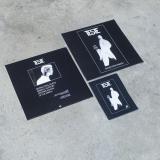
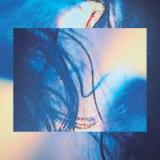
Das selbstbetitelte Debüt von South 1998 (ehemals South) ist vielleicht das, was dem alten Label Jagjaguwar jemals am nächsten kam, Musik zu veröffentlichen, die sich auch bei, sagen wir mal, ECM Records wie zu Hause anhören würde. Spitzt die Ohren, und ihr werdet es hören - Pat-Metheny-artige, klare, ausgefallene Gitarrenklänge, die geduldig zu trägen, hypnotischen, an Steve Reich erinnernden mathematischen Sackgassen geschichtet werden; ineinandergreifende Hackbretter und Vibraphone, die fallen und wogen wie an einem seltenen Tag mit starkem Schneefall in einer Stadt im Süden; die leisen und selbstbewussten Gesänge von Patrick Phelan und Nathan Lambdin, untermalt von den gleichmäßigen Rhythmen des Schlagzeugers Tod Parkhill. Bei der Erstveröffentlichung bezeichneten wir das Projekt aus Richmond, Virginia, als ,Exegese der großen Ambient-Rock-Momente des 20. Jahrhunderts". Daran halten wir fest. Doch bei näherer Betrachtung und mit dem Rückblick auf fast 30 Jahre seit der Veröffentlichung der LP sind ihre kleinen, kniffligen Schätze erst richtig zur Entfaltung gekommen. Es fällt schwer, keinen Vergleich zu einer zeitgenössischeren Künstlergeneration anzustellen, wenn man ,South 1998" wiederentdeckt, das nun aus SEO-Gründen umbenannt wurde (wer hätte das damals gedacht!?!?). Der experimentelle Slowcore-Experimentalismus von Escho Records aus Kopenhagen und ML Buch; ein bisschen von den Vorreitern der Cloudrock-Szene (und Jag-Labelkollegen) Chanel Beads; eine ganze Reihe von Veröffentlichungen des angesehenen (und unterschätzten) norwegischen Labels Hubro. Aber es verdient auch einen Platz im Regal neben seinen zeitgenössischen ,Post-irgendwas"- und ,Pre-irgendwas"-Kollegen von damals - Tortoise, Bark Psychosis, The Sea & Cake. ,South" von 1998, ein unbestrittener Jagjaguwar-Klassiker, war an sich nie verloren gegangen, aber wir haben es für euch wiederentdeckt - zum ersten Mal überhaupt auf Vinyl, als Teil unserer Feierlichkeiten zum 30-jährigen Jubiläum.
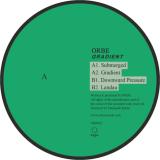
Orbe Records presents its most ambitious release to date: a special edition vinyl signed by its founder and main catalyst, Orbe. Comprising 4 meticulously crafted tracks, this record stands as the Andalusian artist's most mature work since his beginnings in the electronic music scene.
Far from looking back, this EP is a definitive statement of intent—a sonic manifesto that clearly outlines the artistic direction and evolution towards which Orbe is driving his sound. The record is a total immersion into hypnotic, deep techno, engineered for both physical trance on the dancefloor and mental introspection.
Through cyclical sequences, organic textures, and flawless rhythmic architecture, every cut on this vinyl shuns passing trends to reclaim a techno with a truly timeless vocation. An essential collector's item capturing an artist at the absolute peak of his creative maturity.
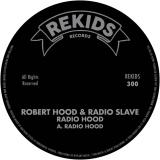
Celebrating Rekids’ 300th release and 20th anniversary, Detroit legend Robert Hood and Rekids boss Matt Edwards aka Radio Slave collaborate for the first time on the double-A side ‘Radio Hood’.
First appearing on Rekids with iconic remixes of Radio Slave’s ‘Don’t Stop No Sleep’ in 2015, followed by Floorplan remixes of ‘Feel The Same’ in 2017, Hood went on to drop two EPs and the critically acclaimed ‘Mirror Man’ LP between 2020 and 2021. Now, a long-gestated collaboration between the two producers arrives as ‘Radio Hood’ complete with an alternative ‘Version’ mix.
While Radio Slave and Robert Hood are best known for a minimalist approach, ‘Radio Hood’ and ‘Radio Hood’ (Version) flip the script with rich, maximalist textures and sweeping synths. The lead track is spacious, with unmistakable and persistent stabs pulsing from start to finish, whilst Version is an indulgent, nine-minute-fifty-two stunner with sweeping, emotive strings, a subtly growling Reece bassline and serious emotional impact.
After decades contributing to records where a single riff could transform a dancefloor, Charlie May turns that instinct inward on Trusted Farms.
For over thirty years, Charlie has occupied a position that seems increasingly rare in electronic music: the musician’s musician, the person behind the machines, the extra pair of hands in the studio, and quite often, the person responsible for the melody you end up carrying around in your head for weeks on end.
Alongside Duncan Forbes as Spooky, Charlie helped shape some of the most important electronic music to emerge from the UK in the early ’90s. That partnership would also sow the seeds for one of Sasha’s defining records: the central riff behind Xpander began life in Spooky’s live material, before Charlie brought the idea into the studio with Sasha and helped transform it into one of electronic music’s most enduring anthems.
Listen closely to Charlie’s work and there’s a particular instinct that keeps returning: knowing when a simple synth line is enough. Knowing which note needs to change. Knowing when repetition stops being repetition and starts becoming the entire reason a track works. More recently, as one-third of Quiet Places on ASIP, he’s taken those same instincts somewhere looser — beatless, gridless and led by improvisation.
Trusted Farms puts those instincts front and centre.
Tiny melodic phrases appear and refuse to leave. Synth lines repeat just long enough to become lodged in your head. Parts rub against each other without being tidied into submission. There’s a sharpness and directness to it all amongst the purposeful analogue warmth.
Some of these tracks feel almost ridiculously simple at first. But simplicity is difficult when you’ve spent decades learning every possible way to complicate something. Many of the parts on Trusted Farms were performed live with minimal editing. A synth line might be doubled, distorted, re-recorded and pushed back through another piece of equipment, but it remains the same idea. Instead of filling the gaps, Charlie works on the weight and character of what is already there. The melodies become physical; slightly worn around the edges.
For someone whose fingerprints can be found across some genuinely monumental moments in electronic music, Charlie has spent decades knowing what to add.
Trusted Farms is about knowing exactly what to leave alone.
Available on black 12”, mastered by Andreas Lupo LOOP-O Lubich and featuring artwork by Peter Skwiot Smith,
Discrepant presents Fantarombo, a new album by Giovanni Lami.
While his previous works often moved through memory, residue, degradation, and dialogue with existing materials, Fantarombo takes shape as an unstable, bodily gesture.
Sound is not recalled or reconstructed, but triggered, pushed, and set in motion as an active force. Lami approaches modular synthesis as a physical, hands-on practice rather than a technical exercise or display of system mastery. The modular setup becomes a responsive body: something to be nudged, listened to, and occasionally resisted.
The pieces unfold through slow accumulations, unstable feedback paths, and carefully misaligned sequences. Rather than driving toward resolution, the music lingers in states of suspension, allowing small shifts in voltage, timing, and texture to reshape the whole. Chance and duration play a central role, with structure emerging gradually from repetition and drift.
There is an unmistakably organic quality to the sound: porous, tactile, and quietly resonant. A sensitivity to space, grain, and micro-movement, where subtle changes carry as much weight as overt gestures. On Fantarombo, process takes precedence over control, and the circuitry is allowed to speak back, resulting in music that feels intimate, unstable, and quietly insistent, revealing itself slowly through sustained attention.
A music of unresolved behaviours, suspended somewhere between obsolete digital optimism, imaginary systems and malfunctioning computational folklore.
The new album is inspired by the simultaneously magical and insidious ways that advertising and name-brand technology wraps itself around our memories. It’s an ambivalent ode to the nostalgic pull of commercial jingles and proprietary start-up sounds. The best things in life may be free, but childhood and corporate entertainment products are completely intertwined. The obsession with advertising and consumer technology informs the sonic make-up of the music as a source of raw material out of which the foundations of the tracks were built. Speaking on this impetus for the album Robbie Chater says ““It seems to be bound up with the nature of sampling itself. Once we start digging through forgotten sounds and uncovering their meaning, almost inevitably you get sent down a path of discovery. Every forgotten sound opens another door. And that’s what I love - feeling like a kid again. Diving into this whole world of advertising, looking at how jingles get made, it’s the kind of thing that keeps me interested in sampling as a process, an art form.”
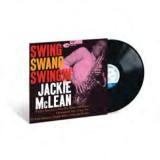
Altsaxofonist Jackie McLean war 1959 bereits seit fast einem Jahrzehnt eine feste Größe der New Yorker
Jazzszene, als er für Blue Note als Bandleader aufzunehmen begann. Die gesamten 1950er-Jahre hindurch
hatte er sich an der Seite von Bebop-Legenden wie Miles Davis und Charles Mingus seine Sporen verdient.
Sein zweites Blue-Note-Album ”Swing, Swang, Swingin’” hält das schwungvolle Versprechen des Titels
voll und ganz ein. Mit Energie und Spielfreude führt McLean durch ein mitreißendes Programm. Als
einziger Bläser des Quartetts steht sein unverwechselbarer Sound ganz im Mittelpunkt: Sein markanter,
leicht herber Ton und sein ausgeprägtes Gespür für moderne Harmonik verleihen seinen leidenschaftlichen
Improvisationen eine besondere Strahlkraft. Neben Standards von Irving Berlin, Johnny Mercer oder Cole
Porter präsentiert McLean eine beschwingte Interpretation von Benny Golsons ”Stable Mates”, bevor das
Album mit seiner eigenen Blues-Komposition ”116th and Lenox” seinen Abschluss findet.
THEODOR are a musical export from Darmstadt who are now well known far beyond the insider scene, enchanting audiences worldwide with their atmospheric, slightly psychedelic-sounding sweet soul. GERD JANSON, meanwhile, whoseNew Release Information musical roots also lie in Darmstadt, has been sending house, techno and disco
ravers into ecstasy worldwide as a DJ for decades. The @robertjohnsonclub resident also runs the @runningbackrecords label, which has been in existence since 2002, and regularly tinkers with electronic productions and remixes alongside his sound engineer @lopazz_mixmastering.
Sundae Soul, a Darmstadt-based label, has now, in a mathematical masterstroke, put two and two together and brought THEODOR and GERD JANSON together musically. It just had to be done. The result is a 7” single featuring the boogie-style track “Your Love” (to be found on THEODOR’s second album “Holocene”) on one side and the “Your Love – Gerd Janson 7” Mix” on the other. The term “mix” is almost misleading in this context. For his remix, Gerd has taken “Your Love” apart on the musical dissection table, filleted it and put it back together completely from scratch. The remix builds on the original with great skill and squeezes a technohouse club hit out of the producer-DJ’s repertoire.
We all agree – this one’s got to go straight into the club. So let’s get down to business and grab that vinyl.
The fifteenth release of Barro comes with an exclusive: behind the Transylvanian mask of Orlok 101 lies Nöle himself, the boss of the label.
Remember that he used this vampiric AKA to kick off Barro—his The End Of The Beginning being the first release, published in late 2018. That same year, his techno-industrial sound—packed with references from the famous work of Bram Stoker and nightmare atmospheres—helped launch another label: Soil, the Valencia-based imprint, with a project that included a suitably fitting remix of The Horrorist. The following year, he released an EP with five original tracks, titled Runaway, while also “spreading blood” on Antikhrist Visions Vol I alongside his Industrias Mekanikas comrades.
His dark influence has been felt across Barro’s catalogue, whether through his own tracks or remixes—sinking his teeth into artists like The Hacker (under his real name, Amato) or Nebula Circuit. In 2025, Orlok made his debut on Aspecto Humano with a powerful EP, equally gritty and dark. In Barro, we’ve recently had Nöle—the most techno side of Imanol Pagola—with the EPs Electro Bloody Music and Demencial Chico Aceleradom, two great showcases of his ability to keep us dancing nonstop, following the popular Mendekua, released by Xtraperlo.
For Barro 15, the two sides of the producer and DJ come together on this EP, titled Sex With a Cop—four tracks released on vinyl and digitally, plus an alternate version of the final composition as a bonus track.
Nöle's knowledge of the dancefloor and Orlok 101's ability to create atmospheres that will give you goosebumps come together on this EP to create an explosive mix.
Sex With a Cop starts with Hilerri, a techno EBM track where Orlok provides repetitive, screeching sounds and a ghostly melody, while Nöle adds incisive synths and a catchy, addictive vocal sample that warns you of the danger of the material you’re listening to. Orlok then takes over with his industrial and metallic sonorities on the next track, Amets Fabrika, although Nöle’s influence still comes through with his powerful bass and addictive synth lines. A stifled scream and a production packed with a thousand details create an unsettling atmosphere that will surprise you on the dancefloor.
The flip side begins with No Voy A Quedar Con Nadie, a track closer to Nöle’s technooid world. Even with its unsettling opening, it doesn’t take long to turn into a danceable bomb, with that dark touch typical of the Navarro producer.
Surprisingly, he saves the best for last: Harina de Huesos Humanos is one of the most interesting tracks created by Imanol Pagoda, and we can hear it in two versions, one as a bonus track. Thanks to complex production full of details and sounds that come and go, a punchy, hard as granite kick drum, and a carefully crafted industrial atmosphere, it all ends up being the perfect union between the two sonic worlds. A spectacular finale for the label’s fifteenth release.
Emerging from New York's subterranean trenches, Content Blocks reflect the infrastructure of their environs through dark, prophetic future-punk songcraft. They present their true first full-length effort in Hard Out, a collection of cybernetic experimental punk through the bleak lens of ourtechnology-drenched existence. The attitude conveys the frustration of contemporary living, sonically reflective of the cold materiality and unsympathetic architecture prevalent in today's New York.
With Parallel Commutator, released via Turkish imprint Oroator, CZN presents two extended compositions, each unfolding over fifteen minutes. The project brings together percussionist and sculptor Joao Pais Filipe, composer and drummer Valentina Magaletti, and producer Leon Marks in a practice where percussion is approached as both instrument and material.
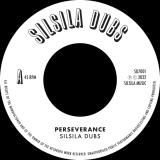
Silsila Dubs is a brand new label emanating from the backrooms and dancehalls of West London. Deeply inspired and rooted in the long standing traditions and dialogues of sound system culture, the label's output will echo the myriad musical foundations laid at various local historic venues including Southall Community Center and the Tudor Rose respectively.
Energized by the sounds of Jah Shaka, Aba-Shanti-I (Falasha Recordings), The Disciples, Manasseh, Conscious Sounds and more, the Silsila Dubs sonic aesthetic is that of classic 1990s sounds and recording techniques, lovingly channelled and dubbed via the cult Soundcraft Ghost Mixing Desk at Silsila HQ.
This debut release from the label has been written, produced and mixed by Govind Singh of the burgeoning Mya Hi-Fi crew who are closely related to Silsila and it's output. Across 2 mixes 'Perseverance' offers us a meditative and uplifting space in which to enrich our ears and our minds to carry on, no matter what life throws at us. Positive sounds for all to absorb.
Six years after their last standalone release, TESTE return in full raw power!
Following their 2020 double 12" on L.I.E.S. - which marked a renewed phase after years of silence - David and Martin (TESTE) now open a new chapter.
ERASED FROM MEMORY is a 4-track EP developed between 2023 and 2026, continuing their exploration of sharp, unconventional sound design - suspended between chaos and decadence.
The visual direction features a key contribution from the late Juan Mendez // Silent Servant via his SILENT EDITIONS imprint, combining archival TESTE materials with his legendary punk vision.
He completed the cover and zine before his passing in January 2024.
This release is dedicated to TESTE and their three decades of legacy, and to Juan Mendez - one of our greatest heroes.
Cameron Winter kündigt sein erstes Live-Album "Live at Carnegie Hall" an. Das Album dokumentiert Winters historischen Auftritt im Dezember 2025, bei dem er als einer der jüngsten Solokünstler überhaupt als Headliner im Hauptsaal der legendären Konzerthalle auftrat. Ganz allein, über sein Klavier gebeugt und mit dem Rücken zu einem ehrfürchtigen, ausverkauften Publikum, interpretierte der Frontmann der Band "Geese" Songs aus seinem gefeierten Debütalbum "Heavy Metal" neu. Ein Album, das von GQ in ihrem ausführlichen Bericht über diesen Abend in der Carnegie Hall als "eine der kühnsten und selbstbewusstesten Singer-Songwriter-Platten dieses Jahrhunderts bisher, ein Fiebertraum voller Gefühle von jemandem, der die Regeln gut genug verstand, um zu wissen, dass sie ihm kaum etwas bedeuteten" beschrieben wurde.
Auf dieser berühmten Bühne präsentierte er zudem drei bisher unveröffentlichte Kompositionen, von denen jede einen Einblick in seinen Fundus an Material bot. Die gesamte Darbietung war von einem unbestreitbaren Gefühl der Einmaligkeit geprägt, das die Bedeutung des Augenblicks einfing: Zeuge zu sein, wie ein Künstler, wie er nur einmal in einer Generation vorkommt, die Bühne eines der ehrwürdigsten Veranstaltungsorte der amerikanischen Musikszene beherrscht.
You've never played a game like Blippo+ before, and you've never heard a video game soundtrack quite like Greatest Hits from Planet Blip.
Composed by Rob Kieswetter and Jona Bechtolt from the LA-based trio YACHT, the soundtrack collects 71 tracks from the cult classic video game Blippo+, reworked and sequenced into a continuous listen for this special release —a TV static-speckled gatefold double LP, out Oct. 16 via Hologram Opera, marking the soundtrack’s physical debut.
Taking the form of a cable TV simulator, Blippo+ captures the magical feeling of seizing a mysterious signal from outer space and discovering the television programming of an alien culture. Soundtracking the game’s pastiche of programs is Rob and Jona’s genre-spanning score—synth-heavy, eccentrically electronic, with a skewed sensibility that pays homage to cable access, library music, video art, and the late-night margins of the 80s and 90s underground.
TV obsessives will find plenty to love in Greatest Hits from Planet Blip: with surreal theme songs, jangly jingles, zippystings, catchy kitsch, period-accurate menu music and even pop hits from the alien airwaves, this propulsively playful soundtrack will have channel-flippers tingling with nostalgia.
“Planet Blip is an alien planet where art and music are the only currency and ‘consciousness particles’ form the basis of all media. To capture the spirit of this world, we drew inspiration
from all the music we felt best embodied this ethos and ran it through our own utopian blender,” say Bechtolt and Kieswetter.
Blippo+ is an award-winning, experimental, live-action video game created by YACHT and Telefantasy Studios, along with developers Noble Robot and Dustin Mierau, and published by Panic Games. It was released for Steam, Playdate and Nintendo Switch in 2025 to widespread
critical acclaim and has earned a devoted fandom. A Mac version followed earlier this year, and was nominated for an Apple Design Award.
"Simultaneously nostalgic and futuristic, otherworldly yet
welcoming, Blippo+ is an absolute artistic triumph.
" —Deven McClure, Screen Rant
"Blippo+’s presentation might ape old traditions, but the collective impact of its content is richer, deeper, and more entertaining than any mere remembrance.
" —Garrett Martin, Paste/Endless Mode
"In the increasingly reactionary and prescriptive landscape of video games, it is remarkable to encounter something so distinctive, so hopeful, so celebratory, so devoted to expanding the possibility space of art beyond a single medium." —Sam Bodrojan
Live Ones is an LP compilation of refixes and remixes of older material and brand new tracks that have all featured in New Jackson live sets in recent years available on vinyl for the first time.
It features contributions from Rory Sweeney and Rita Lynn and long-term collaborator Richie 'Jape' Egan. Cover photography shot by long time collaborator Rich Gilligan at a New Jackson show in Dublin.
According to New Jackson himself 'This started out as a way to put out new tracks and remixes of older stuff as quickfire digi releases without the pressure of making a cohesive body of work that normally comes with making an album yet ironically I feel this works better as a cohesive vinyl release then my last album proper and features some of my favourite music I've made.'
For Louis Johnstone, making music has never been about waiting for the right equipment, the right environment or the right moment. Across more than a decade of work as both Wanda Group and A Large Sheet Of Muscle, the Huddersfield-based musician has built one of British experimental music's most singular bodies of work by embracing whatever happens to be within reach, allowing instinct, improvisation and circumstance to shape the outcome as much as conscious composition.
"'Chinese Benefits' was made over a year ago on an iPhone that had a broken microphone and was on its way out," he explains. "I have made many records after this with clearer sounds. Sharper ideas. That is never the point, though. You work with what you hold in your hands."
Recorded entirely on a failing iPhone 6 that stopped working shortly afterwards, 'Chinese Benefits' isn't a record about damaged technology. It is a record shaped by it. Rather than resisting the limitations of the device, Johnstone allows them to become part of the music itself, where distortion, interference and deteriorating fidelity are inseparable from the recording process.
Across twenty brief but disquieting pieces, corroded spoken word, environmental recordings, abrasive noise and fractured electronics continually emerge and dissolve. Voices drift in and out of range, reverberation stretches everyday sounds beyond recognition, and bursts of white noise interrupt moments of uneasy calm. There are echoes of radio transmissions, field recordings and musique concrète throughout, yet 'Chinese Benefits' never settles comfortably into any one tradition. Instead, it inhabits a space where accident and intention become almost impossible to separate.
That philosophy has long defined Johnstone's work. Through a vast catalogue of self-released recordings on his Umbro G imprint, alongside releases for labels including The Trilogy Tapes, he has consistently favoured immediacy over refinement, embracing imperfection not as an aesthetic but as a practical reality. His recordings are less concerned with perfection than with capturing the conditions in which they were made.
Looking back on 'Chinese Benefits', however, Johnstone's own assessment is characteristically understated.
"Listening back fully, it's quite a nice record actually. Fair enough, I make them and never really listen again TBH. Even better, it was the last Large Sheet Of Muscle record made on that phone with grit and damaged guts."
Like much of his work, 'Chinese Benefits' offers few fixed meanings. Its titles remain cryptic, its voices partially obscured and its structures deliberately unstable. What emerges instead is a deeply personal document of process over perfection, where the limitations of the tools become inseparable from the music they produce, and where the act of making something matters far more than the conditions in which it was made.
Teen of Denial: Joe’s Story is a freshly reimagined take on Car Seat Headrest’s beloved breakout, Teens of Denial, now celebrating its 10th anniversary.
On the original album, Toledo often used the name “Joe” as a pseudonym – a sly homage to Daniel Johnston. Revisiting Teens in the run-up to its 10th birthday, he felt called to give Joe a unique backstory and began tweaking the album to tell that tale. The group returned to the studio with Teens producer Steve Fisk to update accordingly – tweaking lyrics, revising arrangements, and recording new songs in the “Denial-style,” including ‘Optimistic Son” and the anthemic ‘Joe Drives Again’. The result retains Teens’ dark edge and youthful cynicism, but allows a bit of hard-won compassion into the mix.
From Will Toledo:
Sometime last year, it was suggested to me that we do something for the ten-year anniversary of ‘Teens of Denial,’ so I started looking back on the album to see what we might do. In spite of some of its songs being a regular part of my life for the past decade, it wasn’t a record I’d thought much about as a whole since it came out. Most of the songs I’d come up with over a two-year period at the end of my college days, when I was struggling a lot with cynicism and misplaced aggression. But by the time the songs were done, I was living in Washington, Car Seat Headrest was a full band with a record label, and in spite of the turmoil of the writing process, the final album was pretty enjoyable for everyone to work on.
This time, looking back at the songs, I started to feel like there was a story being told through the album, though I’d never imagined it as being a narrative work. On ‘Hi, How Are You?’ Daniel Johnston had used the name “Joe” in the titles of a few tracks –“No More Pushing Joe Around,” “Keep Punching Joe” – as a sort of joke, a stand-in for himself. I borrowed the idea, and the name, for titling songs on ‘Denial.’ This time, I started thinking - who is Joe? And how do the songs, in the way they’re sequenced on the album, reflect what he’s going through? As I started asking this question, a story emerged with startling wholeness and clarity, like finding the foundations of an ancient city while digging in my backyard. As I kept digging, certain songs from the original album fell by the wayside, as they seemed misplaced in this new context; others asked for new lyrics, to fully give birth to the story contained in the music.
The resulting work feels more like the album ‘Teens of Denial’ was meant to be. When you’re writing from a dark space, it’s hard to have perspective on where you’re at. This time, I could pull from memories of that darkness, and use the distance and additional perspective of ten years of life to shed a fuller light on the experience. Joe is a character going through some of what I experienced, and some of his own problems. Telling his story, and not just my own impressions of life at the end of the teen years, brought a new level of compassion and wholeness to the album. It gave us the opportunity to write new material in “Denial style”, embracing a snappy and simple(ish) rock aesthetic, and in an additional blessing, we were able to team up once with Steve Fisk, a joy and inspiration to get back into the studio with after ten years. We mixed the material at his house in Tacoma, and were constantly amazed at the lack of divide between past and present, as we’d punch in vocal overdubs ten years later into the same gear, hearing my voice now running alongside a 2015 Will. For someone coming across this album or this band for the first time, this is how they’d hear the record, not as a relic of the past but as a new piece. It was immensely rewarding to experience that on our side.
For anyone familiar with ‘Teens,’ comparisons with the original will be inevitable, but I do hope that as much as possible, people can come to this album on its own terms, approaching it as a teen, hearing the music and story for the first time. I believe music is an ongoing story, and albums don’t always do justice to its dynamic, ongoing nature. What gives it life is the new ears that hear it, and the new hearts that engage with it. I’m so grateful that this is a work that people have kept coming to, and I hope that this presentation does them honor with a fresh offering to the conversation. We’ve known that “it doesn’t have to be like this”; now we can wonder - “what it if were like this?”
And they can't. Tiny things are important - This house could be anywhere, These things could happen to anyone." With this reflection, Charlie Parr introduces the characters of Rooming House, a conceptual folk opera that chronicles the lives of Upper Midwesterners through his quietly raucous, deeply rooted, and empathetic blues. These are songs of lost memories and hardship, but also of the improvised acts of kindness that help neighbors make do. Joined by celebrated drummer and fellow Minnesotan Dave King (The Bad Plus, Happy Apple), Parr cements his role as one of the great troubadours of our time with an album that becomes its own small yet profound offering of care. * "A gritty blend of Delta blues and Depression- era roots music soaked in his hardscrabble voice. It's a sacred realm of folk wisdom and sorrowful vulnerability." - Rolling Stone * "Expertly-picked resonator guitar and lyrics that puncture the soul" - NPR * "Arguably America's finest living troubadour." - Songlines (UK) * Compelling character-driven portraits on a folk opera concept album that chronicles the lives of Upper Midwesterners through his quietly raucous, deeply rooted, and empathetic blues. Driving, groove- driven resonator guitar pulls you in. Working through the material realities of our contemporary moment but also weaving that narrative with his hypnotic sound reveals the near-mythic scale importance of these stories