This LP is a compilation of songs from five different digital-only demo collections I released on Bandcamp between 2021 and 2023. I relied on the ears and judgment of my old friend Dom at Feral Child to curate this comp, allowing him to choose his favorites from over 60 songs. While I might have chosen an entirely different batch of tunes, I was happy to defer to Dom, as I’ve never had much perspective when it comes to assessing my own material. All of the songs on this album were recorded at home, mostly on the same day they were written. Most of them are first takes, intended to provide a template for a theoretical band to follow if and when the songs were to be re-recorded “properly” at a later date. A few have since been re-recorded for studio records, and a few others remain in contention for future studio records.
quête:mate u
Mit "The Machine in the Ghost" erreichen HAUJOBB den beeindruckenden Meilenstein des zehnten Studioalbums. Auch ihr neuestes Werk unterscheidet sich von all seinen Vorgängern. Das derzeit in Leipzig residierende Duo verweigert sich weiterhin standhaft jeder Wiederholung. "The Machine in the Ghost" unterscheidet sich bereits durch die Verwendung von Feldaufnahmen, um die Sounds für dieses Album zu erzeugen. Um die gewünschten Effekte zu erzielen, haben HAUJOBB bewusst auf eine Mischung aus Software und Hardware gesetzt - letzteres in Form von mit Alltagsgegenständen erzeugten Tönen. Diese symbolische Anspielung auf eine Zeit, in der es weniger Software und mehr analoges Drehen an den Reglern gab, ergänzt das Thema von "The Machine in the Ghost" um einen Hauch von Retro-Feeling - ohne jede nostalgische Verklärung. Das Album dreht sich um die spannungsgeladene Beziehung zwischen analog und digital, Geist und Materie. Als sich HAUJOBB im ostwestfälischen Bielefeld zunächst zu einem Trio formierten, kamen ihre Haupteinflüsse noch aus der Vancouver-Schule des Industrial - und speziell SKINNY PUPPY sowie FRONT LINE ASSEMBLY. Dies ist auf ihrem ersten Album "Homes & Gardens" (1993) noch hörbar, doch schon bald wurden HAUJOBB selbst als Aushängeschilder eines modernen elektronischen Industrial-Sounds angesehen. Auf den folgenden Alben "Freeze Frame Reality" (1995) und "Solutions for a Small Planet" (1996) entfernten sich die Deutschen zunehmend von den kanadischen Einflüssen, indem sie damit begannen, IDM (Intelligent Dance Music) mit Industrial und EBM zu verschmelzen. Damit katapultierten sich die Deutschen mitten in die internationale Szene und verschafften sich sogar in den USA einen Kultstatus. Auch nachdem HAUJOBB zum Duo mutiert waren, blieben sie einflussreich und insbesondere ihr 2011 in Eigenregie veröffentlichtes Album "New World March" gilt als weitere Großtat. Mit "The Machine in the Ghost" schlagen HAUJOBB ein neues spannendes Kapitel in ihrer bemerkenswerten Karriere auf. Unmittelbar zu Beginn der nächsten industriellen und kreativen Revolution, die der rasante Aufstieg der künstlichen Intelligenz auszulösen verspricht, legen HAUJOBB ihre metaphorischen musikalischen Finger erneut direkt an den Puls der Zeit.
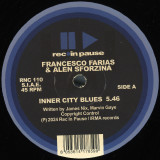
Francesco Farias, DJ, musician and producer, began his artistic life with the group Jestofunk in 1991 together with Alessandro Staderini (aka Blade). Their first single, which also inaugurated their label Rec In Pause, was produced by Claudio Moz-art Rispoli who became the third full member of the group. They had several international successes with songs like I’m Gonna Love you, Say It Again and especially with Can We Live and Special Love, the latter two respectively sung by CeCe Rogers and Jocelyn Brown. Their first album entitled Love In A Black Dimension is still a best seller in the Funky House and Acid Jazz genre.
For the last years Jestofunk have not released new material and Francesco Farias has started to publish songs again on the label Rec In Pause. This first single printed on vinyl sees him in collaboration with Alen Sforzina in their personal Nu Funk version of Inner City Blues by Marvin Gaye where the echo of the Jestofunk project can be clearly heard. On the back an original piece by Farias contaminated as always by the Funky sound.
Right for the 30th anniversary of his Electro project Electro Nation, Thomas P. Heckmann returns with a brand new album on his mates label Activities Records from Brussels with a stunning album artwork by Elzo Durt ! Slave To The Machine is a full story throughout the album about an ordinary life that is down to all things being controlled by machines, internet and digits, just to escape and meet the machine at he end... And the end is obviously open."
Jade Hairpins waste no time fulfilling their second album's titular demand. From its harmony-drenched opening note to its baroque-anthemic conclusion, Get Me the Good Stuff is positively loaded with musical ideas, an absurdist buffet of sound and aesthetic that comes with one hell of a floorshow as the Hairpins stack those ideas higher and higher, almost daring them to crash to the floor. Instead, those elements - punksploitation, power pop, baggy, funk, and Italo disco are just some touchstones - are not only held aloft, they defy gravity and convention. These pyrotechnics are, in true Jade Hairpins fashion, something of a sleight of hand. While the music swaggers and gallops, Get Me the Good Stuff grapples with anxiety and self-doubt, obfuscating pain and alienation with sparkling wit and some straight-up ravers. Get Me the Good Stuff opens with one of those, "Let It Be Me," in which Jonah Falco shouts lyrics about being alone with one's shortcomings against guitars, synths, and harmonized vocals that are on the verge of closing in. The song is just over 90 seconds long, hitting with the gnarled-barb ferocity of punk and the gleeful insanity of theatrical art rock. It is, in other words, overwhelming. Or it would be if Jade Hairpins - Jonah Falco and Mike Haliechuk - weren't remarkably nimble in their ability to bring unity to sounds by placing them in competition against each other. When those sounds are adjacent, like the glam and disco that saturate "Drifting Superstition," the thrill of those universes colliding in the heat of an absolutely filthy clavichord line turns its lyrics, about the habit of solving personal problems by ignoring them, into a winner's anthem on the order of Bowie or Hot Chocolate. Get Me the Good Stuff arcs towards unequivocal joy as Falco, Jade Hairpins' primary lyricist, breaks these cycles and attempts to run away with his dreams. The arc is roughly analogous to how the album came to fruition. Four years removed from Harmony Avenue, an album of material that proved too strong to be contained within the narrative universe of Fucked Up's Dose Your Dreams, Jade Hairpins have gelled as a live act - with Tamsin M. Leach and Jack Goldstein centering them on stage - and planted their flag in the UK punk scene in which Falco has embedded himself. Working out new material live, Falco noticed that crowds were digging into his unfinished lyrics, and the album tightened around the anxieties of being in the spotlight, of being worthy of attention. At times, those songs are eager to please, like the album's title track in which a winking self-deprecation rubs up against the self-congratulatory bombast of Freddie Mercury, Falco simultaneously turning heads as a shooting star and a burning car. Elsewhere, as in "Better Here Than in Love," Jade Hairpins pitch themselves towards creating gorgeous soundscapes that exist nowhere else, channeling postpunk through the glimmering haze of '80s Japanese electronic music. Theatrical and personal, absurd and true-to-life, playful and serious, Get Me the Good Stuff is album of tremendous personal and artistic growth that signposts towards dozens of potential futures to come. It's not only worth the attention, it continuously rewards it.
Jade Hairpins waste no time fulfilling their second album's titular demand. From its harmony-drenched opening note to its baroque-anthemic conclusion, Get Me the Good Stuff is positively loaded with musical ideas, an absurdist buffet of sound and aesthetic that comes with one hell of a floorshow as the Hairpins stack those ideas higher and higher, almost daring them to crash to the floor. Instead, those elements_punksploitation, power pop, baggy, funk, and Italo disco are just some touchstones_are not only held aloft, they defy gravity and convention. These pyrotechnics are, in true Jade Hairpins fashion, something of a sleight of hand. While the music swaggers and gallops, Get Me the Good Stuff grapples with anxiety and self-doubt, obfuscating pain and alienation with sparkling wit and some straight-up ravers. Get Me the Good Stuff opens with one of those, "Let It Be Me," in which Jonah Falco shouts lyrics about being alone with one's shortcomings against guitars, synths, and harmonized vocals that are on the verge of closing in. The song is just over 90 seconds long, hitting with the gnarled-barb ferocity of punk and the gleeful insanity of theatrical art rock. It is, in other words, overwhelming. Or it would be if Jade Hairpins_Jonah Falco and Mike Haliechuk_weren't remarkably nimble in their ability to bring unity to sounds by placing them in competition against each other. When those sounds are adjacent, like the glam and disco that saturate "Drifting Superstition," the thrill of those universes colliding in the heat of an absolutely filthy clavichord line turns its lyrics, about the habit of solving personal problems by ignoring them, into a winner's anthem on the order of Bowie or Hot Chocolate. Get Me the Good Stuff arcs towards unequivocal joy as Falco, Jade Hairpins' primary lyricist, breaks these cycles and attempts to run away with his dreams. The arc is roughly analogous to how the album came to fruition. Four years removed from Harmony Avenue, an album of material that proved too strong to be contained within the narrative universe of Fucked Up's Dose Your Dreams, Jade Hairpins have gelled as a live act_with Tamsin M. Leach and Jack Goldstein centering them on stage_and planted their flag in the UK punk scene in which Falco has embedded himself. Working out new material live, Falco noticed that crowds were digging into his unfinished lyrics, and the album tightened around the anxieties of being in the spotlight, of being worthy of attention. At times, those songs are eager to please, like the album's title track in which a winking self-deprecation rubs up against the self-congratulatory bombast of Freddie Mercury, Falco simultaneously turning heads as a shooting star and a burning car. Elsewhere, as in "Better Here Than in Love," Jade Hairpins pitch themselves towards creating gorgeous soundscapes that exist nowhere else, channeling postpunk through the glimmering haze of '80s Japanese electronic music. Theatrical and personal, absurd and true-to-life, playful and serious, Get Me the Good Stuff is album of tremendous personal and artistic growth that signposts towards dozens of potential futures to come. It's not only worth the attention, it continuously rewards it.
- A1: Primordial Forest (The Lost World Jurassic Park)
- A2: Medal Of Honor
- A3: Bristow And Bristow (Alias)
- A4: Secret Weapons Over Normandy
- A5: The Incredibles Suite
- A6: Take A Hike (Lost)
- B1: Life And Death (Lost)
- B2: Sky High
- B3: Space Mountain
- B4: The Family Stone Waltz (The Family Stone)
- B5: Le Festin (Ratatouille)
- B6: Ratatouille
- B7: Roar! (Cloverfield)
- C1: Casa Cristo (Speed Racer)
- C2: Land Of The Lost
- C3: Enterprising Young Men (Star Trek)
- C4: Married Life (Up)
- C5: Let Me In
- C6: Lax (Lost)
- D1: The Turbomater (Cars 2)
- D2: A Man, A Plan, A Code, Dubai (Mission: Impossible - Ghost Protocol)
- D3: Monte Carlo
- D4: Super 8 Suite
Mutant is proud to present Academy Award-winning composer Michael Giacchino's latest album, Exotic Themes for the Silver Screen – Volume 1, featuring iconic scores from Giacchino's extensive portfolio rendered in the retro lounge style of Exotica from the 1950s.
“It's no secret that we at Mutant are huge fans of Michael Giacchino,” says Spencer Hickman, Co-Founder of Mutant. “We're excited to release a retrospective of his astonishing three decades as a composer. Rather than just curating a simple compilation of his previous works, Michael went back into the studio, rearranged and re-recorded every major theme from his career. These tracks have been recorded in an Easy Listening style inspired by such greats as Martin Denny and Les Baxter, creating not just a unique and incredible look back at some of the most beloved movie and television themes of the modern age, but also bringing a fresh, exciting take to the beautiful journey he has taken us all on with him. It feels like you are discovering these songs for the very first time: timeless, beautiful, and a joy to listen to. These newly recorded themes transport you to a far-off sunset, looking out at the ocean, complete with a cocktail in hand, providing a much-needed escape from the stress of modern times, and we can all agree that is something we all crave right now.”
Exotic Themes for the Silver Screen – Volume 1 spans nearly two decades of Michael Giacchino’s music, from his early video game scores to his television hits and blockbuster films. The album transforms these works through the lens of Exotica, replacing epic strings and thundering drums with vibraphones and marimbas.
“This album was inspired by the work of Arthur Lyman and Martin Denny,” says Giacchino. “What would they do with the Star Trek theme? Or video games like Medal of Honor? It was a way for me to play in that world I loved so much growing up. I thought it would be fun to create a fantasy world, where this album was recorded back in 1967 and then lost, only to resurface today.”
The album showcases Giacchino’s unerring talent for melody, stripping down grand symphonies to their essential elements while retaining their aesthetic and emotional core.
“So much was rooted in the big orchestral sound, so it was really about scaling it back. The real trick is figuring out the little fun hooks and things you can add along the way. There were no rules; I was up for anything. It was a way to re-engage with the material and be creative in a new way.”
Exotic Themes for the Silver Screen – Volume 1 includes an array of reinterpreted pieces from Michael Giacchino’s career. Highlights include ‘Primordial Forest’ from the 1997 video game The Lost World: Jurassic Park, ‘Life and Death’ from Lost, the theme from Ratatouille, ‘Roar!’ from Cloverfield, ‘Enterprising Young Men’ from Star Trek (2009), ‘A Man, A Plan, A Code, Dubai’ from Mission: Impossible - Ghost Protocol, and a Super 8 suite.
Featuring package design by Luke Insect, and liner notes by Charlie Brigden.
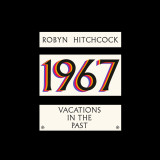
Robyn Hitchcock is a rock’n’roll surrealist. Born in London on March 3rd, 1953 he describes his songs as “pictures you can listen to”. As much a child of Dali, De Chirico, and JG Ballard as of his 1960s musical heroes, he is a master of the absurd, reveling in the beauty of the unexpected. His first publicly visible band The Soft Boys (1976 - 81) has remained an influential art-rock touchstone for generations of musicians. “I just want to be an obscure cult fringe,” he told the NME in 1978; the NME didn’t believe him, but he’s been true to his ambition. Without ever breaking the surface of pop culture Hitchcock has floated at a tangent to the mainstream for nearly 5 decades. His songs have been performed by REM, The Replacements, Neko Case, Gillian Welch & David Rawlings, Lou Barlow, Grant Lee Phillips, Sparklehorse, and Suzanne Vega with the Grateful Dead among others. A confirmed outsider, he nonetheless has devoted listeners around the world who attend his concerts, and also tune into the online streaming shows Robyn seasonally does with his wife, the singer Emma Swift. In 1996 he was the subject of Jonathan Demme’s in-concert film, ‘Storefront Hitchcock’. Robyn Hitchcock came of age in the 1960s when he attended Winchester College, an eccentric hothouse boarding school in the south of England. This is the subject of “1967”, which is both a memoir and an album, due for release in June this year. The memoir is a book “1967: How I Got There And Why I Never Left”, describing how the music of Bob Dylan, The Beatles, Jimi Hendrix and others drastically transformed the direction of his life when he left home for this strange new world. The companion record album “1967: Vacations In The Past” is a selection of the (mostly) hit songs of that year, re-recorded acoustically by Robyn with the help of some friends in Cambridge, San Francisco, and Sydney. He is currently preparing new material to release in 2025. “I like to keep busy”, he says: “We have all eternity to not exist”.
TRELLDOM sind das geistige Kind von Kristian Eivind Espedal - besser bekannt unter seinem Künstlernamen Gaahl. Der Norweger wurde zu einem der führenden Köpfe der nordischen Black Metal Szene, nachdem er sich im Jahr 1998 der berüchtigten Bergener Band GORGOROTH angeschlossen hatte. Sowohl aufgrund seines extremen Gesangs als auch zahlreicher finsterer Gerüchte über seine Person wurde der Frontmann oft in eine besonders schmale Schublade gesteckt. Doch wenn eine Aussage über Espedal wahr ist, dann ist es die gegenteilige, nämlich dass von ihm meist das Unerwartete kommt. Auch mit TRELLDOM hat er bereits Black Metal Geschichte geschrieben. Die im Jahr 1992 von Gaahl in Sunnfjord im Distrikt Vestland, gegründete Band veröffentlichte drei Jahre später ihr Debütalbum "Til evighet..." (1995), das in Underground Black Metal Kreisen großen Anklang fand. Das Nachfolgeralbum "Til et annet..." (1999) präsentierte den Gitarristen Valgard sowie Stian "Sir" Kårstad am Bass als Neuzugänge bei TRELLDOM und erreichte auch die "Mainstream-Medien" im Metal. Als Produzent zeichnete der legendäre Toningenieur Pytten in den Grieghallen Studios in Bergen verantwortlich. Pytten nahm ebenfalls den dritten Meilenstein "Til minne..." (2007) auf, der sowohl von Kritikern als auch von Fans hoch gelobt wurde. Einer der Schlüsselaspekte dieser ersten TRELLDOM-Trilogie lag darin, dass Gaahl in seiner eigenen Band die Möglichkeiten seiner Stimme frei von den strengen Regeln erforschen konnte, unter denen GORGOROTH operierte. Danach wurde es still um die Band, da sich alle beteiligten Musiker auf zahlreiche andere Projekte konzentrierten. Bei der Rückkehr bleibt die wichtige Zusammenarbeit mit Stian Kårstad das musikalische Herzstück der Band. Der größte Teil des Materials auf "...by the shadows..." stammt aus der Feder des Gitarristen. Andere Aspekte von TRELLDOM hat Espedal bewusst verändert. Die daraus resultierenden Effekte haben zu faszinierenden Resultaten geführt. Auf dem Hocker thront nun der renommierte Schlagzeuger Kenneth Kapstad, der neun Jahre lang bei MOTORPSYCHO war und aktuell auch bei SPIDERGAWD, MØSTER! und THORNS für den Rhythmus sorgt. Mit Kapstad stieß auch der international gefeierte Jazzmusiker und Saxophonist Kjetil Møster (MØSTER!, RÖYKSOPP, THE END) zur Besetzung. Die Einbeziehung von Møsters unorthodoxen Saxophon-Klängen ist ein erstes Indiz dafür, dass sich TRELLDOM nicht mehr durch eine enge Definition von Black Metal gebunden fühlen. Die Musik auf "...by the shadows..." ist zwar nach wie vor dunkel und harsch, und auch ihre Wurzeln in der schwarzen Vergangenheit bleiben erkennbar. Doch Espedal hat seine Band in eine weitaus komplexere Kreatur verwandelt und sie in einer avantgardistischen Dimension losgelassen - mit einem Sound, der manchmal sogar ins Experimentelle reicht. TRELLDOM sind erwacht und liefern mit "...by the shadows..." ein beherztes Manifest der künstlerischen Freiheit als starke Kampfansage an jegliche nostalgische Stagnation ab. Dieses Album fordert heraus: Love it or leave it!
Even though it came out on a major label, this record sells for hundreds of dollars if you can find it at all (we know…we paid for a copy), and it’s no wonder… it’s the perfect blend of raw R&B passion and smooth, sophisticated soul production. First, the passion part… Willie Tee was a New Orleans pianist and singer best known for recording a series of burnin’ 45s (some cut for Harold Battiste’s short-lived AFO label) during the ‘60s. I’m Only a Man was Willie’s album debut, cut for Capitol in 1970, and he brought the same deep-seated intensity to the record that he did his singles. The difference was, for I’m Only a Man, Willie’s warm, raspy voice was lovingly bathed in spectacular arrangements by H. B. Barnum and produced by the great David Axelrod. Strings, brass, xylophone, bluesy guitar licks, and a funky rhythm section are all percolating inside this record’s grooves, with a daring choice of material that ranges from Cannonball Adderley’s “Walk Tall” to the Bacharach-David nugget “Reach Out for Me” to the self-penned highlights “Mirror” and “Bring On the Heartaches” to the album closer “People” from Funny Girl. Capitol wasn’t known for breaking soul acts at the time, which may explain why this record remains a cult classic; we’re happy to give it the exposure it deserves, with a purple vinyl pressing limited to 1000 copies.
Imaginative re-workings and improvisations by Andrew Tuttle of the late great Michael Chapman's unfinished instrumental album. Sonic explorations that bridge the Southern and Northern Hemisphere via the Caribbean, remote Northumberland and sub-tropical Australia. Navigating calm seas and turbulent waters of ambient corals, new-age pirates, waves of lapping banjos and drifting eroding guitars.
When Michael Chapman passed away in September of 2021, at the age of 80, he did so – as he spent much of his life – as both a pioneer and a legend. A veteran of the British blues/folk/jazz scene, Chapman emerged in 1966 and continued working throughout his life, always pushing the boundaries of his creations while collaborating with a slew of similarly heralded musicians along the way: Bert Jansch, Mick Ronson, Elton John, Thurston Moore, Steve Gunn; to name just a smattering of those he worked alongside over the years.
It's the latter of those – Brooklyn guitarist and songwriter Steve Gunn – who Chapman flourished alongside in recent years, the two collaborating on 50 and True North, two of Chapman’s final and finest records. It was through that friendship that Chapman’s music found Andrew Tuttle, the Brisbane-based multi-instrumentalist who has toured Australia several times alongside Gunn.
In the aftermath of Chapman’s passing, his partner Andru discovered Tuttle’s Fleeting Adventure LP, describing it as “one of the albums that kept me sane during that first brutal winter on my own.” The pair met in Australia shortly after, and before Andru had even made it back home to the north of England, Tuttle had begun working on the recordings she shared with him at that time. Those recordings were part of a project Chapman was working on at the time of his death, called Another Fish – what would have been a companion piece to his previously-released LP, simply called Fish.
Though Chapman had spent time in his local studio playing all the guitars, layering the different sounds and effects, he’d always intended to do much more work on the songs, however fate had its way and he never got to ribbon-bow those ideas and bring the album to its conclusion.
Though there was little intention in terms of how to finalise the project, Tuttle spent valuable time with those recordings. What materialised, eventually - with time, care, and diligent attention - is a two-disc set Another Tide, Another Fish, something both unusual and completely distinctive. The first disc, Another Tide is centred around Tuttle’s own work, which shaped all seven of Michael’s songs and ideas into new songs of their own, and the second disc which simply incorporates the recordings that Michael left behind.
“On all of the tracks I also ‘played along’ on banjo to the originals several times until I learned an approximation,” Tuttle continues. “This ended up resulting in a ‘hybrid’, where some works are easily identifiable to those who know Michael’s originals, and some took that inspiration to head altogether elsewhere. Each of the tracks, even where not obvious, does have at the very least a trace element sample of the original recordings so that it’s a true collaboration.”
What we’re left with is indeed a hybrid: part remix album, part cover album, both a solo work and a collaboration, of sorts. Inspired by Chapman’s original ideas and with new track titles directly referencing the numbered but otherwise untitled source material, Tuttle adds his own flashes of colours throughout, including editing, sampling, MIDI transposing and signal processing that twists these songs into beautiful new shapes. Perhaps Tuttle’s greatest achievement here then is that Another Tide sounds so effortlessly free of all this context.
Whether you know Michael’s, Andrew’s or even Andru’s story or not, these recordings will bristle with enchantment and intrigue, worlds are built, and while some thrive and grow, others fizzle out in a burst of light, such is the way. “It's been a long, long road but we got there and I think it's been more than worth it,” Andru says in the record’s liner notes. “I really hope you think the journey was worth it too.”
Guitars and effects by Michael Chapman recorded by Alex Warnes at Phoenix Studio, Brampton, Cumbria, 2017 Banjo, effects and edits by Andrew Tuttle at Bella Vista, Brisbane / Meanjin, 2023-2024
Bobo Integral Records announces the Deluxe Edition of "Dead Calm", the debut album by The Boys With The Perpetual Nervousness, available September 13, 2024. This edition enriches the original tracks (now remastered), which were met with immediate success and critical acclaim, with new material and acoustic demos. Also incorporates an expected insert with all lyrics. Upon its initial release in 2019 by Pretty Olivia Records, "Dead Calm" was celebrated for its melodic craftsmanship. Purepopradio praised it asa "masterpiece of melody and harmony", Powerpopaholic rated it 9/10 and included it in their "best of 2019 list for best power pop this year", and Section 26 recommended it as "Presque indispensable". After two other records, "Songs From Another Life" and "The Third Wave Of_", that are now cult classics in the genre, it's the time to come back to the record that started it all. The Deluxe Edition offers fans an exclusive track from the original sessions, "Wouldn't Be Anywhere Else", and six acoustic demos that provide insight into the band's creative process. Reflecting their musical influences, such as The Byrds, R.E.M., Big Star, The Go-Betweens, Teenage Fanclub and the classic power pop era, the band's sound is a contemporary homage to these inspirations. Andrew Taylor is the leader and soul of Dropkick, a wonderful Scottish power pop group with touches of altcountry. Gonzalo Marcos is part of the cult Spanish indie pop group El Palacio de Linares and founder of the Bobo Integral Records label. The two forged a friendship during Dropkick's first tour of Spain and Dropkick ended up releasing a couple of albums on the label. "The most perfect voice in jangle/power-pop at present (sorry Teenage Fanclub fans!)" - Janglepophub
Warning French content! RIXE is back with a four track EP, their most French material to date. Keeping
one boot firmly in the CAMERA SILENS/ WARRIOR KIDS camp while the other one dances around METAL
URBAIN, KARNAGE, BUTCHER or even D-STOP and MOPO MOGO, creating an unlike threesome of
fuckwave, OI! And pop music as infectious as their previous four EPs.
Parisian label and collective Prima Materia is proud to present the first 12" record in its 'Half Sided Series'.
The aim here is to offer a series of vinyls in the form of split EP's, with two producers each proposing a side featuring the different styles of techno we love so much.
For this first opus, we invited Portuguese dj and producer Fresko (Hayes Collective) and our resident Louis The 4th (Tar Hallow, Planet Rhythm, Prima Materia).
Louis The 4th opens Side A with 'Structured', a devilishly effective percussive tool, followed by 'Instant Attraction' in the pure techno tradition, where a hypnotic synth follows us all the way.
Then Fresko takes over on Side B, offering a more playful and colorful side with 'Cray' and 'Audio Space 2000', two tracks where mechanical grooves are accentuated by the Portuguese artist's signature elements and fx, with a surgical level of precision.
’The Blues’ was B.B. King’s second Crown LP drawn from his RPM singles recorded between 1951-1958. This album traces his early development into a world class artist. ‘The Blues’ used a single hit tune (in this case “When My Heart Beats Like a Hammer,” a Top Ten R&B chart entry in 1954) to help sell a package of lesser-known material, but thankfully the label also picked some great tunes that hardly sound like filler, even if they didn’t make the charts. King’s songwriting was already stellar, with “I Want to Get Married,” “Don’t You Want a Man Like Me,” and “Ruby Lee” demonstrating his way with a melody and a lyrical conceit. ‘The Blues’ demonstrates he was already near the top of his class. The LP is extended with 2 bonus tracks.
The core members of Jaubi are true masters of their craft, coming from a rich lineage of accomplished musicians. Kashif Ali Dhani is a classically trained tabla master from the Punjab gharana, and is the accompanist of choice on the local scene for some of Pakistan's great classical vocalists and instrumentalists, as well as in Europe and the USA. Zohaib Hassan Khan is a 7th generation sarangi master, who has performed globally, and is one of only 3 professional sarangi players left in Pakistan. Multi-instrumentalist, composer and Jaubi bandleader Ali Riaz Baqar aka Ila Zair began his musical journey as a hip-hop enthusiast, evolving into a jazz guitarist following the exposure to the genre’s rich sampling culture. He then became a disciple of the Senia-Shahjahanpur gharana, a lineage of musicians specialising in the sarod. His playing now focuses on merging North Indian classical music with modern jazz harmony on a traditional, unaltered 6-string electric guitar.
The collaborative relationship between the core group and wider collaborators dates back to April 2019, when 22a label founder and multi-instrumentalist Tenderlonious and EABS/Bloto keyboard and synth maestro Marek ‘Latarnik’ Pędziwiatr travelled to Lahore, Pakistan to take part in some improvised recording sessions with Jaubi. Nothing whatsoever was written down during the recording sessions – no sheet music, no song titles. It was sincere, bottled lightning. All egos were left behind, with hearts and souls being opened and poured into the music. The result has been described as spiritual jazz-fusion meets psychedelic Hindustani classical with nods to golden era hip hop.
An adventurous and absorbing record ‘A Sound Heart’ is the next chapter for Jaubi, both sonically and spiritually. The title is inspired from a verse in the Holy Qu’ran (26:89), where one comes to God with a spiritual or sound heart (Qalb) which is sincere, without doubts and free of materialistic attachments. Importantly it refers to a state where the heart is spiritually healthy and content with only God. A Sound Heart’s basis is goodness, rooted in love. In this case, it is the love for one’s creator. The album also acts as a tribute to fallen heroes, paying respect to the greatness that has come before, casting new light via cross-cultural collaboration and improvisation.
Throughout this incredible journey, meditative ragas blend with Herbie Hancock-esque motifs, joined by lament-filled contemporary melodies intertwining with the intricate sounds of the sarangi and earthy layering of the tabla. A true masterpiece of composition from start to finish.
On August 16, Toronto-based musician and producer David Psutka aka ACT! (fka Egyptrixx / Anamai / Ceramic TL) will release his latest project ‘Face to Face, Day by Day’ for his own Halocline Trance imprint.
This is is Psutka’s third album proper as ACT! following the release of the “sonic mixtape” ‘Universalist’ in 2018 and the augmented reality soundtrack ‘Grey Matter AR’ in 2021; a series of Snapchat filters created by artist Karen Vanderborght and soundtracked by ACT! which explored the poetic and existential potential of AR and social media.
“Aesthetic accidents in the periphery of the ‘work’ can be the message. In 2018, at an Egyptrixx concert at Bagni Misteriosi de Teatro Franco Parenti - a gorgeous, sprawling outdoor pool theatre in Milan - I had a clarifying moment. Gigs around then had mostly been in pummelling, dark music venues, so I wasn't prepared for this expansive space (and the thoughtful work of the organisers who had layered sheets of plastic film on the pool to parallel eco-materialist themes from a previous album). It was the midday soundcheck that struck me most - brittle digital sounds from the set echoed off the colonial Milanese facades and ricocheted down the Via Carlo Botta, pinging off buildings in the distance and clashing with the noise of traffic, tourists and whatever else. It was a strange, collisionist moment, and a reminder that my essential approach to music is, above all, a preoccupation with the materiality of sound.
Everything on Face to Face, Day by Day began as an improvisation. Openness to accidents and the emotional complexity that comes from centering them in composition has become important to my work, and helps the music go beyond the possibility of what is playable, imaginable. I also wanted to channel adventurous solo pop records of the 1970’s and 80’s, like Yasuaki Shimizu, Jon + Vangelis and Stevie Wonder. These came from an interesting era in commercial music as studio production techniques became increasingly formalised as compositional devices, like AMS RMX16 percussion sounds and early digital stereo effects.
Like many musicians, I’ve been travelling and performing less since the pandemic and as a result, have wanted studio sessions to feel more collaborative and improvisational. There were great writing and recording sessions for this album. Vox, synth, sax and guitar jams - much of what ended up on the record isn’t edited much, if at all. I jammed a sm57 into Colin Fisher’s sax bell and created feedback loops using various preamps and distortion units. The clunky sounds were sampled and used as percussion elements. I also had a great synth jam session with Jeremy Greenspan at Barton Building Studio in Hamilton, which was recorded by filmmaker Liz Adler.
I’ve had a few months to sit with this album and see clear throughlines connecting it to previous projects. There are aspects of the experiential and structuralist sound design ideas from the EGYPTRIXX records; and also some arrangement tricks borrowed from ANAMAI - specifically, the use of interruptionist sound events. Perhaps most of all, it feels connected to the Ceramic TL + Ipek Gorgun record ‘Perfect Lung’ and its splattered take on musical complexity. “ (David Psutka)
In addition to ACT!, Psutka has released music with numerous projects including Anamai, Egyptrixx and Ceramic TL, he has collaborated widely with artists such as Junior Boys, Ipek Gorgun, and Kuedo as well as Jessy Lanza (2016) and an official remix for Massive Attack’s ‘Hymn of the Big Wheel (2012). The contributions on this album, from Robin Dann and Ben Gunning, reflect the deeply collaborative nature of the Halocline Trance label and the Toronto creative scene more broadly.
Many of Psutka’s releases have received critical acclaim from media outlets such as Pitchfork, Exclaim, The Quietus and Resident Advisor. As a live performer, he has toured extensively including performing at Sonar Festival, Roskilde, Mutek, MOMA PS1 Warm-UP and CTM Festival. He’s also presented sound installations at various institutions such as Galeria Civica Commune di Modena, and Art Gallery of Ontario (AGO).
In 2015, Psutka launched Halocline Trance as a home for his various sound projects, events and collaborations. Now a creative collective and label, it has grown to include a diverse array of artists including Casey MQ, Xuan Ye, Myst Milano, Colin Fisher and others. The label is described as “genre-agnostic” and conceptually open, supporting work across a wide spectrum of creative fields including soundtrack recording, AR design and traditional artist albums. Their impeccable roster also includes, theorist/improviser Eldritch Priest, and AR/VR artist Karen Vanderborght. In recent years, Halocline Trance has established itself as a platform that facilitates many of Canada’s most exciting creative music projects. Many of the releases have received critical acclaim from outlets including Pitchfork, Exclaim, Bandcamp and Resident Advisor.
Lukas de Clerck brings us the ancient greek instrument, the aulos, of which his new interpretation of long form expression is coaxed forth on this tremendous recording. Lukas de Clerck explores a niche of archaeological research in music; the aulos is a historical Greek instrument that Lukas analyzed and reinterpreted by a luthier in modern times_navigating this impression as an artwork or living sculptural object, as there is an absence of historical partitions or written information about how to recreate technique on the instrument. Lukas de Clerck has interpreted information from the rare archaeological resources and visual art of the classical Greek period to recreate both playing technique and possible sound timbres with the instrument. With his contemporary approach to drone, post-minimalist music, and contemporary folk, we find a deeply satisfying and compelling, even playful set of songs, timbral exercises and compositions. An important document of new music meets contemporary archaemusicological research via Stephen O'Malley of SUNN O)))'s label Ideologic Organ. _ The telescopic aulos is speculative: might it have existed? It takes on features from the historical aulos, a double-reed instrument of which we know how it looked but little about what music was played on it or how it would have really sounded. It's an instrument without the limitations of canon or manual, providing creative freedom and awakening curiosity. The new instrument featured on this album is ancient and futuristic at once. The aulos has no tone holes; instead, each of the two tubes consists of three parts that can slide into each other. In this sense, the metal pipes bear a certain resemblance to the principle of a trombone. However, since both hands are already in use to hold both tubes, the sliding has to be done by way of gravity and the help of a «phorbeia», a leather mask which helps keep the reeds in place. The aulos's material is metal (instead of wood), which gives it a certain electronic allure and intensity, as well as a variety of sonic possibilities and textures. It produces overtones efficiently and allows them to play with their microtonality. The aulos Lukas plays on this recording was developed at Brasserie Atlas, a temporary occupation of a former brewery in the heart of Brussels where Lukas lives. It is quite a poetic coincidence that the birthplace of the instrument is named after the Greek titan condemned to carry the sky, while this instrument needs to be turned skywards to lower its pitch with the help of gravity. At Brasserie Atlas, Lukas has found collaborators who have shared in the process of building this new instrument: the collective Noir Métal has constructed the tubes, in this way becoming instrument builders; the phorbeia has been manufactured by Jot Fau; a former water reservoir in the vast cellar of the building carried the instruments' resonance for its first sounds. The place has left an imprint on this new instrument. With all of the telescopic aulos' layers, its sonic, musical and extra-musical components are still unfolding their potential as a medium for discovery and research, next to being an instrument of great musical potential. The music on The Telescopic Aulos of Atlas reflects this spirit. In several miniature pieces, it presents an encyclopaedia of musical possibilities that the instrument offers while keeping an intense and corporeal sonic specificity. The short pieces are studies that reflect on the sonic possibilities of this instrument that are yet to be explored. It meanders, searches and interacts with itself and the space. It needs to answer common expectations of old instruments being harmonious or pleasing. It transports a kind of experimental archaeology that, by formulating hypotheses in the present, allows us to reflect on what might have been in the past and simultaneously questions concepts of beauty, harmony or virtuosity. However, in the end, this instrument might have never existed before. -Julia Eckhardt
If there's one musician in the last decade that you may hear in wildly diverse musical contexts it is Belgian electric bassist and sound sculptor Farida Amadou. Not only can you enjoy the unerringly skillful command she has over her instrument but also the transformative power to reinterpret and expand her material in spontaneous and unconventional ways.
Amadou is self-taught and radically aware of her idiosyncratic relationship with the bass guitar. She neither emulates the virtuosos of the electric bass, nor does she use the instrument as a pure sound generator that merely emits humming and feedback. She takes a completely independent and unique approach. This freedom enables her to create an overwhelming wall of sound, as well as simple, clear structures that are rhythmically concise yielding a wide associative space that lands somewhere between free jazz and noise.
Her work is often concentrated and circular where motifs are established and developed outward. It is an organic sound in the literal sense of the word, constantly in motion, yet resting in itself. The three solo pieces she has recorded for Week-End Records emphasize her impressive ability to ignite ecstasy from tranquility, to fan out a whole range of moods from a few potent ideas.
These attributes make her a musician who enriches every group she plays in, because she is present with her assured and crystallized sound but refrains from being domineering. However, her strengths are even more apparent when she plays solo: the contrasts between the dark, heavy clouds of sound and the rhythmic passages, and the transitions between movements which always sound "logical" yet surprising.
Her new solo album, "When It Rains It Pours" presents Amadou as an inspired improviser who follows her musical intuition and acumen to create a truly unique soundworld. Rarely has improvised music sounded so succinct and compelling.
Wenn es in den letzten zehn Jahren eine Musikerin gegeben hat, die man in den unterschiedlichsten musikalischen Kontexten immer wieder hören will: nicht weil sie eine passable Mitspielerin wäre, sondern weil sie diese Kontexte jedes Mal bereichert und auf spontane, unkonventionelle Weise erweitert, umdeutet, in neue transformiert, dann ist es die belgische E-Bassistin und Klangskulpteurin Farida Amadou.
Sie ist Autodidaktin - und sie versteht diese Selbstaneignung des Instruments radikal. Weder eifert sie den Virtuosen des E-Basses nach, noch verwendet sie das Instrument als reinen Klangerzeuger, der bloß Brummen und Feedbacks von sich gibt. Sie geht von einem völlig eigenständigen Ansatz aus. Der ermöglicht es ihr, eine überwältigende Wall of Sound zu kreieren genauso wie einfache, klare Strukturen, die rhythmisch prägnant sind und einen weiten Assoziationsraum zwischen Free Jazz und Noise eröffnen.
Ihre Musik ist konzentriert, hat einen langen Atem, kreist um Motive, entwickelt daraus neue Linien, die Amadou im Spiel weiterverfolgt. Es ist ein im Wortsinne organischer Sound, ständig in Bewegung, dabei in sich ruhend. Die Stücke, die sie für Week-End Records aufgenommen hat, unterstreichen ihre beeindruckende Fähigkeit, aus der Ruhe die Ekstase zu entfachen, aus wenigen Ideen eine ganze Palette an Stimmungen aufzufächern.
Das macht sie zu einer Musikerin, die jede Gruppe, in der sie spielt, bereichert, weil sie präsent ist, ohne zu dominieren, weil ihr Sound so prägnant ist, ohne die anderen zu übertönen. Im Solo treten die Stärken ihres Spiels aber noch stärker hervor: die Kontraste zwischen zwischen dunklen, schweren Klangwolken und den rhythmischen Passagen, vor allem die Übergänge, die immer „logisch“ klingen, aber zunächst unerwartet kommen und ihren eigenen Weg einschlagen. Ihr neues Solo-Album, “When It Rains It Pours” zeigt sie als inspirierte Improvisatorin, die sich nie bloß ihren Einfällen hingibt, sondern die Ideen zu Ende denkt, oder besser: spielt. Selten klang improvisierte Musik so kompakt und zwingend.