Scowl is a band that sounds exactly like their name implies. Venomous, fierce, antagonistic. A sneer not to be crossed. Over the last five years, the Santa Cruz, California, band has firmly planted their flag in the hardcore scene with their vicious sound and ripping live show, sharing stages around the world with Circle Jerks, Touché Amoré, and Limp Bizkit, and filling slots at prominent festivals like Coachella, Sick New World, and Reading and Leeds. But with their new album, Are We All Angels (Dead Oceans), Scowl is aiming to funnel all that aggression through a more expansive version of themselves.Much of Are We All Angels grapples with Scowl's newfound place in the hardcore scene, a community which has both embraced the band and made them something of a lightning rod over the past few years. Standout single "Not Hell, Not Heaven" outright rejects the narratives cast onto them by outsiders. "It's about feeling victimized and being a victim, but not wanting to identify with being a victim," explains vocalist Kat Moss. "It's trying to find grace in the fact that I have my power. I live in my reality. You have to deal with whatever you're dealing with, and it ain't working for me." The band breaks from a sense of disassociation to seek deeper connections on "Fantasy." "It's incredibly challenging to try to balance my love for the scene while also feeling, in some spaces, extremely alienated and hated," Moss says. "`Fantasy' is about feeling like I don't know how to connect with these people anymore, because I have shelled myself away so hard." The album ends in a philosophical place on the closing, titular track, "Are We All Angels," asking questions like, "Is this all there is?" and ultimately putting it on the listener to decide. "It's about the personal struggle between good and evil. It doesn't matter how `good' or `bad' you are, there are systems that will try to rewrite your narrative no matter what you actually do," explains Moss, noting that punctuation on "Are We All Angels" has been deliberately omitted in an attempt to leave the statement open-ended. Are We All Angels is the highly anticipated follow-up to Scowl's debut, 2021's How Flowers Grow, a 16-minute primal scream over punishing riffs. But amidst the pounding chaos, it was the record's sonic outlier, a cleaner interlude called "Seeds to Sow," that, true to its name, planted the seed for what was to come for the band. "It kind of laid out this destiny for us, and I feel like now we're fulfilling that," says drummer Cole Gilbert. The band continued to expand their sound on 2023's widely acclaimed Psychic Dance Routine EP, incorporating more pop hooks and favoring gentler singing over heavy screaming, paving the way for what would come next.Scowl's growth got a huge boost from producer Will Yip (Turnstile, Title Fight, Code Orange, Balance and Composure), who broadened the band's scope. "Will would say, `Everything you have here is correct, but it's in the wrong place,'" says Gilbert. Moss adds: "Will really helped restructure a lot of the material. Some songs he tore apart to make more space for the really good hooks and choruses." But even through this more eclectic approach, Scowl loses none of their edge, and still manages to convey the anger and frustration that lies underneath. They are deeply committed to carrying the ethos of punk and its sense of community. "Hardcore and punk have sculpted how we operate, what we want to do as a band, and how we participate," says guitarist Malachi Greene. "At our core, we are a punk and a hardcore band, regardless of how the song shifts and changes."
Suche:materia
- Lion's Thorn
- Heavy Lord
- Ten Of Twelve
- Elastic Sleep
- Sömnen / Febersvan (Live At Monkey Moon Studios, 2023)
GAUPA, deren Name im Deutschen "Luchs" bedeutet, kehren mit abgespeckter Besetzung auf dem neuen Mini-Album "Fyr" zurück, wobei die Schweden damit zugleich auch ihr bislang fettestes und stärkstes Material servieren. Der Titel ist ein vielschichtiges Rätsel und Wortspiel in schwedischer Sprache: "Fyr" kann die Zahl "4" meinen und sich somit auf das Mini-Album als ihre vierte Veröffentlichung beziehen. Andere mögliche Bedeutungen sind "Leuchtturm", "Lichtzeichen" und "Feuer", die ihrerseits ebenfalls zur Musik und zur Lyrik passen würden. Der neue und von GAUPA bewusst dafür ausgewählte Tontechniker Karl Daniel Lidén hat den Tracks auf "Fyr" einen rauen, aggressiven Sound verpasst. Gleichzeitig bleiben auch die Kernelemente des musikalischen Ansatzes der Schweden präsent. Dazu zählen eine fesselnde Komplexität, spacige und trippige Strophen, die auf einem stetigen Strom von Psychedelik reiten, sowie Kaskaden harter Stoner-Riffs. Sängerin Emma Näslund hat sich zur Lyrik von "Fyr" durch Ursula K. Le Guins preisgekrönten Science Fiction Roman "Das Wort für Welt ist Welt" inspirieren lassen. Ihre Texte beschäftigen sich mit dem Konzept der Zeit und der Frage nach der Wirklichkeit, die sich in verschiedenen Variationen in allen Songs des Mini-Albums finden. Seit der Veröffentlichung ihrer selbstbetitelten EP im Jahr 2018 haben GAUPA der Stoner und Psychedelic Rock Szene neue Wege gebahnt und einen einzigartigen Kosmos geschaffen, der durch bezaubernden lyrischen Surrealismus und bewusstseinsverändernde Sounds definiert ist. Mit ihrem Debütalbum "Feberdröm" rückte die Band im Jahr 2020 durch ihre herausragende Mischung aus Progressive, Doom, Stoner Metal und Folk-Elementen, über welcher der mitreißende Gesang von Frontfrau Emma Näslund thront, ins internationale Rampenlicht. Der zweite Langspieler "Myriad" (2022) erreichte mit dem Track 'Exoskeleton' über eine Million Streams auf Spotify (der EP-Song 'Febersvan' steht mittlerweile bei über 4 Millionen). Obwohl GAUPA "Fyr" als "Patchwork" beschreiben, woran jedes Mitglied einen gleichwertigen Anteil hat, wirkt das Mini-Album insgesamt wie aus einem Guss, womit die Schweden die Messlatte für ihre zukünftigen Werke sehr hoch legen. Die physische Version von "Fyr" enthält einen zusätzlichen Bonustrack.
- 1: Tricks & Illusions
- 2: Castle Peaks
- 3: Simply Obsessed
- 4: No Hometown
- 5: Melancholy
- 6: Opposite Fantasies
- 7: Inferno
- 8: Coffee In The Morning
- 9: Falling Out
- 10: The Journey To The Center Of Nothing
Bone with Red Splatter Vinyl. New album from Field Medic, "surrender instead". surrender instead is everything a Field Medic fan could want and everything a Field Medic agnostic could need as a convincing sampler. The album returns to each checkpoint in Sullivan’s career thus far, documenting a twentysomething musician becoming a thirtysomething musician—an artist settling into what life exists just beyond the pale and oft-daunting demands of songcraft. This music does not adhere to one shape, and Sullivan is acutely aware of his own lore. He does not avoid well-trodden ground, but this is not the patchwork of old material that Floral Prince was near the dawn of this decade. These songs spawn from a never-finished nexus that hems the Field Medic universe together.
- Carrion Flowers
- Iron Moon
- Dragged Out
- Maw
- Grey Days
- After The Fall
- Crazy Love
- Simple Death
- Survive
- Color Of Blood
- The Abyss
INSOMNIA VINYL[42,23 €]
Classic black 2LP in gatefold! "Her darkest, heaviest and most personal album yet . . . a haunting, doomy exercise in loud-quiet dynamics." Rolling Stone Sleep paralysis plagues singer/songwriter Chelsea Wolfe, and that strange intersection of the conscious and the unconscious has inadvertently manifested itself within her work. Across the span of her first four albums, there is an underlying tension, a distorted and nebulous territory where dark shadows hover along the edges of the sublime and the graceful. But until now, Wolfe's trials and tribulations with the boundaries between dreams and reality have only been a subconscious influence on her work. With her fifth album, Abyss, she deliberately confronts those boundaries and crafts a score to that realm she describes as the "hazy afterlife. an inverted thunderstorm. the dark backward. the abyss of time." Chelsea Wolfe's material has always felt intensely private, from the almost voyeuristic bedroom-production aesthetic of her debut album The Grime and the Glow to the stark themes and atmospheres of 2013's Pain Is Beauty. "Abyss is meant to have the feeling of when you're dreaming, and you briefly wake up, but then fall back asleep into the same dream, diving quickly into your own subconscious," says Wolfe. To conjure this in-between world, Wolfe continued her ongoing collaboration with multi-instrumentalist and co-writer Ben Chisholm and drummer Dylan Fujioka, with Ezra Buchla brought on board to play viola and Mike Sullivan (Russian Circles) enlisted to contribute guitar. The ensemble traveled to Dallas, TX to record with producer John Congleton (Swans, St. Vincent). In the back of her mind burned the words of designer Yohji Yamamoto: "Perfection is ugly. Somewhere in the things humans make, I want to see scars, failure, disorder, distortion." The resulting eleven songs reflect that philosophy as they smoulder with human frailty, intimacy, quiet passion, anxiety, and deep longing. "Sleep and dream issues have followed me my whole life," remarks Wolfe as she revisits notes from the writing and recording sessions. In a way, these issues have become a part of Chelsea Wolfe's identity, for whom the notion of sleep as an escape has been subverted. Abyss captures this dichotomy, this battle between the soothing and the upsetting, and demonstrates why Chelsea Wolfe has become one of the most intriguing songwriters of the decade.
Die Singer/Songwriterin CHELSEA WOLFE leidet unter Schlafparalyse und es ist die seltsame Verbindung zwischen dem Bewussten und dem Unbewussten, die sich ganz unfreiwillig in ihrer Arbeit manifestiert. Über ihre ersten vier Alben hinweg herrscht eine untergründige Spannung, ein verzerrtes und nebulöses Territorium, in dem dunkle Schatten über die das Himmlische und Grazile huschen. Bisher waren die persönliche Kämpfe WOLFEs mit den Grenzen zwischen Traum und Realität nur ein unterbewusster Einfluss auf ihre Arbeit. Mit ihrem fünften Album, "Abyss", konfrontiert sie die Grenzen zum ersten Mal offen und erschafft eine Filmmusik zu dem, was sie "Das verschwurbelte Nachleben. Ein umgekehrtes Gewitter. Die düstere Rückwärtsbewegung. Den Abgrund der Zeit." nennt. Das Material von CHELSEA WOLFE hat sich schon immer extrem privat angefühlt; von der fast schon voyeuristisch anmutenden Schlafzimmerproduktion ihres Debüts "The Grime And The Glow" bis zur schroffen Atmosphäre von "Pain Is Beauty" von 2013. "Abyss fängt diese Zweischneidigkeit ein, diesen Kampf zwischen dem Beruhigenden und der Erschütterung, und demonstriert damit, warum CHELSEA WOLFE eine der faszinierendsten Songwriterinnen dieses Jahrzehnts ist. Ltd 2LP im Klappcover "Her darkest, heaviest and most personal album yet . . . a haunting, doomy exercise in loud-quiet dynamics." Rolling Stone 2015
For many italo disco fans, Dyva is nothing short of a mythical name. A cult act surrounded by mystery, legend, and endless debates fueled by pure passion. And it all started with their iconic track “Oh Mama Tonight”, which, adding fuel to the fire, was released only as a promo single. That rare Boot Legs vinyl became the holy grail for collectors, a lifelong hunt for true italo enthusiasts.
After just three official releases (the last one in 1990), Dyva seemingly vanished from the face of the earth… Until the early 2000s, when Finnish italo aficionado Kimmo Salo tracked them down in Sestri Levante, Italy. That unexpected meeting sparked a brand-new chapter, both for Kimmo’s soon-to-be-born label Flashback Records and for Dyva’s founding members Roberto Calzolari & Massimo Traversoni. Encouraged by Kimmo, the duo returned to the studio to bring back to life not only their long-lost 80s demos but also fresh new material.
This album is a true time capsule, covering the period between 1986 and 2024, featuring never-before-released single versions, true gems. For any die-hard Dyva fan, this is nothing less than an essential addition to the collection.
- A1: The Harmony Society - Bus Stop Boogie
- A2: The Joe Tatton Trio - Bang Bang Boogalo
- A3: Ivan Von Engelberger's Asteroid - Lunartics
- A4: Earl Dawkins - Secret Universe
- A5: The Magnificent Tape Band - Heading Towards Catastrophe (Instrumental)
- B1: The Disarrays - Help Me
- B2: The Mandatory Eight - The Hardest Day
- B3: The Sorcerers - In Pursuit Of Shai Hulud
- B4: The Magnificent Tape Band - When I Saw You (Instrumental)
- B5: The Disarrays - Anaesthise Me
ATA Records is pleased to announce the release of Early Works 2: Funk, Soul & Afro Rarities From The Archive, a compilation of tracks recorded in the fledgling days of the label paired with some rediscovered treasures from more recent years. While the majority of the album is previously unreleased material several tracks have appeared on different formats.
This is a rare chance for listeners to experience the birth of the ATA's enduring concept and recording techniques from the comfort of their own home.
In 2020 label founder and musician Neil Innes decided to destroy the studio he had spent 14-years building, destroy it and rebuild it from the ground up.
Once the studio began to take shape again and Innes was finally able to take a breath he began rooting through the label's archives, pulling out reels that had been propping up tables, holding open doors and generally lurking in nooks and crannies for years.
His trip down memory uncovered a wealth of dusty musical treasures and also got him thinking about tracks from newer artists, nuggets to compliment the archive gold.
Along with the first airings of tracks by The Harmony Society, The Disarrays this 11track comp includes appearances by studio favourites: The Magnificent Tape Band, The Sorcerers, The Mandatory Eight, Ivan Von Engleberger's Asteroid and long time collaborator Chris Dawkins (recording under Earl Dawkins).Also on the comp is Joe Tatton's Bang Bang Boogaloo, previously only released on 7 inch and greatly desired by record diggers everywhere.
- A1: To A Generation Of Destroyers (Revisited)
- A2: The Accidents Of Gesture (Revisited)
- A3: Odessa (Revisited)
- A4: The Secret Sons Of Europe (Revisited)
- A5: The Hollow Self (Revisited)
- A6: A Legacy Of Unres (Revisited)
- B1: To Die Among Strangers (Revisited)
- B2: A Culture Of Fragments (Revisited)
- B3: We Who Fell In Love With The Sea (Revisited)
- B4: Swords To Rust - Hearts To Dust (Revisited)
- B5: Flowers From Exile (Revisited)
- B6: Flight In Formation (Revisited)
ROMEs viertes Studioalbum „Flowers from Exile“, ursprünglich 2009 veröffentlicht, nimmt zweifellos einen ganz besonderen Ehrenplatz in ROMEs umfangreichen Gesamtwerk ein und ist bis dato eines der wichtigsten wie auch beliebtesten Alben der Band. Als der damalige Co-Produzent und Tontechniker Patrick Damiani - der zudem als Musiker und Arrangeur an dem Album beteiligt war - Frontmann Jerome Reuter darauf ansprach, die Originalspuren auszugraben und die Aufnahmen in neuem Gewand aufzuarbeiten, war die Versuchung verständlicherweise sehr groß, das Meisterwerk mit frischen Ohren und aktualisierter Technik neu zu entdecken.
Viele Jahre nach den ursprünglichen Sessions waren Reuter und Damiani über die räumliche Tiefe der Aufnahmen und der klanglichen Breite des einst aufgenommenen Materials erstaunt. Sie erkannten, dass diese wegweisenden Aufnahmen aus den Anfangsjahren von ROME mit einem neuen Ansatz und aktualisierten Mischtechniken zu etwas wahrhaft Einzigartigem ausgebaut werden könnte. Mit großer Ehrfurcht und allem gebotenen Respekt vor dem Album und dessen ursprünglichen Sound, näherten sich beide Schritt für Schritt an den Klassiker heran und hoben in minuziöser Kleinstarbeit die einzelnen Originalspuren aus dem Sand der Zeit. So entstand nach monatelanger, detailversessener Arbeit „Flowers from Exile – Revisited“, welches den magischen Moment in der Frühgeschichte der Band zu neuer Größe (wieder-)erblühen lässt, ohne dabei die Essenz des fulminanten Originalwerks aus den Augen zu verlieren.
Die zwölf Songs des Albums entführen den Hörer auf eine atemberaubende Reise über ideologische Gräben hinweg, in die Zeit des Spanischen Bürgerkriegs und dessen Folgen - auch für einen Teil von Reuters Familie.
Erhältlich als:
- Digipak
- Schwarzes, 180 Gramm schweres 12“ Vinyl, Extra audiophiler Tonträger von hoher Qualität - deutsche Pressung, Stabile Kastentasche, Innenhülle mit allen Songtexten, Limitiert auf 500 Exemplare
The incredible story that began with The Most Mysterious Song on the Internet (TMMS) now enters an exciting new chapter: Skyscraper, the debut album by FEX.
Skyscraper features ten original tracks recorded in the early to mid-1980s-carefully re-transferred, remastered, and brought back to life. The album cover, designed by Darius S., brings the story full circle. Darius is the very person who preserved the now-iconic track Subways of Your Mind by recording it from NDR radio in the mid-80s. Without him, FEX may never have been discovered.
FEX's debut opens with its namesake, Skyscraper-a brooding, previously unreleased track the band once described as part of their "psychedelic phase." With haunting synth-helicopter textures and deep guitar riffs, it immediately sets the tone and raises tension.
The release flows naturally into the energetic and fully remastered studio version of Subways of Your Mind. This version of the TMMS - re-discovered on the "yellow label tape" by Reddit user Marijn-was long believed to be from a smaller home studio, but was actually recorded in November 1984 at Hawkeye Studios in Ganderkesee, near Hamburg.
Goldrush, first teased in raw form on FEX's YouTube channel, bends toward mechanical rhythm and shimmering synths, a snapshot of the band's experiments with programmed drum machine sound. Rückwardt's lyrics point to greed and criticizes materialism, and while the music leans toward pop sensibilities, it carries a raw, fractured edge.
Heart in Danger and I've Got My Eyes On You offer contrasting experiences-one rooted in classic post-punk tension, the other floating in melodic synth layers. The latter in particular feels like a fragment from a parallel radio history: a precise and one of a kind synth pop love song with a progressive touch.
From a rehearsal tape comes Dirty Slapstick, its urgency intact. Missing keyboard parts were later reconstructed by Michael Hädrich using his original DX7 synthesizer-recovering lost elements without rewriting the past. The lyrics take a wry look at forced optimism. Also included are the songs Talking Hands, Jenny and Strange Feeling, the latter being a slower blues-tinged cut, revealing yet another facet of the band's reach and Rückwardt's songwriting diversity.
The album closes where the legend began-with the original radio recording of Subways of Your Mind from Darius' cassette. This version of The Most Mysterious Song features alternate vocal effects, contributing to the track's enigmatic aura. Digitally transferred using a high-end Revox machine and carefully remastered, it now has its long-deserved official release.
The cover features a photo of the Eichenberg Bunker in Kiel-one of FEX's original rehearsal spaces and a symbolic monument to their sonic legacy.
- Well Made Play
- Purity Drag
- Kingbreaker
- Grace Obscure
- Broken Mirror (Feat. Prostitute)
- Sharp Teeth
- I Steal What I Want
- Local Millionaire
- Gave Up
- Heathen
- A More Perfect Design
Color Vinyl[31,72 €]
Die Bewaffneten sind zurück und präsentieren "The Future Is Here and Everything Needs to Be Destroyed", dem Nachfolgewerk des von der Kritik hochgelobten Albums "Perfect Saviors" von 2023. The Armed sind Post Hardcore Non-Conceptual Alternative Metalpop! Nach der Fertigstellung der Alben-Triologie, die sich auf die Analyse der künstlerischen Authentizität im Informationszeitalter konzentrierte, begannen The Armed mit der Arbeit an neuem Material, ohne vorher festgelegte Regeln oder Konzepte, sondern nur mit neuem Druck und Dringlichkeit, um eine neue Ära für das Post-Hardcore-Kollektiv einzuläuten. Das Ergebnis ist ein wütendes und konfrontierendes Album, ein ungefilterter Ausdruck von Weltschmerz, ein deutscher Begriff, der den Schmerz über die Realität der Welt im Gegensatz zu unseren idealisierten Visionen von dem, was sie sein sollte, beschreibt. "Diese Platte ist eine Absage an sanierte, für den Geschmack der oberen Mittelschicht kuratierte Rebellion", erklärt Sänger Tony Wolski. "Es ist Musik für eine statistisch wohlhabende Bevölkerung, die sich irgendwie kein Essen oder keine Medikamente leisten kann und endlos durch Urlaubsfotos, Fitnessstudio-Selfies und Bilder von amputierten Kindern im selben Feed scrollt. Sie spiegelt die Abgrenzung wider, die man braucht, um in dieser Realität zu existieren." Die Waffen von The Armed sind weiterhin ihr Kanalisierung von Wut über die unfassbaren Umstände in ungewöhnliche Songs mit innovativen Sounddesign und ihr fester Glaube an das Miteinander, was sich im Gedanken des Kollektivs, aber auch an den vielen Kollaborateur*innen festmachen lässt. Mit Beiträgen von Ken Szymanski, Patrick Shiroishi, Urian Hackney, Kurt Ballou, Troy Van Leeuwen, Meghan O'Neil, Cara Drolshagen, Tony Wolski, Brian Wolski, Justin Meldal-Johnsen, Ben Chisholm, Prostitute, Zach Weeks, Mark Guiliana, Kayleigh Goldsworthy, and Derek Coburn. Inklusive der Singles "Well Made Play", "Kingbreaker" und "Sharp Teeth" LP & LP Ltd im Gatefold mit bedruckten Innenhüllen & 44seitigem Booklet, CD als 6-panel-digipak!
Limitiertes Cloudy clear with yellow, green and pink splatter Vinyl mit 44-Seiten-Booklet! Die Bewaffneten sind zurück und präsentieren "The Future Is Here and Everything Needs to Be Destroyed", dem Nachfolgewerk des von der Kritik hochgelobten Albums "Perfect Saviors" von 2023. The Armed sind Post Hardcore Non-Conceptual Alternative Metalpop! Nach der Fertigstellung der Alben-Triologie, die sich auf die Analyse der künstlerischen Authentizität im Informationszeitalter konzentrierte, begannen The Armed mit der Arbeit an neuem Material, ohne vorher festgelegte Regeln oder Konzepte, sondern nur mit neuem Druck und Dringlichkeit, um eine neue Ära für das Post-Hardcore-Kollektiv einzuläuten. Das Ergebnis ist ein wütendes und konfrontierendes Album, ein ungefilterter Ausdruck von Weltschmerz, ein deutscher Begriff, der den Schmerz über die Realität der Welt im Gegensatz zu unseren idealisierten Visionen von dem, was sie sein sollte, beschreibt. "Diese Platte ist eine Absage an sanierte, für den Geschmack der oberen Mittelschicht kuratierte Rebellion", erklärt Sänger Tony Wolski. "Es ist Musik für eine statistisch wohlhabende Bevölkerung, die sich irgendwie kein Essen oder keine Medikamente leisten kann und endlos durch Urlaubsfotos, Fitnessstudio-Selfies und Bilder von amputierten Kindern im selben Feed scrollt. Sie spiegelt die Abgrenzung wider, die man braucht, um in dieser Realität zu existieren." Die Waffen von The Armed sind weiterhin ihr Kanalisierung von Wut über die unfassbaren Umstände in ungewöhnliche Songs mit innovativen Sounddesign und ihr fester Glaube an das Miteinander, was sich im Gedanken des Kollektivs, aber auch an den vielen Kollaborateur*innen festmachen lässt. Mit Beiträgen von Ken Szymanski, Patrick Shiroishi, Urian Hackney, Kurt Ballou, Troy Van Leeuwen, Meghan O'Neil, Cara Drolshagen, Tony Wolski, Brian Wolski, Justin Meldal-Johnsen, Ben Chisholm, Prostitute, Zach Weeks, Mark Guiliana, Kayleigh Goldsworthy, and Derek Coburn. Inklusive der Singles "Well Made Play", "Kingbreaker" und "Sharp Teeth" LP & LP Ltd im Gatefold mit bedruckten Innenhüllen & 44seitigem Booklet, CD als 6-panel-digipak!
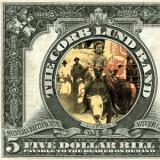
Five Dollar Bill was originally released in 2003, and is now going to be widely available on vinyl for the first time. This record includes songs that are staples in Corb Lund’s live set, such as “(Gonna) Shine Up My Boots” and “Time to Switch to Whiskey.” In addition to these lively jams, Five Dollar Bill features everything from romantic imagery of Corb’s homeland, “Short Native Grasses (Prairies of Alberta),” to songs that give the listener a glimpse into the life of working class folks, such as “Roughest Neck Around” which is an ode to oil riggers and the grit that is required with that lifestyle. “‘Five Dollar Bill’ was a big milestone for me for lots of reasons. It was my first record after my metal band, The Smalls, broke up and it’s when I got really serious about western music. I really dove into my family’s cowboy ancestry and my very rural upbringing in this batch of songs. It was also our first record of many produced by Harry Stinson who is now a very close friend, and our first brush with Nashville, Tennessee, as we recorded half the record down there. It was our last record with Ryan Vikedal on the drums before he flew off into fame and fortune with Nickelback. It was also our last record as a trio. It was my first gold album,” says Lund, “And we are still playing lots of these songs at our shows. It really defined my path forward as a western songwriter and helped lay the foundation for my whole career."
This limited edition release is part of the Corb Lund - Dark Horses Club. New West Records will be releasing unreleased records and material from Corb Lund throughout 2025 and 2026.
The discovery of Doris Dennison's score represents a genuine musicological breakthrough—what once would have been "a tree falling in the woods" thirty years ago now holds the potential to render "a thunderous clap in our minds." While researching Anna Halprin's lesser-known collaborators, scholar Tom Welsh uncovered the archives of AA Leath, one of Halprin's principal dancers. Buried within these materials was Dennison's handwritten score for Earth Interval, dated May 1956. Born in Saskatchewan, Canada, in 1908, and raised near Seattle, Dennison (1908-2009) encountered John Cage while teaching Dalcroze eurythmics at the Cornish College of the Arts. She joined Cage's earliest percussion quartet—alongside Margaret Jansen, the composer and his wife Xenia—in the group widely regarded as having performed the first complete concert of percussion music in the United States. This historic December 1938 concert was followed by tours and the landmark May 1941 performance at the California Club, comprising Cage and Lou Harrison's Double Music, the premiere of Cage's Third Construction, and Harrison's 13th Simfony.
As Bradford Bailey observes in his extensive liner notes, Earth Interval demonstrates "an extraordinary balance of elements that imbues the piece with a sense of clarity, directness, and constraint that is both distinct and ahead of its time." The work's most remarkable innovation lies in its approach to extended techniques, particularly Dennison's notation for the central movement: "In 2nd movement, 1st player lowers + raises a gong into a tub of water while beating." This technique, absorbed from Cage's experimental vocabulary, generates what Bailey describes as "fields of acoustic abstraction that bend and warp time through sustained resonances, beat, and space." The temporal sophistication of these manipulations anticipated Karlheinz Stockhausen's Mikrophonie I (1964) and Annea Lockwood's water-based sound investigations by over a decade. After joining Mills College as dance accompanist, Dennison maintained crucial connections to the Bay Area's experimental scene, collaborating with figures like Merce Cunningham and programming Cage's music throughout the 1950s.
Comprising three movements—Land Form, Air Tide, and Earth Play—Earth Interval is scored for recorder, drums, gongs, maracas, muted gongs, and bowl gongs. In total, the piece is just under eight minutes: "a fleeting glimmer of moment in time, a life spent at the cutting edge, and a singular creative vision that packs a powerful punch." When viewed in historical context, placed in contrast to roughly contemporaneous avant-garde percussion works by Cage, Harrison, Louis Thomas Hardin (Moondog), and Harry Partch, or important precursors like Edgard Varèse's Ionisation (1931) and Henry Cowell's Ostinato Pianissimo (1934), it's clear that Dennison was following her own path. Earth Interval is not derivative. It is a precursor to what was yet to come, alluding to developments of avant-garde and experimental music that wouldn't begin to appear on the cultural landscape until the 1970s and '80s, with the emergence of Post-Minimalism and more idiosyncratic artists and ensembles like Midori Takada, Ros Bandt, Peter Giger, Frank Perry, Christopher Tree, Michael Ranta, Gamelan Son of Lion, and Niagara.
This recording by Chicago's Third Coast Percussion, captured in March 2022, represents the first complete documentation of this pioneering work. The ensemble's interpretation reveals the piece's remarkable contemporaneity while maintaining its historical specificity. Where Cage, Harrison, and Partch employed "self-consciously off-kilter polyrhythms," Dennison's rhythmic sensibility anticipates minimalist developments by nearly a decade, yet integrates "forceful rests, as well as sharp shifts in sonic character, tempo, and meter, that break the momentum and breathe a sense of life into the piece's structure." This positions her work closer to Post-Minimalism decades before its emergence. The architectural approach demonstrates Dennison's understanding that "the composer almost entirely disappears" in favor of phenomenological listening experience, creating what might be called an egoless music that places its realities and meaning entirely in the ear of the beholder. The present recording, realized by Chicago's distinguished Third Coast Percussion ensemble, represents a significant achievement in experimental music scholarship and performance practice. As specialists in the Cage tradition and contemporary percussion repertoire, Third Coast Percussion approached Earth Interval with the historical sensitivity and technical precision required to illuminate Dennison's subtle compositional innovations. The March 2022 recording sessions, engineered by Colin Campbell, capture both the work's intimate chamber music qualities and its bold exploration of extended techniques. The ensemble's interpretation reveals the piece's remarkable contemporaneity—its ability to speak directly to current musical concerns while maintaining its historical specificity.
This recording serves multiple scholarly functions: it provides the first complete documentation of Dennison's compositional voice, offers insight into the broader network of experimental music practitioners surrounding Cage and Harrison, and demonstrates the sophisticated level of compositional thinking that was occurring within the Bay Area's dance-music collaborations of the 1950s. The work's emphasis on phenomenological listening—what might be called an "egoless" approach to musical experience—places it within a lineage of American experimental music that prioritizes perceptual process over compositional personality. The work's original obscurity—limited to AA Leath's performances at venues like the 1957 Pacific Coast Arts Festival at Reed College—paradoxically allowed it to remain "entirely on its own terms," free from the constraints of historical categorization. Drawing on Jacques Derrida's Archive Fever, the argument emerges that "the archive can acknowledge, celebrate, and resurrect" overlooked voices, transforming our understanding of experimental music history. The present Blume edition, featuring Third Coast Percussion's authoritative interpretation, includes a lavishly illustrated 16-page booklet designed by Bruno Stucchi / dinamomilano, containing complete scholarly apparatus, historical photographs, and detailed production notes. This recording enables "cross-temporal intersectionality," allowing Dennison to "belong to a newly formed and more dynamic understanding of the present and past," demonstrating how forgotten voices can reshape entire historical narratives when given proper scholarly attention and performance advocacy.
Since its founding back in 2014, Blume has carved a unique place in cultural landscape, issuing free-standing works, spanning the historical and contemporary, that represent singular gestures of creativity within the field of experimental sound. Joining their broad efforts in building networks of context and understanding that already includes the works by Werner Durand, Sarah Hennies, Bruce Nauman, John Butcher, Jocy de Oliveira, Mary Jane Leach, Valentina Magaletti, Alvin Curran, Julius Eastman, Alvin Lucier, and following the first ever vinyl release to attend to James Tenney's legendary Postal Pieces, the label now presents the first LP published by the visionary Swiss composer Jürg Frey. Drawing from the transformative power of breath and resonance, this release represents one of the most profound explorations of musical metamorphosis to emerge from the contemporary experimental landscape.
The completed work represents a "conjunction of these two artists" that has "activated a transformative form of experimentalism." These renderings "dance with an airy lightness, humour, and play, imbuing them with a beauty and emotiveness that can be rare within experimental music." They exist as "breaths, carrying the curiosities of life, belonging to no time and all time, to no one and everyone: a human music to be inhaled and pondered, for which the outcome remains unknown." In this liminal space between composition and interpretation, between breath and resonance, Zurria and Frey have created something that transcends the boundaries of experimental music itself, offering what might be called a metaphysical cartography of sound in its most essential form. As Bradford Bailey observes in his penetrating liner notes, "music is rarely a fixed entity," existing instead in a state of perpetual flux, "taking on the influences of its interpreters and performers." This fundamental truth finds its most eloquent expression in the transformative collaboration between Italian flutist Manuel Zurria and Frey, longtime member of the Wandelweiser Group. Where conventional recordings might preserve a definitive version, this release activates what Bailey calls "states of unknowing and continued experimentation," allowing Frey's compositions to evolve into entirely new dimensional territories. The original string quartet and piano works dissolve into breath-carried architectures of sound, where "the original remains in a constant dialogue with its transformation." This is not mere arrangement but ontological metamorphosis - an alchemical process through which crystalline harmonies are reborn as atmospheric phenomena.
The metaphysical dimensions of this transformation become clear through detailed analysis of the musical result. Where Frey's original compositions operate through what he calls "basic confidence in the clear and restricted material," Zurria's interpretation activates entirely new perceptual territories. Space holds almost atomic sense of weight against the airy punctuations of timbres, textures, and tones, creating "suspensions of time within which questions and identities posed by instrumentation fade." The Extended Circular Music pieces - each comprising "a small number of bars to be repeated an undetermined number of times" - become organizations of sound that defy being definitive or fixed. Originally scored for different combinations of violin, viola, cello, and piano, these works now exist as pure phenomena of breath and resonance, where "hanging, breath-length utterances dance and intertwine amongst complex harmonic clusters and conjunctions."
The philosophical implications of this transformation illuminate a lineage of composers who have moved "away from abstraction and responding to the need to create" something beyond mere technique. Drawing parallels to Morton Feldman's understanding of non-functional harmony, Zurria's approach represents "a transformative form of experimentalism" that activates what Frey calls the "thaumaturgic power" of music - its capacity to heal and transform consciousness itself. The result is "a radical reimagining of ambience: sprawling sonorities and resonances adrift in space, carrying the liberated traces of the work's former incarnations and their truths." In Zurria's interpretation, Frey's String Quartet n.3 becomes something approaching "an organ played in slow motion, its seals leaking," while the Extended Circular Music pieces transform into "glacial chords from a diverse palette of voicings, harmonies, timbres, and tones."
Performed by Manuel Zurria. Recorded and mixed by Zurria at BigCardo, Catania between 2022-2024, with mastering by Bruno Germano at Vacuumstudio, Bologna, this Blume release represents a profound exploration of musical transformation.
Was kann und darf Musik? Auf diese Frage gibt Scott Walker eine Antwort. "Bish Bosch" ist ein düsterer, aber zugleich funkelnder Monolith. Um 2009 herum begann das ehemalige Mitglied der Walker Brothers damit, an diesem Material zu arbeiten. Zusammen mit seinem Co-Produzenten Peter Walsh und einem festen Stamm aus Musikern wie Ian Thomas (Schlagzeug), Hugh Burns (Gitarre), James Stevenson (Gitarre), Alasdair Malloy (Percussion) und John Giblin (Bass) nahm er die Tracks in den folgenden Jahren auf. Nach "Climate Of Hunter" (1984), "Tilt" (1996) und dem tiefdunklen "The Drift" (2006) kreieren die orchestralen Arrangements auf "Bish Bosch" eine aufgeregte Stille. Pointierte klassische Musik trifft auf Breakbeats und verzerrte Gitarren und macht "Bish Bosch" zu einem der wohl intensivsten Hörerlebnisse des Jahres. Unter der Leitung des musikalischen Direktors Mark Warman nahm Scott Walker dieses außergewöhnliche Album in den Londoner Air-Studios auf.
*JAPANESE PRESSING* ** Limited Edition** *** Unique hand silk-screened cover details*
Note: the colours delivered are random - examples shows above**
Enchanting and highly focussed material on a self released LP ** BIG TIP!!
TORSO's 2nd vinyl release.
TORSO (トルソ) is a unit formed by Kenji (flute, sax, etc.) & Orie (cello, voice, etc.), a married couple based in Tokyo, JP.
Technical:
Mastering and cutting were carried out by Graeme Durham of THE EXCHANGE mastering studio, established by the former "Sound Clinic" mastering and cutting section of Island Records UK. This ensures deep grooves and exceptional dynamics.
Kenji: Flute, Sax
Orie: Cello, Voice, Piano
Mixed by: Naoyuki Uchida
Mastering & Cutting by: Graeme Durham (The Exchange)
Press: Toyokasei Japan
The album cover features new artwork by Masaya Nakahara aka HAIR STYLISTICS, with the album title hand-printed using a silk-screen method in 7 colours, individually finished for each of the 500 copies.
- 1: Press Play
- 2: Pop’s Love Suicide
- 3: Tumble In The Rough
- 4: Big Bang Baby
- 5: Lady Picture Show
- 6: And So I Know
- 7: Trippin’ On A Hole In A Paper Heart
- 8: Art School Girl
- 9: Adhesive
- 10: Ride The Cliché
- 11: Daisy
- 12: Seven Caged Tigers
Experience the Double-Platinum 1996 Album in Audiophile Sound for the First Time
Mobile Fidelity’s Numbered-Edition 180g 45RPM 2LP Set Is Sourced from the Original Analogue Tapes
1/2” / 30 IPS analogue master to DSD 256 to analogue console to lathe
If great art, as many believe, is inherently polarizing, then the Stone Temple Pilots’ Tiny Music… Songs from the Vatican Gift Shop easily ranks as the California-based band’s finest album. Simultaneously celebrated and castigated upon release in spring 1996, the group’s third full-length finds vocalist Scott Weiland and company expanding their “grunge” palette with a smart blend of glam rock, psychedelia, jangle pop, and other related styles. Having benefited from long-view reassessments that shed the biases and meanness of initial criticisms, the double-platinum effort is now largely and rightly seen as a creative masterwork. All the more reason why it deserves reference-grade production.
Overseen by producer Brendan O’Brien, Stone Temple Pilots used bedrooms, hallways, bathrooms, and the lawn to capture a broad blend of textures, spaciousness, and ambience that helped underline the group’s obvious (and somewhat unexpected) leap from normal “alternative” status to an artist whose aspirations went beyond that of many of its contemporaries. You can hear the multitude of details and tonalities with previously unattained clarity, presence, and scope on this fantastic reissue, which also delivers the impact and punch every rock record deserves. Another tremendous asset: The depth, grain, and pitch of Weiland’s voice.
For all the contagious choruses and glossy melodies that help make Tiny Music… Songs from the Vatican Gift Shop sparkle, the vocal performances of the late singer arguably rank as the best that the much-missed Weiland committed to tape. None other than the Smashing Pumpkins’ Billy Corgan — who, like many peers and critics, felt a pressing need to reevaluate the record as both time marched on and the self-importance attached to the “alternative” scene faded — praised Weiland’s efforts by noting: “Like Bowie can and does, it was Scott's phrasing that pushed his music into a unique, and hard to pin down, aesthetic sonicsphere.”
Smooth and diverse, those traits are everywhere on Tiny Music… Songs from the Vatican Gift Shop. From the clever combination of emotional closeness and distance he brings to the catchy albeit ultimately melancholic “Lady Picture Show”; to the lounge-fly balladeering that causes “And So I Know” to lightly swing akin to a bleary-eyed house band’s final number at a 4 A.M. bar; to the effortless cool and laissez-faire casualness he articulates on the grinding “Pop’s Love Suicide”; to the dimensional raspiness, defiant energy, and let-loose wail that sail through the crunchy “Big Bang Baby.”
The latter tune, the record’s first single and per Weiland a conscious attempt by the band to deconstruct its prior approaches, clearly borrows from the Rolling Stones’ “Jumpin’ Jack Flash.” Because of it, the song drew all kinds of barbs from naysayers. Their disdain extended to most material on Tiny Music… Songs from the Vatican Gift Shop, which indirectly references other prized acts such as the Beatles, Cheap Trick, T. Rex, and Lush. Those cynics failed to grasp that Stone Temple Pilots were paying homage and having a blast, with even Weiland, then battling serious substance-abuse and legal issues, getting in on the action.
Stone Temple Pilots’ skeptics also turned a deaf ear to the records’ stellar pop craftsmanship, sticky hooks, and sly commentary on music-industry machinations and fame. Not to mention the band’s intent, made clear from the outset. In an interview conducted in 1994, guitarist Robert DeLeo stated: “The last thing I wanted to do with this band was make everybody believe we invented something.”
Seen through that lens and the hindsight afforded history, and appreciated independent of the self-righteous authenticity standards of the day, Tiny Music… Songs from the Vatican Gift Shop sounds borderline fearless while authoritatively checking all the right boxes for fun, flavor, and finesse. Part winking send-up, part tribute to the glitter rock age, and part middle finger towards the hip crowd that didn’t know what they were missing, this mid-90s classic repeatedly invites you to drop the needle and press play.
- 1: Lively Up Yourself
- 2: No Woman No Cry
- 3: Them Belly Full (But We Hungry)
- 4: Rebel Music (3 O'clock Roadblock)
- 1: So Jah S'eh
- 2: Natty Dread
- 3: Bend Down Low
- 4: Talkin' Blues
- 5: Revolution
Natty Dread gilt als Bob Marleys bestes Album, die vielleicht beste Reggae-Aufnahme aller Zeiten.
Es war Marleys erstes Album ohne seine ehemaligen Bandkollegen Peter Tosh und Bunny Livingston und das erste, das er als Bob Marley & the Wailers veröffentlichte.
Das hier präsentierte Material definiert, worum es im Reggae ursprünglich ging, mit politischen und sozialen Kommentaren, gemischt mit religiösen Lobgesängen auf Jah.
Bob Marley war ein jamaikanischer Reggae-Sänger, Songschreiber, Musiker und Gitarrist, der internationalen Ruhm und Anerkennung erlangte.
Seine Musik begründete in den 70er Jahren seinen weltweiten Ruf und machte ihn mit mehr als 75 Millionen verkauften Tonträgern zu einem der weltweit meistverkauften Künstler aller Zeiten.
- A1: Positive Vibration
- A2: Roots, Rock, Reggae
- B1: Johnny Was
- B2: Cry To Me
- B3: Want More
- C1: Crazy Baldhead
- C2: Who The Cap Fit
- D1: Night Shift
- D2: War
- D3: Rat Race
Bob Marley & The Wailers' Rastaman Vibration Analogue Productions' UHQR, the pinnacle of high-quality vinyl! 45 RPM 2LP Ultra High Quality Record release limited to 4,500 copies Mastered from the original tapes by Ryan K. Smith at Sterling Sound Pressed on 180-gram at Quality Record Pressings using Clarity Vinyl® Includes "12 x 12" 8-page booklet featuring new liner notes by musician and Marley biographer Leroy Jodie Pierson (APO Records Direct-To-Disc AAPO 005), plus exclusive photos by Kim-Gottlieb Walker Purest possible pressing and most visually stunning presentation and packaging!
When Rastaman Vibration was first released in America in 1976 it did what some in the music industry considered nearly impossible at the time. It took Bob Marley into the Top Ten alongside disco records and corporate rock, points out Rolling Stone, which rates the album 4 stars. Despite the good cheer of the title track and the upbeat "Roots, Rock, Reggae," Rastaman Vibration contains some of Marley's most intense images of oppression, paranoia and despair. Tracks such as "Who the Cap Fit," "Crazy Baldhead" and "War" are offered by the Wailers with dire urgency as Marley's brutal visions are echoed by his own church choir, the I-Threes.
More than four decades later, neither Marley's music nor his message has lost its sting. Now, Analogue Productions presents perfection — Rastaman Vibration cut at 45 RPM in UHQR format on 180-gram 2LP Clarity Vinyl. This Ultra High Quality Record release will be limited to 4,500 copies, with gold foil individually numbered jackets. For Bob Marley, 1975 was a triumphant year. The singer's Natty Dread album featured one of his strongest batches of original material (the first compiled after the departure of Peter Tosh and Bunny Wailer) and delivered Top 40 hit "No Woman No Cry." The follow-up Live set, a document of Marley's appearance at London's Lyceum, found the singer conquering England as well. Upon completing the tour, Marley and his band returned to Jamaica, laying down the tracks for Rastaman Vibration (1976) at legendary studios run by Harry Johnson and Joe Gibbs.
At the mixing board for the sessions were Sylvan Morris and Errol Thompson, Jamaican engineers of the highest caliber. Of the material on Rastaman Vibration, "War," for one, remains one of the most stunning statements of the singer's career. Though it is essentially a straight reading of one of Haile Selassie's speeches, Marley phrases the text exquisitely to fit a musical setting, a quiet intensity lying just below the surface. Equally strong are the likes of "Rat Race,""'Crazy Baldhead," and "Want More."
These songs are tempered by buoyant, lighthearted material like "Cry to Me," "Night Shift," and "Positive Vibration." Not quite as strong as some of the love songs Marley would score hits with on subsequent albums, "Cry to Me" seems like an obvious choice for a single and remains underrated. This UHQR is remastered at 45 RPM by Sterling Sound's Ryan K. Smith from the original analog master tapes. Each UHQR will be pressed at Acoustic Sounds' industry-leading pressing plant Quality Record Pressings (QRP) using hand-selected Clarity Vinyl® with attention paid to every single detail. These records will feature the same flat profile that helped to make the original UHQR so desirable. From the lead-in groove to the run-out groove, there is no pitch to the profile, allowing the customer's stylus to play truly perpendicular to the grooves from edge to center.
Clarity Vinyl allows for the purest possible pressing and the most visually stunning presentation. Every UHQR will be hand inspected upon pressing completion, and only the truly flawless will be allowed to go to market. Each UHQR will be packaged in a custom clamshell box and will include a booklet detailing the entire process of making a UHQR along with a hand-signed certificate of inspection. This will be a truly deluxe, collectible product. In addition to the UHQR booklet the package will contain a 8-page 12" x 12" booklet containing new liner notes by musican and Marley biographer Leroy Jodie Pierson as well as exclusive photos by Kim-Gottlieb Walker. Pierson is a past performer for Blues Masters at the Crossroads, the two-night historic blues festival at Blue Heaven Studios in Salina, Kansas. He's also recorded a Direct-To-Disc blues album for APO Records. (AAPO 005) Rastaman Vibration — now a landmark production on 180-gram 45 RPM Analogue Productions UHQR Clarity Vinyl!
- A1: 1000 Light Years Dub (Feat. High Times Players, Lloyd Obeah Denton)
- A2: In The Shadow Dub (Feat. Vin Gordon, Glen Dacosta, Sheldon "Atiiba" Bernard)
- A3: Whitewater Dub (Feat. Ibo Cooper, Lew Chang)
- A4: Memories Of Old Dub (Feat. Ernest Ranglin, Tyrone Downie)
- A5: Rose Hall’s Birds Dub (Feat. Vin Gordon, Glen Dacosta)
- B1: Squirrel Inna Barrel Dub (Feat. Ernest Ranglin, Vin Gordon, Karl Bryan)
- B2: Under The Cotton Tree Dub (Feat. Glen Dacosta, Ibo Cooper, Cat Coore)
- B3: 45 Charles Street Dub (Feat. Roots Radics, Dwight Pickney, Dean Fraser)
- B4: Everlasting Love Dub (Feat. Sly & Robbie, Dean Fraser, Peace Diouf)
Bringing together over 50 of Jamaica's greatest session musicians, whose work spans from the birth of reggae in the late 1960s until today, Roots Architects is the largest gathering of Jamaican musical talent on one all-instrumental album. Never before have so many veterans, who helped create the immortal rhythms that made reggae internationally successful, been assembled to play on new material without vocals. This project aims to celebrate and pay tribute to the unsung heroes of reggae music: the rhythm builders or Roots Architects. Following the outstanding success of the first chapter of the project, From Then 'Til Now (2024), Fruits Records is pleased to reveal the dub album From Dub 'Til Now. A veritable immersion in the mythical sound of Kingston studios in the late 1970s. Dub master Roberto Sánchez sublimates the work of the Roots Architects with wildly inventive sound experiments. Reminiscent of the finest years of King Tubby, Lee "Scratch" Perry and Scientist.
The project is the brainchild of Swiss keyboardist and producer Mathias Liengme. In 2013, he travelled to Kingston, Jamaica, to produce The Inspirators project, an all-star album gathering Leroy ”Horse-mouth” Wallace, Lloyd Parks, Earl ”Chinna” Smith and Sangie Davis, the four of them acting both as musicians and vocalists. This first experience in Kingston studio life paved the way to what would become the Roots Architects project. In February and March 2017 Mathias Liengme travelled for the fifth time to Kingston to record as many of reggae’s greatest living veteran musicians as he could. With the help of a few of these Architects like Robbie Lyn, Fil Callender or Dalton Browne, he managed to gather over 50 session musicians aged 60 to 85 on nine instrumental songs.
Roots Architects are legends back together in Kingston studios doing what they do best: creating in-strumental music all together!