Adam Beyer's Drumcode imprint welcomes wAFF to its roster with two thudding techno tracks. British producer wAFF has been making waves in recent years, reflecting on a diligent 2015 spent playing across the likes of Europe, Africa, Asia and the States, when not making routine appearances at Paradise, Ibiza.
As a producer he's dropped several lauded releases on Jamie Jones' Hot Creations imprint, not to mention Matthias Tanzmann's Moon Harbour and Sven Väth's Cocoon, with his next outing landing on renowned Swedish label Drumcode run by techno titan Adam Beyer. Laying down hard hitting kicks from the off, Holographic churns out an undulating synth combined with shuffling hats and a cavernous low-end, before Vibrationz employs a low-slung groove fashioned from a sultry bassline, floating chords and a sinister vocal..
Поиск:matt b
Все
- A1: Goneville (Feat. Max Graef)
- A2: Computer Killer
- A3: Throwback (Album Cut)
- A4: Shit Iz Real
- B1: (Forgotten Intro) 4 My Peeps
- B2: Bochum (Feat. Imyrmind)
- B3: You Can't Groove
- B4: To The Beat Interloot
- C1: Still Shining
- C2: Kilometer Disco (Feat. Max Graef)
- C3: Ødland
- D1: One For Viktor
- D2: Long Live Human (One For Sveta)
- D3: A Bit Warmer
- D4: Brother T (Greeting To Rasho)
Essen's own Glenn Astro has called his first album Throwback, and the name is at once a perfect fit and not nearly the extent of the story. On the one hand, Astro has filled the double-LP with a wealth of old-school gestures and textures—the warm whoosh of analog synths, the rattle of Rhodes tines and the sizzle of jazzy drums,all held together by the comforting glue of tape hiss and vinyl crackle. If you're used to the clean sonic lines and stylistic streamlining of so much contemporary house music, then Throwback is sure to feel less like a record you just pulled out of plastic wrap than a well-seasoned one salvaged from a flea market or unfinished basement. And yet like so many Tartelet releases—particularly the label's last two full-lengths,
Max Graef's Rivers of the Red Planet and Uffe's Radio Days—it feels fresh and keenly contemporary no matter how vintage the fabric. Rather than throw back to any one moment, he's given us a collage of styles that's quite literally timeless. Astro makes brilliant work of his influences, drawing on hip-hop, house, funk and soul in such equal measure that it's hard to argue that one impulse dominates the other. The sound certainly flirts with the dance floor, with Astro applying highpressure
deep house pads on the title cut, gliding on shimmering keys for "One For Viktor," and taking us on a vibraphone-fueled workout with "Kilometer Disco," one of a pair of cuts featuring Max Graef. But Astro obviously relishes the time he spends on the sidelines absorbing the atmosphere, or at home head-nodding to the dustiest corners of his record collection. For every house beat you hear, you'll also dip into juicy, 90's-style beat science, toasty ambience and buttery chord progressions.
Expertly paced but never hustling you along, Throwback begs to be heard as a whole but explored at your own easy pace—a record for hazy mornings-after, vibey
nights in and endless summer afternoons.
Drew McDowall's back story reads like a primer of psychedelic fiction woven into statements of the unbelievable, superhuman and outright insane. Somewhere in the chaotic madness, comes an artist such as McDowall with total control and absolute calm within his songs and artistic method.
Growing up in the gangs of 1970's Scotland, Drew McDowall started to shy away from the daily violence once punk took hold of the counterculture youth. Drew McDowall quickly scrambled to form his own punk band in 1978 with his then wife, Rose McDowall, called The Poems. Shortly lived, the Poems released a single and various tracks but more importantly, the band allowed McDowall to network with other local musicians in Glasgow, such as Orange Juice, and allowed him to travel down to London thus forming friendships with Genesis P-Orridge, David Tibet and countless others, bringing Drew into the fold of the experimental revolution happening in the UK brought upon by Throbbing Gristle and executed by bands such as Psychic TV and Current 93.
During the 1980's, McDowall found himself in the ranks of P-Orridge's Psychic TV and collaborating with the mysterious duo comprised of former Throbbing Gristle creator Peter 'Sleazy' Christopherson and the enigmatic John Balance who had been creating esoteric and progressive electronic music under the title of Coil. It was during his formative collaborations with Coil that McDowall saw himself shift from occasional contributor to austere full-time member of the arcane outfit. McDowall's impact on the band's sound was apparent as the releases transformed from their previous avant pop signature to a more complex and methodic electronic imprint accompanied by even more abstruse subject matter than previous years. McDowall would continue honing his compositional skills with Coil until the release of the band's two most broad-minded albums, Astral Disaster and Musick to Play in the Dark.
The past decade, Drew McDowall found himself living in New York City and re-appropriating himself within the local music scenes he found himself contributing to. In 2011, alongside his friend and collaborator, Tres Warren (Psychic Ills), McDowall found himself exploring his passion of meditative drone and abstract sound patterns in their project Compound Eye. In recent times, McDowall's production work has provided the music world with some of the most outstanding remixes for bands such as Nine Inch Nails, Azar Swan and Long Distance Poison as well as his well-received scores he composed alongside artist Tamaryn for the works of Bret Easton Ellis. Outside of his collaborative duties, McDowall formed an audience as a solo artist, playing countless performances and showcases around New York's electronic music haunts.
Dais Records approached Drew to solidify his standing as a leading electronic musician with the recording of new material neatly wrapped up in his debut album entitled 'Collapse'. Recorded in 2015 in Brooklyn, NY, McDowall's synonymous modular synthesizer compositions are augmented by obtuse sampling cut-ups and contributions from Nicky Mao (Hiro Kone / Effi Briest) rounding out the lumbering sequential knot work that has become synonymous with McDowall and craft.
a highly regarded producer and musician who used to be in the midst of the NY metro breeding reactor that spectatuclarely revived and modernized disco and italo disco since the turn of the century and added some hotliped live brass to their platters and whose sought after releases under his own appear appear much to rarely dons his house cloak and dagger for 3 sneaky new chapters on story. not wasting any time on unnecessary nicety the a-side track will send up a whole colony of ants right up your pants riding on a steamrolling percussive disco groove garnished with cut up vocals and fx trickery. B2 is another chicago style wedding of disco and house with a jubilant, string backed female vocal snippet tweaked over a heavy groove while the first track on the flip is a subterrenean, groaning dub house affair that reminds of a slowed down John Ciaffone banger. no matter which chapter you jump to here it puts you right into the action.
Avian's first release since absorbing its sister label Mira comes from Chicago based musician Connor Camburn under the alias Litüus, with an entirely beatless collection that well establishes Avian as the home for the kind of searching electronic experimentation that would have been found on the ten-inch focused imprint that Shifted recently announced would merge with its parent label. The EP follows previous cassette releases under the Litüus name for Brave Mysteries, Notice Recordings and Mazurka Editions and comprised entirely of real time single-take recordings on hardware instrumentation.
Shorn of percussive elements yet not without their own rhythmic structures, Camburn's six compositions are free of immediate electronic genre influences and instead draw primarily on non-musical inspiration in addition to various other contextual reference points, as he sought to express ideas of the unraveling or "de-composition" of musical or architectural spaces through musical forms imagined as inverted contours and negative spaces.
Written & Produced by Connor Camburn / Mastered by Matt Colton at Alchemy, London / Avian 2015 Published by Copyright Control
Something is looming on the horizon, a flickering presence, a sparkle in the twilight, hardly visible at first, then slowly taking shape and finally coming into view: "I will depart/I see, I will, I won't go far," Stefanie Boehm (Couch) sings on "Sirens", one of 10 tracks Ms. John Soda have recorded for "Loom", their first album in eight years – and it's true: It's a return that often feels like yet another departure, like it's time to say farewell once again, one last hug and off it goes into the valley, where life is already waiting.
A lot has changed since Ms. John Soda released the first 7" back in 1998, since Micha Acher (The Notwist, Tied & Tickled Trio, Alien Ensemble) joined Stefanie Boehm and completed the creative nucleus of this band around the turn of the millennium; day-to-day life indeed feels different some 16 years later (and half as many since the release of their sophomore album, "Notes and the Like"), but the basic chemistry, the intricate balance of electronic and analog molecules that orbit this nucleus – and thus, the resulting mood and vibe -, they're still recognizable, still undeniably Ms. John Soda: Whether it's the dense, intensely rushing soundscapes of "Hero Whales", numerous layers pushing and taking off into the same direction, the propelled clatter of "Sirens", a track like "Millions" that blows off more and more steam, a glistening, wheezing sort of madness even (though there is a tender side to it as well), the perpetual, magic lantern-like motions of "Name It" (think Trish Keenan and Broadcast) or the gradually descending melodies of opening track "In My Arms" – they're all lined with a certain tension, underpinned by a certain atmosphere, a unique brand of melancholy that never quite gives in, keeps searching for new outlets and answers.
The album title Ms. John Soda have chosen for their third full-length, "Loom", obviously hints at this feeling of re-emergence, gathering and looming, but according to the singer, it also refers to a weaving loom: It's about "weaving and combining a vast number of influences, ideas, instruments, melodies, rhythms, and layers to create a whole," says Boehm, whose vocals span these new tracks like thick, reliable ropes that glow with marine luminescence. "It's about weaving individuals into a group ('Millions'), weaving and merging former ideals and hopes with reality ('The Light'), combining 'hi' and 'bye', beginning and end ('Hi Fool'), interweaving opposite or contradicting concepts, such as pushing forward vs. being pushed ('In My Arms')." And while the weaving, just like life itself, can easily get out of hands, "because you lose track, and yet life goes on ('Name It')," a lot of these songs – e.g. "Hero Whales", the billowing "Sodawaltz", "Fall Away" – revolve around a shimmering sense of something we can't quite grasp or put a finger on just yet: "Intuitions, hopes, dreams, wishes, affinities, distances, temptations…"
Whereas Cico Beck aka Joasihno (drums, electronics), also part of Aloa Input and the latest addition to Ms. John Soda's live band, and drummer Thomas Geltinger helped out on various tracks they recorded with Oliver Zülch in Weilheim, Boehm and Acher were also joined by Karl-Ivar Refseth (percussions) and Matthias Götz (trombone). Together, they keep feeding the loom with countless spools of yarn, until epic piano closer "Fall Away" seems to offer a temporary respite: "find your way/take the dry suit off/for a night". Time to rest, to take a deep breath. Or is it already the first rays of dawn looming on the horizon?
Atlanta's TWINS returns with an album of club-ready synthwave for CLEAR. Nothing Left lives on the axis between Wax Trax and WBMX, generating mutant industrial pop for sweaty basement ragers. The record begins with drum machine workout "Can't Go Back", cruises past the electrifying gloom of "Treat Me Like A Freak" and drives straight through to the finale, mechanized torch song "That's What I Never Saw." Matt Weiner, the single entity behind TWINS, is also at the controls of CGI records, a dependable outpost for extraterrestrial club jams. Both solo and as half of Featureless Ghost he's released on Crash Symbols, Night People, Geographic North, Clan Destine, and more. His work has been featured on XLR8R, Pitchfork, Resident Advisor, and Decoder. Forthcoming records from Chicago's CLEAR include two twelves of mind warping techno from locals Mike Broers and Dar Embarks. TWINS may be the first out-of-towner on the imprint but Nothing Left truly echoes the vibe of the city's underground past and present.
Auntie Flo returns with his 'Theory of Flo' LP masterpiece, his
first release on H+P in over 3 years!
Following his critically acclaimed 'Future Rhythm Machine' LP,
'Theory of Flo' is a bold step ahead from FRM, as it takes us on
the trip of a lifetime, spanning continents, genres, languages and
cultures to create a wholly unique listening experience, and one
which is only possible in 2015.
Teaming up with long term collaborator, Esa Williams, the album
also features collaborations with the incredible Ghanaian singer,
Anbuley (who last appeared on the Autonomous Africa hit
'Daabi'), Shingai Showina (of The Noisettes / Matthew Herbert /
Dennis Ferrer fame) and has experienced a lengthy recording
process between Havana, London and Glasgow - with outstand-
ing results.
'Theory of Flo' lands this November, in the meantime, his 'So In
Love' smasher and the spellbinding 'Waiting For A (Woman)' drop
on limited 10'..
Blossom Kollektiv returns to vinyl once again after the success of Jepe's 'Spring Shadow,' this time around inviting House and Techno veteran Matthias Vogt to the label. The two-track EP of finely crafted melodic and emotive Techno features remixes from Oliver Gehrmann and Jepe and is sure to find its way into DJ bags world wide.
Starting the EP off on a strong note with Solace, Matthias Vogt takes us on a magical journey like we're floating in the clouds with a driving kick and lush melodies that keep us soaring through the sky into a land of beautiful and lovely emotions. Then just when we feel like we're about to fall the track uplifts us once again into a place of cosmic bliss with rich piano notes full of substance.
Playing with the rich piano notes of the original Oliver Gehrmann creates his own vision of Solace bringing a deeper and more after hours feel. The track takes us through the elements of the original but reworking it ever so slightly while never losing the strong emotional sense of the original.
Next we come back to Matthias with Fluorescence where we once again are whisked of to a fascinating place full of melody and care free attitudes. However don't let this allure fool you, powered by a heavy kick drum and tight percussion this track will work wonders on any peak hour dance floor bringing a sense of euphoria to the crowd.
After returning from our blissful land Jepe brings us right to the floor with his straightforward house version of Fluorescence. Putting his stamp all over his version using classic piano stabs and funky percussion to make the track uplifting in a rhythmic way, then subtle synths from the original peek their heads out to create a little drama and suspense until the slamming kick drum kicks back in making the crowd move.
The Hypnus clergy is delighted to finally reveal our 10th sacrament. This time we've gathered yet again in choir to howl in unison as the midnight sun soar through the night.
Support from Antonio Ruscito, Arnaud le Texier, Artefakt, Brando Lupi, Echologist, Cio D'Or, David Att, Deepbass, Eric Cloutier, Etapp Kyle, Exium, Felix Lorusso, Gianluca Meloni, Iori, Kwartz, Mattias Fridell, Ness, Nihad Tule, Nika Khak, Oscar Mulero, Rasmus Hedlund, Reggy van Oers, Samuli Kemppi, Setfan Vincent, Stephanie Sykes, Svreca, Takaaki Itoh, Unam Zetineb, Victor Martinez (Error Etica), Vilix, VSK, Warmth and still counting.
- A1: V 01:26
- A2: No Way Out 04:00
- A3: Army Of Noise 04:18
- A4: Worthless 03:18
- B1: Skin 03:59
- B2: Hell Or High Water 04:36
- B3: Pariah 03:46
- C1: You Want A Battle (Here's A War) 04:14
- C2: Broken 03:39
- C3: Venom 03:54
- C4: The Harder The Heart (The Harder It Breaks) 04:00
- D1: Playing God 03:52
- D2: Run For Your Life 03:34
- D3: In Loving Memory 04:02
- D4: Raising Hell 04:30
Von Carl Bown und Colin Richardson (Slipknot, Machine Head, Trivium) in den Metropolis Studio in London produziert, entpuppt sich VENOM als kompromissloser, erbitterter Schritt für Bullet For My Valentine. Ihr heftigstes Album bislang packt den Hörer sofort an der Kehle, wofür die mächtige Performance von Sänger / Gitarrist Matt Tuck, die bissigen Riffs von Gitarrist Michael "Padge" Paget und das Drumming-Sperrfeuer von Michael "Moose" Thomas sorgen. Auf VENOM hält das Trio perfekt seine ureigene Balance zwischen Heaviness und dringlichen Melodien und schraubt sich so auf das nächste Level.
"Es ist schwierig, ein komplettes Album zusammenzufassen, nachdem wir soviel Zeit mit dem Songschreiben und Aufnehmen verbracht haben und Blut, Schweiß und Tränen flossen," erzählt Frontmann Matt Tuck. "Es war hart, für die Texte wieder an einige äußerst dunkle Orte zurückzukehren, aber sobald ich Fährte aufgenommen hatte, war es OK für mich, gewisse Themen einfach rauszulassen - und die Hölle brach los. Dieses Album ist ganz klar das aggressivste, das wir je eingespielt haben, und textlich wird es sicherlich Viele aufhorchen lassen.
Dark Entries is proud to release the sophomore EP from BEZIER entitled Telomeres. Bézier is the moniker of local SF musician ROBERT YANG, who also is part of the illustrious HONEY SOUNDSYSTEM crew. Telomeres is the follow up to Bézier's debut EP Ensconced, released in 2013. The title relates to themes of time, science, analytics and procedures. Bézier integrates the refrains of Spanish new wave and Italo disco with the attitude and aggression of underground styles like synth-punk and industrial. These six tracks were written, produced and mixed by Bézier at his home studio in San Francisco between 2014 and 2015, and feature the debut of his own vocals. All songs have been mixed by Mark Pistel (of Meat Beat Manifesto fame) at Room 5, San Francisco and EQed for vinyl by George Horn at Fantasy Studios. The vinyl comes housed in a jacket featuring an illustration by in-house designer Eloise Leigh riffing on early 80s computer graphics. The matted sleeve is meant to resemble the side panels of early computing instruments like Macintoshes or the Commodore 64. Each LP includes a postcard with a photograph of actual telomeres captured by a microscope camera by the Blackburn Lab at UCSF. Telomeres' are life's building blocks, changing the lengths of chromosomes to determine lifespan. This music is an investigation of a future in which time elongates as well as contracts.
House of 909 consisted of producers Nigel Casey, Trevor Loveys, and Affie Yussuf (Loveys and Yussuf are both still very active today), and vocalists Azeem and Bobby Depasois.
In 1997, they released an album of rolling deep house gems that were as evocative as they were posh. The tracks contained vocals and the subject matter dealt with youth, and leaving it. Like so many worthy releases, the record was critically respected but criminally under-celebrated.
Over the years Cascine developed an affinity for the album, connecting with its soft-focus approach to house music. This summer, Cascine will reissue The Children We Were in limited vinyl form. The music has been remastered, the artwork redone and the record repackaged. It's a lovely body of work, presented now through the eyes of Cascine.
Tough, to the point, no-nonsense machine music is a longstanding Midwestern tradition.
Drawing a line all the way back to the old guard, The Bunker New York's latest EP is Walk The Distance, courtesy of Mark Verbos, a techno veteran and New Yorker by way of Milwaukee who put together four pieces of heavyweight dancefloor artillery, informed by an intimate, inside-out knowledge of the machinery used in the production of these tracks.
"I've been doing this for a long time. In the beginning, there was only hardware, and it feels better to make music with physical objects. Plus, I make hardware, too," says Verbos, recounting his production processes. Verbos not only produces music, he also produces the hardware he uses to make music—his company, Verbos Electronics, manufactures Eurorack synthesizer modules with a vintage sensibility. When he's making music, Verbos says, "I try to get to know the devices I use well enough that whatever I imagine can come from them. Techno is machine music. When I'm recording, it's just me and the machines."
The music, however, speaks for itself. No punches are pulled here—the record starts in top gear with "Start Up Drive," a devastating techno bomb centered around a throbbing, repeating bassline and a meaty kick drum that builds to a massive climax in the span of five minutes. "In The Back Room" kicks the tempo up a notch, featuring spaced-out atmospheric synth leads floating atop syncopated percussion. "Just A Little Late" is funkier than the other two, built around a rubbery, insistent synthesizer groove that worms its way deep into your head and doesn't let go.
The aforementioned three tracks alone would comprise a solid techno EP suitable for any number of dancefloors. But the last track on the record—its namesake—shifts gears entirely. "Walk The Distance" is a moody, pulsing slow burner, introspective and emotional. It's a haunting listen that adds remarkable depth and complexity to the record. "Walk The Distance, the track, is a reference to the fact that music is not a career. Any advice you could offer someone on how to have a successful career doesn't really apply to a career in music. By that I mean to say, process is everything, and the results don't really matter."
Sage advice indeed, but judging by Walk The Distance, Mark Verbos has figured out how to produce results that matter.
Alphahouse imprint deliver the 'YY' EP from Italian duo MFS: Observatory, backed with a remix from label-head Butane & Alexi Delano.
MFS: Observatory is the collaborative guise of Italian duo Matthias Tuchetti, Francesco Cozzolino. The outfit are relative newcomers having only released material since late 2014 and here we see them take a huge leap in their career stepping into international water via the Alphahouse imprint, slotting them alongside heavy hitters like Skudge, Mark Broom, Alexi Delano, Butane, and Ricardo Villalobos on the stellar roster. With a Little Helpers release also confirmed in 2015, this is a duo on the rise.
Opening up the EP is 'Observatory Y1' which see the duo deliver a haunting slice of electronica fueled by smoky atmospherics, meandering arpeggio synth hooks and raw weighty rhythms to smoothly set the tone for what's to come. 'Observatory Y2' provides a more reduced, but still heavy, groove with bubbling synth drones, menacing stabs, a bumpy bass hook and mesmeric vocal murmurs.
On the flip side Alexi Delano collaborates with Alphahouse founder Butane to reshape 'Observatory Y2' into pure vibe. The duo provides a typically infectious groovy number, which evolves over six and half minutes with a subtle dubbed out hook taking over the last half of the track. 'Observatory Y3' rounds things off afterhours-style, laying the focus on a sparse rhythmic foundation while howling sweeps and spaced out vocals fuel the psychedelia.
Aux-Rec is Airdrop's offshoot label designed with a specific mission in mind: to look back and pay tribute.
Aux-Rec continues its survey of musical history, looking for those inspiring pieces of music (famous or forgotten) that carry a very distinctive groove and identity, and that offer the potential to be revisited in an ingenious contemporary way.
At Airdrop, we love music of all ages and of many genres! We feel Aux-Rec is a way for our artists and for us to pay our due respects to the origins and the evolution of contemporary dance music.
Neil Tolliday aka Nail, released the Themis records on his own Velocet imprint between '96 and '98. These three extremely rare 12"s constitute a great and important part of Tolliday's work.
For our eighth and ninth installments, we are glad to present the re-release in two episodes, of the long lost Themis works - re-shuffled, re-packaged and re-mastered by Matt Colton.
Feedback so far:
Dan Curtin -Saab is the one!
Meat (Freebase) - Saaaab 4 me!
Steve Lawler - Downloaded for Steve Lawler, thanks.
Bodyscrub - nice release, thanks!
Nicolas Duvoisin - really nice one !
Matt Star - nice one!
Marco Carola - thanks!
Posivision DJ Mag (Japan) - Dope!! nice one.
Xpansul - Nice sounds. Will play! Thanks
Robert drewek - Lovely ep - in my bag!
Zaquoir alias Matthias Groß is a producer and musician currently living in Leipzig. After sending us more than 10 GIGABITES of great music, we sat down together and tied a selection of his really eclectic styles of production together into one LP, creating some sort of showreel created in the timespan of over 15 years.
Zaquoir himself sees the record as a reminiscent mood of a donkey in the Sardinian sun and describes the record as a trip in itself, allowing the listener to traverse the lines of various acoustic landscapes.
The tracks on the LP where produced in six different places, including a historic house in the centre of Vilnius, the artist residency "Blumen" in Leipzig, a French-German art association and a village in Northern Bavaria.
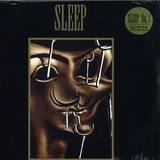
BACK IN STOCK NOW!! "Volume One is the debut album. It was the only album recorded with original guitarist Justin Marler, before he became an Orthodox monk. Volume One showcases a darker sound and stronger doom metal influence than Sleep's later work. The image featured on the cover is taken from the Salvador Dali painting "Soft Self-Portrait with Fried Bacon".
Their only album as a four piece of Al Cisneros, Matt Pike, Justin Marler and Chris Haikus
LP repressed for first time in many years.
allmusic
"For all their budding, precocious talent, Sleep's 1991 debut, Volume One, quickly betrays their still quite heavy debt to doom metal forefathers like Black Sabbath, Witchfinder, and Saint Vitus. Driven by Matt Pike and Justin Marler's lumbering mass of low-tuned guitar riffs, Al Cisneros' (still going as Luke here) serpentine bass and ragged screams, and drummer Chris Haikus' cyclopean kit pummeling, occasional highlights such as "The Suffering," "Nebuchadnezzar's Dream," and "The Wall of Yawn" prove less memorable than they are sensorially overwhelming. And yet, ironically, Sleep's rhythm guitars would never again be kept as under control, nor would their leads sound quite as refined as they do here (see the cleaner harmonies employed to good use on "Numb" and "Catatonic," for example). This was probably due to the onetime involvement of the significantly less stoned Marler, who would soon exchange the group for a monastery where he would study to become a monk. Fittingly enough, however, losing the versatility of a second guitarist was exactly what Sleep needed to focus their singular power into a crushing force, and the remaining trio would flourish immediately behind the sheer physicality of Pike's six-string style, as proven by 1993's superlative sophomore LP, Sleep's Holy Mountain."
Back in 2013, Futureboogie released The Fade EP by Outboxx, a record that received critical acclaim from the who's who of music press, helping to propel Outboxx on the upward trajectory they've managed to maintain since those early releases. Unsurprisingly, Futureboogie are delighted to get the pair back for more.
Having developed their sound in the two years since, the pair has refined the raw ingredients of those records to show a combined maturity beyond their collective years. Previously the pair of producers (Matthew Lambert and Jake 'Hodge' Martin) have released music on respected independent imprints such as BRSTL, Idle Hands, Well Rounded Records and Local Talk; honing their analogue rich sound that touches on the hard edge of drum machine rhythms crafted by Hodge and the harmonic, jazz soaked embellishments from Lambert on Keys.
'Day One' opens with the sound of a string sample drifting behind warm drums to beautifully open up proceedings. As the track develops with an explosion of shuffling hi hats, the main hook enters with more than a nod to the classic Acid basslines of a 303, built to hypnotize dancers into the early hours with subtle simplicity.
The EP's title track 'Under The Lights' shows the pairs appreciation of Disco, with overdriven drums and a dotting bassline setting the feel. As the track develops, elements of Detroit enter the picture, with more string samples setting the key, and further allowing Lambert to contribute more of his signature Jazz licks as the track winds down to an unwanted close.
'Gift of Life' features the always-beautiful vocal contributions from long-term collaborator, Naomi Jeremy. Having featured on some of their most memorable releases to date, Jeremy's vocals again add a complexity often found in Jazz, but with the drum machine funk of 90's House; creating a sound that blurs the lines between sampling and original composition, uniquely, as only Outboxx can.
The record ends on the appropriately named 'Closing Titles', a track seemingly built to allow Lambert the opportunity to show his prowess and mastery of melody and harmony. Creeping basslines and warm chords mix with looped drum machine rhythms to wind down the release elegantly, showing the pairs versatility and understanding of each other's strengths.