Released in 2001, I Giorni paved way for the rise of Ludovico Einaudi to mainstream success. This beautifully melodic record features only solo piano, but captivates throughout with it’s gorgeous shapes and phrasing taking the listener on a journey with Ludovico himself. Quite aptly, the album contains the title track I Giorni, which has now been certified as a gold record in the UK. This is the first time this album has appeared on highly collectable coloured vinyl.
Search:matt s track
EVOLV is a visionary window into the mind of Dubfire, the journey of the ‘hybrid’ being and its evolution. Last year in October, an 11-track debut album was released on his long-standing SCI+TEC imprint. And now, just over a year later, Grammy award winning producer Dubfire returns to that sonic discourse, drafting in an impressive array of names to re-interpret the material, and accompanied by Dubfire's new audio-visual EVOLV show which picked up where the critically acclaimed electronic performance experience HYBRID had left off.
The eclectic package will include such notables as Glaskin, Arjun Vagale, Nadia Struiwigh, Mathimidori (dub alias of Mathias Kaden), Maral, Decka, Carl Craig, Truncate, Drumcell, Chris Liebing, Radio Slave and Luke Slater who have all given the original music in their own unique style.
With a career spanning over 3 decades, Dubfire has achieved global success as an artist with relentless drive, talent, and intuition. Pioneering commercial notoriety came initially as one half of the Grammy Award-winning (2001) duo Deep Dish, before embarking on a truly groundbreaking solo career in 2007. A career filled with timeless tracks include his early works, ‘RibCage’ (2007), ‘Emissions' (2007), ‘Roadkill’ (2007) and the highly acclaimed ‘Grindhouse’ (2009) remix from Radio Slave which led to a host of other notable projects over the years.
Collaborative work highlights include projects with Miss Kitten, Luke Slater, Flug, and Oliver Huntemann, as well as co-producing two songs on Underworld’s Barking album. A true artist, he has always been heavily invested in exploring performance technology, unveiled to wide praise with his HYBRID live show. A two-year world tour commenced in 2015 and was followed by his retrospective album, A Decade Of Dubfire (2017), a celebration of his immense output during the first 10 years of solo artist stardom. EVOLV is Dubfire’s debut solo artist album.
Belgian independent label De:tuned celebrates 15 years with an expansive series of new releases throughout 2024. Founded in 2009 by Ruben Boons and Bert Hermans, De:tuned and British influential electronic music pioneers The Future Sound Of London team up to mark the beginning of its momentous 15th anniversary.
The inimitable Future Sound Of London grace De:tuned with 'Pulse Five', the 5th installment and follow-up to the classic Pulse EP series. 'Pulse Five' contains 8 tracks of previously unreleased DAT tape material from the early 90s. These unheard vintage recordings date back to the era of FSOL's much sought after classic singles and highly acclaimed Accelerator album. Brace yourself for visionary techno-driven rave work under their iconic aliases such as Mental Cube, Indo Tribe, Yage and a rare Smart Systems track. This is the sheer brilliance of the iconic duo in full effect.
The impeccable Kevin Foakes (Openmind, DJ Food, Ninja Tune) created all the matching graphic work. Mastered by Matt Colton at Metropolis to ensure the highest quality. De:tuned would like to thank you for the continued support, stay tuned!
The Ghia saga unfolds once more, but in this chapter, there's a new and unique twist. "Out of Luck" draws its roots from a previously lost track, originally composed by the group in 1985. This time around, the song has been expertly reworked by Marian Tone, with new vocals by Adriano Prestel. The outcome? Quite possibly one of the smoothest and most refreshing modern funk tunes you'll hear this year.
But let's rewind to the beginning of this adventure: Earlier this year, DJ Scientist stumbled upon another early Ghia composition tucked away in the depths of a master tape. It was a treasure too precious to remain unheard. Sadly, the original track couldn't see the light of day due to sound quality and issues with the original vocals. To make matters more disappointing, no instrumental version survived. Thus, the only way to share this catchy boogie funk track with the world was to recreate it from scratch.
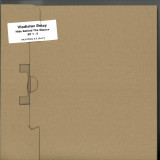
Vladislav Delay's complete "Hide Behind The Silence" series. Intuitive and raw music, momentary and reflective, released on Ripatti's own label Rajaton.
Stillness is a myth. Consider concepts such as ”still water”, or ”still air” for that matter. Go to a restaurant, ask them for a glass of still water, hold it against the light and see where we’re at. Even though the water itself has been captured and imprisoned in the glass, it never stops breathing. It’s filled with tiny particles, dancing. Everything can be explained on a molecular level, but since we’re not scientists – and even if you happen to be – it’s the natural world of perception that moves me.
Still air is very similar. A hot summer’s day with zero wind feels completely still. It’s the closest I have felt to complete stillness. Or for a more urban adaptation, imagine the same vibe inside a normal apartment. In those moments, revelations and mind- blowing experiences can be had with experiments in stillness.
Try this: Just sit down for a minute on a sunny day, making sure there’s enough natural light. Do absolutely nothing. Try not to breathe for a bit. (If you need a mental anchor, you can play Cage’s 4’33” in your head but nothing else.) Watch the tiny dots of dust dancing :..’ ̈.:; ́ ́*°.,’:,. ̈ ̈ ̈ ̈:,.’
The movement is crazy, but the feeling of stillness comes from witnessing how subtle it is. In (perceived) complete stillness, every act of microscopic mobility seems to speak volumes. Yet, it feels both reassuring and oddly threatening that the stillness is never complete. What if we would need absolute stillness? Or is it just enough that we can perceive something as such? Extremes attract, so for both water and air, extraordinary movement is equally fascinating. That is also a luxury item of sorts. For us to enjoy a very ”loud” body of water or air, we need to be safe, in enough control of the situation. So when you are, it’s worthwhile to pay attention and take it all in.
A rapid flowing free with extreme strength and just barely in control. Look at that water go! No still water on this one, only ”sparkling”. A windy day when birds seem surprised how hard it is to fly, but in the end they make it. Trees bend but don’t break. The wind shows you its movement but doesn’t hurt you. It feels friendly, like a big clumsy dog that doesn’t quite understand its size.
It’s beautiful to be a guest of the elements, but not at the mercy of them. A new kind of dialogue forms.
Q&A with Sasu Ripatti:
1) Tell us something about the EP series ”Hide Behind the Silence”, what’s the idea and what can we expect?
Exploration of inaction. Of many kinds. In arts and in personal life, or at bigger and more serious levels. Questioning myself as a human being as well as an artist. Acknowledging the growing activism all around, and the very clear need for it, and how it reflects my own inaction.
Musically speaking, after Rakka, Isoviha and Speed Demon, I finally found some relief, but more importantly lost the need to go musically ever more outward and intensive. I felt quite strongly certain periods/moods from the past and they made me revisit some musical ideas or states of mind I was exploring early on.
It’s about live moments being captured, not much premeditation or editing. More intuitive and raw, even though the end result (to me) feels and sounds quite introspective and calm. It’s not very ambitious. Momentary and reflective.
2) Your music doesn’t sound very silent. Does it come from somewhere behind the silence?
Oh, this time to me it sounds quite quiet and playing with space if not silence. I don’t know what’s actually behind silence, but I think silence is the source of everything. We just don’t understand it yet.
3) What kind of thoughts or experiences gave inspiration to this series?
Writing this in Nov ’22, it’s not a stretch to say the world has been really unwell. Sometimes, like Mika Vainio put it, the world eats you up. I feel a bit like that. And I try to hide in my studio and stay away from it all, but it’s getting harder by the day. I’ve been questioning myself and thinking if what us artists are doing is worth anything, and whether it’s just a selfish thing I’ve been doing for the past 25 years, running away from everything. I haven’t come to a conclusion yet.
4) Is it easy for you to be in silence, or around silence?
Absolutely. I not only hide behind silence but I also love silence. It’s only since I started going back to nature as a grown-up person that I sensed and was enveloped by silence, true silence. I have begun to appreciate it a lot. I think all the people should spend more time in silence.
All tracks composed and produced by Sasu Ripatti.
Artwork by Marc Hohmann, photography by Shinnosuke Yoshimori.
Mastering by Stephan Mathieu for Schwebung Mastering.
Vinyl cut by SST Brueggemann.
Publishing by WARP Music Ltd.
- A1: Please Come Out
- A2: Wicked
- B1: Working With
- IB2: N My Head
- C1: Got Your Money
- C2: Didn't You Know
- D1: Two-Door
- E1: Memory Lane
- E2: Good Girls And Boys
- F1: All I Want From You
- F2: Don't Sell Rock
- G1: What Yours
- G2: Tweets
- H1: You Check
- H2: Hero Forever
- I1: Don't Pick Up
- I2: You Don't Know Me Anymore
- J1: Tenderly With You
- J2: Now Let's Wait
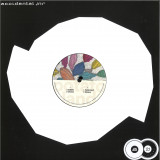
Sasu Ripatti's complete "Dancefloor Classics" series. Music for imaginary dancefloors, released on Ripatti's own label Rajaton.
”Look up, into the light” she said, while the camera shutter clicked. ”Like this? Does it look holy?” His neck felt stiff. Her reply: ”Yes, just like that. What do you mean holy? Like religious? ”No, more like trying to look very far, somewhere beyond what we can see.” ”Okay, stand still, I’m going to come close to you now. The light hits your face great.” click, click, click.
He noticed her fingernails. They were not polished. Natural. Even somewhat rugged, as if something wore out the fingers slightly. What had these hands held besides the camera? What made the edges of her fingernails drift off?
He thought it’s weird to look straight into the camera. The photographer had closed her left eye, the one not looking into the lens. Then it opened, she looked up, perusing the surroundings, then she closed her eye again, then looked up, closed, looking up, very quickly. It all seemed very professional. Maybe she calculated the light, making sure it’s close to perfect. ”What will these photos look like?” – the thought popped into his head briefly. It was liberating to think it wouldn’t matter.
”What’s that song playing?” he asked. ”Wait a sec, Ol’ Dirty Bastard?” she replied. ”Oh yeah, right. But the sample?” ”Hey, could you look up again, like that. No, lower.”
New directions: ”Look out from the window, turn left.” ”My left or yours?” ”Yours, I always try to think from the direction of my model.” How professional! This is a good shoot, so natural. Should I worry about how the photos look like? No, I don’t want to. His thoughts bounced around. What would the story be like? It’s a big newspaper, everyone will read it. Maybe someone drinks coffee and eats a stroopwafel while they do it. Will they place the waffle on top of the mug for a brief while, so that it gets hot and the syrup melts a little? Then it feels wet, and you can bend the cookie.
She broke his train of thought off midway through: ”Now turn right, but look left, and slightly up, but don’t turn your face right.” ”Umm, like this? Sounds like a set of pilates instructions.” she laughed ”You do pilates?” ”Yeah, it’s hard sometimes. Have you tried?” ”No”, she said. ”I’m not good for sports that are done in groups.” ”Yeah, but in pilates you can just be inside your mind, drowning in your private thoughts.”
”What are you thinking in pilates?” she asked, taking more photos. ”Well, mostly just which way is right. And which left.” click, click.
Q&A with Sasu Ripatti:
1) Tell us something about the EP series ”Dancefloor Classics”, what’s the idea and what can we expect?
I’ve been slowly writing these sort of dance music pieces and finally curated them together for a conceptual release. I like to create music for a dancefloor that exists only in my imagination and doesn’t try to suck up to the standardized reality.
2) Your vinyl format is 10” which is quite special (as opposed to LP / 12”). Why did you choose it?
It’s my favourite format, absolutely. The size is perfect, and you can make it sound really good @ 45 rpm. And you still can make great artwork.
3) You seem interested in sampling/repurposing, what does it mean to you as an artist to approach something already existing from a new angle? How does the source material inform you about the approach to take?
I guess i could flip it around and just say I’ve outgrown synths or electronic sounds to a great extend, and having gotten rid off all my synths already good while ago I’ve used samples as my main source material a lot. It’s obvious on this series that i’ve sampled existing music, but I also sample instruments and things in the studio and resample my own library that I have built over the years, it’s quite large. To me the end result matters, not so much how I get there. Once I have something on my keyboard and play around, it’s all an instrument, though with sampling other music it becomes a really interesting and complex one as you’re possibly playing rhythm, but also harmonic content and maybe hooks or whatever, all at once.
I never sample premeditadedly, like listening to records and looking for that mindblowing 3 sec part. I just throw the cards in the air and see what lands where, just full intuition and hopefully zero mind involved, playing tons of stuff, trying things, just recording hours of stuff. Then comes the interesting part to listen to hours of mostly crazy stuff and finding that mindblowing 3 sec part.
4) What is your relationship with the dancefloor (conceptually and/or in experiences / as a performer)?
Very complicated. I have never really felt comfortable on a dancefloor but have always wanted to. There’s something in club music, in theory, that really speaks to me. It has never really materialized for me – speaking mainly from a performer’s point of view who goes to check on a dancefloor for a moment after a concert. I never have DJ’d or felt much interest towards it. But again, I love the idea and concept of DJing. As well as producing music for imaginary DJs. Lately, as in the past 10+ years, I haven’t even performed in any sort of club spaces. So my relationship to the dancefloor is quite removed and reduced, but there’s quite a bit of passion and interest left.
All tracks composed and produced by Sasu Ripatti.
Artwork & photography by Marc Hohmann.
Mastering by Stephan Mathieu for Schwebung Mastering.
Vinyl cut by SST Brueggemann.
Publishing by WARP Music Ltd.
Repress!
10 years since the consumerist musings of Tesco, Matthew Herbert reanimates his Wishmountain project and heads deep underground to find the source material for Stonework: 1000 metres down.
Like many of Herbert’s projects, Wishmountain releases revolve around specific, material sound palettes, and for this latest album he’s drawn from a sample library created as a commission for the Stone Techno festival, which took place at the UNESCO World Heritage Zollverein mine in Essen, Germany. Working with sound recordist Lorenzo Dal Ri, Herbert and Dan Pollard captured a varied and wide variety of hits, tones, textures and one-shots from the frozen-in-time remnants of the Ruhr region’s coal-mining industry and from specific materials in the nearby Ruhr Museum and Mineralien-Museum. A sample library created by Matthew and Dan of the recordings was also used for the Stone Techno series, from which tracks have been commissioned by the likes of Luke Slater, Megan Leber, Ben Sims and KiNK drawing from the same sounds heard on this album.
These stone-cast sounds lend themselves to the Wishmountain framework – skeletal, quasi-industrial techno with an angular impulse and a subtle swing. Much like the breakthrough hit, 1996’s ‘Radio’ (made using samples of a broken radio), the limitations on the source material sharpen the focus of the music. What started out as a practical hardware restriction in the early 90s became a purposeful way of working for Herbert – one which carried through the 1999 album Wishmountainisdead to 2012’s Tesco with its sampling of the British supermarket chain’s 10 most popular products.
Musically, Stonework is consistent terrain for Wishmountain – austere and forbidding in one sense, playful and irreverent in another. But from a club music perspective, which Wishmountain absolutely is, it offers DJs a variety of rhythmic formations within the tool-like minimalism of the arrangements, opening up intriguing possibilities for mixing into, out of, or somewhere in between. For every 4/4 thrust and jerk there is a fractured, snaking meditation pivoting around other time signatures.
Crystal clear in its creative intention and simultaneously successful as surface-level club music, Stonework: 1000 Metres Down is a natural continuation for one of Herbert’s most celebrated, albeit intermittent, aliases.
Aroop Roy’s star is deservedly in the ascendancy! As one of London’s most exciting selectors, he’s managed to position himself in the sweet spot of being the DJ’s DJ and causing wild scenes wherever he plays, with headline grabbing sets at Defected Croatia, We Out Here, Gilles Peterson’s Worldwide and many more.
As a producer, musician and label owner, he continues to excel, armed with a vast knowledge of outernational sounds, from rare African disco, jazz, funk, to house, UKG and seemingly everything in-between. His open-minded approach has led to brilliant releases and remixes for labels as diverse as Soundway, Heavenly Sweetness, Permanent Vacation, Club Bad, Delusions of Grandeur, Atjazz Recordings and his own Vive La Musique imprint.
Having played a few gigs together, it was only a matter of time before Jimpster convinced Aroop to get an EP together for Freerange and the resulting Re Bulele EP couldn’t be any more satisfying!
Leading the charge, 'Mama Mwana' captivates with entrancing thumb piano loops and a traditional African vocal all propped up by a subtle yet chunky house beat to lock the dancers in.
'Re Bulele' features the hypnotic vocals of Botswana native Fox Meropa. Aroop masterfully combines a deep, techy Afro House groove with glassy synth pads to form a stripped back instrumental with the vocals front and centre. Seemingly disparate elements shine on this wonderful alternative to the deluge of maximal Afro House tracks being released these days.
Moroccan producer FNX Omar delivers the goods with a sublime remix of Re Bulele. Creating tension with layers of looping vocals along with a rolling, percussive groove. Like the original, this remix transcends genres and will create special moments on the dancefloor, whether it be in a dark, sweaty basement or daytime festival in the sunshine.
black LP[36,09 €]
Eraldo Bernocchi and Hoshiko Yamane have come together again to create their second album - inspired by the Japanese concept of ""Sabi"". The record is a unique blend of electronic and acoustic music - with Bernocchi’s pulsating textures and Yamane's haunting treated violin melodies weaving together to create a captivating and emotional sonic landscape. ""Sabi"" is a Japanese aesthetic that celebrates the beauty of impermanence and decay. It is often associated with the simplicity, austerity, and solitude found in nature, and is said to evoke a sense of melancholy, nostalgia, and reverence for the passage of time.
Bernocchi and Yamane's ""Sabi"" explores these themes through a collection of minimalist compositions that combine electronic and acoustic instruments immersing the listener in a deeply cinematic experience. The album takes the listener on a journey through a series of atmospheric tracks, sometimes melancholic pieces that evokes the sense of solitude and simplicity often associated with the concept, other times more energetic and uplifting, optimistic ones that celebrates the beauty of transience. The artwork again was created by the renowned designer Petulia Mattioli.
orange LP[36,09 €]
Eraldo Bernocchi and Hoshiko Yamane have come together again to create their second album - inspired by the Japanese concept of ""Sabi"". The record is a unique blend of electronic and acoustic music - with Bernocchi’s pulsating textures and Yamane's haunting treated violin melodies weaving together to create a captivating and emotional sonic landscape. ""Sabi"" is a Japanese aesthetic that celebrates the beauty of impermanence and decay. It is often associated with the simplicity, austerity, and solitude found in nature, and is said to evoke a sense of melancholy, nostalgia, and reverence for the passage of time.
Bernocchi and Yamane's ""Sabi"" explores these themes through a collection of minimalist compositions that combine electronic and acoustic instruments immersing the listener in a deeply cinematic experience. The album takes the listener on a journey through a series of atmospheric tracks, sometimes melancholic pieces that evokes the sense of solitude and simplicity often associated with the concept, other times more energetic and uplifting, optimistic ones that celebrates the beauty of transience. The artwork again was created by the renowned designer Petulia Mattioli.
When Leo Pesci submitted his outstanding nujazz LP, ‘Impolite’ to Jo at Ramrock Records, there was absolutely no hesitation in saying ‘yes please’ to his refreshing, contemporary collection of tracks which aim to transcend the limitations of genre and speak out on matters that are unpalatable and difficult to swallow. Leo addresses current global issues such as politics and corruption, climate change and overpopulation, capitalism and the misery it brings to society, but also toxic masculinity and relationships.
This is Leo’s first new release since his highly acclaimed EP ‘Community’ in 2021, which featured well-known artists of the London jazz scene like Jas Kayser, Ella Knight, Nicola Guida, Johnny Woodham, Simon JNR and Dani Diodato amongst others. ‘Impolite’ continues
to steer the listener through Jazz, HipHop, Soul, Alternative R&B and Rap with some exceptional collaborations featuring 15 different jazz/hip hop artists including Jackson Mathod, Moeazy, John Swana, Dylan Jones, Jay Phelps and Tendayi to name but a few.
2011 als Gyze gegründet, veröffentlicht die japanische Samurai Metal Band RYUJIN am 12. Januar 2024 über Napalm Records ihr erstes selbst
betiteltes Album Ryujin unter neuem Bandnamen. Nach dem sie bereits vier erfolgreiche Alben veröffentlicht haben und weltweit auf großen
Festivals aufgetreten sind, haben RYUJIN ihren ganz eigenen Sound entwickelt, der Melodic Death Metal mit Power Metal und traditioneller
japanischer Musik verbindet. Benannt nach dem japanischen Drachengott des Meeres, lässt das Trio um den Leadgitarristen Ryoji Shinomoto
japanische Instrumente wie Shamisen, Drachenflöten, Erhu und Taiko auf rohes Guitar Shredding und reißende Vocals treffen, womit sie dem
Drachengott eine würdige musikalische Huldigung bieten. Auch auf dem neuen Album treffen High Speed Riffs und atemberaubende Gitarrenlinien
auf traditionelle japanische Elemente und erzeugen einen Sound, der stark an alten orchestralen Gagaku bis hin zu modernen Anime-Themen
erinnert. Ryujin wurde von Matthew Kiichi Heafy (Trivium) produziert und von Mark Lewis gemischt und gemastert und enthält Gastbeiträge von
Heafy (Gesang und Mitwirkung auf verschiedenen Tracks) und Mukai Wataru vom Kansai Philharmonic Orchestra (Cello). Die Texte von RYUJIN sind
durch die Sprache des Ainu-Volkes von Hokkaido (Heimatregion der Band) geprägt, thematisieren die Kraft des Meeres und sind unter anderem von b
LA BUSH TEAM SERIES
Let's dive straight into the heart of the matter: we're discussing a rare and unique series. A series that has made its mark not only on dance floors but also in people's minds. The La Bush Team, as its name implies, is connected to the legendary club LA BUSH and consists of three equally legendary members: Marino Stephano (CM - Dream Universe), Mauro Crisci (Hand's Burn - Good Shot), and Frédéric Dourlens.
This 4-vinyl release, launched in 1999 alongside a CD album (equally rare to find), indelibly etched its place in the history of Belgian Trance. Its collection of hits and a distinctive, instantly recognizable sound left an enduring impact. The vinyl records were an instant sell-out upon release, and in 25 years, they've never been re-released, remaining subjects of speculation.
Now, it's time to bring this series back into the spotlight. In celebration of the 25th anniversary of this iconic release, we've chosen to present you with a collection of the best tracks from the four vinyls of that era, along with exclusive bonus tracks from the CD album never before released on vinyl. All tracks have been remastered for this occasion, making these two samplers an absolute "must-have" for trance connoisseurs and vinyl collectors of all kinds.
You'll rediscover the famous Flanger (Vocal Mix), Renaissance, Backspace, First Day, and many others. Each sampler is a limited edition, so order before it's too late once again.
Repress!
Following his debut on the label with last year’s ‘The Pob Routine’, Jerome Hill returns to AccidentalJnr with another absolute stonker of a release which we’ll let him describe in his own words...
“After my last EP for Jnr I spoke with label boss Matthew Herbert and he challenged me to write a track for the next EP, containing only sounds I'd recorded 'in the wild'. I was about to spend a little time on an organic Vegetable farming co-op just outside Munich, 'Kartoffel Kombinat' which I'd previously nicknamed Potato Land, so I brought my recorder and during my stay made lots of recordings, carrots being bitten and snapped, various gardening tools clattering around, voices and even the big tombola-like machine that cleans the freshly picked vegetables. The resulting track was Potatoland and the only non-organic noise in it is the kick. Various 'Potatoland’ elements also make guest appearances in the other tracks, although they are less easy to spot.
'Quibble’, was also written specifically for the label and was influenced by Herbert who I've been a huge fan of for decades... I wanted to make something suitably wobbly and humorous that shuffles along but then really slams when the kick comes in. Add in the Dance Mania influenced ‘Chicken’ and the final track ‘Bleeper’ and that's the EP... Very happy to be back!!”
- A1: Sick Of Myself
- A2: Not When I Need It
- A3: We're The Same
- A4: Giving It Back
- A5: Everything Changes
- A6: Lost My Mind
- B1: Come To Love
- B2: Walk Out
- B3: I Almost Forgot
- B4: Super Baby
- B5: Get Older
- B6: Smog Moon
- C1: Sense Of Adventure
- C2: Slowly
- C3: Breaks My Heart
- D1: Walk Out (Alternate Mix)
- D2: Never Said Goodbye
- D3: You
- D4: Our Song
1995's 100% Fun is the third leg of Matthew Sweet's Holy Trinity of Power Pop! Produced by Brendan O'Brien, it's a densely-layered production full of grinding guitars, heavy bass lines and BIG drum sounds.
Intervention's 19-track Expanded Edition 2x LP set is the defining presentation of this great album! While the original repertoire's 12 tracks are bigger and better than ever, the 7 Bonus Tracks are on their own 12" 45 RPM 180-gram LP!
100% Fun's album art was lovingly restored by Intervention's Art Director Tom Vadakan, and printed as a gorgeous "Old Style" gatefold by Stoughton printing in LA. It's printed on heavy stock and film-laminated for superior coluor depth, beauty and durability. The center labels are printed by Dorado.
Mastering Notes
100% Fun is 100% Analog Mastered from the Original Master Tapes by Ryan K. Smith at Sterling Sound. The Master Tapes are 30ips 1/2" analogue reels, and the seven bonus tracks are on their own reel. Intervention's cut is big, punchy and dynamic with plenty of producer Brendan O'Brien signature crunch completely intact. Matthew's amazing vocals really shine here amid the layered densities of O'Brien's mix. A big, bold improvement over the 1990s original LP, and so much better than the CD as to make that comparison a total farce.
The Drip EP brings together four distinctive producers and one set of sounds - The Drips. The result is a compilation of 4 tracks that bring the swing and sampling of some of Accidental Jnr's finest to produce a soaking wet dancefloor.
First up is label boss Matthew Herbert with a trademark groove that harks back to his Wishmountain moniker albeit found lurking in the swamp. Cosmo Sheldrake takes a slight departure from his usual multi-instrumentaling live-looping avant-folk to deliver a track that could only be described as travelling circus aqua-techno. Bahraini born, French / US bred and now Edinburgh dwelling video game builder, sound designer and sometime Scottish league football referee Yann Seznec opens the B-side with an absolute stormer of a rain drenched club hook. Sussex based producer Crewdson and builder of such electronic instruments as the Eggiophone and Concertronica closes proceedings with a drizzling evolving 2-step number.
SOURCED FROM THE ORIGINAL MASTER TAPES: 2LP SET PRESENTS 1991 ALBUM IN 45RPM SPEED FOR FIRST TIME.
PCM Digital Master to Analog Console to Lathe.
Dire Straits never made a big to-do about its final run. In classic understated British fashion, the band simply let its music speak for itself. And how. Originally released in September 1991, On Every Street became the group’s swan song – a lasting testament to the influence, musicianship, and integrity of an ensemble whose merit has never been tainted by cash-grab reunions or farewell treks. It remains an essential part of the Dire Straits catalog and a blueprint of the distinctive U.K. roots rock the collective played for its 15-year career.
Sourced from the original master tapes, housed in gatefold packaging, and pressed at RTI, Mobile Fidelity’s 180g 45RPM 2LP set of On Every Street presents the album like it has always been meant to be experienced: in reference-grade audiophile sound. Recorded at AIR Studios in London and produced by Dire Straits leader Mark Knopfler, it features all of the band’s sonic hallmarks – wide instrumental separation, visceral textures, seemingly limitless air, broad soundstages, atmospherics that you can almost reach out and feel. Each element is made more vibrant, physical, and lifelike on this collectible reissue, which marks the first time this 60-minute work has been available at 45RPM speed.
Afforded generous groove space and black backgrounds, the songs from On Every Street burst with nuanced details and vibrant colors. Dire Straits’ playing appears to float, their intricate performances organized amid hypnotic, fluid, three-dimensional arrangements. Mobile Fidelity’s definitive-sounding set also brings into transparent view Knopfler’s finely sculpted guitar lines, expressive tones, and laid-back vocals – as well as the balanced accompaniment from his band mates. Here’s a record on which you can hear the full blossom and decay of individual notes, and imagine the size and shape of the studio. It is in every regard a demonstration disc. And it happens to be filled with timeless fare.
Remarkably, On Every Street almost never came to light. Dire Straits initially dissolved in September 1988 after touring behind its blockbuster Brothers in Arms and suffering the departure of two members. At the time, Knopfler professed his desire to work on solo material; bassist John Illsley also explored side projects. But Knopfler’s decision in 1989 to form the country-leaning Notting Hillbillies reignited a spark to reconvene his primary band and craft a fresh batch of songs. Six years removed from Brothers in Arms, Knopfler, Illsley, keyboardist Alan Clark, and keyboardist Guy Fletcher teamed with A-list session pros – steel guitarist Paul Franklin, percussionist Danny Cummings, saxophonist Chris White, guitarist Phil Palmer included – to create what still stands as an unforgettable farewell.
The platinum record brings the band full circle in that it returns Dire Straits to a quartet formation; finds the group refreshingly out of step with the era’s prevailing trends; and sees Knopfler and Co. knocking out song after song with the deceptive ease of a punter tossing back a pint at a pub. That subtle cool, clever poise, and innate control – signature traits that no other band ever matched – dominate On Every Street. Knopfler’s clean, virtuosic six-string escapades unfurl with dizzying melodicism and economical efficiency. Led by his winding fills and focused solos, Dire Straits traverse a hybrid landscape of rock, jazz, country, boogie, blues, and pop strains with near-faultless prowess.
More than any other entry in the group’s oeuvre, On Every Street welcomes quick detours down back alleys and into the depths of human souls. What makes it more brilliant is its staunch refusal to cater to commercial expectations or take advantage of prior successes; every passage feels true, every measure echoed in the service of song. It’s evident in the humorous satire of “Heavy Fuel,” closeted desperation of the witty “Calling Elvis,” and shake-and-bake bounce of “The Bug.” It pours from the album’s darker corners, as on the high-and-lonesome melancholy of the title track and bruised emotionalism of “When It Comes to You.”
Hinting at the open-minded approaches and boundless curiosity he’d embrace as a solo artist, Knopfler doesn’t limit himself when it comes to style or subject matter. Look no further than “You and Your Friend,” a shuffle whose all-inclusive lyrics encourage an array of interpretative meanings. Another of the album’s deep cuts, “Iron Hand,” comes on as one of the band’s most memorable moments – the narrative addressing the abuses of power at the 1984 Battle of Orgreave during the U.K. miners’ strike. Given cinematic heft by the expert production, the true-fiction account puts into perspective the richness, poetry, and depth of On Every Street.
“Every victory has a taste that’s bittersweet,” sings Knopfler on the title track. At least that bittersweetness seldom sounded so damn good on record.
Analogue Productions (Atlantic 75 Series)
Celebrating the 75th Anniversary of Atlantic Records!
Hello, I Must Be Going! — Phil Collins' second solo studio album
Featuring "You Can't Hurry Love" and "I Cannot Believe It's True"
180-gram 45 RPM double LP release
Mastered by Chris Bellman at Bernie Grundman Mastering and cut to lacquer from a 1/4" EQ'd Dolby tape copy of the original master tape
Pressed at Quality Record Pressings and RTI
Tip-on old style gatefold double pocket jackets with film lamination by Stoughton Printing
On his first solo album, 1981's Face Value, Genesis drummer-singer Phil Collins showed that he wasn't about to be left behind in the mire of classical-rock sludge. That LP boasted shorter songs and demonstrated that Collins had a true pop sensibility. Hello, I Must Be Going! continues that trend, with some familiar patterns emerging, wrote Rolling Stone's John Milward.
"First, there are the dramatic rock dirges that use drums as a lead instrument; 'I Don't Care Anymore,' with Collins' one-man band playing alongside Daryl Stuermer's atmospheric guitars, wins in this category. Then there are the buttery ballads, of which "Don't Let Him Steal Your Heart Away" is the best by virtue of a Beatles-like melody that buoys Collins' anonymously sweet voice. Both of these styles were already Genesis staples; it was Collins' uptempo soul tunes on Face Value and Genesis' Abacab that surprised old fans and found new ones. 'I Cannot Believe It's True,' with Earth, Wind and Fire's Phoenix Horns casting out clean lines, clobbers the other soul contenders on Hello, I Must Be Going!, especially his remake of the Supremes' 'You Can't Hurry Love.' Collins took the golden-oldie route on that song and the result isn't soulful, it's superfluous. Despite its trend-bucking boast of an 8-track recording, the album's rich luster is of the old classical-rock school. In fact, the LP sounds like stripped-down Genesis, ornamental but not too ostentatious. — John Milward, Rolling Stone (3 Stars)."
This Analogue Productions (Atlantic Series) reissue of Hello, I Must Be Going! has the essential elements that make it a standout for your collection. First, we turned to Chris Bellman at Bernie Grundman Mastering to cut lacquers from a 1/4" EQ'd Dolby tape copy of the original master. Pressing on 180-gram vinyl is by Quality Record Pressings and RTI, and the album is housed in tip-on old style gatefold double pocket jackets with film lamination by Stoughton Printing.
Hello, I Must Be Going! was a triple-platinum-selling hit in the U.S. for Collins in the 1980s and it stayed on the U.K. album charts for more than a year, peaking at No. 2. For the fans it is a drummer's album, a record that expresses rage and desperation as well as loneliness and longing. Not an album for every day, but one that really speaks to you when you need it, wrote Martin Klinkhardt, in a review for genesis
Van Halen did more than announce to the world the earthshaking arrival of a revolutionary guitarist. Performed by an enterprising California quartet that took its name from two of its principal members, the 1978 debut ripped headlines away from punk, injected fresh energy into a then-moribund rock 'n' roll scene, reimagined how heavy music and throwback pop could coexist, and invited everyone to experience the top-down pleasures of a beach-front Saturday night every day of the week no matter where they lived. Painstakingly restored by Mobile Fidelity Sound Lab, and the first of a multi-album series in an exciting partnership between the famous reissue label and Van Halen, Van Halen delivers feel-good thrills and hormonally charged desires like never before.
Limited to 12,000 numbered copies, pressed on dead-quiet MoFi SuperVinyl at RTI, and mastered from the original analogue master tapes, Mobile Fidelity's ultra-hi-fi UltraDisc One-Step 180g 45RPM 2LP collector's edition pays tribute to the record's merit and allows fans to experience Van Halen's original blend of raw power, Hollywood flair, and vaudeville fun for generations to come. Playing with reference-setting sonics that elevate a 10-times-platinum landmark whose importance cannot be quantitatively measured, this definitive version provides a clear, clean, transparent, balanced, and turn-the-volume-up-to-11 view of an album that birthed entirely new styles. Since MoFi's unique SuperVinyl compound allows you to crank the decibels to your wildest desires without risking noise-floor interference, prepare to not only hear but feel Van Halen in your chest, no fifth-row concert seat necessary.
The premium packaging and gorgeous presentation of the UD1S Van Halen pressing befit its extremely select status. Housed in a deluxe box, it features special foil-stamped jackets and faithful-to-the-original graphics that illuminate the splendor of the recording. No expense has been spared. Aurally and visually, this UD1S reissue exists as a curatorial artefact meant to be preserved, touched, and examined. It is made for discerning listeners that prize sound quality and production, and who desire to fully immerse themselves in the art – and everything involved with the album, from the iconic cover art to the meticulous finishes and, yes, of course, Eddie Van Halen's pioneering fretwork and his brother Alex's double-bass percussion.
Indeed, could a piece of music that transformed how countless guitarists approached their instrument be more fittingly named than "Eruption"? Likely not, and in just 102 seconds, Eddie Van Halen rewrote, reimagined, and reconfigured a vocabulary last significantly updated a decade earlier by fellow six-string wizard Jimi Hendrix. Akin to the Washington State legend, Eddie Van Halen developed his own techniques and tones all the while making his seismic accomplishments seem effortless. Devoid of the pretence, ego, and showiness that infected many of his imitators, the Dutch native sticks to a straightforward approach that underlines the authority, prowess, and visionary scope of his playing and then-unheard-of finger-tapping skills. Throughout Van Halen, he establishes himself as an instant idol – a savant whose otherworldly combination of breadth, poise, feel, speed, force, and melody seems beamed in from another galaxy.
As does nearly every song on the record, whose cohesiveness and dynamic put into perspective the advanced chemistry and one-for-all spirit the youthful band had out of the gates. Having paid its dues for years in bars and clubs – going as far as recording a 24-track demo for Kiss bassist Gene Simmons at Village Recorders only to be spurned by management companies that felt its music wouldn't go anywhere – Van Halen finally got a deserved break when Warner Bros. executives signed the group in 1977. The subsequent recording sessions further testify on behalf of the band's synergy and alignment. Completed in just a few weeks with producer Ted Templeman, Van Halen was primarily cut live in the studio with minimal overdubs and edits. The explosiveness, energy, and electricity remain definitive, and as heard on this UD1S set, put the group on a private stage – humming amplifiers, Frankenstrat guitar, bright spotlights, sweaty headbands, and then some.
Van Halen yielded just one hit in the form of a Top 40 single (a breathless cover of the Kinks' "You Really Got Me") but practically every song on the revered LP has become a staple. Named the 202nd Greatest Album of All Time by Rolling Stone and considered by countless experts as one of the best debuts in history, the record displays what can happen with four distinct talents gel and strive for the same purposes. In Van Halen's case, the latter almost always involved partying, freedom, sex, and, in the immortal words of singer David Lee Roth, living "life like there's no tomorrow." The celebration manifests from the opening notes of the strutting "Runnin' with the Devil" – announced with the blare of droning car horns, Michael Anthony's robust bass line, and Alex Van Halen's thumping drumming – and continues through the conclusion of the white-hot "On Fire," goosed by Eddie Van Halen's race-track-ready lines, Roth's flamboyant deliveries, and the rhythm section's cat-like pounce.
Picking out individual highlights on Van Halen is akin to trying to count all the stars in a clear nighttime desert sky: There are far too many to identify, once you see one you notice another dozen you didn't spot before, and the cluster is best enjoyed as a whole. What's evident over repeat listens is the sheer diversity, a fact that's often overlooked: The high harmonies and background funk of "Jamie's Cryin'"; the insistent cane-and-a-tophat shuffle and doo-wop shoo-bop vocal break on "I'm the One"; the throwback acoustic blues that spreads into fast-paced, single-entendre wildfire on the Roth-led standout interpretation of John Brim's "Ice Cream Man." Like the man says, on Van Halen, all the flavours are guaranteed to satisfy.
More About Mobile Fidelity UltraDisc One-Step and Why It Is Superior
Instead of utilizing the industry-standard three-step lacquer process, Mobile Fidelity Sound Lab's new UltraDisc One-Step (UD1S) uses only one step, bypassing two processes of generational loss. While three-step processing is designed for optimum yield and efficiency, UD1S is created for the ultimate in sound quality. Just as Mobile Fidelity pioneered the UHQR (Ultra High-Quality Record) with JVC in the 1980s, UD1S again represents another state-of-the-art advance in the record-manufacturing process. MFSL engineers begin with the original master recordings, painstakingly transfer them to DSD 256, and meticulously cut a set of lacquers. These lacquers are used to create a very fragile, pristine UD1S stamper called a "convert." Delicate "converts" are then formed into the actual record stampers, producing a final product that literally and figuratively brings you closer to the music. By skipping the additional steps of pulling another positive and an additional negative, as done in the three-step process used in standard pressings, UD1S produces a final LP with the lowest noise floor possible today. The removal of the additional two steps of generational loss in the plating process reveals tremendous amounts of extra musical detail and dynamics, which are otherwise lost due to the standard copying process. Every conceivable aspect of vinyl production is optimized to produce the most perfect record album available today.
MoFi SuperVinyl
Developed by NEOTECH and RTI, MoFi SuperVinyl is the most exacting-to-specification vinyl compound ever devised. Analogue lovers have never seen (or heard) anything like it. Extraordinarily expensive and extremely painstaking to produce, the special proprietary compound addresses two specific areas of improvement: noise floor reduction and enhanced groove definition. The vinyl composition features a new carbonless dye (hold the disc up to the light and see) and produces the world's quietest surfaces. This high-definition formula also allows for the creation of cleaner grooves that are indistinguishable from the original lacquer. MoFi SuperVinyl provides the closest approximation of what the label's engineers hear in the mastering lab.
Clear Vinyl
On Rock Island, their second LP, Palm produces evidence of a distinct musical language, developed over time, in isolation, and out of necessity. On the island, melodies are struck on what might be shells or spines. Rhythms are scratched out, swept over, scratched again. Individual instruments, and sometimes entire sections, skip and stutter. There is the sense of a music box with wonky tension or a warped transmission in which all the noise is taken for signal.
Like other groups so acclaimed for their compulsive live show, Palm has been burdened by the constant comparison between their recorded material and their touring set. On Rock Island, they render this tired discussion moot, using the album form to present that which could never be completely live, reserving for performance that which could never be completely reproduced.
Despite appearing behind the instruments typical of rock music, Palm trades in sounds of their own making. On these songs, one of the guitars and the drum kit are used as MIDI triggers, producing an index that can be combed through later and replaced with new information. The percussion is sometimes augmented so as to suggest a multiplication of limbs. The strings are manipulated to choke, crack, and hum like other instruments, or other bodies, might.
Working again with engineer Matt Labozza, the band spent the better part of a month in a rented farmhouse in Upstate New York. With the benefits of time and space, Palm recorded the various elements piecemeal, only rarely playing together in groups larger than two or three. While some members tracked, others holed up in the next room, experimenting with quantization, beat replacement, and other methods borrowed from electronic music. Even accounting for the many labors that brought them to be, these materials seem produced by an organic logic. Their complex friction forms a habit of thought, scores a network of grooves on the floor of the mind.
This is music with dimensionality. Sonic objects are deployed, developed, and dissected in various states of mutation. The listener flits about between the field and the lab. The tone is warm in a way only the sun could make, the pace as forceful and as variable as a gale. Whether one locates Rock Island in a sea or in a refinished attic (as in Greg Burak's album cover), whether one escapes to there or is banished, its psychic environs are charted clearly enough. Only at this remove from the mainland can we sense the conditions necessary for such a strange species of sound.