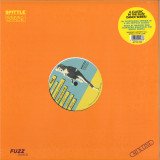
Rare Jazz-Funk album from 1978 by Headhunters founder.
Featuring an all-star line-up including Herbie Hancock.
Originally released in 1978 on Tobisha EMI Japan.
First vinyl reissue outside of Japan released in collab w/Totown Records. Comes with double side insert.
Paul Jackson (born in Oakland, California in 1947) needs little introduction. Paul began playing bass at the age of nine and was considered by many of his teachers to be a musical prodigy. Jackson was known as a “Musician’s Musician” and shaped a sound that launched a new direction in contemporary music: the so-called ‘Pulse Playing’, a trademark sound of close-meshed funk grooves combined with sensational rhythms. With this innovative approach, he influenced entire generations of jazz and funk musicians to come. Paul’s compositions were sampled by big acts from the likes of Prince, TLC, Mobb Deep and NWA…just to name a few.
Paul Jackson was a founding member of the Headhunters under Herbie Hancock (THE group responsible for their ground-breaking fusion and jazz-funk compositions that took the world by storm in the 70’s). The solid union between Hancock and Jackson has been especially evident in the many international tours they have made together…not to mention that he participated on most of the Headhunters albums and Herbie’s solo albums.
Paul has also worked as a producer and as a studio/live musician alongside acts such as Santana, Sonny Rollins and The Pointer Sisters. He was a frequent guest performer at renowned international festivals such as the Montreux and Newport events. Jackson’s composing has not gone without recognition and was nominated for Grammy Awards in 1974, 1975 and 1976. Like other highly talented, creatively motivated engineers of music, Paul has expanded his career to other mediums such as playing on blockbuster movie soundtracks such as “Death wish” and “Dirty Harry”.
Paul Jackson also wrote five solo albums worth listening to – including the monster of an album that is known as “Black Octopus” which is considered to be a kind of lost Headhunters album.
His debut album “Black Octopus” saw the light of day in 1978 and is a total piece of art filled with abstract sticky funky grooves, floating electric piano playing, strong thumping bass lines, raw heavy drums and amazing vocal acrobatics (Jackson himself takes vocals in 3 out of 5 songs, and his soulful singing voice strikes an emotional chord that does not go unnoticed).
On “Black Octopus” you’ll also find some of the best all-star musicians from the likes of Alphonse Mouzon (Roy Ayers, Betty Davis, Azar Lawrence)…and last but not least fellow Headhunters Bennie Maupin and Herbie Hancock himself.
With “Black Octopus” Paul Jackson wrote the book on how a jazz-funk-fusion album should sound like. The fact that the album was only distributed in Japan at the time (Jackson resided in Tokyo since the late 70’s, where he passed away in 2021) continues to increase its reputation as an album that is VERY hard to find. This is a must-have gem…not only for fans of jazz, funk and rare grooves, but also for DJs and collectors around the globe.
Buscar:mau lin
Dieses exklusive Sammlerstück ist nun endlich wieder erhältlich!
"Djanger Bali", das revolutionäre Projekt von Tony Scott und Indonesischer All Star Band, überbrückte GenreGrenzen und kombinierte Jazz mit traditioneller Gamelan Musik. Durch diese einmalige Kombination entstand ein prägender Meilenstein im Ethnojazz. Dieser Re-Release überzeugt nicht nur durch hohe Musikalität, sondern beinhaltet unter anderem Liner-Notes und interessante Einblicke in Form eines exklusiven Booklets. Aufgewertet durch AAA Mastering des renomierten Mastering Engineers Christoph Stickel.
SUPERB NEW ALBUM BY STRAWBS. FEATURING DAVID
COUSINS, BLUE WEAVER AND JOHN FORD.
• RADIO COVERAGE, REVIEWS IN NATIONAL PRESS, CLASSIC
ROCK, UNCUT, MOJO, RECORD COLLECTOR AND PROG
MAGAZINES PLUS WEBSITES AND FANZINES.
Vinyl LP edition of ‘The Magic Of It All’ by Strawbs,
recorded in Cape Town and featuring David Cousins, Blue
Weaver, and John Ford from classic 1970s line up joined by
some of the finest musicians and singers in South Africa.
Strawbs were high in the charts with ‘Grave New World’ and
‘Bursting At The Seams’ 50 years ago which coincided with a pivotal
moment in the struggle for freedom in South Africa, when students
and workers launched a new wave of resistance against so-called
“resettlement”. The resistance in South Africa identified with
Strawbs songs, especially ‘Part Of The Union’, ‘Lay Down’, and
‘New World’.
Recognising this, South Africa documentary maker, Niel van
Deventer, approached David Cousins with the idea of producing a
documentary about Strawbs and the band’s influence around the
world. Niel wanted to film while new songs were being recorded in
a Cape Town studio. David Cousins came up with a bunch of his
finest songs; Blue Weaver flew over to produce the sessions and cowrite some of the material, while John Ford joined in with his
contribution to the songs from New York.
Featuring brand-new songs recorded at the Academy Of Sound
Engineering in Cape Town, with engineer Peter Pearlson worked
with Paul Simon when he was recording South African musicians for
the ‘Graceland’ album. The South African musicians on this album
include Mauritz Lotz, Schalk Joubert, Kevin Gibson, Byron
Abrahams, Simangele Mashazi, Marzia Barry and Luna Paige.
Cathryn Craig and Nicole Tee joined the singers from the UK. The
documentary The Magic Of It All will be released later this year.
- 1: Saints In Torment
- 2: Contamination
- 3: Progressive Destructor
- 4: Skulls Adorn The Traitor’s Gate
- 5: Behold The Beyond
- 6: Retaliation
- 7: Savage Intent
- 8: Chimes Of Flagellation
- 9: Beheading Of The Godhead
- 10: The Poison Chalice
- 1: Werewolf Corpse
- 2: Pray And Suffer
- 3: Diabolist
- 4: Bleed For Me
- 5: Legion Of The Damned
- 6: Intro/Slaughtering The Pigs
- 7: Doom Priest
- 8: Place Of Sin
- 9: Undead Stillborn
- 10: Intermezzo
- 11: Taste Of The Whip
- 12: Slaves Of The Southern Cross
- 13: The Window's Breed
- 14: Legion Of The Damned
- 15: Dark Coronation/Outro
Blackened thrash veterans LEGION OF THE DAMNED slay on new studio album The Poison Chalice The LEGION slays again! Dutch thrash veterans LEGION OF THE DAMNED have once again entered into an alliance with the devouring depths of black and death metal and unleash another angry beast, The Poison Chalice, on May 26, 2023 via Napalm Records. The shredding monster delivers the most delicious pitch-black brew and tortures dark souls into demonic underworlds. Founded in 1990 as Occult, the thrash machine around founding members Maurice Swinkels and Erik Fleuren was reborn as LEGION OF THE DAMNED in 2005. On The Poison Chalice, the band unites with Fabian Verweij as second guitarist besides Twan van Geel and hails together with bassist Harold Gielen performing as a five piece for the first time ever on a studio album. Conquering the European charts for decades, the LEGION crowned itself at #17 in the Official German Album Charts with predecessor Slaves Of The Shadow Realms (2019). For almost 35 years, they have formed their aggressive signature sound from the most horrific ingredients of thrash and death metal, combined with brutal blackened influences, resulting in one of the most defined and unique sounds in the scene. The Poison Chalice comes to life by spreading its eerily beautiful wings within the first few seconds, then dives headfirst into a hellishly furious storm before the second song ""Contamination"" absolutely kills. In classic LEGION OF THE DAMNED manner, there is no escape as the track relentlessly drives into the abyss. The album spreads brutal and ice cold thrash soundscapes through relentless attacking drums and incredible guitar harmonies from both lead guitarists, underlined by angry bass lines. Infectious thrash treasures such as “Progressive Destructor”, and the almost seven-minute berserk “Behold The Beyond” break necks with hammering guitar riffs and bloody double bass infernos. “Beheading of The Godhead” delivers what the song title promises, before the past 48 minutes of hate closes with a final deep gulp from “The Poison Chalice” - leaving no one behind. Together with producer Erwin Hermsen, the band has closed the gates of the underworld in Toneshed Studio and demonstrates that they remain the unchallenged masters of brute and unrelenting death-thrash metal in 2023
- A1: Neon - Lobotomy
- A2: Der Blaue Reiter - Lights Off (Previously Unreleased)
- A3: Ein St Ein - Varsavia
- A4: Modo - Niagara Falls (Previously Unreleased)
- A5: Actor's Studio - Dancing Alone (Previously Unreleased)
- A6: La Maison - Bells In The Night (Previously Unreleased)
- B1: Scortilla - Yhw
- B2: Eurotunes - Swimming Pool Motion
- B3: Oh Oh Art - It's Just A Movie Soundtrack
- B4: Naif Orchestra - Check-Out Five
- B5: 2 Plus 2 Equals 5 - Haiku (Feat Paolo Mauri)
»Italia Synthetica 1981-1985« represents the musical mutation that occurred after the post-punk hangover gave way to more frigid emotional shores, in-line with the synth-wave moment that was sweeping Europe and the white cliffs of Albion. This scene flourished in Italy between 1981-1985, and the musicians that came out of it are still revered today (particularly in the US).
Robotic rhythms and intuitions that, besides sharing common ground with the electronic movements that had come before, also knew how to fill up the dancefloor. Featuring four previously unreleased tracks by Der Blaue Reiter, along with tracks by Modo, Actor's Studio, and La Maison, as well as the still fresh sounding contributions by true pioneers of the genre Neon and Naif Orchestra. Also features Ein-st-ein, Scortilla, Eurotunes, Oh Oh Art, and 2+2=5 featuring Paolo Mauri.
Favorite Recordings proudly presents its new series of 7" reissues with the following concept: each side dedicated to one Funky French track coming with its original artwork. You just have to flip it!
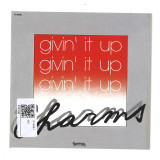
On the first side comes "Givin’ It Up" by Belgian funk band Charms. Compiled by Charles Maurice on French Disco Boogie Sounds Vol. 2, the original vinyl 7inch was released in 1982 on famous Biram label and is now a very hard to find gem for reasonable prices. Not really surprising considering the immediate power of this Disco track, filled catchy synths lines, sweet vocals and fateful chorus.
On the other side comes another French Disco underground hit with “Pour moi ça va” by France-Lise. It takes only a few seconds to get driven on the dancefloor by the heavily funky guitar and bassline and the immediate energy of this song. Also compiled by Charles Maurice on French Disco Boogie Sounds Vol. 1, this is also a quite hard to find OG. With its charming French vocals and bouncing percussions, it should delight any Disco player.
The Space Lady began her odyssey on the streets of San Francisco in the late 70s, playing versions of contemporary pop music an accordion and dressed flamboyantly, transmitting messages of peace and harmony. Following the theft of her accordion, The Space Lady invested in a then-new Casio keyboard, birthing an otherworldly new dimension to popular song that has captured the imaginations of the underground and its lead exponents ever since, with the likes of John Maus, Erol Alkan and Kutmah being devotees.
Of her early street sets, only one recording was made, self-released originally on cassette and then transferred to a home-made CD. "The Space Lady’s Greatest Hits"(LSSN021) features the best of these recordings - mostly covers but with some originals - pressed on vinyl for the first time and features archival photographs and liner notes from The Space Lady herself. “Greatest Hits” contains The Space Lady’s personal favourites; her haunting take on The Electric Prunes’ “I Had Too Much To Dream (Last Night),” a frantic “Ballroom Blitz” amidst other reconstructed pop music. Included are also 4 originals that easily match for the Pop canon. Following the release of this archive, The Space Lady will be issuing new material and travelling the world to present her message outside the United States for the first time.
- A1: Helicon– The Net (Vocal Version)
- A2: Siberian Heat– Pick Up The Phone (Zyx Summer Mix)
- A3: Joey Mauro Pres Fred Ventura– You And I (Vocal Version)
- A4: Amaya (10)– New Ways
- A5: Rago– Rusty Wings (Vocal Version)
- A6: Synthgo– Sei La Mia Vita
- A7: Remo Zito– Secret Agent (Vocal Version)
- A8: Heaven42– Saturday Night
- A9: M@Rgo Feat Mode-One– My Love In Your Heart (Disco Version)
- A10: The Sweeps– Voices (Extended Version)
- B1: Fred Ventura– Believe Me (Extended Version)
- B2: Digitalo– Digitalo (Extended Version)
- B3: Linda Jo Rizzo– Only One Night
- B4: M-Tracking*– Give Me Your Hand (Maxi Version)
- B5: Talking Eyes– The Summer Goes (Extended Version)
- B6: Dean Corporation– App Me (Italo Dance Mix)
- B7: Phalanx– Modern Hero (Extended Mix)
- B8: Linda Jo Rizzo Feat Ryan Paris– All Around (80S Mix Long Version)
- B9: Tq (3) Feat John Sauli– Leave It All Behind (Extended Version)
"Contamination" is a 1980 horror / sci-fi movie directed by Luigi Cozzi,
who has collaborated with Dario Argento for some time, author of many underground movies that have been very popular
Its soundtrack was entrusted to Goblin during a hectic period for the band (Squadra Antigangsters, Amo Non Amo, Patrick, Buio Omega) who had various line- up changes: abandoned by guitarist Massimo Morante and keyboardist Claudio Simonetti, brothers Marangolo (Agostino on drums and Antonio on saxophone), Fabio Pignatelli (bass guitar) and Maurizio Guarini (keyboards) with Roberto Puleo on guitar, wrote one of the best scores of that time showing a wide
range of music styles (Jazz, funk, rock, electronic) and once again showcases Goblin's ability in creating very original film scores. The album has some extra tracks from the "Buio Omega" soundtrack, which was the first full release (fans would have to wait 1997 for a full CD release). Agostino Marangolo: Drums & Percussions Antonio Marangolo: Sax Roberto Puleo: Guitars Maurizio Guarini:
Keyboards Fabio Pignatelli: Bass guitar
- A1: Buio Omega (Main Title) (Main Title)
- A2: Quiet Drops
- A3: Strive After Dark
- A4: Pillage
- A5: Rush
- A6: Keen
- A7: Ghost Vest
- B1: Bikini Island
- B2: Buio Omega (Suite 1)
- B3: Quiet Drops (Film Version)
- B4: Strive After Dark (Suite)
- B5: Buio Omega (Alternative Version)
- B6: Strive After Dark (Alternative Version)
- B7: Buio Omega (Synth Effects - Alternative Take Suite)
- B8: Buio Omega Theme (Reprise)
"Buio Omega",soundtrack to a famous horror/splatter film soundtracked by Goblin
Directed in 1979 by Joe D'Amato, it still impresses with the rawness and morbidity of its scenes, the trademark of a director who, much more than others, befits the term 'extreme'. The soundtrack , whose main instruments are keyboards and synthesizer, echoes the Alan Parsons Project, funk / fusion and a melancholic atmosphere. It was never officially released with the film, and was
finally released on CD by Cinevox Record in 1997 (CD MDF 304) and again in 2008 (CD MDF 631) with two completely different tracklists. Goblin here appear in an unusual combination, with Massimo Morante (guitar) with Claudio Simonetti (keyboards) replaced by Carlo Pennisi and Maurizio Guarini respectively, completing the line- up was Fabio Pignatelli (bass) and Augustin Marangolo (drums).
"Buio Omega" is released on vinyl today for the first time ever, a release waited for years by Goblin fans; the LP is housed in a beautiful gatefold cover showing inside recording sessions photos and promotional flyers/postcards.
The tracklist is the same as the first 1997 CD edition.
180gr. clear purple Ltd. Ed. vinyl edition.
Having spent the past few years supplying low notes as bass player for a who’s who of UK Soul and Jazz talent (including Tom Misch, LoyleCarner, Berwyn, Jordan Rakei, Poppy Ajudha, Jamie Isaac, Puma Blue, Jorja Smith, Alfa Mist & Charlotte Dos Santos) Rudi Creswick steps into the spotlight with his first full length solo offering ‘Different Forms’ on Alfa Mist’s Sekito imprint.
Hailing from Newcastle-Upon-Tyne, Rudi was immersed in club culture from a young age, the low end sonics of which guided his playing, and led him to discovering his own style In the years that followed, Rudi continued to hone his craft, melding the sub rattling sounds of Hip-Hop producers such as J Dilla, MF Doom and Knxwldge with the technical sensibilities of influential Jazz players such as Pino Palladino, Derrick Hodge and Thundercat.
With this record serving as a chance for Rudi to stretch his creative legs, the aim was to showcase the many musical sides of his creative spirit. The first single lifted from the project ‘Sometimes’ enlists the vocal talents of the incredible Emmavie - who dives into self-reflective and cutting, honest lyrics. She explains: “No one ever leads with “often temperamental, quick to anger and generally hot and cold” when describing themselves. Something about Rudi’s laidback production and bouncy singing bass line pulled this reflective and apologetic yet playful subject out of me. “
On the LP, Rudi says: ‘This whole project is thanks to Alfa , Barney Artist and the team at Sekito who’ve helped me realise my dream. They had faith in me for which I’ll always be grateful. The project’s kind of all over the place because there’s so many corners to anyone’s being, inspirations and their musicality, so I wanted Different Forms to reflect that’
Throughout the record, Rudi’s musical prowess and vast influences are laid bare for all to see. From the gliding melodies and twinkling keys and hazy fanfares of second single ‘Peace Of Mind’ (Feat. Manny & The Coloured Sound) through to the sparse and haunting tones of ‘Charlotte’ the LP traverses high peaks and deep valleys, channelling a sense of beauty of textured mystique throughout. Sporting an impressive roster of collaborators including Alfa Mist himself, Trumpeter Sheila Maurice Grey (Kokoroko), Chelsea Carmichael on Tenor Sax, Barrel Jones (Drummer for Nubya Garcia) and Vels Trio’s Jack Stephenson-Oliver (who played synth for the track ‘With Want You’). The lush instrumentation provides an incredible backdrop for esteemed performers such as Barney Artist to drop bars over the crisp drums and laid back strut of ‘Holding The Fence’, meanwhile Berwyn supplies sombre lyrics of the vast expanses of ‘96BPM’. An emotive and engaging listen from start to finish, ‘Different Forms’ is a truly stunning debut.
- A1: Mamadou Tangoudia - Kori
- A2: Halima Kissima Touré - Koolo Fune
- A3: Lassana Hawa Cissokho - Ñogome
- B1: Hadja Soumano - Nteri Diaba
- B2: Naïny Diabaté - Sankoy Djeli
- B3: Mah Kouyaté - Soso
- C1: Halima Kissima Touré - Alla Da Fo Ña
- C2: Ami Traoré - Tenedo
- C3: Babani Koné - Soyeba
- C4: Kaniba Oulé Kouyaté - Songne Bela
- D1: Diaby Doua - Boliñaame
- D2: Diobo Fode - Yexu
- D3: Halima Kissima Touré - Duna
- D4: Hadja Soumano - Ayebo
The Soninke collective consciousness finds its origins in a founding myth, a blood pact: the legend of Biida and the decadence of the empire of Ghana or Wagadu (evoked by Léopold Sédar Senghor as a land of plenty in his poem Le Kaya Magan). From the 3rd century AD, gathered in the region of Sahel, on the edge of the Sahara desert, the Soninko ruled over their kingdom and its capital Kumbi Saleh. According to folklore, they were blessed with abundant rain and nuggets of gold could be picked directly from the ground.
They owed this prosperity to a providential but cruel protector: the Wagadu Biida, a seven-headed serpent who lived at the bottom of the Kumbi well. Every year, as a reward for his favours, the Biida demanded an offering: the life of the most beautiful virgin woman in the community. Sacrifices took place for generations, until the 13th century AD, when fate chose Siya Yatabéré, Maamadi Sehedunxote's sweetheart...
Centuries later in 1977, Gaye Mody Camara, a young Soninke raised in Mali's Kayes region, settled in France to found his own empire. Initially selling wax, kola nuts and other goods in his Parisian outlets, he rapidly started distributing cassette tapes and eventually producing a multitude of recordings for his own label: Camara Production.
Crossing paths and collaborating over the next four decades with legendary artists, griots and industry moguls like Boncana Maïga, Jean-Philippe Rykiel, Ganda Fadiga, Diaby Doua or Ibrahima Sylla, Camara became one of the great independent music producers of his generation, and a pilar of the Parisian Soninke diaspora.
Released in close collaboration with Gaye Camara and with the assistance of Daouda N'diaye, one of A.P.S' (Association pour la Promotion de la langue et de la culture Soninké) historical members, this selection of songs and accompanying notes aim to shed a light on an intricate culture and its modern music, injustifiably unknown outside of West Africa and the various Soninko diasporas around the world.
From Malian Zouk to Mauritanian Reggae and other psychedelic groovers originally released on cassettes or digitally, we have given the utmost attention to bringing this music to a new format. It has been carefully remastered and pressed on a couple of 180g vinyls, with riso printed liner notes.
Three O’Clock High war eine unkonventionelle Interpretation einer Highschool-Komödie der 80er Jahre.
Der Film, bei dem Phil Joanou (U2’s Rattle and Hum, State of Grace, Final Analysis) stilvoll Regie führte,
erinnert mehr an Scorsese als an John Hughes und zeigt Casey Siemaszko in der Hauptrolle als Streber,
der sich nach der Schule mit einem psychopathischen Tyrannen (gespielt von Richard Tyson) herumschlagen muss. Der Film wurde auf Heimvideos zum Kulthit, wozu auch die stimmungsvolle, dynamische und
pulsierende Musik der deutschen Synthpop-Legenden Tangerine Dream (Sorcerer, Thief, Risky Business)
beitrug.
Regisseur Joanou wollte die Band unbedingt für den Film engagieren und war überglücklich, als sie zusagten:
”Die Berliner Sessions mit Edgar Froese und Paul Haslinger waren ein wahr gewordener (Tangerine-)Traum”,
schreibt er in den neuen Linernotes zu dieser Veröffentlichung. ”In ihrem Studio direkt an der Berliner
Mauer arbeiteten wir mehrere Wochen lang an jedem einzelnen Stück... Was sie einem Keyboard, aber
auch Gitarren, Bass und Schlagzeug entlocken konnten, war einfach unglaublich. Ich war wie weggeblasen.”
Die 15 Tracks von Tangerine Dream werden durch zusätzliche Musik von Sylvester Levay (als die Filmemacher
mehr Cues brauchten und es sich nicht leisten konnten, nach Berlin zurückzukehren) und den bekannten
Song von Jim Walker, ”Something to Remember Me By”, ergänzt.
Favorite Recordings proudly present its new series of 7" reissues with the following concept: each side dedicated to one Funky French track coming with its original artwork. You just have to flip it!
On the first side, you'll get the amazing track "Funky Biguine" by West Indies band Crystal. Originally compiled by Charles Maurice on French Disco Boogie Sounds Vol. 2, the original eponymous album still goes for crazy prices. And there's a reason for that: "Funky Biguine" will bring the heat on the dancefloor with its enchanting synth bassline, its West Indies influences and melodious Funk arrangement. Don't miss the synth solo in the end!
On the other side, you'll find a reissue of "Looking For You" by J.E.K.Y.S from the island of Réunion. The song has just started and you're already overwhelmed by the strong bassline and the sirens of this French boogie anthem -despite this one has English lyrics. Originally, you'll find it compiled by Charles Maurice on French Disco Boogie Sounds Vol. 3. Expect lovely harmonic progressions and perhaps a more spacey groove, as in these beautiful bridges leading to chorus where the lyrics blend perfectly with the synthesisers line and Fender Rhodes.
R3volution H3roes Vol.3 concludes the second AA.VV. trilogy which includes special tracks created by some of the best artists on the techno scene.
The lineup of this release consists of 6 artists:
In Logo Side, the EP opens with a masterpiece by Dutch Boss Dimi Angelis, making his debut on
On the other side (Info Side), we find the Australian Vohkinne. Follow another debut on
feat. Maurissa Rose
The new Parrish single appears on vinyl in the form of two mixes differing in vibe but consistent in quality and suitability for DJ use. The original rides along on a shuffling, almost Afrobeat version of house, with Maurissa Rose's gorgeous vocal floating above the gloopy, hypnotic bassline which gets the full filter treatment. The instrumental dub places that b-line very much at the centre of the mix, starting from a single kickdrum before building up to a more techno-edged, vocal free climax. all throbbing bass, solid bears and minimal, glitchy keyboard interjections.
Clubs und subkulturelle Freiräume prägen Berlin seit Jahrzehnten und machen die Stadt zu einem Sehnsuchtsort für Menschen aus aller Welt. Legendär sind zum Beispiel die Treffpunkte des Punk- und New-Wave-Untergrunds der 1980er Jahre oder die Technoclubs aus den 1990ern. Die Party- und Konzertlocations sind dabei oftmals auch Zeugen der bewegten Geschichte der Stadt, erzählen vom Kalten Krieg oder dem Fall der Berliner Mauer. Dieses Buch ist ihnen gewidmet, darunter berühmte Diskotheken, geheime Treffpunkte der DDR-Opposition und subkulturelle Abenteuerspielplätze verschiedenster Couleur. Viele dieser Orte existieren heute nicht mehr oder haben eine ungewisse Zukunft. Sie berichten von einem Berlin, das es nicht mehr gibt, und davon, wie stark die Club- und Subkultur von Verdrängung betroffen ist.Tine Fetz hat 60 dieser "Places" in Illustrationen verewigt, ihre Geschichten hat Daniel Schneider aufgeschrieben.
Die Texte sind sowohl auf Deutsch als auch auf Englisch abgedruckt.
Inhaltsverzeichnis
CHARLOTTENBURG-WILMERSDORF:
– Radarstation auf dem Teufelsberg
– WOGA-Komplex
– Riverboat
– Big Eden
– Tanz-Arena Linientreu
STEGLITZ-ZEHLENDORF:
– Bierpinsel
TEMPELHOF-SCHÖNEBERG:
– La Belle
– Malzfabrik Schöneberg
– Dschungel
– Chez Romy Haag
– Metropol
– Drugstore
– Risiko
MITTE:
– Quartier Latin
– Tempodrom
– Tape Club
– Stattbad Wedding
– Tresor
– Elektro
– WMF
– E-Werk
– Bunker
– Tacheles
– Eimer
– Palast der Republik
– Exit
– Alextreff
– Sternradio
– Café Moskau
– Walfisch
– Kater Holzig
FRIEDRICHSHAIN-KREUZBERG:
– 90°
– Zodiak Free Arts Lab
– Horst Krzbrg
– Cheetah
– Festsaal Kreuzberg
– Cuvry-Brache
– Bar 25
– Maria am Ufer
– Ostgut
– Sport- und Erholungszentrum (SEZ)
– Samariterkirche
– Antje Øklesund
– Morlox
– Zukunft am Ostkreuz
PANKOW:
– Icon
– Klub der Republik
– Café Nord
– Knaack-Klub
– Werner-Seelenbinder-Halle
– Rundlockschuppen Heinersdorf
– Die Halle
NEUKÖLLN:
– Berliner Luft- und Badeparadies (Blub)
– Griessmuehle
TREPTOW-KÖPENICK:
– Arena
– MS Dr. Ingrid Wengler
– Insel der Jugend
– Spreepark
– Funkpark
LICHTENBERG:
– Rummels Bucht
128 Seiten
Afro-Finnish band Maajo return with their third album, "Water of Life," a fluid celebration of various influences. Supported by two preceding singles, "Better Days" and "Unelmissani," the album is the group's first release with the Brooklyn, NY-based tastemaker label Wonderwheel Recordings. Maajo's signature Afro-Balearic sound meets late eighties new age and fusion, with touches of modern soul. The addition of two band members, Waina and Gilbert K, as well as featuring artists Issiaka Dembele and Ismaila Sané, has rooted the album's stories in a diverse range of backgrounds, featuring vocals in no less than six different languages.
Gilbert K's drum grooves pay tribute to the late Tony Allen's legendary heritage and the percussion experiments on a more melodic and atmospheric tip. Cold synth pads and 303 squeaks blend with warm guitars, fretless bass, and Issiaka Dembele's sublime kora harps and balafon mallets. "Water of Life" shows a band at its maturation point, reaching the cross-cultural coalescence of Finnish-African sound that's ready for the dancefloor or home-listening.
The three vocalists take centre-stage on the album: Waina hails from Zambia and sings in Nyanja, English and Finnish; a renowned musician in Zambia for over two decades who now calls Finland home, Waina wrote a song that reached the finals of the 2020 Afrimusic contest. Gilbert K primarily sings in his native Mauritian Creole while comprising part of the percussion line. He made his way to Finland by way of South Africa and China, eventually winning the Voice of Finland show. Gilbert K has played with such legends as Tony Allen, Andy Summers, Diana King, and Suzanne Vega. Ismaila Sané is from the Casamance region of Southern Senegal and sings in Wolof (a widely-spoken language in West Africa) on "Ndekete," and in Jola (a smaller language in Casamance) on "Èwàn".
Maajo is a sonic, linguistic, and cultural melting pot that has come together in Tampere, Finland, like a tropical breeze from the cold north. Their musical explorations lead from equatorial soundscapes to the woods and moods of their native Scandinavia. African influences, electronic beats and organic rhythms, ethereality and the sounds of nature all make up the patchwork sound of Maajo.
Not only is Maajo's music a way of travelling to faraway places, the songs themselves have travelled all over the globe. Maajo has evolved from a sample-based electronic music project to a full-sized band, including African vocalists and musicians. The group has put out two full-length albums and three EP's on Queen Nanny records, in addition to a release on German label Permanent Vacation. Maajo has received the remix treatment from artists such as Luke Vibert and Call Super, and has toured festivals and clubs internationally. The band has built a dedicated international following having been championed by the likes of Gilles Peterson (Worldwide FM), Tom Ravenscroft (BBC Radio 6), and Tim Sweeney (Beats In Space), while they've been featured by KEXP (Song of the Day), Resident Advisor, Ransom Note, and Pan-African Music.
"Water of Life" is out on Wonderwheel Recordings October 14th, 2022, both digitally and as an exclusive, limited-run 2xLP.
d 04: Better Days (Kumba) feat. Waina & Gilbert K
"Brazilian multi-instrumentalist Pascoal's magical 1976 album casts a spell over the listener from the first beat to the last"
Echoes ⭐⭐
"Viajando Com O Som is a wonderful
buried treasure from a better time."
Songlines ⭐⭐
It's a richly satisfying discovery; a snapshot of a master at his peak.
Record Collector ⭐⭐
"...One hell of a magic carpet ride."
FACT Magazine
"You may ask yourself what that was that you just heard. Then you'll want to hear it again."
Jazz Times
Recorded in just two days in 1976, at Rogério Duprat's Vice Versa Studios, São Paulo, Viajando Com O Som featured Zé Eduardo Nazario (drums), Zeca Assumpção (bass) and Lelo Nazario (electric piano), as well as saxophonists Mauro Senise, Raul Mascarenhas and Nivaldo Ornelas, guitarist Toninho Horta and vocalist Aleuda Chaves.
Not released until over 40 years later, now Viajando Com O Som is back again for a short time only, on limited edition green vinyl! Pre-order at the link below, Begins shipping 20th May 2022.
. It's 2021 and Vancouver’s Bootlicker are back with their first full length. Experimenting with various lineups and sounds since 2017, these 14 original tracks flesh out their most realized expression. Following four EP’s and two demos, their self-titled debut stays true to the noise cultivated in the previous offerings. That raw, blown-out production countered with clean guitar sound and Internationally-informed take on a UK82 delivery remains. Everything that made the band what they were on their previous output is polished into a ball of fire that will not be contained. Their mid-tempo, menacing posture of tracks like "Herd The Sheep" and "State Of Fever" give way to the D-beat totality of "Master" or "Two Faced" proving there are still ideas in the tank. There won’t be much left but scorched earth by the time it comes to rest. FFO: Mau Maus, Discharge, SSD. Every copy of this LP comes with 16 page zine-style lyric insert full of illustrations by band member and visual artist Athena.
The Mansion were initially a prison group formed by Charles Lorenzo Blakely in 1970 while serving time in the Green Bay Reformatory at Allouez, Wisconsin. The Mansion’s line up included at different times Michael Locke, Stanley Newburn, Carl Anderson, John Crawford, Michael Smith, Larry Moses, Ronald Hardin, Jerome Wagner, Larry Lister, Maurice Payne and Charles himself. One day while rehearsing in the prison chapel, the Mansion attracted the attention of the warden’s wife who happened to be showing some local dignitaries around. Impressed by what she heard the warden’s wife was instrumental in the Mansion being invited to perform for the city’s television station WBAY, where they recording two holiday programs. The warden later gave them permission to perform outside the prison which brought them to the attention of a Milwaukee neighbourhood program adviser by the name of Al Dunlap of the Commando Project One. It was through Dunlap that the Mansion recorded their solitary 45 release in 1974 “The Girl Next Door /Stop! Let Your Heart Be Your Guide” for a local Milwaukee label Gibbs (406). The label’s owner Bill Gibbs held the release back until some of the members of the Mansion were granted their release papers as at that time prisoners were unable to sign any contract agreements while still incarcerated. Although Charles Blakely remained incarcerated, he was later moved to a medium security prison in Fox Lake County, Wisconsin. While there he formed a gospel group, called the ‘Bell Tones’ who’s line up included Charles, Mayweather Lee, Joe Hayes, and Levell Rudd. The formation of this group was seen as major factor in Charles’s rehabilitation which led to his eventual parole in 1976. Once on the outside Charles with former ‘Bell Tone” member Mayweather Lee were joined by Charles (Sonny) Bryant and Jimmy Taylor to form a new ensemble by the name of The “Final Chapter”. As the final Chapter they recorded a solitary release for Marvel Love’s New World Label “Now I Know/Get Down For Your Action” (NW800) during 1980, a brief association that for several reasons was to eventually brake down. Although Jimmy Taylor left to pursue a career as a blues musician the remaining three members of the ‘Final Chapter’ continued to perform until they finally disbanded in 1987. Three previously unissued Final Chapter songs can be found on Soul Junction Various Artists CD compilation “We Got A Sweet Thing going On” Volume II. The Mansion’s Gibbs 45 is now is a highly prized and sort after item amongst Sweet and Group Soul collectors.
500 copies on limited purple vinyl
By The Sea come from the lineage of firework pop, bursts of colour and squeeze-your-hand intense love aligned with grey skies & work things.
Recall the first time you heard The Chills’ ‘Pink Frost’ or Television Personalities’ How I Learned To Live The Bomb’?
That’s the encounter.
Liam Power formed By The Sea in 2011, the band’s debut single Waltz Away coming out on The Great Pop Supplement label that year. In November 2012 the band released their self-titled album through Dell’Orso and GPS. The NME noted how there was “a beautifully bruised element to this Wirral act’s debut from the subdued, morbid production to Liam Power’s heroically battle-weary vocals”.
They have also often been tagged for their kitchen-sink dramas though they’re more akin to something like ‘Wish You Were Here’, both funny and dark without being maudlin. There’s an end of pier melancholy to By The Sea records though, something more than a scribble of sentiment on a souvenir postcard.
For their second LP ‘Endless Days, Crystal Skies the band turned over production duties to their friend Bill Ryder-Jones (formerly of The Coral) and released that bounty of melodic pop in 2014. It’s a partnership they have retained for the new third album ‘Heaven Knows Magnolia’ released on limited purple vinyl, CD and digital formats on October 21st. The song
- A1: Sugai Ken - Boundary
- A2: Andrew Pekler - Shima No Yume
- A3: The Dead Mauriacs - Differents Aspects D'un Aquapel Recompose (Edit)
- A4: Vica Pacheco - Taciturno
- B1: Mike Cooper - Lamma Island
- B2: Babau - Enshrined Underflow
- B3: Francesco Cavaliere & Tomoko Sauvage - Ficus Leaves In Apnea
- B4: Sculpture - Froth Surfer
- B5: Yannick Dauby - Navigation
Anthology introducing the first of a series of albums based on the concept of Aquapelago.
‘’ Since the earliest days of the planet there has been a rhythm of tides that creates coastal interzones where humans have foraged and pursued various livelihoods. Developing boats to fish from and technologies that enabled them to immerse themselves deep underwater, the aquatic realm has been one explored, experienced and imagined in various ways. In an effort to express the vitality and richness of this environment I coined the term aquapelago in 2012. The wordplay was deliberate. The neologism was designed to distinguish the liquid inbetweenness of this space from the dry, scattered, lands of archipelagos.
The concept of the aquapelago coalesced around themes taken from various places. Epeli Hau’ofa’s idea of an Oceanic “sea of islands’” was formative but a number of songs were also inspirational. Torres Strait islander Seaman Dan captivated me with his experiences of pearl diving in the Darnley Deeps in his song ‘Forty Fathoms’ and Norfolk Islander singer Kath King imaged how sea-turtles might have experienced ecological change in her song ‘Tech me how fer lew’. Other reflections on watery realms also appealed. Debussy’s solo piano piece ‘La cathédrale engloutie’ soundtracked me as I researched myths of lost Lyonesse while Mike Cooper’s Kiribati, an ambient exoticist album about the imperilled archipelago (recently re-released on Discrepant), caused me to reflect on the social and cultural impact of sea level rise before that topic became a high-profile concern.
This compilation album takes the concept of the aquapelago into new depths and breaches it on fresh shores. The tracks are soaked with the aquatic. Bassy sonorities boom as if heard deep underwater. Bubbly textures breach the surface, water drips and seabirds soar high above waves. Sugai Kei samples fragments of text concerning the Ningen, a fantastic humanoid/whale that reflects the ‘aquapelagic imaginary’ of modern Japan and its preoccupation with industrial whaling. Andrew Pekler continues the orientation of his Phantom Islands project - a sonic atlas of imaginary places - with a soundscape as if heard by a swimmer just offshore, mixing sounds of the island and the sea together. Mike Cooper’s sonic reflection on Hong Kong’s Lamma Island is similar, combining the island’s ubiquitous barking dogs with the slurp of waves on rocky shores, conjuring a languorous time before Chinese crackdowns on the territory.
Taking another tack, the Dead Mauriacs gleefully water-ski through collage of tropical island exoticisms, replete with glitchy orientalism, while Babau combines skittering idiophone melodies with resonant glissandi. Vica Pacheco moves between dense and airy sounds, as if crossing between surf lines and the space above. Yannkick Dauby’s track is also imbued with in-betweenness, evoking ambient sounds heard through a ship’s hull. Sculpture’s ‘Froth Surfer’ realises its title, with bubbling sounds and rhythms that evoke Hawaiian surfing filtered through layers of time and distance. Reminding us of the shore necessary for aquapelagic spaces, Franceso Cavaliere and Tomoko Sauvage’s composition anchors the album, centred around shaken rhythms and resonant ringing tones and drones.
Taken together, the album sketches the contours of the aquapelago as it might be imagined and conjured in sound – an endless oceanic realm that laps on to beaches and crashes against cliffs. The performers navigate this space under alternately starry and cloudy skies, orientating themselves with sounds, textures and sonic samples of their terrestrial homes while we float with them. ‘’
Philip Hayward December 2021
Saxophonist, composer, bandleader and innovator Camilla George makes a stunning return with her third album 'Ibio-Ibio' - a rich, cultural journey dedicated to her Ibibio tribe of south eastern coastal Nigeria, out on Ever Records / !K7. The album is a heady mix of afrobeat, hip hop and jazz coproduced by Camilla George. Across eight tracks, Camilla's virtuosic alto saxophone performance collaborates with a stellar line-up of some of the hottest players in London's jazz scene including Daniel Casimir (bass), Shirley Tetteh (guitar), Winston Clifford (drums), Sheila Maurice-Grey (trumpet), Rosie Turton (trombone), Renato Paris (vocals), Sarah Tandy (keys), plus Senegalese kora player Kadialy Kouyate, acclaimed US drummer Daru Jones (Jack White, Pete Rock, Talib Kweli), and Birmingham's finest MC Lady Sanity.
Zapatilla, better known as Louis Hackett, is a founding member of Brownswood 's Owiny Sigoma Band and key collaborator on Eska's Mercury nominated debut album, but has a neat side hustle making house music with one foot in the gentle melodies of Balearic beat and another in the irresistible energy of Afrobeat. It's a recipe that he continues over onto this fine four tracker, which opens with the smoothly grooving but lively 'Like Dat' before 'Zimzimmer' builds up around a gently frenetic Afro guitar riff. On the flip, 'Disco Facial' is slower and more retro, with a synth line that could be from a lost John Carpenter soundtrack. 'Self Isolated' completes the package in its most esoteric fashion, another synth work rooted in the past, this time perhaps echoing the approachable experimentalism of Jean Jacques Perry.
"Matasuna Records" returns to Mexico for a third time to dig for rare treasures. They got their hands on a special gem - two obscure Latin/Jazzfunk tunes by a band called "Colorado" from "Mexico City". The songs were released in 1976 on the Mexican label Peerless and the super rare original 7inch is virtually unavailable. Fortunately, the release is finally available for the first time as an official reissue in a remastered edition. An unjustly under-the-radar Latin jazzfunk highlight!
The song "Colorado", named after the band, opens the "A-side" of the single. The hypnotic fender rhodes puts the listener in the right mood right from the start, before the drums and percussion set the rhythm. The horns also add depth and melodiousness before the song takes a turn and reveals its funky side with guitars, synths and bass. A nice guitar solo also reveals the affinity for rock music without losing sight of the vibe of the song or tipping it a different direction. Definitely a fabulous song that comes up with a lot of ideas and inspirations, offering an unexpected richness in the under 3-minute running time.
The "B-side" also continues musically energetic in the same way with "Para Ti". Here, too, you can feel and hear the playfulness and experimentation of these extraordinary musicians. Atmospherically dense passages alternate with quieter phases and solo parts, before the tension rises again and literally explodes. As in the song "Colorado", rhodes, brass, guitars & bass offer a great and varied interplay. The secret highlight, however, might be the drum and percussion parts in the middle of the track, which will surely enchant not only the B-Boys and B-Girls.
Artist info:
The internet, a source of almost endless knowledge, offers no information about the band Colorado. All the more fortunate that one of the band's founding members, "Emilio Espinosa Becerra", provides detailed info for the reissue.
In 1968 the three brothers "Luis", "Francisco" and "Emilio Espinosa Becerra" from Mexico City started to rehearse together to play wellknown rock & pop songs at friends or family parties. At first, they played on Japanese guitars and a Teisco bass borrowed from a school friend. They saved up money to then buy guitar & bass amps and a microphone, which they always had to rent until then. However, the budget was only enough for Mexican replicas of the legendary Fender Bassman and the Fender Super Reverb. Original equipment was simply unaffordable.
Shortly thereafter, more members joined the band. Three musicians from the school band "Tepeyac": "Marco Nieto Bermudez" (trumpet), "Raymundo Mier Garza" (tenor saxophone) and "Alfonso Romero" (trombone). Another classmate named "Carlos Mauricio Fernández Ordóñez", who studied piano, also joined the group. His father had a chemical factory in the United States and helped bring equipment (amplifiers and a Farfisa Fast 5 organ) - hidden in the back of a truck - to Mexico. In the time that followed, more instruments were acquired, including bass and guitars (from Gibson, Rickenbacher and Fender) and microphones (from Shure) for vocals and horns.
With a larger band and new equipment, they played many parties in their district of "Lindavista" in "Mexico City" and neighboring areas from 1970 to 1973, as well as gigs at various festivals and school events. The group's band name at the time was "Sound Core Brass". However, more and more often people with turntables and speakers showed up at parties, which were also able to heat up. The so-called "Sonideros", a sound system culture that was emerging in the 1960s, charged less than a multi-piece live band, so the band's performances declined.
During those years, three other "Espinosa Becerra" family members joined the band: "Jorge Rafael" (trombone), "Sergio Alejandro" (tenor saxophone) and "Felipe de Jesus" (drums and percussion).
A brother of the musicians, "Carlos Espinosa Becerra", studied electrical engineering at the University. Together with another fellow student, he designed and built a 10-channel console with a variety of functions and features that far surpassed the devices available at the time. They also went to the US again to buy JBL speakers & tweeters to build their own sound system. On another trip to Los Angeles, they bought Phase Linear amplifiers, which offered enormous power by the standards of the time and had an extremely low distortion factor. With this equipment they could turn up the volume really loud and noise-free.
This was also the time when they stopped playing music from English bands & youth groups and changed their repertoire completely. They played mambos, chachachas, pasodobles and tangos on special occasions in big ballrooms and halls. Also, every now and then they hired a string quartet of well-known Mexican violinists to provide the musical entertainment at dinner events.
During those years, classmate "Pablo Rached Diaz" joined the band, playing tenor saxophone. Pablo was very active and organized many parties. He was also the one who helped the band to record on the Mexican label "Peerless". So in 1975 they were asked by Peerles Records to record their own songs. They had recorded a total of 12 songs - six of these songs were released on three vinyl singles (45rpm). Most of the songs were composed by "Gustavo Ruiz de Chavez Sr.". The band was asked to adopt a more commercial name, and so they had chosen the band name "Colorado". In the course of the releases, the band made some promotional tours and appeared in shows on "Televisa", the most important television station in Mexico in those years.
Later, several members of "Colorado" graduated and began to pursue regular professions. They didn't stop playing at events, but priority was given to more formal duties and the band was no longer as active as it had been in its heyday.
About 8 years ago, the band got back together to play again. The next generation of musicians also joined the band: two sons, a nephew and a brother-in-law of the original band members. Currently, they are back playing at friends' parties and family gatherings in Mexico City.
The sixth release on Italian imprint Tempo Dischi comes from Alessandro Bernabeo, aka Raduan, the Italian DJ and producer behind 'Taki-Naki-Naki', one of the most eclectic and unconventional electronic records made in Italy in the late 1980s.
"At the age of 7, I started attending a music school learning to play the piano. At 11 I began working as a speaker in various radio stations, and at 14, I joined Punto Radio where I grew up professionally and launched my own radio show, PLAY MUSIC, under the name Alessandro Giordani. The success was impressive, and thanks to my friend Gianfranco di Lizio, I also started my DJ career by playing in some of the best dance clubs under the artist name Raduan or Rad-one. Mixing funk, soul, afro and cosmic disco in my music gave me a chance to meet and establish relationships with many of the protagonists of this new musical scene, like l’Ebreo, Fari, Maselli, Claudio Mozart Rispoli, Pery, Rubens. In 1988 I was a resident DJ in a well-known club at the time, the 'RIO CLUB', and together with my keyboardist and percussionist, I had the idea to produce a maxi single. The song was recorded in about 40 hours without sleep at the Cicero Bros studio in Cassino in April 1988, with the support of Lino Rufo, a great artist from Molise, as well as his dear friend and old producer Toni Ochiello. The initial project was completely reworked. The original sampled drums were coupled with an acoustic one, and new melodies and fantastic spacey new sounds and effects were created by keyboardist Bengha. The hypnotic and repetitive voice of Cristina, Claudio Baglioni's background vocalist at the time, and that of Jamaica, originally from Mauritius, made the project even more interesting. 'Taki Naki Naki' is an Italo song, with Cosmic disco and Afro influences, and it's the title track of the EP originally released in June 1988 on Bmg Ariola, ex RCA. The EP includes two other songs 'Nightflight' and 'Hiroshima'. The record was a big hit in all the Italian Disco clubs and launched me into the international dance music scene. It was a fantastic time, with different styles of music and House Music was also on the way. There was a lot of research spirit and the people of the club were ready for various types of change. This record has left a mark, international DJs and shops from all over the world still contact me to ask if I have a vinyl copy left in my archive."
Golden Core haben mit Cutty Sark, Saints´ Anger, Witchfynde, Wildfire
und Dark Wizard bereits acht Klassiker vom kultigen Mausoleum Label mit Erfolg und vielen guten Kritiken wiederveröffentlicht. Eigentlich wäre die Serie hier abgeschlossen gewesen, wenn die belgische Band SCAVENGER nicht den ausdrücklichen Wunsch geäußert hätte, dass Golden Core auch ihr Album, „Battlefields“ aus dem Jahr 1985, den Fans auf die gleiche Weise neu zugänglich zu machen. Der neue Inhaber des Mausoleum Kataloges stimmte zu und der Sache stand nichts mehr im Wege. Scavenger sind wieder aktiv, allerdings seit Februar 2020 ohne Originalmitglied. Dafür wurde die junge und sehr starke neue Besetzung um Sängerin Tine Callebaut von den „Alten“ regelrecht ausgebildet. Eine erste Single sorgte bereits für Begeisterung und ein neues Album ist auf dem Weg. Um den Bogen zu den alten Tagen zu spannen, arbeiteten Scavenger an der Wiederveröffentlichung von „Battlefields“, dem einzigen
Album der Urbesetzung, tatkräftig mit. So spendierte man das Demo aus dem Jahr 1982, welches noch unter dem Namen Deep Throat erschienen ist und heute natürlich extrem rar ist. Eine Tape-Kopie zweiter Generation wurde hierfür von Neudi (Golden Core Rec., Manilla Road, Trance, etc.) so gut es ging aufgearbeitet und zeigt eine Gruppe, die 1982 noch tief im 70s Hardrock verwurzelt war. Weiterhin findet man diverse Livetracks, die klanglich wirklich nur „for fans only“ sind, aber den Zeitgeist als CD-Bonus dennoch perfekt wiedergeben. Die LP-Version enthält aus klangtechnischen
Gründen nur das Album „Battlefields“. Für beide Formate wurde nicht die Mausoleum-Classix CD genommen, sondern eine neue Vinyl-Überspielung von Patrick W. Engel in Auftrag gegeben, die anschließend von Neudi remastert wurde. Für die LP fertigte
Vadim Kulin (ZYX Studio) ein gesondertes Vinylmaster an. Das Booklet und LP-Inlay enthält viele rare Fotos, Liner Notes (exklusives Interview mit der Band), Memorabilia, sowie Scans und Abbildung der Original-LP. 1985 wandelten Scavenger gekonnt zwischen puren Power Metal europäischer Prägung und eingängigem, aber immer kraftvollem Heavy Metal. Kein Wunder dass das Album heute als eines DER Klassiker des Euro Metal gilt. Das beweist nicht nur die Tatsache, dass man vom Coverartwork von „Battlefields“ online einen Badeanzug bestellen kann…
- 1: Connais Tu L'animal Qui Inventa Le Calcul Integral?
- 2: Evariste Aux Fans
- 3: Les Pommes De Lune
- 4: La Chasse Au Boson Intermédiaire
- 5: Dans La Lune
- 6: La Faute À Nanterre
- 7: Ma Mie
- 8: Wo I Nee
- 9: Si J'ai Les Cheveux Longs C'est Pour Pas M'enrhumer, Atchoum!
- 10: La Révolution
- 11: Je Ne Pense Qu'a Ça
- 12: Je Chante Pour Vous Faire Marcher
- 13: Je Ne Suis Pas Simple
- 14: Si Les Étoiles Pouvaient Parler
Évariste is one of the rare specimens of artist-cum-scientists. Among his kind stand others like Pierre Schaeffer, a Polytechnique graduate (an engineer but also the father of musique concrète) and the eccentric Boby Lapointe (graduate of the École centrale and inventor of the Bibi-binaire system, patented in 1968). Évariste's songwriting, joyful and full of energy (albeit extremely critical), shrouds an original tragedy: born in 1943 among résistants, Joël Sternheimer (aka Évariste) grew up without a father, lost to Auschwitz. Although he makes little reference to Jewish culture in his music, his origins leave their mark: in 1974, he sings a Hebrew song on television. In 1966, the young Joël sports Princeton's colourful paraphernalia - that's because he's freshly returning from the US, where he was sent to pursue his research on "particle mass and the interpretation of observed regularities, such as the effects of a wave" (will understand who may). When he gets there the country's in the midst of the Vietnam War. With McNamara keen to find an alternative to the nuclear weapon and calling upon the country's biggest brains to undertake the task, there's a "fund shift" within the university - a diplomatic way to give notice to whoever may not be disposed to follow the government's scheme. Joël, who's under the supervision of a rebellious physician, is dismissed. He regardless keeps following the prestigious seminaries of the Institute for Advanced Study, chaired by Oppenheimer, inventor of the atomic bomb. Likely inspired by the hippie movement and music, Joël buys a guitar and starts playing in Washington Square - after all, Bob Dylan himself started there. He blithely skips Oppenheimer and receives a warm (though surprised) welcome from a crowd thoroughly unfamiliar with French. When the ageing physicist questions him about his decreasing attendance, Joël explains how drawn he is to music, and how he thinks it could help him in self-financing his research. Évariste recalls seeing the sickened man, his face torn by remorse, lighten up to his words and say: "What's keeping you - go for it! If I was still young that's exactly what I'd do." The student takes these words as a testimony from his professor - and it's enough to convince him . And so he takes the leap during the Christmas vacations he spends in Paris. A journalist friend he often sees around the Sorbonne introduces him to the artistic director of Disques AZ. The latter passes the tapes on to the label's boss, Lucien Morisse, also program manager on Europe N°1. Morisse is blown away - and signs him onto the label right away. Michel Colombier, arranger for Serge Gainsbourg and co-author of "Psyché Rock", with Pierre Henry, contributes some of his original ideas to the 7 inch "E=mc2": Évariste's preoccupation with the percussion sound on the track "Le calcul intégral" is that it goes "poom poom" and not "tock tock" - Colombier is aware of the issue and records Évariste's guitar like a percussion in an isolated booth. The organist Eddy Louis, who is to participate, in 1969, to the success of Claude Nougaro's "Paris mai", also appears on the record. It's 1966 and the Antoine phenomenon (signed on Vogue) storms through France. The two singers share similarities: Antoine is an engineer of the École centrale, gifted with a great originality in his song-writing. A godsend for the two labels who turn this resemblance into a commercial strategy, setting them out as rivals. To this day though, Évariste still denies what was little more than slushy tabloïd gossip. Success comes around swiftly and in 1967 Évariste launches into a second 7 inch, "Wo I nee", again arranged by Michel Colombier. Quantum mechanics fans finally get their anthem with "La Chasse Au Boson Intermédiaire" (or the "Intermediary Boson Pursuit"). To sum up what's a boson, say he's a close pal of the meson, photon and other gluons. A few months later, it's May 68 and everything's turned upside down. Évariste writes a series of songs inspired by the events, which he immediately submits to Lucien Morisse. When the man behind "Salut les copains", once married to Dalida, hears the song "La révolution" - a father and son dialogue - he can't take any more: AZ simply cannot release this. But there and then Lucien Morisse makes a gesture which will remain engraved in French music's history: sorry to be unable to officially stand by the singer, he encourages him to self-produce the record, but with his tacit support. He calls the pressing factory and asks they apply the same rate for Évariste as they would for AZ. The singer and his musicians use the same studio as for the previous record, all of them playing for free awaiting a return on investment. Évariste keeps singing at the Sorbonne with "Jussieu's gang" and "the young Renaud" he nicknames "le p'tit gavroche" (or "street urchin"). Renaud volunteers to type the lyrics of the song "La révolution" so that the chorus can be sung and recorded. A boy in the group is related to Wolinski and introduces them. The two get along so well that Wolinski ends up drawing the cover for the record "La révolution", for free. The self-released 7 inch "La révolution / La faute à Nanterre" is sold under the table and door-to-door for half the price of a standard record, on and around the boulevard Saint-Michel; and it runs out fast. In the end, there will be 6 releases of the record, and 25000 copies sold. When the theatre director Claude Confortès decides to adapt Wolinski's drawing series titled "Je ne veux pas mourir idiot" ("I don't want to die a fool"), he asks Évariste to write the original soundtrack. His friend, now cartoonist for Hara-Kiri Hebdo, often promotes him in accordance with a principle dear to him by virtue of which he gives a special place to his friends. Dominique Grange (writer of the song "Nous sommes les nouveaux partisans") soon joins the team. After 150 performances, Évariste leaves his place to Dominique Maurin (brother of Patrick Dewaere). Évariste composes the songs for Claude Confortès' next play, "Je ne pense qu'à ça" ("That's all I think about"), co-wrote with Wolinski in 1969. The comedians of the play record the songs on a 7 inch, with a cover signed, again, by Wolinski. In 1971, French television produces the documentary "Évariste et les 7 dimensions", but doesn't air it. Indeed, the scientific sub-comity of the programming comity (sic) censors the show. The given justification is that "Évariste dangerously mixed science with science-fiction, numerology and other non-scientific disciplines". The underlying motive might have been a will to censor the singer-mathematician's political discourse. In the documentary and among other things, Évariste discusses hierarchy, alienation and revolution. Half a century later the documentary remains invisible, though some excerpts resurfaced in 1992 in the cult show "L'oeil du cyclone", on Canal +. Though flourishing, Évariste's career is nearing its end. 1970 is the beginning of a decade in the course of which he is to make a decisive discovery in the musical and scientific domains. Following this breakthrough, he moves away from self-produced music and gaucho magazines to focus on science. He keeps Oppenheimer's encouraging words in mind, now freely pursuing his research thanks to the sales of his records. Joël realises that when decoding protein sequences, one finds musical sequences recognisable to humans. He names them "proteodies". If, when listening to a proteody, one responds by being so sensitive as to finding it beautiful, then it reveals a deficiency of the related protein - and this peculiar music may be the cure. We could trace back the music history in light of proteins lacking in a given artist, or within a public's majority. You always thought these hysterical groupies who'd throw their underwear with passion and faint in the pit had miraculously appeared because they had never heard anything as wonderful as the Beatles? Make no mistake! For Évariste, it all boils down to an intro's protein content. Indeed, the beginning of their first hit "Love Me Do" corresponds to dopamine, the neurotransmitter linked to compulsive buying. An intro like this could only unleash the fervour of groupies, victims of fashion and biology. Évariste's success is such that the income from his sales gives him the autonomy to which he had aspired when confiding to Oppenheimer. It made it possible for him to pursue his research without any institutional constraints. He now devotes himself to his proteodies, sat in the offices of the European University for Research, just around the corner from the Sorbonne he knew so well. Évariste is no more. Joël regained control of this strange and comical beast.
The clandescent Federico Sutera and Laurent Schmidhäusler form the insidious duo Rotkeller, known for their excursions into ponderous and maundering interpretations of electronic music. Their last release on Thrènes was an experimental and perplexing delight that perpetuated their virtuosity. The Swiss pair has returned to release a pressing technoid sound on the Thrènes imprint entitled Antimatter.
The project kicks off the track 'Antimatter'. It has distinctive and emphatic patterned percussions and a wandering pad that wistfully saunders in and out. There are clever uses of claps, crisp hats and insisted clicks. The track lays the foundation of the sound to expect from the EP with comprehensive yet wonderous beats.
'DipK' follows the opening track, which has a bit more body and sways. It was made for the waning hours of a club when it might be getting bright outside, but the crowd doesn't want to leave. It has a captivating synth that runs throughout and an infectious bassline; the sound allows the mind to roam free but rhythmic drums, hits and snares make the body move.
Midway through is the Kangding Ray remix of 'Tetra4'. The French-born but Berlin-based artist is known for his mastery in blurring the lines between techno and experimental, and this track is a testament to his talents. The cut has a classic underground club feel as it simply keeps up the tempo. The oscillating synth is compounded with spacy fluttering stabs with a kick drum that adds resounding velocity to the track.
The penultimate track, 'Skpp Skpp', features B.Skupin. It has an enchanting heavy breath prominent throughout the cut, accompanied by ethereal choir chants and a deep repetitive voice before being replaced by a siren-like synth. The beats fluctuate by dropping in and out, enhanced by the catalyst of deep drums and luring drops.
The final cut is the original mix of 'Tetra4', which keeps the same modus operandi of the remix. The telling differences come in the pensive drops and ability to slow tempo momentarily with hypnotic synths and drifting rhythms.
2022 Repress On Elephantine, Cairo-based Maurice Louca guides a 12-piece ensemble through a 38-minute masterwork that might best be described as panoramic. Elements of free improvisation, Sun Ra's cosmic jazz, gorgeous Arabic melody, trancelike African and Yemeni music and minimalism meet in his wholly unique compositional vision. Louca also makes vital contributions on guitar and piano, and inspires stirring performances from a global lineup.
One of the most gifted, prolific and adventurous figures on Egypt's thriving experimental arts scene, Louca has in recent years garnered a global reputation through two previous solo albums and an expanding, evolving lineup of genre-defying collaborations. The Wire called his 2014 sophomore solo effort, Salute the Parrot, "remarkable music-dense, driven and splashed with colour." In 2017, the self-titled debut by Lekhfa, the trio of Louca and vocalists Maryam Saleh and Tamer Abu Ghazaleh, was praised as an "edgy triumph" in The Guardian and picked by BBC Radio 3's Late Junction as one of the very best 12 albums of 2017.
For Louca, 36, Elephantine serves as both the pinnacle of his wide-ranging experience and a bold next step in his development as a composer, arranger and bandleader. The celebrated Egyptian visual artist Maha Maamoun has created the album cover art, following her contribution to Salute the Parrot. "There was a blessed thing about the process of making this record," Louca says of the sessions, held last year in Stockholm and featuring the leader on guitar and piano. "The dynamic between us musically but also as people ...What these musicians delivered was really more than I could ask for, Everyone played their hearts out on this record."
The music-from its pensive lulls through its stretches of hard-grooving hypnosis and moments of avant-jazz catharsis-testifies to that rapport. Best absorbed as a continuous performance, Elephantine's six individually named tracks nonetheless present striking self-contained landscapes. "The Leper" entrances through a deft use of repetition that Louca gleaned from cosmic jazz, African and Yemeni music and other transcendental modal traditions. (Those who've followed Louca's work might be reminded of the Dwarfs of East Agouza, his mesmeric unit with Shalabi and Sun City Girls' Alan Bishop.)
"Laika" manages to evoke the minimalists, though on the combustible terms of '60s and '70s free jazz; "One More for the Gutter," on which Louca ingeniously pits one half of his ensemble against the other, albeit in a synergistic way, mines similarly fiery terrain. "The Palm of a Ghost" distills the band to a Cairo-rooted core, featuring stirring spontaneous melodies from oud player Natik Awayez, violinist Ayman Asfour and vocalist Nadah El Shazly. The album's title track follows, and it too blurs the border between composition and improvisation with gorgeously atmospheric results. "Al Khawaga," with its colossal ensemble riffs, beautifully dirty swing and impassioned blowing, is an ideal finale.
Australia-born Los Angeles-based artist Luke C. presents ‘T.O.M.B.’, his debut solo release on his newly minted label Velvet Bikini.
The seven-track album is a gauzy, starry-eyed style of ambient electronics, embedded with melancholia and a touch of otherworldly psychedelia. A soundtrack to a generation lost, endlessly searching the streets of a sun-drenched, neon-lit city. ‘T.O.M.B.’ will be pressed on limited-edition vinyl.
The bulk of T.O.M.B. was recorded at Luke C.’s home studio in LA over the last 12 months and put together with various sources—MicroKorg, voice, sampled records, treated field recordings, resampled synths—to create the noir-ish atmosphere present across the LP, one that takes the listener through the depths of the psyche and the neon-lit corners of the city in which it was recorded.
Iranian-American artist Kamran Sadeghi mastered the entirety of the LP, known for his recent album on Richard Chartier’s LINE imprint and his work as a key member of Soundwalk Collective.
- A1: Elvis Presley - Jailhouse Rock
- A2: Ray Charles - Unchain My Heart
- A3: Little Richard - Slippin' & Slidin' (Peepin' & Hidin') (Peepin' & Hidin')
- A4: Bill Doggett - Honky Tonk (Part 1)
- A5: Del Shannon - Runaway
- A6: Johnny Ace - Pledging My Love
- A7: Ben E King - Stand By Me
- B1: The Seeds - Pushin' Too Hard
- B2: The Gone All Stars - 7-11
- B3: Fats Domino - Ain't That A Shame
- B4: Chris Kenner - I Like It Like That
- B5: Little Richard - Lucille
- B6: Duane Eddy - Rebel Rouser
- B7: Radiohead - Everything In Its Right Place
- C1: The Kinks - All Day & All Of The Night
- C2: Jerry Lee Lewis - Great Balls Of Fire
- C3: Maurice Williams & The Zodiacs - Stay
- C4: Procol Harum - A Whiter Shade Of Pale
- C5: Screamin' Jay Hawkins - I Put A Spell On You
- C6: Radiohead - Talk Show Host
- C7: The Durutti Column - Jacqueline
- D1: Gene Vincent & His Blue Caps - Be-Bop-A-Lula
- D2: Dion & The Belmonts - I Wonder Why
- D3: Johnny Cash - I Walk The Line
- D6: Sam Cooke - Bring It On Home To Me
- D7: The Coasters - Down In Mexico
- D8: Dick Dale & His Del-Tones - Misirlou
- D4: Big Mama Thornton - Hound Dog
- D5: Solomon Burke - Cry To Me
re-release Find the Greatest Movie Scores selected by CINEZIK in an new Wagram Vinyl Collection!
Splash Blue is proud to present a brand new album borne from the latest collaboration between Jean-Paul ‘Bluey’ Maunick and Francisco Sales of Incognito – ‘The New Guitar Underground Vol 1’.
THE NEW GUITAR UNDERGROUND
The New Guitar Underground are Jean-Paul ‘Bluey’ Maunick and Francisco Sales of Incognito. Neither require introduction – Bluey – founder of the legendary Incognito, Inner Shade, CitrusSun and co-conspirator on the STR4TA project, solo artist, Composer and Record Producer & Francisco Sales, guitarist of Incognito and Citrus Sun, as well as being a solo artist in his own right, have come together to deliver a set of 10 highly crafted and accomplished tracks that lift the spirits and soothe the soul.
Inspired by the inspirational playing of the giants of the guitar world – Tony Mottola, Denis Budimir, George Benson, Bill Jennings & Melvin "Wah Wah" Watson to name but a few, the album reflects the deep love that Bluey and Francisco have for this multi faceted and beautiful instrument.
Guests on this album include bass players Francis Hylton, Hendrik Linder, Rui Pedro Pity and Julian Crampton, keyboardists Matt Cooper, James Berkeley and drummer Francisco Mendolia.
Of course the quality and depth of this musical composition should not be a surprise – given the pedigree of the artists involved, however, as Bluey says himself in the album notes, ‘’This is not a project seeking chart success. Just two guitar buddies having fun chasing musical waterfalls, and not sticking to the rivers and the lakes they’re used to.
We are just making ourselves happy. And if in doing so we make you happy too, then that, as they say, is "the payoff!" The result is an intoxicating fusion of guitars, samba, latin jazz, drum-driven beats, heavy bass lines - with some scratching and sampling thrown in for good measure!
In May 1968 when he recorded his album Caramba, trumpeter Lee Morgan was still a couple months away from his 30th birthday, which makes the fact that this was his 23rd Blue Note recording all the more astounding. Morgan was a full-fledged master, his technical prowess on the horn matched by the emotional depth of his playing, and a composer who could conjure different moods and styles with his writing. From the irrepressible groove of the title track to the intricate post-bop lines of “Suicide City” and “Cunning Lee” to the joyful “Soulita” and the easy swing of “Helen’s Ritual” this set of Morgan originals features Bennie Maupin on tenor saxophone, Cedar Walton on piano, Reggie Workman on bass, and Billy Higgins on drums. This Blue Note Classic Vinyl Edition is all-analog, mastered by Kevin Gray from the original master tapes, and pressed on 180g vinyl at Optimal.
- 1: Don't Be Shy
- 2: Dialogue 1 (I Go To Funerals)
- 3: On The Road To Find Out
- 4: I Wish I Wish
- 5: Tchaikovsky's Concerto No.1 In B
- 6: Dialogue 2 (How Many Suicides)
- 7: Marching Band / Dialogue 3 (Harold Meets Maude)
- 8: Miles From Nowhere
- 9: Tea For The Tillerman
- 10: I Think I See The Light
- 11: Dialogue 4 (Sunflower)
- 12: Where Do The Children Play?
- 13: If You Want To Sing Out, Sing Out (Ruth Gordon And Bud Cort Vocal)
- 14: Strauss' Blue Danube
- 15: Dialogue 5 (Somersaults)
- 16: If You Want To Sing Out, Sing Out
- 17: Dialogue 6 (Harold Loves Maude)
- 18: Trouble
- 19: If You Want To Sing Out, Sing Out (Ending)
50 Jahre nach seiner Erstveröffentlichung wird der Original-Soundtrack zu Hal Ashbys Kultfilmklassiker
„Harold and Maude“ aus dem Jahr 1971 am 11. Februar als 1LP und 1CD veröffentlicht.
Der Erfolg und der Kultstatus des Films wurden durch den skurrilen und ergreifenden Soundtrack verstärkt, bei dem alle Lieder von Cat Stevens gesungen werden. Die neueste Ausgabe des Soundtracks wird
erstmals die 9 Originalsongs von Cat Stevens sowie zusätzliche Dialoge und Instrumentalmusik aus dem
Film kombinieren. Für „Don’t Be Shy“ und „If You Want To Sing Out, Sing Out“ wurden im Archiv von
Island Records bisher ungehörte Audio-Master entdeckt, und der gesamte Ton wurde in den weltberühmten
Abbey Road Studios neu gemastert. Diese Ausgabe enthält außerdem eine verbesserte Verpackung mit
Linernotes, Songtexten, Transkription der Filmdialoge und Fotos von der Paramount Pictures Produktion.
- A1: Rings Of Fortune
- A2: Sarah Crazy Child
- A3: Lunacy's Back
- A4: Misty Mist (Highways)
- A5: Beyond The Rising Sun
- A6: One Inch Rock
- A7: Sleepy Maurice
- A8: Jasper C. Debussy
- B1: The Beginning Of Doves (Session 1 July 67)
- B2: Hot Rod Mama #2 (Session 1 July 67)
- B3: Sally Was An Angel (Session 1 July 67)
- B4: Lunacy's Back #2 (Session 2 August 67)
- B5: Beyond The Rising Sun #2 (Session 2 August 67)
- B6: Knight (London March 68)
- B7: Puckish Pan (London March 68)
- B8: Strange Orchestras (London March 68)
- C1: One Inch Rock #6
- C2: Stacey Grove #1 1& #2
- C3: Eastern Spell #6
- C4: Conesuala #2
- C5: Wind Quartets #5
- C6: Juniper Suction #4.1 (Backward Voice)
- C7: Oh Harley #4 (False Start)
- C8: Our Wonderful Brownskin Man #1 #4
- C9: Trelawny Lawn #2#3
- D1: Seal Of Seasons #3
- D2: Warlord Of The Royal Crocodiles #1+2
- D3: Evenings Of Damask Session 1 #3
- D4: Pewter Suitor #2
- D5: Chariots Of Silk
- D6: Cat Black (The Wizard's Hat) Harmonium/Drum Mix
- D7: Do You Remember #1 & #2 Steve Took Vox
- D8: Demon Queen (Overdub Take)
- D9: Blessed Wild Apple Girl #1 & #2
A rarities album of the first incarnation of Marc Bolan’s Tyrannosaurus Rex featuring Steve Peregrine Took. • The First LP collects all the tracks from the early first two sessions from the summer of ’67 • The second LP collects rare and unused alternate versions recorded over the following two years until the departure of Steve Took.• Presented in a deluxe gatefold sleeve with unpublished photos licenced from photographer Pete sanders ( who was responsible for 3 of the 4 Tyrannosaurus Rex LP covers + the first T. Rex LP cover ) • In depth Liner notes by Andrew J Gardner and all royalties go to The Light of Love Foundation for the Marc Bolan School of Music & Film
- A1: Class Compliance – Cuadro
- A2: Cotonete – Super Vilain Wants Love (Dj Deep & Romain Poncet Remix)
- A3: James Holden & The Animal Spirits – The Neverending
- B1: Bantu Clan Vs. Sarabi – Africa Ni Leo (Esa & Nonku Phiri Kaap Mix)
- B2: Shina Williams & His African Percussionists – Agboju Logun
- C1: Lucas Croon – Türkischer Tee
- C2: Mille & Hirsch – Pentagon Flow
- D1: Typesun – Last Home (Dj Nature Remix)
- D2: Brandi Ifgray – Bones (Maurice Fulton Vibe Mix)
- D3: Ben Sturm – Francebeat
- E1: Toshio Matsuura Group – At Les
- E2: Marni – Floor Of Soul
- E3: Oliver Kieser – Oscura Serenata
- F1: Aera – Line Of Conception
- F2: Martin Buttrich – Meeting Dave Dish
- F3: All Is Well – Day Two
- G1: Arnau Obiols & Kayyak – Tunacheza
- G2: Kevin Yost – Another World (Original Mix)
- G3: Ron Deacon Feat. Johanna Jaeremo – Untitled B2
- H1: Don Carlos – Mediterraneo
- H2: Rudoulpho – Sunday Afternoon
2024 Repress
Cool - gelassen - überraschend: Volume 15 dieser superlativen Serie wurde wieder von Compost’s Mentor Michael Reinboth zusammengestellt. Das pralle Paket birgt 21 Tracks, davon 8 exklusive unveröffentlichte Delikatessen und gibt es als 4-LP / 2xCD. Viel Vergnügen.
Die exklusiven Tracks kommen von: Area (schätze, man kennt seine brillianten Innervisions Veröffentlichungen), Arnau Obiols & KAYYAK (schwer von Gilles Peterson gefeatured, ihre EP “Chang‘an” war in seiner 2021 top 5 Liste), Ron Deacon (gehört zur Workshop-Crew mit Move D, Even Tuell and Kassem Mosse), Class Compliance, oh man was für ein Hammer Track, Mille & Hirsch (Operatoren des feinen Polish Records - Labels), All Is Well (dahinter steckt natürlich Fred Everything), Ben Sturm (ein neues Talent aus Leipzig’s viraler Underground Szene) und Oliver Kieser (bestens bekannt als Teil von Kieser & Velten mit einigen Platten auf G-Stone).
Gut, schön, wie immer, fast alle Tracks sind wunderbare Hybride, perfekt für jedes eklektische Set, aber auch für den entspannten Genuss von Wein, Bier, härterem oder grünem Zeug. Vielleicht besonders zu erwähnen wäre der Esa Williams Remix von Bantu Clan Vs Sarabi and Kevin Yost’s Original Mix von “Another World”, die gab es so in den Versionen bisher nicht auf Vinyl.
Diverse Magazine haben die Future Sounds Of Jazz als eine der besten Compilation - Serien aller Zeiten gewählt. Wir sind geschmeichelt. Mit dem Start der Reihe 1995 wurde das Genre Future Jazz quasi aus der Taufe gehoben, unetabliert.


![Various - [R]3volution H3roes Vol.3](https://www.deejay.de/images/l/9/7/1009797.jpg)