The classic second Big Thief LP originally released in 2017, limited repress at a decent price! Gatefold LP & download code, don’t miss out.
The trails that Brooklyn's Big Thief -- Adrianne Lenker (guitar, vocals), Buck Meek (guitar), Max Oleartchik (bass), and James Krivchenia (drums) -- take us down on Capacity, the band's highly anticipated second record out 6/9 on Saddle Creek, are overgrown with the wilderness of pumping souls. After last year's stunning Masterpiece, Capacity was recorded in a snowy winter nest in upstate New York at Outlier Studio with producer Andrew Sarlo. The album jumps right into lives marked up and nipped in surprisingly swift fashion. They are peopled and unpeopled, spooked and soothed, regenerating back into a state where they can once again be vulnerable. Lenker's songs introduce us to a gallery of multifacted women and deal with the complicated matters of identity — at once dangerous and curious, though never unbelievable. Lenker shows us the gentle side of being ripped open. Tricked into love, done in and then witnessing the second act of pulling oneself back together to prepare for it to all happen again, but this time to a sturdier soul, one who is going to take the punches better than ever before and deal some jabs and roundhouses of their own. The album is thick with raw, un-doctored beauty: most of the songs on Capacity were played for the first time in the studio and were recorded the same day. There is a darker darkness and a lighter light on this album,' Lenker explains. The songs search for a deeper level of self-acceptance, to embrace the world within and without. I think Masterpiece began that process, as a reaction from inside the pain, whereas I feel Capacity examines the pain from the outside.'
Поиск:max j
Все
Sebastiao Loopes offers his debut maxi 12" EP named DYSFUNCTIONAL LOOP. At the crossroads between DJing and production, this four-track sounds like a new chapter in his artistic path.
Far from the pressures of any categorizations of a debut project, these four compositions have structural roots in Hip Hop while innovatively associating with soulful hues and various electronic elements.
'Live From Blueberry Hill' compiles some of Berry's greatest hits from his epic run of shows played at Blueberry Hill in St Louis alongside his fantastic band including his son Charles Berry Jr and daughter Ingrid Berry
Chuck Berry, the songwriter and guitarist now known worldwide as the Father of Rock & Roll, came from humble beginnings. After an evening in 1996 spent reminiscing about his storied career with his longtime friend Joe Edwards, owner of St. Louis restaurant and venue Blueberry Hill, Berry fulfilled the dream of music lovers everywhere; he started a live residency that spanned 209 shows at the 340-
person capacity club. The club became a modern-day Mecca for rock fans, and a once-in-a-lifetime opportunity to see the legend perform up close and personal.
'Live From Blueberry Hill' compiles some of Berry's greatest hits from this epic residency.
Coverage in The Independent, Classic Rock, Guitarist, Maximum Volume Music, Planet Radio, Rock N Load, Americana UK, Belfast Telegraph, Metal Talk, St Albans Review,York PressConfirmed coverage in Rocking Magpies and Morning Star
The second installment in Fu Manchu’s 30th Anniversary vinyl 10” series, Fu30, Pt.2, includes 2 new original Fu Manchu songs, as well as a cover of Surf Punks’ “My Wave.” The band will be releasing 1 more edition in this 10” series, making a total of 30” of new Fu Manchu music for the Fu30 anniversary. Each release includes 2 new original compositions and a newly recorded cover. Like the band’s most recent album, Clone Of The Universe, and Fu30, Pt. 1, Fu30, Pt. 2 was recorded at The Racket Room in Santa Ana, California by Jim Monroe (Adolescents, Ignite) and co-produced with Fu Manchu. This limited edition 2500 unit run is pressed on pink neon vinyl at 45 RPM for maximum heaviness with a package design that pays homage to the cover of Surf Punk’s original single. Tracklist: 1. “Strange Plan” 2.“Low Road” 3.“My Wave”
Even in trying times, “there is no love without electricity.” Electricity is the fourth and most progressive album from Ibibio Sound Machine, and like all good Afrofuturist stories, it begins with an existential crisis. “It’s darker than anything we’ve done previously,” says Eno Williams, the group’s singer. “That’s because it grew out of the turbulence of the past year. It inhabits an edgier world.”
Electricity was produced by the Grammy Award and Mercury Prize nominated British synthpop group Hot Chip, a collaboration born out of mutual admiration watching each other on festival stages, as well as a shared love of Francis Bebey and Giorgio Moroder. The fruits of their labor reveal a gleaming, supercharged, Afrofuturist blinder. Electricity is the first album Ibibio Sound Machine have made with external producers since the group’s formation in London in 2013 by Williams and saxophonist Max Grunhard. True, 2017’s Uyai featured mixdown guests including Dan Leavers, aka Danalogue, the keyboard jedi in future-jazz trio The Comet Is Coming, but Hot Chip and Ibibio Sound Machine worked together more deeply throughout the process, collaborating fully. Along the way, the team conjured a kaleidoscope of delights that include resonances of Jonzun Crew, Grace Jones, William Onyeabor, Tom Tom Club, Kae Tempest, Keith LeBlanc, The J.B.’s, Jon Hassell’s “Fourth World,” and Bootsy Collins.
The hook of opener “Protection From Evil” has Williams wielding a massive synth line from Hot Chip’s Al Doyle like a spiritual shield against unspecified, malign forces unspecified because Williams is speaking in tongues. Her lyrics are onomatopoeic: their meaning is defined in her energetic delivery. As Electricity takes off, so do Williams’ words towards a brighter future, alternating between English and Ibibio, sometimes within verses, and propelled by Joseph Amoako’s unabating afrobeat. She digs into this sentiment further on single “All That You Want,” coolly assuring her romantic interest while also requesting reciprocity. Meanwhile, Scott Baylis’ playful Juno synth guides the listener’s feet along the dancefloor.
Electricity is a deep and seamless realization of Williams’ and Grunhard’s ambitious founding manifesto to combine the singularly rhythmic character of the Ibibio language which Williams spoke growing up in Nigeria with a range of traditional West African music and more modern electronic sounds. While the band enjoys veering further into electronic territory with the help of mutuals like Hot Chip, Grunhard emphasizes, “For us, it’s not just a matter of embracing new technology. What’s key is to keep the music grounded in African roots.” Ibibio Sound Machine best exemplify this on Electricity’s “Freedom.” That track was inspired by the water-drumming rhythms of Cameroon’s Baka women, which in turn fueled its lyrics, which in turn prompted Hot Chip and Ibibio Sound Machine to layer joyfully kinetic electronic counterparts on top in the studio. As the track culminates with the mantra of “rage, hope, cope, soul,” it’s clear that Ibibio Sound Machine have channelled, harnessed, and distilled these words as guiding principles, both for the album and for the turbulent world that awaits it.
- A1: Coldplay - How You See The World No 2
- A2: Razorlight - Kirby's House
- A3: Radiohead - I Want None Of This
- A4: Keane & Faultline - Goodbye Yellow Brick Road
- A5: Emmanuel Jal - Gua
- B1: Gorillaz - Hong Kong
- B2: Manic Street Preachers - Leviathan
- B3: Kaiser Chiefs - I Heard It Through The Grapevine
- B4: Damien Rice - Cross-Eyed Bear
- C1: The Magic Numbers - Gone Are The Days
- C2: Tinariwen - Cler Achel
- C3: The Coral - It Was Nothing
- C4: Mylo - Mars Needs Women
- C5: Maximo Park - Wasteland
- D1: Elbow - Snowball
- D2: Bloc Party - The Present
- D3: Hard Fi - Help Me Please
- D4: The Go! Team - Phantom Broadcast
- D5: Babyshambles - From Bollywood To Battersea
Yellow vinyl[30,21 €]
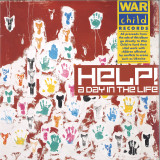
To celebrate the tenth anniversary of the iconic HELP album a new generation of artists came together to create, at the time, the fastest recorded album ever. They recorded Help! A Day In The Life on Thursday 8th September 2005 which the record available for download just 32 hours later.Help! A Day In The Life is part of a series of four re-releases by War Child Records making the amazing music artists have donated to the charity available on DSPs and vinyl for the first time. All proceeds from these releases will directly fund War Child’s life saving work with children affected by conflict.
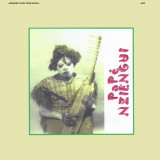
Kadi Yombo, published in 1989, is the most successful album in the quest for a fusion between tradition and modernity in Bwiti harp music of the Tsogho people of Gabon. Combining beating rattles with a layer of synthesizers, Papé Nziengui blends in a contrapuntal dialogue characteristic of harp playing: male song in appeal and female choir in response, male voice of the musical arc and rhythms of female worship. But above all it’s Tsogho ritual music and modern studio orchestration. The result is an initiatory itinerary of 10 musical pieces which are all milestones likely to be simultaneously listened to, danced, meditated on, and soon acclaimed. In the years since, Nziengui has traveled he world from Lagos to Paris, from Tokyo to Cordoba, from Brussels to Mexico City to become a true icon, the emblem of Gabonese music.
Like Bob Dylan, "electrifying" folk and Bob Marley mixing rock with reggae, some purists have criticized Nziengui for having distorted the music of harp by imposing a cross with modern instruments. They even went so far as to claim that Nziengui was just an average harpist covering his shortcomings with stunts that were only good for impressing neophytes; like playing a harp placed upside down behind his back or playing two or three harps simultaneously. Sincere convictions or venomous defamations, in any case, Nziengui never gave in to such attacks, imposing himself on the contrary to pay homage to the elders (Yves Mouenga, Jean Honoré Miabé, Vickoss Ekondo) while instructing the maximum of young people. He is thus the promoter of many young talents, the most prominent of which is certainly his nephew Jean Pierre Mingongué. In a conservative society where the sacred is confused with secrecy, exposing the mysteries of Bwiti in broad daylight can be punished by exclusion or even execution.
Papé Nziengui has always claimed that he faces such risks because he never felt enslaved to a community that governs his life, that regulates his conduct, that has a right of censorship over his activities. Like Ravi Shankar, the famous sitarist, Papé Nziengui is a man of rupture but also of openness, a transmitter of culture. As proof, he has established himself in Libreville, Gabo’s capital, as the main harpist for sessions and concerts, accompanying the greatest national artists (Akendengué, Rompavè, Annie-Flore Batchiellilys, Les Champs sur la Lowé, etc.) as well as foreign artists (Papa Wemba, Manu Dibango, Kassav', Toups Bebey, etc.). In 1988, he was the first harpist to release an album in the form of a cassette produced by the French Cultural Center (Papé Nziengui, Chants et Musiques Tsogho). At the same time, he created his own group (Bovenga), combining traditional music instruments (musical bow, drums, various percussion instruments, etc.) in the framework of a true national orchestra, which gave the first concert and the first tours of a traditional music that was both modern and dynamic, thus "democratizing" the harp, to the dismay of certain purists.
On the other hand, in modern music, dominated by the logic of profit or even commercialism, artistic creation must often be adjusted for a specific audience based on reason rather than heart. But instead of allowing himself to be distorted, Papé Nziengui has always tried to produce music that is not a caricature, worthy in its expression as in its content, of the sacredness and transcendence of the music of the Origins. This is what makes Nziengui not only the musician, but the man someone whose age hasn’t altered any of his freshness or authenticity
Kadi Yombo, published in 1989, is the most successful album in the quest for a fusion between tradition and modernity in Bwiti harp music of the Tsogho people of Gabon. Combining beating rattles with a layer of synthesizers, Papé Nziengui blends in a contrapuntal dialogue characteristic of harp playing: male song in appeal and female choir in response, male voice of the musical arc and rhythms of female worship. But above all it’s Tsogho ritual music and modern studio orchestration. The result is an initiatory itinerary of 10 musical pieces which are all milestones likely to be simultaneously listened to, danced, meditated on, and soon acclaimed. In the years since, Nziengui has traveled he world from Lagos to Paris, from Tokyo to Cordoba, from Brussels to Mexico City to become a true icon, the emblem of Gabonese music.
Like Bob Dylan, "electrifying" folk and Bob Marley mixing rock with reggae, some purists have criticized Nziengui for having distorted the music of harp by imposing a cross with modern instruments. They even went so far as to claim that Nziengui was just an average harpist covering his shortcomings with stunts that were only good for impressing neophytes; like playing a harp placed upside down behind his back or playing two or three harps simultaneously. Sincere convictions or venomous defamations, in any case, Nziengui never gave in to such attacks, imposing himself on the contrary to pay homage to the elders (Yves Mouenga, Jean Honoré Miabé, Vickoss Ekondo) while instructing the maximum of young people. He is thus the promoter of many young talents, the most prominent of which is certainly his nephew Jean Pierre Mingongué. In a conservative society where the sacred is confused with secrecy, exposing the mysteries of Bwiti in broad daylight can be punished by exclusion or even execution.
Papé Nziengui has always claimed that he faces such risks because he never felt enslaved to a community that governs his life, that regulates his conduct, that has a right of censorship over his activities. Like Ravi Shankar, the famous sitarist, Papé Nziengui is a man of rupture but also of openness, a transmitter of culture. As proof, he has established himself in Libreville, Gabo’s capital, as the main harpist for sessions and concerts, accompanying the greatest national artists (Akendengué, Rompavè, Annie-Flore Batchiellilys, Les Champs sur la Lowé, etc.) as well as foreign artists (Papa Wemba, Manu Dibango, Kassav', Toups Bebey, etc.). In 1988, he was the first harpist to release an album in the form of a cassette produced by the French Cultural Center (Papé Nziengui, Chants et Musiques Tsogho). At the same time, he created his own group (Bovenga), combining traditional music instruments (musical bow, drums, various percussion instruments, etc.) in the framework of a true national orchestra, which gave the first concert and the first tours of a traditional music that was both modern and dynamic, thus "democratizing" the harp, to the dismay of certain purists.
On the other hand, in modern music, dominated by the logic of profit or even commercialism, artistic creation must often be adjusted for a specific audience based on reason rather than heart. But instead of allowing himself to be distorted, Papé Nziengui has always tried to produce music that is not a caricature, worthy in its expression as in its content, of the sacredness and transcendence of the music of the Origins. This is what makes Nziengui not only the musician, but the man someone whose age hasn’t altered any of his freshness or authenticity
Kadi Yombo, published in 1989, is the most successful album in the quest for a fusion between tradition and modernity in Bwiti harp music of the Tsogho people of Gabon. Combining beating rattles with a layer of synthesizers, Papé Nziengui blends in a contrapuntal dialogue characteristic of harp playing: male song in appeal and female choir in response, male voice of the musical arc and rhythms of female worship. But above all it’s Tsogho ritual music and modern studio orchestration. The result is an initiatory itinerary of 10 musical pieces which are all milestones likely to be simultaneously listened to, danced, meditated on, and soon acclaimed. In the years since, Nziengui has traveled he world from Lagos to Paris, from Tokyo to Cordoba, from Brussels to Mexico City to become a true icon, the emblem of Gabonese music.
Like Bob Dylan, "electrifying" folk and Bob Marley mixing rock with reggae, some purists have criticized Nziengui for having distorted the music of harp by imposing a cross with modern instruments. They even went so far as to claim that Nziengui was just an average harpist covering his shortcomings with stunts that were only good for impressing neophytes; like playing a harp placed upside down behind his back or playing two or three harps simultaneously. Sincere convictions or venomous defamations, in any case, Nziengui never gave in to such attacks, imposing himself on the contrary to pay homage to the elders (Yves Mouenga, Jean Honoré Miabé, Vickoss Ekondo) while instructing the maximum of young people. He is thus the promoter of many young talents, the most prominent of which is certainly his nephew Jean Pierre Mingongué. In a conservative society where the sacred is confused with secrecy, exposing the mysteries of Bwiti in broad daylight can be punished by exclusion or even execution.
Papé Nziengui has always claimed that he faces such risks because he never felt enslaved to a community that governs his life, that regulates his conduct, that has a right of censorship over his activities. Like Ravi Shankar, the famous sitarist, Papé Nziengui is a man of rupture but also of openness, a transmitter of culture. As proof, he has established himself in Libreville, Gabo’s capital, as the main harpist for sessions and concerts, accompanying the greatest national artists (Akendengué, Rompavè, Annie-Flore Batchiellilys, Les Champs sur la Lowé, etc.) as well as foreign artists (Papa Wemba, Manu Dibango, Kassav', Toups Bebey, etc.). In 1988, he was the first harpist to release an album in the form of a cassette produced by the French Cultural Center (Papé Nziengui, Chants et Musiques Tsogho). At the same time, he created his own group (Bovenga), combining traditional music instruments (musical bow, drums, various percussion instruments, etc.) in the framework of a true national orchestra, which gave the first concert and the first tours of a traditional music that was both modern and dynamic, thus "democratizing" the harp, to the dismay of certain purists.
On the other hand, in modern music, dominated by the logic of profit or even commercialism, artistic creation must often be adjusted for a specific audience based on reason rather than heart. But instead of allowing himself to be distorted, Papé Nziengui has always tried to produce music that is not a caricature, worthy in its expression as in its content, of the sacredness and transcendence of the music of the Origins. This is what makes Nziengui not only the musician, but the man someone whose age hasn’t altered any of his freshness or authenticity
Repress
Label Boss Emmanuel opens 2020 with a full-length work that represents one more time the evolution of his own sound over the years. "Time is Relative" is a composition that has the ambition to reach many souls with different tastes all at once. All the four tracks are produced and selected in different time zones, after a long craft in the studio/dancefloor and produced to give the maximum result on any floor in the world.
NAPPYNAPPA is a prolific artist from Washington DC with a highly creative and free approach. ONDAMICUNDERDACOZMIKLYTZ coalesces his expressive hip hop soundscapes with layers of eclectic influences. The album features production from long-time collaborator Black Moses, as well as Pat Cain, Zac Clare, Tooth Choir, Jelani Kwesi and RICTHESUPERSONIC.
NAPPYNAPPA is one half of the group MODEL HOME alongside Pat Cain. He has featured on over twenty albums in the last two years alone, including the celebrated Disciples compilation ‘One Year’, the acclaimed ‘SE’ on Max D’s Future Times label and ‘both feet en th infinite’, released by Don Giovanni Records.
A repress to celebrate the 6th birthday of Svalbard's incredible debut 'One Day All This Will End'
Svalbard have grown ever more maximalist with their approach to melody and intensity in the relatively short period of time they have been together. From the almost gruff-punk-goes-black metal-goes post-rock leanings of 'Unnatural Light', to the tale of two halves presented by 'The Vanishing Point' which swings from a haunting gaze to an almost positive post- hardcore resolution, Svalbard weave
disparate influence into a seamless whole with aplomb.
(MENDEL & JGS FYRAFTEN EDITS)
The A side is an edit of 'Jean-Paul Pognon's - Limie', (DJ/producer) Mendel works and slices the track's most vital parts - extending them into maximum dancefloor joy. On the flip 'David Et Corine's - Noir Sur Blanc' which JGS Fyraften Edits sliced and diced to keep the energy high.
Straight from the melting pot of Berlin, Luca Musto serves up a solid and fresh house dish in his first album on Moodfamily.
The songs stretch the imagination and touch the borders of hip hop and electronic beats. He intertwines his own musical journey with the sounds of his hometown. It is also the attempt at a new genre by blending hip hop elements with electronic music to create something unique.
This funky fusion expresses itself in three original tracks. “What We Witness” introduces us into the rhythmic exploration of the record. It adds some spicy P-Funk vibes and blurs your senses with drowsy horns, served on a velvet platter. "Toledo" - the first single of the EP - gives a thrilling continuation to the EP. This one is sure to cause a ruckus on the dance floor. Finally, “Keep Rollin” further defines the genre-blending character of this project, and gives a slight nod to the West coast of the US.
Xinobi (Lisbon, Portugal / Discotexas) and Mosley Jr. (Gent, Belgium / Moodfamily) deliver some exciting remixes to the EP, both with their unique signature spin.
- “This shit’s gonna break the rules.
Early support from Support Super Flu, Audiofly, Acid Pauli, Florian Rietze, Maxim Lany, Be Svendsen, Maga, Iorie, Stavroz, Paco Osuna, …
- A1: Intro
- A2: Maybe You Didn't Know
- A3: Heron On The Water
- A4: Interlude
- A5: Hard Not To Hold You
- A6: These Depopulate Hours
- A7: The Morning Room
- A8: Everything Will Be Fine
- A9: These Depopulate Hours (Reprise)
- A10: What Makes You A Man
- A11: Piece & Pound Coins
- A12: Heavy Like A Headache
- A13: Pivotal
- A14: Some
- A15: Song For Leaving
Terracotta Vinyl LP[22,65 €]
The Ninth Wave's upcoming second album Heavy Like A Headache arrives off the back of a sold-out UK tour toward the end of 2021 and Scottish Album Of The Year nominations for their Faris Badwan (The Horrors)-produced EP 'Happy Days!' and their critically acclaimed 2019 debut full-length Infancy. Produced by the band themselves and mixed by Max Heyes (Massive Attack, Doves, Primal Scream), Heavy Like A Headache explores feelings of grief, anxiety, anger and loneliness, and represents the 4-piece's most triumphant and diverse body of work to date. Celebrating honesty and real life, The Ninth Wave want their listeners to find comfort in their music. They want their fans to feel safe; to be confident in who they are, and to know they're not alone.
The band will play three album celebration shows in Manchester, London and Glasgow around album release. Recent singles have received multiple spins from Radio 1's Jack Saunders, 6 Music and an addition in NME's A-list, coverage in key publications such as Wonderland, The Line of Best Fit, DIY and more. 'What Makes You a Man' will be featured in the upcoming series of Netflix's Umbrella Academy. Their releases have seen countless editorial support from Spotify, Apple Music, Deezer and Amazon Music, including Spotify's New Music Friday, The Indie List, The Other List, All New Rock, Melomania and Scotify playlist additions.
- A1: Intro
- A2: Maybe You Didn't Know
- A3: Heron On The Water
- A4: Interlude
- A5: Hard Not To Hold You
- A6: These Depopulate Hours
- A7: The Morning Room
- A8: Everything Will Be Fine
- A9: These Depopulate Hours (Reprise)
- A10: What Makes You A Man
- A11: Piece & Pound Coins
- A12: Heavy Like A Headache
- A13: Pivotal
- A14: Some
- A15: Song For Leaving
Recycled Black LP[22,65 €]
The Ninth Wave's upcoming second album Heavy Like A Headache arrives off the back of a sold-out UK tour toward the end of 2021 and Scottish Album Of The Year nominations for their Faris Badwan (The Horrors)-produced EP 'Happy Days!' and their critically acclaimed 2019 debut full-length Infancy. Produced by the band themselves and mixed by Max Heyes (Massive Attack, Doves, Primal Scream), Heavy Like A Headache explores feelings of grief, anxiety, anger and loneliness, and represents the 4-piece's most triumphant and diverse body of work to date. Celebrating honesty and real life, The Ninth Wave want their listeners to find comfort in their music. They want their fans to feel safe; to be confident in who they are, and to know they're not alone.
The band will play three album celebration shows in Manchester, London and Glasgow around album release. Recent singles have received multiple spins from Radio 1's Jack Saunders, 6 Music and an addition in NME's A-list, coverage in key publications such as Wonderland, The Line of Best Fit, DIY and more. 'What Makes You a Man' will be featured in the upcoming series of Netflix's Umbrella Academy. Their releases have seen countless editorial support from Spotify, Apple Music, Deezer and Amazon Music, including Spotify's New Music Friday, The Indie List, The Other List, All New Rock, Melomania and Scotify playlist additions.
- A1: Marie Knight - That's No Way To Treat A Girl
- A2: Jack Montgomery - Dearly Beloved
- A3: J. B. Troy - Live On
- A4: Porgy & The Monarchs - My Heart Cries For You
- A5: Freddie Chavez - They'll Never Know Why
- A6: Clarence Reid - I'm Your Yes Man
- A7: Lou Lawton - Knick Knack Patty Wack
- A8: The Gentlemen Four - You Can't Keep A Good Man Down
- A9: Betty Moorer - Speed Up
- B1: The Masqueraders - Do You Love Me Baby
- B2: The Ivories - Please Stay
- B3: Leslie Uggams - Love Is A Good Foundation
- B4: Lord Thunder - Thunder
- B5: Maxine Brown - Let Me Give You My Lovin'
- B6: Billy Thompson - Black-Eyed Girl
- B7: Chuck Jackson - Hand It Over
- B8: Stanley Mitchell - Get It Baby
- B9: The Platters - With This Ring
WELCOME to the third volume in our Wigan Casino mini-series exploring the diverse playlist of the world's No.1 Northern Soul venue. The 23rd September 2018 marks the 45th Anniversary of the super club and we have selected 18 tracks that we hope capture the unique atmosphere of the huge ballroom and the mesmerizing dance moves that held us spellbound all those years ago.
WIGAN CASINO finally closed its doors in December 1981 after eight long years of weekly All-Nighters, during which time it came to define Northern Soul. The term had, of course, been coined years earlier, but it was the Casino Soul Club that established the style of music and the scene to the wider public.
The Casino transformed the Northern Soul scene into a mass youth movement with its own sound track, uniform, cultural icons and a 100,000 strong membership. In reality, the stereotype of moustachioed young men in baggy trousers and vest tops, festooned with sew-on patches, was actually quite short lived. Northern Soul was ever evolving and as the Seventies progressed so did the music and the fashion, embracing soulful-disco and jazz-funk. Today, 45 years on, it is still evolving and attracts followers from all over the globe to its international Weekenders and Festivals. Right On!
- A1: Valerie Dore - The Night (Special Remix)
- A2: Public Passion - Flash In The Night (Extended Version)
- A3: Biba - Top Model
- A4: Silver Pozzoli - Around My Dream (Extended Version)
- B1: Doctor's Cat - Feel The Drive (Vocal Extended)
- B2: Rene - Don't Hurt Me
- B3: K-A-T-A - Fires In The Night
- B4: Johnny Game - Another Kiss
- C1: Faxe - Time For Changes
- C2: Oxo - Keep On Living
- C3: R Bais - Dial My Number (Club Mix)
- C4: Ray Foster - Run To Me
- D1: Linda Jo Rizzo - You're My First, You're My Last (Maxi Version)
- D2: Hugh Bullen - Alisand (Original Vocal Mix)
- D3: Dyva - I Know (Extended Version)
- D4: P Lion - Happy Children