
Cerca:max j


4
Hooj present Warehouse Tools EP with a spread of tempos, but keeping the energy levels up across the 4 tracks.
Fast rising Brighton bod Jamie Unknown takes Farayen & Liam Parkin's Where Do We Go ‘, and strips it all back into a big floor bassline banger.
Young South Wales / Valleys producer Dan Newman makes his debut with 'Moving' with it's rolling piano's, spacey pads and fat housey rhythms treading the line between Italo scream up and Dream-House journey. Early doors, or first light starting to appear through the cracks in the grimey Warehouse windows, we're here for it..
On the flip we have Dutch duo Dean & Di After’s ‘Wicked Dreams’ keeps it steady paced, subtly bouncy with a crafted, Italo '90 old school feel.
Rounding off the EP we have the South West’s premier MDMA Marxist, Shade Guevara goes mid tempo maximalist piano slammer on 'Ted or Dead'.

Dennis Anthony Thomas, better known as King Kong, is a renowned Jamaican singer known for tracks such as "Trouble Again" and "Legal We Legal". "Song of Love" is an iconic obscure track from King Kong's discography, released under Pisces Productions. This track is one of the era's most cherished anti-apartheid anthems, embodying the spirit of resistance and solidarity.
The lyrics of "Song of Love" capture the urgency and emotional depth of the struggle against apartheid in South Africa. The song references then-President P.W. Botha, expressing a direct appeal for human rights and unity among South Africans. Through themes of harmony and love, King Kong emphasizes the resilience of people and the beauty of cultural solidarity.
In reggae's tradition of addressing political struggles, "Song of Love" resonates as an artistic and symbolic statement against apartheid.
The song captures the shared aspirations for peace and freedom, representing how the South African struggle echoed worldwide — including in Jamaica, where reggae artists like King Kong amplified these calls through music.
“Song of Love” is more than just a song; it’s a historical message and testament to reggae’s role in the global fight for human rights. King Kong’s “Song of Love” epitomizes a generation of reggae artists who leveraged music to advocate for justice, spreading messages of hope, resilience, and change that resonate to this day.
Originally released in 1989 Produced and Arranger by: R. (Briggs) Fergusen, S. Small, Y. (Polly) Linton Sleeve artwork by Parade Studio
Label artwork by Florian Weigel
Licensed courtesy of Dennis Anthony Thomas aka King Kong

16
Age Of Paranoia, the latest chapter in the band's lineage, was recorded by Igor Wouters at ARC Studios in Amsterdam, and includes several special guest guitar solos by J. Mascis (Dinosaur Jr., Witch) and Bubba Dupree (Void, Soundgarden, Dave Grohl's Probot, Brant Bjork).
Age Of Paranoia offers sixteen volatile tracks, packed into a succinct, white-knuckled twenty-eight minutes. The album surges with rapid-fire punk angst, replete with ripping rock leads and raised-fist, group-chanting anthems.
To complete the recording, the cover artwork is created by Marald (Baroness, Kylesa, High On Fire). See cover artwork, track listing and live dates below.
'One of the best and most important hardcore bands today" - PROFANE EXISTENCE
''Excellent and addictive, gathering the best of punk and metal: one part hardcore punk, another Motörhead'' - METAL ADVISOR
'the supreme thrash band in all of current rock 'n' roll'' - MAXIMUM ROCKNROLL

Analog Concept Records presents the ‘Multitudes Ep’ from Macedonia's techno maestro and prolific DJ, Mihail P.
In these 4 tracks are a fine mix of atmosphere, intricate electro and techno drum foundation, with warm hues of melody that seep smoothly into the imagination. It's old school minimal approach creates max quality in feelings like that of its early 90s Detroit and UK style ancestry, while never losing touch of the future in its sonic impression on imagery.
A detour into classic Chicago sound is here as well, check the lush acid house hybrid remix of “East At Dawn” from the fine talent of Gilbert…Pure and confident with moods spanning sunlit electro combinations to melodic trips of introspective acid techno sensation, “Multitudes” by Mihail P is choice for mind and body stimulating destinations.

5
In the late 1980s, three young musicians – Rick and Remon Melsert, along with Paul Nieuwenhuijsen – approached Michiel van der Kuy with a demo titled “She.” Their collaborative project, dubbed Kick The Habit, was poised to blend their talents with Michiel’s signature touch, infused with a hint of early house music. However, for reasons unknown, the project was shelved and remained hidden for over three decades.
Now, 35 years later, thanks to the efforts of Michiel Van Der Kuy, Sergi Elias and Vintage Pleasure Boutique label, this long-lost gem is finally seeing the light of day. The maxi single not only resurrects the original track but also features remixes by the amazing Prospero duo, adding a nostalgic layer of Michiel’s classic 1980s sound. The release includes five stunning versions of “She,” including the original, making this a must-listen for fans of vocal space synth, vocoders, Laser Dance, Michiel van de Kuy talent and vintage synth-driven music.

4


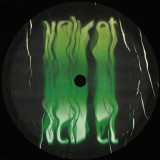
Velvet, from JNJS (Jay Nortown & Jacobo Saavedra), is dedicated exclusively to dacefloor music, designed for maximum club impact. Alexis Cabrera brings three cuts of pure sexy house, perfect for any party time. Harmonically dense, advanced beats... pure Alexis Cabrera.
To finish the EP, JNJS remix Distopian, to give his take on the dancefloor bassline.

Returning to Berlin has reignited a fresh, playful side to Benjamin Damage’s techno productions. Drawing inspiration from NIX’s bold direction, he has challenged his own sound and delivered a cheeky EP, Violet Ray, with great attention to detail, combining sharp sound design with strong dance floor energy.
Each track is born from live studio sessions, with long takes of experimentation and play. Carefully chopping and refining these moments, Benjamin ensures energy flow while maintaining maximum sound quality, perfectly crafted for a 12” vinyl release.


Einer der größten Italo Disco Hits aus dem Jahre 1983 jetzt wieder als 12“ Maxi Single erhältlich:
Ryan Paris – Dolce Vita
Vor genau 40 Jahren wurde dieser legendäre Italo Disco Song erstmals veröffentlicht: Aus diesem Anlass gibt es eine farbige Vinyl in streng limitierter Auflage und Remixen von Flemming Dalum und Van Edelsteyn.
One of the biggest Italo Disco hits from 1983 now available again on 12“ Maxi Single:
Ryan Paris - Dolce Vita
Exactly 40 years ago this legendary Italo Disco song was released for the first time.
On this occasion we are proud to present a strictly limited edition on colored vinyl featuring also remixes by Flemming Dalum and Van Edelsteyn.


5

Auf Seite A gibt es die raren Original-Versionen und als
Highlight auf Seite B zwei neue und exklusive Remixe von
Flemming Dalum & Vanzetti & Sacco DJ Edit. Diese streng
limitierte farbige Vinyl ist eine Hommage an die goldenen Jahre
der Italo Disco Ära und bringt den pulsierenden Rhythmus und
den unvergesslichen Groove zurück auf den Plattenteller.

4
SOULMEEX record label premiers with a powerful nu-disco and italo EP conceived during the spring and summer of 2024. It comes with the signature of synth maestro Philipp Lauer, and remixes by Johannes Albert and Max Buchalik. An impressive debut for a label that originally began its path in the industry as a weekly mix series back in December ’22.
5
Since its founding back in 2014, Blume has carved a unique place in cultural landscape, issuing free-standing works, spanning the historical and contemporary, that represent singular gestures of creativity within the field of experimental sound. Joining their broad efforts in building networks of context and understanding that already includes the works by Werner Durand, Sarah Hennies, Bruce Nauman, John Butcher, Jocy de Oliveira, Mary Jane Leach, Valentina Magaletti, Alvin Curran, Julius Eastman, Alvin Lucier, and others, Blume return with the first ever vinyl release to attend to James Tenney’s legendary “Postal Pieces”, Marking the first ever appearance of five of the suite’s works - “Maximusic, for Max Neuhaus” (1965), “Having Never Written a Note for Percussion, for John Bergamo” (1971), “FFor Percussion Perhaps, or... Night, for Harold Budd” (1971), “Cellogram, for Joel Krosnick” (1971), and “Beast, for Buell Neidlinger” (1971) - on vinyl, drawing upon recordings made in 2003, by the Amsterdam based ensemble, The Barton Workshop, under the direction of James Fulkerson. Among the most important and highly regarded efforts in Tenney’s canon of compositions, as well as within the history of 20th Century music, these five pieces represent a crucial bridge between Fluxus-oriented conceptualism, minimalism, and the microtonal complexities that would emerge in their wakes. Issued in a highly limited vinyl edition of 300 copies, it includes exact replicas of the original postcard graphic scores, and features newly commissioned liner notes by Bradford Bailey, Blume’s brand new edition takes great steps to centring Tenney at the eye the storm during some of experimental music’s most important years.
A student of composition under Carl Ruggles, John Cage, Harry Partch, and Edgard Varèse - remaining close to all of them, and later performing in both Cage and Partch’s ensembles - as well as acoustics, information theory, and tape music composition under Lejaren Hiller, James Tenney carved a wide path within the contexts of experimental and avant-garde music during the second half of the 20th Century. Not only was he a tangible bridge between the generations of composer’s who laid much of the groundwork and the later movements of Fluxus, Minimalism, and the broader practices of experimental music, but Tenney is credited as having contributed one of the earliest applications of gestalt theory and cognitive science to music in 1961, before helping to pioneer the field of computer music at Bell Labs, during the following years.
Over the course of his career, Tenney produced music of such complexity and sophistication - paying little mind to the seductions of taste or dominant tropes of its own moment - that his work and legacy have largely remained under-recognised by the broader publics that have attended to most of his peers. Perhaps more pertinently, the body of work he produced can be perceived as too varied and complex to fit neatly within standard creative histories or critical frameworks, comprising harmonically complex works for acoustic instrumentation, musique concrète, the groundbreaking 1961 “plunderphonic” composition, “Collage No.1 (Blue Suede) (for tape)” - sampling and manipulating a recording of Elvis Presley - as well as algorithmic and computer synthesized music. Even here, within this single decade, a clear image of Tenney’s endeavours remains elusive. In addition to penning important theoretical texts, he collaborated and / or played with Max Neuhaus, La Monte Young, Steve Reich, Philip Glass, Michael Snow, Terry Riley, and numerous others; was an active member of Fluxus; starred in and composed music for Stan Brackage’s films; regularly worked with the Judson Dance Theater; co-founded and played in the ensemble, Tone Roads, with Malcolm Goldstein and Philip Corner; was a vocal advocate of the works of Conlon Nancarrow and Charles Ives, playing a significant part in the revival of both of their legacies; and regularly collaborated as a composer, musician, and actor with his then-partner, the artist Carolee Schneemann, notably co-starring in her film, “Fuses” (1965) and her legendary 1964 performance, “Meat Joy”, as well as creating sound collages for her films “Viet Flakes” (1965) and “Snows” (1970). Curiously, for a relatively absent figure in the historical and critical narratives, Tenney seems to have been the thread that bound multiple generations and disciplines of avant-garde practice in New York during this period.
Tenney was deeply invested in the quality and perception of sound. By 1970, this led him back to composing exclusively for acoustic instrumentation (though sometimes processed with tape delay) - in most cases utilising non-well tempered tuning systems to explore harmonic perception - a practice that he would remain steadfast to for the remainder of his life. This development roughly corresponded with his relocation to California, at the outset of the 1970s, following an invitation to teach at the newly founded music department at California Institute of the Arts (CalArts) in Valencia. Finding himself in regular contact with the harpist Susan Allen and the artist Allison Knowles, as well as at a great distance from many of his friends, in 1971 he completed (with the assistance of Knowles and Marie McRoy) “The Postal Pieces”, a project he had begun in 1965.
A suite of eleven compositions, “The Postal Pieces”, stands among Tenney’s well known and celebrated compositions, and illuminates the dualities embraced by the composer, notably his use of sound to develop consciousness in and of others, and his willingness to draw on elements and observations of everyday life; citing his strong dislike of writing letters as being the primary inspiration for their inception. In lieu, he conceived to send his friends - John Bergamo, Allison Knowles, Pauline Oliveros, La Monte Young, Harold Budd, Philip Corner, Joel Krosnick, Buell Neidlinger, Susan Allen, Max Neuhaus, and Malcolm Goldstein - short scores on the back of postcards. The suite is composed around three themes: Tenney’s concept of swell form (utilizing repetition and progressing through a structurally symmetrical arch), intonation, and the desire to produce “meditative perceptual states”.
A hugely important addition to Blume’s ever expanding efforts in context building and networks of creative practice, James Tenney’s “Post Pieces” is issued in a highly limited vinyl edition of 300 copies, which includes a exact replicas of the original postcard graphic scores, and features newly commissioned liner notes by Bradford Bailey.
