Search:maxi

Styles
All
LAVVI EBBEL - GUNS AND CREPE FLAMBÉE (1977-2014) LP 2x12"
 
13

Lavvi Ebbel was without a doubt one of the most talked-about bands of the Belgian new wave scene. In the early eighties, the band achieved considerable success with singles such as “Give Me a Gun” and “Victoria.” This ten-piece band had a solid live reputation thanks to the original sound of the two guitarists (Marc de Wit and Chris Van Ransbeeck), pianist (Bea Van Ransbeeck), and the steady Eric de Wit on drums. Singer Luckas Vander Taelen and backing vocalist Kristien D’Haeger provided a strong stage presence, supported by the swinging horn section with Jan Weuts and Eric Sleichim, who was the driving force behind Maximalist and Bl!ndman some time later.

Lavvi Ebbel played about 200 times in Belgium and the Netherlands, both in small clubs and at prestigious festivals such as Seaside. On the compilation LP “Get Sprouts,” which is a true sample chart of the music of this period, we find Lavvi Ebbel's “No Place To Go,” a high point in their versatile collaboration with producer Jean-Marie Aerts. “Albü Meth” is arguably the best-known mini-LP, featuring the cult song “Le Cafard.” After the release of the album “Kiss Me Kate,” produced by the American producer David Avidor, the band called it a day in 1983. Following a couple of very successful performances in 2013, Lavvi Ebbel, 12 years later, is making a comeback with the original band members.

pre-order now12.09.2025

expected to be published on 12.09.2025

23,95
ASHEN - Chimera LP

ASHEN

Chimera LP

12inchOUT1430
Out of Line Music
12.09.2025
  • A1: You Were Always Here
  • A2: Meet Again
  • A3: Chimera
  • A4: Crystal Tears
  • A5: Oblivion
  • B1: Chimera's Theme
  • B2: Cover Me Red
  • B3: Altering
  • B4: Desire
  • B5: Sacrifice
  • B6: Clone Of A Clone
  • B7: Living In Reverse

Wenn du ASHEN noch nicht kennst, wird sich das mit ihrem Debütalbum “Chimera” ändern „Chimera“ klingt wie ein Ich, das in zwei Hälften zerbricht. Aus dem Pariser Underground bringt die moderne Metalcore-Band Ashen frischen Wind ins Genre der harten Musik. Mit ihrem ersten Album stellen sie sich nicht einfach nur vor, sie reißen ein ganzes Universum auf. Eines, das aus Schmerz, Ekstase, Wahn und Klarheit zusammengenäht ist. Dieses Album ist alles, nur nicht vorhersehbar. Metalcore wie durch ein Kaleidoskop gesehen: filmisch, instabil, wunderschön verstört. „Chimera“ ist ein brutaler, aber zugleich schöner Abstieg in verdrängte Emotionen - eine Suche nach etwas Echtem unter all dem Lärm. Eine langsame Verwandlung, wie das eigene Spiegelbild, das sich verändert, in etwas Fremdes, vielleicht Wahreres. Trotz seiner Komplexität verliert das Album nie seine Seele. Der Sound ist modern und maximalistisch – jeder Glitch, jeder Drop, jeder Sound wirkt durchdacht. Man hört, dass hier eine Band am Werk ist, die jedes Detail liebt, nicht nur musikalisch, sondern auch textlich. „Chimera“ ist eine Auseinandersetzung mit dem eigenen Werden: damit, was passiert, wenn man sich der verzerrten Version seiner selbst stellen muss - der Version, die durch Schmerz entstanden ist.

pre-order now12.09.2025

expected to be published on 12.09.2025

27,31
Various - Dolores: Salsa & Guaracha From 70's French West Indies

In Guadeloupe, many people think that jazz and ka music are like a ring and a finger. To some extent, the same could be said about so called Latin music and the music played in the French West Indies.

Both aesthetics were born in the Caribbean and bear so many connections that they can easily be considered cousins. In constant dialogue, there are lots of examples of their fruitful alliance and have been for a while. The English country dance that used to be practiced in European lounges came to be called kadrille in Martinique and contradanza in Cuba. They both featured additional percussion instruments inherited from the transatlantic deportation. Drawing from shared feelings about the same traumatized identity – later to be creolized – it would be hard not to assume that they were meant to inspire each other. The golden age of the orchestras that graced the Pigalle nights during the interwar period further proves the point. As soon as the 1930s, Havana-born Don Barreto naturally mixed danzón and biguine music in a combo based at Melody's Bar. In the following decade, Félix Valvert, a conductor who was born and raised in Basse-Terre in Guadelupe, also worked wonders in Montparnasse with La Coupole, which was an orchestra made up of eclectic musicians. Afro- Caribbean performers of various origins were often hired on rhythm and brass sections in jazz bands, which used to enliven the typical French balls of the capital. In the 1930s and onwards, Rico’s Creole Band was one of them.


Martinican violinist-clarinettist Ernest Léardée, who would become the king of biguine music as well as the main figure of French Uncle Ben's TV commercials (a dark stigma of post-colonial stereotypes), had musicians from the whole Caribbean sphere play at his Bal Blomet – and they all enchanted "ces Zazous-là" (according the words of Léardée's biguine-calypso piece). In les Antilles (French for French West Indies), music history started to speed up in the 1950s, when trade expanded and radio stations grew bigger. The Guadelupean and Martiniquais youth tuned in their old galena radio sets to South American and Caribbean music. As for the women traders, les pacotilleuses, they bought and sold goods across different islands (the "passing of items through various hands" was thought to be most pleasurable) and brought back countless sounds in their luggage. Such was the case of Madame Balthazar, who once returned from Puerto Rico with the first 45rpm and 33rpm to ever enter Martinique.

Out of this adventure was created the famous Martinican label La Maison des Merengues, a music business she opened and undertook with her husband and which proved to be a major landmark. At the end of the 1950s, in Puerto Rico, Marius Cultier competed in the Piano International Contest playing a version of Monk's Round 'Midnight. He won the first prize and this distinction foreshadowed everything that was to come. Cultier, the heretic Monk of jazz, was quickly praised for writing superb melodies, always tinged with a twist that conferred a unique sound to his music. It didn't take long for the gifted self-taught musician to get to play with Los Cubanos, making a name for himself thanks to his impressive maestria on merengues.

The rest is history. Besides, in the late 1950s, Frantz Charles-Denis, born into the upper middle class in Saint-Pierre and better known by his first name Francisco, went back home after working at La Cabane Cubaine – a club located rue Fontaine where he had caught the Latin fever. Francisco's music was therefore heavily marked by his Cuban cousins' influence, which gave the combos he led a specific style and also led to renewal. Things were swinging hard in La Savane, located in the main square in Fort-de-France. He set up the Shango club close by and tested out the biguine lélé there, a new music formula spiced up with Latin rhythms. Soon afterwards, fate had him fly to Puerto Rico and Venezuela.

As for percussionist Henri Guédon (percussions were only a part of his many talents), he was born in Fort-de-France in May 22nd 1944, the day marking the celebration of the abolition of slavery. As an old man, he could remember that in " his father's Teppaz, a lot of hectic 6/8 music was constantly playing...". In the opening lines of his Lettre à Dizzy, a small illustrated collection of writings published by Del Arco, he highlighted the huge impact that cubop had on him as a teenage boy, around 1960. He eventually turned out to be the lider maximo in La Contesta, a big band steeped in Latin jazz. He was also the one who originated the word zouk to describe music which brought the sound of the New York barrio to Paris. It was the culmination of a journey that started in Sainte-Marie: "a mythical place for bélé, the equivalent of Cuban guaguancó". In the early 1960s, the tertiary economy developed to the detriment of agriculture. Yet rural life was where roots music emerged in Martinique and in Guadeloupe.

Record companies played a major part in the process of Latin versions sweeping across the islands – before reaching everywhere else. Producer Célini, boss of the great Aux Ondes label, and Marcel Mavounzy, both the head of Émeraude records - a firm which was founded in 1953 - as well as the brother of famous saxophonist Robert Mavounzy, were big names to bear in mind. Although there were many of them - all of whom are featured on this record - Henri Debs was definitely the major figure in the recording adventure. He proved to be so influential that he even got compared to Berry Gordy. In the mid 1950s, when he acquired his first Teppaz, he worked on his first compositions: a bolero and a chachacha. Then, he became the one man who made people discover Caribbean music, from calypso to merengue. He was among the first ones to rush out to San Juan, Puerto Rico, to buy records and distribute them through a store run by one of his brothers in Fort-de-France. He had members of the Fania All Star come and perform there, which he was madly proud about. He was also the first one to pay attention to Haitian music, such as compas direct and various other rhythms which would soon flood the market. As a result, many of the combos hitting his legendary studio would end up boosted by widespread "Afro-Latin" rhythms. However, he never denied his identity: gwo ka drums were given a major role, although they were instruments which had long been banned from the "official" music spheres. The present selection bears witness to such a creative swarming. Here are fourteen tracks of untimely yet unprecedented cross-fertilization: all types of music rooted in the Creole archipelago have found their way, whatsoever, to the tracklisting. Whether originating from the city or being more rural, they all go back to what Edouard Glissant, in an interview about the place of West Indian music in the Afro-American scope, called "the trace of singing, the one which got erased by slavery." "It is so in jazz, but also in reggae, calypso, biguine, salsa... This trace also manifests through the drums, whether Guadelupean, Dominican, Jamaican or Cuban... None of them being quite the same. They all point to the idea of a trace, seeking it out and connecting to each other through it. This is the hallmark of the African diaspora: its ability to create something new, in relation to itself, out of a trace. It may be the memory of a rhythm, the crafting of a drum, a means of expression which doesn't resort to an old language but to the modalities of it." The opening track features one of the emblematic orchestras of this aesthetic identity, criscrossing many music types from the archipelago. The 1974 Ray Barretto guajira – Ray Barretto was a major New York drummer influenced by Charlie Parker and Chano Pozzo – is magnificently performed by Malavoi, a legendary Fayolais group (i.e from Fort-de-France). Additionally, the compilation ends on a piece by Los Martiniqueños de Francisco. It symbolically closes the circle as it is a genuine potomitan of Martinique culture which also functions as a tireless campaigner for Afro-Caribbean music. Practicing the danmyé rounds (a kind of capoeiria) to the rhythm of the bèlè drum, it delivers a terrific Caterete, a kind of champeta of Afro- Colombian obedience which was originally composed by Colombian Fabián Ramón Veloz Fernández for the group Wgenda Kenya. The icing on the cake is Brazilian Marku Ribas, who found refuge in Martinique in the early 1970s, bringing his singing to the last trance-inducing track. These two "versions" convey the whole tone of a selection composed of rarities and classics of the tropicalized genre, swarming with tonic accents and convoluted rhythms. It is the sort of cocktail that the West Indians never failed to spice up with their own ingredients. For instance, the Los Caraïbes cover of Dónde, a famous Cuban theme composed by producer Ernesto Duarte Brito, has a typical violin and features renowned Martinique singer Joby Valente and his piquant voice.


The track used to be – or so we think – their only existing 45rpm. The meaningful Amor en chachachá by L'Ensemble Tropicana, a band which included Haitian musicians among whom was composer and leader Michel Desgrotte, also recalls how Latin music was pervasive in the tropics in the mid-1960s. They were the ones keeping people dancing at Le Cocoteraie in Guadelupe and La Bananeraie in Martinique. Around the same time, another "foreign" band, Congolese Freddy Mars N'Kounkou's Ryco Jazz, achieved some success on both islands by covering Latin jazz classics – such as their adaptation of Wachi Wara, a "soul sauce" by Dizzy Gillespie and Chano Pozo whose interweaving of strings and percussions can have anyone hit the dancefloor. How can you resist Dap Pinian indeed, a powerful guaguancó by Eugene Balthazar, performed by the Tropicana Orchestra and published by the Martinique-founded La Maison des Merengues? It also acts as a symbol of the maelstrom at work. Going by the name Paco et L'orchestre Cachunga, Roger Jaffory used to play guaguancó too: his Fania-inspired Oye mi consejo is one example of his style. Baila!!!!! Dancing was also one of the Kings' focus points. Oriza is a Puerto Rican bomba and a "classic" originally composed by Nuevayorquino trumpeter Ernie Agosto, which reserves major space for brasses, giving it a special sheen.

Emerging from the New York barrios crucible was also La Perfecta, a Martinique group originating from Trinidad, whose name directly references the totemic Eddie Palmieri figure as well as his own band, also called La Perfecta. Here they borrow Toumbadora from Colombian producer and composer Efraín Lancheros and interpret it by emphasizing percussions, which set fire to the track even more than the wind instruments. The same goes for Martinique's Super Jaguars, who use Tatalibaba – a composition by Cuban guitarist Florencio "Picolo" Santana which was made famous by Celia Cruz & La Sonora Matencera – as a pretext for sending their cadences into a frenzy. In a more typically salsa vein, the Super Combo, a famous Guadelupean orchestra from Pointe-Noire that was formed around the Desplan family and had Roger Plonquitte and Elie Bianay on board, adapt Serana, a theme by Roberto Angleró Pepín, a Puerto Rican composer, singer and musician also known for his song Soy Boricua. Here again, their vision comes close to surpassing the original. In the 1970s, L'Ensemble Abricot provided a handful of tracks of different syles, hence reaching the pinnacle of the art of achieving variety and giving pleasure. They played boleros, biguines, compas direct, guaguancó and even a good old boogaloo - the type they wanted to keep close to their hearts for ever, "pour toujours", as they sang along together in one of their songs. Léon Bertide's Martinican ensemble excelled at the boogaloo which had been composed by Puerto Rican saxophonist Hector Santos for the legendary El Gran Combo.


Three years later, in 1972, Henri Guédon, with the help of Paul Rosine on the vibraphone, tackled the Bilongo made famous by Eddie Palmieri. Such a classic!!!!! And so were the Aiglons, the band from Guadelupe: choosing to execute Pensando en tí, a composition by Dominican Aniceto Batista, on a cooler tempo than the original, they noticeably used a wonderfully (un)tuned keyboard in place of the accordion. On the high-value collectible single – the first one released by Les Aiglons under the Duli Disc label – there is a sticker classifying the track under the generic name "Afro". Now that is what we call a symbol. Jacques Denis

out of Stock

Order now and we will order the item for you at our supplier.

21,43

Last In: 60 days ago
THE SULTANS - SHIPWRECKED LP

THE SULTANS

SHIPWRECKED LP

12inchSWA164LP
SWAMI
05.09.2025
  • A1: It Meant Nothing
  • A2: Try To Forget You
  • A3: Shut Up And Sit Down
  • A4: Please Don't Leave Me On The Highway
  • A5: I Can't Change
  • A6: Jet Lag
  • A7: I Just Can't Take It
  • A8: Too Tough
  • A9: Walk Of Shame
  • B1: Regret
  • B2: I Wanna Be With You Tonight
  • B3: Peril-Ized
  • B4: One Way Street
  • B5: I Don't Care What She Thinks Of Me
  • B6: Empty Hole
  • B7: Out Of Focus
  • B8: Permission Too Bored
  • B9: Blow Up

**ON LTD SPLATTER VINYL** First time available on vinyl! With bonus tracks and unreleased material! The Sultans formed in 2000 and were John Reis / Slasher and Tony DiPrima and at times also Andy Stamets / Black Flame (Rocket From The Crypt’s ND) and Dean Reis / Black Velvet (Mannequin Piss, Spider Fever, The Heartaches, Los Dug Dugs). Shipwrecked was the bands second album and was released only on CD in 2004.

It was hailed as a “power-pop meets ’70s punk classic” by Virtual Underground Press and “…a masterpiece of the form...essential” by the Cleveland Call And Post. This reissue is a labor of lust with maximum attention to detail in resurrecting these masters from their deteriorated, analog state. The result is a louder, thicker and even more bristling slab of triumphant rock ’n’ roll. Everything on this reissue cuts deeper and breaks the digital glass into razor sharp shards and then shits on the 1s and 0s. Treble Magazine says. “It is the perfect soundtrack to your post-breakup life: fourteen songs about heartache, shame, trying to move on, regrets and just plain old hate. (And by the by, hate has never sounded as good as this)”. Added to the original are four bonus tracks, one being a cover of The Dils “Blow Up” and another the never released “Out Of Focus”. Shipwrecked was the last record at Drag Racist (Hot Snakes, RFTC, etc) before it shuddered its doors for good.

pre-order now05.09.2025

expected to be published on 05.09.2025

30,21
DRAB MAJESTY - CARELESS

DRAB MAJESTY

CARELESS

12inchDAISC675
Dais Records
05.09.2025

In the smoggy orange light of a new millennium, the young Deb Demure would take the bus, once a week, from his home in crumbling Hollywood to his grandmother's apartment, nestled in the pastel pristineness of Beverly Hills. During these visits, Deb couldn't help but notice the disconnect between the glow of his grandmother's temple, and the downtrodden, alienated figures that populated the seats of the mass transit that took him there. Week after week, he would observe these characters: fading B-movie starlets, leisure-suited alcoholics and forgotten civil servants. But one fateful commute home, as the twilight waned to the purple Los Angeles night, he realized these figures were not as lost as they appeared - there was a nobility in their failure, reflective of the dignity of the city's vanishing golden era. They were survivors, in need of a voice: a spokesperson for every color of hope and hopelessness, transcendent of gender and time; Drab Majesty became Deb's musical podium for this undertaking. Raised in a music-centric household, Deb would find the time to teach himself to play his father's right-handed guitar upside down and left-handed; an unorthodox fashion from where his earliest understanding of chords and harmony were conceived. Exploring the bins of discarded vinyl in his neighborhood thrift stores, his toolkit expanded with the subterranean sonic gems of the recent past. Influences range from the virtuosic arpeggiated guitar work of Felt's Maurice Deebank and the grittier pop progressions of Red Lorry Yellow Lorry's Chris Reed as well as Steve Severin from Siouxsie and The Banshees. He also studied the harmonic oscillations and utilization of the occult power of vibratory frequency present in New Age sounds of Greek artist, IASOS. In terms of orchestration, he consciously culls from the seaside maximalism of Martin Dupont and mechanized grooves of early Depeche Mode. Like a dualistic pendulum, his vocals swing from a preistly baritone to a choir boy's falsetto reflecting the sepulchral ambiance of church visits with his grandmother. Currently the drummer for Los Angeles lo-fi rock ensemble Marriages and having honed an unorthodox home recording style, Deb sources his sounds from a repository of "mid-fi" synthesizers and other lesser-quality instruments. Following the release of his debut cassette EP, "Unarian Dances", he also shared a split 12" with synth pop forefathers, Eleven Pond. During the Spring of 2015, Drab Majesty signed with Dais Records and released his first single, Unknown to the I, as a introduction for his first initial foray into the album format, romantically titled Careless. Written over the course of 2 years, "Careless" is a compendium of songs that have outlasted a malicious burglary of his studio, his struggles with substance addiction, and most recently, the death of his beloved grandmother.

pre-order now05.09.2025

expected to be published on 05.09.2025

22,27
DRAB MAJESTY - CARELESS

DRAB MAJESTY

CARELESS

12inchDAISC575
Dais Records
05.09.2025

In the smoggy orange light of a new millennium, the young Deb Demure would take the bus, once a week, from his home in crumbling Hollywood to his grandmother's apartment, nestled in the pastel pristineness of Beverly Hills. During these visits, Deb couldn't help but notice the disconnect between the glow of his grandmother's temple, and the downtrodden, alienated figures that populated the seats of the mass transit that took him there. Week after week, he would observe these characters: fading B-movie starlets, leisure-suited alcoholics and forgotten civil servants. But one fateful commute home, as the twilight waned to the purple Los Angeles night, he realized these figures were not as lost as they appeared - there was a nobility in their failure, reflective of the dignity of the city's vanishing golden era. They were survivors, in need of a voice: a spokesperson for every color of hope and hopelessness, transcendent of gender and time; Drab Majesty became Deb's musical podium for this undertaking. Raised in a music-centric household, Deb would find the time to teach himself to play his father's right-handed guitar upside down and left-handed; an unorthodox fashion from where his earliest understanding of chords and harmony were conceived. Exploring the bins of discarded vinyl in his neighborhood thrift stores, his toolkit expanded with the subterranean sonic gems of the recent past. Influences range from the virtuosic arpeggiated guitar work of Felt's Maurice Deebank and the grittier pop progressions of Red Lorry Yellow Lorry's Chris Reed as well as Steve Severin from Siouxsie and The Banshees. He also studied the harmonic oscillations and utilization of the occult power of vibratory frequency present in New Age sounds of Greek artist, IASOS. In terms of orchestration, he consciously culls from the seaside maximalism of Martin Dupont and mechanized grooves of early Depeche Mode. Like a dualistic pendulum, his vocals swing from a preistly baritone to a choir boy's falsetto reflecting the sepulchral ambiance of church visits with his grandmother. Currently the drummer for Los Angeles lo-fi rock ensemble Marriages and having honed an unorthodox home recording style, Deb sources his sounds from a repository of "mid-fi" synthesizers and other lesser-quality instruments. Following the release of his debut cassette EP, "Unarian Dances", he also shared a split 12" with synth pop forefathers, Eleven Pond. During the Spring of 2015, Drab Majesty signed with Dais Records and released his first single, Unknown to the I, as a introduction for his first initial foray into the album format, romantically titled Careless. Written over the course of 2 years, "Careless" is a compendium of songs that have outlasted a malicious burglary of his studio, his struggles with substance addiction, and most recently, the death of his beloved grandmother.

pre-order now05.09.2025

expected to be published on 05.09.2025

22,27
Olaf Nicolai - Every day at noon... (LP 2x12")

Posters announce a daily action: A professional marksman shoots daily at 12 o’clock from a distance of approximately 15 meters at a paper flower. The number of shots is limited to a maximum of three per day. Upon a hit, the flower is replaced by a new one, the action ends and is continued the next day with a new flower. The bullet holes in the wall are not removed. The flowers remain lying on the floor until the end of the exhibition or event and are then given away.
Posters are produced in color variants (yellow, orange, red, violet, light blue, green) to advertise the action:
Every day at noon a professional marksman will shot at a paper flower (place of action to be filled in).
This performance was first presented at The Fruitmarket Gallery, Edinburgh in November and December 1999 and subsequently repeated (Aberystwyth, London, Nottingham, 2000 – 2002 and Langenhagen, 2007).
The action will be re-staged as part of the Klang Moor Schopfe Festival in Gais, September 4 –14, 2025.

pre-order now05.09.2025

expected to be published on 05.09.2025

24,79
SERGE GAINSBOURG / ALAIN GORAGUER - STRIP TEASE - ORIGINAL SOUNDTRACK
  • A1: Strip-Tease
  • A2: Wake Me Up At Five
  • A3: Solitude
  • A4: At Maxim's
  • A5: Rafa Temporel
  • A6: Ariane Audition
  • A7: Some Small Chance
  • A8: Safari
  • A9: Bath Dance
  • A10: Serge At Sam's
  • B1: Strip-Tease Instrumental
  • B2: At Elephant Blanc
  • B3: Pourpée La Rose
  • B4: Effeuillage
  • B5: Serge And Sam
  • B6: Crazy-Horse Swing
  • B7: Hurry
  • B8: Strip-Tease Piano
  • B9: Rendez-Vous A La Calavados
pre-order now05.09.2025

expected to be published on 05.09.2025

18,19
DRAB MAJESTY - CARELESS

Drab Majesty

CARELESS

12inchDAISC775
Dais Records
02.09.2025

In the smoggy orange light of a new millennium, the young Deb Demure would take the bus, once a week, from his home in crumbling Hollywood to his grandmother's apartment, nestled in the pastel pristineness of Beverly Hills. During these visits, Deb couldn't help but notice the disconnect between the glow of his grandmother's temple, and the downtrodden, alienated figures that populated the seats of the mass transit that took him there. Week after week, he would observe these characters: fading B-movie starlets, leisure-suited alcoholics and forgotten civil servants. But one fateful commute home, as the twilight waned to the purple Los Angeles night, he realized these figures were not as lost as they appeared - there was a nobility in their failure, reflective of the dignity of the city's vanishing golden era. They were survivors, in need of a voice: a spokesperson for every color of hope and hopelessness, transcendent of gender and time; Drab Majesty became Deb's musical podium for this undertaking. Raised in a music-centric household, Deb would find the time to teach himself to play his father's right-handed guitar upside down and left-handed; an unorthodox fashion from where his earliest understanding of chords and harmony were conceived. Exploring the bins of discarded vinyl in his neighborhood thrift stores, his toolkit expanded with the subterranean sonic gems of the recent past. Influences range from the virtuosic arpeggiated guitar work of Felt's Maurice Deebank and the grittier pop progressions of Red Lorry Yellow Lorry's Chris Reed as well as Steve Severin from Siouxsie and The Banshees. He also studied the harmonic oscillations and utilization of the occult power of vibratory frequency present in New Age sounds of Greek artist, IASOS. In terms of orchestration, he consciously culls from the seaside maximalism of Martin Dupont and mechanized grooves of early Depeche Mode. Like a dualistic pendulum, his vocals swing from a preistly baritone to a choir boy's falsetto reflecting the sepulchral ambiance of church visits with his grandmother. Currently the drummer for Los Angeles lo-fi rock ensemble Marriages and having honed an unorthodox home recording style, Deb sources his sounds from a repository of "mid-fi" synthesizers and other lesser-quality instruments. Following the release of his debut cassette EP, "Unarian Dances", he also shared a split 12" with synth pop forefathers, Eleven Pond. During the Spring of 2015, Drab Majesty signed with Dais Records and released his first single, Unknown to the I, as a introduction for his first initial foray into the album format, romantically titled Careless. Written over the course of 2 years, "Careless" is a compendium of songs that have outlasted a malicious burglary of his studio, his struggles with substance addiction, and most recently, the death of his beloved grandmother.

out of Stock

Order now and we will order the item for you at our supplier.

22,27

Last In: 8 months ago
Hussain Bokhari - Possessions LP

Introducing Hussain Bokhari and his debut album “Possessions” on Mood Hut Records. Hussain has been a close friend of the label for years and we’ve been quietly obsessing over his bedroom transmissions forever. With “Possessions”, we get a glimpse into the endless archives of a Vancouver underground legend.

Born in Bangkok but calling Vancouver home, Bokhari creates intuitively and freely, and you can hear it in the way "Pull Me Up" rolls out its plush carpet bedroom boogie, or how "Bangkok Boy"'s Thai vocals carry childhood memories across oceans and decades, while "Whatever Counts" sounds like Durutti Column moved from Whitworth Street to Cordova.

This is music for the spaces between - between cities, between eras, between yourself and the person you were, all held together by a minimalist studio setup and maximum heart approach that makes "Possessions" feel like an invitation into Bokhari'sparticular way of seeing.

out of Stock

Order now and we will order the item for you at our supplier.

23,49

Last In: 7 months ago
Wolf Alice - The Clearing

Wolf Alice

The Clearing

12inch19802908991
Sony Music
29.08.2025
also available

19802909921[27,69 €]


Die wegweisenden Alternative-Rocker von Wolf Alice melden sich mit ihrer brandneuen Single „Bloom Baby Bloom” zurück. Gleichzeitig verkündet die britische Formation Einzelheiten ihres ungeduldig erwarteten, vierten Studioalbums „The Clearing”, dessen Release für den 29. August 2025 angekündigt wurde und das weltweit auf ihrem neuen Label Sony Music erscheint.

Alle Songs wurden im Nord-Londoner Stadtteil Seven Sisters geschrieben und im vergangenen Jahr mit Grammy-Gewinner und Hauptproducer Greg Kurstin (Adele, Miley Cyrus, Beyoncé) in Los Angeles aufgenommen.
Mit „The Clearing“ legen Wolf Alice eine maximal selbstbewusste Songsammlung vor, die vor Ehrgeiz, ungewöhnlichen Ideen und Emotion nur so zu strotzen scheint und die eindrucksvoll veranschaulicht, wo sich das UK-Quartett im Jahr 2025 soundtechnisch verortet.

Mit anderen Worten: Ein wirklich zeitloses Album.

pre-order now29.08.2025

expected to be published on 29.08.2025

24,33
FRANKIE BONES - "GHETTO TECHNICS “THE COMPILATION” VOL. 2

MOST SOUGHT AFTER & HARDEST TO FIND IN NYC TECHNO/HOUSE/GHETTO HISTORY.

We proudly welcome Frankie Bones to our label with a compilation of what is in my opinion one of the grails of the music for dancing in dark clubs and warehouse raves.

GHETTO TECHNICS is now compiled in 2 volumes for maximum dancefloor damage, remastered for the greatest impact but preserving all the essence and aesthetic, including & unreleased tunes from the time.

FOR TRUE DISC-JOCKEYS & COLLECTORS.
OFTENPLUSNEVERMINUS+8
H.

out of Stock

Order now and we will order the item for you at our supplier.

16,77

Last In: 7 months ago
BAD RELIGION - GENERATOR - US EDITION

BAD RELIGION

GENERATOR - US EDITION

12inchUS864161
Epitaph Europe
29.08.2025

"This digitally re-mastered version of ""Generator"" contains two bonus tracks for ""Heaven Is Falling"" and ""Fertile Crescent"" that originally appeared on the split 7"" with Noam Chomsky put out by Maximum Rock"N Roll in "91. ""Generator"" knocks about stirringly with a steadfast, mid-tempo punk roar, keeping the songs simple but continually on the upsurge. Brett and Greg Hetson"s guitars piggyback to ever-rousing heights, utilizing the essential chords and keeping limits on flashy things like solos or effects, never letting the enthusiasm or sentiment wane. With all players striving to turn each listening experience into a placard-waving melee, Bad Religion emblazons honest, dissatisfied-with-the-status-quo lyrics with an Uberpunk spirit, Greg Graffin"s vocals growing more gravelly and endearing with each record. With the implicit understanding that strength lies in brevity, Bad Religion hew mighty exhortations to action out of a well-trampled happy-punk base, and the sheer motivational impact of ""Generator,"" ""Only Entertainment,"" ""Atomic Garden"" and ""No Direction"" sweeps clear any charges of oversimplification or sameness. Generator is a brutal noise that is louder, faster & angrier than ever! A plethora of power punching punk pedagogy."

pre-order now29.08.2025

expected to be published on 29.08.2025

22,65
The Underground Solution - Luv Dancin

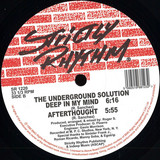
Absolutely ESSENTIAL record right here - The Underground Solution aka The 'S' Man aka the legendary Roger Sanchez is a name that you should all be familiar with by now, and his 1990 ANTHEM 'Luv Dancin' is an NYC deep house benchmark. That's right, this originally came out in 1990. That's a heck of a long time ago. Thing is, this record, when played at the right time will still cause maximum damage in the club. Riffing on disco classic 'Is it all over my face' and with elements of 'The bottle' interspersed with a deep, rolling garage bassline and dreamy keys and pads Sanchez crafted a solid gold cut, a timeless piece of dance music that still inspires today and is often imitated yet obviously never bettered! The flipside cuts 'Deep in my mind' and 'Afterthought' are also sublime exercises in the deepness, The 'S' Man's trademark eerie pads, bleeps and dope drum programming evident throughout, making these tracks huge hits from NYC to Sheffield and beyond! This whole EP is flawless and if you dig the deeper side of this stuff then you're in for a treat - Now's your chance to bag a bonafide, hands down classic record!
'Luv Dancin' has been skilfully remastered from all original master sources and fully licensed and reissued officially for 2017.

out of Stock

Order now and we will order the item for you at our supplier.

15,92

Last In: 5 months ago
Wolf Alice - The Clearing LP

Wolf Alice

The Clearing LP

12inch19802909921
Sony Music
22.08.2025
also available

Black Vinyl[24,33 €]


Die wegweisenden Alternative-Rocker von Wolf Alice melden sich mit ihrer brandneuen Single „Bloom Baby Bloom” zurück. Gleichzeitig verkündet die britische Formation Einzelheiten ihres ungeduldig erwarteten, vierten Studioalbums „The Clearing”, dessen Release für den 29. August 2025 angekündigt wurde und das weltweit auf ihrem neuen Label Sony Music erscheint.

Alle Songs wurden im Nord-Londoner Stadtteil Seven Sisters geschrieben und im vergangenen Jahr mit Grammy-Gewinner und Hauptproducer Greg Kurstin (Adele, Miley Cyrus, Beyoncé) in Los Angeles aufgenommen.
Mit „The Clearing“ legen Wolf Alice eine maximal selbstbewusste Songsammlung vor, die vor Ehrgeiz, ungewöhnlichen Ideen und Emotion nur so zu strotzen scheint und die eindrucksvoll veranschaulicht, wo sich das UK-Quartett im Jahr 2025 soundtechnisch verortet.

Mit anderen Worten: Ein wirklich zeitloses Album.

pre-order now22.08.2025

expected to be published on 22.08.2025

27,69
WEDNESDAY - I WAS TRYING TO DESCRIBE YOU TO SOMEONE
  • Fate Is
  • Billboard
  • Love Has No Pride (Condemned)
  • Underneath
  • November
  • Maura
  • Coyote
  • Revenge Of The Lawn

Banana Stand vinyl. I Was Trying to Describe You to Someone is Wednesday's second fulllength album & first as a full band. The Asheville, NC quintet (guitarist/ vocalist Karly Hartzman, lead guitarist Daniel Gorham, pedal steel guitarist Xandy Chelmis, bassist Margo Schultz & drummer Alan Miller) maximizes the dark dissonance of a three guitar attack to highlight the emotionality of Hartzman's bell-clear vocals & wisps of half-recalled memories & literary references that make up her lyrics. I Was Trying to Describe You to Someone's eight songs meld elements of shoegaze, grunge, indie pop & southern American culture into a uniquely personal style of modern rock music that resonates with power & tenderness. The ever-darkening & deepening of Wednesdays' sound on I Was Trying to Describe You to Someone owes a debt of influence to The Swirlies, Arthur Russell, Red House Painters, Tenniscoats, Ana Roxanne, Acetone, & their continued collaboration with MJ Lenderman (who lends backing vocals to the songs "Billboard" & "November"). I Was Trying to Describe You to Someone was recorded at Hartzman's home with engineering assistance from her roommate Colin Miller. The depth & clarity of the recordings balance the distorted volume of Wednesday's live performances with the intimacy of Hartzman's voice. Her words hold the center of the chaos, unobscured by the power of the band. Hartzman describes her lyrics as "attempts to access old personal memories & do them justice through prose, with inspiration from the writings of Richard Brautigan, Flannery O'Connor, David Berman & Tom Robbins, & movies like Steel Magnolias."

pre-order now15.08.2025

expected to be published on 15.08.2025

23,49
Jericho Jackson - I Am Him (10")
  • 1: Fair Warning
  • 2: I Am Him
  • 3: Last Laugh (Feat. Domo Genesis And Oh No)
  • 4: Fair Warning (Instrumental)
  • 5: I Am Him (Instrumental)
  • 6: Last Laugh (Instrumental)

With creative verses rooted in technical brilliance, Detroit emcee Elzhi has attained the highest level of lyrical mastery. Now 15 years into an inspired solo career, the former Slum Village member has ramped up his output lately, joining forces with producers Georgia Anne Muldrow, Oh No, and JR Swiftz for three acclaimed albums in the 2020s. Now, Elzhi is reuniting with famed North Carolina producer Khrysis as the duo Jericho Jackson, revisiting the chemistry that resulted in a celebrated 2018 joint album. After emerging in the Justus League collective during the rise iconic group Little Brother, Khrysis has gone on to work with hip-hop royalty like Sean Price, Black Thought, Mac Miller, JID, Conway, Rapsody, Talib Kweli, Redman, and many more. With a highly anticipated album on the way, Elzhi and Khrysis are launching the new era of Jericho Jackson with the flawless EP I Am Him, channelling the spirit of vintage maxi-singles. “For me, the maxi-single represents a time when

hip-hop was unapologetically raw and underground,” Elzhi explains. “Some of my favourite artists used the format to showcase remixes, freestyles, and loose tracks that might not have fit the sound of an album. This is our way of restoring that feeling.” An exciting burst of new music from two undeniable talents, the project features appearances by Domo Genesis and Oh No.

pre-order now08.08.2025

expected to be published on 08.08.2025

22,06
Marcellus Pittman - I'm Gonna Be The Everything (Japanese Import Edition)

Detroit's Marcellus Pittman is one of house music's most unpredictable characters. He was a key member of the legendary 3 Chairs collective but his solo work is arguably even more essential. Here he delivers a standout track from the long sold-out 'The Eastside' EP on Adeen Records. 'I'm Gonna Be the Everything' captures the essence of Detroit deep house with its sparse, driving drums and a thumping bassline and it is rightly given a whole side here for maximum volume. Flip it over for Adeen's in-house live jazz ensemble, A Band of Brothers, rework with lush vibraphone layers and soothing saxophone melodies.

out of Stock

Order now and we will order the item for you at our supplier.

19,96

Last In: 9 months ago
Maxie, Scientist & Barnabas - Three The Hard Way

Re-issued for the first time on vinyl, this obscure dub masterpiece – originally available on the small imprint Silver Camel in 1981 – is still considered one of the best efforts by brilliant singer and producer Al Campbell. More magic at the controls with the key presence of Barnabas and Maxie at Channel One and Scientist tracks mixed at King Tubby’s studio.

out of Stock

Order now and we will order the item for you at our supplier.

27,10

Last In: 8 months ago
Tony Price - Street Theatre

Repress!

Tony Price is back again with Street Theatre, an electrifying new LP on his Maximum Exposure label that serves up eight tracks of rude, crude, real-deal house music with absolute attitude.

Following the recent release of the psychedelic jazz reveries of Requiem for the Ontario Science Centre, this is his second release of 2025 and marks a return to the dancefloor.

Street Theatre is total midnight music—eight tracks of ferocious Chicago house worship, replete with slamming drum machine beatdowns, laser-guided synthesizers, and radioactive funk refractions that evoke Z-Factor’s primal neon pulse, trench coat-era Prince, WBMX cut-ups, and Ron Hardy’s splice-happy Muzic Box mania.

Produced in the span of a week at his studio in Greektown, Toronto, these recordings exemplify what can now undoubtedly be called Tony Price’s signature style—an unvarnished, elemental, no-nonsense approach to record production and sound design that reduces dance music down to its crudest textures and core principles, an approach and ethos that have guided his entire body of work.

Tony’s recorded output showcases fearless exploration across genres—classic house, funk, electro, and the outer limits of electronic jazz and musique concrète. Street Theatre stands tall alongside his Hit Piece LP, the Bail Bonds EP, and his NTS show, The Maximum Exposure Power Hour, as a bold, ecstatic, and direct expression of the eternal essence of house music.

out of Stock

Order now and we will order the item for you at our supplier.

22,06

Last In: 12 months ago
Items per Page:
N/ABPM
Vinyl