
4

Club U Nite Records presents a Split EP you don’t want to miss!
Two labels. One vinyl. Maximum vibes. Club U Nite Records (Cat. No. CUNT035) and Theory Of Swing come together for a split EP that’s dripping in deep, oldschool energy. Strictly for the heads, this limited-edition wax is pure heat – and it’s not gonna last long.
On the Theory Of Swing side, Italy’s rising DJ & Producer St. David sets the tone.
"Undagroov" is a secret weapon, ready to ignite any underground set with its deep female vocals and hypnotic house piano. It’s a straight-up vibe.
Follow it up with "Get On Dance" – a filthy swing groove with jazzy keys that keeps things raw and real. St. David doesn’t miss.
Flip to the Club U Nite side, and it’s all about Mellow Man.
"Club U Nite Is In The House" is a straight-up club slammer – dirty, heavy, and designed to make the system shake.
Then, Mellow closes things out with "Favourite Song" – another brilliant throwback to the golden era of house. Early ‘90s feels, soulful vox, and infectious piano riffs that will have the floor in a frenzy.
Don’t sleep on this one – this limited vinyl is flying fast!

Age Of Paranoia, the latest chapter in the band's lineage, was recorded by Igor Wouters at ARC Studios in Amsterdam, and includes several special guest guitar solos by J. Mascis (Dinosaur Jr., Witch) and Bubba Dupree (Void, Soundgarden, Dave Grohl's Probot, Brant Bjork).
Age Of Paranoia offers sixteen volatile tracks, packed into a succinct, white-knuckled twenty-eight minutes. The album surges with rapid-fire punk angst, replete with ripping rock leads and raised-fist, group-chanting anthems.
To complete the recording, the cover artwork is created by Marald (Baroness, Kylesa, High On Fire). See cover artwork, track listing and live dates below.
'One of the best and most important hardcore bands today" - PROFANE EXISTENCE
''Excellent and addictive, gathering the best of punk and metal: one part hardcore punk, another Motörhead'' - METAL ADVISOR
'the supreme thrash band in all of current rock 'n' roll'' - MAXIMUM ROCKNROLL
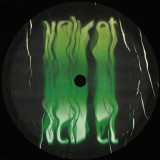
Velvet, from JNJS (Jay Nortown & Jacobo Saavedra), is dedicated exclusively to dacefloor music, designed for maximum club impact. Alexis Cabrera brings three cuts of pure sexy house, perfect for any party time. Harmonically dense, advanced beats... pure Alexis Cabrera.
To finish the EP, JNJS remix Distopian, to give his take on the dancefloor bassline.

Returning to Berlin has reignited a fresh, playful side to Benjamin Damage’s techno productions. Drawing inspiration from NIX’s bold direction, he has challenged his own sound and delivered a cheeky EP, Violet Ray, with great attention to detail, combining sharp sound design with strong dance floor energy.
Each track is born from live studio sessions, with long takes of experimentation and play. Carefully chopping and refining these moments, Benjamin ensures energy flow while maintaining maximum sound quality, perfectly crafted for a 12” vinyl release.

Michael Mayer albums don’t come round too often, which is one of many reasons why his fourth collection, The Floor Is Lava, is a genuine event. It’s been eight years since his last one, the collaborative & released on !K7; its predecessors, Mantasy (2012) and Touch (2004), took their sweet time, too. It’s no real surprise, given the many hats Mayer wears – globetrotting DJ, revered remixer, inveterate collaborator, and boss of both Kompakt and Imara – that his solo productions are relatively sparing. But this also speaks to their quality: Mayer’s name on a record sleeve is a sign of quality, of music that’s both looking to the future and calling back to the past, that balances the imperatives of the dancefloor and the loungeroom, that’s as exploratory as it is functional.
On The Floor Is Lava, Mayer seems to be taking the temperature of both the music that surrounds him (past and present), and the ides of the industry he works within. There’s that iconic album title, for a start. “The album’s mindset,” he says, reflecting on those four words together. For Mayer, it’s partly a critique of the way the industry boxes in both producer and listener, focuses them on genre, on market, on the next new thing: “Being a free minded spirit that transcends genres has become an uphill battle.” A battle worth fighting, though, and with The Floor Is Lava, the result is an album that’s varied, quixotic, idiosyncratic, charming, and deeply, addictively listenable.
Throughout, Mayer finds thrills in exploration and juxtaposition, allowing unexpected things to blossom and giving them their life, their platform, throwing the listener exciting curveballs: “It’s a DJ album by a DJ that’s easily bored.” Either easily bored, or endlessly curious, The Floor Is Lava is rich with ideas. It opens with “The Problem”, which looks back to look forward, embracing the rickety way early house productions threw samples together with gleeful abandon. Mayer mentions Pal Joey, and the scene around Rockers Hi-Fi and their Different Drummer imprint, as reference points, and you can hear that freewheeling spirit throughout.
It’s followed by “Vagus”, a slinky, sensual minimal house number that Mayer describes as his “musical catnip”. The flow of these two opening cuts defines the dynamic of The Floor Is Lava, defining the dialectical drive at its core: thesis and antithesis leads to synthesis, but with a welcome prickliness that means you’re always excited, always engaged. It’s also productive in the way it derives energy from rubbing genres and sounds against each other, in unexpected ways, for maximum musical frisson. There’s psychedelic techno on “Feuerstuhl”, more minimal techno with “Ardor” (Mayer mentions ‘Immer 1’ era 90s minimal as inspiration), slippery, Shepard-tone breakbeat through “Sycophant”, a lovely, lush vocal turn on the poppy “The Solution”.
The album closes with the melancholy “Süßer Schlaf”, where Mayer sets a poem by Goethe to one of his most haunted, moving pieces of music yet, in abstract tribute to a lost friend. It’s one of the most affecting moments on The Floor Is Lava. There’s also an update on 2020’s wild Brainwave Technology EP, with the surrealist glitter-stomp of “Brainwave 2.0” (check out those handclaps!),where Mayer’s thinking about the socio-political precipice of the now: “I’m reading with great interest about this whole complex of how humanity is about to cross so many lines and the implications that the resulting financial and educational inequality will bring.”
That’s The Floor Is Lava: then and now, brainwaves and nerve structures, problems and solutions, genres on fire; the real, the unreal, and the surreal. An album for the easily bored and the endlessly curious. Mayer has the last word, telling us all you need to know about the album’s spirit: “Burning for the cause, being zealous, being addicted to the heat of the night, the exuberant powers of music.”
Michael Mayer veröffentlicht nicht oft Alben, was einer von vielen Gründen ist, warum ‘The Floor Is Lava’ ein echtes Ereignis ist. Es sind acht Jahre vergangen seit seinem letzten Werk, dem Kollaborationsalbum &, das auf !K7 erschien; seine Vorgänger, Mantasy (2012) und Touch (2004), ließen ebenfalls auf sich warten. Es überrascht nicht wirklich, da Mayer viele Rollen gleichzeitig erfüllt – weltreisender DJ, vielbeschäftigter Remixer, unermüdlicher Kollaborateur und Chef von sowohl Kompakt als auch Imara – weshalb seine Solo-Produktionen eher sparsam ausfallen. Doch das spricht auch für deren Qualität: Ein Album mit Mayers Namen auf dem Cover steht für Qualität, für Musik, die sowohl in die Zukunft blickt als auch auf die Vergangenheit verweist, die das Gleichgewicht zwischen den Anforderungen des Dancefloors und des Wohnzimmers hält, die genauso erforschend wie funktional ist.
Auf The Floor Is Lava scheint Mayer sowohl die Musik um ihn herum (vergangen und gegenwärtig) als auch die Strömungen der Branche, in der er arbeitet, zu reflektieren. Da wäre zunächst der ikonische Albumtitel. „Die Grundhaltung des Albums“, sagt er, drückt sich in diesen vier Worte aus. Für Mayer ist es teilweise eine Kritik daran, wie die Industrie sowohl Produzenten als auch Hörer in Schubladen steckt, sie auf Genres, auf den Markt und auf das nächste große Ding fokussiert: „Ein freier Geist zu sein, der Genres überschreitet, ist zu einem steinigen Weg geworden.“ Ein Kampf, der sich jedoch lohnt, und mit The Floor Is Lava ist das Ergebnis ein Album, das vielfältig, eigenwillig, charmant und tiefsinnig, aber auch süchtig machend ist.
Im gesamten Album findet Mayer Freude an der Erforschung und Gegenüberstellung von Stilen, lässt unerwartete Dinge erblühen und gibt ihnen Raum, überrascht den Hörer mit spannenden Wendungen: „Es ist ein DJ-Album von einem DJ, der sich schnell langweilt.“ Entweder langweilt er sich schnell oder er ist unendlich neugierig – The Floor Is Lava ist reich an Ideen. Es beginnt mit „The Problem“, das in die Vergangenheit blickt, um nach vorne zu schauen, und die wilde Art, wie frühe House-Produktionen Samples mit fröhlicher Unbekümmertheit zusammenwarfen, aufgreift. Mayer nennt Pal Joey und die Szene um Rockers Hi-Fi und ihr Label Different Drummer als Referenzpunkte, und dieser freie Geist zieht sich durch das gesamte Album.
Es folgt „Vagus“, eine sinnliche Minimal-House-Nummer, die Mayer als seine „musikalische Katzenminze“ beschreibt. Der Fluss dieser beiden Eröffnungstracks definiert die Dynamik von The Floor Is Lava und den dialektischen Antrieb im Kern: These und Antithese führen zu einer Synthese, jedoch mit einer willkommenen Schärfe, die dafür sorgt, dass man immer aufgeregt und engagiert bleibt. Zudem gewinnt das Album Energie, indem es Genres und Klänge auf unerwartete Weise aneinanderreibt, um maximalen musikalischen Nervenkitzel zu erzeugen. Es gibt psychedelischen Techno in „Feuerstuhl“, mehr Minimal Techno mit „Ardor“ (Mayer erwähnt ‘Immer’ Ära Minimal als Bezugspunkt), gleitenden Shepard-Ton-Breakbeat in „Sycophant“ und einen lieblichen, üppigen Vocal-Auftritt im poppigen „The Solution“.
Das Album schließt mit dem melancholischen „Süßer Schlaf“, in dem Mayer ein Gedicht von Goethe vertont und eine seiner bisher eindringlichsten und bewegendsten musikalischen Kompositionen schafft, als abstrakten Tribut an eine verschiedene Freundin. Es ist einer der ergreifendsten Momente auf The Floor Is Lava. Ebenfalls gibt es ein Update der wilden Brainwave Technology-EP von 2020, mit dem surrealistischen Glitzer-Stampfer „Brainwave 2.0“ (hör dir diese Handclaps an!), in dem Mayer über den sozio-politischen Abgrund der Gegenwart nachdenkt: „Ich lese mit großem Interesse über diesen ganzen Komplex, wie die Menschheit dabei ist, so viele Grenzen zu überschreiten und welche Auswirkungen die daraus resultierende finanzielle und bildungstechnische Ungleichheit haben wird.“
Das ist The Floor Is Lava: Damals und heute, Gehirnwellen und Nervengeflechte, Probleme und Lösungen, brennende Genres; das Reale, das Unreale und das Surreale. Ein Album für die schnell Gelangweilten und die unendlich Neugierigen. Mayer hat das letzte Wort und sagt uns alles, was wir über den Geist des Albums wissen müssen: „Brennen für die Sache, leidenschaftlich sein, süchtig nach der Hitze der Nacht, den überschwänglichen Kräften der Musik.“

"Killer edits!" - Gilles Peterson
Monologues boss Ben Gomori has found acclaim far and wide with his official edits of African gems for labels like Sterns Music and Analog Africa (for artists including Orchestra Baobab, Amadou Balake, Oby Onyioha). Here he rounds up four of his reworks of tasty tracks from artists across the Afro-Caribbean spectrum on four edits licensed from the good folk at Mr. Bongo, Soundway Records and Analog Africa.
South African legends Marumo's joyous 'Khomo Tsaka Deile Kae' gets a good juicing, full of triumphant energy, while Black Truth Band's infectious 'Umbala' is stripped back to a slinky, bumping disco groove. An exuberant slice of 1980s Camerooon comes from Emmanuel Kahe Et Jeanette Kemogne on 'Ye Medjuie', where rousing trumpet refrains meet undulating bass funk. Peter Britto's gorgeous lo-fi soca anthem 'I Want Your Love' rounds off the package, its sweet melancholy given an extra bit of energy for maximum dancefloor effect.
Support comes from the likes of Gilles Peterson, The Blessed Madonna, Make A Dance and Tigerbalm.
Or

(incl 40p fanzine written by Matt Annis with photographs by Simon Pyke and Ian Brodie) Postpunk Theory is a meticulously curated compilation by the legendary Tony Thorpe, known for his work with The Moody Boys, 400 Blows, and The KLF. These classic tracks were played at parties by Thorpe at the time, making them his personal classics. The compilation features 16 rare and sought-after tracks from the post-punk era, including works by Mark Stewart and The Maffia, Basement 5, 23 Skidoo and more.
Defining post-punk is no easy task. While punk was defined by a raw, rebellious simplicity, post-punk (1978-1986) expanded into a diverse array of sounds and ideas. It maintained punk's independent spirit but embraced experimentation, incorporating influences from various musical and cultural traditions, resulting in a movement far more eclectic and fragmented than its predecessor.
At its core, post-punk broke away from traditional rock structures, blending genres like industrial, goth, and punk-funk with emerging dance music cultures. This era's spirit of innovation and defiance against musical norms continues to inspire, making post-punk a pivotal moment in music history that defies easy categorization.
Tony Thorpe presents Postpunk Theory - Alpha ? is a meticulously curated compilation by the legendary Tony Thorpe, known for his work with The Moody Boys, 400 Blows, and The KLF. These classic tracks were played at parties by Thorpe at the time, making them his personal classics. The compilation features 16 rare and sought-after tracks from the post-punk era, including works by Mark Stewart and The Maffia, Basement 5, 23 Skidoo, African Headcharge, and more.
Growing up in a vibrant musical environment in South London, Thorpe was deeply influenced by the eclectic sounds around him, from jazz-funk to Brit-Funk, and later, the post-punk records he discovered. As Thorpe recalls, "Post-punk was a mishmash of different cultures and ideas. Out of post-punk came dance music culture. That period was the most creative time because the culture was in its experimental phase." This compilation captures that innovative spirit, offering a glimpse into the era that shaped Thorpe's musical journey.
The album comes as a limited 2xLP set, accompanied by an extensive 40-page fanzine. The fanzine, written by Matt Annis (Join The Future), dives deep into the post-punk movement, offering insight and context enriched with striking photographs by Simon Pyke and Ian Brodie.

Equal Audio is a new vinyl imprint for stripped-back and DJ-friendly house music. No matter of the subgenre, the focus is on consistent energy levels and rather simple arrangements. A minimalist approach for maximum sound quality.
The first release, entitled Giseigo EP, is brought to you by Croatian producer Mariano Mateljan - a true master when it comes to reduced yet powerful tools. With 4 originals he shows that no more than a handful of elements are needed to keep the dance floor moving.
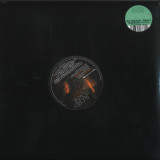
Audrey Powne's eagerly anticipated debut album has been met with widespread acclaim from a host of tastemakers and musicians. Garnering over 500 plays on UK radio, her music has reached an audience exceeding 2 million listeners. Many have touted her work as a strong contender for Jazz Album of the Year—a remarkable achievement for a debut release. This exceptional remix pack features a soulful interpretation from the illustrious DJ and producer Joe Claussell, profoundly inspired by the album cut "Souled Out." Claussell unveils three exquisite and spiritual remixes, each highlighting unique elements of Audrey's original production. Joaquin's Deep Version is quintessential Claussell, merging the bassy textures of a vintage King Tubby dub with vibrant percussion and dance-inducing beats. The "Sacred Rhythm Mix" is an essential for the dancefloor, weaving a seamless progression of expertly crafted sonic layers that culminate in a boogie-style crescendo, destined to be a summer anthem for DJs. The Cosmic Arts Interpretation Mix completes the trinity expertly with an enchanting downtempo mix expertly seasoned with orchestral and percussive elements which breathes even more magic into Audrey’s incredible vocal display on this track. True to Claussell's renowned craftsmanship, these remixes speak for themselves—listen and be transported. Adding to the allure of this remix pack are the superb renditions of "Feed The Fire'' by the legendary deep house producer Atjazz and the dynamic New York duo musclecars. Both remixes have garnered critical acclaim, elevating this package to an unprecedented level of excellence. Available for the first time on vinyl, these mixes are presented by BBE Music in a double pack, ensuring unparalleled sound quality that is spread out for maximum audio fidelity—a must-have for discerning DJs and vinyl aficionados who prize top-tier music pressed on wax. This release is not just a collection of tracks but a treasure trove of sonic brilliance, making it indispensable for enthusiasts of high-quality, heartfelt music.

A sense of destiny hangs over Sentir Que No Sabes, Mabe Fratti’s fourth solo-credited album released in a five year span. Her work has always possessed a finely tuned sense of drama capable of expressing a range of emotional states, and across this new album, she conveys the struggle to process various relationships or situations–and the actions that come next. Sentir Que No Sabes is urgent and clear, poppy, generous and approachable, while showcasing a considerable emotional hinterland. It is also, as Fratti is quick to mention, “groovy.”
Written and recorded with her partner, multi-instrumentalist, and co-composer Héctor Tosta (I.La Católica, Titanic), Sentir Que No Sabes is the result of an intense, detail-oriented process. Fueled by a new confidence gained in their collaborative project, Titanic, and its critically acclaimed 2023 LP, Vidrio, the two hunkered down in the familiarity of their studio (aka Tinho Studios) to bash out the initial sonic coordinates of her new record. “We talked and talked, and discussed ways of playing and recording, until things became inevitable,” Fratti explains. “We recorded a bunch of demos at our home studio and that meant we had a lot of time to re-edit and experiment. We really dug in. We were super focused on detail.” Tosta also took up the controls as producer and arranger-in-chief for all additional instruments. The album was later completed at Willem Twee Studios in Den Bosch in the Netherlands, and Pedro y el Lobo Studios and Soy Sauce Studios, in Mexico City.
For the final studio recordings, the pair were joined by drummer Gibran Andrade and trumpetist Jacob Wick to fill out and expand on Tosta’s percussion and brass arrangements. This small group of friends were able to work quickly and openly, and without fear: a testament to the exhaustive groundwork put in at Tinho Studios. This can be heard in three short, intermediary tracks that also manage to be the most aggressive on the record: “Kitana” (a scratch-laden instrumental that acts as a strange prelude for the last track, “Angel nuevo”) and a pair of two-minute instrumental interludes, “Elastica” I and II. None are throwaway mood pieces; rather they act as emotional cue cards, and hint at the way Fratti and Tosta created the overall atmosphere of Sentir Que No Sabes.
A strong sense of rhythm irrigates the sound from the jump, as heard on the glorious opening track, “Kravitz.” Here, the brilliant plucked cello line acts as a bassline and props up the steady thump of the kick drum. The cello’s growl serves as a conduit for a set of slightly paranoid lyrics that tell us “Quizás haya oídos en el techo” (“maybe there are ears in the ceiling”), while the song also introduces another staple of the record: the clever brass stabs, whistles, parps, and other interjections that paint a canvas of traffic in a city. It’s a postmodern, widescreen sound that for some might recall The Blue Nile’s Hats.
Sentir Que No Sabes is a record full to the brim with a modern pop sensibility, invoked by the sort of magpie spirit that ensnares anything it can find, repositioning sounds for the here and now. The keys and melody on the melancholy “Pantalla azul” (“Blue screen error”) transport us back to the glossy mid-1980s. “Oídos” (“Ears”) is a beautiful slice of contemporary, hybrid pop, in which Fratti’s vocal lines delicately spin themselves around the lean structures erected by the brass and drums, and the descending “plink” of a set of piano chords. Then we have a gloriously strong ending with the swell of “Angel nuevo” (“New angel”), another cinematic track full of gentle, instrument-rich swells and eddies that manages to be almost endless in its range–and yet intensely personal, as Fratti’s voice is close, almost whispering in your ear. A much needed lullaby for our fractious times.
The lyrics, for their part, have a stop-start quality to them, and hint at the small, incremental emotional taxes we pay through just living our lives. They circle around the music like birds waiting to swoop. There is something of the spiritual in all of Fratti’s work that expresses itself in a form of yearning: she looks to new horizons while personal dramas find themselves internalized, contextualized, and then dealt with through metaphor. Here, she was keen to mention Tosta’s constant encouragement in her finding a path to best sing or phrase her words to impart their maximum effect. “Hector was super inquisitive about my lyrics and asked me questions about what I meant, which sometimes is something you don't wonder so much about in isolation,” Fratti explains. “Besides, he is a great poet, and you can see that in what he did on the Titanic record. This made me go deeper into my lyric writing and definitely transformed it into something that I feel super happy about now.”
Take “Enfrente” (“In Front”), a track that initially comes across as a languid, glossy number, with plucked cello strings standing in for a bass line and brittle synth parts. Soon we catch on to a brilliant minor chord switch, which mirrors the fear and doubt expressed in the lyrics as someone “trembles up to the podium” in a “search for meaning.” There’s also the startling introduction of a vocoder in “Quieras o no” (“Whether you want it or not”); it comes precisely at the point Fratti sings “Quieras o no es un desastre” (“Whether you want it or not, it's a disaster”). Moments like these leave room for interpretation and, over time, create a strong bond between the listener and the record.
In fact, across Sentir Que No Sabes, each phrase–whether instrumental or vocal–becomes at some level emblematic of acts and moods that impart deep emotional significance. We see this best on “Intento fallido” (“Failed attempt”), which could be the score to feeling trapped in self-doubt, only to suddenly be sprung free by the song’s gloriously upbeat ending. On “Márgen del índice” (“Index margin”), the quicksilver switch between initial disharmony and a beautiful melody is breathtaking, all augmented by evocative arrangements, textured production, and the slightly playful, gnomic lyrics. The track’s emotional ecosystem allows another brilliant ending, which uses the simple repeated phrase, “Cómo lo va a ver?” (“How are you going to see it?”).
So what to make of Sentir Que No Sabes? High gloss Pastoralism? The sound of a city-bound, post-post modern soulscape? No matter the emotions evoked, it's the work of an artist coming into their own, and creating a benchmark record.

Y’KNOW returns to Spiritual World on October 4th with Why Now, an 8 track 12” that is so stacked with groove that you can physically feel the claps when you run your hand over the record.
Why Now lifts the fog established on the duo’s digital 2023 two-song debut, pushing their signature beat forward minimalism into digital dancefloor soundscapes. Following in the tradition of dub records, Why Now features four vocal cuts on the a-side backed with four reimagined and stripped back dub versions on the b side.
Lyrically, Bally takes on the narrative of a detective in search of the perfect groove, even if it ultimately leads to their own fictional demise. Y’KNOW is clearly in pursuit of the perfect vibe, and while doing so exceeds the imagination of most traditional guitar-based bands with a mesmerizing mix of dub, post-punk and synth pop.
Limited to 200 12” copies.
RIYL: Colour Box, Maximum Joy, Tom Tom Club, George Clinton & Brenda Ray

Toronto's newest vinyl label, Afalinas, proudly presents its debut EP, crafted by the talented Olekhar. Known for his Ukrainian roots and extensive DJ experience, Olekhar delivers four dance-floor ready tracks. The Fin Groove EP kicks off with "API Call," hitting the perfect blend of tech funk with trancy sequences and flowing tension. Up next is the breaks track "Squat Funk," infused with vibrant electro funk and minimal elements. On the flip side, the dance-floor killer "Bowser's Castle" is sure to elicit maximum stank face with its funky lead, gated acid energy, and robotic vocoder synth, before closing with "WLB," a '90s-influenced breaks track that wraps the package up nicely. Something classy for all occasions.

A highly talented artist who has grown to make a notable impression amongst the scene’s most revered tastemakers, DJ/producer and label owner Jhobei is an individual who continues to blossom. His deep, expansive sound has already welcomed material on Up The Stuss, Limousine Dream, Mindhelmet and Picnic Records, amongst others, while featuring as a co-founder of London-based collective and label Bizarre Trax. In addition, his work as one-third of dynamic trio Felon5, coupled with his unique sound, has taken him from Albania’s ION Festival to Los Angeles, alongside making a handful of appearances for FUSE and its sister brands on home turf at fabric, The Cause and Village Underground - plus 2024’s Open Air event at Barking Park earlier this year. Building on that relationship, late September brings fresh music as Enzo Siragusa invites the exciting selector to make his label debut with an array of impressive productions across his ‘Age Of Virality’ EP. A-side opener ‘Swarming’ is all action and kicks things off with authority as a snaking bassline guides a garage-influenced trip through bumping low-ends and hooky vocal samples, while ‘Machine Language’ delivers a mix of playful tones amongst sweeping melodies while delivering a heavy dose of robot funk. On the flip, ‘Defusion Solution’ is a heady late-night excursion through skippy percussion and cosmic tones, with ‘Rising Sun’ stripping things back to deliver a classy, hazy journey as organic percussion grooves unravel effortlessly. Digital buyers are treated to a bonus cut in the form of ‘Kontrol Urload’, a sci-fi leaning cut merging glistening neon synth motifs with punchy kicks and zipping effects for maximum impact.

Back in circulation after over a decade, Jahtari's seminal "Jahtarian Dubbers Vol. 1 EP" receives the long-awaited reissue treatment, reviving the raw, 8-bit-infused dub vibes that defined a new era of digital roots music.
Originally released in 2008 and quickly disappearing into dub obscurity, this heavyweight 12" returns with four essential cuts that perfectly encapsulate the Jahtari sound—where chiptune meets the echo chamber.
The EP kicks off with Blaze Dem's "Roots Defender", a hypnotic concotion of deep basslines and eerie samples from a Swedish cult ritual, setting a heavy tone right from the start. disrupt's cinematic "Kozure Okami" follows, channeling Black Ark vibes through 8-bit synth explorations.
On the flip, John Frum delivers the hauntingly beautiful "January Dub", while Rootah's slomo slammer "Holy Mount Part 2" closes the EP with Lynchian, echo-soaked vibrations that linger long after the needle lifts.
Timeless tracks, mastered by CGB-1 at D&M in Berlin for maximum impact. Pivotal piece of Dub music!
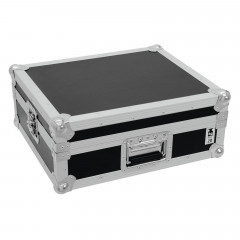
Professional flightcase for one turntable (up to 450 mm width)
Suitable for all turntables without dust cover (up to 450 mm width)
Interior upholstered with foam (black)
High-quality workmanship with plywood multilayered glued, black laminated
Aluminum profile frames (25 mm) with rounded edges
Removable cover
Three-leg, medium-sized steel ball corners
4 steel-enforced rubber feet
2 lockable butterfly locks
Padded carrying handle
Technical specifications
Maximum load: 20 kg
Material: Glued plywood, 7 mm
Color: Black, laminated
Outer dimensions/corners approx.: 60 mm
Dimensions: Width: 53,5 cm
Depth: 45,5 cm
Height: 23 cm
Weight: 6,50 kg
Flightcase für einen Plattenspieler (bis 450 mm Breite)
Für alle Plattenspieler ohne Abdeckung (bis 450 mm Breite) geeignet
Schaumstoffgepolsterter Innenraum (schwarz)
Hochwertige Verarbeitung mit mehrschichtig verleimtem Holz, schwarz laminiert
Aluminiumprofilrahmen (25 mm) mit abgerundeten Ecken
Abnehmbarer Deckel
Dreischenklige, mittelgroße Stahlkugelecken
4 stahlverstärkte Gummifüße
2 abschließbare Butterfly-Schlösser
Gepolsterter Tragegriff
Technische Daten
Maximale Last: 20 kg
Material: Mehrlagiges verleimtes Schichtholz, 7 mm
Farbe: Schwarz, laminiert
Außenmaß der Ecken ca.: 60 mm
Maße: Breite: 53,5 cm
Tiefe: 45,5 cm
Höhe: 23 cm
Gewicht: 6,50 kg


Ersatznadel für das System Ortofon Gold Concorde und Ortofon Nightclub MK II OM.
Das Ortofon Gold wurde von den limitierten Technics SL-1200 LTD inspiriert. Das Ziel: Den exklusivsten DJ-Tonabnehmer zu entwickeln, den es bisher gegeben hat. Das Gold-System ist ausschließlich als Concorde-Version mit elliptischem Schliff erhältlich, um den besten Sound zu garantieren, der mit einer Nadel möglich ist. Für DJs, die sich nur mit dem Maximum zufrieden geben.
Features
* Nadelschliff elliptisch
* herausragende Klangqualität
* sehr gut zum Mixen geeignet
technische Daten
* Frequenzgang: 20 Hz - 20 kHz
* Ausgangsspannung: 6 mV
* Auflagekraftbereich: 2,0 - 5,0 g
* empfohlene Auflagekraft: 3,0 g

Ten years after his first full-length effort ‘Man Is Deaf’ landed him firmly in the runnings for DJ Mag’s album of the year, prodigal son Michael Anthony Wright AKA Brassica returns to Civil Music with a deeply accomplished, painstakingly whittled LP of hydraulic electro slickness, rich synthscapes, and hooky, peak-time tearjerkers for the most discerning front-left lifers. ‘Tribeless Gathering’ is a barnstorming testament to Brassica’s stylistic and timbral deftness, touching down in the elusive epicentre of the club/home listening venn diagram with ease.
From the elastic, neon acid pointillism of opener ‘Hop Kweng’ to the mardy, miasmic plod of closing chugger ‘Changa Hill’, Brassica seamlessly segues between avenues of influence, his notoriously omnivorous musical knowledge roadmapping each turn. Raised on a diet of everything from early rave standards to metal, and schooled in avant garde sonics as a student of sound design at LCC, Brassica does a peerless job of sublimating his countless influences into a record of refined, heterogeneous, and most crucially, catchy, club moods.
Less spartan than his more recent oeuvre on Feel My Bicep, and less baroque than his technicolour experiments in postmodern synth pop with vocalist Stuart Warwick, Tribeless Gathering represents Brassica’s triumphant return to the main room, replete with rushy hooks primed for the planet’s finest soundsystems, and passages of heads-down tension bound to draw listeners right to the edge of their seats. Overall it is a concise and refined testament to Wright’s command of spectral sonics and effortless ability to pressurise a dancefloor. It is no surprise that he has also worked as a prolific mastering engineer, tuning music from a plethora of dance disciplines for maximum club impact. This work extends to his own projects (including this one), cementing them as rare expressions of complete artistry from studio to turntable.
As we delve deeper into the record, we are ushered through a series of accomplished and varied club moods, each channelling a unique cocktail of influences, but retaining a warm, ebullient analogue sensibility unique to Brassica’s work. This playful scope of influence calls to mind James T Cotton or Machinedrum’s experiments in dance music form, but Wright manages it all under one roof, wrangling everything from sashaying wub-laden two step to snarling Dillinja-esque FM damage into something inherently his.
Choice cut ‘Change Yourself’ layers an almost Cerrone-like piano refrain over radiant surges of saturated bass, dubby, strobing chords and a jagged, driving break, building to a jaw-clenching apex of dancefloor elation, while the rude, playful half-step of ‘Elevation’ breaks down the vintage speed garage formula into linear fragments, utilising a tight palette of resonant bass slugs, infectious synth leads and Papua New Guinea-style vocal strobes. The aptly named ‘Hold Tight’ fuses heart-in-mouth UK ‘ardkore pads with glissando acid disturbance and surgical snare fills in a formula which recalls the ethereal grit of Nubian Mindz’ 00s experiments in big-smoke break science, while the questing melodic arcs and arpeggiated squarewaves of ‘Pinball Marinara’ could easily have soundtracked an 80s sci-fi epic, beset with sparkling, bare-bones drum programming and hazy beds of sub sediment.
With ‘Tribeless Gathering’, Brassica both irreverently fuses and pays homage to the many unique and weird permutations of UK dance music. The short lived gathering of junglists, ravers and house hotsteppas of a similar name may have long since dissipated, along with the tribes themselves, but across these 11 tracks, he lays a blueprint for a new sound of togetherness.
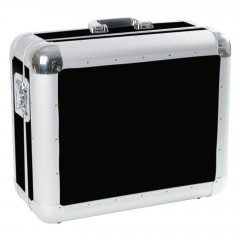
Professional flightcase for one turntable (up to 450 mm width)
Suitable for all turntables without dust cover (up to 450 mm width)
Free space for an easy outtake of the turntable
Interior upholstered with foam (gray)
High-quality workmanship with 3 mm plywood multilayered glued
Aluminum profile frames (25 mm) with rounded edges
Removable cover
Three-leg, medium-sized steel ball corners
2 high-quality butterfly locks
Rubber feet
Padded carrying handle
Technical specifications
Maximum load: 15 kg
Material: Glued plywood, 3 mm
Color: Black, laminated
Outer dimensions/corners approx.: 60 mm
Dimensions: Width: 52 cm
Depth: 44 cm
Height: 21,5 cm
Weight: 4,60 kg
Flightcase für einen Plattenspieler (bis 450 mm Breite)
Für alle Plattenspieler ohne Abdeckung (bis 450 mm Breite) geeignet
Eingriff-Freiraum für leichtes Entnehmen des Plattenspielers
Schaumstoffgepolsterter Innenraum (grau)
Hochwertige Verarbeitung mit 3 mm mehrschichtig verleimtem Holz
Aluminiumprofilrahmen (25 mm) mit abgerundeten Ecken
Abnehmbarer Deckel
Dreischenklige, mittelgroße Stahlkugelecken
2 hochwertige Butterfly-Schlösser
Gummifüße
Gepolsterter Tragegriff
Technische Daten
Maximale Last: 15 kg
Material: Mehrlagiges verleimtes Schichtholz, 3 mm
Farbe: Schwarz, laminiert
Außenmaß der Ecken ca.: 60 mm
Maße: Breite: 52 cm
Tiefe: 44 cm
Höhe: 21,5 cm
Gewicht: 4,60 kg
Verpackungsei
