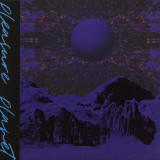
Colombian-born artist Juan Carlos Torres Alonso, aka OKRAA, presents his third sonic exploration on A Strangely Isolated Place titled, La Gran Corriente. This album marks a profound shift in Juan's creative journey, where themes of portals, the illusion of time, and the paradoxes of self-discovery converge into a powerful auditory experience.
Following a transformative visit to Bogotá in May 2023, Juan underwent an introspective journey that inspired a new direction in his music. This experience, which he describes as an encounter with "an infinite current behind or inside of everything," led to a complete reimagining of his work. Abandoning previous demos, Juan embraced a liberated creative process that was both challenging and exhilarating.
La Gran Corriente is characterized by its innovative production techniques, eschewing fixed grids and BPMs in favor of fluid, organic structures and combining influences from Juan’s other production alias, ‘Laudrup’. This approach not only opened up new creative possibilities but also led to numerous "happy accidents," resulting in a body of work that is as unpredictable as it is cohesive.
At the heart of the album lies a poem written by Juan during production, a text that echoes the themes woven throughout the music. Translated loosely to English, the poem reflects on the nature of reality and time, with lines like "the land of oblivion is not real" and "the great current reminisces; time is an illusion." These words serve as both a guide and a reflection of the album’s deeper meaning.
La Gran Corriente is a record that invites the listener to unlearn and to immerse themselves in a sonic current that is both infinite and transformative. It’s a testament to the power of creative reinvention and the relentless pursuit of deeper truths through music.
Featuring artwork by Peter Skwiot Smith, La Gran Corriente is available on gatefold colored vinyl 2LP, mastered by Taylor Deupree / 12k Mastering.
Suche:may b
An appetite for the unknown" - Daniel Lanois
No collaboration is unlikely when the end goals are the same. A meeting of two artists who illustrate different corners of the musical landscape, come together to create a new statement that takes their collective strengths to higher elevations and encompasses new terrains.
So it is on the first collaborative journey of Canadian musicians Venetian Snares and Daniel Lanois. What started as mutual respect for one another's work, led to several years of a creative germination resulting in an eight-track full-length exploration released May 4th on Timesig/Planet Mu.
The path began in 2014, after Lanois reached out to Venetian Snares (Aaron Funk) as a fan of his work. The project started to take root in Summer of 2016, after Funk hung around Toronto between shows. Taking his gear to Lanois' studio, the two began to play for the first time together in what would prove to be a formative moment in their creative journey together.
I love making music with Dan, he has a real understanding of how to create a world and build what may exist within that world. Bassdrums are trombones and they are a colossal whale which floats on clouds of leaves speaking to the blast furnace feeding the mammoth. A small painting of forest horses hangs in the cranium of the sea horse.' - Aaron Funk
Recorded live in a former Buddhist temple-turned-studio in Toronto,
'Venetian Snares x Daniel Lanois' travels to new zones in what Lanois describes as a body of work driven by exploration'. Like all the best collaborations, it's brought something new out of both musicians. Equipped with their production acuity, they let their natural workflow guide them through uncharted waters. Funk laid the groundwork with drums while Lanois rode the pedal steel, weaving their sounds together in a new sonic tapestry. The two ultimately landed at their destination, their work ready to be shared with those willing to explore.
In Daniel Lanois 'own words:
"To come upon a new form reassures the head that frontier lives on The unlikely pairing of Venetian Snares and Daniel Lanois may very well have provided us with a nice new pair of shoes to walk to new sonic frontier A melange of gospel and electronics As madness of the world trips over its heels these Canadian sonic innovators prepare for travel A body of work driven by exploration, brings to us in our modern times what we remember and admire from the Jazz explorations of the 50s A splintering An appetite for the unknown"
Proudly presenting, ‘Калі ты запытаеш (If You Ask)’, a brand new, blissed-out pop production with a ‘70s AOR touch, by the ever-on-point SOYUZ (СОЮЗ). Coming at a period between albums, the single features guest appearances from the sensational musicians, Biel Basile (O Terno, Sessa) and Anthony Ferraro (Toro Y Moi, Astronauts, Etc.). Friends of the band, they add their signature touch on the drums and synth respectively. To complete the package, SOYUZ back the title track with a short but sweet, Wurlitzer-laden, MPB-tinged number, ‘Tenório’.
‘Калі ты запытаеш (If You Ask)’ tells the story of lost dreams. A track that can be interpreted either as a bittersweet longing for childhood times, or for a native place you can’t return to. For the writer Alex Chumak he suggests, "In my case, as in the case of many Belarusians, it’s both".
For this song, Alex chose to sing in his native Belarusian tongue. As he explains this language "to me feels underrepresented in pop music, also it’s a beautiful legacy and sonority that I wanted to share with the listeners of our project around the world". One of the key inspirations was a Belarusian band “Песняры” (“Pesniary”), who produced a host of great progressive folk, jazz fusion and AOR, from the ‘70s to the ‘90s, predominantly sung in Belarusian.
Another key influence was the music coming out of the Brazilian state of Minas Gerais in the ‘70s, drawing inspiration from the sentimental and harmonious music of Beto Guedes, Lô Borges, Fernando Oly and Wagner Tiso.
Having parted ways with their drummer Anton, SOYUZ needed to find a new way to produce songs. The answer was to go remotely. Alex contacted the brilliant Biel Basile, who had recorded Sessa's contemporary classic ‘Estrela Acesa’, in which Alex also participated. Utilising Biel and Sessa’s newly built studio in São Paulo, SOYUZ had Biel record the drums directly to tape to get the rich sound they were after. Adding the final magic into the mix, California’s Anthony Ferraro provided a beautiful Solina String Ensemble synth arrangement, with drummer/recording engineer Albert Karch expertly assisting with the production.
To capture the essence of the single visually, Alex and the Brazilian one-man-industry visual artist Gabriel Rolim, spent a blazing sunny May day in Berlin shooting film and stills – one of which became the perfect cover image. We hope you enjoy this little nugget of SOYUZ mastery, a sweet taster to savour while the new album is recorded.
Matthew Dear's Black City Can't Be Found On Any Map. It's A Composite, An Imaginary Metropolis Peopled By Desperate Cases, Lovelorn Souls, And Amoral Motives. Like Most Literary Gothams, Black City Is A Place To Love And Hate, As Seedy As A Nightclub's Back Room And As Seductive As The Promise Of Power. Matthew Dear, The Musician, May Live In New York City, But The Matthew Dear Of Black City Inhabits A Sound-world Unlike Any Other: A Monument To The Shadowy Side Of Urban Life That Bumps And Creaks, Shudders And Wakes Up Screaming In The Middle Of The Night. Black City Is Matthew Dear's Third Album On Ghostly International, And It's His Darkest And Most Engrossing Work To Date.
From The rst Notes Of Album Opener "honey", It's Clear That The Love-obsessed Matthew Dear Of 2007's Asa Breed Has Given Way To A More Existentially Paranoid Entity, As Creeping Tempos Dominate, Cavernous Atmospherics Envelop The Listener, And Strange Distortions Crackle On The Horizon. In Black City, Nothing Is At It Seems: Leadoff Single "little People (black City)" Is A Nine-and-a-half Minute Disco odyssey, subverting its gleaming electronic lead with eerily giddy backing vocals and cryptic, ominous lyrics ("a frozen wasted heart / has died", "love me like a clown"); "You Put a Smell on Me" is a sordid sex romp set to hysterically chattering percussion and a serrated synth line that will set your teeth on edge; "More Surgery" at rst recalls the barely-there Krautrock of Harmonia in its burbling minimalism, until Dear's chanted chorus of "Alter genetics / to make my body glow / I need more surgery / there's so much more to know" sends the track hurtling into a dystopian future.
And yet, for all the foreboding moods on Black City, it's the album's sweeter moments that illustrate Matthew Dear's growing maturity as a songwriter. "Slowdance" is a futuristic lullaby in which Dear articulates a lover's helplessness ("I can't be the one to tell you everything's wrong") over breathy, Arthur Russell-esque cello swishes; the album-closing "Gem" is an achingly simple, reverb-drenched piano ballad that ends with a long, slow fade. Even in Matthew Dear's Black City, there is hope.
DJ Support: Jimpster, Terry Farley (FAITH), Bill Brewster, Kruder & Dorfmeister, Laurent Garnier, Black Coffee, Jazzanova
Fred Everything’s latest album, 'Love, Care, Kindness & Hope', came out last May to critical acclaim, gaining support from various players such as Laurent Garnier, Kruder & Dorfmeister, Jimpster and Jazzanova to name but a few.
Not content with having an A-List cast of guests on the album (Stereo MC’s, Robert Owens, James Alexander Bright…) Fred also enlisted top Remixers for the singles. We decided to put 4 of the best ones on a Vinyl sampler for record lovers.
Osunlade leads the pack here with his Yoruba Soul remix of Never feat. Robert Owens, keeping things steady for the dancefloor with his signature sound. Waajeed takes the same track and flips it into a different territorry, both musically and sonically, with his Hi-Tech Jazz feel.
Next, we have the enigmatic Clive From Accounts, re-imagining Soul Love featuring Stereo MC’s, with his precise and soulful beats. And to close the EP, Rocco Rodamaal takes Breathe featuring James Alexander Bright and turns it into a solid floor burner.
Kihon Ido is a Japan based label which means “Fundamental movements”. The label aims to tap into fundamentals across dance music styles and eras and contribute high quality records to stand the test of time.
The first release from Extra covers territory which may be described as deep, hypnotic and textured techno.
Pleasure Planet is back in orbit, summoning some of their favorite producers to reimagine the two lead singles from their self-titled debut album.
Earth Trax transforms Go With Madness into a euphoric peak time corker. Full of smiles and surprises, it’s a pure endorphin rush, and masterclass in making an irresistible dance track.
Maara goes with madness, cranking up the bpm, and conjuring a version that is deep into prog territory. A propulsive proto trance journey through winds and dungeon echoes.
On her version of Alien, Roza Terenzi casts a hypnotic spell of ghostly melodies and vocal hooks. Her deeper interpretation takes listeners on a breakbeat mission through sizzling electronics and emotive sub bass.
Alex Kassian’s Sphinx Gate Mix of Alien closes it out by slowing things down and transporting Alien into nostalgic territory with melodic arps and peak Haceinda-era breaks and bass. If you listen to his emotional remix carefully enough, you may hear a vocal response from Kim Ann’s partner Cora in its final fleeting moments.
Detroit's Julion De'Angelo returns with his second release for Maybee Hill Music, the Consciousness EP.
"Ramble of a Revol" channels raw emotion in a 12-minute acid jack journey, a defiant cry against oppression, past, present, and future.
The title track, "Consciousness," takes on a more atmospheric tone, with airy keys that drift over a pensive bassline, reminiscent of Larry Heard, and metronomic percussion throughout.
Consciousness EP aims to reimagine the dance floor experience, it’s emphasis on minimalism inspiring kinetic flow and spiritual elevation.
Darone Sassounian’s debut album, ‘Synthetic Instincts’ is a full length journey that will allow you to be familiar with Darone Sassounian’s unique ability of sound sculpting. It’s an album that may seem pleasant on the surface, but becomes thought provoking and more revealing the longer you listen. Grounded on reality, the album takes from the world’s political landscape, loss of life and native land, and the trajectory humanity is walking towards. However, there is a sense of hope lingering, for the future may hold brighter days. Transcending borders and limitations, ‘Synthetic Instincts’ is Darone Sassounian’s deepest and most spirited milestone to date. Forward motion with a touch of history meant to move you, whether it is physically, mentally, or emotionally.
Late-night jams in their new studio sees Jazzbois return to their beat-tape roots on Still Blunted
Having established themselves as one of the leading live bands in Europe grooving in improvised jazz motifs and hip-hop beats, Budapest trio Jazzbois return with their fourth LP Still Blunted that sees them touch base with their beat-tape roots.
Now situated in the heart of Buda at their new studio above a club, the Hungarian trio of Bencze Molnár (Rhodes/synth), Viktor Sági (bass) and Tamás Czirják (drums) take a more considered approach to Still Blunted and offer a snapshot into the jams, sessions, and shows they have played over the past year. The new album comes after performing at the legendary Montreux Jazz Festival this summer and will be followed by a European tour in October.
Inspired by contemporaries Domi and JD Beck, Kiefer, Nala Sinephro, and the sounds of Radio Juicy, Jazzbois have been more critical of their track selection for the sequel to their Goes Blunt albums. They’ve ripped up their playbook of producing records in a matter of days and took their time to approach the record through reworking their favourite tracks recorded over the past year.
“We’re trying to keep the same formula but there was a lot of thought gone into the process of making an improvised jam sound like a song. It has to be good in the moment, and we chose the ones we felt were expressive and resonated the most with us musically. We focus on our feelings in the moment and have trust in our own taste and music visions.”
The trio’s new studio has offered them the space and time to get the best out of their creativity. “This new spot is a Jazzbois headquarters. It’s above this club, sometimes there's a DJ playing outside on the street – everyday there's something on and lots of people coming and going. We hang out for the whole day and just record anything or edit.”
Jazzbois are a part of the rich, underground jam scene in Budapest, and those improvised-led sessions have fed into Still Blunted. One of their late-night jams turned after-parties produced sketches for tracks they selected for the album.
“It was the end of a wild night celebrating getting the album done. We’re having a jam and we looked around while we were recording and there was twenty people smoking and drinking around us – half of them we didn't even know who they are. It turned into an open after-party where people were coming to ours from the club. It was very spontaneous and unexpectedly, we made five or six new songs we ended up using for the album.”
The ethos of those unplanned, open jams is something they carry through into their live shows, as they never rehearse so their music can develop freely. Their trusted fourth ‘live’ member DomBeats joins them on Still Blunted adding saxophone to some of the psychedelic-tinged beats, such as on singles Shangri La and Chrome. After recently digging back into 70s and 80s jazz, discovering more hip-hop sampled tracks, and absorbing the breaks and high-energy of footwork and juke, these influences come through strong across Still Blunted.
The footwork sound is replicated in the shuffling, busy drums of Shangri La, with the echoing guitar twang reminiscent of a sample you may hear on an MF Doom beat. “Shangri La was a catalyst for the new album. It reflects on our trip to America and SXSW. We played at this venue Shangri La. The Texan air and sun are in that track.”
Chrome takes on a much more furious style of playing that allows for the drums to cascade and flow along with the pulsating, chromatic bass line, with the synths and saxophone spiralling into an engrossing frenzy. The liquidy keys and synths glides over the bass on Flute Thang, creating a 70s jazz-funk vibe that stands out from the rest of the album.
With hundreds of thousands of monthly listeners across Spotify and Apple Music, they have become a playlist staple that has earned them millions of streams since their debut release Jazzbois Goes Blunt in 2019. As more live dates are booked for the Hungarian trio, Jazzbois continue to transform the traditional jazz trio sound into deep, groove-led beats on Still Blunted.
Into The Light is the new 2LP Black set from Whitesnake, and is based on David Coverdale's three solo records. The Into The Light album was originally released as David Coverdale’s 3rd solo album, in September 2000, and was his first solo record in 22 years. With an impressive musical lineup, David is joined on Into The Light by guitarists Earl Slick and Doug Bossi, bassist Marco Mendoza, who would later join Whitesnake, legendary drummer Denny Carmassi, who as well as Whitesnake, has played with Montrose and Heart, and Mike Finningan on keyboards, who had previously played with Jimi Hendrix in the 1960s. As well as plenty of unreleased songs and bonus tracks, the set includes “Too Many Tears,” a song David wrote with Adrian Vandenberg and originally featured on Whitesnake’s Restless Heart album. Also included is “River Song,” David’s tribute to Jimi Hendrix, and “With All Of My Heart,” a song David wrote for his wife, and in his own words, one of top ten songs that he’s written. Into The Light also features the singles “Slave,” “Love Is Blind” and “Don’t You Cry.” The box set will also include David’s first two solo records, WhiteSnake MCMLXXVII from 1977 and NorthWinds from 1978, the two titles he recorded immediately after leaving Deep Purple in 1976, in both remixed, expanded and remastered form.
Jónbjörn's 'Gárur' reects the ebb and ow of life, and is a sonic exploration of the nether regions of atmospheric electronic music. Jónbjörn, an Icelandic producer and purveyor of organic textures and soundscapes has just released his debut full-length LP titled ‘Gárur’. Translated to ‘Ripples’ in English, the album is a colourful display of intricately woven electronic grooves and hypnotic atmospheres. The 10-track LP unfolds like a 1-hour mixtape, each song seamlessly blending from one to the next. ‘Þeytt smjör’ sets the scene with a sequence of generative ambience – lush pads and synthesizers atop a backdrop of found sound textures. The album pushes forward into many beat-centric tracks across various genres – everything from Downtempo, Deep House, Electronica, and Electro can be found throughout. While each track borrows inuences from across the dance music spectrum, the album is held together by Jónbjörn’s melodic and harmonic tendencies that encourage you to lose yourself in. Jónbjörn's process is heavily sample-based, often jamming carelessly to unearth new sonic possibilities. He records tracks live, triggering loops and effects spontaneously, and separates the creative process from mixing to maintain a sense of naivety. This approach allows him to capture the purity of initial demos, without falling into the temptation to overly polish the ¬nal product and lose that initial magic. Over the past three years, Jónbjörn has released a string of singles and his last full release on the Helsinki label ‘OO Recordings’, which featuredsix tracks on cassette. He has also been putting out music on his own label, Lagaffe Tales. In March 2020, he released his ¬rst full vinyl EP on his own label series, BROT, at a time when the global pandemic had closed almost all clubs worldwide. Additionally, he has released music on reputable labels such as D.KO Records, Neo Violence, Gestalt Records, Móatún 7, Bitterfeld Musik, Yellow Island Records, and FALK.
"How We Operate is the fift studio album from Gomez. Pressed on double amber translucent vinyl, exclusively for National Albums Day 2024. This is the first time on vinyl since its original release in May 2006. Features tracks: 'See The World', 'How We Operate', 'Notice' and 'Girlshapedlovedrug'
Legendary guitarist Earl Slick, David Bowie"s longest-standing lead guitarist, is set to release a brand-new remixed version of a track with Bowie on vocals 8 November 2024 on limited edition 7" coloured vinyl. Earl Slick and David Bowie"s partnership produced some of rock"s most memorable music. In celebration of his recent autobiography "Guitar" published by Penguin achieving #1 on Amazon, Slick is now sharing this musical treasure. Slick recounted a particularly serendipitous moment: "I would never have thought to ask David to sing on my record. It"s not that we weren"t close -- we"d known each other forever -- but it just wasn"t something that would have occurred to me. But when I called Mark Plati at the studio one day to talk about some sessions I wanted to do, it turned out David was there. He got wind of what we were planning and asked to talk to me. "I guess you"re not interested in me maybe doing a little something on the record?" It was a silly question, of course. And what I figured would be some percussion or 12-string guitar turned into lyrics and an amazing vocal. I"m really excited to finally be able to share it with the world!" Producer Mark Plati echoed the excitement, saying, "One of the highlights of my career was being in the room when Earl Slick and David Bowie wrote "Isn"t It Evening", and then having the privilege to help bring it to life." Legendary mixer Bob Clearmountain, who worked on this new version, added, "It was such a thrill and an honor to be working on a David Bowie song again! Recording and mixing the "Let"s Dance" album was certainly one of the high points of my career. His passing was a real shock for me as we had become long-distance friends. Mixing his voice somehow made me feel close to him again."
The strange thing about the music of Anima is that it’s often considered as strange, while it’s actually very natural. It has a free spirit, analog to nature. For this release the natural spirit is strengthened by the participation of indigenous American flute player and composer R. Carlos Nakai who did a series of concerts in the US and Europe with Paul and Limpe Fuchs in the 1980’s. As with almost all Anima work, the natural feel manifests itself not only by the musical approach and sounds generated by metal, wood, stone and air, but also by the absence of electronic devices.
This LP is a reissue of a rare privately released cassette from 1988 and was recorded by the Bayerischer Rundfunk. May this slice of timeless free spirit be a trigger to more awareness concerning our decaying freedom.
- A1: World Is Dog
- A2: Cctv (Feat Creature)
- A3: Yottabyte
- A4: Bad Pollen (Feat Billy Woods)
- A5: Slum Of A Disregard
- A6: Rfid
- A7: Instant Transfer (Feat Billy Woods)
- A8: Ikebana
- B1: In The Shadow Of If
- B2: Skp
- B3: Hushpuppies
- B4: 14 4 (Feat. Skech185)
- B5: Voice 2 Skull
- B6: Xolo
- B7: Zigzagzig
Black Vinyl[35,08 €]
We’re teaming up with ELUCID and Fat Possum for a limited edition of 300 copies of a Rush Hour black ice coloured edition.
E L U C I D, one half of the illustrious duo Armand Hammer, is here with the full-length follow-up to 'I Told Bessie'. Further experiments in the sonic, expanding on the 'live' side of music paired with the embracing of chaos. Something you haven't heard, or not so for a very long time. E L U C I D is here to reveal the bleakness of reality.
---------------------------------------------------------------------------------
''There is never time in the future in which we will work out our salvation. The challenge is in the moment; the time is always now.''
James Baldwin
A raw, crackling urgency runs through rapper-producer ELUCID’s new album REVELATOR like an underground power line. There is no space here for sepia-toned reminiscences or indulgent self-mythologizing. Intellectual rabbit holes have been filled in with concrete and rebar ; there is nowhere to hide and no off ramp from the audio Autobahn that ELUCID has fashioned—a renegade Robert Moses with gold fronts, bulldozing the homes of the powerful and the complicit. REVELATOR brims with the energy of now, with a refusal to look away. Carpe diem in a murder one mask.
Born in Jamaica, Queens, ELUCID has been on the cutting edge of New York’s underground scene since the mid-2000s. From the beginning, he has defied both convention and expectation. He ran with Okayplayer darlings Tanya Morgan, but his own music eschewed their throwback charm for glitchy noise experiments and bass-swamped culture jamming. His 2016 debut studio project Save Yourself (re-released in a deluxe edition last year) announced him in earnest. But in recent years, his Armand Hammer releases with partner-in-crime billy woods have received significant attention and acclaim. Serving as a followup to his last solo album—2022’s comparatively balmy I Told Bessie—ELUCID hoped to “re-distinguish” himself with REVELATOR, setting himself apart amidst the increasing attention around the music he and his friends are making together.
For ELUCID, this meant setting bold new challenges for himself. One of these was diving further into live instrumentation than ever before—”getting my Quincy Jones on,” as he puts it. The testing ground for this approach was Armand Hammer’s most recent project, 2023’s We Buy Diabetic Test Strips’ Möbius strip soundscapes, warmed with instrumental flourishes and skin-shedding beat progressions. With REVELATOR, though, ELUCID strove to create an atmosphere of chaos, embracing experimental electronics and atonal sample bursts. He worked on much of the album with co-producer Jon Nellen, who comes from a background in avant-garde and Indian classical music. “I wanted to get as freaky as I could at this moment. I wanted people to hear things, maybe for the first time, or in a way they haven’t for a long while,” the rapper explains.
ELUCID arrived at the studio with a collection of noise sources: non-referential samples, glitches and noises. Together he, Nellen, and others created forms out of them and, as ELUCID recalls, “just started playing drums with it.” Their fried, distorted sound was directly inspired by Miles Davis at his most uncompromising—specifically, the tone-clustering funk track “Rated X” from his 1974 double LP Get Up With It. At times, the pairing of rap with avant-fusion sounds also brings Emergency! from The Tony Williams Lifetime to mind, perhaps in an alternate timeline where the late drummer was listening to Ice Cube’s AmeriKKKa’s Most Wanted.
“The World is Dog,” REVELATOR’s lead single, functions as the album’s aesthetic thesis statement. Like the Davis track, the textures are punishing, the tonality is in free-fall, and the driving breakbeat of a groove cuts in and out unceremoniously. Avant-jazz bassist Luke Stewart, who appears throughout the record, holds the whole thing together just long enough for ELUCID to tightwalk over the beat. This tension is exactly where REVELATOR sets itself apart; in a time of drumless loops, and safe soul samples, this is a high-wire act with no safety net. Similarly, the song announces the themes of the album within just a few phrases, evoking the way societies accept and adjust to new levels of debasement and brutality while suffocating under the weight of history: “Can’t clock the kill, all a mystery/Forced past will eating everyone eventually/The world is dog.”
Many of the songs on REVELATOR grapple obliquely with dissolution and disenfranchisement in America and across the world—the grim realities of our domestic sociopolitical climate and our involvement in foreign conflicts. “Much of my artistic and political sensibility comes from the Black arts movement here in New York,” ELUCID explains. “Recognizing the interconnected global struggles against oppression, artists and thinkers created works and actions in solidarity with freedom movements in South Africa and Palestine.” ELUCID cites intellectuals like Amiri Baraka, Kwame Nkrumah, Audre Lorde, Sonia Sanchez, and Nikki Giovanni among his heroes. (One track on the album is specifically inspired by Lorde’s work, “SKP,” citing the scholar’s paper “Uses of the Erotic: The Erotic As Power.”) Songs like REVELATOR’s insistent closer “ZIGZAGZIG,” find ELUCID applying up-to-the-minute messaging, making explicit reference to the conflict in Gaza: “Feed a war machine…from river to sea, in lieu of peace.”
Despite ELUCID’s preference for cacophonous system overload here, the rapper also provides moments of respite. Recorded at The Alchemist’s Los Angeles studio, the laid-back, wheezing “INSTANT TRANSFER” is a collaboration with billy woods, which crystallizes their shared sense of creative determination. “With much momentum behind us and even more on the horizon, I knew a purpose, and that every step was ordered to that purpose,” ELUCID said of the experience. Meanwhile, the jittery “HUSHPUPPIES” is a playful anomaly on the track list, providing a snapshot of ELUCID watching his grandparents in the kitchen while preparing for Friday night fish fry dinners.
“Love still rules over on this side,” ELUCID says. ”I’m raising a family. We are making meaning and finding joy in the midst of all the fucked up-ness of everything around us because the alternative is cowardice and slow death. We remain rooted. We celebrate our people and our wins. Struggle is necessary.”
“IKEBANA” is one of ELUCID’s strongest statements of purpose on the record, blending the record’s heaviest themes with its most hopeful sentiments. supported by a shoutalong refrain and an urgent prog-funk groove. Breaking away from images of dissolution and crumbling societal systems that populate REVELATOR, ELUCID notes that the only way to navigate life’s bleakest landscapes is to cling to love and believe in those around you—to look forward toward something better that may or may not be possible. For the rapper, one of the album’s most trenchant lines comes during a centerpiece of a beat drop: “Being alive/I must look up.”
“The lyric ‘being alive I must look up’ is important especially in the context of this album. Much of the album imagery is harsh and reflects the actual doom some of us experience. But still I/we exist,” ELUCID explains.
Every artist is, in one way or another, the product of their time, bound by life’s leaden gravity to operate within the space of that which is already known. But there are some who are able to shake free of these ties, to shape the culture as it unfolds, to make the present their own.
Revelation, as a concept, points to the scales falling from people’s eyes—something that has been hiding in plain sight becoming clear. “The revelator relates to things that have been talked about, things that have been forecasted,” ELUCID adds. “And now they’re really here, and everyone sees it. And there’s no escaping.” REVELATOR plays out with the unmitigated power of those storms, laying waste to any genre conventions in pursuit of a certain physicality. Here, ELUCID develops a wholly distinctive musical language to explore our fractured modernity.
REVELATOR's packaging was designed by longtime Armand Hammer / Backwoodz art director, Alexander Richter.
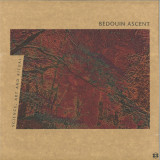
'Science, Art And Ritual' is a story of ‘process'. Growing up in Harrow (a then quiet suburb of London) in the 70’s and 80’s from the age of about 10, Kingsuk Biswas aka Bedouin Ascent's ears opened up to sound as he scanned the airwaves. The undeniable righteousness of 80’s dub via David Rodigan’s Roots Rockers shows was the first prominent influence he received, and with punk roots —and his burgeoning record collection— became exposed to the breathless post punk experimentation that followed in the early 80’s sweeping up free jazz, noise, dub and much more. Throughout though, he maintained his fascination with Indian Classical music which was a mainstay in his parent’s house and spoke with the same infinite space as Joy Division's 'Unknown Pleasures', and King Tubby’s Studio dispatches. Through those teens he assembled and de-assembled, knocking about with fellow travellers —punk bands, garage, space rock, noise. Something was happening. On-U Sound, ECM, Factory Records kept him plugged in and sane.
At that time Kingsuk's core studio setup revolved around his vintage Gretsch, Fender Jazz, Moog, TR-606 and rudimentary FX. He added congas, folk instruments, pipes, hand percussion, gongs, and jammed out shards of funk, noise, jazz fusion, electro and ambience into his hungry Tascam Portastudio. By 1987 these had morphed into what we’d now refer to broadly as techno, but the genre didn't exist beyond the reverberating walls of his bedsit, and he hadn’t yet plugged into the global conversation.
'Science, Art And Ritual' was released in 1994 by Rising High Records and was presented as Bedouin Ascent's debut album, although 'Music for Particles' (released in 1995, again on Rising High) was recorded even before —'SAR' sessions span from 1992-1993, whereas 'Music for Particles' were earlier from 1989-1992, with some older 4-track references from about 1986 too.
Weaved in throughout the album are subconscious references to music that Kingsuk heard in the past that still remained within sight as companions. The opening track "Ancient Ocean III", referencing the extinct ocean Tethis, unapologetically channels Tackhead, Colourbox, Mantronix and Lee Perry. The style was also deliberately juxtaposed to the prevailing sound in techno at the time, which had locked onto a rigid form of symmetrical kicks and light snare drums. Elsewhere 80’s soul and funk are frozen and captured in fragile glass lattices. Electric pianos resound throughout, such as in "He Is She", probably a half-memory of 70’s MOR radio from childhood sleepy night drives. A duel between kick drums from three generations of Roland drum machines —TR-808, TR-707 and R-8— is a central theme in "Transition-R", all in conversation, calling and responding. These were not just machines to Bedouin Ascent, but part of an extended family, with heart and soul.
Three decades after seeing the light, Lapsus is proud to present a special 30th anniversary reissue of this
left-field techno gem in a repackaged and redesigned edition. All pressed on a deluxe 3LP marbled vinyl and including a limited lithographic insert print of the original album cover. All tracks have been restored and remastered directly from the original DAT tapes, and the album also features previously unreleased tracks such as "In the Clouds" and "Thru Water" —regularly performed live at that time and produced in the same period as the album sessions in 1993.
'Science, Art And Ritual’ may refer to esoteric traditions in Indian philosophy, but equally embodies the collision of the science, the art and the ritual that is at the core of being immersed in a deep musical journey.
- B2: I Remember Yesterday
- B3: I Love You
- B4: Heaven Knows
- C1: Last Dance
- C2: Macarthur Park
- C3: Hot Stuff
- C4: Bad Girls
- D1: Dim All The Lights
- D2: Sunset People
- D3: No More Tears (Enough Is Enough)
- D4: On The Radio (Long Version)
- 6: State Of Independence
- 1: She Works Hard For The Money
- 2: Unconditional Love
- 3: Dinner With Gershwin
- 4: This Time I Know It's For Real
- 5: I Don't Wanna Get Hurt
- A1: On The Radio
- A2: Love To Love You Baby
- A3: Try Me, I Know We Can Make It
- A4: I Feel Love
- B1: Our Love
2025 marks 50 years since the release of Donna Summer’s debut international hit ‘Love To Love You Baby’. To herald in this milestone anniversary, we proudly present this newly expanded edition of Donna’s classic hits collection “On The Radio”. • This 24 track/2LP collection features the international hits that propelled Donna’s popularity through the decades, from her 1976 UK Singles chart debut up until her 2008 studio album and includes eighteen UK Top 20 hits. • They include ‘Hot Stuff’, ‘Bad Girls’, ‘This Time I Know It's For Real’, ‘Down Deep Inside (Theme From 'The Deep')’, ‘I Remember Yesterday’, ‘Love's Unkind’, the vocal powerhouse track ‘No More Tears (Enough Is Enough)’ with Barbra Streisand and the groundbreaking #1 ‘I Feel Love’. • Donna Summer gained prominence during the disco era of music, rightly earning the title "The Queen of Disco" and becoming one of the most successful recording artists of the 1970s and all-time best-selling female Artists. • She was the first artist to have three consecutive Double Albums hit No. 1 on the US Billboard charts, as well as becoming the first female artist to have four No. 1 singles in a thirteen-month period. • Donna’s catalogue has sold more than 130 million units worldwide and her music is still relevant today, as her music continues to fill the radio airwaves, appears in TV programmes, movies, as well as TV commercials. • In 2023, her daughter, Brooklyn Sudano, who along with Roger Ross Williams, directed “Love To Love You, Donna Summer”, a documentary that followed Donna’s personal life and career. The film had its world premiere at the 73rd Berlin International Film Festival and was screened at SXSW. HBO released it in May 2023. • Earlier this year, Donna was posthumously awarded a Recording Academy Special Merit Lifetime GRAMMY, as well as ‘I Feel Love’ being inducted into the GRAMMY Hall of Fame
a 1. Love To Love You Baby Single Edit
b 2. Could It Be Magic 7" Version
c 3. I Feel Love [Edit]
[f] 6. Love's Unkind [7" Version]
[g] 1. I Love You [Single Version]
[h] 2. Rumour Has It [Single Version]
[i] 3. Last Dance [7" Version]
[j] 4. MacArthur Park [Single Version]
[k] 5. Heaven Knows [7" Version]
[l] 6. Hot Stuff [Single Version]
[m] 1. Bad Girls [Single Version Edit]
[n] 2. Dim All The Lights [7" Single Version]
[o] 3. No More Tears (Enough Is Enough) [7" Version]
[p] 4. On The Radio [7" Version]
[r] 6. State Of Independence [7" Version]
[s] 1. She Works Hard For The Money [7" Version]
[t] 2. Unconditional Love [Edit]
[u] 3. Dinner With Gershwin [Edit]
[v] 4. This Time I Know It's For Real [7" Mix]
[7" Remix]
[PWL 7" Mix]
in the middle of it we instantiate false aralia: a series of recordings growing in all directions, cataloging the work of a group of north american collaborators centered around the studio practices of izaak schlossman (of aught, s transporter, loveshadow etc.) and facilitated by brian foote (of peak oil, kranky, etc.). with this outlet we hope to provide useful tools for dance and avenues for intentional listening.
the first release, ‘zero key’, explores valences of an idea as it slips, as would a thought or a cloud, into something else entirely across its four tracks of recursive microhouse rhythms and hallucinated dub spatializations. foregrounding its most melodic state, its most percussive, and two points between, the versions cut an indeterminate and continuous process into discrete objects that invite repurposing, layering, and other nonlinear methods of evaluation. played through, it may be interpreted as an emerging, or a coming-to-light, as a soft vocal figure develops a tougher rhythmic architecture that eventually occludes its prior form entirely. each of zero key’s facets spurs a parallel investigation into its internal logic of patterning and form.
Michael Mayer albums don’t come round too often, which is one of many reasons why his fourth collection, The Floor Is Lava, is a genuine event. It’s been eight years since his last one, the collaborative & released on !K7; its predecessors, Mantasy (2012) and Touch (2004), took their sweet time, too. It’s no real surprise, given the many hats Mayer wears – globetrotting DJ, revered remixer, inveterate collaborator, and boss of both Kompakt and Imara – that his solo productions are relatively sparing. But this also speaks to their quality: Mayer’s name on a record sleeve is a sign of quality, of music that’s both looking to the future and calling back to the past, that balances the imperatives of the dancefloor and the loungeroom, that’s as exploratory as it is functional.
On The Floor Is Lava, Mayer seems to be taking the temperature of both the music that surrounds him (past and present), and the ides of the industry he works within. There’s that iconic album title, for a start. “The album’s mindset,” he says, reflecting on those four words together. For Mayer, it’s partly a critique of the way the industry boxes in both producer and listener, focuses them on genre, on market, on the next new thing: “Being a free minded spirit that transcends genres has become an uphill battle.” A battle worth fighting, though, and with The Floor Is Lava, the result is an album that’s varied, quixotic, idiosyncratic, charming, and deeply, addictively listenable.
Throughout, Mayer finds thrills in exploration and juxtaposition, allowing unexpected things to blossom and giving them their life, their platform, throwing the listener exciting curveballs: “It’s a DJ album by a DJ that’s easily bored.” Either easily bored, or endlessly curious, The Floor Is Lava is rich with ideas. It opens with “The Problem”, which looks back to look forward, embracing the rickety way early house productions threw samples together with gleeful abandon. Mayer mentions Pal Joey, and the scene around Rockers Hi-Fi and their Different Drummer imprint, as reference points, and you can hear that freewheeling spirit throughout.
It’s followed by “Vagus”, a slinky, sensual minimal house number that Mayer describes as his “musical catnip”. The flow of these two opening cuts defines the dynamic of The Floor Is Lava, defining the dialectical drive at its core: thesis and antithesis leads to synthesis, but with a welcome prickliness that means you’re always excited, always engaged. It’s also productive in the way it derives energy from rubbing genres and sounds against each other, in unexpected ways, for maximum musical frisson. There’s psychedelic techno on “Feuerstuhl”, more minimal techno with “Ardor” (Mayer mentions ‘Immer 1’ era 90s minimal as inspiration), slippery, Shepard-tone breakbeat through “Sycophant”, a lovely, lush vocal turn on the poppy “The Solution”.
The album closes with the melancholy “Süßer Schlaf”, where Mayer sets a poem by Goethe to one of his most haunted, moving pieces of music yet, in abstract tribute to a lost friend. It’s one of the most affecting moments on The Floor Is Lava. There’s also an update on 2020’s wild Brainwave Technology EP, with the surrealist glitter-stomp of “Brainwave 2.0” (check out those handclaps!),where Mayer’s thinking about the socio-political precipice of the now: “I’m reading with great interest about this whole complex of how humanity is about to cross so many lines and the implications that the resulting financial and educational inequality will bring.”
That’s The Floor Is Lava: then and now, brainwaves and nerve structures, problems and solutions, genres on fire; the real, the unreal, and the surreal. An album for the easily bored and the endlessly curious. Mayer has the last word, telling us all you need to know about the album’s spirit: “Burning for the cause, being zealous, being addicted to the heat of the night, the exuberant powers of music.”
Michael Mayer veröffentlicht nicht oft Alben, was einer von vielen Gründen ist, warum ‘The Floor Is Lava’ ein echtes Ereignis ist. Es sind acht Jahre vergangen seit seinem letzten Werk, dem Kollaborationsalbum &, das auf !K7 erschien; seine Vorgänger, Mantasy (2012) und Touch (2004), ließen ebenfalls auf sich warten. Es überrascht nicht wirklich, da Mayer viele Rollen gleichzeitig erfüllt – weltreisender DJ, vielbeschäftigter Remixer, unermüdlicher Kollaborateur und Chef von sowohl Kompakt als auch Imara – weshalb seine Solo-Produktionen eher sparsam ausfallen. Doch das spricht auch für deren Qualität: Ein Album mit Mayers Namen auf dem Cover steht für Qualität, für Musik, die sowohl in die Zukunft blickt als auch auf die Vergangenheit verweist, die das Gleichgewicht zwischen den Anforderungen des Dancefloors und des Wohnzimmers hält, die genauso erforschend wie funktional ist.
Auf The Floor Is Lava scheint Mayer sowohl die Musik um ihn herum (vergangen und gegenwärtig) als auch die Strömungen der Branche, in der er arbeitet, zu reflektieren. Da wäre zunächst der ikonische Albumtitel. „Die Grundhaltung des Albums“, sagt er, drückt sich in diesen vier Worte aus. Für Mayer ist es teilweise eine Kritik daran, wie die Industrie sowohl Produzenten als auch Hörer in Schubladen steckt, sie auf Genres, auf den Markt und auf das nächste große Ding fokussiert: „Ein freier Geist zu sein, der Genres überschreitet, ist zu einem steinigen Weg geworden.“ Ein Kampf, der sich jedoch lohnt, und mit The Floor Is Lava ist das Ergebnis ein Album, das vielfältig, eigenwillig, charmant und tiefsinnig, aber auch süchtig machend ist.
Im gesamten Album findet Mayer Freude an der Erforschung und Gegenüberstellung von Stilen, lässt unerwartete Dinge erblühen und gibt ihnen Raum, überrascht den Hörer mit spannenden Wendungen: „Es ist ein DJ-Album von einem DJ, der sich schnell langweilt.“ Entweder langweilt er sich schnell oder er ist unendlich neugierig – The Floor Is Lava ist reich an Ideen. Es beginnt mit „The Problem“, das in die Vergangenheit blickt, um nach vorne zu schauen, und die wilde Art, wie frühe House-Produktionen Samples mit fröhlicher Unbekümmertheit zusammenwarfen, aufgreift. Mayer nennt Pal Joey und die Szene um Rockers Hi-Fi und ihr Label Different Drummer als Referenzpunkte, und dieser freie Geist zieht sich durch das gesamte Album.
Es folgt „Vagus“, eine sinnliche Minimal-House-Nummer, die Mayer als seine „musikalische Katzenminze“ beschreibt. Der Fluss dieser beiden Eröffnungstracks definiert die Dynamik von The Floor Is Lava und den dialektischen Antrieb im Kern: These und Antithese führen zu einer Synthese, jedoch mit einer willkommenen Schärfe, die dafür sorgt, dass man immer aufgeregt und engagiert bleibt. Zudem gewinnt das Album Energie, indem es Genres und Klänge auf unerwartete Weise aneinanderreibt, um maximalen musikalischen Nervenkitzel zu erzeugen. Es gibt psychedelischen Techno in „Feuerstuhl“, mehr Minimal Techno mit „Ardor“ (Mayer erwähnt ‘Immer’ Ära Minimal als Bezugspunkt), gleitenden Shepard-Ton-Breakbeat in „Sycophant“ und einen lieblichen, üppigen Vocal-Auftritt im poppigen „The Solution“.
Das Album schließt mit dem melancholischen „Süßer Schlaf“, in dem Mayer ein Gedicht von Goethe vertont und eine seiner bisher eindringlichsten und bewegendsten musikalischen Kompositionen schafft, als abstrakten Tribut an eine verschiedene Freundin. Es ist einer der ergreifendsten Momente auf The Floor Is Lava. Ebenfalls gibt es ein Update der wilden Brainwave Technology-EP von 2020, mit dem surrealistischen Glitzer-Stampfer „Brainwave 2.0“ (hör dir diese Handclaps an!), in dem Mayer über den sozio-politischen Abgrund der Gegenwart nachdenkt: „Ich lese mit großem Interesse über diesen ganzen Komplex, wie die Menschheit dabei ist, so viele Grenzen zu überschreiten und welche Auswirkungen die daraus resultierende finanzielle und bildungstechnische Ungleichheit haben wird.“
Das ist The Floor Is Lava: Damals und heute, Gehirnwellen und Nervengeflechte, Probleme und Lösungen, brennende Genres; das Reale, das Unreale und das Surreale. Ein Album für die schnell Gelangweilten und die unendlich Neugierigen. Mayer hat das letzte Wort und sagt uns alles, was wir über den Geist des Albums wissen müssen: „Brennen für die Sache, leidenschaftlich sein, süchtig nach der Hitze der Nacht, den überschwänglichen Kräften der Musik.“