Having initially met more than a decade ago at a local community radio station, sometimes doing guest slots on each other’s live, improvised noise shows, Cormac Culkeen and Dave Grenon knew they had a mutual interest in working with sonic textures. They listened to each other’s bands for a handful of years, and in 2017, “made good on a threat” that they’d been making for quite a long time: to start a band. At Cormac’s gentle but clear urging—declaring that they’d gone ahead and booked a space in which to record a video—the two wrote their first song, “Sebaldus,” an ambitious 12-minute trip, which also serves as the fireworks finale to their self-titled debut album. With surges of pathos that smooth out into something more soothing in turn, Cormac goes: “The hunter, you’ve seen him / The archer, his arrows are strong / And hunger, you’ve known her / I know the winter is long.” The track is as much about enduring a Canadian winter as it is about the eponymous 8th century hermit, shot through with sublimated desire. As Cormac put it, Joyful Joyful’s songs are “a little bit outside of time.” But while the lyrics beg close, oblique reading unto themselves, there’s also a distinct sense that they’re only one of many more ways that the duo shapes sound. Cormac, whose voice is like a sea with irregular tides, lights up about an idea in traditional sean-nós Irish music that songs already exist and are out there; it’s up to the singer to become the conduit. This belief in music as something to be channelled, and something more than sound, resonates with the singer’s fundamentalist religious past. To paraphrase: lots of group singing, harmonies, no instrumentation, totally unmediated, no priest, congregational—not choral, not a performance, not about talent, the spirit moves through people. “Of course that informs how I think about singing,” Cormac says. So, when they were exiled from the church because of their queerness, they took the music with them, dislocating it from its dogmatic bounds but not from its transcendent potential. This record might be thought of, then, as a kind of queering of sacred, devotional traditions—or at the very least, a space where all of these things can be held at once. Perhaps perceivable by some as contradictions, these intersecting influences create the conditions for an incredibly singular sound. Dave is steady and exploratory in his handling of this multiplicity, arranging sounds as they’re revealed, corralling them, coaxing them into form. “Because Dave is there,” Cormac says, “I get to sing three times higher, and three times lower, and faster, and backwards, and all of these sounds! That are there. They’re all there.” When asked about early musical memories, Cormac recalled an immediate fascination with harmony: from demanding that the first person they ever heard singing it explain what they were doing, to always (still, to this day) singing in harmony with their twin sister around the house, to being part of a children’s choir that sang soprano in Handel’s Messiah—not realizing until they entered the room with all the other ranges that their learned melody was but one part of the whole. Just as tellingly, Dave reflects on his early attraction to “abstraction and becoming abstract,” describing childhood afternoons messing with microphone and speaker feedback loops, producing long, enduring sounds with almost undetectable variations. In a way unique to the coalescing of these two listeners, notions of harmony are central to their output. Dave samples field recordings, old keyboards and synths, and vocal drones, running the live singing through four or five parallel effects chains, sampling and treating everything again in the moment. “Another way to put it is that Cormac’s voice comes into the board and then comes back out shifted, delayed, and shattered; Cormac and I hear it, live with it, and respond,” Dave says. This work is contingent not only on a deep intuition (neither of them read sheet music) of polyphony and due proportion (something St Thomas Aquinas famously listed as an attribute of beauty) but also on their connection to each other and ability to read subtle cues. Dave says they’d hold each other’s hands while performing if it was more convenient to do so, riffing on something else Cormac mentioned about traditional Irish singing: that someone would always hold the singer’s hand, for fear that without a tether to the ground they might find themselves utterly lost, unsure how to return. Joyful Joyful doesn’t shy away from offering such experiences of departure; they’re willing to unsettle their audiences because they themselves are unsettled. Their shared penchant for spooky, heavy music, and self-described “omnivorous” listening practices equip them with an array of sonic concepts that support this effort; Diamanda Galás, The Rankin Family, Pan Sonic, Pauline Oliveros, Keith Fullerton Whitman, Yma Sumac, and Catholic hymnody were just a few that came up. Observing their audience gives them insight about the effect of each song—something they considered while arranging the album. Its arc is marked by soft, sometimes sudden oscillations between cacophony and euphony, day and night (listen for insects), and from sexual, visceral entanglements to more ephemeral, celestial ones. Front to back, it arouses expansion, unraveling. Of lightning, Vicki Kirby writes: “quite curious initiation rites precede these electrical encounters. An intriguing communication, a sort of stuttering chatter between the ground and the sky, appears to anticipate the actual stroke.” By all accounts, something similar seems to happen at Joyful Joyful shows, between those on the stage and those off it, between what’s earthly and what’s beyond. “A lightning bolt is not a straightforward resolution of the buildup of a charge difference between the earth and a cloud … there is, as it were, some kind of nonlocal communication effected between the two,” writes Karen Barad, extrapolating on Kirby’s thought. Cormac acknowledges that while they and Dave play a role in this mysterious charge that comes about, they’re not solely responsible. However ineffable it may be, it’s undoubtedly a form of communion—and a sensuously shocking one at that
Suche:may
- A1: Maybe Your Heart's Not In It No More
- A2: Roots & Wings
- A3: I Hear The Ocean (When I Wanna Hear Trains) (When I Wanna Hear Trains)
- A4: The Dive Bar In My Heart
- A5: Darlin' Hold On
- B1: Move The River
- B2: I'll Let You Down (But Will Not Give You Up) (But Will Not Give You Up)
- B3: Wrong End Of The Spear
- B4: Who's That Man Walking Round My Garden
- B5: The Daylight Between Us
Rock 'n' roll is often hard to define, or even to find, in these fractured
musical times - But to paraphrase an old saying, you know it when you
hear it - And you always hear it with The Wallflowers
Exit Wounds, which stays true to its title, is an album that is an ode to people -
individual and collective - that have, to put it mildly, been through some stuff. 'I
think everybody - no matter what side of the aisle you're on - wherever we're going
to next, we're all taking a lot of exit wounds with us,' says Jakob Dylan. 'Nobody is
the same as they were four years ago. That, to me, is what Exit Wounds signifies.'
To be sure, Exit Wounds is populated by scarred souls and the things they carry
with them. Those are your exit wounds. And right now, we're all swimming in
them. Pressed on Pink and Purple Splatter Color Vinyl.
- Z]C To Infinity
- A2: Home Team
- A3: The Pit
- A4: Girl Guide Cookies (Feat Robo Robb & Eddie Quotez)
- A5: Well Wishers (Feat Illgil)
- A6: Translucence (Feat Kamilah Apong)
- A7: Years (Feat Nole)
- A8: To Friend Too Fortunate (Feat Thesis Sahib)
- B1: S Morganstern (Feat Ginzuintriplicate)
- B2: Nothin Fri3Ndly (Feat More Or Les, Wordburglar, Swamp Thing, The Mighty Rhino & Ghettosocks)
- B3: Lush Karma
- B4: Gjhs
- B5: What Would Buffy Ste-Marie Do? (Outro)
- B6:
The Library Steps is a new pairing of an old rapper named Jesse
Dangerously and a young producer named Ambition
The duo is named in remembrance of the now demolished stone stairs of the
Halifax Memorial Library entrance, where among a loose and ragtag assortment
of the city's rappers they would gather across generations every Friday as the
doors locked, to freestyle, beatbox, and play tapes in a cipher called Public Rhyme
Distribution. Jesse and Ambition have been members of the Canada- wide
collective Backburner since 2001 and 2009 respectively, but only started making
songs as a rapper/producer duo in the spring of 2017. It took them more than a
decade of intention to pair off as a team. All of the beats and rhymes for Rap Dad,
Real Dad were created in the next few months as a time capsule of that season's
preoccupations. The beats are jazzy, soulful, and moody, with a prominent nod
factor, and the rhymes are confessional and witty, vulnerable and boastful,
intimate and intimidating. Under their fingernails, no microscope is needed to
detect the DNA of golden era rapper/producer teams like Pete Rock & CL Smooth,
Gang Starr, a gentler Beatnuts, or any group that was part of Native Tongues or
Hieroglyphics. Just as present are the influences of turn- of- the- century
underground boundary pushers like Sage Francis, Aesop Rock, MF DOOM, and
Buck 65, and for that matter, just about everyone who was on Roc-A-Fella at its
peak. Refracted here, those chosen ancestors and more recombinate into a hiphop that challenges, from unexpected angles, traditional modes and narratives of
masculinity. They are your rap dads, and they just may be your real dads, too.
[n] B6 . [A,Z]A+[A,,Z]B+
This album is a reincarnation of Tony Hazzard’s first album, first released
in 1969, with one track missing but two more added
The name Tony Hazzard may not ring a bell, but the English singer/
songwriter has written hits for everyone from The Hollies, Manfred Mann
and Herman's Hermits to Gene Pitney and Andy Williams
This album is a reincarnation of Hazzard’s first album ‘Tony Hazzard Sings Tony
Hazzard’, released in 1969.
It was recorded between 1966 and 1969 at Regent Sound A in London, using
Studer J37 4- track tape recorders and a Neumann M49 valve microphone for
vocals.
Bobby Oroza puts his desire for the profound on wax with his sophomore album Get On The Otherside. Musically, he has updated the formula we were introduced to on the first record. But lyrically, songs are bravely rooted in the more complicated, ubiquitous inner tangles of life like self-examination and coming to terms with the vastness of the human experience. With Coronavirus bringing the world to a halt, Bobby-a father and husband-had to do something. No tours to play or studio time to fill, Bobby found himself back in the construction yard, doing blue-collar work to provide for his family. "I was super grateful for the work-a lot of my colleagues didn't have an option like that," Bobby admits. More than a few personal hardships forced him to acknowledge and work through some brutal truths. And what came of it? Well, for one, this new record Get On The Otherside which pretty well describes what Bobby's been through: He had to demolish his ego, his old ways of thinking, and his tried approaches to anchor into a refreshed perspective with new understandings. As Bobby tells it, "I had to do some real self-searching, come to terms with what was wrong, and how much of it I was responsible for." So how does this translate to the new album? Moments of clarity as to where the real value in life lies on "I Got Love," encouraging numbers like the title track "The Otherside", and declarations of self actualization on "My Place, My Time." Even the more straightforward love songs are outside the box lyrically like "Sweet Agony" and "Loving Body." If you have never had the pleasure of catching one of Bobby's live shows you may have no idea that he is a maverick on the guitar. He lets us in on a little of that on "Passing Things" with a solo that possesses the same restrained and space that his lyrics do. As we'd expect, the songwriting still has that raw, direct edge to it. But an evolution has taken place. There are new points of view on familiar territory which in Bobby's words "For me to love, I needed to take a bigger view of love. One with less ego and more empathy" really hold true. The result is a record with Bobby's new found humility on full display and a message of encouragement to anyone who is struggling and can't see a way out. It still may be hard to nail down and define Bobby and his sound. He's no one thing more than the other. But what he's showing us now, on Get On The Otherside, is that we can also label him a soulful, philosophical optimist. Someone who can say a lot with a little, and who wants us all to know that it's us that has to do the hard lifting to truly live a life in love-both with the world and with yourself.
A2 consists of 5 loops.
Subsequent to their formidable collabo with Max Delius a few months prior, Andreas Schuller and Jay Nagel deliver the next tracks for RFR. “Bionic Jelly” still moves in style within the croudian sound biotope, yet places the tooly aspect a little bit more in the foreground.
“It’s a match” starts restrainedly with dubby breakbeats, being driven forward by echoes and reverb. Rattling percussions jump on the sonic carpet and little by little increase the intensity of this funky opener. Yep, that fits!
„Stomache Grind“ comes around the corner way more relaxed than its title may suggest. Nothing indigestive is presented here, in contrary a digestif made of all the ingredients which crouds are famous for: Melody, broken beats, elaborately composed dub patterns and a dose of finesse.
Heavy 90s vibes in the final track of this EP. Kinda reminiscent of Luke Vibert in his best Rephlex days. Minimal, interlaced and mystical. “Shifting Space” not only moves space, but also time. Because this is what’s needed in order to enjoy the true depth of this track.
''The acts Mermaid Chunky call to mind here tend to lean on a blithe naivete: Animal Collective, Peaking Lights, youthful Norfolkians Let’s Eat Grandma and fuckwitted freak-folkers Cocorosie. This isn’t a fashionable sound in 2020 – venture your own sociopolitical reasoning – and I reckon I’ve found the one record of its type I want to hear this year.''
Mermaid Chunky are an audiovisual duo made up of artists Freya Tate and Moina Moin. Bathing in milkmaid serenity and improvised chaos, the duo boast of pumping trance rhythms, sad Easter time chicks and seriously arousing sax solos. Much of their cultivation has come out of the mossy club culture of Stroud's SVA and London's Total Refreshment Centre, collaborating with the likes of Alabaster DePlume, Danalogue, Donna Thompson, Grove, Snapped Ankles (UK tour support) and Yama Warashi.
Their debut Faith and Industry album VEST (produced by Capitol K at Total Refreshment Centre), was birthed last year out of a history of improvised cheek and club dexterity forefronting their live shows and audiovisual solstice celebrations, recently captured by British Vogue's 2021 PRIDE series. Championing this action is the Mermaid Chunky Mothership, a gang of fellow artists and performers, often clad in nauseous satin frills, swamping the stage with french mime and slut drops (Roundhouse 2021, End Of the Road 2021, SVA Solstice always.) The MC gang just scoured their PRS Woman Make Music funding so who knows what they will be stirring up in the heat of summer soup 2022 (the most ducks in a year we will ever experience.) The only way for you to find out is to join the chunklett buffet and dip your wicked, webbed fingers into something mega.
Mermaid Chunky will perform Camp Bestival (Shropshire), Kite Festival (Oxford) and at Orbury Common’s PrahEP launch (a collaborative audiovisual May Day celebration) at the Brunel Goods Shed, SVA, Stroud 30th April - 1st May.
They will aslo be collaborating with Percolate Music on a series of London based audiovisual events this year focused on experimental, electronic womxn performers, visual artists and DJs. More special announcements to be revealed in the present future of your past.
Two years may seem like a very short stop gap between original release and reissue, but when the music comes at this kind of grade who's complaining? Much like his contemporaries such as Fred P and DJ Qu, Patrice Scott's take on deeper-than-deep house conjure up ambient fantasies coloured with twinkling synth lines and slowly exhaled pads. It's not all fuzzed-out bliss though, as "2000 Black" sneaks a warm and snarling bassline amidst the soothing elements around it. "Mind Rhythms" especially shines with its combination of heavy groove and intricate melodies bubbling away under the surface.
"Zuversicht, Vertrauen, das ist das Thema meiner Platte und ich glaube, jeder kann damit etwas anfangen", sagt die preisgekrönte nigerianisch-deutsche Künstlerin NNEKA über ihr neues Album "Love Supreme", das am 11. Februar 2022 erscheinen wird. Die von der Sunday Times als die neue Lauryn Hill gefeierte Sängerin veröffentlicht ihren ersten Longplayer seit dem vor sechs Jahren auf gleichem Label erschienenem Mini-Album "My Fairy Tales".
Die dreizehn Songs auf "Love Supreme" präsentieren Fortsetzung und Aufbruch zugleich. Während "This Life", die einzige Uptempo-Single des Albums, "About Guilt", "Walk Away" und einige andere mit dem langjährigen Partner Farhot geschrieben und produziert wurden, oder "With You" mit Mounir Maarouf entstand, der für den Großteil von "My Fairy Tales" verantwortlich war, arbeitete sie auch mit dem Berliner Produzenten/Autor Unik ("Tea?") und Klimperboy ("Love Supreme") und BASS-Produktionen ("Maya", "Yahweh") aus Hamburg zusammen. Es wird Zeit für "Love Supreme", denn diese einzigartige Künstlerin war ihrer Zeit immer voraus. Seit 2011, als sie ihr letztes richtiges Album "Soul Is Heavy" veröffentlichte, entstand eine neue Generation afroamerikanischer und afroeuropäischer Künstler, die nach dem Festival mit dem gleichen Namen "Afro-Punk" bezeichnet wurden. Musikalisch eklektisch präsentieren sie sich lässiger und alternativer, nicht nur was Kleidung und Frisuren angeht, sondern auch was Überzeugungen und allgemeines Interesse angeht. Etwas, das Nneka von Anfang an getan hat!
Nneka hat drei vorherige Alben veröffentlicht. Ihre Single Heartbeat aus 2009 brachte ihr einen UK-Top-20-Hit ein und wurde auch von Rita Ora für ihren #1 UK-Hit R.I.P. gesampelt. Sie gewann 2009 einen MOBO für den besten afrikanischen Act und trat in der David Letterman Show und in BETs 106 & Park auf. 2014 trat Nneka der Jury der 4. Staffel von "Nigerian Idol" bei. Nneka hat fast 300 Shows in Europa und über 100 Shows in den USA und Kanada vor über 1.000.000 Zuschauern in über 35 Ländern gespielt.
Die Doppel-LP kommt inkl. Etching und Poster!
Adeen Records comes with its series of funk, soul, dsco and jazz only edits label called The Bird. And it's first releases comes from label head Camille and Spanish graffiti artist and dj Cad73, and edited by DJ Boring. These two 7" gems came from each selectors childhood memories from living in Detroit and Barcelona respectively. While Camille draws such tunes as "Stop Bajon and Carino" from influences Detroit, Cad73 pulls "Shakedown and The Vulture" from early radio and parties growing up around Baecelona. Already a staple series amongst Adeen's catalog, This "The Bird" series may be the label we've been craving.
A product of generations of underground music in L.A. and beyond, The Linda Lindas' debut, Growing Up, channels classic punk, post punk, power pop, new wave, and other surprises into timelessly catchy and cool songs sung by all four members-each with her own style and energy. A handful of cuts have already been previewed at shows and enthusiastically approved by diehard followers in the pit at L.A.'s DIY punk institution The Smell and Head in the Cloud festival goers at The Rose Bowl alike. The Linda Lindas are stoked to unleash Growing Up. The Linda Lindas first played together as members of a pickup new wave cover band of kids assembled by Kristin Kontrol (Dum Dum Girls) for Girlschool LA in 2018 and then formed their own garage punk group just for fun. Sisters Mila de la Garza (drummer, now 11) and Lucia de la Garza (guitar, 14), cousin Eloise Wong (bass, 13), and family friend Bela Salazar (guitar, 17) developed their chops as regulars at all-ages matinees in Chinatown, where they played with original L.A. punks like The Dils, Phranc, and Alley Cats; went on to open for riot grrrl legends Bikini Kill and architect Alice Bag as well as DIY heavyweights Best Coast and Bleached; and were eventually featured in Amy Poehler's movie Moxie. When the pandemic put a pause on shows, The Linda Lindas went on to self-release a four-song EP, make their own videos and grow a following beyond Los Angeles. But they never expected or could have even dreamed that their performance of "Racist, Sexist Boy" for the Los Angeles Public Library in May 2021 would take them from punk shows to TV shows. A month later, when the school year ended and summer began, The Linda Lindas got to work on their first full-length LP. Having written a mountain of new material individually while sheltering in place and attending class virtually, the band was more than ready to enter the studio where Mila and Lucia's dad (and Eloise's uncle and Bela's "uncle") Carlos de la Garza oversaw recording and production. The Grammy-winning producer's work includes Paramore, Bad Religion, Best Coast, and Bleached.
- 1: You've Lost That Lovin' Feeling
- 1: 2 Elusive Dreams
- 1: 3 Greenwich Village Folk Song Salesman
- 1: 4 Summer Wine
- 1: 5 Storybook Children
- 1: 6 Sundown, Sundown
- 1: 7 Jackson
- 1: 8 Some Velvet Morning
- 1: 9 Sand
- 1: 0 Lady Bird
- 1: I've Been Down So Long (It Looks Like Up To Me)
- 1: 2 Tired Of Waiting For You * (Bonus Track)
- 1: 3 Love Is Strange * (Bonus Track, First Time On Vinyl)
- FIRST EVER official vinyl reissue - definitive version with Nancy's involvement - Definitive reissue of Nancy & Lee's classic 1968 duet album - Includes the bonus tracks, "Tired Of Waiting for You" and "Love Is Strange," from the album sessions - Newly remastered from the original analog tapes by GRAMMYr-nominated engineer John Baldwin - Vinyl pressed at RTI - Q&A with Nancy & GRAMMYr-nominated reissue co-producer Hunter Lea - Never-before-seen photos from Nancy Sinatra's personal archive - Beautifully packaged and expanded gatefold LP featuring a 20-pg booklet // "We had sort of a love/hate relationship. Maybe it was a sexual tension because we never had any kind of affair. I don't know exactly what it was, but it worked." - Nancy Sinatra Light in the Attic is thrilled to announce the first official reissue of Nancy & Lee: the highly-influential 1968 duet album from Nancy Sinatra and Lee Hazlewood. This definitive edition of Nancy & Lee features newly-remastered audio by the GRAMMYr-nominated engineer John Baldwin and includes an array of exclusive content, including a new interview with Nancy, never-before-seen photos, and two bonus tracks from the album sessions: an ethereal cover of The Kinks' "Tired of Waiting for You" and an uptempo version of "Love Is Strange" (first made famous by Mickey & Sylvia in 1956). This release marks the official debut on vinyl for both tracks. After a string of successful duet singles with Lee Hazlewood, including "Sand," "Summer Wine," "Jackson," and "Some Velvet Morning;" the pair released the duet album Nancy & Lee in 1968. The album features the lush, orchestral arrangements of Billy Strange and the famed Los Angeles session musicians, The Wrecking Crew, at the peak of their powers. The unique vocal blend, the iconic cover and the selection of classic songs attracted a huge following and sold over a million copies.
- 1: You've Lost That Lovin' Feeling
- 1: 2 Elusive Dreams
- 1: 3 Greenwich Village Folk Song Salesman
- 1: 4 Summer Wine
- 1: 5 Storybook Children
- 1: 6 Sundown, Sundown
- 1: 7 Jackson
- 1: 8 Some Velvet Morning
- 1: 9 Sand
- 1: 0 Lady Bird
- 1: I've Been Down So Long (It Looks Like Up To Me)
- 1: 2 Tired Of Waiting For You * (Bonus Track)
- 1: 3 Love Is Strange * (Bonus Track, First Time On Vinyl)
- FIRST EVER official vinyl reissue - definitive version with Nancy's involvement - Definitive reissue of Nancy & Lee's classic 1968 duet album - Includes the bonus tracks, "Tired Of Waiting for You" and "Love Is Strange," from the album sessions - Newly remastered from the original analog tapes by GRAMMYr-nominated engineer John Baldwin - Vinyl pressed at RTI - Q&A with Nancy & GRAMMYr-nominated reissue co-producer Hunter Lea - Never-before-seen photos from Nancy Sinatra's personal archive - Beautifully packaged and expanded gatefold LP featuring a 20-pg booklet // "We had sort of a love/hate relationship. Maybe it was a sexual tension because we never had any kind of affair. I don't know exactly what it was, but it worked." - Nancy Sinatra Light in the Attic is thrilled to announce the first official reissue of Nancy & Lee: the highly-influential 1968 duet album from Nancy Sinatra and Lee Hazlewood. This definitive edition of Nancy & Lee features newly-remastered audio by the GRAMMYr-nominated engineer John Baldwin and includes an array of exclusive content, including a new interview with Nancy, never-before-seen photos, and two bonus tracks from the album sessions: an ethereal cover of The Kinks' "Tired of Waiting for You" and an uptempo version of "Love Is Strange" (first made famous by Mickey & Sylvia in 1956). This release marks the official debut on vinyl for both tracks. After a string of successful duet singles with Lee Hazlewood, including "Sand," "Summer Wine," "Jackson," and "Some Velvet Morning;" the pair released the duet album Nancy & Lee in 1968. The album features the lush, orchestral arrangements of Billy Strange and the famed Los Angeles session musicians, The Wrecking Crew, at the peak of their powers. The unique vocal blend, the iconic cover and the selection of classic songs attracted a huge following and sold over a million copies.
- 1: You've Lost That Lovin' Feeling
- 1: 2 Elusive Dreams
- 1: 3 Greenwich Village Folk Song Salesman
- 1: 4 Summer Wine
- 1: 5 Storybook Children
- 1: 6 Sundown, Sundown
- 1: 7 Jackson
- 1: 8 Some Velvet Morning
- 1: 9 Sand
- 1: 0 Lady Bird
- 1: I've Been Down So Long (It Looks Like Up To Me)
- 1: 2 Tired Of Waiting For You * (Bonus Track)
- 1: 3 Love Is Strange * (Bonus Track, First Time On Vinyl)
- FIRST EVER official vinyl reissue - definitive version with Nancy's involvement - Definitive reissue of Nancy & Lee's classic 1968 duet album - Includes the bonus tracks, "Tired Of Waiting for You" and "Love Is Strange," from the album sessions - Newly remastered from the original analog tapes by GRAMMYr-nominated engineer John Baldwin - Vinyl pressed at RTI - Q&A with Nancy & GRAMMYr-nominated reissue co-producer Hunter Lea - Never-before-seen photos from Nancy Sinatra's personal archive - Beautifully packaged and expanded gatefold LP featuring a 20-pg booklet // "We had sort of a love/hate relationship. Maybe it was a sexual tension because we never had any kind of affair. I don't know exactly what it was, but it worked." - Nancy Sinatra Light in the Attic is thrilled to announce the first official reissue of Nancy & Lee: the highly-influential 1968 duet album from Nancy Sinatra and Lee Hazlewood. This definitive edition of Nancy & Lee features newly-remastered audio by the GRAMMYr-nominated engineer John Baldwin and includes an array of exclusive content, including a new interview with Nancy, never-before-seen photos, and two bonus tracks from the album sessions: an ethereal cover of The Kinks' "Tired of Waiting for You" and an uptempo version of "Love Is Strange" (first made famous by Mickey & Sylvia in 1956). This release marks the official debut on vinyl for both tracks. After a string of successful duet singles with Lee Hazlewood, including "Sand," "Summer Wine," "Jackson," and "Some Velvet Morning;" the pair released the duet album Nancy & Lee in 1968. The album features the lush, orchestral arrangements of Billy Strange and the famed Los Angeles session musicians, The Wrecking Crew, at the peak of their powers. The unique vocal blend, the iconic cover and the selection of classic songs attracted a huge following and sold over a million copies.
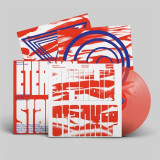
On their first official collaboration, Japanese noise pioneer Masami Akita aka Merzbow and Australian sound sculptor Lawrence English present a harrowing, surrealist portrait of nocturnal industrial activity, spawned by field recordings made in a sprawling factory complex seven hours north of English's home in Brisbane. He characterizes the area as "uneasy and unsettling," awash in the sickly glow of smelters and refinement machinery, somehow not of this world - a liminal quality vividly captured in Andrei Tarkovsky's sprawling purgatorial opus, Stalker, to which the title alludes. Akita, too, described early drafts of Eternal Stalker as feeling "like the soundtrack to a dystopian science fiction opera." A mood of mechanical dread and ruined futures permeates each of the album's seven potent compositions. Opener "The Long Dream" sets the stage with steady rain on sheet metal, punctured by thunder and metallic echoes, reverberating to the rafters in a collapsing warehouse. Quickly the tempest rises. "A Gate Of Light" and "Magnetic Traps" both convulse in churning furies of electric demolition and rattling chains, roaring and relentless. "The Visit" and "Black Thicket" operate more at a distance, surveying the topography of steam, rust, and liquid metal from above, their flickers of violence swallowed by blankets of darkness. This is noise at its most elemental and unknowable: brooding, bristling, and opaque, stalking forbidden peripheries of chaos and creation. Discussing Akita's music, English refers to its "intense substrata that is purely psychedelic; it consumes and confounds." The seasick swells of friction and fracture subsume the listener, forcing an auditory surrender: "this saturation of the senses can be a euphoria." Proof comes halfway through "The Golden Sphere," when the howling mayhem subtly recedes, revealing an eerie siren drone hovering in the void, like the resonance of a dead star galaxies away. Slowly a seething, venomous wall of volume returns, shredding the signal until its frequencies fray, whipping away into the eye of the storm. The combined effect merges obliteration and liberation, rapture and ravagement; it's the sound of dissolution as resolution, uprooted and unmoored, finally freed from form.
Justin Thurgur has been at the heart of the UK's World Music scene for over twenty years; principally in his collaborations with the former Fela and Femi Kuti keyboardist, Dele Sosimi, and with the pianist and composer Kishon Khan, most recently in his groups Lokkhi Terra and Cubafrobeat. He has also worked with the likes of Afrobeat drum legend Tony Allen, and with the Cuban giants Giraldo Piloto, Julito Padron and Changuito. Thurgur is also a member of the seminal English folk group Bellowhead.
'Many Faces' brings together this musical journey, with Afro-infused grooves and nods towards Cuban Jazz and Dub, with Thurgur's early passion for the likes of Miles Davis, Coltrane, Lee Morgan, Wayne Shorter, Herbie Hancock, et al....
It features both Khan and Sosimi, who have contributed as co-writers as well as bringing their own inimitable sounds on piano, rhodes and hammond organ. Alongside them are some of the leading musicians on the UK's African, Cuban and Jazz scenes, plus collaborations with rising star singers Jade Pybus and Sahra Gure.
Justin Thurgur - trombone (and some additional keys)
Graeme Flowers - trumpet and flugel horn
Simeon May - tenor, baritone and alto sax
James Allsopp - bass clarinet
Jade Pybus - vocals (on 'Woman')
Sahra Gure - vocals (on 'Be A Little Wiser')
Kishon Khan - piano, rhodes and hammond organ (on tracks 1,3,4 and 5)
Dele Sosimi - piano (on tracks 2 and 6) and vocala (on track 6)
Phil Dawson - guitar
Suman Joshi - double bass (except track 5)
Jimmy Martinez - double bass (on track 5)
Tansay Omar - drums (on tracks 1,3 and 4)
Kunle Olofinjana - drums (on tracks 2 and 6)
Yoann Julliard - drums (on track 5)
Afla Sackey - congas and djembe (on tracks 1,2 and 6), shekere and cowbell, and vocals (on track 6)
Oreste 'Sambroso' Noda - congas (on tracks 3 and 5)
Evie Hilyer-Ziegler - violin and viola
Paul Sartin - violin
Track 1 written by J Thurgur and S Gure
Tracks 2 and 6 written by J Thurgur and Dele Sosimi
Track 3 written by J Thurgur
Track 4 written by J Thurgur and J Pybus
Track 5 written by J Thurgur and K Khan
Recorded at Fish Factory by Simone Gallizio and Sean Douglas, at Boneman Studios by Justin Thurgur, at Better Pass Your Own Studios by Phil Dawson, at Thank You Please Studio by Kishon Khan and at 224 Studios by Matteo Musetti.
Mixed at Hi Street Studio by Mauro Caccialanza.
Mastered at Gearbox by Caspar Sutton-Jones.
Artwork by Matthieu Dufour
Photos of by Siobhan Bradshaw, Justin Thurgur, Stephanie Sian Smith,
Chantal Azari, Alex Bonney, Heather Hoyle, Nicole Thurgur, Joanna Mendel, Tansay Omar, Richard Gearey, Faye Hilyer-Ziegler and Svetlana Onye.
Finding that luck, love and letting things roll works out for him just fine, Michael Head leads his Red Elastic Band into a fresh chapter with optimism and some of the best music of his career, announcing his new, Bill Ryder-Jones-produced album, Dear Scott will be
released on Fri 27 May 2022 via Modern Sky UK. Operating as renewed friends, family and fearless communicators in sound, Head also leads close-knit band of brothers out on their first full UK Tour.
Finding that luck, love and letting things roll works out for him just fine, Michael Head leads his Red Elastic Band into a fresh chapter with optimism and some of the best music of his career, announcing his new, Bill Ryder-Jones-produced album, Dear Scott will be
released on Fri 27 May 2022 via Modern Sky UK. Operating as renewed friends, family and fearless communicators in sound, Head also leads close-knit band of brothers out on their first full UK Tour.