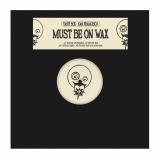
The 80s Italo disco /proto-house classic 'MBO Theme' by the mighty Klein & MBO, repressed! Comes with an heavy (and unheard) South African version on the flip. Huge Tip!
The MBO Theme' (1983) has been a dance floor favorite since decades, created by Mario Boncaldo and Tony Carrasco - the legendary Italian/US duo Klein & MBO. The track got support in NYC and Chicago by greats as Larry Levan, Frankie Knuckles and Ron Hardy.
The rare version on the flip is created by a South-African band called Warrior. Rush Hour explain how they came across the track: We bumped into this version on a South African record digging trip. It took us a few months to realize the scarcity of this version. Ian Osrin, a well respected engineer in South-Africa who was involved in many 80ties and 90ties Bubblegum, Kwaito and South African disco records, explained us about music distribution in South Africa during apartheid. Because the country was culturally banned at the time, a lot of releases weren't imported or exported. Even when a track was huge, like The Klein & MBO Theme'. So South African musicians would create their own versions which were sold locally.
We got in contact with Tony Carrasco from Klein & MBO. He also hadn't heard Warrior's version before, but he liked it as much as we do!'
Поиск:mbo
Все
- 1
2023 Repress
Best Record lights up a surefire classic from the annals of Italian dance music, made courtesy of Italo-Disco heavyweights Klein & MBO, who were not a company looking to get rich, but just 2 individuals: Tony Carrasco (USA), Mario Boncaldo (Italy), in one word... LEGENDARIES! with something burning inside to share. Italy certainly had a huge influence on the nascent Chicago house scene which embraced the best jams of Italo-Disco and created a movement of those simple yet complex sounds like those of "The MBO Theme", beautiful song, smooth and sweet, to give you time to think about some amazing dance moves and bring back very beautiful memories. The song was originally a hit created by the likes of Ron Hardy thanks to his punchy synth bass and captivating European vocals. So this was the first house song ever made and it's from the '80s, loved from the beginning by Derrick L. Carter, one of the pioneers of House Electronica in Chicago and Farley "Jackmaster" Funk, who broadcast on WBMX-FM of Chicago as a member of the DJ team Hot Mix 5. Pure Italo-Disco! Simple analog drum machine (sounds like a TR-606) and analog synthesizer, which in the case of Klein & MBO, is most likely a Sequential Circuits Pro-one. Italo's first purely minimal songs from the early 80s. This sought-after dancefloor gem has been given a faithful remastering touch, as is the Best Record method, which also brought out a previously unreleased edit of the track called "Italian Version", which extends the club qualities of the jam to the maximum impact of the party.
- A1: Can I Live Feat. Precious Okoyomon 02:36
- A2: M32 Riddim 04:06
- A3: One Exists Or Agrees To Exist 05:00
- A4: Don't Panic Feat. Ms. Carrie Stacks 02:58
- B1: Duppy Know Who Fi Frighten 06:31
- B2: Helicopter Hovers Over My Crown Heights Apartment 05:19
- C1: Exorcise The Language Of Domination Feat. Juliana Huxtable 06:12
- C2: B2B Feat. Suutoo 05:32
- D1: Effects Of Resistance Feat. Khanyisile Mbongwa 06:12
- D2: Black Trans Masculine Experience (Instrumental) 08:55
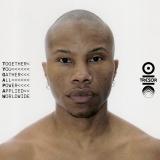
May 2026 marks the arrival of TYGAPAW (aka Dion McKenzie)’s first full-length album on Tresor Records, entitled Together You Gather All Power Applied Worldwide. An acronym of its creator’s name, TYGAPAW’s third studio album is a deeply personal collection of music building worlds where Black queer and trans siblings can thrive, while unifying dancefloors worldwide. A proposition that collective wisdom liberates us from the matrix of domination we live within. The album unfolds as the latest chapter in TYGAPAW’s ongoing techno opera opus, continuing to center the voices of Black women, which surface as layered incantations rather than lyrics - powerful, haunting, sensual, activating.
With the process of creating the album starting in 2023, as TYGAPAW (Dion McKenzie) was in the first year of their transition, the music reflects the intensity of that period, where they were experiencing deplatforming as a response to the shift in their physical appearance: Tracks like ‘M32 Riddim’ and ‘Helicopter hovers over my Crown Heights Apartment’ feature high-paced rhythms intersecting with intense siren-like synths to form demanding compositions echoing a heightened sense of alert. Yet throughout the album, relief comes in the form of TYGAPAW’s vocal features, co-conspirators, and chosen family, whose voices are treated with reverb and echo, a sonic fingerprint that leads back to the pioneers in the legendary studios of TYGAPAW’s native land, Jamaica, an important reminder that the past will always inform the future. It is an album for dancers first and foremost, where joy, defiance, and integration with the natural body coexist, and every drop feels less like a climax than a transformation. Expect a bass that permeates your soul and melodic synthesized sequenced phrases echoing the dancehall eras of TYGAPAW’s youth, reshaped into hypnotic melodies that glow over industrial kicks designed to command attention, reasserting Jamaica's pioneering yet often overlooked contribution to electronic music.
In the opening track, ‘Can I Live’, Precious Okoyomon’s words feel like the beginning of a ritual; setting the intentions for the rest of the proceedings. As McKenzie puts it, their “work is about regeneration, resetting, getting integrated into nature, and about rebirth. That’s the tone I wanted to set at the outset of the album.” Ms Carrie Stacks continues this thread of support in ‘Don’t Panic’ with heavily processed vocals on top of a beat that takes inspiration from another important ingredient in the antidote to the oppression of isolation: Ballroom culture. “ I feel like I found my queerness in Ballroom, that’s why this track is very important to me.”
Echoes of NYC Black queer nightlife scene also permeate in the energetic drums of ‘Exorcise the Language of Domination’, in which Julianna Huxtable’s spoken performance complements the various movements and tones of the music. “My producer brain thought this was the one that Juliana’s vocals would be best suited for. I hinted: ‘what do you think of this one?’ She just went into her notes and picked some passages to go with the first section of the track. From there, it was a year-long process of development. It required time and space for this thing to evolve, but I think it’s one of the most powerful tracks on the album.” London’s SUUTOO contributes the album’s only musical collaboration on ‘B2B’, a track that emerged from sessions in McKenzie’s New York studio where the real objective was to connect and have fun; a time out from the demands of life outside.
The album closes out with a double hit of emotion in the form of ‘Effects of Resistance and Black Trans Masculine Experience’. The former features South African scholar Khanyisile Mbongwa drawing connections that exist between Africa and the Black diaspora, whilst looking to the future and calling for a shared sense of community.
The latter piece, an instrumental version of the piece which featured on the IMMIGRANT E.P. of 2025 is a gentle and deeply affecting end to the record, a place of peace and acceptance. This end-of-cycle tone is mirrored in the sleeve photography, which also ties back to IMMIGRANT by finally revealing what was hidden: a portrait of the artist fully self-actualized; a step towards true inner liberation. TYGAPAW is sonically defiant across this album; bass frequencies feel tactile — less heard than inhabited — infectious lead synth melodies remain with you long after the track ends. An overall sound that leaves asserting an urgent need for connection. From Detroit to New York to Berlin to Jamaica, despite geographic distance, this album reminds us that we remain in solidarity, recognising that meaningful world-building requires collective input and action, both personal and communal, if we are to move toward liberation.
Lennart, a Dutch Producer Who Has Called Berlin Home for Several Years, Boasts an Impressive Discography With Releases on Ritmo Fatale, KopjeK Records, Italo Moderni, and Zonefocus. His Latest Creation, the "With Love Ep" Exclusively Crafted for Our Esteemed Label Skylax Records, Stands as a Testament to His Exceptional Talent and Serves as a Captivating Journey for Enthusiasts of Italo Disco, Dark Disco, New Wave, and Proto-House. the Ep Kicks Off With a Bang With the Mesmerizing "With Love," Featuring an Arpeggio That Enthralls the Senses, Reminiscent of the Brilliance Found in Todd Terje's Finest Works. "Traumwelt" Follows With Its Immersive and Ethereal Atmosphere, While "Roffa" Delivers Another Electrifying Banger. on the Flip Side, the Intensity Doesn't Wane. "Chrome" Bursts Onto the Scene With Its Vibrant Energy, "Security" Echoes the Brilliance of Klein & Mbo, and the Ep Concludes With the Enigmatic "One Night at Wetrinsky," a Track That Bears the Unmistakable Mark of Legowelt. in Essence, the "With Love Ep" Is a Stroke of Genius, Showcasing Lennart's Mastery of His Craft and Solidifying His Position as a True Visionary in the Realm of Electronic Music....
Adding to the allure, the artwork has been masterfully designed by the legendary H5 studio, a pillar of the French Touch movement. Known for their work with Daft Punk, Air, Étienne de Crécy, Röyksopp, and Vitalic, as well as for their Oscar-winning short film Logorama, H5 now handles all SKYLAX RECORDS artworks, bringing their signature visual excellence to each release
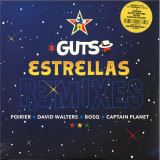
" In 2022, Guts brought together his musical family for his ‘Estrellas’ album. An ambitious project that brought together musicians from: Franc, Cuba and various African countries. For a journey that was as rich artistically as it was humanly. The list of superlatives was almost endless, "Formidable", "incredible", "unforgettable" and "magical" all thrown into the pot, during these magical moments in the Dakar studio. From the seventeen tracks heard on the original album, three have been entrusted to the expert and inventive hands of four producers, who have come up with new interpretations bringing Africa and the Caribbean together for a modern dancefloor.
‘Por Que Ou Ka Fe Sa’ (Poirier Remix)
From his studio in Montreal, Canadian Poirier has opted for a strong groove and relentless bass drum to keep out intruders, putting vocalists David Walters and Brenda Navarrete in a rhythmic cocoon. Accompanied in a slightly moody bassline that adds some driving muscle to the track. The hooky guitar line eventually gives way to the saxophone that emerges from the mix to parade around the front line. The original electric piano is replaced by a synth pad that loops and spins driving the track to its conclusion.
‘Por Que Ou Ka Fe Sa’ (David Walters Remix)
Before recording this track, David Walters and Brenda Navarette didn't even know each other. So in the magic of the moment that brought them together is a genuine and sincere artistic bond. It is no longer Guts but David who is at the musical helm, and before they too can savour the connection between the two artists, the dancers will have to pass through an overheated corridor where a Caribbean rhythm resonates with percussion. Digital and woodwind swirl and clash until the vocal encounter with the artists. It's a moment of respite that's as suspended as it is life-saving, because the exit is also via the famous corridor.
‘San Lazaro’ (Bosq Remix)
On Bosq’s mix, he’s opted to maintain things focused on the dancefloor, keeping the percussion persistent for the unleashed bodies of the dancers to smile. It's once again the walking bass line rises to the forefront of the groove, softening the shocks of the relentless kick drum. Roberto Valdes's timeless piano has disappeared, while guitars float and add to the atmosphere. The track is no longer awash in cigar smoke. Under Akemis's powerful vocals the low ceiling has disappeared, and the open roof is more a brass-lit spectacle. That doesn't make things any less overheated though, this one is sweaty until the end.
‘Medewui’ (Captain Planet Remix)
Captain Planet brings the dancer’s attention to the Afrobeat flavored jam that rocked the original, highlighting the Pat Kalla & Assane Mboup duet. Despite the track remaining mid tempo, laying back is no longer the order of the day as this mix really develops. The drums are more present jolting along with the organ in the first half. Once all the storytellers have taken their microphones, the rhythmic beats are doubled and the track is carried towards a frenzy of Afro-Latin dancing. Fired up by the brass and percussion, it’s this almost switch up that takes hold of the second part of the tune, with some righteous authority and relentless piano and trumpet."
2024 Repress
Finally the official remastered reissue of one of the rarest and sought after italo-disco record from early 80's. You'll be hard pushed to hear anything like this ever again... this is an epic out there electronic production that's one of a kind. In the same period of other italo-disco classics like REM, STOPP, Klein & MBO, GANG previously reissued by Best Italy, they representing the roots of chicago sound played by the pioneers like Ron Hardy!
A central theme in the life and work of the British DJ pioneer Greg Wilson, UK electro is a page turner. With the seminal Street Sounds compilation from 1984 (please see Greg’s blog for the whole story) being the beacon, there are still a few overlooked corners.
XXXO by Equip is one of them. Originally intended to be part of said release and produced by Greg Wilson, Martin Jackson and Andy Connell (like most of the comp), it was turned down at the time. Sounding like a like a proto -house template with a dash of Klein & MBO, it wasn’t considered strong enough at the time, but found it’s way to the public as a one-sided 12“ in 2006, it felt like a brand-new track as it perfectly correlated with the electro influenced underground dance music mainstream at the time (Chicken Lips et al.). Here it is again: remastered, rekindled and unreduced cut to 45rpm. For full disclosure please see the liner notes on the back cover.
Pressed and released for the first time on this planet though are the ICA Beats Pt 1 & Pt 2. Intended to be backing tracks for a UK Electro live appearance in August ´84, they haven’t seen the light of day until now. Both Restored and re-edited with some help of label owner Gerd Janson, they are fierce examples of the sound at the time. Sitting between rhythm tracks and experimental drum machine compositions (and a short greeting from their creators’ other project Syncbeat), it makes you wonder how one could have lived for so long without them. The history of the past enables you to dream of the future.
Every record includes a downloadcode to get the whole digital release for free via Facebook !!
Moenstrous teamplay EP on Moensterbox. The family in form of Moenster and Rene Onze gets joined
by newcomer Tasaka and Dan Caster & Toby Montana (Stil Vor Talent, Shaker Plates).
Played & supported by Monika Kruse, Hanne & Lore, Patrick Kunkel, Gunjah, Arts & Leni, Paco Osuna, Carlos Sanchez and many more.
Zosh! is no debut but its the first track since ages. Gunjah releases
a maturred record with his longterm experience from countless hours
behind the decks. With a lot of precision and clean arrangement this
is nothing besides the rest..its Techno on the point. The Remix is coming from a man who - like Gunjah - breathes electronic music since years: Daniel Stefanik. (Cocoon, Mobilee, Freude Am Tanzen, Moon Harbour).
After several releases on labels like Bar25, Microtonal, Dantze and Etui Records End Of Tape finally hit the box with their Tape Jam EP.
These guys don´t talk with each other, they just do music and that´s the best. The result of this gone wrong musician friendship (but tight producer team at the same time) you can celebrate with this EP.
This is no snow from yesterday, it´s the musical climatic change of tomorrow - without any opportunity. Played & supported by Paco Osuna, Anderson Noise, Lexy, Electric Rescue, Beatamines, Gabriel Ananda, Piemont, Carlo Lio, Markus Kavka and many more.
- Molinard Danser Cha-Cha
- Mibali Bakomi Mpasi Na Leo
- Soki Ye Te Nani ? “Carra”
- Amida Asukisi Molato
- Ya Mbala
- Kingotolo Mbuta Ngani Mbote
- Muasi Ya Motema Mabe
- Para Fifi
- Clarie Télé
- Moto Na Esika Na Ye
- Toponaki Bino Boyokana
- Kongo Ya Bankoko
- Kajinga Victorine
- Mama Seba
- Ekoti Ngai Hopitalo
- Pachito Eche
- Mi José
- Bueno Valentina Cha Cha
- Lolango Helena
- Lolaka Lwa Bale
- Lalouma De Belen
- Liwa Ya Emery
- Mboka Mosika Mawa
- Zongela Nzela Na Ngai
- Motema Ya Fa Fa
- Mbanda Mwasi Alingi
- Liwa Ya Champagne
- A Girl I’m Looking For
- 1: Ogyatanaa Show Band - You Monopolise Me
- 2: Honny And The Bees Band - Psychedelic Woman
- 3: Wellis Band - Bindiga
- 4: The Uhuru Dance Band - Yahia Mu
- 5: Sawaaba Soundz - Owuo
- 6: St. Peter And The Holy Men - Bofoo Beye Abowa Den
- 7: Asaase Ase, Ebo Taylor - Ohiani Sua Efir
- 8: Hedzoleh Soundz - Edinya Benya
- 9: Honny And The Bees Band - Sisi Mbon
- 10: The Black Star Sound - Nite Safari
Seminal sounds from the golden age of Ghanaian music. Highlife, rock, and soul collide and merge with tradition and culture. New styles meet old styles. A new generation renews old musical customs. New fashions meet old fashions, creating new fusions. Features rare tracks from Hedzoleh Soundz, Ogyatanaa Show Band, Honny & the Bees and early Ebo Taylor (Asaasa Sa). These tracks were originally available on vanishingly rare 70s pressings, then a highly collectible 5LP box set released in 2009. This special vinyl edition is produced in conjunction with the James Barnor archive, featuring a previously unpublished 1976 photo from the archive of Ghana’s most famous photographer. Comes with Obi-strip.
- A1: Mbongé 2:58
- A2: Loango With Esther Abrami 3:45
- A3: Intra 2:44
- A4: Résurgence 2:44
- A5: Jour De Pluie 3:06
- A6: Puerto Plata 2:52
- B1: Seuls 2:48
- B2: As It Should Be 2:30
- B3: Amaël With Esther Abrami 2:32
- B4: Rose Bloom With Vienna Radio Symphony Orchestra & Irene D 3:59
- B5: Momentum 3:17
- B6: Umbra 3:13
- B7: The Ascendence 3:07
"Ephemeral Memory" ist das Debütalbum von Hip-Hop-Produzent, Komponist und Multi-Instrumentalist Braths, aka Thomas Horeczko, bei Sony Music. Darauf präsentiert der für seine Zusammenarbeit mit Hip-Hop Stars wie Apache 207, reezy, Nimo und Olexesh, Chapo102, oder Ezhel bekannte Musiker eigene instrumentale Kompositionen. Miniaturen für Soloklavier verbindet er mit gelayerten Streicherklängen und melancholischen Orchesterarrangements zu einer eigenen, atmosphärischen Klangwelt. Viele Instrumente hat Braths dabei selbst eingespielt, als Special Guests sind Esther Abrami und das ORF Radio-Symphonieorchester Wien auf dem Album zu hören. "Ephemeral Memory" ist für den 1998 in Paris als Sohn einer sudanesischen Mutter - einer Cellistin - und eines ukrainischen Vaters - einem Komponisten - geborenen Braths eine Hommage an die Geschichte seiner Familie und Vorfahren. Das Album thematisiert die Migrationserfahrung seiner eigenen Familie und die damit verbundenen, latenten Erinnerungen und komplexen Emotionen, die über Generationen fortbestehen. Erfahrungen wie Sklaverei und die Mühe Grenzen und Nationalitäten zu überwinden, spielen dabei eine Rolle. Braths wurde 1998 in Paris als Sohn einer sudanesischen Mutter, einer Cellistin, und eines ukrainischen Vaters, einem Komponisten, geboren und war von klein auf von Musik umgeben. Sein vielfältiger kultureller Hintergrund, bereichert durch jüdische und muslimische Wurzeln, hat seine mehrsprachige Identität als europäischer Weltbürger geprägt. Als klassisch ausgebildeter Geiger und versierter Musiker begann Braths seine musikalische Reise im Alter von vier Jahren und beherrscht sieben Instrumente, darunter Geige, Gitarre, Saxophon, Fagott und Klavier. Nach seinem Umzug nach Berlin, um Tontechnik und Jazzkomposition zu studieren, machte er sich schnell einen Namen in der europäischen Hip-Hop-Szene und arbeitete mit einigen den größten Künstlern des Genres zusammen, wie Apache 207, reezy, Nimo und Olexesh. In "Ephemeral Memory" kombiniert Braths seine facettenreichen Einflüsse zu einzigartigen, atmosphärischen Instrumentalkompositionen, die die Zuhörer dazu einladen, über ihre eigenen Geschichten und Emotionen nachzudenken.
- A1: Klein & Mbo - Dirty Talk (European Connection Mix)
- A2: Electric Workers Feat Funny Randon - The Garden (Vocal)
- A3: Sun La Shan - Catch (Vocal Version)
- B1: Camaro‘s Gang - Ali Shuffle
- B2: Steel Mind - Bad Passion (Remixed Disco Version)
- B3: The Creatures - The Other World Robots (Extended Mix)
- C1: Den Harrow - To Meet Me (A-Version)
- C2: Sylvi Foster - Hookey
- C3: Koto - Chinese Revenge (Maxi Version)
- C4: Peter Richard - For You For Only You
- D1: Mito - Droid
- D2: Wanexa - The Man From Colours
- D3: Advance - Megamix By Flemming Dalum (Take Me To The Top)
Unsere erfolgreiche CD-Compilation-Serie ZYX “Italo Disco History“ gibt es jetzt auf vielfachen Wunsch unserer Italo Disco Fans auch als Vinyl Ausgabe. Wie bei der CD-Serie starten wir im Jahr 1982. Auf 2 farbigen Vinylen gibt es die großen Italo Disco Hits aus dem Jahr 1982, In Zusammenarbeit mit der Italo Disco Legende Flemming Dalum werden wir chronologisch die große Italo Disco Ära der 80er Jahre beleuchten. In diesem Jahr konnten sich erste Künstler etablieren, die in den folgenden Jahren große Erfolge feierten, wie z.B. Den Harrow oder Koto. Als Bonus gibt es einen exklusiven Megamix von Flemming Dalum, inkl. der Titel, die sich auch auf der CD-Serie befinden. Abgerundet wird diese Compilation von Liner Notes von Flemming Dalum.
Ngwaka Son Systéme’s debut album Iboto Ngenge means “power struggle” or “seizing the opportunity” but while words can only be roughly translated, the music reaches listeners unambiguously: A potent mixture of techno, rumba, soukous, zagué and dancehall with the unique “Kinoise” brand fresh out of Kinshasa, the Congolese megacity that never stops innovating in the music landscape worldwide. Ngwaka Son Systéme is led by musicians Love Lokombe and Bom’s Bomolo, having previously founded the band KOKOKO!. This new project continues the contemporary Congolese tradition of reinventing electronic music by shaping and crafting music instruments made of household objects. As a means to continue strengthening the links between Africa and Latin America, Eck Echo has tasked Colombian dub engineer Diego Gomez with the analog mixing of the stems, originally recorded by Levy David at Timbela Ba Studio in Kinshasa. With the aim to bring the lexicon of shared Colombian and Congolese music into the next chapter, we proudly present to the world the magnificent music of Ngwaka Son Systéme. The inadvertently techno-oriented Lakala, a trance-inducing experience where listeners can quickly relish to the lyrics even without speaking Lingala, for the shapes of the words are already inviting listeners to dance, sing and smile, all the while virtuoso percussionist Steroy operates the DIY-drum kit at high-tempo. The call-and-response effect, where each musician lends their voice to the choir, is particularly felt in Bo Lobi Pe, where the vocals guide us ever so playfully to the tune of an acoustic guitar that invites us to take off our shoes, kick back and relax. Zanga Mbongo (translated as “there is no money”) is lyrically a proud anthem to celebrating life in spite of economic scarcity, and musically it is a triumphant renewal to the legendary soukous genre of the 1970s, championed by worldwide renowned stars such as Pepe Kallé and Sam Mangwana.
- A1: Missema - Mbela Bongo
- A2: Groupe Kounabeli De Masuku & Patience Dabany - Abaga Mbouga
- B1: Oyana Efiem Pelagie - Biloa
- B2: Groupe D’animation U F.p.d.g. - Mpebe
- B3: Groupe D’animation U F.p.d.g. -Tchatcha Tchatcha
- C1: Kolikagie De Masuku - Miali Mi Kolikagie
- C2: Mi Kouagna De Mounana - Legnila Nde Obele
- C3: Groupe D'animation Kakoula Djele De Bongoville - Yaya Omar Bongo
- D1: Kounabeli De Mbilasuku - Lekou Mobi
- D2: Groupe | Kounabeli De Masuku & Orchestre Banowita - Lessimbi
- D3: Patience Dabany - Ayanga
Gabon, 1980’s. President Omar Bongo has been in power since 1967. Together with his wife, the infamous singer Patience Dabany, he invents one of the ultimate political propaganda machine: ‘animation groups’, massive female choirs and dancers, up to 60 women deep, singing the praise of his regime over some of the best soukous rhythms ever, broadcasted live on TV.
Between 1982 and 1989, mainly thanks to the flourishing oil economy, a record-label is created, a state-of-the-art recording studio is set up, and the best Gabonese and Congolese musicians are recruited. Dozens of vinyls are pressed and sold with huge success all over the country.
The Bongo family has reigned continuously over Gabon until the 2023 coup d’état.
Always traveling, El Gato Negro, the moniker of "nomadic" singer/songwriter and multi-instrumentalist, stopped this time in Dakar, Senegal to record his new album “Tigre qui pleure” (“Crying Tiger”). In a combination of West African and Cuban musicians, under El Gato's Colombian flute, Jazz blends with Hip-Hop, traditional with digital, French with Wolof and Spanish. In this third album, produced by GUTS, El Gato Negro invited his musical family (Florian Pellissier, Kumar, Orchestra Baobab, Cucurucho Valdés, Pat Kalla, Cyril Atef, iZem, Djeuhdjoah & Lieutenant Nicholson...) and dropped his festive mask to let Axel, the melancholic, express himself.
Ndox Electrique results from the collaboration between François R. Cambuzat, Gianna Greco (also known for their work with Ifriqiyya Electrique), and the n'doëp community in Senegal. The project originated from the duo's quest to trace the origins of North African rituals, which led them to the Lebu community in Cap-Vert, an isolated region at Africa's westernmost point.
The album seamlessly blends the duo's electronically-infused avant-rock with the intense, ritualistic vocal chants and rhythmic percussion of the n'doëp community. It serves as a captivating bridge between these two musical worlds, capturing the essence of this cross-cultural collaboration.
The text also highlights the challenges of merging Western rock and experimental influences with the sensibilities of their Senegalese collaborators, ultimately resulting in a unique and powerful musical experience. "Ndox Electrique" transcends cultural boundaries, immersing listeners in the enchanting sounds and mystical narratives of Western Africa.
- A1: Logic System - Unit
- A2: Kraftwerk - Computerwelt (2009 Remastered
- B1: Whodini - Magic's Wand
- B2: Rocker's Revenger - Walking On Sunshine (Feat Donnie Calvin
- C1: Klein & Mbo - Dirty Talk (European Connection
- D1: Liaisons Dangereuses - Los Niños Del Parque
- D2: Yello - Bostich
- E1: The The - Giant
- F1: The Residents - Kaw-Liga
- G1: Clan Of Xymox - Stranger
- G2: A Split - Second - Flesh
- H1: Severed Heads - Dead Eyes Opened
- H2: The Weathermen - Poison!
- I1: New Order - Blue Monday
- J1: Anne Clark - Our Darkness
- J2: 16 Bit - Where Are You?
- K1: Phuture - We Are Phuture
- K2: Model 500 - No Ufo's (Vocal
- L1: Frankie Knuckles Feat Jamie Principle - Your Love
- L2: Quest - Mind Games (Street Mix
- M1: Jasper Van't Hof - Pili Pili
- N1: Guem Et Zaka Percussion - Le Serpent
- N2: Hugh Masekela - Don't Go Lose It Baby
- O1: Sly & Robbie - Make 'Em Move
- Q1: The Ecstasy Club - Jesus Loves The Acid
- R1: Foremost Poets - Reason To Be Dismal?
- S1: Lhasa - The Attic
- S2: A Guy Called Gerald - Voodoo Ray
- T1: M/A/R/R/S - Pump Up The Volume - Usa 12" Mix
- T2: Bobby Konders - Nervous Acid
- U1: Meat Beat Manifesto - Helter Skelter
- V1: Raze - Break 4 Love
- W1: Sueño Latino With Manuel Goettsching Performing E2-E4 - Sueño Latino (Paradise Version
- X1: Off - Electrica Salsa
- O2: Brian Eno - David Byrne - Help Me Somebody
- P1: Primal Scream - Loaded (Andy Weatherall Mix
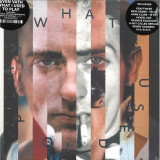
For this uniquely personal retrospective spread over twelve vinyl discs, Sven Väth takes us back to the early days of his DJ career. On What I Used To Play we meet great pioneers of electronic music, gifted percussionists, obscure wave bands, and innovative producers of a bygone 'new electronic' era. Rough beats and irresistible grooves from the identification stage of house, techno, and acid remind us not just how far electronic music has evolved over the past four decades, but how great it was to dance to EBM, techno, and house for the very first time.
If there is one protagonist of the electronic music scene who has remained curious, innovative and at the very cutting edge of music for over four decades, it's Sven Väth. His multi-layered artist albums and Sound of the Season mix compilations have been defining the genre for over two decades, and even today, he is constantly on the lookout for the next top tune to add to the highlights of his next set. At least, that's the case when he's not producing them himself as an artist or remixer. "Actually, it's always been part of my DNA to think ahead," and nothing had been further from his mind than looking back at his past, but when in spring of 2020 the international DJ circuit had to be scaled down to virtually zero, the 'restless traveler' suddenly had time. Time to stop and reflect on "how it actually was back then, at the very beginning of my career..."
"It was a great trip and with every track, beautiful memories came flooding back".
In the London apartment, he had just moved into, Sven has set up a "little music room", where he cocooned himself for several days, "to look way back for the first time and review my musical journey through the eighties, so to speak."
The interim result was six thematically oriented playlists with a grand total of 120 tracks from 'early 80s' to 'Balearic late 80s', together with excursions into afrobeat, European new wave, and EBM sounds and a few epochal techno/house tracks from the USA in between. From these 'Best of Sven Väth's favorites', the project What I Used To Play crystallized. Sven remembers how the Cocoon team reacted to his proposal: "They found the idea of making a compilation out of it MEGA from the beginning and everyone said 'Sven, go for it', but then, of course, the work really started, namely, to clear the rights and to get clean sounding masters of the up to 40-year-old tracks. There was also disappointment, of course. We couldn't clear certain titles because the rights holders in the USA had fallen out with each other or simply disappeared from the scene. In short, it wasn't easy, but now I can safely say we got the most important tracks."
Finally, after two years of research, curation, design, and administrative fine-tuning, the "little retrospective" from 1981 to 1990 is available. The exquisitely packaged, and three-kilo heavy box set is not only physically impressive, WIUTP is also the definitive record of Sven Väth's musical development. On each of the twenty-four sides of vinyl, you can trace track by track, what influenced him during which phase, and how he took off as a DJ from his parents' Queen's Pub straight into the spotlight at Dorian Gray. There and at Vogue (later OMEN), Sven became the style-defining player in the DJ booth that he still is today.
1981 - 1990: Future Sounds of Now
In the early eighties, the crowd in clubs like Vogue and Dorian Gray danced to what nowadays we call 'dance classics' - mainly disco, funk, soul, and chart pop. It was up to a new generation of DJs, including Sven Väth, the youngest protagonist in the Rhine-Main area at the time, to create their own club-ready music mix. Good new tracks and potential floor-fillers were rarities that had to be sought out and found, in order to prove oneself worthy.
Without MP3s, internet streaming, or other digital download possibilities, music didn't just gravitate to the DJ, instead, it had to be tracked down. In well-stocked record stores in Frankfurt and Wiesbaden or even in Amsterdam, London, or New York, Sven and friends sourced the material for countless magical nights. On WIUTP we can follow Sven's very personal journey through this wild, innovative era in which synth-pop, funk, hip-hop, and disco were successively replaced as 'club music' by house, techno, acid, and breakbeat. By the end of the decade, it was clear to see that these once exotic 'fringe' phenomena would soon become 'mass' phenomena.
Early 80s
Dirty Talk by the Italian-American duo Klein & M.B.O. represents the most innovative phase of the Italo-disco genre in the early eighties like no other track. Mario Boncaldo (I) and Tony Carrasco relied entirely on the original synthetic drum and percussion sounds of the Roland TR-808, coupled with the raunchy vocals of Rossana Casale and guitar accents of Davide Piatto. Of course, other tracks from this period were also influential in style, most notably Unit by Logic System, which worked as the perfect soundtrack to the laser lighting system at the legendary Dorian Gray club. With stomping beats and robotic rap interludes, Bostich by Yello also belongs on Sven's eternal playlist - after all, it caught the attention of Afrikaa Bambaataa, who invited the Swiss duo to perform at the Roxy in New York in 1983.
EBM Wave - Mid 80s
From today's point of view, the almost ten-minute-long, downtempo track Giant by Matt Johnson's band project The The, would probably not be considered an obvious club classic. However, a closer (re)listen reveals the rhythmic intricacies of the percussion overdubs by JG Thirlwell (aka Foetus) on Johnson's composition, and it becomes clear why this exceptional piece of music is one of Sven's absolute favorites. Other classics from this phase include Kaw-Liga by the mysterious The Residents, the hypnotic-synthetic Our Darkness by Anne Clark (and David Harrow), and last but not least, the somber, monotonous anthem Where Are You? by 16Bit, one of Sven Väth's projects together with Michael Münzing, Luca Anzilotti from 1986.
US House - Late 80s
You certainly can't talk about Chicago house without mentioning Frankie Knuckles. The resident DJ at the Warehouse not only gave the name to an entire genre, but also produced epochal floor fillers on the Trax label like the timeless Your Love, sung (and moaned) by Jamie Principle. Acid house protagonists Phuture also hail from Chicago, and on We Are Phuture (also released on Trax) we hear the chirping acid sounds of the legendary Roland TB-303 in full effect. Another featured classic is No UFO's by Detroit's Model 500 aka Juan Atkins, who is rightly considered the 'Godfather of Techno' even if the genre-defining track from 1985 still breathes with the spirit of hip-hop and electro from the first breakdance era.
Afrobeat
Le Serpent, by Algerian-born Abdelmadjid Guemguem, is a track that sounds completely different from everything else on WIUTP. Made in 1978, it's a monumental, rousing groove created without bass or synths, just with five congas! Even though Guem sadly passed away in 2021, his immortal, acoustic beats are understood all over the world and will continue to enrich many thousands of DJ sets for years to come. Another classic that not only Sven appreciates beyond measure is Hugh Masekela's Don't Go Lose it, Baby. In addition to being one of the most important jazz pioneers, the trumpeter and freedom fighter from Johannesburg was very experimental, integrating electronic sounds into his music in later years, in a similar vein to Miles Davis and Herbie Hancock. Dutch jazz pianist Jasper van't Hof's afrobeat project Pili Pili has also aged well. The trance-like, almost sixteen-minute-long track of the same name, manages to fill a whole side on the seventh of twelve vinyl discs in the WIUTP box.
UK-US-Euro - Late 80s
Time for a change of scene, in the truest sense of the word, and from a musical perspective, this section is like landing on another planet. First up is Andrew Weatherall's classic remix of Primal Scream's Loaded, featuring the iconic Peter Fonda sample (lifted from the 1966 biker film Wild Angels) that came to personify the mood triggered by the British Second Summer of Love in the late eighties: "We wanna be free to do what we wanna do, and we wanna get loaded...". This period also saw the emergence of M/A/R/R/S whose only single, 1987's Pump Up The Volume, became a club classic with support from DJ legend CJ Mackintosh. In this most eclectic of sections, we also encounter New York house and reggae producer Bobby Konders and his seminal Nervous Acid.
Balearic - Late 80s
Those who know him, know that Sven had already lost his heart to the 'magic island' of Ibiza as a teenager, so with that in mind, the WIUTP project couldn't end without a Balearic chapter. Inspired by Manuel Göttsching's E2-E4, the immortal, eponymously titled Sueño Latino belongs in there without question. Equally popular on the island was, and still is Break 4 Love by Raze, which thinking about it, would also fit perfectly into the house chapter. Last, but not least, there's an overdue reunion with Sven Väth himself, in his role as frontman of the successful Frankfurt trio OFF. Together with Michael Münzing and Luca Anzilotti (later of Snap!) this 'Organization For Fun' created the off-the-wall club hit Electric Salsa in 1986 which incidentally turned into an international chart smash, putting Sven in the enviable position of having to decide between pop stardom and a DJ career. Well, we all know how that decision turned out and the rest, as they say, is history. A not insignificant part of his story is What I Used To Play. Enjoy!
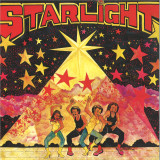
South African production duo of Emil Zoghby and John Galanakis were responsible for a string of high-quality disco singles in the early 80s, typically cover versions of international hits — Klein & MBO’s ‘The Big Apple’, Sly & the Family Stone’s ‘Family Affair’ & David Joseph’s ‘You Can’t Hide (Your Love From Me)’ — backed with their own compositions. When Starlight hit the market with an album in 1983, it featured only one cover, the local hit ‘Picnic’, along with five of the duo’s original compositions, including their similarly styled response, ‘Picnicing’, which replaces the original’s sax with spaced-out synth stabs. Then there’s ‘Jah Jah Love’, an ecstatic disco sermon of dancefloor dynamite weighing in at over eight and a half minutes. Other tracks on this landmark album — ‘Let’s Go Dancing (Boogie Boogie)’, ‘Keep On Moving’ and an eponymous instrumental — offer a similar fusion of classic disco with newer Italo and proto-house influences: machine music with a human touch! Remastered from the original master tapes and reissued for the first time, Starlight will be available on vinyl and digital platforms from early 2023 (40 years after its initial release) via Afrosynth Records.
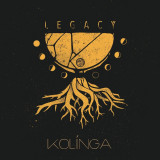
"I wanted to talk about what I know best, which life from my perspective" Rébecca M’Boungou is not unaware of the universal part of her mixed race life so many upheavals, splendors, melancholies, pleasures or pains present in this century.Kolinga tells much more than the musical adventure of a dark-skinned country girl from southwestern France who expresses herself in French, English and Lingala on a music which drawsfrom pop, Congolese rumba, jazz, soul, song, hip hop...
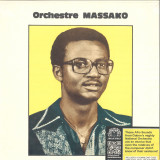
We are very excited to announce the release of "Orchestre Massako", the 14th compilation in our Analog Africa Limited Dance Edition serie. For this project we focussed on Afro Sounds from Gabon's mighty National Orchestra and its legendary band leader, Jean-Christian Mboumba Mackaya known as Mack-Joss, literraly the baobab of Gabonese music. Two songs also feature the singer Amara Toure, whose specific voice is impossible not to recognise and who has already been in the center of the previous compilation "Amara Toure 1973-1980" released back in 2015.
Montparnasse Musique is a balance of two distinct sensibilities: Algerian-French producer Nadjib Ben Bella’s passion for raw organic beats, and South African DJ Aero Manyelo’s love of DIY synthesis in the digital realm. It’s a bold blend of fresh and processed flavours; the acoustic grit of traditional Africa combined with the pulse of modern Johannesburg — gqom, kwaito, techno, afrohouse. Together they produce an electro-acoustic sound, loaded with infectious hooks, uncompromising and authentic. For their self-titled debut EP, the cross-continental duo collaborates with Congolese bands Kasai Allstars, Konono Nº1, Mbongwana Star and Basokin on five audacious dance tracks forged from the tribal rhythms and mystic voices of the Kasai rainforests, amplified by the aggressive growl of hand-wrought instruments from Kinshasa’s urban wilderness, and augmented with the slick precision of an EDM toolkit. The end result is an inevitable evolution of Congotronics into a sharp-edged, club-ready sound. Nadjib Ben Bella is a DJ and producer who draws influences from the gnawa music of his North African roots and a diverse range of Sub-Saharan sounds from musicians he has worked with over the years. Most recently he has been touring Europe with West African band Les Amazones d’Afrique. Aero Manyelo, a name now synonymous with the burgeoning South African house scene, has honed a distinctive electronic sound that translates across the international club circuit and has attracted a broad range of collaborators — including Idris Elba and The Mahotella Queens on the opening track of an album inspired by the Nelson Mandela biopic Long Walk to Freedom. The EP was recorded and mixed by Kwezydoctor at Khaima Studio in Lille, France.
c 3 Bitumba (feat. Mbongwana Star) Extended
d 4 Sukuma (feat. Muambuyi) [Extended]
[Extended]
Heavy South African cut, unearthed by Dene from LCT, All about the massive title track ''Got My Magic Working''... Phat bassline, machinegun claps dipped in acid!
The origins of Amajika is a tale of two worlds colliding at the perfect moment and begin in KwaMushu Township outside Durban. Here would be where a young Tu Nokwe would set up a school to help teach other aspiring youngsters like herself in music, dance and acting. This would become known as the Amajika Youth and Children’s Art Project and would be run from the Nokwe home, a common hangout for artists at the time. Some boast 2000+ pupils going through this program while others claim it wasn’t more than a backyard dance group, but for the lucky group of kids that were members in the mid 80s it would be their chance at stardom.
It was during these years that a young aspiring playwright and musician Mbongeni Ngema had come across Tu and her group of gifted youngsters at the Nokwe family home. Although he was touring extensively at the time with the plays Woza Albert and Asinamali, the latter which eventually ended up on broadway, he would spend any time off from the tour with Tu and her dance troop. After being inspired by the American group New Edition, Mbongeni envisioned Amajika as the South African answer and decided to bankroll a studio session.
The session would take place in a private studio in Durban.The release of the first single would follow very shortly. The lead track, Tomati-So is a fun swinging groove over some basic programmed drums. The song is dedicated to Tu Nokwe sings of her unique style and kind heart. On his next tour Mbongeni would take the remaining masters with him to the US and had the track remixed. Although it never materialized in a release States side he did return with the remixed tape and release it in South Africa the following year. Much like Tomato So the song was an ode and would be dedicated to the man who was making all their dreams come true. Got My Magic Working sings of going overseas and being a star on Broadway and TV and the man who is making it all happen. All these true predictions are sung on top of a groovy acid bass by a clearly matured troop of artists.
During these years of working with Amajika, Mbongeni became very impressed with the exceeding talent of one of the members and decided to cast her in his upcoming musical Sarafina. The other children also wanted to be a part of the Broadway show but not everyone would get a role. This would be the end of Amajika as the next years would be dedicated to creating success on the musical stage. The growing kids that formed Amajika became young adults and pursued their own careers after the fact. Tu Nokwe would leave the country to return years later as the wife of Shaka Zulu on the big screen. To this day she is still very active both on stage and screen while Mbongeni is still writing and adding to the South African Musical Theatre catalog.
Fast forward 30 years from the original release to a smokey club where ESA hears Got My Magic Working played by Rush Hours Store’s own Bonnefooi. Instantly he inquires about the track from his homeland and feels it a perfect addition the repertoire of the Afro Synth band he is quietly cooking up. The band’s instrumental take ended up as the B side on a mysterious and limited white label released by Rush Hour in early 2020 but quickly sold out.
Here you have compiled the two title tracks from original Amajika singles along with the instrumental version by ESA’s Afro Synth Band for The complete Amajika experience, past to present.
Imagine for a minute that Klein MBO would return from the Italo heaven to deliver a brand new EP. How amazing would that be? Sometimes such miracles lay just around the corner. Nijmegen based Luca Dell’Orso found some sort of time machine that brought him back to the days of Disco Magic and Il Discotto; a time where wobbly synths, heart felt handclaps and sweet melodies flled the air. After appearances on Red Laser Records, Bordello A Parigi and Shmlss’ label XXX it’s time for his debut on Utrecht based SoHaSo sublabel OOSSHA. Filled to the rims with stylish Italo-disco, the Eternal Waves-EP has it all. Slow motion Gaz Nevada-esque disco on Common Occurrence (which comes with two beautiful Cosmo Vitelli-remixes); sun blissed and fast paced happiness on Return Of You and stark new wave- vibes on Constriction. Closer Bont & Blauw proves that Luca understands the essence of the genre. It has the same fnesse of the best Gazebo-records, back in the day. If you have a heart for italo, you don’t want to miss this perfect wave.
Founded in 1990 in Minneapolis, Minnesota, Cold Front were what you'd call early adaptors, their music at the time of its inception an oddity. This fourpiece, consisting of spouses Ayanna and Cam Muata, Jon Jon Scott and Ron Clark, were far ahead of their time and faded just as rapidly as they entered the stage, only playing a handful of local shows in support of Nine Inch Nails, Meat Beat Manifesto and such, alongside several cameos during early house nights and techno events.
Though short lived, their music nevertheless speaks volumes. It's intriguing stuff, a magical association of sound reminiscent of Ron Hardy and Klein MBO. New Beat-like drum parts, overdubbed by politically engaged raps, basslines that would make The Cure proud, held together by freakout speaking in tongues vocal experiments while also showing an obvious parallel to the rise of triphop at the other side of the ocean.
Beyond the Beat will burst dancefloors soon. In collaboration with Paris' recordshop Dizonord, Knekelhuis will close the summer of 2019 with this amazing gem.
Limited edition unreleased 12" containing two italo disco and proto house classics anthems : Who, What, Where, When & Why on the side A and No Promises on the flip side.
Both taken from the Magic Spell Album produced by Mario Boncaldo & Tony Carrasco in 1983, the same guys from Klein & MBO, Plastic Mode, Amnesie and Ris. This unreleased 12" contains for the first time the extended disco versions of these two precious gems taken and re-mastered from the archive collection of the legendary Tony Carrasco.
40 years after the original release, Nanga Boko Records is very proud to
present you the official reissue of De Bonaberi A Douala, the first album from
the Cameroonian musician Nkotti François and his band The Black Styls.
Limited edition, high quality remastered sound, includes a very detailed
biography in both English and French languages with exclusive pictures for a
better comprehension of the work of the musician, and a voucher to download
the album in a HQ digital format.
Approved by the artist himself, 100 % legit, all 8 tracks are under exclusive
license of Nanga Boko Records.
- A1: The Loi-Toki-Tok Band - Ware Wa
- A2: Slim Ali & The Famous Hodi Boys - Watoto Nyara
- A3: Orchestre Baba National - Sweet Sweet Mbombo
- B1: Gatanga Boys Band - Wendo Ti Mbia
- B2: Hafusa Abasi & Slim Ali With The Yahoos Band - Sina Raha
- B3: Nashil Pichen & The Eagles Lupopo - Ng'ong'a Wa Mwanjalo
- B4: Nairobi Matata Jazz - Tamba Tamba
- C1: The Lulus Band - Ngwendeire Guita
- C2: Mbiri Young Stars - Ndiri Ndanogio Niwe
- C3: The Lulus Band - Nana
- C4: Afro 70 - Weekend
- D1: The Rift Valley Brothers - Mu-Africa
- D2: Do 7 Band - H.o. Ochiri
- D3: Afro 70 - Cha-Umheja
- D4: Peter Tsotsi Juma & The Eagles Lupopo - Kajo Golo-Weka
- E1: New Gatanga Sound - Thonia Ni Caki
- E2: Sophia Ben & The Eagles Lupopo - See Serere
- E3: Kalambya Boys - Kivelenge
- E4: The Loi-Toki-Tok Band - Leta Ngoma
- F1: Huruma Boys Band - Theresia
- F2: Orchestre Veve Star - Nitarudia
- F3: The Mombasa Vikings - Mama Matotoya
- G1: The Lulus Band - Mutumia Muriu
- H1: Ndalani 77 Brothers - Nzaumi
Selected East African Recordings From The 1970s & '80s !
Mbongwana Star is a newly formed band from Kinshasa, the capital of the Democratc Republic of Congo. Made up of a sprawling network of shanty-towns and night shelters, day-to-day life in the city is far from easy, but the band don't want sympathy. Tired of pre-conceptons around African music, Mbongwana Star ('Mbongwana' means 'change') are creatng their own identty, fusing traditonal Congolese rhythms with post punk and´electronics inspired by life in the townships around them,
'making magic out garbage' says producer and band member Doctor L (who produced Tony Allen's
'Black Voices' album). The result is revolutonary. This isn't an African band per se. It's a trans-global barrier-bustng sound
machine. '..an altogether unique vibe. We will be paying close atenton' - Boilerroom
- 1