Recorded at the Studio Acousti, Paris, September 23, 1965.
Original LP issue: International Polydor Production – 46.871.
This self-titled album is a testimony of the short lived-band led by New-York drummer Ron Jefferson during his stay in Paris in the mid-60s. After a first album under his name on Pacific Jazz in 1962, the founding member of The Jazz Modes and the Les McCann trio made the trip overseas.
Here, he made his living by playing with the popular pianists Errol Parker or Hazel Scott but his main drive was this trio that he formed with two other US expats, bassist Roland Haynes (the same musician who recorded an album on Black Jazz as a pianist, as confirmed by Kirk Lightsey) and guitarist Buz Saviano. After a highly successful show at ‘Palais de Chaillot’ in 1965, they were invited for a series of concerts in Dakar Sénégal. On their return, Polydor International proposed them this session. You can hear the deep impact their stay in the Motherland had on their music on the stand-out track ‘Africa the Beautiful’. On pair with the best of Yusef Lateef’s afro-eastern explorations from the time, it showcases Ron on flute and Senegalese percussion. The album release nonetheless was a commercial failure that prompted the band’s separation and Ron’s return to New-York where he performed until his passing in 2007.
Only a few copies of this record ever made it to the shops at the time and very few have had the chance to listen to it before this legit reissue remastered from the original MONO master tapes.
– Antoine Rajon –
Ron Jefferson (Drums & Flute)
Buz Saviano (Guitar)
Roland Haynes (Bass)
Jackie Robinson (Vocal on The Speaker)
Suche:mc jeff
. For Fans Of: The Weather Station, Weyes Blood, Adrianne Lenker, Phoebe Bridgers, Joan Shelley, Lana Del Rey, Cass McCombs, Angel Olsen & Neil Young. Camelot, the legendary seat of King Arthur’s court in Early Middle Ages Britain, was probably not a real place. A corruption of the name of a real Romano-Briton city, the word “Camelot” accumulated symbolic, mythic resonances over centuries, until achieving its present usage as a near-synonym of “utopia.” In the mid-20th century alone, Camelot inspired an explosion of representations and appropriations, among them the violent, affectless Arthurian court of Robert Bresson’s 1974 film Lancelot du Lac and the absurdist iteration of Monty Python’s 1975 Holy Grail, both of which feature armoured knights erupting into fountains of blood; the mystical Welsh world of novelist John Cowper Powys’s profoundly weird 1951 novel Porius, with its Roman cults, wizards and witches, and wanton giants; and the nationalist nostalgia of President John F. Kennedy’s White House. Unsurprisingly there are fewer Camelots in more recent memory. Camelot, Canadian songwriter Jennifer Castle’s extraordinary, moving 2024 chronicle of the artist in early middle age, charts a realer, more rooted, and more metaphorical place than the fabled Camelot of the Early Middle Ages (or its myriad depictions), but it too is a space more psychic than physical. In Castle’s Camelot, the fantastic interpenetrates the mundane, and the Grail, if there is one, distills everyday experience into art and art into faith, subliming terrestrial concerns into sublime celestial prayers to Mother Nature, and to the unfolding process of perfecting imperfection in one’s own nature. Co-produced by Jennifer and longtime collaborator Jeff McMurrich, her seventh record is at once her most monumental and unguarded to date, demonstrating a mastery of rendering her verse and melodies alike with crisply poignant economy. For all their pointedly plainspoken lyrical detail and exhilarating full-band musical flourishes, these songs sound inevitable, eternal as morning devotions. “Back in Camelot,” she sings on the lilting, vulnerable title track, “I really learned a lot / circles in the crops and / sky-high geometry.” The album opens with a candid admission of sleeping “in the unfinished basement,” an embarrassing joke that comes true. But the dreamer is redeemed by dreaming, setting sail in her airborne bed above “sirens and desert deities.” If she questions her own agency whether she is “wishing stones were standing” or just “pissing in the wind” it does not diminish the ineffable existential jolt of such signs and wonders. This abiding tension between belief and doubt, magic and pragmatism, self and other, sacred and profane, and even, arguably, paganism and monotheism, suffuses these ten songs, which limn an interior landscape shot through with sunstriped shadows of “multi-felt dimensions” both mystical and quotidian. The epic scale and transport of “Camelot,” with its swooning strings, gives way dramatically to “Some Friends,” an acoustic-guitar-and-vocals meditation in miniature on Janus-faced friends and the lunar and solar temperatures of their promises—“bright and beaming verses” versus hot curses which recalls her minimalist last album, 2020’s achingly intimate Monarch Season. (In a symmetrical sequencing gesture, the penultimate track, the incantatory “Earthsong,” bookends the central six with a similarly spare solo performance and coiled chord progression, this time an ambiguous appeal to … a wounded lover? a wounded saint? our wounded planet?). Those whom “Trust” accuses of treacherous oaths spit through “gilded and golden tooth” cynics, critics, hypocrites, gurus, scientists, doctors, lovers, government, the so-called entertainment industry sow uncertainty that can infect the artist, as in “Louis”: “What’s that dance / and can it be done? What’s that song / and can it be sung?” Answering affirmatively are “Lucky #8,” an irrepressible ode to dancing as a bulwark against the “tidal pools of pain” and the “theory of collapse,” and “Full Moon in Leo,” which finds the narrator dancing around the house with a broom, wearing nothing but her underwear and “big hair.” But the central question remains: who can we trust, and at what cost faith, in art or angels or otherwise? Castle’s confidence in her collaborators is the cornerstone of Camelot. Carl Didur (piano and keys), Evan Cartwright (drums and percussion), and steadfast sideman Mike Smith (bass) comprise a rhythm section of exquisite delicacy and depth. This fundamental trio anchors the airiness of regular backing vocalists Victoria Cheong and Isla Craig and frames the guitars of Castle, McMurrich, and Paul Mortimer (and on “Lucky #8,” special guest Cass McCombs). Reprising his decennial role on Castle’s beloved 2014 Pink City, Owen Pallett arranged the strings for Estonia’s FAMES Skopje Studio Orchestra. On the ravishing country-soul ballad “Blowing Kisses” Pallett’s crowning achievement here, which can be heard in its entirety in the penultimate episode of the third season of FX’s The Bear Jennifer contemplates time and presence, love and prayer and how songwriting and poetry both manifest and limit all four dimensions: “No words to fumble with / I’m not a beggar to language any longer.” Such rare moments of speechlessness “I’m so fucking honoured,” she bluntly proclaims suggest a state “only a god could come up with.” (If Camelot affirms Castle as one of the great song-poets of her generation, she is not immune to the despairing linguistic beggary that plagues all writers.) Camelot evinces a thoroughgoing faith not only in the natural world including human bodies, which can, miraculously, dance and swim and bleed and embrace and birth but also in our interpretations of and interventions in it: the “charts and diagrams” of “Lucky #8,” a daydreamt billboard on Fairfax Ave. in LA in “Full Moon in Leo,” the bloody invocations of the organ-stained “Mary Miracle,” and all manner of water worship, rivers in particular. (Notably, Jennifer has worked as a farmer and a doula.) The album ends with “Fractal Canyon”s repeated, exalted insistence that she’s “not alone here.” But where is here? The word “utopia” itself constitutes a pun, indicating in its ambiguous first syllable both the Greek “eutopia,” or “good-place” the facet most remembered today and “outopia,” or “no-place,” a negative, impossible geography of the mind. Utopia, like its metonym Camelot, is imaginary
Camelot, the legendary seat of King Arthur's court in Early Middle Ages Britain, was probably not a real place. A corruption of the name of a real Romano-Briton city, the word "Camelot" accumulated symbolic, mythic resonances over centuries, until achieving its present usage as a near-synonym of "utopia." In the mid-20th century alone, Camelot inspired an explosion of representations and appropriations, among them the violent, affectless Arthurian court of Robert Bresson's 1974 film Lancelot du Lac and the absurdist iteration of Monty Python's 1975 Holy Grail, both of which feature armored knights erupting into fountains of blood; the mystical Welsh world of novelist John Cowper Powys's profoundly weird 1951 novel Porius, with its Roman cults, wizards and witches, and wanton giants; and the nationalist nostalgia of President John F. Kennedy's White House. Unsurprisingly there are fewer Camelots in more recent memory. Camelot, Canadian songwriter Jennifer Castle's extraordinary, moving 2024 chronicle of the artist in early middle age, charts a realer, more rooted, and more metaphorical place than the fabled Camelot of the Early Middle Ages (or its myriad depictions), but it too is a space more psychic than physical. In Castle's Camelot, the fantastic interpenetrates the mundane, and the Grail, if there is one, distills everyday experience into art and art into faith, subliming terrestrial concerns into sublime celestial prayers to Mother Nature, and to the unfolding process of perfecting imperfection in one's own nature. Co-produced by Jennifer and longtime collaborator Jeff McMurrich, her seventh record is at once her most monumental and unguarded to date, demonstrating a mastery of rendering her verse and melodies alike with crisply poignant economy. For all their pointedly plainspoken lyrical detail and exhilarating full-band musical flourishes, these songs sound inevitable, eternal as morning devotions. "Back in Camelot," she sings on the lilting, vulnerable title track, "I really learned a lot / circles in the crops and / sky-high geometry." The album opens with a candid admission of sleeping "in the unfinished basement," an embarrassing joke that comes true. But the dreamer is redeemed by dreaming, setting sail in her airborne bed above "sirens and desert deities." If she questions her own agency_whether she is "wishing stones were standing" or just "pissing in the wind"_it does not diminish the ineffable existential jolt of such signs and wonders. This abiding tension between belief and doubt, magic and pragmatism, self and other, sacred and profane, and even, arguably, paganism and monotheism, suffuses these ten songs, which limn an interior landscape shot through with sunstriped shadows of "multi-felt dimensions" both mystical and quotidian. The epic scale and transport of "Camelot," with its swooning strings, gives way dramatically to "Some Friends," an acoustic-guitar-and-vocals meditation in miniature on Janus-faced friends and the lunar and solar temperatures of their promises_"bright and beaming verses" versus hot curses_which recalls her minimalist last album, 2020's achingly intimate Monarch Season. (In a symmetrical sequencing gesture, the penultimate track, the incantatory "Earthsong," bookends the central six with a similarly spare solo performance and coiled chord progression, this time an ambiguous appeal to _ a wounded lover? a wounded saint? our wounded planet?) Those whom "Trust" accuses of treacherous oaths spit through "gilded and golden tooth"_cynics, critics, hypocrites, gurus, scientists, doctors, lovers, government, the so-called entertainment industry_sow uncertainty that can infect the artist, as in "Louis": "What's that dance / and can it be done? What's that song / and can it be sung?" Answering affirmatively are "Lucky #8," an irrepressible ode to dancing as a bulwark against the "tidal pools of pain" and the "theory of collapse," and "Full Moon in Leo," which finds the narrator dancing around the house with a broom, wearing nothing but her underwear and "big hair." But the central question remains: who can we trust, and at what cost faith, in art or angels or otherwise? Castle's confidence in her collaborators is the cornerstone of Camelot. Carl Didur (piano and keys), Evan Cartwright (drums and percussion), and steadfast sideman Mike Smith (bass) comprise a rhythm section of exquisite delicacy and depth. This fundamental trio anchors the airiness of regular backing vocalists Victoria Cheong and Isla Craig and frames the guitars of Castle, McMurrich, and Paul Mortimer (and on "Lucky #8," special guest Cass McCombs). Reprising his decennial role on Castle's beloved 2014 Pink City, Owen Pallett arranged the strings for Estonia's FAMES Skopje Studio Orchestra. On the ravishing country-soul ballad "Blowing Kisses"_Pallett's crowning achievement here, which can be heard in its entirety in the penultimate episode of the third season of FX's The Bear_Jennifer contemplates time and presence, love and prayer_and how songwriting and poetry both manifest and limit all four dimensions: "No words to fumble with / I'm not a beggar to language any longer." Such rare moments of speechlessness_"I'm so fucking honoured," she bluntly proclaims_suggest a state "only a god could come up with." (If Camelot affirms Castle as one of the great song-poets of her generation, she is not immune to the despairing linguistic beggary that plagues all writers.) Camelot evinces a thoroughgoing faith not only in the natural world_including human bodies, which can, miraculously, dance and swim and bleed and embrace and birth_but also in our interpretations of and interventions in it: the "charts and diagrams" of "Lucky #8," a daydreamt billboard on Fairfax Ave. in LA in "Full Moon in Leo," the bloody invocations of the organ-stained "Mary Miracle," and all manner of water worship, rivers in particular. (Notably, Jennifer has worked as a farmer and a doula.) The album ends with "Fractal Canyon"'s repeated, exalted insistence that she's "not alone here." But where is here? The word "utopia" itself constitutes a pun, indicating in its ambiguous first syllable both the Greek "eutopia," or "good-place"_the facet most remembered today_and "outopia," or "no-place," a negative, impossible geography of the mind. Utopia, like its metonym Camelot, is imaginary. Or as fellow Canadian songwriter Neil Young once sang, "Everyone knows this is nowhere." "Can you see how I'd be tempted," Castle asks out of nowhere, held in the mystery, "to pretend I'm not alone and let the memory bend?"
First Word Records are very proud to present a brand new album from Kaidi Tatham!
'An Insight To All Minds' is Kaidi's 3rd solo album under his own name, following several EPs and two albums for First Word; 2018's acclaimed 'It's A World Before You' and the re-press of his seminal 2008 sophomore album 'In Search Of Hope' last year.
For those that don't know, Kaidi Tatham is a legendary multi-instrumentalist. Once dubbed "the UK's Herbie Hancock" by Benji B, he's a virtuoso on the keys and a true innovator in sound production as one of the original creators of the Broken Beat sound. Over the years his musical prowess has blessed numerous projects, initially with the likes of Bugz In The Attic and The Herbaliser, and more recently with DJ Jazzy Jeff (through the PLAYlist projects), Andrew Ashong (on the acclaimed 'Sankofa Season' EP last year) and with longtime accomplice, Dego. This in addition to session work for artists such as Mulatu Astatke, Slum Village, Amy Winehouse, Soul II Soul and Leroy Burgess, along with First Word label mates such as Eric Lau, Children of Zeus and Darkhouse Family. Kaidi is also a revered DJ known for rocking parties globally, whilst his solo catalogue spans tons of EPs and releases for labels such as 2000 Black, Eglo and Theo Parrish's Sound Signature.
On 'An Insight To All Minds', Kaidi says it's "not about a destination, but a process. It's about how you drive, not where you're going. Nothing in this world can torment you as much as your own thoughts… We are all going through it. We can all feel what the next person is feeling, believe it or not. It's learning how to tap into it".
The album is comprised of an assortment of Kaidi's unique flavours - uptempo jazz-funk bruk, laced with rhodes, flutes, live bass and delicious percussion. Using that blueprint he moves effortlessly through latin and samba, half-step, deep afro house and a sprinkle of curveballs, all presented in Kaidi's inimitable way.
'Intergalactic Relations' brings with it some 110bpm synthed-out spacey electro-breaks, 'Could It Be' sets off sounding like a Morricone film score, whilst 'Rodney' is some serious heads-down business; stark and punchy off-kilter broken beat and vocal stabs. There are a few guests too - 'Chungo' sees the return of Uhmeer (who previously appeared on 'Cupid' on the album 'It's A World Before You'); here the young Philly MC deftly rides a 9/4 time signature beat. Meanwhile 'Stro Kyat' invites in another supreme talent, Stro Elliot (The Roots), who provides a suitably crisp & crunchy riddim to accompany Kaidi's key play over a mind-bending 5/4 time signature.
With this new album, Kaidi Tatham adds further to his already impressive catalogue, a body of work that falls within the cracks of jazz and dance music, exemplifying modern British black brilliance once again; uncompromising, innovative, groundbreaking, intricately sophisticated and deeply funky. His fanbase expands on every release and it's no surprise that that fanbase includes peers such as Madlib ("ahead of his time"), Gilles Peterson ("a key part of an entire movement"), K15 ("a limitless source of inspiration"), Alexander Nut ("a true virtuoso") and Kyle Hall.
Blue[28,99 €]
Still just 19-years-old, Toby Lee is already a three-time winner of Young Blues Artist of the Year at the UK Blues Awards - yet the virtuoso guitarist is only getting started. Praised as a remarkable talent by the likes of Jools Holland and Joe Bonamassa, 2024 represents a big breakthrough year as Toby releases his first album of all-original material ‘House On Fire’ on October 4th via 100% Records. As you’d expect from someone that The Times hailed as, “One of the best guitarists in Britain,” his six-string talents dazzle throughout with a rich tapestry of scorching leads, evocative melodies and swaggering grooves. Yet his vocals have come on leaps-and-bounds, his maturity and emotional expression providing a voice strong enough to front a band regardless of his guitar skills. His songs and stylistic scope have expanded too, with a set that moves seemingly effortlessly between classic blues jams, punchy hard rock, intimate acoustic moments and a modernist approach to classic soul and Stax-style R&B. It’s all played with a winning combination of youthful abandon and undeniable accomplishment. Toby Lee’s talents have been recognised by an array of legends. When he was 10, a get well soon video that he made for BB King went viral, leading to an invitation from the blues legend’s family to play at his club in Memphis, while the late Bernie Marsden was an early mentor and champion. He subsequently shared the stage with the likes of Buddy Guy, Joe Bonamassa, Slash, Billy Gibbons and Peter Frampton, while enjoying other high profile moments, such as starring in a West End production of ‘School of Rock’, performing with McFly on ‘Tonight at the London Palladium’ and featuring in ‘The Ellen DeGeneres Show’. Toby has now exceeded 500 million views on social media. His ability has been recognised with numerous endorsements. He has been a Gibson artist since the age of 10, and a recent highlight came when he helped launch Gibson’s custom Jeff Beck ‘YardBurst’ 1959 Les Paul Standard alongside fellow guests including Jimmy Page, Johnny Depp and Graham Coxon. Blackstar Amplification issued his own signature amp, the St James Toby Lee 50 6L6 head and cab, and he is also endorsed by D’Addario Strings.
Black[28,78 €]
Still just 19-years-old, Toby Lee is already a three-time winner of Young Blues Artist of the Year at the UK Blues Awards - yet the virtuoso guitarist is only getting started. Praised as a remarkable talent by the likes of Jools Holland and Joe Bonamassa, 2024 represents a big breakthrough year as Toby releases his first album of all-original material ‘House On Fire’ on October 4th via 100% Records. As you’d expect from someone that The Times hailed as, “One of the best guitarists in Britain,” his six-string talents dazzle throughout with a rich tapestry of scorching leads, evocative melodies and swaggering grooves. Yet his vocals have come on leaps-and-bounds, his maturity and emotional expression providing a voice strong enough to front a band regardless of his guitar skills. His songs and stylistic scope have expanded too, with a set that moves seemingly effortlessly between classic blues jams, punchy hard rock, intimate acoustic moments and a modernist approach to classic soul and Stax-style R&B. It’s all played with a winning combination of youthful abandon and undeniable accomplishment. Toby Lee’s talents have been recognised by an array of legends. When he was 10, a get well soon video that he made for BB King went viral, leading to an invitation from the blues legend’s family to play at his club in Memphis, while the late Bernie Marsden was an early mentor and champion. He subsequently shared the stage with the likes of Buddy Guy, Joe Bonamassa, Slash, Billy Gibbons and Peter Frampton, while enjoying other high profile moments, such as starring in a West End production of ‘School of Rock’, performing with McFly on ‘Tonight at the London Palladium’ and featuring in ‘The Ellen DeGeneres Show’. Toby has now exceeded 500 million views on social media. His ability has been recognised with numerous endorsements. He has been a Gibson artist since the age of 10, and a recent highlight came when he helped launch Gibson’s custom Jeff Beck ‘YardBurst’ 1959 Les Paul Standard alongside fellow guests including Jimmy Page, Johnny Depp and Graham Coxon. Blackstar Amplification issued his own signature amp, the St James Toby Lee 50 6L6 head and cab, and he is also endorsed by D’Addario Strings.
Born in Aldershot on 11 September 1947, Catley's family moved to the Tile Cross area of Birmingham when he was young. He went on to attend the nearby Central Grammar School for Boys (Birmingham) and left to start an apprenticeship at the GPO before deciding on a musical career shortly after meeting similarly minded individuals at college. Whilst at college he joined several bands, such as The Smokestacks (Jeff Clark-guitar, Ron Savage-guitar, Derek Danks-bass & Brian Worrell-drums, Life and Clearwater). His first professional band was when he joined local outfit The Capitol Systems. The initial line-up was Bob Catley (vocals) Paul Sargent (guitar) Paul Whitehouse (bass), Dave Bailey (keyboards) and Bob Moore (drums). Shortly afterward they changed their name to Paradox, inspired by a science-fiction novel. A one-off deal was arranged with Mercury after Paradox had come to the attention of Francis Rossi and Rick Parfitt. The tracks were "Ever Since I Can Remember", backed with "Goodbye Mary". In addition, they recorded "Mary Colinto" and "Somebody Save Me". All of these songs were written by Dave Morgan. Paradox played festivals in the Netherlands and Italy before splitting up upon their return to the UK in 1970. Formed in 1972, Magnum throughout the next 16 years consisted mainly of Bob Catley on vocals and Tony Clarkin on guitar. Magnum began as the house band at Birmingham's famous Rum Runner night club (later the home of Duran Duran). They began to develop their own style by playing Clarkin's songs at a residency at The Railway Inn, in Birmingham's Curzon Street, in 1976. Joining Clarkin and Catley were drummer Kex Gorin and bassist Dave Morgan (later a member of ELO). Their most notable success during these early years was the Jeff Glixman produced Chase The Dragon (1982) which reached No. 17 in the UK, and included several songs that would be mainstays of the band's live set, notably ‘Soldier of the Line’, ‘Sacred Hour’ and ‘The Spirit’. Their breakthrough album came in 1985 with On a Storyteller's Night which featured the single ‘Just Like an Arrow’. This success continued in the following years with the Roger Taylor (Queen) produced Vigilante in 1986, the top 5 album Wings of Heaven in 1988, and the Keith Olsen produced Goodnight L.A. reaching No. 9 in the UK album charts in 1990. Subsequently, Clarkin decided to maintain a tighter control, and after their initial mainstream success, the band lost their major label backing and returned to a more personal level of production. This finally found the band splitting and the formation of Hard Rain in 1995, which saw Clarkin pursue a more Pop orientated direction with a band that included Sue McCloskey on lead vocals. This new direction didn’t sit well with Catley, and after a headline performance at The Gods in the late 90s, a conversation with Bruce Mee of Now & Then Records saw Catley agree with a decision which eventually led to his debut solo album, ‘The Tower’. This release was completely written by Gary Hughes of Ten, with the writing completely decided to be in the vein of classic Magnum. The album itself was recorded by various members of Ten, including the amazing Vinny Burns (Dare) on guitar. On release, the many positive reviews concluded that the release of ‘The Tower’ had succeeded beyond its wildest imagination…..and Bob Catley’s solo career had been launched with amazing success!! With a lyrical intricacy and majestic pomp, songs like ‘Far Away, ‘Fear of the Dark, ‘Madrigal’ and ‘Deep Winter’ take you back to that glorious period of Magnum between ‘Chase The Dragon’ and ‘Wings Of Heaven’ whilst hard melodic rockers such as ‘Scream’, ‘Dreams’ and title track ‘The Tower’ show just what Magnum would have sounded like if they’d gone a little bit harder. Another absolutely brilliant album that totally deserves to be filed alongside those mid-period Magnum classics.
`Think Differently' is the debut LP by the duo of Callahan & Witscher. Jeff Witscher has been one of the most daring voices in underground American music for two decades, highlighted by releases on Pan and NNA Tapes. Jack Callahan's focused, uncompromising approach to sound caught the attention of both Demdike Stare's DDS label and Swiss composer Jürg Frey, who took Callahan on as his first composition student. Fans of their individual work might expect opacity, disruption, or rhythmic irregularity from their collaboration, but `Think Differently' sounds like a pitbull in a convertible, a sand-kicking beach party, the dopamine hit you get from 311 or Smash Mouth. It's a punchy, crunchy, highly infectious record. How did Callahan & Witscher cut the path from the ghostly margins of avant garde musics to the gutters of post-grunge American hard rock? In the words of Callahan, "at some point, you start to need a stronger drug." The most potent characteristic of this stronger drug is the guitar. And not just any guitar, but a sassy, contagious, blithe guitar. Its presence is a drastic shift for two guys who've combined to make dozens of records over the years, not a single one of which has a recognizable guitar sound on it. Alongside the cool breezes and hyperactive fretwork of Callahan's guitar playing, the songs are backboned by strutting, groove-happy vocals: all bark, all bite. Every song is a careful collage, light but dense, ornate with gang choruses, soulful femme vocals, autotune and whisper scratches. This accumulation almost manages to hide the record's potent undertow of dread. `Think Differently' unfolds carefully, a slow-motion demolition that reveals the anxiety of second guessing, the exhaustion of tour, creative bankruptcy, willful misunderstanding, the pain of caring. Setting this lyrical cynicism against such sonic glee isn't a spoonful of sugar, it isn't a bait-and-switch, it isn't a prank. After all, the dumb bliss of Sugar Ray's "Fly" shades a song about Mark McGrath's mom dying. "All Star" is about climate change. Most Sublime lyrics are a bummer. But there's still room for a raised beer, for a dumb grin. Like these ancestors, Callahan & Witscher aim at maximum uplift, at sounds that warm and dazzle like a sped-up sunrise. In spite of overdraft fees, in spite of bad art, in spite of self-doubt.
Reflection is also-ran late-'60s British blues-rock, with more rock-oriented takes on the kind of approach used by heroes Freddie King and B.B. King. B.B. King's "You'll Never Know," in fact, is covered here, though most of the material was penned by the band. Steamhammer doesn't put much of an original spin on its sources, or on the British blues-rock form, though this is competent and does generally have a moodier, more downbeat feel than most of the band's competition in the genre. The expressive qualities of Kieran White's voice, though, are limited, as though he's being pinched by something that keeps him from letting go too much. The best moments come when they venture just a little outside of the ordinary U.K. blues-rock model, particularly when Harold McNair adds some jazzy flute; "Down the Highway" sounds a little close to some of early Jethro Tull. Future Jefferson Starship member Pete Sears plays session piano. The 2002 CD reissue on Akarma adds two bonus tracks from 1969 singles, "Windmill" and "Autumn Song," which are more explicit forays into the more melodic jazz-blues-rock direction mined by the likes of Jethro Tull, Colosseum, and Davy Graham in the late '60s, again with prominent flute. ~ Richie Unterberger
Sea Blue Vinyl[27,31 €]
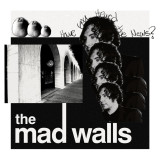
Eight years since the breathtaking Somewhere Anywhere EP, The Mad Walls return to re-ignite psych rock with this gorgeous, floatily heavy, effortlessly groovy and sublimely sinuous debut LP. Driven by bone shaking acoustic guitar, visceral drums, wonderfully trippy basslines and the throwaway perfection of Christopher Mercado’s spooked vocals. Pure rock n’ roll yet devoid of cliché. Informed by, but no way in hock to, early MC5, Skip Spence, Sonic Youth, Syd Barrett and Jefferson Airplane when they still all lived together.
Recorded on tape in Mercado’s garage, there’s a DIY heart with epic results across sixteen songs. Only one track over three minutes and some under thirty seconds. “It’s just chatter about life and human feelings. Stylized human expression”. - Is Christopher's self effacing explanation of his mind bending, playful, storytelling. It opens with the walloping drum canter/bass attack of WHO WANTS TO DIE FOR RELIGION. Passes through the furious distorted acoustic guitar solo on I TELL YOU HOW I FEEL. The woozy, elastic time-stretching of COOL TRIPPER. The brief, funky lurch of IN YOUR DREAM YOU ARE NO ONE. The almost lush, cinematic SEVEN DAYS which conjures Serge Gainsbourg by way of Moby Grape. HIP COMMA’s floaty strut and the groovy raga of MAKA THE NATIVE, which has not one but two ‘breath solos’. CLOUDS OF DUST is a skeletal Krautrock fragment and THERE ONLY IS a luminous psych-pop single. Final track APPLES ends the album with a sinewy twelve bar blues and a killer psych guitar break. Bliss.
Somehow the MAD WALLS manage woozily florid and sharp as a blade. Studiedly detailed but effortless. Whip smart and dumb. And as we said at the start - just gorgeous…
Black[25,17 €]
Eight years since the breathtaking Somewhere Anywhere EP, The Mad Walls return to re-ignite psych rock with this gorgeous, floatily heavy, effortlessly groovy and sublimely sinuous debut LP. Driven by bone shaking acoustic guitar, visceral drums, wonderfully trippy basslines and the throwaway perfection of Christopher Mercado’s spooked vocals. Pure rock n’ roll yet devoid of cliché. Informed by, but no way in hock to, early MC5, Skip Spence, Sonic Youth, Syd Barrett and Jefferson Airplane when they still all lived together.
Recorded on tape in Mercado’s garage, there’s a DIY heart with epic results across sixteen songs. Only one track over three minutes and some under thirty seconds. “It’s just chatter about life and human feelings. Stylized human expression”. - Is Christopher's self effacing explanation of his mind bending, playful, storytelling. It opens with the walloping drum canter/bass attack of WHO WANTS TO DIE FOR RELIGION. Passes through the furious distorted acoustic guitar solo on I TELL YOU HOW I FEEL. The woozy, elastic time-stretching of COOL TRIPPER. The brief, funky lurch of IN YOUR DREAM YOU ARE NO ONE. The almost lush, cinematic SEVEN DAYS which conjures Serge Gainsbourg by way of Moby Grape. HIP COMMA’s floaty strut and the groovy raga of MAKA THE NATIVE, which has not one but two ‘breath solos’. CLOUDS OF DUST is a skeletal Krautrock fragment and THERE ONLY IS a luminous psych-pop single. Final track APPLES ends the album with a sinewy twelve bar blues and a killer psych guitar break. Bliss.
Somehow the MAD WALLS manage woozily florid and sharp as a blade. Studiedly detailed but effortless. Whip smart and dumb. And as we said at the start - just gorgeous…
X - Atlantic Records 75th Anniversary Edition will now be available on crystal clear vinyl.
Ed Sheeran recorded X at various locations around the globe (all the while drawing on experiences and influences encountered on his over three years of unrelenting touring) with such luminary producers as Rick Rubin (Eminem, Jay-Z, Red Hot Chilli Peppers), Pharrell Williams (Daft Punk, Robin Thicke, N.E.R.D), Benny Blanco (Rhianna, Wiz Khalifa) and Jeff Bhasker (Alicia Keys, Jay-Z) adding new flavours to the classy work of key collaborators Johnny McDaid (Snow Patrol) and Jake Gosling (who produced +).
Originally released in 2014, X features singles ‘’Don’t’’, ‘’Sing’’, ‘’Thinking Out Loud’’, ‘’Bloodstream’’ and ‘’Photograph’’.
Over the course of a couple of years in the mid-1970s, several musicians from the St. Louis, Missouri area gave notice to club and festival crowds that they were there to rock the house down. Their cover and original songs were accentuated by a bedrock rhythm section, heavy guitar riffs and tasty solos, topped off with powerful vocals. Rockers that witnessed them agree—Back Jack created solid songs and high-energy performances. Beginning in 1971 as Trellis, the band members changed their name to Back Jack when they saw the bumper sticker that Kim McKinney’s dad, Jack McKinney, distributed during his election bid for the Mayor of Pacific, Missouri, home of the core three-piece band: Kim McKinney, Mike Collier, and Hans Myers (RIP). The 1974 version of Back Jack was active from very early 1974 to late-fall of 1974. The core three-piece band, Collier, McKinney, and Myers, recorded several tracks during their tenure and four of those tracks are included on this release. Temporary band members not on the recordings were Gary Reed (piano, RIP), Greg Witt (guitar, keyboards), Paul Cockrum (guitar), and Bill Niehoff (drums). The four-piece, 1975 version of Back Jack was a merging of members of Back Jack 1974 (Mike Collier and Kim McKinney) and another local band, Osage Lute (Jeff Ballew and Mike Lusher). They were active from late-fall of 1974 to late-summer of 1975. Four of the tracks on the Back Jack LP were recorded by these four musicians.
- A1: Ten City - Devotion (Club Mix)
- A2: Marshall Jefferson Presents Truth - Open Our Eyes (Celestial Mix)
- B1: Marshall Jefferson Vs. Noosa Heads - Mushrooms (Salt City Orchestra Out There Mix)
- B2: Jungle Wonz - Time Marches On (Re Vision)
- C1: Cece Rogers - Someday (Club Mix)
- C2: Hercules - 7 Ways (Vocal)
- D1: Sterling Void & Paris Brightledge - It's Alright (House Mix)
- D2: Sleezy D. - I've Lost Control (Re Vision)
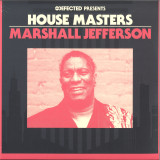
Defected welcomes one of Chicago house’s founding fathers Marshall Jefferson into the illustrious list of House Masters with this exclusive wax release. An artist that has successfully navigated major cross-over success while retaining utmost respect from the inner circle of electronic music’s underground, Marshall has been behind countless seminal records over his five-decade career. Now a selection of the very best tracks from his new House Masters compilation appear together on vinyl for the very first time, showcasing the impressive output of this house pioneer from his most well-known solo records, to major production credits, key remixes and the underground gems still favoured by selectors today.
Cutting his teeth as a producer for Chicago’s Universal Recording Studios, Marshall was one of the most active DJ and producers on the Windy City’s music scene during the 1980’s house music boom. Working under a plethora of aliases such as Virgo, Jungle Wonz, Truth and On The House, as well as producing for names such as CeCe Rogers, Curtis McClain and Evelyn "Champagne" King, Marshall’s status as a bona fide house music luminary is well documented.
‘Defected presents House Masters - Marshall Jefferson’ is an all-encompassing guide to his tremendous career. A trailblazer and genre-defining artist, Defected is honoured to welcome Marshall into the House Masters Hall of Fame with this very special vinyl compilation.
Viele von uns werden sich täglich daran erinnern müssen, dass es nicht mehr 1967 ist. "We All Belong" von DR. DOG ist eines dieser Meisterwerke, dass eine Standleitung zu der Quelle hat, an der sich seinerzeit auch Brian Wilson, Neil Young, Robbie Robertson, John Lennon und Paul McCartney gütlich taten, um so erfrischt einige der besten Songs der Geschichte zu schreiben. DR. DOG haben damit einen Klassiker geschaffen, der nicht nur absolut zeitlos, sondern reich an Seele, voll von purem Rock'n'Roll und manchmal auf so unheimliche Weise vertraut ist, dass man sich sofort zu Hause fühlt - trotzdem jedoch bleibt der Sound auf ,We All Belong" einzigartig. Die Produktion steht ebenso in der Schuld von George "The 5th BEATLE" Martin wie auch Jeff Mangum (NEUTRAL MILK HOTEL). Die Songs, die da regelrecht aus der Feder und den Instrumenten von DR. DOG fließen, sind auf der einen Seite eine große Hommage an die Brillanz vergangener Zeiten und auf der anderen Seite der Weckruf einer Generation, der vom müden Indie ihrer Zeit ganz schläfrig zumute ist. An den Trompeten des Weckrufs: DR. DOG, deren Appeal durchaus noch weitere 40 Jahre bestehen könnte.
- A1: Barry Woolnough - Great Father Spirit In The Sky
- A2: David Holmes & Steve Jones - The Reiki Healer From County Down
- A3: The Children Of Sunshine - It's A Long Way To Heaven
- A4: Spark Sparkle - Slythtovery
- A5: Alain Maclean - Talking Judgement Day Blues
- A6: David Crosby - Orleans
- A7: Buddy Holly - Love Is Strange
- B1: After Dinner - Paradise Of Replica
- B2: Lullaby Movement - Ru-Ru (Sleep Little Baby)
- B3: Jeff Bridges & Keefus Ciancia - It's In Every One Of Us
- B4: Song Sung - I'm Not In Love
- C1: Neo Maya - I Wont Hurt You
- C2: Bp Fallon & David Holmes - Henry Mccullough
- C3: Documenta - Love As A Ghost (Produced By David Holmes)
- C4: Keith Fullerton Whitman - Stereo Music For Acoustic Guitar, Buchla Music Box 100 Hewlett Packard Model 236 Oscillator, Electric Guitar And Computer Part I
- D1: Eat Lights Become Lights - Into Forever
- D2: Geese - Andrew Parsnip
- D3: Die Hexen - Gloomy Sunday
- D4: Jon Hopkins & David Holmes Feat Stephen Rea - Elsewhere Anchises
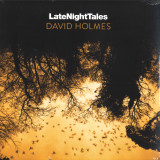
DJ and producer David Holmes is welcomed to the Late Night Tales fraternity with an evocative collection of personal songs and music, peppered with exclusive new material and rare gems. By now, I think we all know David Holmes, right There's acid house Holmes, with bone-rattling Chicago jams and Detroit destroyers, break-digger Holmes responsible for the grittily shaking 'Let's Get Killed' and seminal Essential Mix compilation (which brought Sixto Rodriguez to people's attention, and then there's soundtrack Holmes. His most enduring and vital source of musical inspiration - cinema - plugged into David's rst solo record 'This Film's Crap, Let's Slash the Seats' and inspired 2000's 'Bow Down to the Exit Sign', created as the soundtrack to a not-yet-made movie. Ofcial soundtracks have been bountiful, including scores for Soderbergh's Out Of Sight and Ocean's trilogy, '71, Hunger and Good Vibrations. In a series of personal songs sung by himself, David's last solo album 'The Holy Pictures' explored inuences of La Düsseldorf, The Jesus and Mary Chain and early Brian Eno. His Unloved collaboration with Keefus Ciancia and Jade Vincent then took us on a musical journey full of raw 60s pop-noir, psychedelia and French Ye Ye with a contemporary twist. Somehow he's also found time to produce records by Primal Scream and Jon Spencer Blues Explosion. Unsurprisingly, for someone au fait with matters cinematic, this Late Night Tales conjures up its own mindmovies. It's not only packed with the judiciously selected nuggets for which his mixes are noted but also stuffed with original material, including collaborations with BP Fallon and Jon Hopkins and an amazing new reading of 10cc's 'I'm Not In Love' by Holmes-produced Song Sung. In fact, there's a Celtic thread running through the whole journey with Stephen Rea's reading of an extract from Seamus Heaney's AENEID BOOK VI - Elsewhere Anchises. Among the other gems included here are David Crosby's lush 'Orleans', Buddy Holly's celestial 'Love Is Strange' and the Children Of Sunshine's 'It's A Long Way To Heaven'. David Holmes loves music. It's a way of expressing the sometimes inexpressible or the inconsolable, a questing desire to nd out just what is over the next hill. It's no surprise to learn he's a keen walker. Always on the move, headphones on, lost in some reverie or piece of music, the soundtrack to his life, the stuff that feeds his imagination. I walk a lot. It's amazing for listening to music: your phone or your emails aren't going and you're just in the forest listening to music. It's so intimate. Anyway, I was listening to the KLF's Chill Out album, which still sounds amazing, but it triggered an idea with concrete sounds through travelling and movement. And one of the things I was trying to do was to use this idea not just break up the moods but also as a metaphor for moving through life and arriving in different destinations or arriving at different stages in different parts of your life. Memory, Love, Living, Family, Friendship, Healing, Death and The Afterworld are some of the themes I wanted to explore within this record. Although these strong themes and tracks are personal to me, I also wanted it to be a great listen that was unpredictable yet had a seamless ow - a journey that was personal to me yet to the listener a great compilation of music that they may or may not have heard before. I hope I've succeeded in the later.' David Holmes 2016
Bill MacKay and Drag City are delirious with pride to announce the discovery of a new territory: Locust Land, a record which seeks to reflect the nerve-shredding consciousness run amok in our world today - and somehow allay it with sound. Bill"s music is a visceral crackling where it meets the air, and Locust Land can"t help but reflect its era more than any other in his discography. It"s been five years since the release of Fountain Fire - but in the interim, Bill has barely stopped moving, collaborating with artists across the spectrum, including cellist Katinka Kleijn, banjo player Nathan Bowles and keyboardist Cooper Crain. He"s also contributed to recordings by Steve Gunn, Ryley Walker, Bill Callahan & Bonnie Prince Billy (Blind Date Party), and Black Duck (on their self-titled record featuring Douglas McCombs and Charles Rumback). Forget five years - how"d he even get Locust Land squeezed out of his temporal lobes? Bill"s sense of music as art is constantly modulating - lifting off from where it is found and naturally migrating to some other place. Sometimes, that"s elsewhere - others, it"s simply to be found deeper inside the starting point. And so, the action of moving on informs the landscape of Locust Land. This manifests in several different ways. A restless energy and urgency is repeatedly felt - in the driving momentum of "Keeping in Time," "Glow Drift," and "When I Was Here" - while a dogged persistence radiates from the tone colors and percussion of "Oh, Pearl." Mating a dirge-like desolation with sparkling guitars, "Radiator" adds darkness and depth. The sense of searching, displacement and longing in vocal tracks "Keeping in Time," "Half of You," and "When I Was Here" speak literally to the tumult of current vibrations. Within the arrangements, there"s also departure from previous norms - in addition to the brilliant guitar work for which he is known, Bill plays a variety of keyboards, from piano to organ to synth, extending his music with the available voicings, while enriching the sound field without abandoning his signature brevity. For fans of his singing, and following in the recent tradition of Fountain Fire as well as his collaboration with Nathan Bowles, Keys, Locust Land expresses with an increased vocal presence - and heightened engagement, with Bill"s words and melodies drawing us closer. Also different: on his previous solo recordings, Bill played every sound. Here, he has invited other illustrious Chicagoans to join him: Sam Wagster (The Father Costume, Mute Duo) plays bass on three songs, two of which feature the percussion playing of Mikel Patrick Avery (Natural Information Society, Jeff Parker, etc.). Additionally, Janet Beveridge Bean (Eleventh Dream Day, Freakwater) adds otherworldly vocal textures to the elegiac "Neil"s Field." Whether played alone or with companions, this music projects the strength of a universal collective. Even with a piece that might earlier have passed for blissful pastorale, Bill displays some declamatory motives. The reverie which opens the album, "Phantasmic Fairy," embodies both transcendent and desperate moods, with Bill"s ineffable slide guitar playing afloat, with organs and synths, in a dream state suffused with a sense of foreboding - a requiem, perhaps for the days of unencumbered bandwidth? On the other side of the album, the strength to continue to hope appears in the lifting melodicism/exoticism of the album-closing title track, leaving the listener with the sense of having achieved a hard-won space - a place of personal contemplation and dissent, one that everyone on the planet deserves to visit every single day on earth. With cover art also by Bill MacKay (the third of his albums on Drag City to feature his work), Locust Land stands as a thoroughly personal statement from Bill to everyone everywhere.
Mary Lattimore and Walt McClements are two of contemporary music"s most renowned innovators. Each has managed to expand the perception of their instrument"s capabilities. Lattimore inventive harp processing and looping has brought the instrument to a new audience. Her prolific run of celestial solo albums and evocative film scores have redefined the instrument in the modern consciousness. Her genre-agnostic collaborations include work with Kurt Vile, Steve Gunn, Jeff Zeigler, Meg Baird, and Thurston Moore. McClements, who tours as a member of Weyes Blood, is an acclaimed composer in his own right, sculpting glacial atmospherics from the accordion. The Los Angeles based duo became quick friends on overlapping tours, sharing both a drive to push the sonic possibilities of their instruments and roots in North Carolina. Mary Lattimore and Walt McClements debut collaboration Rain on the Road blossomed out of that time spent on the road together, capturing the liminal existence of touring life in deeply cinematic compositions. Recorded in the cozy setting of McClements" apartment during a rainy December in LA, Rain on the Road unfurls as a series of sonic vignettes, rolling landscapes hewn from longform improvisations for harp and accordion. Embellished with additional instrumentation such as the shimmering constellations of hand bells on "Stolen Bells" that glisten like lights on wet pavement, or the stately piano figures on "The Top of Thomas Street"; their pastoral pieces manage to paint vivid images.