Pink Blue Marbled Vinyl
Angelo is an EP, named after a car, featuring nine songs Brijean have crafted and carried with them through a period of profound change, loss, and relocation. It finds percussionist and singer Brijean Murphy and multi-instrumentalist/producer Doug Stuart processing the impossible the only way they know how: through rhythm and movement. The months surrounding the acclaimed release of Feelings, their full-length Ghostly International debut in 2021 which celebrated tender self-reflection and new possibilities, rang bittersweet with the absence of touring and the sudden passing of Murphy's father and both of Stuart's parents. In a haze of heartache, the duo left the Bay Area to be near family, resetting in four cities in under two years. Their to-go rig became their traveling studio and these tracks, along with Angelo, became their few constants. Whereas Feelings formed over collaborative jams with friends, Angelo's sessions presented Murphy and Stuart a chance to record at their most intimate, "to get us out of our grief and into our bodies," says Murphy. They explored new moods and styles, reaching for effervescent dance tempos and technicolor backdrops, vibrant hues in contrast to their more somber human experiences. Angelo beams with positivity and creative renewal _ a resourceful, collective answer to "what happens now?". Angelo the car is a 1981 Toyota Celica they got off Craigslist during their first stint in Los Angeles, where Murphy and Stuart have since settled. "Such a bro-y, `80s dude car, it's been super fun to drive around in a new town," Murphy says. "He's older than us, he's a classic, he's got a story." It is a spiritual vehicle with a cinematic appeal, first dropping them off in an alleyway for the scene-setting intro, "Which Way To The Club." The question is quickly resolved by "Take A Trip" as a cruising bassline mingles with crowd sounds, hand-claps, cuíca hiccups, whip-cracks, even a horse neigh. Brijean have found some club on this cross-dimensional trip - the kind of imagined space or chamber within one's self capable of "shifting a fraction of who you are," says Murphy. They wrote the track with the simple intention to be "as free as we could be," adds Stuart, likening the flip on the B section to a realm unlocked: "What if the world changed completely? You open the door to a new room." Next is "Shy Guy," a motivational anthem for the wallflowers among us. Murphy sets up the daydream: "We are in junior high, we're on the dance floor, what's going down, who is dancing, who is not, how are we gonna make them dance?" The narrator, the MC, hypes up the room as conga-driven rhythms bounce between languid synth and guitar lines. "Show me how to move...I feel something...I know you feel it too," Murphy sings sweetly, calling back to the opening lines of Feelings, and this time the audience chants it back. It is easy to picture Brijean performing this one - something they only got to do a handful of times until more recently, opening shows for Khruangbin and Washed Out, an experience they found informative. Murphy explains, "It was inspiring to be out there and let loose more. To see how people can expand their expression on stage gave me more liberty with how I viewed my musicianship. My role for so long was to be a backup percussionist, so why would I ever leave the drums, you know? But then after playing all these runs, you see these artists and realize you can, you have permission." "Angelo" and "Ooo La La" deliver the danciest stretch in Brijean's catalog to date. The title track adopts a deep house pulse replete with strings, hi-hats, and kicks. The latter opts for a funkier groove that foregoes verses in favor of warbled hums and extended breakdowns. What follows is perhaps the duo's dreamiest run, a comedown initiated with the honey-hued interlude "Colors" drifting into "Where Do We Go?", a tropicália reverie where Murphy contemplates the passage of time and space. It all culminates in "Caldwell's Way," a fond farewell to their Bay Area community - "a part of my life that I knew couldn't come back," says Murphy. Above shimmering organ sounds, lush strings, and the birdcall of their former neighborhood, she wistfully articulates the uncertainty of moving on by remembering the characters dear to them. There's the wisdom of their neighbor, Santos, who refused payment when helping them move out: "I'd rather have 100 friends than 100 dollars." And the song's namesake, Benjamin Caldwell Brown, a friend and club night cohort for many years. "I'm only miles away, maybe I'm just feeling lonely," the line resigns to warm nostalgia, and "Nostalgia" runs the closing credits to this healing and transportive collection.
Search:mc rene
If naming is a form of claiming, of being claimed, how is one tethered to both the physical landscape that surrounds us, as well as our own internal emotional landscape_at times calm, at times turbulent, and ever changing? H.C. McEntire's new album Every Acre grapples with those themes_themes that encompass grief, loss, and links to land and loved ones. And naming_claiming land, claiming self, being claimed by ancestry and heritage_permeates the hauntingly beautiful landscape that is this poignant collection of songs. The songs straddle the line between music and poetry. In "New View," McEntire cites poets "Day, Ada, and Laux, Berry, and Olds"_fixtures in the world of writing, whose works are beacons of light over bleak horizons. The beginning of the song is backed by soft guitar plucks that fall on the downbeat and spangle like stars, and, throughout, guitar, bass, and drums swell together gently, mimicking ebbing and flowing tides under the moon. McEntire's voice (at once tender and fierce) intones the truth of both giving and taking, releasing and claiming: "Bend me, break me, split me right in two. Mend me, make me_I'll take more of you." Permeated by heartbeat-like drums, "Shadows" develops quiet ruminations on surrender and loss_reminiscing, moving on. This ponderous, dreamlike song asks the question of how "to make room." How does one make room, for self and for renewal and surrender, when it is so difficult to leave what you know behind? Playing with slivers of descending chromatics, along with the occasional downward-stepping bass, here McEntire yearns for home, and for nesting. Perhaps one of the more grief-stricken songs, "Rows of Clover" is a lamentation, one that touches on the loss of a "steadfast hound." The lone piano in the beginning of the song is rhythmically hymn-like. The stark verse arrangement gradually leads to a chorus that reads like a moody exhale, swollen with lush guitar strums and a Bill Withers-esque understated soul groove. But what stands out the most is an image of being "down on your knees, clawing at the garden"_the only explicit mention of a person in the song. "It ain't the easy kind of healing," sings McEntire, seemingly from further and further away as her voice echoes; and healing ta;kes time, time takes time_truths that linger painfully. "Dovetail" is a song that tells of various women. The song moves back and forth between solo piano and the addition of bass and drums under vocals. McEntire's gentle, trembling vibrato_harmonized in thirds in a celebratory manner_calls to mind a rejoicing psalm and shines through these images, leaving the listener cuttingly fraught with emotions_such as wonder, sadness, nostalgia_that can only arise with these juxtapositions. Gracious (and graceful) with its lilting melodies and lush harmonies, Every Acre ex - plores the acres of our physical and emotional homes. These songs are reaching for the kind of home that we all seek: one where we can rest and lay down (or tuck away) our burdens of loss. And maybe, moving through every acre of a world that often tries to tear our sense of identity and heritage down, McEntire sheds light on what it is to be human in this life_both stingy and gracious, both hurtful and kind.
Orange Viny
If naming is a form of claiming, of being claimed, how is one tethered to both the physical landscape that surrounds us, as well as our own internal emotional landscape_at times calm, at times turbulent, and ever changing? H.C. McEntire's new album Every Acre grapples with those themes_themes that encompass grief, loss, and links to land and loved ones. And naming_claiming land, claiming self, being claimed by ancestry and heritage_permeates the hauntingly beautiful landscape that is this poignant collection of songs. The songs straddle the line between music and poetry. In "New View," McEntire cites poets "Day, Ada, and Laux, Berry, and Olds"_fixtures in the world of writing, whose works are beacons of light over bleak horizons. The beginning of the song is backed by soft guitar plucks that fall on the downbeat and spangle like stars, and, throughout, guitar, bass, and drums swell together gently, mimicking ebbing and flowing tides under the moon. McEntire's voice (at once tender and fierce) intones the truth of both giving and taking, releasing and claiming: "Bend me, break me, split me right in two. Mend me, make me_I'll take more of you." Permeated by heartbeat-like drums, "Shadows" develops quiet ruminations on surrender and loss_reminiscing, moving on. This ponderous, dreamlike song asks the question of how "to make room." How does one make room, for self and for renewal and surrender, when it is so difficult to leave what you know behind? Playing with slivers of descending chromatics, along with the occasional downward-stepping bass, here McEntire yearns for home, and for nesting. Perhaps one of the more grief-stricken songs, "Rows of Clover" is a lamentation, one that touches on the loss of a "steadfast hound." The lone piano in the beginning of the song is rhythmically hymn-like. The stark verse arrangement gradually leads to a chorus that reads like a moody exhale, swollen with lush guitar strums and a Bill Withers-esque understated soul groove. But what stands out the most is an image of being "down on your knees, clawing at the garden"_the only explicit mention of a person in the song. "It ain't the easy kind of healing," sings McEntire, seemingly from further and further away as her voice echoes; and healing ta;kes time, time takes time_truths that linger painfully. "Dovetail" is a song that tells of various women. The song moves back and forth between solo piano and the addition of bass and drums under vocals. McEntire's gentle, trembling vibrato_harmonized in thirds in a celebratory manner_calls to mind a rejoicing psalm and shines through these images, leaving the listener cuttingly fraught with emotions_such as wonder, sadness, nostalgia_that can only arise with these juxtapositions. Gracious (and graceful) with its lilting melodies and lush harmonies, Every Acre ex - plores the acres of our physical and emotional homes. These songs are reaching for the kind of home that we all seek: one where we can rest and lay down (or tuck away) our burdens of loss. And maybe, moving through every acre of a world that often tries to tear our sense of identity and heritage down, McEntire sheds light on what it is to be human in this life_both stingy and gracious, both hurtful and kind.
If naming is a form of claiming, of being claimed, how is one tethered to both the physical landscape that surrounds us, as well as our own internal emotional landscape at times calm, at times turbulent, and ever changing? H.C. McEntire’s new album Every Acre grapples with those themes that encompass grief, loss, and links to land and loved ones. And naming claiming land, claiming self, being claimed by ancestry and heritage permeates the hauntingly beautiful landscape that is this poignant collection of songs. The songs straddle the line between music and poetry. In “New View,” McEntire cites poets “Day, Ada, and Laux, Berry, and Olds” fixtures in the world of writing, whose works are beacons of light over bleak horizons. The beginning of the song is backed by soft guitar plucks that fall on the downbeat and spangle like stars, and, throughout, guitar, bass, and drums swell together gently, mimicking ebbing and flowing tides under the moon. McEntire’s voice (at once tender and fierce) intones the truth of both giving and taking, releasing and claiming: “Bend me, break me, split me right in two. Mend me, make me I’ll take more of you.” Permeated by heartbeat-like drums, “Shadows” develops quiet ruminations on surrender and loss reminiscing, moving on. This ponderous, dreamlike song asks the question of how “to make room.” How does one make room, for self and for renewal and surrender, when it is so difficult to leave what you know behind? Playing with slivers of descending chromatics, along with the occasional downward-stepping bass, here McEntire yearns for home, and for nesting. Perhaps one of the more grief-stricken songs, “Rows of Clover” is a lamentation, one that touches on the loss of a “steadfast hound.” The lone piano in the beginning of the song is rhythmically hymn-like. The stark verse arrangement gradually leads to a chorus that reads like a moody exhale, swollen with lush guitar strums and a Bill Withers–esque understated soul groove. But what stands out the most is an image of being “down on your knees, clawing at the garden” the only explicit mention of a person in the song. “It ain’t the easy kind of healing,” sings McEntire, seemingly from further and further away as her voice echoes; and healing takes time, time takes time truths that linger painfully. “Dovetail” is a song that tells of various women. The song moves back and forth between solo piano and the addition of bass and drums under vocals. McEntire’s gentle, trembling vibrato harmonized in thirds in a celebratory manner calls to mind a rejoicing psalm and shines through these images, leaving the listener cuttingly fraught with emotions such as wonder, sadness, nostalgia that can only arise with these juxtapositions. Gracious (and graceful) with its lilting melodies and lush harmonies, Every Acre explores the acres of our physical and emotional homes. These songs are reaching for the kind of home that we all seek: one where we can rest and lay down (or tuck away) our burdens of loss. And maybe, moving through every acre of a world that often tries to tear our sense of identity and heritage down, McEntire sheds light on what it is to be human in this life both stingy and gracious, both hurtful and kind.
In hugo, there’s a central question that Loyle Carner keeps coming back to: “I’m young, Black, successful and have a platform - but where do I go next?” The answer is explored in this epic scream of a third album. With urgent delivery and gloriously widescreen production, Carner confronts both the deeply personal (“You can’t hate the roots of a tree, and not hate the tree. So how can I hate my father without hating me?) and the highly political (“I told the black man he didn’t understand I reached the white man he wouldn’t take my hand”). Cinematic in scale and scope, hugo is both a rallying war cry for a generation forged in fire and a study of the personal internal conflict that drives the rest of the album - as a mixed-race Black man, as an artist, as a father and as a son. With Mercury and Brits nominations, NME Awards and appearances in global brand campaigns (Nike, YSL, Timberland), Carner has undoubtedly had a meteoric rise to the top, culminating with his second album Not Waving, But Drowning charting at number 3 in the UK albums chart in 2019. However, hugo sees Carner taking a sharp detour from his previous work, putting it down to lockdown and the “hedonistic side of career being stripped away. There were no shows, no backstage, no festivals, no photoshoots”. By continuing to write in these tumultuous times with a renewed clarity and sense of artistic freedom, Carner reached deeper beneath the surface than he ever had before. The result is his most cathartic and ambitious record yet, a coruscating journey into the heart of what it means to be alive in these tumultuous times, and one which looks set to neatly cement his position as one of the most potent and vital young talents around today. Working alongside renowned producer kwes. (Solange, Kelela, Nao), Carner leaves no stone unturned on this album, in both its sound and its stories. In a 10-track album that moves from gorgeous neo-soul moments to thundering hip hop, with immediate, infectious bangers and sampled interludes from non musicians (mixed-race Guyanese poet John Agard and youth activist and politician Athian Akec) Carner shifts seamlessly from micro to macro, confronting everything from strained relationships with family to the societal tears caused by class stratification. It also lays bare bruises in his personal life that he has never revealed before – often in painful, deeply uncomfortable ways, focusing on Carner's experience of becoming a father in the context of growing up without contact with his biological father. With the song “Polyfilla”, against the backdrop of a warm melodic beat, Carner explores his desire to “break the chains in the cycle” of dysfunctional Black fatherhood, commenting on the narrative of fatherhood in the genre, and saying a key part of the process was realising that his father “grew up in a world where nobody showed him how to love or nurture”. The follow up track “A Lasting Place” is an exploration of the MC’s failure and inability to be perfect in this mission. The album closer is a powerful statement of love and forgiveness; with his signature lyrical dexterity, Carner declares his relentless commitment to his son and sees forgiving his father as a key part of this. The song closes with an emotional ending of Carner telling his dad “still I’m lucky yo that we talk”. There’s a striking duality of hugo’s bold, multilayered tracks and its often starkly intimate and tender lyricism, and that dichotomy is deliberate - it is a message for young Black men, but really, anyone, who is listening. Cognizant of the immense pain and fear and confusion that we are faced with everyday, Carner has thrown down the gauntlet, defying us not to rise above the fray, wake up each day and be ambitious. Ambitious in building strong personal relationships. Ambitious in our pursuit of our goals. Ambitious in never refusing to back down against injustice. Rejecting the title of leader, Loyle Carner sees himself “as holding up a mirror”, and that clearly translates into the album's universal messages.
- A1: Future Trance United – The Last Flight (We Have Arrived)
- A2: Armin Van Buuren Feat Wrabel – Feel Again (Extended Club Mix)
- A3: Djs@Work – Someday (Dj T H. & Airwalk3R Extended Remix)
- A4: Talla 2Xlc & Roland Klein – Nexus Point (Extended Mix)
- A5: Dj T H. & Gid Sedgwick – Devil's Deal (Extended Mix)
- A6: Richard Durand & Susana – I Matter To You (Xijaro & Pitch Extended Remix)
- B1: Solar Vision – Apollo (Extended Mix)
- B2: Ben Gold – Rest Of Our Lives (Extended Mix)
- B3: Allen Watts – Shadows (Extended Mix)
- B4: Talla 2Xlc & Airwalk3R – Enough For Me (Extended Mix)
- B5: Makeflame – Rave Like An Angel (Extended Mix)
- C1: Mind-X – Nightingale (Rene Ablaze Extended Remix)
- C2: Ilan Bluestone Feat Giuseppe De Luca – Love Is A Drug (Xijaro & Pitch Remix)
- C3: Pulsedriver – Cambodia (Talla 2Xlc Extended Vocal Mix)
- C4: Yoshi & Razner – The Essence (Extended Mix)
- C5: Ciaran Mcauley, Roger P Shah & Hannah Brine – You And I (Extended Mix)
- D1: Rinaly & Natalie Gioia – Without You (Extended Mix)
- D2: Van Der Karsten – Daylight (Extended Mix)
- D3: Satellite Robots – Is This Love (Club Mix)
- D4: Megara Vs Dj Lee – Fight Hard (Extended Mix)
- D5: Nytigen – Target (Extended Mix)
- D6: Klubbingman & Andy Jay Powell – Woman (Extended Mix)
- D7: Paul Van Dyk & Aly & Fila – Shine Ibiza Anthem 2022 (Extended Mix)
- E1: Kernkraft 400 (A Better Day)
- E4: Hot In It
- E5: Belly Dancer
- E6: Nathan Dawe 21 Reasons
- E7: Felix Jaehn Do It Better
- F1: On Repeat
- F2: Havana
- F3: Klaas Take Me Back
- F4: Twocolors Heavy Metal Love
- F5: Worlds On Fire
- F6: On The Move (Can't Let You Go)
- F7: Ritmo (Original Mix)
- G1: Superman
- G2: Italobrothers Summer
- G3: Halo
- G4: Party Shaker
- G5: Guestlist +1
- G6: Crash Test Dummy
- G7: Aquagen Stay Or Be Alone
- H1: Come With Me
- H2: Since U Been Gone
- H3: Supa Dupa Fly
- H4: Scooter Do Not Sit If You Can Dance
- H5: Forever & Always
- H6: Rave Me Loud
- H7: Pulsedriver Place Called Home (Oldschool Flavour Remix)
- E2: Ferrari
- E3: Weekend On A Tuesday
The last flight – we have arrived! Fasten your seatbelt and buckle up – Denn die erfolgreichste Dance- & Trance-Compilation unseres Planeten setzt einmalig zu ihrem letzten Landeanflug an.
Anlässlich des 100. Jubiläums erscheint die beliebte Produktreihe als galaktische Sonderausgabe und Fans dürfen sich neben der 3CD und dem eAlbum auf eine streng limitierte Fan-Box mit 3CD, galaktischem Comic-Poster, Fan-Socken und Schlüsselanhänger freuen. Damit aber noch nicht genug: Diese letzte Ausgabe unserer FUTURE TRANCE erscheint am 25.11.2022 zudem exklusiv als 4LP inkl. Comic-Poster!
Echte Fans werden zudem bei der besonderen Optik ein Flashback erleben – das erste Mal seit der Landung der FUTURE TRANCE Vol. 60 erlebt die Reihe wieder ein Alien-Revival und erscheint in außerirdischem Design.
Die FUTURE TRANCE 100 besticht durch ein randvolles Aufgebot mit den größten Stars der Szene und ihren aktuellen Bangern. Ein letztes Mal zünden wir die Trance-Booster - mit dabei sind z.B. Scooter,
Pulsedriver, Armin van Buuren, Rocco und und und. Abgerundet wird dieser Senkrechtstarter mit einem exklusiven FUTURE TRANCE UNITED Mix „The last flight – we have arrived!“ Hier ist Gänsehaut vorprogrammiert!
Eugene Lamont Johnson a.k.a E Lamont Johnson or Lamont Johnson holds the distinction of being the first internationally recognized fretless bassist in R&B music. Born April 20th 1955 in Highland Park, Michigan. Lamont rose to prominence as a session musician on Gloster Williams &The King Vision’s 1977 gospel album project “Together” (Gospel Roots -5005). In the same year Lamont featured as part of the celebrated Detroit based band Brainstorm their best-selling 1977 album “Stormin’” for Tabu Records. Brainstorm was initially formed during 1975 by bandleader and saxophonist Charles ‘Chuck’ Overton, and included lead vocalist Belita Woods, Lamont Johnson on Fretless bass, Renell Gonsalves on drums, Trenita ‘Treaty’ Womack on percussion, flute and backing vocals, Bob Ross (a.k.a Professor RJ Ross) on keyboards, Gerald ‘Jerry’ Kent on guitar, Jeryl Bright on trombone and ‘Leaping’ Larry Sims on trumpet and flugelhorn. The album was recorded during 1976 and released the following year. It contained the disco hit “Loving Is Really My Game” the popular “Wake Up And Be Somebody” and the radio hit “This Must Be Heaven” a beautifully crafted ballad featuring the lead vocals of Lamont which still receives continued airplay to this day. Lamont did not feature on the band’s two subsequent album projects “Journey To The Light” (Tabu 35327) in 1978 and “Funky Entertainment” (Tabu 35749) in 1979.
The year1978 was to prove to be one of the most prolific of Lamont’s recording career, playing bass on three studio albums. Firstly, on Hamilton Bohannon’s “On My Way” (Mercury SRM-i-3710), Jimmy McKee’s “First Time Out” (Champion- 8083N5) and Keith Barrows “Physical Attraction” (Columbia JC-35597) albums respectively. The final project of that year would be Lamont’s own album project “Music Of The Sun” (Tabu-35455) featuring Lamont on both bass guitar and vocals, the album also spawned two lead 45’s “Sister Fine/Yours Truly, Discreetly” and “Hey Girl/Differently”.
During 1979 Lamont would feature as a guest bassist on a further two studio album projects, firstly the self-titled debut album of fellow Detroit musicians Chapter 8 (Ariola 50056) followed by another self-titled album “Nightflyte” (Ariola 50060) who’s line-up included Howard Johnson prior to him embarking on a solo career. During 1980 Lamont began work on a second solo album for Tabu. Two lead 45 singles were recorded “Rock You Baby/Something More” (Tabu ZS9-5521) followed by the album’s title song “Rhumba” backed with the modern soul favourite “Masta Luva” (ZS9-5525) for whatever reason CBS/Tabu decided to shelve the remainder of the project. Later recording projects to feature Lamont instrumental talents were Was Not Was ‘s “Tell Me I’m Dreaming and Robert Lowe’s “Double Dip” jazz funk album. Later solo CD album projects from Lamont, “This Must Be Heaven” arrived in 2004 and “Amore’ Dance” in 2001 both on his own Allee Records Label. From the mid 70’s through to the present day, Lamont has been a notable electric bass instructor in the Detroit area and beyond. As well as the previously mentioned projects, Lamont and many of his prot’eg’es work can be found on many other world renown artists recording projects the most notable being, Earth Wind & Fire, The Dramatics, Anita Baker, Lady Gaga, Alicia Keys, Phyllis Hyman, Beyonce, Howard Johnson, David T. Walker, Aretha Franklyn, Stevie Wonder, Herbie Hancock, George Duke, The Temptations, The Winans amongst others.
Fast forward to the present and Soul Junction have licensed two previously unissued dance orientated Lamont Johnson produced compositions for this 45sinlge release with more to come. Under the project/artists name of “Lamont Johnson & Eugene” the recordings feature several different local Detroit musicians and vocalists. The a-side is a male vocally led early 90’s mid-tempo feel good dance number. While the b-side in contrast is a more synthesized bass driven 80’s female dancer which should appeal to the Boogie crowd,
Enjoy.
Now available on vinyl, Heartmind is Cass McCombs' biggest album in
years, garnering the best reviews of his career to date
UNCUT ALBUM OF THE MONTH - "One of the most impressive bodies of work of
the century so far."
MOJO ALBUM OF THE MONTH - "On a mission to find out where the heart and
mind intersect.....there is real emotional impact here."
Songs like "Karaoke" are a god-level burst of powerpop perfection, as fetching as
anything Cass has ever cut: Cass triangulates a perch of his very own out among
The Go-Betweens, The dB's, and The Cure,and vibrates there, a beacon. And then,
of course, there is the song's playful if painful lyrical conceit — the lover who is
making all the sacred motions of commitment but whose feelings may be no
more deep or real than someone simply reading the lyrics for "Vision of Love" or
"Stand by Your Man" from some crowded bar's TV screen.
Cass recorded these songs in multiple sessions on both coasts, in Brooklyn and
Burbank. The great Shahzad Ismaily not only cut the staggering "Unproud
Warrior" and four others here but also played lots of bass. Buddy Ross tracked
"New Earth," a paean of post- humanity renewal with several sharp wisecracks.
Ariel Rechtshaid — now a dozen years into his collaboration with Cass, which
began with 2009's Catacombs—captured Cass' scintillating guitars on "Belong to
Heaven," a thoughtful consideration of what we all lose when we lose an old
friend to the inevitable end. The steadfast Rob Schnapf (who previously produced
McCombs' ANTI- debut, Mangy Love) mixed and merged it all. Wynonna Judd
(yes, that one) offers harmonies, while her beau Cactus Moser provides some lap
steel. Joe Russo, Kassa Overall, Danielle Haim, Nestor Gomez are featured on the
album, too.
- A1: Plain Gold Ring (Mop Mop Rework)
- A2: My Baby Just Cares For Me (The Reflex Edit)
- A3: Mood Indigo (Renegades Of Jazz Remix)
- B1: Little Girl Blue (Maestro Remix)
- B2: Love Me Or Leave Me (Suonho Relove)
- B3: African Mailman (The Rebel Remix)
- B4: I Loves You Porgy (Mees Dierdorp Remix)
- C1: My Baby Just Cares For Me (Gabriel & Castellon & Maestro Remix)
- C2: African Mailman (Opolopo Remix)
- C3: Plain Gold Ring (Fab Samperi Remix)
- D1: He Needs Me (Gramophonedzie Remix)
- D2: Love Me Or Leave Me (Gabriel & Castellon & Maestro Remix)
- D3: African Mailman (Smoove Remix)
- D4: Central Park Blues (Monte's Midnight Mix)
Perhaps not as well known to the general public, Bethlehem Records earned its place in Jazz history with the release of debut albums from artists like Carmen McRae, Chris Connor, Herbie Mann and Johnny Hartman. Besides that, check those early covers - pure art!
Bethlehem's most famous release is the 1958 debut album by Nina Simone, Little Girl Blue. So when DJ Maestro got the chance to remix this album, he was thrilled. Soon he got the idea to ask some of his favorite producers to collaborate, like Mop Mop, Renegades of Jazz, Gramophonedzie, Fab Samperi, The Reflex and Mees Dierdorp.
One thing they all had in common: excitement to work with the original recordings from this iconic album. The result is 14 remixes, each with a unique approach to the original song, and all with a contemporary feel.
For genre-bending band Whiskey Myers, 2019’s self-titled and self-produced album offered a watershed moment. With Rolling Stone raving that the “irresistible” album was “the record the band was poised to make” while declaring them “the new torch bearers for Southern music” in a story titled “How Whiskey Myers Won Over Mick Jagger and Made the Album of Their Career;” Billboard and No Depression naming the album to best-of-the-year lists; 41,000 first week album sales; and the project debuting atop both the Country and Americana album charts (as well as at No. 2 on the Rock charts, behind only a re-release of The Beatles’ Abbey Road), the band celebrated mainstream success a decade in the making. Now, after spending 21 days isolated at the 2,300-acre Sonic Ranch studio deep in the heart of their native Texas, just miles from the U.S./Mexico border, the Gold-certified renegades have doubled down on what they do best: sharing honest truths with no-holds-barred instrumentation, letting the self-produced music speak for itself. Yet with Tornillo, named for the border town that is home to the pecan orchard-filled recording complex and set for release on July 29 via their own Wiggy Thump Records with distribution by Thirty Tigers, the six-piece band has taken their solid decade-plus foundation and pushed themself to further explore new sonic landscapes. “It’s going to have a little bit different sound,” lead singer Cody Cannon shared recently with Outsider. “It’s still Whiskey Myers at its core, but it’s kind of fresh… We did a lot of bass and horns on this one, which is something we’ve always wanted to do. Just being fans of all that old music and Motown stuff, and a lot of the stuff coming out of Muscle Shoals, old rock and roll. “We’re going to bend genre even more, I think, with this new record,” he continued. “It’s all over the place. But that’s fun, right? I hate the whole ‘Put it in a box. You gotta be this.’ … That’s not art to me. I love the idea of just doing, really, whatever you feel. It comes out a certain way because that’s just how it comes out. Whiskey Myers never really tried to be a certain way. It’s just how we are. So I think that’s really the whole thing about music, or the beauty about music; it’s just that freedom to create.” Tornillo as a whole does exactly that, drawing as much inspiration from Nirvana as from Waylon Jennings – even adding the legendary McCrary Sisters’ gospel influence to the project on background vocals. With Cannon leading the way on songwriting, the album also features writes from lead guitarist John Jeffers and fellow bandmembers Jamey Gleaves and Tony Kent, as well as rising singer/songwriter Aaron Raitiere (Anderson East, Oak Ridge Boys, A Star is Born).
- A1: Alberto Radius - California Bill
- A2: Mario Lavezzi - In Alto Mare
- A3: Beppe Cantarelli - Se Il Mio Canto Sei Tu
- B1: I Ricci - Vienimi A Pigliare
- B2: Eduardo De Crescenzo - Alle Sei Di Sera
- B3: Im Porto - Smettila (Po-Para) (Po-Para)
- B4: Barnaba - Bianco E Nero
- C1: Enzo Cervo - Solo Mo
- C2: Peppino Di Capri - Mo
- C3: Franco Camassa - Non Andar Via
- C4: Stefano Pulga - La Mia Nave
- D1: Massimo Stella - C'e Una Donna Sola
- D2: Gino D'eliso - Ti Ricordi Vienna?
- D3: Enzo Carella - Contatto
- D4: Serafini - Serafini
Between the late 70s and the early 80s, pop music was in a transitional phase. After a return to the roots of punk, rock was morphing into new wave, while disco was rapidly declining and the electronic revolution, already on the rise, was ushering in the transition from analog to digital. This period also saw the emergence and relatively brief flowering of a commercially dominant style that mixed soul influences (especially Stevie Wonder and Ear th Wind & Fi re) , folk/pop songwriting and jazz sensibilities in equal measure, creating a hybrid easy on the ears but also emotionally and musically rich. It was the style represented by artists like Christopher Cross, Michael McDonald, Gino Vannelli and Kenny Loggins, who were all influenced by black music. They belonged to a larger trend that took place in all major music producing countries, including Italy where, like so many other things, the style was not merely imported or copied, but reshaped into a specifically local version based on the nation's tastes and cultural traditions. In Italy, a soulful and sophisticated approach to pop music was embraced not only by established names like Mina, Alan Sorrenti and Loredana Berté, but also, and perhaps most importantly, by an entire generation of writers, arrangers and musicians who had grown up listening to early fusion, to Steely Dan's refined recordings, and to Quincy Jones's productions. So, with this compilation we hope to give new exposure to artists and songs that, despite having moderate or little success when first released, must be regarded as among the creative peaks of Italian pop music. "Paisà Got Soul" features pop veterans Peppino Di Capri, Mario Lavezzi and Alberto Radius alongside atypical singer-songwriters (Enzo Carella, Enzo Cervo, Gino D'Eliso), Italo-disco heroes (Stefano Pulga), international hit composers (Beppe Cantarelli, who has co-written for Aretha Franklin and Mariah Carey), Brazilian-born naturalized Italians (Jim Porto) and complete unknowns (Franco Camassa, I Ricci, Massimo Stella).It brings together little gems that in most cases are no longer available on the market, or only available in their original and now very rare vinyl format. We believe they all deserve to be rediscovered today, partly because of the recently renewed interest in "yacht rock", as this music style has been retrospectively named, and partly because they provide further evidence that Italian artists rework international music styles in creative and original ways.
Compiled and conceived by David Nerattini partnered by Pierpaolo De Sanctis
In 2022, Soom T is back with her new studio album "Good" entirely self-produced through her own label Renegade Masters.
In this new reggae-dub album, the result of ten years of writing, composition and production, the Scottish MC blends the studio recordings of her musicians, The Stone Monks, with digital productions from various composers. From this multitude of musicians and producers, an original sound is born at the crossroads of reggae, dub and jazz, even sometimes pop.
The tracks "Big Bad World", "Yes My People", "Born Free", "My Struggle", "Your Time" and "My Shelter" composed by the French producer Kiko, bring a distinctive digital sound to an important part of the album. While "Don't Stand for Dis" and "Steps" are signed by London dub legend Gaudi and pay homage to the early hours of dub music with great echoes and reverberations in the purest tradition of the style . "One Real Friend" composed by Alex Dupuis of Flash Hit Records brings a welcome swing and jazz touch.
“World We Live In”, “Our Day”, “I Wanna Live”, “Get the Fruit” and “One More Tune” were composed and recorded in Paris over several years with The Stone Monks, under the supervision of Xavier Waks. He also mixed the entire album in his 31DB studio before passing it on to Simon Capony for mastering at Basalte Studio.
As usual, Soom T continues to denounce nowadays political and social issues, all with a spiritual approach, an inimitable style and an incisive flow of her own. If she deplores the dark sides of our time in songs like "Big Bad World", she also tries to find a ray of hope with tracks carrying positive messages, sometimes very melodic, such as "Don't Stand for Dis ”, or catchy, like“ Yes My People ”. "I Wanna Live" and its heady guitar riff, "Our Day" with its bright major chords or even "Amazing Graces" pour a flood of optimism amidst much heavier themes.
On the cover of "Good" we find a portrait of Soom T, a microphone in her hand, designed by the French street artist specialized in 3D, Nikita.
Get ready for a unique musical journey in search of all that is good in this world with "Good", the long awaited new album from Soom T aka the “The Raggamuffin Queen”!
- A1: Somewhere Else
- A2: Blame Game W/ 2Shy Mc
- A3: Where Do We Go W/ Mc Fats
- B1: Music's Got Soul W/ Cleveland Watkiss
- B2: Strange Days W/ Serum & Blak
- B3: For Our Love W/ Makoto & Lorna King
- C1: How Many Times W/ Riya
- C2: Wake Up W/ A Little Sound
- C3: Limitless Soul W/ Elipsa
- D1: Come To Life
- D2: Rockin Me
- D3: Best Life W/ T.r.a.c
* Strictly limited-edition 2x12” vinyl in full colour sleeve. Includes card to download full album in WAV format.
* ‘Strange Days’ the debut album from one of the standout Drum & Bass acts of recent years, due for release on the legendary V Recordings on 3rd December 2021.
* Features collaborations with Serum, Makoto, MC Fats, Lorna King, 2shy MC, Cleveland Watkiss, Blak, Riya, A Little Sound, Elipsa & T.R.A.C.
* With support already secured from the likes of Shy FX, Bryan Gee, Fabio & Grooverider, Rene LaVice, Hybrid Minds, Serum, Randall and with a growing international fanbase at their back, Paul T & Edward Oberon's new album 'Strange Days' is set to be one of 2021's defining drum & bass releases.
* Their recent run of singles, including two Beatport number ones and collaborations with vocal talents like Cleveland Watkiss, MC Fats, A Little Sound & Lorna Kings have given us a flavour of this monumental project. An eclectic array of influences from jazz to jump up have been filtered through the unique musical perspective of this duo to bring us something that we've never quite heard before.
* Drum & bass has the capacity to deliver, on the one hand, soulfully emotive musicality and, on the other, sheer rave-inflaming filth. Paul T & Edward Oberon, however, have consistently performed the alchemical magic of bringing together both the music and the mayhem without compromising either.
* But of course they have. Paul and Edward have years of experience creating music for some of the most prestigious labels in the scene and drawing from a myriad of influences. Individually, they have credits stretching back decades, and, as a combo, they've been dusting dances around the world since 2011.
* Having won an army of new-gen fans with anthems like 'Stomp', 'Look for the Light' and the absolutely huge scene smashing Serum-collab 'Moon in Your Eyes', these veteran artists have wasted no time in stepping things up to even greater heights as they gear up to drop their album.
* Balancing vibes and viciousness, 'Strange Days' lays out the definitive manifesto for Paul T & Edward Oberon's dirty soul sound. Operating as both a self-contained audio journey and a collection of rave-ready deejay weapons, this LP is a piece of work that demands your attention!
Nonesuch Records releases Ghost Song, the label debut of singer/songwriter Cécile McLorin Salvant. Ghost Song features a diverse mix of seven originals and five interpretations on the themes of ghosts, nostalgia, and yearning. Salvant says, “It’s unlike anything I’ve done before – it’s getting closer to reflecting my personality as an eclectic curator. I’m embracing my weirdness!” Cécile McLorin Salvant plays at Cadogan Hall on November 16 as part of the EFG London Jazz Festival, four shows at SFJAZZ in February, and two nights featuring the music of Ghost Song at Jazz at Lincoln Center in May. Salvant says of the title track, out now, “What if the love has gone, the love has left you and you have the emotions around that, and you’re still going through them, still engaging with the ghost of that love?” She continues, “Some songs are so painful to come out but this one came out pretty quickly. I’ve had some loss the last couple of years: my grandmother, the drummer in my band Lawrence Leathers.”
Ghost Song opens and ends with a sean-nós (traditional Irish unaccompanied vocal style) performance by Salvant, recorded in a church. On track one, she transitions into Kate Bush’s 1978 classic ‘Wuthering Heights’. Salvant says of the song, “Wuthering Heights is a book that really struck me to my core as I was making this album, during the pandemic. And the best interpretation of the novel is Kate Bush’s song.” She continues, “It’s the most classic ghost story. I decided I wanted to do an album called Ghost Song, and I knew that one had to be on it. Then I had the idea to mix it in with the sean-nós ‘Cúirt Bhaile Nua’, which binds it to the traditional ‘Unquiet Grave’, the last track on the album. The ghost is not haunting me; now I am haunting the ghost. They parallel each other so well and they’re such different time periods. I wanted the album to be a circle, with the sean-nós reference at the beginning and at the end. So it is the first track but it’s also the last track and it’s also the middle track, which is how I listen to music, walking around my neighborhood, on a plane, travelling somewhere, putting stuff on repeat.” “All the songs on the album kind of mirror each other. I tried to create this strange symmetry. So as you go in from both ends, the songs are sort of matched together,” Salvant says. “‘I Lost my Mind’ is the center of the Russian doll. I wrote that in the middle of the pandemic. There were nights when I wanted to just scream. It was this deeper part of me saying, ‘It’s OK if this sounds completely crazy, OK to just go with the completely crazy thing and not worry if people think you have lost your mind for doing it.’
“The bands also mirror each other from top to bottom. In terms of the instrumentation, everything,” Salvant explains. “That’s why the songs are there in that relationship: they match each other, they’re like fraternal twins, or one is the evil twin of the other. I, as the living, am visited by the ghost, and then I go visit the ghost in turn. I am haunting the ghost and annoying the ghost, which is saying, ‘Get out of here and go live.’” Of the sonic variety on Ghost Song, Salvant says, “Texture is a big part of how I sing, having multiple textures in one song. It’s almost a compulsion. I can’t allow myself to stay in one texture. The instrumentation creates that but the recording process as well. It’s something I like, even when I’m eating. You want the creamy and chewy and crunchy at the same time. Warm and cold.”
Cécile McLorin Salvant, a 2020 MacArthur Fellow and three-time Grammy Award winner, is a singer and composer bringing historical perspective, a renewed sense of drama, and an enlightened musical understanding to both jazz standards and her own original compositions. Classically trained, steeped in jazz, blues, and folk, and drawing from musical theater and vaudeville, Salvant embraces a wide-ranging repertoire that broadens the possibilities for live performance. Salvant’s performances range from spare duets for voice and piano to instrumental trios to orchestral ensembles. Her unreleased work Ogresse is an ambitious long-form song cycle based on oral fairy tales from the nineteenth century that explores the nature of freedom and desire in a racialized, patriarchal world. Salvant studied at the Université Pierre Mendès-France. She has performed at national and international venues and festivals such as the Newport Jazz Festival, the Monterey Jazz Festival, the Village Vanguard, and the Kennedy Center. Salvant is also a visual artist.
- A1: Ain't Nobody
- A2: Reach Out (Feat Charlotte Haining)
- A3: Smile & Wave
- A4: Listen Up
- A5: Sanctuary
- B1: Pressure (Feat Cleveland Watkiss)
- B2: Underdog (Feat Dj Marky)
- B3: Piano Skit
- B4: Baby Angel Face (Feat Eva Lazarus)
- C1: Explode
- C2: Soul Silhouette (Feat Singing Fats)
- C3: Hands, Lights, Flames, Phones (Feat Drs & Fox)
- C4: Problems Skit
- D1: Take Me Home
- D2: Stranger
- D3: Smile More
Hospital Records are extremely proud to present ‘Smile & Wave’, the
second studio album from drum & bass’ friendliest MC, Inja.
With the biggest smile on his face, the lyricist, vocalist, poet, artist and storyteller delivers
16 tracks, seamlessly weaved together through Inja’s infectiously feel-good flow and sincere
wordsmithery. The entire album was produced by Whiney, further cementing their relationship as one of the most untestable dance music pairings. Also featuring Charlotte Haining,
Eva Lazarus, DRS, Fox, Cleveland Watkiss, Singing Fats, and DJ Marky.
Album title track ‘Smile & Wave’ is the musical embodiment of Inja’s playful demeanour.
Known for being the world’s smiliest artist, Inja wrote and recorded this feel-good bouncer
alongside his daughter who is “pretty much the first person to hear anything” he’s up to
musically. Expect a rude bassline and infectious wordplay.
Teaming up with superstar singer-songwriter Charlotte Haining, ‘Reach Out’ sees two of the
most distinct voices in dance music come together over a bittersweet wobbler written about
times when you feel “so out of place, out of reach” in the words of Inja. Having worked
alongside an impressive array of electronic artists including Hybrid Minds, Sub Focus, My Nu
Leng and Friction, Charlotte’s delicately powerful hooks are the perfect counterpart to Inja’s
heartfelt flows.
Luscious pads and dubbed out pianos and guitars set the scene on ‘Baby Angel’ featuring the
worldwide wave-maker Eva Lazarus who returns to Hospital Records for the first time since
featuring on Etherwood’s ‘Light My Way Home’ back in 2015. Having worked alongside staple
figures including Mungo’s Hi-Fi, Zed Bias and Gentlemen’s Dub Club, Eva infuses her reggae,
hip-hop and jungle flavours alongside Inja’s humbling storytellings.
Inja’s “personal favourite to perform live as it smashes every and any system”, ‘Explode’, is a
140BPM anthem featuring flows that will ignite any room and a killer instrumental that will
have you bobbing no questions asked. Proving himself to be a versatile and skillful microphone controller, Inja’s ability to shell down any tempo is ever more apparent on this upfront
banger.
Three legendary MCs unite on ‘Hands, Lights, Flames, Phones’ where Inja joins forces with
two of Manchester’s very finest - DRS and Fox. Sharp lyricism is rife as the triple threat of
three titan wordsmiths link up, seeing energetic bars bouncing off each other over a cold-cut
drum & bass roller. This is a combination not to be tested.
Inja has established himself as a pinnacle figure within the realms of drum & bass. Loved for
his ability to express his thoughts into honest, relatable lyrics in ‘She Just Wanna Dance’, a
spoken word piece for Amnesty International that was a viral online hit in 2017, and more
recently switching it up to ‘We Just Wanna Dance’ during the UK lockdown, expressing his
desire to be reconnected with ravers again. Then picked up by BBC News and Sky News.
On top of being the MC of choice for drum & bass powerhouse group Kings Of The Rollers,
Inja is no stranger to tearing things up on the airwaves with support from the likes of DJ
Target, Rene LaVice and Danny Byrd on BBC Radio 1 over the years. Since his debut ‘Blank
Pages’ album on Hospital Records in 2018, Inja has flourished as a multi-talented MC, vocalist, singer and songwriter with a series of singles including the Beatport Drum & Bass charttopper ‘Game Face (Stay Alert)’ alongside Whiney, as well as the infamous ‘Lumberjackin’’ on
Serum’s Souped Up.
"To all the supporters that enjoy anything I’m a part of, I would never have had the opportunities to see as much of the world as I have without you. My gratitude has no bounds and I’d
love to share a smile with you all one day.” - Inja
The second album from Brighton based Balearic duo Andres y Xavi. This time with a little help from Rolo McGinty of Peel faves and Balearic Beat legends The Woodentops. This is a love letter to the forgotten side of Ibiza: dusty lanes, olive groves and clearings with sea views that go on for miles.
10 original compositions plus a cover of Talk Talk’s Renee.
The self released and distributed first album found favour with Balearic DJs across the world. Lead track ‘My alibi’ was picked out by the likes of Kenneth Bager, Danny Psychmagik and ‘Never seen Ibiza’ was a firm favourite of Phat Phil Cooper and Balearic Ultras.
Rolo adds guitar and vocals and a Woodentops vibe to two tracks on the album ‘What do you see in me?’ and ‘Walking in the sun’, his personal tribute to Jose Padilla.
First album received support from Kenneth Bager (Music for Dreams), Phat Phil Cooper (NuNorthernSoul), Chris Coco, Mike Salta, Leo Mas, Balearic Ultras, David Pickering (OneMillionSunsets) and many more!
And was described by Dr Rob (Ban Ban Ton Ton) as "Smokey Muscle Shoals organ plays, strings swoon, and Kosmische synths blink like distant stars... an overall “vibe” somewhere between Mo`Wax and the Sunday Best of Bent and Dan Mass... adorned by cascading Indie “neo-acoustic” guitar jangle. Like The Stone Roses by way of Horsebeach."
- A1: Ode To Saint Cecile - Mary Lou Williams
- A2: The Time Of This World Is At Hand - Billy Gault
- A3: Jean Marie - Sam Jones
- A4: Aida - Rene Mclean
- A5: Tipe Tizwe - Jim Mcneely
- A6: Magwaza - Johnny Dyani
- B1: De I Comahlee Ah - Jackie Mclean & Michael Carvin
- B2: Miss Priss - Ken Mcintyre
- B3: Dark Warrior - Khan Jamal
- B4: Camel Driver - Jackie Mclean & The Cosmic Brotherhood
- B5: Naima - Michael Carvin
Founded in 1972, SteepleChase Records is one of the most significant and prolific European jazz record labels. With a catalogue running to well over 200 titles, the Copenhagen-based imprint has recorded and released music from some of the greatest names in jazz, including Dexter Gordon, Andrew Hill, Jackie McLean, Horace Parlan, Chet Baker and Stan Getz.
Starting out by recording visiting Americans when they performed at the legendary Café Montmartre, founder Nils Winther was encouraged to start the label by none other than the great Jackie McLean, who was the first artist to release a record on the new imprint. From there, Steeplechase rapidly grew into one of the foremost labels to document European jazz with all its distinctive originality and style.
With a particular emphasis on recording front rank American artists who had chosen the expatriate life in Europe, Steeplechase was first in line to document the sounds of the greats as they developed in exile. Featuring in-demand tracks from the likes of Billy Gault, Johnny Dyani and Khan Jamal, and unearthing deep cuts from greats like Jackie McLean and Mary Lou Williams, our Spiritual Jazz 11: Steeplechase pays tribute to one of Europe's most important jazz labels.
- One 140 gram RED Vinyl Disc in plain white paper inner sleeve
- 4/color Single-pocket jacket - shared with 093624903444
- 4/c over 4/c Lyric Insert - shared with 093624903444
- 2/c (PMS 186 + Black) 2.0' x 4.0' FYE Exclusive Marketing Sticker
- 1/c (Black) UPC sticker and affix directly on jacket over existing barcode.
Global superstar Michael Bublé is scheduled to release(pronounced love) as his first studio album in two years on November 16th following a two year break from public life to spend time with his family.
The Canadian singer-songwriter returned to the studio with a new perspective on life and a renewed commitment to honouring the music he has always loved.
I didn't anticipate returning to recording or performing and I was fine with that. My entire world view has changed completely these last few years. I wanted to spend all my time with my wife and kids. That was my focus. During that time, I also learned how much love and humanity is out in the world from the prayers and good wishes we received. But slowly, along with understanding what my priorities in life are, I began to feel a new commitment to express the emotions and lessons I've embraced. Whether I am the narrator, the observer, the main character, the dreamer, the broken hearted guy at a bar or having the night of a lifetime, I have stories to tell on this record. It's all there in the songs. I have had so many blessings in life and one of them is that I hold the torch to keep these songs alive for generations to come. I take the responsibility very seriously. My end game for the new record was to create a series of short cinematic stories for each song I chose and have it stand on its own. I'm so proud of what we accomplished,' commented Bublé.
Bublé co-produced his new album and brings new love to several rich classics from the American Songbook. The album opens with the idealistic and dreamy 'When I Fall In Love.' It also includes a haunting take on another Rogers & Hart standard, 'My Funny Valentine.' Other standouts are an ebullient 'When You're Smiling,' a swinging 'Such A Night' as well as Bublé's hand-picked favorites including 'Unforgettable,' 'Help Me Make It Through The Night,' and 'I Only Have Eyes For You.' Two standout tracks are Charlie Puth's swinging 'Love You Anymore' and an achingly poignant 'La Vie En Rose' -a Bublé duet featuring singer Cecile McLorin Salvant. A touching Bublépenned original 'Forever Now' demonstrates his songwriting skills, which were previously shown in such Bubléwritten hits like 'Home,' 'Haven't Met You Yet' and 'Everything.' The album closes with a show-stopping version of 'Where or When.'
was produced by David Foster, longtime collaborator Jochem van der Saag and Michael Bublé. The trio brought Bublé's visions to life with luscious arrangements surrounding his rich vocals. Michael Bublé has sold over 60 million records worldwide, performed hundreds of sold-out shows around the globe, and won four Grammys and multiple Juno Awards during the course of his extraordinary career.
White Shadows In The South Seas is the title of a book written in 1919 by Frederick O'Brien as part of a trilogy he wrote based on his experiences living in the Pacific islands in the early part of the 20th century. His book was taken as the starting point for a film to be directed, initially, by Robert Flaherty (famous at the time for his groundbreaking documentary / fiction film Nanook Of The North) with W.S.Van Dyke as his support. The film, ultimately, apart from the title, had little to do with O'Brien's book and Flaherty left the film after a few months leaving Van Dyke to finish it.
I purchased O'Brien's book, along with many others, from Basement Books, a secondhand bookstore in Melbourne/Australia. Part of my 'Islomania' and on going fascination with all things Pacific. When I discovered there was a 1929 silent film based on the book I sought it out and started to present it as part of my 'Live Music/Silent films' repertoire. Tabu by Frederick Murnau, which coincidently also had Flaherty as co-director originally, was the first film I ever wrote / improvised a score for and presented as a live film/music performance. My repertoire extends to over 23 films now.
My eclectic and diverse musical and artistic interests extend into 'Hawaiian', 'Exotica', 'Ambient' and 'Electronic' Music. I have produced several volumes of so called 'Electronic, Ambient, Exotica' on CD and Vinyl, including Kiribati, Globe Notes, Rayon Hula ( on Vinyl, CD and digital format ) and most recently, New Globe Note on Vinyl and White Shadows In The South Seas on CD.
White Shadows In The South Seas features some of the music presented in my live screenings of the 1929 silent film.
The film is the story of Dr. Matthew Lloyd, an alcoholic doctor who is disgusted by the exploitation by white people of the natives on a Polynesian island. The natives dive for pearls, however, numerous accidents occur and one diver dies. In anger, Dr. Lloyd punches Sebastian, the employer. As revenge and to prevent further interruption of his activities, he tricks Dr. Lloyd onto a ship with a diseased crew (thinking they are ill) and his men rough him up and send the ship off into a storm. Dr. Lloyd survives and is washed ashore on an island where none of the natives have ever seen a white man before. Lloyd is rescued and ultimately falls in love with the chief's daughter, who is Taboo, hence Lloyd is prevented from pursuing his love for her. An incident occurs and a young boy is thought to have drowned but Lloyd is able to revive him, earning him points and permission with the chief's daughter. Lloyd begins to realise that the local islanders have no sense of the value of the black pearls which grow in abundance around their island and he starts to dive for them and collect them. One morning the white man Sebastian unexpectedly turns up on a scooner and starts to offer the islanders trade for their pearls. Llloyd tries to interrupt the encounter and is shot and dies. His wife and the islanders morn for his dead body and, symbolically, the passing of a way of life.
Mike Cooper plays - Electric and acoustic lap steel guitars / electronics / Zoom Sampletrack / Kaos Pad / Casio SK1 / Korg Drum Machine / Self Made Instruments.
It also features field recordings made on Pulau Ubin by Mike Cooper during a month as Artist In Residence for The Artist Village / Singapore.
I would like to acknowledge and thank Lawrence English (Room40 Records) for his assistance and encouragement with the original recordings and the CD version of White Shadows In The South Seas.
All music written and played by Mike Cooper PRS/MCPS - except Po Mahina (trad. Arr. Cooper) and Hilo Hanakahi (trad. Arr. Cooper)
Recorded and Mixed at the Steelworks in Rome 2012/2013.
A White Shadow In The South Seas
In February 2014 'A White Shadow In The South Seas' was the title of an audio-visual installation I made at the Teatro In Scatola in Rome, Italy, presented as part of a series of sound installations titled 'Visitazioni' produced by Proposte Sonore.
The essay below, as well as our collection of Hawaiian shirts, Exotica and Hawaiian vinyl records, was an inspiration for this installation.
'..the transformation and reconstitution of the souvenir commodity as an indigenous ethnic art form and a scarce relic of Hawai'i's romanticized past...' from - Clothing and Textile Reasearch Journal - From Kitsch to Chic by Marcia A. Morgado.
And....
Michael Thompson's Rubbish Theory (1979)
' ...a critical aspect of Western culture is the pre-disposition to see objects in terms of two overt categories: the transient and the durable. Objects identified as transient have finite life spans and lose value over time, whereas those identified as durable have infinite lives and over time increae in value....category assignments are arbitrary, but once assigned a category membership determines relative value. Fashion apparel-by defenition-is assigned to the transient category; paintings commonly are designated durables....how is it that transient objects.. ( e.g. Hawaiian shirts and vinyl records ) ..sometimes become durables.
Objects assigned to the rubbish category are largely invisible, have no value and, ideally, no life span. Fashion for example, no longer worn and relegated to the back of the wardrobe has fallen into the covert rubbish category. But rubbish can be rescued and transformed. Thompson says ' What I believe happens is a transient object gradually declining in value and in expected life span may slide across into rubbish. Here it exists in a timeless and valueless limbo where it has a chance to be re-discovered and be successfully transformed to a durable. Such transferes are radical: objects gradually slide from transcience to rubbish, but the transformation from rubbish to durable involves an all-or-nothing leap across two boundaries, that separating the worthless from the valuable and that between the covert and the overt. Things drift into obscurity but they leap into prominence.
The delightful consequence of this hypothesis is that in order to study the social control of value we must study rubbish.
The rubbish-to-durable transformation is accompanied by the development of highly specialized knowledge derived from the discovery of subtle variations and complex details that went unnoticed in the objects transient stage. The discoveries initiate renewed interest in the object and its market value begins to climb. As prices soar beyond the reach of ordinary people, the object becomes available only in high priced collectors' markets. Furthermore, as market values rise, the aesthetic value of the object undergoes a reassessment as well, and it becomes increasingly apparent that the objects intrinsic beauty has been overlooked. Ultimately the object is re -assigned as a durable and becomes recognized as a timeless classic.
Exotica, Ambience and Pacificism - A dialogue with Mike Cooper & Professor Philip Hayward Deputy Pro Vice Chancellor of Research Southern Cross University, Lismore, Australia.
Cómeme delivers to you one of the freshest rhythms of 2018, recorded in Johannesburg, the new residency for the renegades of the beat. This is 'Rain' - starring Matias Aguayo and the actress, dj and singer Ayanda Seoka aka Mujaji The Rain. She's resident at the legendary Bar Kitchener's all femme 'Pussy Party', a space for feminist / queer action and dancefloor joy, right in the centre of Joburg.
Cómeme has been since some time in a serious and passionate relationship with that city. Radio Cómeme transmitted shows from there with electronica legend Felix Laband, Mpumelelo Mkatha from BLK JKS, the queer performance duo Faka, Gqom pioneers RudeBoyz and also Kwaito's legacy keeper Spleef McZaul. Matias Aguayo ventured into a beautiful collaboration with DJ Spoko, released two years ago on this label.
'Rain' is a deeply rhythmical track, inspired by the grooves that converged when Cómeme swing crossed the paths with the syncopations people in Joburg were dancing to. It has become quite clear in the recent years that elegantly shuffled triplets are marking a way to the future in dance music, especially in the southern hemisphere, no matter if you're in Durban, Rio or Santiago.
On top of this modern groove we can hear Mujaji the Rain enjoying how she gets wet under a dark and tropical sky. Laughter, joy and ecstasy is what she emanates while hypnotically involving you into this atmosphere of dense drumming and trance. (side note: Cómeme has been consequently evading the description hypnotical in press releases but this time it was unavoidable).
For further jacking fun we generously included a 'Club Mix', including more drum frenzy towards the second half of the track, and a 'Just Drums Mix' for the skilful DJ.
Side B features the jam 'Serious', which comes along with another killer beat, reminiscent of Michael Jackson or Cheri. A late-night track in which Mujaji The Rain turns into a sensual but slightly annoying creature that doesn't want to leave the dancefloor. and for sure doesn't want to go home.
We added an instrumental version to this complexly arranged tracks, which feature pianos, strings, and heavy synth bass stabs.
All tracks on this 12' are written in a 6/8 signature, which some normative DJs might shy away from, but be safe: both tracks are in 120 bpm and carry the seal of official Cómeme dancefloor approval by the label's highly respected DJs.
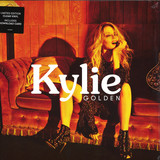
Limited Edition Clear Vinyl
Includes 12' Vinyl and Deluxe CD album, 30 page hard back book
Now that I've been to Nashville,' Kylie Minogue says with audible affection, I understand. It's like some sort of musical ley-line...'
Golden, Kylie's fourteenth studio album, is the result of an intensive working trip to the home of Country music, a city whose influence lingered on long after the pop legend and her team returned to London to finish the record: We definitely brought a bit of Nashville back with us,' she states. The album is a vibrant hybrid, blending Kylie's familiar pop-dance sound with an unmistakeable Tennessee twang. It was Jamie Nelson, Kylie's long-serving A&R man, who first came up with the concept of incorporating a Country element' into Kylie's tried-and-trusted style. That idea sat there for a little while, with Minogue and her team initially unsure about how to bring it to life. Then, when Grammy-winning songwriter Amy Wadge's publisher suggested Kylie should come over to collaborate in Nashville, a city Kylie had previously never visited, something clicked. You know when you're so excited about something,' she recalls, that you repeat it an octave higher and double the decibels I was like that. 'Nashville! Yes! Of course I would!'. I hoped it would help the album to reveal itself. I thought 'If I don't get it in Nashville, I'm not going to get it anywhere.''
Kylie's Nashville trip involved working alongside two key writers, both with homes in the city. One was British-born songwriter Steve McEwan (whose credits include huge Country hits for Keith Urban, Kenny Chesney and Carrie Underwood), and the other was the aforementioned Amy Wadge, another Brit (best known for her mega-selling work with Ed Sheeran). It was then a truly international project: Golden was mainly created with African-German producer Sky Adams and a list of contributors including Jesse Frasure, Eg White, Jon Green, Biff Stannard, Samuel Dixon, Danny Shah and Lindsay Rimes, and there's a duet with English singer Jack Savoretti.
However, the album's agenda-setting lead single Dancing was, significantly, first demoed with Nathan Chapman, the man who guided Taylor Swift's transition from Country starlet to Pop megastar. If anyone knows how to mix those two genres, Chapman does. Nathan was the only actual Nashvillean I worked with. He's got a huge studio in his house, which is probably due to his success with Taylor... there's plenty of platinum discs of her, and others on his walls.' There's something of the spirit of Peggy Lee's Is That All There Is, of Dylan Thomas' Do Not Go Gentle Into That Good Night, even of Liza Minnelli's Cabaret about Dancing, a song which not only opens the album but sets out its stall, providing a microcosm of what is to come. You've got the lyrical edge, that Country feel, mixed with some sampling of the voice and electronic elements, so it does what it says on the label. And I love that it's called 'Dancing', it's immediately accessible and seemingly so obvious, but there's depth within the song.'
The experience of simply being in Nashville was an overwhelming one, before Kylie had even arrived. Once I knew I was going to Nashville, people talked about the place with such enthusiasm. They said without doubt I would love it and, I would come back with songs. They were sending lists of restaurants, coffee shops and bars. It really was a beautiful and genuine response and it felt like I was about to have a life changing experience and in a way, I did.' The reality came as something of a surprise, when she found a far more modern metropolis than the vintage one she'd envisaged. I thought it would be like New Orleans: little houses and bars, with music spilling out onto the street. It reminded me more of Melbourne: apartment blocks going up everywhere! The main strip, Broadway, where the honky tonk bars are, that's where the street was filled with music and it was just amazing.' Mainly, Minogue remembers the heat and humidity. It was 100 degrees. It was like it was raining with no rain.' She also relished the chance to wander around unrecognised, visit a few venerable music bars and soak in the atmosphere. I didn't get to the Grand Ole Opry or the music museums but I managed to go to a couple of the institutions there like The Bluebird Cafe and The Listening Room, and just by being there, through some kind of osmosis, you get this rejuvenated respect for The Song, and the writing of The Song. There's no hoo-hah around it. There's a singer-songwriter there, talking about the song and singing the song, to an audience who are there to listen. Although, I have to confess I was guilty of starting to clap too soon during a long pause at the end of one of the songs. The guy made a bit of a joke out of it and got a laugh from it, but I thought 'Of all people in the audience, no...''
It's probably no coincidence, therefore, that every track on Golden is a Kylie co-write, making it arguably her most personal album to date. The end of 2016 was not a good time for me,' she says, referring to well-documented personal upheavals, so when I started working on the album in 2017, it was, in many ways, a great escape. Making this album was a kind of saviour. I'd been through some turmoil and was quite fragile when I started work on it, but being able to express myself in the studio made quick work of regaining my sense of self. Writing about various aspects of my life, the highs and lows, with a real sense of knowing and of truth. And irony. And joy!'
The songwriting process allowed Kylie to get a few things out of her system. Initially, she admits, it was cathartic, but it also wasn't very good. I think I was writing too literally. But I reached a point where I was writing about the bigger-picture, and that was a breakthrough. It made way for songs like Stop Me From Falling and One Last Kiss. It also meant I had enough distance to write an autobiographical song, like A Lifetime To Repair, with a certain amount of humour. The countdown in that song: 'Six-five-four-three, too many times...'. I don't know if that will be a single, but I can just imagine a girl with framed pictures of past boyfriends, and kind of going 'Oh god, when am I going to get this right'' When she listens back to Golden, Kylie can vividly hear the Nashville in it. It is, she'll agree, probably the first time that a Kylie album has sounded like the place it was made. You wouldn't normally relate my songs to the cities. Can't Get You Out Of My Head sounds more like Outer Space than London. But Shelby '68, for example, was written in London but it was done with Nashville in mind. It's about my Dad's car, and my brother recorded Dad driving it! I don't think I'd have written a number of the songs, including Shelby '68 and Radio On without having had that Nashville experience.'
The latter, she says, is about music being the one to save you.' Throwing herself into the making of the record, she says, crystallised that idea. If there's one love that will always be there for you, it's music. Well, it is for me, anyway.' That song, in particular, carries nostalgic echoes of the golden age of Country, as heard through Medium Wave transistors and tinny home stereos in the distant past. Like any child of the Seventies, Kylie had a basic grounding in Country music, mainly absorbed from older family members. My Step-Grandfather was born in Kentucky and though he lived most of his adult life in Australia, he never stopped listening to his beloved Country artists.' If there's any classic Country singer whose imprint can be heard on Golden, it's Dolly Parton.
Kylie saw Dolly live for the first time at the end of 2016, at the Hollywood Bowl. It was like seeing the light,' she beams. It was incredible. Everyone, whether they know it or not, is a Dolly Parton fan. When I was in Nashville, I did pick up a T-shirt that said 'What Would Dolly Do' Maybe that should be my mantra.' And, whether consciously or otherwise, there's a timbre and trill to Kylie's vocals on Radio On that is distinctly Parton-esque. My delivery is quite different on this album,' she says. A lot of things are 'sung' less. The first time I did that was with Where The Wild Roses Grow. On the day I met Nick Cave, when I recorded my vocals, he said 'Just sing it less. Talk it through, tell the story.' This album wasn't quite to that extreme, but a lot of the songs were done in fewer takes, to just capture the moment and keep imperfections that add to the song. I remember on my last album, a lot of producers were trying to take out literally every vibrato they heard. And that's not natural to my voice. I mean, I can make myself sound like a robot, but it's nice to sound like a human!' Working within the Country genre also gave Kylie permission to write in the Nashville vernacular. Because we were going there, I wasn't afraid to have lines like 'When he's fallen off the wagon we'd still dance to our favourite slow song', 'Ten sheets to the wind, I was all confused', 'I'll take the ride if it's your rodeo'. The challenge of bringing a Country element to the album made the process feel very fresh to me, kind of like starting over. I started to look at writing a different way, singing a different way.'
If ever Kylie lost confidence in the Country-Pop concept, and found herself pondering This is great, but back in the real world - my real world - how will this work', Jamie Nelson was there to badger her into sticking to the path. We found a way to make it a hybrid with what we'll call my 'usual' sound. It had to stay 'pop' enough to stay authentic to me, but country enough to be a new sound for this album. The closer we zoomed in, and the more we honed it, I knew Jamie was right. We sacrificed good songs that weren't right for this album, because we wanted it to be as cohesive as possible. The songs that were hitting the mark were these ones, so we decided to be strong, and that's how we wrapped up the album. What he said, that stuck with me, was that 'I'd hate to get to the end of this and really wish we'd gone for it.'' Having worked with Kylie for so long, Nelson was able to put this latest shift of direction into perspective. He said 'You've traditionally done it throughout your career. You had your PWL time, then you did a complete turn when you went to deConstruction, then another complete turn with Spinning Around, and R&B dance-pop, and then another turn with Can't Get You Out Of My Head, icy synth-pop, and this is another one.' He was right. It felt like the right time to have a change sonically. New label, new stories to tell, and a new decade almost upon me.'
Kylie Minogue will, it's scarcely believable, turn 50 this year. This looming milestone is partly behind the album's title, and title track. I had this line that I wanted to use: 'We're not young, we're not old, we're golden' because I'm asked so often about being my age in this industry. This year, I'll be 50. And I get it, I get the interest, but I don't know how to answer it. And that line, for my personal satisfaction, says it as succinctly as possible. We can't be anyone else, we can't be younger or older than we are, we can only be ourselves. We're golden. And the album title, Golden, reflects all of this. I liked the idea of everyone being golden, shining in their own way. The sun shines in daylight, the moon shines in darkness. Wherever we are in life, we are still golden.' One of the album's shiniest moments is Raining Glitter, an exuberant banger which ventures closest to Kylie's traditional dance-pop comfort zone. Eg White, who is one of the producers and writers and a great character, was talking about disco one day. I said 'I love disco, but you know the brief.' We needed to be going down the Country lane, so to speak. But we managed to bring them both together. When I wrote it, I was thinking about the Jacksons video for Can You Feel It where they're sprinkling glitter over everyone. And I think there's a Donna Summer record that's got that feel to it. I think that's my job: I basically leave a trail of glitter after every show I do anyway.'
Kylie is looking forward to the challenge of incorporating the Golden material into her live shows. Mixing these songs in with my existing catalogue is going to be fun. And it could be fun to do some of those songs with just a guitar. It'll make my acoustic set interesting...'Her incredibly loyal fans - to whom one Golden song, Sincerely Yours, is intended as a love letter' - will, she believes, have no problem with her latest stylistic shift. My audience have been with me on the journey, so I shouldn't be afraid that they won't come with me on this part. I've had fun with it, and I'm sure they will too.'
The time spent making Golden has, Kylie says, been a time of creative and personal renewal. I've met some amazing people, truly inspiring writers and musicians. My passion for music has never gone away, but it's got bigger and stronger.' And if there's an overriding theme to the record, it is one of acceptance. We're all human and it's OK to make mistakes, get it wrong, to want to run, to want to belong, to love, to dream. To be ourselves.'
I was able to both lose and find myself whilst making this album.'
Pittsburgh-born Phillip Ballou's earliest years were spent in the gospel field, after he moved to New York City in the '70s, he teamed up with Bennie Diggs and Arthur Freeman, founding members of The New York Community Choir and singer Arnold McCuller to form the group Revelation. The quartet recorded for RSO Records, scoring some R&B success in the US with tracks like Get Ready For This' and You To Me Are Everything,' touring the Bee Gees among others. Phillip also sang on albums by NYCC recorded for RCA Records and continued with Revelation until 1982.Frequently hired for sessions in and around New York, Phillip teamed up with UK soul music journalist David Nathan (who he'd met in 1974 during Nathan's first US visit) and John Simmons, formerly a member of The Reflections, another New York vocal group to write a series of songs for his own proposed solo record deal. Although a contract did not materialize, one of the songs - Ain't Nothing Like The Love' - got some interest from famed Philadelphia producer Thom Bell who presented it to The O'Jays. Ultimately, the tune was turned down by Kenny Gamble and John Simmons, by then musical director for Stephanie Mills, recorded his own version for a small independent label in 1981.Phillip continued his own musical journey, touring and recording with James Taylor and Todd Rundgren. In addition, Phillip's name graced recordings by George Benson, Billy Ocean, Kashif, Nona Hendryx, Jonathan Butler, Teddy Pendergrass and Melba Moore, in 1981, he began recording with Luther Vandross and became a part of Luther's touring band for many years, as well as singing on productions by Luther on Aretha Franklin, Dionne Warwick and others, continuing his association with him until Luther's 2003 stroke. Phillip returned to his gospel roots in 2004 as Minister of Music at a Brooklyn church and passed away in March 2005, aged 55. Thanks to renewed interest in the John Simmons' 1981 recording on YouTube, David Nathan has uncovered several tracks from the 1978 and 1979 he did with Phillip and John including Phillip Ballou's original version of Ain't Nothing Like The Love,' gaining its first ever worldwide release as a 7' single on Nefer Records in association with Super Disco Edits
Jerome Meyer AKA Von D is a master craftsman, well-known for releasing dubstep and bass music since 2009. On an increasingly prolific trajectory since last year, recent 12's on Infernal Sounds, Trojan Audio and Scotch Bonnet have signaled his renewed focus on dubwise productions. We are proud to say that Von D's Khaliphonic debut sees him fully committing to reggae and dub - in his words, going back to my musical roots.'
Politricks' is a masterwork, cut from the same living rock as the classic Cuss Cuss riddim, a simply huge bass and drum workout that is truly one for the ages. Politricks is an anthem for now, a call to avoid the dead-end of politics-as-usual and a warning to beware of the lies politicians tell to keep themselves in power - full of promises but changing nothing. Von D says that working with Don Cotti was very natural,' and their easy relationship is audible - the tune fits the vocal like a glove, and Cotti's instantly-recognizable singjay style gives even more gravitas to an already heavy track. The dub version spools out Von D's signature saturated echoes even further, and opens up spectral chambers of reverb that shimmer and glow.
The B side Ygrec' is an equally massive tune, just as compelling if more meditative and mysterious, coming in both one drop and power-steppers mixes for maximum versatility and vibes. Both tunes and their versions feature an incredibly robust, warm, human sound - one that simply can't come from machines alone - live drums, bass, and kete drum among other instruments maintain the tradition of live musicians in dub - to say nothing of expert desk-based mixing and deployment of live analog effects the way the elders intended. Both tunes dial in at 140 making them perfect for roots and dubstep selectors alike.
Von D got his start as a drummer and engineer outside Paris, in the heady days of original jungle. Early releases on Disfigured Dubz, Hench, Boka, Black Acre and the seminal V Recordings, as well as his reggae-oriented Liquid Wicked project, cemented his reputation. Don Cotti is a prolific producer, DJ and MC with releases stretching back to 2006 on labels as varied as Bass Face, Studio Rockers, and Soul Jazz.
Mastered by Lewis at Stardelta. Art & design by Polygon Press.
- A1: Billy Thorpe - Back On The Street Again
- A2: The Id - Feel Awright
- A3: Ross D. Wyllie - Do The Uptight
- A4: Johnny Rocco Band - Funky Max
- A5: Daly-Wilson Big Band - City Sounds (Featuring Kerrie Biddell)
- B1: Dalvanius & The Fascinations - Voodoo Lady
- B2: Renee Geyer - Be There In The Morning
- B3: John Sangster - Hair
- B4: Ray White Revival - Superstition
- B5: Festival Studio 24 Orchestra - Africa (L'ete Indien)
- B6: Brute Force & His Drum - Weird And Wonderful
- C1: Mcphee - The Wrong Time
- C2: Kahvas Jute - Odyssey
- C3: Tamam Shud - Sea That Swells (From Morning Of The Earth)
- C4: Blackfeather - The Rat Suite Main Title
- D1: Al Styne - Vehicle
- D2: Mcphee - Indian Rope Man
- D3: Hot Source - Oz Bump (Soul Thing)
- D4: Count Copernicus & The Cosmic Fire - Painted Ego
- D5: John Sangster - A Day In A Life
COMPILED BY PETE PASQUAL, ERICA OLSON & DJ KINETIC
Following on from acclaimed compilations like 'Down Under Nuggets' and 'Heavy Soul' (and two other new titles 'Running The Voodoo Down' and 'Dodgy Bossa (& Silly Sambas)' - details below), Festival Records presents another deep dig into the archives, this time shining a light on rare Australian soul-jazz, jazz-funk, and freaked-out groove rock from the late '60s and '70s.
BACK ON THE STREET AGAIN - AUSTRALIAN FUNK, SOUL & PSYCH (MOSTLY) FROM THE FESTIVAL VAULTS is a stunning 20 track CD and 2LP release that highlights a point when the previously disparate styles of rock, jazz and soul all started influencing each other, and exciting new genres were created. To quote the liner notes (by DJ Kinetic):
Australia produced some amazing music during the 60s and 70s that sat outside of the normal rock mould. Avant guard artists like John Sangster pushed boundaries and experimented with the fusion of local and overseas influences, artists like Dalvanius recorded soaring disco music that was lost amongst the popular music of the time, only to be rediscovered by DJs overseas who were searching for unknown sounds, composers like Brute Force and His Drum took risks and recorded left-field funky sounds hidden within their more mainstream compositions, and popular artists like Billy Thorpe occasionally strayed from their A&R directions and took leaves from the books of American artists who were largely unknown in Australia at the time. Beneath the veneer of bland rock and roll lay an unknown multitude of funky sounds hidden from mainstream view.
In addition to the artists that Kinetic mentions (and the compilation features two John Sangster tracks - stunning versions of 'Hair' and the Beatles' 'A Day In The Life'), the collection includes iconic names of the era like the Daly-Wilson Big Band (featuring Kerrie Biddell), Renee Geyer and the Johnny Rocco Band. '60s sides from Ross D Wyllie and The ID (featuring Jeff St John) reveal the various styles' roots in American rhythm & blues, and the unexpected inclusion of some legendary Australian rock outfits like Tamam Shud and Blackfeather reveals the psychedelic and progressive rock influences at play. The full range of the music is highlighted by the inclusion of both cabaret/daytime TV performer Al Styne and outrageous Kings Cross club act Count Copernicus & The Cosmic Fire as well as the in-house studio 'pops' orchestra, Festival Studio 24 Orchestra.
Co-compilers Pete Pasqual, Erica Olson and DJ Kentic to undertake interviews with specialist media around release. Facebook ad's around release.