The Perth-based psychedelic rock n roll machine rip through a full platter of their high-speed tunes, shot in two locations and heralding their new LP, Night Gnomes. Crunchy riffage, addictive melodies and no-holds barred psychedelia is on tap. Get it at the link below! "Thank you Levitation for getting us out the house! Absolute pleasure to be asked to collaborate on something together. There’s a brilliant story involving an angry local and a bulldozer if you’re won-dering why the location changes, but for the minutes we were filming it was magical. Gnomes till we die! Thanks to Jelly, Tay, Jared, Dima, & the McEwan crew for helping us put this together, love you all." – PPC
Search:mc spee
- A1: Lost Women
- A2: Over, Under, Sideways, Down
- A3: The Nazz Are Blue
- A4: I Can’t Make Your Way
- A5: Rack My Mind
- A6: Farewell
- B1: Hot House Of Omagararshid
- B2: Jeff’s Boogie
- B3: He’s Always There
- B4: Turn Into Earth
- B5: What Do You Want
- B6: Ever Since The World Began
First released in the summer of 1966, ‘Yardbirds’ (or ‘Roger The Engineer’ as it became known’) showcases the
Yardbirds at the peak of their powers. Featuring the classic line-up of Jeff Beck, Keith Relf, Jim McCarty, Chris Dreja,
and Paul Samwell-Smith, the group explored explosive new sonic territories, pushing their blues-rock sound into the
realms of the avant-garde, psychedelia and Indian music.
• This new edition has been expertly cut from the original stereo tapes using precision half-speed mastering by
Cicely Balston at AIR Mastering.
• Half-speed mastering is a vinyl cutting technique that improves groove accuracy and transient information creating
an incredibly detailed stereo image with a natural high frequency response.
• Pressed on 180g heavyweight vinyl, featuring an obi strip and housed in a poly-lined inner sleeve. Also includes a
4-page booklet with extensive liner notes by David French based on interviews with Jimmy Page, Paul SamwellSmith, Jim McCarty and Simon Napier-Bell.
Bristol native Daffy returns to Shall Not Fade with his second solo EP, focusing on the darker aspects of 4x4 garage.
The title track typifies Daffy's unique and forward-thinking take on UKG. The dynamic chant of a dancehall MC is ramped up to invigorate a UKG stomper, the product: a rude, flavoursome track which evokes Spooky and Riko Dan's "High Power". Serious. The aptly-named "Darker Days" is more reminiscent of El-B with cool-toned low end growls before "Take It Easy" and "Warped" bring things to an energetic close with a stomping 4x4 rhythm and warped bassline which nod to old school speed garage.
Like meeting an old friend again, Dalmata Daniel welcomes DJ Overdose back to their catalog. Six years ago the infamous Dutchman's '05 Poly 800 Loop' EP was released, which served as a powerful launch to Dalmata Daniel, opening the first chapter in their story. Later in 2019, a split release with Sematic4 was also a highlight in the life of the label; and now, 3 years later, DJ Overdose checks in with the 'Powers of Ten EP' with a J. Mono remix, available both in digital and vinyl format, the latter having 2 bonus tracks.
The distinct, crunchy sound of DJ Overdose, bearing aspects of old school hip-hop-infused sampling and contemporary analog vibes creates the perfect blend of both worlds. 'Garden of Lust' opens up the adventure with a combo of warm basslines and solid drum-programming. This initial track feeds us these cardinal elements as the bread and butter they are: subtle variations and fine spices do appear here and there as the track goes along, but the key, beating pulse in 'Garden of Lust' brings massive hits stable as a sledgehammer in the hands of a blacksmith.
'Feed The Beats' elevates the game to cinematic territories: its majestic string-like central melody makes me alert and ablaze, making me feel like I'm in a late 80s L.A. setting facing malevolent zombie-aliens in my Wayfarer shades. Blasting beats and Carpenterian coolness all over the place, while the spooky bassline just keeps sneaking up on me endlessly.
If you are wondering when's the best time of the year to bring out your boombox at last, then this is your lucky day: with 'BOB', the first bonus track on the vinyl, we can experience some roarin' bassdrums, snappy snares, MCs with the speed of light and all that jazz. The low-bit sampling and vinyl scratching come and kick you right in the face so hard that it becomes pretty obvious you'll can't help but start some serious beatbox battles in your bathtub with your rubber duck.
A feverish groove in the prime time of a funky bash, in the haze of a sensual rave-up: that's all one really wants when going for a Saturday night out. We definitely get this and much more from 'Room 714', another vinyl-only bonus track. A berserk voice and ethereal chords guide us through this mysterious track, but while we are busy trying to impress our crushes on the dance floor, things around us are slowly getting very, very freaky, maybe a bit way too freaky.
As wobbly and jolly as it gets, our Dutch friend ends his session with 'Ðr ¡v€ M€ ¢r@z¥', a vocoder-heavy disco banger, full of merry vocal FX and smart rhythmic glitches as he completes his flight. To close the EP, our local hero, J. Mono delivers an insane remix of 'Ðr ¡v€ M€ ¢r@z¥': one can clearly imagine how he grabs and turns the BPM knob all the way up, fires up some arpeggios on his mighty synths and casts a complete reimagination of the original track.
Port Sulphur : In contrast to the methodology deployed on the first album,
'Speed Of Life' features no collaborations or vocals, the instrumental
pieces were recorded by Douglas MacIntyre, Paul Turnbull and Samuel
Joseph Smith (at the later's Green Door studios in Glasgow)
The album was constructed using 'automatic' writing and recording techniques
based on an reimagined soundtrack for Andrei Tarkovsky's film, 'Nostalghia'.
Photographer Gavin Fraser and film director Grant McPhee were very much part
of the 'Speed Of Life' team.Speed Of Life features 10 tracks, all of which were cut
live before being reconstructed by editing, in much the same way that Can and
Harmonia shaped their music.
Limited to 500 copies worldwide.
Heavy as f-ck and deep as hell, this devastating split album gleefully corrupts and corrodes Dub’s sunshine reflections. Celebrating rhythm & noise in its dank echo chamber, these demolition dub tracks are built from obsessive studies in distortion, overdrive and seriously ruff textures, amongst an absolutely insane amount of sub-bass level.
‘Disintegration Dubs’ is a three way low end collision, between G36 (The Bug aka Kevin Martin/Gorgonn’s rig torturing beat project) and JK Flesh (Justin Broadrick of Godflesh/Jesu etc…). As the album title suggests, this instrumental pile up of floor crawling, sound system crushers, is a clearer sign than ever, that these three producers crave their dub cuts to be mutant and heavyweight, totally damaged and completely atomised. Dub as sonic obliteration
Anyone previously smitten by Techno Animal’s deeply psychedelic face off with Porter Ricks, on the long out of print ’Symbiotics’, or who worshipped Zonal’s recent rhythmic wreckage via Relapse records, will surely gorge greedily on Disintegration Dubs’. Likewise, newbies, who have snapped up this year’s ‘Fire’ by The Bug or ‘New flesh in dub’ by Godflesh, will find endless pleasure within these dread-tech, annihilated dubs and Industrial strength steppas rhythms. Echoes of Basic Channel, early Iration Steppas, Public Image Limited or even Andy Stott can be heard within this collection’s haunted atmospherics and bulldozing rumble. Yet, these three individual producers have obviously found their own recognisably original sound, within these monolithic grooves, and what makes this album so utterly refreshing, is just how well the three disparate sound manipulators complement each other fully, as they collectively set their sights on some shared, relentlessly futuristic sci-fi vision, for a new form of dub.
Obviously, Martin as The Bug, and Broadrick with his colossal dubs of Godflesh and his filthy back catalogue of JK Flesh releases, have both long since subscribed to the genre, aesthetic and fragmentation of Dub. Meanwhile relative newcomer, Gorgonn, is The Bug’s long time, live soundman, and former bandmate with DJ Scotch Egg in Devil Man, as well as having formed Dokkebi Q with Kiki Hitomi (ex-King Midas Sound), so he is no stranger to the art of deviant dubs either…
G36 dropped their appropriately titled debut EP ’Floor Weapons’, in 2018, on PRESSURE, as well as providing the backing riddim for the first ever release from Jamaican MC phenomena Nazamba, with his startling debut, ’Vexed’. Alternately, Justin has previously released seven albums solo, as JK Flesh, that systematically contorted, distorted and completely bastardised techno for labels such as Hospital Productions, Downwards and Speedy J’s Electric Deluxe… (Next year will also see a full JK Flesh album on PRESSURE too…!)
This album is Mastered by Stefan Betke aka POLE, at Scape Mastering.
It's hard to believe it's taken this long for a proper retrospective of legendary Los Angeles collective CVE. "We Represent Billions" is a crucial portrait of one of the West Coast's most low-key influential crews - a hydra-like collective of rappers, producers, designers and engineers who were key members of the Good Life Cafe's open mic scene, going on to inspire artists like Jurassic 5, Kendrick Lamar amongst many other. Initially called Chillin Villain Posse before morphing into Chillin Villain Empire in the late 1980s, they eventually centered around the core trio of Riddlore, NgaFsh and Tray-Loc. The crew were years ahead of their time, self-producing music without samples and pioneering a stream of consciousness lyrics that still sound fresh and innovative. CVE were self-sufficient and motivated from the beginning, named "Chillin Villains" because that's how they were perceived by white America. This social motivation was channeled into their groundbreaking performances at Good Life Cafe, the South Central session that evolved into Project Blowed and later on came to influence LA club night 'Low End Theory'. It was chronicled by Ava Duvernay, herself an MC in short-lived duo Figures of Speech, in her "This is the Life" documentary, where she interviewed CVE alongside Jurassic 5, Freestyle Fellowship, Abstract Rude and Busdriver. On "We Represent Billions", we're treated to a snapshot of the CVE sound from 1993-2003, their most prolific era. The retrospective collects music from the handful of albums the crew released on their own Afterlife Recordz label (mostly as limited edition CD-R's) plus many previously unreleased tracks and highlights their untethered eccentric creativity and sheer breadth of influence. Whether twisting twitchy West Coast electro on 'All Over Da Globe' or free associating over horror synths and foley sounds on 'Made in Chillz Ville' there's a sense that their music was just too future for its time. Assembled from heaving industrial samples and graced by back-and-forth tongue twisting flows, 'Thugs and Clips' is as eerie and hard-hitting as anything 2Pac's "The Don Killuminati: The 7 Day Theory" full-length. Fuzzed-out and unsettling, 'Calistylics' welds an ambient synth loop and bone-rattling percussion to Tricky-esque percussion, while the flickering closer 'Unicycle' is a cross between Dr. Dre's icy G-gunk pressure and Three 6 Mafia's pitch black lo-fi funk. In many ways, 2022 is the perfect time to rediscover this music: an urgent, creative fusion of spine-tingling pre-grime electronic minimalism and mind bending wordplay that still sounds completely idiosyncratic and utterly alien. Tracks: 1 All Over Da Globe 2 Thugs and Clips 3 C.V. Vault 4 Made in Chillz Ville 5 Bring It On 6 Calistylics 7 No Feelins 8 Let's Get It On 9 Today Was A Fucked Up Day 10 Untitled (Freestyle) 11 Unicycle
Dallas-born Roger Kynard Erickson, better known as Roky Erickson, is a legend of psychedelic music and culture. Playing piano at five years old and guitar at ten, he dropped out of high school in Austin shortly before graduating, since the school dress code demanded short hair. In 1965, his group, The Spades, made an impact with “We Sell Soul” and the following year, The 13 th Floor Elevators burst onto the scene with debut album The Psychedelic Sounds of the 13 th Floor Elevators, but the band’s non-conformist attitude and open endorsement of drugs such as marijuana and LSD put them in repeated conflict with the authorities. Then, in 1968, during a performance at the San Antonio edition of the World’s Fair, known as HemisFare, Erickson began speaking incomprehensible nonsense on stage, leading to a diagnosis of paranoid schizophrenia and confinement in a Houston psychiatric hospital, where he was forcibly given electroshock therapy. The following year, after being busted with a single joint, Erickson pleaded not guilty by means of insanity, leading to a 3-year stay in Rusk State Hospital, with further electroshock and Thorazine treatments. Following his release Erickson formed a group initially called Bleib Alien, which evidenced a more hard-rock orientation, later renamed The Aliens, though Erickson was also working with Austin’s The Explosives in the same era. Aliens material produced by Stu Cook of Creedence Clearwater Rival was issued by CBS and an independent, 415 Records. Then, in the early 1980s, Erickson became fixated with junk mail and unsolicited letters, writing to lawyers and celebrity figures on a regular basis; in 1985, solo mini-LP Clear Night For Love was produced at Music Tracks in Austin by bassist/guitarist Speedy Sparks, with former Joe “King” Carrasco and Delbert McClinton drummer, Ernie Durawa, plus Supernatural Family Band alumnus John Reed on guitar. Released by France’s New Rose label in small numbers, the release found Erickson back in semi-psychedelic/country rock mode on opening track “You Don’t Love Me Yet,” the plaintive “Starry Eyes” and the anthem-like title track, while “The Haunt” is more in swamp/horror rock vein and “Don’t Slander Me” has heavy blues leanings.
Welcoming Arfa to the Time Is Now family with his debut EP: a tight 5-tracker which sees the emerging producer come into his powers with a fiercely forward-facing take on dark garage, featuring a raucous remix from London's Bakey.
Real Badman EP starts as it means to go on. 'Run It Back' is driven by a fractured syncopated rhythm and a heavy warped bassline which lends it its tune, fusing together the stylistic elements of dark garage and speed garage to offer a fresh take on both genres. Clattering rimshots and a womping bassline compliment 'For The Mandem's luscious pads before being carried onto 'Ain't Ready' which adds a tight two-step rhythm and the chopped-up vocals of an old skool garage MC. Finally, 'Real Badman' sees the EP at its most playful. Staccato piano chords infuse it with an uplifting melody before Time Is Now family member Bakey steps in to deliver his take: a half-time rendition which strips back the higher ends to make way for a focus on the subs. A real stomper.
Matthew Halsall unveils new band and announces 'Salute to the Sun'
his new album on Gondwana Records
Limited edition Double Clear vinyl, printed on reverse board with Gold foil artwork plus double printed reverse board inner sleeves including download code. Cover Artwork by Daniel Halsall with design and layout by Ian Anderson of The Designers Republic.
Comes packaged in a resealable, re-usable Polypropylene anti-static, acid-free, crystal clear sleeve for maximum protection.
Composer, trumpeter, producer, DJ and founder of Gondwana Records, Matthew Halsall has always worn many hats. But at the heart of everything that he does Halsall is first and foremost an artist and a musician. A trumpeter whose unflashy, soulful playing radiates a thoughtful beauty and a composer and band-leader who has created his own rich sound world. A sound that draws on the heritage of British jazz, the spiritual jazz of Alice Coltrane and Pharoah Sanders, as well as world music and electronica influences, and even modern art and architecture, to create something uniquely his own. A music that is rooted in Northern England but draws on global inspirations.
Salute to the Sun is his first album as a leader since Into Forever (2015) and marks the debut of his new band. A hand-picked ensemble featuring some of Manchester's finest young musicians: Matt Cliffe flute & saxophone, Maddie Herbert harp, Liviu Gheorghe piano, Alan Taylor drums and Jack McCarthy percussion as well as long-time Halsall collaborator, bassist, Gavin Barras who has been at the heart of Halsall's bands for over a decade. For Matthew it was important to have a band based locally and able, pre-Covid, to meet and play each week, and who also performed a sold-out monthly basement session at Yes in Manchester. The album draws energy from these sessions and inspiration from themes and ideas that have inspired Halsall through the years (on albums such as Oneness, Fletcher Moss Park and When the World Was One) ideas of ecology, the environment and harmony with nature.
"I feel Salute to the Sun is a positive earthy album. I wanted to create something playful but also quite primitive, earthy and organic that connected to the sounds in nature. I was listening to lush ambient field recordings of tropical environments such as jungles and rainforests and found myself drawn to percussive atmospheric sounds which replicated what I was hearing (bells / shakers / chimes / rain sticks) and I started to experiment with more wooden percussive instruments such as kalimba and marimba".
Salute to the Sun features lush wholly improvised tunes inspired by ambient rainforest and jungle field recordings, deeply soulful tunes built around hypnotic harp and kalimba patterns, deep Strata-East inspired spiritual jazz grooves and some of Halsall's most beautiful playing and inspiring healing melodies yet recorded.
The album was recorded at the band's weekly sessions, using Halsall's own recording set-up, giving the recordings a relaxed vibe and unforced energy that really lets the music breath. The album is also very much a family affair as Halsall's brother Daniel Halsall, artistic director of Gondwana Records, was an important presence at the sessions and co-produced the album. It is also his memorable artwork that adorns the cover of Salute to the Sun, an album beautifully designed by legendary designer Ian Anderson of The Designers Republic, who also created the covers for the recent archival releases Oneness, Sending My Love and Colour Yes and is one of Halsall's favourite designers. Together Daniel Halsall and Ian Anderson have designed all of Matthew's seven albums to date, so it felt extra-special to bring them together for, Salute to the Sun, an album that Halsall was determined to present in the very best way possible. The album was mixed with another long-time collaborator, George Atkins at 80 Hertz in Manchester, who works tirelessly with Halsall to perfect the sound and was mastered by noted engineer Peter Beckmann who brings an added depth to the sound specially around the bass notes as well as Halsall's trumpet. The magnificent double vinyl was cut as a Half Speed master by Barry Grint at Alchemy Mastering for the best possible analogue experience.
The result is arguably Halsall's most beautiful and complete recording to date, playful, charming and imbued with the warmth of the sun and the energy of life.
- A1: Black Slate - "Sticks Man
- A2: Dee Sharp - "Rising To The Top
- A3: Asher Senator - "One Bible
- A4: Cymande - "Fug
- B1: Digital Mystikz - "Misty Winter
- B2: Winston Curtis - "Be Thankful For What You've Got
- B3: Trevor Hartley - "It Must Be Love
- B4: Shut Up & Dance - "Java Bass
- C1: Brown Sugar - "Black Pride
- C2: The Terrorist - "Rk1
- C3: Black Harmony - "Don't Let It Go To Your Head
- D1: Pebbles - "Positive Vibrations
- D2: Ragga Twins - "Ragga Trip
- D3: Janet Kay & Alton Ellis - "Still In Love
- E1: Funk Masters - "Love Money
- E2: Cosmic Idren - "Compelled
- E3: Harry Beckett - "No Time For Hello
- F1: Sandra Reid - "Ooh Boy
- F2: Tabby Cat Kelly - "Don't Call Us Immigrants
- F3: Brown Sugar - "I'm In Love With A Dreadlocks
Soul Jazz Records new ‘Life Between Islands’ collection coincides with the launch of Tate Britain’s exhibition of the same name. This landmark exhibition explores the links between Caribbean and British art and culture from the 1950s to now.
Soul Jazz Records album, sub-titled “Soundsystem Culture – Black Musical Expression 1973-2006,” focuses on the most important Black British musical styles to emerge out of the distinctly Caribbean world of sound systems. The album features an all-star line-up including Dennis Bovell, Shut Up and Dance, Cymande, Digital Mystikz, Brown Sugar, Funk Masters, Janet Kay, Ragga Twins and more.
The album is a lightning-rod journey across Roots Reggae, Jungle/Drum & Bass, Jazz-Funk, Lovers Rock, Jazz, Dubstep and more. Much of Soul Jazz Records’ catalogue comes out of these genres and this album is partly an overview of some of Soul Jazz’s earlier releases (including Digital Mystikz’ long-deleted groundbreaking and now highly-collectible single, ‘Misty Winter’) alongside some choice rare and classic tunes that span over 30 years of sound system culture.
Many of the tracks represent how Black British artists defined their own identity with songs such as Brown Sugar’s righteous ‘Black Pride’, ‘I’m In Love with A Dreadlocks’ and Tabby Cat Kelly’s powerful ‘Don’t Call Us Immigrants’. Aside from being musically rooted in the distinctly Jamaican-born phenomenon of the sound system, much of this identity is also shaped by the triangular relationship of being British-born, of Caribbean heritage, and with an equal love of African-American Jazz, Funk and Soul, as evidenced with many Lovers Rock tunes reggae covers of American soul tunes (such as those of Jean Carn, William de Vaughan and Rose Royce featured here). This stateside influence can also be heard in groups such as the Funk Masters, a group formed by reggae radio DJ Tony Williams, whose jazz-funk music successfully crossed over into New York’s clubland, as well as the great Cymande, whose unique street-funk became staple material for numerous US hip-hop artists in the years that followed.
In the early 1990s, jungle and drum and bass artists took the essence of reggae’s soundsystem culture – MCs, dubplates, crews – and applied them to their own music, applying heavy reggae bass lines to intense double-speed drum breakbeats. At the forefront of this new movement were the duo Shut Up and Dance, working closely with The Ragga Twins, aka Deman Rocker and Flinty Badman, both MCs for North London’s infamous Unity reggae soundsytem. In the early 2000s, dubstep, spearheaded by Digital Mystikz, became the latest instalment in this ever-evolving soundsystem culture.
Take the freaked-out punked up soul of The Stooges and MC5 mix that with 60s garage trash, blend in Sabbath, AC/DC and heavy rock n roll and then hot wire that sound to a handful of freaks located in Fredericton, New Brunswick. Here it is that The Angered Wrecks were located - in an old Victorian style house in downtown Fredericton. It was here they set up a permanent rehearsal space on the main floor taking up the dining room and living room area with a full P.A. system and the long parties would begin as the Angered Wrecks cranked out an unholy primal serving of mind-numbing, eyeball-popping guttural pure rock and roll.
Lucky for us the Angered Wrecks had a primitive DIY recording set up as they recorded live off the floor with one cardioid mic taped to the ceiling to capture the entire room sound and straight into a cheap Alpine cassette deck. The results of these previously unheard recordings capture the essence of trashy rock’n roll at it’s finest, delivered with pure dereliction, and always a side of extra sleaze.
Keeping warm in the winter at another old salt box style house they would later rehearse and play gigs in, a large circle was cut in the floor so that the rising heat from the pottery kiln downstairs would (along with the right mixture of beer and ‘Purple Jesus’, weed and often speed and hot dogs) keep these boys fuelled long enough in sub zero temperatures to keep pumping out the rock’n roll savagery.
The last show they played was in the fall of ’81 at the Bug Shack after the household was served an eviction noticed with the house to be entirely demolished (just like Stooge Manor aka The Fun House).
They got a gig together the weekend before demolition, packed the bottom floor and played a blazing set. At the very end, walls were kicked apart, old cans of paint strewn about, general wanton destruction to furniture, doors, windows etc…insane. The bug shack had come to an end and shortly thereafter, The Angered Wrecks.
That these tapes have survived to this day is all thanks to John Westhaver’s archival hoarding (even though the loss of a 90 minute session of the Angered Wrecks still haunts John to this day).
So CRANK these tracks as loud as you can – these audio tapes are not for the faint of heart
Muscle Shoals singer-songwriter Dylan LeBlanc releases his new EP,
‘Pastimes’, a self-produced collection of covers of songs from Glen
Campbell, Bob Dylan, the Rolling Stones, Led Zeppelin, Buffalo
Springfield and JJ Cale that inspired him to create his own acclaimed altcountry sound.
‘Pastimes’ is released on orange coloured vinyl.
LeBlanc shared his thoughts about his cover of Led Zeppelin’s ‘Going to
California’: “When I was 15 years old I got my first paying gig at a local
coffee shop called Juri’s,” says LeBlanc. “I remembered this girl that sat
behind me in class and I bonded over Led Zeppelin ‘IV’. I remember I
had gotten a Led Zeppelin box set that year for Christmas, and her
favorite song was ‘Going to California’. I rushed home to learn that song
for her and spent hours in my room at my grandmother’s house where I
lived at the time so I could play it for her and impress her. This song will
always hold a special place in my heart. I love this record and this era of
music that I think will always remain untouchable forever and always.”
Each song was chosen for its deeply personal impact: JJ Cale’s
‘Sensitive Kind’ takes LeBlanc back to the smoky dive bars his father
would bring him along to as a child. Buffalo Springfield’s ‘Expecting to
Fly’ reminds him of teenage joyrides, speeding through the country and
listening to music to escape life’s harsh realities. He learned the art of
storytelling through songs with the Rolling Stones’ haunting ‘Play With
Fire’ and Bob Dylan’s ‘Blind Willie McTell’ - a track that he compares to
reading a Southern Gothic Faulkner novel. And Glen Campbell’s ‘Gentle
on My Mind’ is a song he remembers from his early childhood, when his
grandfather, also a guitarist, would throw parties where friends would
gather to drink and sing and forget their troubles.
‘Pastimes’ was recorded at Fame Recording Studios in Muscle Shoals,
live and with as few takes as possible in order to capture a sense of
authenticity. Says LeBlanc, “I feel like music is nothing more than a
spiritual endeavour to widen the horizons and heighten the senses of the
things inside of everyone that sometimes feel unreachable.”
Dylan LeBlanc has spent the last decade releasing four acclaimed
albums, winning praise for his arresting alt-country style, collaborating
with the likes of Emmylou Harris and Brittany Howard, and sharing
stages with heavyweights like Bruce Springsteen and Lucinda Williams.
“One of modern country’s most interesting voices, in both senses of the
term.” - Uncut
“Sublime voice and evocative songwriting.” - Nashville Scene
Clap de fin for the "Cabinet des Curiosités" : 15th and last episode of Vol.1 with The Architect.
Since last fall, Al'Tarba has been able to mix his talents with those of a beatmaker, a producer or a rapper, for hybrid experimental collaborations, composed with 4 hands or more, mixing styles and sounds. In November 2020, somewhere in France, we could hear the noise of some machines breaking a silence of lead, due to the general fever of the cultural scene. In a studio-laboratory looking like a "Cabinet des Curiosités", where far-fetched ideas are piled up on as many dusted shelves, Al'Tarba and his instruments were still running at full speed.
Anxious to find the antidote, a handful of beatmakers, producers and rappers, all gathered under the aegis of the Toulouse-based scientist, have been fine-tuning, week after week and month after month, the ingredients of their new serum. Over the seasons, they have unveiled, with regular intake, hybridizations of composed styles. Between sharing sounds, ideas, sample loops and vocal takes, like a "Cabinet des Curiosités" containing a thousand and one unusual objects.
On this foggy road and until the lightning, crossed Mounika, Structural Anomaly, Aguirre and Prometheus, Yous MC, Beus Bengal, Goomar, DeZordre, ProleteR, Degiheugi, K.D.S and Stabfinger, DJ Low Cut, DJ Nix'on, Sarbacane, Mani Deïz, Slim Paul and Grin. The day when the echo of the party is heard again in the distance, the sky is discovered the time of a new story. The clouds finally dissipate, for the last chapter of this first volume.
Between two rocks, the sea and its blue, bathed in sunlight. On the horizon, the authentic "Orange Sea" sailing in the distance. It is Al'Tarba and The Architect who arrive against all odds, to tell us the last story of the "Cabinet des Curiosités", first volume. The Architect, overproductive beatmaker and informed digger, knows how to take his audience on a journey through the world and styles. A last collaboration which promises the great crossing, its hot and ardent breath like fire, bell sound of the beginning of summer found and its epics.
Melancholy of a past world and dreamlike flights of fancy, hope of the world after, will rub shoulders in a double-vinyl album that will bring together the entire adventure. Pre-orders are now open !
So many bright perspectives, which would even let us foreshadow a forthcoming release of Al'Tarba's second solo album on I.O.T Records: "La Fin des Contes".
- A1: Watch Me Now
- A2: Ease Back
- A3: Ego Trippin
- A4: Moe Luv's Theme
- A5: Kool Keith Housing Things
- A6: Traveling At The Speed Of Thought (Remix)
- A7: Feelin' It
- A8: One Minute Less
- B1: Ain't It Good To You
- B2: Funky (Remix)
- B3: Give The Drummer Some
- B4: Break North
- B5: Critical Beatdown
- B6: When I Burn
- B7: Ced-Gee (Delta Force One) (Delta Force One)
- C1: Funky
- C2: Bait
- C3: A Chorus Line (Feat Tim Dog - 12" Version - Bonus Track)
- D1: Traveling At The Speed Of Thought (Hip House Club Mix - Bonus Track)
- D2: Ego Trippin' (Bonus Beats - Bonus Track)
- D3: Mentally Mad
New York Hip Hop revolutionaries Ced-Gee, Kool Keith, Moe Luv and T.R. Love, known as Ultramagnetic Mc’s dropped their seminal debut album Critical Beatdown in 1988. Immediately grabbing the attention and pushing the boundaries of hip hop into new horizons, it was hailed as a masterpiece by the underground. Influential hip hop magazines The Source and Hip Hop Connection both listed Critical Beatdown in their Top 100 charts, naming it one of the best 100 hip hop albums ever. The 1986 single “Ego Trippin” is one of the first tracks to use the SP1200 drum machine (programmed by producer Ced-Gee), and the SP1200 would later become the golden standard for many hip hop producers. This expanded edition features not only the original album with the 15 tracks, it also includes 6 bonus tracks: the original 12” versions of “Funky”, “Bait”, “A Chorus Line” featuring Tim Dog, “Mentally Mad” plus “Traveling At The Speed Of Thought (Hip House Club Mix)” and “Ego Trippin (Bonus Beats)”. It also contains a 4 page booklet with interviews, rare photos and liner notes written by Angus Batey, the author of Rhyming and Stealing: A History Of The Beastie Boys and a writer for Hip Hop Connection and Mojo magazine.
- 1: ) Songs To Die For
- 2: ) Things That Make Me Happy
- 3: ) Revolt Against An Age Of Plenty
- 4: ) Losing Faith In The Wall
- 5: ) Giving Back Is Good For You
- 6: ) Debra 2021
- 7: ) Words On Fire
- 8: ) Can You Kanreki?
- 9: ) A Life More Ordinary
- 10: ) It’s A Wonderful Life
- 11: ) My World Is Not My Own Anymore
- 12: ) When Our Kingdom Comes
- 13: ) Songs To Die To Reprise
Double vinyl on blue and orange transparent vinyl in gatefold sleeve with download code.
Former bIG*fLAME singer and bassist Alan Brown returns with his long term solo project The Great Leap Forward, releasing a powerful and trademark new album ‘Revolt Against An Age Of Plenty’.
Vigorous, scintillating and life-affirming, this 13-song album sees Brown reach a milestone birthday, as explored in 'Can You Kanreki?’ - the Japanese concept of second childhood and re-birth. Then there are the trademark political and social vignettes, such as the title song of the album 'Revolt Against An Age Of Plenty' – railing against mass consumerism and media control; the wistful 'dEBRA 2021' (a re-working of the bIG*fLAME classic 'Debra'); and the ascerbic 'It's A Wonderful Lie' – a scathing attack on the lack of openness, honesty and humility of our political leaders.
Brown featured on the legendary and influential C86 NME cassette as singer and bassist with Manchester agit-post-punk trio bIG*fLAME, and recorded nine John Peel sessions for BBC Radio One in the 1980’s with bIG*fLAME (4), The Great Leap Forward (2), A Witness (2) and Inca Babies (1).
Formed by Brown following the disbandment of bIG*fLAME in 1986, The Great Leap Forward is essentially a solo project in which Brown writes all songs and lyrics, and plays / programs all instruments on recordings.
The style and sound is more melodic and accessible than bIG*fLAME, but still with overtly political lyrics and a socialist / humanist ethos: incisive political and social commentary layered over sharp yet melodic guitar pop – and with a touch of electro and humour thrown in for good measure…
Stuart Maconie, writing for NME, summed up the band's sound: "First there's the jagged guitar melodics, sweet but never tacky. Then there's the ferocious rhythmic drive. But best of all there's the stylish and witty use of found voices...snatches and snippets of speech and propaganda that are integral to the songs."
Little wonder that as with McCarthy, The Great Leap Forward were loved by a young James Dean Bradfield.
Brown writes- “This album is the culmination of four year's writing, and it has a much more varied approach than previous releases. Whereas previously I've concentrated on a political approach, this album takes a wider view of the world. Of course I still provide the trademark political and social vignettes - how could I not - such as the title song of the album 'Revolt Against An Age Of Plenty' – named after a collection of works by the English writer Jack Common in which I rail against mass consumerism and media control; the wistful 'dEBRA 2021' (a re-working of the bIG*fLAME classic 'Debra'); and the ascerbic 'It's A Wonderful Lie' – with what I think is a scathing attack on the lack of openness, honesty and humility of our political leaders.
- A1: Bertha (Live At The Fillmore East, New York, Ny, April 27, 1971)
- A2: Mama Tried (Live At The Fillmore East, New York, Ny, April 26, 1971)
- A3: Big Railroad Blues (Live At The Fillmore East, New York, Ny, April 5, 1971)
- A4: Playing In The Band (Live At The Fillmore East, New York, Ny, April 6, 1971)
- B1: The Other One (Live At The Fillmore East, New York, Ny, April 28, 1971)
- C1: Me & My Uncle (Live At The Fillmore East, New York, Ny, April 29, 1971)
- C2: Big Boss Man (Live At The Fillmore East, New York, Ny, April 26, 1971)
- C3: Me & Bobby Mcgee (Live At The Fillmore East, New York, Ny, April 27, 1971)
- C4: Johnny B. Goode (Live At The Fillmore East, New York, Ny, March 24, 1971)
- D1: Wharf Rat (Live At The Fillmore East, New York, Ny, April 26, 1971)
- D2: Not Fade Away / Goin’ Down The Road Feeling Bad (Live At The Fillmore East, New York, Ny, April 5, 1971)
Celebrating the 50th Anniversary of Grateful Dead’s first album to be certified Gold, this 2021 Remaster pressed onto 180g Black vinyl features all newly remastered tracks, remastered by GRAMMY ® Award winning engineer, David Glasser with Plangent Process Speed Correction.
Originally released in 1971, this is the American rock band’s second live album, known by fans as Skull and Roses due to the iconic cover art. The album was originally released without a title after the band initially submitted the album name “Skull Fuck”, but the band, fans and almost everyone who knows the Grateful Dead fondly refers to the album as Skull and Roses.
The album was their first album to be certified Gold in the US by the RIAA and is their second best-selling album. Pressed here onto 180g black vinyl, this remaster transports the listener back to the Dead’s residency at The Fillmore East, New York and, as with the first release, features three tracks previously unreleased on the studio album, “Bertha, “Playing In The Band” and “Wharf Rat”.
[a] a1. Bertha (Live at The Fillmore East, New York, NY, April 27, 1971) [2021 Remaster]
[b] a2. Mama Tried (Live at The Fillmore East, New York, NY, April 26, 1971) [2021 Remaster]
[c] a3. Big Railroad Blues (Live at The Fillmore East, New York, NY, April 5, 1971) [2021 Remaster]
[d] a4. Playing in the Band (Live at The Fillmore East, New York, NY, April 6, 1971) [2021 Remaster]
[e] b1. The Other One (Live at The Fillmore East, New York, NY, April 28, 1971) [2021 Remaster]
[f] c1. Me & My Uncle (Live at The Fillmore East, New York, NY, April 29, 1971) [2021 Remaster]
[g] c2. Big Boss Man (Live at The Fillmore East, New York, NY, April 26, 1971) [2021 Remaster]
[h] c3. Me & Bobby McGee (Live at The Fillmore East, New York, NY, April 27, 1971) [2021 Remaster]
[i] c4. Johnny B. Goode (Live at The Fillmore East, New York, NY, March 24, 1971) [2021 Remaster]
[j] d1. Wharf Rat (Live at The Fillmore East, New York, NY, April 26, 1971) [2021 Remaster]
[k] d2. Not Fade Away / Goin’ Down the Road Feeling Bad (Live at The Fillmore East, New York, NY, April 5, 1971) [2021 Remaster]
London-based musician Harriet Zoe Pittard aka Zoee has been described as an artist who writes 'personal pop for people who don't fit in' (Huck Magazine). Previously, Zoee has released singles through Ryan Hemworth's 'Secret Songs' imprint and Vegyn's label Plz Make It Ruins, as well as guesting as a vocalist on tracks with Hot Chip's Joe Goddard and with hyper-pop collective PC Music.Over the past two years Zoee has taken some time to nurture her voice and her sound. Her debut album 'Flaw Flower' is due on June 25th. 'Flaw Flower' is an honest and vulnerable glimpse into Zoee's interior world, a world she creates through marrying her real-life phone notes with imagery taken from modern works of literature such as "The Flowering Corpse" by Djuna Barnes, Sylvia Plath's "A Winter Ship" and Maggie Nelson's "Bluets". Through these 11 new songs, Zoee delves deep into her own emotional life, combining aspects of the everyday with the surreal in order to uncover the beauty found in being flawed. The record nods to the avant pop of the 80s, an era that Zoee has always been drawn to thanks to the expressive and trailblazing music of women including Anne Clark, Joan Armatrading, Cyndi Lauper, Rose McDowall and Anna Domino. The album is characterised by a mix of hi-fi and lo-fi instrumentation. 'The Loft' features a free jazz solo from acclaimed experimental saxophonist Ben Vince alongside stock GarageBand synths. 'Host' combines home demo backing vocals with an elaborate baby grand piano solo. Zoee sources foley sounds from YouTube and pulls from her own domestic field recordings, such as a microwave buzzing in 'Microwave' and a shower running in 'Evening Primrose', often using these sounds as the starting point for the songs. Maintaining intimate bedroom elements whilst developing a more expansive band sound, felt integral to the project, since that's where Zoee's writing process often starts, sat on her bed with her laptop and midi keyboard. Writing for the album began in October 2018 when Zoee started working closely again with friend and long-term musical collaborator Rowan Martin. As the material for the record began to take shape the writing and recording process also evolved with the addition of bassist Kyrone Oak and keys player Laura Norman, as well as contributions from Ben Vince and London pop artist Saint Torrente. "I feel like the songs on this album took me deeper into myself, the sad song that I thought was about a boy is still about that but it's also about loss, about self-determination, about not losing hope, about memory, about domesticity, about detachment, about my dad, about my mum, about change, about feeling incredibly alone, about growing up."
- A1: Lolo Intro (Feat Xzibit & Tray-Dee)
- A2: The Watcher
- A3: Fuck You (Feat Devin Aka The Dude & Snoop Dogg)
- A4: Still Dre (Feat Snoop Dogg)
- A5: Big Ego's (Feat Hittman)
- B1: Xxplosive (Feat Hittman, Kurupt, Nate Dogg & Six-Two)
- B2: What's The Difference (Feat Eminem & Xzibit)
- B3: Bar One (Feat Traci Nelson, Ms. Roq & Eddie Griffin)
- B4: Light Speed (Feat Hittman)
- B5: Forgot About Dre (Feat Snoop Dogg)
- B6: The Next Episode (Feat Snoop Dogg)
- C1: Let's Get High (Feat Hittman, Kurupt & Ms Roq)
- C2: Bitch Niggaz (Feat Snoop Dogg, Hittman & Six-Two)
- C3: The Car Bomb (Feat Mel-Man & Charis Henry)
- C4: Murder Ink (Feat Hittman & Ms Roq)
- C5: Ed-Ucation (Feat Eddie Griffin)
- C6: Some La Niggaz (Feat Defari, Xzibit, Knoc-Turn'al, Time Bomb, King T, Mc Ren & Koka)
- C7: Pause 4 Porno (Feat Jake Steed)
- D1: Housewife (Feat Kurupt & Hittman)
- D2: Ackrite (Feat Hittman)
- D3: Bang Bang (Feat Knoc-Turn'al & Hittman)
- D4: The Message (Feat Mary J Blige & Rell)
- A1: Watch Me Now
- A2: Ease Back
- A3: Ego Trippin (Original 12” Version)
- A4: Moe Luv’s Theme
- A5: Kool Keith Housing Things
- A6: Traveling At The Speed Of Thought (Remix)
- A7: Feelin’ It
- A8: One Minute Less
- B1: Ain’t It Good To You
- B2: Funky (Remix)
- B3: Give The Drummer Some
- B4: Break North
- B5: Critical Beatdown
- B6: When I Burn
- B7: Ced-Gee (Delta Force One)
- C1: Funky (Original 12” Version)
- C2: Bait (Original 12” Version)
- C3: A Chorus Line (Featuring Tim Dog) (Original 12” Version)
- D1: Traveling At The Speed Of Thought (Hip-House Club Mix)
- D2: Ego Trippin (Bonus Beats)
- D3: Mentally Mad (Original 12” Version)
New York Hip Hop revolutionaries Ced-Gee, Kool Keith, Moe Luv and T.R. Love, known as Ultramagnetic Mc’s dropped their seminal debut album Critical Beatdown in 1988. Immediately grabbing the attention and pushing the boundaries of hip hop into new horizons, it was hailed as a masterpiece by the underground. Influential hip hop magazines The Source and Hip Hop Connection both listed Critical Beatdown in their Top 100 charts, naming it one of the best 100 hip hop albums ever. The 1986 single “Ego Trippin” is one of the first tracks to use the SP1200 drum machine (programmed by producer Ced-Gee), and the SP1200 would later become the golden standard for many hip hop producers. This expanded edition features not only the original album with the 15 tracks, it also includes 6 bonus tracks: the original 12” versions of “Funky”, “Bait”, “A Chorus Line” featuring Tim Dog, “Mentally Mad” plus “Traveling At The Speed Of Thought (Hip House Club Mix)” and “Ego Trippin (Bonus Beats)” coupled for the first time ever on vinyl. It also contains a 4 page booklet with interviews, rare photos and liner notes written by Angus Batey, the author of Rhyming and Stealing: A History Of The Beastie Boys and a writer for Hip Hop Connection and Mojo magazine.
This first pressing also comes with an exclusive photograph of Ultramagnetic Mc’s on thick cardboard. The timeless classic Critical Beatdown is available as a limited edition of 2000 individually numbered copies on yellow vinyl.
- 1: The Miracle None
- 2: Engine Years (Feat. Ezra Hampikian)
- 3: The Towel (Feat. Declan Rowe John)
- 4: The Car Wash (Instrumental)
- 5: Furniture
- 6: Comodify (Feat. Ezra Hampikian)
- 7: Truth Below Surface
- 8: Regenerate The Engine
- 9 3: Waters (Feat. Declan Rowe John)
- 10: Inferno Cone
- 11: Mc / Mc (Feat. Declan Rowe John)
- 12: Today And Forever (Feat. Liam Neupert)
Maximum Crisis/Maximum Calm was released within the context a solo exhibition by Rory Pilgrim at Badischer Kunstverein in 2020. The LP is based on the soundtrack of the 50'min film "The Undercurrent". Produced in collaboration with ten young climate activists from Boise, Idaho, the film and its soundtrack is a powerful statement about the era of climate crisis that explores how people are coping with this global issue on intimate and personal levels.
While musical composition has long been a core aspect of Rory Pilgrim's practice,Maximum Crisis/Maximum Calm - featuring the singers Declan Rowe John and Ezra Hampikian - is the first vinyl release of the artists's music. Interweaving spoken reflections and songs including The Towel, 3 Waters and Regenerate the Engine, the LP also features additional songs and spoken word material extracted from the film. With orchestral parts also masterfully arranged by Pilgrim for the Up North Session Orchestra the record culminates with a moving speech given at the youth climate strike at the Idaho State Capitol on September 20, 2019 by activist Liam Neupert.
“The Vale” is in immersive electronic album of dark soundtrack work. It’s the first of several Everyday Dust releases scheduled for Castles in Space in 2021.
Everyday Dust is RJ McConnell. Based in Scotland, RJ ditched piano lessons when he realised I had no interest in being an instrumentalist. Instead he wanted to create his own musical works from the ground up. He goes on, “I was much happier working my way through music theory books on my own and applying my learning to my own music. We had a little home studio when I was a child. My Dad was also a musician and was involved in local amateur theatre where he prepared and operated all the sound cues on reel to reel tape. So from an early age I was messing around with tape machines, making tape loops and recording music. For years I tried to make the most interesting tones I could from a Yamaha home keyboard by passing it through my Dad’s guitar pedals, or recording to tape and playing it back at different speeds etc. My first proper synth was the Roland SH101.” He went on to study music and sound for theatre and worked for many years as a theatre composer before branching into larger events and eventually film and documentary work.
The Vale story starts in 2018. RJ again, “I was brought in as composer for an independent horror short that was being filmed in Istanbul. The film was a vampire movie, very atmospheric and beautifully shot. I was aware of being a Scottish composer on a Turkish film and therefore didn’t want to attempt in any way to make anything that sounded traditionally Turkish. I wanted to represent the idea of these ancient beings who had existed in one of the oldest cities in the world for centuries. I wondered how I could imply this “ancient” world with the instruments I had to hand. I recorded various old metal whistles, which were slowed right down to become eerie arcane horn blasts that sounded like they had come from another time. I also recorded lots of melodica, which was again slowed down to sound like wheezing old harmonium drones. I spent another day recording inside an old piano, plucking individual strings and also hammering them percussively with wooden beaters. Using synthesizers and effects as the “glue” to bring these sounds together I started to work on the cues for the film. I had scored most of the film by the time I heard it was being cancelled. The concept and story had been taken over by a streaming site who wanted to make it into a series - with a drastically different tone and style.
“Later that same year I had worked on a project that incorporated the folklore of a celtic water sprite who kept the waterfalls and streams running smoothly so they could turn the mills of the local village. In return the villagers would bring the water sprite bannocks (Scottish flatbreads) each day. I started to daydream about a darker, Lovecraftian twist on this story. Some Ancient One dwelling in the forests and controlling the water - the very life essence of the village - in return for offerings of the soul. The concept was filed away in the back of my mind for some months.
“The following year I was on a flight to visit my friend in Bodrum. He had been the producer and editor on the original disbanded Vampire film, and I found myself thinking about the project again. I wondered if the sound cue files were still on my laptop, which they were. It had been a year since I’d even heard them. Hearing the eldritch folk-tinged sounds of the whistles and plucked strings my mind instantly returned to the idea of the Lovecraftian folk horror story. I started jotting down notes and musical ideas and by the time I landed in Bodrum I already had the album title - The Vale. Having the album concept and prototype ideas to work with was a huge head start in making the album. Although all of the original cues were so dramatically developed and transformed that they really just served as the initial clay on the wheel.
“I used a Doepfer A100 modular synth to create the animalistic yelps, conches and horns that were improvised over the original cues as a response to the arcane “folk” world of the acoustic instruments. This half-acoustic half-modular landscape was the sonic scene-setter I needed to move onto the composition and musical journey of the album. I composed and developed most of the musical parts on an Oberheim Matrix 6 synthesizer. However all the percussion, rhythmic sequences and ornamental synth sounds were created from improvised modular sessions multitrack recorded. A lot of editing later, the soundtrack to the movie in my mind was finally there.
Recumbent Speech, Ezra Feinberg’s second album, opens with a lament. Named for the Robert Frost poem, “Acquainted with the Night” was written during one of the many devastating spectacles of injustice under our current regime. Repeating flutes and synths beam out of a low-end darkness, reflecting a collective sense of loss and alienation. Rising slowly, thickening with guitars and strings, “Acquainted with the Night” lifts off, and so too does the album from there. The second track, “Letter to my Mind,'' features the dynamic interplay of Feinberg's guitar with the loose and playful drumming of Tortoise's John McEntire, both pushing and pulling atop a looping bass figure. "Palms Up" begins with a lockstep pulse recalling early Terry Riley before jumping into an Ashra-like jam with Afrobeat accents. Side B opens with "Ovation," a tryptic with McEntire on drums which sets a wide lens onto a sweeping landscape, with soaring flutes, wordless vocals, and a hypnotic bassline played on a humming fretless that recalls classic ECM jazz-fusion. The piece plunges into an ambient, interior space before reemerging with a guitar solo fried through an old Space Echo effects processor, conjuring lidded Pompeii-era Pink Floyd. The album's title-track finale, "Recumbent Speech," features the magical pedal steel of Chuck Johnson. Unwinding atop a Balearic analog synth pattern, Feinberg stretches textures of Fender Rhodes and acoustic guitar around Johnson’s lyrical steel, with nods to Japanese ambient legend Hiroshi Yoshimura, as well as Cluster & Eno. Recumbent Speech refers to the possibilities, pleasures, fears, and fantasies that occur the moment the noise dies down, when we are recumbent, in repose but still awake, still speaking, and still aware of ourselves as part of the maddening world. Ezra Feinberg is a guitarist, composer, and psychoanalyst living in Jackson Heights, NY. Feinberg was the founding member of the San Francisco psychedelic rock collective Citay, releasing albums on Important Records and Dead Oceans throughout the 2000s. After relocating to NYC, he issued his first solo record, Pentimento and Others, on his imprint Related States and on cassette on Stimulus Progression in 2018. The release, his first since Citay folded in 2012, earned praise from numerous music outlets including Paste Magazine, The Wire, Stereogum, Vice, and Aquarium Drunkard. In recent years, Feinberg has performed and toured near and far with Jefre Cantu-Ledesma, Steve Gunn, Alexander Turnquist, Cruel Diagonals, Daniel Carter, Jonas Reinhardt, Christopher Tignor, Kath Bloom, Robbie Lee, High Aura’d, Glasser, Ava Mendoza, Buck Curran, Real Estate, and many others, and has ongoing studio collaborations with Jefre Cantu-Ledesma and Arp, contributing both guitar and songwriting to the last Arp album Zebra.
Flaming Pie is the tenth solo studio album by Paul McCartney, first released in 1997.
Having been heavily involved in The Beatles' Anthology project, Paul had time to reflect on the standards he and his bandmates had set during their career, and applied these to what would become his first album in four years. Made in a much more spontaneous style, with songs recorded here and there, mostly on holiday, it's an album that luxuriates in its own sense of fun.
Featuring producers George Martin and Jeff Lynne, as well as musicians including Steve Miller, Ringo Starr and his own son, James McCartney, Flaming Pie would go on to become one of Paul's most acclaimed albums. Sales were brisk, with the album only kept from the Number 1 slot on both sides of the Atlantic by the cultural phenomenon that was the Spice Girls' Spice album.
Half-speed master of the remastered main album tracks cut over 2LPs for the first time
1LP of the Demos and Home Recordings
o E1. The Song We Were Singing Home Recording
[p] E2. The World Tonight [Home Recording]
[q] E3. If You Wanna [Home Recording]
[r] E4. Somedays [Home Recording]
[s] E5. Young Boy [Home Recording]
[t] F1. Calico Skies [Home Recording]
[u] F2. Flaming Pie [Home Recording]
[v] F3. Souvenir [Home Recording]
[w] F4. Little Willow [Home Recording]
[x] F5. Beautiful Night [1995 Demo]
[Home Recording
Saturday Night is the debut LP by old friends and collaborators Alex Twomey, Matthew Sullivan, and Sean McCann. Recorded over numerous evenings at the artists’ homes, and completed just before the birth of Matthew’s daughter, Flora. The album became an excuse to spend time with one another as well as perform. As the trio ordered take-out, drank scotch, smoked on patios, laughing off the weight of reality–they stumbled into moments of musical focus.
This album has a prism of fidelities. High and low resolutions press together as the environment blows through the instruments. The woozy, side-long titular track of hesitant cello and pianos opens the record. Quiet music with blemishes and inebriated pauses, breathing an alleviated air. Phrases with failing propellers, teetering between melodic and apathetic. The true speed of their Saturday nights.
Side two opens with “London On My Mind.” Reflecting the other pole, manic cassette treatments duel over Twomey’s placid keyboard, ultimately breaking into a little joke on the piano. “Collection” features guitar by Sullivan, remembered for his thick fog of work under the alias Earn. With Sullivan’s return to the instrument, he is joined by Twomey on upright piano and McCann processing the room in real-time. The brief final work, “Bird,” recalls the style of the group's private press cassettes, The Bird and Charlotte’s Office: poorly-played pleasant-hearted music.
Each edition of the record includes a 20-page photo booklet of stills documenting the recording process.
On Sunset features ten classic yet modern Paul Weller songs. On Sunset is a soul album. At the same time it’s also an electronic album, an orchestral album, an album packed with masterly pop songs and heart-tugging ballads, and an album filled with touches of experimentalism. It’s also an album that sees Weller taking a rare glance into the rear-view mirror as he speeds into the 2020s. Most of the album sees Weller multi-tasking on various instruments with accompaniment from his regular band - Ben Gordelier appears on all tracks and Andy Crofts on most whilst Steve Cradock pops up with his guitar on 4 songs. An eclectic and sometimes surprising gathering of guests appear on On Sunset including Slade’s Jim Lea contributing violin to the Bonzos-esque “Equanimity”, and Paul’s old Style Council chum Mick Talbot adds his signature Hammond Organ sound to 3 tracks. The beautifully lush “More” features a verse sung by French singer Julie Gros, from the band Le Superhomard (whose album Meadow Lane Park was one of Weller’s favourites of 2019) as well as the return of The Strype’s guitarist Josh McClorey. English folk trio The Staves contribute backing vocals for 3 tracks. Once again Hannah Peel sprinkles her magic over the album with string arrangements and The Paraorchestra were invited to add their expertise to 4 tracks. Formats include Black double Gatefold Heavyweight LP, a CD Mintpack and a Deluxe Hardback CD version with additional tracks.
Let’s be honest – the first time many of us heard the otherworldly talents of the Ultramagnetic MC’s was on a compilation. A smattering of singles in 1986 had barely registered beyond a small circle in New York, but the inclusion of the 1987 single ‘Travelling at the Speed of Thought’ on Street Sounds’ ‘Hip Hop Electro 16’ set, sandwiched between classics from MC Shy D and Just-Ice, was a watershed moment.
In a way, it’s their most atypical release. The deceptively simple combination of drums ‘borrowed’ from The Rolling Stones and a scratched hook from The Kingsmen’s definitive version of Richard Berry’s ‘Louie Louie’ is one thing. The simple by their standards vocals, however, render it into a loveable pastiche of rock-rap, a more esoteric equivalent of Run DMC’s ‘Walk This Way’.
The flip is more in keeping with their style both on their earlier ‘Ego Tripping’ single and the soon-to-arrive landmark classic album ‘Critical Beatdown’. Over some heavily chopped drums from erstwhile breakbeat classic ‘Apache’ by the Incredible Bongo Band, Ced Gee and Kool Keith showcase flows that were different from anything out there at the time.
‘M.C.’s Ultra (Part II Edit)’ is part brag-rap, part baffling science lecture. Leaning heavily on the thesaurus, it’s a slang heavy manifesto that elevated the boast rap to the next level. While Kool Keith would go on to be the group’s breakout star, this is a showcase for the whole collective, right down to DJ Moe Love’s slithery scratching sliding from one channel to the next.
Only previously released in the UK as a 7” that’s now very hard to source, this is a chance to re-embrace this breakthrough from a legendary group.
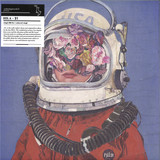
"21" is the well-crafted, sharp and original first album by the duo HILA, composed by American cellist Artyom Manukyan (who already worked with Kamasi Washington, Daedalus, Flying Lotus, Run DMC, Gretchen Parlato, Raphael Saadiq, Clive Lowe Mark...) and french producer Dawatile.
The combination of jazz, Los Angeles beat-scene and the vibrations of 80s and 90s Soviet Armenia make it a striking and unprecedented fusion. These kind of nostalgic and unconventional references forcefully shake the codes of mainstream culture to create a sincere, raw and intimate expression.
"HILA" was born from a spontaneous and intense creative impulse between Artyom Manukyan, a Los Angeles-based Armenian celloist and his partner in crime, David Kiledjian aka Dawatile, a French multi-instrumentist of Armenian descent. This project is proving to be a true master stroke given that it only took 21 days for the duo to make it a reality.
"HILA" was made in less a moon cycle but captivates and electrifies audiences upon its first outings. "H.I.L.A" colors the warmth of the Californian "High" with Armenian vibes. The artists chose this name for their creation since both have a close and valuable connection to these locales. This journey began in 2007, on the day Dawatile went to Yerevan, the capital of this small country in the Caucasus mountain to realize a first fusion project centered around local folkloric music genres.
There he was introduced to local musicians including the Armenian Navy Band, one of the country's foremost groups in which Artyom played the bass and cello. In this context, he also met many musicians such as Tigran Hamasyan and Norayr Kartashyan. This will be the beginning of connections between Lyon, Yerevan and Los Angeles. The following year, the two artists will be be seen performing next to Taylor Mc Ferrin at the Jazz à Vienne festival. More recently, they partnered up again when the cellist, who had freshly relocated in California, invited Dawatile to produce his album. As soon as the studio’s threshold was crossed, they decided to postpone this record and create a joint project: Hay (as the Armenians call themselves) / High In Los Angeles. HILA was born at the end of these 21 days of intense creation. The association of Artyom Manukyan and Dawatile is the combination of two visions, two versions of Armenia, two personalities, the reunion of the Eastern and Western blocs.
One grew up nurtured by the sounds of hip-hop and jazz in Europe and the other by art music and Russian-influenced 1980s Armenian folkloric music before moving to L. A., Ca. The cornerstone of it all, the glue that unites everything : Armenia and music. They generate a new identity synthesizing two perceptions, their complicity transcending these cultural discrepencies. To achieve this, they will scour through images of Artyom’s childhood, within the popular culture of Soviet Armenia. Together, they revisit this decidedly retro vibe, based on the work of Caucasian groups inspired by African American music. This background is rehashed and fused with ancestral Armenian sounds. The DNA of the album "21" is molded by these dear influences.
We can also hear the ancestral sounds of Armenia, a country at the edges of both Europe and Asia. The presence on two tracks of Armenian music Master Norayr Kartashyan, infuses the languor of past melodies and traditions. These purposeful anachronistic sounds offer a fantastic depth to this powerful opus. Listening to the album, one can appreciate the successful fusion of styles and influences. Those combinations, however, manage to preserve individual identities only to enhance the art through an adamant musical dialogue.
Being driven by the urge to transpose Armenian musical traditions into a unique universe, the daring artists, offer an innovative combination by blending, for the first time, these ancestral sounds with the world of Los Angeles beat-scene and jazz. An invention largely fueled by the magic strings of Artyom and maestro Miguel Atwood-Ferguson, a pillar of the genre in Los Angeles combined. These associations resonate with a triumphant equilibrium. HILA is musical uncharted territory in which Artyom's cello strings intertwine to ignite the harmonies of keyboards, the machines, the vocals and electronic layers Dawatile pieced together. HILA plays the soundtrack of an adventure set between Armenia around the end of the Soviet era and a mysterious near future.
Artyom Manukyan grew up in Armenia in the 90s. At the time, he studied Russian classical music while learning jazz with assistance by his father, a music journalist. Being an unconditional music lover, he went on to sharpen his skills at the prestigious Berkelee College of Music. Subsequently, he’s been lucky enough to travel the world touring with numerous acts and mainly with the Armenian Navy Band. The group has fostered alacritous success honored by a BBC Award as a crowning achievement. He moved on 10 years ago and made his way to L.A. with his cello on his back. In the City of Angels, he quickly became a popular figure of the jazz and hip-hop scenes thanks to his first album "Citizen". He’s accompanied prestigious musicians such as Kamasi Washington, Melody Gardot, Daedalus, Flying Lotus, Run DMC, Gretchen Parlato, Raphael Saadiq, Clive Lowe Mark, or Vulfpeck. He released his solo album on the cello, "Alone" in October 2019.
Dawatile is a bold producer and multi-instrumentist as well as a passionate and resolute musician molded by jazz. As a versatile artist, he handles and juggles the saxophone, the keys, the bass and composition. Simultaneously, Dawatile produces cross-over projects and soundtracks for the movie industry. He, as well, has had the opportunity to be a part of many tours, including with his electro hip-hop band, Fowatile and more recently with the "Future Kreyol" trio, Dowdelin. Being the ever workaholic, he has under his belt a string of prestigious collaborations with the likes of Talib Kweli, Foreign Beggars, Roy Ayers, Tigran Hamasyan, Mathieu Boogaerts, Voodoo Game and Piers Faccini. His taste for developing new musical recipes and his know-how in production make him a much sought-after album producer. In concert, the HILA duo offers a sober, precise and rhythmic performance. "21" is an aerial and lively album taking the audience on an at times joyous and sometimes melancholic dreamlike journey. The magic of "HILA" operates at the speed of light and positions it already as an avoidable group.
- A1: How Do You Like My New Dog_ (2019 Remaster)
- A2: Kaltes Klares Wasser (2019 Remaster)
- A3: Geh Duschen (2019 Remaster)
- A4: Zarah (2019 Remaster)
- A5: Pernod (2019 Remaster)
- B1: Your Turn To Run (2019 Remaster)
- B2: Thrash Me (2019 Remaster)
- B3: You You (2019 Remaster)
- B4: Kampfen Und Siegen (2019 Remaster)
- B5: Dabo (2019 Remaster)
- C1: Geld - Money (2019 Remaster)
- C2: Leidenschaft - Passion (2019 Remaster)
- C3: Eifersucht - Jealousy (2019 Remaster)
- C4: Einsam - Lonesome (2019 Remaster)
- C5: Macht - Power (2019 Remaster)
- D1: Tod - Death (2019 Remaster)
- D2: Mensch (2019 Remaster)
- D3: Slave (2019 Remaster)
- D4: Traum - Dream (2019 Remaster)
- D5: Gewissen (2019 Remaster)
2x12" Repress
January 1981 found Gudrun Gut and Bettina Koster in Christopher Franke’s Berlin-Spandau Studio recording their first Malaria! EP (Zensor Records). Christine Hahn of The Static with Glenn Branca and Barbara Ess, joined in from New York, and Manon P. Duursma fresh from Nina Hagen’s O.U.T. project and Susanne Kuhnke completed the Line-Up.
Malaria! started touring intensively soon after the release of their 12”, commencing with a concert with New Order at Brussel’s Ancienne Belgique, and going on from there to concerts with Siouxsie and the Banshees, Birthday Party, The Slits, The AuPairs, Raincoats, Nina Hagen, John Cale, Einstuerzende Neubauten. They played venues as diverse as the Mudd Club, Peppermint Lounge and Studio 54 in New York, the Documenta in Kassel, the Bat Cave in London, Les Bains Douche in Paris, Milky Way and Paradiso in Amsterdam, ICA in London, the Piazza Santa Maria Novella in Florence and Markthalle in Hamburg and naturally, again and again, at the SO36 in Berlin.
While touring, Malaria! used their time off to record in Studios in New York, London, Brussels, New Orleans, and in Berlin (How Do You Like My New Dog? 7”, Weisses Wasser 12”, New York Passage 12”, Revisited MC, Emotion Album). At the BBC studios in London Maida Vale Malaria recorded an Kit Jensen and a John Peel Session.
Malaria! took a break in 1984 - Bettina and Christine re-located to New York, and Gudrun and Manon stayed in Berlin to form, with Beate Bartel, Matador, but not before they recorded their Mini-Album, Beat the Distance. 1992 Gudrun, Bettina, Christine, and Manon met up in New Orleans with Jim Thirlwell (Foetus) to record Elation 12”. Elation was followed by Cheerio, Album, which again was recorded in Berlin.
Chicks on Speed did their own version of Malaria’s song, Kaltes Klares Wasser in 2001, and the Remix went into the German Top 10.
Malaria has been an instrumental part of Berlin Music History, as recently presented at the „Zurück zum Beton“ at Düsseldorf’s Kunstakademie, Kunsthalle Wien „Punk!“, „Geniale Dilletanten“ Goethe Institut, and in B-Movie.
BIBA KOPF 2019
The theme song for that great German road movie yet to be made, Malaria!’s 1981 single “How Do You Like My New Dog?” etched the E into the motion music of their soon-come debut album Emotion with its trail-out line “Immer vorwärts, nie zurück...”. Always forward, never back: from West Berlin to London, Paris, New York and Tokyo... from here, there and everywhere to eternity, the Autobahn goes on forever, with Malaria! at the wheel, spinning new moves from timelines crossed in records and songs right on the money evoking Zarah Leander, fighting the power, staring down Death, and a whole lot more. In all, one merry hell of a ride, and on the evidence of Compiled 2.0, it’s not over yet.
MARK REEDER 2019
"Even today, their originality in everything from sound to style, has proven just how relevant Malaria! are. In my opinion, their music has stood the test of time. To me, Emotion sounds as good today as it did when it was first released and it was a pleasure to revisit it. They might not have had any zillion selling albums, and their image might have been copied, while their sound could never be. They remain exclusively unique and their influence and legacy will reach far into the future. This band is both an inspiration and a statement and they prove what five very creative girls can achieve, if given the right support to allow them to evolve, and it is exactly that, which has made Malaria! Germany’s most successful and renowned, all-girl band...“
DIEDRICH DIEDERICHSEN 1991
"...Malaria! put across so many clear, manifest, attractive, certain, muscular, and harsh symbols, just as they refused - defying the customs intrinsic to these symbols and the worlds in which they circulate - to weave all these things into a readable, reproducible and manageable, generic text..."
Domestic Exile are proud to present the devastatingly deplorable and malevolent recordings (that are sure to corrode yet electrify your ears) by Glasgow's very own KLEFT.
KLEFT aka Vickie McDonald is rooted in and has actively propagated the underground DIY radical queer punk and feminist movement here in Glasgow. Their projects have included the skull crushing sludge doom of Cartilage, the unflinching and infamous multi- membered hard core stars that were DIVORCE and the sacrificial, druid drone glitch of MOURN. Alongside these projects they have uncompromisingly disrupted, motivated and facilitated collective endeavors to take down the capital power structure of the dominant system of patriarchal club venues and abhorrent fuckers in this town.
For this record 'H+ Sexualis', KLEFT explores the neo-modern space where flesh is left behind. Negotiating, analyzing and tearing to shreds the relationship and balance between flesh and technology. KLEFT's expansive and palpable sonic offerings delve into themes of transhumanism and body hacking and seep into our collective skin begging the question; can flesh ever be created digitally. Does a lack of physicality alienate human experience in a post transhumanism society Are we all destined to be skinless yet digitally connected Will the body become superfluous Toward "the utopian dream of the hope for a monstrous world without gender," as stated on Donna Haraway's essay ''A Cyborg Manifesto.'
From the opening track 'Ossein' the listener grasps a foreboding lethargic build up, lurking out of the spatial ritualistic shadows into a sea of suffocating nothingness. A void where there is no gravity. Skeletal and brittle shattering rhythms which echo DMZ / Skull Disco dubstep alongside the more frozen, glacial ominous explorations of grime are often felt proving KLEFT is an artist whose inspirations run deep and wide and generally exist in the darkest recesses of our subconscious. These fearful, disjointed rhythms are set against weightless atmospheric oscillated synths, as if roaming through bleakly opaque, claustrophobic narrow corridors on a first person survival horror video game such as Resident Evil.
Moving through to 'CMBR', KLEFT's dissonant, degrading soundscape ferociously ascends. The resilient kick drum is propulsive and pulverizing akin to 'ardcore tekno - or intense gabba if you have the guts to adjust the tempo up to +8 - aesthetics that overwhelm and agitate finally revealing it's grotesque biological / amorphous bio structure. Elevating the repetitive 4/4 kick to a destructive, distorted banger of a track as layers of converging atonal noise and sound design simultaneously further enhances the sense of imminent radioactive contamination.
Next is 'Writhe, Squirm, Broken' continuing the convulsive, nauseating permutations of the prior track but reconfigured like a mangled, gruesome Cronenberg-esque parasite that has infiltrated an open wound, excruciatingly feeding off of the inner anatomy of it's hosts body from within. Repulsively reformulating the shape and dimension. The intro is akin to a panic stricken bouncy ball contracting and expanding, the spring reverb building momentum and traveling further away in distance and speed.
'Hackfleisch Deluxe' is a muuurrderous stomper and is one of the more grime / bass orientated tracks that deconstructs and disrupts the tempo familiar to sub-low producers on Black Ops / Jon E Cash / DJ Dread D. The crawling, plummeting frequency of the synth is a nauseating rush of coagulating blood to the heed; a deep throbbing sensory depravation in sharp, paradoxical contrast with the driving harmony layered on top which proves to be infectiously addictive. Furthermore are splintering programmed vocal samples that gives a sense of artificial disorientation, mind over matter, a possible hint at our evolving sentient cognition within a nightmarish simulated, augmented reality
Second to last we have 'Keratin' which is filled with the near fatal dissolving thud of Djax-Up acid that gives the impression that you're a biologist peering through a microscope into a petrie dish and witnessing the rapid and furious genetic cellular replication of bacterial and viral organisms.
Culminating in 'Bruised and Bleeding Hands' where the squashed density of a deflated and depressurized helium filled balloon and elastic umbilical cords, barbed wire and copper wires grind n' coil around the lens of a zooming camera. Taking no prisoners, this is a punishing grime weapon. A phat, surgical kick drum bulldozes its way thru causing carnage, syncopated punching snares after every rave stab and dizzying third beat. It won't be long until ye hear this on Silver Drizzle's youtube channel in the near future.
This record transports us to the hyperkinetic mutation scene on the cult cyberpunk film Tetsuo The Iron Man where the organic flesh / mechanical rust of the Iron Man metamorphoses with the Metal Fetishist during the rebirth sequence and we say 'LONG LIVE THE NEW FLESH!''.
Speed For Lovers release debut album 'Hot Yoga Emoji' on society Records / Ubishi Recordings
Originally from Sheffield, Liverpool & The Forest Of Dean, the three lovers met in the network of little mesters music studios on John Street in Sheffield.Initially engineering, producing and playing on each other's projects, they subsequently teamed up to form Speed For Lovers in 2010.
The past eight years have been spent wearing out rave trainers, building studios in their attics and sheds, geeking out with Sound on Sound articles and faffing with tech.
With two members who came and stayed and one who couldn't leave, 'Hot Yoga Emoji' is the band's ode to Sheffield.
Field recordings of late nights out and early stumblings home link tracks together and place their moments of creation in the city.
Spurred on by Sheffield's Kabal nights and trips to The Electric Chair in Mcr, 'Hot Yoga Emoji' mixes live drums and bass guitar with pocket sound generators, old synths and vocals to create an album of irresistible live dance music.!
Prairie is the project of multi-instrumentalist and producer Marc Jacobs, hailing from Brussels with roots in The Netherlands. He previously released an EP (I'm so in love I almost forgot I survived a Disaster - 2013) and an LP (Like a Pack of Hounds - 2015) on the Berlin imprint Shitkatapult. On stage, Prairie plays with two or three musicians and together they re-create a free association of musical ideas and atmospheres. Prairie has played in selected venues and festivals across Europe and toured with Apparat in 2016.If the apocalypse was painted in several layers of pastel gouache, its soundtrack might be PRAIRIE's Flash Flood. Listening to the album, we drift through a series of frozen landscapes that gesture at a post-apocalyptic ambience. This is a kind of blackened music that has been left to sediment, excavated from traces in ice core samples. Flash Flood showcases a deep sensitivity to narrative and rich cinematic textures as Marc Jacobs returns with palimpsestic sonic layers. It has been three years since PRAIRIE's last release—the 2015 Cormac McCarthy-inspired Like a Pack of Hounds—and it is clear that it has been several years of pensive reflection. Now, PRAIRIE takes the sentiment of his 2012 debut, I'm So In Love I Almost Forgot I Survived A Disaster, several steps further: it is after the apocalypse, and no one has survived. And yet with Flash Flood, we can hear the hum of this impossible future.
'After the Flash Flood' introduces the sonic ruins of distorted guitars, field recordings, drum programming and synths that create the textures of the entire album. The melancholic and subdued black metal churn of 'Raindeath' becomes the cold backdrop for unnerving, paranoiac speech. The third track, 'Sisters', foregrounds this coldness while slowly moving away toward alternate vistas where the acoustic timbres of the saz-driven 'A Permanent War Economy' take over. 'Underwater Body Hunting' and 'Rabid Ibrahim' are hard hitting beat-oriented tracks that insist on burning slow. There is a patience with PRAIRIE's FLASH FLOOD that is difficult to deny. The lamentation of 'Elephants Will Rise Again' perhaps signals that it is not only the human that is lost after catastrophe. The album closes with 'Hard Water: Cracked Ice' and 'Hayashi Clock'. The former is a beautiful coalescence of clean harmonious tones and softly overdriven drums, while the latter brings us back to a meditative state, drifting through the final pastel tapestry.
"... his cosmos is located somewhere between Bohren & der Club of Gore and Sunn O))), ambient is as familiar to him as brachial sounds, and he is as much acquainted with guitars as with synths and modern technology" (GROOVE)
"... Like Ben Frost, (Prairie) exudes a certain harshness while tempering his work with moments of sublime beauty. This isn't club material, it's music for the hammer in one's hand, the confrontation of the demon, the soul-shattering revelation." (A Closer Listen)
One of the earliest MC5 singles! Packaged in new envelope style sleeves, with rare unseen band photos! The Motor City 5 pressed on black vinyl at Third Man Pressing in the Motor City! Includes brand spankin' new liners by David Fricke of Rolling Stone, who says, "In a 1966 live recording, the MC5 played 'Looking at You' like Motown raga. At United Sound, the band hit the zigzag riff at light speed and stayed there, framed by searing lead guitar and explosive drumming. 'Borderline' was a frantic jigsaw of power-chord jolts and sheet-like harmonies detonated again, at the Grande, for the live recording of the MC5's first LP, Kick Out the Jams."
A high-speed car chase between a Dodge Charger and a Ford Mustang, with super-cop Bullitt at the wheel, who forces the hitman off the road and into a petrol station, which explodes and incinerates him. Prior to that, harsh clashes of metal, hubcaps flying all over the place, and the chief character Steve McQueen, who grimly changes gears and hurtles through the streets of San Francisco, wheels screaming and rubber burning. That was how Hollywood staged one of the longest and most dramatic car chases, long before the days of the Anti-Blocking-System and Anti-Slide-Control.
Very up-to-date and just as exciting as the screenplay is the music Lalo Schifrin wrote for the film, which embeds the characters, places and events in a musical context. For example, "Bullitt": the metrically angular main theme portrays a mysterious, cool character who sums up a situation with keen alertness and then makes his attack with the speed of lightning.
Initially the music travels through easy-going Latin terrain. But gradually the rhythmic texture changes and takes a rougher path, with clicks, knocks and hammering. Legendary flute lines create a compensatory placidness with airy clouds floating above the sharp mix. A really special track is "Shifting Gears": here you can listen to Schifrin tuning the car, how he manipulates a jammed springy bossa to take on the sound of clean, smooth-running rock.
This Speakers Corner LP was remastered using pure analogue components only, from the master tapes through to the cutting head. All royalties and mechanical rights have been paid.
Having been an electronic activist in Marseille for more two decades and more, DJ OIL is now a firm staple of LDDLM. Following the RAIN ep released in the summer 2016, here is the first 2018 outing from us: the already bubbling HERITAGE ep.
'Heritage' has been an Ivan Smagghe (and a few others) secret weapon for more than a year now, a strange sampladelic track featuring a full Marcus Garvey speech. A subtle yet powerful appropriation of early house clichés, the hit has one feet in tradition, one feet in political modernity.The EP comes with two more warped cuts: the slow guitar swamp of 'Brouillage' and the System 01/McKenna influenced 'May Be'. Psychedelics and sun.
A second 12' by DJ OIL will follow shortly, doubled with a full digital release of the two EP's with digital extras.
Expect new releases from our camp by Rheinzand, Init, Johnson and more...
Most of the musicians who gathered to record this fantastic spiritual jazz record for the Strata-East label on May 24th, 1974 had crossed each other's paths in various musical pairings over the preceding few years. Husband and wife team Dee Dee Bridgewater (vocals) and Cecil Bridgewater (trumpet) had been working together on albums like Frank Foster's "Loud Minority", and Roy Ayers' "Coffy" and "Virgo Red". Ten weeks before the "Freedom Of Speech" session, the couple had been joined in Tokyo by Cecil's brother Ronald Bridgewater (tenor saxaphone) to record Dee Dee's debut album, the beautiful "Afro Blue". Also in the studio on May 24th, 1974 was Donald Smith, (piano, vocals), fresh from recording on his older brother Lonnie Liston Smith's "Cosmic Funk" - on which Ronald Bridgewater had also played percussion. Cecil McBee (bass) was also there - just two weeks before, he'd completed his own Strata East date "Mutima", and in February he'd played on Mtume's "Rebirth Cycle" - with both albums also featuring Dee Dee Bridgewater on vocals. He'd also played on Lonnie Liston Smith's "Astral Travelling".
So 1974 was a huge year for all five of these people. Donald Smith and Cecil McBee were six months away from recording on Lonnie Liston Smith's massive "Expansions", with McBee fitting in a few Pharoah Sanders albums in between.
AND THEN, THE MYSTERY ... So with all this fervent activity, the question has to be asked ...Who was Billy Earl Parker Jr (drums), the leader of this session
Billy Parker remains unlisted as a musician on all major jazz sites. His only other recording appears to be as a percussionist on Charles Tolliver's "Impact" in 1975. Then there's nothing.
Finally, by backtracking one of those Zoom info pages, I found a summary of a "SUNY Rockland Community College" 2002 press release that no longer exists :
"Billy Parker's Fourth World Legacy Concert ...The concert, Billy Parker's Fourth World Legacy, is the eighth annual tribute honouring the late percussionist and RCC educator, Billy Parker. A long-time Rockland County resident, Parker began his affiliation with RCC in 1987, building its jazz program and maintaining his life-long tradition of teaching and inspiring others. A lifelong student himself, Parker was near completion of his doctorate in music education at New York University when he died in 1996.
But then people began to read this blog post, and in the comments, Aaron Fuller said :
"Billy Parker was my uncle. He was an incredibly talented, smart, and kind man. I'm very happy to see that folks are still enjoying his masterpiece. Just to give you a bit more information about him... He was born and raised in Buffalo, NY and then attended college at Michigan State University. He met my aunt in Lansing. They lived in NY and toured in Europe for quite a while. Sometime later they relocated to Nyack, NY and he ended up on the faculty of the community college while he pursued advanced degrees from NYU. He was an Ellington scholar. Although his name isn't well-known even among the most avid jazz fans, I think that if you were to talk to some of the great NY musicians that were around in the late 60s and 70s you would find that most knew him. He also had a huge impact as a music educator and I have no doubt that his former students are all over the place, continuing to put his love of the art into practice."
Cassette includes a free downloadcode - redeem via Bandcamp
After their latest release on Kitball Records HANNE & LORE are now back on their own Imprint HEULSUSE. The catchy Maintrack HUSHLE is kept in total HANNE & LORE style and drives its way euphorically into the head; rolling drums, hypnotic lead sounds, funky vocal snippets and an almost cheeky groove make HUSHLE to a true peaktime track. BEBETTA is throwing a dazzling remix of HUSHLE onto the dancefloor, full of tmospheric frequency and warmth between the FX sounds and soft Chicago claps. HANNE & LORE are turning down the speed by slipping LOST IN RIMINI, a crispy 80s house track, into our little Italo Disco.
Strut team up for the first time with respected French label Heavenly Sweetness for the brand new album by the inspired poet, novelist and musician, Anthony Joseph.The Caribbean is an influence that runs through Joseph's discography, obliquely or headon, suggested or on full display. It resonates on each of his albums, from the furious trance of 'Bird Head Son' to the more polished 'Time'. On 'Caribbean Roots', he has now decided to turn a guiding thread and a reference point into a communications cable - a powerful bond that makes light of distance and braves the seas to link his island to that of his friends in the Caribbean arc, dancing to the strains of tumbélé and mendé only a few miles
from Port of Spain where people live it up to rapso and soca beats. Caribbean Roots' represents a return to his roots for Anthony Joseph, who has always remained true to a powerful, deep-seated sense of his Caribbean identity. Having started
out as a joint project with the outstanding percussionist Roger Raspail (Cesaria Evora, Papa Wemba, Kassav), 'Caribbean Roots' swiftly grew into a creative force incorporating
the rhythms, sounds and vibes that rock the Caribbean from San Fernando, Scarborough, Kingston and Les Abymes to Port-au-Prince and Havana. Backed by a band made up
of a blend of local musicians, the album attempts to unite the different islands into a single entity whilst ensuring that the identity of each is in no way diluted by the mix instead creating a richer and stronger alloy. The saxophones of Shabaka Hutchings (The
Heliocentrics) and Jason Yarde, the trumpet of Yvon Guillard (Magma), the bass of Mike Clinton (Salif Keita) and the trombone of Pierre Chabrèle (Creole Jazz Orchestra) all combine to form a group of Caribbean All Stars to which Andy Narrell, the master of the steel pans, brings ringing drum beats. The album features bursts of catchy rhythms and slow percussive riff progressions, as on a film soundtrack, incandescent voodoo funk and rhythmic high-speed frenzies shot through with free-jazz sax. This reunion of the Caribbean diaspora was never meant to come up with a formula divisible into eleven separate tracks - its goal was to explore and discover new sounds. And all of this under Anthony Joseph's guidance, as he spins his lyrical blend of afro-futurism and surrealism, commemorating the Caribbean people's sometimes violent resistance to colonialism. Anthony Joseph, one moment a chronicler reciting his text against a background of simple percussion, the next a storyteller possessed by the power of a hypnotic bassline, then an adventurer chanting among mangroves where the rhythm section and the brass have created an impenetrable thicket. At turns, an MC too, strutting to a fat, throbbing groove in vocal tandem with Sly Johnson or David Rudder to pay tribute to Mighty Sparrow, the undisputed and indisputable king of calypso
All Tracks Written and Produced by S3A
Mastered by Kuniyuki Takahashi
This house project, based on the idea that electronic music is a blend of different cultures and music, started 15 years ago when Max began jamming on analog machines and samplers with different projects from techno (FriendShip Connection) to house (S3A).
It is through this project that he expresses, among other things, his taste for soul and House music. Such as his beloved artists MCDE, Floating Points... he uses the process of sampling as a basis to color his music with sounds of all his inspirations, he always add his own touch and groove to get his own vision of electronic music: dynamic, warm, emotional and dirty.
Although he discovered electronic music in 92 through UK hardcore with DJ as Tanith or Producer, his culture is based on a solid knowledge of house music, soul, funk, hip hop, making him one of the most promising house artists of the French scene since 2009.
He first came to Paris with Zadig to realize his childhood dream: building a studio and later collaboration, Frendship Connection (All is just a matter of time has actually been playlisted by Marcel Dettmann).
His residency at Concrete helped him to confirm his DJ position since the last 4 years adding as well releases on Lazare Hoche Records, Hold Youth, Concrete Music, Local Talk, Phonogramme and Faces. With these releases, his remix for Laurent Garnier on Music Large and his booking request from the French legend to play with him for his residency at Rex club and Concrete, gave him legitimacy and visibility in all over Europe.
In 2014 he decided to make his own label Sampling As An Art Records and focus on finding new-blooded artists and release his very personal music. A perfect definition between underground quality emotional house music and dancefloor efficiency!
In 2015, he released a collaborative EP on Uncanny Valley Label with Max Graef and Cuthead (whom released S3A RECORDS 03 the same year), made his first live representations and currently continue to spread his vision of music.


![Grateful Dead - Grateful Dead (Skull & Roses) [Live] [2021 Remaster]](https://www.deejay.de/images/l/3/1/977131.jpg)