Soundsystem classic from the Stingray archive. One of the true anthems of this era in Reggae music, getting a finally deserved reissue. Only, this is the ‘LP only’ vocal cut released on single for the first time, with heavy mixing, and Dub Version on the flip. Crucial Freddie, and one of his best from this 00s era. Listen tune!
Cerca:mcgregor
- 1
Jackie Mclean&Michael Carvin/Chris Mcgregor’s Brotherhood Of Breath
Melodies Record Club 001: Four Tet selects
We’re excited to be launching a new release series: “Melodies Record Club”, a string of DJ and artist curated mini compilations in loud 12” format.
The first instalment was put together by Four Tet, selecting two big peak-time Jazz tracks he used to spin regularly at Plastic People.
On one side, we’ve got all time jazz greats Jackie McLean and Michael Carvin’s De I Comahlee Ah, taken from their seminal album Antiquity recorded in Denmark back in 1975. A year and a half ago, we visited Steeplechase, the original label in the outskirts of Copenhagen. They informed us that at the time, the track was cut short as it didn’t fit on the full LP. They were kind enough to provide us with the tape of the full original recording, allowing us to release for the first time the full extended version capturing twelve and a half minutes of studio magic. Speaking with Michael back in November, he told us that every song on that album was recorded without any overdubs. They had taken their shoes off and organised the studio in such a way that they could move from instrument to instrument during the take (!!)
On the flip, we have Chris McGregor’s Brotherhood of Breath – MRA. Back in 70s London, the Brotherhood had brought together musicians who had sought refuge from South Africa’s apartheid regime and the best of a new generation of British jazz musicians. Music journalist Richard Williams, who had originally reviewed the band in the 1970s tell us: “They made music that appealed in equal measure to the head, the heart and the feet, taking the jazz legacy of Duke Ellington and Charles Mingus and adding to it the fantastic dance rhythms and gorgeous harmonies of the townships and untethered collective improvisations of the new free music”.
Four Tet’s instalment is out early May in 12” format and digitally (stream & download), first press comes with a folded A2 insert with words from and about the artists. Graphic design by Studio ChoqueLeGoff, illustration and animation by Nevil Bernard and for the audiophiles out there, remastered and cut at half speed by Matt Colton at Metropolis Studios!
The second instalment curated by Ben UFO is scheduled shortly, which will be followed over time by a string of releases including selections from Hunee, Mafalda, Floating Points, Anya & Julia from Javybz, Daphni, Josey Rebelle, Charlie Bones, Gilles Peterson… and more, stay tuned!
- A1: Original
- B1: Version
To celebrate its 20th anniversary, Freedom Cry Sound presents its first realease with Freddie McGregor. The legendary artist sings “Behind the Wall”, a song produced by Genius T and Freedom Cry that is now available as an exclusive 7” vinyl limited edition, published and distributed by Rebelmadiaq Records. “Behind The Wall” is a projectile of roots reggae, a dazzling song where the roots are very much alive, living in harmony with the spirit of modernity.” David Vilches, musical chronicler.
The Catalan musician and producer Genís Trani is responsible for the musical production as well as the mixing of the riddim. The musicians who have participated are: David Goldfine on bass, Pau Dangla on keys, Lamont ‘Monty’ Savory on guitar, Josep Blanes on trombone, Oriol Escolano on trumpet, Pol Prats on sax, Roberto Sánchez on backing vocals and the same Genís Trani programming the drums. The Jamaican singer, songwriter and producer Freddie McGregor is a legend and a great reference in the genre, with a professional career full of musical successes that have become immortal treasures.
Der Bestseller von 1982 endlich wieder auf Vinyl erhältlich! Der Titelsong "Big Ship" gehört zu den bekanntesten Liedern des renommierten Sängers, u.a. hat er sein eigenes Studio und Label danach benannt, und der Longplayer wurde im Harry J und Channel One Studio mit den Roots Radics aufgenommen, von Scientist abgemischt, und als Produzent fungierte Linval Thompson. Weitere Top-Tunes des Albums sind "Roots Man Skanking", "Stop Loving You", "Peaceful Man", das auch als 2009-CD Remaster erhältlich ist: Katalog-Nr. GREWCD39
- A1: First Overture (Spiritual Atom) (4:59)
- A2: Annotation (4:04)
- A3: Carbonb 12 (5:05)
- B1: Unorthodox Elements (3:35)
- B2: Anamenesis (Part 1) (3:30)
- B3: The Abyss Of Doubt (3:35)
- B4: Mutation (5:03)
- C1: Fist Interlude (Absence Of Measure) (4:40)
- C2: Permutation (4:39)
- C3: Kundalini (4:48)
- D1: Anamnesis (Part 2) (4:05)
- D2: Blue I (4:01)
- D3: Second Interlude (The Choosing) (6:26)
By now, the story of how Jlin went from working in a steel factory in Gary, Indiana to being one of the most widely appreciated electronic musicians is well known. 'Black Origami' was one of the most reviewed and lauded albums last year. Seriously prolific and seriously hard-working, she has toured constantly since its May 2017 release and despite being involved in a wide range of projects, still manages to find a balance and 'do some personal healing and growing.'
Here we are over a year later with 'Autobiography,' the score for her collaboration with renowned British choreographer Wayne McGregor arranged by Unsound. This isn't technically her third album (that's due to arrive in 2019 or 2020), but the soundtrack stands up on its own with all the emotional peaks and troughs of a well-sequenced longplayer.
For Jlin, making music for dance is the fulfillment of one of her lifelong dreams - and remarkably, Company Wayne McGregor's performance was the first show she'd ever seen. She describes the process of working with Wayne: 'We first met face to face in October 2016 in a downtown Chicago hotel, talking for about a solid two hours. Immediately, I saw Wayne was very friendly and energetic. He's brilliant, witty, and knows exactly what he wants; an absolute gem to work with. Before I even started composing for Autobiography, Wayne told me so gently that he trusts me completely with my direction of creating the score. That was the best feeling in the world. I would wake up at two in the morning and work until six in the evening until I completed all the pieces. We were both very happy with the outcome. Creating the score for an impeccable piece of work such as Autobiography changed my life as an artist.'
'Autobiography' is a highlight in an evolving and growing career. During the last year, Jlin has also become an in-demand remixer, securing her place among a roster of music heavyweights. Unsurprisingly, given her positive and outgoing nature, she also developed friendships with the artists she has remixed such as Björk, Max Richter and Ben Frost.
Jlin will be touring with Company Wayne McGregor performing 'Autobiography' this year in addition to completing a commission for the Kronos Quartet titled 'Little Black Book.' She still approaches every performance 'with the same attitude of doing my best to execute a good show, no more, no less. Doing my best is what's most important to me.' She also still lives in Gary, Indiana, which keeps her grounded. She notes with her typical humility, 'The local community is a little more knowledgeable of me now. But I don't mind my community taking its time.'
- On N'est Pas Chez Les Colonels
- Intercommunal Blues
- Mazir
- Kan-Ha-Diskan - We Shall Over Come
- African Rythm-N-Logy
2[23,95 €]
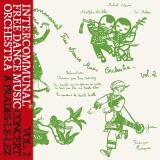
Concert at Prades-le-Lez marks the origins of the Intercommunal Free Dance Music Orchestra. In 1974, François Tusques and his companions (Michel Marre, Jo Maka, Adolf Winkler and Guem), in the spirit of Don Cherry or Chris McGregor, playfully dismantle all borders and all styles of creative music.
On this first volume, the Intercommunal takes its audience from New Orleans to Brittany and on to North Africa. The journey was bold, without a doubt—and its memory remains unforgettable.
“The music that we make is primarily meant to be listened to live,” warned a leaflet from the Intercommunal Free Dance Music Orchestra. This is precisely why the (restored!) reissue of the two volumes of Concert at Prades-le-Lez, recorded on January 25 and 26, 1974 by François Tusques and his comrades, is such an important event.
In 1971, after recording a series of albums that would leave a lasting mark on French jazz (Free Jazz, of course, with Michel Portal, François Jeanneau, Bernard Vitet, Beb Guérin and Charles Saudrais, but also Le Nouveau Jazz with Barney Wilen, or the solo Piano Dazibao), François Tusques founded the Intercommunal—a grouping whose very name called for the fraternization of the various communities making up the country: Our music will help, we hope, to resolve the contradictions that exist between workers be longing to different communities, by breaking down various forms of national chauvinism, and more particularly the chauvinism of certain French people toward the cultures of Third World countries… Long live the friendship between the peoples of the whole world!
Among the great records made by the Intercommunal Free Dance Music Orchestra, the two volumes of Concert at Prades-le-Lez come first, before L’Inter Communal, Vol. 4, Le Musichien, and Après la marée noire (four titles already reissued by Souffle Continu). François Tusques and his companions (Michel Marre and Jo Maka on saxophones, Adolf Winkler on trombone, and Guem on percussion) performed on January 25 and 26, 1974 at the Moulin de Prades-le-Lez, a few kilometers from Montpellier. It was thus in the southern region of Occitanie that the first echoes of this musical vision of a borderless brotherhood were recorded.
“We’re not among the Colonels,” the Intercommunal reassures us right away, performing a stride piano tune carried by African winds that the audience cannot resist for long. The energy is already striking and it never lets up throughout these two recordings, from start to finish: jazz, blues, traditional music, minimalism, even funk… The musicians of the Intercommunal have heard a lot of great music and now delight in reinventing it by mixing it all together.
“We want the song form to take its place as a weapon in the struggle against capitalist exploitation and all those who oppress us morally and materially,” declared an Intercommunal leaflet, quoting Jean-Baptiste Clément, author of the lyrics to “Le Temps des cerises.” The struggle was therefore serious—but it did not prevent François Tusques and his group from waging it in a festive spirit: each piece on Concert at Prades-le- Lez sends out a call for love and fraternity. Fifty years later, the message remains as relevant as ever—and once again, it is François Tusques who makes it heard.
Concert at Prades-le-Lez marks the origins of the Intercommunal Free Dance Music Orchestra. In 1974, François Tusques and his companions (Michel Marre, Jo Maka, Adolf Winkler and Guem), in the spirit of Don Cherry or Chris McGregor, playfully dismantle all borders and all styles of creative music.
On this second volume, the Intercommunal builds unprecedented soundscapes around a song of revolt, a dance tune, or a burst of dissonance. The journey is unforgettable, no question about it. On repeat listening, it even becomes… lunar!
“The music that we make is primarily meant to be listened to live,” warned a leaflet from the Intercommunal Free Dance Music Orchestra. This is precisely why the (restored!) reissue of the two volumes of Concert at Prades-le-Lez, recorded on January 25 and 26, 1974 by François Tusques and his comrades, is such an important event.
In 1971, after recording a series of albums that would leave a lasting mark on French jazz (Free Jazz, of course, with Michel Portal, François Jeanneau, Bernard Vitet, Beb Guérin and Charles Saudrais, but also Le Nouveau Jazz with Barney Wilen, or the solo Piano Dazibao), François Tusques founded the Intercommunal—a grouping whose very name called for the fraternization of the various communities making up the country: Our music will help, we hope, to resolve the contradictions that exist between workers be longing to different communities, by breaking down various forms of national chauvinism, and more particularly the chauvinism of certain French people toward the cultures of Third World countries… Long live the friendship between the peoples of the whole world!
Among the great records made by the Intercommunal Free Dance Music Orchestra, the two volumes of Concert at Prades-le-Lez come first, before L’Inter Communal, Vol. 4, Le Musichien, and Après la marée noire (four titles already reissued by Souffle Continu). François Tusques and his companions (Michel Marre and Jo Maka on saxophones, Adolf Winkler on trombone, and Guem on percussion) performed on January 25 and 26, 1974 at the Moulin de Prades-le-Lez, a few kilometers from Montpellier. It was thus in the southern region of Occitanie that the first echoes of this musical vision of a borderless brotherhood were recorded.
“We’re not among the Colonels,” the Intercommunal reassures us right away, performing a stride piano tune carried by African winds that the audience cannot resist for long. The energy is already striking and it never lets up throughout these two recordings, from start to finish: jazz, blues, traditional music, minimalism, even funk… The musicians of the Intercommunal have heard a lot of great music and now delight in reinventing it by mixing it all together.
“We want the song form to take its place as a weapon in the struggle against capitalist exploitation and all those who oppress us morally and materially,” declared an Intercommunal leaflet, quoting Jean-Baptiste Clément, author of the lyrics to “Le Temps des cerises.” The struggle was therefore serious—but it did not prevent François Tusques and his group from waging it in a festive spirit: each piece on Concert at Prades-le- Lez sends out a call for love and fraternity. Fifty years later, the message remains as relevant as ever—and once again, it is François Tusques who makes it heard.
- 1: Slim Smith – Hip Hug
- 2: Ras Michael And The Sons Of Negus – Good People
- 3: Lord Tanamo – Keep On Moving
- 4: Wailing Soul – Trouble Maker
- 5: Rita Marley – Come To Me
- 6: Johnny Osbourne – All I Have Is Love
- 7: The Martinis – I Second That Emotion
- 8: Irving Brown – Run Come
- 9: The Heptones – Give Give Love
- 10: Rockie Ellis – Double Minded Man
- 11: Jackie Opel – The Lord Is With Me
- 12: Dub Specialist – Happy Feelings
- 13: Prince Lincoln – Live Up To Your Name
- 14: Ken Boothe – I Am A Fool
- 15: Rheuben Alexander – Happy Valley
- 16: Larry Marshall – There’s A Fire
- 17: Roland Alphonso – Rolando Special
- 18: Freddie Mcgregor – Homeward Bound
Studio One Sound is the classic Studio One collection from Soul Jazz Records. Described as ‘The University of Reggae’ by Chris Blackwell, Studio One, and founder Clement ‘Sir Coxsone’ Dodd are by far the most-important names in the history of reggae music. Originally released in 2012 this album has been out of print for many years, making it one of the most-collectible of Soul Jazz Records’ Studio One Series. This is the first ever colour vinyl edition of this classic album.
The album features some of the most in-demand and collectible Studio One tracks from over its fifty-year history and includes incredible legendary reggae artists such as The Heptones, Ken Boothe, The Skatalites, Johnny Osbourne and Wailing Souls. All these artists (and hundreds more) launched their careers at Studio One under the guidance of Clement 'Sir Coxsone' Dodd. The Studio One Sound collection features everything from classic ska and rocksteady to the deepest roots, heaviest dub and dancehall roots. Sleevenotes are by Rob Chapman, author of the celebrated books about Studio One Records, 'Never Grow Old' and 'Downbeat the Ruler'. The exact reproduction of the original artwork features the classic image of Dennis Brown on the cover. This album is newly fully remastered for vinyl by Jason Goz at Transition. Exclusive one-off pressing on heavyweight double transparent green vinyl.
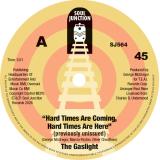
The earliest foundations of the Detroit Harmony group ‘The Gaslight’ came when future lead singer Oliver “Butch” Cheatham via an introduction by his sister Jackie joined a group known as ‘The Young Sirs’ who recorded, “There’s Something The Matter (With Your Heart/African Love” for Magic City during 1969. The group included Oliver’s future brother -in-law Allen Cocker (Jackie’s future husband).
Oliver and Allen went on to form a new vocal quartet with Curtis “Kippy” Anderson and Michael Eatmon. Under the group name of ‘The Gaslight’ they signed to Uptight Productions Incorporated, a local production company founded by local businessmen Marvin Figgins and Arnold Wright. The Gaslight were the only vocal harmony group signed to Uptight Productions and as such, it was they who made the most recordings across two label imprints Grand Junction and Black Rock. The Gaslight’s first single “I Can’t Tell A Lie/Here’s Missing You” was released on Grand Junction (GJ1001) in 1970, For the groups second single Figgin’s placed them under the guidance of legendary producer/songwriter, the late George McGregor under whom they recording “Drifting Away/If You See Her” Grand Junction (GJ1002) released in 1971 For their next release Figgin’s switched the group to his Black Rock label to record “Out Of My Hand/I’m Only A Man” Black Rock (2002) under the pseudonym of Butch & The Newport’s With “Butch” being Oliver’s nickname. A later, second release of “I’m Only A Man” but with a different flip side “I’m Gonna Get You” came out on Grand Junction (GJ1100) in 1973 with the performing artist credits reverting back to ‘The Gaslight’.
Upon leaving Uptight Production’s the group found a new home when George McCregor took them to a new fledgling label T.E.A.I (an abbreviation for “Tellin’ Everybody About It”) owned by ‘The Dramatics’ Road Manager Charles Underwood. ‘The Gaslight’s’ first and only release for T.E.A.I, was the mellifluous 1975 double sider “Just Because Of You/It’s Just Like Magic”. Underwood had precured a working relationship with Polydor Records who picked the release up for national distribution three months later. As good as the record was due to poor promotion it failed to make any notable noise and eventually sank with the group soon after breaking up.
During Soul Junction’s later dealings with the late Oliver Cheatham, respected UK Collector Andy Rix mentioned he owned a three track acetate containing the two mentioned T.E.A.I/Polydor tracks plus a third unissued dance track “Hard Times” which through a licensing deal with Charles Underwood Soul Junction now present to you on a three track 45, released under its full title “Hard Times Are Coming, Hard Times Are Here” backed with a previously unissued mix of “Just Because Of You” alongside the issued 45 version of “It’s Just Like Magic”.
- A1: 12 Tribes Of Israel
- A2: Don't Cut Off Your Dreadlocks
- A3: Jah Jah Is The Conquerer
- A4: Cool Down Your Temper
- A5: A Big Big Girl
- A6: Don't Trouble Trouble
- A7: Wicked Then A Say
- B1: Ride On Dreadlocks
- B2: Whip Them Jah
- B3: Everybody Needs Money
- B4: Long Long Dreadlocks
- B5: Just Like Any Other Man
- B6: Wicked Babylon
- B7: Scoumaka King Tubby's
Linval Thompson is one of the great roots vocalists that ruled the dancehalls of Jamaica in the mid 1970’s. His distinctive vocal style and roots lyrics, that spoke of the struggles that faced the Rastas, hit a chord with the people of Jamaica, and provided a string of hits for him in the dancehalls. This in turn, would set a tone that he carried on through his musical career and future production work. Linval Thompson (b.1959, Kingston, Jamaica) was actually raised in Queens, New York. He cut his first record there at the age of 16 ‘No Other Woman’ with future Third World singer Bunny Ruggs. He also cut a couple of tracks for a US producer E Martin ‘’Jah Jah Deh’and ‘Weeping and Wailing’. In 1974 he returned to Jamaica and cut ‘Mama Say’ and a version of D Brown’s ‘Westbound Train’ for producer K Hobson which got Thompson noticed by producer Phil Pratt. Pratt took him to Lee Perry’s Black Ark studio’s where he cut ‘Kung Fu Man’. Thompson’s friendship with fellow singer Johnny Clarke led to a meeting with producer Bunny Lee. His first track cut for Lee was ‘Don’t Cut Off Your Dreadlocks’ and it became a big hit in Jamaica. Bunny Lee was the producer of the moment and Linval added to his long list of hit singles with ‘A Big Big Girl’, ‘Cool Down Your Temper’, ‘Ride On Dreadlocks’ and the title of this compilation ‘Jah Jah Is The Conqueror’. He seemed to hit a musical height working for Bunny Lee (who as he has done with many of his singers) encouraged Linval into production work himself. Which has led to another chapter in Linval’s story. Working with an array of artists including, Freddie McGregor, Johnny Osbourne, Barry Brown, Rod Taylor and many more. But it is his singing career that we focus on here and that great period in reggaes history the mid 1970’s where Linval delivered a string of classic hits that we have compiled for you here. Hope you enjoy the set.
Killer and classic tune from the Stingray archive! Worked with Dilly on licensing this, and Freddie McGregor 'Hand In De Fire'. Heavyweight Yard Roots style out of the UK. Originally released as 12" in the 90s, this is the same mixes as this now hard to find piece of UK Roots history! Classic Robert Nesta Marley, as sung by the legendary Vivian Jones.
- A1: Freddie Mcgregor - Beat Down Babylon
- A2: Cornel Campbell - No Man's Land
- A3: Judah Eskender Tafari - Danger In Your Eyes
- A4: Tony & Howie - Fun It Up
- B1: Liberation Group - Namibia
- B2: Winston Francis - Love Me Today, Not Tomorrow
- B3: Roland Alphonso - Jah Shakey
- B4: Joe Higgs - Dinah
- B5: Brown Eagle - Natural Living
- C1: Freddie Mckay - So Long, Farewell
- C2: Jackie Mittoo - Mixing
- C3: The Heptones - How Can I Leave You
- C4: The Skatalites - Sudden Destruction
- C5: Lone Ranger - Dance A Fe Cork
- D1: Horace Andy - Mamie Blue
- D2: Johnny Osbourne - Run Up Your Mouth
- D3: Bob Marley And The Wailers - One Love
- D4: The Cables - What Am I To Do
Soul Jazz Records" Studio One Showcase 45 features a roll call of classic Studio One reggae legends including Horace Andy, Cornell Campbell, Bob Marley and The Wailers, Jackie Mittoo, The Heptones, The Skatalites and more - seminal reggae artists who all launched their careers at the legendary Studio One label. The album was previously only ever released as a long-deleted limited-edition seven-inch box set for Record Store Day. This album has now been expanded into a super double-vinyl album edition as well as first time on CD, with both featuring a massive eight bonus tracks of wicked Studio One classics and rarities.
Glasgow based Seated Records return with more 1980s Scottish Post-Punk / New Wave material. In this 8-track mini compilation the label introduces the work of Stirling band 22 Beaches, offering a deep dive into music recorded between 1980-1984 - the majority of which has never seen the light of day!
22 Beaches formed in Stirling in the late 1970s as an evolution of the short lived group ‘Alone at Last’ - drummer Fred Parson’s and guitarist Stephen Hunter being the two who spanned the divide. Out of the six members of 22 Beaches, many were school friends, and the rest naturally fell together. The band toured extensively and played at a truly diverse set of venues across the UK: from a local swimming pool boiler room, to small nightclubs and university parties, to several fundraisers for the miners strike. Maybe most notably of all, drummer Fred Parsons described playing at what he calls “the Grangemouth International”, organised by local promoter Brian Guthrie and which featured an all-star lineup of 22 Beaches, The Exploited and the first incarnation of The Cocteau Twins. A coach was hired to ship the audience to Grangemouth from Stirling, the cost of which was included in the ticket. The gig then paused halfway through for a 'help yourself' buffet. Young promoters take heed. This is how it's done!
Over the course of the 80s the band released music on three different, and now sought after, various artists compilation cassettes. “What Day Is It?” and “Sadie When She Died” were released on a compilation of local Stirling artists 'The A.N.K.L.E File'. The track from which the current record takes its namesake - “Dust” - was initially released on a compilation-tape for the fanzine 'Another Spark'. And ‘‘Zoo” (also featured on this record) was first released on Glasgow label Pleasantly Surprised via compilation, 'An Hour Of Eloquent Sounds', where 22 Beaches rubbed shoulders with early music from Scottish names Primal Scream, Cocteau Twins, The Wake and Sunset Gun. Unfortunately, 22 Beaches never met the same level of commercial success as these others and decided to retire the project in 1984 - leaving their recordings and demos to gather dust (hehe)…until now!
This compilation, “Dust: recordings 1980-1984” follows the band's journey and the changes in their sound over the years. It moves from the raw, punk energy of early DIY recordings through to the A Certain Ratio style Balearica of their later pieces. The record's opener and title track “Dust” is perhaps the most shining example of the latter. Characterised by the plenitude of sonic space in the mix, “Dust” has an almost dub sensibility that is communicated through centrality of Parsons’ drums, McChord’s percussion, and Fildes’ Bass while the harmonising vocals of Sharkey and McGregor chant over the top to give the track its distinctive psychedelic edge. This is an atmosphere only exacerbated by the lofi quality of the recording which sits the vocals in the same aural realm as much 1960s psych-folk. On “Cartoon Boy”, the band strips things down further. A droning bass line persists through the tape fuzz and is accompanied by the sounds of a sole looping guitar chord sequence and McGregor and Sharkey’s vocals - respectively and carefully dancing around one another before harmonising in the most beautiful way. The result is a haunting and abstract Marine Girls style heartbreaker. ‘That Girl’ again delivers a dub adjacent rhythm section similar to that of “Dust”. However, on this instance crisp guitar chords, a distant, phased organ and blue-eyed soul vocal delivery, produce a track that could easily have been a lost Orange Juice recording from their sessions with Dennis Bovel. On “Somebody Got It Wrong” and “One Of Us” the band employ a more macro approach where a jangling guitar with an almost highlife-influenced tone, vocal ad-libs and syncopated percussion give the music a Talking Heads-esque swagger.
Taken together these tracks illustrate a clear trajectory in the band's sound, moving from from the high energy no-wave quality of early recordings towards a more dub influenced, and stripped-back sound - a sonic trajectory followed by so many bands of the time, not least those emerging from the diaspora of Manchester’s Factory Records.
On “Breathing’’ we hear the beginning of this transition, with the strong influence of the oddball NYC disco styles of Was (Not Was) and ZE records. All of this is meshed together with the residual punk rock energy of 1980s UK. This combination is employed to excellent effect with the addition of the distinctly Scottish (and what the band confirmed to me to be spontaneous) vocal delivery of: “Do you love me? Do you want me?” “Aye!” “Do you love me? Do you need me?” “Naw!”.
On the record’s closing tracks, “Zoo” and “Talent Show”, we hear early examples of the band’s work, playing with their rawest all-in-one-take live energy where Hunter’s spiralling guitar riffs and McGregor's distorted vocal exclamations lead the charge. The band recalls that these initial-forays did not always translate so well into multitrack recording and overdubbing: “the deconstruction took away some of the band's natural feel”. On “Talent Show” the record ends with Sharkey delivering an almost unintelligible spoken word section over the top of the track, making for one final, disorientating, almost manic slice of post-punk.
These tracks from 1980-1984 chart the progress of a unique contribution to the world of Scottish Post-Punk and New Wave, encapsulating not only the musical trajectory of 22 Beaches but also echoing the broader sonic landscape of 1980s UK, a testament to the adaptability and creativity of the UK’s underground music of the time.
Jlin’s detailed and meticulous exploration of rhythm’s inner and outer reaches has made her one of the most distinctive and recognisable voices within both the electronic and classical music worlds. Her compositions are consistently appealing and have an accessibility to them, yet often defy expectations. She exists within her own locus solus - no matter the collaborator, no matter where sounds ultimately lead her. Whatever the situation – from composing the Pulitzer Prize shortlisted ‘Perspective’ for Third Coast Percussion, to ‘Godmother’ her AI-powered collaboration with Holly Herndon, Jlin always expresses her outlook to the fullest. Her new album ‘Akoma’ sets a new benchmark in her personal road map, not only since the album features guest appearances from Björk, Philip Glass and Kronos Quartet but for her continued sonic persistence and resistance. Jlin does what Jlin does and it’s beloved across genres, across scenes and across generations. ‘Akoma’ is a new entry point into her sound and a new approach for both those who have been following diligently and those who are just now entering her world.So how did she get here? Here’s a rundown for those looking for the facts. She was both a math nerd and a steel factory worker. She got inspired by Footwork and started making tracks with mentorship assistance from RP Boo and DJ Rashad, but her music was far from typical for footwork from the get-go. In 2011, she released her first track ‘Erotic Heat’ on the Planet Mu anthology ‘Bangs & Works Vol.2.’ Fashion designer Rick Owens heard it and invited her to soundtrack his Paris Fashion Week show. Already before an EP or an album Jlin was in new cutting-edge territory. And it hasn’t stopped since. Everyday Jlin wakes up early and clocks into her home studio working hard on new music. Her discipline and craft-like approach means that those who would try to copy her sound simply can’t get to the level she is at. Since ‘Erotic Heat’ she has released two bold albums, 2015’s ‘Dark Energy’ and 2017’s ‘Black Origami.’ She has also released her soundtrack to Company Wayne McGregor’s dance piece ‘Autobiography’ (2018) and most recently (2023) the mini-album ‘Perspective.’ She’s remixed µ-Ziq, Factory Floor, Ben Frost, Max Richter, Björk, Martin Gore and others. She’s collaborated with Holly Herndon and the late SOPHIE. She’s worked with visual artists Kevin Beasley and Nick Cave. She composed a string quartet for Kronos Quartet and performed with them live in a tribute to Philip Glass. She also recently completed a tribute to Sun Ra with Kronos. ‘Perspective’, her very well received percussion work for Third Coast Percussion has further opened doors for her in classical music. She’s even thinking of one day writing an opera. She had a residency at MassMoca Museum earlier this year (2023). She’s performed live at Pitchfork Festival, Unsound Festival and too many others to mention. She’s also worked with Indian dancers, Company Wayne McGregor and renowned choreographer/MacArthur Fellow Kyle Abraham. There’s more but you get the picture - she’s working in contexts and in ways that few of her peers are able to. ‘Akoma’ is the next step - all these paths have led to this. We encourage you to tune in.
It’s clear, when looking at Jlin’s body of work, and her recent activities, that she's the definition of what a creative composer looks and sounds like in 2023. She’s able to work across borders in many different environments and situations. Her work, and sound, is fluid and not locked into genre. The only apt tag for her now is ‘composer.’ Let’s be clear - she’s not EDM, IDM, electronic, footwork or post-footwork. She’s simply Jlin.
In thinking about this new release we have to draw attention to her collaboration with Chicago’s Third Coast Percussion - ‘Perspective’ - since it’s also the title of this six-track mini-album. And of course, we’d be remit if we didn’t point out that Third Coast Percussion’s acoustic version of ‘Perspective’ saw Jlin shortlisted as a finalist for The 2023 Pulitzer Prize in Music! Jlin notes how “Working with T.C.P. was a rewarding experience. I love their constant driving ambition. When I would go to their studio we would experiment as much as we could, and that to me is the beauty of composing.” Note that the CD version of ‘Perspective’ adds the four tracks from her ‘Embryo’ EP, apt since ‘Embryo’ itself was the 7th Perspective piece.
To shift perspective slightly, Jlin notes that collaborating with dance companies, especially those of Wayne McGregor and Kyle Abraham “has seen a significant evolution in my work.” She adds, “Working with Kyle and AIM, I felt the need to incorporate more organic percussion and drums. The raw, visceral nature of Kyle's choreography demanded a more tactile, grounded sound. I believe that music and dance are deeply interconnected, and the rhythm and physicality of organic percussion needs to mirror the dancers' movements whether it is conceptually or abstract.”
The organic aspect of her composition ‘Dissonance,’ a key cut on her new mini-album sounds like it might have been written for Kyle and AIM but, like the entire release, it was in fact written for Third Coast Percussion. With the organic drums in the track being a part of what Jlin calls her “from scratch” foundation. For many ‘Dissonance’ will be a first glimpse at Jlin’s mastery of organic sounds. It’s a stunning work that showcases her distinct approach to organic percussion. Further audible evidence can also be heard all over her new mini-album. She continues to evolve her sound and her approaches to composition on a steady and constant basis.
Jlin’s new mini-album “Perspective” works as a catch-up for those wanting new music from her, and wanting to hear how her sound is evolving. Tune in. There’s much more ahead.
- How To Exist
- Best Days
- Getaway Car
- La Dolce Vita
- Work In Progress
- The Actor
- Magnificent Seven
- The Double
- Well Well Wellness
- Through The Looking Glass
- True Romance
- The Entertainment
Formed in Galway City, Ireland James McGregor (vocals/ guitar), Sean Connelly (guitar) and Damian Greaney (drums) went to school together there and met Tom Freeman (bass) on the music scene. Relocating to London in 2019, the quartet signed to Alan McGee's new record label 'Creation23' almost overnight. They have since impressed audiences across Europe with live performances at festivals including Rock Werchter, Eurosonic and Electric Picnic, performing to a huge crowd at Sefton Park in Liverpool in support of Kings of Leon, as well as a head- turning televised appearance on Sky 1's Soccer AM. Media have been quick to show their support too plus previous singles, taken from their 2023 debut "Exit Strategy" received praise on BBC Radio 1's Annie Mac on her "New Names" showcase, BBC 6 Music's Steve Lamacq on his 'Recommends' show, received day-time radio play on RTE 2FM, and impressed the legendary Rodney Bingenheimer on Sirius XM.
The four-piece are drawn together by not only a mutual appreciation of music past and present but also a love of films and books, notably the ones on the more 'noir' side of the spectrum. You could say Arctic Monkeys got them into a band, The Strokes showed them how tightly you could distil it and Radiohead showed them how wide you could take it. But these days there not afraid to also put Billie Eilish and Charlie XCX into that mixture and films from director Fellini to "Drive". What matters is that from starting out playing acoustic folk, that turned into 3 minute (post-)punkish songs, they now have expanded a lot from there, taking in all the experience they have now recording and touring. Pushing the emotion by being authentic and creating what you really want despite the noise and haste around you.
Reggae music in many ways reminds us of America’s Motown records. The music comes out of its stable fast and furious we tend to know the songs, the artists, the
studio but who? are the players. The unsung heroes that in many cases, cut most of our favourite tracks One such band this applies to in the Reggae field is the Soul Syndicate Band.
Each Jamaican record producer would have their favourite set of musicians they would use, availability permitting. Although several musicians crossed over into different named bands. For example, a set of players working with Producer Bunny 'Striker' Lee would go under the guise of The Aggrovators. The same group working with Producer Joe Gibbs would work under the name The Professionals. Soul Syndicate were the band of choice for Producer Niney the Observer, who used them for his own recordings and when you put that aside the other artists Niney produced, Dennis Brown, Max Romeo, Michael Rose, I Roy, The Ethiopians, Barry Brown, Gregory Issacs and Freddie McGregor. To name a few and not necessary all, you begin to see the amount of material this set of musicians played on.
Built around the rhythm section of Calton 'Santa' Davis and George 'Fully' Fullwood, drums and bass respectfully. They were usually accompanied by Earl 'Chinna' Smith, Tony Chin on guitars, Keith Sterling, Gladstone 'Gladdy' Anderstone, Bernard 'Touter' Harvey, organ/keyboards and Noel 'Skully' Simms, percussion. Niney's tracks tended to be rhythm heavy and thus Sound System favourites.But when brass was needed/called for ,this was provided by the likes of Tommy McCook, Bobby Ellis, Felix ' Deadley Headley' Bennett. Niney not having a studio of his own at the time used most of Kingston's studios, again availability and money providing. But most of these cuts
selected for this release were cut at Channel 1 and a few exceptions at Randy's Studio 17 and at Joe Gibbs studio at Burns Avenue.
Niney also worked closely with King Tubby on his dub plates, so tracks after the recording sessions were taken to King Tubbys for reconstruction and sometimes
re-voicing over an existing rhythm. These were then used as version sides to the vocal cuts, but most importantly used to nice up the dances, being played out on King Tubbys Hometown Hi-Fi Sound System. We have pulled together a selection of such dub plate specials cut by the Soul Syndicate band for this release. Dub sides that emphasise how well the band worked together, and with Niney at the reigns and the added bonus of some Tubby magic sprinkled on top. Please see our Niney the Observer at King Tubbys 1973-1975 (JRO11) for further examples of this work.
We at Jamaican Recordings hope we are not alone in saluting the musicians, that played such a big part in producing many of our favourite Reggae Sounds. Having released titles by The Revolutionaries (JR003), The Aggrovators (JR005), Sly and Robbie (JR006), we are now pleased to release a selection of rare Dub cuts by another one of Jamaica's finest, the Soul Syndicate band to our catalogue...
Respect Jah Floyd.
The Mad Geezers are basically F-Spot mainstays Night Owls’ Dan Ubick, Dave Wilder, and Roger Rivas, but with long-time friend and drum guru, Oliver Charles (Ben Harper & The Innocent Criminals, Gogol Bordello) behind the kit. It’s safe to say that these four musicians love their Ska, Rocksteady, roots, and dub, but for this lineup, the four Mad Geezers collectively decided to explore their other obsession... early Jamaican Dancehall.
First on producer Dan Ubick’s To Do list was to channel the fun, attitude, and natural talent on records by Jamaican legends like Yellowman, U-Roy, Sister Nancy, Barrington Levy, Bunny Wailer, and Freddie McGregor. Secondly, find a song that no Jamaican artist has covered, but every DJ on the planet loves, and flip it into a Dancehall groove. Hmm… What about Tom Tom Club’s “Genius of Love”? Ooh! That’s it! So, The Mad Geezers broke out synths, Syn drums, and invited some friends to the party, stepping up to the plate with the brand-new F-Spot Records 45 “Genius Of Love” b/w “Genius Of Dub (Roger Rivas Dub Version). Featuring vocals by one of Jamaica’s shining jewels, Ranking Joe & Oakland’s chosen daughter, Destani Wolf (who many will recall from top-selling Night Owls singles such as “After Laughter” and “Let’s Stay Together,”) this 7” is a sure shot.
With its iconic bass line and catchy synth hook, this 1981 decade-long crate essential is in the collective unconscious at this point. Whether you found it as a Talking Heads fan, or as a rap music fan via Dr. Jeckyll & Mr. Hyde’s “Genius Rap” or Grandmaster Flash and the Furious Five’s “It’s Nasty,” the groove is infectious. It’s hard to imagine no one had yet infused this punk-disco powerhouse with a dancehall injection… until now.
- A1: We Have Fi Live - Sugar Minott
- A2: Fence Too Tall - Al Campbell
- A3: Fight War Again Winston Hussey - Winston Hussey
- A4: Here I Come Again - Don Carlos
- A5: Never Give Up The Fight - Anthony Johnson
- B1: Chanting - Junior Reid
- B2: Yes I'm Ready - Freddie Mcgregor
- B3: It Have Fi Bun - Josey Wales
- B4: Satellite Dish - The Mighty
- B5: You Been Talking - Michael Prophet
- C1: Teach Me Culture - Barrington Levy
- C2: Super Power - Junior Murvin
- C3: Back Back - Wailing Souls
- C4: More Than A Million - Leroy Smart
- C5: Comes And Goes - Junior Brammer
- D1: Let Him Go - Dennis Brown
- D2: Give The Youth A Try - Little John
- D3: Don't Worry - Wayne Wade
- D4: Tribal Inna Yard - Freddie Mckay
- D5: Oh Rastaman - Cornell Campbell
- A1: Horace Andy Ain’t No Sunshine
- A2: Sister Nancy Bam Bam
- A3: Mr. Vegas Heads High (Kill ’Em With It Remix)
- A4: Alborosie No Cocaine
- A5: Jimmy Riley Sexual Healing
- A6: Lee “Scratch” Perry & The Upsetters Soul Fire
- B1: The Wailers I Shot The Sheriff (Instrumental)
- B2: The Mighty Diamonds Pass The Kutchie
- B3: Freddie Mcgregor Big Ship Sailing
- B4: Black Uhuru I Love King Selassie
- B5: Gregory Isaacs Oh What A Feeling
- B6: Tenor Saw Ring The Alarm
- C1: Max Romeo Material Man
- C2: Sly & Robbie Inner City Blues
- C3: Althea & Donna Uptown Top Ranking
- C4: Third World De Do Do Do, De Da Da Da
- C5: Yellowman Zungguzungguguzungguzeng
- D1: Sean Paul Feat. Sasha I’m Still In Love With You
- D2: Chaka Demus & Pliers Murder She Wrote
- D3: Ini Kamoze World A Music
- D4: Eek-A-Mouse Ganja Smuggling
- D5: Errol Dunkley Ok Fred
Rediscover some of the best Reggae tracks ever made in a double vinyl package.
Featuring : The Wailers – Errol Dunkley – Max Romeo – Horace Andy – Sly & Robbie – Tenor Saw – Chaka Demus & Pliers - Sean Paul – Sister Nancy – Yellowman – The Mighty Diamonds – Lee “Scratch” Perry & The Upsetters
Jackie Mittoo’s ‘Reggae Magic’ is a new collection from the great Jackie Mittoo. The album features a mixture of classic tunes and rarities from the period 1967-74, when Mittoo was at the height of his musical powers. Mittoo’s solo career began after the end of The Skatalites in 1965. He began pushing new musical boundaries, creating a uniquely identifiable organ-led funky reggae sound that owed as much to Booker T and The MGs, Jimmy Smith, Stax and Motown as to the post-ska and emergent rocksteady island rhythms of Kingston, Jamaica. His solo work at the legendary Studio One spanned seven albums and hundreds of singles.
Aside from producer and founder Clement ‘Sir Coxsone’ Dodd, it’s hard to think of anyone more central to the sound and success of Studio One than Mittoo; keyboard player extraordinaire, songwriter, arranger, musician, truly the Keyboard King at Studio One. Jackie Mittoo had been the youngest founding member of The Skatalites (at age 16), probably the most important group in Jamaican music. After they split, he became leader of the three pivotal groups at Studio One – The Soul Brothers, The Soul Vendors and Sound Dimension. He also became musical director for Studio One, helping create countless hits for singers Ken Boothe, Bob Andy, The Wailers, John Holt, Delroy Wilson and more – unforgettable tunes like Alton Ellis’ ‘I’m Still in Love with You’, Marcia Griffiths’ ‘Feel Like Jumping’, The Heptones’ ‘Baby Why’ and others. Between 1965 and 1968, many of the tunes created at Studio One can be attributed to Mittoo – timeless instrumental tracks, recorded either under his own name or those of The Soul Brothers, Soul Vendors and Sound Dimension, that have become the basis for literally 1000s and 1000s of Jamaican songs over many decades, giving the music an unsurpassed longevity.
The endurance of his music was as a direct result of significant developments in Jamaican music in the 1970s, namely the creation of three important new styles: Dub, Deejay and Dancehall. In the early 1970s Mittoo’s instrumental tracks were used as the musical source for a series of classic Studio One dub albums. At the same time Deejays at Studio One, including Dillinger, Prince Jazzbo and Dennis Alcapone, began toasting over these same popular rhythms to create their own new songs. In the mid-70s, a new generation of Studio One singers and deejays, including Sugar Minott, Freddie McGregor, Johnny Osbourne, Michigan & Smiley and others, began once again creating new melodies over these original instrumentals, signalling the birth of a new Jamaican style that became known as ‘dancehall’.
As dancehall swept across the island, rival producers copied these now classic rhythms. These original Jackie Mittoo-driven tunes spread like a virus throughout Jamaican music; be they the instrumental cuts to tunes such as Alton Ellis’ ‘Mad Mad’ , ‘I’m Just A Guy’, Larry Marshall’s ‘Mean Girl’, Slim Smith’s ‘Rougher Yet’, and instrumentals such as Mittoo’s classic ‘Hot Milk’ or ‘One Step Beyond’, The Sound Dimension’s ‘Real Rock’, ‘Heavy Rock’, ‘Full Up’, ‘Drum Song’, ‘Rockfort Rock’ … and the list goes on. These tracks became a constant soundtrack to the island, emitting from the ever-present sound of speaker boxes strung up around dancehalls. This recycling travelled even farther afield; The Sound Dimension’s instrumental ‘Real Rock’, updated by Willie Williams on his classic ‘Armageddon Time’ was in turn covered by The Clash. Lily Allen sampled Mittoo’s debut solo single ‘Free Soul’ for number one hit ‘Smile’; Dawn Penn’s ‘You Don’t Love Me (No, No, No)’, accompanied by The Soul Vendors, was revived by Penn and producers Steely & Cleevie in 1994, since covered by Rihanna, Ghostface Killah, Stephen Marley, Damian Marley and Beyonce. And so it goes; an endless time-leaping, continent-hopping diasporic musical map of the world with all roads essentially leading back to one man – Jackie Mittoo.
When they performed a handful of concerts as a duo in the summer of 1998, Kristen Noguès and John Surman had already worked a lot on the interweaving of genres: Noguès had confronted traditional Breton music with contemporary music and Surman had changed his jazz into atmospheric numbers that would be amongst the finest recording on the ECM label. As a duo, the harpist and the saxophonist would go on to invent something different: free folk, traditional ambient, modal ‘fest- noz’ … it is difficult to label, because the duo Noguès / Surman is one of a kind.
Diriaou, means “Thursday” in Breton. It is also the title of the first piece that Kristen Noguès and John Surman played together in 1991. Noguès learned the Breton language as a child, at the same time as the Celtic harp, – taking lessons with Denise Mégevand, who would go on to teach others, notably Alan Stivell. At the beginning of the 1970s, Noguès discovered Breton singing (soniou and gwerziou) At the beginning of the 1970s, she discovered the Breton song tradition (soniou and gwerziou) and became involved in Névénoé, a cooperative of traditional expression founded by Gérard Delahaye and Patrick Ewen. She recorded a single with the two musicians in 1974, then her first album, two years later.
Everyone who has listened to Kristen Noguès debut Marc’h Gouez, is now aware of her mysterious plucked strings. Her art, leaving Brittany, would go on to take in all landscapes and folklores, in the same as that of John Surman, conceived a little further north including vernacular jazz, international fusion with Chris McGregor or Miroslav Vitouš, and exploring more personal territory. Remember the Cornish landscapes in one of the best albums on the ECM label : Road To Saint Ives.
Kristen Noguès and John Surman thus shared an ‘extra-Celtic’ inspiration infused with free improvisation. On this recording, made in 1998 by Tanguy Le Doré at the Dre Ar Wenojenn festival, the duo uses original compositions which refer back to traditional songs (Maro Pontkalek, Le Scorff). The musicians then create fantastic impressions: Baz Valan, on which Noguès and Surman have a heavenly exchange; Kernow, on which the shared theme slowing disappears into the mist; Maro Pontkalek and Diriaou which move from the storm to the calm. Elsewhere, there is singing, first with Surman (Kleier) and then moving on to Noguès (Kerzhadenn and her signature song Berceuse). On a canvas of traditional music, the two musicians weave countless memorable landscapes.
- A1: Our Boys Are Doing It 19:33
- B1: Dennis Groove 10:03
- B2: Orlando 9:52
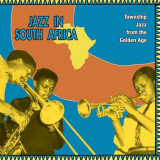
By the mid-1970s, trumpeter Dennis Mpale was a consummate musician with an auspicious resume that located him at all the key turning points in the evolution of modern South African jazz. In his mid-20s, he led the trumpet section of Chris McGregor’s Castle Lager Big Band and participated in the ensemble’s landmark 1963 album Jazz/The African Sound. 1968 saw him recording I Remember Nick with The Soul Giants, which joined a wave of notable late-1960s releases, including The Mankunku Quartet’s Yakhal' Inkomo and The Chris Schilder Quintet’s Spring, that ignited the ambitions of South African jazz artists and producers in the 1970s. In 1975, Mpale co-founded the “rock jazz” ensemble Roots, inaugurating the era of jazz fusion in South Africa and opening the door for Pacific Express and Spirits Rejoice.
By 1977, Mpale had earned the right to an album of his own and, having participated in the 1975 recording of Abdullah Ibrahim’s African Herbs, turned to producer Rashid Vally of the As-Shams/The Sun label for his solo debut. Vally financed the project and seized an opportunity to license it to the local subsidiary of a major international label. As such, Our Boys Are Doing It was issued in South Africa on the Mercury label in 1977. Featuring saxophone heavyweight Kippie Moketsi, the album was a response to the global direction taken by trumpeter Hugh Masekela on The Boy's Doin' It in 1975. In contrast, seeped in the bump jive style of popular urban township music, Our Boys Are Doing It was a manifesto for an authentic, exuberant, homegrown variety of South African jazz.
If the jazz of François Tusques is “free”, his spirit is even more so: having recorded Free Jazz with other like-minded Frenchmen (Michel Portal, François Jeanneau, Bernard Vitet, Beb Guérin and Charles Saudrais), the pianist had covered a lot of ground, with Barney Wilen (Le Nouveau Jazz) or even solo (Piano Dazibao and Dazibao N°2), so as not to repeat himself…
In 1971 he founded the Inter Communal Free Dance Music Orchestra which, as the notes the this album stated, “is an interpretation of a music which synthesizes the different communities living and working in France.” In 1976, on the first album (L’Inter Communal) we can already hear Tusques playing without borders in the company of Carlos Andreu (vocals), Michel Marre (trumpet and saxophone), Jo Maka (saxophone) and Ramadolf (trombone). It is a meeting between jazz and music from Catalonia, Occitanie and Africa. So far so good, but what about Brittany, that, Tusques knows “by heart”? Having lived for a long time in Nantes, he would expand his ‘brittanitude’ on the canal linking the city to Brest by playing with, for example the Diaouled-Ar-Menez. With these “devils from the mountain” who, under the baton of Yann Goasdoué, worked throughout the 1970s on the renewal of music from Brittany, Tusques met, notably, Tanguy Ledoré and invited him one day, with trois bombards and some bagpipes (Jean-Louis Le Vallegant, Gaby Kerdoncuff and Philippe Lestrat), to join the ranks of the Intercommunal. And so they set of towards a new music from Brittany, as the title states; Vers une Musique bretonne nouvelle!
With percussion from Samuel Ateba and Kilikus, the association launches the ‘bombardier’: the repetitions and dissonance of the different members all serve a common cause however: the dance, which is always the reason for the party. This sets a whole universe spinning, which can bring to mind Chris McGregor’s Brotherhood of Breath (“La rencontre”) when not taking on board waltz, swing, blues and gavotta or even revealing mysteries like those of Gurdjieff (“Les racines de la montagne” or “Le cheval” sung by Andreu). Only one thing to say to this Brotherhood Of Breizh: Mersi!
- Freddie Mcgregor - Beat Down Babylon (2.44)
- Cornel Campbell - No Man's Land (2.54)
- Judah Eskender Tafari - Danger In Your Eyes (2.54)
- Tony & Howie - Fun It Up (2.45)
- Liberation Group - Namibia (3.44)
- Winston Francis - Love Me Today, Not Tomorrow (2.44)
- Roland Alphonso - Jah Shakey (2.07)
- Joe Higgs - Dinah (3.15)
- Brown Eagle - Natural Living (3.29)
- Freddie Mckay - So Long, Farewell (2.40)
- Jackie Mittoo - Mixing (2.07)
- The Heptones - How Can I Leave You (3.11)
- The Skatalites - Sudden Destruction (2.39)
- Lone Ranger - Dance A Fe Cork (3.19)
- Horace Andy - Mamie Blue (3.13)
- Johnny Osbourne - Run Up Your Mouth (3.10)
- Bob Marley And The Wailers - One Love (3.00)
- The Cables - What Am I To Do (4.49)
Soul Jazz Records' Studio One Showcase 45 features a roll call of classic Studio One
reggae legends including Horace Andy, Cornell Campbell, Bob Marley and The
Wailers, Jackie Mittoo, The Heptones, The Skatalites and more – seminal reggae
artists who all launched their careers at the legendary Studio One label.
The album was previously only ever released as a long-deleted limited-edition
seven-inch box set for Record Store Day. This album has now been expanded into a
super double-vinyl album edition as well as first time on CD, with both featuring a
massive eight bonus tracks of wicked Studio One classics and rarities. The album
also comes with newly commissioned sleeve and track notes by Noel Hawks.
Featuring seminal cuts like Bob Marley and The Wailer's original version of 'One
Love', Freddie McGregor's take on the classic 'Beat Down Babylon', Judah Eskender
Tafari's re-version of 'Danger In Your Eyes' plus more from The Skatalites, Lone
Ranger, Johnny Osbourne and more!
Vinyl Only / Sleeve manufactured with 400 mcn Fedrigoni "Shiro Eco" paper / Original unreleased poster with alternative artwork insert with notes by Tony Higgins printed on schedography peach past color paper / PVC outers / original artwork /
Personnel:
Tete Mbambisa - Piano
Basil Coetzee - Tenor Sax and Flute
Zulu Bidi - Bass
Monty Weber - Drums
Notes:
Mbambisa first gained prominence as a pianist in 1961 as a member of the Jazz Giants, this time with Pukwana as saxophonist, bassist Martin Mgijima and drummer Makaya Mtoshoko, setting the sound and shape of a scene that became known as Cape Jazz. Following an introduction from Chris McGregor, Mbambisa formed a band, The Swinging City Six, with saxophonist Ronnie Beer before going on to play at the end of the 1960s in the groups The Soul Jazzmen and Spirits Rejoice with Duku Makasi. As a member of The Soul Jazzmen, Mbambisa recorded the breakthrough album 'Inhlupenko Distress' in 1969 for the City Special label. After a recording hiatus, Mbambisa returned in 1974 with an octet album, 'Tete's Big Sound' released on a newly formed label, As Shams or The Sun, established by South African record store owner and independent producer Rashid Vally. 'Tet's Big Sound' included tracks like 'Unity' and the 'Black Heroes Lamentation', now considered a classic in the South African jazz underground.
The sound that Mbambisa carved in this period was wholly acoustic, and is a style that now is often loosely labelled spiritual jazz, a sound that alludes to deep African textures and rhythms balanced with clear nods to American hard bop and modal jazz, sometimes edging toward free improvisation in echoes of John Coltrane and Pharaoh Sanders. The music is often centred around a fulcrum of trance like vamps with repeated motifs that allow for extended pieces that create a hypnotic effect. This clearly exemplified on Mbambisa's next album, 'Did You Tell Your Mother', released in 1979, once more for The Sun label. (Tony Higgins)
- A1: Satta Massa Gana-Ken Booth
- A2: Guiding Star-Horace Andy
- A3: Shame&Pride-Leroy Smart
- A4: Stick By Me-Dennis Brown
- A5: Can’t Get Me Out-Cornell Campbell
- A6: Riding For A Fall-John Holt
- A7: Once Upon A Time-Delroy Wilson
- A8: The Village-Gregory Isaacs
- B1: Ride On Girl-Johnny Clarke
- B2: Mighty King -Freddie Mcgregor
- B3: Whip Them King-Linval Thompson
- B4: Lead Us Jah Jah-Barry Brown
- B5: Everybody Needs Love-Pat Kelly
- B6: Alton Ellis - Play It Cool
- B7: Count Prince Millar - Mule Train
- B8: Owen Grey - Natty Bongo
The Sound System has become part of today’s musical/cultural heritage, playing the people’s favourite hits or just as important, breaking some new tunes.
But perhaps less known are the roots of the Sound System, which began way back when…in Kingston….
Around the late 1940’s the Sound System began to overtake the big bands that usually played at the dances in Kingston.
The American Rhythm and Blues records that were so popular at the time would find their way to Jamaica via the merchant sailors and migrant workers returning from their stints in America. For economical reasons alone it would pay to have a DJ on hand to play these hits rather than a 10 piece band that could eat and drink the promotor out of the house and on curried goat!!
The early Sound Systems were basic affairs built around a single record deck, a valve amp and a speaker.
But by the 1950’s they had grown to purpose built speakers the size of wardrobes that could be heard blocks away.
Record producer Bunny ‘Striker’ Lee would remember the time ‘Sound Systems was like our radio station…not many people on the island would own a wireless, so it was the way for the people to hear their music.
So this selection of Lovers, Ballads, Root’s classic’s made the Sound Sytems of Jamaica the place to be.
So sit back and enjoy the ride….SOUND SYSTEM ROCKERS …one and all
After an extensive tour of the UK at the end of 2022, the band decided to head into the studio to record their first long form offering. Following a passion for storytelling, they pulled together influences from Pulp Fiction to Fleabag, from Zadie Smith to Edward Hopper. They wrote relentlessly during 2022, diligently crafting what was to become this debut album. Released independently on their own Life and Times Recordings, Exit Strategy is a 13-track labour of love, recorded at Abbey Road Studios and Love Electric, enlisting the production smarts of Bernard Butler. The album is in two halves (divided literally by the two sides of the vinyl edition) entitled Galway and London and presents a multifaceted band, pushing themselves and exploring the limits of their philosophy.
Exit Strategy centres around a protagonist who moves from Galway to London in search of meaning, certain that, as the main character in the film of his own life, the solution lies in changing his surroundings and acting as someone he’s not. Both a mirror and a portal, the album promises encounters with manipulative bosses, evil ad agencies, a broken pact to flee to Australia, run-ins with the law, cheating boyfriends, drug fuelled youths, heartache, paranoia, social media anxiety and a drunk singer dressed as Jesus. Thematically the album races between emotions, between irony and sincerity, between soul searching and tongue-in-cheek finger pointing and ends where it all started, both musically and in terms of single rollout, with the nostalgic/euphoric first single Westway.
Explaining the album’s genesis and cinematic influence, James McGregor says: “We were always sure we wanted the album to be greater than the sum of its parts, so decided to create the world of a film, entitled Exit Strategy. We envisaged the record as a series of snapshots, telling the story of a group of characters trying to navigate through life.”
Hallmarked more by a philosophy than a sound, The Clockworks weave pop sensibilities with noisy, post-punk, rock-influenced stylings. The songs seem swaggering and dark yet often have an epic, nostalgic quality. They sit poetic introspection beside witty, kitchen sink drama to create something intense but playful.
With the release of Exit Strategy, The Clockworks have created a world to be explored, to be analysed and to be deciphered, but most importantly to be felt.
- Otis Gayle - What You Won’t Do For Love (2.28)
- Earl Sixteen - Love Is A Feeling (2.40)
- Alton Ellis - Back To Africa (5.13)
- Prince Jazzbo - Apollo 16 (3.32)
- Johnny Osbourne - Eternal Peace (2.52)
- Errol Dunkley - Don’t Do It (2.11)
- Omega - Bounty Hunter (2.42)
- Noel Bailey And Sound Dimension - Wiggles Diggles (3.12)
- Freddie Mcgregor - I Am Ready (2.42)
- Prince Jazzbo - Imperial I (3.17)
- Jackie Mittoo - Lovers Rock (7.33)
- Devon Russell - Swing And Dine (3.25)
- Sugar Minott - Guidance (6.21)
- Dolly Man - Trigger Happy (3.15)
- Nana Mclean - A Little Love (2.51)
- Tyrone Taylor - Rightful Rebel (4.42)
- Wailing Souls - All Alone (2.28)
- Sugar Minott - Revelation (2.51)
Brand new collection of Studio One killer tunes, focussing on the late 70s, 80s and beyond.
Since the early 1960s Clement ‘Sir Coxsone’ Dodd had established Studio One as the unparalleled leader in reggae music in the world. In the years that followed he established the careers of countless reggae legends – Bob Marley & The Wailers, Marcia Griffiths, The Skatalites, Horace Andy, Dennis Brown, Burning Spear and many more.
From its inception Studio One had been at the forefront of every major development in reggae music – ska, rocksteady, roots, DJ, dub and, starting in the second half of the 1970s, dancehall.
Having attained such great success, by the late 1970s Clement Dodd was free to enjoy Studio One’s now firmly established supremacy in reggae music. He released a series of stunning new albums at the end of the decade by Sugar Minott, Johnny Osbourne, Freddie McGregor and others that rode the wave of dancehall and set the path of Studio One’s output for the following 25 years.
During this period, long-established artists such as Alton Ellis, Jackie Mittoo and others returned to the label, recording some of their most creatively satisfying albums with new music that both celebrated the classic sound of Studio One while continuing to experiment, push boundaries and look forward to the future.
This release celebrates this sometimes overlooked golden era at Studio One in the 1970s,1980s and beyond.
2x12"[32,73 €]
The Balcony (10 year anniversary) - Debut and breakthrough record The Balcony has become a career-defining album for Catfish and the Bottlemen, with Double Platinum status and 9 BPI Certified Singles including ‘Cocoon’ and ‘Kathleen’, it was originally released through Communion/Island Records on 15th September 2014. Written by Van McCann and produced by Jim Abbiss, the collection of songs on this album showcase McCann’s talent for posing everyday, easily identifiable observations through his lyrics. The album’s success and the many sold out shows resulted in a Brit Award for British Breakthrough Act. The expanded album will be available on a collector’s 7” boxset, a beautiful black slipcase housing 7 discs, each with original artwork, and a tracklist that includes the full The Balcony album plus bonus tracks ‘Hourglass (Ewan McGregor Version)’ and ‘ASA’ This boxset will be numbered and limited to 2,000 copies worldwide. LTD 2LP - In celebration of the 10 Year Anniversary and after their biggest headline shows to date this Summer, The Balcony will be released on limited edition ultra-clear 2LP with inverted white artwork and 6 bonus tracks including a selection of previously unreleased acoustic versions of ‘Cocoon’, ‘Kathleen’ and ‘Pacifier’, ‘Rango’ (single version), ‘Hourglass’ (Ewan McGregor version) and rare bonus track ‘ASA’ available on a vinyl 12” for the first time after the original pressing of the limited edition 7” single 10 years ago.1CD - In celebration of the 10 Year Anniversary and after their biggest headline shows to date this Summer, The Balcony will be released on limited edition 1CD with inverted white artwork. This CD features the full album, plus a selection of previously unreleased acoustic versions of ‘Cocoon’, ‘Kathleen’ and ‘Pacifier’, ‘Rango’ (single version), ‘Hourglass’ (Ewan McGregor version) and rare bonus track ‘ASA’ available on CD for the first time after the original pressing of the limited edition 7” single 10 years ago.
- A1: Conflagration
- A2: Malachite
- A3: Nuts
- B1: 6'S And 7'S
- B2: B
- B3: Afore The Morrow
The core membership of free jazz act The Trio ensured its output was captivating, comprised as it was of double-bassist Barre Phillips, who had played with Archie Shepp, Chris McGregor, and Gong; saxophonist John Surman, who had played with John McLaughlin, Lester Bowie, and Alexis Korner; and drummer Stu Martin, who had played with Count Basie, Donald Byrd and Herbie Hancock. On the gripping sophomore set Conflagration, guest players include Chick Corea and trumpeter Harry Beckett, ensuring their take on abstract jazz contains melody as well as jarring exchanges. Another great Trio free jazz set!
In 2012 we at Soul Junction were able to release two previously unissued songs on the Internationally renowned recording artist, Oliver Cheatham. The songs recorded in Detroit circa 1974/75 were cut under the supervision of Olivers cousin William R. Miller. “Don’t Pop The Question (If You Can’t Take The Answer)” went on to become Soul Junction’s biggest seller, selling in excess of over a thousand copies, but such is the enduring quality of the song that there hasn’t been a week gone by where we haven’t received a sales enquiry for a copy. So, after much deliberation we have decide to re-release the 45 again with a nifty 300 limited press run to hopefully satisfy this continuing demand. During the ensuing years the soulful sweet soul ballad b-side “Good Guys Don’t Make Good Lovers” has also grown in stature with collectors of this genre with many of the sales enquiries received coming from the direction of the West Coast’s lowrider scene.
Oliver Cheatham will forever be remembered for his timeless 1983 R & B hit “Get Down Saturday Night” on MCA records, which he co-wrote with fellow Detroit musician and ‘One Way’ group member Kevin McCord. Oliver’s own career began way back in the mid 1960’s when his future brother-in- law Allen Cocker invited Oliver to join his group the ‘Young Sirs’ to recorded the mellifluous “There’s Something The Matter (With Your Heart)” for Ernest and Barbara Burt’s Magic City label with Oliver now being the groups lead singer.
Into the 70’s the Young Sirs, briefly became ‘Butch & The Newports’ who under the auspices of George McGregor recorded “I’m Only A Man/Out Of My Mind” on the Black Rock label, with Butch being Oliver’s nickname. “I’m Only A man” was released for a second time on Marvin Higgin’s Grand Junction label, this time credited to ‘The Gaslight’ along with a further two releases. A subsequent Gaslight release “Just Because Of You/It’s Just Like Magic” reputedly came out on the local T.E.A.I label before being picked up for national distribution by Polydor Records. Under the guidance of influential Detroit radio DJ and record producer Al Perkins, Oliver firstly became the lead singer of the group Sins Of Satin later re-named Roundtrip and then following a further re-naming just becoming known as Oliver.
Following on from “Get Down Saturday Night” Oliver continued to score chart success with “SOS”, “Celebrate Our Love” followed by two duets with Jocelyn Brown “Turn Out The Lights” and “Mind Buster”. Further chart success came in 2003 when Oliver featured as a guest vocalist on Room 5’s UK No1 hit “Make Luv” which incidentally sampled Oliver’s “Get Down Saturday Night”. Oliver at this juncture was residing in England and had previously recorded a garage version of the old standard “Our Day Will Come” with the London based band, Native Soul. Sadly, Oliver passed away in November 2013.
- A1: Bob Marley - Sun Is Shining
- A2: Lee "Scratch" Perry & The Upsetters - Soul Fire
- A3: Cornell Campbell - No Good Girl
- A4: Don Carlos - Rivers Of Babylon
- A5: Gregory Isaacs - Oh What A Feeling
- A6: The Wailers - I Shot The Sheriff (Instrumental)
- B1: Ini Kamoze - World A Music
- B2: Barrington Levy - Warm And Sunny Day
- B3: The Tamlins - Baltimore
- B4: Dennis Brown - Revolution
- B5: Sugar Minott - Rub A Dub Sounds
- B6: Horace Andy - Cus Cus
- C1: Freddy Mcgregor - Big Ship Sailing
- C2: Michael Rose - Artibella
- C3: Bob Marley - Soul Rebel
- C4: John Holt - I've Got To Get Away
- C5: Jimmy Riley - Sexual Healing
- C6: Yellowman - Zungguzungguguzungguzeng
- D1: Black Uhuru - Sinsemilla
- D2: Clint Eastwood - Love Story
- D3: Jackie Edwards - Let Me Go Girl
- D4: U-Brown - Tu Sheng Peng
- D5: Jackie Edwards - Angel Of Love
- D6: The Heptones - Island Woman
- E3: Chaka Demus & Pliers - Murder She Wrote
- E4: Sly & Robbie - Hot You're Hot
- E5: Max Romeo - Material Man
- E6: Wayne Smith - Under Me Sleng Teng
- F1: Derrick Morgan - Sensimella
- F2: Maxi Priest - Only A Smile
- F3: Alton Ellis - I'm Still In Love
- F4: Sly & Robbie Feat. Simply Red - Night Nurse (Radio Mix)
- F5: Sister Nancy - Bam Bam
- F6: Beres Hammond & Zap Pow - Last War
- G1: Ranking Dread - Fattie Boom Boom
- G2: Mighty Diamonds - I Need A Roof
- G3: Capleton - That Day Will Come
- G4: Errol Dunkley - Ok Fred
- G5: Ken Boothe - Artibella
- G6: Eek-A-Mouse - Ganga Smuggling
- H1: John Holt - Police In Helicopter
- H2: Marcia Aitken - I'm Still In Love With You
- H3: Althea & Donna - Uptown Top Ranking
- H4: Johnny Osbourne - Jahoviah
- H5: Winston Mcanuff & Fixi - Garden Of Love
- H6: Gregory Isaacs - Babylon Too Rough
- I1: Matthew Mcanuff - Be Careful
- I2: Morgan Heritage - The Return
- I3: Dillinger - Cool Operator
- I4: Inna De Yard Feat. Ken Boothe - Let The Water Run Dry
- E1: Marcia Griffiths - Come See About Me
- I5: Alborosie - No Cocaine
- I6: Alpha Blondy - Cocody Rock
- J1: Clinton Fearon - This Morning
- J2: Horace Andy - Ain't No Sunshine
- J3: Tom Fire Feat Matthew Mcanuff - Brainwash
- J4: Soom T - Politic Man
- J5: Biga Ranx - Liquid Sunshine
- J6: Ricky Grant - Rocky Road
- E2: Black Uhuru - I Love King Selassie
- A1: Bob Marley - Soul Rebel
- A2: Alpha Blondy - Cocody Rock
- A3: Gregory Isaacs - Babylon Too Rough
- A4: Ken Boothe - Artibella
- A5: Max Romeo - Stop Picking Me
- A6: Sly & Robbie - Night Nurse Feat Simply Red - Radio Mix
- B1: John Holt - Police In Helicopter
- B2: Eek-A-Mouse - Ganja Smuggling
- B3: Don Carlos - Rivers Of Babylon
- B4: Freddy Mcgregor - Big Ship Sailing
- B5: Jacob Miller - Tenement Yard
- B6: The Congos - La La Bam-Bam
- C1: Alton Ellis - I'm Still In Love
- C2: Dennis Brown - Revolution
- C3: Errol Dunkley - Ok Fred
- C4: Groundation, Don Carlo & The Congos - Jah Jah Know
- C5: Black Uhuru - Sinsemilla
- D1: Ini Kamoze - World A Music
- D2: Yelloman - Zungguzungguguzungguzeng
- D3: Lee Scratch Perry & The Upsetters - Soul Fire
- D4: Alborosie - No Cocaine
- D5: Chaka Demus & Pliers - Murder She Wrote
Soul Jazz Records’ long out of print classic ‘Studio One Dub’ collection is being re-released in three new one-off limited-edition coloured pressing 18th anniversary format editions!
Firstly a heavyweight special limited edition one-pressing only orange 2xLP vinyl + download.
Secondly, there is also a new special limited-edition one-off pressing edition orange-pressed CD enclosed in jewel case and slipcase.
And thirdly there is a very limited unique new one-off pressing orange-cased cassette format (200 copies only)!
18 years on from its original release Studio One Dub remains super-hard hitting featuring classic + rare Dub tracks from Studio One, many available on vinyl for the first time in over thirty years.
Studio One Dub includes the dubs of many classic tracks such as Horace Andy’s “Skylarkin”, Johnny Osbourne’s “Truth and Rights”, John Holt’s “Hooligan”, Freddie McGregor’s “Bobby Bobylon” plus many more rare tracks.
The album also comes with two rare interviews - one with Clement 'Sir Coxsone' Dodd about dub and dubplates and one with the sound engineer Sylvan Morris, talking about his groundbreaking period at Studio One and his many innovations that he evolved there.
In short, this is a 100% essential album!
"Almighty slab of dub featuring loads of rare and classic dub versions of Studio One's foundation tracks." Rough Trade
“Quite a treat awaiting here for the unsuspecting reggae faithful – as always with Soul jazz chock full of a bunch of big tunes – but here in version form lies some of the freshest rhythms and most radical revisions of some of the greatest Studio One music. The darkest and the absolute deepest in the series – naturally essential.” Boomkat
"Continuing the Studio 1 Series this album features classic and rare Dub tracks from Studio One, many available for the first time in over thirty years. Studio One Dub includes the dubs of many classic tracks such as Horace Andy’s “Skylarkin”, Johnny Osbourne’s “Truth and Rights”,
John Holt’s “Hooligan”, Freddie McGregor’s “Bobby
Bobylon” plus many more rare tracks. In short, this is an essential album!" Wax Museum
- A1: The Cyclones With Count Ossie – Meditation
- A2: Cornell Campbell – Natty Don't Go
- A3: Freddie Mcgregor – Africa Here I Come
- A4: Bunnie & Skitter – Lumumbo
- B1: Willie Williams – Addis A Baba
- B2: L Crosdale – Set Me Free
- B3: Leroy Wallace – Far Beyond
- B4: Lennie Hibbert – More Creation
- C1: Alton Ellis – Blackish White
- C2: Winston Jarrett – Fear Not
- C3: Devon Russell – Drum Song
- C4: The Gaylads – Africa
- D1: Black Brothers – School Children
- D2: Linton Cooper – You'll Get Your Pay
- D3: Sound Dimension – Congo Rock
- D4: Zoot Simms – African Challenge
This is the new 20th anniversary edition of one of Soul Jazz Records’ classic Studio One releases, now available as a one-off special blue vinyl very limited-edition pressing (2000 copies worldwide).
Studio One Roots set the standard for Soul Jazz Records’ long-standing series of Studio One collections and features many of the classic artists from Clement 'Sir Coxsone’ Dodd’s mighty roster of reggae. This album includes Freddie McGregor, Willie Williams, Cornell Campbell, Alton Ellis, Devon Russell alongside some of the defining crack-session men groups of Jamaican reggae history – The Sound Dimension, Brentford All-Stars, The Skatalites, New Establishment and more. As ever the album is filled with a mixture of
seminal cuts and super-rarities from the vast vaults of 13 Brentford Road.
Stand-out tracks include Alton Ellis’s Blackish White, a surreal and powerful Afro-centric dream, Count Ossie Nyabinghi and Rastafarian drummers genre-defying interpretation of Booker
T and The MGs ‘Meditation’, Willie Williams awe-inspiring versioning of the Skatalites seminal Rastafari anthem Addis Ababa and many, many more.
This album has been fully digitally remastered, analog cut and packaged complete with the following: Original sleevenotes by Lloyd Bradley (author of When Reggae Was King),
compiled by Mark Ainley (Hones Jons), high-quality Soul Jazz mastering, wicked images of Count Ossie and the Mystic Revelation of Rastafari on the cover, and a rare image of Clement Dodd and musicians inside the studio at Studio One on the full colour inner
sleeves.
“The music of this compilation is of a rare, rare beauty and is essential to anyone's reggae collection” All Music
- A1: Larry Marshall - I've Got To Make It
- A2: Horace Andy - Every Tongue Shall Tell
- A3: Alton Ellis - The Well Run Dry
- A4: Johnny Osbourne - Water More Than Flour
- B1: Anthony Rocky Ellis - I'm The Ruler
- B2: Cornell Campbell - Pretty Looks Isn't All
- B3: Alexander Henry - Please Be True
- B4: Burning Spear - Them A Come
- B5: Joe Higgs - Change Of Plan
- B6: Devon Russell - Roots Natty
- C1: Ken Boothe - Be Yourself
- C2: Freddie Mcgregor - I Shall Be Released
- C3: Freddie Mckay - Father Will Cut You Off
- D1: The Ethiopian - Locust
- D2: George Philip - One One
- D3: John Holt - I Don't Want To See You Cry
- D4: Delroy Wilson - Won't You Come Home
This is a very special one-off new special edition of one of the most popular of all the Soul Jazz Records" collections that has been out of print for many years! Featuring great new sleeve design as well as a special coloured vinyl pressing, Studio One Kings is a "who"s who" of the world"s greatest reggae artists. Studio One"s list of singers launched at the famous label reads like a roll call of Jamaican music. Horace Andy, Alton Ellis, Ken Boothe, Freddie McGregor, Johnny Osbourne and more. This album features classic and rare tracks that span the breadth of the legendary Studio One catalogue: Ska, Roots, Rocksteady, Lovers and more from the 1960s and 70s. The album also comes with sleeve-notes by the great writer Chris Salewicz, author of books on Reggae Explosion, Rude Boy as well as books on Bob Marley, The Rolling Stones, Jimmy Page, Joe Strummer and more.
'Smoking in Heaven' is back! After 12 years, our second studio album is receiving its long-awaited re-issue, this time on double Pink Smoke vinyl. The tracks, each one unique, are united upon this album by a strong sense of playfulness, deep rhythmic quality and an unfailing dedication to authenticity. This fast paced album exudes the vitality that in the past has come to captivate the likes of Chris Martin, Eagles of Death Metal and the late Amy Winehouse as well as Dustin Hoffman and Ewan McGregor. In fact their rapturous reception was so strong in the case of Chris Martin that he handpicked the young trio to tour the U.S with Coldplay.
- 1: Bob Marley & The Wailers - Sun Is Shining
- 1: 2 Wayne Smith - Under Me Sleng Teng
- 1: 3 Clint Eastwood - Another One Bites The Dust
- 1: 4 Marcia Aitken - I'm Still In Love With You
- 1: 5 Max Romeo - Material Man
- 1: 6 Alborosie - No Cocaine
- 1: 7 Alpha Blondy - Sweet Fanta Diallo
- 1: 8 John Holt - Police In Helicopter
- 1: 9 Horace Andy - Ain't No Sunshine
- 1: 0 Lee "Scratch" Perry & The Upsetters - Throw Some Water
- 1: Culture - Two Sevens Clash
- 1: 2 Biga*Ranx - 7 Days (Feat. Atili)
- 2: 1 Chaka Demus & Pliers - Murder She Wrote
- 2: Sister Nancy - Bam Bam
- 2: 3 Winston Mcanuff & Fixi - Garden Of Love
- 2: 4 The Heptones - Take Me Darling
- 2: 5 Black Uhuru - Sinsemilla
- 2: 6 Gregory Isaacs - Babylon Too Rough
- 2: 7 Freddy Mcgregor - Big Ship
- 2: 8 Althea & Donna - Uptown Top Ranking
- 2: 9 Alton Ellis - It's A Shame
- 2: 10 Inna De Yard Feat. Cedric Myton - Youthman
- 2: 11 Dillinger - Cool Operator
- 2: 1 Dennis Brown - Revolution
- 3: Don Carlos - Rivers Of Babylon
- 3: 4 Johnny Osbourne - Buddy Bye Bye
- 3: 5 Eek-A-Mouse - Ganja Smuggling
- 3: 6 Ini Kamoze - World A Music
- 3: 7 Yellowman - Zungguzungguguzungguzeng
- 3: 8 Tenor Saw - Ring The Alarm
- 3: 9 Soom T - Free As A Bird (Tom Fire Version)
- 3: 10 Beres Hammond & Zap Pow - Last War
- 3: 11 The Abyssinians - Satta Amassa Gana Dub
- 3: 12 Morgan Heritage - Down By The River
- 3: 1 The Wailers - I Shot The Sheriff (Dub)
- 3: 2 The Congos - La La Bam-Bam
When one of South Africa's most sought after trumpet players steps forward after a career alongside the very best in the International jazz scene, you know it's going to be a special record.
Dennis Mpale was one of South Africa's heavyweights. You'll find his name springing up on every important South African jazz record and billing since the 1960's. Chris McGregor's iconic Jazz/The African Sound LP, Abdullah Ibrahim's Dollar Brand, Barney Rachabane in the highly influential ensemble Roots, and early work in house bands appearing alongside Nick Moyake in The Soul jazz Men to name just a few. His trumpet playing had character, an extension of the body and amplifier of that great South African sound.
Leaving South Africa during Apartheid as a strong supporter and member of the ANC, Dennis made London his home, joining the newly established SA Jazz scene and standing in solidarity against the oppressions back in Africa.
Moving between London and South Africa during the 70's and 80's It wasn't till the early 1990's when Dennis finally settled again to make his biggest transition to solo artist, redefining his Jazz past and putting a heavy kwaito infused house slammer on the agenda. 1994s 'Paying My Bills' (a title maybe more appropriate now than it ever has been) is a mighty jazz kwaito house effort: From the heavy synth beat and gorgeous floating solo opener of 'Paying My Bills', to the highly infectious vocal phrasing on thumping house anthem 'Take My Time'. Paying My Bills takes the sensibilities of a jazz maestro and pairs it with one of South Africa's biggest producers Peter 'Hitman' Moticoe, creating the perfect recipe for a certified summer slammer.
Having previously only ever been released on CD, this is the first ever vinyl pressing of the album (hazy early test pressings lurk on a small number of lucky shelves). Vinyl mastering is handled by The Carvery's very own Frank Merritt here in London, with the resulting tracks generously split over 2 discs to fully appreciate the swampy heavy dub bass drolls for full dancefloor effect. It's loud and punchy and makes space for those glorious trumpet improvisations while keeping the synth refrains and heavy bass thumping.
Early plays include resident NTS DJ's and a feature on Palms Trax Radio 1 residency with surely more support to follow.
'Malombo music is an indigenous kind of music. If you listen to it, you can feel that it can heal you, if you’ve got something wrong. It’s healing music.'
Lucky Ranku
"Lucas ‘Lucky’ Madumetja Ranku (1941-2016) was one of the greatest African guitarists of his generation. He first made his name with the Malombo Jazz Makers – the successor group to the legendary Malombo Jazzmen, formed in Mamelodi township by guitarist Philip Tabane, drummer Julian Bahula and flautist Abbey Cindi. When Tabane left the Jazzmen in 1965, Bahula and Cindi called on Lucky to replace him, and the Malombo Jazz Makers were born. Building on the popularity and success of the original Malombo Jazzmen, the Malombo Jazz Makers become immensely popular, touring widely, winning numerous jazz competitions, and recording two successful albums for the Gallo label.
The deep and hypnotic Down Lucky’s Way was their third album. Recorded in 1969, it was the first Malombo Jazz Makers album to feature additional instruments, and the first to feature Abbey Cindi on soprano saxophone as well as flute. But more than anything else, Down Lucky’s Way is a transfixing showcase for Lucky Ranku’s sui generis guitar virtuosity. Quite different from their previous recordings, the album shifted the Jazz Makers’ sound toward hypnotic, extended compositions, layered by organ bass and guitar overdubs. Of all the Malombo Jazz Makers recordings, Down Lucky’s Way is the deepest of mood, and the richest of vision.
However, through one of the erasures that are ubiquitous in South African musical history under apartheid, it seems that the record may not ever have been properly issued. Original copies are outrageously rare – only a few are known among collectors. When we asked Lucky about the album, he was unaware it had ever been released, and had never seen a copy. Perhaps it was pulled; perhaps it was pulped; perhaps Gallo simply took their eye off the ball. Nobody knows, but it is not impossible that the apartheid authorities were involved, for by 1969, the Malombo Jazz Makers were well known to them.
Julian Bahula’s introduction of malopo drums to the music of the original Malombo Jazzmen was a moment of crucial political and cultural radicalism for South African jazz. Traditionally used by BaPedi people for healing, the malopo drums of Malombo music re-centered jazz
around indigenous sounds and culture, and over the next decade, the Malombo Jazz Makers became deeply involved in political opposition to apartheid. Their recovery of indigenous sounds made them the musical standard bearer for the Black Consciousness movement, and they toured South Africa clandestinely with the writer and anti-apartheid activist Steve Biko. They also broke apartheid laws by playing with the white rock group Freedom’s Children, sometimes appearing on stage in masks or made up with UV paint to avoid detection by the authorities; they appeared regularly at the rule-bending Free People’s Concerts organized by David Marks, where Marks’ clever exploitation of a loophole – mixed audiences were prohibited from attending ticketed concerts where anyone was being paid, but the law said nothing about private functions played by artists for free – meant people could come together in defiance of apartheid laws. The notorious Special Branch would raid their concerts; Lucky remembered police storming an auditorium, throwing smoke bombs.
Eventually the political situation became too dangerous, and the band were being actively sought by the police. Though Abbey Cindi remained in South Africa, both Julian Bahula and Lucky Ranku went into political exile in the UK, where Bahula founded the group Jabula with Lucky and former members of Cymande, Steve Scipio and Michael ‘Bami’ Rose. With Jabula, Julian and Lucky worked tirelessly for the anti-apartheid movement, raising funds and awareness all over Europe and in the US. They played with Dudu Pukwana’s Spear in the joint formation Jabula-Spear, and worked together in Bahula’s Jazz Afrika formation, and Bahula organized the first Concert for Mandela in 1984 (it was Jabula that supplied the chorus for The Special A.K.A.’s hit single ‘Nelson Mandela’). Lucky also played and recorded with Chris McGregor’s South African Exiles Thunderbolt group. After the fall of apartheid, they both remained living and working in the UK. In 2012 the South African government awarded Julian Bahula the Gold Order of Ikhamanga for his cultural work during the struggle against apartheid.
Until his death in 2016, Lucky continued to play with countless groups and musicians. putting together the band Township Express with Pinise Saul, and leading his own African Jazz Allstars. The influence of his playing on the international perception of South African township music was immense, and he was held in the highest regard by his peers – ‘Lucky was a guitarist who could bring any house down’, said Michael ‘Bami’ Rose.
But despite his continuous presence on the UK live circuit over four decades, Lucky Ranku never recorded an album as leader. And so as well as restoring an important lost piece of South African musical heritage, Down Lucky’s Way is a precious opportunity to hear one of Africa’s foremost guitarists stretching out, in focus and in his element."
First issue since 1969 of the Malombo Jazz Maker’s unknown third album.
Liner notes featuring interviews with Julian Bahula and Lucky Ranku.
Fully licensed from Julian Bahula.
Im vergangenen Frühjahr wurde Thomas Adès' Dante - eine dreiteilige Ballettkomposition nach Dante Alighieris La Divina Commedia - vom Los Angeles Philharmonic unter Leitung von Gustavo Dudamel aufgeführt und mitgeschnitten. Seine Uraufführung erlebte Dante am
Royal Opera House in London als Teil von Wayne McGregors The Dante Project fürs Royal Ballet, mit dem Orchester des Royal Opera House und in der Ausstattung der bildenden Künstlerin Tacita Dean . Diese CD-Edition besteht besteht aus Artwork von Dean und Fotos von der Aufführung des Royal Ballet.
Das Werk besteht aus drei Teilen: "Inferno", "Purgatorio" und "Paradiso". Adès selbst bezeichnet "Inferno" als "eine dankbare Hommage an Franz Liszt, den Komponisten der Hölle und der dämonischen Musik ". McGregor und Adès erwecken die mittelalterlich-christliche Fantasie zum Leben, deren erzählerischer Faden an einer jungen Frau namens Beatrice hängt: die Verkörperung eines Versprechens von Liebe und Hoffnung .
Split System, the Aussie group featuring Jackson Reid Briggs (Jackson Reid Briggs & The Heaters) on vocals and Arron Mawson (Stiff Richards) on guitar, took the punk world by storm with its debut EP this past spring. That was hardly surprising given the talent involved. But whatever my expectations were for Split System, the Melbourne-based outfit far exceeded them. Not just another "super group" (also on board are guitarist Ryan Webb Speed Week, bassist Deon Slaviero, and drummer Mitch McGregor [No Zu]), Split System is straight-up one of the most powerful and exciting punk rock and roll bands of recent memory. The band's EP was a smasher, and now debut album Vol. 1 emphatically follows suit. My god, this record is a monster! Essentially Split System's sound is classic Aussie punk. That may sound like nothing new, but this band executes the style with a force and fury rarely heard these days. It doesn't hurt that Jackson Reid Briggs is one of the best rock and roll screamers going. He's got a fire inside of him. Meanwhile, Mawson and Webb form one hell of a guitar tandem. And that rhythm section is insane. These are all brilliant players who come together to make an extraordinary band. Vol. 1 comes storming out of the gates with "The End" and never lets up. Of course we knew some of the previously-released tracks ("Hit Me," "Demolition," "Climbing") were going to rip. But the newer material is just as good and will just about melt your face off. Songs like "Ringing In My Head" and "Grip" are pure energy and ferocity, while closing track "Feelings" has a mellowed-out Saints feel. This band knows how to rock and roll, and there are literally no songs on this album that don't entirely kick ass. Sometimes we think of these all-star groups as "side projects," but such categorization would sell Split System woefully short. If we're talking about the top three or four punk bands in Australia right now, this has to be one of them! Josh Rutledge/ Faster and Louder
- A1: Silly Games – Janet Kay
- A2: Hopelessly In Love – Carroll Thompson
- A3: I’m In Love With A Dreadlocks - Brown Sugar
- A4: I’m Still In Love With You – Marcia Aitken
- A5: Keep It Like It Is - Louisa Mark
- A6: Can’t Go Through With Life - Marie Pierre
- A7: Caught You In A Lie – Louisa Mark
- B1: We’ve Got A Good Thing Going – Sugar Minott
- B2: Money In My Pocket – Dennis Brown
- B3: You Make Me Feel So Good – Ruddy Thomas & Susan Cadogan
- B4: Dim The Light – Winston Reedy
- B5: Someone Loves You, Honey – June ‘J.c.’ Lodge
- B6: Taxi – Leroy Brown
- C1: Night Nurse – Gregory Isaacs
- C2: I’m So Sorry – Carroll Thompson
- C3: Getting Cozy - The In Crowd
- C4: When Push Comes To Shove – Freddie Mcgregor
- C5: Lovers Race - Sugar Minott
- C6: Wildfire – Dennis Brown & John Holt
- D1: I’m Still Waiting – Delroy Wilson
- D2: Walk Away - Marie Pierre
- D3: Love Has Found A Way – Dennis Brown
- D4: Paradise (In Your Eyes) – Winston Reedy
- D5: Ghetto Queen – John Holt
- D6: Key To The World – Ruddy Thomas
The first British reggae sub-genre to achieve ‘outernational’ success and influence the music of Jamaica, lovers rock was a dominating force in the UK scene, from the mid-Seventies through to the close of the Eighties.
Developed largely as a counterpoint to the more militant style of roots reggae, the romantically-themed genre was heavily influenced by the styles of US R&B and the predominantly soulful Jamaican rock steady sound of the Sixties.
Despite the style achieving mainstream success with a number of major UK chart hits, lovers rock received scant attention in the mainstream media until the screening of Steve’s McQueen’s award-winning 2020 BBC TV series, “Small Axe”, the highlight of which was an aptly titled episode that paid tribute to the style and its impact upon British culture.
Since then, interest in the genre has continued to grow internationally and reflecting this trend comes this handsomely packaged album which is presented in 2 physical formats – 2x LP and 3CD.
Comprising the most popular and influential recordings in the style, the collection includes works by such legendary British performers as Janet Kay, Carroll Thompson and Louisa Mark, alongside established Jamaican reggae royalty, notably Gregory Isaacs, Dennis Brown, John Holt and Sugar Minott.
With its focus firmly upon the best-loved romantic reggae sounds of the Seventies and Eighties (whilst the 3CD set also digs deep into the archive), this essential collection of dancefloor favourites provides the most authentic representation of lovers rock sounds yet to see issue.
- A1: Sound Dimension - Real Rock
- A2: Marcia Griffiths - Feel Like Jumping
- A3: Freddie Mcgregor - Bobby Bobylon
- A4: Horace Andy - Skylarking
- B1: Lennie Hibbert - Village Soul
- B2: Brentford All Stars - Greedy G
- B3: Johnny Osbourne - Truth & Rights
- B4: Ernest Ranglin - Surfin
- C1: Michigan & Smiley - Eye Of Danger
- C2: Dawn Penn - No, No, No
- C3: The Skatalites - Phoenix City
- D1: Prince Jazzbo - Crabwalking
- D2: Jackie Mittoo - Hot Milk
- D3: Lone Ranger - Badder Dan Dem
- D4: Cedric Brooks - Ethiopia
Soul Jazz Records are releasing this 20th anniversary edition of their classic Studio One Rockers on unique Record Store Day EXCLUSIVE coloured vinyl + download code. This new edition is a one-off pressing exclusively for Record Store Day Owned and founded by Clement "Coxsone" Dodd, Studio One's output serves as a comprehensive guide to the history of Reggae music.
The music on Studio One Rockers covers all areas of Reggae such as Ska, Rocksteady, Roots and Dancehall, all areas in which Studio One led the field and has become the essential introduction to reggae fans throughout the world.
Included in this compilation are classic Ska tracks ("Phoenix City"), Rocksteady ("Feel Like Jumping"), Roots music ("Truth and Rights"), Dancehall (Freddy McGregor, Michigan and Smiley) and many more. Featured here are many of the classic tracks from Studio One. From Dawn Penn's legendary "No, No, No" to classics such as Horace Andy's "Skylarking" and Marcia Griffith's "Feel Like Jumping".
"Compilation of the year. 100% Essential” Time Out "Compilation of the year. A compilation of unbelievable quality. Awesome” DJ "A who's who of Jamaican music” The Times "An essential slice of musical history" Wire "The most credible compilation of reggae you can buy” - The Guardian.
- A1: Bob Marley - Sun Is Shining
- A2: John Holt & Dennis Brown - Wildfire
- A3: Johnny Clarke - Declaration Of Rights
- A4: Max Romeo - Material Man
- A5: Barrington Levy - Warm And Sunny Day
- A6: Freddie Mcgregor - Big Ship Sailing
- B1: Gregory Isaacs - Babylon Too Rough
- B2: Dennis Brown - Africa
- B3: Don Carlos - Rivers Of Babylon
- B4: Fred Locks - Vision Of Redemption
- B5: The Congos - La La Bam-Bam
- B6: Horace Andy -Ain't No Sunshine
- B7: Lee "Scratch" Perry & The Upsetters - Soul Fire
- C1: Alton Ellis - I'm Still In Love
- C2: Prince Lincoln Thompson - They Know Nat Jah
- C3: The Heptones - Take Me Darling
- C4: Beres Hammond - Rock Away
- C5: Marcia Griffiths - Come See About Me
- C6: Bob Marley - African Herbsman
- D1: Sly & Robbie - We Are Africa
- D2: Leroy Smart - Ballistic Affair
- D3: Errol Dunkley - Ok Fred
- D4: Bob Andy - Teachers
- D5: Black Uhuru – Sinsemilla
- A1: John Mehegan – Mabomvana
- A2: The Jazz Epistles - Uku-Jonga Phambili
- A3: Dollar Brand Trio - Eclipse At Dawn
- A4: Miriam Makeba - Ngola Kurila
- B1: Chris Mcgregor & The Castle Lager Big Band – Switch
- B2: Gideon Nxumalo - Chopi Chopsticks
- B3: Miriam Makeba - Love Tastes Like Strawberries
- B4: Dollar Brand – Gafsa
South Africa is in fact the only country in the whole African continent that has developed a strong Jazz tradition. Initially influenced by the great American stylists, (Ellington, Gillespie...) South Africa gradually developed its own soulful style based on a distinctive taste for melody and a deep sense of groove. Masterfully selected from the so-called Golden Age of the genre, (late Fifties / early Sixties), this compilation represents the best introduction to the work of a large and varied body of musicians and composers who inevitably developed their music as part of the historical Anti-Apartheid struggle, and as means of self expression in the dark times of exile. Kippie Moeketsi, Hugh Masekela, Dollar Brand, Chris McGregor, Dudu Pukwana, Mongesi Feza, Barney Rabachan, Nick Moyake and of course the queen Miriam Makeba are just some of the main voices represented here. A bunch of true warriors. in one word: A must!
- A1: Bob Marley - Sun Is Shining
- A2: Lee "Scratch" Perry & The Upsetters - Soul Fire
- A3: Cornell Campbell - No Good Girl
- A4: Don Carlos - Rivers Of Babylon
- A5: Gregory Isaacs - Oh What A Feeling
- A6: The Wailers - I Shot The Sheriff (Instrumental)
- B1: Ini Kamoze - World A Music
- B2: Barrington Levy - Warm & Sunny Day
- B3: The Tamlins - Baltimore
- B4: Dennis Brown - Revolution
- B5: Sugar Minott - Rub A Dub Sounds
- B6: Horace Andy - Cus Cus
- C1: Freddy Mcgregor - Big Ship
- C2: Michael Rose - Artibella
- C3: Bob Marley & The Wailers - Soul Rebel
- C4: John Holt - I've Got To Get Away
- C5: Jimmy Riley - Sexual Healing
- C6: Yellowman - Zungguzungguguzungguzeng
- D1: Black Uhuru - Sinsemilla
- D2: Clint Eastwood - Love Story
- D3: Jackie Edwards - Let Me Go Girl
- D4: U-Brown - Tu-Sheng-Peng
- D5: Jackie Edwards - Angel Of Love
- D6: The Heptones - Island Woman
- E1: Dillinger - Cool Operator
- E2: Ricky Grant - Rocky Road
- E3: Marcia Griffiths - Come See About Me
- E4: Black Uhuru - I Love King Selassie
- E5: Chaka Demus & Pliers - Murder She Wrote
- E6: Sly & Robbie - Hot You're Hot
- F1: Max Romeo - Material Man
- F2: Wayne Smith - Under Me Sleng Teng
- F3: Derrick Morgan - Sensimella
- F4: Maxi Priest - Only A Smile
- F5: Alton Ellis - I'm Still In Love With You
- F6: Sly & Robbie - Night Nurse (Feat Simply Red)
- G1: Sister Nancy - Bam Bam
- G2: Beres Hammond & Zap Pow - Last War
- G3: Ranking Dread - Fattie Boom Boom
- G4: Mighty Diamonds - I Need A Roof
- G5: Capleton - That Day Will Come
- G6: Errol Dunkley - Ok Fred
- H1: Ken Boothe - Artibella
- H2: Eek-A-Mouse - Ganga Smuggling
- H3: John Holt - Police In Helicopter
- H4: Marcia Aitken - I'm Still In Love With You
- H5: Althea & Donna - Uptown Top Ranking
- H6: Johnny Osbourne - Jahoviah
- I1: Winston Mcanuff & Fixi - Garden Of Love
- I2: Gregory Isaacs - Babylon Too Rough
- I3: Matthew Mcanuff - Be Careful
- I4: Morgan Heritage - The Return
- I5: Inna De Yard - Let The Water Run Dry (Feat Ken Boothe)
- I6: Alborosie - No Cocaine
- J1: Alpha Blondy - Cocody Rock
- J2: Clinton Fearon - This Morning
- J3: Horace Andy - Ain't No Sunshine
- J4: Tom Fire - Brainwash (Feat Matthew Mcanuff)
- J5: Soom T - Politic Man
- J6: Biga Ranx - Liquid Sunshine
Founded in Amsterdam in 1967 by saxophonist Willem Breuker, pianist Misha Mengelberg, and percussionist Han Bennink, Instant Composers Pool (or ICP) was an independent free jazz label and orchestra that would go on to release over fifty albums featuring such pillars of the scene as Derek Bailey, Peter Brötzmann, Evan Parker, Jeanne Lee, John Tchicai, and Steve Lacy. Based around the concept that improvisation was, in fact, an act of instantaneous composition, ICP's legacy on improvised and free music is impossible to overstate.
Yi Yole – recorded in 1978 – was the first time the legendary South African saxophonist Dudu Pukwana had worked with the ICP. An innovator in the genre of Cape Jazz with the Blue Notes – which also featured Chris McGregor, Louis Moholo, and Johnny Dyani – who fled the apartheid regime for London in 1964, Pukwana's style is the perfect complement to ICP co-founders Han Bennink and Misha Mengelberg, who round out the trio here.
Relaxed and somewhat understated for the ICP catalog, Yi Yole is the one and only time these leaders in European free improvisation would record together in a trio setting. This limited reissue marks the first time the album has been in print on vinyl since its initial release.
- A1: Universal Mother - Let Yourself Flow
- A2: Be A Warrior Feat Ce Ce Rogers
- A3: Colour
- A4: Universal Mother Feat Freddie Mcgregor
- B1: Happy Feat Ce Ce Rogers
- B2: Special Love Feat Jocelyn Brown
- B3: Try My Love Feat Ce Ce Rogers
- C1: Nel Nome Del Suono
- C2: Why Feat Ce Ce Rogers
- C3: Jestofunk, Jestofunk
- C4: We Are
- D1: If You’ll Got It, You’ll Get It
- D2: Pfunkstation
- D3: Earthquake
- D4: Reflexion
- A1: Freddie Mcgregor - I Am A Revolutionist
- A2: The Silvertones - Burning In My Soul
- A3: Wailing Souls - Without You
- A4: Devon Russell - Jah Jah Fire
- A5: Trevor Clarke - Sufferation
- B1: The Gladiators - Sonia
- B2: Judah Eskender Tafari - Always Trying
- B3: The Viceroys - Ya Ho
- B4: Im & Count Ossie - Give Me Back Me Language & Me Culture
- C1: The Gladiators - Serious Thing
- C2: The Prospectors - Glory For I
- C3: Wailing Souls - Things & Time
- C4: Pablove Black - Inner Peace
- C5: The Gladiators - Peace
- D1: Horace Andy - Mr Jolly Man
- D2: Wailing Souls - Rock But Don’t Fall
- D3: Albert Griffiths & The Gladiators - Righteous Man
- D4: The Viceroys - So Many Problems
Soul Jazz Records’ new Studio One collection ‘Fire Over Babylon: Dread, Peace and Conscious Sounds at Studio One’ features a stellar selection of 70s roots music – classic and rare tracks recorded at
Clement Dodd’s musical empire at 13 Brentford Road in the 1970s.
Rastafarian-inspired Roots music was an ever-important aspect of Studio One’s output from the start of the 1970s onwards and this album features many of the ground-breaking groups and artists that
established the sound of Jamaica during this decade and beyond.
Featured here are seminal artists such as Freddie McGregor, The Wailing Souls, The Gladiators, Horace Andy, Devon Russell, Cedric Brooks, Count Ossie, Judah Eskender Tafari alongside a host of lesserknown rare cuts made at Studio One from artists such as The Prospectors, Viceroys and Pablove Black. Studio One and founder Clement Dodd’s connection with Rastafarianism dates back to the early 1960s, with Dodd accompanying members of the Skatalites up to the hills of Kingston to listen to the music of the Rastafarian Count Ossie and his drummers. The album sleevenotes discuss how Clement Dodd’s musical links, as well as his role in heading the most important record label in Reggae, are in many ways linked to the beliefs of Rastafarianism. This album is released as a heavyweight black vinyl double-album with gatefold sleeve, full notes and
download code, deluxe CD with full booklet and slipcase and digital album.
Olafur Arnalds' highly anticipated second full-length album '...and they have escaped the weight of darkness', continues his mission to lure an indie-generation of pop and rock fans into an emotive world of beguiling electronic chamber music and delicate classical arrangements. The sense of an organic crossover recording is reinforced by the involvement of co-producer Bar?i J?hannsson of eccentric pop/rock/electronica-formation Bang Gang. Bar?i has successfully coloured the brittle minimalism of previous releases through the addition of an array of new instruments.
Those expecting a mere continuation of the minimal melancholia of his previous albums are therefore in for a surprise, as the record may be the most uplifting and richly orchestrated work of his career: "The album has a very clear theme", Arnalds relates, "which is that there is always light after darkness. To me, it has a more positive note than my previous works." When ?lafur saw how the opening scene of a Hungarian indie film metaphorically described a solar eclipse, he instantly connected it to the concept, naming the album after a key line of the film's introductory monologue. Staying true to this positive note, '...and they have escaped the weight of darkness' will herald another intense year for ?lafur Arnalds, with the album being accompanied by a world tour, starting in China in March 2010.
Born in the suburban Icelandic town of Mosfellsb?r, a few kilometres outside of Reykjav?k, the 23-year old composer has always enjoyed pushing boundaries with both his studio work and his live-shows. His new opus is set to again challenge his fan base, which is still growing rapidly. Over the past eighteen months Arnalds has advanced from a former support-act for Sigur R?s to an internationally respected artists in his own right. He was privileged to be invited to write the 'Dyad 1909' score for award-winning choreographer Wayne McGregor, aired on BBC Four and on ITV1's South Bank Show. 'Found Songs', a collection of pieces each written, recorded and released in a single day via the Erased Tapes label website, as well as the video for 'Lj?si?' have since managed to generate half a million downloads and video views.
In many ways, the new record is clearly inspired and informed by these events. Several of the pieces were, in fact, written on and off throughout his tour and benefit directly from the intensity of the live situation and the emotional roller-coaster-ride of life on the road: "The first half of 'Gleypa okkur' was written in a sound check in Munich, for example", Arnalds relates, "while the second part was scored in Braunschweig, Germany." On the other hand it is the result of meticulous studio work, of refining compositions in close co operation with compatriot Bar?i Johannsson, known for his eccentric personality and unique electro-acoustic sound: "I definitely wanted to do something a bit different this time, something more. Working with a producer was a part of that." The enthusiasm translates to arrangements displaying a new sense of sonic diversity.
?lafur Arnalds has created an even more open and spacious sound and taken his distinct style to a new level. Compared to his previous works, '...and they have escaped the weight of darkness' makes use of diverse instrumentation ? drums, guitars, voice, Rhodes, a selection of subtle synthesisers, alongside Arnalds' trademark piano as well as Tony Levin on bass. Traditional terminologies become void on his latest offering, which blends contrasting elements into an original, entirely organic new language and a sensitive ballet of the mind.
Arnalds fusion of 21st century electronics and classical vocabulary thereby continues to decisively unwrap the sealed-off world of classical music.
180 gram Vinyl LP Producer - Jah Thomas Toyan aka Ranking Toyan (born Byron Letts, died 1991) was a Jamaican reggae deejay active since the mid-1970s and best known for his early 1980s recordings.
Toyan began his career in 1974, deejaying on Kingston’s sound systems, such as Socialist Roots and Romantic HiFi. He recorded his debut single, “Disco Pants” in the late 1970s for producer Don Mais. He went on to work extensively with Joseph Hoo Kim and Jah Thomas, resulting in a string of hits including “Girls
Nowadays”, “Kill No Man”, “John Tom”, and “Talk of the Town”, as well as combination hits with The Mighty Diamonds (“Pretty Woman”), Badoo (“Rocking the 5000”), and Freddie McGregor (“Roots Man Skanking”).
In 1981 he joined Henry “Junjo” Lawes’ Volcano Sound system, and toured Canada. With Lawes, he recorded the album How the West Was Won, and went on to produce his own work and that of others such as Billy Boyo and Anthony Johnson. He toured the United Kingdom with the Jah Prophecy band and performed in Jamaica alongside Dennis Brown. He was murdered in Jamaica in 1991.
Mailout to relevant music press and radio. Promotion across social media platforms Advertising in Riddim, Black Echoes and Record Collector Magazine
Selectors Choice is a collection of Reggae tunes from some of the best producers and artists cut to limited edition vinyl.
The 12"s concentrate on compiling tracks of the same riddim that have never been released together that include unreleased versions and brand new releases. They are specifically catered for any Reggae collector, selector and DJ
- A1: Bob Marley - Sun Is Shining
- A2: Max Romeo - Material Man
- A3: Horace Andy - Skylarking (Feat Sly & Robbie)
- A4: Toots & The Maytals - 54-46 Was My Number
- A5: Israel Vibration G U-Roy - Sam Vibe
- A6: Simply Red - Night Nurse
- B1: Freddie Mcgregor - Roots Man Skanking
- B2: Ini Kamoze - World A Music
- B3: Errol Dunkley - Ok Fred
- B4: Eek-A-Mouse - Ganja Smuggling
- B5: Black Uhuru - Sinsemilla
- B6: Gregory Isaacs - Oh What A Feeling
British artist Robin Rimbaud (Scanner) traverses the experimental terrain between sound and space connecting a bewilderingly diverse array of genres. Since 1991 he has been intensely active in sonic art, producing concerts, installations and recordings, the albums Mass Observation (1994), Delivery (1997), and The Garden is Full of Metal (1998) hailed by critics innovative and inspirational works of contemporary electronic music. Committed to working with cutting edge practitioners he has collaborated with Bryan Ferry, Wayne McGregor, Mike Kelley, Carsten Nicolai, Michael Nyman, Steve McQueen, Laurie Anderson and Hussein Chalayan, amongst many others.
Rimbaud first met Belgian artist Hans Op de Beeck at Le Fresnoy Studio national des Arts Contemporains when they were both Visiting Professors in 2012. Op de Beeck lives and works in Brussels, Belgium and creates sculpture, installations, video, photography, animated films, drawing, painting, and writing. His various works show the viewer non-existent, but identifiable places, moments and characters that appear to have been taken from everyday life.
The artists found an immediate creative connection, and a year after meeting Staging Silence (2) was completed. In 2019, they returned to the theme and created Staging Silence (3).
Each of the films is realised through the same principles, as two pairs of anonymous hands construct and deconstruct fictional interiors and landscapes on a mini film set of just three-square metres in size. The films take the viewer on a visual journey through depopulated, enigmatic and often melancholic, but nonetheless playful, small-scaled places, which are built up and taken down before the eye of the camera.
Ranging from hyper-realistic fictional land and cityscapes to absurd, almost surreal, dreamscapes, the various locations are connected by the sense of mystery and melancholy that pervades them. And at every moment Rimbaud's score is amplifying and illustrating these moments, from tragedy to nostalgia, witty to optimistic.
Introspective and lyrical, Staging Silence offers us a world of mystery and intrigue, held together by nature and time. This is a very humane works experienced at a time when many of us feel disconnected from the world around us. The peculiar silence that permeates this hauntingly beautiful work is very much an illustration of our times, anticipating a future in the past. Staging Silence is an exquisite study in dreamlike abstract ambience, a kaleidoscope of sounds and tones that engage the head and the heart.
A contemporary dance score for award winning British choreographer Wayne McGregor inspired by Sergei Pavlovich Diaghilev (1872-1929). 'My composer for Dyad, Icelandic musician ?lafur Arnalds, is coming in next week to finish work on the score. It's an amazing piece of music ? it's melancholic and spatial then cuts to extreme rhythmic violence - it's hauntingly inspiring' ? Wayne McGregor (Random Dance) 2009 has already proved quite a year for Iceland's neo-classical export ?lafur Arnalds. Still high on the success of his 7-song series 'Found Songs' ? recording a song a day for 7 days and instantly making each track available via Twitter; ?lafur was approached by the world renowned and critically acclaimed choreographer Wayne McGregor to create a 30-minute score for his ambitious new work 'Dyad 1909'. The dance piece, inspired and created 'In The Spirit of Diaghilev' premiered at the Sadler's Wells theatre this October and became an unpredictable and much talked about 5-nights of live music, dance and visuals. This 'fascinating collaboration' (Guardian) will go on a EU-wide tour this autumn with Arnalds included in an impressive creative line-up alongside visual artists and filmmakers Jane and Louise Wilson. In December ?lafur's 'evocative and lyrical score' (The Times) will see a 10" vinyl, CD and digital release via Erased Tapes ? the label behind his previous releases as well as Peter Broderick's recent and much noted dance score release 'Music For Falling From Trees'. Born in 1987, ?lafur hails from the suburban Icelandic town, Mosfellsb?r, just a few kilometres outside of Reykjav?k. He has immersed himself completely in a world of delicate symphonic compositions generating near weightless orchestral pieces. Arnalds explores the crossover from classical to pop by mixing chamber strings and piano with discreet electronics which makes him a perfect fit for cinematic pop label Erased Tapes. His motivations are clear: "The classical scene is kind of closed to people who haven't been studying music all their lives. I would like to bring my classical influence to the people who don't usually listen to this kind of music?open people's minds." This young artist is steadily gaining recognition worldwide since his 2007 debut 'Eulogy for Evolution' and the 2008 follow-up EP 'Variations of Static'. In April 2009 online experiment 'Found Songs' received more than 200,000 downloads via foundsongs.erasedtapes and the physical edition released this August has instantly become a best seller, demonstrating that music in its physical format still attains a particular charm. ?lafur conceived 'Found Songs' as a way to collate several lost and found musical sketches and ideas in a 'very challenging, but fun' series. The experiment offers its listeners an intimate insight into ?lafur Arnalds' creative world with artwork contributions from fans via Flickr. With the next full-length release due in 2010, 'Found Songs' hasn't just inspired 2-D work. Esteban Di?cono ? a young motion graphic artist from Buenos Aires, Argentina ? created an astonishing animation video for 'Lj?si?', which found its way into the heart of UK illusionist Darren Brown among over 400,000 others within 4 weeks via Vimeo and YouTube. The music video is now available for download via iTunes. ?lafur is currently in the studio with Bardi Johannsson (Bang Gang) who will be co-producing his upcoming and highly anticipated second full-length album.
- A1: Pezulu (Way Up) (Way Up)
- A2: Thulula (Fill It Up) (Fill It Up)
- A3: Kuthwasi Hlobo (Spring) (Spring)
- A4: Half Moon
- A5: Yini Njalo (Stick Around) (Stick Around)
- B1: Kwa Thula (Thula's Place) (Thula's Place)
- B2: Joe's Jika (Joe's Groove) (Joe's Groove)
- B3: Nobomvu (Red Head) (Red Head)
- B4: Qonqoza (Knock) (Knock)
- B5: Phola (Cool It!) (Cool It!)
- C1: Pezulu (Extended Take)
- C2: Pezulu (Alternate Take)
- C3: Studio Interlude
- C4: Half Moon
- D1: Izulu Liyaduduma
- D2: Sibuyile (Take 1)
- D3: Sibuyile (Take 2)
- D4: Church Mouse
- D5: Untitled (Andromeda) (Andromeda)
Pressure Cooker South African Township Jazz and Mbaqanga
• Dudu Pukwana’s 1968 debut album, recorded in London, released only in South Africa.
• A second album of mostly unreleased 1969 recordings featuring Richard Thompson, Simon Nicol, Joe Mogotsi, Chris McGregor, Mongezi Feza, Louis Moholo, members of Osibisa, and others.
• Originally produced by Joe Boyd.
• Re-mastered audio, double gatefold album, heavyweight 180g vinyl.
- A1: Alpha Blondy / Whole Lotta Love (Originally Performed By Led Zeppelin)
- A2: Gregory Isaacs / House Of The Rising Sun (Made Famous By The Animals)
- A3: Sly & Robbie / Inner City Blues (Originally Performed By Marvin Gaye)
- A4: Dennis Brown / (Sittin\\' On) The Dock Of The Bay (Originally Performed By Otis Reddng)
- A5: Ambelique / (I Can\\'T Get No) Satisfaction (Originally Performed By The Rolling Stones)
- A6: Marcia Griffiths / Fever 3’46 (Made Famous By Peggy Lee)
- B1: Horace Andy / Ain\\'T No Sunshine (Originally Performed By Bill Withers)
- B2: The Pioneers / Papa Was A Rolling Stone (Originally Performed By The Temptations)
- B3: Freddie Mcgregor / Guantanamera (Made Famous By Celia Cruz)
- B4: Jimmy Riley / Sexual Healing (Originally Performed By Marvin Gaye)
- B5: Yami Bolo / Is It Because I\\'M Black (Originally Performed By Syl Johnson)
- B6: Kotch / Wonderful Tonight (Originally Performed By Eric Claptone)
- B1: Inna De Yardfeat. Kiddus I / If You Love Me O(Riginally Performed By Edith Piaf)
- C2: Moonraisers / Hotel California (Originally Performed By The Eagles)
- C3: Don Campbell / Rise (Originally Performed By Bob Dylan)
- C4: Nato / Crazy (Originally Performed By Gnarls Barclay)
- C5: Nostalgia 77 Feat. Alice Russell / Seven Nation Army(Grant Phabao Remix) (Originally Performed By The White Stripes)
- C6: La Grimafeat. Jimetta Rose / Lithium (Originally Performed By Nirvana)
- D1: Morgan Heritage / Girl Is Mine (Originally Performed By Michael Jackson)
- D2: Booost Another / Brick In The Wall, Pt 2 (Originally Performed By Pink Floyd)
- D3: Third World / De Do Do Do, De Da Da Da (Originally Performed By The Police )
- D4: Norris Wear / You\\'Re The First My Last My Everything (Originally Performed By Barry White)
- D5: Alton Ellis / It\\'S A Shame (Originally Performed By The Spinners)
- D6: Ken Boothe / You Keep Me Hanging On (Originally Performed By The Supremes)
Featuring Sly & Robbie, Alpha Blondy, Marcia Griffiths, Horace Andy, Morgan Heritage, Gregory Isaacs, Inna De Yard, Alton Ellis, Ken Boothe, Jimmy Riley, and many more.
For its tenth year as a label, 4Weed Records proudly presents Zion Kingdom, a special EP we've been working on since long time. A feature between historical sound system Dread Lion Hi Fi, also active as producer and promoter, and Mr Biska, this release is enhanced by legendary Henry Tenyue's trombone melody, aka Matic Horns, and it is mixed, dubbed and mastered by Steve Vibronics.
Over the years Matic Horns has been collaborating in studios and live performances with the best Jamaican and English talents such as Gregory Isaacs, Freddie McGregor, John Holt, Luciano, Aswad, UB40, Horace Andy, just to name a few. Dread Lion Hi Fi crew is a historical Italian sound system, that has been a reference point for the reggae vibez in Italy, promoter of historical events such as the Milano Dub Club and the Dubwise Festival, where the best producers, singers and selectas of the international scene have been hosted. The combination with master Steve Vibronics was born far away in time, from a consolidated relationship over the years that brought about this collaboration.
The track opens with a magical trombone melody by Matic Horns that perforates the pad carpet laying down the whole tune while indicating the path, a victorious march to Zion. The guitar riff, which perfectly fits to the trombone melody, introduces the drop of a deep overwhelming rhythm that transmits the desire of moving and dancing, and at the same time a spiritual mantra for high meditation. The production is enriched by three different dubs, mixed and made unique by Steve Vibronics' technique, reverbs, filters and delay, a very guaranty for the lovers of Uk Dub in roots and culture style.
Sing a song fighter have never been more proud and happy than to finally announce and release this unissued and unheard fantastic recording South African in exile Johnny Dyani was one of the greatest bass players. Played with Don Cherry, Chris McGregor, Archie Sheep, Dollar Brand / Abdullah Ibrahim etc etc. He also made many great albums as a bandleader. And a few rare minimal albums where it was mostly him and his upright bass. He died way too early, in 1986. Karl Jonas Winqvist (Sing A Song Fighter) ranks some of Dyani's works ("African Bass", 'Witchdoctor's Son" with Okay Temiz and "Good News From Africa', with Dollar Brand) as "the most natural, creative musical force there is'. KJW investigated for years if there was more recorded Dyani material waiting to be heard. And where After e-mailing endlessly with the National Radio Museum in Switzerland he finally found what he was looking for.In 1978 graphic designer Niklaus Troxler arranged the great Willisau Jazz Festival in Switzerland. A lot of legendary artists like Max Roach, Jan Garbarek, Elvin Jones and Don Cherry were performing, and Johnny Dyani was one of them. He did this rare solo concert with some of the material that two years later would end up on his great album "African Bass". This LP contains the concert from beginning to end, showing Dyani at his very best on piano, gong, bass and vocals. Spiritual, adventurous and truly free,beautiful music.Gatefold cover, with extensive liner notes from Francis Gooding and Niklaus Troxler
Ark Angel Jah Mel is a recording artist, songwriter and musician from Jamaica. Beginning his career as a performer on the stage shows of the Twelve Tribes Of Israel of which he has been a member since his youth, Jah Mel made his debut sharing the stage with artists such as Dennis Brown, Bob Marley, Freddie McGregor, Sugar Minott, Brigadier Jerry & Denroy Morgan. His writing credits include songs written for Marcia Griffiths, Cecile, DaVille, Itana & Jah Mali, for whom he also produced tracks on his debut album El Shaddai. Jah Mel has worked with all of Jamaica's top producers & musician in Jamaica such as the great Sly & Robbie, Steely & Cleevie, Earl Chinna Smith, Steve 'Lenky' Marsden & Donovan Germaine to who's Penthouse label Jahmel was signed.
Jah Mel sees himself as a musical bridge between the original reggae sound & the dancehall sound of today, representing what he calls the real dancehall revolution, merging the spirituality of the old school & the energy of the new school. 'Guiding Star' and 'Stand Up To It' are the perfect examples to overstand this definition. Both song were produced by Roydale Anderson aka Andy's. 'Guding Star' will definitely give you thrills if you are into
deep synth and heavy digital rhythm while the superb piano notes will warm you in the analog style. Beware of 'Guiding Star' dub version called 'Guidance (Dance Mix)' that will break any bunker. 'Stand Up To It' rhythm is an adaptation of one of the most classic Jamaican riddim called 'Heavenless'. You will never know this riddim like before; This version takes the riddim to another level. A positive song with a bionic nuclear bomb
dubwise! Play it loud, Jah is our guiding star!
Planet Mu are very excited to announce Jlin's long awaited second album Black Origami'. A percussion-led tour de force, it's a creation that seals her reputation as a unique producer with an exceptional ability to make riveting rhythmic music. Black Origami' is driven by a deep creative thirst which she describes as this driving feeling that I wanted to do something different, something that challenged me to my core. Black Origami for me, comes from letting go creatively, creating with no boundaries. The simple definition of origami is the art of folding and constructing paper into a beautiful, yet complex design. Composing music for me is like origami, only I'm replacing paper with sound. I chose to title the album "Black Origami" because like "Dark Energy" I still create from the beauty of darkness and blackness. The willingness to go into the hardest places within myself to create for me means that I can touch the Infinity.' Spirituality and movement are both at the core of Black Origami', inspired largely by her ongoing collaborations with Indian dancer/movement artist Avril Stormy Unger whom she met and collaborated with at her debut performance for the Unsound festival - 'There is a fine line between me entertaining a person and my spirituality. Avril, who collaborates with me by means of dance, feels the exact same way. Movement played a great role in Black Origami. The track "Carbon 7" is very inspired by the way Avril moves and dances. Our rhythms are so in sync at times it kind of scares us. When there is something I can't quite figure out when it comes to my production, it's like she senses it. Her response to me is always "You'll figure it out". Once I figure it out it's like time and space no longer exist.' Similar time shifting/folding/disrupting effects can be heard throughout the record - especially on Holy Child' an unlikely collaboration with minimalist legend William Basinski. She also collaborates again with Holly Herndon on 1%', while Halcyon Veil producer Fawkes' voice is on Calcination and Cape Town rapper Dope Saint Jude provides vocals for Never Created, Never Destroyed . Jlin will be touring extensively this year and is currently lining up appearances including Sonar festival. Later this year she will be collaborating in London with acclaimed UK choreographer Wayne McGregor who played her music recently on Radio 4's Desert Island Discs and described her music as quite rare and so exciting".
- 1: Cairo
- 2: Lourenco Marques
- 3: Callie Roots
- 4: Libra Dub
- 5: Dakar
- 6: Better Dub
- 7: Rockers Hop
- 8: Roots Dub
- 9: Moving Dub
- 10: Just Can't Dub
- 11: Meet 7 Million
- 12: Scorpio Dub
- 13: Nairobi
- 14: Dub Creation
- 15: Virgo Dub
- 16: This Race
- 17: Darker Black
- 18: Capricorn Dub
Soul Jazz Records' new 'Studio One Dub Fire Special' brings together 18 heavyweight dub cuts, all recorded at 13 Brentford Road in the 1970s.
Featuring a stellar selection of dub cuts to classic and foundation songs recorded at Studio One with music from the legendary in-house bands - The Sound Dimension, New Establishment, Soul Defenders and Brentford All-Stars - featuring the likes of reggae's finest musicians - Jackie Mittoo, Leroy Sibbles, Cedric Brooks, Freddie McGregor and more.
These fresh dub sounds employed the mighty mixing desk skills of The Dub Specialist, aka Clement 'Sir Coxsone' Dodd, Sylvan Morris and Scientist to full effect. Studio One Dub Fire Special features our latest chapter of raw, stripped-down bass and drum sounds direct from Studio One, 'the University of Reggae'.
Released as CD with slipcase and heavyweight 2xLP vinyl (with free download code).
- A1: Niney* - Blood & Fire
- A2: Big Youth - Whole Lot Of Fire
- A3: Max Romeo & Lee Perry - Rasta Bandwagon
- A4: Delroy Wilson - Rascal Man (False Rasta)
- A5: Sang Hugh & The Lionaires - Rasta No Born Yah (Extended)
- A6: Michael Rose - Guess Who's Coming To Dinner / Clap The Barber
- A7: Delroy Washington - The Way To Reason
- B1: Slim Smith - I Need Your Loving
- B2: Gregory Isaacs - Rock On
- B3: Ken Boothe - Silver Words
- B4: Dennis Brown - Here I Come
- B5: Johnny Clarke - Warrior
- B6: Junior Delgado - Every Natty
- B7: Junior Byles - Weeping
- C1: Gregory Isaacs & Ranking Buckers - Slave Master / Captives
- C2: Freddie Mcgregor - Chant It Down
- C3: Leroy Smart - Jah Is My Light
- C4: Dennis Brown - No More Will I Roam (Extended)
- C5: Horace Andy - Materialist
- C6: Jacob Miller - Moses
- C7: Niney* - Mutiny
- D1: The Ethiopians - Slave Call
- D2: The Heptones - Temptation, Botheration & Tribulation
- D3: Third World - Roots With Quality
- D4: Freddie Mcgregor - Tease My Love
- D5: Sugar Minott - Lover's Race
- D6: Don Carlos (2) - Mr. Sun
- D7: Barry Brown - Thank You Mama
Nachgepresst und mit leicht erhöhtem Preis wieder lieferbar ist die Doppel-LP von und mit der Produzentenlegende Winston Holness aka Niney The Observer, vollgepackt mit 28 Klassikern aus der Bütezeit des Reggae inklusive Nineys Hit "Blood & Fire". Mit allen Artists mit Rang und Namen und den Musikern der Aggrovators, The Revolutionaries und dem Soul Syndicate, eingespielt in Randy's Studio 17, King Tubby's, Dynamic Sounds, Channel One, Joe Gibbs und dem Black Ark Studio!
- 1