Plasma Color Vinyl. 'The way Bloomsday's Iris James Garrison writes songs feels like somewhere between a mirror and a memory. Spacious, full-bodied folk songs, they are an ode to things that are good no matter how small; they sometimes feel like the ghost of a Mary Oliver poem. Bloomsday's new record, 'Heart of the Artichoke', is a relic of unfettered creativity and community. They recount the miracles of the mundane, the memories that become sacred, an ode to all that is holy: nightswimming, songs plucked from the ether, the ways friendship can endure. Like earlier Bloomsday songs, the work here is threaded with warmth; it's simmering, crisp and deeply human, an encapsulation of the present moment. Recorded across 10 days in June 2023 in upstate New York at duo Babehoven's studio and co-produced by Babehoven's Ryan Albert, with mixing by Henry Stoehr of Slow Pulp. The record was built out with a wideranging group of collaborators, including inventive drumming from Andrew Stevens (Lomelda, Hovvdy), Alex Harwood, Richard Orofino, Babehoven's Maya Bon, Hannah Pruzinsky (h.pruz, Sister.), and Chris Daley. It was an insulated and collaborative experience: all family dinners on the back porch, bonfires, feeling a full sense of joy, of friendship, of purity in the artistic self. Collaboration is an integral part of Bloomsday's musical process. Garrison is malleable in the studio, their songwriting generous and spacious. But in listening to the record, there's a sense that Garrison leaves room for the players, for the listener; for songs to find the shapes they're meant to take. Garrison's role as maestro is crucial, singular - it's a collaborative, exploratory spirit harnessed by Garrison's intuition, and by an honest commitment to carve out creative space for play, to delve into what's known - or pushing past that, into unknown. "The ghosts of the past still come up and haunt me," Garrison says, "but I sit in what I have and see it. All of these songs are about loved ones, about personal struggles with getting out of my head and being present." Heart of the Artichoke was written from a healed, matured place - written in a moment of safety from chaos. It's a prayer for the present, an appreciation of tenderness and what happens once we give ourselves the space to really see, and really feel - becoming free and whole - an ode to the way healing allows us to bloom.
Cerca:mea
'The way Bloomsday's Iris James Garrison writes songs feels like somewhere between a mirror and a memory. Spacious, full-bodied folk songs, they are an ode to things that are good no matter how small; they sometimes feel like the ghost of a Mary Oliver poem. Bloomsday's new record, 'Heart of the Artichoke', is a relic of unfettered creativity and community. They recount the miracles of the mundane, the memories that become sacred, an ode to all that is holy: nightswimming, songs plucked from the ether, the ways friendship can endure. Like earlier Bloomsday songs, the work here is threaded with warmth; it's simmering, crisp and deeply human, an encapsulation of the present moment. Recorded across 10 days in June 2023 in upstate New York at duo Babehoven's studio and co-produced by Babehoven's Ryan Albert, with mixing by Henry Stoehr of Slow Pulp. The record was built out with a wideranging group of collaborators, including inventive drumming from Andrew Stevens (Lomelda, Hovvdy), Alex Harwood, Richard Orofino, Babehoven's Maya Bon, Hannah Pruzinsky (h.pruz, Sister.), and Chris Daley. It was an insulated and collaborative experience: all family dinners on the back porch, bonfires, feeling a full sense of joy, of friendship, of purity in the artistic self. Collaboration is an integral part of Bloomsday's musical process. Garrison is malleable in the studio, their songwriting generous and spacious. But in listening to the record, there's a sense that Garrison leaves room for the players, for the listener; for songs to find the shapes they're meant to take. Garrison's role as maestro is crucial, singular - it's a collaborative, exploratory spirit harnessed by Garrison's intuition, and by an honest commitment to carve out creative space for play, to delve into what's known - or pushing past that, into unknown. "The ghosts of the past still come up and haunt me," Garrison says, "but I sit in what I have and see it. All of these songs are about loved ones, about personal struggles with getting out of my head and being present." Heart of the Artichoke was written from a healed, matured place - written in a moment of safety from chaos. It's a prayer for the present, an appreciation of tenderness and what happens once we give ourselves the space to really see, and really feel - becoming free and whole - an ode to the way healing allows us to bloom.
"Remembering is not the opposite of forgetting," Casey MQ sings at the start of Later that day, the day before, or the day before that, his new LP and Ghostly International debut. It's a phrase fittingly misremembered from something the LA-based, Canadian-born composer came upon as he spiraled into unconscious and subconscious-led writing sessions at the piano. Casey's known for his 2020 breakthrough release babycasey, which gave voice to songs seen through the lens of childhood, various film score work and collaborations with artists such as Oklou (who returns here), Eartheater, and Vagabon. His gifts as a producer and songwriter are rooted in textural world-building and the excavation of personal truth. With Later that day... he questions what is true entirely, understanding our mind's tendency to bend and project onto pictures of the past. Across vivid, baroque pop balladry, Casey MQ reorients his recording project and point of view under the notion that memories are malleable. All the joy, pain, love, and loss housed within remembrance is open to interpretation and deconstruction, which he does deftly, with curiosity and complete artistic freedom. "It's a memory album," Casey puts it simply, winding up for the deeper unpacking, "and it might be a breakup album, too_there are more questions than answers." Engaging his dreams and sitting with sheet music at his newly acquired piano, he looked to new and old inspirations including the works of Claude Debussy, Joni Mitchell, and Joe Hisaishi's beloved Studio Ghibli film scores. "Since I was young, I always wanted to write a piano album." babycasey's studied electronic sound isn't wholly abandoned on Later that day... instead, it comes through like an atmosphere, giving Casey's more spacious, minimal arrangements a distinct luster and sheen. The textures and tones shift from song to song as if mirroring the way our minds constantly recontextualize, remember, and forget. Cathartic opener "Grey Gardens" _ its title derived from a dream abstractly related to the Toronto restaurant, but not the 1975 film, which he cites as another coincidental false memory _ presents the record's plaintive, haunted feeling. "Even if not reading into lyrics, sonically I wanted it to feel like you're being pulled into a universe. Not fantasy or otherworldly per se, something more tangible, of the body and mind," Casey says. "Hearing it back, I realized this track was the key to unlocking it." His tender falsetto hovers above ambient washes and echoed keys, each word falling carefully in the crevices. "Asleep At The Wheel" unfolds on arpeggiated synth before a burst of symphonic color; the synth returns inverted to harmonize with the outro, "I love a car crash, I love a story, I love a memory, I swear it's real..." Casey leans into digital imagination on the warm, introspective "Me I Think I Found It." Subdued, stuttered percussion underscores the singer as he cycles through pixelated imagery _ screenshots, smiles, streetlights _ searching for higher meaning through love. Built on ascendent chord distortions, "Dying Til I'm Born" gives the record one of its boldest pulses of emotion. The back half stretches out; "Is This Only Water" is sparse and foggy, "Baby Voice" is intimate and desperate for something to remain. "Words For Love" grooves on guitar, and "Tennisman9" aches in heartbreak. French musician Marylou Mayniel, aka Oklou, appears as the collection's only guest for the closing duet, "The Make Believe," a bright and buoyant send-off that gives Later that day... both a sense of resolve and cyclical-motion. "We are young, under the sun," they sing together, a parting image brimming with lightness.
"No Friends" ist so etwas wie eine Album gewordene Brieffreundschaft zwischen dem in Hamburg arbeitenden Home-Produzenten Mensing, mit sehr gutem Standing in der Londoner Underground-Szene, und dem roughen Talent des in Miami lebenden ex-New Yorker Rappers siii3eyes. Dabei geht die Rolle des Keno Mensing über die eines Produzenten hinaus. Er fischt aus siii3eyes' Raps und Lyrics die Elemente heraus, die ein Chorus oder Vers sein können und bildet daraus Strukturen, komplexe Puzzles und schliesslich den finalen Track. Alles eingebettet in eine perfekte Balance aus soulig-jazzigem Storytelling-Rap und einer lyrischen Eindringlichkeit und Authentizität, die man sonst eher im Straßenrap verortet. Zwischen den Skits, in denen siii3eyes mit seinem ehemaligen Freund und Mitbewohner spricht (mit dem er sich später überworfen hat, was auch den Titel erklärt), liefern Mensing und er roughe, unmittelbare Einblicke in das Gefühlsleben eines Mannes, der geradezu um sein Leben und seine Selbstverwirklichung rappt.
Needle Mythology, the label founded by music writer, author and broadcaster Pete Paphides, is thrilled to announce the signing of the eagerly anticipated debut album by London singer-songwriter and renowned DJ Iraina Mancini. Iraina’s singular pop vision will be known to regular listeners of 6 Music, where her singles ‘Undo The Blue’, ‘Deep End’, ‘Shotgun’ and ‘Do It (You Stole The Rhythm)’ have all been enthusiastically embraced. Iraina's obsession with music stretches back into her early childhood, much of which was spent absorbing her parents’ collection of old 45s, in particular her dad’s Northern Soul records – an alternative education which meant that, by her early 20s, she was a familiar presence in the DJ booth at many discerning London club nights. Her love of French ye-ye, British freakbeat, Brazilian bossa nova, soul, and Turkish psych will be well-known to regular listeners of her Soho Radio show. Having always sung from a young age, Iraina embarked on a string of collaborators such as Jagz Kooner (Sabres Of Paradise), Sunglasses For Jaws (Miles Kane) and Simon Dine (Paul Weller, Noonday Underground) which truly saw her find her metier as a songwriter, conjuring melodies that stand shoulder to shoulder alongside her impeccable influences. Iraina describes her first single for Needle Mythology ‘Cannonball’ as “a celebration of that moment when you meet someone you really fall for and it knocks you for six. It can be a bit scary, but you’ve just got to go with what your intuition is telling you.” Written with Simon Dine, the vertiginous heart-in-mouth abandon of the song perfectly mirrors the circumstances that brought it into being. Iraina cites Jacqueline Taïeb’s 1967 single 7h du Matin as an early inspiration for the song: “There’s such a great energy about that song. Her vocal is amazing and all those stops and starts that grab your attention.” “This is an artist I absolutely love, one of our rising stars at 6Music.“ Lauren Laverne BBC 6Music “Iraina seizes on the best aspects of the past, blurring those impeccable 60s and 70s influences with a touch of modernity.” Clash “Full of femme fatale poise and swooning chanteuse flourishes.” The Times
Respected Leipzig based multi-instrumentalist Panthera Krause arrives on KANN with New Age appeal! Delving into a more mysterious sound than the label is commonly known, the artist draws from the dark side of the pool, taking in Baltic choir inspirations, 80s cinema themes (Tarantino's favourite) and lyrical GDR rock for good measure. Produced in secrecy over the past 12 months, Krause gets in touch with his inner Stereolab by creating an enchanting new full length entirely on headphones. Drip fed to those close to him over the past year, he was convinced to share these audiobooks to a wider audience, now resulting to: Aside The Aeons. Adding almost only sounds from Korg M3R, Roland Aeorophon and a JX 03 synthesizer to the action - the record explores an unique musical universe and head trip for the astral plane.
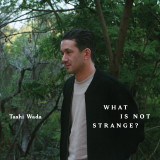
What Is Not Strange? is the first full-length album by Los Angeles-based composer Tashi Wada in over five years, comprising his most far-reaching and impassioned music to date. Written and recorded over a period that encompassed the death of his father and the birth of his daughter, the album sees Wada reflecting inward to explore broad narratives - being alive, mortality, finding one's place in the world - through new modes of ecstatic, song-based expression. While the denser forms, stark contrasts, and overt surreality may carry a different weight than Wada's earlier work, which elicited perceptual effects with minimal means, the heart of What Is Not Strange? is still in experimentation and unforeseen outcomes.
Staring 10th Anniversary Deluxe Sky Blue Vinyl. A cornerstone of the Arbutus catalogue, this deluxe LP features a multi-page photo zine, huge party poster, and sky blue colour vinyl. TOPS were formed in Montreal in 2011 when song-writing duo David Carriere and Jane Penny decided to join forces with drummer Riley Fleck. Delivering a raw punk take on AM studio pop, Picture You Staring is a lush array of timelessly crafted songs. Singer Jane Penny gives a new voice to the silent girl at the edge of the circle, disillusioned but honest and unpretentious, a tone complemented by David Carriere's seamless guitar playing and the measured drumming of Riley Fleck. TOPS' subtle arrangements are delivered with a cool restraint that blend with the individuality and self-assured desire of their female lead. Picture You Staring gathers strength through intimacy. Self-written, recorded and produced at Arbutus Records' studio in Montreal over the course of a year, this album contains 12 impeccable examples of pop craftsmanship that will reward repeat listeners.
“Home” is not always a literal place. Sometimes, “home” represents inner peace and simply learning to hold space for yourself. This is where Vacations lead singer and guitarist Campbell Burns has arrived as he and bandmates Jake Johnson, Nate Delizzotti, and Joseph Van Lier release their third LP, No Place Like Home. “I had this loose concept of No Place Like Home being an Americana-influenced album,” Campbell says of the album’s sonic inspirations. “I wanted to incorporate more pianos, acoustic guitars, Nashville tuning, and country-inspired lap steel, but then also bringing in drum machines and synths and finding a mix between the two.” Produced by Campbell and John Velasquez (Zella Day, Broods), No Place Like Home comprises 10 shimmering tracks brimming with indie-pop hooks and just a touch of bittersweet sensitivity. The new project follows an intense period of transformation for Campbell, who was forced to cancel all touring commitments due to COVID restrictions and subsequently came down with a severe bout of writer’s block. After seeking therapy, he was eventually diagnosed with Pure OCD, a subtype of Obsessive Compulsive Disorder. “Pure OCD is more mental compulsions rather than physical compulsions,” Campbell explains. “If I have an intrusive thought, I'm giving that thought belief and power over myself.” As the world began to open up, so did Campbell’s vibrant creative spirit. Vacations hit the road for the first time in two years, selling out The Fonda in LA and playing Austin City Limits Festival in Austin, experiences that partially inform No Place Like Home. First single and album opener “Next Exit” sparkles with danceable synth riffs and Campbell’s aching falsetto, all while setting the overall tone for what’s to come. “‘Next Exit’ is about living in this monotonous cycle,” Campbell reveals. “You realize that you need an out. You need to — metaphorically and literally — take the next exit out in order to break out of that cycle.” The singer mines his Pure OCD diagnosis on the pondering “Over You,” which thematically picks up where “Next Exit” drops off. Campbell remarks on how “it almost has this ownership over my thoughts and actions to the point where I'm stuck in these loops and rituals that are a direct result of having OCD.” On the Americana-inspired “Midwest,” which seamlessly blends pop electronics, drum machine, and ‘80s synth with poignant lap steel tones, the song remarks on the comedic nature of repeatedly entering into romantic relationships prior to going on tour — only to have them fizzle out upon returning. As the band releases No Place Like Home, Campbell is ironically just fine with not putting down physical roots just yet having recently made the move to LA for exploration, expanding “I needed to get overseas if I wanted to keep progressing — from a career standpoint, but also on a personal level.” The greater priority lies within building that sense of comfort within himself. In the meantime, millions of fans around the world are making a permanent home with Vacations.
The Kaiju Project is a Japanese inspired jazz group formed by the half Japanese-Austrian pianist Aseo Friesacher. Their initial idea was to bring old folk songs into a new modern context, but in addition to their compositions, this group has found their very own musical direction: a perfect blend of traditional Japanese music and meditative-creative jazz.
Aseo’s composition style is clearly rooted in Jazz, but with the use of traditional Japanese melodic elements and sounds, the music becomes very storytelling and gets a beautiful and mystic character. Also some famous soundtracks from the Ghibli movies and songs by the Japanese singer Hibari Misora, that Aseo has arranged for the band, are included in their repertoire.
The bandleader has had the vision for a long time to create this unique fusion of traditional Japanese music and Jazz in order to bring together the eastern and the western world. In fact, the meaning lies his name A-se-o, “亜為欧“: living for Asia and Europe.
The band went through a couple of changes in their formation but finally resulted in a dream team, featuring two Japanese musicians who bring the authentic sound to the band: Waka Otsu as the vocalist and Fuefuki Kana on Japanese flutes and silver flute. Furthermore there is the highly accomplished and respected ECM artist, drummer and percussionist Joost Lijbaart and the virtuosic and talented bassist Johannes Fend, who make the group complete. So far the Kaiju Project has toured in the Netherlands where most of the band members are based, they have performed in Germany and recorded their first album.
LØLØ has built a rabid following with her heart-on-her-sleeve lyrics and hard-hitting melodies spiked with a pop punk spirit over the course of three EPs. On her debut album, LØLØ “explores what it means to be human these days”. Recorded with producer Mike
Robinson, her single “u turn me on (but u give me depression)” has hit over 18M plays. EUPHORIA writes "LØLØ has become an undeniable presence in the pop-punk genre” evident by her constant touring with everyone from Boys Like Girls to New Found Glory and Against the Current.
GATECREEPER return with their highly anticipated new album Deserted. The new album, a furious mix of snarling guitars and driving, rhythmic pummeling takes death metal from its 80's Floridian roots and 90's Swedish expansion straight into the here and now. In fact, the vanguard of death metal in 2019 can be found under Arizona’s searing sun. That’s where GATECREEPER members—Chase Mason, guitarist Eric Wagner, bassist Sean Mears, drummer Matt Arrebollo and guitarist Nate Garrett—make their homes. Of course, the band nodded to their scorching home state with the title of their 2016 full-length debut, Sonoran Depravation. The theme continues on Deserted, which boasts songs like “Sweltering Madness,” “Boiled Over” and the double-meaning title track. You can hear the results on “From The Ashes,” a crushing cut primed for the European festival circuit. Over on side two, “Boiled Over” fuses classic BOLT THROWER with the pulverizing power grooves of sludge titans CROWBAR. Album closer “Absence Of Light” upholds GATECREEPER's tradition of finishing their records with a deathly doom dirge. Deserted was recorded at Homewrecker Studios in Tucson, where GATECREEPER co-produced the album with engineer Ryan Bram. CONVERGE guitarist Kurt Ballou handled the mix at Godcity in Salem, MA, and Brad Boatright mastered the album at Audiosiege in Portland, OR. Deserted’s hallucinatory cover art was created by Brad Moore (TOMB MOLD, MORPHEUS DESCENDS, and more.)
The classic 1981 collaboration returns expanded! • LP features two previously unissued tracks, CD/Digital adds four more Packaging features photos and new liner notes from John DeAngelis “I’m more proud of this album than anything I’ve done since I got my first gold record, toured with Elvis Presley, and joined the Grand Ole Opry.” —Skeeter Davis “This album was recorded with love all over the tapes. For us, it was the best.” —Terry Adams (NRBQ) After working with her sisters in The Davis Singers, Skeeter Davis embarked on a storied solo career. With nearly 40 charting singles between 1957–1974, her recording of “The End Of The World” (Produced by Chet Atkins) hit #2 on both the Pop and Country charts, #1 Adult Contemporary, and #4 R&B in 1962. Think about that! Since Skeeter had already crossed perceived genres, the thought of the collaboration with music’s Pandora’s Box known as NRBQ shouldn’t seem difficult to grasp. Terry Adams’ discovery of David Sisters 78 RPMs saw tracks added to early NRBQ set lists. The pairing was meant to be. She Sings, They Play was a natural coupling, and was issued to critical acclaim in 1985. “We had more fun making this record. What other group would think to do ‘Someday My Prince Will Come’ in 4/4 time?,” asked Skeeter Davis. She Sings, They Play returns nearly four decades after its original release, remastered and including six previously unissued bonus tracks – two studio outtakes appear on the LP while those and four more live tacks are now available on the CD/Digital version. The packaging contains updated artwork, photos from the sessions, and insightful liner notes from John DeAngelis. It’s a fresh look at an incredible union of two groundbreaking artists. She Sings, They Play. You enjoy!
With two critically acclaimed albums and a swathe of award-winning production turns under their belt, Ana Frango Elétrico present their most confident and accomplished work to date: Me Chama De Gato Que Eu Sou Sua / Call Me They That I’m Yours. Gesturing to a tradition of Brazilian boogie music, but bouncing with modern pop ebullience, the album sees the Rio artist evolve from a captivating upstart into a surefooted scene leader in full stride.
At just 25, the prolific artist and producer has already garnered worldwide admirers. Ana’s sophomore Little Electric Chicken Heart was nominated at the 2020 Latin Grammys. Since then, standalone singles have received the WME ‘Best Music Producer’ Award, recognising Ana’s deep passion for music production – a passion which has led to collaborations with nascent Brazilian stars Dora Morelenbaum, Illy and Sophia Chablau. Most recently, Ana was hailed for their co-production of Bala Desejo’s 2022 Latin Grammy-winning album Sim Sim Sim.
The new album finds Ana at their most assured and full voiced. Album opener “Electric Fish”, with funky bass and shimmering backing vocals, sets a buoyant tone. “Boy of Stranger Things” is its bombastic counterpart. It’s the grooviest Ana has ever sounded. And the most brazen. Lyrically, where Ana was once oblique on personal matters, they are now forthright – lucidly exploring their gender identity, citing accessible cultural references, and often singing in English.
“I started this album in 2021 with the intention of showing, in means of sound, understandings and feelings about queer love, subjectively exposing myself,” the non-binary artist states – before qualifying that though “feeling was its driving force, the album is really about musical production.”
“There’s so many references to different decades,” Ana explains. “Seventies drums with eighties processing … Going back, getting beyond … Testing the limits of organic sounds”. Characteristically playful, on Me Chama, Ana takes vivid and rewarding detours through funk-inflected R&B (“Dela”) and art pop (“Dr. Sabe Tudo”). “Nuvem Vermelha” is a cinematic chanson with lush strings that recalls Arthur Verocai. Then, “Coisa Maluca” loafs with the indie insouciance of Canadian slacker Mac Demarco. Later, “Let's Go Before Again”, is a full-on drum machine workout evocative of Stereolab.
Marking one year following Phase Fatale’s (aka Hayden Payne’s) last EP on his label BITE, ‘Love Is Destructive’ is a clear shift into true techno territories, integrated with his distinct curation of narrative and sonic framework, imprinted with a musical diet of sleek, synthesised storytelling.The 4-Track EP reflects the turbulent ebb-and-flow found with emotional conclusion - a genesis soundtracked by raw energy and driving undercurrents. The Berlin-based DJ, Producer and Label-owner’s propensity for creating a symbiotic harmony by blending seemingly divisive elements from his genre defying repertoire, demonstrates his masterful understanding and control of the listener’s borderless, auditory journey. Exemplified by his marathon closing sets at Berghain, as well as techno arenas such as Khidi in Tbilisi (both of which he is a resident), Phase Fatale’s recent DJ performances and production endeavours reflect his fresh approach to pure techno sensibilities. The title track sets the tone with imperative grooves, energetic vigour and intrepid attitude. Following a progression of techno propulsion in ‘Magma Driver’, infused metallic textures and trippy, headier elements add depth, whilst the body of work’s cutting edge sound design echoes spacey vivacity and purification in equal measures. Dichotomy comes forward with tracks ‘Ambivalence’ and ‘Introjection’, processed vocal samples with dub techno leanings and hints towards broken rhythms are sculpted by Payne’s focused approach, resonating a feeling of hopeful resolution akin to resurgence. These romantic sensibilities offset by cold mechanical nuances are reflected in the EP’s artwork, depicting roses against the backdrop of engine-like machinery. ‘Love Is Destructive’ is dedicated to Juan, Simone and Luis. Featuring artwork by Silent Editions.
- A1: Intro
- B1: The Magic Number
- C1: Change In Speak
- C2: Cool Breeze On The Rocks (The Melted Version)
- D1: Can You Keep A Secret
- E1: Jenifa Taught Me (Derwin’s Revenge)
- F1: Ghetto Thang
- G1: Transmitting Live From Mars
- G2: Eye Know Feat Otis Redding
- H1: Take It Off
- H2: A Little Bit Of Soap
- I1: Tread Water
- J1: Potholes In My Lawn
- J2: Say No Go
- K1: Do As De La Does
- L1: Plug Tunin' (Last Chance To Comprehend)
- M1: De La Orgee
- N1: Buddy (With Jungle Brothers And Q-Tip From A Tribe Called Quest)
- O1: Description
- P1: Me Myself And I
- Q1: This Is A Recording 4 Living In A Fulltime Era (L I.f.e.)
- Q2: I Can Do Anything (Delacratic)
- R1: D A.i.s.y. Age
- S1: What’s More (From The Movie Soundtrack Hell On 1St Avenue)
- V1: Buddy (Native Tongue Decision Part 2)
- T1: Jenifa (Taught Me) (12” Mix)
- U1: Buddy (Native Tongue Decision Part 1)
3 Feet High and Rising is the debut studio album by hip-hop trio De La Soul, and was released on March 3, 1989. It marked the first of three full-length collaborations with producer Prince Paul, which would become the critical and commercial peak of both parties. It contains the singles, “Me Myself and I”, “The Magic Number,” “Buddy,” and “Eye Know”. The album title came from the Johnny Cash song “Five Feet High and Rising”. It is listed on both Rolling Stone’s 200 Essential Rock Records and The Source’s 100 Best Rap Albums. When Village Voice held its annual Pazz & Jop Critics Poll for 1989, 3 Feet High and Rising was ranked #1. It was also listed on Rolling Stone’s The 500 Greatest Albums of All Time.
Released amid the 1989 boom in gangsta rap, which gravitated towards hardcore, confrontational, violent lyrics, De La Soul's uniquely positive style made them an oddity beginning with the first single, “Me, Myself and I.” Their positivity meant many observers labeled them a “hippie” group, based on their declaration of the “D.A.I.S.Y. Age” (Da. Inner. Soul. Yall). Sampling artists as diverse as Hall & Oates, Steely Dan and The Turtles, 3 Feet High and Rising is often viewed as the stylistic beginning of 1990s alternative hip hop (and especially jazz rap). 3 Feet High & Rising was chosen by the Library of Congress to be added to the National Recording Registry for its cultural significance and general excellence.
This special boxset release of De La Soul’s 3 Feet High and Rising includes twelve 7” custom singles pressed on splatter vinyl and housed in custom sleeves, housed in a box that includes a 7” pinup and a double-sided 7” slipmat, and is available first at record stores as part of RSD Black Friday. "
Operating from the depths of London’s musical underground since the late ‘90s, Infinity Plus One has been quietly toiling away, letting his music do the talking for the past two and a half decades. Cyphon Recordings draft in the veteran producer for a rare four-track EP of Detroit-infused, future-facing house and techno laced with the compelling lyricism of JaronX.
The Rebellion EP sees Infinity Plus One in some of his finest form to date. Leading the charge, ‘Context is Broken’ opens with JaronX’s poignant and passionate lyric on the state of global media, where sensationalism sells more copies than facts. From there, you dive headfirst into a hit of heavy-duty, contorted house. Crisp hats, punchy kicks and echoing stabs are interspersed with twisted electronics and JaronX’s arresting vocals. A sub-rattling bassline hits you square in the chest taking this neural club cut to the next level.
‘Say The Truth’ follows. A glitching, syncopated roller, woven with an entrancing monologue that is modulated and layered into tripped-out harmonies that echo around your brain.
On the flip side, ‘Identity Keeps Changing’ is a morphing techno weapon, where voices and synthesisers oscillate through different forms with every new turn. Rave-infused synth lines, breakbeats and a warped bassline channel that ‘90s warehouse flavour for a kinetic dose of dancefloor bedlam.
Rounding off the EP, the surging chords of ‘Utopia’ ping between your ears. A pulse that rides the kick drum, as dizzying arps and heavenly strings are layered into the mix to form a transfixing, gravity-defying techno immersion.
Fusing lyricism with the depth and dynamism of house and techno’s roots, Infinity Plus One hardwires meaning within his music. Visceral and thought-provoking, it’s a welcome respite in a sea of conformity.
If you can judge an artist's quality by the company they keep, then FaltyDL is up there with the best of them. The label history of the producer known to his friends as Drew Lustman reads like a "who's who" of 21st century electronic music imprints - Ninja Tune, Unknown to the Unknown, Planet Mu, Studio Barnhus, the list goes on.
WithIn the Wake of Wolves, we can now add Central Processing Unit to this illustrious roster. The Sheffield label joins the party at a notable juncture - while FaltyDL has kept up an impressive clip of releases throughout his career,In the Wake of Wolvesis both the NYC-based producer's first LP for two years and his first full-length release away from his own Blueberry Records for almost a decade.
In the Wake of Wolvesproves to be both a great match for CPU and also further evidence of the label's burgeoning sonic palette. While CPU has built its reputation on top quality electro joints, recent releases have delivered adventurous electronica experiments (Proswell'sPeople Are Giving And Receiving Thanks At Incredible Speeds), hard-wired breakbeat techno (Baby T'sI Against I) and golden-age synth explorations (twenty-fifth anniversary reissues of Bochum Welt'sDesktop RoboticsandFeelings on a Screen, both of which first emerged via the legendary Rephlex Records).In the Wake of Wolvestakes things further still - this is a brilliantly genre-voracious record, one which marries the rhythmic cut-and-thrust that we have long known FaltyDL for with all manner of adventurous stylistic choices.
Those familiar with the FaltyDL experience will recognise the trademark blend of synthetic grit and harmonious softness in album opener 'I Need You'. This could pass for Four Tet or even Hannah Diamond at points, the steady build of pulsing synths and looped vocals recalling a more mysterious version of the PC Music sound. 'I Need You' stands shoulder-to-shoulder with any of FaltyDL's other great atmospheric album openers - no small feat given the competition. 'Further', the following number, is yin to 'I Need You's yang. This is a pulsating track which gleefully skitters between machine-funk, tubing darkside bass and breakcore-adjacent drum programming, all of which is peppered with some genuinely beautiful work in the higher synths.
'Further' sets the scene for several of the more club-facing cuts here. 'Minds Protection' similarly features all manner of strange percussive sounds to surprise the ear, and it also boasts a thrilling mid-section in which the bottom falls out the track to incorporate a short snippet of blown-out junglism. With its tunnelling low-end and clattering drums, 'Full Spectrum' kicks off a delightful run of grime-influenced joints which take cues from Mr. Mitch, Logos and many of those other producers who took the Eski sound to exciting new places in the 2010s. 'Forget Me Not', the album's longest track which is placed three spots from the end, feels like the record's climactic point - a pitter-patter post-house joint that has a hint of Caribou in its DNA, it'll take the clubs by storm.
But as much as FaltyDL may consistently bring the heat in terms of the beat programming, the thing which has long marked Lustman out as a special talent is the musicality of his compositions. No matter how much drums clatter or bass bangs, FaltyDL always hooks the ear back in with a sonorous synth or pleasing nugget of melody. Nowhere is this more apparent than onIn the Wake of Wolves' more weightless numbers, each startling in their prettiness. 'Half Spectrum' is a new-era beat track packed full of ear candy; the keening keys of 'GasGas' are potent with feeling; and on the album's closer, the evocatively-titled 'Mila Stans In A Meadow For The First Time Eating Strawberries', we get a gorgeous synth vignette that joins the dots between the modern mastery of Yung Sherman and the most emotionally affecting moments of Aphex's Twin's catalogue.
At once wistful and hopeful, archival and futuristic, FaltyDL's brilliantly unpredictableIn the Wake of Wolvesis a feather in the cap for both this seasoned producer and the Central Processing Unit label.
RIYL: AFX, Bochum Welt, Mark Fell, Mrs Jynx, Boards of Canada
A bit more than half a decade on from his widely acclaimed debut Vanishing Points from 2018, Swiss guitarist, composer, and improv musician Manuel Troller releases his new record Halcyon Future. A rhythmically dense and ambiguous, yet joyful ride for unstable times, a plea for warmth and hopeful resistance.
Troller’s mode of incorporating, zooming in, and expanding on small elements from improvised sessions creates a multilayered work of driving rhythms and abstract, vibrating textures. Opening with Halcyon Future I’s distinctive open pulse, this first piece guides us through subtle harmonic shifts that are almost unrecognizable as they take place over extended time, overlapping and creating a sense of ambiguity until the piece reaches an almost optimistic level with Mario Hänni’s unexpected introduction of driving acoustic drums. Relentlessly and with increasing excitement, heavy electronic 80s bass drums and an armada of layered hi-hats push them on, leading to the all-incorporating melodic finale.
The two long pieces Halcyon Future I and Halcyon Future II focus on forward momentum. In between them stands DNA, a purposely directionless contemplation on emotion as such. It is raw, naked, and confrontational, with a tender and subtly changing chord progression creating intimacy and proximity, abstraction and warmth, like a beautifully vibrant hologram for the listener to walk around in.
The B-side with its 20-minute Halcyon Future II features playful futuristic guitars, enhancing and challenging the stereo image that Troller is already well-known for. As it’s given time to develop and take root, the ever-varying guitar interactions densify and the staccato patterns jump out of the speakers with joy, creating excitement and building momentum. Compared to Side A, things turn to a slightly more complex rhythmical, melodic, and harmonic feel here. There are easy references, such as Manuel Göttsching’s E2-E4 or Pat Metheny performing Steve Reich’s Electric Counterpoint, but Troller goes a different and very much more concrete way. Although the piece has been recorded in various places and through a long process of overdubbing, there is an astonishingly strong live feel to it, from beginning to the end, from the slow rise to the full spectrum and the almost krautrock-like finale. Improvisers Hans Koch on soprano saxophone and Michael Flury on heavily fuzzed trombone join in, while Troller and Mario Hänni on many guitars, bass, drum machines, and acoustic drums provide a joyous driving entity, not giving up until it all breaks down again. There is overkill and brute force, though never without depth and a vision of future.
In the musical scope of Halcyon Future, there is no need for an absolute definition of things. A continuously changing interpretation of repetitive and variable elements fading in and out of focus tells a story of an excited sense of acceptance. Feelings of transcendence stem from Troller’s layering of constantly shifting rhythmic structures with unforeseen improvised harmonic changes. Drum machine parts overlayed with acoustic drums shift between musical modes, anchoring the album on the verge of a jazz-influenced, motorik, post-ECM balearic plateau. Abstract textural elements gently swirl around and behind all that is rhythm, providing a submissive counterpoint. As with much of Troller’s work, Halcyon Future is an album that unfolds slowly, revealing more of its richness, detail, and subtle beauty at each listen.
Halcyon Future is a joint release by three:four records and meakusma.