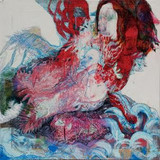
After that album, in addition to an intense schedule of headlining shows, she was invited to support prestigious artists such as experimental folk paladins Heilung and the historic gothic rock band The Cult on their extensive tours across Europe and the United Kingdom. It was during her performance at the Hammersmith Apollo in London, as part of the tour with Heilung and Eivor, that the album "Live in London" (2024) was recorded -- a testament to her overwhelming performative power, a cathartic ritual capable of transcending genres and styles.
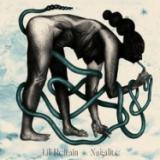
Blending folk metal, dark ambient, pagan ritual, psychedelia and operatic elements, and entirely composed, performed and sung by Lili Refrain, "Nagalite" combines in its title two words: "Naga," from Sanskrit, meaning "serpent," bearer of ancient knowledge; and "Lite," from the Greek lithos, "stone," something that endures beyond space and time, embodying earth, world and family. From this fusion emerges a symbolic being -- a stone- serpent -- the living body of metamorphosis, emblem of an imaginary transformation through four serpentine alchemical states, the four tracks that make up the suite. It is a sonic reflection on an era marked by war and horror, in which the artist traces a possibility of resilience and new life.
quête:mea
- 1: Miami
- 2: United By Hatred
- 3: Violence Condoned
- 4: Electric Torture
- 5: Meaning Of Pain
- 6: Stabbed In The Back
- 7: Shotgun Justice
- 8: Parricide
- 9: American Luck
- 10: Brass Knuckles
- 11: Burning The Bridges
- 12: Concussion
- 13: Cranial Stomp
- 14: The Pugilis
Splatter Vinyl[23,32 €]
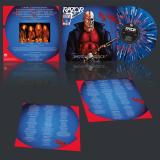
Razor, a thrash metal legend! The most valuable Canadian export since the Toronto Maple Leafs. When Dave Carlo and his band took to the stage at the legendary Headbangers Open Air Festival a few years ago, the crowds went completely wild. This enthusiastic reaction suggests that Razor may have more fans today than they did in their heyday in the mid-1980s. So the re-release of “Shotgun Justice” on vinyl comes just at the right time. The album comprises 14 tracks and features immortal classics such as “United by Hatred,” “Stabbed in the Back,” and “Brass Knuckles.” Shotgun Justice was originally released in 1990 on CD only on Dave Carlos' own label, Fist Fight Records (distributed in North America by Fringe Records). It was the first Razor album with Bob Reid on vocals (who had replaced Stace McLaren, aka Sheepdog).
Mit Sexistential meldet sich Robyn mit ihrem bislang poppigsten Album zurück. Nach dem atmosphärischen Honey (2018) rückt sie wieder klar strukturierte Popsongs ins Zentrum - neun prägnante Tracks, entstanden an einem persönlichen Nullpunkt. Nach dem Ende einer langen Beziehung ordnete Robyn ihr Leben neu, entschied sich bewusst für eine alleinerziehende Mutterschaft und setzte sich intensiv mit Sexualität, Nähe, Unabhängigkeit und Identität auseinander. Die Arbeit am Album begann 2020 und wurde von der Pandemie geprägt. Aufgrund geschlossener Grenzen arbeitete Robyn ausschließlich mit schwedischen Weggefährten, allen voran Produzent Klas Âhlund. Ergänzt wird das Album durch Co-Writes mit Max Martin - die erste Zusammenarbeit seit Body Talk - sowie eine neu bearbeitete Version von Blow My Mind, ihrem Sohn gewidmet. Klanglich verbindet Sexistential klassische Popstrukturen mit einer hypermodernen Produktion. Thematisch kreist das Album um Lust, Verletzlichkeit und Kontrollverlust - und um das Spannungsfeld zwischen Emotion und Biologie. Die Single Dopamine beschreibt Verlangen zugleich als Gefühl und chemischen Prozess, geprägt von Robyns Erfahrungen mit IVF. Humor und Selbstironie durchziehen den Titeltrack, während Songs wie Sucker for Love romantische Liebe verteidigen, ohne naive Rollenbilder zu reproduzieren. Sexistential steht für künstlerische Integrität, bewusste Offenheit und einen selbstbestimmten Neubeginn - riskant, ehrlich und voller Hoffnung.
Analog Fingerprints Vol. 0 is a compilation bringing together the early 2000s works of Marco Passarani under his Analog Fingerprints alias, collecting key tracks originally released on Rome’s Plasmek and Pigna labels.
For Numbers, the story starts long before the label itself. In their formative years, digging in Glasgow’s Rubadub, Passarani’s records felt like dispatches from a future city. Releases on his own Nature Records and on labels such as Generator and Interr-Ference Communications were mind blowing: rooted in Detroit techno, Chicago house and electro, yet pushing somewhere new. Much like fellow travellers Autechre, who would remix him in 2001, Passarani’s music balanced machine funk with restless experimentation.
Information was scarce, and you would hear these records first on the dancefloor or at listening stations in shops like Rubadub. Print fanzines like Ear and early web outposts such as Forcefield offered only fragments. But there was a palpable axis forming between Detroit techno and a new European wave of record labels including Skam, Rephlex, Clone, Viewlexx and Nature itself. It was the sound that defined Saturday nights at Rubadub’s ‘69’ parties in Paisley, just outside of Glasgow.
Passarani’s records, in particular, were instrumental in bringing together the future Numbers co-founders. Richard had already booked him pre-Numbers; meanwhile Calum (Spencer) and Jack (Jackmaster), then 16/17 year olds working alternate Saturdays in Rubadub, were so enamoured with the Roman sound that they travelled to Rome for the Bitz Festival in 2003 to seek out Passarani and Lory D at their source.
The first Analog Fingerprints release landed as a 12” on Plasmek in 2001, following the fractured, IDM-leaning 6 Katun material. For Passarani, the project marked a recalibration. A DJ first and foremost, he had moved into production via early computer setups, from a Commodore Amiga through primitive PC audio, Cubase and Logic, later experimenting with Ableton. The IDM scene had offered a playground for trial and error, but there was always a tension between abstraction and the dancefloor. Analog Fingerprints became the bridge: still intelligent, but with more dance than distance. After years of broken beats and complex arrangements, he wanted directness without surrendering identity.
Working closely with Francesco de Bellis and Mario Pierro in the Pigneto district, the trio formed Pigna as a vehicle for reclaiming a more accessible dance sound, deliberately steering away from the minimal wave beginning to dominate Europe. Sessions were fast, instinctive, often stretching late into the night with friends dropping by. It was a studio as social space, production as collective energy.
“In that constant search for balance, Analog Fingerprints was my way of expressing something closer to the classic dance floor. The track 'Tribute' - a tribute to my favourite early Detroit techno track of all time, 'First Bass' by Separate Minds - came after I realised I had almost lost my connection with the dance floor. The simplest step was to take inspiration from early Chicago and Detroit and twist it in our Roman ‘Pigna’ way. My goal was to create more accessible dancefloor tracks by mixing my unconscious Italo roots with my teenage love for that early US sound, ensuring the result was as far as possible from the minimal sound that was starting to dominate everywhere.” - Marco Passarani
Technically, the Analog Fingerprints tracks span a transitional era: Roland TR-909, SH-101 and Alpha Juno hardware met early software experiments. A Novation Drumstation rack stood in for the unattainable TR-808, syncing with TB-303 and TR-606. Yet the true secret weapon was Jeskola Buzz, a tracker-style modular environment that allowed step-by-step parameter control and strange melodic constructions, later exported into the audio sequencer. Even the lead on ‘Tribute’ came from an early PPG Wave-style plugin. It was hybrid thinking at a moment when digital tools still felt unstable but full of possibility for technologists like Passarani.
Behind the music sat Finalfrontier, a loose Roman collective orbiting Nature and Plasmek. Distribution and production were intertwined; importing obscure records into Italy built connections with like-minded outsiders across Europe and the US. Expensive phone bills and fax machines forged an “electronix network” that linked Rome to Clone, Viewlexx, Skam, Rephlex, Rubadub and Detroit’s Underground Resistance. There was a shared sense of survival and resistance, of operating against commercial systems.
Passarani recalls “The first time I found a sheet of paper inside an Underground Resistance 12” with info about upcoming releases... and a huge picture of Spock on the back. Imagine that: you love the music, you love Star Trek, and there’s someone on the other side of the ocean sharing those same values and sounds. It was the perfect match. We even gave our original company the suffix ‘Finalfrontier’: that says it all.”
Feedback in that era arrived physically: distributor faxes, conversations with visiting DJs, the experience of playing abroad and meeting kids who had connected with the records. Glasgow became a key node in a scattered outlier network. Passarani personally brought the first two Nature releases to Fat Cat in London, playing them in-store. Shortly after, a fax arrived from Rubadub in Glasgow requesting copies.
“I still remember that phone buzz and the fax paper slowly sliding out, with someone I didn’t know saying they wanted 75 copies of Nature 001. Or like the time we got a fax from the Rephlex crew just saying, “Hello Nature Records, Keep up the good work.” That was how we knew the message was getting through. It was a fantastic feeling; just one piece of thermal fax paper as an analog notification - the mood for the entire week would change.” - Passarani
The connection to Glasgow has since stretched across generations. As Passarani reflects, links often fracture as scenes renew themselves, but in Glasgow something different happened. New and old mixed seamlessly. There was a visible trust in what came before, and a willingness to carry it forward rather than discard it. Observed from Rome, it was deeply encouraging.
Analog Fingerprints Vol. 0 captures that moment of exchange: Rome to Glasgow, Detroit to Europe, experiment to dancefloor. It documents an artist recalibrating his sound and a network of scenes discovering one another in real time, connected by vinyl, faxes and shared intent.
2026 Repress
Maltese talent Human Safari debuts on Mutual Rytm with jazz-influenced techno EP, 'Culture Shock'.
Human Safari is a key player in his native scene in Malta. He's a resident at Glitch Festival, has played cult spots, and has a dynamic sound that brings jazz improvisation to techno, often featuring live instrumental elements. His music has found its place on top labels like R&S Records, and most of this new EP for SHDW's Mutual Rytm imprint was produced during his Colombian summer tour last year - written and recorded amongst inspiring and unusual settings with just a laptop and headphones.
"This EP represents embracing new beginnings that, though might bring uncertainty and fear, the
light always guides you to where you were always meant to be." - Human Safari.
Opener 'Mouse on Keys' has been a key cut for the label boss across the past year, a unique track that peaks curiosity from dancers to DJs whenever it's played. Its cantering techno rhythm is overlaid with delicate, heartfelt piano keys straight from a smoky jazz bar, making for a great counter to the physical drums. 'Fragments' is a deeply personal track dedicated to the artist's late grandfather. It's a funky, soulful techno roller with blissed-out and sunny chords full of hope.
Next, 'Classique' gets more gritty with loopy drums and bass and glitchy percussion that fizzes with energy, while 'The Labyrinth' features piano motifs recorded in just one take. It brings a dark paranoia in the uneasy, off-grid keys which dart about with nervous energy over the booming low ends. There is just as much intensity and edge to the unresolved keys that loop over the raw drums on 'A Rainy Day in Bogota', before digital bonus cuts 'Dorian' and 'Phantom' bring more jazzed out techno madness with warped keys and expressive elements bringing great invention.
As Nathan Fake rises from the nocturnal subterranea and rave catharsis of his previous records, on Evaporator, he resurfaces into the domain of daylight, bringing a tangible sense of air rushing against your face, of big skies, and endless landscapes. The idea of pop accessibility that trickled into 2023’s Crystal Vision is refracted here through the prism of sweeping ambient, deep electronica, and trance uplift. Evaporator is Fake’s idea of “airy daytime music”, with each track a different barometer reading across the album’s varying atmospheres, which range from vibrant sunbursts, bracing rainscapes, and fine mists of clement melodics. “It’s not overtly confrontational electronic club music,” states Fake. “It’s quite pleasant, it’s accessible. As I was progressing through making the tracklist, I called it a daytime album. It doesn’t feel like an afterparty album.” For the past decade Fake has been gingerly introducing collaborations with heroes and friends alike into his lone, idiosyncratic working process. Border Community alumni Dextro AKA Ewan Mackenzie transmutes his ferocious drumming for Pigs Pigs Pigs Pigs Pigs Pigs Pigs into the blurred choral thump of ‘Baltasound’. ‘Orbiting Meadows’, meanwhile, is his second collaboration with Clark, an eerily idyllic duet where microtonal 18EDO piano clangs slowly twirl around wailing pads. Evaporator marks the junction point of old technology and ever fresh creativity for Nathan. The trusty “dinosaur” age software, particularly Cubase VST5, that has powered two decades of music is rarely updated. “I used to sort of feel a bit ashamed of using such old software, and then I kind of had an epiphany – that’s just how I work”, comments Fake. “That’s just how I play. I’m very fond of these old tools, and I get the most joy out of them, but now I’ve incorporated new technology too.” When an artist accumulates so much synergy with their instrument, music making becomes instinctual. By Fake’s account, much of Evaporator just fell into place. The album title arrived randomly in his head (“it felt completely perfect. Airy.”), ideas looped and developed until things locked into place and just felt right. ‘The Ice House’ is a fleeting glimpse of the sonic world he taps into in this creative state, its glassy FM synths built around a counterpoint between rough-hewn crystalline arpeggios and sparse yet gravitas-bearing bass. “That riff I just wrote out on the keyboard, I just played it forever and ever and ever. The original track ended up being really short. Here you go, and it’s gone!” These unplanned channellings of sound call forth records from Fake’s past while he looks ahead, perhaps getting at the very essence of his musicianship. The opener ‘Aiwa’ (“the breeziest,” he muses) reminds of the introspection that characterised Providence, excited by the fire and grit of Steam Days’ textural experiments, its chunky slams and clatters surging into a flood of harmonic buzzing as they reach out for old wisdom. ‘Hypercube’ stampedes in a similar chronological confluence, infusing an incessant synth line reminiscent of the golden age of rave with the crackling, ecstatic energy of modern festival anthems. Like the vaporisation of liquid to particles, everything that Evaporator presents has a mutant desire to be amorphous. Sounds rarely settle; the irradiated garage beat of ‘Bialystok’ is pitched downwards to driving, rebounding effect, while ‘You’ll Find a Way’ warps static into shivering energy, cinematic synth strings building anticipation into a gradual gush of chords. This translates into a more expansive stereo field than Fake has explored before. ‘Slow Yamaha’ saves the wildest, most kinetic transformations for last with a cornucopia of crispy melodies and fried drums; a sibilance of cymbals on the left, a susurrus of shakers on the right, and kaleidoscopic lasers pulsing and fizzing all around. Evaporation culminating in pure excited atoms. In a world where music has increasingly become background content, making albums remains lifeblood for Fake: “It makes me realise how long; twenty years is ages! It’s weird to see how much the world has changed. Release day back then you did fuck all, now you spend all day on socials. When I grew up the people who made the electronic music I was into were quite mysterious, and the artwork was very abstract. There was a massive distance between you and that music, and that was a key part of it, really. Now it helps to be an extrovert, and I'm just not, but the album marks the first time my face has graced the cover art. I’ve never wanted to do this before, I'm very shy, and generally I don’t like being seen,” he professes. “But, twenty years in, I supposed I could try something new. I'm very lucky that I'm somehow surviving in this world, where the media world favours extroverts and interesting looking people. It’s not my world but somehow I’m still in it.” Evaporator continues to prove Nathan’s necessary presence, with some of his most engaging, varied, and magical music yet.
The long-awaited reissue of Another Song by Music Service, one of the finest Italo-Disco tracks goes to Antony Soumas, the amazing Greek DJ owner of Disco Time Records in Athens. Tony's passion for Italo-Disco style is known worldwide and is worth further amplifying. Among the spin-offs conceived by Amin-Peck (editor's note: in strict Bolognese dialect means "I hang myself!"), Another Song turns out to be the favorite of the "purists" of Italo. The synthesizers of George Fyron and Leonard Parker are excellent as always, but here we also find awesome sauce male voices! In a certain sense you have the sensation of listening to Big In Japan, but perhaps it is just a suggestion of the dee-jays who push one record after another. One last curiosity dictated by the sagacious dj-writer Antonio Stanzani, better known as Ciancio DJ: the Music Service band proposed to Luca Zanarini to sing Another Song, but the lyrics of the song did not yet existed His friend Gianni Ruberti made himself available and by isolating in a room for two hours he made the lyrics that all of us after more than 40 years enjoy.
Patience moonlights as one of the most underworked muscles of the modern human. Time meanders at the same pace as always but yet everyone seems to be living their lives as through they are stretching it out like elastic jelly through their fingertips, ignoring the virtue necessary to ride each moment. At the end of patience always lies a reward. DJ Teeth, a veteran disciple of time, presents a sonic palette to Kasra V's V-Sion imprint that is for only the most determined. Symphonic synths and acid swells ebb and flow, vocal samples move like auditory hieroglyphics scrawled on cave walls, and other hidden messages appear, but only for those who wait. Patience will be rewarded.
John Scofields Quartett mit Tenorsaxofonist Joe Lovano war eine der führenden modernen Jazzgruppen der
1990er Jahre. Auf seinem zweiten Blue-Note-Album “Meant To Be”, das nun erstmals als Doppel-LP auf
Vinyl erscheint, demonstriert der Gitarrist in elf unverkennbaren Scofield-Originalen die ganze Schlagkraft
und nuancierte Musikalität dieser Band. “Das farbenfrohe und unterhaltsame Programm bietet moderne
Mainstream-Musik der 1990er Jahre, die sich nach vorne orientiert, aber gleichzeitig an den Wurzeln von
Hard Bop, Funk und Fusion festhält.” (Scott Yanow, AllMusic, 4,5 Sterne)
- 1: Carrion Crawler
- 2: Contraption / Soul Desert
- 3: Robber Barons
- 4: Chem-Farmer
- 5: Opposition
- 6: The Dream
- 7: Wrong Idea
- 8: Crushed Grass
- 9: Crack In Your Eye
- 10: Heavy Doctor
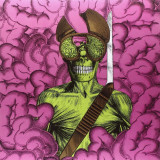
What's the first thing you think of when someone mentions Thee Oh Sees? Probably their riot-sparking live show, right? Visions of a guitar-chewing, melody-maiming John Dwyer careening across your cranium, rounded out by a wild-eyed wrecking crew that drives every last hook home like it's a nail in the coffin of what you thought it meant to make 21st-century rock 'n' roll? Yeah, that sounds about right. But it misses a more important point-how impossible Thee Oh Sees have been to pin down since Dwyer launched the project in the late '90s as a solo break from such sorely missed underground bands as Pink and Brown and Coachwhips. (While Dwyer still records songs on his own, Thee Oh Sees is now a five-piece featuring keyboardist / singer Brigid Dawson, guitarist Petey Dammit, drummer Mike Shoun and multi-instrumentalist / singer Lars Finberg.) That restlessness extends to everything from the towering, thirteen-minute title track of 2010's Warm Smile LP to the mercurial moods of 2008's The Master's Bedroom Is Worth Spending a Night In. Now, Thee Oh Sees chase the home-brewed symphonies of Castlemania with the scrappy, high-wire hooks of Carrion Crawler / The Dream. Originally envisioned as two EPs, it was cut live to tape in less than a week at Chris Woodhouse's Sacramento studio in June, reflecting the battering-ram bent of the band's live show better than any bootleg ever could. "As I'm sure most would agree," explains Dwyer, "Castlemania was more of a vocal tirade. This one's meant to pummel and throb." That it does, whether one blasts the slow, speaker-bruising build of "The Dream," the sunburnt organs and dovetailing guitars of "Crack in Your Eye" or the interstellar instrumental "Chem-Farmer," a perfect example of what happens when one takes a well-oiled machine-a gang of rabid road warriors, really-and adds a second, groove-locked drum set to the mix. To listen is to realize that Dwyer's music is as manic as the underground comic inclinations of his artwork; colorful and confusing in a way that's more than welcome. It's downright refreshing, like a slap in the face at 5:00 in the morning. Or, as Dwyer puts it, "You have to leave a mark somehow."
- 01: Maria Do Carmo - Beijos São Como As Rosas
- 02: Jose Paradela D&Apos;Oliveira - Fado De Se Velha
- 03: Edmundo De Bettencourt - Crucificado
- 04: Madalena De Melo - Cantares
- 05: Luiza Baharem - Fado Mondego
- 06: Alberto Xavier Pinto - Fado Do Paraizo
- 07: Maria Victória - Fado Maria Victória Nº 1
- 08: Maria Silva - Fado Alice
- 09: Adelina Fernandes - Misérias
- 10: Estêvão Amarante - Fado Do Cauteleiro
- 11: Alfredo Marceneiro - Olhos Fatais
- 12: Ermelinda Vitória - Fado Da Minha Aldeia
- 13: Dr. Lucas Junot - Triste (Fado)
- 14: Maria Alice - Quando O Meu Filho Adormece
- 15: Laura Santos - A Magia Do Fado
- 16: Joao Rocha Jor - Fado Rocha
Tape[16,39 €]
The definition of the word 'fado' is technically 'fate', though the Portuguese meaning bound up with this term is more complex. The music itself can be fairly closely compared with that of Greek rebetika - also the American blues or the original working-class tango music of Argentina and Uruguay - and similarly takes it's common subject matter from the various cruel realities of the world. Though perhaps what distinguishes fado in character is it's often poised acceptance of the pains of life rather than protestation or resistance - as writer Paul Vernon says "It speaks with a quiet dignity born of the realisation that any mortal desire or plan is at risk of destruction by powers beyond individual control"
Death Is Not The End compile here a spine-tingling collection of fado recordings, taken from records issued in the mid 1910s through to the 1930s. The fado's Lisbon and Coimbra variants are presented here by some of the music's earliest recorded stars - spanning a time period leading up to the emergence of the fado's all-conquering star, Amália Rodrigues.
- 1: Pile
- 2: Wings
- 3: Amors
- 4: A
- 5: Good Lord
- 6: Ready
- 7: Leathered & Laced
- 8: Qualia
- 9: Ω
- 10: The All
Consuming you in one swoop, through 10 tracks of poetic electronic-pop odyssey’s, Evadney’s sensational voice acts as the guiding force, weaving between piano, strings, harp, driving electronic elements, and almost beatless moody textures.
Following the release of 3 eps on Black Acre, being remixed by I.JORDAN, inclusion on Jamz Supernova’s BBCRadio ‘Ones To Watch’ list, the Glastonbury Emerging talent list and creating an audiovisual live show performed in the UK and Shanghai, Evadney’s debut album ‘It’s Dreaming’ looks set to solidify him as a bold new voice on the UK music scene, bringing with him a new world of melancholy, narrative-driven pop.
The subjects of sexuality, love, family and a yearning for the divine are played out across this cinematic piece of work. “I’m asking myself and everyone to consider; Where is your love? What does it mean for you? What are your boundaries around it and why?” - Evadney. On ‘Plie’ Evadney’s vivid storytelling flows effortlessly in a surreal conversation with an angel who teaches him how to dance. ‘Qualia’’ is a harp laden ode to his parents and their enslaved ancestors, whilst ‘Leathered & Laced’ and ‘Good Lord’ are devastatingly beautiful and honest stories of Evadney pulling himself out of his darkest moments of lost direction and substance abuse.
The Buenos Aires–based producer’s second album on Umor Rex can be read on at least two levels. The most direct traces its origin to the influence of environmental music, as well as to some pioneers of electronic music. The album was recorded in a single session, making extensive use of loops that were later edited and condensed into the six pieces that make up Pequeño clima doméstico. This working method responds to a playful approach that runs through Entidad Animada’s musical intentions, which often start from a specific genre or aesthetic and then filter it through his own language.
From a more conceptual perspective, the record proposes music as a tool capable of modifying the perception of a moment. Rather than closed songs, the album functions as a device that allows one to tune a state, transform a space, or alter a mood. In this sense, it engages with the idea of functional music not as a utilitarian background, but as a means to equalize time, slow the pace, and reconfigure the listener’s emotional climate.
All songs written and performed by Entidad Animada. Recorded in August 2025 in Buenos Aires, Argentina.
Field recordings and processed textures by Guazuncho.
Mastered by José D’Agostino at Moloko Estudio, Frankfurt, Germany. Cover photo by Diego Berruecos. Layout by Daniel Castrejón.
- A1: Warm Slime
- A2: I Was Denied
- A3: Everything Went Black
- B1: Castiatic Tackle
- B2: Flash Bats
- B3: Mega-Feast
- B4: Mt Work
The ridiculously prolific Bay Area band Thee Oh Sees are back with another full-length long-player. Warm Slime is guaranteed to please fans of their whacked-out garage / psych / punk jams. Recorded by Sacramento sultan of sound Chris Woodhouse, Warm Slime carries on in the same tradition as the group's previous In The Red release, Help, showcasing their more electrified and rocking side, in comparison to other recent home-recorded releases. The centerpiece is undoubtedly the mind-bending title track, which clocks in at nearly 14 minutes and takes up the entirety of the album's first side. It's a psychedelic epic of "Inna Gadda Da Vida" proportions! John Dwyer's guitar playing is at its quadraspazzed best here, and the vocal interplay with Brigid Dawson gives it a B-52s-at-their-least-cheesy-crossed-with-the- Troggs vibe. The results are stunning. "Thee Oh Sees incorporate the oft-referenced Nuggets stuff in a way that feels reverential. With grinding guitars and bah-bah-bah vocals, but with the punk and new-wave elements also at play, they don't feel trite or plagiarized. This is like meat and potatoes prepared by a master chef-totally familiar but utterly delicious." -Pitchfork Recorded by Chris Woodhouse (Mayyors' guitarist and producer for The A-Frames, Hospitals, Coachwhips, Erase Errata, etc.) This is one of the best sonic blasts you will trash your speakers with this year....Raw, and real! Opening track is 13 minutes long, yes, we'll take it...
Thawra Records and Tiny House Music are proud to announce Nafas, the debut original album by Palestinian vocalist, researcher, and composer Salwa Jaradat, set for release in March 2026.
Rooted in a traditional Arabic singing practice yet shaped by a layered and deeply personal artistic journey, Nafas marks a powerful first statement from an artist whose work moves between heritage, research, and lived experience. The album emerges from years of musical and feminist inquiry, giving renewed breath to voices, emotions, and histories that have long existed on the margins.
Salwa Jaradat’s artistic formation is grounded in classical Arabic music and oral tradition, with studies at the Edward Said National Conservatory of Music in Palestine and later in musicology in Lebanon. Alongside her work as a performer, researcher, and archivist, she has developed a practice that treats music as a space of memory, resistance, and continuity. These threads converge in Nafas—an album that does not seek to modernize tradition, but rather to inhabit it differently, allowing it to speak in the present tense.
Developed through an intensive artistic residency in Lebanon, Nafas brings together a core ensemble of regional musicians, with Jaradat’s voice at its center—measured, expansive, and deeply intentional. Across six compositions, the album unfolds patiently, moving between stillness and momentum, intimacy and collectivity, breath and release.
Nafas will be released digitally and on vinyl, reinforcing Thawra Records and Tiny House Music’s ongoing commitment to long-form artistic statements and physical formats as vessels for care, depth, and listening.
Against all odds, a devout audience has ridden shotgun and grown with them every step of the way. This symbiotic relationship speaks to the band's quiet impact with over 167 million streams in the United States alone, widespread acclaim, and sold-out shows. They loudly carved out their own corner of heavy music with an inimitable hybrid of head-crushing polyrhythmic prog-spiked metal, hardcore spirit, and unbridled attitude.
They have assuredly leveled up over the course of albums such as Via 2011, No Sleep [2014], Different Animals [2017], and Happier? [2021]. Kerrang! hailed the latter as "an album that gives a nod to the band's past while still bringing in new ideas." Meanwhile, the group shared stages on tour with everyone from Ice Nine Kills and Born of Osiris to Dance Gavin Dance and Counterparts.
- Angel Eyes
- For All We Know
- Give Me The Simple Life
- Where Flamingoes Fly
- You Don't Know What Love Is
- Dream Dancing
- Tomorrow's Yesterday
- Jubilee
- Snowfall
In 2026, 62 years after the first release, she releases the LP Tomorrow's Yesterday, and it cannot be ruled out that this may be her last physical album. All the songs are recorded in duo or trio format. The musical sounds are excitingly combined with her voice and Rob Luft on guitar, John Surman on saxophone/ bass clarinet on side A. Whilst on side B we hear Karin Krog with Erlend Slettevoll on piano/electric piano and Rob Waring on vibraphone.
- A1: Harris & Orr - Spread Love
- A2: Terry And Deep South - Trying To Get By
- A3: Toshiyuki Honda - Burnin' Waves
- A4: Igna Igwebuike - Disco Bomp
- B1: Janette Renee - What's On Your Mind (Super Club Remix)
- B2: Grupo Serenata - Sodade, Tem Pena D’mim
- B3: Vital Disorders - Zombie
- B4: Alphonsus Idigo - Flight 505
- C1: Dj Food - Peace (Harvey's 30 Something Mix)
- C2: Man Jumping - In The Jungle
- C3: Stars - Dancin’ People
- D1: Gaucho - Dance Forever (Club Version)
- D2: 49Th Floor - Night Passage (Bongo Mix)
- D3: Orion Agassi - Desacato
- D4: Fatdog - Remember Feat Cj Raine
yellow vinyl[28,15 €]
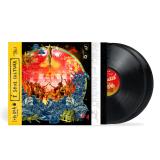
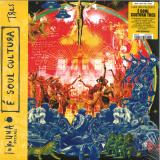
With two deeply cherished compilations already in the bag, Luke Una steps up for the third volume in his É Soul Cultura series on Mr Bongo. A love letter to the dancefloor and its power to unite people from all corners of society amid growing division and extremist politics. Genre-spanning in nature, the 15 tracks travel between cosmic soul, boogie, proto-house, slo-mo technoid grooves, drum machine afro, astral bass-bugging futurism, jazz funk, dance, and disco. Each having the ability to move the body as much as the heart.
From his formative years in Sheffield to co-founding Manchester’s much-fabled Electric Chair with Justin Crawford, through to helming the iconic LGBTQ institutions of Homoelectric / Homobloc, Luke has spent 40 years immersed in dance music. His latest outlet, É Soul Cultura, has grown from a label to a globe-spanning events series with Luke holding residencies and embarking on tours across the world from Japan and Australia to America and Europe.
“For me, the dancefloor was never about a one-dimensional, thudding, 130 BPM beat only. It's a much more dynamic, broader vision than that. I cut my teeth in an era where a 100 BPM record had as much impact, excitement, and energy as a 134 BPM dancefloor jazz funk or techno record”, Luke mentions. É Soul Cultura Volume 3 is the perfect embodiment of that notion: “It’s about four decades in the trenches playing dance music, the late-night afters, the shebeens, the basements, warehouse parties, the eight-hour journeys in East London, through to festival sets at Houghton and We Out Here. It’s music unconstrained by genre or tempo and more about making your body move”.
But this isn’t simply a collection of disparate dance tracks; they carry meaning and soul. “It’s less about escapism, more about reconnection. My experience of post-covid has been the coming together of all the clans in various clubs and gatherings. A reaction to a very toxic world out there, where the aggro rhythms of division have sought to divide us, and people don't meet as often. The coming back together face-to-face in clubs has encouraged a real love in the air, there's a real togetherness and collective spirit”.
Opening up the compilation is a track that channels that very message, the transcendental, soul-rousing Harris & Orr ‘Spread Love’. Joining the dots from there, to the low-slung deep house closer of Fatdog ‘Remember’, you’ll find electronic drum machine Nigerian funk, sitting side by side with dancefloor Cape Verdean brilliance, a post-punk cover of Fela Kuti, rubbing shoulders with cosmic electro, and an Una-championed, 8-minute, kickless DJ Harvey remix. There’s jazz funk in various guises moving from boogie synth to astral travelling, slo-mo acidic raw techno, and a ‘79 soul stepper, alongside swirling percussive Italo disco and tribal-charged house. All infused with an innate ability to bring people together.
As society becomes increasingly fractured, É Soul Cultura Volume 3’s message is more than movement. It’s about dance music’s power to unify people from all walks of life and break down the barriers that divide us.
- A1: Harris & Orr - Spread Love
- A2: Terry And Deep South - Trying To Get By
- A3: Toshiyuki Honda - Burnin' Waves
- A4: Igna Igwebuike - Disco Bomp
- B1: Janette Renee - What's On Your Mind (Super Club Remix)
- B2: Grupo Serenata - Sodade, Tem Pena D’mim
- B3: Vital Disorders - Zombie
- B4: Alphonsus Idigo - Flight 505
- C1: Dj Food - Peace (Harvey's 30 Something Mix)
- C2: Man Jumping - In The Jungle
- C3: Stars - Dancin’ People
- D1: Gaucho - Dance Forever (Club Version)
- D2: 49Th Floor - Night Passage (Bongo Mix)
- D3: Orion Agassi - Desacato
- D4: Fatdog - Remember Feat Cj Raine
black vinyl[28,36 €]
With two deeply cherished compilations already in the bag, Luke Una steps up for the third volume in his É Soul Cultura series on Mr Bongo. A love letter to the dancefloor and its power to unite people from all corners of society amid growing division and extremist politics. Genre-spanning in nature, the 15 tracks travel between cosmic soul, boogie, proto-house, slo-mo technoid grooves, drum machine afro, astral bass-bugging futurism, jazz funk, dance, and disco. Each having the ability to move the body as much as the heart.
From his formative years in Sheffield to co-founding Manchester’s much-fabled Electric Chair with Justin Crawford, through to helming the iconic LGBTQ institutions of Homoelectric / Homobloc, Luke has spent 40 years immersed in dance music. His latest outlet, É Soul Cultura, has grown from a label to a globe-spanning events series with Luke holding residencies and embarking on tours across the world from Japan and Australia to America and Europe.
“For me, the dancefloor was never about a one-dimensional, thudding, 130 BPM beat only. It's a much more dynamic, broader vision than that. I cut my teeth in an era where a 100 BPM record had as much impact, excitement, and energy as a 134 BPM dancefloor jazz funk or techno record”, Luke mentions. É Soul Cultura Volume 3 is the perfect embodiment of that notion: “It’s about four decades in the trenches playing dance music, the late-night afters, the shebeens, the basements, warehouse parties, the eight-hour journeys in East London, through to festival sets at Houghton and We Out Here. It’s music unconstrained by genre or tempo and more about making your body move”.
But this isn’t simply a collection of disparate dance tracks; they carry meaning and soul. “It’s less about escapism, more about reconnection. My experience of post-covid has been the coming together of all the clans in various clubs and gatherings. A reaction to a very toxic world out there, where the aggro rhythms of division have sought to divide us, and people don't meet as often. The coming back together face-to-face in clubs has encouraged a real love in the air, there's a real togetherness and collective spirit”.
Opening up the compilation is a track that channels that very message, the transcendental, soul-rousing Harris & Orr ‘Spread Love’. Joining the dots from there, to the low-slung deep house closer of Fatdog ‘Remember’, you’ll find electronic drum machine Nigerian funk, sitting side by side with dancefloor Cape Verdean brilliance, a post-punk cover of Fela Kuti, rubbing shoulders with cosmic electro, and an Una-championed, 8-minute, kickless DJ Harvey remix. There’s jazz funk in various guises moving from boogie synth to astral travelling, slo-mo acidic raw techno, and a ‘79 soul stepper, alongside swirling percussive Italo disco and tribal-charged house. All infused with an innate ability to bring people together.
As society becomes increasingly fractured, É Soul Cultura Volume 3’s message is more than movement. It’s about dance music’s power to unify people from all walks of life and break down the barriers that divide us.