Suche:mean

Styles
Alle
Parus - Zara

Parus

Zara

12inchSHTKVLK001
Shatkavalka
06.05.2025

Zara is the first album of Parus ethno-ambient project from Belarus that combines pagan songs that are sang by ethnographer and folk singer Hanna Silivonchyk on various dialects of Belarusian language and mixture of synthesizers and field recordings that where reordered in national parks of the country by electroacoustic music composer - Anton Anishchanka. The songs where collected during ethnographic expeditions in remote territories by Belarusian ethnographers in different periods of time

"What I choose to sing from the vast amount of authentic material are songs that
somehow feel like mine for all sorts of reasons, but that I love to be inside." - Hanna Silivonchyk

"Soniejka" is a summer song from the Dnepr river region, which sings about the readiness to meet life in any of its manifestations, about acceptance and love. "Zara" is also from the Dnepr river region, depicting the main Indo-European mythological story of the heavenly love between the Moon and the Dawn and their melting.

"Ruzovyja cviaty" is a lyrical song from Dzvina river region, romantic and touching, which sings about the very beginning of love between two people. And the song "Oj luhom idu" is a spring song from the territory of modern Poland, from Podlasie region, which tells about the life of a married woman, about the fate that may befall her and how it can be experienced. All of them are about one's own feeling of the present time, one's life, about personal life
experience, but at the same time - about universal human contents and meanings that exist outside of time.

Auf Lager

Bei uns am Lager und sofort versandfertig

19,75
Various - Panacea EP

TAMIZDAT Records, the forward-thinking, club-driven stem of MixCult Records, returns with its third vinyl release — Panacea EP TMZ003, a potent compilation of cutting-edge Tech House crafted by rising prodigies: Caputi, Osman Öz & SUBMINIMAL, Dawn Gab and Nikdo.

Designed for the dancefloor yet rich in sonic nuance, Panacea EP strikes a delicate balance between raw bassline power and refined beauty. Each track showcases an evolutive approach to club music — immersive, rhythmic, and brimming with personality. The artists push boundaries while maintaining an irresistible groove that keeps the body moving and the mind engaged.

TAMIZDAT carves its own lane within the MixCult universe, channeling dub techno aesthetics into a club-forward format that feels both current and timeless. This EP is a declaration of intent: sleek, bold, and undeniably danceable.

Whether you're spinning late-night sets or deep-diving into thoughtful listening, Panacea EP delivers on all fronts. Don’t miss out on this essential slice of modern club culture — get your hands on TMZ003 VA – Panacea EP and feel the pulse of the future.

MixCult Records unveils TAMIZDAT, which in Russian TAM means “there” (as a reference of an aboard, western location), and IZDAT means “to publish”. It was the name for banned books and magazines published "there", that is, abroad.

Limited edition.

Auf Lager

Bei uns am Lager und sofort versandfertig

14,71
LUC-HUBERT SEJOR - MIZIK FILAMONIK: SPIRITUAL SOUND

180 G. BLACK VINYL WITH LINER NOTES IN CREOLE, FRENCH, ENGLISH

Originally released in 1979, "Spiritual Sound" lives up to its name, a soaring, triumphant album, six tracks of spirit magic from Guadeloupe.

Telluric, intense, terribly alive, the gwoka drums of Guadeloupe carry the identity of a painful and fervent island. Marked forever by the crime of slavery, Guadeloupe's créolité cherishes the ka drums and their natural environment: the low-pitched boula drum with male goatskin, the high-pitched soloist makè drum with female goatskin, the chacha, ti bwa, triangle, calabash and other percussion instruments that surround them, and the voices - the fiery, proud, timbred, urgent voices of the gwoka.


This album is also a legend for its voices: in his then dazzling youth, singer Lukuber Séjor was one of the first gwoka artists to largely feminize the chorus of répondè, who converse with his text delivered in a straight and powerful voice.

And everything here sets new standards. In 1979, Mizik Filamonik - Spiritual Sound proclaimed a spiritual patriotism of ferocious intensity. The album by Lukuber Séjor - whose spelling alone is a battle - sets out to give Guadeloupe the intangible weapons of self-respect and self-knowledge, through a singular practice of traditional music.

The genesis of gwoka music is less straightforward than one might imagine... The drums performed the servile task of accompanying the work of slaves in the fields and during the “corvées” imposed by the administration, before being freely practiced by the common people after the abolition of 1848. At the heart of the conviviality of the Guadeloupeans furthest from the cities - geographically and socially - the gwoka drums come out for carnival, funeral wakes and neighborhood celebrations, but also during strikes, fits of anger and armed vigils of the riots and revolts that have punctuated the island's history. For generations, governors of the colony and then the prefects of the overseas department of Guadeloupe have been viewing the gwoka as a potential for turbulence and a threat to public order.

But as the Beatlesmania, “chanson engagée” and rock revolutions unfolded in Europe, young people turned to the drums of mizik a vié nèg (“bad negro music”, in Creole), which Guadeloupeans had learned to despise by following the “assimilation” process advocated by the school system and most of the political class. At the end of the sixties, in a Guadeloupe mourning the deadly repression of the May 1967 social movement, they played traditional music, refusing to wrap it up in tourist prettiness and madras folk costumes. Instinctively, they played a rough and contemporary gwoka, led by the incendiary Guy Konkèt. This was the era of decisive 45 rpm records such as Robert Loyson's Kann a la richès, which brought to light the fieriest words of union rallies.

At his home in Sainte-Anne, Lukuber Séjor played with flautist Olivier Vamur and his brother Claude Vamur, who cobbled together a drum kit from tin crockery and became, a few years later, the most influential drummer in Kassav'.

These were the years of the Bumidom program, when young Guadeloupeans were encouraged to emigrate to mainland France. At the age of twenty, Lukuber Séjor embarked on the liner Irpinia, disembarking at Le Havre and taking the train to the Gare Saint-Lazare - the route taken by thousands of young West Indians who went on to study or looked for work, all the while trying to maintain a link with their homeland. In this case, it's at the Antony university residence, where Lukuber played the drum and participated in a thousand gwoka updates and aggiornamentos, while exile reinforced the need for a spiritual link with the native land.

In 1978, Guy Konkèt played at the Salle Wagram, a historic event for West Indian music. After serving as répondè - i.e. backing vocalist - on one of his home-recorded albums, Lukuber joined his live band. Little by little, he became one of the key artists on a circuit parallel to French show business. At a student party in Caen, he met a young woman from Martinique who, at the time, was more motivated by her ambitions as a visual artist than by her vocation as a musician. Her name was Jocelyne Béroard and, a few years before she plunged into the Kassav' adventure and became the greatest West Indian singer of her generation, she designed the cover of Lukuber Séjor's LP.

This ambition was obvious and imposed its will. A more or less regular band was formed, with Roger Raspail, Rudy Mompière and Éric Danquin on ka drums, Claude Vamur on ti bwa, Olivier Vamur and Françoise Lancréot on flutes and Annick Noël on keyboards. Lukuber Séjor is set on wanting to extend the gwoka palette to other instruments, as the jazz-rock revolution opens a thousand new doors. Annick Noël will play a wide range of timbres and textures on electric piano and synthesizer. Another novelty: the répondè are two men and two women, Roger Raspail, Olivier Vamur, Françoise Lancréot and Maryann Mathéus ...

Mizik Filamonik - Spiritual Sound is a self-production in which the singer and leader sank all his savings, allowing him no more than a single day in the studio. The first side is more of a musical manifesto, with the first two tracks, Éritage and Penn é plézi, being instrumentals. The third, Son, forcefully celebrates the need for Guadeloupeans to connect with the gwoka. In fact, Jocelyne Béroard's cover shows a tambouyé in the shadow of a cloudy sky, against which a radiant sun is rising and whose light will soon flood the entire landscape. The silhouette and face of this man strongly evoke the immense Vélo, master of the ka, rejected at the time on the fringes of society.

The second side of the LP is surprising. Formally, three tracks are explicitly linked like the three parts of a triptych. Primyé voyaj evokes the appalling tribulation of Africans deported as slaves to Guadeloupe; dézyèm voyaj speaks of the Bumidom program and the economic, political and social forces driving young Guadeloupeans towards the mirage of prosperity in France; twazyèm voyaj closes the cycle with the emigrants' return from Europe after years away from their island...

This gwoka, obsessed with the need to save Guadeloupe spiritually, appeals far beyond the politicized audience. Mizik Filamonik - Spiritual Sound instantly became a classic, although Lukuber Séjor never really made a career for himself as a musician.

After all, the album was released in 1980, with no promotional resources in France or Guadeloupe - and therefore no concerts. The thirty-two-year-old author, composer and performer made his own third trip back to Guadeloupe. He set up a small woodworking business, which he lost in Hurricane Hugo in 1989. His other activity, teaching in a medical-educational institute, became the core of his professional life. He continued to be an active campaigner - a campaigner for the Creole language, a campaigner for the reawakening of identity, a campaigner for special education, a campaigner for a thousand causes that he ignited with his generous and perceptive enthusiasm, such as the defense of breadfruit fries...

The echoes of his 1979 album have not died down. Of course, the use of Penn é plézi as the theme tune for Radio Guadeloupe's funeral notices from 1980 to 1992 kept him in the collective memory, but he continues to sing and compose sporadically, as with his all-female

vocal group Vwapoulouéka... Still convinced that music is a means of liberating the spirit, he continues the journey of a young man eager to deploy the power of Creole music and language.

Bertrand Dicale

Auf Lager

Bei uns am Lager und sofort versandfertig

19,75
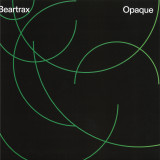
BEARTRAX - OPAQUE

BEARTRAX

OPAQUE

12inchMELOD018
Melodize
29.04.2025

The birthday candles are barely out, and Melodize is already back with their 18th release! Label boss Beartrax is in the driver’s seat, with remixes from Massimiliano Pagliara and Eliott Litrowski.

Beartrax stays true to his sound, bringing Opaque and Sanctity—two deep, rolling cuts packed with lush violin melodies and a proper melancholic vibe.

Massimiliano Pagliara flips Opaque into a punchy, bassy rework, infusing it with dreamy textures and an atmospheric depth. Meanwhile, Eliott Litrowski takes Sanctity into a darker realm, fusing indie basslines, electro grooves, and hypnotic new wave vibes for a trippy, heady experience.

Auf Lager

Bei uns am Lager und sofort versandfertig

8,82
Various - One Hundred

Various

One Hundred

12inchBEATALISTICS100
Beatalistics Records
24.04.2025

BEATALISTICS, the soulful South-German Drum & Bass label, run by Enea and MC Fava, is celebrating its 100th release. ONEHUNDRED reflects on almost one and a half decades of label back catalogue with a 29 tunes strong 'best of' various artists digital compilation. Included are also 6 brand new tunes which are packed on a vinyl sampler In addition. Featured is orchestral DnB pioneer KEENO who puts his magic hands of 'Sarah', taken off FAVA's Destiny EP with Smote & Becca Jane Grey and rounds up the meaningful song with his cinematic trademark sound . FAVA also adds some decent chants to COMMAND STRANGE'S 'Kindness Flow, a positive and uplifting liquid roller that is going to make your soul smile for sure. Long time label friend PAUL SG, head honcho of the brilliant soul driven Austrian imprint Jazzsticks delivers one of his signature amen break soul-rollers with 'Pale White Boy'. Label boss ENEA can't be missed on here and literally delivers the 'Heat' with his contribution. Beatalistics sticks to the label philosophy and supports local talents and important label representatives DAVA and MOJOMAN.'Pictures' delivers dancefloor vibes with a deep bassline and strong vocal arrangement and proves that Dava is one to watch out for in the near future. MOJOMAN maintains a desire to dance with the hypnotizing 'Pillers of Nah', following his unmistakably melodic and hymnal style.

Auf Lager

Bei uns am Lager und sofort versandfertig

13,87
Saigg - Digital Void

Saigg

Digital Void

12inchGNC002
GNC Records
16.04.2025

For the second vinyl release of GNC Records we got five tracks meant for a dark night at the club, produced straight out of the Patagonia by argentine heavyweight Saigg. This EP has four Electro Techno cuts and it also includes a killer remix by argentine EBM live duo KRSSV. Throughout the release, playful basslines interact with arpeggiated synthesizers generating a fun climate that becomes more and more tense while reverberant atmospheres bring the night to its climax. On the side A, we can appreciate how sharp drums build up intensity on the dancefloor in order to leave everything on point for side B, where breakbeats and diffused vocals transport the listener to an induced psychedelic state, a dystopic void representative of the producer and his sonic quest.

Auf Lager

Bei uns am Lager und sofort versandfertig

9,66
PEARZ - PACIFICO LP

Pearz

PACIFICO LP

12inchBAP219
Bordello A Parigi
15.04.2025

‘Pearz is the evocative project of Italian-born, LA-based multi-instrumentalist Francesco Perini. His debut album, Pacifico is the culmination of a five-year journey through the cities that shaped him: Florence, London, and Los Angeles. Drawing inspiration from a mix of disco, electro, nu-jazz, and Japanese City Pop, Pacifico, reflects his eclectic musical evolution. The title, Pacifico—meaning “peaceful” or “calm” in Italian—embodies the album’s theme of the closing experience of his travels.

The album features collaborations with a diverse range of artists, including Kuntessa (East London’s DIY queen), Vanbasten (The voice of Roma’s suburbs) Natalie Findlay, Jules Apollinaire, Gimmy El Helou, David Bardon, Oscar Robertson, Ruari Meehan, Luca Landi, Fabio Ricciolo, Andrea Palombi and Jamie Allen.

Auf Lager

Bei uns am Lager und sofort versandfertig

22,90
RED PIG FLOWER - PRACTICE LOVE LP 2x12"

Red Pig Flower brings you her sensational debut album Practice Love, available on Sound Of Vast from 10th April. Her unique sound sits upon the apex of a three-sided pyramid. With Berlin, Tokyo and Seoul as the base, Red is a third culture kid, greater than the sum of her parts. The centre is filled with her incredible appreciation and knowledge of house and electronic music from every pin drop through history.

So taken with Red Pig Flower’s sound, Honey Dijon invited Red to her Southbank Centre show to play alongside her. Moxie loves her that much, that she invited Red to record a mix and to guest on her NTS show. Alan Fitzpatrick, and Just Her are amongst Red’s growing posse of followers.

Practice Love is a culmination of all of Red Pig Flower’s life experiences, brimming with her positive energy and an outlook on life of pure love. Red has collaborated with like-minded artists at every level: the music, the cover art and video all produced with talented friends, who get Red as the wonderful person she is and understand her vision. Her label partner and good friend, Knock in particular helped make Practice Love the incredible album it is. So intuitive is their musical symbiosis, they made 20 tracks and carefully curated and ordered nine of these, making an album of tracks that stand out on their own, yet flow perfectly as an album. Practice Love will make you feel joyous when you play it. By the end, you will feel like you know Red like a friend.

Practice Love kicks off with I don’t care, it makes you feel good: a dreamy, tribal mantra of a track that does exactly what it says on the tin. Next up is I Love To Dance. Red’s beautiful soft vocal is sweet yet poignant, leaving you in no doubt of her sincerity. Thirdly comes Feel Good Music. Are you getting a feel from the track names yet that this is an album of warmth and positivity? You can imagine this one at a Café Del Mar sunset, where those who get the spirituality of Ibiza come together, in the moment to appreciate the beauty of a sunset and understand that no matter how many you see, each is magical and unique.

The three tracks so far have taken you to twilight. The titular Practice Love takes you by the hand onto the dancefloor. There is a double meaning to ‘Practice Love’- The first is to make love your practice. The second is that you need to practice love to be able to become a practitioner of love. The video, shot by her friend Jelly, features Red Pig Flower in Brick Lane, London, wearing a little piggy mask and offering free hugs. The first passersby ignore her sign, but Red isn’t disheartened, spreading the right message, dancing with joy. Her optimism is rewarded, making peoples day better on a cold English afternoon.

Fifth track Sax and Drugs takes things a little sleazier, the beat is filthy and the synths are sexy. Your body starts to move to this one before your brain even realises. The incredible Declan McDermott joins on saxophone, the funkiest synths and Red’s sultry vocal washing your soul with Laurent Garnier inspired sunlight. On Thisiz House Music, again featuring Declan, Red takes you even further back. About Frankie Knuckles O’Clock, with a portal straight to 2025.

By now, you will agree with me that Practice Love flows so, so well. I Wanna Meet Somebody follows incredibly, continuing the feeling that if you close your eyes, you’re dancing with David Mancuso at the Loft. No Money completes this EP-within-an-album. Perfect vocal samples, valve synth riff and 808 drum patterns showing that producers as good as Red Pig Flower make it sound effortless. The best albums finish memorably and No Genre is one of those perfect finishers. Think Andrew Wetherall’s production on Screamadelica. The lights are up in the club, nobody wants to go home, arms in the air wanting more.

Red Pig Flower explains: Practice Love resonates deeply with me because house music has always been a sanctuary—a place for unity, joy, and self-expression. As a nomad and outsider, club culture and house music became my shelter. The cities I’ve lived in—Seoul, Tokyo, Berlin, and London and more—nurtured me and shaped who I am today. That’s why the cover, by the incredible Carlos Sulpizio features their skylines, and the album is multilingual, representing the diverse influences in my life.

Practice Love is like a meal that has been prepared lovingly. They always taste better. And there’s plenty more to come from Red Pig Flower. How was your appetizer?

Auf Lager

Bei uns am Lager und sofort versandfertig

25,84
GŪSŪ - THE ENDING WAS A TYPICAL PART LP

Slow-moving finger-picked ambient folk straddling the synthetic and organic divide – that is “The Ending Was A Typical Part”, the first album by the Zurich-based duo Gūsū. It combines the tradition of playing the guzheng with electronic instruments, allowing different yet harmonious worlds to collide.

The collaboration between Xueyan Chen and Nicolas Balmer alias Gūsū was born out of their shared musical explorations in 2022 and has evolved into a dialogue of sound. Chen’s guzheng, an instrument deeply linked to Chinese history, resonates with improvised and self-composed melodies, freeing its pentatonic scale from its traditional bounds. Her playing is underscored with the cryptic hum of Balmer’s modular synthesizers, the deep bass and layered textures that combine the organic with the electronic. Together they create a sonorous exploration of identity, displacement and unity.

Xueyan Chen has been playing the Guzheng since her early childhood. With her moving to Zurich, Switzerland she started reimagining its historical identity through improvisation and self-composed melodies. With this approach, Chen emancipates the instrument from its classical heritage, weaving a contemporary and deeply personal narrative. Nicolas Balmer meanwhile brings a contrasting yet complementary dimension with modular synthesizers, bass guitar, and electronic textures. His layered soundscapes amplify and distort the Guzheng’s pentatonic timbres, enveloping them in mysterious tones and expansive harmonics.

Auf Lager

Bei uns am Lager und sofort versandfertig

19,12
Steve Kuhn - Steve Kuhn LP

50th ANNIVERSARY EDITION
Heavyweight Vinyl 45 RPM Cut / Original glued prints on Thick Cardboard 700 gram / 2 Separated parts hand-glued / Glossy lamination / PVC outer / 30x30 cm insert with interview to Steve Kuhn by Tony Higgins printed on 250 gram Favini Lanilla Yellow / 20 Pages 21 x 30 cm "Real Book" with transcripts of the songs in the "Real Book" style, handwritten by The Maestro Carlo Spanò with main theme, chords and lyrics printed on 120 gram Shiro Eco paper, 100 gram Favini Crush Alghe. Carlo also edited an introduction with technical analysis of the session, which solves some of the little mysteries around this music gem.

Personnel:
Steve Kuhn - Vocals, Piano
Airto Moreira - Percussions
Billy Cobham - Drums
Ron Carter - Bass
Gary McFarland - Arranged by


Notes:
The album features the group playing Gary McFarland arrangements of Kuhn's compositions, accompanied by a string section on several tracks, with Kuhn delivering stream of consciousness lyrics in an unplanned and largely improvised fashion in the studio. However, that wasn't the only surprising aspect to the session. Airto Moreira's appearance was more by chance than design, he having just popped by the studio, again, unplanned. The 'Steve Kuhn' album is all the stronger for these extemporaneous and serendipitous elements and showcases a band at the top of their game; tight and funky yet relaxed and flowing like molten gold, with stabs and washes of keyboard from Kuhn. Splashes of free playing enter the session, but the band never stray too far from a melodic and harmonious centre of gravity. Kuhn's deft keyboard skills provide melodic embroidery to the impressive rhythmic textures and tonal colours of Carter, Cobham and Moreira. As if the music wasn't enough, the album is given extra significance by the fact that, within a few months of the recording, McFarland would die after being mysteriously poisoned by methadone in a New York bar. In a sense, it is a valedictory album from McFarland, channeled by Kuhn and the band.

It's among the hardest of Kuhn's albums to find so this reissue is most welcome. Luxuriate in the glow of Kuhn's Fender Rhodes and the pliant funky bass of Ron Carter; immerse yourself in the percussive interplay of Moreira and Cobham, a pairing that has rarely sounded so good. This is such an exquisite album; you will lose yourself in its delicate power and find yourself coming back to it again and again.

Auf Lager

Bei uns am Lager und sofort versandfertig

38,45
Various - ECHOES OF ITALY – THE BIRDS OF PARADISE – EARLY 90S HOUSE VIBES VOL.2 (2x12")

Googling “paradise house”, the first results to pop up are an endless list of European b&b’s with whitewashed lime façades, all of them promising “…an unmatched travel experience a few steps from the sea”. Next, a little further down, are the institutional websites of a few select semi-luxury retirement homes (no photos shown, but lots of stock images of smiling nurses with reassuring looks). To find the “paradise house” we’re after, we have to scroll even further down. Much further down.

It feels like yesterday, and at the same time it seems like a million years ago. The Eighties had just ended, and it was still unclear what to expect from the Nineties. Mobile phones that were not the size of a briefcase and did not cost as much as a car? A frightening economic crisis? The guitar-rock revival?! Certainly, the best place to observe that moment of transition was the dancefloor. Truly epochal transformations were happening there. From America, within a short distance one from the other, two revolutionary new musical styles had arrived: the first one sounded a bit like an “on a budget” version of the best Seventies disco-music – Philly sound made with a set of piano-bar keyboards! – the other was even more sparse, futuristic and extraterrestrial. It was a music with a quite distinct “physical” component, which at the same time, to be fully grasped, seemed to call for the knotty theories of certain French post-modern philosophers: Gilles Deleuze, Félix Guattari, Paul Virilio... Both those genres – we would learn shortly after – were born in the black communities of Chicago and Detroit, although listening to those vinyl 12” (often wrapped in generic white covers, and with little indication in the label) you could not easily guess whether behind them there was a black boy from somewhere in the Usa, or a girl from Berlin, or a pale kid from a Cornish coastal town.

Quickly, similar sounds began to show up from all corners of Europe. A thousand variations of the same intuition: leaner, less lean, happier, slightly less intoxicated, more broken, slower, faster, much faster... Boom! From the dancefloors – the London ones at least, whose chronicles we eagerly read every month in the pages of The Face and i-D – came tales of a new generation of clubbers who had completely stopped “dressing up” to go dancing; of hot tempered hooligans bursting into tears and hugging everyone under the strobe lights as the notes of Strings of Life rose up through the fumes of dry ice (certain “smiling” pills were also involved, sure). At this point, however, we must move on to Switzerland.

In Switzerland, in the quiet and diligent town of Lugano, between the 1980s and 1990s there was a club called “Morandi”. Its hot night was on Wednesdays, when the audience also came from Milan, Como, Varese and Zurich. Legend goes that, one night, none less than Prince and Sheila E were spotted hiding among the sofas, on a day-off of the Italian dates of the Nude Tour… The Wednesday resident and superstar was an Italian dj with an exotic name: Don Carlos. The soundtrack he devised was a mixture of Chicago, Detroit, the most progressive R&B and certain forgotten classics of old disco music: practically, what the Paradise Garage in New York might have sounded like had it not closed in 1987. In between, Don Carlos also managed to squeeze in some tracks he had worked on in his studio on Lago Maggiore. One in particular: a track that was rather slow compared to the BPM in fashion at the time, but which was a perfect bridge between house and R&B. The title was Alone: Don Carlos would explain years later that it had to be intended both in the English meaning of “by itself” and like the Italian word meaning “halo”. That wasn’t the only double entendre about the song, anyway. Its own very deep nature was, indeed, double. On the one hand, Alone was built around an angelic keyboard pattern and a romantic piano riff that took you straight to heaven; on the other, it showcased enough electronic squelches (plus a sax part that sounded like it had been dissolved by acid rain) to pigeonhole the tune into the “junk modernity” section, aka the hallmark of all the most innovative sounds of the time: music that sounded like it was hand-crafted from the scraps of glittering overground pop.

No one knows who was the first to call it “paradise house”, nor when it happened. Alternative definitions on the same topic one happened to hear included “ambient house”, “dream house”, “Mediterranean progressive”… but of course none were as good (and alluring) as “paradise house”. What is certain is that such inclination for sounds that were in equal measure angelic and neurotic, romantic and unaffective, quickly became the trademark of the second generation of Italian house. Music that seemed shyly equidistant from all the rhythmic and electronic revolutions that had happened up to that moment (“Music perfectly adept at going nowhere slowly” as noted by English journalist Craig McLean in a legendary field report for Blah Blah Blah magazine). Music that to a inattentive ear might have sounded as anonymous as a snapshot of a random group of passers-by at 10AM in the centre of any major city, but perfectly described the (slow) awakening in the real world after the universal love binge of the so-called Second Summer of Love.

For a brief but unforgettable season, in Italy “paradise house” was the official soundtrack of interminable weekends spent inside the car, darting from one club to another, cutting the peninsula from North to centre, from East to West coast in pursuit of the latest after-hours disco, trading kilometres per hour with beats per minute: practically, a new New Year’s Eve every Friday and Saturday night. This too was no small transformation, as well as a shock for an adult Italy that was encountering for the first time – thanks to its sons and daughters – the wild side of industrial modernity. The clubbers of the so-called “fuoriorario” scene were the balls gone mad in the pinball machine most feared by newspapers, magazines and TV pundits. What they did each and every weekend, apart from going crazy to the sound of the current white labels, was linking distant geographical points and non-places (thank you Marc Augé!) – old dance halls, farmhouses and business centres – transformed for one night into house music heaven. As Marco D’Eramo wrote in his 1995 essay on Chicago, Il maiale e il grattacielo: “Four-wheeled capitalism distorts our age-old image of the city, it allows the suburbs to be connected to each other, whereas before they were connected only by the centre (…) It makes possible a metropolitan area without a metropolis, without a city centre, without downtown. The periphery is no longer a periphery of any centre, but is self-centred”.

“Paradise house” perfectly understood all of this and turned it into a sort of cyber-blues that didn’t even need words, and unexpectedly brought back a drop of melancholic (post?)-humanity within a world that by then – as we would wholly realise in the decades to come – was fully inhuman and heartless. A world where we were all alone, and surrounded by a sinister yellowish halo, like a neon at the end of its life cycle. But, for one night at least, happy."

Auf Lager

Bei uns am Lager und sofort versandfertig

28,99
DJ PYTHON - I WAS PUT ON THIS EARTH

** club fire from DJ Python

“i was put on this earth”, his first solo music since 2022, and debut on XL
Recordings.

On “i was put on this earth”, DJ Python - aka Brian Piñeyro - gently forays into uncharted territory as a singer, producer,
and collaborator; an evolution all the more impressive in light of his groundbreaking musical projects to date like Mas
Amble, Angel, and Club Sentimientos Vol 2. While splitting his time between New York and London, Python has teamed
up with a diverse set of collaborators including South London rapper Jawnino, Honduran-born powerhouse Isabella
Lovestory, unclassifiable songwriter Organ Tapes, and NYC mainstay Physical Therapy. Across the five-track EP,
Python shares bold solo songs alongside these intriguing collaborations. The project retains the captivating melodies,
atmospheric textures, and rhythmic innovation that defined Python's earlier recordings while building on and shaping these
signature elements into ambitious and addictive new songs.
The first look at the EP comes in the form of “Besos Robados”. Isabella Lovestory lends an insouciant yet insistent vocal
to this sublime downtempo lovers' reggaeton track that's been a fan-favourite since appearing on Python's epic BBC
Radio 1’s Essential Mix.

On ‘i was put on this earth’, DJ Python says “to whom it may concern…
its too beautiful to embrace change and to challenge urself to find something meaningful in it... i love my friends and
love is deep :') i want them to know that always... but sometimes i get busy and overwhelmed n im not the best at
saying how i feel always... just want to sit around and talk and feel understood together w someone who you like or u
find interesting.. thats the best :) and if the day is nice or if the day is not nice but ur inside and its cozy.. thats too
wicked. and ur making a soup and eating it together... just with the stuff in the kitchen.. dont even go out to get
ingredients.. no need to follow a recipe.. cause ur grandma taught u to cook w the "sazon" (cooking by tasting w as u
go on adding diff ingredients and spices.. no recipes. .. u can only really cook if u can freestyle in the kitchen she said)..
and then u think about how ur grandma taught u that.. and your w someone in the kitchen making something together..
and then u taste it and it warms u up and ur like damn this is fire.. thats what this and i think maybe what "its all"
about... thank u for taking time to read this and i hope you enjoy the album…
kiss u…
Brian”

Auf Lager

Bei uns am Lager und sofort versandfertig

13,03
TRUCK VIOLENCE - VIOLENCE LP

Written and recorded in singer-poet Karsyn Henderson, guitarist-banjoist Paul Lecours and percussionist Ryley Klima’s basement alongside bassist Chris Clegg, then mixed and mastered by longtime collaborator Noah Baxter, this self-produced introductory effort from the Montréal four-piece stylishly amalgamates elements from hardcore, punk, shoegaze, sludge, and folk.

Violence is a brazenly poetic homage to small town roots, a mashing of modern Western Canadian hardcore and folk. Extensive in scope, this debut full-length by Truck Violence takes the listener through wide-ranging dynamics, from solemn acoustic ballads to wrathful electric anthems. Deftly fractured rhythms and breakdowns, complex harmonic entanglements, emphatic screams of discontent, are met with hopeful, melodic tracks musing about the steady grip of a tight-knit community.

From somber, deceivingly happy banjo sequences to crashing noise and cries, Violence uses expression as a mirror, looking upon oneself with clarity, aiming to attain a sense of unadulterated truth of the matter. There is little modern music taking an honest look at the Western Canadian countryside, tackling themes such as addiction, abuse and dysfunction.

Truck Violence’s first album does just that, uniquely capturing this involuted setting through a wide lens to both contextualize and emphasize what it means to be overwhelmed, to feel shame, to struggle with self-destructive ways, to thrust oneself into art as an escape.

Auf Lager

Bei uns am Lager und sofort versandfertig

25,00
Mita Gami & EREZ - Where’s My Voice?

Mita Gami & EREZ join forces for collaboration ‘Where’s My Voice?’ Uniting the rich sounds of Tel Aviv and NYC via Los Angeles, Mita Gami and EREZ combine again for their latest collaboration, ‘Where’s My Voice?’. Marking their first collaborative appearance on Damian Lazarus’ esteemed Crosstown Rebels, the single follows their previous work together on Borders Of Light while welcoming EREZ to the label for the first time.

A mainstay within Tel Aviv’s thriving scene, Mita Gami returns to Crosstown Rebels following his acclaimed remix of Parallelle & Nicolas Masseyeff’s ‘Renegade’ alongside Adam Ten. With prior releases on labels such as Diynamic, REALM and his own Maccabi House imprint, he continues to showcase his artistry while pushing boundaries. Meanwhile, EREZ, an artist known for seamlessly blending her mesmerising vocals and intricate production, makes her label debut after recent standout material on Get Physical Music and Discotexas.

‘Where’s My Voice?’ is a driving composition that pairs EREZ’s intoxicating vocals with hypnotic rhythms. A journey through tension and release, the track builds a captivating and trippy atmosphere that showcases the duo’s ability to craft evocative trips for the late hours. On the flip, Brussels-based DJ/producer and Sanctuary Music founder Samer Soltan adds his own take and steers the original into deeper territory, guided by commanding stabs, brooding melodies and intricate textures.

Mita Gami’s artistic vision extends far beyond the studio, curating ‘Sunrise Kingdom’ at Midburn Festival and performing on global stages such as The Brooklyn Mirage, Lightning in a Bottle Festival, and Hï Ibiza. Similarly, EREZ’s dynamic live performances—effortlessly transitioning between instruments—have earned her spots at Coachella, Outside Lands, and The Brooklyn Mirage. With ‘Where’s My Voice?’, the pair explore sound, emotion, and rhythm, adding to their places as innovating talents in the electronic music sphere.

Auf Lager

Bei uns am Lager und sofort versandfertig

13,40
Derya Yıldırım & Grup Şimşek - Yarın Yoksa

Produced by Grammy Nominated producer Leon Michels (El Michels Affair, Clairo). Big Crown Records is proud to present Derya Yıldırım & Grup Şimşek’s latest album Yarın Yoksa. The show stopping intensity of Derya backed by the psychedelic soul of Grup Şimşek with production by Leon Michels has yielded a stand out record that challenges genre with a broad appeal and a powerful message. They refer to themselves as “outernational” over international as they say it suggests a sound that’s more inclusive or “beyond borders.” Derya, who sings and plays the bağlama, is German born to Turkish parents. Drummer Helen Wells is Berlin-based by way of South Africa while keyboard player Graham Mushnik and guitar/bass player Antonin Voyant are both French. The collective influences they bring to Anatolian music make for a completely unique and fresh sound that both pushes the genre forward and champions its rich heritage. Yarın Yoksa which translates to If There Is No Tomorrow delves into deeply personal pain and collective resistance with a central thread of loss, longing, and hope for change running throughout. The lyrics are poetic and rely heavily on symbolic language, metaphors, and storytelling while the music shifts track to track making each tune stand out on its own but work together perfectly as an album. “Cool Hand”, the first single released on Big Crown in September of 2024, is a beautiful juxtaposition of intensity and light-heartedness over a thoroughly infectious groove. The message is poetic and complicated, repeatedly declaring “I love you, I’m crazy about you” but ultimately finding a sense of peace through accepting a broken heart. “Direne Direne” is a protest song that embodies the struggle and tireless pursuit of justice encouraging people to resist oppression. Derya’s lyrics soar over the psych-soul musical backdrop as her story of personal struggle transforms to a universal call for resilience and strength. The slow and weighty vibe of “Yakamoz” lets onto the meaning of the lyrics even to those who don’t understand Turkish. It is a deeply moving song that captures the profound emotions connected to displacement and loss without knowing if you will ever return. The steady groove of the band, along with the anguished vocals paint a vivid picture of the devastation experienced by the protagonist who ultimately realizes that her roots are within her and anywhere she goes is her home. Nine of the tunes on the album are original compositions but they also take on three Anatollian folk songs with their own inimitable approach. The acapella introduction of “Misket”, a folk song from Ankara/Türkiye, will stop you in your tracks. The tune deals with death and how the living cope and continue a relationship with those who have passed away. Another traditional tune from Sivas that they put their signature sound to is “Hop Bico”, a tune about a playful character named Bico who is a symbol of vitality and spirit. The synth intro grabs your ear from the first note and the earworm chorus encouraging Bico to lead the group in celebration and embrace life through dance has the same effect on everyone who hears it. The band has taken a big step forward that you can hear on this record. Derya’s passion and authenticity is front and centre and the music is too moving to deny. Yarın Yoksa is sure to captivate the hearts and minds of all those who hear it, and just wait till you hear them play it live… Upcoming Tour Dates (+More To Be Added): 18th March The Deaf Institute, Manchester / 19th The Jam Jar, Bristol / 20th Scala, London / 21st Norwich Arts Centre.

Auf Lager

Bei uns am Lager und sofort versandfertig

27,52
BlackFilter - Batuki

Blackfilter

Batuki

12inchRGV03
Ragoo Records
24.03.2025

"BlackFilter is the project of Pellegrino Mazzucchi, a percussionist, DJ, and producer residing in Modena, Italy. Pellegrino became passionate about music at an early age, thanks to the influence of his mother, a Fado singer of Indo-Mozambican descent, and his older brother, a DJ of Latin and World music who encouraged him to study Afro-Cuban percussion. Drums, or "Batuki" (as his mother called them when she was getting mad at him for the continuous rhythm that echoed through the house at all hours of the day), served as Pellegrino's first means of expression. He later expanded his sound palette through experimentation with analog synthesizers and drum machines. The fusion of these elements over time gave birth to the distinctive sound of Black Filter and "Batuki": a dialogue between Afro-Caribbean rhythms and futuristic Jazz with hints of electro and disco, offering the listener a sonic and refreshing sound experience."
"Batuki" is out on Ragoo Records.

Auf Lager

Bei uns am Lager und sofort versandfertig

13,40
Monolink - Mesmerized

Monolink

Mesmerized

12inch770980
Embassy of Music
24.03.2025

Inaugurating the New Year as he means to go on, German record producer and live act Monolink returns with his brand new single, Mesmerized. From the very first note, Mesmerized draws listeners into a world of contrasts. Deep longing is intertwined with stirring instrumentation, as Steffen Linck’s pensive lyrics glide over layers of pulsating percussion and moody synths, creating a track that’s equally suited for moonlit dancefloors and reflective moments. It’s a journey that balances vulnerability and groove, inviting listeners to get lost in its hypnotic embrace.
On the B-Side Monolink presents a beautiful acoustic reinterpretation of the track. He takes listeners on a thought-provoking sonic journey with this acoustic version. The hauntingly beautiful rendition strips away the electronic layers of the original to highlight the raw emotion in Monolink’s soulful vocals and acoustic instrumentation, breathing new life into the already poignant narrative.

Auf Lager

Bei uns am Lager und sofort versandfertig

13,40
Tumblack - Tumblack LP

Tumblack

Tumblack LP

12inchBEWITH167LP
Be With Records
21.03.2025

There's iconic. Then there's *iconic*.

A MASSIVE speaker-smashing release, decades overdue. It's been bootlegged - shamefully so, many times over the years - but finally we present the first ever officially licensed reissue of this truly special Afro-disco-not-disco LP from 1979. A favourite of Harvey, Antal, Young Marco and, er, every great DJ to ever play deep records ever, basically. It's not hard to see - or, indeed, *feel* why.

Gem after gem of relentless, irresistibly funky gold, it's an incredibly revelatory album with endlessly complex drum patterns and basslines to dive into, throughout. Truly, this is uniquely FIRE music, unlike anything else you've ever heard, based on Gwo ka music from the gorgeous islands of Guadeloupe and Martinique. A thrilling synthesis of primal, hypnotic drums - the most tribal of percussive elements high in the mix throughout - with the loping synth pyrotechnics of, amongst a whole host of other greats, Wally Badarou and bass power of disco funk don Sauveur Mallia (Arpadys, Spatial & Co.)

Originally released on the seminal French label Barclay, you'd be hard pressed to even find an original copy in nice condition anywhere, let alone for a reasonable price, so it's high time an officially licensed, remastered reissue came around. It's just the latest in a long line of Be With reissues where the music sounds like the - drop-dead dazzling - cover. This here is a true drum attack. BUY ON SIGHT!

Tumblack was a short-lived project, produced and arranged by electronic wizard Yves Hayat and it can certainly be regarded as one of the first examples of Zouk, mixing powerful disco-funk arrangements with Gwo ka, traditional music from Guadeloupe. Gwo ka is an Antillean Creole term for "big drum". You can say that again! It refers to both a family of hand drums and the music played with them, which is a major part of Guadeloupean folk music.Whilst the first side is credited to the exceptional Tumblack band, the flip is given over to "Tumblack & Friends". These weren't just any old friends. Oh no, they were the absolute cream of the French scene (think Arpadys, Voyage, Le Club, Giant, CCPP, Synthesis, Swing Family) such as Sauveur Mallia, Wally Badarou, Marc Chantereau on percussion, Slim Pezin on guitar and Jean-Paul Batailley and Pierre Alain-Dahan handling drum duties.

The urgent, frantic "Fracas" gets things moving straight away with a cavalcade of drums and percussive funk before giving way to the stratospheric "Invocation", one of the album's many, many highlights. It's effectively one long heavenly drum break, a really hard, raw, tribal drum workout without a whole lot else going on - and all the better for it! One to make you sweat, no question. Up next, "Jubilé" is announced with a bellowing accapella voice, chanting the titular name before the heaviest of kicks smashes out your system and lulls you into an absolute state of bliss for nearly 6 minutes. Whoooooosh! Rounding out the sensational A-Side, "Vaudou" is a scratchy, funky patterned drum workout which - yep, yet again - absolutely slays your neck muscles, making them snap and contract in extraordinary fashion. TURN IT UP!

Ushering in the B-Side, the brief, fidgety, African chant-funk of "Parlement" segues seamlessly, beautifully into "Waka", an overwhelmingly rich gem of percussive funk. You do not want this to end, once it hits its stride. For maximum heavenly drum pleasure, you'd need to go a long way than the moment "Waka" feels like it's fading out before it kick-drum-blend into the mighty "Caraïba (Intro)". It's just staggeringly good. It's a minute-long layered drum prelude to the gigantic track which follows. Indeed, "Caraïba" is arguably the best loved and most well-known cut off the LP. And with good reason...featuring that Mallia bass, warm Rhodes and clavs, synth magic, memorably alto sax lines and, of course, tribal chanting.

Another mighty super-ahead-of-its-time classic, the bouncing bass heavy synth funk of "Chunga Funk" deploys Mallia and Wally Badarou (on Mini Moog) exceptionally well. I mean, come on, that bassline is just ridiculous. Try not to move to this one. This extraordinary record closes out with the more traditional Gwo ka sounds of "Bateau La Passé", the tribal chorus making the hairs on the back of your neck stand up.

Tumblack really is a gorgeous late-70s disco-not-disco essential. It's an absolute MONSTER that will completely blow you away; and, yes, it's as compelling and trance-inducing as the cover. The audio for Tumblack has been carefully remastered by Be With regular Simon Francis, ensuring it sounds better than ever. Cicely Balston's expert skills have made sure nothing is lost in the cut whilst the records have been pressed to the highest possible standard at Record Industry in Holland. The cover of Tumblack is so iconic and we sought special permission from original artist Hélène Majera to recreate this at Be With HQ. It absolutely zings off the print and serves as the perfect finishing touch to this long overdue re-issue.

Auf Lager

Bei uns am Lager und sofort versandfertig

26,85
Various - Joseph Capriati - Montreal LP 3x12"
Auf Lager

Bei uns am Lager und sofort versandfertig

35,92
Luke Seager - Cloud Surfing

BMP Crew introduces a new opus cooked by Luke Seager, a young and promising newcomer hailing from Paris.
We have the honor to host his first vinyl release, after a dope digi pack released on Mari.Te's Tresydos.

On the menu: 4 energy-fueled tracks that we fell in love with instantly and heavily played!
Catchy grooves, square wave B-lines, sizzling hi-hats, haunting chords, wholesome ambiances... Everything necessary to mesmerize sunny dancefloors is in there.

If you're more into dark basements and gritty sounds then the remix by mysterious duo Techline ™ is made for you. Mental!

Auf Lager

Bei uns am Lager und sofort versandfertig

13,24
Artikel pro Seite:
N/ABPM
Vinyl