Following much love for his EPs, remixes and club sets, the virtuosic DJ/producer Simo Cell’s debut album 'Cuspide des Sirènes' doesn’t disappoint. In fact, it takes things to a whole new level.
With a fantastical menagerie of anthropomorphism, sounds create characters and tools; the mermaid-like Sirens, the mind controlling Octopus and the Magic Conch Shell:
“Have you heard of the legend of 'Cuspide des Sirènes'? This is not a simple tale, but an incredible tapestry woven over many years and through countless wondrous adventures. I will recount the legend as it was recorded in the ancient scrolls.
The album’s story explores the themes of magic, enchantment, charm, and allure, but also personal fears. The protagonist (me) embarks on a quest to find the hidden lake and confront his own demons, in order to understand and master his own power.
The protagonist is armed with a powerful conch shell. As he embarks on his journey, he will encounter Sirens who will teach him various chants. These melodies hold unique powers and grant the main character the strength to confront and overcome any danger that may arise.” Simo Cell
Musically, the LP is a continuation of Simo’s journey that began with the ‘YES.DJ’ EP, with a synthesized/modernized take on noughties hip hop, bass music, trap, ghetto house and ghetto tech – but here he broadens the scope, massively.
Exploring new pathways through magical landscapes, via infused melodies, emo and pop, the sensations are bright and addictive, like a sugar and endorphin cocktail. There’s a screen sheen and video game quality too, sounding like the high-octane score to an action flick from the year 3000, with unimaginably wild SFX.
'Cuspide des Sirènes' is the kind of record to stop someone in their tracks, to ask “what IS this?”, provoking bass face, perplexion, fascination and manic glee, all at once. Not so much organised chaos as intricately-crafted-borderline-unhingement, the album is slightly bonkers, in a very good way. There’s a boundless sense of childlike, unencumbered imagination at play, and an abundance of fun, but there are moments of serious-deep-beat-science for the heads, and introspective passages too.
There’s a lot going on, with detail, layers, flourishes, arrangement, melodies and myriad fresh sounds – but it’s never too much; just a really engrossing listen – the kind that that ruins ones appetite for prosaic, vanilla dance music, rendering such 2D pursuits boring and obsolete.
Ideally, the album is meant to be experienced as a seamless narrative from start to finish, so leave any inhibitions or preconceptions at the door, and let the pied piper of electronic futurism lead you way down the rabbit hole.
Cerca:mel
Ever amazed by the external world and its natural surroundings, Belgian producer Dijf Sanders has a habit of turning himself towards the unknown for inspiration. After praised albums based on field trips to Indonesia (Java, 2017) and Nepal (Puja, 2020) he found himself challenged by the traditional chants from Georgia. Diving deep into its sounds, people and heritage with open eyes and ears, he traveled to the Eurasian land in the South Caucasus in 2022. The field recordings and impressions of this journey make the blueprint for new, meticulously crafted compositions that ripened in his studio and transcend its original source material in time and space.
SUPRA offers nine diverse explorations ranging from spaced-out folk, ethereal trance, ambient with a melodic sense of drama and lush electronica channeling 90's IDM energy fields. Bound by dynamic depth in sound design, this is electronic music with a heavy heart - for all tracks share a primal sense of nostalgia in which traditional music from the Georgian motherland baths. From a pastoral love song about a buffalo (Mingrelian Song) or a ceremonial wedding hymn (What You Give Away Is Yours, What You Don't Is Lost) to a lullaby (Bird's Milk)... Georgia is a land of contemplative singing and its music scene today is still dominated by modal vocalists and harmonic choirs with pride.
With the help and recording equipment of the Folklore State Centre (Tbilisi) and in collaboration with Europalia Georgia festival, Dijf Sanders found contemporary choirs willing to lend their voices for this project. Next to these voice samples, the Georgian countryside and nature delivered source material for more samples and textures as well. The name of the record refers to the traditional Georgian feast where a large table filled with food, drinks and singing.
Thomass Jackson presents UFO HOUSE.
A fixture in Mexico's thriving electronic scene, the Argentinian import has made a name for himself alongside cohort Iñigo Vontier with a style that seamlessly blends haunted desert disco with gritty acid house and techno.
This EP might be his most cogent formulation yet, a mightily playable set of peak-time DJ-friendly tracks that bring enough mystery and wonkiness to a perfectly club-ready backbone. It's a conspiracy of sound, a cosmic abduction with pulsating rhythms and hypnotic bleeps sure to melt minds on the dance-floor.
DJ Feedback:
Tiefschwarz - "soooo gooood!!"
Roe Deers - "dope EP"
Matt FX - "an absolute tour de force EP. hard to pick a favorite, maybe guadalajara"
Justin Strauss - "great ep"
Kiki - "Cool trax!"
Mawimbi - "really like the acid touch in back in guadalajara"
Jerry Bouthier - "well put together madness yay!"
Phil smart - "Solid bunch of tracks, all great! Can't wait to test out on a dancefloor:)"
Vidis - "Cool stuff as per usual from señor Thomass. Young Woman in Kashmir and Back in Guadalajara are the faves."
Phred Noir - "Alll the tracks are so good, super happy to see Thomass back with sooo good tracks !"
Genish - "Back in Guadalajara for me ! fire"
Ayala (It) - "I'm a Thomas fan from years and years"
Kato - "mad fun”
Fabio Me Llaman Soltero - "Sublime work, always favorito Thomaaaaaazzzz"
Established in 2016, Little Giant Records is the Brooklyn-born label founded by Anna Cavazos that specializes in the kind of deep house sounds that belong in the dark and sweaty basements of underground clubs. Anna is a DJ, producer, and vocalist who has played out across the globe for over 15 years mixing and blending the deep house sounds of Chicago, New York, and Berlin. . Her discography includes original compositions, remixes, and collaborations with the likes of Satoshi Tomiie and Eli Escobar.
The EP kicks off with the original of ‘Love Interlude’ - melancholic and piano-heavy with an ultra-deep baseline embellished with warm pads and soulful drums. Anna’s soulful vocal floats above the melody creating an emotional and moving interlude. Next up Matthias Vogt delivers a deep-house masterpiece adding extra keys, drum accents, and a well-placed baseline that is weaved neatly into the vocal hook while Vogt delivers the warm, jazz-flecked vibrations he is well known for.
Up next Rick Wade weighs in with some ever so classy house laced with flashes from the Motor City of Detroit. Warm electro piano, glowing synths, and vocal parts contrast with the deep sub baseline. Closing out this EP Rissa Garcia draws heavily on her New York house inspirations. Organ riffs and a funk-inspired bass line lead the charge dropping in and out between vocal harmonies and subtle synth work. Percussive accents bring it all home making this closing cut one dancefloor destroying, peak-time bomb.
In the early seventies, Joey Gilmore embarked on his musical journey, captivating audiences with a series of unforgettable singles that showcased his raw talent and unique style. It wasn't until 1977 that the culmination of his musical endeavors arrived—the release of his highly anticipated debut record.
This debut album marked a pivotal moment in Joey Gilmore's career, solidifying his reputation as a self-taught guitar virtuoso and soulful singer. The record resonated with listeners, capturing the essence of his artistry and leaving an indelible impact.
Now, after a 45-year wait, the time has finally come for a vinyl reissue of Joey Gilmore's debut album. This reissue is a celebration of his timeless music, meticulously crafted to preserve the authenticity and integrity of the original recording. Every note, every lyric and the original design of the sleeve has been lovingly restored to transport you back to the magic of that era.
Get ready to immerse yourself in the unadulterated funk and soul of Joey Gilmore's music, as this remarkable reissue brings his debut album back to life. Allow the melodies and rhythms to envelop you, taking you on a captivating musical adventure that transcends time. Revisit the magic, rediscover the artistry, and let the music of Joey Gilmore captivate your soul once again.
In striking daubs of bled-out colour and finely sculpted layers of instrumentation, Lord of the Magi arrives on Tartelet Archives with an album of ambient reflections.
Copenhagen-based Theo Nicola Anker has different sides to his musical output. But on Soul Exchange, he shakes off stylistic concerns to focus on a purer emotional expression. It’s an instinctive paean to the pastoral life he grew up with, sent with love from his city-centre apartment. His chosen tools – guitars, pedals, synths – are the medium of the message. “I appreciate music with personality, character, and charisma,” Anker says, “so I always strive to create tracks that tell a story and evoke a specific atmosphere. No single idea for a track is solely melodic, rhythmic, compositional, or focused on mix techniques. It's always about the bigger picture, the overall vibe.”
On Soul Exchange, the overarching mood is an inviting, becalming one, but there’s plenty of space for melancholy and even a little friction. That’s apparent in the natural synergy of the organic and electronic elements as much as the emotional content, rounding out as a wholesome, holistic listening experience.
- A1: Kavkazka Sound - All Forces On The Love Of Animals
- A2: Radiant Futur - Journey In The Deepest Of The Eyes
- A3: Mlin Patz - Smspce
- A4: Iury Lech - Here Comes Bellum Omnium Contra Omnes
- A5: Ihor Okuniev - Vernal
- B1: Rotrum – Kured
- B2: Niagara – Maja
- B3: Maarja Nuut – Flamingo Pop
- B4: Luurel Varas – Phantom Island
- B5: Terry Long Hermy – Eratifications On Observatations Of Unica
Ukrainian Muscut & Estonian Mida team up for “Воля x Rahu” compilation (Ukr: Volition x Est: Peace) with 100% of label profits donated to “Livyj Bereh” – a volunteer group based in Kyiv & working in regions affected by the war.
The A–side is curated by Muscut & holds only Ukrainian artists: Kavkazka Sound, Radiant Futur, Mlin Patz, Iury Lech & Ihor Okuniev. The B–side by Mida has Portuguese trio Niagara stuck in between Estonians Maarja Nuut, Rotrum, Luurel Varas & Terry Long Hermy.
Atmospheric & mellow selections on both sides, with a couple allowed left turns here & there.
- A1: The M.v.p.'s - Turnin' My Heartbeat Up
- A2: Major Lance - You Don't Want Me No More
- A3: Paul Anka - I Can't Help Lovin' You
- A4: The Vibrations - 'Cause You're Mine
- A5: Laura Greene - Moonlight Music In You
- A6: Lou Edwards & Today's People - Talkin' 'Bout Poor Folks Thinkin' 'Bout My Folks
- A7: The Seven Souls - I Still Love You
- B1: Dana Valery - You Don't Know Where Your Interest Lies
- B2: Shane Martin - I Need You
- B3: The Metros - Since I Found My Baby
- B4: Sandi Sheldon - You're Gonna Make Me Love You
- B5: Lorraine Chandler - I Can't Change
- B6: Lou Courtney - Trying To Find My Woman
- B7: Johnny Robinson - Gone But Not Forgotten
Wigan Casino - the original UK dance culture super club - ran its’ first Nothern Soul All-Nighter in September 1973. It’s last session was in December 1981, and by then its 500 plus frantic All-Nighter had firmly stamped Northern Soul as an integral part of the British music landscape,
Wigan Casino Classics 1973 - 2023 proudly celebrates 50 years since the birth of the most important ever Northern Soul venue with 14 all time classic floor fillers. The Sandi Sheldon, Major Lance, The Seven Souls and Johnny Robinson gems were originally released on the Uber cool Okeh label but despite being part of the mighty Columbia Records empire sank without trace on release in the USA only to be discovered (and revered) by UK Soul devotees.
The Metros and Lorraine Chandler tracks were produced by Detroit’s mighty Pied Piper Productions crew and demonstrate that Motown were far from the only Motor City set up that knew how to conjure up truly breathtaking music.
In Northern Soul lore there is an intriguing story behind all 14 tracks - who produced and wrote them, which Rare Soul detectives - the original crate diggers - discovered them, what DJs played them..
But at the centre of it all is Wigan Casino, the seen better days Lancashire dance hall where 2,500 plus Soul fanatics flocked to every weekend to dance dance dance at the pre Rave era ultimate Rave. The recent 50th Anniversary celebration in Blackpool attracted a 5,000 turn out. The legend lives on.
This release marks the return of the always style wise Joe Boy label. Their trademark on point graphics are reinforced with the LP front sleeve being devoted to an iconic photograph by Francesco Mellini taken at the last ever Casino All-Nighter.
Soul plus Art from The Heart of Soul.
'Tema di Susie' is one of the main themes from the soundtrack composed by Alessandro Alessandroni for the 1976 Italian noir Sangue di sbirro, known in English as Blood and Bullets, as well as Knell, Bloody Avenger (the Susie in the original title refers to the female love interest of the film's hero, who is on a mission to seek revenge for the gangland murder of his policeman father).
At once sweet and sentimental, haunting and melancholic, 'Tema di Susie' stands out from the other tracks in the film, which are more action oriented. Like the rest of the score, however, it exemplifies the way in which, during the '70s, Italian film composers created their own version of the sound of American blaxploitation cinema, with its groovy blend of funk, jazz, and soul. It is no coincidence that the film's director, B-movie specialist Alfonso Brescia, specifically requested music in the style of Shaft, the iconic film that defined that sound in 1971.
Though seemingly simple, 'Tema di Susie' is a perfect example of Alessandroni's style – in particular his unique ability to effortlessly blend groove and melody, funk and feeling, into one musical piece. So, we invited different artists with different backgrounds, influences and approaches to bring their individual take on this elegant and now timeless tune.
Neapolitan duo Fratelli Malibu have taken Alessandroni's melodic theme and woven it into a mesmerizing tapestry of rhythmic beats, world percussion and ethereal atmospheres. Drawing inspiration from funk/Afrobeat, synth-pop and Italo-disco, they've conjured a psychedelic-tinged, afro-cosmic groove that's bound to transport you to another dimension.
As the music unfolds, you'll feel like you've stepped into a vibrant, fantasy world. The breaks, outro, and intro are woven with a psychedelic thread that leaves you yearning to return once the final note fades away. And that's not all – they've injected an irresistible pop sensibility into the track with the use of drum machines and synths. The result? A rework that not only amplifies the dreaminess of the original but also seamlessly marries the past with the future.
We love the track so much that we decided to double the fun with a vocal retouch version, courtesy of the Italian funk/soul collective Banda Maje. Their vocalists, Chiara Della Monica and Cristina Cafiero, elegantly infuse cinematic and Balearic vibes into the mix, paying a wonderful homage to Fratelli Malibu's exquisite arrangement.
Rees landed on Bordello A Parigi with a bang. His “Three Eyes” track left dancefloors slippy and listeners wanting more. Thankfully, the Middlesborough musician only too glad to comply. Dream Wave collects three tracks that are emblematic of Rees’ enviable ability. A serial cross pollinator, genre lines are blurred before being rewritten. “A Dream Wave” melts rich basslines and muscled percussion with a daringly upbeat counter melody. Kick drums usher in “The New Beat”. Flourishes float above the thump before Rees lets loose. Acid barbs, rave shouts and Eastern echoes coalesce in this unique work. Keeping bodies moving until the very end, Rees delivers “Electric Body”. Guitar strings and incising snares collide with a hypnotic synthline that adopts elements of synth pop and full bodied techno. A record that perfectly illustrates the versatility of this style shifting artist.
Gingerblack is a dynamic House Music DJ duo better known as Lilly & Kazan. With classic Chicago House beats Gingerblack are bringing sexy grooves back to the dancefloor while their original Lilly & Kazan moniker stands for trippy dj-sets & productions pushing Cosmic Disco and Indie Techno.
The duo has been enchanting dancefloors at renowned clubs and festivals across Europe while co-founding clubs like “Kasette” in Istanbul, “Christa Kupfer” in Berlin and the beach festival “Bloom” on the Mediterranean Sea.
Lilly's promoter expertise and Kazan's two decades of experience in the electronic music scene as a DJ, producer, and promoter make them a multi-discipline force to be reckoned with. The duo is known for spreading unique joy and passion on stage.
Through one of their club nights Lilly & Kazan made friends with „All That Jelly“ label boss Mr. Fonk who became a resident at their club. In „Christa Kupfer“ they also hosted House music legend Robert Owens, playing unforgettable nights with them. It was a match made in heaven!
Now all four of them have collaborated for this 12“ of the purest oldschool House Music, brought to perfection by the flamboyant prince of Vocal House and remixed by Wareika member Jakob Seidensticker and his producing partner MELINA.
SULPHUR AEONs neuestes Werk ist gesegnet mit Kontrasten, klanglicher Ebbe und Flut. Ein Taifun kantiger Riffs und wilder Blastbeats, raffinierte Melodieschichten, dichte Atmosphäre und triumphal gesungene Refrains reißen dich mit. Ätherische Akustikgitarren, subtile Synthesizer, einen Hauch von Gothic ('The Yearning Abyss Devours Us'), satte Leads, E-Bow-Parts, heftige Aggression ('Arcane Cambrian Sorcery'), monumentale Schwere, die in hypnotische Gesangsmuster übergeht ('Seven Crowns And Seven Seals'), und ein großes Finale ('Beneath The Ziqqurrats') - "Seven Crowns And Seven Seals" überschreitet Genres; es wütet und zerstört, lullt dich im nächsten Moment in gefährlich täuschende Ruhe, nur um dich unwiderbringlich in den dunklen Strudel des Ozeans zu reißen. SULPHUR AEON meistern ihren durchdringenden Cinematic Death Metal der Extraklasse, gehen über sich hinaus und klingen dabei doch unverkennbar kohärent - perfekt eingefangen und verfeinert von den langjährigen Mitarbeitern Simon Werner und Michael Zech (Secrets Of The Moon, Bølzer etc.), während das Mastering von V. Santura (Triptykon, Dark Fortress) übernommen wurde. Was das Artwork betrifft, so haben SULPHUR AEON diesmal mit der Tradition gebrochen, wieder mit Ola Larsson zu arbeiten, und sich mit dem Italiener Paolo Girardi zusammengetan, um eine Lovecraft'sche Apokalypse darzustellen, die der Opulenz und Dynamik des Albums einen raueren Stil entgegensetzt.
Mr Beatnick & Richard Greenan present their debut full length collaboration, "??????". Brought together by their twin residencies on NTS Radio, the duo have forged distinct paths in respective scenes over the last decade - as producers, DJs and label heads of imprints Mythstery and Kit Records.
The strength of their partnership is built on contrasting styles; Mr Beatnick's sound orbits the woozier fringes of house and hip-hop, while Richard Greenan has settled in the cracks between ambient, textural experimentation and the avant-garde. Here, these approaches coalesce in unexpected ways - with violin, harp, guitar and saxophone finding themselves serrated by volleys of percussion and punchily melodic bass.
With much of the music recorded during the pair's residency in Margate, the album documents a weekend toasted and skewed progressively sideways. The opening salvo of cascading synth muscle ("Goodnight Mush") and fragmented acoustic stepper ("Superb Crafty Gardens") could evoke Devo and Pete Rock breaking fried toast over a dirty fry up. Side A's pop sensibilities peak on the lucidly string-laden "Harbour Arms", complete with pristine guest vocal by bb sway.
Then, like the work of a pair of pissed beavers, things start to get pretty weird. Familiar structures ferment laterally, from the midi swamp-hop of "Bellows of the Earth", to the cooked techno-funk stylings of "Bronze Pears". "How to Draw Roger" offers a magma-like credits roll, the sun's purple yolk poached over a hoppy sea of amber.
Skatebård is one of the very best Classic Techno producers from Norway since the early 2000's - the distinction from others simply lies within his sense of melody, rhythm and live arrangements. The 2002 release "Skateboarding Was A Crime" on Tellektro had a clear thread of Detroit Techno and Electro, a craft and influence that also heavy club hitters "Conga", "Ta-Ta Arr" and "Emotional Bits" on Sex Tags Mania strongly carried. It's unarguably always a "classic touch" in his dance music, but still it always sounds like a Skatebård production - there is simply no blueprinting in true inspiration.
"Spektral LP" has been compiled and edited by DJ Sotofett with material from Skatebård's 2001-2005 recording archive. In short it's recordings nobody else cold get a hold of – fine tuned and restored into a synergetic and consolidated world of riding, mechanical and electronic funk - released on Skatebård's own Digitalo Enterprises.
Tracks "Seventh" and "Vaskemaskin" are both cymbal driven Techno cuts by the former metal drummer, one with chorded synth stabs growing in harmony, the other leaning on a dark sci-fi pad and a flipped vocal loop. There's a bit more of Skatebård's vocals on the beautifully robotic "Ei Anna Framtid", an alternate take of "Future" which Finlands Keys Of Life released in 2003. DJ Sotofett's mix of "Den Anarkistiske Anode" is nothing but a distorted head-schredding basement Techno blaster, while "Strengje", "Bassi" and "Spektral Elektro" punctuates the catchy Electro & Italo grooves Skatebård crafts so much better than most current producers.
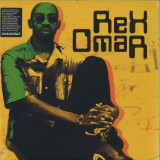
Modern highlife luminary Rex Omar has been a force within
the Ghanaian music scene for over 30 years. Now Soundway
presents five of his premier cuts remastered for a new self-titled
EP.
Over his career Rex Omar has evolved the genre, pushing
boundaries and dazzling listeners. A definitive piece of his
repertoire comes via his Dangerous album: while it was selfproduced and recorded in London circa 1997, upon CD
release it saw success mainly within his homeland of Ghana.
An irresistible blend of street-soul-come-highlife, with elements
of bouncing 90s RnB/hip-hop, it was developed with help
from Ibibio Sound Machine’s Kari Bannerman and prolific
Jamaican producer Bill Campbell. From this album rising
London producer and DJ Aroop Roy revisits the four-to-the-floor
excursion ‘Dada’, repurposing for today’s dancefloor with the
addition of fizzing synth chords and stabs.
While Omar regularly raps on his earlier works, on ‘Kele
Ngele’ (taken from his 2004 album Ajala) we hear a yearning
melodic vocal over a more laid back RnB beat. This rounds out
the new Rex Omar EP for the discerning listener to experience
the full breadth of his inventive output.
I Talk To Water, the fifth album for Kompakt by Danish producer Kölsch, is the artist’s most personal statement yet. While all the trademarks that make his music so popular and powerful are still present – lush, melodic techno; swooping, trance-like figures; sensuous, shivery texturology – I Talk To Water is also a deep and intimate rapprochement with family and history, a beautiful, finely detailed document of loss and memory, and a tracing of the long, unbroken thread of grief that runs through our lives once we’ve lost those we loved.
The emotional core of I Talk To Water, then, is a cache of recordings by Kölsch’s father, Patrick Reilly, who passed away in 2003 from brain cancer. With time rendered elastic by the pandemic and its associated lockdowns, its sudden, alienating shifts in everyday living, Kölsch found himself reflecting on his father’s passing and ongoing spiritual presence, thinking about how best to memorialise such a significant figure in his own life. Those recordings opened a gateway, of sorts, for Kölsch to move through – a way to bring past and present together and entwine them in a sensitive, poetic manner.
Kölsch’s father was a musician – “touring in the sixties and seventies, in the Middle East especially, he was doing the whole hippy trail, playing guitar, and wrote some songs over the years,” he recalls. “But all in all, he decided to focus on family rather than pursue a musical career.” Reilly kept playing and writing music over the years, though Kölsch hadn’t listened to the material for some time: “I’d never had the guts to listen to it, because I just felt too fragile listening to his voice. It’s such a tough thing to go through.”
During the pandemic, though, Kölsch listened through the fragmented body of work that his father had produced over the years. “I decided I’m gonna finally release my dad’s music twenty years after his passing,” he reflects. “This whole album is about the process of loss, and for me it’s been one of my main driving forces in my musical life, the whole emotional aspect of whatever I’ve done has been based in that feeling that he’s not there anymore.”
Recordings of Reilly appear on three songs across I Talk To Water. His guitars drift pensively across “Grape”, offering a lush thread of melody that Kölsch wraps with clicking, driftwood rhythms and droning, melancholy bass. “Tell Me” is a lovely three-minute art song, a sadly beautiful reflection, minimally adorned with gentle keys and a muted pulse. And on the closing “It Ends Where It Began”, Kölsch lets his father’s acoustic guitar take centre stage for a lament that’s unexpectedly folksy, a guitar soli dream, which Reilly originally recorded in 1996. “He actually recorded it for my first album that never came out,” Kölsch reveals, “and I had it sitting around forever. That is purely him.”
These three imagined collaborations between father and son are poised and delicate. But their relationship also marks the gorgeous music Kölsch has made across the rest of I Talk To Water, from the itchy yet lush “Pet Sound” (titled in tribute to one of Reilly’s favourite albums), the flickering synths and yearning vocal samples that slide through “Khenpo”, the ecstatic shuddering that marks “Only Get Better”, or “Implant”’s slow-motion pans and subtle reveals.
There’s also the title song, where Kölsch is joined by guest Perry Farrell (Jane’s Addiction, Porno For Pyros), singing a mantra for internal reflection: “I talk to water / Searching for myself / Looking for answers / Oceans of you.” Farrell’s appearance brings another timbre, another spirit to the album, aligning neatly with his recent interest in electronic music. “He was completely taken by this idea of talking to water,” Kölsch says, thinking about the ways we collectively lean towards the natural world as a comfort and a listener, a guide through mourning, a way to map out the terrain of the heart. This mapping is something that Kölsch has proven remarkably adept at through the years; dance music for both body and mind, but also both for the here-and-now, and for the hereafter.
“I Talk To Water”, das fünfte Album des dänischen Produzenten Kölsch für Kompakt, ist zweifellos das persönlichste Statement des Künstlers bislang. Während alle Markenzeichen, die seine Musik so beliebt und kraftvoll machen, immer noch präsent sind – üppige, melodische Techno-Tracks; schwebende, tranceartige Elemente; sinnliche, fiebrige Texturen – ist “I Talk To Water” auch eine tiefe und intime Annäherung an Familie und Geschichte. Es ist ein wunderschönes, fein ausgearbeitetes Dokument des Verlusts und der Erinnerung, und es verfolgt den langen, ungebrochenen Faden der Trauer, der durch unser Leben läuft, sobald wir diejenigen verloren haben, die wir liebten.
Der emotionale Kern von “I Talk To Water” besteht aus Aufnahmen von Kölschs Vater, Patrick Reilly, der 2003 an Hirnkrebs verstarb. Durch die Pandemie und ihre damit verbundenen Lockdowns, die plötzlichen, entfremdenden Veränderungen im Alltag, fand Kölsch sich in Gedanken an den Tod seines Vaters und seine fortwährende spirituelle Präsenz wieder. Er überlegte, wie er eine so bedeutende Figur in seinem eigenen Leben am besten verewigen könnte. Diese Aufnahmen öffneten ihm sozusagen ein Portal, um Vergangenheit und Gegenwart miteinander zu verbinden und sie auf sensible und poetische Weise zu verweben.
Kölschs Vater war Musiker – “er tourte in den sechziger und siebziger Jahren, vor allem im Nahen Osten, auf dem Hippie Trail, spielte Gitarre und schrieb im Laufe der Jahre einige Songs”, erinnert sich Kölsch. “Aber alles in allem entschied er sich, sich auf die Familie zu konzentrieren, anstatt eine musikalische Karriere zu verfolgen.” Reilly spielte und schrieb jedoch im Laufe der Jahre weiterhin Musik, obwohl Kölsch das Material lange Zeit nicht angehört hatte: “Ich hatte nie den Mut, es anzuhören, weil ich mich einfach zu zerbrechlich fühlte, seine Stimme anzuhören. Es ist so schwer, das durchzustehen.”
Während der Pandemie hörte sich Kölsch jedoch durch das fragmentierte Werk, das sein Vater im Laufe der Jahre produziert hatte. “Ich beschloss, die Musik meines Vaters zwanzig Jahre nach seinem Tod endlich zu veröffentlichen”, reflektiert er. “Dieses ganze Album handelt von dem Verlustprozess, welcher für mich generell eine der Hauptantriebskräfte in meinem musikalischen Leben ist. Der ganze emotionale Aspekt von dem, was ich getan habe, basierte auf dem Gefühl, dass er nicht mehr da ist.”
Auf “I Talk To Water” sind Aufnahmen von Reilly in drei Songs zu hören. Seine Gitarren ziehen nachdenklich durch “Grape”, bieten einen üppigen Melodiefaden, den Kölsch mit klickenden, treibenden Rhythmen und dröhnendem, melancholischem Bass umwickelt. “Tell Me” ist ein schönes dreiminütiges Kunstlied, eine traurig-schöne Reflexion, minimal geschmückt mit sanften Tasten und einem gedämpften Puls. Und auf dem Abschlusstrack “It Ends Where It Began” lässt Kölsch die akustische Gitarre seines Vaters im Mittelpunkt stehen, ein überraschend folkiger Klagegesang, den Reilly ursprünglich 1996 aufgenommen hatte. “Er hat es tatsächlich für mein erstes Album aufgenommen, das nie veröffentlicht wurde”, enthüllt Kölsch, “und ich hatte es ewig liegen.”
Diese drei erdachten Kollaborationen zwischen Vater und Sohn sind ausgewogen und zart. Aber ihre Beziehung prägt auch die wunderschöne Musik, die Kölsch im Rest von “I Talk To Water” geschaffen hat, angefangen bei dem nervösen, aber üppigen “Pet Sound” (benannt als Hommage an eines von Reillys Lieblingsalben), den flimmernden Synthesizern und sehnsüchtigen Vocal-Samples in “Khenpo”, den ekstatischen Erschütterungen in “Only Get Better” oder den langsamen Schwenks und subtilen Enthüllungen in “Implant”.
Es gibt auch den Titelsong, in dem Kölsch von Gast Perry Farrell (Jane’s Addiction, Porno For Pyros) begleitet wird, der ein Mantra für die innere Reflexion singt: “I talk to water / Searching for myself / Looking for answers / Oceans of you.” Farrells Auftritt bringt eine weitere Klangfarbe, einen weiteren Geist in das Album, der gut zu seinem jüngsten Interesse an elektronischer Musik passt. “Er war völlig fasziniert von der Idee, mit Wasser zu sprechen”, sagt Kölsch und denkt darüber nach, wie wir kollektiv zur Natur als Trost, Zuhörer, Führer durch die Trauer neigen, um die Gelände des Herzens zu kartieren. Diese Kartierung ist etwas, in dem Kölsch im Laufe der Jahre erstaunlich geschickt war; Tanzmusik für Körper und Geist, sowohl für das Hier und Jetzt, als auch für das Leben danach.
Toronto Vs Boston: Lace up those skates, The PATCHOULI BROTHERS face off against GMGN on the hockey rink of destiny, who's edit will burn hotter and melt the ice, transforming this frozen dance floor into a disco roller rink for the ages? The disco brothers from Canada kick things off with "BURNIN'", dark and sexy, with textural percussion, sultry vocals, and a straight ahead piano focused groove. After a short flight to Boston, GMGN comes in on the B-side with the instant classic "A LITTLE BIT". Cutting up 70s funk over a solid disco base and diva vocals that will have you proclaiming "All you need is a little bit of Soul!"
After a long hiatus Klaus Benedek comes back on his own mothership Fortunea Records with a brand-new production. ‚Tombstone’ heralds the autumn. You can feel the melancholy that brings the end of the warm and bright days with it. Although the subject matter is dark and eerie, the track wanders with its epic instrumentation through pensive optimism. The remarkable chopped hookline and the concise and soft bassline are casted in a flowing deep sounded carpet full of hope. An epic excursion that you definitely should give a try.
A considerable move into a different sound sphere goes Berlin-based artist and Tieffrequent-founder Siggatunez. He has had an outstanding array of vital productions this year and with his remix he lets you „feel the unknown“. In a very detailed way he made a serious dancefloor intended track, in the signature style of his current output, where beats and groove take the lead, but keeping the soul of the
original with the use of its pads, strings and bass.
Tombstone will come out on limited 200 copy vinyl and in its digital form onstreaming services and download stores on the 27th of october. There will be no repress!ö
Kamai Music’s 26th release comes from the Electronic producer duo and live act Kon Faber.
A1: “Ambiguity” is a bouncy, groove- and percussion-heavy collaboration between established producer Iorie,
including a vocal duet.
A2: “Cheer” is an emotional, atmospheric track with a mesmerizing interplay of synth lines and jazzy melodic
licks from professional jazz saxophone player Marius Dick.
A3: “Weberwiese” is a large space with choirs and wide synth pads. The track opens up through a virtuous,
acoustic lead guitar embedded into a hypnotic and bouncy groove.
B1: South African producer Fka Mash gives a deep Afro House twist including a rich bass lead synth.
B2: Kamai’s own Jacob Groening shows a simplistic interpretation of “Cheer” and adds a new depth through a
non-metrically played lead synth.
B3: “Weberwiese” is remixed by Joep Mencke, who adds trance-like melodies and creates a melodic house
spin for the big stage.