- A1: Zoom; Featuring – Phat Kat
- A2: Do You; Featuring – Mc Breed
- A3: Dirty; Featuring – Dirt Mcgirt
- A4: Late 80'S Skit
- A5: Selfish; Featuring – John Legend, Kanye West
- A6: Closer; Featuring – Dwele
- A7: Old Girls/Shining Star; Featuring – Melanie Rutherford
- B1: Keep Holding On; Featuring – Melanie Rutherford
- B2: It's On; Featuring – Big Herk, Mc Breed
- B3: The Hours
- B4: Things We Do
- B5: Count The Ways; Featuring – Dwele
- B6: Reunion; Featuring – J Dilla
Suche:mel
4 years after his last solo record on his Wych imprint “BB-8 / Barbarossa”, K-LONE returns for another 2 track EP of bleepy melodic 140, this time reminiscent of Bristolian Purple dubstep aesthetic. Saw waves, cheesy 80s chords and flute melodies continue the signature sound of Wych with "Squelch / With Luv". Mastered by Beau at Ten Eight Seven. Artwork by Annie Foyster.
“Ti Ho Sposato Per Allegria” (1967) is a comedy directed by Luciano Salce, taken from the theatrical play of the same name (1965) by Natalia Ginzburg. The main characters are Pietro and Giuliana, respectively interpreted by Giorgio Albertazzi and Monica Vitti. A lawyer from a good family, serious, accustomed to a calm and regular life who got married to a indolent and dazed girl with a difficult past a month after meeting her at a party. Despite Giuliana's inability to transform herself into a good housewife, his relationship with Pietro continues to flourish, because he seems to find enjoyment in each of his wife's many mistakes. The reason for their union lies not in love but, perhaps, in a genuine sympathy, as strong as it is mutual. The story has become a minor classic with each new representation. On both stage and screen the themes of everyday life, and the more complex and existential ones, are addressed. The subtle irony of the work relies on recounting problematic events in a carefree tone: realities such as abortion, death, separation and the couple's incommunicability are underplayed with naturalness. The funny events of the film are commented on by Piero Piccioni's music, published for the first time on vinyl by Musica Per Immagini, with an harmonious tracklist. For this first orchestra rehearsal with the director, which will be followed by other important soundtracks, the composer makes an effective and elegant synthesis: on the one hand he reworks moods and aesthetic intuitions of some previous and happy experiences, while on the other he identifies and anticipates the first bars of that unmistakable sound between bossa nova, funk and lounge nuances that will characterize almost all the production of the Seventies. In fact, the Turin-native artist simplifies in a positive sense the articulated harmonic structures that have always distinguished his authorial figure – where the so called jazz features are to be considered more than central in the musical texture, as prominent elements of the harmonic syntax – and he tries a melodic reduction that will make the compositions more catchy or memorized, but not easier for this. Lightness of spirit and rarefied elegance are the keys of this new Dionysian world.
- A1: Deon Cole Ft. Terisa Griffin - Where The Freaks At (Terry Hunter Club Mix)
- A2: Culoe De Song - Aftermath
- B1: Anané — Walking On Thin Ice (Louie Vega, Sebastien Grand, Alex Finkin Remix)
- B2: N.w.n. - Girl
- B3: Tal Fussman - Parallel Reality
- C1: Dailly - Autonomy (New York Drums Mix)
- C2: Copy Paste Soul — The Fall (Laurent Garnier Remix)
- D1: Carlo Ruetz - Proton
- D2: Marco Bailey — Full Steam
- D3: Mary Droppinz - The Cycle
- E1: Sammy Virji & Flowdan — Shella Verse
- E2: Rohaan - Easy For Them
- E3: Taxman — All Crew
- E4: 2Xm & Neil Macleod — Hear My Call (Neil Macleod Remix)
- F1: Regents, Cartridge, Strategy — Greengate Adhesive
- F2: Benny L — Salute
- F3: Cocktail Party Effect - Collapse
- G1: Loma - I Swallowed A Stone
- G2: Phiorio — Spark (Doubtingthomas Rework)
- G3: Bardino - Tília
- H1: Equiknoxx — Urban Snare Cypher
- H2: Dialog — Book Of Life (Feat. Benji)
- H3: Kang Brulèe — Out Of Time
- H4: Melody Gardot — You Never Ask (From 'Madame Sean Connery')
No Drama, the label helmed by Roy Rosenfeld, reflects his musical vision and personal philosophy, showcasing artists whom Roy respects not only as innovators of new sonic landscapes but also as individuals of character. The imprint proudly introduces its third release: a two-track offering by Khen.
Known for his groovy and melodic house sound, Khen has earned international recognition for his unique style.
The opening track, Back in the Days, introduces modulated deep vocals that stamp the composition with a signature sound. Intelligent, percussive, and hypnotically repetitive, the piece maintains a poised charm, deliberately breaking rhythmic expectations through carefully crafted and precisely timed shifts.
The second track, Usual Madness, stretches the emotional range, layering buoyant basslines with arpeggiated melodies and textured and evocative background elements that enrich the arrangement with thoughtful sonic choices. As the piece unfolds, sound effects and an evolving sense of joy coalesce into a meditative structure that seamlessly weaves musical elements with emotional nuance. After a brief moment of calm, the track builds into a commanding crescendo, delivering a final, cathartic release.
Together, these two works represent an essential addition to any discerning playlist.
Sweden’s Tiger Stripes returns to Rekids with the ‘Dance For Peace’ EP, following on from February’s ‘All Night Long’ and 2024’s ‘I Heard It Through The Bassline’ EPs. Across four warm and funk-fuelled cuts, he delivers another essential selection of House grooves primed for peak-time moments and deep, late-night sessions alike, already supported by Oliver Dollar, Riva Starr, Anja Schneider, and more.
The opening track, ‘Time For Peace,’ is a brilliantly loopy roller, featuring bouncy drums, muted synth motifs, and a vocal swirl of soulful cries that ramp up the energy. It’s a stylish tension-builder, paving the way for ‘Rockin’, a chunky jam with funky melodic riffs buried in the beat and wordless ad libs teasing out the soul. ‘The Street’ keeps the vibe flowing with swinging drums, knotted guitar licks, and subtly filtered vocals worked into a steamy, party-starting groove. Closing things out is ‘A Dance’, a deeper cut drenched in lush chords and hazy vocals—perfect for blissed-out dancefloor moments.
Founder of the Strange Idols label, Tiger Stripes has spent over two decades forging his own path with standout releases on Hot Creations, Get Physical, Kwench Records, and Rekids. After stepping back to focus on his indie-rock project Little Lies, he made a full return in 2024 and quickly recaptured the form that’s made him an international favourite.
- A1: The Feeling
- A2: Desperate
- A3: Good Things Die
- A4: Long Drive Home
- A5: Hero´s Theme
- A6: Graves
- A7: Heart And Soul
- A8: Take It Or Leave It
- B1: Never Go
- B2: Sweet Love
- B3: God's Day Off
- B4: Just Relax
- B5: This Is Life
- B6: Impaired Judgement
- B7: Push
'Ye Mele' is a very firm Mr Bongo favourite, and always a contender for end/start of the night track. A true classic.
Opens with a distinctive vocal harmony/chant and claps before dropping into bossa piano, organ and drums, which calms for a moment before reaching the chorus... and then building more into a horn section, that plays until the end. Immense.
Taken from Vinhas' now relatively expensive and very excellent 'O Som Psicodelico' LP from 1968.
'Berimbau'. And again - another favourite. Awe inspiring arrangement, of the highest order.
Opens with what is very reminiscent of a Brazilian Western soundtrack, before soaring into vocals, strings and horns. And then THAT end section...!
Golden Boys were a male vocal group, of brothers. 'Berimbau' is taken from their self-titled 1969 LP.
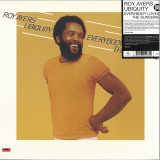
Mit "Everybody Loves the Sunshine" (1976) vermischt Roy Ayers nahtlos die Genres Soul, Funk & Jazz und erschafft einen zeitlosen Sound, der Musiker und DJs auf der ganzen Welt noch immer beeinflusst, mit dem Vibraphon als zentrales Instrument, ein Ansatz, der Ayers einzigartigen Stil definiert. Im Jahr 1976 veröffentlichte der legendäre Musiker und Komponist Roy Ayers mit ELTS eines der bedeutesten Alben seiner Karriere. Dieses Album festigte nicht nur Ayers' Stellung als Schlüsselfigur in der Welt des Jazz, sondern markierte auch einen Meilenstein in der Soulmusik und im zeitgenössischen Jazz-Funk. Es zeichnet sich durch eine raffinierte Mischung aus unwiderstehlichen Grooves, sanften Melodien und einem einzigartigen Sound aus, der über die Jahre hinweg nicht verblaaste und für mehrere Generationen von Musikern und Hörern zu einer Referenz wurde. Mitte der 70er Jahre hatte sich Ayers bereits mit seiner Band Roy Ayers Ubiquity und seinem unverwechselbaren Einsatz des Vibraphons, das zu seinem persönlichen Markenzeichen wurde, einen Namen gemacht. Und mit ELTS wagte sich Ayers an einen noch zugänglicheren Sound, auch als Reaktion auf den Aufstieg von Disco und das wachsende Interesse an Musik afro-amerikanischer Prägung überhaupt. In den zehn Tracks des Albums schafft Ayers eine Klangatmosphäre, die sowohl die Wärme des Sommers als auch die Raffinesse des Jazz jener Zeit heraufbeschwört, alles vor dem Hintergrund des modernen Soul. Produziert von Ayers selbst zusammen mit seinem Engineer und Freund David R. Williams zeichnet sich ELTS durch den wunderbaren Klang des Fender Rhodes Pianos von Phillip Woo sowie die kraftvolle Energie der restlichen Band aus, wodurch eine unverwechselbare Authentizität und Frische erreicht wird. Zu den bekanntesten Songs gehören der Titeltrack, "The Golden Rod" und "The Third Eye", die schnell zu Klassikern des Jazz-Funk und Soul wurden. Dieses Album ist für Roy Ayers' Karriere von entscheidender Bedeutung, da es seine Fähigkeit unter Beweis stellt, in einer sich ständig verändernden Musikindustrie relevant und kreativ zu bleiben. Im Laufe der Jahre wurde "Everybody Loves the Sunshine" zu einem Kultalbum, das häufig in DJ-Sets von Künstlern wie Gilles Peterson, Theo Parrish und Lefto gespielt Verwendung findet. Der Sommer-Soul-Klassiker jetzt wieder auf klassischem schwarzem 180g-Vinyl!
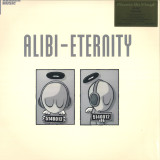
The legendary trance tune "Eternity" was originally released in 2000.
Webmedia "We Rave You" estimates that "Eternity" is "A beautiful mix of pounding dance-floor driven percussion progressing into a beautiful array of dreamy, melodic sounds, this is one of those tunes that sits as one of the benchmarks in trance and lives long in the memory of fans of the genre. An absolutely timeless chord progression runs throughout this tune and the climax is nothing short of epic."
To celebrate the 25th anniversary of Eternity,, Music on Vinyl in cooperation with Armada Music and Armin van Buuren present all 4 versions of Eternity on vinyl for the first time. The 12-inch is available as a 25th anniversary edition of 1500 copies on silver coloured vinyl.
Zunächst nannte Gia Margaret ihr neues Album Romantic Piano, um ein wenig frech zu sein. Denn die sparsamen, sanften Klavierstücke haben mehr mit Erik Satie, Emahoy Tsegué-Maryam Guébrou und den "Marginalia"-Veröffentlichungen von Masakatsu Takagi gemeinsam als mit einem gemütlichen Date-Abend bei Kerzenschein. Doch in dieser Frechheit liegt eine verborgene Absicht: In dem wunderschönen Set wird "Romantik" in einem eher klassischen Sinne suggeriert, was die Deutschen als Waldeinsamkeit bezeichnen. Die Kompositionen beschwören die erhabenen Themen der romantischen Dichter herauf: Einsamkeit in der Natur, die Fähigkeit der Natur zu heilen und zu lehren, ein Gefühl von zufriedener Melancholie. "Ich wollte Musik machen, die nützlich ist", sagt Margaret und untertreibt damit gewaltig die Kraft der Platte. Romantic Piano ist neugierig, beruhigend, geduldig und unglaublich bewegend - aber es verweilt nicht länger als eine Sekunde. Margarets Debütalbum There's Always Glimmer war ein lyrisches Wunderwerk, aber als sie wegen einer Krankheit auf Tournee nicht mehr singen konnte, nahm sie ihr Ambient-Album "Mia Gargaret" (ein weiterer frecher Titel!) auf, das ein feines Gespür für Arrangement und Komposition zeigte, das bei den lyrischen Songs von There's Always Glimmer nicht voll zum Tragen kam. Auch Romantic Piano kommt fast ganz ohne Worte aus. "Das Schreiben von Instrumentalmusik ist im Allgemeinen ein viel freudigerer Prozess als das Schreiben von Lyrics und wirkt sich letztlich auf mein Songwriting aus.", sagt sie. Romantic Piano festigt sie als kompositorische Kraft. Ursprünglich hatte Margaret einen Abschluss in Komposition angestrebt, brach die Musikschule aber auf halbem Weg ab. "Ich wollte wirklich nicht in einem Orchester spielen", sagt sie über ihre Entscheidung, "ich wollte eigentlich nur Filmmusik schreiben. Dann begann ich, mich mehr und mehr darauf zu konzentrieren, eine Songschreiberin zu sein." Romantic Piano berührt in der Tat ein seltenes Gefühl in der Kunst, das oft nur dem Kino vorbehalten ist - die gleichzeitige Ehrfurcht vor dem Dasein mit der großen Linse und der intime innere Monolog nach der Sprache, wenn wir in unseren Schädeln festsitzen. Und das ist sehr romantisch!
Adeen Records is back with its The Bird series and this time Cad73 is the one at the buttons. First up he flips the age old classic 'Love and Happiness' into a smooth and seductive sound with lush chords and warming melodies. Flop it over and you will find a rework of 'How Can I Forget You' which becomes a Northern Soul great with big hooks and driving rhythms that will get big reactions in the club. Two different but equally effective and cultured cuts.
TAMTEN, the master storyteller behind the synthesizers, extends his invitation to every curious listener to ponder the same questions that haunt him throughout his peculiar career: what impacts the sound of an era? How are we shaped by what we hear and see? Do we channel our collective feelings of longing and desire for higher purpose in accord or in opposition to major historical and political forces?
On "Wschodnia Fala: The Reimagined Vision of Eastern-European Wave Music" TAMTEN takes us on a kaleidoscopic voyage through a parallel universe where the symbols and echoes of days gone by are so much more than just archived exhibits of nostalgia. Through an array of meticulous, cut & paste rearrangements, the Warsaw-based artist manages to animate yet another fantastic world of "what could be", following his more apocalyptical take on the previous LP.
There is boldness in every aspect of the release. The saga-like story unfolds evoking the excitement of seashore autobahn ride, thrills of long-forgotten discotheque nights, rush of obsessive romance and intriguing, noir-inspired drama of introspection. The analogies between Polish wave music (with nods to Aya RL, Republika, Klaus Mittfoch, Papa Dance or even Bajm) and global disco-era top chart phenomenons like Kraftwerk, Grace Jones, Giorgio Moroder and Duran Duran, could spark hour-long musicology debates. The melodies and harmonies heard on the album resemble compositions everybody knows but also sound completely new and exhilarating, just as western music clips experienced for the first time behind the Iron Curtain and then collected compulsively on VHS tapes. The feeling of the author's frenetic attempt to capture sensations, memories, artifacts and ideas never escapes the listener till the very last minute of the recording.
"Wschodnia Fala" could pass for an eerie, anonymous late 80s lost-and-found cassette mixtape unearthed on any of the Berlin Wall's sides, if it wasn't for its crystal-clear, contemporary production value and the fluent, educated use of samples ranging from bizarre and opaque to deliberately retro-pop-influenced. Those elaborate winks of the eye for those in the know are already TAMTEN's trademark and they reflect his long-standing fascination with the dancefloor anthropology rather than just the dancefloor itself. Even though never leaning towards formulaic, easy-to-mix, club-ready stompers, his ideas are still groovy enough to make anyone move.
The album strives for some sort of unattainable totality - it's a ticket to a seance, an experience, a rite. It is a chance to time travel and dance with your ancestors in a glass labyrinth on acid or to watch an 80s teenage adventure, coming-of-age, road cruising film in the cinema of your imagination with only a soundtrack provided. A "the best of" CD compilation of hits from a childhood we remember from a different timeline. A comic book sketch, a diary of an archivist, an elegy for the times that never were and a party you wish you could go to right now. The adventure is always different with another listen.
Step in. Close your eyes. Reimagine.
Embrace the wave
Krystal Klear returns to Running Back with another batch of purpose-built dance floor tracks. The name? Personal. It means something, but that bit stays off the press sheet.
Written during a particularly charged stretch of inspiration, these tracks aim to soundtrack every hour of the night: from the hopeful haze of doors open to the bitter-sweet buzz of lights on.
Crafted as quiet tributes to nights out and DJ booths in Germany, Scotland, and London, places where sweat meets sub, and the USB never quite ejects.
The formula? Unchanged and undefeated: heavy drums, melodic inflections, more ARPs than strictly necessary, and something emo stirred in for good measure. Dance music for dancers. Or at least for the idea of them.
Matching vivid world-building with a full house of kinetic rhythms, Polygonia delivers her latest album to Dekmantel as an invitation to experience 12 different dream scenarios.
As Polygonia, Munich-based Lindsey Wang has established herself as a constantly inventive, omnipresent operator within the modern electronic landscape, exploring varying shades of ambient and deep techno while increasingly spreading into downtempo and leftfield electronica with a playful yet mysterious spirit.
Dream Horizons is an instructive title — Wang approached her new album as a collection of different dream scenarios, with all the creative freedom the concept implies. From oceanic calm to artful propulsion, she was free to shift gears from track to track while relishing the strange and beautiful atmospheres her inspiration pointed towards. A multi-instrumentalist as well as a producer, Wang recorded her own voice, saxophone, flute, violin and percussion to inject organic, human vibrancy into the surreal spaces she was shaping out, capturing the uncanny sensation of alien and familiar that hangs over the places we visit when we sleep.
There are pointedly direct techno workouts on the album, from deft beatdown 'Soul Reflections' to shimmering ear worm 'Set Me Free', and 'Twisted Colours' relishes shifting blocks of flute around a sprightly, footwork-tickled framework. Elsewhere, there's space for softer expressions on pearlescent opus 'Crystal Valley' while elastic rhythms and tactile textures slither around at a lower tempo on 'Flakes Flying Upwards'. In between, Wang plays with fractured beat patterns and sharply sculpted sonic matter with a staggering level of detail and intention. 'Gate To Amygdala' is the perfect example of the bold scope of her expression — the midpoint track thrives on nervous tension and a dislocated sense of momentum without anything like a conventional techno trope. 'Mindfunk' equally pushes and pulls at sensory perception with an off-kilter, awkwardly looped synth phrase that relishes the opportunity to skew dance music conventions within the flexible rules of the dream world.
For all the smart production and knowingly experimental approaches that form the basis of the album's sound, it's also a record charged with the full range of emotions you might expect to experience on a break away from consciousness. Whether it's the melancholic impressions that smudge into incidental pauses on 'Metaphysical Scribbles' or the mantra-like breath and sax combination of 'Essential Breath' that closes the record, Polygonia's heart bursts out of the album's vibrant form as brilliantly as her exacting, studio-synced mind.
2025 Repress
Tobias Bernstrup is a contemporary musician and video artist born 1970 in Gothenburg, Sweden. He received an MFA from Royal College University of Fine Arts Stockholm in 1998. Using the visual language of pop culture, video games, sci-fi, classicism and gothic noir, he has created a stage persona with notorious live performances. Dressed in elaborate costumes of skin-tight rubber suits and fetish gear, Tobias' external appearance is androgynous. He raises questions about representation of identity, the body and physical space in both virtual and non-virtual realities. Between 1997 and 1998 he self-released two limited CD-R EPs. In 2002 his debut album 'Re-Animate Me' was released by Tonight Records followed by two limited 12' singles for the song 27' and the Italian version Ventisette'.
.
27' is a 5-song EP collecting 4 different mixes of the title track plus one unreleased song from the 'Re-Animate Me' recording sessions. The material on this EP is closely connected with the world of computer games which Bernstrup also inhabits. Bernstrup's music is influenced by 1980s Italo disco and synth pop, reminiscent of Kraftwerk, Depeche Mode and Ken Lazlo. On the A-side is the original mix at 115 bpm followed by the Lazer Mix set to an faster beat and additional arpeggiations and heavier bass drum beats. Lyrically the song tells the story of a good looking 27-year old boy from a small town searching for love with any man who can spoil him. On the B-side are both the vocal and instrumental of Ventisette', the Italian translation of the song 27.' Both versions of Ventisette' are stripped back compared to the A-side but keep the melodies in tact. Also released for the first time ever is the demo Dirty Money' a Pet Shop Boys influenced song about male prostitutes ready for a night out working the streets.
All songs have been remastered for vinyl by George Horn at Fantasy Studios. For the jacket Eloise Leigh transformed the original portrait of Tobias into a Warhol-like painted polaroid with a striking likeness to Liza Minelli with blue eye shadow and red lipstick. Each copy includes a photo postcard with lyrics and notes. I would rather create alternative routes to experiencing and understanding the world, understanding what it means to be human today,' says Bernstrup. We are more artificial than we want to admit.'