This is one of a couple of proper holy grail boogie funk gems that French label PBT are dropping this month. Love At First Sight by First Love was originally released in 1982 out of Chicago and is a rare gem that captures the peak of modern soul and funk. Led by powerhouse vocalist Yvonne Gage (who is credited as Yvine Gage), the newly reissued record deals in rich production by Randy B and Chuck Colbert, who are icons of the genre. Standout tracks include the synth-drenched 'Don't Say Goodnight' and the smooth, late-night groove 'Party Lights', while 'Don't Be Afraid' is a sentinel, string-laced slow burner. With deep basslines, tight drums, and lush synths throughout, this one is a real heart melter.
Поиск:mel
Все
Shadow Pressings celebrates one year and its 5th release with another killer selection of deep, chunky house from the very same (unknown) producer as the label’s debut release.
My Soul sets the tone with a stripped back late night groove, working up THOSE Freddie Hubbard strings and a hooky sax riff. The sound palette is familiar but put together in a skilful and original way ensuring this banger will stand out in the crowd.
Tears follows with a similarly punchy, paired back groove which leaves space for the chiming melodies and spoken word samples to shine. Flipping over we have Lost In The Dance and What Galaxy Is This? which continue the theme of choice vox samples, shuffling drums and rolling basslines.
Phonica Records welcomes Nuage back to its main label for release number 40: the 'Only You EP'.
The Armenia-based, Anjunadeep and 20:20 Vision affiliated producer has been busier than ever since his last Phonica outing (2022's 'Pink Television') with yet another 5 EPs and a 12th (!) LP under his belt in the meantime.
Needless to say, he's an extremely experienced producer, able to turn his hand to a multitude of styles, with this 'Only You' 12" showcasing another four tracks of his signature atmospheric melodic House.
Zaimie, the exciting musical collective based in Glasgow & London, UK, is set to release their highly anticipated 2nd album, "Black Velvet," set to drop on May 23rd, 2025.
Following the success of their acclaimed single 'Feel The Rush', Zaimie's new album, "Black Velvet," sees the collective delving deeper into their signature sound. The album weaves together a rich tapestry of Jazz, Funk, Soul, and global influences, promising a sophisticated and immersive listening experience that showcases the band's exceptional musicianship and songwriting. From infectious grooves to soulful melodies, "Black Velvet" is a testament to Zaimie's artistic evolution and their commitment to creating music that resonates on both a visceral and emotional level.
A reggae-disco cover of Diana Ross' timeless classic, now on 7-inch vinyl!
Risco Connections, beloved by all reggae-disco lovers, presents a thrilling reggae-disco rendition of Diana Ross' 1979 hit "It's My House." This release features a newly edited version tailored for this pressing, complete with a Japan-exclusive imagined sleeve design.
Side A brings a fresh radio edit of "It's My House," blending the original's mellow and charming essence with a tropical reggae groove. On Side B, the instrumental "Risco Version Radio Edit" shines, with its playful synth sounds standing out. Produced by Joe Isaacs, this masterpiece perfectly fuses reggae and disco.
IZIPHO SOUL is thrilled to release two star studded jazzy soul winners - back to back on a 7” picture sleeve single - MON CHER AMOUR b/w YOUR LOVE KEPT CALLING MY NAME.
‘Mon Cher Amour’ is a sensational new song, featuring top vocal smooth-jazz recording artist Maysa and the legendary Bobby Lyle on piano. Known for his selective collaborations, Bobby Lyle was thrilled to join Shaun on this project after hearing the captivating track.
The B Side ‘Your Love Kept Calling My Name’ from last year again features Maysa, Stokley and also Jeff Lorber, Patrick Lamb and Maurizio Metalli. This sexy soulful jazz ballad anchored by Shaun LaBelle’s soulful yet funky synthesiser bass and bass guitar chops that make the melodic hook lines and groove undeniable! It secured a spot in the Billboard Top 20 for two months in a row and hit number 1 in the U.K Soul Chart. Attached compressed 64 kbps MP3s and artworks
Marcellus Pittman is one of the Motor City's finest. The long-time house explorer has a singular sound that is built around brittle drum loops, hissing and dusty hi-hats and loose-limbed arrangements that are stark and dehumanised but somehow full of intriguing machine warmth and soul. Take this EP, 'Loneliness Leave Me Alone,' first dropped back in 2010: the title cut has bouncing, bulbous bass and jacked up drums that sound both menacing yet playful, which the fizzy, sugary chords spray across the mix like a mist of pixelated water. 'Razz 09' has that Omar-S style melancholy and trudging rhythm that's heightened by the curious melodies which unfurl with a mind of their own in the background. Superb.
On the latest Soul Quest adventure, the imprint places the journey in the hands of Italian producer Flying Moth, who serves up an enriching palette of groove-laden cuts that are sure to chime along to bright days and sun-kissed evenings.
Flying Moth is the latest alias from producer Niccolò Terranova, who has already demonstrated his jazz-laden dance music chops through the Justnique project and others. Flying Moth is presented as the artist’s most personal project to date, with the ‘Oh Oh’ EP out on Apparel Music highlighting his ability to deliver highly danceable and beautifully presented soulful dance music that lives and breathes heartfelt moments and emotions.
Channelling a myriad of genres and eras, Flying Moth’s music is about catering to new kinds of experiences through displays of enriching musicality and deeply profound compositions. ‘Tides’ is the next step in Flying Moth’s journey, and it feels right at home amongst the sunny vistas and dancefloors of Soul Quest. The EPs opener, ‘Take you higher’ which was made alongside Renato Patriarca is a groover of the highest order. Allowing plenty of time to embed listeners deep within the mix, the first breakdown emerges with a delightful lead melodic line that embraces the chords. The further this track unravels, the more magic is presented—the flute solo is a notable example of this. ‘Bobby’s here’ shares connotations similar to the previous number, albeit with some subtle differences. The chords swirl and dance, with arpeggios adding cascades of melody alongside the hypnotic rhythm section. The track is one of diving deep through the layers in order to deliver a joyous forward momentum - one which feels like it will never cease.
‘Please, keep drinking with me’ begins with a typically upbeat feel. A semi-skippy drumming pattern provides the basis for an overflow of melodic brilliance to come forth, with the track retaining a powerful forward momentum through the mid-range. Inspired, breathy vocals and a one-of-a-kind key solo at the track’s halfway mark add personality and variance. ‘Always Groove in you’, a joint affair alongside Gondii, and this number wastes no time in getting going. A stripped-back yet varied groove weaves around a deep-set bass sequence, but the show that happens up top is a sight to behold - a continual shift between inspired key work and vocal snippets mean that the track never stands still, only evolves and grows. Wrapping things up is Toronto Hustle and Sean Roman providing their twist on ‘Please, keep drinking with me’, and as a remix, it adds an enormity of flavours in the form of sparkling keys, powerful bass notes, and infectious breakdowns.
‘Tides’ might only be Flying Moth’s second EP, but it is a sign of an exciting discography to come. For now, this EP contains all the ingredients to get dancefloors and living rooms moving. Filled to the brim with creativity, thought, and delicateness, ‘Tides’ has an infectious musicality to it - and, perhaps most importantly, a big heart. Time to revel in its emotive brilliance …
A-Trak, Mele, Aroop Roy, Josh Ludlow, ALOT on Toy Tonics? Yes! The Berlin label comes up with a heavy package of remixes for Sam Ruffillo & Kapote’s „Robot Salsa“ EP. The Latin House EP by the 2 Italian producers. This stuff is the perfect floor fillers for the summer of 2025. While the Afrohouse wave has reached its peak and is becoming a bit „tacky“ a lot of underground DJs turned into playling different styles of latin music connected to electronic dance. And here we got Salsa and Boogaloo turned into 90’s house and indie dance. All of these will make the dancers get their hands in the air. Smiling faces and lot of endorphins secured.
More Water pairs the dancefloor stylings of Sub Basics and Witch Trials through the platform of Temple Of Sound. Beckoning the listener to the centre of the dancefloor with haste, there they will remain as the tracks appropriately travel from light, to dusk, to dark. All the while holding a high-paced tumbling percussion, encouraging complete expressive movement.
Encapsulating bright keys travelling on a wave of undulating rhythm, littered with muffled vocals that enhance the persistent energy that traverses daytime house. All the way to warehouse rackets that hiss and pump with 4 AM energy, this release has something for every moment of the night.
A bit of background on how this release came about: I was touring Australia & New Zealand and for one of the shows, I was performing in Melbourne, which is where Kloke is based. I finally got the opportunity to meet him in person for the first time ever, after many years of collaborations with him online and having supported/enjoyed a lot of his music.
I got to visit his studio where we worked on a tune together and afterwards, he was playing me some of the music he had been working on recently and I noticed that they were all in one big folder, where he explained that every time he works on music, he exports what he's done so far into this one folder with multiple versions/iterations of each track he does. There were 1000s & 1000s of files in this folder... ????
Of course, I was insistent on taking this folder away with me haha, and even though I didn't get everything off him, he was generous enough to give me a lot of what was in there. After the tour was done and I was back home, I listened through everything I had from him, which took weeks (if not months) of ploughing through it all, with the aim of putting together an album of my favourites and after a lot of back & forth between us, we were able to come up with this release, On Rhythm, which I'm really pleased with & I hope he is too!
Anyway, big respect to Kloke for consistently creating some amazing music, thank you to my girlfriend Marta who handled the design for this release & a special mention to Nergal who brought me to Australia & New Zealand, which led to me meeting Kloke in person, visiting his studio and then putting this release together.
- A1: July Blue Skies
- A2: Sky Train Baby
- A3: Venus Of Barsoon
- B1: Ikuchi
- B2: Summer Of Synesthesia
- B3: Tsicroxe
Embark on a funky synth-drenched journey as the cosmic count Jimi Tenor reunites with Timmion Records’ soul architects Cold Diamond & Mink for yet another album. When placed side by side with the fellows’ recent effort “Is There Love In Outer Space? “July Blue Skies” glides on a slightly more raw and mystical plane.
Crafted over fiery sessions between Tenor and Cold Diamond & Mink, this vinyl release offers six soul-grasping tracks ranging from mellow groove to soundtrack funk. The album’s opening title song kicks off with an extended analog synth intro which eventually develops into a sweet romantic invocation, painting a sonic canvas reminiscent of a boundless summer sky. The most vocal tune of this quite instrumental set of songs “Sky Train Baby” propels the listener on a locomotive ride through the star systems while “Venus of Barsoon” with its drum breaks and fuzz sounds blast you straight into sci fi movie funk territory.
The album’s B-side opens with “Ikuchi,” where Tenor’s always trusted flute and tenor sax take the spotlight over the slinky library beats. Closing the album we discover two single releases, the sublime “Summer Of Synesthesia” and the demonic “Tsicroxe” both completely worthy to hear sequenced inside this album as well. This album might be just the Spring jam that you needed in your life.
- 1: The Heartwood Institute - The Moon Never Beams
- 2: The Heartwood Institute - A Kingdom By The Sea
- 3: Dream Division - The Raven
- 4: Dream Division - For My Mother
- 5: Everyday Dust - The Bells
- 6: Everyday Dust - The City In The Sea
- 7: Garden Gate - Spirits Of The Dead
- 8: Garden Gate - Dream Within A Dream
- 9: Ivan The Tolerable - Dream Land
- 10: Ivan The Tolerable - Valley Of Unrest
- 11: Hologram Teen - El Dorado
- 12: Hologram Teen - The Haunted Palace
- 13: Klaus Morlock - The Sleeper
- 14: Klaus Morlock - Bridal Ballad
Library of the Occult Records unviels ‘Music to Accompany the Poems of Edgar Allan Poe’ a haunting double LP that threads the legendary poet’s dark romanticism through the minds of some of the most evocative contemporary electronic artists.
The Library’s ever-expanding circle now united as the Library of the Occult Electronic Orchestra, bring their own haunted visions to Poe’s bleak and beautiful world. Ivan The Tolerable stretches krautrock pulses and experimental noise into something hypnotic and strange, while The Heartwood Institute channels vintage occult nostalgia. Sermons by the Devil drapes everything in a ritualistic haze and Klaus Morlock, ever the maestro of unease, paints in slow-moving shadows, melancholic, cinematic, and tinged with the surreal. It’s a record for twilight listening, flickering candles, and the spaces between.
- A1: Burnin' Sky
- A2: Morning Sun
- B1: Leaving You
- B2: Like Water
- B3: Everything I Need
- C1: Heartbeat
- C2: Peace Of Mind
- C3: Passing Time
- D1: Too Bad
- D2: Man Needs Woman
- D3: Master Of Ceremony
Bad Company's Burnin' Sky, released in March 1977, continued to showcase the band's bluesy rock roots, with Paul Rodgers' soulful and powerful vocals leading the way. The album's musical style is characterized by its gritty, guitar-driven sound and blues-infused melodies.
The 12 songs were recorded in France at studio Château d Hérouville, where David Bowie would record Low later that same year. The album's hit single and title track "Burnin' Sky" reached No. 78 on the U.S. Billboard pop singles chart. The album peaked at No. 15 on the Billboard 200 chart.
This 180-gram 45 RPM 2LP of Burnin' Sky is the definitive reissue of this chart-making classic.
- A1: With You There To Help Me
- A2: Nothing To Say
- B1: Inside
- B2: Son
- B3: For Michael Collins, Jeffrey And Me
- C1: To Cry You A Song
- C2: A Time For Everything
- C3: Teacher
- D1: Play In Time
- D2: Sossity; You're A Woman
- D3: Alive And Well And Living In
Mastered by Matthew Lutthans at The Mastering Lab from flat copies of the original U.K. and U.S. analogue master tapes Third studio album featured advanced studio recording techniques Featuring original U.S. tracklisting with bonus track "Alive And Well And Living In" from U.K. release Plated and pressed at Quality Record Pressings Gatefold old-style tip-on jacket by Stoughton Printing Jethro Tull's 1970 classic Benefit was their third studio album in as many years, following the successes of This Was (1968) and Stand Up (1969). For Benefit, Ian Anderson (flute, guitars, vocals), Martin Barre (guitars), Glenn Cornick (bass), and Clive Bunker (drums) were joined by John Evan on piano and organ.
Evan would go on to play on all of Jethro Tull's albums throughout the '70s. It was also the last to include Cornick, who was fired from the band upon completion of touring for the album. Recorded at Morgan Studios, where the band recorded Stand Up, the album featured more advanced studio techniques, such as a backward-recorded flute on "With You There To Help Me" and a sped-up guitar on "Play In Time." Frontman Ian Anderson said Evan had changed the band's style: "John has added a new dimension musically and I can write more freely now.
In fact anything is possible with him at the keyboard." Compared to Stand Up, although containing a similar mix of bluesy hard-rockers and melodic acoustic numbers, Benefit had, as Ian Anderson put it, a "harder, slightly darker feel" compared to previous material. The eclectic fusion of folk, rock, and progressive elements creates a sonic tapestry unlike any other. Anderson's virtuosic flute playing intertwines with Barre's electrifying guitar work, weaving intricate melodies that transport listeners to a world of introspection and imagination. From the hauntingly beautiful "With You There to Help Me" to the whimsical energy of "To Cry You a Song," each track invites exploration of both the inner self and the world beyond.
This Analogue Productions 45 RPM release, plated and pressed at Quality Record Pressings, gives this historic album the rich sonic presentation it deserves. The dead-quiet double-LP, with the music spread over four sides of vinyl, reduces distortion and high frequency loss as the wider-spaced grooves let your stereo cartridge track more accurately. Benefit stands as a testament to Jethro Tull's pioneering spirit, pushing the boundaries of musical expression and leaving an indelible mark on the landscape of rock music. This reissue is clean, balanced and richly detailed, the way an Analogue Productions reissue should sound.
»Mother Nature« is the debut solo album by Berend Intelmann, a key figure in the German indie music scene since the late 1980s. Having made his name as a member of groups such as Hallelujah Ding Dong Happy Happy, Guther, and Paula, Intelmann most recently focussed on his work as a producer for artists such as Jens Friebe, MissinCat, or Fotos. »Mother Nature« sees the multi-instrumentalist and singer navigate between pop sentiment and his penchant for classical music on these eight pieces, three of which feature additional contributions by Karaoke Kalk label mate Marla Hansen, synth pop iconoclast Der Assistent, and the versatile Mieke Miami, respectively. »Mother Nature« combines a sense of playfulness with cunning compositional rigour to stunning effect.
Intelmann took full creative licence and worked with the instruments that he feels most comfortable using: the drums, synthesizers, and his voice. While inspired by his life-long passion for pop music in all shades, he also took some cues from his more recent passion for classical music. »The synthesizer melodies are arranged like string quartets, while the songs are presented as musical themes strung together so that they form a coherent story,« he explains. The resulting sound isn’t quite as »krauty« as someone called it, instead the artist prefers to call it »slow-kraut—1980s synth sound with 1970s George Duke-style beats,« though of course he never attempted to fit in one specific genre or replicate a certain sound: This is simply the essence of Berend Intelmann as a composer and storyteller.
The lyrical matter of »Mother Nature« is inspired by life and death. This informs an album that masterfully creates contrasts and utilises the friction generated between them to tell its stories. The album opener and second single »All Gone« greets its audience with the couplet »In the long run / We’re all gone,« but sets this to soothing sounds that form a joyful counterpoint to the fatalism of the words. Also the slowly-unfolding first single »Life Of Another One« sets the stage for a reflection on memories that have become so distant that they feel like belonging to another person altogether with sombre, intertwined melodies. However, these darker tones slowly give way to laid-back grooves, Intelmann’s smooth vocalisations and whirling synthesizer sequences.
The collaborations—a vocal duet with Marla Hansen on »A Focused Mind,« Der Assistent’s subtle theremin contributions to »The Less We Cared« and Mieke Miami flute and saxophone playing on »Mother Nature«—further enrich this album that the artist claims has been »co-produced by friends and family.« Indeed, »Mother Nature« might be Intelmann’s solo debut proper, but he remains a teamplayer at heart.
2025 repress
Wilson Tanner come to shore with a new album of floating melodies, lightly salted. Throwing electroacoustic conventions overboard, Andrew Wilson (Andras) and John Tanner (Eleventeen Eston) recorded this new work aboard a 1950s riverboat with a resourceful array of weatherproof electronic instruments and a long extension lead. These eight compositions pull in a by-catch of maritime folklore; of Siren and Selkie, Seagull and engine oil slick. A change of course from their debut album 69 (Growing Bin Records, 2016), the ambient temperature drops as II casts out to sea in uncertain weather and returns to the safe harbours of Port Phillip Bay.
The seafarers head out to My Gull's poised optimism. The birds watch but do they listen? By the arrival of Loch and Key, the shoreline has dissolved completely, the boat floating in serene infinity as the rest of the world spins. Conditions soon take a treacherous turn on Killcord Pts I-III - a 12 minute odyssey that battens down the hatches as these sailors eye merciless waves and blinding ocean spray, jointly channelling Berlin-school electronics and sea legs. In the aftermath, the waterlogged bleeps of Idle survey the damage as our parched crew sound the distress signal and ultimately descend into delirium.
Known for navigating individual courses as solo musicians, Wilson and Tanner's collective storytelling is saturated in detail, buoying between tension and harmony. II modestly stands as some of both artists' most accomplished material.
- Life Rhythm
- Balance
- Joy Of Life
- Eternity
- Desert Move Feat. Shantel & Thomas Konstantinou
- Second Nature Feat. Dominic Miller
- Open Land
- Full Circle Feat. Bill Evans
- Silence And Sound
- Supernova
- Home
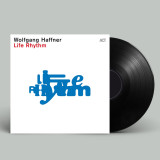
»Ich denke immer wieder aufs Neue darüber nach, wie ich mich als Schlagzeug-spielender Bandleader so positionieren kann, dass das Instrument eine tragende Funktion einnimmt, dies aber auf eine musikalische Weise geschieht und auf keinen Fall als Zurschaustellung von Virtuosität«, sagt Wolfgang Haffner. Diese Haltung zieht sich als roter Faden durch seine gesamte Karriere - und auch durch »Life Rhythm«, sein zehntes Album auf ACT.
Und obwohl Haffners Musik gängigen Vorstellungen virtuoser Schlagzeug-Leader ganz bewusst widerspricht, steht das Instrument diesmal besonders im Fokus. Ausgangspunkt dafür war Wolfgang Haffners allererstes Solokonzert im Jahr 2022 auf Schloss Elmau. Er erinnert sich: »Das war eine Wahnsinns-Herausforderung bei der ich auch vor der Entscheidung stand: Spiele ich jetzt eine Stunde Schlagzeugsolo? Natürlich nicht! Also habe ich habe eine Menge melodisch klingender Perkussionsinstrumente eingebaut, Passagen live geloopt, mit Echos und Delays gearbeitet – im Grunde wie im Studio, nur eben auf der Bühne.« All dies brachte Haffner dazu, sich noch einmal auf ganz intensive Art mit dem Thema mit dem Instrument zu beschäftigen, welches ihn sein Leben lang begleitet. Und so haben alle Stücke auf »Life Rhythm« diesmal ihren Ursprung, nicht wie sonst bei Haffner, am Piano, sondern am Schlagzeug.
Das Ergebnis dieses Prozesses kann man gleich zum Auftakt von »Life Rhythm« auf dem Titeltrack erleben: Das Stück basiert auf einem hypnotischen Groove, bei dem nicht die Becken, wie sonst im Jazz üblich, die Time angeben, sondern vor allem die Trommeln. Das dieser Groove direkt Phil Collins und besonders an dessen Stück »Take Me Home« erinnert, ist kein Zufall: Collins' Art, Drum-Parts zu elementaren Teilen des Songwritings zu machen, ist bis heute eine von Haffners größten Inspirationen. Und auch jedes weitere der elf sehr kompakten, Song-haften Stücke auf »Life Rhythm« öffnet eine eigene Welt des musikalischen Schlagzeugspiels: Mal mal trocken-reduziert mit Besen wie auf »Balance«, poppig bei »Joy of Life«, mit filigranen Becken-Grooves, dezenter Elektronik und Percussion auf »Eternity« oder minimalis-tisch bis kurz vor der Stille in »Silence and Sound«.
Das aus all diesen Stilistiken ein so stimmiges Ganzes ent-steht liegt daran, das Wolfgang Haffner diese im Laufe seiner Karriere bis in die Tiefe durchdrungen hat - an der Seite von stilbildenden Charakteren wie Al Jarreau, Chaka Khan, Pat Metheny, Jan Garbarek, Esbjörn Svensson, Nils Petter Molvaer, Albert Mangelsdorff, Ricardo Villalobos und vielen, vielen mehr. All diese Kollaborationen haben Wolfgang Haffners Voka-bular am Instrument und auch als Komponist geprägt und die da-mit verbundenen, unterschiedlichsten Stile sind gleichermaßen Teil seiner musikalischen Persönlichkeit.
Vielseitigkeit und höchste Musikalität sind auch die Eigen-schaften, die Wolfgang Haffner und seine Mitmusiker auf »Life Rhythm« verbinden. Die Basis bildet ein bestens einges-pieltes Trio zusammen mit Keyboarder Simon Oslender, selbst auch Drummer und Bandleader, und Thomas Stieger, einem der gefragtesten deutschen Bassisten in Pop wie Jazz. Dazu kommen Trompeter Sebastian Studnitzky, Mitstreiter Haffners seit seinem ACT-Debüt »Shapes« und der Finne Arto Mikälä, eine echte Entdeckung in Sachen Klangvielfalt an der Gitarre. Diese Band herausragender Allrounder erweitert Haffner um eine Reihe musikalischer Charaktere, die der Musik ihre ganz eigene Farbe verleihen: Nils Landgren, Freund und Weggefährte seit mehr als 20 Jahren, Saxofon-Ikone Bill Evans, Sting-Gitarrist Dominic Miller, Balkan-Beat-Star Shantel, Bass-Feingeist Nicolas Fiszman, Oud-Virtuose Thomas Konstantinou und Bruno Müller, einer der besten deutschen Jazzgitarristen.
»Life Rhythm«, sagt Wolfgang Haffner, »ist für mich eine Fortsetzung, keine Wiederholung«. Die Musik trägt mit ihrer Wärme, Kraft und Klarheit die charakteristische Handschrift, die Haffner mit seinen Alben und auf tausenden von Konzerten in mehr als 100 Ländern zum wohl populärsten Schlagzeug-spielenden Leader Europas gemacht hat. Und gleichzeitig ist es eine Evolution seiner Musik. Gut möglich, dass Haffners Erfolg genau darin begründet ist, dass seine Musik immer etwas Ver-trautes und etwas Neues beinhaltet und dass Haffner sein Publikum so immer »mitnimmt« im Fluss seiner Ideen - und in einem gemeinsamen »Lebensrhythmus«
handsigniert & nummeriert
Wir schreiben das Jahr 2025 und FEINE SAHNE FISCHFILET kündigen ihr neues Album „WIR KOMMEN IN FRIEDEN“ an:„Alle gegen alle, im Krieg mit sich und untereinander und natürlich immer exklusiv mit der alleinseligmachenden Offenbarung im Gepäck.
Jeden Tag passiert so viel, so viel Scheiße, so viel Dummes, aber auch immer die guten Sachen mit den Freundinnen und Freunden, der Familie, mit all denen, die noch nicht komplett im Arsch sind. Zeiten, in denen man sich nur umdrehen muss und einem die Idee für das nächste Lied an den Kopf geworfen wird. Und so erscheint am 30. Mai unser neues Album mit einer Menge neuer Songs. Wir kommen in Frieden. Das ist unsere letzte Warnung.“
Angetrieben durch ihren ureigenen Signature Sound - High Energy Melody-PunkRock mit Trompete – gelingt den fünf Musikern mit ihrem neuen Werk eine hinreißende Bestandsaufnahme und gleichzeitig Ausblick auf eine der ungewöhnlichsten Band-Karrieren der letzten Jahrzehnte dieses Landes, ein wilder Trip, der sie aus der vorpommerschen Provinz durch viele Irrungen und Wirrungen bis an die Spitze der deutschsprachigen Musikszene geführt hat.
Produziert wurde der Longplayer erneut von Philipp »Philsen« Hoppen, der auch schon bei Alben von Die Ärzte, Kraftklub, Deichkind und K.I.Z. seine versierten Finger im Spiel hatte.
- A1: Tokyo
- A2: Leonard Street
- A3: Recognise
- A4: World’s Worst Girlfriend
- A5: Richardson (Feat. Cassandra Jenkins)
- A6: America
- B1: Online
- B2: I Wanna Be Loved By You
- B3: Ringpull
- B4: If You Don’t Believe In Love (Feat. Helado Negro)
- B5: Bad Kid (Feat. Becca Mancari)
Fünf Jahre nach ihrem gefeierten Album 'forevher' meldet sich die britische Sängerin Shura mit ihrem dritten Studioalbum 'I Got Too Sad For My Friends' zurück. Eine Mischung aus Kammerpop, 60er-Jahre-Folk und Lagerfeuer-Americana, die Shuras introspektives Songwriting in eine weite Landschaft ausdehnt - ruhiger als der gefühlvolle Schwung von 'forevher' und rustikaler als der grüblerische Synthie-Pop ihres Debüts 'Nothing’s Real' aus dem Jahr 2016.
Obwohl das Album Themen wie Isolation, Traurigkeit und Depression bearbeitet, klingt es aber alles andere als niedergeschlagen - Shuras kristallklarer Gesang trifft auf eine warme, erdige Produktion. Shura dazu ganz selbst-ironisch: „Auch wenn es nicht unbedingt eine maximalistische Platte ist, was den Sound angeht, war der Ansatz für mich, die Platte mit maximaler Freude aufzunehmen - was urkomisch ist, denn es geht darum, unglücklich zu sein!“
Angegangen wie eine „Old-School-Platte“, die eher eine Performance als eine Produktion einfängt, wurde ein Großteil des Albums live aufgenommen, wobei Keys, Bass, Gitarre und Schlagzeug in einem Rutsch aufgenommen wurden. Nur der Gesang wurde separat aufgenommen - mit Ausnahme des sanften Funk-Tracks Ringpull.