Buscar:melo x

Estilos
Todo
Toni Braxton - The Heat (2x12")

Toni Braxton

The Heat (2x12")

2x12inch19802974221
Sony Music
23.01.2026

Toni Braxton, veröffentlicht 1993, stellte der Welt Braxtons warme, samtige Stimme vor und etablierte sie als prägende Figur des R&B-Genres. Mit ikonischen Tracks wie dem Smash-Hit "Another Sad Love Song" und dem kraftvollen "Breathe Again" verbindet das selbstbetitelte Album mühelos sanften Soul, gefühlvolle Balladen und zeitgenössische R&B-Einflüsse. Die opulenten Produktionen, geprägt von komplexen Melodien und raffinierten Arrangements, zeigen das Talent namhafter Produzenten wie Babyface und Antonio Reid.

Disponible

En el almacen y preparando para el envío

26,26
Toni Braxton - Toni Braxton (LP 2x12")

Toni Braxton

Toni Braxton (LP 2x12")

2x12inch19802974161
Sony Music
23.01.2026

Toni Braxton, veröffentlicht 1993, stellte der Welt Braxtons warme, samtige Stimme vor und etablierte sie als prägende Figur des R&B-Genres. Mit ikonischen Tracks wie dem Smash-Hit "Another Sad Love Song" und dem kraftvollen "Breathe Again" verbindet das selbstbetitelte Album mühelos sanften Soul, gefühlvolle Balladen und zeitgenössische R&B-Einflüsse. Die opulenten Produktionen, geprägt von komplexen Melodien und raffinierten Arrangements, zeigen das Talent namhafter Produzenten wie Babyface und Antonio Reid.

Disponible

En el almacen y preparando para el envío

26,47
R.I.P. Bestia - Music For A Dreaming Generation

UFC is proud to present its tenth release, “Music For A Dreaming Generation”, by R.I.P. Bestia, featuring remixes by Rabbit In The Moon, a mini-album produced between 2022 and 2024, where Analog Hardware and Sampling collide to form “Everything.”

'E.X.P.A.N.S.I.V.E (Ancestral Technologies Mix)' a fusion of Electro and Nu-Skool Breaks under a choral mantle of shamanic psychedelia. 'Music For A Dreaming Generation (Dub Botanical Reaction Mix)' the original version is brutalized and reactivated with the acids of the beloved TD-3, a colliding immersion of frequencies, dreamy pads, and hypnotic melodies filtered through the cherished JP-8080. 'Law 7/2023, of March 28' a humble, reivindicative sonic tribute to animal rights, compressed breaks and charming vocals are guided by a psychedelic melody up to a “Drop” where a monstrous Bassline takes the helm, steering you into an emotionally gravitational State of Dance.

About the remixes, Rabbit in the Moon delivers this legendary Techno-Trance gem 'Music For A Dreaming Generation (Nightowl Mix)' a remix we envision as “a crushing technoid mass” that lifts you up to an epic drop before bringing you back down to the earthly realm.'(Daydream Mix)' in this version, Rabbit in the Moon reimagines the original into a “2-Step Garage” interpretation, a pure Braindance journey, with graceful arrangements fused with epic vocals and mysterious Basslines.

Disponible

En el almacen y preparando para el envío

12,40
Steve Von Till - Alone In A World Of Wound LP

Ploughing a different furrow, Alone in a World of Wounds is an album of sweeping gothic tinged Americana, tripped out drones, beautiful world weary vocal melodies and slowly unfurling cello arrangements. Initially inspired by the harmonic resonance of piano and synths and his long standing love of ambient music, Alone in a World of Wounds follows 2021’s No Wilderness Deep Enough in reflective ambience. Opening up his voice in ways he has never done before, the album's genesis came via intuitive improvisations.
The search for deeper connection, living with the sorrow of our separation from the natural world, and relying on gut level intuition to get closer to the primal creative state are all key to Von Till’s creative process.
Recorded mostly at his barn studio at home in Idaho and mixed at Circular Ruin in Brooklyn, NY, with storied producer Randall Dunn (Jóhann Jóhannsson, Sunn O))), Earth, Jim Jarmusch), Alone in a World of Wounds also boasts cover artwork from Spokane, WA based alternative process photographer Brian Deemy - who works with colloidal wet plate ‘tintype’ aesthetics, which compliment Von Till’s uniquely ancient yet grounded aesthetic, and one that perfectly matches his desire to reimagine the connection between the human and the more than human world.

Disponible

En el almacen y preparando para el envío

22,27
Various - Your Kisses Are Like Roses: Fado Recordings, 1914-1936 (TAPE)

The definition of the word 'fado' is technically 'fate', though the Portuguese meaning bound up with this term is more complex. The music itself can be fairly closely compared with that of Greek rebetika - also the American blues or the original working-class tango music of Argentina and Uruguay - and similarly takes it's common subject matter from the various cruel realities of the world. Though perhaps what distinguishes fado in character is it's often poised acceptance of the pains of life rather than protestation or resistance - as writer Paul Vernon says "It speaks with a quiet dignity born of the realisation that any mortal desire or plan is at risk of destruction by powers beyond individual control"

Death Is Not The End compile here a spine-tingling collection of fado recordings, taken from records issued in the mid 1910s through to the 1930s. The fado's Lisbon and Coimbra variants are presented here by some of the music's earliest recorded stars - spanning a time period leading up to the emergence of the fado's all-conquering star, Amália Rodrigues.

Disponible

En el almacen y preparando para el envío

16,39
PHI PHI - FORTY EP

PHI PHI

FORTY EP

12inchMP2500LTD
MOUVEMENT PERPETUEL
21.01.2026

(Limited Edition 12" Silver Vinyl, 500 Individually Numbered Copies Worldwide) To mark an exceptional milestone, the legendary DJ and producer Phi Phi celebrates 40 years behind the decks with the launch of his brand-new label Mouvement Perpétuel and its inaugural release, the Forty EP, available in both vinyl and digital formats.

Early support from Forty Cats (Balance), Graziano Raffa (Sudbeat), Acid Pauli, and many more.

A true pioneer and iconic figure of the electronic music scene, Phi Phi has shaped generations of clubbers through his legendary residencies at At The Villa, Boccaccio Life, and Extreme, to name just a few. Throughout his career, he has deeply influenced the evolution of trance and progressive culture in Belgium, crafting a distinctive sound and spirit that continue to inspire today’s artists.

The Forty EP captures the very essence of this musical journey: three original tracks blending progressive house and melodic techno, where captivating harmonies and hypnotic rhythms intertwine to deliver a sound that is both timeless, powerful, and refined.

Pressed on a silver vinyl limited to 500 individually numbered copies, the record was unveiled during a special event celebrating Phi Phi’s 40-year career — making each copy not only a true collector’s item, but also a symbolic piece of his enduring musical legacy.

Disponible

En el almacen y preparando para el envío

19,96
Various - Longing for the Shadow: Ryūkōka Recordings, 1921-1939

Emerging during the early stages of the recording industry in Japan, the ryūkōka style adopted western classical, blues & jazz elements into traditional and classical Japanese music.

This collection of 1920s & 30s ryūkōka recordings follows on from the Kouta Katsutaro tape we put out a couple of years back, and further captures the hauntingly unique sound of a cultural merging that was starting to reflect itself via popular song, ahead of the widespread influence of western pop music during post-war US occupation.

"Death Is Not The End are on a mission to expand the musical archive, with compilations of everything from Jamaican doo wop to pirate radio idents and adverts weaving new threads into the history of music. Longing For The Shadow: Ryūkōka Recordings, 1921-1939 goes back to the beginnings of the recording industry in Japan, and a style merging traditional Japanese forms with western pop and classical. Swooning orchestrations and prominent vocals capture some of the melodrama and bombast found in US and European music of the time, but beds of plucked and strummed instruments give an ordered elegance, tying it firmly to Hogaku tradition. Not much has been written about Ryūkōka, and a 2017 book by Hiromu Nagahara gives some clue as to why, arguing that although popular with the public, it was dismissed by critics both for its adoption of western sounds and its dwelling on Japanese traditional styles. Close to a century later, those are some of the qualities that make this compilation so fascinating." - The Quietus

Disponible

En el almacen y preparando para el envío

21,64
Various - Assembled Vol 1

Various

Assembled Vol 1

12inchLDT01
ICONYC
19.01.2026

A gateway to the scene’s halcyon days, “Assembled Vol. 1” is a curated compendium of never-before-released private rarities, edits, and reworks by modern masters of the craft. Of unknown origins, unlisted, and in true underground spirit, “Assembled Vol. 1” embodies the creative and unbridled ethos of a scene built on reinvention, revamping cornerstone classics under a different kind of light, ushering them into an exciting new realm.

Disponible

En el almacen y preparando para el envío

18,07
Djrum - Broken Glass Arch

Djrum

Broken Glass Arch

12inchRS1715
R&S Records
16.01.2026

Repress

R&S proudly presents brand new signing Felix Manuel AKA Djrum.
Djrum is a perennially acclaimed underground artist, since his first release in 2010 who's quietly built a list of fans that reads like a who's who of contemporary dance music.
As an artist, Djrum has formed a reputation for his unique fusion of a range of genres ranging from jazz, hip hop and dubstep to ambient and techno. His music swells with oceanic bass laded beats, cavernous atmospherics and deeply emotive melodies. An accomplished DJ his compositional approach feels like a natural collage of his influences which has seen him release for the likes of the Zenker Brothers Ilian Tape imprint as well as the influential 2nd Drop label, plus remixes for Ninja Tune and Domino.
Felix now steps up to the plate at R&S with one of his most visionary releases to date. Deeply meditative melodies twist and turn through stuttering rhythms and pulsing low bass, hypnotic pads and woozy atmospherics. Manuel's music somehow manages to retains the urgency and dynamic pressure of the dance floor with the intimacy and elegant detailing of the best headphone music.
A natural fit for R&S, there is a full length Djrum album in the pipeline in 2018 - looks like it's going to be an exciting year ahead.

Disponible

En el almacen y preparando para el envío

14,24
BOYS BE KKO - NAGASAWA EP

BOYS BE KKO

NAGASAWA EP

12inchBP011
Bliss Point
16.01.2026

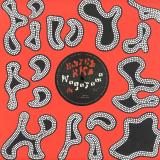
Having established himself as one of the most exciting contemporary dance producers with a string of stellar releases, Japanese producer boys be kko returns triumphantly with the Nagasawa EP, four floor cuts bursting with emotion, shimmering in Tokyo technicolor, and perfectly at home on Bliss Point.

Nagasawa kicks off with a bang. “ChuKii” is a peak time heater: breaks, chopped vocals and punchy toms sear over a low end groove that proves body music can funk. Melodic acid explodes like a firework mid-track, taking the dance floor to psychedelic new heights.

The club psychedelia continues with “Mold Mold”, a minimal, subterranean system roller adorned with swells, bells, and deep, guttural growls dubbed to the vanishing point.

“Sant Esteve (kko Edit)” is melancholic and contemplative jazz house, eschewing cliché and twinging with nostalgia for that moment you felt most free.

“Humor is an important part of my music”, boys be kko reflected over lunch as Izakaya smoke billowed past his face. “Oignon”, the fourth and final track on Nagasawa, is an airy and joyful slice of sampledelia that makes good on this promise. An enormous smile of a track sending listeners off with a slice of sonic sunshine and, dare we say, hope.

Disponible

En el almacen y preparando para el envío

13,40
VARIOUS - DISCOTECA SOUND - ITALIAN DISCOTECA UNDERGROUND 1975-1986 (2x12")

Everyone knows the story of American disco.
But few are aware that, between the late 1960s and the late 1980s, Italy wrote a parallel one — spontaneous, surprising, and incredibly creative.

It is a story that spans two distinct seasons: the Italian disco of the 1970s — melodic, handmade, sometimes naïve yet always original — and the emerging Italo Disco of the 1980s, electronic, futuristic, and lightheartedly projected toward the future.
Two different languages, yet both driven by the same desire for freedom and modernity. Discoteca Sound — Italian Discoteca Underground 1975–1986 brings together 18 rare tracks — including two previously unreleased — that tell this story of transition: from the orchestral and sentimental disco of Italian dance halls to the synthetic and visionary sound of the first drum machines.
A journey through private archives, local labels, regional studios, and forgotten voices — the sonic map of a country that has always danced, but to its own rhythm. From Mediterranean disco to the first Italo Disco, from the dim lights of provincial dance halls to the early home synthesizers, each track opens a window onto an Italy that dreamed of the dance floor as a universal language of connection during the brief season of revolutionary utopias.

This compilation celebrates ten years of work by Disco Segreta — a decade dedicated to the research, recovery, and appreciation of Italian disco and electronic culture. An act of justice owed to all those artists who had their moment yet were never remembered by history — bringing back to light an essential, still too little known part of our musical heritage.
Because dancing today remains, more than ever, a living act of memory.

Limited edition 2LP, features 2 previously unreleased tracks and a new 2025 version of Coscarella & Polimeno – Station to Station.


f Grazia Vitale – Poi (1975) Previously Unreleased


q Daniel Sentacruz Ensemble – Vivo Solo Con Te (1982) Previously Unreleased


f Grazia Vitale – Poi (1975) Previously Unreleased


q Daniel Sentacruz Ensemble – Vivo Solo Con Te (1982) Previously Unreleased


f B2. Grazia Vitale – Poi (1975) Previously Unreleased


q D4. Daniel Sentacruz Ensemble – Vivo Solo Con Te (1982) [Previously Unreleased]


[f] B2. Grazia Vitale – Poi (1975) [Previously Unreleased]


[q] D4. Daniel Sentacruz Ensemble – Vivo Solo Con Te (1982) [Previously Unreleased]


[f] B2. Grazia Vitale – Poi (1975) [Previously Unreleased]


[q] D4. Daniel Sentacruz Ensemble – Vivo Solo Con Te (1982) [Previously Unreleased]

Disponible

En el almacen y preparando para el envío

32,35
OSKAR OFFERMAN - NEW REALITY EP

To submit or to surrender? Robert Johnson resident Oskar Offermann doesn’t have the answers, and that’s kind of the point. Things change: one moment you’re touring the globe as a recognizable face of one of the greatest clubs in the world, the next you’ve started a new life as a teacher. How do you handle that shift? On this record, Offermann doesn’t offer solutions so much as trace his own way through it, reflecting the whole process in his music and creative work.

Whatever the story, whatever the case, Oskar Offermann can still produce some of the most emotive, bleepy, strange dance music out there and this 12 inch is the proof. Sonically and conceptually it leans into that precise, melancholic German school: at points drawing from 80s wave and experimental music, then flirting with trancey motifs and closing in divinely crafted breakbeat. In just four tracks it packs in a surprising amount of functional range, exactly what you’d expect from one of RJ’s longest-standing residents. The A- and B-sides mirror each other: they open at full intensity, tempos pushed well past the 130 BPM mark, easy to imagine ripping through a peak-time floor – and still both sides land on something far more personal and reflective.

Even inside a framework of high-intensity club tunes, Oskar’s character shines through loud and proud. Think the slightly disjarring yet melodically captivating winds in the middle of the B1 trance induced number “Accepting”, or the masterfully paced build of opener “Planet Interface”. The same goes for A2 “Televise Improvise” and B2 “Sei mal nur lieb”: on paper they should feel like breathers next to the two behemoths, but they don’t. Offermann crams so much substance and personality into them that they become quietly dangerous. There’s that magical mix of squelchy acid, rough low end and naturalistic melodies on B2, and the relentless emotional drive of A2 “Televise Improvise”. Oskar is really, really good at making dance music irresistible.

Character, skill and honesty in one record, meant for the attentive listener and the brave DJ. A rare combination nowadays, get it fast!

Disponible

En el almacen y preparando para el envío

13,40
VIER - VIER - IIII (2x12")

VIER

VIER - IIII (2x12")

2x12inchVSN171
Vision Records
16.01.2026

VIER - IIII, a project by: Machinedrum x Thys x Holly x Salvador Breed.

Across its eleven tracks, 'IIII' dissolves borders between breakbeat, trap-meets-gabber, skippy UK shuffle, halftime, jungle and cinematic electronica, music that shifts from serious voltage to full-colour euphoria. What ties it together is philosophy, not genre.

The group's working method began playfully in the studio with a ten-minute egg timer: each member would sketch for ten minutes, then pass it on. That rule became a ritual, a way to keep things human, spontaneous and shared. In VIER, every track passes through four sets of hands; every decision is a test of trust. What could have been chaos instead became a flow state, a cycle of surrender and discovery thatdefines their sound.

Following singles such as Frankfurt, Control, Where Were You, Solitu and Vai Pulando, 'IIII' stands as VIER's first full statement, a body of work that feels both playful and deeply considered. Moments of quiet bloom into distorted joy; melody drifts through broken percussion; endings turn into new beginnings.

Disponible

En el almacen y preparando para el envío

23,49
House on the Strand - Unrest MC

Welcoming London-based artist House on the Strand to the Eastern Nurseries fold following his impressive 2024 debut, "Heroine", Ruben Elbrond-Palmer channels a sombre, cinematic sense of sound with "Unrest".

Interpolating the visual sensibilities of some of his favourite artists, filmmakers, and photographers into the sonic field, Elbrond-Palmer’s palette cuts loose from the percussive elements of his previous work, blending analogue synthesis with repurposed guitars, haunting melodies, and field recordings that call to mind the hazy delirium of a dusty summer’s day. Sitting at its core, "Unrest" places harmony front and centre, with each sombre movement rising and falling as electric fences hum, helicopters hover overhead, and unknown events are set in motion.

Deceptively simple, the resultant album is gestalt—an elegy of melancholic moments, lost to the world.

Mastered by Ike Zwanniken of Hysterical Love Project - mainstay mastering engineer behind majority of INDEX, Co:Clear & Theory Therapy Releases

Established in 2019, Eastern Nurseries is a platform for deeply emotional contemporary electronic music based between Porto and Newcastle upon Tyne. Curated by Rui P. Andrade (aka Canadian Rifles) and Christopher Macarthur Owen (aka Burning Pyre).

The label has released a steady yet considered magna of records from Hasfeldt, Emma Acs, innerinnerlife and VAs encompassing the likes of Conna Harraway, Severin Black & Slowfoam.

Eastern Nurseries no. 41

Written & produced by Ruben Elbrond-Palmer

Recorded in London, Kobaek & Aude, 2019-2024

Mastered by Ike Zwanikken

Cover photo by Andrew Weathers

Disponible

En el almacen y preparando para el envío

16,18
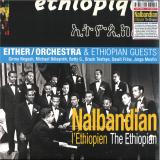
NALBANDIAN THE ETHIOPIAN & EITHER/ORCHESTRA - NALBANDIAN THE ETHIOPIAN (ETHIOPIQUES)

The Éthiopiques series returns! Essential archive recordings from an extremely fruitful period in Ethiopian music.

Before “Swinging Addis” took over the world, there was Moussié Nerses Nalbandian — the Armenian-born composer who shaped modern Ethiopian music. Mentor, arranger, and pioneer, he laid the foundations of Ethio-jazz.

This Éthiopiques volume revives his forgotten legacy, recorded live by Either/ Orchestra First issue ever with new exclusive photos and in depth liner 8-page insert.

“Ethiopian jazzmen are the best musicians that we have seen so far in Africa.
They really are promising handlers of jazz instruments.”

Wilbur De Paris
(1959, after a concert in Addis Ababa)

አዲስ፡ዘመን። *Addis zèmèn* **A new era.**
The time is the mid-1950s and early 1960s, just before "Swinging Addis" bloomed – or rather boomed – onto the scene. Brass instruments are still dominant, but the advent of the electric guitar, and the very first electronic organs, are just around the corner. Rock’n'Roll, R’n’B, Soul and the Twist have not yet barged their way in. Addis Ababa is steeped in the big band atmosphere of the post-war era, with Glenn Miller's *In the* *Mood* as its world-wide theme song, neck and neck with the Latin craze that was in vogue at the same period. Life has become enjoyable once again, with the return of peace after the terrible Italian Fascist invasion of Ethiopia (1935-1941). The redeployment of modern music is part and parcel of the postwar reconstruction. *Addis zèmèn* – a new era – is the watchword of the postwar period, just as it was all across war-torn Europe.
The generation who were the young parents of baby boomers** were the first to enjoy this musical renaissance, before the baby boomers themselves took over and forever super-charged the soundtrack of the final days of imperial reign. Music is Ethiopia's most popular art form, and very often serves as the best barometer for the upsurge of energy that is critical for reconstruction. Whether it be jazz in Saint-Germain-des-Prés or the *zazous* who revolutionised both jazz and French *chanson* after the *Libération*, be it Madrid's post-Franco Movida, or Dada, the Surrealists and *les années folles* that followed World War I, the periods just after mourning and hardship always give rise to brighter and more tuneful tomorrows. Addis Ababa, as the country's capital, and the epicentre of change, was no exception to this vital rule.

**Two generations of Nalbandian musicians**
Nersès Nalbandian belonged to a family of Armenian exiles, who had moved to Ethiopia in the mid-1920s. The uncle Kevork arrived along with the fabled "*Arba Lidjotch*", the** "*40 Kids*", young Armenian orphans and musicians that the Ras Tafari had recruited when he visited Jerusalem in 1924, intending to turn their brass band into the official imperial band. If Kevork Nalbandian was the one who first opened the way of modernism, pushing innovation so far as to invent musical theatre, it was his nephew Nersès who would go on to become, from the 1940s and until his death in 1977, a pivotal figure of modern Ethiopian music and of the heights it. Going all the way back to the 1950s. Nothing less. And it is Nersès who is largely to thank for the brassy colours that so greatly contributed to the international renown of Ethiopian groove. While the younger generations today venture timidly into the genealogy of their country's modern music, often losing their way amidst a distinctly xenophobic historiographical complacency, many survivors of the imperial period are still around to bear witness and pay tribute to the essential role that "Moussié Nersès" played in the rise of Abyssinia's musical modernity.
Given the year of his birth (15 March 1915), no one knows for sure if Nersès Nalbandian was born in Aintab, today Gaziantep (Turkiye/former Ottoman Empire) or on the other side of the border in Alep, Syria... What is certain is that his family, like the entire Armenian community, was amongst the victims of the genocide perpetrated by the Turks. Alep, the place of safety – today in ruins.
Before Nersès then, there was uncle Kevork (1887-1963). For a quarter of a century, he was a whirlwind of activity in music teaching and theatrical innovation. *Guèbrè Mariam le Gondaré* (የጎንደሬ ገብረ ማርያም አጥቶ ማግኘት, 1926 EC=1934) is his most famous creation. This play included "ten Ethiopian songs" — a totally innovative approach. According to his autobiographical notes, preserved by the Nalbandian family, Kevork indicates that he composed some 50 such pieces over the course of his career. This shows just how much he understood, very early on, the critical importance of song as Ethiopia's crowning artistic form. Indeed, for Ethiopian listeners, the most important thing is the lyrics, with all their multifarious mischief, far more than a strong melody, sophisticated arrangements or even an exceptional voice. (This is also why Ethiopians by and large, and beginning with the artists and producers themselves, believed for a long time — and wrongly — that their music could not possibly be exported, and could never win over audiences abroad, who did not speak the country's languages).

Last but not least, one of Kevork's major contributions remains composing Ethiopia's first national anthem – with lyrics by Yoftahé Negussié.
Nersès Nalbandian moved to Ethiopia at the end of the 1930s, at the behest of his ground-breaking uncle. Proficient in many instruments (pretty much everything but the drums), conductor, choir director, composer, arranger, adapter, creator, piano tuner, purveyor of rented pianos,... he was above all an energetic and influential teacher. From 1946 onwards, thanks to Kevork's connexion, Nersès was appointed musical director of the Addis Ababa Municipality Band. In just a few years, Nersès transformed it into the first truly modern ensemble, thanks to the quality of his teaching, his choice of repertoire, and the sophistication of his arrangements. It was this group that would go on to become the orchestra of the Haile Selassie Theatre shortly after its inauguration in 1955, which was a major celebration of the Emperor's jubilee, marking the 25th anniversary of his on-again-off-again reign.

At some point or other in his long career, Nersès Nalbandian had a hand in the creation of just about every institutional band (Municipality Band, Police Orchestra, Imperial Bodyguard Band, Army Band, Yared Music School…), but it was with the Haile Selassie Theatre – today the National Theatre – that his abilities were most on display, up until his death in 1977. To this must be added the development of choral singing in Ethiopia, hitherto unknown, and a sort of secret garden dedicated to the memory of Armenian sacred music, and brought together in two thick, unpublished volumes. Shortly before his death (November 13, 1977), he was appointed to lead the impressive Ethiopian delegation at Festac in Lagos, Nigeria (January-February 1977).

His status as a stateless foreigner regularly excluded him from the most senior positions, in spite of the respect he commanded (and commands to this day) from the musicians of his era. Naturally gifted and largely self-taught, Nerses was tirelessly curious about new musical developments, drawing inspiration from the very first imported records, and especially from listening intensely to the musical programmes broadcast over short-wave radio – BBC *First*. A prolific composer and arranger, he was constantly mindful of formalising and integrating Ethiopian parameters (specific “musical modes”, pentatonic scale, and the dominance of ternary rhythms) into his “modernisation” of the musical culture, rather than trying to over-westernise it. It even seems very probable that *Moussié* Nerses made a decisive contribution to the development of tighter music-teaching methods, in order to revitalise musical education during this period of prodigious cultural ferment. Flying in the face of all the historiographical and musicological evidence, it is taken as sacrosanct dogma that the four musical modes or chords officially recognised today, the *qǝñǝt* or *qiñit* (ቅኝት), are every bit as millennial as Ethiopia itself. It would appear however that some streamlining of these chords actually took place in around 1960. It was only from this time onward that music teaching was structured around these four fundamental musical modes and chords: *Ambassel*, *Bati*, *Tezeta* and *Antchi Hoyé*. A historical and musical “details” that is, apparently, difficult to swallow, especially if that should honour a *foreigner*. Modern Ethiopian music has Nersès to thank for many of its standards and, to this day, it is not unusual for the National Radio to broadcast thunderous oldies that bear unmistakable traces of his outrageously groovy touch.

Disponible

En el almacen y preparando para el envío

22,06
Louis Baker - "Keep On" Best's Friends Remixes

Renowned for his rich, soulful voice and heartfelt songwriting, Wellington, New Zealand's Louis Baker blends neo-soul, R&B, and folk into a sound that feels both timeless and fresh. His single "Keep On" is an uplifting anthem of perseverance, now reimagined by a hand-picked selection of acclaimed producers, each bringing their unique touch to the track.

Delfonic: Berlin's Delfonic is a digger's digger - a selector, DJ, and producer with an encyclopedic ear for groove. Fresh from delivering stunning Roy Ayers edits for BBE Music, he brings his soulful touch to "Keep On", crafting a warm, deep, and floor-friendly rework.

Larse: German DJ and producer Larse has released on acclaimed labels such as Defected, Glitterbox, and Noir Music, earning a global reputation for timeless, emotive house. His remix of "Keep On" channels the smooth, sultry elegance of UK soul icon Sade's '80s sound - lush, classy, and built for late-night listening.

Gush Collective: The legendary German 2-step producers Gush Collective are masters of soulful, shuffling rhythms. Their remix of "Keep On" blends classic UK garage swing with uplifting melodies, delivering a dancefloor-ready cut that radiates joy and energy.

DJ Philippa: Originally from New Zealand and now based in Berlin, DJ Philippa has built a strong following for her uplifting, groove-rich house sets and productions. With releases on Freerange Records, SlothBoogie, and Local Talk, she's known for her deep musicality and impeccable feel for the dancefloor. Her remix of "Keep On" injects warm basslines, shimmering keys, and irresistible rhythmic flow.

Disponible

En el almacen y preparando para el envío

13,24
Aybee, Dego, Fred P, Gerald Mitchell, Ian O’Brien, K15, Kirk Degiorgio, Linkwood, Patrice Scott, Pir - The First Circle

Neroli reaches release number 50 during its 20th anniversary and celebrates with a special project, an album of songs by some of the label artists and friends. The title reference goes back to 20 years ago when label’s honcho Volcov decided to give the label the name of Brian Eno’s Neroli album, an hour long ambient opus inspired by the oil derived by the flowers of the Seville orange. So after 20 years and 50 releases the label goes full circle and offers an album of delicate and heartwarming melodies and atmospheric songs. The talent of original UK dons Kirk Degiorgio, Dego and Ian o’Brien is enrolled once again to guarantee sophistication and depth. Patrice Scott and Fred P, who had recently released eps on Neroli, are joined here by fellow spacecadet Aybee…all delivering warm futuristic pieces! K15 and Linkwood debut on the label, opening and closing the album with class. And there is even a lost composition by Volcov himself with Detroit’s Gerald Mitchell and Pirahnahead as part of some 2010 sessions that might resurface soon…THE FIRST CIRCLE is complete!

Design by Al White. Manufactured and Distributed by Mother Tongue, Verona.

Disponible

En el almacen y preparando para el envío

18,36
The Warning - Live from Auditorio National CDMX LP 2x12"

Die drei Schwestern der Rockband „The Warning“ sind zurück mit ihrem mitreißenden Live-Album „Live
from Auditorio Nacional CDMX“.
Die in Mexico geborenen Geschwister Daniela „Dany“, Paulina „Pau“ und Alejandra „Ale“, haben inzwischen unzählige Kilometer auf Tournee zurückgelegt, hundert Millionen Streams erzielt und eine riesige
Fangemeinde begeistert.
Ihre harte Arbeit und Leidenschaft haben ihren Sound mit beeindruckender Präzision verfeinert. Sie kombinieren alternative Hymnen mit eingängigen Melodien und einem kraftvollen Hardrock-Einschlag.
„Live from Auditorio Nacional CDMX“ dokumentiert ein unvergessliches Konzert vor 30.000 Fans in MexicoCity und fängt nicht nur die mitreißenden Songs, sondern auch die einzigartige Atmosphäre des Abends ein.
Das Album ist als CD und auf Vinyl erhältlich.

Disponible

En el almacen y preparando para el envío

34,03
The Collective Move - Land of the Sun, the Moon and Cosmic Melodies LP 2x12"

"The Land of the Sun, the Moon and Cosmic Melodies" is a conceptual Opera of III movements, inspired by a cosmogony that features the planets of the sun and the moon. These two characters guides us on a journey of light and shadow, rising and setting in a cycle of unexplored musical territories.
The Collective Move presents its debut album with a broad palette of sounds, ranging from jazz to opera, from southern Italian folk music to northern Indian classical music, orchestrating a 60-minute "sonic narration" that ends with the fable "What do the birds tell?".

The Collective Move is an international group of young musicians formed in the Amsterdam Conservatory in 2022. The Collective's vision is to unite diverse artistic expressions and musical genres, inviting diverse artists and musicians from diverse cultures and countries to collaborate in flexible and interdisciplinary formations.

Disponible

En el almacen y preparando para el envío

28,53
NORIO MAEDA TRIO - ALPHA RAY LP
  • A1: Alpha Ray
  • A2: Bye Bye Blackbird
  • A3: Maria
  • A4: Fifth Column
  • B1: Slobber
  • B2: Star Eyes
  • B3: Infinite

A torrent of brilliance released from the fingertips. The art of the piano trio by a giant of arrangement.

In 1968, Norio Maeda, the genius arranger once described as being able to “write different scores with his right and left hands at the same time,” welcomed his close musical allies Takeshi Inomata and Tatsuro Takimoto and took on the piano head-on in his first piano trio work as a pianist. This album brings together the refined melodies of the new mainstream style that led the jazz scene at the time, experimental elements using prepared piano, and even a strikingly inventive recording approach in which as many as seven microphones were placed inside the piano. With the outstanding structural power of a composer and arranger and the sharp instincts of a performer woven together at a high level, this is an important work that deserves to be engraved in the history of Japanese jazz.

Reservar06.11.2026

debe ser publicado en 06.11.2026

42,44
Artículos por página
N/ABPM
Vinyl