White Shadows In The South Seas is the title of a book written in 1919 by Frederick O'Brien as part of a trilogy he wrote based on his experiences living in the Pacific islands in the early part of the 20th century. His book was taken as the starting point for a film to be directed, initially, by Robert Flaherty (famous at the time for his groundbreaking documentary / fiction film Nanook Of The North) with W.S.Van Dyke as his support. The film, ultimately, apart from the title, had little to do with O'Brien's book and Flaherty left the film after a few months leaving Van Dyke to finish it.
I purchased O'Brien's book, along with many others, from Basement Books, a secondhand bookstore in Melbourne/Australia. Part of my 'Islomania' and on going fascination with all things Pacific. When I discovered there was a 1929 silent film based on the book I sought it out and started to present it as part of my 'Live Music/Silent films' repertoire. Tabu by Frederick Murnau, which coincidently also had Flaherty as co-director originally, was the first film I ever wrote / improvised a score for and presented as a live film/music performance. My repertoire extends to over 23 films now.
My eclectic and diverse musical and artistic interests extend into 'Hawaiian', 'Exotica', 'Ambient' and 'Electronic' Music. I have produced several volumes of so called 'Electronic, Ambient, Exotica' on CD and Vinyl, including Kiribati, Globe Notes, Rayon Hula ( on Vinyl, CD and digital format ) and most recently, New Globe Note on Vinyl and White Shadows In The South Seas on CD.
White Shadows In The South Seas features some of the music presented in my live screenings of the 1929 silent film.
The film is the story of Dr. Matthew Lloyd, an alcoholic doctor who is disgusted by the exploitation by white people of the natives on a Polynesian island. The natives dive for pearls, however, numerous accidents occur and one diver dies. In anger, Dr. Lloyd punches Sebastian, the employer. As revenge and to prevent further interruption of his activities, he tricks Dr. Lloyd onto a ship with a diseased crew (thinking they are ill) and his men rough him up and send the ship off into a storm. Dr. Lloyd survives and is washed ashore on an island where none of the natives have ever seen a white man before. Lloyd is rescued and ultimately falls in love with the chief's daughter, who is Taboo, hence Lloyd is prevented from pursuing his love for her. An incident occurs and a young boy is thought to have drowned but Lloyd is able to revive him, earning him points and permission with the chief's daughter. Lloyd begins to realise that the local islanders have no sense of the value of the black pearls which grow in abundance around their island and he starts to dive for them and collect them. One morning the white man Sebastian unexpectedly turns up on a scooner and starts to offer the islanders trade for their pearls. Llloyd tries to interrupt the encounter and is shot and dies. His wife and the islanders morn for his dead body and, symbolically, the passing of a way of life.
Mike Cooper plays - Electric and acoustic lap steel guitars / electronics / Zoom Sampletrack / Kaos Pad / Casio SK1 / Korg Drum Machine / Self Made Instruments.
It also features field recordings made on Pulau Ubin by Mike Cooper during a month as Artist In Residence for The Artist Village / Singapore.
I would like to acknowledge and thank Lawrence English (Room40 Records) for his assistance and encouragement with the original recordings and the CD version of White Shadows In The South Seas.
All music written and played by Mike Cooper PRS/MCPS - except Po Mahina (trad. Arr. Cooper) and Hilo Hanakahi (trad. Arr. Cooper)
Recorded and Mixed at the Steelworks in Rome 2012/2013.
A White Shadow In The South Seas
In February 2014 'A White Shadow In The South Seas' was the title of an audio-visual installation I made at the Teatro In Scatola in Rome, Italy, presented as part of a series of sound installations titled 'Visitazioni' produced by Proposte Sonore.
The essay below, as well as our collection of Hawaiian shirts, Exotica and Hawaiian vinyl records, was an inspiration for this installation.
'..the transformation and reconstitution of the souvenir commodity as an indigenous ethnic art form and a scarce relic of Hawai'i's romanticized past...' from - Clothing and Textile Reasearch Journal - From Kitsch to Chic by Marcia A. Morgado.
And....
Michael Thompson's Rubbish Theory (1979)
' ...a critical aspect of Western culture is the pre-disposition to see objects in terms of two overt categories: the transient and the durable. Objects identified as transient have finite life spans and lose value over time, whereas those identified as durable have infinite lives and over time increae in value....category assignments are arbitrary, but once assigned a category membership determines relative value. Fashion apparel-by defenition-is assigned to the transient category; paintings commonly are designated durables....how is it that transient objects.. ( e.g. Hawaiian shirts and vinyl records ) ..sometimes become durables.
Objects assigned to the rubbish category are largely invisible, have no value and, ideally, no life span. Fashion for example, no longer worn and relegated to the back of the wardrobe has fallen into the covert rubbish category. But rubbish can be rescued and transformed. Thompson says ' What I believe happens is a transient object gradually declining in value and in expected life span may slide across into rubbish. Here it exists in a timeless and valueless limbo where it has a chance to be re-discovered and be successfully transformed to a durable. Such transferes are radical: objects gradually slide from transcience to rubbish, but the transformation from rubbish to durable involves an all-or-nothing leap across two boundaries, that separating the worthless from the valuable and that between the covert and the overt. Things drift into obscurity but they leap into prominence.
The delightful consequence of this hypothesis is that in order to study the social control of value we must study rubbish.
The rubbish-to-durable transformation is accompanied by the development of highly specialized knowledge derived from the discovery of subtle variations and complex details that went unnoticed in the objects transient stage. The discoveries initiate renewed interest in the object and its market value begins to climb. As prices soar beyond the reach of ordinary people, the object becomes available only in high priced collectors' markets. Furthermore, as market values rise, the aesthetic value of the object undergoes a reassessment as well, and it becomes increasingly apparent that the objects intrinsic beauty has been overlooked. Ultimately the object is re -assigned as a durable and becomes recognized as a timeless classic.
Exotica, Ambience and Pacificism - A dialogue with Mike Cooper & Professor Philip Hayward Deputy Pro Vice Chancellor of Research Southern Cross University, Lismore, Australia.
Cerca:members only 3
The story of Seattle's rise to global rock supremacy in the late 80s and early 90s begins with Green River. Made up of Jeff Ament (bass), Mark Arm (guitar/vocals), Bruce Fairweather (guitar), Stone Gossard (guitar) and Alex Shumway (drums), the
quintet put out three 12's and a 7' single during its brief existence.
Green River's influence on Seattle's music scene spread far and wide thanks to the members' dispersion into bands including Pearl Jam, Mudhoney and Love Battery, as well as the punk glam sludge rock songs they left behind. 'By '83, '84, there was
definitely a movement that was happening within hardcore, like Black Flag slowing down for My War,' says Arm. 'The Replacements and Butthole Surfers were rearing
their heads, and they're very different bands, but they're not hardcore - the Replacements are pretty much straight-up rock, and Butthole Surfers were God knows what. Sonic Youth's Bad Moon Rising was around, and a lot of really
interesting post-hardcore things were happening.'
Green River, formed in 1984, were part of that evolution, with a sound that straddled a lot of different genres - blues, punk, bloozy straight-ahead rock. The mini-LP 'Dry As A Bone' - which came out in 1987 - and the band's lone full-length
'Rehab Doll' - which came out in 1988 - were released as a single CD with a few bonus cuts, including their sneering cover of David Bowie's 'Queen Bitch' and their marauding version of Dead Boys' 'Ain't Nothin' to Do', in 1990 - but they've been
unavailable on vinyl for years.
Now, these slices of Seattle music history are not only back in print, they're accompanied by items from the vaults that had been forgotten about for decades.
'Dry As A Bone' was recorded at Jack Endino's Reciprocal Recording in 1986 and it shows the band in furious form, with Arm's yowl battling Fairweather and Gossard's
ferocious guitar playing on 'This Town' and 'Unwind' opening as a slow bluesy grind then jump-starting itself into a hyperactive chase. The deluxe edition includes Green
River's cuts from the crucial Seattle-scene compilation 'Deep Six', as well as long-lost songs that were recorded to the now-archaic format Betamax.
'Rehab Doll', recorded largely at Seattle's Steve Lawson Studios., bridges the gap between the taut, punky energy of 'Dry As A Bone' and the bigger drums and thicker
riffs that were coming to dominate rock in the late 80s. This new edition of 'Rehab Doll' includes a version of 'Swallow My Pride' recorded to 8-track at Endino's Reciprocal Recording, which features a more accurate depiction of how the band
sounded when they played live. 'When I listen to these mixes, I think, 'This is how we actually sounded - this is the kind of energy we had,'' says Shumway.
Green River's place in American music history is without question but these recordings paint a more complete picture of the band - and of rock in the mid to late 80s, when punk's faster-and-louder ideals had begun shape-shifting into other ideas.
CDs in digipack with 12-page booklet. 2LP formats in gatefold jacket with custom dust sleeve and digital download code.
Perhaps one of the most unique and unlikely exponents of the highly collectible genres of ambient electronics, experimental tape-music and PINA (Private Issue New Age), this English-born Jamaican- raised sound designer, artist and existentialist furrowed his own unblinkered path through lesser chartered electronic fields for many moons before eventually teaming up with Bill Laswell (with Material) and Daevid Allen in New York to bring self-taught synthesis to Gong during their most oblique periods.
Creating two impossibly rare self-pressed vinyl LPs of conceptual inner-visionary outer-galactic angular tonal-dronal alien-art soundscapes in the process, the man known under figure shifting guises such as Dennis Wise/Denis Weise/Dr. Wise etc, combined a culture of sound system circuitry and radiophonic trickery adding Tea-pot poetry and sci-fidelity future- folk to his magnetic mesh.
Presented here as the first ever dedicated Wize Music collection this record combines compositions spanning 1979-1984 in both a solo capacity as well as small- group projects featuring members of the Emerald Web band.
Imagine a comic book where a Funkenstein monster called 'Laraaji-Scratch Perry' invaded your record shelf while Komendarek and Holger Czukay kept lookout... Dr. Dennis might be the only one Wise enough to outsmart all of them with his powerful amorphous anaesthetic.
Process Blue was formed in the fall of 1981, at Antioch College near Dayton, Ohio. The group essentially consists of Chel White (tapes, keyboards, percussion) and Dan Gediman (keyboards, vocals, bass). Additional members contributed at various points to both recorded works and live performance. Process Blue's original interest was in electronic music and the interfacing of electronic sounds with acoustic instruments, non-musical instruments, and tape-manipulated sounds. The group's primary objective has been to strive for creative experimentation within the format of contemporary pop music.
We are proud to release a 12-song LP featuring music recorded between 1981 and 1982. 7 of the tracks were originally self released on a cassette album in 1982. The only song in this batch to ever appear on vinyl is 'Control Panel' released on a French LP compilation called 'Folie Distinguee Alternative Funk.' The songs range from experimental dance music to quieter, more melodically-oriented pieces. They used an array of synthesizers used were Moog Sonic-Six, Casiotone MT-30, Korg MS10, Roland SH 101, Casio VL Tone. Analog instruments included electric guitar and bass, and drums. Guest musicians included Gil Belton (melodic rototoms percussion and synthesizer bird sounds) on Industrial Park, Eric Zimmerman (Korg synthesizer) on Up to $100 and Subterrania, Patricia Yarborough (vocals) on Pink Razor and Air, Mike Pummel (engineer) on Control Panel, and John Flansburgh (of They Might Be Giants) engineer on Up to $100. All songs have been remastered by George Horn at Fantasy Studios. Each LP is housed in a jacket designed by Maycec featuring original drawings by Chel White and include a double-sided insert with photos and lyrics.
Lost Futures is a new label that explores experimental and often radical approaches to dance music from the past. In a musical landscape that increasingly claims to seek and reward new forms and ideas, Lost Futures delves into the recent past to revisit forward-thinking, optimistic projects that, owing to the social, musical or outright political climate, perhaps struggled to find an audience. Allowing only time to re-contextualise these leftfield, sometimes misunderstood and ultimately human bodies of work, Lost Futures taps into the inherent idealism of rave.
LF001 trips back until the early nineties to revisit the alternative scene emerging from the Dutch city of Utrecht. Here, three young men - DJ Zero One (Sander Friedeman), TJ Tape TV (Arno Peeters) and DJ White Delight (Richard van der Giessen) - joined forces to form 'The Awax Foundation'. Inspired by the transcendent and revolutionary electronic music arriving on their shores imported from Chicago and Detroit, combining their knowledge, gear and ever-expanding vinyl collection allowed additional freedom in paying sincere tribute to these intoxicating sounds, while also developing their tastes in a more personal, eclectic direction.
The musical flavours of Awax initially leaned toward acid house and the roots of techno. However, with three different mindsets in the mix, their tastes were rarely fixed. One thing each shared in common was a devotion to collecting rare sounds, specifically more adventurous and international samples than those emanating from the increasingly-hard, masculine dance music emerging from the Netherlands during the period. Inspired by the cross-over global sound of bands like Suns of Arqa, or 'World Music', as it was perhaps patronisingly termed at the time, the trio became interested in the idea of making techno with 'ethnic instruments'.
Of course, this being 1992, none of The Awax Foundation had access to such instruments, instead, they had a vast, collective library of samples from all over the world. There were no collaborations and no clear plan. Instead, they set to work using a Yamaha TX16W sampler, the legendary Atari 1040ST computer, a cheap mixing desk and a couple of low-end synths and FX machines. When Richard mentioned the project to his friend, Akin Fernandez, the London DJ and owner of cult label Irdial Discs, Fernandez was intrigued enough to invite the trio to record a one-hour show for his 'Monster Music Radio' series on London's then-burgeoning Kiss FM.
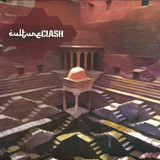
Forced to come up with a name, 'CultureClash' seemed like the obvious choice, even if the members of Awax were only creatively sparring among themselves. Along with the term 'ethno-techno', slightly dubious to a hopefully more conscious Western audience in 2017, these were the only guiding principles to the quietly ambitious project that soon combined cutting-edge machine rhythms with samples sourced from everywhere from Bolivia to Togo, and inspired by everything from Ravi Shankar's epic soundtrack to the Oscar-winning movie Ghandi, to the technical limits of their own setup requiring a dazzling degree of cut-and-paste work. Some tracks even emerged out of academic studies within the ethnomusicology department at The University of Amsterdam.
The show aired on October 2nd, 1992, recorded in one blistering take and without any rehearsals, traversing a huge variety of tempos and styles. If the performance wasn't seamless, it was undeniably thrilling, fresh and ambitious. As such, several labels, including Fernandez's aforementioned Irdial Discs expressed an interesting in commercially releasing CultureClash, while another imprint proposed a series of twelve-inches and an album. But the sheer complexity of the project meant that it never saw the light of day, while the trio embarked on different journeys ahead, both creative and personal.
Twenty five years later, and the original CultureClash lineup and founding members of The Awax Foundation provide the sound of the first release from Lost Futures. An otherworldly, ambitious and optimistic compilation, accompanied by extensive sleeve notes from the trio, CultureClash is a timeless ode to experimentation in dance music's ever-overlapping culture.
'Sounds from the Great House! Outernational Sounds proudly presents a Nimbus West spirit jazz essential: the Creative Arts Ensemble's classic debut One Step Out. Mastered at 45rpm on double vinyl for enhanced sound, this release features all tracks at full length for the first time on wax.
One of the most sought after and highly regarded titles to have appeared on Tom Albach's celebrated Nimbus West imprint, the Creative Art Ensemble's One Step Out is a timeless work of spiritualised jazz. A true gem from the Los Angeles jazz underground, the album was pianist and composer Kaeef Ruzadun Ali's first recording as leader of the Creative Arts Ensemble, the only large ensemble group that emerged directly from Horace Tapscott's legendary Pan Afrikan Peoples Arkestra community jazz group.
A Los Angeles native, Kaeef was introduced to the Tapscott circle in the late 1970s. His first experience of the Arkestra's ethos was through PAPA tenorist Michael Session, who took him to the famous 'Great House' at 2412 South Western Ave., LA - a large mansion house which members of the Arkestra had taken over as a space for communal living. Life in the Great House was a continuous stream of music, dance and community events. 'When I walked in there,' recalled Kaeef, 'it was like this whole rush came over me, just from going in the front door...It was like a very, very warm feeling of love. I went and I came out with 'Flashback of Time', and that was my first arrangement.'
Kaeef quickly became a significant contributor of compositions to the Arkestra's songbook - his piece 'New Horizon' would be recorded by Horace Tapscott for the latter's Tapscott Sessions series. But 'Flashback of Time' would eventually appear on One Step Out, played by the new group he had put together from stalwart Arkestra members. Inspired by both Tapscott's example and by the Art Ensemble of Chicago, Kaeef had wanted to follow their lead by assembling a larger unit. 'I would like to form a group that would be an extension of the Pan Afrikan Peoples Arkestra,' he told Tapscott. The group was to be known as the Creative Arts Ensemble, and One Step Out, released in 1981 by Nimbus West, was their debut.
Featuring seasoned Arkestra regulars including reedsman Dadisi Komolafe, drummer Woody 'Sonship' Theus and altoist Gary Bias, with veterans Henry 'The Skipper' Franklin on bass and George Bohannon on trombone, One Step Out is a key document of the Los Angeles radical jazz underground. Featuring the sanctified vocals of Kaeef's sister, B. J. Crowley, the album is a tour de force of spiritually energised independent jazz music. Community uplift and sacred vision straight from the Great House, back on vinyl for the first time since 1981!
"In 2016, 21 years after Acid Mothers Temple & The Melting Paraiso U.F.O. were founded in Osaka, Japan, there was a major shift in the line-up and "Next Generation" was added to the bands name. We now view the first 20 years of the bands career as chapter one in our story, and we are now turning the page to start chapter two. In 2018, it's time to re-record our classics with this new line-up, we just opened the door to the next stage!' (Kawabata Makoto 2018)
Twenty four years into their existence, Acid Mothers Temple & The Melting Paraiso U.F.O. have circled the globe at least a few dozen times, released over 100 albums in their various guises and played thousands of shows.
In recent years, they've experienced seismic line up changes which has given them yet another new lease of life ... or a rebirth if you will. Original members Kawabata Makoto (guitar, speed guru) and Higashi Hiroshi (synthesizer, noodle god) are now joined by Jyonson Tsu (vocal, midnight whistler), Satoshima Nani (drums, another dimension) and Wolf (bass, space & time) and as anyone that has seen the new line up live will testify, things have gone even more cosmic ...
'Reverse Of Rebirth In Universe' sees the band return to their old label Riot Season for the first time since 2012's 'IAO Chant From The Melting Paraiso Underground Freak Out' (CD still available). Both label and band have gone on some wonderful journeys during that time apart but both felt the stars were finally correctly realigned to renew their partnership in all things weird.
Long time AMT fans will immediately recognise some of the song titles listed on the album sleeve here. But the songs themselves have been reworked and transformed far away from their original versions. New boy Jyonson Tsu's quiet, almost whispered vocals bring a whole new aura to proceedings, despite the familiar riffs hidden in the depths below them. It's so laid back in places it's practically horizontal, with only occasional trademark piercing guitar squeals threatening to destroy the peace and calm. The whole of side two is taken up with the twenty minute epic 'Black Summer Song' .. and if this is an indicator to where the AMT mothership is heading going forwards we're all in for another fucked up and magical ride.
If you stepped off the AMT ride over the years, possibly overwhelmed by the amount of releases they were once firing out ... it could be time to step back on it and check out where they're currently at. In a world that's more messed up than ever, we could all use a little break away from the norm, and nobody takes you as far away from the norm as possible as Acid Mothers Temple & The Melting Paraiso U.F.O.
The new album from Danish electronic trio System is a special kind of collaborative effort with piano magician Nils Frahm. His purpose-built improvisations on synth, organ and piano served as source material for the members of System (Thomas Knak, Anders Remmer & Jesper Skaaning), who merged his warm acoustic tones with their minimalist digitalism and set out to translate their distinctive clicks 'n' cuts electronics into vivid soundscapes. Over two years in the making, the resulting nine tracks are as sonically intriguing as they are touching. Ranging from the mellow bliss of the title track to echoes of 90's and 2000's electronica and ambient sequences frequented by mesmerizing movements and sounds. The blending of piano and digital tones and noises into emotive pieces might instantly recall the work of Alva Noto and Ryuichi Sakamoto, though System and Frahm come to quite different results.
Thomas Knak met Nils Frahm at one of his concerts in Copenhagen. They stayed in touch, exchanging thoughts and ideas. Two years later, Anders Remmer was also introduced to Nils. From then serious ideas for a collaboration formed. As Nils was a fan of System's self-titled debut album (released in 2002 via Pole's Scape label) their talks centred around Dub and minimalism, elements that constitute most of System's music as well as their side and solo projects. This in mind, System began producing sketches and brought them to Nils´ Durton Studio in Berlin in December 2015, where they recorded ten hours of him playing keys and effects to their drafts. Back in Copenhagen, they decided to change direction. - As Nils had told us about his fascination with our debut album, we tried to rediscover this minimal clicks 'n' cuts era. But hearing Nils playing to our rhythmic beds, we felt the need to scrap those beats and instead head in a more cinematic direction.'
So they started building new pieces from the Durton recordings, maintaining some of the minimal and static quality while new layers of synth sounds and noises created a richer and more organic quality compared to older System albums. The solo projects of Thomas (Opiate), Anders (Dub Tractor) and Jesper (Acustic) always relied on steady beats or rhythmic material, so the productions of 'Plus' with their focus on acoustic and melodic elements, ambient layers and cinematic moods, sees them pushing forward into new areas.
This way, the trio avoided copying what they had already done years ago, when they built a reputation as Denmark's prime originators within electronic music in the 90's and 2000's. 'Plus' is a triumphant example of collaborative experimentation and may be the dawn of a new era for System: - For us it was really satisfying to focus more on actual sound rather than rhythmic aspects. There is a lot of potential in this field, so it would only be natural for us to pursue this, maybe as a series of collaborations with other people who's music we admire.'
The Afro National Band Was Formed In Freetown, Sierra Leone In 1972. Their Inspirational Leader, Sulay Abu Bakarr Accompanied By His Wife Patricia And Ayo Roy Macauley Split From The Sabanoh Jazz Band To Form Their New Group. They Skillfully Merged Highlife And Jazz Sounds With A Deep Knowledge Of West African Sounds. Growing To Become One Of The Premiere Bands To Emerge From Sierra Leone They Not Only Defined The Sound Of The Country For A Generation But Also Crafted Some Of The Country's Most Popular And Memorable Songs (for Example Sonjo Which Is Included On This Collection).
The Band Toured Extensively Throughout Africa And Europe In The 70s (working With The Giant Of Sierra Leone Music Akie Deen In The Process). Towards The End Of The 70s The Band Departed Sierra Leone, Sulay And His Wife Moving To Maryland In The Us And Other Members Moving To London.
Our Collection Focuses On Possibly Not The Best Known Songs Of The Band But The Tracks Which Have The Rhythms To Move The Dance Floor. We Open With The Foot Tapping "jokenge" And Its Driving Shuffle Beat, Swirling Organ And Percussive Guitar Lines. "push Am Forward" Takes A Afro-psychadelic Turn With Its Hypnotic Rhythms And Driving Distorted Guitar. "mr Who You Be" Is A Cover Of The Fela Kuti Track, Doing It Fine Justice. "gowa" Highlights The Vocal Prowess Of The Band, As Dose The Ever Popular "sonjo" (the Version Featured Here Is A Rare Alternate Recording).
"money Palava" Opens Up Side Two With Its Infectious Highlife Beat And Hooky Vocals. "money Nor Bataya" Highlights The Bands First Use Of Synthesizers. "mother In Law" Sweeps Up Back To Free Town 1973 With Its Clever Vocal. "set My Soul On Fire" Is A Bonus Track Which Brings In The International Flavour Of The Band.
The Afro National Band Continues In Various Guises To This Day, With Sulay And Patricia Acting As The Proud And Talismanic Figures For A Whole Generation Of Sierra Leonean Music.
Soundway Records delivers a beautifully remastered reissue
of Brazilian duo Grupo Controle Digital's only album, 'A Festa
É Nossa'. First released in 1988, the album is now housed in a
tip-on heavyweight sleeve and restored artwork.
With the title track 'A Festa É Nossa' having circulated the
last few years in the DJ sets of influential tastemakers, the
album has become highly sought after by electronic fans
and collectors alike. Lo-f synths and cruising bass lines
permeate the record, influenced by the group's Brazilian
contemporaries at the time such as Tim Maia, Cláudio Zoli,
Secos E Molhados, and rock outft Made In Brazil.
Band members Billy Jaguar and Gel Valiery regularly
performed in various groups in São Paulo throughout the
80s and 90s, but after Gel passed away, Grupo Controle
Digital was no more - the band and the album faded into
obscurity and Billy became a priest, working with gospel
music. It remained that way until Brazilian DJ Millos Kaiser
(from label Selva Discos, and one half of Brazilian street party
organisers Selvagem) tracked down the remaining member
of the group to be able to include one of their tracks on the
highly anticipated Soundway compilation 'Onda De Amor:
Synthesized Brazilian Hits That Never Were (1984-94)',
released in July 2018.
Audio restored by Neal Birnie and re-mastered by Frank
Merritt at The Carvery, London. Artwork restored by Lewis
Heriz.
FOR FANS OF:
Soundway 'Onda De Amor' compilation, Music From Memory
'Outro Tempo' Brazil compilation, Spacetalk compilations,
Sabor Do Brasil
'Garage bands suddenly obtain cult status and become the antithesis of their initial appeal'
Garage Class were a group of reluctant outliers who produced one of the finest contributions to the wave of UK DIY music that emerged during the late 70s and early to mid-80s.
Hailing from Alsager in North West England and comprised of Tim Shutt (vocals) Phil Murphy (lead guitar) Clive Williams (guitar) Lynne Sanders (bass) and Phil Bourne (drums / bass on studio recordings) Garage Class originally went by the name of The Pits before their then manager Steve Hurt imposed an alias which, though unpopular within their ranks, would nevertheless reflect the shambolic art they would eventually capture on their first and only single.
As The Pits the group offered a loutish inflection on glam-punk flamboyance, evoking Johnny Thunder hitting the north and remaining disowned yet undeterred in a dreary old boozer. But as Garage Class the group distilled a roughcast and homespun primitivism that felt quintessentially their own. In this they proved too unruly to be assimilated into any wider scene. Early gigs descended into acrimony and recognition proved elusive. Yet what they managed to make back then now sounds like an extraordinary article of underdog ambition.
Released in 1984, four years after it was originally recorded, the Terminal Tokyo single is an unlikely triumph of exceptional messthetic punk. Though raw and unpolished the songs here are precariously pop-minded and indisputably anthemic. The titular A-side reveals the dry and detached drawl of Shutt aka The Subliminal Kid, a sharp, jaded and poetic voice that has some of the most iconic lines never heard in punk. Accompanied by second-hand guitars, on-the-fly handclaps and a chorus like a terrace chant this is the cult hit that never was, a heroically artless masterpiece that has all the ragged character and misfit euphoria of Swell Maps and The Buzzcocks if they were more impulsive and boisterous, and left to their own devices in the remote margins of a Cheshire town. The original B-side is here substituted for I Got Standards, a track that, until now, has somehow remained unreleased. An ideal twin to Terminal Tokyo there's the same brusque and dog-eared quality to the band's delivery, as well as the same upfront emphasis on strong hooks and insistent momentum. Yet again, Shutt is on impeccable form, perfecting an inflated, adolescent antagonism that has all the sardonic, malcontented charm of similarly 'shirty' buggers like Dan Treacy (Television Personalities), Patrik Fitzgerald and Mark Perry (Alternative TV).
Although never accepted in their own time both tracks represent a brief but inspired moment of fervent imperfection, one that epitomized the best of a diffuse and autonomous underground movement spearheaded by The Desperate Bicycles and built upon by the likes of Amos & Sara, The Homosexuals, The Cleaners From Venus and Family Fodder. Like them Garage Class were situated at a point where punk, art, humour and a sense of stubborn independence all intersected.
In the years since Terminal Tokyo has accumulated a retrospective appeal among certain trusted circles, with Jon Dale celebrating the single in his exhaustive and essential Story of UK DIY for Fact Magazine, and original copies regularly changing hands for a foolish forty quid or so. With this inaugural release on the Outer Reaches label Terminal Tokyo is not only restored for the very first time but given a worthy expansion courtesy of JD Twitch (Optimo).
Continuing his own fascination with the fringe history of UK DIY - documented on his own outstanding compilation Cease & Desist: DIY! (Cult Classics From The Post Punk Era 1978-1982) and in his re-edits of Crass Records classics for an early release on RVNG INTL - Twitch reinterprets I Got Standards as an incisive, dubwise outing that pictures Jaki Liebezeit and Muslimgauze on a bender in England's provinces, tasked with remixing the raw product of local punks. A new slant on Garage Class' crude magnificence, built to play loud on contemporary soundsystems.
Although the latter part of 1980 spelled the end for Garage Class with members moving on to other projects (Bourne fell in with The Colours Out of Time, Murphy went on to front The Regular Guys and Shutt eventually left to form Happy Refugees) this reissue attempts to give their fleeting time together and the unique single statement they made the treatment it deserves. If this means Garage Class have obtained cult status, their initial appeal remains. Just listen for yourself.
The music contained in this album invokes the vibes and spirit that were so crucial to much of the music recorded during the 1960's & 70's in Jamaica. If you talk to the musicians and singers of this era, they will tell you that the driving force behind the songs they created was the sheer love of music. This is one of the reasons these recordings are so powerful and move listeners to this day. Music like this can only be made by those who were schooled in the studios and yards around Kingston and is not something that can be easily reproduced outside Jamaica. The Kingston All Stars represent some of the most legendary musicians to ever grace the little island & it is thanks to their passion and dedication that we have a lifetime of music to enjoy.
The members of KAS have been working & recording with each other in some of Jamaica's most legendary studios for over 50 years. The vibes and music that are created when they get together is nothing short of magic. This is the 3rd KAS LP showcasing the talents of Jamaica's top session musicians from the golden era of Jamaican music. These are the artists who laid the foundation for Rocksteady, Reggae, Roots and beyond in countless recording sessions around Jamaica & without them the music we love would not exist.
The album's intro piece 'Boo Rock', is a tribute to the legendary drummer Mikey 'Boo' Richards. Mikey has recorded with many of the Kingston All Stars in some of Jamaica's most fabled studios. It is obvious that Mikey is revered by all of the Kingston All Stars and it is fitting that this is the 1st track on the album.
Singer Allen Jahsana who is known for his work with Mikey Chung in the early 70's brings two amazing songs to the project. The first 'Jungle Justice' is a commentary on the lack of justice in the tough streets of Kingston, one which Alan knows firsthand as a longtime Kingstonian. The second vocal 'Rising from the Ghetto' is a call to the youth to rise up out of sufferation with some seriously heavy basslines courtesy Jackie Jackson.
New to the KAS family Carol Brown's 'Only Jah Knows' on a sweet dubbed out Rocksteady riddim shines that much brighter with the help of her daughter, Krystal Mittoo. Carl was married to Jackie Mittoo before his untimely passing.
Greenwich Farm rasta and legendary roots vocalist Prince Alla adds a real classic vibe to a new he wrote titled 'My Vision". The deep and powerful style Alla is known for was voiced on a riddim built by keyboard legend Ansel "Stagalag" Collins.
'Guns & Pulpit', the companion vocal for 'Clappers Dub' which saw release on the KAS Dub LP, finally sees the light of day. A proper roots anthem from singer RZee Jackson with conscious lyrics and RZee's unique vocal style.
The Kingston All Stars include Sly Dunbar, Hux Brown, Mikey 'Mao' Chung, Ansel Collins, Jackie Jackson, Robbie Lyn, Everton & Everald Gayle with the guidance of musician, writer & engineer Moss ' Mossman ' Raxlen. Members of the Kingston All Stars have been part of / or recorded with The Revolutionaries, Lynn Taitt & The Jets, Studio One's Sound Dimension and Soul Vendors Band, Lee 'Scratch' Perry's Upsetters, Peter Tosh's Word Sound and Power Band, Toots and the Maytals, Now Generation, In Crowd, Wailers Band and countless others.
The music contained in this album invokes the vibes and spirit that were so crucial to much of the music recorded during the 1960's & 70's in Jamaica. If you talk to the musicians and singers of this era, they will tell you that the driving force behind the songs they created was the sheer love of music. This is one of the reasons these recordings are so powerful and move listeners to this day. Music like this can only be made by those who were schooled in the studios and yards around Kingston and is not something that can be easily reproduced outside Jamaica. The Kingston All Stars represent some of the most legendary musicians to ever grace the little island & it is thanks to their passion and dedication that we have a lifetime of music to enjoy.
The members of KAS have been working & recording with each other in some of Jamaica's most legendary studios for over 50 years. The vibes and music that are created when they get together is nothing short of magic. This is the 3rd KAS LP showcasing the talents of Jamaica's top session musicians from the golden era of Jamaican music. These are the artists who laid the foundation for Rocksteady, Reggae, Roots and beyond in countless recording sessions around Jamaica & without them the music we love would not exist.
The album's intro piece 'Boo Rock', is a tribute to the legendary drummer Mikey 'Boo' Richards. Mikey has recorded with many of the Kingston All Stars in some of Jamaica's most fabled studios. It is obvious that Mikey is revered by all of the Kingston All Stars and it is fitting that this is the 1st track on the album.
Singer Allen Jahsana who is known for his work with Mikey Chung in the early 70's brings two amazing songs to the project. The first 'Jungle Justice' is a commentary on the lack of justice in the tough streets of Kingston, one which Alan knows firsthand as a longtime Kingstonian. The second vocal 'Rising from the Ghetto' is a call to the youth to rise up out of sufferation with some seriously heavy basslines courtesy Jackie Jackson.
New to the KAS family Carol Brown's 'Only Jah Knows' on a sweet dubbed out Rocksteady riddim shines that much brighter with the help of her daughter, Krystal Mittoo. Carl was married to Jackie Mittoo before his untimely passing.
Greenwich Farm rasta and legendary roots vocalist Prince Alla adds a real classic vibe to a new he wrote titled 'My Vision". The deep and powerful style Alla is known for was voiced on a riddim built by keyboard legend Ansel "Stagalag" Collins.
'Guns & Pulpit', the companion vocal for 'Clappers Dub' which saw release on the KAS Dub LP, finally sees the light of day. A proper roots anthem from singer RZee Jackson with conscious lyrics and RZee's unique vocal style.
The Kingston All Stars include Sly Dunbar, Hux Brown, Mikey 'Mao' Chung, Ansel Collins, Jackie Jackson, Robbie Lyn, Everton & Everald Gayle with the guidance of musician, writer & engineer Moss ' Mossman ' Raxlen. Members of the Kingston All Stars have been part of / or recorded with The Revolutionaries, Lynn Taitt & The Jets, Studio One's Sound Dimension and Soul Vendors Band, Lee 'Scratch' Perry's Upsetters, Peter Tosh's Word Sound and Power Band, Toots and the Maytals, Now Generation, In Crowd, Wailers Band and countless others
Tired of reading the words 'classic', 'masterpiece', 'missing link', 'cult', in every press release Just trust us on this one: We have no choice but to use those words and urge you to(re)discover one of the ultimate Afro-Disco lost classics.
How could such a masterpiece stay in obscurity for so long Well, no one knows where N'Draman is. He's presumed dead, and so is Mr Patrick, the label owner, an ex-football player
who turned his focus into fashion after suffering a career ending injury. Selling jeans from an outlet in Monrovia (Liberia), he only ventured in the music business for a short period of time,
releasing a handful of incredible albums on his Cosmic Sounds imprint. The word on the street was that Nigerian legend William Onyeabor was somehow involved with the production of the album, or maybe playing synths on it. Both were inaccurate, although N'Draman Blintch's previous and first record Cikamele, was indeed recorded at Willfilms, Onyeabor's studio. And some of the musicians playing here were also key members in his pool
of session musicians. Cosmic Sounds is many things: Psychedelic, politically engaged, funky to death, full of synths,
with an artwork to die for, a perfect crossover of African and Western culture: Music for the body and soul, Cosmic disco before the genre even existed. Did DJ Danielle Baldelli hear it
Was it ever played by Larry Levan or Mancuso In a pre-internet era, it's unlikely but not impossible. We are extremely honored in carrying the reissue of this gem and have treated the task with
utmost respect: both artwork and audio were restored by specialists, and liner notes were written by Temitope Kogbe, Afro-Funk expert who runs the Odion Livingston label, founded
with legendary producer Odion Iruoje. 38 years after its original release, the world is finally ready to hear Cosmic Sounds in all its glory.
At first, it's difficult to pinpoint exactly what makes Our Girl so special, or why the Brighton-formed, London-based trio's music stands out within a busy crowd of fellow guitar-wielding-types. But if an explanation didn't jump out when they first emerged with a debut EP of mighty fuzz-soaked songs in November 2016, it surfaces with 'Stranger Today', a debut album of personal, emotional juggernauts that could have only been made by these three people: Guitarist / vocalist Soph Nathan, bassist Josh Tyler and drummer Lauren Wilson.
Since forming in Nathan and Tyler's Brighton home four years ago - Wilson joining as a late recruit when she was wowed by a demo of their self-titled debut track, and 'Stranger Today''s opener - Our Girl's members have only had pockets of time to work together. A day booked in a local studio here, a soundcheck there, full-time jobs and other projects meant the three rarely had a concentrated, collective patch. This changed in September 2017, when they stayed in Eve Studios in Stockport for a week, recording with Bill Ryder-Jones. Their week in Stockport became a crucial catalyst for what would follow. Ryder-Jones is a guitar virtuoso himself ('He did stuff neither me or Soph had ever seen anyone do before,' Tyler remarks), and he became an unofficial fourth member of the group.
'Stranger Today' is a special debut for several reasons: First, because it's the sound of a band beginning to grasp their own value and place in the world. Secondly, because you can hear the trio's hunger to finally get in the same room and put to tape years' worth of scrapbooks, half-finished ideas, and a slowly-forming feel for how their first album would actually sound. 'What band isn't itching to make their debut But it's quite frightening, knowing you're about to do it,' Wilson remembers.
The real clincher, however, is Our Girl's dynamic, and how it plays out across 'Stranger Today'. Best friends in person, the trio share the same close kinship and chemistry on record. On one side is Nathan's visceral lyricism, which has a habit of detailing and chipping away at precise moments; the first heart-flutter of a new crush; the moment a long-term friendship begins to ebb away. Around her, Tyler and Wilson's rhythm section carefully mirrors each feeling Nathan conveys. When she sings pointedly about love ('I Really Like It'), she's backed by a major-key afterglow. When the subject turns on its head ('Josephine'), out steps a wall of taut, earth-shaking noise. They each 'serve the song,' in Wilson's words, moving in sync but with their own personal slant. Not least on the closer 'Boring', where all restraint is thrown aside and the trio let out one final, violent thrash. They inhabit a space bigger than the first loves, sleepless nights and growing pains that define this record.
Nathan remembers being in Brighton four years ago, shortly after Our Girl formed, and realising, 'I was finally in the band I wanted to be in.' Almost half a decade later, and this eureka moment is sewn up on 'Stranger Today'. It's the sound of three friends totally at ease in their own space, discontent with being anywhere else; a vibrant document of what it's like to be young, invigorated and amongst people who feel the same.
- A1: La Tuna Club (S. Mantequilla' Font)
- A2: Azul Trompeta (S. Mantequilla' Font)
- A3: Whisky Jazz (S. Mantequilla' Font)
- A4: Jamboree (S. Mantequilla' Font)
- A5: Blue Note (S. Mantequilla' Font)
- A6: Full De Ases (S. Mantequilla' Font)
- B1: Moanin' (Timmons)
- B2: Not Problem (Marray)
- B3: Blues 3/4 (S. Mantequilla' Font)
- B4: Atmosfera (S. Mantequilla' Font)
- B5: Vat 69 (S. Mantequilla' Font)
- B6: Balada (S. Mantequilla' Font)
Salvador Font studied violin, clarinet, composition and harmony at the Conservatori Municipal de Barcelona, but very soon started to gain notoriety as a saxophonist in the rich jazz scene of 1940s Barcelona. Font would soon be playing tenor sax and clarinet in the Orquesta Gran Casino. He was in his early twenties and his hot swing technique was already praised through the citiy's scene, he would grow to be considered the best saxophonist in Spain by playing in many orchestras and combos, among them: José Puertas', Antonio Vilá's Virgina, Bonet de San Pedro's band, Pierre Michel, El Lirio Campestre, Los Marios, Luis Rovira y su orquesta, Orquesta brasileña Fon-Fon, Jaime Camino, Los Embajadores, Italo Leone's... With these and others, Font toured constantly, visiting many countries and even staying on some for long seasons: Mexico, Morocco, Switzerland, Egypt... Hungarian violinst of Turkish ancestry Kurt Dogan gave him the "Mantequilla" surname - he felt "Mantequilla" (which means "butter") fit Font's mellow yet swinging improvisation style.
Mantequilla y su conjunto
In the early sixties, "Mantequilla" had the chance to lead his own combo, Mantequilla y su conjunto, with which he was to record the three splendid EPs that are compiled on the present album. All these 7" have become elusive collector pieces in the record market, with sellers demanding from 200 to as much as 950 euros per copy.
In 1961 "Mantequilla" was at his best moment, his gigs at the Jamboree Jazz Cava had brought him back to the first line of Barcelona's jazzmen after he had been working abroad for a long time, and was approached by the Belter label to record an EP. On the sessions he was accompanied by Manolo Mercedes on trumpet, Pedro Ferré on piano, Rafael Lizandra on double bass and Rafael Verdura on Drums. The material chosen for the disc were four original compositions by Salvador Font which had a high West Coast flavour all over: "La Tuna Club", "Whisky Jazz" and "Jamboree" named after famous jazz clubs and "Azul Trompeta", dedicated to Manolo Mercedes.
In late 1962, after spending some time in Madrid working as members of the Italo Leone combo, "Mantequilla" and pianist Manuel Gas came back to Barcelona for the recording of the second "Mantequilla" EP, also on Belter. We find again Manolo Mercedes on trumpet, Pedro Ferré on piano and Rafael Lizandra on double bass, the drummer this time was José Farreras. Another news is that Manuel Gas also sat on piano and vibraphone. The songs chosen for the occasion were two tunes from the Art Blakey Jazz Messengers repertoire: Bobby Timmons' classic "Moanin'" and the Jacques Marray track "No Problem" from the soundtrack of the Les liaisons dangereuses film (mispelled "Not Problem" on the sleeve and label), plus the Salvador Font penned "Blue Note" and "Full de ases" - on "Full de ases" "Mantequilla" trades his sax for the violin, which he also mastered under high influence from Stephane Grapelli. The record was released on Belter in early 1963 and showed "Mantequilla" adding a certain aggressivity to his sound, in a soloist style which has been compared to that of tenor saxophonists Barney Wilen or Benny Golson.
1965 was the year of release of Mantequilla y su conjunto's third EP, now on the Discophon label. Mercedes and Farreras are again present in the recording sessions, joined by Ricardo Miralles on piano and Enrique Ponsa on double bass. Four original Font compositions make up the fantastic EP: "Blues 3/4", "Atmósfera", "Vat 69" and "Balada".
There would be a further EP on Belter, released in 1971 as Mantequilla Group it was a cash-in operation to take some redits of the ye-yé discothèque phenomenon, it gets quite afar in style from the jazz works of Mantequilla y su conjunto, so we just left it aside for the present edition.
"Mantequilla"'s career would continue, in 1968 he would settle in Majorca and form a swing band with Bonet de San Pedro and Manuel Bolao. He played in local orquestras and also with first class world acts like Gerry Mulligan, Tete Montoliu, Errol Gardner, a.o. He was even approached by Henry Mancini to play sax on The Pink Panther Theme in a gig Mancini did with his orchestra in Palma de Mallorca in 1975, He also joined his son Salvador Font (a demanded drummer himself who has played with Máquina!, Orquestra Mirasol, Música Urbana, Gary Burton Quartet, Georgie Fame, and many others) and his peers Carles Benavent, Emili Baleriola, Josep Mas 'Kitflus' and Jordi Bonell with whom he recorded his acclaimed "Mantequilla" album in 1987.
Now, for the first time ever, the legendary three ultra rare and imposible to find EPs by Mantequilla y su conjunto are compiled in a lavish vinyl LP with remastered sound, featuring liner notes and photos and a fantastic period inspired, three backflaped, front laminated sleeve. It is a stricly limited edition of only 500 copies and they are expected to sell out very soon, do not miss your chance of getting yours - it may be the last chance of chasing the Mantequilla sound on vinyl at a reasonable price!
l
Austin Based Experimental Collective Thousand Foot Whale Claw Is Back With The New Cosmic Full Length black Hole Party, Out June 29, 2018. Featuring Members Of S U R V I V E, Troller, Single Lash And Future Museums, This Is The Supergroup's Second Lp And Their Most Accomplished Work To Date. Inspired By Progressive 70's German Kraut-rock, Thousand Foot Whale Claw Maintains A Classic Style While Establishing An Original Voice. With Album Art By Renowned Contemporary Sci-fi/fantasy Illustrator Kilian Ang, black Hole Party's Aesthetic Is Cohesively Curated Throughout Its Dense, Multi-layered Track List, Ranging From Serene Sound Baths To Driving Dance Beats.
Tfwc Was Founded In San Marcos, Tx By A Core Group Of College Friends Who Bonded Over Loose Collaborative Jams Of Effects Driven Improvisations. Eventually These Unstructured Practices Evolved Into Refined Studio Sessions And Intense Live Performances, Leading To A Rich Discography And Enthusiastic Fanbase. Balancing Repetition With The Unexpected, Tfwc's Sustained Motifs Slowly Reveal The Band's Signature Free-form Experimentation. Known For Heavy Walls Of Guitar And Electronic Drones, Tfwc Spirals Into Circular Rhythms And Looping Riffs Stacked With Shredding Guitar Solos And Ambient Soundscapes. Explorations Spurring From A Central Theme Is The Basis For The Band's Compositional Approach, Always Seeking New Instruments, Sound Sources And Production Techniques For Each Piece. Recorded And Engineered At Stassney Studios In Austin, Tx With Producer/artist Dylan Cameron, black Hole Party Has Become The Band's Most Defining Body Of Work Thus Far.
On black Hole Party, The Polished Structure And Acute Development Of All Six Tracks Is Distinct And Tangible, Making This Record More Composed Than Any Of Their Previous Releases. Propulsive Songs Such As deridium Rail' And The Album's Title Track Are Driven By Four-on-the-floor Dance Beats And Arpeggiated Synthesizers, Contrasting Songs Like genesis Effect' That Predominantly Features The Natural Tones Of 12-string Acoustic Guitar And Harmonium. The Wide Variety Of Sonic Flavors Is Reflective Of Tfwc's Vast Musical Tastes, Refusing To Settle On One Approach And Allowing The Band's Idiosyncrasies To Shine Regardless Of Genre. To Classify Tfwc As An Instrumental Psych Band Is Only Partially Accurate, However There Are A Lack Of Proper Terms To Fully Encapsulate The Band's Broad Scope. Black Hole Party Is The Latest And Brightest Collection Of Songs From Thousand Foot Whale Claw, Meant To Be Enjoyed In A Multitude Of Environments For All Fans Of Expansive Listening.
Sfetsas formed GFO in 1976, in order to accomplish an ambition dating back to his 1960's Avant-garde period in Paris: to create a piece of work that would expand the boundaries of Greek traditional music. The result is a Progressive-Jazz Fusion masterpiece comprising complex and intriguing compositions, and performed by Athens' best musicians of the day.
.
Sfetsas grew up on the island of Lefkada where he studied classical music from an early age at the local conservatory. At the same
time he was genuinely connected to traditional music and especially to the sound of the clarinet, the lead instrument in the region's
folk music. From a young age Sfetsas would perform with Gypsy orchestras in local feasts. It was this experience that inspired him
to create the GFO after his return from Paris in 1975. Sfetsas founded the orchestra while working at the National Radio, an orchestra comprised mostly of members of the Variety Music Orchestra, who had a solid background in both classical and traditional music. In that way, he was able to realise his ambition. Something he could not do in Paris, since it was impossible to find musicians trained
in both musical cultures.
The recordings on this album, forming only a small part of his overall body of work with GFO, are previously unreleased. The music
was recorded Stereo on Reel Tape and with high standards for the time, with the current mastering process highlighting even more
the quality of the recordings. The result is a truly impressive and pure audiophile album.
Co´meme writes a new chapter of its own history, introducing a new artwork, a new logotype and new music starting with these three Various Artists EPs. We have decided to call it 'Solidarity Forever' as a motivator for our everyday actions, and as a reminder of why we are doing what we do.
These 12's will introduce artists new to the label, new collaborations and new approaches from Co´meme members already familiar to you.Volume One will feature tracks by MATIAS AGUAYO, KATERINA, DANIEL MALOSO x RED AXES and GLADKAZUKA, you will be able to hear heavy modern latin riddims, technotic melancholia, lysergic disco fantasy and post internet underground funk - utopian music against dystopian times.And this is only the beginning.
With MEL011, it is Melodies International's immense pleasure to direct their focus towards both Soul and House royalty, selecting and reissuing two of Frankie Knuckles' scarcer remixes of an all-time classic: Womack & Womack - MPB (Missin' Persons Bureau). Now known as Zekkariyas and Zeriiya, partners Cecil and Linda Womack, two eminent members in an extensive lineage of music artistry (i.e. Bobby Womack was Zekkariyas' brother, Zeriiya is Sam Cooke's daughter) engaged in one of music history's most successful and exciting singing and song writing partnerships in the early 1980s. Zeriiya says her process with Zekkariyas flowed like water, their shared complicity and talent led them to write and produce strings of chart topping hits and classic albums as Womack & Womack but also for other renowned artists of the time such as Patti Labelle, Teddy Pendergrass and the O'Jays to only name a few. The original version of Missin' Persons Bureau was first released in 1988 on 'Conscience' (Island Records), a classic album with impeccable instrumentation and thoughtful and relatable narratives that reflect on the nature of life, true friendship, love or in the case of MPB, it's subsequent loss. Following the release of the LP, Island records founder Chris Blackwell introduced the idea of getting Missin' Persons Bureau reworked by House legend Frankie Knuckles and whilst the Womacks weren't originally set on the idea of having their songs remixed by other artists, Blackwell, who Zeriiya describes as a 'record label manager seriously involved in making sure the project is what the creators really want it to be", had earned their trust. With these remixes, Frankie managed to turn a radio hit into underground club classics. The Paradise Ballroom mix conserves the essence of the original, reinterpreting the rhythm section whilst drawing it out over 8 minutes, with expert tension building and release clearly aimed at the dance floor.