quête:members only

Genres
Tout
Asuna & Jan Jelinek - Signals Bulletin

Asuna&Jan Jelinek

Signals Bulletin

12inchFAIT-18LP
Faitiche
22.05.2019

Repress available in early May.

Faitiche releases a new collaboration between the Japanese sound artist ASUNA and Jan Jelinek: the album Signals Bulletin brings together joint improvisations and compositions made over a period of three years in Berlin, Kyoto and Kanazawa. ASUNA’s meandering organ drones merge with Jelinek’s pulsating synthesizer and field recording loops to create dense superclusters that span broad harmonic arcs.

"Watching the Japanese sound artist ASUNA playing the organ, some people might be surprised. ASUNA is no virtuoso flying over the keyboard in a rage. Instead, with the calm gestures of an office worker, he cuts strips of adhesive tape to the correct length before sticking them onto the keys of his instrument. In this way, large clusters of keys are held down, creating a dense and sustained range of frequencies, while the sound artist continually prepares further sets of keys or removes tape again. I have rarely seen a more convincing performance concept, with such a power to fascinate.

I first met ASUNA when we both gave a concert at the 21st Century Museum of Contemporary Art in Kanazawa, his home city. He performed the organ drones as described above and I immediately knew I wanted to collaborate with him. Six years and five meetings later, we completed Signals Bulletin. The album includes both joint improvisations and compositions, recorded in Berlin, Kanazawa and Kyoto.

Whether using prepared organ, Casio keyboards or mechanical plastic toys, ASUNA creates rich textures of sound that barely change over long stretches of time. It is a music without breaks. For a while, I was unsure how my loops made using modular synthesizers and live sampling fitted here – until I realized the role I had to take in this duet: I would provide the rhythmically pulsating foundation over which his dense continuums could unfold.

The result is harmonically drifting superclusters that put us into a meditation-like state. It can perhaps be compared to Automatic Writing – a mode of creative expression floating somewhere between concentration and distraction. Both the structure of our pieces and our approach to our instruments allow a similar “absence”: we let the machines play and repeat themselves – while we, in a mild form of trance, adopt the role of observers, intervening only occasionally.

It is no coincidence that ASUNA owns a collection of Doodle Art – drawings jotted down during conversations or while talking on the phone. It is said that works made like this point to the unconscious and reveal pet motifs – because a doodler always inadvertently returns to his or her favourite themes. The artwork for Signals Bulletin features pictures from the collection, in this case sheets of paper from the pads provided in stationery shops to test out pens. The special quality of such doodles is that the jumble of drawings is the work of a collective whose individual members do not know each other. Layer by layer is added, by someone different each time – until it becomes a dense cluster of lines and symbols ..."

Jan Jelinek, Berlin 2018

pas en stock

Commandez maintenant et nous commanderons l'article pour vous chez notre fournisseur.

19,12

Last In: 6 years ago
Alice Coltrane - Transcendence

Transcendence was not only Alice Coltrane's last studio album for Warner Bros., it would also be her last studio work for nearly three decades. While Eternity and Radha-Krsna Nama Sankirtana followed the composer's muse through an exciting range of musical styles and influences, Transcendence is perhaps the most fully realized of the three LPs, synthesizing the best elements of each into a monumental whole.

Side one consists of intimate compositions with Alice's pointillist harp enhanced by intricate string arrangements. At times, the emotional climaxes in "Radhe Shyam" and the title track sound like the score to an epic film. This would be the closest Coltrane ever came to chamber music, yet rendered with her uniquely spiritual tint.

Side two moves into celestial territory with uplifting chants, light handclaps and bluesy organ. These call-and-response chants, featuring members from her Ashram, completely embody both African-American gospel and Hindu devotional traditions, an uncanny fusion that is transformed through Alice's pure spirit.

What runs through the album's two musical halves is a powerful sense of devotion and discovery. At this point in her life, Coltrane was on a journey toward truth through sound, and Transcendence gives the listener a front row seat to this quest.

pré-commande26.04.2019

il devrait être publié sur 26.04.2019

24,16
Altin Gün - Gece LP

Altin Gün

Gece LP

12inchGBLP072
Glitterbeat Records
25.04.2019

Following their hotly tipped 2018 debut album 'On' - Altin Gün returns with an exhilarating second album. 'Gece' firmly establishes the band as essential interpreters of the Anatolian rock and folk legacy and as a leading voice in the emergent global psych-rock scene. Explosive, funky and transcendent.

Some words from the label:

The world is rarely what it seems. A quick glance doesn't always reveal the full truth. To find that, you need to burrow deeper. Listen to Altin Gün, for example: they sound utterly Turkish, but only one of the Netherlands based band's six members was actually born there. And while their new album, Gece, is absolutely electric, filled with funk-like grooves and explosive psychedelic textures, what they play - by their own estimation - is folk music.

'It really is,' insists band founder and bass player Jasper Verhulst. 'The songs come out of a long tradition. This is music that tries to be a voice for a lot of other people.'

While most of the material here has been a familiar part of Turkish life for many years - some of it associated with the late national icon Neset Ertas - it's definitely never been heard like this before. This music is electric Turkish history, shot through with a heady buzz of 21st century intensity.
Pumping, flowing, a new and leading voice in the emergent global psych scene.

'We do have a weak spot for the music of the late '60s and '70s,' Verhulst admits. 'With all the instruments and effects that arrived then, it was an exciting time. Everything was new, and it still feels fresh. We're not trying to copy it, but these are the sounds we like and we're trying to make them our own.'

And what they create really is theirs. Altin Gün radically reimagine an entire tradition. The electric saz (a three-string Turkish lute) and voice of Erdinç Ecevit (who has Turkish roots) is urgent and immediately distinctive, while keyboards, guitar, bass, drums, and percussion power the surging rhythms and Merve Dasdemir (born and raised in Istanbul) sings with the mesmerizing power of a young Grace Slick. This isn't music that seduces the listener: it demands attention.

Altin Gün - the name translates as 'golden day' - are focused, relentless and absolutely assured in what they do. What is remarkable is the band has only existed for two years and didn't play in public until November 2017; now they have almost 200 shows under their belt. It all grew from Verhulst's obsession with Turkish music. He'd been aware of it for some time but a trip to Istanbul while playing in another band gave him the chance to discover so much more. But Verhulst wasn't content to just listen, he had a vision for what the music could be. And Altin Gün was born.

'For me, finding out about this music is crate digging,' he admits. 'None of it is widely available in the Netherlands. Of course, since our singers are Turkish, they know many of these pieces. All this is part of the country's musical past, their heritage, like 'House of The Rising Sun' is in America.'
As Verhulst delves deeper and deeper into old Turkish music, he's constantly seeking out things that grab his ear.

'I'm listening for something we can change and make into our own. You have to understand that most of these songs have had hundreds of different interpretations over the years. We need something that will make people stop and listen, as if it's the first time they've heard it.'

It's a testament to Altin Gün's work and vision that everything on Gece sounds so cohesive. They bring together music from many different Anatolian sources (the only original is the improvised piece 'Soför Bey') so that it bristles with the power and tightness of a rock band; echoing new textures and radiating a spectrum of vibrant color (ironic, as gece means 'night' in Turkish). It's the sound of a band both committed to its sources and excitedly transforming them. It's the sound of Altin Gün. Incandescent and sweltering.

Creating the band's sound is very much a collaborative process, Verhulst explains.
'Sometimes me or the singer will come in with a demo of our ideas. Sometimes an idea will just come up and we'll work on it together at rehearsals. However we start, it's always finished by the whole band. We can feel very quickly if it's going to work, if this is really our song.'

Just how Altin Gün can collectively spark and burn is evident in the YouTube concert video they made for the legendary Seattle radio station KEXP. In just under 20 minutes they set out their irresistible manifesto for an electrified, contemporary Turkish folk rock. It's utterly compelling. And with around 800,000 views, it has helped make them known around the world.

'It certainly got us a lot of attention,' Verhulst agrees. 'I think a lot of that interest originally came from Turkey, plenty of people there shared it.'

That might be how it began, but it's not the whole tale. The waves have spread far beyond the Bosphorus. What started out as a deep passion for Turkish folk and psychedelia has taken on a resonance that now travels widely. The band has played all over Europe, has ventured to Turkey and Australia and will soon bring their music to North America for the first time.

'Not a lot of other bands are doing what we do,' he says, 'playing songs in that style and seeing folk music in the same way.'

pas en stock

Commandez maintenant et nous commanderons l'article pour vous chez notre fournisseur.

20,59

Last In: 2 years ago
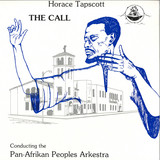
Horace Tapscott - The Call

Available on vinyl for the first time in 40 years, Outernational Sounds is proud to present a masterpiece from the Los Angeles jazz underground - Horace Tapscott's burning, spiritualised 1978 set, The Call.

One of the unsung giants of jazz music, the composer, bandleader, arranger, pianist and community activist Horace Tapscott was the undisputed keystone in the grassroots Los Angeles jazz scene. Throughout the 1960s and 1970s, his radical community arts and music formations the UGMA (Underground Musicians Association, later changed to UGMAA - Union of God's Musicians and Artists Ascension), and his protean big band, the Pan Afrikan Peoples Arkestra, were at the epicentre of music, culture and politics in the Los Angeles area.

From their 1960s base at the Watt's Happening Coffee House on 103rd St, to their decade-plus- long 1970s residency at the Immanuel United Church of Christ on 85thE St and Holmes Ave, Tapscott's groups were the beating heart of underground music in LA. Hundreds of musicians passed through and played their part. Major figures in LA jazz such as Arthur Blythe, Azar Lawrence, Jimmy Woods, John Carter, Bobby Bradford, Sonny Criss, Ndugu Chancler and dozens of others all paid dues or just got down with Tapscott, not to mention the core Arkestra regulars who have since become celebrated names - Nate Morgan, Jesse Sharps, Adele Sebastian, Dadisi Komolafe, Gary Bias, to mention only a few.

Tapscott and the Arkestra were down on the ground - playing fundraisers in park and street, organising teach-ins and workshops for young and old, mixing it with radical theatre groups, firebrand poets, political radicals, Black separatists, community groups and churches. They lived communally, and built an ark for the Black arts in the heart of the city. But as a result of this grassroots community focus and Tapscott's antipathy to the music industry, the Arkestra didn't record for nearly two decades. That only changed when long-time jazz fan Tom Albach started Nimbus Records. The label was initiated specifically in order to document Tapscott and his circle, and the first three records showcased Horace and the Arkestra.

The Call was put together from two studio sessions in April 1978, one at Hollywood Sage and Sound, one at United Western - the latter session had the addition of a string section, who can be heard on the moody Cal Massey composition 'Nakatini Suite' and Jesse Sharps' swinging modal trip, 'Peyote Song No. III', with its swirling soprano solo. In keeping with the communal nature of the Arkestra, the other two compositions, 'The Call' and 'Quagmire Manor at Five A.M.' are also by Arkestra members. But at the centre of the music is the builder of the Ark, the visionary whose original call to action started a movement whose legacy continues to this day - Horace Tapscott.
Heed The Call!

pas en stock

Commandez maintenant et nous commanderons l'article pour vous chez notre fournisseur.

20,13

Last In: 6 years ago

The Last Poets - Understand What Dub Is

Last year saw The Last Poets celebrate their 50-year anniversary with the righteous, politically-charged poetic record, "Understand What Black Is". Now to continue the party, Brighton production-maestro Prince Fatty has reworked the album with a fresh twist and blend of smooth, dub-delights. Set to land on the 29th March, the revolution marches on - this is "Understand What Dub Is".

After Prince Fatty's involvement in the production of the original project, he was the perfect person to help update the record with five decades of experience for a new audience to enjoy. The ten tracks of "Understand What Black Is" depict a relevant, historical philosophy of identity and race that has followed The Poets over the last 50 years. Since the origins of the civil rights movements back in the late 60's, Abiodun Oyewole and Umar Bin Hassan (two of the longest-standing group members) have provided social commentaries and a voice to African-American consciousness that has now been heard on a global scale.

Their raps, exploitations and insights quickly evolved into the origins of hip-hop in Harlem, New York back in 1968, and now in 2019 they continue to voice their dedication to the cause with the backing of slick rock-steady infused beats to keep things moving. Having had their work sampled by the likes of NWA, Dr Dre, Kanye West, Snoop Dogg and countless others is just a testament to the timeless sounds and prophecy they have created, and now Prince Fatty has stepped up to put his stamp on it.

Prince Fatty's ever-reliable work gives "Understand What Black Is" another lease of life as he maintains an undeniably slick groove throughout. Both therapeutic and warm, the soulful rhythms of "Understand What Dub Is" provide the perfect platform for The Last Poets to delve into everything from Trump's inauguration, nods to Biggie Smalls and respect to Prince. The calm, collective and downright thought-provoking words go hand-in-hand with the roots-driven reggae medleys with ease - this is dub in its rawest form.

Not only do these songs explore personal struggles and individual endeavours, they also represent a collective of deprived aspects of humanity and socialism, that perhaps now need to be pointed out more than ever. Although there is a variation of sound, the overlying topics remain a constant - it is time to "Understand What Black Is" once more.

pas en stock

Commandez maintenant et nous commanderons l'article pour vous chez notre fournisseur.

20,63

Last In: 7 years ago
Big John K - Poor Souls

Big John K

Poor Souls

7"-VinylTR264
Tramp Records
26.03.2019

Big John K began singing in church at age five and taught himself to play piano. His performing career actually began in Dayton, Ohio around 1957 where he played with Ray Charles and several members of Count Basie's band. In the late 1950s he recorded around twenty different songs but only six singles were released. He then changed his name to Johnny K. and was signed to Epic Records in 1969. He played shows with Jerry Lee Lewis, Charlie Rich, B.J. Thomas and opened for Jimi Hendrix but left Epic Records in 1971. "Poor Souls" and "Marching Home" were both released on tiny indie labels and remained unknown even in collector circles to this day. The Tramp crew is extremely happy to finally re-release these two cuts - 110% rhythm & blues dynamite!

pas en stock

Commandez maintenant et nous commanderons l'article pour vous chez notre fournisseur.

9,03

Last In: 7 years ago
The Edwards Generation - I Like Your Style / The Love I Found In You

The Edwards Generation were a San Francisco family group that were lead by Chuck Edwards, who was the father of the group members. Chuck had been a recording artist since the 50s and had recorded for labels such as Duke, Kapp and Apollo before establishing the Edwards Generation as a force in Frisco during the 1970s. Their one and only album 'The Street Thang,' which was released in 1976, is a much revered and sought after album by serious soul collectors across the globe. We will be releasing an album of unreleased songs in 2019, but in the meantime we have the groups first vinyl release since 1977 with the uptempo dancer 'I Like Your Style' on the A Side, This version will not feature on the album and is only available on this single release. Whilst on the flip we've got the only song from our album that features their father Chuck on lead vocals with the Motownesque 'The Love I Found In You.' The Edwards Generation were a talent that deserved a greater exposure and with this we're happy to be partnering with them in releasing their unreleased gems.

pas en stock

Commandez maintenant et nous commanderons l'article pour vous chez notre fournisseur.

10,46

Last In: 7 years ago
Short-Term Memory - Plus Or Minus Two

This EP focuses on the group's prescient dance-floor DIN-sync workouts which share sensibilities with contemporaneous early Detroit experiments by Juan Atkin's Cybotron, Ron Hardy's visionary Kikrokos tape edit, Shoc Corridor's extended 808
exercises, and 90s Techno Pop by Haruomi Hosono. Rounding off the EP is the existential electronic soul ballad Words. Remastered from the original reels, 45rpm DMM pressing.

Kansas City, 1983: a band formed, wires connected and synapses fired. Three friends, tired of guitar/bass/drums rock started jamming with newly acquired synths and Roland TR 808. They called themselves Short-Term Memory. Thanks to the vanguard technology of the time, these electronic instruments spoke to each other, and Jim Skeel, John Paul & Robert Duckworth could program their instruments, riding the DIN-sync wave. Weekly jams became more ambitious, and in 1983 they released their first album Every Head Needs Cleaning on their own Silly Poodle Music label. Over the 80s members drifted in and out of the group, and they released two cassettes, an LP and a 7' EP. By the 90s Jim Skeel was at the helm, the only original member, and joined by Tim Higgins he continued to record in MIDI mode for a few years before pulling the plug, leaving recordings and memories that resisted the great fadeout of time, and today sound vibrant and more visionary than ever.

pas en stock

Commandez maintenant et nous commanderons l'article pour vous chez notre fournisseur.

16,18

Last In: 7 years ago
Cabaret Contemporain - Séquence Collective

Third LP of Cabaret Contemporain, French band (featuring Fabrizio Rat on keys) who use acoustic instruments (piano, guitar, bass, drums, contrabass) to produce a « hand-crafted » club music infused with techno. Inspired by Jeff Mills, Robert Hood or Drexciya, the five members already had a career on classical scene; their idea is not to replay classical techno tunes but to create a new path for the electronic music. 2 tracks featuring with the label boss, Arnaud Rebotini.

« Ballaro », which opens Cabaret Contemporain's third album, begins with light percussions, which seem to turn on themselves, while being conveyed by reverberations close to dub. After a few minutes of convolutions, the piece gets out of hand, transporting the listener into a rich form of pulsating trance, irrigated by a soaring melody and punctuated by persistent piano tones. « La selva »; more subdued, has the same energy, the track ending in an even more powerful way, a kind of paroxysm.

Finally, the strangest and most minimal « Cactus », features a singular groove, which evokes the most brutal house from Chicago, or the sometimes obsessive techno from Detroit. Just like other tracks such as « Transistor » or « TGV », fuelled by sweat and trance, Séquence Collective bears all the intensity of a techno cut for clubs' dancefloors. The only difference being that their music is not played with synths, drum machines or software, but with acoustic instruments. Dual curriculum The band is composed of five musicians and a sound engineer: Fabrizio Rat on piano, Giani Caserotto on guitar, Julien Loutelier on drums, Ronan Courty and Simon Drappier on double bass and of course Pierre Favrez on console. They are all in their thirties and met at the prestigious Paris Conservatoire in the late 2000s. However, all the musicians in the band have a double curriculum and navigate freely between the institutional realm and the underground or pop music scenes. Through classical or contemporary music, jazz and improvisation, rock and experimentation, they share a common passion for the original and futuristic techno of the 1990s, that of Jeff Mills, Robert Hood or Drexciya, which they have decided to reinvent and further in their own way. Not as a simple stylistic exercise practiced by virtuoso musicians, but rather as a new path for modern music, and for their generation. « The original idea » they say, « was to make club music by hand, like craftsmen. Like in the early days of jazz, our band managed to transform itself into a kind of dancing machine. Our music is therefore functional because it is danceable, but also mental and abstract, while offering several layers of listening. You can dance and play, have a purely physical and sensory connection to the music. But you can also immerse yourself in its listening, perceive refined harmonies or more complex rhythmic superpositions »

If the tones of Cabaret Contemporain are truly unique it is because each member of the band has developed a very personal approach through the use ''prepared'' instruments. The strings of their piano, guitar or double bass may recall strange machines with literally incredible sounds, obtained using objects such as chopsticks, clothes pegs, foil, hangers, a tiny pie mould or many other utensils from a DIY store. A collective energy

Cabaret Contemporain is first and foremost a live band that has been performing in venues and festivals since its inception in 2012 (Nuits Sonores, Siestes Electroniques, L'Aéronef, Le Trabendo, Philharmonie de Paris, Gaîté Lyrique, Rewire, Dancity, Barcelona Accio Musical...), both at traditional jazz and contemporary music venues, and more often at electro music hubs. When facing the audience, the band, which plays each of its sets in one go, without a break, shows an intense physical presence, which competes with the musical power of DJs who share the stage with them. Their performance, full of tension and repetition, which requires maximum concentration and a state close to trance from the musicians, is sometimes, according to them, « a mental journey and a mystic experience ». A dimension that brings to mind the historical techno culture and its dancers who, communicating on the dancefloor, were carried until the early hours of the morning by the power of the beat. An album inspired by the stage Since their beginnings, their compositions on record have drawn their energy directly from the practice of their concerts, whether referring to Terry Riley (2014) or Moondog (2015), an EP and an album dedicated to the repertoire of the two American artists, the original compositions of Cabaret Contemporain (2016) and Satellite EP (2017), as well as this new album. Séquence collective can be listened to as a condensed transcription of their inventions and their live experiments. The tracks, more than half of which were improvised during sessions held in the former Vogue studios near Paris, were recorded in live conditions, « like an old school rock band » they say. As usual, they invited a new musician to join them in the studio. After collaborating with Étienne Jaumet or Château-Flight, Arnaud Rebotini, César winner for best film music, added a welcome synth touch on two tracks (Pro- One, Prophet 600), which boosted the group's formidable collective energy. The album ends with « October Glide », again performed with Rebotini, a lyrical and lively track, built on a powerful and slow progression of timbres and percussions, which would ideally find its place at the core of a techno party « peak time »

pas en stock

Commandez maintenant et nous commanderons l'article pour vous chez notre fournisseur.

20,97

Last In: 7 years ago
The Daktaris - Soul Explosion

The Daktaris is a well-disciplined army of two hundred African Bull Elephants marching relentlessly up your business to the beat from Funky Drummer. Or so began the liner notes on the original pressing of this album.

Truth is often stranger than fiction. In 1998 Desco Records—a precursor to Daptone and Soul Fire records—released The Daktaris' Soul Explosion, ostensibly as a reissue of an unearthed Nigerian LP from the seventies. Though it's now common knowledge that the story was a bit of a hoax, the record's significance as a seminal part of the Afrobeat and afro-funk renaissance of the last two decades cannot be denied. The roots of the Budos Band, Antibalas, and uncountable others can be traced back to this enigmatic afro-funk release.

Now, two decades later, Daptone has remastered the album from the original tapes, including a bonus track that had previously only been available on a 45, and featuring extensive all new liner notes by Bosco Mann telling the bizarre true story behind the Daktaris sessions.

KEY MARKETING POINTS:
- FULLY REMASTERED, including new bonus track, 'In the Middle.'
- Extensive new liner notes by BOSCO MANN explaining the real story behind The Daktaris.
- Features members of The DAP-KINGS and ANTIBALAS.
- Features JOJO KUO (drummer for FELA KUTI) on vox and percussion.
- Originally released on DESCO RECORDS in the 1998, has been out of print for years.
- The spirit of the late, great Fela Kuti runs through The Daktaris' Soul Explosion. - Jazz Times

pas en stock

Commandez maintenant et nous commanderons l'article pour vous chez notre fournisseur.

23,49

Last In: 7 years ago
Mike Cooper - White Shadows In The South Seas LP 2x12"

White Shadows In The South Seas is the title of a book written in 1919 by Frederick O'Brien as part of a trilogy he wrote based on his experiences living in the Pacific islands in the early part of the 20th century. His book was taken as the starting point for a film to be directed, initially, by Robert Flaherty (famous at the time for his groundbreaking documentary / fiction film Nanook Of The North) with W.S.Van Dyke as his support. The film, ultimately, apart from the title, had little to do with O'Brien's book and Flaherty left the film after a few months leaving Van Dyke to finish it.

I purchased O'Brien's book, along with many others, from Basement Books, a secondhand bookstore in Melbourne/Australia. Part of my 'Islomania' and on going fascination with all things Pacific. When I discovered there was a 1929 silent film based on the book I sought it out and started to present it as part of my 'Live Music/Silent films' repertoire. Tabu by Frederick Murnau, which coincidently also had Flaherty as co-director originally, was the first film I ever wrote / improvised a score for and presented as a live film/music performance. My repertoire extends to over 23 films now.

My eclectic and diverse musical and artistic interests extend into 'Hawaiian', 'Exotica', 'Ambient' and 'Electronic' Music. I have produced several volumes of so called 'Electronic, Ambient, Exotica' on CD and Vinyl, including Kiribati, Globe Notes, Rayon Hula ( on Vinyl, CD and digital format ) and most recently, New Globe Note on Vinyl and White Shadows In The South Seas on CD.
White Shadows In The South Seas features some of the music presented in my live screenings of the 1929 silent film.

The film is the story of Dr. Matthew Lloyd, an alcoholic doctor who is disgusted by the exploitation by white people of the natives on a Polynesian island. The natives dive for pearls, however, numerous accidents occur and one diver dies. In anger, Dr. Lloyd punches Sebastian, the employer. As revenge and to prevent further interruption of his activities, he tricks Dr. Lloyd onto a ship with a diseased crew (thinking they are ill) and his men rough him up and send the ship off into a storm. Dr. Lloyd survives and is washed ashore on an island where none of the natives have ever seen a white man before. Lloyd is rescued and ultimately falls in love with the chief's daughter, who is Taboo, hence Lloyd is prevented from pursuing his love for her. An incident occurs and a young boy is thought to have drowned but Lloyd is able to revive him, earning him points and permission with the chief's daughter. Lloyd begins to realise that the local islanders have no sense of the value of the black pearls which grow in abundance around their island and he starts to dive for them and collect them. One morning the white man Sebastian unexpectedly turns up on a scooner and starts to offer the islanders trade for their pearls. Llloyd tries to interrupt the encounter and is shot and dies. His wife and the islanders morn for his dead body and, symbolically, the passing of a way of life.

Mike Cooper plays - Electric and acoustic lap steel guitars / electronics / Zoom Sampletrack / Kaos Pad / Casio SK1 / Korg Drum Machine / Self Made Instruments.

It also features field recordings made on Pulau Ubin by Mike Cooper during a month as Artist In Residence for The Artist Village / Singapore.

I would like to acknowledge and thank Lawrence English (Room40 Records) for his assistance and encouragement with the original recordings and the CD version of White Shadows In The South Seas.

All music written and played by Mike Cooper PRS/MCPS - except Po Mahina (trad. Arr. Cooper) and Hilo Hanakahi (trad. Arr. Cooper)

Recorded and Mixed at the Steelworks in Rome 2012/2013.

A White Shadow In The South Seas
In February 2014 'A White Shadow In The South Seas' was the title of an audio-visual installation I made at the Teatro In Scatola in Rome, Italy, presented as part of a series of sound installations titled 'Visitazioni' produced by Proposte Sonore.

The essay below, as well as our collection of Hawaiian shirts, Exotica and Hawaiian vinyl records, was an inspiration for this installation.

'..the transformation and reconstitution of the souvenir commodity as an indigenous ethnic art form and a scarce relic of Hawai'i's romanticized past...' from - Clothing and Textile Reasearch Journal - From Kitsch to Chic by Marcia A. Morgado.

And....
Michael Thompson's Rubbish Theory (1979)
' ...a critical aspect of Western culture is the pre-disposition to see objects in terms of two overt categories: the transient and the durable. Objects identified as transient have finite life spans and lose value over time, whereas those identified as durable have infinite lives and over time increae in value....category assignments are arbitrary, but once assigned a category membership determines relative value. Fashion apparel-by defenition-is assigned to the transient category; paintings commonly are designated durables....how is it that transient objects.. ( e.g. Hawaiian shirts and vinyl records ) ..sometimes become durables.

Objects assigned to the rubbish category are largely invisible, have no value and, ideally, no life span. Fashion for example, no longer worn and relegated to the back of the wardrobe has fallen into the covert rubbish category. But rubbish can be rescued and transformed. Thompson says ' What I believe happens is a transient object gradually declining in value and in expected life span may slide across into rubbish. Here it exists in a timeless and valueless limbo where it has a chance to be re-discovered and be successfully transformed to a durable. Such transferes are radical: objects gradually slide from transcience to rubbish, but the transformation from rubbish to durable involves an all-or-nothing leap across two boundaries, that separating the worthless from the valuable and that between the covert and the overt. Things drift into obscurity but they leap into prominence.

The delightful consequence of this hypothesis is that in order to study the social control of value we must study rubbish.

The rubbish-to-durable transformation is accompanied by the development of highly specialized knowledge derived from the discovery of subtle variations and complex details that went unnoticed in the objects transient stage. The discoveries initiate renewed interest in the object and its market value begins to climb. As prices soar beyond the reach of ordinary people, the object becomes available only in high priced collectors' markets. Furthermore, as market values rise, the aesthetic value of the object undergoes a reassessment as well, and it becomes increasingly apparent that the objects intrinsic beauty has been overlooked. Ultimately the object is re -assigned as a durable and becomes recognized as a timeless classic.

Exotica, Ambience and Pacificism - A dialogue with Mike Cooper & Professor Philip Hayward Deputy Pro Vice Chancellor of Research Southern Cross University, Lismore, Australia.

pas en stock

Commandez maintenant et nous commanderons l'article pour vous chez notre fournisseur.

20,71

Last In: 10 years ago
Green River - Dry as a Bone 2x12"

Green River

Dry as a Bone 2x12"

2x12inchSP1261
Sub Pop
29.01.2019

The story of Seattle's rise to global rock supremacy in the late 80s and early 90s begins with Green River. Made up of Jeff Ament (bass), Mark Arm (guitar/vocals), Bruce Fairweather (guitar), Stone Gossard (guitar) and Alex Shumway (drums), the
quintet put out three 12's and a 7' single during its brief existence.
Green River's influence on Seattle's music scene spread far and wide thanks to the members' dispersion into bands including Pearl Jam, Mudhoney and Love Battery, as well as the punk glam sludge rock songs they left behind. 'By '83, '84, there was
definitely a movement that was happening within hardcore, like Black Flag slowing down for My War,' says Arm. 'The Replacements and Butthole Surfers were rearing
their heads, and they're very different bands, but they're not hardcore - the Replacements are pretty much straight-up rock, and Butthole Surfers were God knows what. Sonic Youth's Bad Moon Rising was around, and a lot of really
interesting post-hardcore things were happening.'
Green River, formed in 1984, were part of that evolution, with a sound that straddled a lot of different genres - blues, punk, bloozy straight-ahead rock. The mini-LP 'Dry As A Bone' - which came out in 1987 - and the band's lone full-length
'Rehab Doll' - which came out in 1988 - were released as a single CD with a few bonus cuts, including their sneering cover of David Bowie's 'Queen Bitch' and their marauding version of Dead Boys' 'Ain't Nothin' to Do', in 1990 - but they've been
unavailable on vinyl for years.
Now, these slices of Seattle music history are not only back in print, they're accompanied by items from the vaults that had been forgotten about for decades.
'Dry As A Bone' was recorded at Jack Endino's Reciprocal Recording in 1986 and it shows the band in furious form, with Arm's yowl battling Fairweather and Gossard's
ferocious guitar playing on 'This Town' and 'Unwind' opening as a slow bluesy grind then jump-starting itself into a hyperactive chase. The deluxe edition includes Green
River's cuts from the crucial Seattle-scene compilation 'Deep Six', as well as long-lost songs that were recorded to the now-archaic format Betamax.
'Rehab Doll', recorded largely at Seattle's Steve Lawson Studios., bridges the gap between the taut, punky energy of 'Dry As A Bone' and the bigger drums and thicker
riffs that were coming to dominate rock in the late 80s. This new edition of 'Rehab Doll' includes a version of 'Swallow My Pride' recorded to 8-track at Endino's Reciprocal Recording, which features a more accurate depiction of how the band
sounded when they played live. 'When I listen to these mixes, I think, 'This is how we actually sounded - this is the kind of energy we had,'' says Shumway.
Green River's place in American music history is without question but these recordings paint a more complete picture of the band - and of rock in the mid to late 80s, when punk's faster-and-louder ideals had begun shape-shifting into other ideas.
CDs in digipack with 12-page booklet. 2LP formats in gatefold jacket with custom dust sleeve and digital download code.

pas en stock

Commandez maintenant et nous commanderons l'article pour vous chez notre fournisseur.

30,21

Last In: 7 years ago
Denis Wise - Wize Music

Perhaps one of the most unique and unlikely exponents of the highly collectible genres of ambient electronics, experimental tape-music and PINA (Private Issue New Age), this English-born Jamaican- raised sound designer, artist and existentialist furrowed his own unblinkered path through lesser chartered electronic fields for many moons before eventually teaming up with Bill Laswell (with Material) and Daevid Allen in New York to bring self-taught synthesis to Gong during their most oblique periods.

Creating two impossibly rare self-pressed vinyl LPs of conceptual inner-visionary outer-galactic angular tonal-dronal alien-art soundscapes in the process, the man known under figure shifting guises such as Dennis Wise/Denis Weise/Dr. Wise etc, combined a culture of sound system circuitry and radiophonic trickery adding Tea-pot poetry and sci-fidelity future- folk to his magnetic mesh.

Presented here as the first ever dedicated Wize Music collection this record combines compositions spanning 1979-1984 in both a solo capacity as well as small- group projects featuring members of the Emerald Web band.

Imagine a comic book where a Funkenstein monster called 'Laraaji-Scratch Perry' invaded your record shelf while Komendarek and Holger Czukay kept lookout... Dr. Dennis might be the only one Wise enough to outsmart all of them with his powerful amorphous anaesthetic.

pas en stock

Commandez maintenant et nous commanderons l'article pour vous chez notre fournisseur.

12,98

Last In: 7 years ago
Process Blue - Control Panel LP

Process Blue was formed in the fall of 1981, at Antioch College near Dayton, Ohio. The group essentially consists of Chel White (tapes, keyboards, percussion) and Dan Gediman (keyboards, vocals, bass). Additional members contributed at various points to both recorded works and live performance. Process Blue's original interest was in electronic music and the interfacing of electronic sounds with acoustic instruments, non-musical instruments, and tape-manipulated sounds. The group's primary objective has been to strive for creative experimentation within the format of contemporary pop music.

We are proud to release a 12-song LP featuring music recorded between 1981 and 1982. 7 of the tracks were originally self released on a cassette album in 1982. The only song in this batch to ever appear on vinyl is 'Control Panel' released on a French LP compilation called 'Folie Distinguee Alternative Funk.' The songs range from experimental dance music to quieter, more melodically-oriented pieces. They used an array of synthesizers used were Moog Sonic-Six, Casiotone MT-30, Korg MS10, Roland SH 101, Casio VL Tone. Analog instruments included electric guitar and bass, and drums. Guest musicians included Gil Belton (melodic rototoms percussion and synthesizer bird sounds) on Industrial Park, Eric Zimmerman (Korg synthesizer) on Up to $100 and Subterrania, Patricia Yarborough (vocals) on Pink Razor and Air, Mike Pummel (engineer) on Control Panel, and John Flansburgh (of They Might Be Giants) engineer on Up to $100. All songs have been remastered by George Horn at Fantasy Studios. Each LP is housed in a jacket designed by Maycec featuring original drawings by Chel White and include a double-sided insert with photos and lyrics.

pas en stock

Commandez maintenant et nous commanderons l'article pour vous chez notre fournisseur.

15,08

Last In: 7 years ago
Cultureclash - Cultureclash

Lost Futures is a new label that explores experimental and often radical approaches to dance music from the past. In a musical landscape that increasingly claims to seek and reward new forms and ideas, Lost Futures delves into the recent past to revisit forward-thinking, optimistic projects that, owing to the social, musical or outright political climate, perhaps struggled to find an audience. Allowing only time to re-contextualise these leftfield, sometimes misunderstood and ultimately human bodies of work, Lost Futures taps into the inherent idealism of rave.

LF001 trips back until the early nineties to revisit the alternative scene emerging from the Dutch city of Utrecht. Here, three young men - DJ Zero One (Sander Friedeman), TJ Tape TV (Arno Peeters) and DJ White Delight (Richard van der Giessen) - joined forces to form 'The Awax Foundation'. Inspired by the transcendent and revolutionary electronic music arriving on their shores imported from Chicago and Detroit, combining their knowledge, gear and ever-expanding vinyl collection allowed additional freedom in paying sincere tribute to these intoxicating sounds, while also developing their tastes in a more personal, eclectic direction.

The musical flavours of Awax initially leaned toward acid house and the roots of techno. However, with three different mindsets in the mix, their tastes were rarely fixed. One thing each shared in common was a devotion to collecting rare sounds, specifically more adventurous and international samples than those emanating from the increasingly-hard, masculine dance music emerging from the Netherlands during the period. Inspired by the cross-over global sound of bands like Suns of Arqa, or 'World Music', as it was perhaps patronisingly termed at the time, the trio became interested in the idea of making techno with 'ethnic instruments'.

Of course, this being 1992, none of The Awax Foundation had access to such instruments, instead, they had a vast, collective library of samples from all over the world. There were no collaborations and no clear plan. Instead, they set to work using a Yamaha TX16W sampler, the legendary Atari 1040ST computer, a cheap mixing desk and a couple of low-end synths and FX machines. When Richard mentioned the project to his friend, Akin Fernandez, the London DJ and owner of cult label Irdial Discs, Fernandez was intrigued enough to invite the trio to record a one-hour show for his 'Monster Music Radio' series on London's then-burgeoning Kiss FM.

Forced to come up with a name, 'CultureClash' seemed like the obvious choice, even if the members of Awax were only creatively sparring among themselves. Along with the term 'ethno-techno', slightly dubious to a hopefully more conscious Western audience in 2017, these were the only guiding principles to the quietly ambitious project that soon combined cutting-edge machine rhythms with samples sourced from everywhere from Bolivia to Togo, and inspired by everything from Ravi Shankar's epic soundtrack to the Oscar-winning movie Ghandi, to the technical limits of their own setup requiring a dazzling degree of cut-and-paste work. Some tracks even emerged out of academic studies within the ethnomusicology department at The University of Amsterdam.

The show aired on October 2nd, 1992, recorded in one blistering take and without any rehearsals, traversing a huge variety of tempos and styles. If the performance wasn't seamless, it was undeniably thrilling, fresh and ambitious. As such, several labels, including Fernandez's aforementioned Irdial Discs expressed an interesting in commercially releasing CultureClash, while another imprint proposed a series of twelve-inches and an album. But the sheer complexity of the project meant that it never saw the light of day, while the trio embarked on different journeys ahead, both creative and personal.

Twenty five years later, and the original CultureClash lineup and founding members of The Awax Foundation provide the sound of the first release from Lost Futures. An otherworldly, ambitious and optimistic compilation, accompanied by extensive sleeve notes from the trio, CultureClash is a timeless ode to experimentation in dance music's ever-overlapping culture.

pas en stock

Commandez maintenant et nous commanderons l'article pour vous chez notre fournisseur.

22,65

Last In: 7 years ago
Creative Arts Ensemble - One Step Out

'Sounds from the Great House! Outernational Sounds proudly presents a Nimbus West spirit jazz essential: the Creative Arts Ensemble's classic debut One Step Out. Mastered at 45rpm on double vinyl for enhanced sound, this release features all tracks at full length for the first time on wax.

One of the most sought after and highly regarded titles to have appeared on Tom Albach's celebrated Nimbus West imprint, the Creative Art Ensemble's One Step Out is a timeless work of spiritualised jazz. A true gem from the Los Angeles jazz underground, the album was pianist and composer Kaeef Ruzadun Ali's first recording as leader of the Creative Arts Ensemble, the only large ensemble group that emerged directly from Horace Tapscott's legendary Pan Afrikan Peoples Arkestra community jazz group.

A Los Angeles native, Kaeef was introduced to the Tapscott circle in the late 1970s. His first experience of the Arkestra's ethos was through PAPA tenorist Michael Session, who took him to the famous 'Great House' at 2412 South Western Ave., LA - a large mansion house which members of the Arkestra had taken over as a space for communal living. Life in the Great House was a continuous stream of music, dance and community events. 'When I walked in there,' recalled Kaeef, 'it was like this whole rush came over me, just from going in the front door...It was like a very, very warm feeling of love. I went and I came out with 'Flashback of Time', and that was my first arrangement.'

Kaeef quickly became a significant contributor of compositions to the Arkestra's songbook - his piece 'New Horizon' would be recorded by Horace Tapscott for the latter's Tapscott Sessions series. But 'Flashback of Time' would eventually appear on One Step Out, played by the new group he had put together from stalwart Arkestra members. Inspired by both Tapscott's example and by the Art Ensemble of Chicago, Kaeef had wanted to follow their lead by assembling a larger unit. 'I would like to form a group that would be an extension of the Pan Afrikan Peoples Arkestra,' he told Tapscott. The group was to be known as the Creative Arts Ensemble, and One Step Out, released in 1981 by Nimbus West, was their debut.

Featuring seasoned Arkestra regulars including reedsman Dadisi Komolafe, drummer Woody 'Sonship' Theus and altoist Gary Bias, with veterans Henry 'The Skipper' Franklin on bass and George Bohannon on trombone, One Step Out is a key document of the Los Angeles radical jazz underground. Featuring the sanctified vocals of Kaeef's sister, B. J. Crowley, the album is a tour de force of spiritually energised independent jazz music. Community uplift and sacred vision straight from the Great House, back on vinyl for the first time since 1981!

pas en stock

Commandez maintenant et nous commanderons l'article pour vous chez notre fournisseur.

29,37

Last In: 5 years ago
Acid Mothers Temple & The Melting Paraiso U.F.O - Reverse Of Rebirth In Universe

"In 2016, 21 years after Acid Mothers Temple & The Melting Paraiso U.F.O. were founded in Osaka, Japan, there was a major shift in the line-up and "Next Generation" was added to the bands name. We now view the first 20 years of the bands career as chapter one in our story, and we are now turning the page to start chapter two. In 2018, it's time to re-record our classics with this new line-up, we just opened the door to the next stage!' (Kawabata Makoto 2018)
 
Twenty four years into their existence, Acid Mothers Temple & The Melting Paraiso U.F.O. have circled the globe at least a few dozen times, released over 100 albums in their various guises and played thousands of shows.
 
In recent years, they've experienced seismic line up changes which has given them yet another new lease of life ... or a rebirth if you will. Original members Kawabata Makoto (guitar, speed guru) and Higashi Hiroshi (synthesizer, noodle god) are now joined by Jyonson Tsu (vocal, midnight whistler), Satoshima Nani (drums, another dimension) and Wolf (bass, space & time) and as anyone that has seen the new line up live will testify, things have gone even more cosmic ...
 
'Reverse Of Rebirth In Universe' sees the band return to their old label Riot Season for the first time since 2012's 'IAO Chant From The Melting Paraiso Underground Freak Out' (CD still available). Both label and band have gone on some wonderful journeys during that time apart but both felt the stars were finally correctly realigned to renew their partnership in all things weird.
 
Long time AMT fans will immediately recognise some of the song titles listed on the album sleeve here. But the songs themselves have been reworked and transformed far away from their original versions. New boy Jyonson Tsu's quiet, almost whispered vocals bring a whole new aura to proceedings, despite the familiar riffs hidden in the depths below them. It's so laid back in places it's practically horizontal, with only occasional trademark piercing guitar squeals threatening to destroy the peace and calm. The whole of side two is taken up with the twenty minute epic 'Black Summer Song' .. and if this is an indicator to where the AMT mothership is heading going forwards we're all in for another fucked up and magical ride.
 
If you stepped off the AMT ride over the years, possibly overwhelmed by the amount of releases they were once firing out ... it could be time to step back on it and check out where they're currently at. In a world that's more messed up than ever, we could all use a little break away from the norm, and nobody takes you as far away from the norm as possible as Acid Mothers Temple & The Melting Paraiso U.F.O.
 

pas en stock

Commandez maintenant et nous commanderons l'article pour vous chez notre fournisseur.

14,75

Last In: 7 years ago
System - Plus

System

Plus

2x12inchMORR163LP
Morr Music
22.11.2018

The new album from Danish electronic trio System is a special kind of collaborative effort with piano magician Nils Frahm. His purpose-built improvisations on synth, organ and piano served as source material for the members of System (Thomas Knak, Anders Remmer & Jesper Skaaning), who merged his warm acoustic tones with their minimalist digitalism and set out to translate their distinctive clicks 'n' cuts electronics into vivid soundscapes. Over two years in the making, the resulting nine tracks are as sonically intriguing as they are touching. Ranging from the mellow bliss of the title track to echoes of 90's and 2000's electronica and ambient sequences frequented by mesmerizing movements and sounds. The blending of piano and digital tones and noises into emotive pieces might instantly recall the work of Alva Noto and Ryuichi Sakamoto, though System and Frahm come to quite different results.

Thomas Knak met Nils Frahm at one of his concerts in Copenhagen. They stayed in touch, exchanging thoughts and ideas. Two years later, Anders Remmer was also introduced to Nils. From then serious ideas for a collaboration formed. As Nils was a fan of System's self-titled debut album (released in 2002 via Pole's Scape label) their talks centred around Dub and minimalism, elements that constitute most of System's music as well as their side and solo projects. This in mind, System began producing sketches and brought them to Nils´ Durton Studio in Berlin in December 2015, where they recorded ten hours of him playing keys and effects to their drafts. Back in Copenhagen, they decided to change direction. - As Nils had told us about his fascination with our debut album, we tried to rediscover this minimal clicks 'n' cuts era. But hearing Nils playing to our rhythmic beds, we felt the need to scrap those beats and instead head in a more cinematic direction.'

So they started building new pieces from the Durton recordings, maintaining some of the minimal and static quality while new layers of synth sounds and noises created a richer and more organic quality compared to older System albums. The solo projects of Thomas (Opiate), Anders (Dub Tractor) and Jesper (Acustic) always relied on steady beats or rhythmic material, so the productions of 'Plus' with their focus on acoustic and melodic elements, ambient layers and cinematic moods, sees them pushing forward into new areas.

This way, the trio avoided copying what they had already done years ago, when they built a reputation as Denmark's prime originators within electronic music in the 90's and 2000's. 'Plus' is a triumphant example of collaborative experimentation and may be the dawn of a new era for System: - For us it was really satisfying to focus more on actual sound rather than rhythmic aspects. There is a lot of potential in this field, so it would only be natural for us to pursue this, maybe as a series of collaborations with other people who's music we admire.'

pas en stock

Commandez maintenant et nous commanderons l'article pour vous chez notre fournisseur.

19,29

Last In: 7 years ago
Afro National - African Experimentals (1972-1979)

The Afro National Band Was Formed In Freetown, Sierra Leone In 1972. Their Inspirational Leader, Sulay Abu Bakarr Accompanied By His Wife Patricia And Ayo Roy Macauley Split From The Sabanoh Jazz Band To Form Their New Group. They Skillfully Merged Highlife And Jazz Sounds With A Deep Knowledge Of West African Sounds. Growing To Become One Of The Premiere Bands To Emerge From Sierra Leone They Not Only Defined The Sound Of The Country For A Generation But Also Crafted Some Of The Country's Most Popular And Memorable Songs (for Example Sonjo Which Is Included On This Collection).

The Band Toured Extensively Throughout Africa And Europe In The 70s (working With The Giant Of Sierra Leone Music Akie Deen In The Process). Towards The End Of The 70s The Band Departed Sierra Leone, Sulay And His Wife Moving To Maryland In The Us And Other Members Moving To London.

Our Collection Focuses On Possibly Not The Best Known Songs Of The Band But The Tracks Which Have The Rhythms To Move The Dance Floor. We Open With The Foot Tapping "jokenge" And Its Driving Shuffle Beat, Swirling Organ And Percussive Guitar Lines. "push Am Forward" Takes A Afro-psychadelic Turn With Its Hypnotic Rhythms And Driving Distorted Guitar. "mr Who You Be" Is A Cover Of The Fela Kuti Track, Doing It Fine Justice. "gowa" Highlights The Vocal Prowess Of The Band, As Dose The Ever Popular "sonjo" (the Version Featured Here Is A Rare Alternate Recording).

"money Palava" Opens Up Side Two With Its Infectious Highlife Beat And Hooky Vocals. "money Nor Bataya" Highlights The Bands First Use Of Synthesizers. "mother In Law" Sweeps Up Back To Free Town 1973 With Its Clever Vocal. "set My Soul On Fire" Is A Bonus Track Which Brings In The International Flavour Of The Band.

The Afro National Band Continues In Various Guises To This Day, With Sulay And Patricia Acting As The Proud And Talismanic Figures For A Whole Generation Of Sierra Leonean Music.

pas en stock

Commandez maintenant et nous commanderons l'article pour vous chez notre fournisseur.

18,45

Last In: 5 years ago
GRUPO CONTROLE DIGITAL - A FESTA É NOSSA

Soundway Records delivers a beautifully remastered reissue
of Brazilian duo Grupo Controle Digital's only album, 'A Festa
É Nossa'. First released in 1988, the album is now housed in a
tip-on heavyweight sleeve and restored artwork.
With the title track 'A Festa É Nossa' having circulated the
last few years in the DJ sets of influential tastemakers, the
album has become highly sought after by electronic fans
and collectors alike. Lo-f synths and cruising bass lines
permeate the record, influenced by the group's Brazilian
contemporaries at the time such as Tim Maia, Cláudio Zoli,
Secos E Molhados, and rock outft Made In Brazil.
Band members Billy Jaguar and Gel Valiery regularly
performed in various groups in São Paulo throughout the
80s and 90s, but after Gel passed away, Grupo Controle
Digital was no more - the band and the album faded into
obscurity and Billy became a priest, working with gospel
music. It remained that way until Brazilian DJ Millos Kaiser
(from label Selva Discos, and one half of Brazilian street party
organisers Selvagem) tracked down the remaining member
of the group to be able to include one of their tracks on the
highly anticipated Soundway compilation 'Onda De Amor:
Synthesized Brazilian Hits That Never Were (1984-94)',
released in July 2018.
Audio restored by Neal Birnie and re-mastered by Frank
Merritt at The Carvery, London. Artwork restored by Lewis
Heriz.
FOR FANS OF:
Soundway 'Onda De Amor' compilation, Music From Memory
'Outro Tempo' Brazil compilation, Spacetalk compilations,
Sabor Do Brasil

pas en stock

Commandez maintenant et nous commanderons l'article pour vous chez notre fournisseur.

20,97

Last In: 7 years ago
Articles par page:
N/ABPM
Vinyl