The formidable Rex The Dog returns with his first single for Kompakt in three years, “Change This Pain For Ecstasy”, a slow-burning disco-glitter stomp that’s charged with analog energy. Pushing his self-built modular hardware set-up to its limits, “Change This Pain For Ecstasy” is taut and thrilling, stripped-back and pulsating, with sweeping chords shimmering through a classic Moroder arpeggio, as a delirious voice sings out a psychedelic raver’s plaint for liberation, pleading for you to "take away my sorrow and this pain”. Deeply emotional, it’s also a masterwork in tension and release, dizzy with snare-rush peaks, and dark, humid valleys where Rex is bound to the patchbay.
On the flipside, Rex gives us “Moto”, which tickles your ear with cymatic phenomena, its gentle vibrations building, beautifully, into a monster-piece of stealth techno. Rex’s DIY synths work overtime as he chases patterns and phases through circuitry, wielding the tones until they erupt into a spray of pointillist pizzicato. The sounds here crackle and corrode, the textures so tantalizing, so sensual, you can almost grab hold of them with your hands. It’s great to have Rex The Dog back, making livewire, yet deeply human techno, alive and bursting with electricity.
Der formidable Rex The Dog kehrt mit seiner ersten Single für Kompakt seit drei Jahren zurück, “Change This Pain For Ecstasy”, ein mit analoger Energie aufgeladener, stürmischer Disco-Glitter-Stomper. Man kann förmlich spüren, wie Rex’ selbstgebautes modulares Hardware-Setup an seine Grenzen gerät. “Change This Pain For Ecstasy” ist eine Hymne an das Nachtleben, an die kathartische Qualität einer durchtanzten Nacht. Über schwungvolle Akkorde und ein hochenergetisches Moroder-Arpeggio bittet eine delirierende Stimme um Befreiung von allem Leid und Schmerz. Das ist zutiefst rührend und emotional – da es sich hier aber um ein Meisterwerk der Spannung und Entspannung handelt – schwingt sich der Track plötzlich auf in schwindelerregende Höhen der Euphorie.
Auf der anderen Seite gibt Rex uns “Moto”, das das Ohr mit zymatischen Phänomenen kitzelt, deren sanften Vibrationen sich zu einem Monster von Stealth-Technotrack aufbauen. Rex’ DIY-Synthesizer machen Überstunden, während er Muster und Phasen durch die Schaltkreise jagt bis sie in einen Sprühregen aus pointillistischem Pizzicato ausbrechen. Die Sounds hier knistern und korrodieren, die Texturen so verlockend, so sinnlich, dass man sie fast mit den Händen greifen kann.
Es ist großartig, Rex The Dog zurück zu haben, der hochverdrahteten und doch zutiefst menschlichen Techno macht, voller Leben und Elektrizität.
Поиск:men with
Все
- A1: Permeate
- A2: Unity Gain
- A3: Eyes Shut Feat Faye Houston
- A4: What Is The State Of Our State (Part 1) Feat Repeat Beat Poet
- A5: Your Invasion Is A Lie Feat Idris Rahman
- B1: Unforgotten, Unforgiven
- B2: What Is The State Of Our State (Part 2) Feat Repeat Beat Poet
- B3: Flames Feat Faye Houston & Tamar Osborn
- B4: Refuge (Interlude)
- B5: Refuge
Albert’s Favourites label founder Scrimshire is set to release bold new album 'Paroxysm'. In the last few weeks of October 2022, Scrimshire wrote a new collection of songs with the descriptive working title "Scream". A direct response to the absurdity of the breakdown in the UK government, the horror of the treatment of refugees arriving on our shores and the callous disregard for the trauma being caused to low-income people or anyone considered "other". While self-preserving Conservative MPs fought for their jobs, record profits were announced by energy companies as they were gouging crippling amounts of money from people's pockets. The anger, sadness, mourning, and frustration he felt was poured into these recordings.
Originally named “Scream 8”, ‘Unity Gain’ was one of the early outpourings from those sessions. Piano and drums bubble up until it fully boils over with huge stabbing synthesiser and string sounds in an outburst of frenetic energy. "Division seems to characterise our daily experience”, says Scrimshire. “How does a society stop the callousness and corruption from seeping into its bones?".
Singer Faye Houston features on both ‘Eyes Shut’ as well as, alongside saxophonist, composer, and multi-wind instrumentalist Tamar Osborn, on ‘Flames’. About the latter Scrimshire explains, “One person can breathe fire into your life and the world, leaving an indelible mark. The album was influenced hugely by a friend we sadly have lost. I think of it like the heat you still feel after a fire has gone out”.
London-based poet and emcee The Repeat Beat Poet captures moments of time, thought, and feeling on ‘What Is The State Of Our State’, a furious yet succinct stream-of-consciousness diatribe in two parts. From afrobeat and reggae-influenced London band Soothsayers, clarinetist and saxophonist Idris Rahman features on ‘Your Invasion Is A Lie’, an ever-progressing, cosmic-jazz track.
The elegiac ‘Unforgotten, Unforgiven’ features saxophonist Nat Birchall, on which Scrimshire says "This is dedicated to the politicians who have forced refugees into life-threatening decisions. Pushing people into the hands of traffickers, into small boats and too many beneath the waves of our seas. Who force the lives of men, women, and children into more danger, in the hope of escaping war, poverty and persecution only to meet more cruelty and persecution. It won't be forgotten, and it won't be forgiven".
Scrimshire’s last album, 2021’s 'Nothing Feels Like Everything', received an Album of the Year nomination at the Gilles Peterson Worldwide Awards and last March he was named by the Guardian as one of three producers behind the new wave of UK soul, alongside Inflo (Michael Kiwanuka, Sault, Lil Simz) and Swindle (Joel Culpepper, Greentea Peng, Kojey Radical). Albert’s Favourites was formed by Adam, Dave Koor, and Jonny Drop, who designed the logo and artwork, and has released records by The Expansions, Hector Plimmer, Huw Marc Bennett, Pie Eye Collective, Qwalia, Ronin Arkestra.
Early support from Huey Morgan, Amazing Radio specialist playlist, Gideon Coe. Previous support from Gilles Peterson, Mary Anne Hobbs, Jamz Supernova
Alexander Skancke is making his debut on raum...musik with three techno-tinged tracks that perfectly display his immense talent and remarkable versatility in music production.
Over the past years, the Berlin-based, exquisitely friendly Norwegian face behind the desk of Bikini Waxx Records has gathered an extensive body of work brimming with quality.
The "Moon and the Sun" EP shows Alexander in total control of a hypnosis-inducing, slightly delirious dark room where Techno is the language of choice. Its title track 'Moon and the Sun' fills the entire A-side of the record with menacing vocal echoes on top of constant, bass-heavy locomotive grooves that are simultaneously dark and deeply shamanic. B-side's 'No Snakes Please' brings forward crisp, robust percussion arrangements and chugging basslines combined with euphoric (yet understated) vocal samples.
'LSD' finishes the EP with a deeper take on the sonic language explored thus far by adding spatial textures and a discrete bassline work to the mix while filling the space with razor-sharp drum arrangements for added excitement — Three different arrangements of varying aesthetics that are, ultimately, Alexander's very own vision of Techno.
Repress!
KNTXT signs hotly-tipped techno artist Indira Paganotto for a new EP that showcases her unique sound across four compelling tracks.
Indira's father was a DJ in the iconic Goa scene in India in the 90s, so she grew up surrounded by colourful, emotive techno and psytrance. She has brought that to her own DJ sets and productions ever since she moved to Madrid to pursue her career. Now Indira is coming out with her best EP to date.
“I got to know Indira Paganotto when we opened up for demo submissions earlier this year,'' says KNTXT label boss Charlotte de Witte. “She immediately caught my attention with her unique take on psy/techno music. It feels very good to have her on board and I'm curious to see what the future holds for her.”
Indira adds, "I understand music as a state of trance where each track develops a journey and a story. Himalaya EP is the reflection of everything I learned since my childhood until today, the heritage and passion for Psytrance, the experiences in India, the connection with nature, as well as the feeling of freedom and strength like the gallop of a horse, the synths of Goa music, the love and the truth, which is what fills my life. Thank you Charlotte for understanding my language in such a true way. Ours is a real connection in such a sincere mental embrace, and I am proud to be part of your KNTXT family and to be able to show everyone who I am."
The EP ́s opening track, 'Takeshi', is a slick techno roller that is rippled with psychedelic melodies and bright acid lines. They bleep and squeak up top to create a hypnotic effect as the drums march on. 'Sultans Of Mountains' contains intense psychedelic synths waning about the mix. The drums are stripped back and urgent, and crashing hits and smart filters bring real tension as this one unfolds in an arresting fashion. On the other hand, 'Himalaya' has a deep and sleek techno atmosphere where astral pads and heavenly vocal coos make for a cinematic sound that will cast a real spell on the crowd. Last, but certainly not least we have the edgy and heavily textured 'Cobra' with its unrelenting drums, slapping hits and futuristic, psytrance-tinged melodies all designed to mess with your mind.
This is an EP packed with fresh techno, straight from the breakout star Indira Paganotto.
The WINPROD 08 is fresh !!
A side from Square is a in-Spirally tune full of that old school sound we love. BIG !
C.Ysme and 1NC1N then brings a Techno mental progressive track, whales acid shouts !
The Flip starts with a collab EP with hidden names sutch as Elie and Win : as you can expect from them we got here an Acid-Bath. Deep and banging !
Samoth and Speejay from Exit 23 finish the EP with a minimal tribe tunes. Very beatiful as well as very dancefloor... Something that totally match with Spered Acid Night release by the way...
Finally this EP brings 4 real bombastic tunes, each having something to say, a story-telling de ouf.
enjoy !!!
The gifted Puerto Rican-American drummer and percussionist Willie Bobo was one of the architects of Latin Jazz. Following mentorship from Machito and Mongo Santamaria, Bobo played with Tito Puente, Cal Tjader, and Herbie Mann, before going solo. Bobo’s Beat is a sure-fire winner from 1962 with excellent support from trumpeter Clark Terry, saxophonist Joe Farrell and keyboardist Frank Anderson, a fully three-dimensional set with fine jazz nuances. It shows that Bobo never accepted less than the best from his counterparts, and there are some bossa nova covers mixed in with the driving Latin originals too. An essential work!
Tapping into the seductive unease of the unexplained, Modula lands on Tartelet Archives with Paranormal Phenomena – The Icelandic Expedition, a nine-track album that evokes alien synth- electro and New Age soundscapes.
During a trip to Iceland in February 2020, Naples native Filippo Colonna Romano (Modula) experienced the raw power of the island’s otherworldly natural forces. Inspired by his field recordings and a rekindled interest in sci-fi, Paranormal Phenomena – The Icelandic Expedition was born. Steeped in haunting LA synthesis and cinematic tension, the album is an imagined soundtrack to a supernatural thriller, cast in the icy tones of the Roland JD-800.
“When I went to Iceland I was so excited about the ambience and sounds,” says Modula. “I felt everything was stronger than normal; the wind was brutal, the waves fast and noisy. I came to the conclusion that what I had captured all sounded strangely eerie and otherworldly. I decided to compose music that had the same vibe as the field recordings – cold and strange, mysterious and alien.”
The album includes nine tracks each representing a scene in the “movie” ranging from alien synth-electro to New Age ambient moods and soundscapes, inviting the listener on a journey through cold landscapes and into dark caves where unknown creatures lurk in the shadows. Paranormal Phenomena leads logically on from Modula’s previous work for Bordello A Parigi and Firecracker, not to mention his Alba – Tempesta – Notturno EP on Tartelet Records which drew on field recordings from the jungles of South America. Merging extreme environments with a rich palette of classic outboard gear, Modula’s music transports listeners through space and time. Given the heavy motion-picture theme present in Paranormal Phenomena – The Icelandic Expedition, the album is a fitting release to inaugurate Tartelet Archives, a new sub-label to Tartelet Records focusing on electronic obscurities and sounds from the past.
Ain’t no stopping him now. Krystal Klear’s streak continues with Automat Kingsland. The recipe remains, perfectly seasoned to taste. The extended menu of four tracks is musical testament to the artist’s life of the last six months. Emphasizing movement at a pace that is hard to hold on to, but embraced nonetheless. Trying to transport that „lost in translation“ (and transit) sense of normal life due to constant motion to a dance floor near you. Euphoric melancholia meets rave romance, shutters open to let happiness crawl in and anxiety turns into excitement through the usual cocktail of tearjerkers and white noise risers. Recorded between Paris, New York, Dublin and London and brought to your city via Running Back. Automatic non stop existential output.
Speicher 125 is a most auspicious collaboration between two great, inimitable voices in techno: Kompakt co-founder Michael Mayer, and Magazine’s own Barnt. They’ve both been productive of late, Mayer with his “Brainwave Technology” EP in 2021, Barnt with his first release on Kompakt, "ProMetal Fan Decor Only Product" in 2022. Of course, they’re also busy with their respective record labels, and international DJing schedules.
You may already have heard their first track, which appeared on Michael’s "&" album from 2014, the psychedelic “Und Da Stehen Fremde Menschen”. For Speicher, though, they set their sights firmly on the peak time dance floor – the result is two stunning cuts of techno euphoria.
On “Teller” Barnt and Mayer unleash a synth storm, tense and thrilling. Percussion piles up against the incessant buzz, but before too long we’re submerged in waves of dense texturology, making the track an object lesson in tension and release. “Duration” is a bittersweet anthem about "life long love". A moving voice tells us about "faith in life" while gleaming, synths, choral swarms and snares shower down from above to form an epic tale about duration and devotion.
Weirding the groove and updating the emotions, Speicher 125 is a monster.
Speicher 125 ist die Zusammenarbeit zwischen zwei unnachahmlichen Stimmen des Techno: Michael Mayer, Mitbegründer von Kompakt, und Barnt von Magazine. Beide waren in letzter Zeit nicht unproduktiv, Mayer mit seiner "Brainwave Technology" EP, Barnt mit seiner ersten Veröffentlichung auf Kompakt, "ProMetal Fan Decor Only Product". Natürlich sind sie auch mit ihren jeweiligen Plattenlabels und internationalem DJing beschäftigt.
Vielleicht hast Du schon ihre erste Kollaboration gehört, die auf Michaels "&"-Album von 2014 erschienen ist, das psychedelische "Und Da Stehen Fremde Menschen". Für "Speicher" haben sie den Peak-Time-Dancefloor ins Visier genommen - das Ergebnis sind zwei atemberaubende Stücke voller Techno-Euphorie.
Auf "Teller" entfesseln Barnt und Mayer ein Synthie-Gewitter, spannend und mitreißend. Die Percussion türmt sich gegen das unaufhörliche Summen auf, aber schon bald tauchen wir in Wellen dichter Texturen ein, was den Track zu einer Lehrstunde in Sachen Spannung und Entspannung macht. "Duration" ist eine bittersüße Hymne über "lebenslange Liebe". Eine bewegte Stimme erzählt uns vom "Glauben an das Leben", während schimmernde Synthies, Chorschwärme und Snares von oben herab eine epische Geschichte über Ausdauer und Hingabe prasseln.
Speicher 125 ist ein Monster, das den Groove neu erkundet und die Emotionen auffrischt.
Releasing solo for years on his self-titled imprint, Berlin-based DJ/producer Amotik launched AMTK+ earlier this year to feature other artists via split EPs. Following the first instalment with the label boss and Deluka, Berlin-based Arthur Robert and Decka team up for the next EP, bringing another dose of deep and grooving techno to the table across four new tracks.
Unterwegs co-founder Decka kicks off the A-side with 'Bridging the gap', bringing punchy kicks under oscillating tones and razor-sharp hats. 'Sulphur' follows with reverberating synths, rattling percussions and moody bass textures, delivering another menacing techno workout.
On the flip, Figure affiliate Arthur Robert provides deep, dark and hypnotic productions with 'Husk' blending warping stabs over a rumbling bass, while 'Charisma' takes us on a futuristic trip, embracing metallic bleeps and staggered hits, luring us into the early hours.
repressed !
It takes a lot to achieve the status of legendary or era defining in dance music, its sands shift so quickly artists, genres and labels have often come and gone before you realise.
So it's with some pride and deserved justification that Yoshitoshi marks its 20th anniversary with celebratory remix packages of its most iconic tracks.
Already riding high in the Beatport charts with the success of the Uto Karem and Robosonic mixes of Eddie Amadors House Music, the latter of which has spent the past month in the overall top 5, the label now plans a one, two punch with the follow-up: Alcatraz seminal Giv Me Luv.
We thought long and hard about how we scheduled this 20th anniversary project, says label boss Sharam, little point launching big and then following up with a whimper so we deliberately chose Alcatraz for this difficult task.
But the challenge didnt end there; a massive record still deserves a massive remix and I think its safe to say we found the perfect woman for the job...
Step forward undisputed techno titan Nicole Moudaber who leapt at the opportunity to remix the track.
Ive got so many fond memories of Giv Me Luv, it was one of my favourite tunes from my formative clubbing days, recalls Nicole happily, so, when Yoshi mentioned the idea of me remix-ing it I just couldn't say no.
In fact I was so familiar with Alcatraz I was already awash with ideas of what I could, or should, do with it.
As I got into the mix one of those ideas just grew and grew, namely an extended breakdown that constantly builds; layering the memorable vocal to an intense pay-off and (hopeful) moment of real dancefloor drama. Nicoles humble description doesn't quite do the end result justice, which is a modern, masterful take on the classic.
Her iconic techno beats, dark twisted stabs and arrangement of that bassline drive toward the mentioned break, which will undoubtedly rival the fireworks of any impending NYE celebrations. In fact, expect this track to be THE soundtrack to many a dance floor come the all-important hand-over to 2015. And, just in case that weren't enough, Yoshi has also secured the skills of Tent Cantrelle to deliver the perfect deep house foil to Nicoles techno ferocity as Sharam concludes, We wanted a real slice of contemporary funk from the companion mix.
Yoshi is synonymous with exploring the line between deep house and techno, perhaps no more so than during its formative years, so this re-mix completes the package perfectly.
In a booming Swiss rocksteady and ska scene, COSMIC SHUFFLING is once again affirming itself as a rising star of the genre on a intergalactic scale. The band's first album, MAGIC ROCKET
SHIP, released in the midst of the pandemic, was a huge hit with fans of the Jamaican sound of the 1960s. Three years later, the Geneva-based septet is back in force with a new album, COSMIC QUEST, featuring eleven vocal tracks ranging from fiery ska worthy of the best years of the Skatalites and Soul Brothers ('Eclipse', 'Walk On By'), to exquisitely melancholy rocksteady ballads ('Birds of Spring', 'Dusk Till Dawn'), to bright early reggae with a touch of 1950s mento ('By The
Rivers').
Fans of vintage sound will be delighted by the sound of this new album elaborated in the raw and warm aesthetics of analog saturation that made the beauty of the golden age of Jamaican music.
Under the guidance of Swiss producer Mathias Liengme, the renowned Spanish sound engineer Roberto Sánchez has mixed this superb opus with class and character. The sound is just like the
cover of the album: against a lunar backdrop, in the glowing light of the setting sun, Cosmic Shuffling’s magnificent seven delight the hearts of the convinced as well as the undecided with the
exhilarating sound of their irresistibly danceable Cosmic Quest. Let yourself be carried away!
Limited Edition COLOR Green Dark mixed Vinyl – 75 units Hand numbered
Mourad started djing in the mid-eighties. His mixing style and musical knowledge have taken him all over Europe and all the way to Asia. Born and raised in Tunis, Tunisia where he sharpened his skills by playing hip hop and electro but also soul, reggae and rare groove. His love for soul and jazz came from an eclectic father who was and still is very serious about his music. As a DJ Mourad plays a blend of Detroit techno and deep house. His sets are known for being diverse and highly loaded with soul and funk. He has played alongside people like Larry Heard, Farley jack master funk, Derrick May, Juan Atkins, Alexi Delano, Dimitri from Amsterdam, Olivier le Castor, BRS, Club Session,Darren Price, Joel Mull , Cari Lekebusch , Subject 13, Alex Reece, Ivan Smaghe , Alton Miller, Jeff Mills , Damon Wilde, 4 Hero , etc. (too many to mention all of them here). Production wise Mourad started producing music during the early 90s and Put out his first release in 1995 as CHRISMOUR Production, in collaboration with his soul brother Calico (svek, deep touch, lace, etc ) The journey continues…
After the successful 7-inch release of Agip, Roman producer and composer Azzurro 80 is back on Four Flies with another triple-single that continues his love affair with dreamy synth-pop and Italian Eighties culture and society.
"Notte Inchiesta", on side A, could be the title music to an imaginary '80s investigative/true-crime program broadcast on late-night television. Clearly reminiscent in mood and texture of the soundtracks of late-70s/early-80s Italian detective-action films, it brings back the jazz-funk, post-prog and fusion overtones that characterized the music of those films. In short: a contemporary-retro sound nestled somewhere between Goblin's funk-oriented recordings, Azymuth's "Jazz Carnival", and electronic disco with a sprinkle of new wave.
Side B opens with "Equilibrio", which could serve as additional, more dynamic music for the same TV program mentioned above. The style is once againelectronic jazz-funk, but here we have abreak built upon a trail of notes chasing each other.
In contrast, "Sambuca", the single's closer, is deliberately nostalgic and melancholy. Perfectly suitable for visual narratives of an Italy that no longer exists, it sounds like one of those great Italian soundtrack themes that are able to convey tension and calm at the same time. The track is titled after the anise-flavoured liqueur that Italians often drink after their espresso, because "making references in my music to things that are part of our national popular culture is really important to me", as the artist has explained.
Since the release of the highly acclaimed album Mamari (2021), the Muito Kaballa project has continued to develop.
The new album Little Child (2022) starts with a cracker called Inside Outside. The song addresses the hypocrisy and double standards of the European Union when it comes to refugee policy. The group works together with the renowned German/Nigerian musician Ade Bantu and the Angolan guitarist Juresse Amie Tieti Ndombasi and picks up their listeners where they were parked with Mamari. Fat grooves with clearly recognizable Afrobeat influences.
However, the musical journey leads step by step away from the usual sounds of the band. Already the second track Dansez! Dansez! shows that. The sound leads to Angola, Congo and a bit of Mali. The band stacks so many rhythms on top of each other that the word poly appears in a whole new light. It becomes clear that the nine deal intensively with the music that is the source of their inspiration. The gifted guitarist Juresse Amie Tieti Ndombasi puts the icing on the cake with his sound.
Let's continue with No = No. Here at last it becomes clear: Muito Kaballa has escaped from his drawer and is now in free flight, somewhere between jazz, fusion, afrobeat and whatever. But who cares? The sound is convincing, the feet shake to the beat and cannot be calmed down even with great effort and the message "Don't protect your daughter, educate your son" can't be said often enough.
The next song, Memories, reveals completely different sides of the band. While the sound is suddenly much more relaxed and, let's call it jazzy, the lyrics also become much more intimate and poetic. "Keep in mind, it makes you blind, starring in the sun". We don't find out what memories Niklas Mündemann, composer of the song, has in mind here but that shouldn't bother us. We just put on our sunglasses and let ourselves be carried away by the almost epic track, which with its ten minutes of playing time leaves nothing to be desired in terms of diversity. Sophisticated listeners will wonder if Niklas Mündemann listened to a bit of Kamasi Washington while composing. Maybe even a lot? Be that as it may - a special treat in the piece: the trombonist Saskia-Marleen Dahms, who makes a guest appearance on this song, rounds off the sound of the brass section again.
Last but not least, we come to the namesake of the album: the song Little Child builds on the mood of the previous track and rounds off the musical odyssey with a good portion of goosebumps. But the song doesn't just leave its mark on the surface, no, it also gets under your skin. While the melody has considerable catchy tune potential, it is above all the lyrics and the message that grab you here. Niklas Mündemann wrote the song during a phase of mental depression. Above all, psychotherapy helped him to think more positively again and to comfort his own inner child. We've all heard about that child in us. But when was the last time we hugged it? The song Little Child is the perfect accompaniment for this, because when you hear it, you immediately feel hugged, pressed and safe. Another highlight are the incredibly beautiful solos, played by Benjamin Schneider on guitar and Saskia-Marleen Dahms on trombone.
That's the end of the album and, to be perfectly honest, you don't feel left out in the rain, but you do feel left out in a (warm) shower. Time flies when you hear Muito Kaballa's new album and in the end you want more. 4 remixes for the dancefloor are delivered by French producer Kuna Maze, Polish/Angolan duo Lua Preta, French producer La Dame and Brazilian producer Badsista, tipping the remix balance into more female input.
After 6 years, label boss Ewan Jansen circles back to Red Ember’s main with a new EP.
A concept journey equally for the mind and the dancefloor that strays from his house roots with themes of mysticism pushing wider rhythm palettes and creative synthesis.
The opener ‘Solanoid’ marches over the horizon; a solid progression of sun-scorched chords, goaded by some distinctive chanting synths and driving bass.
‘Caravania’ answers as a stomping IDM-esque fable, joined by bubbling rhythms on the ground and a central writhing serpentine synth guided from high above by voices unknown.
The flip side quickly de-camps from the physical, with the organic ‘Mistik’ seeing elements of rave and tribal electronica driven by tuned kicks, sub-bass and resonant rhythms.
Lastly, a stoic tome of stone and water is left with ‘Gecko’ – a skittish chunky groove, with isolated melancholic tones that find harmony in the end.
A royal refugee turned Soul survivor. On his debut album Free Me, Burundian-born JP Bimeni astonishes with a voice that recalls Otis Redding in his prime whilst resonating with the soul of Africa. A refugee who's been living in London since the early 2000s, Bimeni sings songs of love and loss, hope and fear, with a conviction that comes from the extraordinary experiences life has thrown at him.
A descendant of the Burundian royal family, Bimeni fled Burundi aged 15 during the 1993 civil war. Following three attempts on his life - at school he watched as his schoolmates were murdered, he was then chased by motorcycle militia-men and finally poisoned by doctors in hospital - he was given refugee status and fled to the UK where he's remained ever since. Music has provided the solace that Bimeni has needed to move forward with his life: 'If I didn't have music I don´t know how I would have survived everything', he says. With it's classic 60s-sounding Motown and Stax-inspired grooves the album was written by musical director Eduardo Martiìnez and songwriter Marc Ibarz and Bimeni imbues these tales of love and loss with his tragic experiences making 'Free Me' a deep soul soundtrack to his pained life: 'When I sing I feel like I'm cleansing myself: music is a way for me to forget'.
A lost MPB gem from rural Finland! We Jazz presents the first ever reissue of this rare 1990 local release by Brazilian duo Rosanna & Zelia. 7" EP with inside out 3mm spine sleeve. RIYL: Gilberto Gil, Joyce, Musica Popular Brasileira, bossa nova, bossa jazz
Liner notes by Mikko Mattlar:
"Rosanna & Zélia were a Brazilian duo of singers and musicians Rosanna Guimarães Tavares and Zélia Nogueira da Fonseca. They moved from Minas Gerais, Brazil to Europe in 1988, released five albums in Germany between 1993–2004 and featured vocals on an Ian Pooley house track Coração Tambor before Rosanna died of cancer in 2006. Zélia still continues her career in Germany, touring actively and releasing new music.
The duo's journey from Brazil to Germany also included two brief visits to Finland. In the years 1989–1990, they spent time in the small town of Seinäjoki in Ostrobothnia. Rosanna & Zélia performed Brazilian music in Finnish clubs and festivals and recorded a 7" EP for local label Maumau Music. The record was distributed mostly in the Seinäjoki area, but the three songs are well-performed and authentic Brazilian MPB, so the largely unknown record now gets its first reissue for a wider audience on We Jazz Records.
But how did two Brazilian women find their way to a small Finnish town to record an EP? The main reason for this was music journalist and promoter Risto Vuorinen, who was on a holiday in Albufeira, Portugal, where a friend of his lived. The streets were almost empty that evening, but Vuorinen and his friend heard fine guitar playing and singing from a bar. There were Rosanna and Zélia performing on a small stage, and the two Finnish men happened to be the only customers. When the artists ended their performance, Vuorinen's friend, who spoke Portuguese, went to talk to them. Rosanna and Zélia told him they had recently come from Brazil and are trying to gain ground in Europe with their music.
Because Rosanna and Zélia didn't know where they would head next, and because Vuorinen liked their music, he thought of bringing the duo to his hometown, Seinäjoki. They immediately liked the idea, and in the autumn of 1989 they arrived in Finland. The national Finnish jazz festival was held in Seinäjoki, and Vuorinen thought Rosanna & Zélia's Brazilian music would fit right in. They performed at the festival and in November 1989, also made recordings in a local studio with backing musicians from Seinäjoki.
Music enthusiast Pertti Hakala had a record shop and label Maumau Music in Seinäjoki releasing music from local artists. He released a three-track EP from the sessions. with two tracks written by Rosanna & Zelia themselves and their cover version of Extra (Brazilian Reggae), written and originally performed by Gilberto Gil in 1983. A small pressing was made for the Finnish market, and Hakala also sent a box of records to Brazil, but for some reason it was sent back.
After their first visit to Finland, Rosanna & Zélia headed back to central Europe, but Vuorinen decided to organize more performances for them for the next summer. Maybe he also wanted to show them the beautiful Finnish summer, as Rosanna and Zélia had so far seen the country only during the darkest autumn. The duo came back to Finland for the summer of 1990 and performed at the Womad world music festival organized as a part of local Provinssirock. They also played in Nummirock and Puistoblues, both respected music festivals, and performed on TV in Helsinki.
Rosanna and Zélia lived in a small apartment in Seinäjoki and played two to three gigs per week all summer. Because there were only two of them, even small pubs could afford to book them, and in 1990 the economic situation in Finland was good. It was before a major economic depression hit the country. The duo travelled by bus or train, and because they were an acoustic duo, they could easily carry their instruments in public transport. Vuorinen got excellent feedback from organizers. Rosanna and Zélia were good performers, but also really nice people.
With the income from their summer gigs, Rosanna and Zélia could buy a PA mixer and other musical equipment. When the summer 1990 turned to autumn, they continued their journey from Seinäjoki to Germany where they settled down."
- A1: Garbage Day #3
- A2: Get-U-Now
- A3: What A N*Gga Know?
- B1: Sweet Premium Wine
- B2: Plumskinzz (Loose Hoe, God & Cupid)
- B3: Smokin’ That S*#%
- C1: Contact Blitt
- C2: Gimme
- C3: Black Bastards!
- D1: It Sounded Like A Roc
- D2: Plumskinzz (Oh No I Don’t Believe It!)
- D3: Constipated Monkey
- D4: F*#@ Wit’ Ya Head
- D5: Suspended Animation
Black Vinyl[30,67 €]
Before MF DOOM donned his mask and became one of the most prolific MC-producers of modern Hip-Hop, he was a member of KMD, an early ‘90s rap group whose work still goes criminally under-appreciated to this day.
Following their 1991 debut album, Mr. Hood, the former trio shed one member leaving only two remaining – Subroc and his brother, Zev Love X (better known today as MF DOOM). Originally scheduled for release in 1994, their sophomore album Black Bastards showed clear progression from their debut. It was a truly amazing record, both sonically and lyrically, full of youthful creativity and tinged with the stresses of growing up as Black men in urban America. Songs like the lead single “What A N*gga Know”, the slippery, bass-driven “Get U Now”, and the album’s title track explore Black consciousness viewed through young-but-experienced eyes. Musically alternating between bouncy and raw – many times both, concurrently – the tracks gave the MC’s the springboard they needed to express themselves clearly.
Sadly, Subroc would face a sudden and untimely death in 1993, just as the duo were finishing the album. Grief-stricken, his brother Zev Love X – now the sole remaining member of the group – was determined to carry the legacy of KMD onward, but Elektra Records unceremoniously shelved the project in the eleventh hour, due to controversy surrounding the album’s provocative cover art. Following the fallout with Elektra, Zev tried for years to release the album on other labels, but he was continually met with dead ends. Struggling through the pain of losing his brother, coupled with the inability to release their final project together, a discouraged Zev Love X quietly withdrew from the scene and began quietly plotting his revenge on an industry that had broken him spiritually. Thus, in order to understand the true origin story of the super-villain, MF DOOM, one must recognize and appreciate the evolution of his former group, KMD, and the backstory of their pivotal album, Black Bastards.
- A1: Evol - The Dark Dreamquest (Intro)
- A2: Corvus Neblus - Forever I Shalt Dwell In Ravenloft
- A3: Asmorod - Fiat Abyssus (Second Chapter)
- A4: Vindalv - Swærþ Stimma (Excerpt)
- B1: Apeiron - Pan's Journey To The Cosmic Void
- B2: Secret Stairways - Lammas Tide
- C1: Dolch - Tumulus
- C2: Endoki Forest - Ii
- C3: Lunar Womb - Night Towers
- C4: Maelifell - La Dame Du Lac
- D1: Kadotus 609 - The Summoning Through Crimson
- D2: Neptune Towers - To Cold Void Desolation
In the early 1990s, a handful of black metal artists were enticed by the possibility of conjuring new fantastical worlds from the deep isolation of their home setups. Rather than the dense metal sound of their existing projects, this new direction would be centred around intimate synth soundscapes: forlorn organs and otherworldly MIDI theatrics.
The music on ASCEND is predominantly from self-produced, self-distributed releases, typically manufactured in small numbers. Though some artists producing this style of music, most notably Mortiis and Burzum, gained wider recognition outside underground circles, it is only in recent years that the sound and its influence has really been appreciated. This is particularly the case with the late Matthew Davis and his recently reappraised Secret Stairways project, whose song ‘Lammas Tide’ (from the 1997 Enchantment of the Ring album) appears on ASCEND. A simple home recording on a Yamaha KX-W392 manages to be both elegant and tortured, ambiguously devotional and recalling latter years Popol Vuh.
This battle between dark and light is a constant thread through ASCEND, with simple minimal synth lines that can be both delicate and menacing. Compilation opener ‘The Dark Dreamquest’ from Italian black metal group Evol is loaded with occult warning, and Finnish act Kadotus 609’s ‘The Summoning Through Crimson’ is languid, twisted and dark. In spite of the darkness, several pieces of the music on ASCEND have formal similarities with the sometimes saccharine new age music that rose to prominence in that era: but to a rougher, darker ends. The closing song from Darkthrone icon (and past NTS radio host) Fenriz, under his Neptune Towers pseudonym, pulls us further out, with ‘To Cold Void Desolation’ — an astral synth project, akin to ’70s kosmische muzik masters Harmonia.
The gentler side can often amplify an uncannily sinister edge, heard in German act Dolch’s ‘Tumulus’, where orc marching horns contrast against delicate rompler harps and softly whispered chanting. It hammers home a deep loneliness and detachment constant throughout ASCEND, made possible by these unusual contrasts, both unsettling and otherworldly.
Emerging talent Amazingblaze has unveiled his new EP ‘Can’t Stop’, out on 3rd March on Charlotte de Witte’s KNTXT imprint.
A four track release, the EP opens with trance cut ‘Can’t Stop’, an electrifying club record which is reminiscent of the 90s. Next up is ‘Got The Vibe’ following the theme of 90s raving, a pulsating, high energy cut. Combining heavy hitting techno beats, ‘Enter The Rave’ sets the tone of the EP, whilst the emotive ‘On The Grind’ closes off the EP with driving pummeling techno, laced with captivating hip-hop vocals.
“Can't Stop EP has a very individual vibe, this time I decided to go through some classic 90s trance & techno vibes and added some freshness by using hip-hop vocals.” Amazingblaze explains. “Each track has its own story. Here we got massive bangers for big venues and hard hitting tracks for clubs.”
Charlotte de Witte adds: “Amazingblaze is back on KNTXT with some truly magnificent tracks. Can’t Stop EP is filled with masterpieces that always turn out to be one of the highlights of my sets. His very distinctive sound just never disappoints. I’m very happy to have him on board for another massive EP on the label.”
Amazingblaze is a fast-rising newcomer on the scene who caught the attention of Charlotte de Witte with his unique talent and craft. Surrounded by music since childhood, Amazingblaze was intrigued by the mysterious vibrations of sound, which was his initial inspiration to produce electronic music. Arriving in St. Petersburg as a teenager, he met producer BMB Spacekid, who later became his mentor. Amazingblaze went onto releasing on Charlotte de Witte's iconic label KNTXT for the first time in 2022 with his ‘Venture EP’ that turned heads on a worldwide scale.
The ‘Can’t Stop EP’ showcases Amazingblaze’s meticulous craft as a fresh newcomer on the scene.
Alvars Orkester was formed in 1987 in Johannishus, a small village in the south-east of Sweden by a group of young boys interested in the mysteries of psychic sickness, mental institutions, industrial music culture and the power of sound. For the first very creative years, Alvars was very active within the independent cassette culture scene releasing their stuff (that quite soon drifted from the industrialism inspired by Test Dept, TG, SPK and z'ev to an atmospheric, psychedelic and quite ambient version of noise) on small labels in Italy, Portugal, USA etc.
Joachim Nordwall writes: "1990-1991. In the middle of all teen confusion going on, me and Zwarre had a long creative time together. Recording every weekend, connecting with like-minded (or at least we thought so) people around the world and trading tapes with whoever. Our world was analogue synths, Party Zone late Friday nights on MTV, zines and out-there experimental music. By then, we had a few tapes out and had "Nobody Finds Nothing" being released on the Italian super-label (in our opinion) Biotope Art Organization. We were in the midst of something and recorded "Nuthull" for another Italian top level label called Old Europa Café. However, they did not like it and the tape was abandoned and forgotten. Then years and years later, close to present time, Zwarre was in touch with OEC for some reason and had the master returned." - Joachim Nordwall, Gothenburg, 21 February 2023
It’s difficult to describe Partiboi69’s sound; words feel subordinate to the energy and personality he presents. This personality bleeds into his sound, as seen with his latest EP ‘Naughty By Nature’, in which the Aussie enigma brings born boundary-breaker MCR-T into his ‘naughty’ nirvana.
Bridging the gap between Techno, Hip-Hop, Trance, Booty House, and a further multitude of other genres, MCR-T is, like his partner in crime for this EP, Partiboi69, equally difficult to categorise: a compliment that few modern artists can claim. His pioneering mentality makes him a perfect fit for Mutual Pleasure; a label that bulldozes genre boundaries for fun.
From the sweet, funk-infused bassline of ‘Go To my Show’, to the devilish ‘Blow My High’, to the wildly outlandish anthem ‘Sex In The Club’, and ultimately the brazen ‘Get Freaky’, every track within ‘Naughty By Nature’ has a mind of its own, and its own unique character.
To partner the infectious production of each track, both Partiboi69 and MCR-T flex their muscles with vocal work, as the pair masterfully manipulate the microphone to create a dynamic element to their sound; one that is totally controlled by the devious double act.
Despite their differences, each track shares a common ancestor in Partiboi69 and MCR-T: mischief, rebellion and exuberance are deeply embedded into their DNA, and consequently, these qualities characterise the overall personality of this EP.
We've been writing new material as a trio since the first lockdown in the spring of 2020.
An organic and electro-acoustic impulse that translates both mine and Eliete's need of self-archiving,
re-inventing and auto-cannibalising Tetine's past, present and
future in order to explore other aural
landscapes and modes of composing intuitively, while at the same time, re-experiencing moments of our
trajectory as a hybrid organism.
Music For Breathing was born as a respiratory, meditative, and improvisatory piece of DIY
tropical-mutant-punk "chamber music" written for cello, voice, piano, organ and electronics.
The work responds to the suspended acts of breathing and vertigos experienced in contemporary polluted
environments in political, social and philosophical transitions, whilst investigating the
secret ontologies of inanimate objects and architectures, as well
as the echoes and ethics of modes of operating things.
Recorded during the intense period of heatwaves that hit London between July and August 2022, in
a small studio set up in our flat's kitchen - so that we could capture the acoustic instrumentation
(in particular, for the recording of cellos) without much
noise interference from the street -
this vinyl version of the album comprises of 5 distinct yet complementary reflective movements.
Musically and lyrically, it explores the atmospherics and syntaxes of time and space, voice, rhythm,
as well as themes such as hearing loss, menopause, pollution and respiration. It builds an expanded suite of unexpected
electro-acoustic textures through repetition, minimalistic motives, simple melodies, chromatic
developments, free counterpoint and atonalism. Conceived as an ode to the poetics of slowness,
the sounds you hear give continuity to the music we composed for the performance-film
The Ether - Prelude No.1 over the first lockdown in 2020 as it simultaneously explores the warmth,
melodiousness and power of the cello in conjunction with electronics.
Music For Breathing evokes this transitory moment: a place and time where language runs out,
communication and information lose their functions, sound and meaning do not correspond. Facts do not correspond to contexts. Spaced Out in Paradise. The last degree of the structure, the
loss of memory. The lost voice.
The album also features our 12-year-old daughter Yoko Afi on cello and vocals. It reflects
a period of free sound experimentation influenced both by romantic composers of the late
19th / early 20th centuries and contemporary electronic music. The pieces you hear were composed, arranged, and recorded
with the joy and melancholy of "those who do not know". In other words, "with the arrogance
of a second childhood" as Derek Jarman once put it. 'Agile and candid as a child'(1).
1) Manifesto da Poesia Pau-Brasil, Oswald de Andrade, Correio da Manhã, 18 de Março de 1924.
Feedback Moves kicks off 2023 with a new record by @xcrswx and Lolina. @xcrswx are Crystabel Riley (drum-/human-skin) and Seymour Wright (saxophone), they released ‘Call Time/Hard Out’ on Feedback Moves in 2020. Lolina is an electronic and digital musician, who has previously released music as Inga Copeland and was a member of the band Hype Williams.
Their collaborative relationship stems back to 2020. Lolina invited @xcrswx to contribute new work to a radio residency on NTS. They made 3 pieces played across 3 episodes. After these were broadcast, further ideas were exchanged which led to a collaborative audio-visual piece, streamed on Cafe Oto’s website in February 2021. They also performed as a trio live at Café OTO in 2022.
The artists now present a split 10” vinyl. @xcrswx weave the above-mentioned pieces into a 10 minute piece titled ‘FIXES’. The duo strip their sound to bare components. Beginning with the sound of fireworks, the pair then work through stuttered snare shots and warbled, interplaying saxophone.
Lolina presents ‘FM’; some of her strangest and most subtle work to date. Echoing and furthering the abstract turntablism found on previous records ‘Who Is Experimental Music?’ and ‘Fast Fashion’. We hear found sounds, close and distant, rhythmically gathered and dissolved in a swirl of dub tone and timbre.
Tracks have had early play on NTS Radio, Clydebuilt Radio and are expected to be played on BBC Radio 3’s ‘Late Junction’ and ‘Freeness’ show’s.
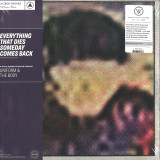
On the heels of their monolithic collaborative LP Mental Wounds Not Healing, the collaboration between industrial-noise post-everything bands Uniform & The Body returns with a second entry, Everything That Dies Someday Comes Back. Comprised of an amalgam of abrasive influence that spans Swans-y dirge and purge, Whitehouse’s clenched-jaw noise, middle-period Ministry’s penchant for metallic post-industrial everything, New Order’s nose for melodic emotionality, and Juicy J-inspired beats, Uniform & The Body’s approach delves deeper down the rabbit hole than before, igniting a sonic world of terror and bliss poised to grip the throats of fans yet again. Prepare for a record that the band self-describes as “the middle ground between Robyn and Corrupted, but weirder.”
Much like the collective’s bombastic debut, Everything was built over a series of collaborative sessions with Seth Manchester at Machines with Magnets in Rhode Island, mixing industrial-influenced synths, squalls of harsh noise, manipulated guitar, oodles of samples along with hard rock-inspired riffs, saccharine pop, and the alternately antagonistic and harrowing vocals of Michael Berdan
- A1: Green Baize “Switch Back”
- A2: Night Communication “Let’s Face The Music”
- B1: Mental Detector ”Get Up”
- B2: More Heavy Soul "Load In Total Darkness”
- B3: Ivan Iacobucci "Melt The Sun”
- C1: Sima “Give You Myself (Ricky Montanari Ethos Mama Remix)”
- C2: Ricky Montanari & Davide Ruberto “London (Original Mix)”
- D1: Workin’ Happily ”Make My Move (Tira Dub)”
- D2: Sound Set ”So In Love With You (Club Mix)
Following up on the success of House Of Riviera released in 2019, Mona Musique releases House Of Riviera Volume 2 curated by label head Nick V, a compilation that pays homage to forgotten gems of the classic Italian House scene, circa 1991-1994. 9 tracks from the artists and record labels that were central to this seminal era of House music, including two never released cuts from Ricky Montanari, Davide Ruberto and Ivan Iacobucci.
In the early 1990s, Italy hosted one of the most prolific scenes in the burgeoning world of House music. Whilst the majority of Europe was only just beginning to digest the arrival of this new musical genre born in the US, Italian clubs, DJs and labels were hot on the heels of their counterparts in the already established scenes of New York and London. The clubs of the Adriatic coast, also known as the Italian Riviera, were full every weekend, hosting the major US and UK Djs of the time, but also seasoned resident DJs that had been honing their trade since the early 80s. By the early 90s, Italian House music was regularly exported around the world with labels such as UMM, MBG, Flying, Palmares, DFC, Oversky, Zippy, D:Vision, Irma - and its sublabels Antima and Calypso, releasing tracks inspired by the original New York House and Garage sound, but with a very different, unique and emotional take. This was the specific aesthetic that was to become the House sound of the Riviera, the soundtrack to the golden era of Italian House music.
With all releases between 1992 and 1994, House Of Riviera Vol. 2 unites a selection of 9 tracks that encapsulates the atmosphere, the energy and creativity that reigned during that era. Including 2 previously unreleased tracks from Ricky Montanari and Davide Ruberto, and Ivan Iacobucci, both in the vaults since 1992, the compilation spans the different shades of the genre : from classic deep vocal house by Ricky Montanari and Sound Set, to the more dubbier late night dance floor cuts by Workin’ Happily and Night Communication, with Mental Detector and More Heavy Soul bringing some well chosen disco samples to their contributions, without forgetting the characteristic deep Italian dream house style by Green Baize. Artists featured are iconic producers and DJs from the day : Ricky Montanari & Davide Ruberto, Alex Neri & Marco Baroni, Ivan Iacobucci, Workin’ Happily and More Heavy Soul.
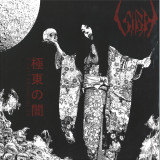
COLLECTION OF SIGH'S EARLY DEMOS, EP & RARITIES ON VINYL -
INCLUDES AN INTERVIEW & LINER NOTES COURTESY OF MAINMAN
MIRAI KAWASHIMA ON THE FORMATIVE YEARS OF THE JAPANESE
LEGENDS.
Cult Japanese black metal legends Sigh formed in 1989/90, featuring
mainman Mirai Kawashima, Satoshi Fujinami & Kazuki Ozeki
Following initial demos, Shinichi Ishikawa was brought into the band. It was following this shift that the band set about recording the masterpiece debut 'Scorn Defeat' for Euronymous' Deathlike Silence Productions, going on to become one of the country's greatest & most revered metal exports. With a journey through the strange & the psychedelic, incorporating a whole eclectic mix of genre styles & experimentation throughout their career, Sigh has remained a
vital creative force in the avantgarde field. However, at its core, Sigh has always remained true to its roots of old school metal.
'Eastern Darkness' contains a collection of Sigh's early rare works showing their swift musical evolution as well as the strong utilisation of keyboards in their compositional process throughout. The collection includes the band's legendary demo tapes, 'Desolation' & 'Tragedies', plus their 'Requiem For Fools' EP, along with the 'Far East Gate In Inferno' version of 'The Zombie Terror'. 'Eastern Darkness' is presented on the vinyl format & includes an interview with Mirai Kawashima about the early years of the band, along with his recollections of the origins of each title contained within the release, three decades on from Sigh's formation.
After last year’s Black Clouds Above The Bows, Amsterdam-based collective Wanderwelle presents the second entry of their trilogy for Important Records, which is dedicated to telling the story of the climate crisis and its effects on coastal areas around the globe. For this album the artists incorporated the sound of a dying organ, fatally wounded in a climate related event.
All Hands Bury The Cliffs At Sea consists of electro-acoustic threnodies for an environment at risk due to the effects caused by receding coastlines around the globe. Wailing odes tell the story of the catastrophic activity of eroding waves and winds shaping the land that are enhanced by the climate crisis. First hand experiences and meetings with local maritime experts on the subject of these receding coastlines inspired Wanderwelle to compose these albums.
During their travels, the artists stumbled upon a small church in a town on the east coast of Scotland. The building was quite damaged, the roof was being stabilized and the ancient walls showed great tears running vertically down the structure. One of the church’s volunteers told Wanderwelle that the damage had been caused by a nearby cliff that collapsed in the sea. An event increasingly common in the region.
The church organ was ruined in such a way that it was deemed unplayable, as most of the pipes were gravely damaged and in dire need of restoration. Musical instruments directly affected by the environment -and especially the climate crisis- are quite rare. Despite the damage, the artists were allowed to record a few tones of the instrument with their equipment, which was actually meant to be used for field recordings later that day.
In Black Clouds Above The Bows, antique cavalry trumpets were recorded and manipulated by Wanderwelle to sound an environmental alarm in the same manner as they were once used to warn men on the battlefield. Similar processing was used on the recordings of the dying organ, resulting in spectral, deconstructed tones beyond recognition. In addition to the damaged organ, the artists recorded piano, cello and harmonic additive synthesizers in later stages of the composition process, manipulating these sounds to mimic the perpetual activity of the sea shaping the land.Furthermore, a great deal of inspiration was found in maritime superstition, lore and mythology.
As told in the legend of Aspidochelone, a legendary sea creature of enormous size, was once mistaken for an island. After sailors docked and lit a fire, the beast submerged resembling a land mass sliding into the sea. The album’s title is derived from the saying ‘All Hands Bury The Dead’, a maritime burial phrase, as the duo likes to think ‘All Hands’ refers to all of mankind since we are all responsible for these impending catastrophes.
Cello, violin, voice, pipe organ (damaged), bowed guitar, EBow, Prophet-6 synthesizer, modular synthesizer, field recordings.
RIYL: Oliveros/Deep Listening, Arvo Part, Lambda Sond, Sarah Davachi
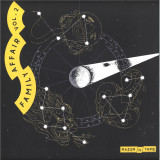
RNT brings the heat for their 2nd outing in their Family Affair compilation series, representing both their ever-expanding RNT ménage, as well as their tight knit musical nuclear fam.
Side A welcomes two seasoned producers to the catalog for the first time: Red Axes with their flip of fellow Israeli Nenor’s banger 'Do You Remember', and Chicago legend Boo Williams comes correct with 'Besty Smith', characteristically bumping and soulful.
OG RNT artist Frank Booker delivers his classic sampley deep sound with 'Time Won’t Tell', and Underground System’s Peter Matson takes JKriv’s 'Something Else' in a synthy and modern electro disco direction to round out the B side. Aural hugs all around in this fam jam!
- A1: Approach 1' 52
- A2: Omaggio A Fellini 1' 50
- A3: Pipes 4' 05
- A4: Orgal 3' 38
- A5: Babbel 3' 54
- A6: Yaya 4' 21
- B1: Ba Loon 3' 17
- B2: Clocking 3' 37
- B3: Wail 8' 34
- B4: Bottom 3' 34
- B5: Feeder 1' 36
- C1: Spindrift 3' 35
- C2: Surfer 4' 00
- C3: Low Roller 3' 24
- C4: Still 4' 56
- C5: Beating 3' 51
- D1: Picolo 5' 41
- D2: Wire 2' 07
- D3: Knock 6' 21
- D4: Wah 3' 02
- D5: Aah 1' 40
Tod Dockstader's Aerial series, an electronic/drone masterpiece, is cherished among fans of the artist's work and this second volume is available in an audiophile quality double LP edition.
Tod Dockstader's Aerial series is sourced from his life long passion for shortwave radio. Dockstader collected over 90 hours of recordings, made at night, and comprised of cross signals and fragments plucked from the atmosphere.
Opening with airwave drones, Dockstader gradually allows elements to slowly come and go, summoning an ominous atmosphere of ethereal cloud clouds. Malignant placidity continues, giving the feeling of eavesdropping upon late-night audio activity not unlike discovering number stations while sweeping the dials. These sounds pull you in as their density and rhythms come and go.
Backward voices, deep echoing choruses of conversations flowing under the surface, ocean sounds, pulsing electro-rhythms, all seem to be created via the collaging of many hours of source recordings. A masterwork of collage and juxtaposition by an overlooked pioneer of American electronic music.
Artwork by John Brien (Imprec) is inspired by the propagation of shortwave radio signals throughout the earth's atmosphere.
"This return of Dockstader is something to cherish, not just because his output has been so limited and scarce but because what we do have is so intriguing, persuasive and cliche-free; the music of an inspired explorer who trails in nobody's slipstream." The Wire
"One of the great figures of musique concrete composition." Dusted
The Aerial project
I've written before of my interest in shortwave radio, in the notes to the Quatermass CD. Also, in the notes to the Omniphony CD (which has my first "Aerial" mix, "Past Prelude," in it), I mentioned "The Aerial Etudes," which was my working title for what became the three CDs you have. And, at the end of an interview with Chris Cutler (which can be found in the "Unofficial TD Website"), the piece I mentioned I was starting to work on at the time became Aerial.) When I was very young, people got most of their entertainment from radio. They called it "playing the radio," as if it were a musical instrument. That's what I've tried to do in this piece. About this time, a few people encouraged me to look into using a computer for this work.
I'd never used one, but I saw it would allow me to keep my mixes digital - no more transfer losses. So, at the end of 2001, I got a computer and an editing program for it, and spent what seemed a long time learning it. I began selecting mixes and loading them into the computer in late March, 2002. Out of the 580, I selected 90 "best" mixes - eventually reduced to 59, the ones on the CDs. Finally, in assembling the CDs, I followed David Myers' suggestion to allow each piece to flow into the next - making a continuous journey to the end. Tod Dockstader, 14 september 2003
About Tod Dockstader: Dockstader moved to New York in 1958 and became a self-taught sound engineer and sound effects specialist and apprenticed as a recording engineer at Gotham Recording Studios. It was around this time that he started to use his off-work hours to experiment with mixing and manipulating sounds on magnetic tape (musique concrète). By 1960 he had amassed enough material to assemble his first record Eight Electronic Pieces which was released on the Folkways label in 1961 (this would later be used in the soundtrack of Fellini’s Satyricon). The last of the eight pieces was later re-worked into his first stereo piece. In 1961 he applied to use the facilities at the Columbia-Princeton Electronic Music Center and was denied access by Vladimir Ussachevsky. Ussachevsky’s official reason was the “overstrained” scheduling of the studios, although many suspect that Dockstader’s lack of academic training was a factor in the decision. He continued to create music throughout the first half of the 60s, working principally with tape manipulation effects. His last piece at Gotham was Four Telemetry Tapes in 1965, after which he left to work as an audio-visual designer on the Air Canada Pavillion at Montreal’s Expo ‘67. It was around this time in 1966 that some of Dockstader’s pieces were released on three Owl L.P.s, and his work became known to a larger audience. He achieved modest recognition and radio play alongside the likes of Karlheinz Stockhausen, Edgard Varèse, and John Cage.
SHDW & Obscure Shape return to their mothership label From Another Mind with their six-track 'Vergessene Welt' EP, signalling the first material on the imprint for 18 months.
Founded in 2015, the launch of SHDW and Obscure Shape's label From Another Mind saw the Stuttgart-based DJ/producers establish themselves via a wealth of self-released material while welcoming a long list of high-profile remixers, including Rodhad, James Ruskin and Dax J. However, the pair's evolution saw new ventures explored and attention focused wider afield with the launch of their second label Mutual Rytm in 2022. Utilising their A&R skills, the label has seen the duo curate and invite a selection of up-and-coming and established names while also delivering their first EP on the label in Summer, 'Poetic Justice'. Exploring the techno sounds of tomorrow while drawing on influences of the past, the label quickly turned heads and has become a go-to for many. Following a brief hiatus, the attention is now turned back towards From Another Mind as the pair explore their origins and the signature FAM sound once again, opening the New Year with six fresh productions across their 'Vergessene Welt' EP.
Opener 'Planet Der Sturme' is an exhilarating ride through driving basslines, menacing synth lines and hard-hitting percussion to march towards the peak hours and set the tone for what's to come. 'Der Urknall' is a trippy and murky dive through off-kilter textures and regimented percussion, while 'Das Gefallene Konigreich' ups the energy levels further with sharp metallic tones, skittering hats and subtle haunting melodies launching deep into the late night hours.
On the flip, 'Geburt Der Erde' brings a slice of paired-back, groove-led techno as a slick acid line takes control and ebbs and flows throughout the track's six-minute duration, before closing the physical record via the delicate yet compelling sonics of title cut 'Vergessene Welt' - showcasing a deep dive into far-reaching corners of the genre.
In October 1974, the first number of “L'Indépendant du Jazz”, a small self-produced magazine DIY -before punk supposedly invented the concept- was launched by Jef Gilson, Gérard Terronès, Jean-Jacques Pussiau and a few other specialists of a different kind of jazz in France, it looked at the already long career of Jef Gilson and in detail at the album with saxophonist Philippe Maté:
“The ‘Workshop’ is, with Philippe Maté (alto-sax), an undeniable success. Maté is genuinely ‘the’ most inventive French saxophonist since Michel Portal burst onto the jazz scene (who has also worked with Jef Gilson on both “Enfin” and “Gaveau”).”
Even though the author of the article is a mysterious I.H. Dubiniou, and it is difficult to know if it is a real person or a pseudonym used by one of the merry bunch, it is also tempting to hear it as what Jef Gilson really thought about his new discovery. Even more so as the two men would work together over a long period, as Maté became one of the key figures of Gilson’s Europamerica orchestra up until the 1980s.
Philippe Maté had started to make a name for himself with the Acting Trio when they released an album on the BYG label in 1969, and he was also one of the regular sidemen for the Saravah studios (he can notably be heard on albums by Higelin, Fontaine or his cult duo album with Daniel Vallancien).
The album was recorded on 4 February 1972, at the Foyer de Montorgueuil, where Gilson had set up his studio, with more or less the same team found on “La Marche Dans Le Désert” by Sahib Shihab + Gilson Unit (recorded ten days later). This was drummer Jean-Claude Pourtier and pianist Pierre Moret (regular Gilson accomplices since “Le Massacre Du Printemps”), alongside Maurice Bouhana and Bruno Di Gioa on various percussions and/or wind instruments. On bass is Didier Levallet, of the now mythical Perception, (Jean-François Catoire would replace him with Shihab) and Philippe Maté who took top billing, rather than the American saxophonist afterwards. The two albums are however quite different. This “Workshop” is more abrasive, more free. Made up of two long improvisations each of over 22mn, “L'Œil” on side A and “Vision” on side B (Gilson specialists would recognise the nod to one of his albums from the 60s), the album plunges you into the depths, attempting to drown you in electronic waves, dragging you back to the surface by the collar, giving you a good shakedown, before showing you the light, leaving you breathless on the shore after 46mn of the most intense music French has to offer. “An undeniable success”, they said. (by Jérôme "Kalcha" Simonneau)
Orizont is back for its second release. And just like its predecessor, "Orizont 02" introduces four tracks from different artists, each with its own style, circling the worlds of atmospheric minimal and deep tech-house: Dragusanu, Calinie, Andrei Voica and Cata.
Dragusanu kicks off the EP with 'Asa Dar', a thoroughly atmospheric minimal track drenched in dark tones and menacing grooves. Calinie's 'Substance' is the logical continuation to Dragusanu's darker tones, expertly expanding and emotionally charging the sonic space into the morning hours with finesse. Andrei Voica's 'Colors' entirely switches the colour of the EP, opting for warmth and a particular focus on groove and feel-good sounds. Cata's contribution, 'Morning Dew,' provides an adequately named (and particularly groovy) deep house track for the closing of the EP, fulfilling the desires of those looking for an EP that they can play at any given time, from dusk till dawn.
On every copy sold 2 euros minimum goes to Mealespoirs : An NGO association who fight for Childhood rights, malnutrition and education.
lets talk about music now :
Crazy meet up between 2 monsters !
Atomic Compressor, the GTI number one composer who did the best of KSI records, and more recently a brilliant Komum brings a full side of his best recent tunes : Speed pityless kickerz bringing "le Père Noël Est une Ordure" special Thérèse édition !
On the flip you'll get Leatherface, newcomer from Cellul R production, with 2 Industrial psychedelic rolling kickerz : the first one is a C.Mantle hit combo, light kick mentalism ; and the second a powerfull Brotherhood lesson.
Subtil's 25th release signs Romanian duo Alsi, formed by Alex Florea (Limpid) and Silviu Tanase (Einzig), marking their debut on the imprint. Since 2016, Alsi have created their very-own concoction of minimal, hypnotic and profound music, showcasing sharp drum programming skills and creative, intensely detailed sound synthesis.
'Madness EP' sees Alsi at the top of their game, displaying three tracks brimming with power, detail and bold sophistication. Under the infinite structures of expertly crafted rhythmic syncopations and hefty basslines, and as indicated by the EP's name, the themes of madness, hallucination, and hypnosis echo through the entire sonic palette. Such sound design techniques evoke several mental states one usually doesn't find in minimal techno, certifying there are enough layers of musicality for the boldest of DJs and the most curious of listeners.
SAISEI founder Junki Inoue continues his vital archival work uncovering the riches of Japan’s distinctive electronic music scene and bringing them to new audiences around the world.
The PMA EP compiles four dynamic tracks recorded around 30 years ago by the duo of Shigeru Nakamura (drums/vocals) and Mikio Kato (synths) aka B-2DEP’T.
Nakamura and Kato’s first album as B-2DEP’T, Products Plus, appeared on cassette in 1993 on Trigger Records, the predecessor label to Transonic (given a retrospective on SAIS004). Its bright yellow and blue retro-futurist artwork – which is echoed in the design for this reissue on SAISEI – matched the sounds held within: inventive, out-of-the-box dance music blending overseas influences with an idiosyncratic Japanese sensibility.
Two tracks from Products Plus appear on this EP, All tracks re-edited by Junki Inoue and regular collaborator Yuzo Iwata for vinyl extended play and available now for the first time on vinyl. ‘Clockwork Giant Panda’ appearing in a version co-produced with Yoshinori Sunahara (ex - Denki Groove), merges a breezy US house groove and bassline with twinkling, almost parodic Japanese keys that act as a kind of meta commentary on Western perceptions of Japan (a concept pioneered by Yellow Magic Orchestra). The two parts of ‘BSMH’, or Body Sonic Mental Health from ‘Products Plus’, were originally remixed by Daishi Hisakawa of Tanzmuzik, who draws on darker sounds from Europe and the UK: restless Depeche Mode synth harmonies spiral above a pacy EBM pulse, with robot vocals intoning the titular slogan. The package is completed by the unreleased track ‘PMA’, whose driving, bass-heavy mood falls somewhere between Sheffield bleep and the ambient techno of early Biosphere.
SAISEI is a Japanese word which translates to ‘reproduction’ and ‘to play’ (as in playing records). Japanese culture is widely known for its traditional nature just as much as it is for being forward into the future and this label’s concept does justice to exactly that. Having started digging for records as early as 16 years old, Inoue delved into productions from 1990s Japan to uncover these native gems. SAISEI’s core concept is to recapture and reintroduce unique pieces of Japanese electronic music onto vinyl, to an audience it never reached before as most of this music was only released in Japan.
Blue / Yellow Vinyl in PicCover
(THIS ALBUM IS DIRECT ACTION: ALL REVENUE GOES TO THE ARTISTS IN ODESA. YOU ARE PARTICIPATING IN KEEPING UKRAINIAN ARTISTS WORKING AND EARNING MONEY DURING THIS TIME. Слава Україні!) BE:AT WAR is the new album from Odessa’s MEDIUM, who released the acclaimed Evolution of the Universe on Ohm Resistance in 2017. They have been writing drum and bass for over 15 years and released on labels such as Ohm Resistance, Sonic Terror, Hardline, Close2Death Recordings, Distortion Records, Combat Records and more. This follow up album is made under adversely different conditions - the approach of war to their home city, the assault on their native land. Yet these men are making music happen in the midst of it, recording their artistic and emotional reactions as chaos unfolds around them. Guest starring London MC Flowdan, Godflesh’s Justin K Broadrick, SIMM and Submerged. BE:AT WAR is a full spectrum image of the horror, uncertainty, and perseverance surrounding these Ukraine-based producers.
(Produced, Arranged and Conducted by Claus Ogerman)
Not long after the dawn of her career, as a teenager in Rio de Janeiro, Joyce was declared “one of the greatest singers” by Antonio Carlos Jobim. Yet despite reputable accolades and the fact that she has since recorded over thirty acclaimed albums, Joyce never quite achieved the international recognition of the likes of Jobim, João Gilberto and Sergio Mendes, all of whom became global stars after releasing with major labels in the US.
There was a moment when it seemed she might be on the cusp of an international breakthrough. While living in New York, Joyce was approached by the great German producer Claus Ogerman. Ogerman had already played a pivotal role in the development and popularisation of Brazilian music in the 1960s, recording with some of the all-time greats like Jobim and João Gilberto, as well as North American idols like Frank Sinatra, Billie Holiday and Bill Evans.
"I met him in New York City, in 1977”, recalls Joyce. “I was living and playing there, and João Palma, Brazilian drummer who used to play with Jobim, introduced me to Claus. We had an audition, he liked what we were doing and decided to produce an album with us.”
Featuring fellow Brazilian musicians Mauricio Maestro (who wrote/co-wrote four of the songs), Nana Vasconcelos and Tutty Moreno, and some of the most in-demand stateside players including Michael Brecker, Joe Farrell and Buster Williams, the recordings for Natureza took place at Columbia Studios and Ogerman produced the album, provided the arrangements and conducted the orchestra.
But mysteriously, Natureza was never released, and what should have been Joyce’s big moment never happened. As Joyce remembers, “I returned home, but Claus and I remained in contact, by letters and phone calls. He was very enthusiastic about the album and tried to hook me up with Michael Franks. He wanted me to go back to NYC in order to re-record the vocals in English with new lyrics, which I actually wasn’t too happy about. But then I got pregnant with my third child and could not leave Brazil. And little by little our contact became rare, until I lost track of him completely. And that was it. I never heard from him again."
While Claus was known to be something of an elusive character, the album’s disappearance might also have been a result of timing. The Brazilian craze was coming to an end, making way for disco and new wave at the end of the seventies, and Ogerman struggled to find a major label interested in a new Brazilian sensation. Additionally, as Joyce mentions, it wasn’t quite finished. Ogerman wanted to add finishing touches to the mix and to record alternative English lyrics for the US and international markets - a critical artistic difference between Joyce and Ogerman.
As the military dictatorship’s grip on Brazil began to subside in the 1980s, Joyce had a handful of hits in her home county, including a tribute to her daughters ‘Clareana’, and the iconic ‘Feminina’ - an intergenerational conversation between mother and daughter about what it means to be a woman. But already a feminist pioneer, these successes were hard fought. Joyce had caused controversy as a nineteen-year-old when she became the first in Brazil to sing from the first-person feminine perspective, and the institutional sexism she faced was worsened by the dictatorship who would often censor her music. Even once the Junta was out of the way, Joyce found herself up against the male-dominated major record companies in Brazil, who sought to dictate her career and sexualise her image, before dropping her for refusing to play along.
A few years after the success of her albums Feminina and Agua E Luz in Brazil, Joyce’s music began to find its way to the UK, Europe and Japan, and “Feminina” and “Aldeia de Ogum” became classics on the underground jazz-dance scenes of the mid to late-eighties and early-nineties.
The full-length version of “Feminina” from the Natureza sessions was first heard on a Brazilian Jazz compilation in 1999 and “Descompassadamente” was licensed for a CD compiling the work of Claus Ogerman in 2002. Following these, word began to get out about an unreleased Joyce album with Claus Ogerman and the legend of Natureza grew.
Forty-five years since it was recorded, Natureza finally sees the light of day, as Joyce intended: with her own Portuguese lyrics and vocals. Featuring the fabled 11-minute version of ‘Feminina’, as well as the never before heard ‘Coração Sonhador’ composed and performed by Mauricio Maestro, Natureza’s release is a landmark in Brazilian music history and represents a triumphant, if overdue victory for Joyce as an outspoken female artist who has consistently refused to bow to patriarchal pressure.
***Disclaimer! While “Feminina” and “Descompassadamente'' were mixed by legendary engineer Al Schmitt and mastered from the original master tapes, the remaining five tracks are unmixed. Due to significant deterioration of the master-tapes, the best audio source for these tracks was an unmixed tape copy Joyce had kept of the recordings. The best care has been taken in the restoration and mastering of this release, but the sound quality may differ from other releases on Far Out Recordings. We advise listening to sound clips before buying where possible.
Firescope are always on the lookout for new music, searching and sieving with headphones clamped over ears. GGGG, a recent discovery, unveils a stunning debut release. The co-founder of D.Ko Records may be a fresh face when it comes to releasing, but he has a wealth of both experience not to mention talent. His album, Gazé, is testament to this.
A spread of styles and influences coalesce to create GGGG’s unique sound. Ambient. Braindance. Electronica. Techno. All are melted and forged into the new. Processed percussion is the shifting sands from which a swooping melody takes flight, a melody that bends and soars as “K-Robot OG” ascends. Crystalline chords are shaven with fizzing drums in the frenzied elation of “Cas Contact.” And this is what lies at the heart of the collection, a rapturous joy that permeates the entire record. From the complexity and grandeur of “Chien Flûte 5.1” to the considered and subtle “Mudla 2”, the brightness of the audio palette chosen gives tracks an incandescence. This “joi de vivre” glistens and glows in the more playful tones of “Broutine Lamé” and “Cat Intro.” Textures are another area of interest for GGGG. Pieces like “Slowdry” and “Trip 2 Delinc” reshape and ruffle rhythms to bring a counterpoint to form and harmony. Beats are replaced by gentle waves of sound as the twelve-work collection culminates in “Sac Ala Blofel.”
Gazé tracks a course. From the energy and frenetic rhythms of first encounters to the atmospheric embrace of the latter part of the album, there is the sense that GGGG is celebrating the astounding of the ordinary, the amazing that is contained from the routine of dawn to dusk.