The Intercommunal Free Dance Music Orchestra was created in 1971 by French free jazz pianist legend, François Tusques. Free Jazz, was also the name of the 1965 recording Tusques made along with and other Michel Portal, François Jeanneau, Bernard Vitet, Beb Guérin and Charles Saudrais. Six years later, in 1971 Tusques would go ahead of free jazz.
Wondering if free jazz wasn’t a bit of a dead end together with Barney Wilen (Le Nouveau Jazz) or even solo (Piano Dazibao and Dazibao N°2), Tusques formed the Inter Communal Free Dance Music Orchestra, an association under the banner of which the different communities of the country would come together and compose, quite simply. If at first the structure was made up of professional musicians from the jazz scene it would rapidly seek out talent in the lively world of the MPF (Musique Populaire Française).French Popular Music, ndlt
Compiling extracts from concerts given between 1976 and 1978, L’Inter Communal demonstrate the “social function” which inhabited free jazz and popular music at the time calling upon Spanish singer Carlos Andreu along with Michel Marre, Jo Maka, Adolf Winkler and Jean Méreu. Andreu, claimed Tusques, was a griot “who created of new genre of popular song improvised with our music, based on events going on at the time”.
L’Inter Communal can start the festivities: on “Blues pour Miguel Enriquez”, it is first Thelonious Monk who is invoked in an homage to one of the leading figures of the Chilean revolution, and a victim of Pinochet. The circumstances may be serious, the music, though, is not. The musicians light a bonfire to bring together on the same frequency France and Spain, the Americas and Africa: “L’heure est à la lutte” (the time to fight is here ndlt), is the new song offered by the l’Intercommunal Free Dance Music Orchestra... As if proof were needed that their music is still more than timely!
Search:mere
"Marv Won is a Detroit musical alchemist – a street poet laureate entrenched in the battle rap scene, as well as a cinematic world class producer as capable of channeling Dr. Dre as Donald Goines. Marv breaks new ground with his first Mello Music Group album “I’m Fine, Thanks For Asking” - a soul-baring endeavor, that weaves tales of struggle and triumph, drawing inspiration from his storied life in the Motor City.
As one of the most esteemed battle rappers, Marv Won brings a lyrical ferocity to his unapologetically raw and heartfelt rhymes. This album collaboration with Mello Music Group marks a pivotal moment in his career, showcasing a seamless fusion of his word play and production. The album, featuring collaborations with Quelle Chris, Elzhi, Freeway, Rapper Big Pooh of Little Brother and more, cements Marv Won's status in the rap game. Marv Won's storytelling transcends mere verses, painting vivid portraits of life in the D. Over ten self-produced tracks Marv showcases his ability behind the boards with tracks that blend epic orchestration and Joe Louis drums that hit like Tommy Hearns."
The drone-pop consternations of Ekin Fil emerge through vaporous tone and forlorn, distant song, as if plucked from a dream. These exist on their own accord, moving with their own internal logic of an emotion heaviness that belies any the passing observation of this as mere shoegazing ambience. Her songs, her compositions find themselves adjacent the fragmented etherealization of Elisabeth Fraser's voice from a forgotten scene of a particular David Lynch film, as a ASMR trigger for Proustian recollection. Something profound. Something hidden. Something desolately sad.
The Helen Scarsdale Agency has had the pleasure of witnessing Ekin's continued development, maturation, and growth as a composer, having released now seven of her magnificent, under-the-radar gems. Her slow burning, dejected ballads continue to draw from the deep well of sorrow, with varying frequencies and intensities of bitter light poking through. Loves lost. A world broken. All is not hopeless, but there is a considerable amount of shit to wade through.
Sleepwalkers embraces a familiar set of metaphors in her work, that of narcolepsy and the unsettled state of existence between sleep and being awake. But she stretches herself with a set of compositions that run parallel to the work of Tim Hecker as in the gravitation soft-noise of "Stone Cold" or to a slow motion serialism that punctuates the ambient crawl of her ambitious "Gone Gone." Recommended for fans of Grouper, Rafael Anton Irisarri, A.C. Marias, and Carla dal Forno.
Das dritte Album von Marina Allen mit starkem und lebendigem Songwriting, wunderschön instrumentiert, hochmelodisch und mit einer unvergleichlichen lyrischen Perspektive vorgetragen. Mit zwei gefeierten Alben hat die in Los Angeles lebende Singer-Songwriterin eine frühe Ernte eingefahren, aber ihr drittes Studioalbum birgt den bislang größten Ertrag. Verglichen mit den anschwellenden Kompositionen von Allens zweitem Album Centrifics oder der unschuldigen Ruhe von Candlepower, ist die Welt von Eight Pointed Star tiefgreifender und offener. Schimmernende Gitarren verziehren die Canyons und Staub wird von der rot vernarbten Erde aufgewirbelt. Allens Gesang ist rein und kristallin, während die Instrumentierung reichhaltig ist und vor Helligkeit nur so strotzt. Man kann hören, wie die Musik Zufriedenheit ausstrahlt und der Produktion von Chris Cohen Raum für eine volle Band bietet. Allens künstlerische Zuneigung gilt vor allem Sängern, die ihrer Meinung nach wirklich singen können, von The Roches bis Karen Dalton, Joanna Newsom und Meredith Monk. Aber diese Einflüsse verschwinden wie Gespenster auf dem Dachboden, wenn sie selbst zu singen beginnt. Allen hat eine Stimme, die es mit dem Kanon aufnehmen kann - unnachahmlich - und sie hat noch nie so entschlossen geklungen wie hier. Ein strahlender, klarsichtiger moderner Klassiker des alternativen Folk und Americana. Für Fans von Aldous Harding, Fiona Apple und Waxahatchee. Klassich schwarzes Vinyl mit DLC oder Digisleeve CD.
Colored[29,37 €]
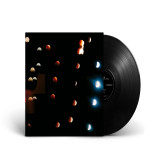
Atmosphere and gravity lean into each other. They are simultaneously expansive, and anchoring. They hold us, and lend a sense of perspective. They provide a stability and a knowingness which is essential in the absolute, and yet we can't help but find ourselves gazing upward, outward and reaching towards that which sits outside those things and ways we know. Selene is a record about that this lingering desire for that which sits beyond. It is work that seeks new perspectives snatched from familiar vistas, and it meditates on that sense of anchor and perspective. The work is also a speculative hymn to the visions of the celestial zones that spill ever outward. These visions, once merely what we could perceive with the naked eye are now so much more. Our minds eye is fed in equal parts by radio telecopy, filmic dreams and fiction renders of a place most of us will never know first-hand. This recording ties into a linage that reaches back, while stretching forward. It is just one story of so many, told across places, across cultures, across generations. It sits in the in-between of before and after, and in that moment invites us to situate ourselves and lean into it.
Black[25,63 €]
Atmosphere and gravity lean into each other. They are simultaneously expansive, and anchoring. They hold us, and lend a sense of perspective. They provide a stability and a knowingness which is essential in the absolute, and yet we can't help but find ourselves gazing upward, outward and reaching towards that which sits outside those things and ways we know. Selene is a record about that this lingering desire for that which sits beyond. It is work that seeks new perspectives snatched from familiar vistas, and it meditates on that sense of anchor and perspective. The work is also a speculative hymn to the visions of the celestial zones that spill ever outward. These visions, once merely what we could perceive with the naked eye are now so much more. Our minds eye is fed in equal parts by radio telecopy, filmic dreams and fiction renders of a place most of us will never know first-hand. This recording ties into a linage that reaches back, while stretching forward. It is just one story of so many, told across places, across cultures, across generations. It sits in the in-between of before and after, and in that moment invites us to situate ourselves and lean into it.
- Pebolim
- Pega Leve
- Compro Ouro
- De Quebrada
- De Boas
- Quebra Queix
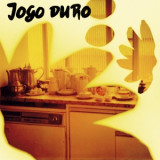
Ladies and Gentlemen, meet Jogo Duro, a collaboration between Ilhan Ersahin and some outstanding São Paulo musicians Guizado, Ze Nigro, Samuel Fraga, Chicao & Tony Gordin who also happen to be great friends. These are players who will be familiar to those following the careers of Céu, Otto, Curumin, Tulipa Ruiz and the late, great Gal Costa. This record is the result of the amount of time Ilhan has spent in São Paulo over the last decade due to putting on the Nublu Jazz Fest there every year. With all the contacts, connections and friendships formed over the course of making an annual music festival happen, musical cross-pollination (usually simply referred to as "jams") was inevitable but this time it was decided to do it in a studio with tape rolling rather than on stage, which is certainly a more productive approach than merely talking about it over beers at a local bar! Everything happened fairly spontaneously over three days in the studio, everybody brought songs, ideas and creative energy and before you know it an album was born
2024 reissue of Thomas Bückers debut album as Bersarin Quartett, originally released in 2008 on Lidar.
With some albums, you realize within a few seconds that here you have come across something really special. It is music that touches you straight away. Music that is important, that has a story to tell – and that manages to do so without even a single line of lyrics.
Wonderful orchestral pieces full of longing and melancholy. It is that certain kind of melancholy that seizes you when you are moved while following the final credits of an emotionally touching movie, remembering special moments that have faded in the course of many years and linger hazily in your memory, when you are somewhat wistfully contemplating old, worn photographs from days passed by … not a feeling of failure or hopelessness, but a bittersweet reflection.
Orchestral cinemascope sounds provide the emotionally moving fundament, wrap the tracks up in a warm coating. Graceful strings pile up, creating big moments and repeatedly ending inmelodies that are simply heart-rending, cinematic and tragic. But the Bersarin Quartett does not merely rely on these ingredients. The songs are also repeatedly interspersed with suspenseful and surprising elements, be it frail electronica, hypnotic soundscapes, drums or reverbed guitars. Rarely has amelange sounded as convincing and natural as this, and rarely has it sounded so well produced.
Thomas himself calls his music “imaginary fictional filmscores“. And it is hardly possible to come up with a more apt term. 10 tracks for 10 movies that have yet to be shot. Music that radiates such an enormous and authentic passion in every single minute, that one can’t help but completely abandon oneself to it. And honestly: Can there be anything more wonderful that can be achieved through music?
- Enrico Caruso & Gaetano Donizetti - Una Furtiva Lagrima
- Bunny Berigan & His Orchestra - Caravan
- Irving Aaronson & His Commanders - Let's Misbehave
- Eddy Howard & His Orchestra - Till We Meet Again
- Duke Ellington - Take The 'A' Train
- Fats Waller - I've Got A Feeling I'm Falling
- Sidney Bechet - Si Tu Vois Ma Mère
- Johnnie Ray & The Buddy Cole Quartet - Walkin' My Baby
- Stan Getz & Charlie Byrd - Desafinado
- Harry James & The Rhythm Section - Limehouse Blues
- Al Jolson - Toot, Toot, Tootsie! (Goo' Bye!)
- Stéphane Grappelli & Django Reinhardt - Out Of Nowhere
- Tommy Dorsey - Sleepy Lagoon
- Jackie Gleason - Serenade In Blue
- Erroll Garner - Lullaby Of Birdland
- The Modern Jazz Quartet - Bags' Groove
- Billie Holiday & The Teddy Wilson Orchestra - Easy To L
- Stephane Wrembel - Big Brother
- Fred Astaire & The Leo Reisman Orchestra - Cheek To Che
- Liberace - I'll Be Seeing You
- Glenn Miller & His Orchestra - Moonlight Serenade
- Hal Kemp & His Orchestra - With Plenty Of Money And You
- Leo Reisman & His Orchestra - What Is This Thing Called
- The Dave Brubeck Quartet - Take Five
Longtime enthusiasts of ambient music have much to celebrate as Rafael Anton Irisarri's cherished out-of-print cassette, "Midnight Colours," returns in a meticulously remastered edition and makes its inaugural debut on vinyl. The significance of this album's announcement is accentuated by its historical resonance, coinciding with the same day in 1952 when the world bore witness to the first-ever test of the hydrogen bomb.
"Midnight Colours" is far more than a mere album; it's an exploration of the enigmatic relationship between humanity and time. Conceived as a sonic interpretation of the Doomsday Clock, which symbolizes the world's existential vulnerabilities, Irisarri's work beckons listeners to contemplate the gravity of our existence and the delicate balance that envelops it.
"I wanted to capture the essence of humanity's relationship with time, both the anxiety and the serene beauty that coexists within the shadows of the night," explains Irisarri. "The vinyl format adds a tactile dimension to the experience, inviting listeners to physically engage with the music."
Known for his contributions to the ambient and electronic music genres, Irisarri often explores themes of introspection, nostalgia, and the interplay between sound and emotion.
Recorded in 2017, when the Clock was at 2½ minutes-to-midnight (and at the time, the second-closest to midnight since the Clock's inception in 1947), "Midnight Colours" permeates with the melancholy of memories resurfacing as one approaches the end of life: the regrets, the closure, the uncertainties, the anxieties.
Originally released as a limited tape on the beloved Atlanta-based label Geographic North, "Midnight Colours" swiftly garnered praise and acclaim within the ambient music sphere. Now, with this newly remastered edition on his own Black Knoll imprint, fans, both longstanding and newfound, can rediscover the album's captivating beauty in unprecedented clarity and depth.
"I've wanted to release 'Midnight Colours' on vinyl since it first came out, and I'm thrilled to finally be able to. The remastering process, brilliantly done by Stephan Mathieu, has breathed new life into the work, and I'm eager for listeners to experience it in this format."
The reissue of "Midnight Colours" features band-new artwork and design by the renowned Mexican visual artist Daniel Castrejón. A frequent collaborator and friend of Irisarri, Castrejón's imagery impeccably complements the album's mood and themes, extending a compelling invitation for listeners to explore its aural world visually.
This landmark release serves as a testament not only to Irisarri's enduring impact on the ambient music genre but also as a long-awaited gift to those who have patiently anticipated the album's vinyl debut.
- A1: Chahe Mujhe Koi Junglee Kahen. Mohammedd Rafi (From Junglee, 1961)
- A2: Aye Naujawan Sab Kuch Yahan. Asha Bhosle (From Apradh, 1972)
- A3: Doob Doob Jata Hoon. Kishore Kumar (From Blackmail, 1973)
- A4: Mera Naam Chin Chin Chu. Geeta Dutt (From Howrah Bridge, 1958)
- A5: Nari Kathai. Written By Ilaiyaraaja, Vocals By Kamal Haasan, Sridevi (From Moonram Pirai, 1982)
- A6: Pretty Pretty Priya. Kalyanji & Anandji Featuring G. Anand, Prayag, Jerry Adolf & Chorus (From Priya, 1970)
- B1: Intinti Ramayanam. P. Susheela, S.p. Balasubrahmanyam (From Intinti Raamayanam, 1978)
- B2: Aao Twist Karein. Manna Dey & Chorus (From Bhoot Bungla, 1965)
- B3: Dhak Dhak Dhak. Lata Mangeshkar, Kishore Kumar (From Haathi Mere Saathi, 1971)
- B4: Bombshell Baby Of Bombay. Shankar & Jaikishan Featuring Iqbal Singh (From Ek Phool Char Kante, 1960)
- B5: Mehbooba Mehbooba. R. D. Burman (From Sholay, 1984)
- B6: Ezhupaalam Kadamnu. S. Janaki & Brahmanandan (From Aazhi, 1978)
A collection of mind blowing songs from Hindi films 1958-1984. 12 musical gems from the Bollywood vaults with a wide variety of styles thrown in the mix, from the classic to the rare, a must! An astonishing overview of the magnificent musical talents populating Bollywood films. With a predilection for movies with a strong musical backbone where songs and musical numbers play a pivotal role, the Hindi cinema boom gave birth to a strong and creative music industry where composers, musicians, musical directors, conductors, producers, singing actors, and playback singers (singers who provide vocals for the musical parts of roles played by actors or actresses) found a perfect place to develop their careers. A sample of those incredible talents is included in this compilation, the ideal point to start digging deeper into the lush garden of musical delights that is Bollywood
Seit 2013 arbeitet Douglas Dare im Spannungsfeld zwischen Klassik und Chamber Pop, Folk und Avantgarde-Experimenten immer neue verblüffende Perspektiven heraus - und singt dazu mit einer Ausnahmestimme, die einen regelrecht umhauen kann. So hat er sich im zurückliegenden Jahrzehnt u.a. bereits die Bühne mit Größen wie Nils Frahm, Perfume Genius und Olafur Arnalds geteilt und wurde zudem von David Lynch und Robert Smith von The Cure für die von ihnen kuratierten Festivals nach Manchester (MIF) bzw. London (Meltdown) eingeladen. Mit seinem vierten Album Omni schlägt Douglas nun jedoch ein ganz neues Kapitel auf. Alles klingt nach Aufbruch, alles ist elektrisiert. Vor allem Robert Raths, der Gründer von Erased Tapes, ermutigte Douglas dazu, die angestammten Instrumente hinter sich zu lassen, alles Akustische auszuklammern. So löste er sich auch vom Klavier, mit dem er aufgewachsen war, und beschäftigte sich stattdessen intensiv mit Synthesizern und Drum Machines. Tatsächlich erinnern die neuen Aufnahmen vielfach an das Werk von Arca oder auch die Aufnahmen der verstorbenen SOPHIE - zwei Künstler:innen, für die der künstlerische Ausdruck vor allem ein Akt der Befreiung ist bzw. war. "Wir haben auch zusammen im Studio abgehangen", sagt Douglas über letztere. "Ihre ganze Herangehensweise als Musikerin hat mich extrem beeindruckt." Und doch ist auch Omni durchzogen von jenem intelligenten Storytelling, dem Schwung der Streicher, dem eleganten Kontrastreichtum und den fast schon märchenhaften Stimmungen, die man von Douglas kennt - und die seine künstlerische Handschrift so einzigartig machen. Passiert sonst ja nicht so oft, dass man einen massiven Electro-Banger hört, der auch aus dem Soho der Neunziger stammen könnte, und darüber Vocal-Loops, die von den experimentellen Sounds der US-Pionierin Meredith Monk inspiriert sind. Letzten Endes versucht Douglas mit Omni, all diese unterschiedlichen Facetten seiner Persönlichkeit - Songwriter, Raver, Beobachter, Lover - unter einen Hut zu bringen. Das Ergebnis klingt maximal queer: verführerisch und sexy, lüstern und vollkommen frei vom Korsett binärer Kategorien. "Selbst Matrosen begegnet man auf diesem Album!", sagt Douglas abschließend und muss lachen. "Noch queerer geht"s echt nicht."
- A1: Los Hermanos Martelo – Cumbia Cienaguera 02 47
- A2: Los Trotamundos – Cumbia Porteña 02 31
- A3: Antonio León Y Su Conjunto – Cumbia Triste 02 48
- A4: Antolín Y Su Combo Orense – El Pájaro Milano 02 44
- A5: Francisco Zapata – Una Cumbia Para María 03 00
- A6: Crescencio Salcedo – Tipicismo 02 35
- A7: Sonidos De Gamero – La Cumbia Del Negro 03 07
- B1: Los Teen Agers – Cumbia Sobre El Mar 02 40
- B2: Miguel Villalba Y Su Conjunto – Cumbia Manguelitera 02 49
- B3: Calixto Ochoa – El Indio Mapuchi 03 02
- B4: Alfredo Gutiérrez Y Los Caporales Del Magdalena – Aspacanilla 02 26
- B5: El Michi Y Su Combo Bravo – Antonia 02 41
- B6: Los Graduados – Alumbra Luna 03 07
- B7: Gabriel Mesa – La Luna Y El Pescador 03 00
- C1: Adolfo Pacheco Y Su Conjunto – Pájaro Macua 02 24
- C2: El Conjunto Miramar – Cumbia Del Sol 02 58
- C3: El Combo Cienaguero – Fiesta De Cueros 02 21
- C4: La Sonora Universitaria – Margot 02 22
- C5: Orquesta De Marcial Marchena – Lina 02 39
- C6: Rita Fernández – Llora Su Pena 02 05
- C7: Jaime Llano González – Cumbia En Dominante 02 52
- D1: Los Arko – Cumbia Bogotana 02 05
- D2: Aniceto Molina Y Su Conjunto – Cumbia Candela 03 34
- D3: Los Bobby Soxers – Cumbia Sabrosona 02 08
- D4: Catalino Y Su Combo Negro – Cumbia Montañera 02 27
- D5: La Cumbia Moderna De Soledad – Cumbia Soledeña 03 16
- D6: Alejandro Bernal – Al Compás De Las Polleras 02 20
- D7: Grupo La Droga – La Chicharra 02 09
A selection of 28 Colombian cumbia bangers for the dance floor from the deep vaults of Codiscos and associated labels Costeño, Zeida and Famoso, all of them originally released between 1962 and 1983.
“Cumbia Cumbia Cumbia!!!” combines well-known classics and rarities that are difficult to find in their original formats. An invitation to enjoy and be amazed, above and beyond ethnographic and academic concerns.
The historical origins of cumbia in Colombia are nebulous and imprecise. The mythology surrounding it suggests an ancient past when Amerindian, African and European musical sounds were mixed together.
The main record companies in Colombia such as Discos Fuentes, Discos Tropical, Sonolux, Zeida-Codiscos, Silver, Ondina, Discos Atlantic, Vergara and Curro were created between Barranquilla, Medellín, Cartagena and Bogotá from 1936 to 1954. All of them, without exception, recorded Colombian tropical music that over the years was given different names such as porro, gaita, fandango, paseaito, merecumbé, mapalé, bullerengue or, of course, cumbia.
After digging deep into the overwhelming archive of Discos Fuentes in our previous volume, this second instalment in the series “Cumbia Cumbia Cumbia!!!” comprises 28 Colombian cumbia bangers for the dance floor from the deep vaults of Codiscos and associated labels Costeño, Zeida and Famoso, all of them originally released between 1962 and 1983. Legally established on July 1, 1950, Zeida (later Codiscos) was one of the companies that consolidated Medellín as the epicenter of the Colombian recording industry in the central decade of the last century.
“Cumbia Cumbia Cumbia!!!” combines well-known classics and rarities that are difficult to find in their original formats. An invitation to enjoy and be amazed, above and beyond ethnographic and academic concerns.
Maximilian Skiba, an Eminent Figure in the World of Electronic Music, Makes a Triumphant Return to Skylax After an Absence Spanning Over a Decade. His Resurgence Is Nothing Short of Exceptional, as He Joins Forces With the Legendary Snax to Deliver a Musical Offering That Rekindles the Very Essence of House Music's Illustrious origins.
Skiba's Two New Tracks, "Pushing My Buttons" and "In Motion," Serve as a Compelling Testament to His Impeccable Craftsmanship as a Producer. the Influence of the Pioneering triumvirate—Larry Levan, Ron Hardy, and Frankie Knuckles—is Palpable Within These Compositions. Both Tracks Are a Masterful Blend of Nostalgia and Innovation, Perfectly Aligning With the Playlists That Once Defined the Heyday of House Music's Most Celebrated luminaries.
"Pushing My Buttons" and "In Motion" Evoke an Air of Sophistication, Exuding a Smooth, Velvety Quality That Transports Listeners to the Cherished Era of Original Disco. Drawing Parallels to the Timeless Classics Like Dinosaur’s "Kiss Me Again" or Loose Joints "Is It All Over My Face", Skiba's Creations Pay Homage to the Bygone Era While Injecting a Modern Edge. This Phenomenal Ep Goes Beyond Skiba's Original Works, Offering Two Exceptional Remixes That Elevate the Experience. the First Remix, a Balearic Interpretation by the Emerging Talent Maltitz, Adds a Refreshing Dimension to the Tracks. the Second Remix, Helmed by the Skilled Apollon Telefax, Ingeniously Transforms the Already-Classic Tunes Into an Explosive Italo-Disco Sensation. These Remixes Seamlessly Weave Together the Past and the Present, Creating a Bridge Between Different Eras While Keeping the Music timeless.
In Essence, This Ep Is Not Just a Musical Offering; It's a Journey—a Seamless Fusion of History and Innovation That Transports the Listener to an Era of Musical Brilliance, All the While Redefining the Boundaries of Contemporary Sound. Skiba and Snax's Collaboration Is Not Merely a Comeback; It's a Testament to the Enduring Legacy of Electronic Music, Encapsulating the Spirit of House Music's Golden Age While Breathing New Life Into Its Timeless Allure....
London-based four-piece Adult Jazz announce their first full-length album in a decade, So Sorry So Slow, out 26 April 2024 via Spare Thought. Alongside the announcement comes lovesick new single ‘Suffer One’ featuring Owen Pallett, a cautious excavation of self and sexuality, clambering across a gorgeously shapeshifting, filmic five-minutes.
Containing some of the band’s most abrasive but gentle, beautiful and melismatic work to date, So Sorry So Slow has many defining characteristics: romance, panic, devotion and remorse, threaded together by an intentionally laser-focused love. It’s deeply personal, bruised and candid in its expressions of tenderness, and deeply pained in its concurrent reflections of ecological regret. Across its hour-long runtime, a delicate, frenetic energy and glacial heaviness coexist, the band pitting those paces against one another. In their richly experimental timbre, dancing strings and fluttering falsettos prang against a bed of brass drones like a wounded bird.
“We started writing in 2017 and began recording in 2018,” says vocalist Harry Burgess. “We genuinely thought it might be finished in 2018! But things kept developing and, having resolutely not struck while the iron was hot, there was no real external push to rush things after that, so we just kept letting things shift and unfold until it felt right. Listening back to my voice notes it’s nice to notice that there are fragments of ideas from the whole period 2017-2023 which have shaped the record.”
Recorded in bursts at studios across London and in the band members’ flats, at Konk, on the Isle of Wight and in Sussex, So Sorry is unambiguous in its evolution. Sonically, there are sparks of the arrhythmic brightness that afforded the band’s critically acclaimed debut album Gist Is its cult adoration, for fans of Arthur Russell and Meredith Monk, but with a blossoming, melancholic darkness often overhead. Piano sprees and luscious string sections appear like low-hanging stars on a night-time drive, whilst plunging vocal distortions and humming brass loops resurrect heavy limbs in a bad dream.
“I usually have objects as kind of totems for ideas,” explains Burgess. “The album initially started out to do with performance… the totem was a head mic, one of the subtle skin-tone ones, discreet on the forehead of a West End star. A number of the first songs in their original forms were almost musical theatre piano ballads. I think that was really a device to write about my life as the ‘main character’ (pre internet-speak reframing): regrets about romance, relationships - unsustainable relationships with the self and others.”
“However, once we started writing, the ideas about unsustainable personal relationships, loving unevenly and heartbreak conflated with a more expressly ecological regret. Like contending with big feelings of loss, endings, beauty, desolation, and with how much joy the earth contains in it. Feeling so much gratitude bound up in waves of sadness. Maybe witnessing a slow-motion goodbye to all that, or its last gasps. I love the earth and the life it supports so much. I love how ecosystems fit together - even the brutal stuff. It may be basic to say, but now is the time to be laser focused on that love. I was thinking about human centrality on earth, us as the ‘main character’, the way that is served by faith and romanticism, and the subsequent disingenuous understandings of our position in the ecosystem, as only stewards somehow, rather than subjects. The totems at this point: a herald’s horn, lorry inner tubes, archaeological tools. I guess from doom, industry, history respectively.”
“Now I would say the record is about gripping. Totems being: crampons, rope, drips, desalination equipment, accruing various survival tech. I think gripping sums up both of the threads. There’s the emotionally correct clinging to the earth that is the substrate of everything we value, or the delusional clinging to our imagined dominant position. But also the practical, technological aspects of creating a sustainable relationship, of remaining here. Then I think of romance again.”
So Sorry So Slow comes out 26th April 2024 on Spare Thought, mixed by Fabian Prynn at 4AD Studios and mastered by Alex Wharton at Abbey Road.
Adult Jazz is Harry Burgess, Tim Slater, Steven Wells and Tom Howe.
A punk classic, gloriously anthemic power pop from the cult UK outfit. On 17 March 1978, a mere six months after the release of their self-titled debut, The Boys second album “Alternative Chartbusters” was released (once again, produced by Dangerfield & Steel). As AllMusic recognises, “Alternative Chartbusters” was way ahead of its time, a buried treasure that only got dusted off much later: “Condemned at the time for offering up little more than a straight carbon copy of its predecessor, the second Boys’ album has since ascended to the pantheon of power pop greats, a combination of the band's own inestimable position at the forefront of what, by early 1978, was already a burgeoning movement, and their seemingly effortless grasp of the rudiments of, indeed, a great pop song.” Along with the Sex Pistols, Clash and the Damned, The Boys were part of the first wave of the mid-1970’s UK punk explosion. Armed with an arsenal of killer Steel/Dangerfield songs The Boys became the first UK punk band to sign an album deal in January 1977 and subsequently released two albums, their self-titled debut and the follow-up “Alternative Chartbusters” in quick succession. Highly regarded by the music press and their contemporaries, yet somehow criminally ignored by a wider punk audience, unable to grasp their heritage of vintage rock ‘n’ roll that went back to Chuck Berry courtesy of The Beatles. Their well-crafted songs, together with Steel and Dangerfield’s layered harmonies, even led to them being described as ‘The Beatles of Punk’
It's been a decade since John Carpenter recorded the material that would become Lost Themes, his debut album of non-film music and the opening salvo in one of Hollywood's great second acts. Those vibrant, synth-driven songs, made in collaboration with his son Cody Carpenter and godson Daniel Davies, kickstarted a musical renaissance for the pioneering composer and director. In the years since, Carpenter, Carpenter, and Davies have released close to a dozen musical projects, including a growing library of studio albums and the scores for David Gordon Green's trilogy of Halloween reboots. With Lost Themes IV: Noir, they've struck gold again, this time mining the rich history of the film noir genre for inspiration. Since the first Lost Themes, John has referred to these compositions as "soundtracks for the movies in your mind." On the fourth installment in the series, those movies are noirs. Like the film genre they were influenced by, what makes these songs "noirish" is sometimes slippery and hard to define, and not merely reducible to a collection of tropes. The scores for the great American noir pictures were largely orchestral, while the Carpenters and Davies work off a sturdy synth-and-guitar backbone. The noir quality, then, is something you understand instinctively when you hear it, as in connected in an emotional way. The trio's free-flowing chemistry means Lost Themes IV: Noir runs like a well-oiled machine_the 1951 Jaguar XK120 Roadster from Kiss Me Deadly, perhaps, or the 1958 Plymouth Fury from John's own Christine. It's a chemistry that's helped power one of the most productive stretches of John's creative life, and Noir proves that it's nowhere near done yielding brilliant results.
Black Vinyl[24,79 €]
Deluxe edition Tan and Black Marble Vinyl[28,36 €]
Cassette[14,50 €]
It's been a decade since John Carpenter recorded the material that would become Lost Themes, his debut album of non-film music and the opening salvo in one of Hollywood's great second acts. Those vibrant, synth-driven songs, made in collaboration with his son Cody Carpenter and godson Daniel Davies, kickstarted a musical renaissance for the pioneering composer and director. In the years since, Carpenter, Carpenter, and Davies have released close to a dozen musical projects, including a growing library of studio albums and the scores for David Gordon Green's trilogy of Halloween reboots. With Lost Themes IV: Noir, they've struck gold again, this time mining the rich history of the film noir genre for inspiration. Since the first Lost Themes, John has referred to these compositions as "soundtracks for the movies in your mind." On the fourth installment in the series, those movies are noirs. Like the film genre they were influenced by, what makes these songs "noirish" is sometimes slippery and hard to define, and not merely reducible to a collection of tropes. The scores for the great American noir pictures were largely orchestral, while the Carpenters and Davies work off a sturdy synth-and-guitar backbone. The noir quality, then, is something you understand instinctively when you hear it, as in connected in an emotional way. The trio's free-flowing chemistry means Lost Themes IV: Noir runs like a well-oiled machine_the 1951 Jaguar XK120 Roadster from Kiss Me Deadly, perhaps, or the 1958 Plymouth Fury from John's own Christine. It's a chemistry that's helped power one of the most productive stretches of John's creative life, and Noir proves that it's nowhere near done yielding brilliant results.